Pushing the Boundaries

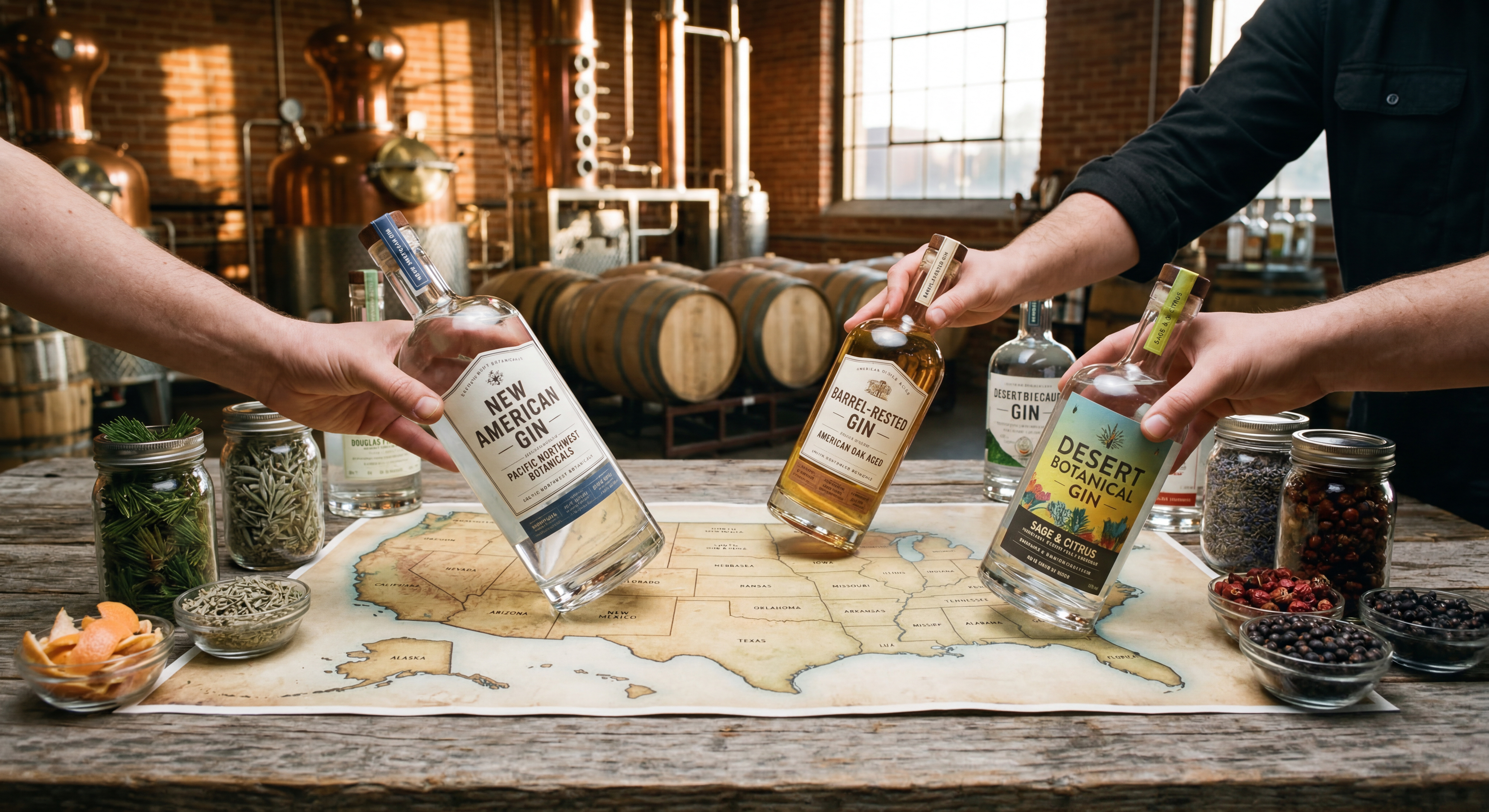
Three people holding different gin bottles over a map of the united states

By Becky Garrison

L.J. Temple, President/Head Distiller of Temple Distilling Company and author of So, Why Gin? defines “gin” as “a botanical spirit rooted in juniper that’s defined by the oils extracted from flavorful plants, herbs, and spices. The piney taste of juniper leads this concentration of different flavors.”

  The word “gin” is derived from the French name for the juniper berry, genièvre, which was then altered by the Dutch to genever and shortened by the English to gin. As per Britannica.com, “Its origin is attributed to Franciscus Sylvius, a 17th-century professor of medicine at the University of Leiden in Holland, who distilled the juniper berry with spirits to produce an inexpensive medicine having the diuretic properties of juniper-berry oil. The beverage became popular and was introduced to England by soldiers returning from the Low Countries.” A spirit labeled as “gin” includes both the malty-flavored and full-bodied Netherlands types and the drier types, characterized by distinct botanical flavoring, produced in Britain and the United States.

How is “Gin” Defined in the United States?  

  According to Jason Parker, Co-founder of Copperworks Distilling Co. (Seattle, WA), the answer to this question depends on who you ask.  As per the Alcohol and Tobacco Trade and Tax Bureau (TTB), the legal definition of gin distilled in the United States is as follows:

  A product obtained by original distillation from mash or by the redistillation of distilled spirits or by mixing neutral spirits with, or over, juniper berries and other aromatics, or with, or over, extracts from infusions, percolations, or maceration of materials. It is bottled at not less than 80% proof.

  Most consumers think of gin as being “botanical forward with a resin piney character, that’s very dry.” Parker attributes this taste preference to the dominance of London Dry Gin, which accounted for 52.02% of the U.S. market in 2025. The majority of London Dry gin sales were the mass market gins produced by commercial distillers with an eye toward affordability not flavor. In comparison, craft distillers focus more on flavor using locally sourced botanicals like seaweed, spruce tips, and lavender in their gins.

  The following are some examples of how Pacific Northwest distillers produce their own distinctive twist on gin ranging from a craft classic London Dry gin to cask finished gins and gins made using Pacific Northwest botanicals.

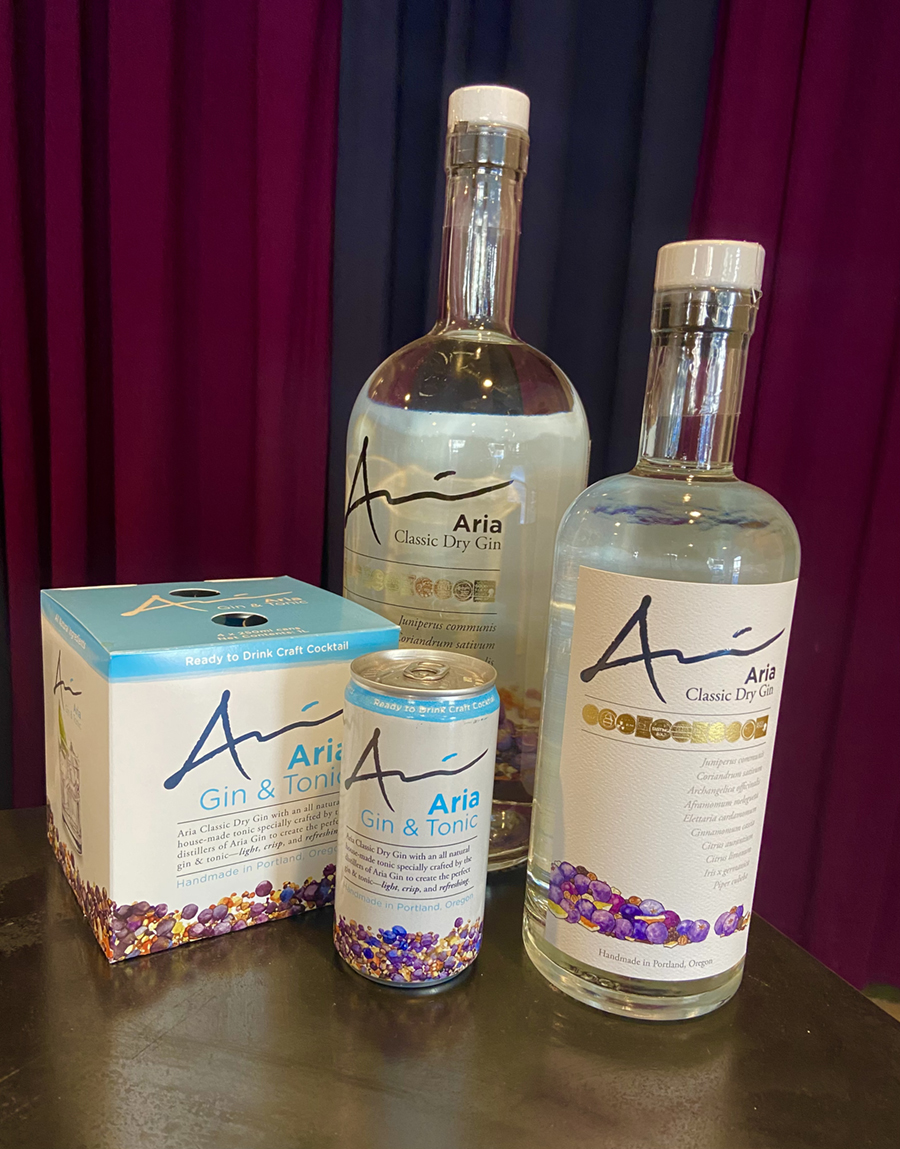
Aria Classic Dry Gin (Portland, OR):  Aria Classic Dry Gin, founded in 2012 by Ryan Csanky and Martin Ryan, set out to produce a top-shelf classic dry London gin. As much as former bartender Csanky loved gins made with creative flavors like prickly pear, spruce tips, and lavender, he found they did not work when he made classic gin cocktails like a martini.  Aria’s Classic Dry Gin offers a classic London dry gin experience with a craft sensibility. They experimented with traditional English botanicals looking for bold flavor combinations that were also delicate. Their final proprietary recipe combines the ten ingredients they list on the bottle: juniper, coriander, angelica root, grains of paradise, cubeb berry, orris root, lemon zest, orange zest, and cassia bark. 

BOTTLES AND CANS OF ARIA GIN

  The pristine Bull Run water used to distill Bull Run Distillery’s gin speaks to this gin’s origins in the Pacific Northwest. In addition, they collaborate with other producers, such as Ken Wright Cellars in Carlton, Oregon, to create cask-finished gins. They produce Distiller’s Reserve Gins, limited edition releases with unique barrel finishes as well. Also, they produce a canned Aria Gin & Tonic made by combining their award-winning Aria Classic Dry Gin with a bespoke tonic created specifically by them to pair with Aria Gin for the perfect G&T on the go.

   At their tasting room, they feature a wide array of mixers and bar tools for creating a range of gin cocktails, along with a rotating selection of tasting flights featuring Aria Gin. For example, during the summer months, they offered a tasting flight titled “summer of sours” that included a variety of sour cocktails including a gin slushie made with Aria Gin.

Copperworks Distilling Company (Seattle, WA):

When Copperworks opened in 2013 with a focus on making American Single Malt whiskey, they chose to produce gin to sustain them until their whiskies matured. They chose to distill their gins in

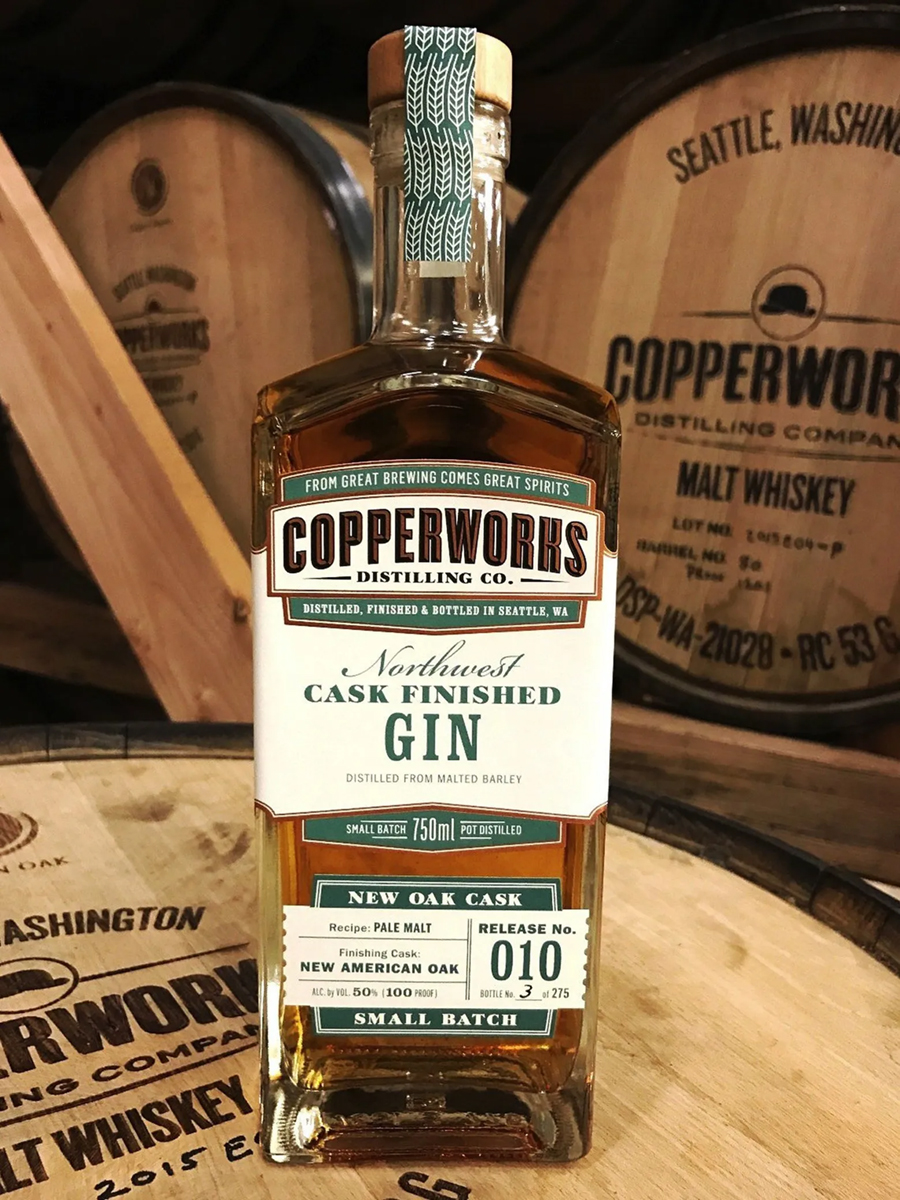
the spirit of their whiskeys by producing their own malt-based grain spirit that they distill in-house along with ten world-class botanicals. To maximize the flavor, they chose to macerate the botanicals for 24 hours in an alembic pot still, which they only use to distill their gin. This gin was then placed in new oak barrels with the ensuing result emerging as their flagship gin.    

A COPPERWORKS GIN BOTTLE IN FRONT OF COPPERWORKS BARRELS

Following this success, they began aging other gins in a variety of casks. Their first cask finished gin was made using a used Westland American single malt whiskey cask as all their whiskey at the time was in barrels. Since then, they have experimented with thirty cask finishes to date including Spanish Brandy, Oloroso sherry, chai cider, and red wine barrels from Washington State and around the world, along with barrel exchanges with several local breweries. In addition, they make a plum gin every year using Italian plums from co-founder Micah Nutt’s brother’s farm on Orcas Island.

Freeland Spirits (Portland, OR):  In Beverage Masters’ profile of Freeland Spirits, founder Jill Kuehler notes how she was drawn to gin due to the infinite number of botanicals one can play with to develop a unique spin on a classic spirit. She sourced fresh botanicals from local farmers’ markets and area farms, such as Vibrant Valley Farms (Sauvie Island, OR).

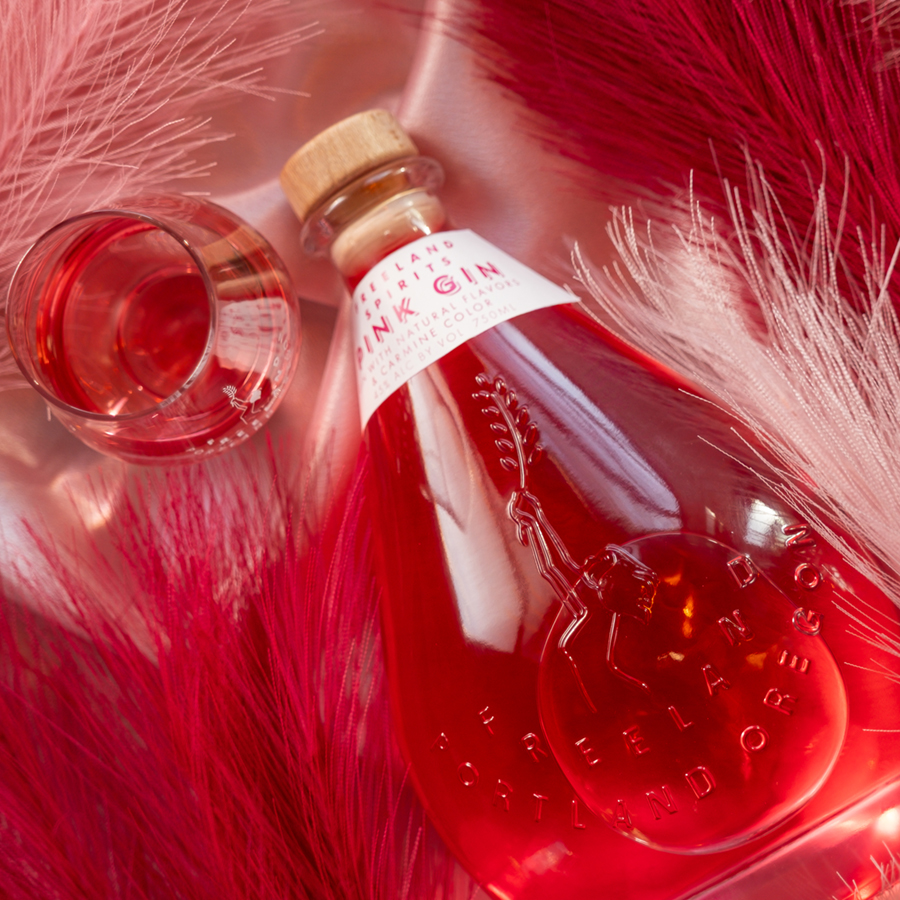
A BOTTLE OF FREELAND SPIRITS GIN WITH A GLASS HALF FULL

  Their flagship gin is small batch crafted using a unique blend of traditional heat distillation along with vacuum distillation, which allows them to use a combination of fresh, Pacific Northwest ingredients. In addition to their flagship gin, their other expressions of gin include a Forest gin made using chanterelle mushrooms, Douglas fir tips, and other items foraged from their backyard woods, a Dry gin styled after a classic London Dry gin, and their pink gin crafted in honor of Women’s History month infused with huckleberries, white tea, marshmallow root and turmeric.

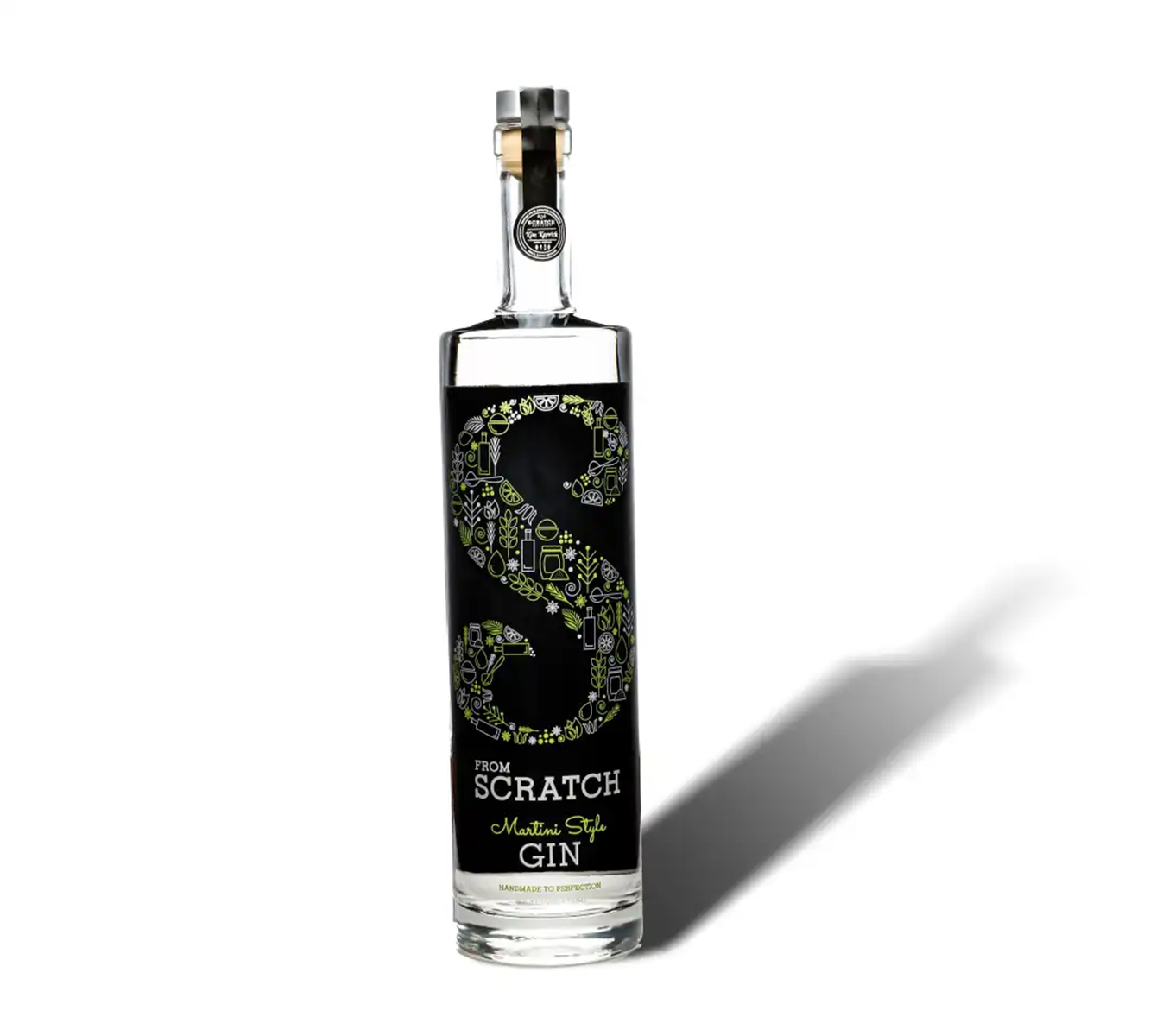
Scratch Distillery (Edmonds, WA):   The name “Scratch” refers to distiller Kim Karrick’s commitment to produce all their spirits from scratch using local ingredients, when possible, such as Skagit Valley and Walla Walla Valley grains and botanicals from the Salish Crossing complex’s garden. distilled vodka and gin and now produce over thirty spirits. Among their range of gin expressions are a barrel-finished gin, G&T style gin, Holiday Gin, Martini Style Gin, and an Old Tom Barrel Finished Gin.

A CLAR BOTTLE WITH A BLACK LABEL OF SCRATCH DISTILLERY GIN

  Karrick’s obsession with the infinite combinations of botanicals, coupled with her conviction that everyone can like gin if they just get the opportunity to find their favorite combination of flavors and aromas, led to the creation of her GINiology™ workshops. In these workshops, participants learn about the history of gin and taste more than 30 different botanicals and spices that can be used to make gin before creating a bottle custom-tailored to their palate.

Temple Distilling (Lynnwood, WA):   Temple calls gin the ‘chef’s spirit’, the final product an expression of the intended flavor profile of the distiller. In his estimation, distilling gin is akin to creating a wonderful, complex meal. “You want as much flavor without overwhelming or letting anything get out of balance. Whiskey on the other hand is more like baking – you are limited to a few different grains, yeast, and water, the rest is up to Mother Nature.” As you can create gins with so many assorted flavors Temple doesn’t see any other path forward besides experimenting with different expressions of gin. “You don’t want to eat the same thing every day, and the same goes for your gin and cocktail choices,” he adds.

A BOTTLE OF TEMPLE DISTILLERY GIN

  As a big believer in how Europe has done gin for centuries, Temple honors that tradition with their London Dry Gin. This flagship gin is made with Italian juniper, lemon and orange, grains of paradise and cubeb berry, angelica and orris root, a combination Temple designed to hit every corner of the flavor wheel while keeping it all in balance. Temple makes another London Dry Gin in their Constant Reader Gin, which they describe as a ‘mass market paperback’ version of their London Dry. Here the recipe is simpler with juniper and citrus and a hint of earthiness.

  Also, Temple distills Chapter One Navy Strength Gin. As the higher proof plays better with the lighter citrus oils from distillation, Temple leans heavier into the citrus profile by using fresh lime peel and dried grapefruit. He uses this gin for their Woodcut Barrel Rested Gin, which is made using bourbon barrels, which turn the citrus into more floral notes while adding a touch of sweetness from the bourbon-soaked oak. They release a 5-year-aged Woodcut Barrel Rested Gin, which yields a lot of wonderful baking spices into the gin designed for those whiskey lovers who like a sipping gin.

  Other expressions of gin include a Co-authored Roasted Gin made via a partnership with a local roastery where they distilled fresh espresso beans alongside juniper, black and green cardamom, and clove to mimic Turkish coffee notes. One of Temple’s favorite collaborations is their Co-authored Gin foraged made using two pounds of fresh black truffles they found by partnering with a local company that trains truffle hunting dogs. This truffle-infused gin was aged in a barrel for about a year for a velvety body.

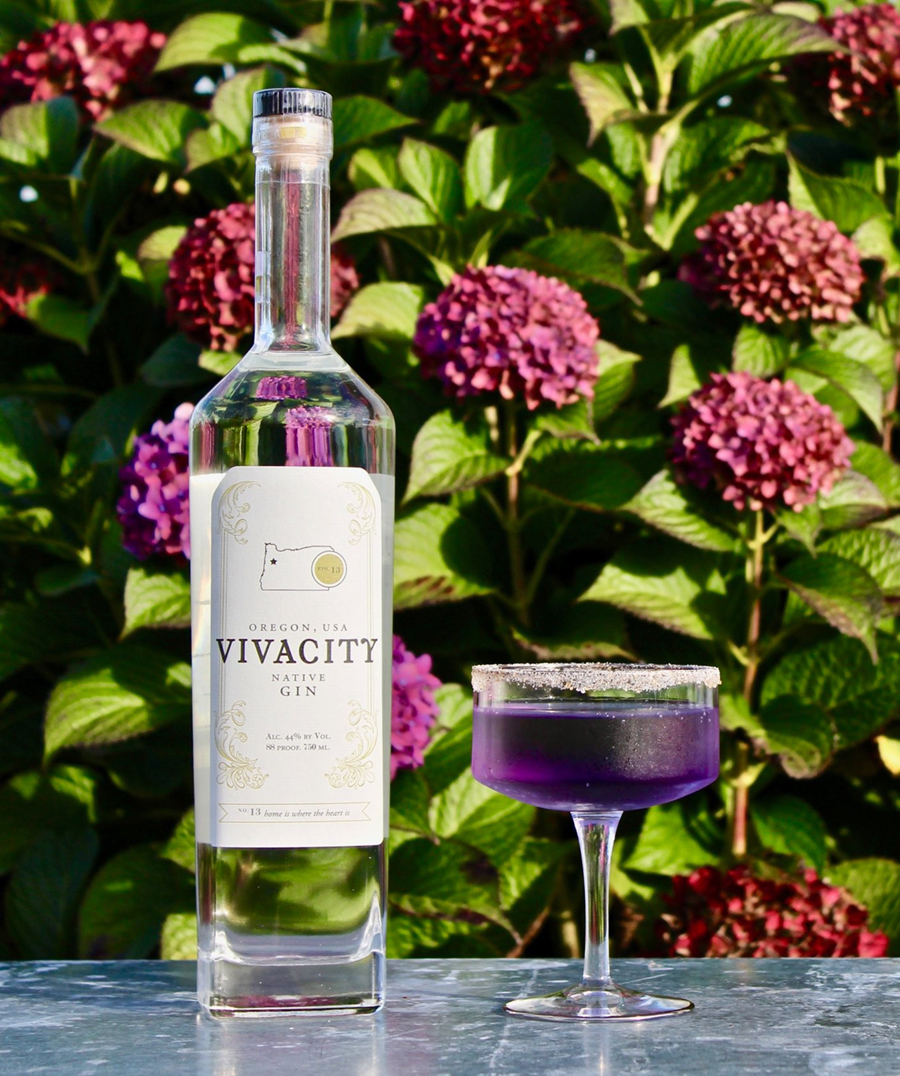
Vivacity Fine Spirits (Albany, OR):  From the start of their distilling journey, they envisioned offering two distinct styles of gin that would reflect both the classic and the innovative aspects of the craft, offering something for everyone. Their process began with an ambitious collection of 12 unique gin recipes. Each was carefully crafted, analyzed, and refined as we narrowed down our selection to two standout profiles: their Bankers’ Gin and Native Gin.

A BOTTLE OF VIVACITY GIN NEXT TO A GLASS HALF FULL IN FRONT OF A FLOWERED BUSH

  Modeled after the classic London Dry style gin, their Bankers’ Gin is named after the banker who gave them their first loan. This spirit’s dry and citrusy, crisp, and clean flavor profile features subtle aromatics derived from a combination of six herbs and botanicals. Their Native Gin features dynamic floral & aromatic notes with a focus on using 17 herbs, spices, and botanicals that are native to the Oregon Pacific Northwest including a few hand-picked ingredients. After sipping the Native Gin, they suggest “chewing” on it by making smacking noises with the tongue and lips to bring out different layers of flavors.

Dappled Tonic (Portland, OR):  Throughout Faith Dionne’s career as a pastry chef, artisan confectioner, distiller, and now with Dappled, she has been drawn to taking industrialized, standard products and reimagining them as something exceptional. So instead of treating tonic water as a sidekick, she makes it with the same care and attention you would expect from a craft spirit. Dionne knew that instead of just lengthening gin, tonic water could complement this spirit. That concept became the basis of Dappled: tonic waters designed to “click” with the gin and create layers of flavor for a more complete, satisfying cocktail.

SEVERAL SIX PACKS OF DAPPLED TONIC IN CANS BEHIND A FILLED GLASS WITH 2 STRAWS AND A LIME

  Dappled grew out of Dionne’s experience as a craft distiller. At JAZ Spirits she would hand-forage wild botanicals and take extra steps in distillation and infusion to coax out their unique flavors. But she discovered that when she served those gins, the tonic water options never did them justice, as they just diluted the spirit, and added bitterness and bubbles. Currently Dappled is available in citrus, floral, and aromatic flavors with plans to release a brand-new flavor designed to pair with rum in 2026. All Dappled SKUs also work well served over ice for those looking for an NA craft cocktail.

The Big Beautiful Bill on Your Beverage Business

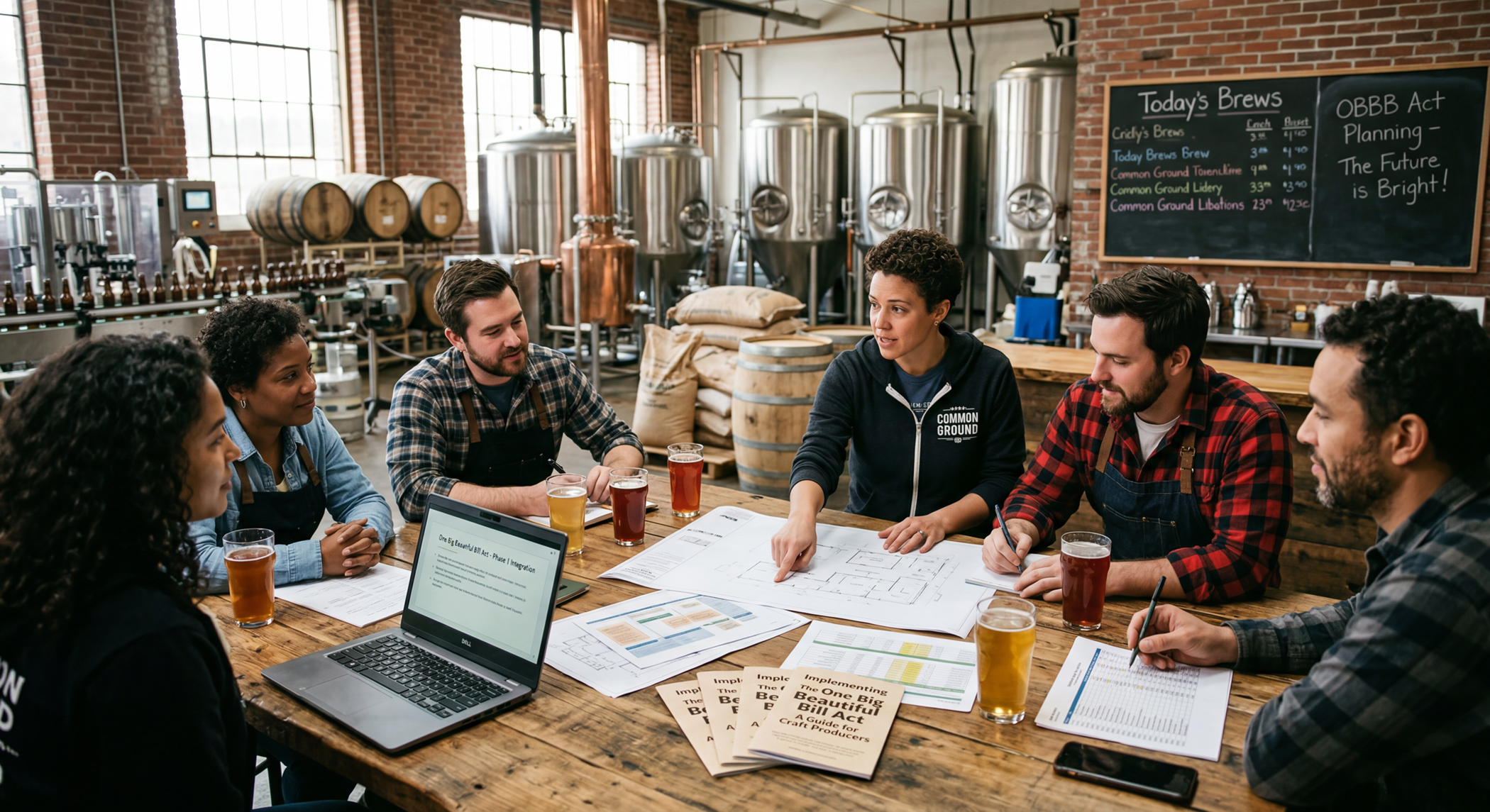
a group of men and woman sitting around a table on a brewery production floor discussing the new tax bill

By Raj Tulshan, Founder & Managing Partner, Loan Mantra

Welcome to the bright start of a new year! 2026 brings new laws and legislation that will impact the beverage business industry. At the forefront of industry news is the One Big Beautiful Bill Act, often called the Big Beautiful Bill. So how does the Big Beautiful Bill affect beverage businesses like breweries, distilleries, bars, restaurants, distributors? Let’s take a look.

  As with any major legislative proposal, there is plenty of debate from stakeholders across finance, labor, and industry groups. Now that the statute is moving from draft language to enactment, beverage businesses can start planning around what’s actually in effect.

Tax Relief Extension

  The Big Beautiful Bill enables beverage business owners to better predict revenue and outcomes because it extends corporate and individual tax rates from the 2017 Tax Cuts and Jobs Act. The Act, which was scheduled to expire at the end of 2025, helps owners avoid large tax increases. For beverage business owners, especially small producers, distributors, and related service providers, it provides a level of certainty and security for strategic plans. For business owners operating as pass-through entities such as LLCs, S-corps and partnerships, the Qualified Business Income (QBI) deduction, which is usually up to 20% of profits, is extended. This should help owners of pass-through beverage businesses lower their taxable income if they qualify.

Larger, Immediate Expense Limits

  The Big Beautiful Bill increases expensing limits to $2.5M for qualified property and allows for immediate expensing (100% bonus depreciation) so businesses can deduct even bigger asset purchases immediately, rather than depreciating them over many years. This can be a great incentive to invest in production equipment, brewing systems, delivery vehicles, taproom upgrades, or refrigeration and storage that is needed now and reduce taxes sooner rather than later. But some production-related tax perks (like Qualified Production Property) have specific eligibility rules. This means if your beverage business’s facility doesn’t qualify under the IRS’s definitions, you won’t receive bonus depreciation for portions of the property used for sales or tasting rooms. Check with your financial or tax advisor to confirm eligibility.

To make these deductions easier to support, keep clean documentation: a formal written statement from vendors, an itemized list of assets purchased, and invoices showing the purchase price. This will can substantiate the deduction and any later claim.

Expanded Deductions

Interest on Loans:  The Big Beautiful Bill reinstates a more generous calculation to deduct business interest on commercial loans. Beverage businesses can again add back depreciation, amortization and depletion when calculating adjusted taxable income. This change allows capital-intensive businesses, which carry heavy debt loads and have high depreciation expenses (such as those operating large vehicle fleets), to potentially deduct more of their interest expenses and reduce their overall tax liability. It also allows for expanding beverage business owners to take greater deductions paid on commercial loan interest to help finance future goals like buying a new facility or refrigerated box trucks. Check with a loan advisor to ensure all qualifications are met.

  From an operational standpoint, many beverage businesses will want tighter visibility into payables, receivables, and loan accounts—especially when interest expense is a key lever in financial workflows.

Research and Development:  As beverage business owners push for innovation by developing new drinks and products, domestic research and development expenses can once again be fully deducted in the year they are incurred. This is significant even for small businesses that are innovating with products, processes, or software. Beverage Research & Development (R&D) is crucial for driving innovation through the creation of new beverages, enhancing existing formulas, and catering to the evolving consumer demands for health, taste, and sustainability. This has financial impacts on concept development, ingredient sourcing, prototyping, sensory testing, regulatory compliance, or even scaling up manufacturing to remain competitive. Key areas of focus include functional ingredients, plant-based options, low-sugar alternatives, and sustainable packaging, which require market research, flavor science, and process optimization.

  If you’re capturing R&D time, lab supplies, or pilot-batch inputs, using financial automation software (or an expense management app tied to your accounting system) can help track costs in real time and keep supporting documentation consistent across your finance team.

No Tax on Tips

  One of the biggest changes created in the Big Beautiful Bill is the new “No Tax on Tips” requirement. This temporary provision was put in place to be effective for tax years 2025 through 2028. It allows qualified tips to be income-tax-free of up to $25,000 for federal taxes only. All wages, including tips must still be reported and recorded by both employer and employee. What is important to note is that Social Security and Medicare taxes still apply on tips — the deduction affects only income tax. In addition, some states may not conform to this deduction, so tips could still be taxed at the state level. Employers must report tip income on W-2s or similar forms for employees to claim the deduction.

  It’s also important to know who qualifies for this tax benefit. The rule applies to workers in occupations that “customarily and regularly receive tips”, as recognized by the Internal Revenue Service. Good examples from the beverage industry include staff such as: Bartenders, servers/waitstaff, cocktail servers, barbacks, tipped food runners, sommeliers/wine stewards, or counter service staff who receive tips. If your business handles or hold events this could also include Food/Beverage delivery drivers, catering service staff, event bartenders, valet attendants and beverage service staff. There are gray areas of this line item. If tipping is customary, regular, and documented then brewery taproom staff, tasting room hosts, coffee baristas, food truck operators (employees, not owners) and tour guides (brewery/distillery tours) may also benefit. Those who are NOT eligible are: Owners and partners, salaried managers (even if they receive tip-outs) and back-of-house staff unless tips are truly customary.

  To protect the business and employees, an owner should keep records separating true tips from service charges and other charges and ensure tip reporting ties back to POS/payroll. Clear facts and documentation matter, especially if an owner or employee must ever support a claim under state law or payroll records.

  The Big Beautiful Bill brings significant changes to the beverage industry, offering what is intended to be financial incentives for business owners. With extensions on tax relief, increased expensing limits, and expanded deductions, beverage businesses are better positioned to invest in growth and innovation. The act’s provision for tax-free tips provides additional support for frontline workers, offering a temporary financial boost.

  As the beverage industry continues to evolve, the Big Beautiful Bill ensures that businesses have the tools and flexibility to adapt to changing market demands. Whether you’re a small brewery experimenting with new flavors or a large distributor expanding your fleet, these legislative changes offer numerous opportunities to enhance operations and drive success.

  Business owners should remain informed and consult with financial advisors to fully leverage these benefits while navigating any specific eligibility requirements. The Big Beautiful Bill marks a positive step forward, reinforcing the industry’s foundation and encouraging a vibrant, innovative future.

The Tipping Point

  Who qualifies for the new “no tax on tips” benefit? *

YES, RULE APPLIES:

If tips are customary, customer-provided and reported, these workers generally qualify.

•     Bartenders

•     Servers / waitstaff

•     Cocktail servers

•     Barbacks

•     Tipped food runners

•     Sommeliers / wine stewards

•     Counter service staff who receive tips

      •Food delivery drivers

•     Catering service staff

•     Event bartenders

•     Valet attendants

MAYBE RULE APPLIES:

Certain positions may qualify if tipping is regular and documented. If customers routinely tip and tips are tracked through payroll/POS, the role likely qualifies.

•     Brewery taproom staff

•     Tasting room hosts

•     Coffee baristas

•     Food truck operators (employees, not owners)

•     Tour guides (brewery/distillery tours)

NO RULE APPLIES:

•     Owners and partners

•     Salaried managers (even if they receive tip-outs)

•     Back-of-house staff unless tips are truly customary

•     Any role where “tips” are really bonuses or service charges

Important:  Mandatory service charges are NOT tips under IRS rules and do not qualify.

*This is just a general guideline. Visit the irs.gov page for complete guidance and clarification on this topic.

  Raj Tulshan is founder and managing partner of Loan Mantra, connect at Raj@loanmantra.com or on Linked-in at https://www.linkedin.com/in/tulshan/.

Sustainability or Survival?

a wastewater treatment plan processing the waster water in a brewery

By Frances Tietje Wang

As the beverage industry moves further into an era of necessary efficiency to accommodate skyrocketing costs, wastewater management cannot be an overlooked utility function. Aging municipal infrastructure, rising treatment costs, and stricter enforcement of industrial pretreatment requirements have pushed utilities to the forefront of operational and financial concerns. Under the U.S. Environmental Protection Agency’s (EPA) National Pretreatment Program, facilities exceeding domestic-strength benchmarks for biochemical oxygen demand (BOD), total suspended solids (TSS), or allowable pH ranges may face surcharges, permit modifications, or enforcement actions.

  This regulatory pressure coincides with broader business expectations. Wastewater performance now sits at the intersection of financial risk, regulatory compliance, and sustainability reporting. As production varies and the market remains unpredictable with cost pressure and uncertainty, sewer bills continue to fluctuate, impacting overhead costs and future planning. Compliance failures can delay expansions, harm government relations, and/or require capital upgrades under compressed timelines. At the same time, water and wastewater metrics are now standard components of sustainability benchmarking and ESG (environmental, social, governance) disclosures in the brewing sector.

  As a result, wastewater investments are no longer evaluated primarily as environmental gestures. The strategic question has become whether a given project delivers measurable return on investment (ROI) and protects long-term operational viability.

Defining “Payback” in Wastewater Projects

  In beverage production, payback extends beyond a simple comparison of capital expenditure (capex) and operating expense (opex). Direct savings commonly include reduced BOD and TSS surcharges, avoiding penalties for noncompliance, and lower costs associated with chemical neutralization or off-site hauling. These kinds of savings align with municipal cost-recovery frameworks, which are embedded in federal pretreatment regulations 40 CFR Part 403, which is designed to prevent interference with publicly owned treatment works.

“Wastewater investments are no longer evaluated primarily as environmental gestures. The strategic question has become whether a given project delivers measurable return on investment (ROI) and protects long-term operational viability.”

  Indirect value is often more consequential.  Stable wastewater systems can reduce unplanned downtime, protect discharge permits, and preserve expansion capacity. In fact, research has shown that wastewater constraints frequently become limiting factors for brewery growth before brewhouse or fermentation capacity is exhausted.

  Across utility data and academic literature, payback timelines cluster by project type. Pretreatment, solids capture, and flow-equalization projects commonly can achieve ROI payback within 1 to 3 years, whereas anaerobic digestion and water reuse systems often require 3 to 7 years. These all depend on scale, incentives, and local rate structures.

High-ROI Wastewater Projects Breweries and Distilleries Are Actually Using

Solids Capture and Flow Equalization: Upstream solids capture combined with flow equalization remains one of the most reliable ROI drivers in brewery and distillery wastewater management. Methods such as screening, settling, and rotary drum filtration reduce TSS loading before wastewater reaches municipal systems. This results directly in lowering surcharge exposure and downstream treatment demand.

  Flow equalization further improves economics in smoothing short-duration load spikes associated with cleaning-in-place (CIP), yeast removal, or batch discharges. EPA guidance emphasizes that stabilizing hydraulic and organic loading often provides greater compliance benefit than adding downstream treatment capacity, particularly for batch-driven industries such as brewing and distilling (EPA, 2000).

  This approach is reflected in brewery practice, as at Sierra Nevada Brewing Co., which documents wastewater treatment and solids management as integral components of its sustainability strategy. At the facility in Mills River, North Carolina, wastewater treatment infrastructure is embedded into site design rather than treated as an afterthought.

pH Neutralization and Smart CIP Controls: pH excursions remain among the most common enforcement triggers in municipal pretreatment programs. Extreme pH changes can inhibit biological treatment and damage sewer infrastructure. By using methods such as automated pH neutralization, conductivity-based diversion, and smart CIP controls, it is possible to reduce reliance on operator intervention and lower the likelihood of violations.

  Scholarly reviews consistently describe brewery wastewater as highly variable, driven by batch operations, product losses, and cleaning cycles. The best option for managing these sources is in upstream practices, which is often more effective than relying solely on end-of-pipe corrections.  Industry guidance reinforces optimizing sanitation chemistry and discharge timing, some of the most cost-effective wastewater interventions available.

Anaerobic Digestion (When It Makes Sense)

  Anaerobic digestion (AD) can deliver strong returns when organic loading is sufficiently high and consistent. The U.S. Department of Energy identifies beverage production as a sector with meaningful biogas potential, in particular where waste streams are concentrated and predictable.

  New Belgium Brewing is a well-documented example of anaerobic digestion. Trade engineering publications and supplier case studies describe how the brewery integrates anaerobic wastewater treatment and biogas recovery. In combining these two methods, the organic load is reduced while generating renewable energy, supporting both environmental performance and long-term cost control.

  Distilleries, which typically generate higher-strength effluent than breweries, often reach economic thresholds for AD more readily. Breweries may achieve viability at larger scales or through co-digestion strategies, but it is important to note that the literature says that AD economics depend on operational discipline, energy pricing, and access to incentives.

Water Reuse and Process Water Reduction

  Water reuse strategies, such as rinse recovery or reuse for non-product-contact utilities, can reduce both freshwater intake and wastewater discharge. The EPA’s Water Reuse Action Plan emphasizes “fit-for-purpose” treatment. The Plan discusses matching reclaimed water quality to its intended application rather than defaulting to over-treatment.

  Eel River Brewing Company is an excellent example of how small breweries have implemented reuse-adjacent strategies without complete reuse systems.

  By incorporating pretreatment infrastructure to reduce municipal impact and comply with discharge permitting requirements documented in municipal engineering analyses, the brewery illustrates how wastewater investment can scale to smaller producers when aligned with operational needs.

  Economic analyses indicate that reuse projects are most viable in regions with high water and sewer rates or where discharge capacity is constrained, and when integrated into broader water-efficiency programs rather than pursued in isolation.

Grants, Incentives, and Financing: The Hidden ROI Multiplier

  Technically sound wastewater projects proceeding are often determined by grants or low-interest financing if capital costs exceed internal investment thresholds. In the United States, the Clean Water State Revolving Fund (CWSRF) remains the primary financing mechanism for wastewater infrastructure, including eligible pretreatment and reuse projects.

  Energy recovery projects may qualify for additional incentives through state or utility programs. The Database of State Incentives for Renewables & Efficiency (DSIRE) is widely used to identify applicable funding opportunities and rebates.

  Producers who successfully secure funding tend to align wastewater projects with municipal objectives, such as reducing peak loading or deferring treatment plant expansion, rather than aspirational narratives. They may also use support applications with documented monitoring data rather than aspirational sustainability narratives.

Case Study Patterns: Making the Math Work, Not Waste

  Across scholarly literature and industry documentation, three recurring patterns emerge:

1.    Breweries implement solids capture and equalization, which consistently reduce surcharge exposure by stabilizing discharge characteristics.

2.   Distilleries and large breweries integrate anaerobic digestion with energy recovery. AD can offset both wastewater and energy costs when scale and incentives align.

3.   Mid-size producers leveraging CWSRF financing and state incentives frequently offsetting 30–50% of capital costs, bringing payback into acceptable ranges.

  In layering strategies, there is an opportunity for immediate and long-term cost savings.

Wastewater as Strategic Infrastructure

  Wastewater management has evolved from a compliance cost into strategic infrastructure. Breweries and distilleries that invest in the fundamentals of solids capture, equalization, smart controls, and right-sized recovery systems can reduce financial volatility, strengthen regulatory standing, and preserve growth capacity. As scrutiny tightens and costs rise, wastewater planning is no longer optional sustainability branding; it is a survival strategy for an operational reality.

Resources

 Fillaudeau, L., Blanpain-Avet, P., & Daufin, G. (2006). Water, wastewater and waste management in brewing industries. Journal of Cleaner Production, 14(5), 463–471. https://doi.org/10.1016/j.jclepro.2005.01.002

Sierra Nevada Brewing Co. (n.d.-a). Sustainability. https://sierranevada.com/sustainability

You Don’t Need to Sell Your Company – You Just Need an Exit Plan

a man looking at a maze on a wall and tracing a red line through the maze in order to get out of the maze

By Sarah Hite – MBA, Certified Cicerone® & Wealth Management Advisor with Northwestern Mutual

You started your company likely because you have a passion for what you do, for the joy it brings to your customers, or because it makes money. Finding something that brings you excitement and that you can make into a career is a really special thing. I’m going to guess that when you dove into what you love, you had at least one unexpected surprise along the way in the “business-y” part of your business.

  In the decade I spent working in sales and quality within the beer industry, I realized that most brewery owners’ primary struggles stemmed from not knowing what they did not know. This isn’t some sort of inception-coded concept, just the reality that most beverage company owners don’t come from business or finance backgrounds.

  With the sharp turn that the industry has taken in the past several years, the chief planning gap we are seeing is the lack of exit strategies. Many companies are running into losing revenue due to changes in drinking habits, tariff costs, or general economic slides. It’s heartbreaking for me to watch these long-standing companies run up against challenges like these with no safety net and no plan to navigate through it. Now, the challenges I just named are generally out of your control. Exit strategies are not about controlling the uncontrollable, they’re about safeguarding everything else.

  Establishing and maintaining a solid exit plan that accounts for many of the possible outcomes, but most importantly the outcome you want, is as essential to your business plan as your marketing plan or cash flow management.

  Many brewery exits are accidental (and painful) but with proper financial planning, they don’t have to be. Financial planning gives you leverage in your business and with your money – even if you never sell. One strategy that my clients have used is implementing tax-advantaged cash-value permanent life insurance. Sounds weird, right? It’s not! Let me explain…

Tax-Advantaged Cash

  We all know that we need to plan for operations, cash flow, and retirement planning but the gap we find most often with our business-owner clients is that they have done no planning for the time between near-term and long-term. Implementing a safe place for funds that is guaranteed not to lose value and can grow tax-advantaged can mean the difference between failure and survival (or a graceful exit). By planning for what happens between now and when our retirement dollars are accessible, we close the gap. This is, of course, best discussed with your financial planner as this insurance is not available for everyone; however, based on a recent Earnst & Young study, financial plans with this type of tool outperform investment-only (and term life plus investments) strategies every time.1

  Most of our clients will implement this piece of their financial plan as part of their buy-sell agreements; there are many ways to structure cash-value life insurance and depending on how many people you have at the helm of your business, these policies can be a great source of capital when times get rough.

  Speaking of a buy-sell agreement – do you have one? I would venture to guess that most of you, the readers, do have something in place, but have you reviewed it with your financial planner? Many of our new clients come to us with agreements in place that lack vital components like disability overhead insurance, a current business valuation, or clear funding mechanisms because they did not have a meeting of all of the minds. So, let’s talk about it.

DOE! 

  Disability overhead insurance protects a business’ ability to keep the lights on, the beer cool, and the employees paid even if an owner or a key person becomes disabled and can’t work. Disability can encompass a wide range of situations beyond physical injury. We’ve observed full disabilities due to mental health concerns, temporary disabilities following a cancer diagnosis, and various others arising from life events experienced by our clients. Rather than your cash flow and revenue grinding to a halt while expenses continue to pile up during a key person’s disability, this type of policy steps in to cover essential costs like rent, utilities, payroll, supplies, insurance premiums, and professional fees. With this protection, instead of shuttering the business, burning through cash reserves, taking on debt, going through panic layoffs when a key person receives a horrible diagnosis or injury, you can allow that person to focus on a full recovery and keep cash flowing as normal. This protection buys you time, stability, and options so that one person’s health crisis doesn’t turn into an existential business crisis. In terms of your buy-sell agreement and exit plan, having this protection in place can determine whether you get to choose your exit strategy or if it chooses you.

  Now, I know a lot of this is incredibly morbid. It’s no fun to think about – it’s the beverage industry for cripes sake! We’re here for the party! That’s where a good financial planner can help you focus on the parts of the business you want to focus on. A good financial planner will likely be not only one of the most positive people you know, but also someone who genuinely considers you, your business, your team, and your family. Simultaneously, they are unafraid to tackle the less glamorous, non-sexy aspects of planning to ensure your financial well-being.

Business Valuations & Your Financial Plan

  When planning an exit strategy, a business valuation is not just nice to have, it’s the foundation for smart decision-making. A good business valuation will tell you what your business is actually worth, not what you hope it’s worth. This matters for everything from your buy-sell agreement and succession planning to insurance coverage, financing, and potential exits. Without a credible valuation, you’re flying blind, risking disputes, and risking being underinsured. A clear defensible valuation turns guesswork into strategy and gives you a stake in the ground of reality.

  A solid exit strategy is built long before an owner is ready to walk away; it can only be made by implementing a diversified and holistic financial plan that grows with you and your business so that you can guarantee control of the controllables. A strong business valuation is going to set the baseline by defining what your beloved business is worth on paper, which will inform how your financial plan will perform and subsequently how many options you have for your exit strategy. Cash-value life insurance can fund your buy-sell agreements, create liquidity for your heirs or partners, and prevent a forced sale at the most harrowing of times. Disability overhead insurance protects the business’s day-to-day viability along the way, ensuring an unexpected health event doesn’t erode value before an exit ever happens. A unified approach with all these players on your team will protect the business, protect your leverage, and foster the outcome of your dreams.

1 Earnst & Young, 2024. Benefits of integrating insurance products into a retirement plan. 2411-10068-CS_ey-benefits-of-integrating-insurance-products-into-retirement-plan_v22

Planning Your Capacity

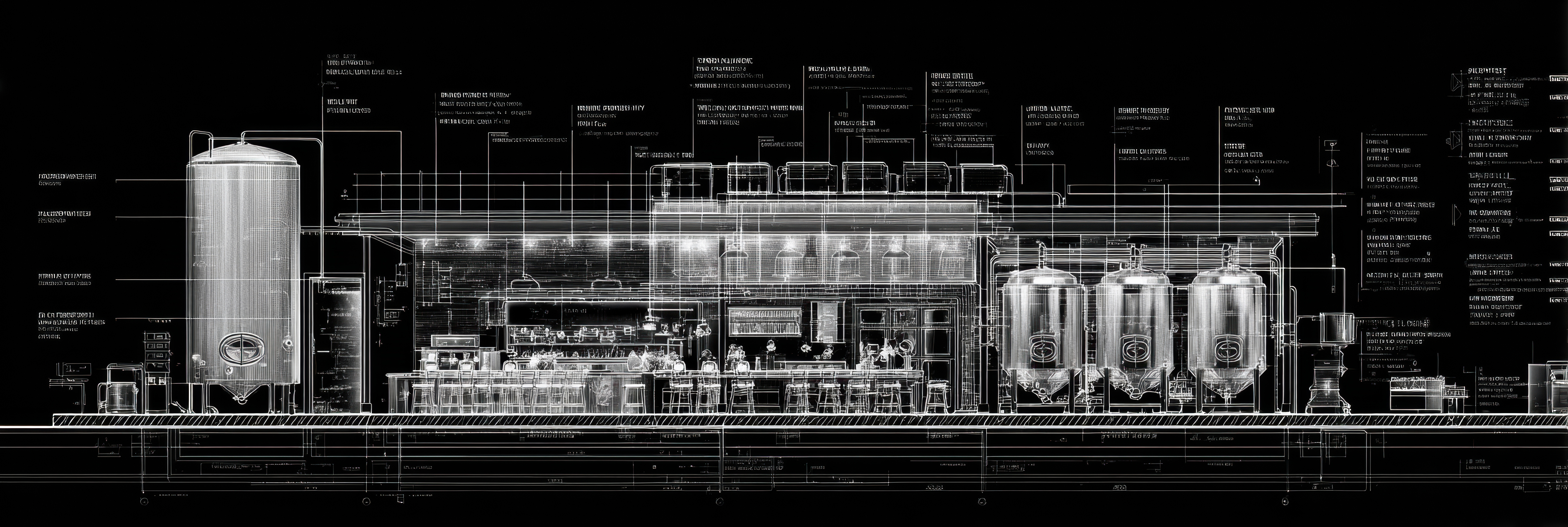
a black and silver photo showing a row of brewery tanks and components

By Erik Lars Myers

One of the biggest challenges a new brewery owner has when starting up seems like the simplest question of all: What size brewery am I starting?

There’s no fool-proof method to get this crystal ball prediction perfectly correct, but a commonsense approach can help target the outcome so that you can plan your investments wisely.

  The first decision begins with determining the size of your market. Ask yourself: Are you in a small town or a big city? Are you in a location that people can walk to, or do they have to drive? Do you have parking space? How much? How many seats do you have in your establishment? How many hours are you open? Are you distributing your product in kegs? Cans? Bottles? How many distribution customers exist within a half-hour drive of your location? How many of those will realistically put one new beer on tap?

  There are no easy answers or simple math, but going through those questions can give you the first gut check: Realistically – is this a relatively small operation serving your own neighborhood? Or are you building a manufacturing plant with plans to service a large metro area?

  When in doubt, don’t be afraid to undershoot a little. While you want to be able to make enough product to cover cost of goods, overhead and debt service, having to increase capacity because you have a high demand and great sales is a much easier – and nicer – problem to solve than having too much product or, worse, old product moving into the market because your brewing capacity and inventory outstrips demand. This is 2026, and we’re no longer in a market in which “if you brew it, they will drink.”

  However, be wary of 1- to 2-barrel operations which put a high demand on factory time without creating a reasonable amount of product. Making one barrel of beer takes roughly the same amount of work as making ten barrels of beer or thirty barrels of beer. The difference is economy of scale. For any commercial operation, even an exceedingly small one, be wary of anything smaller than five barrels.

  Once you determine your relative market demand, the first limiting factor you must consider is the size of your production floor. As a rule of thumb, the maximum yearly capacity of your brewery will equal one barrel per square foot of floor space. For example, if you have a building which – after offices, storage space, loading dock, and forklift parking – has roughly 2,000 square feet of space dedicated to your production floor (brewery, cellar, packaging), the most you’ll be able to get out of that space is approximately 2,000 barrels per year. Note! You will definitely make less than that, but over time you probably won’t squeeze out more.

  Next, it’s time to figure out the balance of system size to production space and what you’re planning to offer. If you intend to sell a couple of solid and consistent offerings in a planned distribution, you can lean towards a larger system that will allow you to make a higher volume of those few offerings while brewing less frequently. If you are planning a wide slate of varietal, seasonal beers – or less traditional beers with experimental ingredients – consider a smaller system with higher turn capacity.

  In today’s market, shooting smaller is not necessarily a bad idea. The difference between a 7-barrel brewhouse and a 15-barrel brewhouse can be measured in hours. In other words, a 7-barrel brewhouse can be used to create 15 barrels of the same beer but it will take twice as long on the brew deck to do it. On the other hand, the difference between a 15-barrel brewhouse and a 7-barrel brewhouse can be measured in days. As in, the number of days you will have stock to sell from a 15 barrel batch is twice that of a 7-barrel batch.

  Unless you are the only game in town, incredibly lucky, or exceptionally good, sales will be your largest production bottleneck.  When it comes to figuring out how many fermenters and brite tanks to purchase, and what size, start by looking back over all the other decisions and considering turn time.

  On average, a good rule of thumb is approximately 16 – 18 days between a beer being brewed and it being ready for market. That is one day in the brewhouse, 10 – 14 days in the fermenter including cold crashing, 1 – 2 days in a brite tank, and 1 – 2 days for packaging. That timeline can be extended for lagers by a few days or a few weeks.

  Can beer be produced faster than that? Without question. But as a rule of thumb, at start up, plan to take your time. Give yourself time to get it right.

  Now take a moment to revisit the idea of throughput and your market size and how quickly you might move through product.

1 barrel of beer = 31 gallons = 2 half barrel kegs = 6 sixth barrel kegs = ~240 pints.

With a 15-barrel brewhouse every batch would produce

465 gallons OR 30 half barrel kegs OR 90 sixth barrel or most realistically a combination thereof.  All that equals 3600 pints of one sole product.

  In a regular taproom setting you can expect to sell, on average, 1.5 to 2 beers per customer on a visit. In a 150-seat taproom at maximum capacity, if all the seats turn over twice per night you can expect to sell approximately 300 pints, or just over 1 barrel of beer. Over the course of any given week, in a high-volume taproom, you should aim to turn over a minimum of 1 turn of your brewhouse in a 1-week period. In other words, plan to brew at least once per week, on average, to begin with. Again – as you grow, you can always add more brew days and more fermenters.

  It is also good to remember that the numbers of beers that you offer will not correspond to a higher volume of sales, but rather it will spread those sales across a wider number of products with the largest volume concentrated on 2 – 3 beers, probably your IPAs and Pilsener (or Pilsener analog). To put this another way: if you have 6 beers on tap or 12 beers on tap, you will still sell the roughly same amount of beer per week, but all of the beers will move more slowly, with the possible exception of your fastest selling beers.

  This all means that a mix of fermenter and brite sizes can be helpful when planning capacity. A mix of fermenters that match your brewhouse size and fermenters that are double your brewhouse size is a good idea. Double-batch your high-volume beers and single-batch your slower moving offerings to manage inventory well. If something turns into a high-volume beer, you can always make more. If something is moving slowly, there’s nothing worse than having so much that it isn’t just unpopular, but also old and stale.

  If you are brewing at least once per week and have a 16-day turn on your fermenters, then you should have a minimum of 4 fermenters. However, give yourself room to get ahead of inventory and take your time with beer, or the option to make more of your high-volume beers. An easy recommendation is 4 fermenters that match your brewhouse size and 2 fermenters that are twice your brewhouse size. Thus, a startup with a 5-barrel brewhouse might start with four 5-barrel fermenters and two 10-barrel fermenters. 

  Since turn time in a brite tank is much smaller than in a fermenter, you need fewer brites. You will want one brite tank for every 3 – 4 fermenters of any give size. In this scenario, two 5-barrel brites and one 10-barrel brite would be sufficient. At a 16-day turn on each fermenter (a little under two turns per month) that gives you an initial maximum brewing capacity of approximately 700 barrels per year, depending on fermentation efficiency, work weeks, holidays, and sales. Your final volume for the year will almost certainly be less than that.

  Finally, the last piece to consider is cooperage. Kegs are one of the highest cost, highest value assets in your operation and are often overlooked. To begin with, if you are only providing beer to your own taproom and you are not using serving tanks, you need enough cooperage to hold all your volume in inventory… and then some. For every individual product you offer you will need empty kegs waiting to be filled, kegs filled with beer waiting to go on tap or be sold, kegs on tap, and empty/dirty kegs waiting to be cleaned. If you are in distribution you will need to add two more scenarios: kegs at the customer waiting to go on tap and empty kegs at the customer waiting to be picked up. You will also lose a small percentage of your kegs each year in the marketplace as they get lost or stolen.

  For each 5-barrel batch of beer, you need the equivalent volume of 20 – 30 barrels in cooperage. Half-barrel kegs (120 pints) are much more efficient but take up much more space and are clumsy to work with. They also typically sell at a lower price per pint than alternatives. Sixth-barrel kegs (40 pints), or sixtels, are much easier to work with and allow for more variety but are much less efficient on the production floor. You will probably maintain an inventory of both halves and sixtels at roughly an equivalent internal volume. For each half barrel keg, keep three sixth barrel kegs. For a 5-barrel startup brewery offering four distinct brands out of the gate, with limited distribution, starting with 100 half-barrel kegs and 300 sixth-barrel kegs would not be out of line.

  Of course, if there is a plan to do packaging in other formats (bottles or cans) that reduces the need for cooperage, so plan accordingly.  It is better to have more kegs than you need and have the luxury of cleaning them when you can – remember, each keg takes three minutes minimum on the keg washer – than to have too few kegs and not be able to package beer or brew because you are short on cooperage and have nowhere to put ready product.

  There is no perfect answer to what equipment you will need in a startup scenario – every brewery, location, taproom, and distribution model will create diverse needs, but a good examination of these points can start you off on the right foot. Breweries are expensive, particularly at initial stages, but it is worth the money to have the right assets in place rather than to spend the life of your business trying to catch up.

Have You Considered Co-packing?

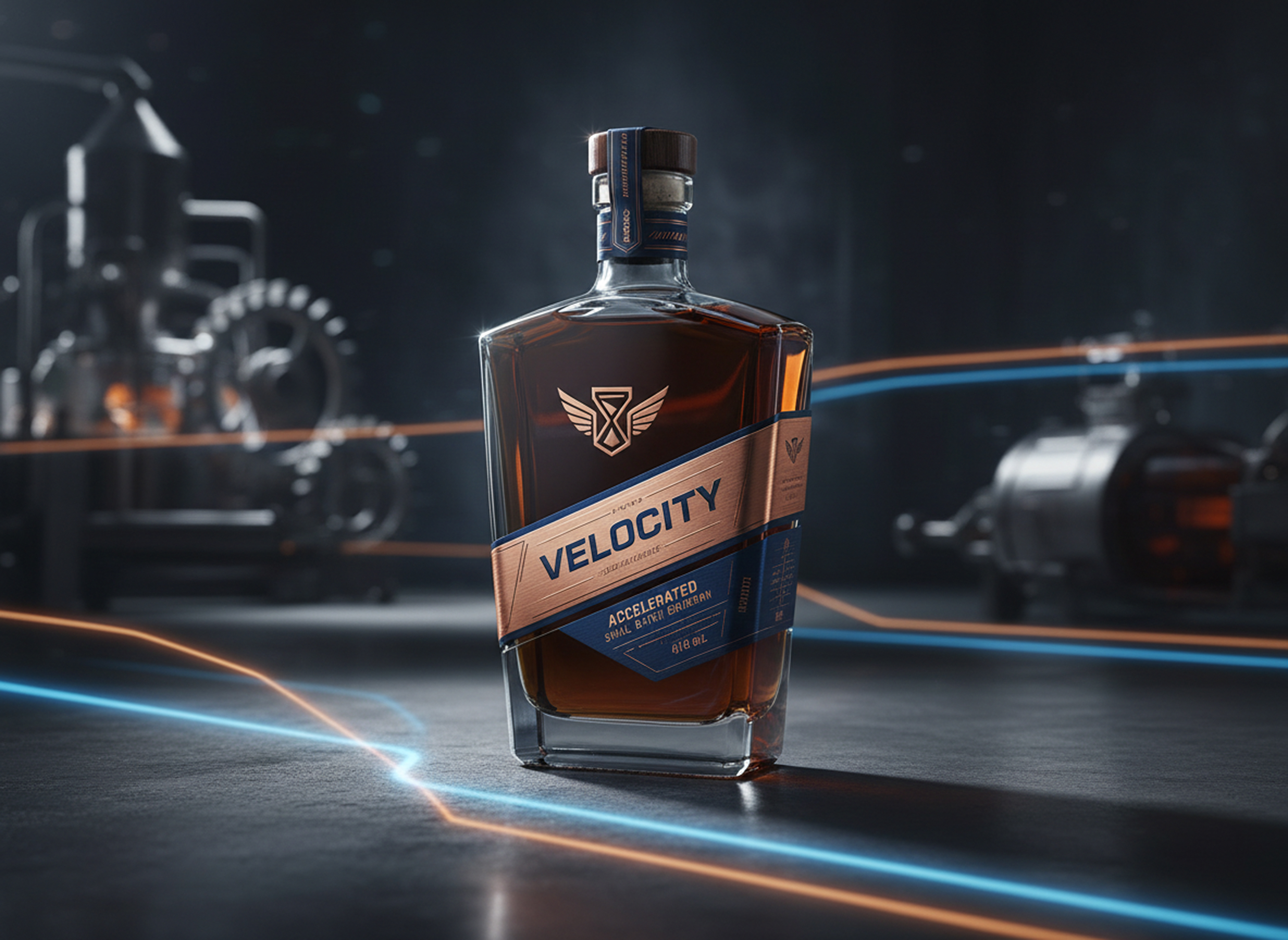
a bottle of Velocity  spirits

By Kris Bohm, Distillery Now Consulting

The spirits industry is growing and this growth has enticed newcomers to enter the industry and start unique brands. Starting a new beverage alcohol business and entering the industry is challenging, to say the least. There are regulatory, financial, and technical hurdles that make starting a new alcohol beverage brand complex and challenging. Starting a new business takes an immense amount of time and more money than most people expect. Even if you spend many hours budgeting and planning to build a distillery it will likely take longer, and cost more than you thought. An aspect of a successful brand that is overlooked and underappreciated is that high-quality brands spend a great deal of energy on marketing their products. There is a faster and cheaper way to start a new brand you may not be aware of. The path to a quick start up is called co-packing. Co-packing puts the strain, stress and capital expense of production equipment on someone else and lets a new brand focus time and money on marketing and promoting the brand.This article will cover how co-packing works and weigh the pros and cons of launching with a co-packer.

  The common path we see taken to starting a new spirits company is by building a business that manages all aspects of manufacturing and sales. While managing everything from start to finish is a noble goal, it is also expensive. When you manage production, packaging, warehousing, marketing, sales, and even distribution it is easy to flounder in the complexity of such a business. For a new entrant to the industry, learning all these aspects of business and succeeding at them is a huge challenge. The faster and cheaper way to launch a new beverage alcohol business is with a co-packer. This is done by working with an existing manufacturer who will make your product for you. By outsourcing the production of your product, you can focus on the two critical aspects of a beverage alcohol business which are sales and marketing.

  Co-packing in simplified terms is outsourcing the manufacturing of your product. In a broad sense a co-packer is a group or facility that produces beverages and offers services to manufacture products for other brands that are not their own. A co-packer can be contracted to manufacture and produce your product for you. Whether you want to make bottled whiskey or  canned vodka soda, any sort of beverage alcohol can be produced by a co-packer. Co-packers can package distilled spirits, ready to drink cocktails, liqueurs or nearly anything else you can imagine.

Why spend years building a distillery when a co-packer can produce a product in months?

  There is far less capital outlay needed when working with a co-packer as you do not need to buy specialized equipment for bottling and then also learn how to operate it. By removing the capital-intensive aspects of manufacturing a product, the owners of a new brand will have more time to focus on selling their product. You can create a product and bring it to market quickly when the co-packer does the manufacturing for you. A good co-packer will help you avoid mistakes and manufacture your product ready to sell. Let’s explore the process step by step you take to bring a new brand of whiskey to the market with help from a co-packer.

12 simple steps to creating your own bottles of whiskey

•    The first step toward creating a product is to decide what you want to make.

•    Find yourself a company (co-packer) who will make the product for you

•    Talk with the co-packer to understand the constraints and limitations of their equipment

•    Select packaging that works and fits your brand and your copacker’s equipment

•    Sign a contract with your co-packer and start putting the pieces together.

•    Design the brand, logos, names, artwork, labels, and bottle selection. (have a pro help you)

•    Take a break and enjoy a tasty cocktail

•    While you are stopping for a refreshment, select the whiskey that will go in your bottle

•    Navigate federal and state approval process (your co-packer should handle this)

•    Order and secure raw materials so your co-packer can manufacture the product.

•    Co-packer will bottle and package the whiskey

•    Launch your brand.

  Just like that you have created your very own brand of whiskey that is ready for its debut. A co-packer usually has a minimum order quantity and will likely produce at least a few hundred cases of bottled spirits. When the copacker is done packaging the product you will now have several pallets of whiskey that are ready to sell. While the simple 12 steps all sound straight forward, there are many critical aspects of work underneath this list. Behind every step there are decisions, details, licenses and permits that are required prior to the product being produced. Let’s dive a bit deeper into these critical decisions and how best to work through them.

  The liquid in the bottle must taste good but more important than the whiskey is the brand itself. Creating a professional looking package takes experience and extensive design. There is much more to design than just selecting a bottle shape. You will need to create a brand with logos, label artwork, and many other design elements. Unless you have experience in branding and marketing beverage alcohol, the creation of a new brand is best managed by experienced professionals. Your product must have a polished look and feel for it to succeed. The way your product looks is the biggest opportunity you’ll get to sway consumers to consider tasting the product. If you take a moment the next time you are in your local liquor store you will likely find a few bottles that do not look professional or polished. These not-so-great looking bottles are often created when someone starts a new spirits company without design professionals on their team with alcohol branding and design experience. Hiring a professional designer is a worthwhile investment to help your brand put its best foot forward.

  There are an abundance of distilleries that will sell you their spirits in bulk that can be packaged up into your own brand. Whether it’s Tequila, Vodka, or Bourbon Whiskey, all types of spirits can be bought in bulk. There are a few licenses and permits needed to buy barrels of whiskey, but those are easy to secure with the guidance of an industry professional. Taking the time to taste a variety of spirits will guide you to find the right whiskey for your brand. It is also important to look closely at the cost of the whiskey you are considering purchasing. The whiskey cost will impact what you will charge for your bottle and how much profit you will see.

  While I believe that co-packing your first products is the smart path to launch a brand, some folks would argue that co-packing is not the best choice. Let’s weigh the pros and cons of co-packing to consider it from both angles.

  What is the good side of collaborating with a co-packer? It takes extensive time and financial resources to launch a brand. A generous amount of time and money needed for a brand to launch successfully must be allocated to marketing and sales. This is essential to get a product onto store shelves and people buying the product. Co-packing affords a new brand the chance to conserve money, time and energy that would otherwise be put into manufacturing and direct that energy into selling the product. Co-packing affords a new entrant into beverage alcohol the space and time to learn the nuances of the business with much less overhead cost. Mistakes are not cheap to make and having a co-packer oversee the production work of your product ensures that you will make less mistakes when it comes to making and packaging the product. The largest advantage of not producing your own product is that you do not have to carry the high overhead of funding and operating a manufacturing facility.

  Now it’s time to talk about the bad part of Co-packing. Plain and simple.It is expensive. Co-packers mark up the cost of their service to cover their costs of overhead, labor to, of course, make a profit. When working with a co-packing company, you pay a premium for them to manufacture your product. It will cost more per unit to produce a product with a co-packer than it would if you manufactured the product yourself. Some folks do not like working with co-packers as they find there is a lack of control. When a co-packer is making your product, you will not have direct control over every aspect of the manufacturing process. A key step to reducing the risk of quality control issues is collaborating with your co-packer to define their production standards. A good co-packer will define their quality standards in their manufacturing process and track it to make a product cleanly and correctly. One other potential downside to co-packing is the lack of a store front. Most brands launched via a co-packer do not have a tasting room or cocktail lounge to serve drinks and sell bottles. Selling products made via a co-packer will require wide distribution which has smaller margins when compared to direct-to-consumer sales.

  It can be hard to decide what is the right way to create and launch a new product. Many factors must be taken into consideration to make an informed decision. While co-packing is perfect and cost effective for some it can be a bad fit for others. A distillery consultant or person with extensive industry experience is the best way to make an informed decision on how to launch your brand. Creating a new product and selling it can be a challenging and rewarding business endeavor. Launching a product the right way and finding success will make the creation of your product much more rewarding.

  Kris Bohm is from Distillery Now Consulting. When Bohm is not helping new distilleries launch you can find him defending his beer mile record and exploring the world by bicycle.

Core Brewing & Distillation System Components

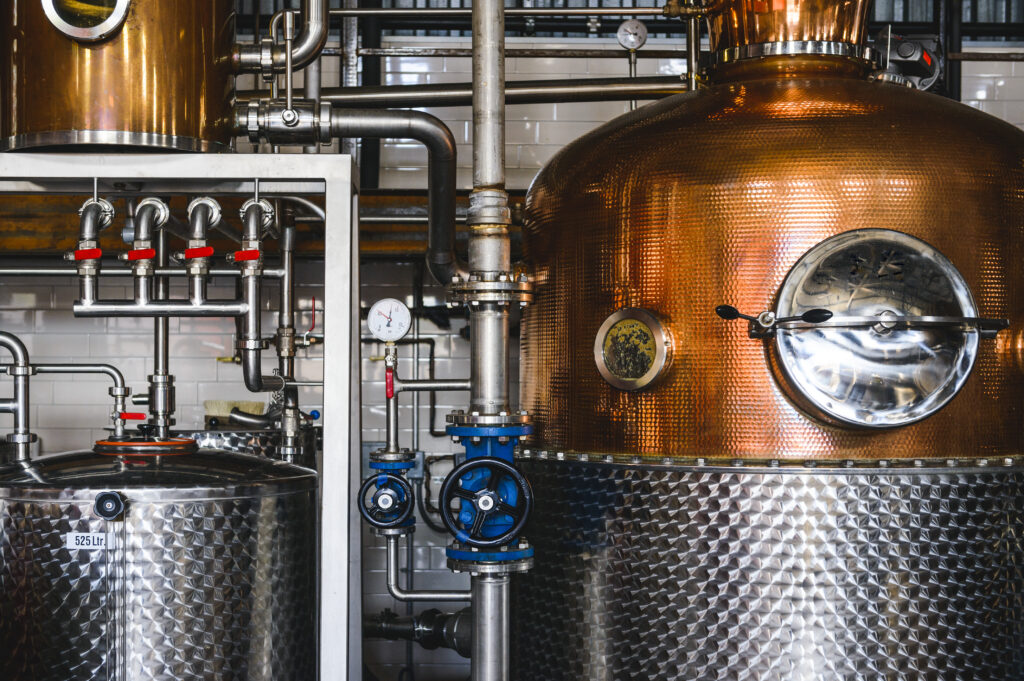
photo shows a copper still next to mash tanks in a distillery or brewery

By Gerald Dlubala

Whether you choose copper, brass, stainless steel, or another alloy, understanding the details, quirks, and ins and outs of your production systems is critical to running a successful brewery or distillery. A general understanding of the core brewing and distilling components of your craft beverage production facility leads to better-quality, consistently replicated products. That replication and consistency of a quality product help to build customer following and trust.

Core Brewing Components

•     Grain Storage Area: If the beverage producer grows its own grain, storage silos may be needed. If purchased in bulk, a designated grain storage area is required.

•     Grain Mill:  Brewers will need a milling station to mill the grain to fit the recipe required for the beer they are brewing that day. The grain is crushed and sent to the Mash Tun.

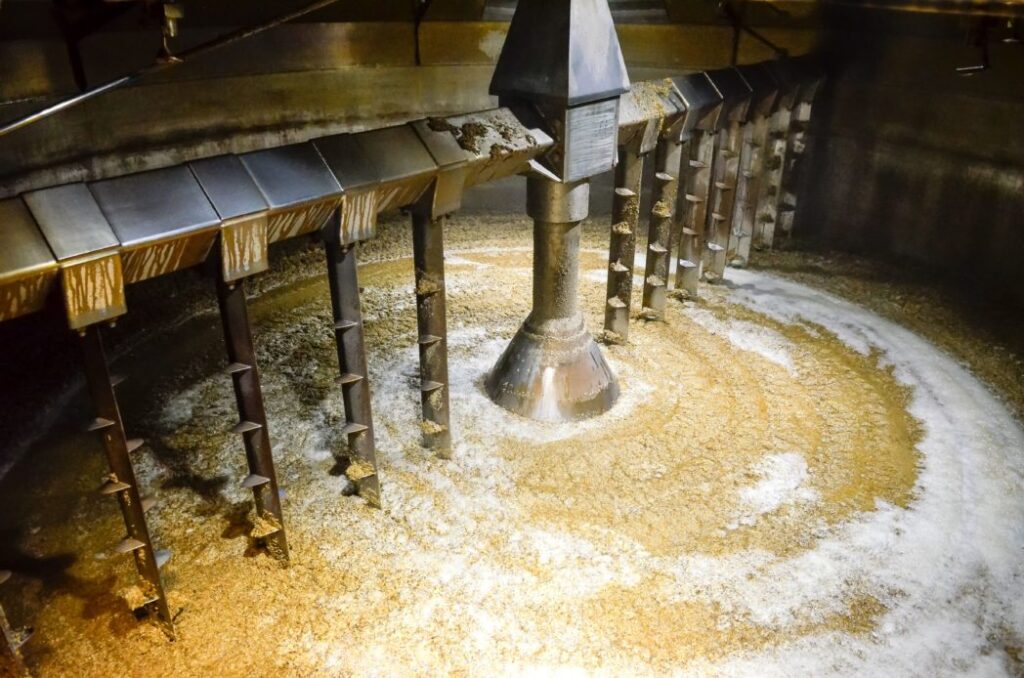
•     Mash/Lauter Tun:  Crushed grain gets mixed with hot water and allowed to rest, ensuring the starches are broken down into sugars by the natural enzymes. By controlling temperature and time, the mash and lauter tun convert grain starches into fermentable sugars, which can directly affect your beer’s final body and brewing efficiency. The resulting liquid, or wort, is separated from the mash and spent grain and pumped over to the brewing kettle.

•     Brewing Kettle:  Once the wort is pumped into the brewing kettle, it gets boiled to concentrate flavor, sterilize the liquid, and develop color. The brewing kettle stage is where the beer develops its character, bitterness, taste, and aroma profile through the addition of hops at various times and combinations. Once completed, the flavored wort is sent to a heat exchanger.

•     Heat exchanger:  The hopped wort is sent to a heat exchanger/cooler to cool and take on oxygen in preparation for delivery to the fermentation tanks.

•     Fermentation tanks:  Once in the fermentation tanks, yeast is added to start the magical fermentation process, converting the sugars in the wort mixture to alcohol and CO2.

•     Cooling and Filtration:  After the proper amount of fermentation time and the removal of excess yeast, the beer is chilled in conditioning tanks to mature before moving through the filtration system. Filtration can be minimal or multi-phase, depending on the style and desired finish or polish level the brewer is after. From here, that perfectly brewed beer is ready to be consumed and can be moved to a brite tank to await packaging.

•     Packaging System:  Depending on the choices of the brewer, the beer is ready to be packaged in bottles, cans, or kegs for distribution, retail sales, or taproom sales.

Core Distillery Components

  Distillery systems are like brewing systems in that the distiller has a choice about what the system should look like. Distillers who want to show off the production area may opt for the wow factor of large copper or brass stills, while those with production facilities out of public view may choose stainless steel to help keep costs down. Additionally, although some distillers grow their own grain, most craft distilleries do not. They purchase their grain for crushing or buy neutral grain spirits for their own use.

•     Grain Cookers:  Cookers are needed to cook the grains and turn the starches into sugar to feed the yeast.

•     Fermenters:  Fermenters are the vessels where yeast is added to ferment sugars and produce the first “distiller’s beer” before it heads to the still. The type of still is the distiller’s choice.

•     Pot Still: The pot still is a single large kettle-shaped vessel in which the fermented liquid, or “wash,” is heated. It is the original method of distilling. Pot stills can be customized for optimal performance in distilleries ranging from small craft operations to larger commercial producers.

•     Continuous Column Still: Distilling using a column still can speed up the distillation process. The wash is continuously injected into the column with rising steam, stripping the alcohol, and leaving the undesired, or bad, compounds behind. Column stills require less cleaning while allowing more columns to be added when needed. Repeated distillation in column stills yields more neutral, higher-ABV spirits than pot stilling. Additionally, column stills can offer greater control and consistency in high-volume production facilities.

•     Hybrid Still:  Hybrid stills combine the best qualities of both pot and column stills into a single unit, used for distilling all spirits.

Needs Versus Wants

  Rick Morris is the Owner and President of Brewhaus Distilling Experts in Keller, Texas. Brewhaus is the oldest manufacturer of small-scale distilling equipment and supplies in North America. They manufacture, cut, weld, and test all their systems in-house.

  While Morris hasn’t seen any significant trends in systems over the past 10-15 years, he has some thoughts on systems and what commercial distillers should consider before buying or updating their core production equipment.

  “Multiple smaller systems can be better,” said Morris. “Depending on what a distiller wants to do, I’ve had startups with as little as a one-gallon pot still and then added another and another until they had about eight of them lined up. It’s one way to keep costs down at startup. In general, it can be beneficial to use a couple of smaller systems rather than one large one. Yeah, you’re monitoring two systems instead of one, but redundancy isn’t a bad thing when you consider downtime. If one system breaks or needs to be down for cleaning, you’re not down, just reduced, and that can be huge for a small craft distiller.”

  “We’ve also had distillers use 55- or 85-gallon drums and put multi heads on them”, said Morris. “They cap the heads they don’t need, and as capacity increases, they open those heads up for use. If they only want to use two heads to start, we can set it up for four and cap two. It allows a distiller to scale up when needed. You don’t want to jump into a quarter-million setup on startup if you can avoid it, especially as volatile as the liquor market is right now.”

  Morris says that budget and space requirements always factor in which system components a distiller chooses. “A larger system means more warehouse space,” said Morris. “Typically, the systems we provide craft distillers are basic and not as computerized as larger systems. That means less breaking down. But if, say, a heater goes out, that’s where the idea of two smaller systems can help. Reduced capacity over complete downtime is huge for a small producer.”

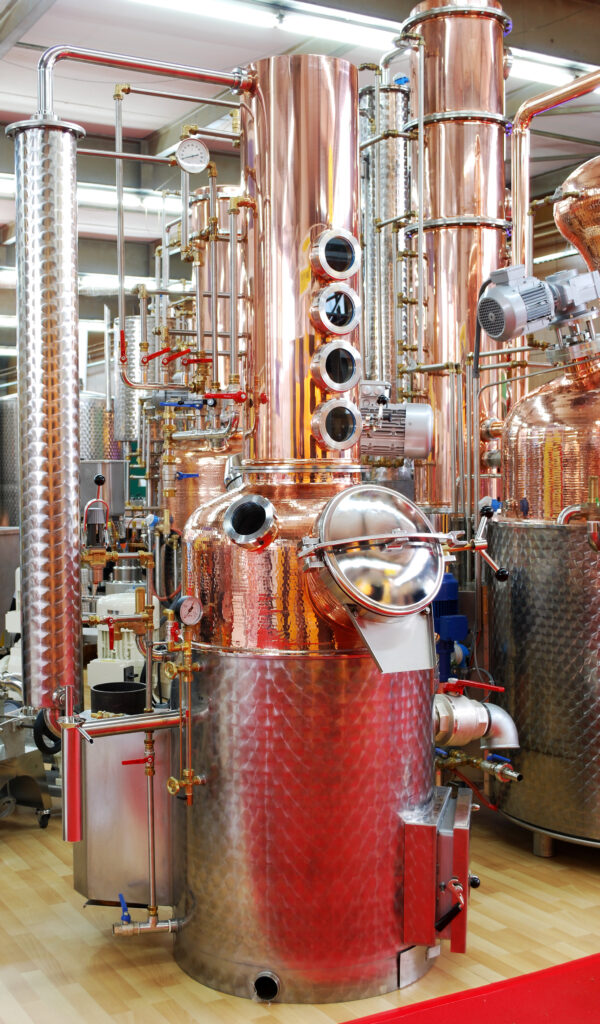
a copper still in a distillery

  Morris tells Beverage Master Magazine that frequently potential distillers get caught up in seeing those massive, beautiful copper Vendome systems that run a quarter- to half-million dollars and become obsessed with them. When he sits down and looks at their needs, he can often put together a system for them for under ten thousand dollars.

  “We all like to drool over the copper eye candy, but what is needed is usually not aligned with that vision,” said Morris. “If that money is truly in their budget, that’s great, and they can save the money for when growth occurs. Just don’t jump into the deep end immediately because it looks great behind the tasting room glass. You can buy a 4-inch copper system with copper plates, or a 4-inch stainless column with copper plates, and they will do the exact same thing, function the exact same way, and produce the exact same quality product because you have the same copper in both systems. But wanting everything in copper will be 60-70% more expensive. If you have copper in the vapor path, you are good with either system.”

  Morris says he hasn’t seen a meaningful change in system choice, but they are being tailored specifically to the distillery’s projected needs. “It’s a way to keep costs down upfront,” said Morris. “Is this a full-time distillery or weekends only? How many hours of running time will the system be in use? Get the system you need and maybe get a little larger kettle upfront. That’s a small expense, and you can set it up for a couple of 3-inch systems. Then, scaling up may be as easy as replacing those columns with 4-inch systems. You’re replacing the column but not needing to replace the entire system. Choices like that enable cheaper scaling later. The initial smaller columns can be tuned a little more for smaller volumes, while the larger columns don’t manage smaller volumes as well.”

The Future: More Fads Rather Than Trends

  Morris says that rather than trends, they notice little fads that come and go. Trying to speed up the aging process is a big one because of the cost involved.

  “The product sits in barrels for so long,” said Morris. “You’ve got the barrel cost, the product cost, and the warehouse storage space cost, along with the extended length of time involved. There’s been a lot of movement and potential technology over the years trying to speed up that process. We see things spike as the next wonderful thing, and then six months later, they’re gone. All the different flavor profiling is big as well. The NA market is increasing, but that doesn’t change the distilling process. It’s the same process, separating the bads from the goods.”

  Morris said that the type of brewing or distillation system a craft beverage producer really needs depends on the quantity and type of products being produced, as well as the owners’ future production and expansion plans. The Brewhaus team encourages makers to adopt a system that, instead of being replaced, can be adapted for a fraction of the cost when needed for volume or product expansion.

Bar vs. Restaurant: The Difference is in the Details

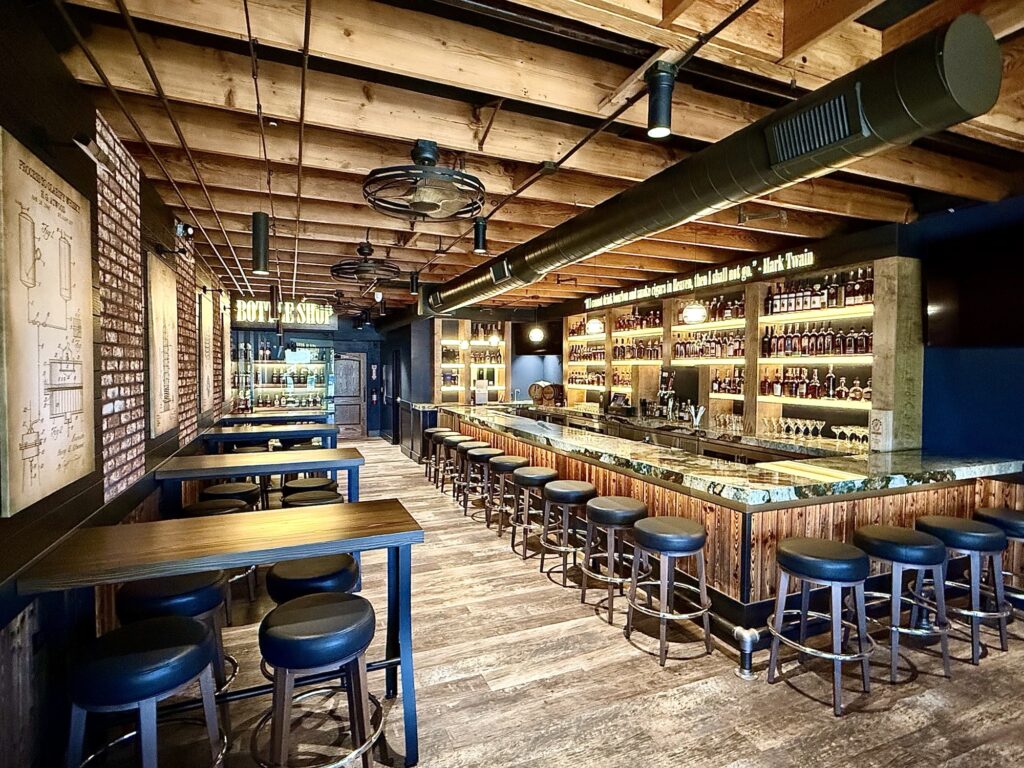
photo of Still  Barrel bourbon bar in phoenix az

By Eric Butrull, Knife and Fork Media Group

Across the country, the hospitality industry continues to be a major economic powerhouse. As 2025 came to a close, the National Restaurant Association reported that restaurants alone added 150,000 jobs in 2025, and eating and drinking places added a net 27,200 in December (on a seasonally-adjusted basis, per the Bureau of Labor Statistics).

  Most hospitality personnel — from owners to staff — know that operating a business in this industry is not for the faint of heart. Whether a bar, brewery or distillery, the hours can be long, fast-paced, stressful and exhausting. However, owning and operating a bar or restaurant can also be extremely fulfilling and rewarding.

  Repeat customers of these types of establishments are often extremely loyal, finding solace and a “home away from home” at their favorite neighborhood bar or brewery. But there are some rather distinct differences in owning and operating a food service establishment and a bar, brewery or distillery, where liquor is the focus of sales.

  Dennis Shaw, owner of Phoenix City Grille, a successful restaurant in Phoenix, Arizona, since 1997, and co-founder of the soon-to-be-opened Still & Barrel bourbon bar in Phoenix, Arizona, offers some insight, based on his more than four decades in the hospitality industry, working across restaurant and bar operations, in leadership and ownership positions.

  “A liquor-focused bar is much more about curation, education and experience than volume. With a restaurant, food drives the visit; with a bourbon bar, the spirit selection and the story behind it are the draw,” said Shaw. “Inventory management is more complex, pricing strategy is critical and staff knowledge has to go much deeper. Every bottle has a purpose, and every pour should feel intentional.” Intention is key in any business, of course. However, Shaw notes that when it comes to bar businesses in particular, patience and relationships matter more than anything.

  “Whether it’s securing rare bottles, navigating licensing or building the right team, nothing happens overnight,” he said. “I’ve also learned that guests today want authenticity — they want to know why a bottle is on the shelf and what makes it special.”

  Still & Barrel’s General Manager Cliff Cragg, who has been in the hospitality industry for more than 20 years, echoed those sentiments.

  When it comes to his takeaway while building Still & Barrel, he said: “I have learned that patience and relationships matter more than speed. Building a strong spirits program takes time, trust and consistency. There are no shortcuts.”

  Prior to helping open Still & Barrel, Cragg previously operated a concept where he built the whiskey program from the ground up, which was recognized as one of the top whiskey programs in the United States by the time he left. Over the last few years, he has focused on building and managing spirits-forward beverage programs, barrel selections, and restaurant and bar operations.

  One crucial factor to keep in mind is that today’s customers are knowledgeable and yet thirsty for more. Rather than simply ordering a fine spirit or rare wine, customers want to feel connected — to the establishment, to their experience and to the spirit itself. Providing them with knowledge or history about what the bottle holds can provide value for guests beyond what’s in the glass.

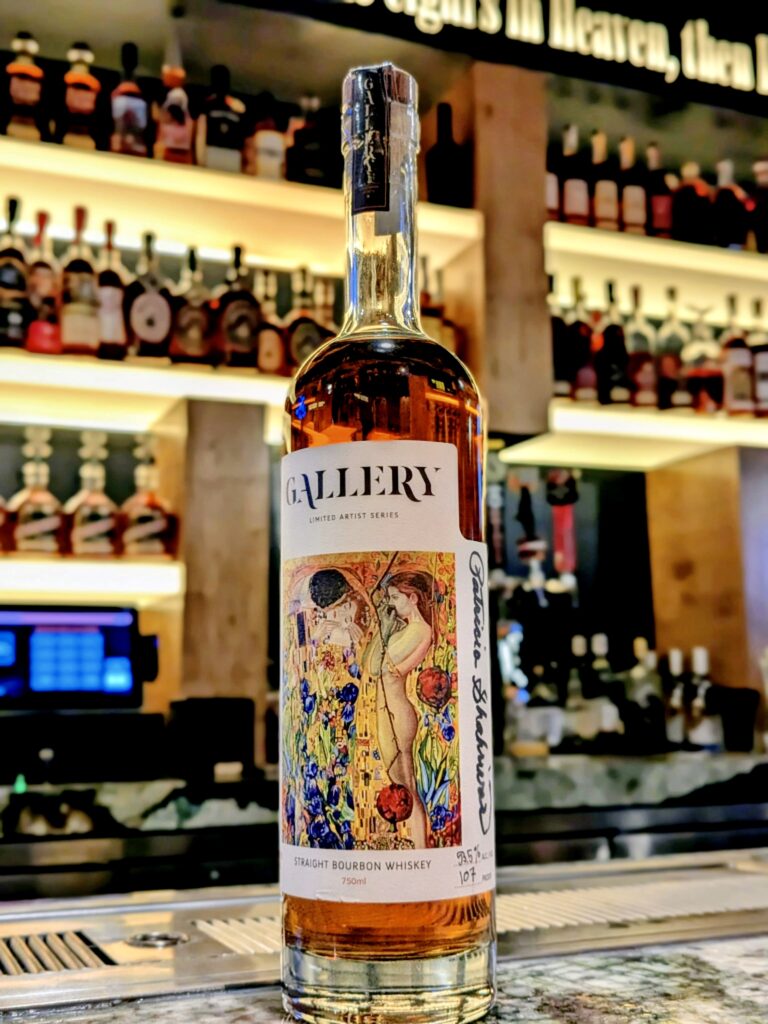
bottle of straight bourbon whiskey from Gallery

  When opening a bar in today’s market, Cragg emphasized the importance of having a clear vision from the start — and remaining disciplined.

  “Understand your costs and invest in your staff,” he said. “A great bottle does not mean much if the service and execution are not there.”

  Knapp followed that advice up with his own: “Educate yourself relentlessly, invest in your staff’s knowledge and understand your market before you buy a single bottle. And be prepared: capital requirements, licensing timelines and inventory costs are often underestimated.”

It is of the utmost importance to ensure proper liquor licensing and air-tight insurance policies. Most knowledgeable, highly credible insurance brokers will advise bar and restaurant owners to work closely with an agent that is well-versed specifically in the language, the inclusions and more importantly, the exclusions that are often written into policies for establishments that serve alcohol.

  One of the key differences that surprised Knapp during the process of opening Still & Barrel is how complex and restrictive liquor licensing and insurance can be, especially when dealing with high-value inventory.

  “People are also surprised by how much capital is tied up on the shelves,” he said. “Some bottles sit for months or years, but they’re essential to the identity of the bar.”

  Knapp encourages new bar owners not to chase trends but rather build a point of view. Upon developing the concept and the inventory for Still & Barrel, for example, Knapp said he largely relied on Cragg’s extensive knowledge of whiskey to build the brand’s inventory around balance — allocated and rare bourbons alongside exceptional everyday pours.

  “We focused on producers with strong heritage, craftsmanship and consistency,” he said. “Some of the bottles we’re most proud of are those that are nearly impossible to find on-premise, paired with staff who can explain why they’re special, not just expensive.”

  This explanation of importance or rarity, rather than price, further adds value to the product being sold and gives more meaning to the drinker.

  For Cragg, that meant building the bar list at Still & Barrel with balance in mind, including approachable pours, premium options and a small number of truly special bottles.

  “The ones I am most proud of are our private barrel selections because we tasted and chose them ourselves,” he said, adding, “They reflect what we actually like to drink.”

  Offering rare and hard-to-find bottles gives a bar an edge. Offering something that not everyone has on their bar list makes it feel exclusive, even if the environment is as casual and welcoming as any other neighborhood bar on the block. Creating the proper connections in order to obtain those special pours is a key part of the business.

  “Sourcing rare bottles is mostly relationship-driven. Allocations are earned through long-term support and trust with distributors and suppliers,” said Cragg. “Private barrels take time, travel and a lot of tasting before the right one is selected.”

  Knapp agreed that long-term distributor relationships, purchase history and trust are essential.

  “Allocations aren’t something you can buy your way into overnight — you earn them over time,” he said. “We stay engaged with distilleries, tastings and industry events, which helps us identify unique opportunities before they hit the broader market.”

  This goes back to the idea of intention.

  “In a liquor-focused concept, the bar is the point, not the support,” Cragg said. “The selection is tighter and more intentional. With fewer options, consistency and attention to detail matter even more than they do in a traditional restaurant.”

  Ultimately, there are nuances with each individual establishment. However, overall success comes with putting hospitality first.

  “Great bars and restaurants aren’t built on menus or bottles alone,” said Knapp. They’re built on people, consistency and attention to detail. If you get those things right, everything else follows.”

  Cragg added, “I have learned that consistency and honesty go a long way. Trends change, but good hospitality, a well-run bar and a team that cares will always matter.”

  Dennis Shaw took ownership of Phoenix City Grille (PCG), continuing the legacy that founder Sheldon Knapp built when he opened the restaurant in 1997, while elevating the guest experience through food, service and beverage programs. Shaw co-owns Still & Barrel with Knapp. He calls the opening a natural extension of that journey—taking everything they have learned at PCG and applying it to a more focused, spirit-driven concept.

  Cliff Cragg is the general manager of Still & Barrel. He has more than 20 years of hospitality experience, previously operating a concept where he built the whiskey program from the ground up, which was recognized as one of the top whiskey programs in the United States by the time he left.

What’s Your Brews Resolution

two beer mugs clinking together in front of a clock about to turn midnight on New Years Eve

By Hanifa Sekandi

What are your brand’s goals this year? What do you want to achieve? Did you meet your goals last year? When most people think about a New Year’s resolution, they think about personal goals and solutions to improve their lives. Your brand is always looking for fresh solutions. It may be a complete revolution—an overhaul of what once was for something new and inspiring.

  The beauty of this time of year is that it forces everyone to dig a little deeper and think critically about what kind of impact they would like to have. Seeing your brand as a movement, a cultural wave that people desire to be a part of, will allow you to see your consumers authentically. Understanding how your beverage fits in their lifestyle, their personal brand ethos, particularly for those who imbibe mindfully.

  As you draft this year’s creative brief and refine your band guidelines, change your approach. As a team, come together and create a resolution board. A visual tool that will allow you to dream up ways to be an industry disruptor in the best way possible. Think big and be bold. Include places around the world that inspire you, food, culture, fashion, and every facet of life that will help your beverage become more than just another drink, but a lifestyle brand.

  This allows you to see your brand in motion. Perched on a table at a cafe by the beach or poured while dining on a gourmet meal at a high-end restaurant in Paris. While you create this vision, do not think about trends. You are the trend; you are the movement. When you visualize your brand this way, you will not get lost in the race because you will focus on who is running next to you. Also, remember, having a community of other beverage brands is important. Do not compete, disrupt.

The Shift is Possible

  It is easy to believe that, as a brand, you are stuck. The notion that you need to move full steam ahead with the way things are and have always been. Why would you purposely implement a brand shake-up? What about all the time, money, and effort spent on past initiatives? Should you abandon them? Remember, you are always stacking your brand wheel. Even during a brand revolution, you keep elements that have worked for your brand. It is not a complete elimination of everything.

  A good example is when you decide to embark on a wellness journey. Yes, you are shedding parts of yourself, but the good parts remain intact. It also allows the best parts of you to shine. We often hide the best parts of ourselves beneath the things we do not like. Brands do this when they refuse to change. They refuse to make bold moves that, eventually, will prove to be beneficial. Do not change identifying markers that make you unique. Instead, think of ways to take the good and make it impactful.

  So how do you get started? How do you make the shift? Look at your product performance. Review campaigns that had a great ROI. Then analyze areas where you missed the mark. Your answers are always found in the steps you have already made. You do not need to hire an agency or consultant to tell you this. A vision board will help you visualize this. This is a visual anchor to remind you of where you want to be or plan to go in the next 5 to 10 years. If you decide to hire someone to help you bolster this vision, you will avoid those who don’t see it and try to convince you to go in another direction.

  Not all experts are gold stars. Even great advice can be bad advice. So many people had great ideas but then were steered away from them because they trusted someone else’s vision. Your vision was planted in your heart for a reason. So, remain clear and steadfast. Stay the course, like the best of the best who were beverage innovators of their time.

You’re Not Stuck

a chalkboard showing the steps from vision to mission to strategy to action plan

  Once you have decided to make the shift and start devising a plan to make your beverage stand out, do not limit your possibilities. You are never stuck; you are just afraid. People often confuse fear with being stuck. With limited budgets or teams, it can appear this way. Fortunately, we live in a world where communication is at your fingertips. Your entry into the market is made easier, and barriers can be overcome.

  Did you know that the founders of Airbnb first started their business by renting air mattresses to pay their rent? Or that John Schnatter, the founder of Papa John’s, started with rented equipment in a broom closet, his goal was to make enough money to date? You could be the next Ben Weiss, who launched his beverage brand Bai in his basement. His brand was acquired for $ 1.7 billion. When there’s money, there’s a way, of course, but when there is a WILL, there is a way.

  The problem most people face is that they are not running their own race. Competition will always exist. Consumers will always have choices. Spending your time worrying about this will set you back. Look ahead and be thankful that the market exists. Imagine a world where only one beverage existed. Only one flavor by one brand. Life would be quite boring. Like nature, a forest full of trees is a forest full of trees, each with a unique story and distinct markings. Your beverage is a tree in that forest, and the people going on a hike through it will see you. They want to know what your story is and how you contribute to the beverage ecosystem.

Start the Beverage Revolution

the people's brew and beer revolusion poster

  It is exciting to think that there is a founder somewhere crafting a new beverage idea from their kitchen. It is exciting to know that there are beverage brands that are bold enough to try something new, to be the rebels of the beverage industry. What do you have to lose? There is so much to gain if you approach this with a fearless mindset. There are so many reasons why you should not start. If you ever ask someone in the beverage industry, they will often tell you all the reasons why it is a bad idea.

  Isn’t it funny that someone who is doing something you desire deters you? You can see this as an opportunity to propel yourself forward into the unknown and write your own beverage brand story or give up. Look back and realize the what ifs you had control of.

What if you tried? What if you did things a little differently? What if their story is not your own?

  No one will know unless you try. What is in a world-class beverage brand is the person who believed in their product. That never doubted that theirs is nothing like the others, just one sip, taste buds enlivened, and an industry transformed by you and your beverage.