Filtration Media

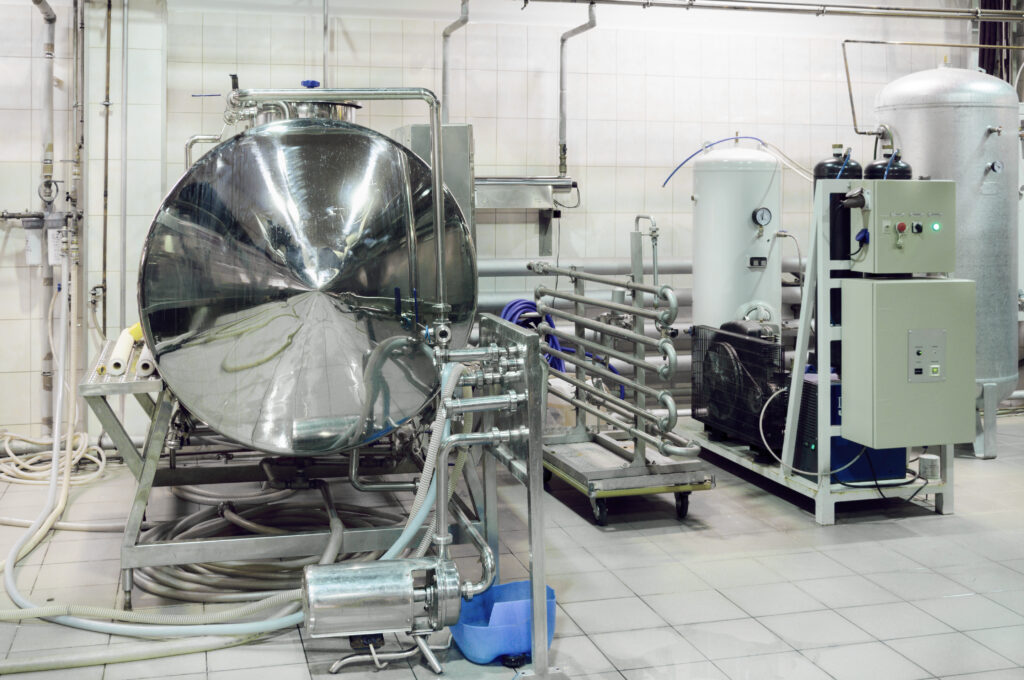
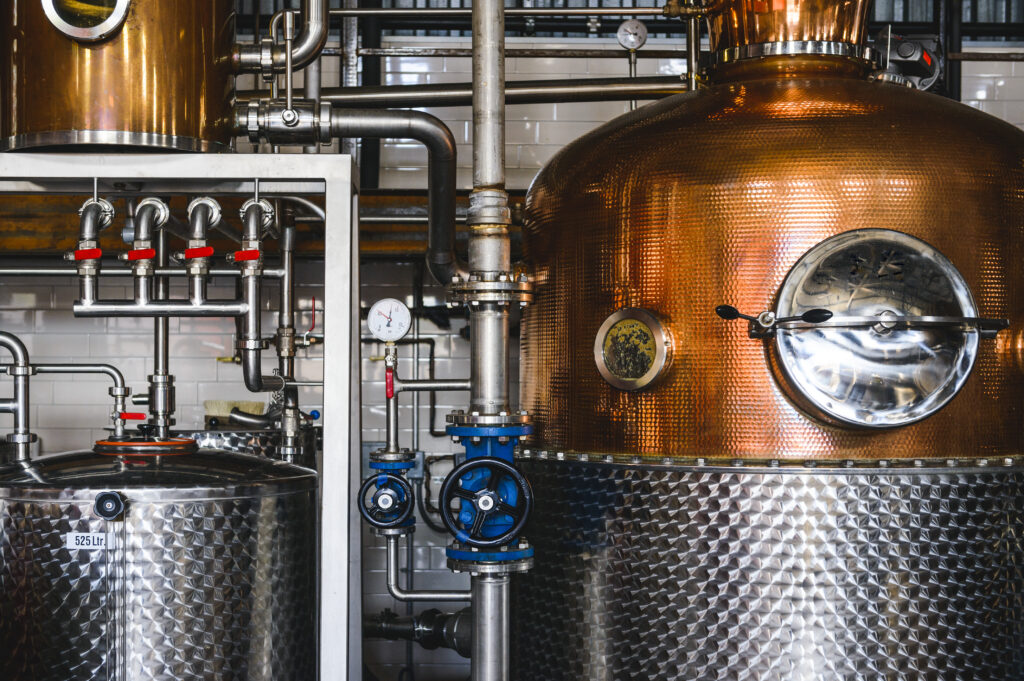
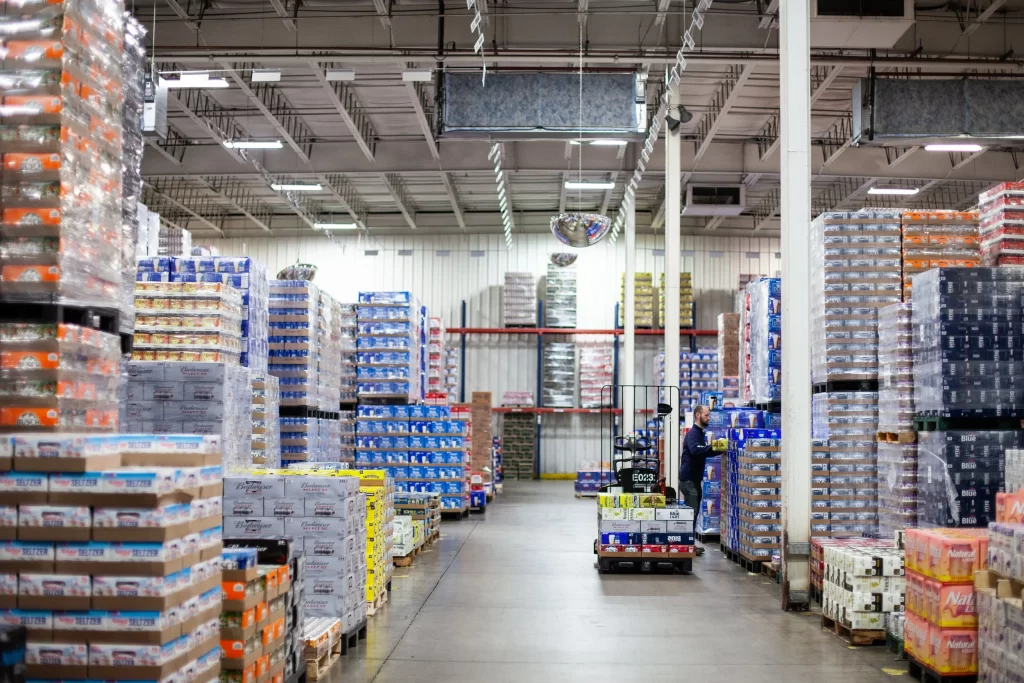
filtration equipment on the floor of a brewery

By Frances Tietje-Wang

A routine technical step, filtration is often addressed with equipment selection reflecting legacy systems, supplier recommendations, or the price of filter media rather than an analysis of long-term operational impact.

  However, it is more than a step in improving beer clarity because media selection can influence labor requirements, production downtime, beer recovery, wastewater generation, and sanitation demands. Energy costs are rising, so breweries are operating with tighter margins and greater environmental scrutiny while maintaining operational capacity.

  Brewing process research has shown that clarification and filtration steps represent significant resource and water use within brewery operations. The composition of the beer entering the filter, in particular yeast, proteins, polyphenols, and hop material, can strongly influence filtration resistance and cycle length. In research on barley and beer composition, proteins and polyphenols contribute to haze formation and beer stability, demonstrating how upstream raw material composition ultimately affects downstream clarification performance.

  Given this context, for production managers, the operational question is straightforward: Which filtration media actually minimize operational cost once labor, waste, and throughput are considered?

  Breweries can employ several different filtration technologies to remove yeast and haze-forming material prior to packaging, but each has a unique operational impact to consider.

Sheet Filtration:  Sheet filtration uses cellulose-based filter sheets mounted in plate-and-frame systems. Common in small- to mid-sized breweries, they have relatively low equipment costs and are fairly straightforward to operate. However, sheet filters require manual installation and realignment during change-outs.

Lenticular Filtration:  Lenticular filtration systems use stacked depth-filter modules housed within stainless vessels. These modules provide a large filtration surface area and improve containment compared to sheet filters. Lenticular filters are applicable for polishing filtration or sterile filtration applications.

Cartridge Filtration:  Cartridge filters use replaceable membrane or depth cartridges inside sanitary housings. These systems are commonly used after centrifugation or coarse clarification steps and are widely adopted for their consistent performance.

Diatomaceous Earth Filtration:  Diatomaceous earth (DE) filtration has historically been the dominant method for rough beer clarification in large breweries. In these systems, powdered fossilized diatom remains form a porous filtration bed capable of removing large quantities of yeast and suspended solids.

  Although each of these systems can achieve effective clarification, the operational trade-offs among them in terms of labor requirements, waste generation, and throughput can be substantial.

  Labor requirements are often the most overlooked cost associated with filtration.

  Plate-and-frame sheet filters require operators to install and align filter sheets between runs manually. These change-outs can involve disassembling plate stacks, removing spent sheets, and installing fresh media. This maintenance process can create downtime between filtration cycles, requiring careful handling to prevent leaks or misalignment.

  Lenticular modules reduce some of this labor by using preassembled filtration cartridges that can be installed more quickly than individual sheets. However, these modules are still relatively large and require manual handling during replacement.

  Cartridge filtration systems typically involve smaller components and predictable replacement schedules, which can simplify maintenance planning.

  DE filtration requires very different operational considerations in preparing a filter precoat and continuously monitoring slurry dosing and pressure conditions. Stable filtration conditions must be maintained to prevent filter bed collapse or breakthrough.

  Operational studies of brewery wastewater and processing variability highlight how batch operations and cleaning cycles can influence production efficiency when not carefully managed.

  In practice, filtration media with a lower purchase price may incur hidden labor costs when maintenance and downtime are considered.

  Filtration systems also differ significantly in the type and volume of waste they generate.

  DE filtration produces large volumes of spent filter-aid slurry containing yeast, proteins, and other solids. The disposal of the used filter and its accumulated filtered contents poses environmental and regulatory challenges due to the presence of fine silica particles. Research corroborates the environmental and occupational impacts associated with DE filtration and has driven interest in alternative filtration technologies (4).

  Sheet filtration generates solid waste in the form of used filter sheets, which can be disposed of in a landfill.

  Lenticular modules and cartridge filters generate smaller waste volumes, but the composite materials they are made of are often not recyclable.

  Filtration operations can also contribute to wastewater generation through backflushing, rinsing, and cleaning cycles. In brewery wastewater studies,  suspended solids and organic material from clarification processes have been shown to contribute to treatment loads.

  Additionally, in regions with strict wastewater discharge limits or high landfill costs, filtration-related waste management can become a significant operational expense.

  As filtration proceeds, suspended particles accumulate within the filtration media, changing the pressure, requiring increased pump energy, and can reduce filtration throughput. The media can clog with the rate dependent on the composition of the beer (the variability of yeast concentration, protein haze, and hop particulate) entering the filter. In short, filtration media influences both hydraulic performance and beer recovery.

  Beer loss within the filtration media also affects production efficiency. Filter beds and sheet media can retain significant volumes of beer, reducing the packaged yield. Media design, filter geometry, and recovery procedures all influence how much beer remains trapped in the system. Also, the research on beer haze formation shows that proteins and polyphenols play key roles in colloidal stability and filtration behavior (2). Considering these interactions, breweries can optimize both filtration efficiency and product stability for less product loss during filtration, which can impact the choice of media.

  Cleaning requirements vary significantly across filtration systems. Cartridge and lenticular filtration systems typically require regular clean-in-place (CIP) cycles to remove accumulated organic material and maintain sanitary conditions. In contrast, plate-and-frame sheet filters often require manual cleaning between filtration runs before new sheets are installed. DE systems may require additional washdown procedures to remove residual slurry from equipment surfaces.

  Cleaning operations consume water, chemicals, and labor time. Research on brewery wastewater treatment highlights how cleaning and sanitation processes contribute significantly to water consumption and wastewater generation in brewery operations (3).

  As a result, filtration system selection can influence both sanitation workload and wastewater generation.

  The purchase price of filtration media rarely reflects the true cost of filtration operations. Hidden cost drivers include:

•     labor required for media change-outs

•     downtime between filtration runs

•     beer loss retained in the filtration media

•     waste disposal costs

•     pump energy requirements associated with the pressure drop

  With all of these possibilities, a low-cost filtration medium that requires frequent replacement or retains large volumes of beer may ultimately increase operating costs. When evaluating filtration systems, it is important to use a total cost of ownership framework that allows breweries to identify operational trade-offs more clearly.

  Production teams evaluating filtration systems can benefit from tracking several operational metrics:

•     labor hours required for filter changes and cleaning

•     beer losses that are associated with the filtration media

•     pressure drop development and filtration cycle length

•     waste disposal and wastewater treatment costs

•     filtration throughput during packaging runs

  Collecting this data allows breweries to compare filtration formats using operational performance rather than equipment price alone.

  Filtration media selection influences far more than beer clarity, including labor requirements, waste generation, beer recovery, and production throughput, all of which depend on the chosen filtration system. Breweries should evaluate filtration through a system-wide lens rather than focusing solely on media costs to uncover opportunities to reduce operational expenses and improve efficiency. As margins tighten and sustainability is factored in, filtration decisions increasingly represent strategic operational choices rather than routine technical preferences.

References

1    Fillaudeau, L., Blanpain-Avet, P., & Daufin, G. (2006). Water, wastewater and waste management in brewing industries. Journal of Cleaner Production, 14(5), 463–471. https://doi.org/10.1016/j.jclepro.2005.01.002

2    Fox, GP, Panozzo, JF, Li, CD, Lance, RCM, Inkerman, PA,  and Henry, RJ (2003). Molecular basis of barley quality. AUSTRALIAN JOURNAL OF AGRICULTURAL RESEARCH  54 (11-12) 1081-1101. https://doi.org/10.1071/AR02237

3    Simate, G. S., Cluett, J., Iyuke, S. E., Musapatika, E. T., Ndlovu, S., Walubita, L. F., & Alvarez, A. E. (2011). The treatment of brewery wastewater for reuse: State of the art. Desalination, 273(2–3), 235–247. https://doi.org/10.1016/j.desal.2011.02.035

4   Cimini, A., & Moresi, M. (2020). Innovative Rough Beer Conditioning Process Free from Diatomaceous Earth and Polyvinylpolypyrrolidone. Foods (Basel, Switzerland), 9(9), 1228. https://doi.org/10.3390/foods9091228

10 Ways Technology Buyers Get It Wrong (Before They Ever Issue the RFP)

three people sitting at their desks holding their heads in confusion

By Tara Buchler

Technology buying failures rarely happen because a team chose the “wrong” software. They happen earlier when beverage manufacturers or distributors enter the RFP process without the strategy, clarity, or alignment required to make a good decision.

  Most technology buyers in beverage production only see a handful of production lines, bottling plants, or distribution operations over the course of their careers—often within the same company, sometimes within the same operating model. That means they know what their world looks like, but they have limited visibility into what “good” looks like across product categories, growth stages, or operating models. At the same time, technology is accelerating, vendors are proliferating and consolidating, and marketing claims are getting louder—especially around automation, AI-driven production planning, and end-to-end supply chain platforms.

  Against that backdrop, many buyers treat the RFP as a starting point. They move quickly, rely on familiar signals, and focus requirements on the most immediate problems in front of them. Unfortunately, those instincts often lead to predictable and expensive mistakes.

  Here are 10 common ways technology buyers get it wrong before the RFP ever hits the street—and what a strategy-first approach does differently.

1. Starting With a System Instead of a Business Outcome: Most initiatives begin with a conclusion rather than a question: “We need a new ERP, MES, or production management system.” That belief may come from increased production volume, a new product line, expansion into new markets, or the sense that current tools have been outgrown. However, once the system is assumed, the rest of the process becomes backward.

Why it fails: When technology is treated as the objective, requirements focus on functionality instead of outcomes. Buyers spend their time documenting what the system should do—track batches, schedule bottling lines, manage inventory, or monitor quality—instead of what the business needs to achieve: consistent product quality, lower production costs, reliable traceability, or scalable growth. Vendors respond accordingly with polished demos and confident roadmaps, but no one is accountable for whether those capabilities translate into measurable business impact.

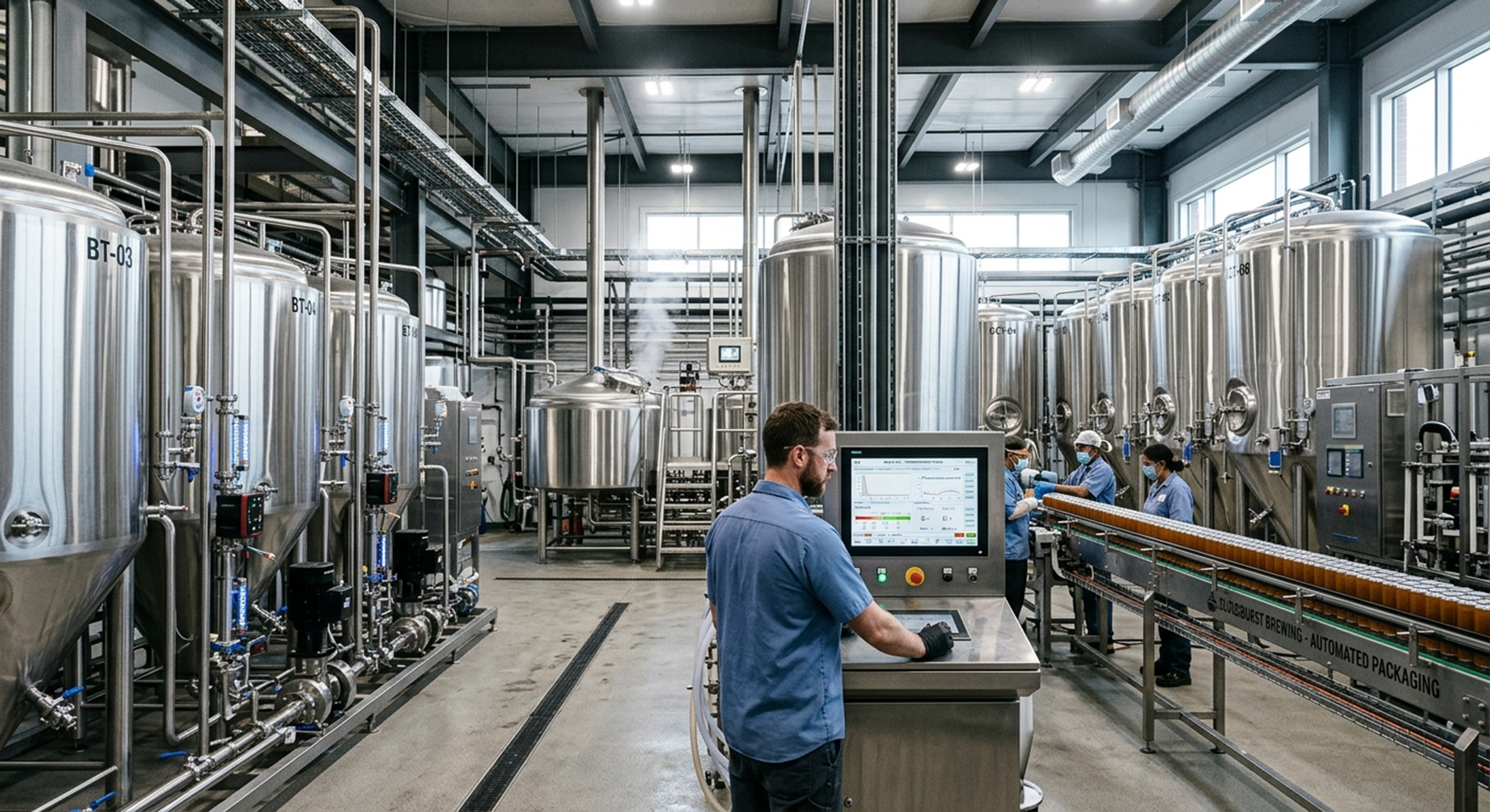
a man standing on the brewery production floor looking at a computer screen

Strategy-first alternative:

Start with the outcomes the business needs to deliver and work backward. Let those outcomes determine whether technology is required at all, what role it should play, and which tradeoffs matter. Technology should be a consequence of strategy, not a substitute for it.

2. Treating Today’s Pain as the Real Problem: Manual workarounds, missed production targets, spreadsheet dependency, and poor reporting often dominate early discussions because they are visible and painful. But they are rarely the underlying issue.

Why it fails: Pain points are symptoms of deeper structural problems: misaligned processes, unclear decision rights, weak data foundations, or operating models that no longer fit the production or distribution business. When these conditions exist, technology is often used to compensate. Workflows get manually overridden, rules get bypassed, and “temporary” workarounds become standard practice. When buyers select new technology to fix a pain instead of addressing the underlying problem, they often embed the same behavior into a new system.

Strategy-first alternative:

Treat pain as a signal, not a diagnosis. Step back and understand why the organization is struggling before deciding how to fix it. Otherwise, technology becomes an expensive way to mask deeper issues.

3. Assuming Technology Will Fix Broken Processes:

RFPs frequently document the current state in extreme detail with the implicit belief that “modern software” will somehow make those processes better.

Why it fails: Technology does not fix broken processes—it accelerates them. Automating a flawed workflow only increases the speed and visibility of inefficiency, now accompanied by dashboards and alerts. Teams end up locked into faster execution of work that no longer makes sense, whether that means inefficient production scheduling, unnecessary manual checks, or poor coordination between production and distribution.

Strategy-first alternative:

Redesign processes based on how the business should operate in the future, then select technology that supports that design. Technology is an amplifier. Without process discipline, it amplifies the wrong things.

4. Skipping the Target Operating Model: Many beverage companies cannot clearly articulate how they want to operate three to five years from now. As a result, requirements blend legacy behaviors with aspirational goals.

Why it fails: Without a defined target operating model, technology decisions lack direction. Vendors are asked to reconcile competing objectives—standardization and customization, automation and manual control—without clear guidance. Fundamental questions remain unanswered: who owns decisions, when automation should intervene, and when human override is expected. These ambiguities resurface during implementation, when tradeoffs become costly and hard to reverse.

Strategy-first alternative:

Define the target operating model upfront: roles, decision rights, escalation paths, and performance expectations. When the operating model is clear, technology requirements become coherent and comparable.

5. Letting One Function Drive the RFP:

Technology buying is often led by a single function—IT, production, quality, or supply chain—based on where the pain feels most acute or who has budget available.

Why it fails: Optimizing from one functional perspective frequently creates friction elsewhere. Systems that work well locally can degrade end-to-end performance, introduce handoff issues, or misalign incentives across the broader operation.

Strategy-first alternative:

Design requirements cross-functionally, anchored in end-to-end operational outcomes. Input should reflect the needs of all impacted stakeholders—from production and quality assurance to logistics and distribution—not just primary users. Technology should serve the organization as a whole, not the loudest stakeholder in the room.

6. Overloading Feature Lists Instead of Decision Support: Many buyers rely on exhaustive requirement lists, sometimes sourced from third parties without tailoring them to their own business, to demonstrate rigor.

Why it fails:  Feature checklists do little to improve decision quality. Buyers end up with platforms that can do many things but do not materially improve production planning, quality monitoring, or responsiveness to demand changes. The system becomes a tool for compliance rather than better decision-making.

Strategy-first alternative:

Anchor requirements around decisions and use cases: what decisions need to be made, under what conditions, and with what balance of automation and human judgment. When requirements reflect how the business actually operates, responses become a valuable gauge of whether the technology is designed to support and improve those operations. Decision quality—not feature count—is what drives value.

7. Ignoring Change Management Until After Selection: Change management is often treated as an “implementation issue” rather than a strategic input.

Why it fails: Solutions exceed the organization’s readiness, skills, or appetite for change. Advanced capabilities are quietly shelved, workarounds proliferate, and adoption stalls without anyone formally declaring failure.

Strategy-first alternative: Assess organizational maturity early and align technology ambition accordingly. A solution that the organization can fully adopt will outperform a more sophisticated one it cannot.

8. Assuming Data Is “Good Enough”: RFPs often assume optimal conditions: clean master data, consistent processes, and disciplined data governance—even when reality says otherwise.

Why it fails: Technology performs well in demos and poorly in production not because the software breaks, but because the data feeding it is unreliable. In beverage production, this might include inconsistent batch records, incomplete supplier data, or inaccurate inventory counts. When data readiness is not assessed upfront, organizations expect the system to compensate for weak inputs. Technology cannot correct these behaviors—it will simply reflect them.

Strategy-first alternative: Evaluate data maturity explicitly and early. Identify which elements are critical to system performance, how they are created and maintained, and where ownership sits. Standardize foundational data where possible and align expectations with vendors around data requirements. Addressing gaps upfront allows organizations to plan remediation intentionally rather than discovering limitations after technology is already in place.

9. Treating the RFP as a Documentation Exercise: Many organizations measure RFP success by participation rather than insight.

Why it fails: The RFP becomes a static artifact instead of a decision-making tool. Assumptions go untested, tradeoffs remain implicit, and real priorities stay hidden.

Strategy-first alternative: Use the RFP to challenge thinking, surface priorities and tradeoffs, and sharpen decisions. The goal is clarity and strategic alignment, not volume.

10. Rushing to “Show Progress”: Leadership pressure to move quickly often drives teams to issue an RFP or select a solution before alignment exists.

Why it fails: Shortcuts upfront create delays downstream: re-scoping, mid-implementation resets, and missed ROI. What looks like speed becomes drag.

Strategy-first alternative: Recognize that strategy accelerates execution. Alignment eliminates false starts and reduces long-term risk.

The Bottom Line: Most technology failures are not the result of poor vendor selection. They are the result of organizations being unprepared to buy technology in an increasingly complex, hype-driven market.

  A strategy-first approach doesn’t slow technology selection. It ensures buyers are solving the right problems, setting realistic expectations, and using technology as a tool—not a crutch—to deliver real business outcomes.

  About the Author

  Tara Buchler is Principal, Strategy at JBF Consulting, a leading logistics strategy advisory and technology integration firm. She brings more than 20 years of experience at the intersection of logistics operations and enterprise supply chain software. For more information, please visit www.jbf-consulting.com.  

Sealing the Craft

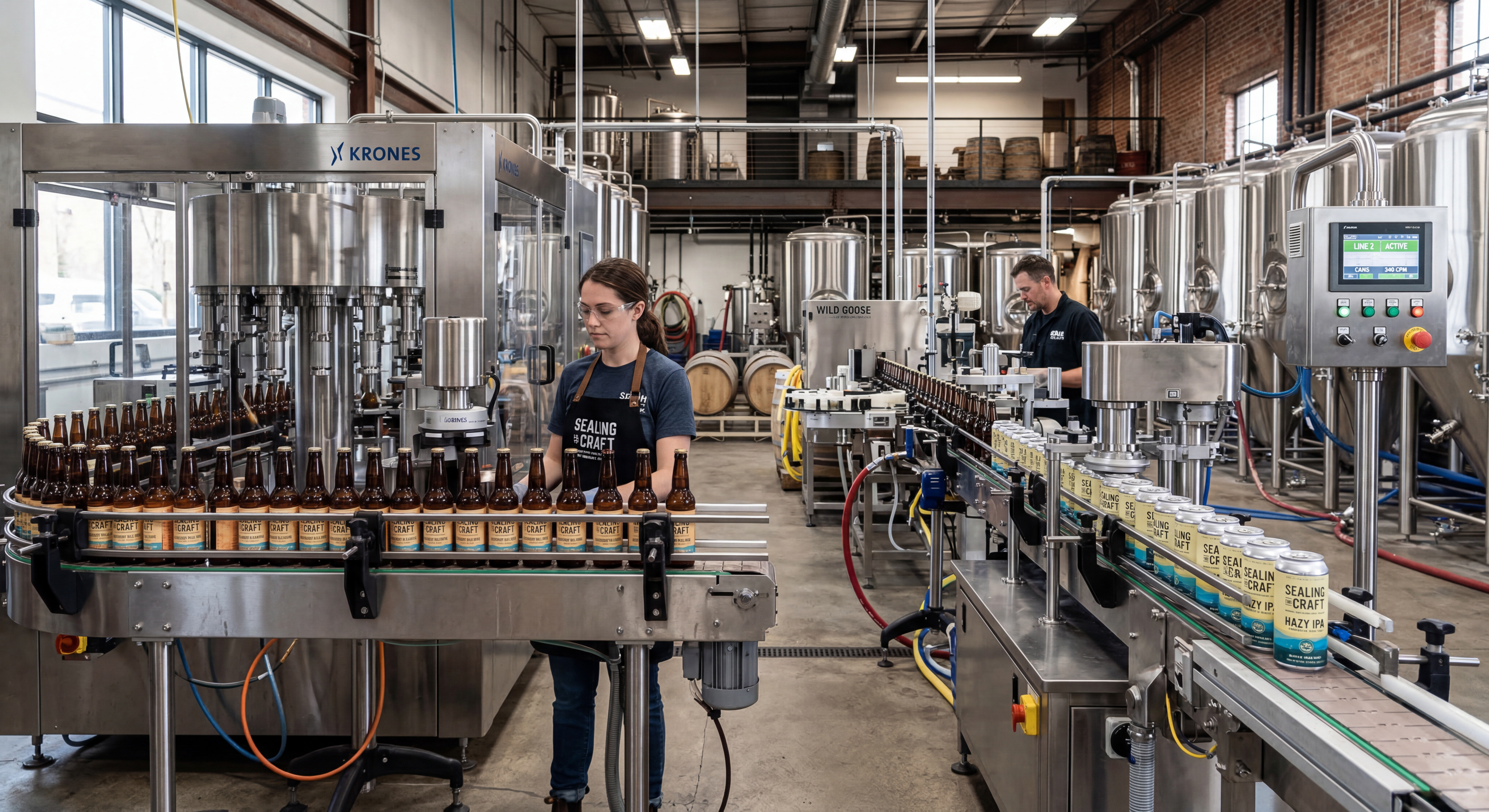
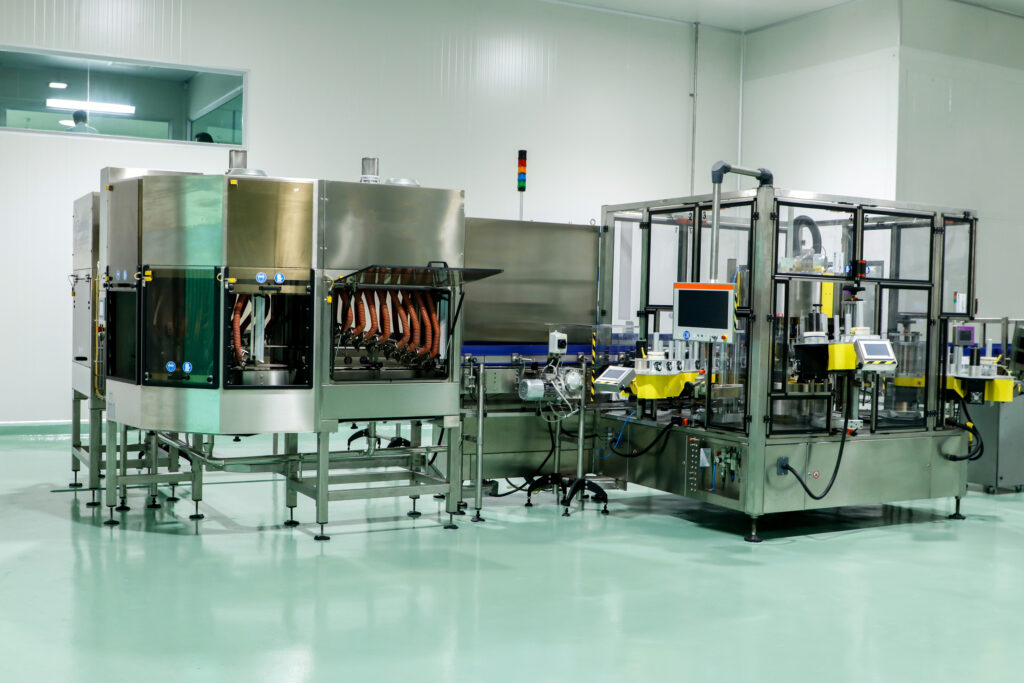
several canning and other packaging machinery on the flor of the brewery

By Alyssa L. Ochs

In the craft brewing industry, packaging is a critical step where craftsmanship intersects execution. Many breweries can brew exceptional beers, but if carbonation is inconsistent or oxygen creeps in during packaging, the end product won’t reflect the hard work you put into it.

  For modern breweries, packaging beer in bottles or cans is more than just the last step for to-go sales – it’s a natural extension of the business that impacts brand perception, quality, and profitability. As the years go by, many breweries are looking to scale production and expand distribution, making the need for precise, reliable, and efficient canning and bottling equipment more important than ever.

  Beverage Master explores the packaging machine options available to breweries today and how to choose the right one for your current and future operations. To learn more from a successful brewery’s perspective, we connected with the team at New Realm Brewing Company, which has expanded its operations across multiple cities and states. 

Types of Brewery Packaging Machines

  There are three basic categories of brewery canning and bottling machines: manual, semi-automatic and fully automatic. Each type offers a different balance of speed, cost, labor, and control.

  Manual systems are often the first entry point for new breweries because of their simplicity and affordability. Manual setups typically rely on counter-pressure or gravity fillers and require careful management of fill height, foam control and timing between the fill, seal, and sanitation between cycles. A manual canning or bottling machine may be sufficient for taproom-only breweries and for pilot systems used for experimental batches. They can produce excellent beer, but only with tight standard operating procedures to reduce risks.

  Semi-automatic canning and bottling machines are helpful as a brewery’s production ramps up because they enable controlled filling speeds and provide more consistent carbon dioxide purging, which improves shelf life. They often reduce human error risks with integrated seaming and capping while allowing quick changeovers between assorted sizes and formats of cans or bottles. These systems may be ideal for breweries that package beer multiple times per week, are looking to increase distribution and want to reduce human error and worker fatigue.

  The third category of canning and bottling machines is fully automated and may offer inline rinsing, filling, and sealing in a continuous flow. Fully automatic machines typically have programmable controls for repeatable settings and integrate packaging with labeling and case packing. It’s usually time to move to this type of system when you are expanding into wider distribution and when running the numbers proves that packaging efficiency directly impacts your revenue.

  Kane Wille, the director of brewing for New Realm Brewing Company, told Beverage Master that his brewery is currently running a KHS Innofill  Can C 21 head filler and a Kosme Barifill 28 head filler. New Realm is a craft brewery and distillery founded in 2016. It has a flagship brewery and restaurant in Atlanta, Georgia, a production brewery and restaurant in Virginia Beach, Virginia and a brewery and restaurant in Charleston, South Carolina.

  There’s also a stylish New Realm taproom in Auburn, Alabama, a barrel-aging and blending-focused location in Greenville, South Carolina and an outdoor-and-music-focused venue in Suffolk, Virginia.

  “The KHS line was chosen for its versatility (12 oz. standard, 12 oz. sleek, 16 oz. standard and 19.2 oz. standard) and speed,” Wille explained.

  “The Kosme line was purchased at auction and commissioned to meet the projected demand of on-the-books business and the anticipation of a swing back to bottles in the craft market.”

Benefits of Modern Canning and Bottling Machines

  Whether you choose to can or bottle your beer, the equipment you choose helps protect it from oxygen ingress, as even tiny amounts can dull the hop aroma, darken the beer’s color, and shorten its shelf life. Optimal packaging machines ensure the best consistency across batches, offer higher throughput for faster packaging cycles, and optimize your labor force. With more accurate pours and better foam control, you’ll use less beer and save money over time.

  Wille from New Realm Brewing Company said that since commissioning their KHS line, the most noticeable benefits have been a significant increase in shelf life and drastically improved throughput.

“Since commissioning the Kosme line, our biggest win has been the ability to capitalize on the untapped market of bottles in the craft space since the heavy shift to aluminum,” Wille said.

  However, Wille also shared that commissioning any new piece of equipment is a tough endeavor and always takes longer than expected.

  “The KHS line took the most time to dial in the underlet gas and the bubble breaker to reduce HSO across the various package sizes it can handle,” he said. “Training and troubleshooting just take time due to the complexity of the machinery, and navigating the world of parts and service post-initial-commissioning is a chore. The Kosme line, as it was purchased at auction and was ‘used’ equipment, was a much taller mountain to climb. For quality and dependability reasons, many of the wear parts and gaskets on the line have been rebuilt or replaced or are on the radar to require some serious attention as we tack on the run hours.”

Cans vs. Bottles: Strategic Considerations

  Beyond just branding and costs, the choice between cans and bottles affects many aspects of a brewery’s coordination and beer’s product stability.

  With cans, you’ll get the best protection from light and lower dissolved oxygen potential. Industry trends show that many beer drinkers now prefer cans, which are also lighter weight than bottles and more cost-effective to ship. However, canning beer requires precise seaming, and the initial investment in a canning line is significant.

  The advantages of bottles include compatibility with refermentation in the package and the traditional, premium perception, which is critical for certain beer styles. Bottles are also the preferred option for some highly carbonated and specialty beers, such as Belgian beers. But when you package beer in bottles, you’ll also face the risk of light exposure and must account for the heavier packages that may be more expensive to transport.

Quality Metrics to Monitor in Packaging

  The initial investment in brewery packaging equipment is just part of the equation; successful brewers know they must continuously monitor its performance to achieve consistent results.

  One key quality metric to pay attention to is dissolved oxygen and aim to keep it as low as possible for flavor stability and shelf life. Seam and cap integrity are also essential to prevent leaks and contamination. To ensure compliance and reduce product loss, brewers pay attention to fill height and volume accuracy. Meanwhile, carbonation levels need to remain stable during transfer and packaging, as over- or under-carbonated beer affects mouthfeel and overall perception.

How to Choose the Right Packaging System

  If you are opening a new brewery or thinking of upgrading your canning or bottling equipment, it’s important to think beyond today’s volume so you don’t outgrow it too quickly. If you invest in slightly higher-capacity equipment now, you may be able to prevent an expensive upgrade later.

  Choosing a packaging system requires evaluating the total cost of ownership beyond the purchase price. Maintenance frequency, downtime risks, and the cost of replacement parts are all considerations. It’s also wise to look at how a packaging system integrates with your cold storage space, fermentation schedule, and distribution timeline. Choosing the right equipment manufacturer can lead to a long-term partnership that includes operator training, installation support and troubleshooting help. Having dependable, on-demand support can often be just as valuable as the machine itself when something goes wrong.

  Wille from New Realm Brewing Company agreed and told Beverage Master why he thinks it’s always important to account for access to support and spare parts.

  “Many of the more complex lines are coming from Europe, and there is a significant time difference to keep in mind when in dire need of assistance during your production hours, even if there is stateside service available,” Wille said. “Many high-speed lines also use proprietary parts that may need to ship from overseas, and since COVID, it seems the availability of parts sitting on the shelf domestically or abroad is reduced. 

  Wille also noted that breweries should account for service contracts and consider building in options like teleservice.

  “Scheduling and training on staff personnel for preventative maintenance should be a day-one consideration,” he said. “It’s also very important to size your line to not only match current throughput demand but allow yourself room to grow into its capacity.”

  Whether you’re manually filling limited releases or running a high-speed, fully automated line, choosing the right equipment boils down to your production goals and growth trajectory. As competition in the craft beer market remains strong and steady, breweries that shop around for the best packaging machine fit will stand out for their consistency in every can or bottle that comes off the line.

Sustainability or Survival?

a wastewater treatment plan processing the waster water in a brewery

By Frances Tietje Wang

As the beverage industry moves further into an era of necessary efficiency to accommodate skyrocketing costs, wastewater management cannot be an overlooked utility function. Aging municipal infrastructure, rising treatment costs, and stricter enforcement of industrial pretreatment requirements have pushed utilities to the forefront of operational and financial concerns. Under the U.S. Environmental Protection Agency’s (EPA) National Pretreatment Program, facilities exceeding domestic-strength benchmarks for biochemical oxygen demand (BOD), total suspended solids (TSS), or allowable pH ranges may face surcharges, permit modifications, or enforcement actions.

  This regulatory pressure coincides with broader business expectations. Wastewater performance now sits at the intersection of financial risk, regulatory compliance, and sustainability reporting. As production varies and the market remains unpredictable with cost pressure and uncertainty, sewer bills continue to fluctuate, impacting overhead costs and future planning. Compliance failures can delay expansions, harm government relations, and/or require capital upgrades under compressed timelines. At the same time, water and wastewater metrics are now standard components of sustainability benchmarking and ESG (environmental, social, governance) disclosures in the brewing sector.

  As a result, wastewater investments are no longer evaluated primarily as environmental gestures. The strategic question has become whether a given project delivers measurable return on investment (ROI) and protects long-term operational viability.

Defining “Payback” in Wastewater Projects

  In beverage production, payback extends beyond a simple comparison of capital expenditure (capex) and operating expense (opex). Direct savings commonly include reduced BOD and TSS surcharges, avoiding penalties for noncompliance, and lower costs associated with chemical neutralization or off-site hauling. These kinds of savings align with municipal cost-recovery frameworks, which are embedded in federal pretreatment regulations 40 CFR Part 403, which is designed to prevent interference with publicly owned treatment works.

“Wastewater investments are no longer evaluated primarily as environmental gestures. The strategic question has become whether a given project delivers measurable return on investment (ROI) and protects long-term operational viability.”

  Indirect value is often more consequential.  Stable wastewater systems can reduce unplanned downtime, protect discharge permits, and preserve expansion capacity. In fact, research has shown that wastewater constraints frequently become limiting factors for brewery growth before brewhouse or fermentation capacity is exhausted.

  Across utility data and academic literature, payback timelines cluster by project type. Pretreatment, solids capture, and flow-equalization projects commonly can achieve ROI payback within 1 to 3 years, whereas anaerobic digestion and water reuse systems often require 3 to 7 years. These all depend on scale, incentives, and local rate structures.

High-ROI Wastewater Projects Breweries and Distilleries Are Actually Using

Solids Capture and Flow Equalization: Upstream solids capture combined with flow equalization remains one of the most reliable ROI drivers in brewery and distillery wastewater management. Methods such as screening, settling, and rotary drum filtration reduce TSS loading before wastewater reaches municipal systems. This results directly in lowering surcharge exposure and downstream treatment demand.

  Flow equalization further improves economics in smoothing short-duration load spikes associated with cleaning-in-place (CIP), yeast removal, or batch discharges. EPA guidance emphasizes that stabilizing hydraulic and organic loading often provides greater compliance benefit than adding downstream treatment capacity, particularly for batch-driven industries such as brewing and distilling (EPA, 2000).

  This approach is reflected in brewery practice, as at Sierra Nevada Brewing Co., which documents wastewater treatment and solids management as integral components of its sustainability strategy. At the facility in Mills River, North Carolina, wastewater treatment infrastructure is embedded into site design rather than treated as an afterthought.

pH Neutralization and Smart CIP Controls: pH excursions remain among the most common enforcement triggers in municipal pretreatment programs. Extreme pH changes can inhibit biological treatment and damage sewer infrastructure. By using methods such as automated pH neutralization, conductivity-based diversion, and smart CIP controls, it is possible to reduce reliance on operator intervention and lower the likelihood of violations.

  Scholarly reviews consistently describe brewery wastewater as highly variable, driven by batch operations, product losses, and cleaning cycles. The best option for managing these sources is in upstream practices, which is often more effective than relying solely on end-of-pipe corrections.  Industry guidance reinforces optimizing sanitation chemistry and discharge timing, some of the most cost-effective wastewater interventions available.

Anaerobic Digestion (When It Makes Sense)

  Anaerobic digestion (AD) can deliver strong returns when organic loading is sufficiently high and consistent. The U.S. Department of Energy identifies beverage production as a sector with meaningful biogas potential, in particular where waste streams are concentrated and predictable.

  New Belgium Brewing is a well-documented example of anaerobic digestion. Trade engineering publications and supplier case studies describe how the brewery integrates anaerobic wastewater treatment and biogas recovery. In combining these two methods, the organic load is reduced while generating renewable energy, supporting both environmental performance and long-term cost control.

  Distilleries, which typically generate higher-strength effluent than breweries, often reach economic thresholds for AD more readily. Breweries may achieve viability at larger scales or through co-digestion strategies, but it is important to note that the literature says that AD economics depend on operational discipline, energy pricing, and access to incentives.

Water Reuse and Process Water Reduction

  Water reuse strategies, such as rinse recovery or reuse for non-product-contact utilities, can reduce both freshwater intake and wastewater discharge. The EPA’s Water Reuse Action Plan emphasizes “fit-for-purpose” treatment. The Plan discusses matching reclaimed water quality to its intended application rather than defaulting to over-treatment.

  Eel River Brewing Company is an excellent example of how small breweries have implemented reuse-adjacent strategies without complete reuse systems.

  By incorporating pretreatment infrastructure to reduce municipal impact and comply with discharge permitting requirements documented in municipal engineering analyses, the brewery illustrates how wastewater investment can scale to smaller producers when aligned with operational needs.

  Economic analyses indicate that reuse projects are most viable in regions with high water and sewer rates or where discharge capacity is constrained, and when integrated into broader water-efficiency programs rather than pursued in isolation.

Grants, Incentives, and Financing: The Hidden ROI Multiplier

  Technically sound wastewater projects proceeding are often determined by grants or low-interest financing if capital costs exceed internal investment thresholds. In the United States, the Clean Water State Revolving Fund (CWSRF) remains the primary financing mechanism for wastewater infrastructure, including eligible pretreatment and reuse projects.

  Energy recovery projects may qualify for additional incentives through state or utility programs. The Database of State Incentives for Renewables & Efficiency (DSIRE) is widely used to identify applicable funding opportunities and rebates.

  Producers who successfully secure funding tend to align wastewater projects with municipal objectives, such as reducing peak loading or deferring treatment plant expansion, rather than aspirational narratives. They may also use support applications with documented monitoring data rather than aspirational sustainability narratives.

Case Study Patterns: Making the Math Work, Not Waste

  Across scholarly literature and industry documentation, three recurring patterns emerge:

1.    Breweries implement solids capture and equalization, which consistently reduce surcharge exposure by stabilizing discharge characteristics.

2.   Distilleries and large breweries integrate anaerobic digestion with energy recovery. AD can offset both wastewater and energy costs when scale and incentives align.

3.   Mid-size producers leveraging CWSRF financing and state incentives frequently offsetting 30–50% of capital costs, bringing payback into acceptable ranges.

  In layering strategies, there is an opportunity for immediate and long-term cost savings.

Wastewater as Strategic Infrastructure

  Wastewater management has evolved from a compliance cost into strategic infrastructure. Breweries and distilleries that invest in the fundamentals of solids capture, equalization, smart controls, and right-sized recovery systems can reduce financial volatility, strengthen regulatory standing, and preserve growth capacity. As scrutiny tightens and costs rise, wastewater planning is no longer optional sustainability branding; it is a survival strategy for an operational reality.

Resources

 Fillaudeau, L., Blanpain-Avet, P., & Daufin, G. (2006). Water, wastewater and waste management in brewing industries. Journal of Cleaner Production, 14(5), 463–471. https://doi.org/10.1016/j.jclepro.2005.01.002

Sierra Nevada Brewing Co. (n.d.-a). Sustainability. https://sierranevada.com/sustainability

Planning Your Capacity

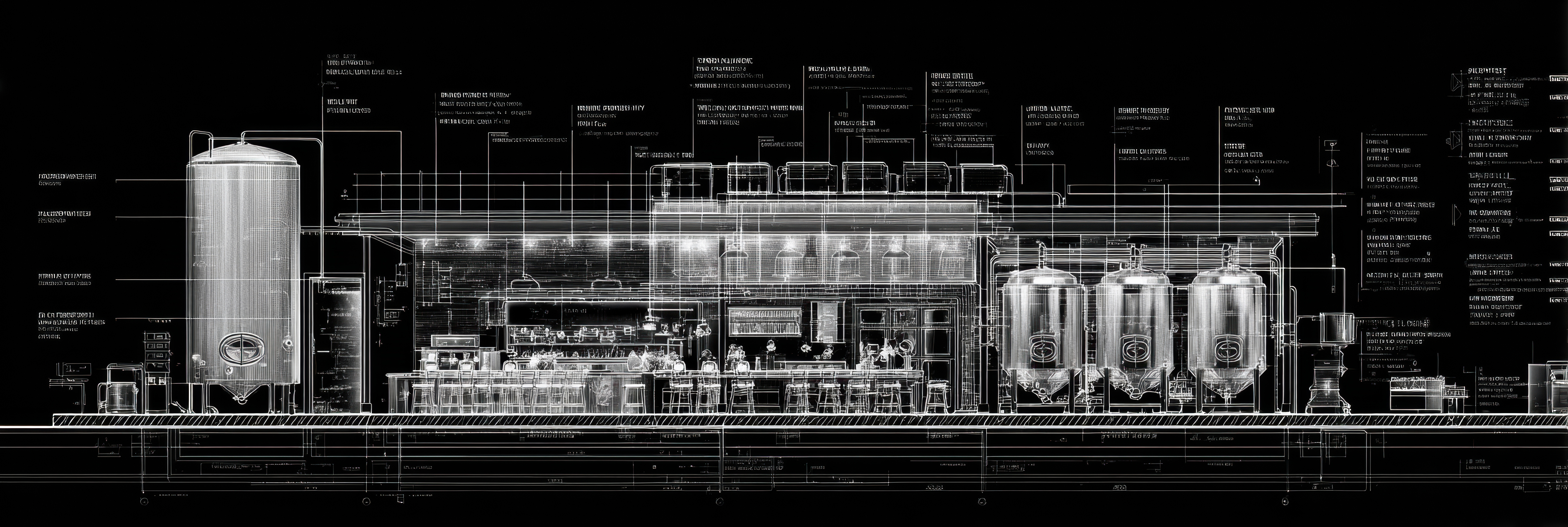
a black and silver photo showing a row of brewery tanks and components

By Erik Lars Myers

One of the biggest challenges a new brewery owner has when starting up seems like the simplest question of all: What size brewery am I starting?

There’s no fool-proof method to get this crystal ball prediction perfectly correct, but a commonsense approach can help target the outcome so that you can plan your investments wisely.

  The first decision begins with determining the size of your market. Ask yourself: Are you in a small town or a big city? Are you in a location that people can walk to, or do they have to drive? Do you have parking space? How much? How many seats do you have in your establishment? How many hours are you open? Are you distributing your product in kegs? Cans? Bottles? How many distribution customers exist within a half-hour drive of your location? How many of those will realistically put one new beer on tap?

  There are no easy answers or simple math, but going through those questions can give you the first gut check: Realistically – is this a relatively small operation serving your own neighborhood? Or are you building a manufacturing plant with plans to service a large metro area?

  When in doubt, don’t be afraid to undershoot a little. While you want to be able to make enough product to cover cost of goods, overhead and debt service, having to increase capacity because you have a high demand and great sales is a much easier – and nicer – problem to solve than having too much product or, worse, old product moving into the market because your brewing capacity and inventory outstrips demand. This is 2026, and we’re no longer in a market in which “if you brew it, they will drink.”

  However, be wary of 1- to 2-barrel operations which put a high demand on factory time without creating a reasonable amount of product. Making one barrel of beer takes roughly the same amount of work as making ten barrels of beer or thirty barrels of beer. The difference is economy of scale. For any commercial operation, even an exceedingly small one, be wary of anything smaller than five barrels.

  Once you determine your relative market demand, the first limiting factor you must consider is the size of your production floor. As a rule of thumb, the maximum yearly capacity of your brewery will equal one barrel per square foot of floor space. For example, if you have a building which – after offices, storage space, loading dock, and forklift parking – has roughly 2,000 square feet of space dedicated to your production floor (brewery, cellar, packaging), the most you’ll be able to get out of that space is approximately 2,000 barrels per year. Note! You will definitely make less than that, but over time you probably won’t squeeze out more.

  Next, it’s time to figure out the balance of system size to production space and what you’re planning to offer. If you intend to sell a couple of solid and consistent offerings in a planned distribution, you can lean towards a larger system that will allow you to make a higher volume of those few offerings while brewing less frequently. If you are planning a wide slate of varietal, seasonal beers – or less traditional beers with experimental ingredients – consider a smaller system with higher turn capacity.

  In today’s market, shooting smaller is not necessarily a bad idea. The difference between a 7-barrel brewhouse and a 15-barrel brewhouse can be measured in hours. In other words, a 7-barrel brewhouse can be used to create 15 barrels of the same beer but it will take twice as long on the brew deck to do it. On the other hand, the difference between a 15-barrel brewhouse and a 7-barrel brewhouse can be measured in days. As in, the number of days you will have stock to sell from a 15 barrel batch is twice that of a 7-barrel batch.

  Unless you are the only game in town, incredibly lucky, or exceptionally good, sales will be your largest production bottleneck.  When it comes to figuring out how many fermenters and brite tanks to purchase, and what size, start by looking back over all the other decisions and considering turn time.

  On average, a good rule of thumb is approximately 16 – 18 days between a beer being brewed and it being ready for market. That is one day in the brewhouse, 10 – 14 days in the fermenter including cold crashing, 1 – 2 days in a brite tank, and 1 – 2 days for packaging. That timeline can be extended for lagers by a few days or a few weeks.

  Can beer be produced faster than that? Without question. But as a rule of thumb, at start up, plan to take your time. Give yourself time to get it right.

  Now take a moment to revisit the idea of throughput and your market size and how quickly you might move through product.

1 barrel of beer = 31 gallons = 2 half barrel kegs = 6 sixth barrel kegs = ~240 pints.

With a 15-barrel brewhouse every batch would produce

465 gallons OR 30 half barrel kegs OR 90 sixth barrel or most realistically a combination thereof.  All that equals 3600 pints of one sole product.

  In a regular taproom setting you can expect to sell, on average, 1.5 to 2 beers per customer on a visit. In a 150-seat taproom at maximum capacity, if all the seats turn over twice per night you can expect to sell approximately 300 pints, or just over 1 barrel of beer. Over the course of any given week, in a high-volume taproom, you should aim to turn over a minimum of 1 turn of your brewhouse in a 1-week period. In other words, plan to brew at least once per week, on average, to begin with. Again – as you grow, you can always add more brew days and more fermenters.

  It is also good to remember that the numbers of beers that you offer will not correspond to a higher volume of sales, but rather it will spread those sales across a wider number of products with the largest volume concentrated on 2 – 3 beers, probably your IPAs and Pilsener (or Pilsener analog). To put this another way: if you have 6 beers on tap or 12 beers on tap, you will still sell the roughly same amount of beer per week, but all of the beers will move more slowly, with the possible exception of your fastest selling beers.

  This all means that a mix of fermenter and brite sizes can be helpful when planning capacity. A mix of fermenters that match your brewhouse size and fermenters that are double your brewhouse size is a good idea. Double-batch your high-volume beers and single-batch your slower moving offerings to manage inventory well. If something turns into a high-volume beer, you can always make more. If something is moving slowly, there’s nothing worse than having so much that it isn’t just unpopular, but also old and stale.

  If you are brewing at least once per week and have a 16-day turn on your fermenters, then you should have a minimum of 4 fermenters. However, give yourself room to get ahead of inventory and take your time with beer, or the option to make more of your high-volume beers. An easy recommendation is 4 fermenters that match your brewhouse size and 2 fermenters that are twice your brewhouse size. Thus, a startup with a 5-barrel brewhouse might start with four 5-barrel fermenters and two 10-barrel fermenters. 

  Since turn time in a brite tank is much smaller than in a fermenter, you need fewer brites. You will want one brite tank for every 3 – 4 fermenters of any give size. In this scenario, two 5-barrel brites and one 10-barrel brite would be sufficient. At a 16-day turn on each fermenter (a little under two turns per month) that gives you an initial maximum brewing capacity of approximately 700 barrels per year, depending on fermentation efficiency, work weeks, holidays, and sales. Your final volume for the year will almost certainly be less than that.

  Finally, the last piece to consider is cooperage. Kegs are one of the highest cost, highest value assets in your operation and are often overlooked. To begin with, if you are only providing beer to your own taproom and you are not using serving tanks, you need enough cooperage to hold all your volume in inventory… and then some. For every individual product you offer you will need empty kegs waiting to be filled, kegs filled with beer waiting to go on tap or be sold, kegs on tap, and empty/dirty kegs waiting to be cleaned. If you are in distribution you will need to add two more scenarios: kegs at the customer waiting to go on tap and empty kegs at the customer waiting to be picked up. You will also lose a small percentage of your kegs each year in the marketplace as they get lost or stolen.

  For each 5-barrel batch of beer, you need the equivalent volume of 20 – 30 barrels in cooperage. Half-barrel kegs (120 pints) are much more efficient but take up much more space and are clumsy to work with. They also typically sell at a lower price per pint than alternatives. Sixth-barrel kegs (40 pints), or sixtels, are much easier to work with and allow for more variety but are much less efficient on the production floor. You will probably maintain an inventory of both halves and sixtels at roughly an equivalent internal volume. For each half barrel keg, keep three sixth barrel kegs. For a 5-barrel startup brewery offering four distinct brands out of the gate, with limited distribution, starting with 100 half-barrel kegs and 300 sixth-barrel kegs would not be out of line.

  Of course, if there is a plan to do packaging in other formats (bottles or cans) that reduces the need for cooperage, so plan accordingly.  It is better to have more kegs than you need and have the luxury of cleaning them when you can – remember, each keg takes three minutes minimum on the keg washer – than to have too few kegs and not be able to package beer or brew because you are short on cooperage and have nowhere to put ready product.

  There is no perfect answer to what equipment you will need in a startup scenario – every brewery, location, taproom, and distribution model will create diverse needs, but a good examination of these points can start you off on the right foot. Breweries are expensive, particularly at initial stages, but it is worth the money to have the right assets in place rather than to spend the life of your business trying to catch up.

Core Brewing & Distillation System Components

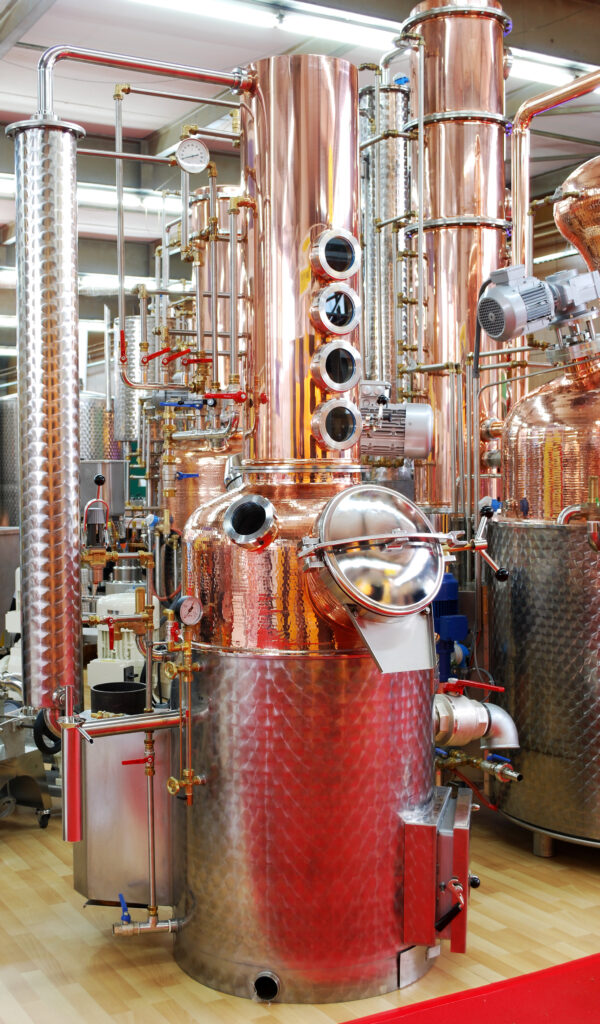
photo shows a copper still next to mash tanks in a distillery or brewery

By Gerald Dlubala

Whether you choose copper, brass, stainless steel, or another alloy, understanding the details, quirks, and ins and outs of your production systems is critical to running a successful brewery or distillery. A general understanding of the core brewing and distilling components of your craft beverage production facility leads to better-quality, consistently replicated products. That replication and consistency of a quality product help to build customer following and trust.

Core Brewing Components

•     Grain Storage Area: If the beverage producer grows its own grain, storage silos may be needed. If purchased in bulk, a designated grain storage area is required.

•     Grain Mill:  Brewers will need a milling station to mill the grain to fit the recipe required for the beer they are brewing that day. The grain is crushed and sent to the Mash Tun.

•     Mash/Lauter Tun:  Crushed grain gets mixed with hot water and allowed to rest, ensuring the starches are broken down into sugars by the natural enzymes. By controlling temperature and time, the mash and lauter tun convert grain starches into fermentable sugars, which can directly affect your beer’s final body and brewing efficiency. The resulting liquid, or wort, is separated from the mash and spent grain and pumped over to the brewing kettle.

•     Brewing Kettle:  Once the wort is pumped into the brewing kettle, it gets boiled to concentrate flavor, sterilize the liquid, and develop color. The brewing kettle stage is where the beer develops its character, bitterness, taste, and aroma profile through the addition of hops at various times and combinations. Once completed, the flavored wort is sent to a heat exchanger.

•     Heat exchanger:  The hopped wort is sent to a heat exchanger/cooler to cool and take on oxygen in preparation for delivery to the fermentation tanks.

•     Fermentation tanks:  Once in the fermentation tanks, yeast is added to start the magical fermentation process, converting the sugars in the wort mixture to alcohol and CO2.

•     Cooling and Filtration:  After the proper amount of fermentation time and the removal of excess yeast, the beer is chilled in conditioning tanks to mature before moving through the filtration system. Filtration can be minimal or multi-phase, depending on the style and desired finish or polish level the brewer is after. From here, that perfectly brewed beer is ready to be consumed and can be moved to a brite tank to await packaging.

•     Packaging System:  Depending on the choices of the brewer, the beer is ready to be packaged in bottles, cans, or kegs for distribution, retail sales, or taproom sales.

Core Distillery Components

  Distillery systems are like brewing systems in that the distiller has a choice about what the system should look like. Distillers who want to show off the production area may opt for the wow factor of large copper or brass stills, while those with production facilities out of public view may choose stainless steel to help keep costs down. Additionally, although some distillers grow their own grain, most craft distilleries do not. They purchase their grain for crushing or buy neutral grain spirits for their own use.

•     Grain Cookers:  Cookers are needed to cook the grains and turn the starches into sugar to feed the yeast.

•     Fermenters:  Fermenters are the vessels where yeast is added to ferment sugars and produce the first “distiller’s beer” before it heads to the still. The type of still is the distiller’s choice.

•     Pot Still: The pot still is a single large kettle-shaped vessel in which the fermented liquid, or “wash,” is heated. It is the original method of distilling. Pot stills can be customized for optimal performance in distilleries ranging from small craft operations to larger commercial producers.

•     Continuous Column Still: Distilling using a column still can speed up the distillation process. The wash is continuously injected into the column with rising steam, stripping the alcohol, and leaving the undesired, or bad, compounds behind. Column stills require less cleaning while allowing more columns to be added when needed. Repeated distillation in column stills yields more neutral, higher-ABV spirits than pot stilling. Additionally, column stills can offer greater control and consistency in high-volume production facilities.

•     Hybrid Still:  Hybrid stills combine the best qualities of both pot and column stills into a single unit, used for distilling all spirits.

Needs Versus Wants

  Rick Morris is the Owner and President of Brewhaus Distilling Experts in Keller, Texas. Brewhaus is the oldest manufacturer of small-scale distilling equipment and supplies in North America. They manufacture, cut, weld, and test all their systems in-house.

  While Morris hasn’t seen any significant trends in systems over the past 10-15 years, he has some thoughts on systems and what commercial distillers should consider before buying or updating their core production equipment.

  “Multiple smaller systems can be better,” said Morris. “Depending on what a distiller wants to do, I’ve had startups with as little as a one-gallon pot still and then added another and another until they had about eight of them lined up. It’s one way to keep costs down at startup. In general, it can be beneficial to use a couple of smaller systems rather than one large one. Yeah, you’re monitoring two systems instead of one, but redundancy isn’t a bad thing when you consider downtime. If one system breaks or needs to be down for cleaning, you’re not down, just reduced, and that can be huge for a small craft distiller.”

  “We’ve also had distillers use 55- or 85-gallon drums and put multi heads on them”, said Morris. “They cap the heads they don’t need, and as capacity increases, they open those heads up for use. If they only want to use two heads to start, we can set it up for four and cap two. It allows a distiller to scale up when needed. You don’t want to jump into a quarter-million setup on startup if you can avoid it, especially as volatile as the liquor market is right now.”

  Morris says that budget and space requirements always factor in which system components a distiller chooses. “A larger system means more warehouse space,” said Morris. “Typically, the systems we provide craft distillers are basic and not as computerized as larger systems. That means less breaking down. But if, say, a heater goes out, that’s where the idea of two smaller systems can help. Reduced capacity over complete downtime is huge for a small producer.”

a copper still in a distillery

  Morris tells Beverage Master Magazine that frequently potential distillers get caught up in seeing those massive, beautiful copper Vendome systems that run a quarter- to half-million dollars and become obsessed with them. When he sits down and looks at their needs, he can often put together a system for them for under ten thousand dollars.

  “We all like to drool over the copper eye candy, but what is needed is usually not aligned with that vision,” said Morris. “If that money is truly in their budget, that’s great, and they can save the money for when growth occurs. Just don’t jump into the deep end immediately because it looks great behind the tasting room glass. You can buy a 4-inch copper system with copper plates, or a 4-inch stainless column with copper plates, and they will do the exact same thing, function the exact same way, and produce the exact same quality product because you have the same copper in both systems. But wanting everything in copper will be 60-70% more expensive. If you have copper in the vapor path, you are good with either system.”

  Morris says he hasn’t seen a meaningful change in system choice, but they are being tailored specifically to the distillery’s projected needs. “It’s a way to keep costs down upfront,” said Morris. “Is this a full-time distillery or weekends only? How many hours of running time will the system be in use? Get the system you need and maybe get a little larger kettle upfront. That’s a small expense, and you can set it up for a couple of 3-inch systems. Then, scaling up may be as easy as replacing those columns with 4-inch systems. You’re replacing the column but not needing to replace the entire system. Choices like that enable cheaper scaling later. The initial smaller columns can be tuned a little more for smaller volumes, while the larger columns don’t manage smaller volumes as well.”

The Future: More Fads Rather Than Trends

  Morris says that rather than trends, they notice little fads that come and go. Trying to speed up the aging process is a big one because of the cost involved.

  “The product sits in barrels for so long,” said Morris. “You’ve got the barrel cost, the product cost, and the warehouse storage space cost, along with the extended length of time involved. There’s been a lot of movement and potential technology over the years trying to speed up that process. We see things spike as the next wonderful thing, and then six months later, they’re gone. All the different flavor profiling is big as well. The NA market is increasing, but that doesn’t change the distilling process. It’s the same process, separating the bads from the goods.”

  Morris said that the type of brewing or distillation system a craft beverage producer really needs depends on the quantity and type of products being produced, as well as the owners’ future production and expansion plans. The Brewhaus team encourages makers to adopt a system that, instead of being replaced, can be adapted for a fraction of the cost when needed for volume or product expansion.

Packaging with Purpose

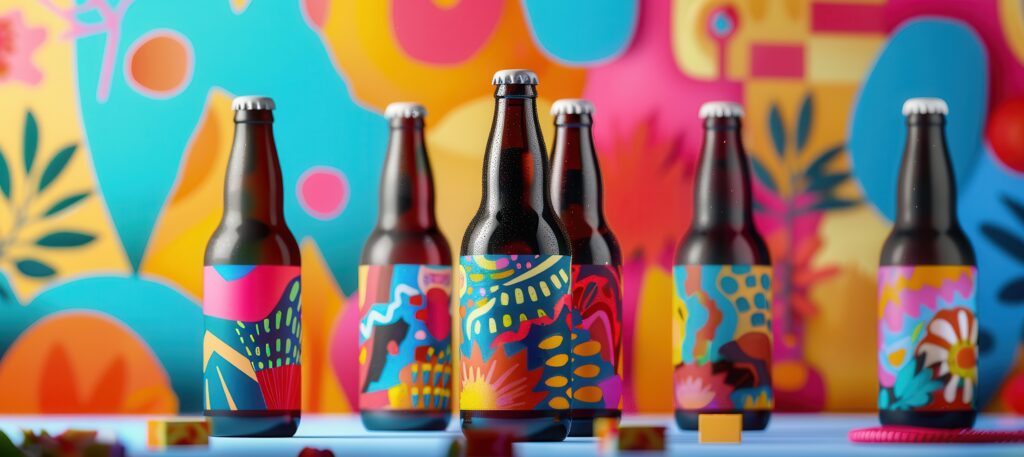
bottles of beer with very colorfull labels on a very colorful background

By Alyssa L. Ochs

In today’s competitive craft beverage market, packaging involves much more than just putting your beer or spirits into a functional container. Packaging makes a powerful statement about your brand’s story, values and commitment to the planet.

  Modern craft beverage enthusiasts are drawn to products that evoke an emotional response and that stand out among the crowd in unique ways. Consumers have also become increasingly interested in supporting brands’ sustainability endeavors centered on recyclable and biodegradable materials in a circular economy.

  To learn more about current trends in craft beverage packaging, Beverage Master Magazine connected with NEENAH, a world-class manufacturer of premium printing, packaging, label and specialty papers.

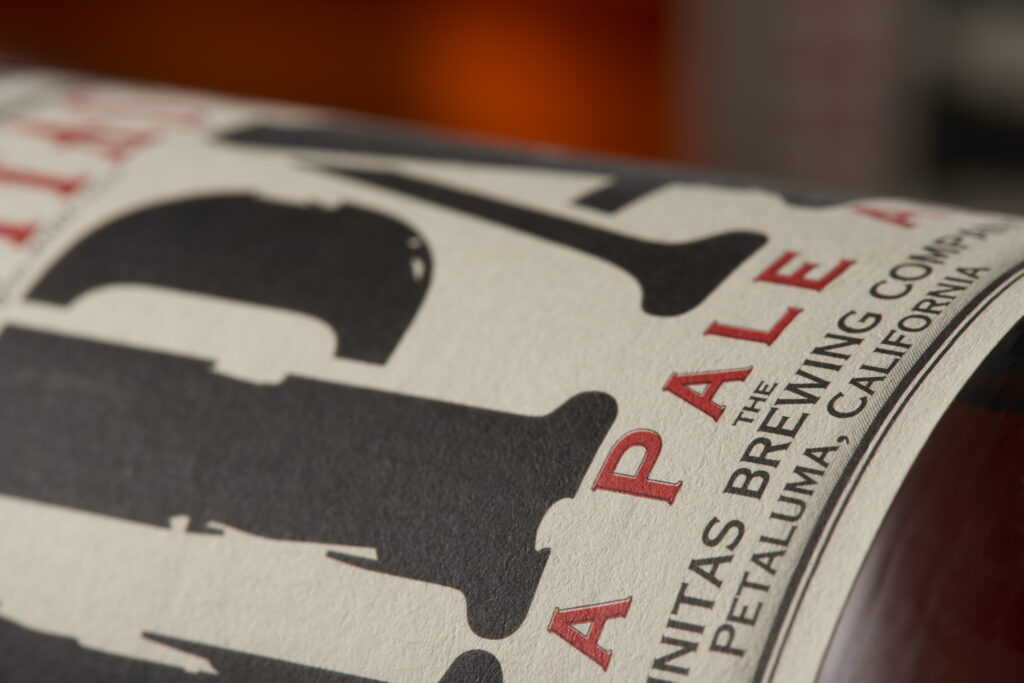
close up photo of the label on a brewing bottle

Packaging & Consumer Perceptions

  Jennifer Dietz, NEENAH’s Label & Folding Board senior product manager, explained to Beverage Master Magazine how label design can be a powerful tool in shaping consumer perception. Headquartered near Atlanta, Georgia and with multiple U.S.-based manufacturing facilities, NEENAH’s offerings include label, box wrap, folding board and more. The company focuses on elevating brands through specialty and custom packaging substrates that demonstrate their uniqueness and communicate their brand ethos.

  “Color and texture can instantly communicate brand values such as authenticity, luxury, sustainability or innovation,” Dietz said. “Uncoated labels, for example, offer a tactile, natural feel that conveys uniqueness and craft, helping products stand out from mass-produced alternatives.”

  “Since most labels are a shade of white, introducing color or texture can dramatically enhance shelf appeal,” she continued. “NEENAH Label Papers can be manufactured in a variety of colors and textures, while offering consistent quality across production runs, ensuring brand integrity is maintained from run to run.”

  Dietz also explained how secondary packaging plays a significant role in elevating brand presence.

“For spirits and premium beverages, a well-designed box can create strong shelf impact, signal quality and make the product instantly giftable,” she said. “Uncoated papers in rich, deep tones, can evoke sophistication and intrigue while offering a premium end-product with no white edges. NEENAH® Folding Board offers a collection of 13 in-stock colors, including boards made from 100% post-consumer waste and pearlized finishes, as well as other options.”

NEENAH’s Craft Beverage Label Options

  NEENAH offers three label products, all of which are made to order and customizable.

  Dietz said that NEENAH’s ESTATE Label® is the market-leading trusted brand for uncoated wet-strength labels. It is most often used for wine and is manufactured in 60-pound text weight. The standard offering includes an expansive selection of 11 colors and five distinctive finishes.

  Secondly, there’s the BELLA® Label, which is a lighter-weight label but also manufactured with wet strength, with a 47-pound text weight. This label provides an authentic, hand-crafted look that is perfect for craft beverages.

  Finally, NEENAH’s CLASSIC® Label is a premium label without wet strength, making it ideal for red wines, spirits and jar labels. This label offers a crisp, clean and elegantly uncoated solution for a variety of label and packaging needs.

  Dietz elaborated on the concept of wet strength for labels and its importance for label stock. She said wet strength is a label’s ability to maintain its integrity and adhesion in moist environments such as refrigerators, coolers or ice buckets.

  “It is a critical performance feature for products like beer and white wine, which are frequently exposed to condensation or submerged in ice,” Dietz said. “While wet strength doesn’t alter the visual appearance of the label, it plays a vital role in the manufacturing process. Specialized additives are used to ensure the label resists tearing, wrinkling, or detaching when wet, preserving both brand presentation and product durability.”

  She also shared that NEENAH’s uncoated label stocks are engineered to perform just as well as the coated alternatives.

  “NEENAH Label Papers offer exceptional dimensional stability, ensuring precise registration for intricate designs,” Dietz said. “Uncoated papers also excel with embellishments like foil stamping and embossing, which tend to pop more vividly against their uncoated surface. Additionally, they work seamlessly with die-cutting equipment, making them a versatile and reliable choice for high-impact label applications.”

Sustainability in Craft Beverage Packaging

  Like many other brands serving the craft beverage market, NEENAH offers recycled and alternative fiber products to its customers as part of its focus on reducing its environmental footprint. Beyond just labels, there are various ways that breweries and distilleries can incorporate sustainability into their product packaging.

  Craft beverage packaging must be sturdy enough to protect the products during transport and visually appealing on store shelves. However, there is also an industry push to address concerns around single-use items that require extensive resources to produce and often end up in landfills. Options like compostable six-pack rings and fiber-based carriers provide beverage producers with more choices beyond traditional plastic, allowing them to minimize pollution risks without compromising strength or aesthetics.

Planet-Friendly Packaging Options to Consider

  There are biodegradable packaging materials available for the craft beverage industry, including plant-based plastics, molded pulp and compostable films. Beverage producers can also opt for packaging materials made from recycled materials to reduce their reliance on raw resources. Examples include aluminum cans with a high recycled content, recycled glass bottles and corrugated cardboard carriers.

  In addition to choosing packaging materials made from recycled materials, you can take your commitment one step further and prioritize packaging that can be recycled after use. Many municipal recycling systems accept aluminum cans, clear glass, paperboard cartons and certain types of plastic. It’s also helpful to label your beverage packaging with straightforward recycling instructions so that consumers instantly understand how to recycle it without confusion.

  An emerging concept to grasp is the closed-loop recycling model, in which packaging is designed with a mindfulness of circularity. Refillable glass programs and returnable aluminum growlers are examples of collection initiatives that keep packaging materials in continuous use, rather than discarding them. Technology is also aiding this effort with QR codes and smart labels that track the lifecycle of packages and add a sense of accountability and transparency to consumer exchanges.

  Not only is eco-conscious packaging a practical and responsible choice, but it’s also a marketing opportunity. By advertising planet-friendly practices on your beverage labels and website, you share your sustainability values with the public. These subtle stories will resonate with many of today’s beer and spirit connoisseurs, helping them to connect with your brand on a deeper level.

Looking Ahead to the Future of Craft Beverage Packaging

  This is an exciting time in a new era of craft beverage packaging innovation, particularly as technologies continue to improve and companies strike an optimal balance between functionality and environmental responsibility. Packaging has become a platform for brand storytelling and customer engagement. Meanwhile, researchers have been exploring the potential of next-generation biodegradable materials that leave behind little or no waste. 

  There are also specific design trends emerging in the craft beverage packaging industry, such as minimalist labels, lightweight bottles and reduced ink usage. These shifts represent further movement toward eco-friendly packaging choices and connecting with consumers who would like their purchases to align with their personal values.

  Meanwhile, we expect that some policy and regulatory changes will influence craft beverage packaging in the years ahead. Some state and federal governments have already introduced or are considering stricter requirements on single-use plastics. As a result, craft beverage producers may face heightened obligations and responsibilities to reduce their landfill waste, while also being incentivized to use recycled materials during production. By anticipating and adapting to these regulatory changes early on, beverage makers can avoid compliance headaches and position themselves as industry leaders in an increasingly competitive and mindful marketplace.

  If your beverage brand is looking for more from your packaging than just safely transporting products from one place to another, innovative companies like NEENAH can help. Your packaging choices will undoubtedly influence your customers’ perception of your brand and help people understand why making beverages is your passion. Crafting a delicious beverage is just part of the story, as packaging it in a memorable and responsible way ensures that your company will have a positive and lasting impact.

Starting a Distillery

By Stephen Tomori, Kindred Spirits Consulting

The process of starting a distillery is a daunting adventure that a number of entrepreneurs have undertaken in the past decade with mixed results. The process itself is comprised of navigating outdated and overly complicated government regulations, tariffs, fights with local authorities unfamiliar with the codes related to building out a distillery, and then trying to stake a claim in one of the fastest growing consumer markets.

  Some of these entrepreneurs have failed at their first attempt, due to improper planning and poor usage of available funds. Others are barely making ends meet, while burning the candle at both ends. Finally, you have the final category of those who planned well, executed their plan, and have reaped the rewards of success.  There are no guarantees when it comes to starting a business and a distillery is no different than any other venture. However, in order to have the best chances in making your business a success you will need to consider the Why, When, Where, and How before embarking on this journey.

Why am I Starting a Distillery?

  The reasons why you are starting a distillery affect your motivations and your willingness to stick out some tough times. If your goal is to make money, you can stop right here. If your goal is to make some truly great spirits and pursue a passion you might be on the right track.

  The world is changing and there have been some major shifts in the buying mentality of the younger generation. Consumers are picking up on the fact that the line between true craft spirits and commercialized mass-produced spirits is becoming blurred. The reason? A number of so-called craft distilleries are simply sourcing in commodity spirits and GNS flooding the market.

  The quality of the spirits you make are largely dictated by the quality of the raw materials you use. Since craft distilleries operate on a smaller scale and have more control over their day to day, there should be a noticeable difference between something made from scratch from the highest quality grains available and standard commodity grains. Your commitment to making something unique and truly great is what will help you maintain momentum despite the challenges you will face throughout the process.

  Your definition of success is also something you should consider before starting a distillery. Are your aspirations to be acquired by a major company? Do you dream of having a nationwide brand on shelves in stores and bars across the country? These dreams can be attained with a large budget for a buildout in a great space and by dedicating an enormous sum to marketing and branding. If your definition of success is a little smaller, doing something you love, something you can share with friends and family while covering your expenses and then some, you will be able to achieve those goals with less monetary investment.

When is the Best Time to Start a Distillery?

  We are currently in a craft distilling boom. There are now over 3,000 craft distilleries in the United States and that number continues to grow each year! Craft breweries and wineries are on the decline, but consumers are continuing to enjoy the great craft spirits being made. Now more than ever people have options when it comes to the sprits they are enjoying. Many are using this opportunity in the market to pivot from other careers to distilling. Some of the best distillers are from backgrounds in art, engineering, sciences, and other fields where they are able to apply the skills they have developed over the years to the art of distilling.

  Every industry has its highs and lows and there definitely was a major increase in consumption during the pandemic, that is not to say that people are not consuming now. The amount of alcohol consumed annually has steadily grown each year in the world and consumers are developing a taste for premium spirits. Over the past few years there has been increases in the premium and super premium markets by 35.2% and 22.8% respectively, according to research done by Penn State. This kind of market shift is great for craft distilleries as it is primarily the highest profit section in the industry. The premiumization focus has been primarily on Whiskies like Bourbon and Scotch, but other spirits are on the rise like American rums, gins and RTDs.

  Each business will have to count the cost to determine if now is the right time.  While still possible to get small business loans and other forms of monetary inputs, loaners are becoming increasingly stricter. Meeting your funding goals is a crucial step in starting a distillery, so be sure to make an honest assessment of whether your goals are feasible.

Where Should I Start My Distillery?

  This is the $500,000/1 Million/10 Million dollar question. The location of your distillery will drastically affect the total amount of funds required in its buildout and construction. Things that can be significantly different from place to place are taxes (both excise and local), property costs, building codes, population density, population demographics, and much more. Expectations also change depending on where you are located.

  The main focus of picking a location is ensuring it is large enough to fit the right sized equipment to be able to meet all of your production goals for the first three to five years and enable you to sell and showcase your products efficiently. 

  If you are in a small town, you might be able to make a decent living with a small distillery with a small bar attached to showcase your spirits. This would enable you to keep your up-front costs down and start turning a profit quickly.

schematic building plans for a distillery

  Life in a big city can be a bit more challenging to start. You will have to deal with increased property or lease prices and in turn have to increase your production and sales to match. You may also have to compete with other bars/restaurants, so the fit and finish of your public facing space will need to be a bit more sophisticated to draw in consumers. You will have access to a much greater number of consumers and your marketing and advertising will see greater impact and returns. You also could potentially have the best of both worlds with a “Non-Contiguous” setup where the majority of production is performed at one site while you maintain a smaller public facing space to interact with consumers. This allows for great production capability in a larger cheaper area, yet maintain the pros of having a smaller location in a prime area for sales.

  Your commute is another thing to think about when selecting a location for your distillery. During the first few years of operation, you will be spending a large amount of time at the distillery. Do you really want a long ride home after working all day? Another thing to think about is the local availability of workers to help you achieve your goals. Are there enough employees available to help with distilling, bartending, and sales in your area? Do a thorough investigation to see what comparable salaries would be for those working at your establishment.

How Can I Make Sure I Make the Best Decisions Throughout the Process?

  If you have made it this far and you are committed to pursuing the process of starting a distillery you no doubt you want to do everything you can to make it a success. This involves wisely budgeting and spending, setting up a safe and productive space for making your product, using the best raw materials you can to ensure the quality of what you make, and to dedicate the proper amount of money towards marketing and branding.

  Marketing and branding are what introduce your product and brand to the consumer. With so many options out there, a compelling story and professionally designed label is key to having someone give your product a chance. It has been said numerous times, “your branding sells your first bottle, and your quality sells your second” so don’t skimp when it comes to developing your brand.

  The best advice anyone can give is to learn all you can before embarking on this journey. There are a number of ways to get familiar with the industry.

  Extensive courses are available through schools like Heriott-Watt, Louisville University, Kentucky State and others. Keeping in mind that these courses take a significant amount of time and going back to school may not be an option for those who already have other careers or family responsibilities. Short courses are offered by other establishments that won’t be as much of a time investment, but they still cost a decent amount of money and only give you a brief overview of the processes typical in a distillery.

  If you don’t have the time or extra funds to attend one of these schools, your best option is to hire a guide to help you along the way. There are a number of consultants and consulting groups in the industry who can help you to reach your specific goals, while saving you money and headaches.

  Many of them offer consulting on the things specific to your situation and needs. They can help you navigate the confusing waters of the TTB paperwork and permitting process, assist with layout and equipment selection, help you develop recipes, teach you how operate your equipment, and much more.

  Don’t be afraid to ask for help when you need it. A good consultant should save you significantly more than you spend on their services. If they aren’t saving you money or headaches switch to someone who will.

Kindred Spirits Consulting: Owner and Lead Consultant Stephen Tomori

Kindred Spirits Consulting: Owner and Lead Consultant Stephen Tomori

Cold Chain Logistics

warehouse full of beer on pallets

By Nick Fryer, Vice President of Marketing, Sheer Logistics

Expanding into new markets is a major milestone for craft beverage producers, but it’s also when supply chain vulnerabilities tend to surface. Inconsistent storage conditions, longer transit times, and unfamiliar distribution partners can all jeopardize product quality and brand reputation.

  For today’s craft brewers, distillers, and ready-to-drink innovators, ensuring product integrity isn’t just about preserving flavor—it’s about having a cold chain strategy that can scale. From temperature-sensitive transit to final-mile delivery, success depends on reliable partners, smart planning, and the right equipment.

  In this post, we’ll break down the cold chain logistics challenges facing small and mid-sized beverage producers and explore the tools and strategies that can help them grow without compromising quality.

What “Cold Chain” Really Means for Craft Beverage Producers

  A “cold chain” is a supply chain that ensures temperature control from the moment a product is produced all the way to its final delivery. This includes any warehousing and storage, as well as transit time.

  Cold chain logistics involve the use of carefully managed refrigeration that can be adjusted to the specifics of whatever is being transported. For most craft beverage producers, 4-6 degrees Celsius has become the standard. Storing craft beer at 4 degrees has been proven to ensure flavor stability and meet food safety requirements. Anything above 6 degrees is associated with a reduction in the overall quality.

Why Craft Beverage Producers Benefit from a Cold Chain

  There’s a common saying that the minute you drive a car off the lot, it loses 10% of its value. Food and beverage products are fighting a similar battle. Every second they’re not in a controlled environment, they risk losing some of their quality and, in turn, their value.

  This is a major issue for craft beverages, which are generally less processed than their conventional counterparts. It’s what creates their unique taste profiles and keeps this industry so interesting. It’s also, however, what puts many products at risk of microbial growth and other chemical reactions that degrade the freshness and quality. The color can shift as the product is exposed to heat, as can the taste.

  Proper refrigeration and a cold chain that enforces it slows this process of degradation so that the product a brewery sends out tastes the same before and after delivery. The benefit of this is:

•     Fewer product recalls.

•     A stronger brand reputation. People feel more confident that they’ll get the same taste and quality, time and again.

•     Happier customers overall.

Spotting Temperature-Driven Quality Failures in Transit

  Experimental beers and spirits are what put American craft breweries on the map. Even with the variety that’s celebrated, there are a few common signs that something’s gone wrong.

  Here are some of the best ways to spot if temperature-related failures in transit are affecting the quality of a craft beverage:

•     Beverages appear cloudy when they shouldn’t be. This is often down to a microbial bloom that can happen with heat exposure.

•     The color of the product has changed. Oxidation is another common chemical reaction that happens when more natural brews are exposed to higher temperatures.

•     Beverages gush or are over-carbonated upon opening. This may even just show up in cans that seem to have expanded or suddenly have leaky seals. The issue comes down to fermentation, which is usually triggered by warmth. It’s something that craft beverages with live cultures in them (such as hard kombucha) have to be particularly wary of.

•   The beverage tastes different. It may suddenly be quite sour or “funky” when it shouldn’t be or develop a hop-forward profile that wasn’t there before. This can be from a combination of oxidation and microbial activity.

  If perfectly good beverages get sent out but then display the above issues upon arrival at their destination, it’s a sure sign that something’s gone wrong in transit. Another general red flag is when a product’s shelf span suddenly seems to be quite limited. That alone can point to issues in the supply chain.

From Tank to Taproom: Identifying Weak Links in Your ColdChain

The best way to identify weak links in your cold chain is to check it, step by step:

•    The Production Facility: From the minute the beverage is packaged, it needs to be in a cold room that is continually monitored and handled carefully by staff.

•     Loading Areas: Docks and staging areas should be kept cold so that as the product is moved from one environment to another, it’s kept at a controlled temperature.

•     Transportation: No matter what method of transportation is used, some method of cooling has to be involved.

•     Distributor Warehousing: Products need to be labelled to indicate that they require cold chain storage, and warehouses should be vetted to ensure they have adequate experience and capacity for that storage.

•     Bars and Retailers: The cold chain isn’t over until the drink is being poured from the tap into a waiting customer’s glass. To ensure cold storage at this final point, retailers need to be educated and informed on how best to refrigerate the product.

warehouse showing pallets full of beer boxes

Cold‑Chain Gear That Works: Trailers, Packaging, & Storage

  There are a myriad of ways to approach cold chain gear. Here’s what actually works:

•     Long-distance cold chain transportation needs refrigerated trailers with insulated side walls, proper seals, and real-time temperature monitoring.

•     Shorter or local logistics can get away with insulated vans that keep portable cooling systems and ice packs stable.

•     Reflective, foil-lined pallet covers and thermal blankets can be used to maintain low temperatures when loading or unloading in unrefrigerated areas.

•     Packaging that keeps out heat and humidity is just as important as fridges and kitted-out cold chain trucks. Even simply making sure that everything is shrink-wrapped can prevent heat buildup.

Smart Monitoring Tools: Tracking Temperature, CO₂, Humidity, & Shock

  Cold chain gear works best when it’s paired with smart monitoring tools and IoT sensors. The technology can track key variables in real time and send alerts if anything changes, so that businesses have time to intervene before quality degrades. The data collected can also be used later to further optimize the cold chain and make more energy and financially efficient decisions.

  Here are the main aspects worth tracking in a craft beverage cold chain and why:

•     Temperature: This is important no matter what kind of craft beverage you’re transporting, as any heat exposure can cause oxidation and spoilage.

•     Humidity: High humidity often leads to mold growth on packaging or the rusting of metal kegs. Anything transported long distances, especially in warmer months, should have humidity levels monitored.

•     C02: Build-up of this gas can accelerate fermentation in craft beverages and lead to bursting cans and bottles, especially if a product has active cultures in it (such as the yeast in a hazy IPA).

•     Shock: Too much shock during craft beverage transportation risks packaging and product integrity and can also damage cooling systems.

  By monitoring all of the above, especially through centralized tracking and logistics platforms, craft beverage companies can maintain a controlled environment for their products. The result is then improved quality control.

Conclusion:

Keeping It Cool from Production to Pour

  There is so much work that goes into creating craft beverages. Investing in cold chain gear, technology, and logistics strategies ensures that none of that work gets lost in transit. Instead, breweries can rest assured that they’re always putting their best product forward and, in doing so, building a brand reputation that keeps people coming back.

Nick Fryer is the Vice President of Marketing, Sheer Logistics. Nick has over a decade of experience in the logistics industry, spanning marketing, public relations, sales enablement, M&A and more at 3PLs and 4PLs including AFN Logistics, GlobalTranz, and Sheer Logistics.

Crafting the Perfect Fill

By Alyssa L. Ochs

In the craft brewing and artisanal distilling industries, every detail matters – from the meticulously curated ingredients to the final presentation and every step in between. One of the most crucial yet often overlooked steps in the production process is filling.

  Whether you’re filling a bottle of whiskey or a can of IPA, the filling step affects product integrity, shelf life, operational efficiency and regulatory compliance. Fortunately, modern filling equipment has advanced significantly, offering brewers and distillers advanced features that cater to the specific needs and styles of beer and spirits. 

  In this article, we examine how filling equipment has evolved and what it looks like in today’s forward-thinking breweries and distilleries. To gain further insights, we also connected with Tony Saballa, the owner of Fillmore Packaging Solutions, which offers affordable beverage packaging for craft beverage makers.

Types of Filling Equipment Available

  The ideal type of filling equipment for your operations depends upon your product’s carbonation level and viscosity. For example, gravity fillers work well for thin and free-flowing liquids, such as craft spirits. They use the force of gravity to move non-carbonated liquids from holding tanks to cans and bottles. You’ll often use gravity fillers for vodka, gin and whiskey.

  Piston fillers are commonly used for liqueurs that have a high viscosity. Using mechanical pistons, these fillers draw a specific amount of spirit into a cylinder before pushing it into your container. Cream-based spirits and syrups with a thick consistency often incorporate piston fillers. 

  Volumetric fillers help beverage makers achieve a consistent fill volume, allowing you to stay true to your brand while also ensuring legal compliance. Distillers often use volumetric fillers to make ready-to-drink (RTD) cocktails, as they provide high accuracy control and help maintain precise brand consistency. These fillers operate by dispensing a volume of liquid using a rotary pump or flow meter to measure and control the flow of fluid.

  Isobaric or counter-pressure fillers utilize specialized machines that fill beer and other carbonated beverages into bottles with consistent pressure, thereby preventing the loss of carbon dioxide. With isobaric fillers, you’ll achieve equal pressure inside the can or bottle during the filling process, thereby preserving the carbonation. In addition to beer, sparkling wine, cider and carbonated RTD cocktails often use this filling method.

Fillmore’s Equipment Offerings

  Based in St. Louis, Missouri, Fillmore Packaging Solutions helps improve packaging processes for overwhelmed and underserved small craft beverage makers worldwide.

  This company focuses on the mechanical side of the small beverage trade. It has beverage packaging machinery available for both carbonated and non-carbonated beverages, including beer, wine, cider, kombucha, sparkling water and RTD cocktails. 

  Tony Saballa from Fillmore told Beverage Master Magazine that his company offers automated packaging machinery for filling cans and bottles with multiple sizes and formats.

  “Our filling machines are primarily engineered for isobaric filling, also known as counter pressure filling, a method used for filling carbonated beverages under pressure to minimize foaming,” Saballa said. “Our fillers can also be used for filling non-carbonated beverages.”

  Saballa explained that Fillmore’s machinery doesn’t require any complicated installations and is designed to be easily moved into the workspace and rolled away when not in use.

  When asked about the type of electrical connections Fillmore fillers require, he said, “Our fillers are engineered to operate from a standard 120-volt, single phase power outlet, so there are no specialized electrical connections required.”

  Saballa shared that Fillmore products’ packaging fill rates are always dependent on product temperature, carbonation levels and package size.

  “So, the typical fill rates our fillers range between 12 to 16 containers per minute,” he said.

  Fillmore’s equipment is designed to fit in a space of about three by five feet, or 15 total square feet. Its machinery can also be operated by just one or two people in a brewery or distillery, resulting in minimal labor requirements.

Precision Filling for Accuracy & Compliance

  Since the beer and spirits industries are heavily regulated, filling equipment is also relevant to legal compliance. Accuracy is of paramount importance when filling beer or spirits into cans or bottles. Regulatory organizations, such as the Alcohol and Tobacco Tax and Trade Bureau, require that containers meet volume declarations with minimal variation.

  Fortunately, today’s advanced filling equipment prioritizes precise and repeatable fills so that every can and bottle meet the appropriate volume requirements. For example, there have been significant technological advancements in sensor-based fill level detection, piston controls, digital flow meters and programmable fill settings.  

  This level of accuracy helps prevent product loss from overfilling, saving craft beverage makers money and resources. It also prevents underfilling, which can lead to compliance issues and customer dissatisfaction. When your bottles and cans are filled precisely, it shows that you pay attention to the details and run a professional operation that prioritizes quality control.

Automating the Beverage Filling Process

  In general, automated filling systems reduce your business’s need for extensive manual labor and help prevent employee mistakes. However, compact automation solutions like those offered by Fillmore are a game-changer for small craft beverage makers with limited production space.

  Small and mid-sized beverage producers are consistently seeking ways to balance efficiency with their space limitations. With an automated filling system, you can maximize the space you have while streamlining labor demands and achieving high throughput. Every square foot matters if you operate in tight quarters, such as a shared co-manufacturing environment or converted warehouse.

  Gone are the days when automated filling solutions were only reserved for high-volume-producing mega breweries and distilleries. Now, craft beverage producers of all types and sizes are embracing automation technology and working smarter on a smaller scale.

Flexibility & Seamless Integration

  When it’s time to invest in new filling equipment, consider automated systems with a user-friendly setup to get up and running promptly. Another priority might be plug-and-play simplicity that doesn’t require costly upgrades or infrastructure expansions.

  As some modern craft beverage makers now produce multiple types of beer and spirits, flexibility is another priority for filling equipment. Distillers and brewers often look for filling equipment that can work alongside their existing systems and accommodate various bottle and can sizes. Pieces of filling equipment aren’t isolated machines but rather one of many pieces in a broader production ecosystem.

  Universal compatibility is top of mind for companies specializing in filling equipment as demand increases for variable speed settings, modular designs and adjustable container guides. It is now possible to fill carbonated and still beverages with the same filling equipment line, easily switching between cans and bottles with minimal adjustments.

Scalability for Future Expansion

  In the fast-evolving world of craft beverage production, it’s essential to plan not only for today but also for future growth. Filling equipment should support your current needs and your goals for the years ahead.

  It’s often advisable to start small with your filling equipment, such as with a compact and entry-level system that allows you to build capacity as demand hopefully increases. For instance, you could launch with a two- or four-head filler and then upgrade later to a six- or eight-head model, provided the electrical infrastructure and base frame will support the expansion.

  Scalability involves increasing both speed and versatility, as many beverage makers are starting to explore new products that deviate from their original creations. If you choose a flexible filling machine, you will be able to accommodate various fill volumes, types of products and multiple containers.

  Another goal of scalability is to minimize downtime, so you never have to shut down your production line to install a new system based on new needs. Automation modules, adding additional filler heads during scheduled maintenance and software upgrades can help you achieve this goal. Keeping these factors in mind will help you protect your filling equipment investment and help your business evolve with the times and shifting consumer demands.

What’s Next for Beverage Filling Equipment?

  Looking ahead, next-generation filling equipment promises even greater precision, adaptability and efficiency than ever before, benefiting breweries and distilleries.

  Emerging technologies include remote equipment access, allowing operators to control and monitor filling equipment from their mobile devices. There has also been progress in AI-powered diagnostics and monitoring, which can automatically adjust regulate carbonation, viscosity and temperature.

  Meanwhile, some innovators have been perfecting automated clean-in-place systems and adjusting machine design to improve production speed further and ensure legal compliance. Fully integrated beverage packaging lines that handle filling, rinsing, closing and labeling are also in demand as equipment-makers take smart technology and automation to the next level.