The Rising Trend of Specialty Ice in Beverage Culture
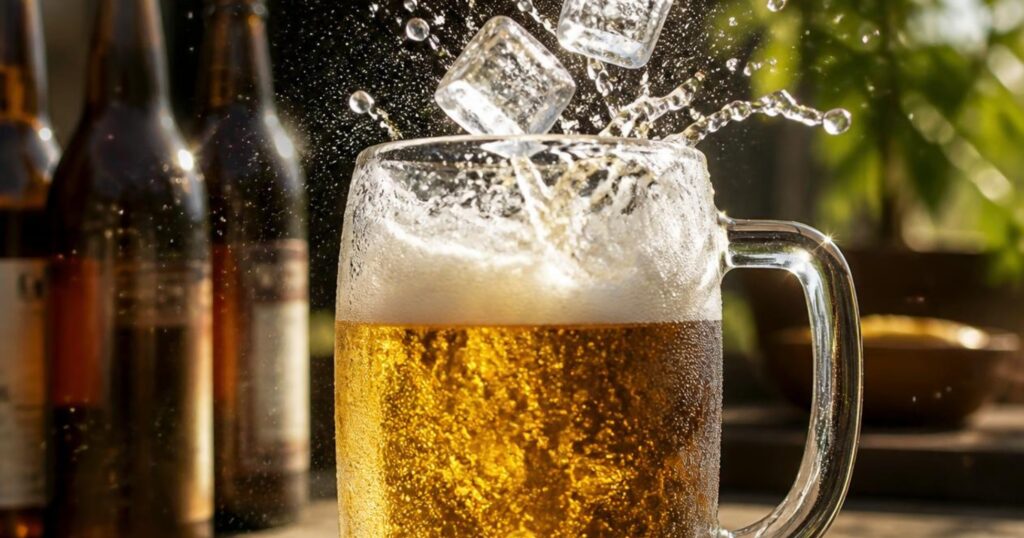
Summer has arrived, bringing with it soaring temperatures, just as the Old Farmer’s Almanac had forecasted. North America is facing an unusually hot heatwave, with August expected to see continued spikes in temperature. As the heat intensifies, people’s thirst increases. While many locals reach for a refreshing glass of tap water, recent tests have raised concerns about the safety of municipal water supplies. A report from KETO,1 which compiled public data from the Environmental Protection Agency (EPA),2 indicates that the number of contaminants in certain areas is rising each year. Consequently, many people are turning to alternative beverages such as sodas, bottled water, or beer.
Beer Preferences in a Warming World
For beer enthusiasts, nothing beats the refreshing experience of enjoying an ice-cold beer, particularly one freshly pulled from an ice-filled cooler on a scorching day. However, the craft beer industry recognizes that serving beer too cold can hinder its aroma and flavor, potentially dulling the taster’s palate. The ideal serving temperature varies by beer style, but cultural norms and environmental factors may be altering how people consume beer.
Generation Z
Enter Generation Z. A recent FOX News report3 highlights that many in this demographic prefer their beer not shaken or stirred but poured over ice—similar to how cocktails are served. In addition, packaged ice can be purer than tap water, but make sure it is labeled PURIFIED ICE. This means it was made with 100% water purified by reverse osmosis. The PURIFIED ICE label is regulated by the Federal Food and Drug Administration (FDA).4
Younger consumers are increasingly driven by customization, presentation, identity signaling, and social sharing, making specialty ice relevant even in the absence of hard preference data. Physics and practical experiments reveal that large cubes and spheres typically reduce in-glass dilution over time, crushed ice increases surface area and intentional dilution, and clear ice primarily enhances presentation. Some consumer tests have even found that directional-freeze cubes can be perceived as tasting “stronger.” In essence, specialty ice is significant not only for its thermodynamic properties but also for its role in visual merchandising.5
The nonalcoholic aspect is strategically vital, as 60% of Gen Z (21+) are keen on exploring non- or low-alcohol options, while 61% prefer nonalcoholic beverages when socializing with friends. Reports indicate that 65% of Gen Zer’s plan to drink less alcohol by 2025, and 73% have experimented with low/no alcohol drinks across various markets. Additionally, Gen Z faces the highest social pressure regarding their choices.
For businesses, this suggests that premium cold non-alcoholic offerings, presented with intentional ice, visual appeal, and comparable aesthetics to alcoholic drinks, are likely to be significant trends. This trend is igniting a global movement among younger drinkers, raising the question: could this be an opportunity for industry innovation?5
Specialty Ice, Many Dimensions
Specialty ice is important across four dimensions: cooling rate, dilution rate, texture, and presentation. The science is clear: a cube has more surface area per gram than a sphere, typically cooling faster, while a sphere generally melts less under the same conditions. For drinks served in a glass, larger-format ice often provides a slower, more controlled dilution curve. However, practitioner experiments show that if bar ice is already around 0°C and sufficiently agitated, final dilution and temperature can converge closely across ice types; the main issue with crushed or small ice is often surface water, making the drink watery quickly.6
For Gen Z, the relevance of specialty ice is heightened by broader preference signals. Research shows that 75% of Gen Z customize beverages and 74% utilize social media to discover beverage trends. Their desire for drinks that feel entertaining or inspiring aligns with the growing popularity of visually captivating serves, from clarified cocktails to unique ice formations. Therefore, specialty ice isn’t merely a “bar geek” technique; it represents a means of identity, discovery, and premium signaling. 5
Craft Beer Meets Craft Ice
The critical operational takeaway is to design service around two distinct value propositions: refreshment-first and flavor-first. Gen Z’s cold-leaning behavior indicates that refreshment-first options should be visually appealing, easily recognizable, and shareable on social media. However, craft beer and certain premium spirits still benefit from flavor-first service, which protects aroma and structure from excessive chilling.
Cold As Ice
A helpful approach to enhancing perceived quality is that Gen Z tends to reward intentionality. A thoughtfully crafted drink—featuring the right glass, appropriate ice, visible clarity, and an artfully designed garnish—will likely be perceived as more premium. This perception is particularly strong for cocktails and non-alcoholic beverages, where the purchase often encompasses the entire experience, not merely the alcohol content.
For breweries, the optimal response may not be to chase after “ice cold at all costs.” Instead, operators could offer cold-refreshment cues in formats where they truly shine seasonally. This strategy allows businesses to meet coldness expectations without sacrificing the flavor attributes of their broader selection.
Beer and Ice Company Integration Examples
Heineken partnered with food scientists to freeze their actual beer into custom ice cubes at -35°C to create Heineken “Star Ice” in specific international markets allowing consumers to cool their beer without diluting the flavor.7
Tilray Brands partnered with the Magnum Ice Cream Company to launch a line of Popsicle Hard adult ready-to-drink beverages featuring nostalgic flavors like cherry, orange, and grape called Tilray Brands & Popsicle®. 7, 8
Victory Brewing and various microbreweries regularly partner with artisanal ice cream giants to manufacture craft beer-infused ice creams, using stouts, porters, and hazy IPAs. 7, 8
The Future of Ice
The mix of specialty ice and alcohol primarily revolves around premium bar service and the emerging alcoholic ice cream market. In the beverage sector, specialty ice—such as large spheres, cubes, and clear blocks—enhances cocktails by melting slower than conventional ice, thereby minimizing dilution and preserving the spirit’s flavor profile. High-end bars often source these ice cubes from specialized providers or produce them in-house using clear ice machines to create visually striking, high-margin drinks.
Simultaneously, the alcoholic ice cream market combines frozen desserts with spirits is a niche sector is driven by premiumization and experiential consumption, with major brands like Hard scoop, Tipsy Scoop and Haagen-Dazs offering spirit-infused flavors. However, this market faces regulatory and technical challenges, as alcohol lowers the freezing point, necessitating complex formulations to maintain texture while complying with legal distribution standards for adult consumers.
Cocktail Ice: Prioritizes clarity, size, and slow melting to enhance spirit-based drinks; maintenance of specialty ice machines is crucial to prevent contamination.
Alcoholic Ice Cream: A food-and-alcohol hybrid requiring strict regulatory compliance regarding labeling, age verification, and cold-chain logistics.
Market Growth: The alcoholic ice cream sector is projected to expand through 2034, fueled by collaborations between distilleries and ice cream producers, while the specialty ice market remains a value-add for hospitality venues.
The intersection of specialty ice, craft beer and alcohol can be a vast accelerator to enhance what premium beverage businesses sell and can offer. Those that are engaged in ongoing, active research, with numerous opportunities for exploration and growth for product extensions, enhancements and innovation within this exciting category of trends may invent the next big industry craze.
About the author: Raj Tulshan is Founder and Managing Partner of Loan Mantra. Reach him at https://www.linkedin.com/in/tulshan/.
Ideal Temperatures by Beer Style
Light Lagers & Pilsners: 38° – 45°F — served cold to maintain crispness and carbonation.
American Pale Ales & IPAs: 45° – 50°F — slightly chilled to allow hop notes to unfold without being muted.
Stouts, Porters & Sour Ales: 45° – 55°F — served at cellar temperatures to fully develop complex roasted and tart flavors.
Barleywines & Imperial Stouts: 55° – 60°F — best enjoyed at warmer temperatures to highlight the full bouquet and minimize harshness.
Sources: American Home Brewers Association and Brewers Association. For further insights visit: the American Homebrewers Association guide or the comprehensive Brewers Association Cheat Sheet for an in-depth exploration of retail and serving standards.
- US Water Quality in 2026: What the Data Shows | KETOS. (2026, June 5). Ketos. https://ketos.co/resources/us-water-quality-world-environment-day
- US EPA. (2024, July 5). Laws & Regulations | US EPA. US EPA. https://www.epa.gov/laws-regulations
- Bardolf, D. (2025, September 6). Gen Z breaks traditional beer rules with new ice-cold trend that some call “refreshing.” Fox News. https://www.foxnews.com/food-drink/gen-z-breaks-traditional-beer-rules-new-ice-cold-trend-some-call-refreshing
- Nutrition, C. F. S. A. (2020). FDA Regulates the Safety of Packaged Ice [Review of FDA Regulates the Safety of Packaged Ice]. FDA. https://www.fda.gov/food/buy-store-serve-safe-food/fda-regulates-safety-packaged-ice
- State of Beverages 2025 Trend Report. (n.d.). Retrieved July 10, 2026, from https://www.keurigdrpepper.com/wp-content/uploads/2025/06/KDP-2025-Beverage-Trend-Report.pdf
- Peralta, J. C., Rivero, M., Piedra, S., Figueroa, A., & Rivera, M. (2024). Exploring ice melting dynamics in beverageware [Review of Exploring ice melting dynamics in beverageware]. International Journal of Thermal Sciences, 207, 109360. https://doi.org/10.1016/j.ijthermalsci.2024.109360
- Feilden, E. (2023, September 7). Heineken creates beer ice cubes in Thailand and Laos. The Drinks Business. https://www.thedrinksbusiness.com/2023/09/heineken-creates-beer-ice-cubes-in-thailand-and-laos/
- Brands, T. (2026, March 26). Tilray Brands Announces Partnership with Popsicle® to Launch Popsicle Adult Beverages. Yahoo Finance; Yahoo! Finance. https://finance.yahoo.com/markets/stocks/articles/tilray-brands-announces-partnership-popsicle-110000486.html
