Innovative Strategies to Secure Funding for Beverage Companies

chess pieces with dollar signs

By: Jay Avigdor, President & CEO — Velocity Capital Group

Securing funding is crucial in the modern hypercompetitive beverage industry. Without the necessary capital, beverage companies can struggle to fuel growth, invest in research and development, and expand into new markets. Yet, in my experience, many beverage companies frequently tend to overlook some of the most advantageous financing options available to them. Here, I will explain several key innovative strategies to help your beverage company meet (or even exceed) its funding goals.

The Problem with Bank Loans 

  Securing conventional bank loans is notoriously difficult for beverage companies because loan officers at banks often consider beverage companies a risky investment, and they aren’t entirely wrong. Like most fresh ventures, the vast majority of new beverage companies do fail.

  According to CEO and senior Consumer Packaged Goods (CPG) advisor Manoli Kulutbanis, only about 20% of food and beverage brands manage to achieve $1 million in sales. For Coke’s Venturing & Emerging Brands Team, a threshold of $10 million in revenue is necessary to prove a beverage concept, and only 3% of beverage businesses reach it.

  Bank loans also require an intense vetting process, which involves a hefty amount of paperwork. Beverage companies are asked to supply a long financial track record, and the review process itself can take months — a timeline that is often all too slow to help businesses when they need it most.

Given these difficulties, beverage companies are often encouraged to seek other sources of funding. The good news is that there is a wealth of options.

Small Business Administration (SBA) Loans

  The US Small Business Administration (SBA) offers loans to companies of all kinds, including those in the beverage industry. Since the US government helps protect lenders from some of the risks associated with providing businesses with financing, these loans can be easier to secure than conventional bank loans.

  The SBA offers many different types of loans, starting with “microloans” of $50,000 or less that help fledgling enterprises get off the ground. These funds can be used for anything from buying machinery and other equipment to purchasing supplies and furniture, and can also be used as working capital.

  Additionally, if you need to purchase a major asset, the SBA 504 loan program provides long-term loans that provide fixed interest rates on amounts up to $5 million. Another program is the 7(a) loan, which gives up to $5 million for a variety of other purposes, including buying real estate, purchasing equipment or supplies, refinancing debt, and facilitating changes in ownership.

  While these loans can be a good way to raise funds, it’s important to keep in mind that they do not establish a long-term relationship. Rather, SBA loans are considered one-off financial agreements.

Angel Investors & Venture Capitalists

  A few lucky beverage companies have benefited from the largesse of angel investors: people who give capital upfront, usually in exchange for a minority stake in the company or as a loan. A notable example is Liquid Death, the punk-rock-themed Virginia water company with a dark sense of humor, which received nearly $2 million this way.

  Venture capital (VC) works slightly differently. While VC firms will grant capital upfront, just like angel investors, they use other people’s money or an organization’s funds rather than their own.     Angel investors are wealthy individuals in their own right, whereas venture capitalists are professional financial analysts who identify promising companies to invest in.

  It’s difficult to overstate how challenging it can be to secure capital through these means. As Harvard Business Review puts it: “Venture capital financing is the exception, not the norm, among start-ups. Historically, only a tiny percentage (fewer than 1%) of U.S. companies have raised capital from VCs.”

  Given these long odds, conducting research is vital before approaching angel investors and venture capitalists. These individuals expect a personal touch, so consider partnering with an experienced advisor who not only knows the relevant investors in your sector, but can also coach you on how to pitch to them best.

  Each pitch needs to be carefully crafted with the specific recipients in mind. Make sure not only to cover all the relevant elements of your business plan, but also to frame your venture in the form of a compelling narrative. You should also address any potential concerns upfront, and be prepared to answer tough questions.

  Given the high stakes involved, you also don’t want to walk into a meeting with potential investors, only to end up tripping over your words. An advisor can help you practice your pitch and ensure an effective delivery before you take your shot. That way, you can go into pitch sessions with confidence, knowing you’re prepared.

  Many websites have compiled lists of angel investors and venture capitalists, including those who support the beverage industry, such as Signal and CrowdCreate. Due to the extensive work involved in every pitch, it’s best to start with those investors whose preferences match your business most perfectly.

The Power of the People

  If your beverage already enjoys a following, con sider tapping into the power of crowdfunding. Cannabrew, for example — the CBD craft brewery — shattered its approximately $250,000 goal in less than a single day. The company has announced it will use the funds for outreach to liquor stores and supermarkets to expand access to its products.

  Similarly, when soft drink company Square Root wanted to expand from glass bottles to cans, it smashed its crowdfunding target by more than 200%, raising the equivalent of $715,000.

  When the crowd believes in your product, this funding method can bring in a welcome infusion of cash, but be aware that these campaigns require a significant amount of work. According to crowdfunding platform Indiegogo, preparing to launch one effectively requires sending out at least 10,000 emails, and that’s just one of their recommended tasks.

  Crowdfunding campaigns also need to be used strategically to be successful. Projects should be visually appealing and delineate concrete, easily understandable goals and measurable outcomes. That’s because crowdfunding campaigns often fail if the initiator asks for too much or their content fails to inspire people.

Merchant Cash Advances

  The best funding is reliable funding when you need it. Securing this type of capital requires good relationships with the right strategic partners, such as companies that give merchant cash advances.

  In my experience, many people misunderstand how merchant cash advances work. When you get an infusion of capital from a merchant cash advance, it isn’t a loan. Instead, the company buys a portion of your future sales, and you don’t part with any of your equity.

  Since these companies rely on your future sales for their own revenue, they also tend to be highly invested in your future success. For this reason, businesses like mine aren’t interested in giving startups an advance if doing so would dig them into a hole, like when they routinely struggle to make payroll.

  On the other hand, when a beverage company gets an unexpectedly big or time-sensitive order and needs to temporarily surge operations to fulfill it, that’s a good reason for a merchant cash advance. These advances are also good for buying new equipment, renovating or repairing facilities, adding a tasting room, or getting over a temporary cash-flow issue.

  Another great thing about merchant cash advances is that they are usually easy to secure. All a beverage company would need to provide, for instance, would be their last three months of bank statements demonstrating a minimum of $20,000 in revenue each month, as well as a FICO Score equal to or greater than 500. This means even new startups can hope to acquire infusions of capital this way.

  Merchant cash advances are also fast, so if you’d like to receive money on the same day you apply, a merchant cash advance is the way to go. This means beverage companies — which often have to wait long periods before receiving payment from customers — can use a merchant cash advance to fulfill their accounts receivable in good time.

Take a Long-term Approach

  By far, the best approach to successfully funding your company is to cultivate long-term, dependable relationships with partners who will help you when you need it. However, in my experience, building these connections entails a paradox. Lenders, investors, and other sources of funding are usually eager to fund businesses when they are healthy and profitable (i.e. when they don’t need the funding), but businesses often apply for funding when they are feeling some kind of financial strain.

  That’s why it’s important to develop your business’s funding strategies over the long term. Applying for capital when your business is strong and they want to partner with you gets your foot in the proverbial door. That way, if you encounter unforeseen difficulties later, you’ll be able to fall back on your established connection with those important investors and financial institutions. Funders often consider your previous track record with them when considering a new request for funding.

Sweet Success

  Whether you are a craft brewer, vineyard, distiller, or other beverage company, attracting investment will enable you to leverage opportunities and fuel your growth in this competitive industry. If you approach this process wisely, take a long-term perspective, and cultivate relationships with the right strategic partners, then the widest possible audience will enjoy your drinks, and both you and them will be able to relish the sweet taste of your success.

  Jay Avigdor is the President & CEO of Velocity Capital Group, a direct funding platform located in Greater New York that funds small businesses nationwide, servicing over 15,000 clients since its founding in 2018. A noted funding expert with a 13-year career, Avigdor has developed an extensive network of over 40,000 relationships with clients and brokers, contributing to an impressive $850 million in sales. His innovative technological approach is setting new trends in the industry by merging finance with technology through automation, thus allowing a quicker and smoother process for merchants and brokers serviced. Avigdor is a graduate of Touro University and currently lives in Cedarhurst, New York.

AI Crafts Terrible Beer Ads

But Used Properly is a Valuable Customer Growth Tool

man drinking beer

By: David Wach, CEO of Handwrytten

Earlier this year, a U.K. beer advertisement created by AI went viral, but not necessarily in a good way. While the 30-second clip titled Synthetic Summer was viewed millions of times on Twitter, TikTok, Reddit and other platforms, viewers were tuning in out of horror, not because they really wanted to buy some beer. In the video, the humans enjoying a backyard barbeque appear distorted, sport extra fingers, and appear to be violently chugging beer that is not actually touching their lips. Let alone the columns of fire that are shooting out of the grills and the beer canisters that seem to morph from cans to bottles to a hybrid of both from scene to scene. This viral video is a perfect example of what AI is not yet ready to do for the beverage industry – namely create full-scale visual advertising content from scratch. But there are ways that craft beer and cocktail producers can be using to engage customers and boost sales.

  The most effective and unique way that beverage companies can use AI is through a traditional advertising method with a high-tech, modern robotic twist. A survey, conducted by Full Spectrum Insights on behalf of Handwyrtten, found that emails and text messages are, unsurprisingly, the most common way for businesses to communicate with customers but that 45% of customers would feel more valued and be more likely to make repeat purchases if they received a handwritten note. 30% of customers said handwritten notes are the most meaningful way a company could communicate with them and the least annoying, compared with the annoyance of receiving a phone call, email, or text.

  Nothing says “pay attention” like a personalized handwritten note. No one flips past or does not see a handwritten envelope in their mailbox. These stand out from everything else that was delivered. Recipients wonder what could be inside and while envelopes that look like bills or advertisements are set to the side, handwritten envelopes are usually opened immediately. The attention-grabbing nature of a handwritten envelope provides an instant advantage that even the biggest and most prevalent direct mail marketers cannot compete with. Handwritten envelopes have been found to have a 300% greater open rate than standard envelopes. And handwritten marketing has response rates 7-21x greater than printed mail, with a return on investment 3-7x greater than print. Some companies have even found that retention rates are 50% higher for customers who receive a handwritten thank you note.

  Rather than tasking an employee to sit at a desk with a stack of cards and envelopes and bucket of ice to alleviate hand cramps, the task of penning handwritten notes to customers can be outsourced to robots that are capable of using real pens to craft notes that are nearly indistinguishable from ones written by an actual human hand. There are also a variety of AI services available own that can help everyone from a marketing novice to a pro discover the right words to include in the message. From there, it’s about ensuring beverage companies are using the right direct mailing strategy to maximize ROI.

Spend Time On Your Call to Action

  Your call to action (CTA) may be the most important part of your direct mail campaign. This statement tells your recipients how you want them to respond and encourages them to do it. A strong CTA can boost your response rate substantially while a weak one can jeopardize your entire campaign. Every communication piece you send your customers should have a purpose. Identify it and your CTA will come naturally.

  Compelling CTAs are clear and concise. They contain actionable verbs which are impossible to misinterpret. When people read your direct mail letter, they should know what you want them to do. You can ask people outside your marketing department to read your letter and determine whether they understand what’s expected of them.

  Procrastination prevents action. Limit procrastination by adding a sense of urgency to your CTA. Asking your recipients to call today or claim a free sample by a specific deadline is more powerful than making similar statements without referencing time. The way you present your CTA can make it more compelling. White space draws the eye. Separating your CTA from the body of your letter prevents someone from overlooking it. Using a different color or font size can also help your call to action stand out. When using a generative AI program to draft a message be sure to direct it to include a CTA or to make the message time sensitive.

Use Personalized Text

  Savvy consumers will see through a handwritten form letter. Make sure you include personal details to strengthen your bond with your recipients. Using names rather than “To whom it may concern” is an important start. But you should look for other opportunities for personalization, too. Mentioning customers’ locations, past purchases, and pop culture references that people of their ages will probably appreciate are other ways you can show your recipients you’re speaking to them. This is where the human element will need to blend with the content created by the generative AI. You will need to determine a way to integrate customer information into the message created by the AI. For example, a few weeks after a customer has purchased a case of beer or cocktails, use AI to craft a thank you note for the purchase that asks the customer to share their experience and feedback on the vintage. And, linking back to the previous point about CTA, include a limited time deal if they buy the same case again soon.

Get the Timing Right

  As with all marketing campaigns, the timing of your direct mail campaigns plays a key part in their success or failure. Your direct mail will ideally reach your recipients when they’re receptive to the messages inside them.

  Getting the timing right isn’t a precise science, but you’ll do best if you put yourself in your customers’ shoes. The members of your mailing list will probably be receptive to a card promoting a great sale sent in the lead-up to Christmas when they’re searching for gift ideas and planning to spend money. Sales announcements can also be received favorably in April when your customers may have extra money from refunds on their tax returns. Your sales efforts are likely to be less effective in January when customers may suffer from a Christmas credit card hangover.

  Sending direct mail cards through your customers’ journey with your organization is also a great way to engage them and make them feel special. However, timing matters here, too. Send a card saying you have missed a customer’s business too soon and you’ll seem too insincere. However, with the right timing, this type of card can re-engage a lapsed customer and encourage a purchase. On the flip side, a letter thanking a customer for the individual’s business or referring a customer should be sent promptly. If you let too much time elapse, the thank you will seem unnatural.

Think Outside the Box

  Since households don’t receive many letters, your direct mail is already likely to be more memorable than a marketing email. However, you can increase the chances your recipients will recall your direct mail with a novelty. Think outside the box to create a direct mail campaign that makes a real impression.

  Knorr used leuco dye on a direct mail campaign for a new line of frozen food. The cheeky mailing read “Unlike any F****N dinner you’ve ever tried.” Recipients were encouraged to put the mail in the freezer. The extreme cold triggered a new message reading “FROZEN meals can be this delicious.” The quirky campaign, which had a 10.2 percent response rate, prompted 17,000 purchases. This campaign was so successful that half of the mail was delayed to help supermarkets manage the increased demand for the company’s products.

  The great part about all of these direct mail ideas is that they stay in the minds of recipients long after they open the mail. Even if your recipients don’t take action now, they’re more likely to think about your business when they need your products or services in the future. Brainstorm relevant ways you can also enhance your direct mail materials and make them distinctive, and don’t forget about finding ways to save time by implementing AI and robotics.

Can You Reinvent the Beverage Marketing Wheel?

2 people holding 2 small wheels

By: Hanifa Anne Sekandi

A lot of people believe that marketing a brand is an arduous task. Yes, it requires work. But if you hate this part of building a business, you may find yourself in the marketing denial loop. What is this?

  It is when brands do extraordinarily little marketing and expect big results. It is when brands put in less than what they desire to receive. This mindset leads to a sense of disillusionment and disappointment. We are sure you have encountered individuals who say running a brand is hard. The truth is, creating and growing a brand requires work. But the work should not be regarded as hard. It is important to eliminate this mindset. Embrace a simple, thought-out marketing plan and strategy whether you are a new brand, a mid-range brand or one of the big guys. Understanding how to market your brand should never be approached begrudgingly or negatively. Last Beverage Master issue, we focused on the “why,” as in why is your brand so unique? Why should consumers purchase your beverage rather than Bob’s beverage? Why is your brand making this beverage? Is there a story? The “why” is your first building block, and this will lead you to the most important phase of your simple marketing strategy — who is this for? 

  Nowadays, you do not have to look too far to see the dos and don’ts of marketing. You are in a time where the triumphs and tribulations of top-tier brands are well documented. As of late, major marketing blunders have been put to the forefront. The common mistake among all these brands, not just those in the alcoholic beverage industry, is that they forget the most important marketing building block: the “who,” and I’m not referring to the classic and iconic English rock band. In this case, the “who” refers to your audience, the consumer. Understanding their buying decisions and why they select your brand or your competitor’s brand when purchasing beer and liquor should be at the forefront of your marketing strategy. 

Who is Your Consumer?

  All your marketing initiatives are built from understanding who your consumer is. A concept that seems obvious and basic, yet both new and old brands make it complicated. Since you and your beverage experts are creating the beverage, tasting it and perfecting it, start here. What would appealto you? What would make you run out and purchase your alcoholic beverage over a top-shelf or legacy beverage? Also, what do you wish some of your favorite beverage brands did? How does your brand fill this missing element? A large list is not needed. You are not going to be loved by everyone. Focus on three key features your “who” (consumer) would look for. Look at their lifestyle and how you can highlight that your beverage compliments their personal ethos. Remember, people attach feeling to their purchases. This is why the “why” story is such an essential first step in brand development. It lets you clearly map out how to appeal to and reach the “who.” 

  There are many ways to find your audience. The above is a simple and effective method. If you cannot sell this magical beverage to yourself or your team, then you will not sell it to anyone else. For those who have an existing brand and are struggling with your brand in a marketing landscape, which has become quite cutthroat with the advent of social media platforms, taking a trip back to where you started and your initial goals will help you zero in on your consumer base. Do not be greedy. Do not strive to be all things to everyone. If your brand has been performing relatively well and you are looking for more brand visibility to boost sales.

  Simple changes, more times than not, are needed. Creatively amplifying your existing message can increase your reach and growth. You do not need to burn the building down and start again, so you target a new demographic to buy your beverage. What about the people who have kept you afloat? Your loyal consumer bases? Some brands conduct surveys. Ask the people who have already purchased your drink what you can do better. Or what is on their wish list? Conduct a poll. This will give you some great ideas or help you re-strategize and expand your existing marketing methods.   

Should You Reinvent the Wheel?

  If you are a new brand, the alcoholic beverage world is truly your oyster. You can be outlandish and try something new. You have leeway to reinvent the wheel. Why? Aside from making a quality beverage, there is no sense in trying to copy the marketing strategy of a legacy top-tier brand. Their consumer is loyal. This does not mean that they will not become a fan of your brand. It is like football; people love the team they love, but when it is the Superbowl and their team has not made the cut, they will root for the team they like second best. Some people drink the beer their granddad drank and pass the love of this beverage on to their kids. It is a staple beer at all family events and their go-to beverage when dining out. Whatever the hook was that appealed to their granddad was passed on to them, and so on. Consider this a legacy brand. Legacy brands must strive to expand the wheel, but they should not reinvent it or break it unless they want to lose a loyal consumer base. Ignoring your “who” so you can reach a new consumer is sloppy marketing and a hasty marketing method often spurred on by newer brands going viral on social media. 

  You might be wondering how you would know who your consumer is. What other methods can you use to understand them better to build a formidable marketing strategy? This may sound contradictory to what was stated above. Start by identifying three brands that you are comparable to, your competitors. Study them, but do not copy them.

  Moreover, analyze them and look for what you do not like first. What would you do better, and what is missing? Make this list small. Next, look at the elements you like and what you would do better from a consumer’s perspective. For example, some beverage brands have made different-size offerings for their beverages. This is a simple yet effective difference that sets you apart and boosts sales. Who does not love those single-serve wines or a small-can imperial stout? Your consumer’s needs are not hard to understand if you start with yourself, assuming you are making a product you believe in, and then look for like-minded individuals with the same sensibility. Stay faithful to your plan, even when no one is looking, because someone looking for what you are offering will eventually turn into a large, loyal consumer base that will tell their like-minded friends to purchase your beverages too.

Glycosidic Nitrile, You Really Should Care Now 

person holding grains

By: Becky Garrison

At the American Craft Spirits Association’s 2022 conference held February 10-12, 2023, in Portland, Oregon, Dr. Campbell Morrissy, a graduate research assistant in the Barley Project at Oregon State University, led a talk about why distillers should be concerned about Glycosidic Nitrile (GN).

  First, he defined GN as “naturally occurring plant metabolites that are used as defenses against predators.” They’re actually pretty sweet, and they are present in almost all plants.” Epiheterodendrin (EPH) is a type of GN found naturally in barley. 

During fermentation, yeast contributes beta-glucosidase, which acts on EPH, resulting in a precursor to hydrogen cyanide. Add heat and copper, and then suddenly,  EC (ethyl carbamate) is present in the final spirit.

    In the United States, there’s a voluntary limit of 125 parts per billion of EC permitted in alcohol products available for sale, which is quite low. As this is a voluntary limit, it’s become a regulatory gray area. As far back as 1993, high enough levels of EC were found in bourbon produced in the United States that would have exceeded regulatory limits established by the EU, UK, Canada and some other countries. Additionally, whiskey sold in Europe needs to meet that low EC concentration. So, those selling to the EU market may face regulation and monitoring of EC levels.

  About 30 years ago, those working with barley in the UK began to realize that GN resulted from barley variety. Now, more than 50 percent of all malting barley purchases in the UK are GN zero and essentially all for the distilling market. Morrissy added that those making whiskey in the UK use GN zero malt with no exceptions.

Defining Barley Varieties and EC Levels

  Generally, there are three categories for defining barley varieties and their propensity to create EC. The non-producer is GN zero, defined as anything less than half a gram per ton of EC. Low producers have 0.5 to 1.5 per ton, and high producers are 1.5 or greater per ton.

  A barley’s ability to produce EC can be measured in two ways. A PCR assay can ascertain whether a given barley variety will have the gene to produce EPH. Also, the quantitative method enables one to measure photometrically if a particular barley reacts to hydrogen cyanide.

  Low GN producers will still produce GN, and its production can be modulated during malting. Anything that’s going to promote malt modification is going to result in more GN. Here, one needs to look at the length of germination. Typically, the germination time for brewing malt is about four days, though with a distiller’s malt, germination can go up to five days, depending on the type. As germination increases, one can see a pretty clear relationship with the level of glycosidic nitrile. While barley variety is important, what matters more is how it malts. Hence, Morrissy recommends connecting with the malthouse to work together to see if pushing modification will impact the EC levels of the resulting spirit.

What Look for When Breeding Barley

  First and foremost, Morrissy stresses looking for strong agronomics. “The farmers are going to need to grow something that they can rely on. Thankfully through very traditional plant breeding techniques, we produce high yielders with low disease resistance, which means fewer inputs. We breed for intolerance for drought and look into low-temperature tolerance for winter lines,” he states.

  Also, Morrissy suggests looking at AMBA-recommended specifications for malt guidelines to select grains known to produce high-quality malt. Along those lines, look for multi-environment adaptation that can be grown all over the place and weather new climatic experiences.

  Here, one needs to differentiate between growing spring or winter barley. Spring barley is planted in the spring and harvested in the summer. Conversely, winter barley is planted in the fall and harvested in the summer. Unlike spring barley, winter barley goes through vernalization and overwinters.

  Winter barley yields more often and has a low-temperature tolerance and less water requirement. When it requires water, it tends to be when water is abundant in most regions due to runoff from winter and late spring rains. While one of the best things for winter barley is snow, some historically very cold places do not see the same snowpack they used to see. Also, winter barley is an excellent erosion control for winter.

  Morrissy observes, “In those places that are windy, putting something that has a root structure in the ground can preserve a lot more topsoil. You also kind of have a de facto cover crop in a time that it might be fallow, so you’re going to out-compete weeds. You may have some pest resistance associated with that.”

  Morrissy notes that different regulatory mechanisms within that GN gene pack can turn on or off depending on climatic changes. Right now, they are not sure how environmental stress response impacts GM production. Currently, more research is needed to understand how the environment impacts GM production in the field.

Producing GN Zero Barley Varieties

  Currently, there’s one GN0 variety approved by the American Malted Barley Association (AMBA). However, Morrissy predicts that with the advent of AMBA’s new recommendations that all varieties of malt for distilling be GN zero, we will start seeing more of these come on the market for brewing and distilling as they go through the AMBA pipeline. Also, some foreign varieties are coming from the private breeding program, and U.S. land grant institutions are breeding some domestic varieties.

  An interesting alternative is naked or hull-less barley. Inherently naked barley is GN zero, though, as Morrissy noted, there isn’t a great supply chain for naked barley right now. Still, there’s a lot of potential for sowing grain without the husk, as that can take up five to seven percent of the total weight of the grain. “If you’re not lautering, you’re doing grain fermentations, or maybe you have a mash filter, you don’t need the husk,” he states.

  At this writing, 10 public breeding programs in the US are working on barley. They’re covering many different areas, producing barley that’s well suited for those larger growing regions and collaborating to make sure that the genetic stocks for sustainability are being shared industry-wide.

Managing EC in the Distillery

  EC is a lowly volatile, heavyweight compound,   whereas its precursor hydrogen cyanide is a very highly volatile, low molecular weight compound. So, according to Morrissy, the more EC that can be formed in the stills and recovered in the silage, the less it will make it into the barrel. Depending on the distilling technique, Morrissy thinks the cyanide fraction is volatile, and the conversation into EC happens very quickly, though it might not get picked up until the spirit is in the barrel.

  Early investigations into the distilling technique find that reflux is highly important in controlling EC. Also, still design and still feed are so important. Trace amounts of EC will form during fermentation, but primarily, the copper catalyst in distillation produces EC. While this work is in the emerging stages, research with copper contact and reflux and controlling EC looks promising.

  For further research into this topic, Morrissy recommends The Hartwick College Center for Craft Food & Beverage, a testing and education resource that supports small and mid-sized breweries, malthouses, farms and other craft food and beverage producers. Also, he suggests joining the American Malted Barley Association.

Enforcing Your Trademarks: How Far Should You Go?

corporate man punching the letter R

By: Brian D. Kaider, Esq.

You’ve secured federal registration for your trademarks and you’ve been building your brand recognition.  Per your trademark attorney’s recommendation, you’ve had quarterly searches conducted to find similar marks.  Lo and behold, a new entry to the market is using your trademark.  Now what?  Stop and take a breath; let the initial surprise or anger settle. There is a lot to consider before taking any action.

Take Stock of the Situation

  First, take a look at your own trademark.  Is it the name of your company or of one of your products?  Is it a national brand or one that is distributed in a small geographic area?  In what classes of goods and services is it registered (e.g., class 033 for vodka, class 040 for “rectification of distilled spirits for others,” etc.)?

  Then look at the competitor’s mark.  Is the mark identical to yours or similar?  How similar?  Is it broadly distributed?  Is it used for the same goods and services as your mark?  If not, how similar are the goods and services?  Are your products marketed through the same trade channels?  Are consumers likely to encounter both your products and theirs?  Have they attempted to register their trademark and, if so, where are they in that process?

  No one question will be determinative in any given case, but on balance, they will help develop a sense of how much effort should be expended to enforce your rights.  As discussed below, there are numerous paths, each with its own set of risks and potential rewards.  An international brand that is known throughout the industry, like Jack Daniel’s®, must be far more protective of its marks than a small brewery in Oregon that has a registered trademark for an IPA product only distributed in the Pacific Northwest.

First Contact

  As the owner of a registered trademark, it is your duty to “police” your mark; that is, to monitor unauthorized use of your mark by others and to enforce your right to exclusivity of that mark.  When large corporations learn of potential infringement, their immediate response is generally to have their attorneys send a cease and desist (C&D) letter.  For smaller companies, a personal attempt to contact the owner of the infringing business is often effective.  Sometimes the other party simply did not know about your mark.  If you found their use of the mark before they spent considerable time and money developing it as a brand, they may be willing to simply let it go.

  When making these calls, it is important to maintain a demeanor that is both friendly and firm.  There is no need to accuse the other side of wrong-doing or of violating your trademark knowingly.  However, you should simply let them know that you do have a registration for the mark and that their use is likely to cause confusion in the market as to the source of your respective goods.  If you give them a reasonable amount of time to work through any inventory bearing the infringing mark and to rebrand, this can often be the end of the matter.

Cease and Desist Letter

  If the friendly approach doesn’t work, the next step is generally a cease and desist letter.  This is most effective if drafted and sent by an attorney.  The tone of these letters tends to be more matter-of-fact.  They identify your trademark(s); explain that you have spent a considerable amount of time, effort, and money to build your brand around the mark; identify the other party’s infringing use; state that the use is unauthorized and likely to cause economic harm and loss of goodwill in your brand; and demand that they stop using the mark within a given time frame.

  While these letters can sometimes be effective, especially against smaller companies, they have become so commonplace that often they are simply ignored by more savvy companies who may wait to see if further steps are taken before deciding whether to rebrand.  Accordingly, you should carefully weigh all of your options and decide in advance whether you will escalate the matter if your C&D letter is ignored.

Letter of Protest / Trademark Opposition

  If the other side has attempted to register their mark, there are two ways to try to prevent the registration.  First, you can file a “letter of protest” with the U.S. Patent and Trademark Office (USPTO).  The letter simply informs the trademark examiner of the existence of your trademark and the reasons why you feel that registration of the other party’s mark would damage your mark.  The benefit of this approach is that it is quick, easy, and relatively inexpensive as it generally only takes a few hours for an attorney to prepare and file the letter.  Often filing the letter will prompt the USPTO to issue an office action refusing the registration in light of your trademark, forcing the other side to argue why registration should be allowed.  The downside to the letter of protest is that once it is filed, you have no further opportunity to engage in the process.  If the other side responds to an office action with arguments as to why registration should be permitted, you cannot respond to those arguments. 

  Whether you have filed a letter of protest or not, if the USPTO’s trademark examiner determines that the mark is registerable, it will publish the mark in the Official Gazette.  This publication opens a 30-day window for anyone who believes they will be harmed by registration of the mark to file an opposition to the application.  

  This process should not be entered into lightly.  In some cases, simply filing the opposition will be enough to get the other side to give up its mark.  But, if they choose to fight the opposition, you will find yourself in a litigious process that takes time, effort, and money to complete.  As in civil litigation, the parties to an opposition file motions and briefs, request documents from the other side, take depositions, serve interrogatories that must be answered, and present their evidence to the Trademark Trials and Appeals Board for its consideration. 

  If the opposition goes all the way to the trial stage, it will generally take at least 18 months from when the notice is filed to when the last brief is due and will cost each side in the tens of thousands of dollars.  As with civil litigation, most oppositions do not reach the trial stage, because the parties are able to come to terms and settle the dispute on their own.  But, this often does not occur until sometime in the discovery phase, after both sides have spent a considerable amount on legal fees.

  It is important to note that the object of an opposition proceeding is to prevent registration of the other side’s trademark and, if you are successful, that is your sole remedy.  There are no monetary damages awarded, nor can you recover your legal fees from the other side.  Moreover, while they will lose their ability to register their trademark, it does not necessarily mean the other side will stop using the mark on their goods or services.  In that case, you would have to file a trademark infringement litigation (see below) to get them to stop using the mark, entirely.  In practical terms, succeeding in an opposition will often be enough to get the other side to abandon their mark, because if you were to follow through with a civil litigation, they could be on the hook for treble damages for willful infringement.

Trademark Cancellation

  If you discover the other side’s trademark application after the 30-day opposition window has expired, your only option to challenge the mark at the USPTO is to wait until the trademark actually registers and then to file a trademark cancellation proceeding.  Though there are some differences between cancellation and opposition proceedings, particularly if the challenged mark has been registered for more than five years, they are similar in most procedural respects. 

Trademark Infringement Litigation

  As one might expect, filing a trademark infringement case in federal court is the nuclear option.  Depending upon the jurisdiction, the time frame for completing a litigation may be faster or slower than an opposition or cancellation proceeding at the USPTO.  But, whereas those procedures will likely cost the parties tens of thousands of dollars, a civil litigation will likely reach six figures, or more. 

  The reason for this higher cost is that there are more issues to consider in these cases.  If you are successful in a civil litigation, you may not only obtain injunctive relief, foreclosing the defendant from all future use of the mark, but also may obtain monetary damages associated with the defendant’s past use of the mark, as well as attorney’s fees expended in the proceeding.  Moreover, if the defendant is found to have willfully infringed your trademark, they may be required to pay treble damages. 

  These issues, which are not even addressed in an opposition/cancellation, add breadth to the scope of discovery taken, which increases the cost.  Further, whereas most opposition/cancellation proceedings are decided without an oral hearing, a civil litigation generally requires live testimony and argument in front of a judge or jury.  These proceedings require a great deal of attorney preparation, dramatically increasing legal fees.

Conclusion

  As the owner of a valid trademark registration, you are obligated to police your mark and failure to do so can result in a dramatic diminishment of your rights or even outright abandonment of your registration.  But, that does not mean you have to file a civil litigation against every minor infringement.  Determining the appropriate path in any given situation requires a careful evaluation of all the circumstances and balancing the risks of action versus inaction.  It is critical to engage a knowledgeable trademark attorney, who will properly assess these risks, your likelihood of success, and the most effective course of action in your case.  

  Brian Kaider is a principal of KaiderLaw, an intellectual property law firm with extensive experience in the craft beverage industry.  He has represented clients from the smallest of start-up breweries to Fortune 500 corporations in the navigation of regulatory requirements, drafting and negotiating contracts, prosecuting trademark and patent applications, and complex commercial litigation. 

Minglewood Distilling Company

Rising From The Ashes

facade of a distilling company building

By: Gerald Dlubala

In the 1880s, in Northern Lawrence County, Ohio, James Mullins noticed an abundance of coal mines popping up. The area was rich in coal, and Mullins decided he wanted to cash in on the surging coal mining business, so he purchased a plot of land between the already-operating Beechwood and Oakwood mines to open his own coal mine. However, before opening, he was reminded by his new hires, many of whom were local and in need of work, that it would surely be bad luck to open and operate a coal mine without properly naming the mine, similar to the naming of ships before launch. Mullins’ wife mentioned that their coal mine settled nicely between the neighboring mines, mingling between them. That single comment launched the beginning of the Minglewood Coal & Ice Company that has now, well over 100 years later, become home to the Minglewood Distilling Company, a small-batch micro-distillery located in Wooster, Ohio.

  Mullins sold coal from his mine and ice procured from the nearby lake when frozen until 1921, when he added a second building on the property. It was heavily insulated with natural cork and used specifically as an ice factory, providing sanitary or electric ice made from distilled water.

  As the years passed, electric refrigerators and natural gas availability sharply reduced the vast need for purchased ice and coal. That demand reduction led to Minglewood Coal & Ice Company closing its doors in the 1950s. An auto repair business took over the smaller building, and the larger, cork-insulated building that once housed an ice factory was transformed into a beer and wine carryout store. The carryout liquor store sustained heavy fire damage in the 1970s and sat in ruin from that day forward, including a massive amount of burnt cork waste. The damage was so bad that the city had plans to demolish the building until current co-owner Mark Morrison purchased the land with the remains of the two buildings included. The city also halted demolition plans on what remained of the damaged buildings providing Morrison would start working on and improving the property immediately. This land purchase began the beginnings of the Minglewood Distilling Company. Morrison opted to keep the Minglewood name out of respect for the area’s history, a trait that continues throughout the distillery, its story and its products.

Carrying on the Minglewood Name

  “We still have two buildings on the property,” said Andrew Morrison, son of Mark and now co-owner and distiller. “The larger building is the original 1880s icehouse heavily damaged in the fire. The smaller building had at least a partial roof and some electricity availability, making it the more practical place to start the restorations and renovations. We started distilling in 2016 and opened to the public beginning in 2017.”

  “The larger building, the former ice plant, has been under renovation for the last four years. It took a lot longer, not only because of the extent of the fire damage but the cleanup included so much burnt cork insulation waste. It must’ve been at least five feet deep, and we actually began by digging it out by hand,” said Morrison. “Additionally, the pandemic slowed everything dramatically. But in May 2023, we were able to host our first event in the space, and it is now open as an event venue for weddings, get-togethers, parties, corporate events and anything else that would benefit from being held in a private space. The back half of the building now houses our production area, and the smaller building we originally used for production is now a permanent bottling facility. We had been rolling out temporary tables to use as our bottling solution, but now, with updated production facilities and available bottling solutions, we hope to increase production and extend our reach substantially.”

  Morrison tells Beverage Master Magazine that patrons will enjoy a rustic, classy space when visiting. The tasting room vibe is reminiscent of the 1940s and 1950s eras, featuring industrial décor with brick walls, concrete floors and exposed ceiling beams.

  “I wouldn’t call it trendy or hip,” said Morrison, “But rather, it’s a place with a throwback feel that reflects and showcases our pride in doing things in the older, traditional ways. Our customers can immediately sense they’re in for a quality experience with owners who care about their products and the visitor experience.

  The Morrisons currently use a stainless steel, hybrid reflux column pot still with a 500-gallon capacity that feeds into a 12-plate reflux column. Their current production schedule is distilling two to three batches a week from November through April, when the city water temperature is perfect for their needs.

  “We use a lot of city water for cooling processes, and in those winter months, the water temperature hovers around 40 degrees, which is perfect for our operation,” said Morrison. “Additionally, our equipment is big enough that, for now, we can make what we need for the year during those months. We generally produce a barrel out of each distillation, which comes to about 50 barrels a year, mostly bourbon and rye, and we distill corn whisky for our flavored whisky products. So, we do have the option to ramp up production rather quickly if and when needed.”

Reigniting the Area’s Historical

Passion with Rye

  After the Revolutionary War and in the 1800s, Germans immigrated to Ohio, including Wayne County. They brought rye from Europe with the intent of farming. Rye is a winter crop that fits extraordinarily well with Ohio’s temperature fluctuations and extremes, including the high freeze and thaw rates in the winter months. When a successful harvest came in spring, farmers found themselves with an excess of rye grains and looked for additional uses, leading to small pot stills on the farms to distill the grains and raise extra money. However, during the Civil War in the 1860s, excise taxes became a reality. As you can expect, farmers didn’t want to deal with the taxes, so many became moonshiners while local granaries became distilleries. Morrison also speculated that with the proximity of Route 30, a major thoroughfare running from the East Coast to Chicago, it’s not a far stretch to think that moonshining and moonshine distribution were also lucrative businesses.

  “Most people don’t remember that the Cedar Valley Distilling Company operated in Wooster between 1862 through the 1940s,” said Morrison. “We like their story and try to keep it alive in our tours with historically accurate retellings. The owner started with a grist mill, purchasing grain from local farmers and hiring additional local farmers and construction workers when other work was unavailable. The distillery was successful enough that they eventually moved to a larger facility, and from all accounts, they could produce 25 barrels a day during their peak production in the late 1800s.”

  “That’s simply unfathomable to me,” said Morrison. “If we ran 24/7 here, we could produce two barrels daily. Cedar Valley Distillery only made rye whisky, and they suddenly found themselves with a very large backstock when prohibition hit. They were able to get a license to distribute medicinal prescriptions, so their backstock ended up being distributed through prescription only. By the time prohibition ended, their backstock was dwindling away to almost nothing due to their prescription distribution and likely a bit of bootlegging. So, they started selling a 65 percent Cuban Rum liquor cut with six-month-old rye whisky aged with wood chips. We actually found some of the bottles over the years, and as you would expect, the concoction was horrible and definitely not a money-maker, causing the distillery to close its doors. Cedar Valley’s buildings and memories are now gone, and it’s rare to find someone in Wooster who remembers them, but we want to keep that history alive. Like them, we make our rye whisky using all local ingredients. We enjoy highly communicative and exceptional relationships with our farmers, who have become more like partners than suppliers. Our corn is grown about five minutes away, just outside of Wooster. Our rye comes from about 15 minutes away, in Dalton, which is eastern Wayne County, and our wheat comes from a co-op just north of us in Seville.”

Community and Partner-Suppliers

Are Critical

  Mark Morrison originally opened Minglewood Distillery with help from a friend that owned and operated wineries in the region. His son Andrew would work with them when he was available. In 2019, Andrew finished his studies, and when Morrison’s partner wanted to return to his true passion, meaning his wineries, the Morrisons bought him out. From that day forward, the father and son team became 50/50 partners, co-owners and distillers.

  “We’ve been using the same farmers for six years since beginning our distillery,” said Morrison. “We are fortunate to have no worries about the consistency and quality of our ingredients or products, and our communication couldn’t be better. Even when our suppliers had a bad year, causing lower overall yields, they told us they had a crop dedicated to us, so we shouldn’t worry. That type of communication and partnership is invaluable.”

  The future looks bright and tasty for Minglewood Distilling Company. Morrison tells Beverage Master that they are looking forward to increasing production and bottling capacity thanks to the updated availability of both buildings. They plan to bump up their bourbon production, eventually offering bottled-in-bond bourbon and rye selections and expanding the overall lineup with more variety and premium offerings.

  For those following the path to owning a distillery in a state that controls licensing, Morrison says that those future distillers should apply to get their license early. He waited, and because the process was a lengthy one, Minglewood initially was only allowed to distill and provide small samples (one ounce per person, per day, cut into quarter-ounce samples) to their patrons, which wasn’t enough for proper tastings to be held or sell their liquors by the bottle. Morrison said that selling cocktails is critical to the bottom line, so obtaining that serving license is important for customers to get to know your products and want to purchase them regularly. Minglewood Distilling Company’s best sellers have been their flavored offerings, with peach leading the way. It really took off in 2020 and hasn’t slowed. Their upcoming pickle whisky is set to be a hit, and a much-anticipated root beer whisky will be available this fall.

  In addition to being able to taste their product lineup at their distillery and tasting room, Minglewood Distillery offers a kitchen and full bar for service and menu offerings featuring meat and cheese boards.

To learn more about Minglewood Distilling Company and its products, visit:

Minglewood Distilling Company

437 East South Street

Wooster, Ohio, 44691

(330) 601-1600

info@minglewooddistilling.com

Five Essential Key Performance Indicators for Taproom Managers

taproom at pike place signage

 By: Kary Shumway and Andrew Coplon from TaproomSuccess.com

Taproom managers wear many hats that correspond to a countless number of responsibilities. From hiring to firing, to training and retaining, it is the goal of taproom managers to equally maximize the experience of their guests as it is their staff. One of their most valuable tools to create a successful taproom is data. By understanding data, taproom managers can monitor, maximize, and maintain world-class experiences that customers crave and their team is proud to be a part of, leading to more memorable and profitable taprooms.

5 Essential KPIs for Taproom Managers that can Help You See Greater Guccess

  KPIs, or Key Performance Indicators, are the most important numbers to measure in your business. Think of KPIs like the gauges on the dashboard of your car. The speedometer measures how fast you’re driving, the fuel gauge shows how much is in the tank, and the check engine light tells you if you’re overdue for maintenance.

  Those are important things to know to keep your car running smoothly and legally. Likewise, KPIs for your taproom business need to track the same critically important measurements.

#1: Tip Percentage

  What it is: Tip percentage is the tip amount divided by the total tab (i.e. a $10 tip on a $40 tab equals 25%).

  Why it’s important: Tip percentage corresponds directly to staff member engagement with guests. From Secret Hopper data, we see that when staff offer a low level of engagement, the average tip percentage is 23%. When staff offer a high level of engagement, the average tip percentage is 27%. If Andrew’s average tip percentage is 17% and Kary’s is 27%, it can be deduced that Kary is going above and beyond to build relationships with his guests.

  Where to find this data: Your POS system. If your employees have their own login, it’ll be easy to see their individual tip percentages. If your setup has your team sharing a login, monitor trends over time. For example, if you typically have 3 taproom servers in the taproom and when Andrew’s behind the bar you see a lower average tip percentage, you’ll be able to discover that he’s the weak link.

  How you can use it: Reward and recognize team members who consistently receive a high tip percentage. Make them feel appreciated. When you discover a team member who receives a lower than average tip percentage, use this as a training opportunity. Speak to this employee and discuss what can be done to offer greater support. Even for employees that may treat their position as “just a job,” money can be a motivator. The more employees take the time to build relationships with taproom guests, the higher their tip will be, making them a little bit more money and a little bit happier. As a manager, having happier and better compensated staff will make your life easier.

#2: To-Go Sales

  What it is: To-go sales represent additional purchases on a tab for consumption outside the brewery. Think crowlers, growlers, bottles, and cans.

  Why it’s important: Encouraging beer to-go is an actionable strategy you can train your team to authentically implement that generates immediate returns. On taproom visits when staff do not suggest beer to-go, the guest only makes the purchase 9% of the time on their own. When taproom staff encourage the guest to take beer to-go, the guest makes the added purchase 49% of the time, resulting in tabs nearly $15 higher.

  This metric is not only important as a tool to motivate taproom staff to increase their tabs, but also a valuable KPI for managers/owners to monitor and reward your team.

  Where to find this data: Your POS! Ask your provider the easiest way to filter transactions that include to-go purchases. Consult this data regularly and see who on your team is demonstrating upsell skills.

  How you can use it: Engagement is a common thread in these top 2 KPIs, and you are likely to see those with the highest tip percentages also selling the most to-go beer. Makes sense, right? Your most engaged team members are developing deep relationships with your guests, and are more likely to also suggest taking beer home. Hold frequent to-go beer competitions to see who can sell the most over X period of time, whether a Saturday afternoon, an entire month, or based on hours worked. Moreover, don’t just consistently reward the same top sellers. Consider using this to-go data to recognize your most improved staff on suggesting beer to-go. Whether we’re talking about brand new employees or 10-year taproom veterans, regularly monitor this KPI to make sure they’re using it to their advantage. After all, what server doesn’t want to get tipped a little more when their tab also includes beer to-go? As a taproom manager, monitoring this KPI will help you better maximize the amount of to-go beer sales and increase overall in-house revenue.

#3: Number of Customers

  What it is: The number of customers represents what you might expect – the foot traffic into your taproom. This is how many people come in during a given day, week, month, or year.

  Why it’s important: Clearly, the more people who come in, the more sales you can generate. We often create taproom sales projections using just two numbers to start: 1) Customers x 2) Average Spend Per Customer (which we’ll cover next).

  These two data points are the key drivers of revenue through your taproom. The more you can increase one or both of these KPIs the more you can boost your taproom sales.

  Where to find this data: Here again, your point of sale system will track this data. It may be useful to create your own trackers (hello, spreadsheets!) so that you can easily access historical information and make use of week over week and month over month comparisons.

  How you can use it: Set up a simple spreadsheet to track the total number of customer visits by week and by month. Pull information from the prior year (or years) so that you can see what the trends look like.

•   Are the number of customers increasing or decreasing month over month?

•   Are there patterns that emerge when you look at the historical data?

•   Are there weeks or months that have unusually high volumes of customers?

•   Why did that happen?

•   Can you duplicate this, or do more of the things that brought people in?

  The goal of tracking the number of customers is simple: bring more customers in to spend more money so that you can increase sales. However, tracking the numbers isn’t enough. Review the trends and use the data to brainstorm ways to increase traffic.

#4: Average Spend per Customer

  What it is: The average spend per customer is a measurement of (you guessed it) how much folks spend when they come into your taproom.  You may see this KPI also shown as average spend per check. Whichever measurement you use, this is an important one to track so that you can understand spending patterns, habits and identify ways to improve on each.

  Why it’s important: When customers come into your taproom they want to buy from you. Unlike some retail stores, where people go in to browse and just look around, folks are coming into your taproom to buy. They want a beer, some food, and maybe some merchandise. The more you have to offer, and the easier it is to buy it, the more your customers will spend. And the more they spend, the more financially viable and successful your business will be.

  Where to find this data: We’re starting to sound like a broken record here, but your point of sale system is the place where you’ll find average spend per customer (or check) data.

  How you can use it: The old saying goes that your best customer is the customer you already have. These are the people that have already purchased from you and love what you have to offer. Why not work to offer them more when they come to your taproom?

  As with most KPIs, it is useful to take the measurements over time, analyze the trends, and make comparisons. A key best practice is to benchmark against your past performance and work to improve the number. 

#5: Revenue per Barrel (BBL)

  What it is: Revenue per barrel, or sales per barrel, is a measurement of how effectively you are monetizing a barrel of beer.

  To do the calculation, take the total number of dollars sold through the taproom in a given time period and divide by the total number of barrels transferred to the taproom.

  For example, in the month of January taproom sales were $100,000, and there were 100 barrels of beer transferred and depleted during January. $100,000 divided by 100 barrels = $1,000 per barrel.

  Why it’s important: The revenue per barrel KPI shows how many dollars each barrel of beer is making us, and will provide clues as to how we can make more.

  Furthermore, one of the key tenets of business and financial management is the safeguarding of assets. The revenue per barrel KPI can help with this.

  What this means is that we need to have checks and balances to make sure that our assets are well taken care of and that we are getting a proper return on our investments. The revenue per barrel KPI can help identify beer loss when the number dips below expectations.

  To continue the example above, let’s say you’ve been measuring revenue per barrel for years and it tends to be around $1,000 per barrel. Fairly common. Then one month it dips to $800 per barrel and stays at this level for several months. What happened? The KPI won’t answer this question, but it will force you to go and figure it out.

  Where to find this data: Again, for this KPI you’ll need to know total taproom sales in a given period and total barrels transferred to the taproom. The POS will have the sales data and your production software (or accounting software) will have the total barrels transferred.

  How you can use it: As with the KPIs discussed above, set up a tracking system to show month over month revenue per barrel numbers. Look back for 12-24 months and see what the trends look like. Is the KPI increasing? Decreasing? Staying about the same?  You can use this data to inform pricing decisions, product mix, and pour sizes.

  Understanding KPIs provides you the ability to find out where your taproom stands, spot areas of opportunity, and the tools to monitor consistency and quality. Moreover, don’t just treat the data as numbers, use it to reward and recognize your team for a job well done. As a taproom manager, these KPIs are vital assets in your toolkit to see greater taproom success.

How Beverage Business Owners Can Achieve Financial Freedom

man enthusiastically jumping on high fist

By: Raj Tulshan, Founder of Loan Mantra

They say money can’t buy happiness, but it can help create peace of mind by alleviating stress in professional life – especially if you’re a business owner! Professional financial freedom means taking control of your finances and amassing enough cash and savings to manage daily operations, handle emergencies, drive growth, expand and maybe even sell the business one day.

  For beverage business owners, knowing that payroll can be met, a second location of your bar or location could be opened, staff and vendors can be paid – and there is still enough money set aside for any emergencies can provide stability. We’re all familiar with certain strip malls or vacant locations where different businesses seem to come and go, unsuccessfully. In contrast, towns and cities are identified by the bars, pubs and restaurants that are landmarks, meeting spots and seen as a local staple in their areas.

  Financial freedom offers a variety of benefits that go beyond financial control. A recent study by Harvard Business School found that having more money reduces intense stress, brings greater control, and leads to higher life satisfaction. Other benefits of financial freedom include improved mental health, better relationships, more opportunities, an elevated lifestyle and greater independence.

  The path to financial freedom. We all want financial freedom so how do you get there?

  Become a business owner. Simply becoming a business owner provides an essential freedom that can’t be explained unless you are one. As countless entrepreneurs attest, many people prefer to work for themselves rather than for someone else because they have more control over their future – and their finances. A Baylor University professor found that despite the challenges of business ownership – including long hours and high stress levels – entrepreneurs report consistently higher rates of happiness vs. people who work for others.

  Create a budget. Develop and stick to a budget. Outline operating income, receipts, expenses, loans, rent/mortgage, insurance, utilities, payroll, supplies, equipment, etc. Carefully track spending to account for every dollar. Negotiate where possible, switch vendors or gain better rates for your phone and cable services. Determine which of your products are the best (and worst) sellers and adjust stock accordingly.

  In addition to tracking budget, there are common questions each business owner should ask themselves to manage their financial health. For instance, do you have outstanding accounts? Do your clients pay on time? Have you spoken with your top clients in the past 90 days? Do you have your documentation prepared in case you need to apply for a loan? Loan Mantra’s financial health checklist is a great tool to monitor ongoing questions that will not only help you track your budget, but your continued success.

  Make it “to go” and be in the know. A report released in June 2023 by the National Restaurant Association found that more than half of millennials (62%) and Gen Z adults (52%) would pick a restaurant for takeout if alcohol beverage options were included. Currently only ¼ of adults order alcohol beverages online due to availability or state legislation, but that is changing leaving room for opportunity. It’s also important to know the upcoming industry trends. For example, that same report states that it reaffirms the associations predictions that local experiences would be this year’s hottest trends – 79% of beer drinkers would participate in a tasting event at a restaurant.

  Establish authentic customer relationships. According to the US Chamber of Commerce nearly everyone has been affected by Covid Fatigue over the past couple of years leaving people emotionally drained and physically worn out. As a result, consumers want their shopping and dining experiences to be easy, convenient and satisfying. Satisfied customers are repeat customers. In addition, customers are looking for a deeper emotional connection and a personalized experience.

  Use digital media. For brands to build and maintain customer loyalty, the digital experience matters but it must not make things more complicated for the consumer. Whether a customer is ordering online or on-site it must be intuitive and easy. People find the new hottest brew, bar or pub on social media so having a presence online is a must. Post images of the business with indoor/outdoor dining space, food and drinks. Post happy hours, specials, trivia nights, special tastings, etc. and publicize them. Encourage satisfied customers to leave reviews. Allow customers to order food or make reservations online. Make services like DoorDash or OpenTable available.

  Be frugal. Consider how business magnate, investor, and philanthropist Warren Buffett purchased a $31,500 home in 1958 and still hasn’t moved out of it, even though his net worth is currently $104 billion. He can obviously afford a bigger, more expensive house, but he’s famously frugal. Conversely, controversial rapper and designer Kanye West is known for his extravagant lifestyle. He lives in a $20 million mansion – and rented Madison Square Garden for a stunt with his clothing line – despite being $53 million in debt. In a bizarre move, he asked Facebook founder Mark Zuckerberg for $1 billion on Twitter.

  This is clearly an extreme example, but it shows how financially responsible Buffet amassed a tremendous fortune and achieved financial freedom, whereas financially irresponsible West spent money he didn’t have, wound up in massive debt, and begged a tech guru for a financial handout on social media. While you’re likely not in the same tax bracket as mega-successful billionaire entrepreneurs, you can learn a few lessons from them. Don’t spend more than you have. And keep your endgame in mind. It may be easier to save money when keeping your eyes on the prize.

  Invest.  Go for a long, slow simmer vs. a quick sear. Most investments are like an Italian grandma’s Sunday sauce – they need to simmer for a long time to be any good. Know that you’ll be in it for the long haul. This won’t be a quick sear type of situation, where your money will be tied up only for a short time. While there’s always some risk and market fluctuations involved in investments, putting some of your available funds toward stocks, bonds, mutual funds, Roth IRAs, 401(k)s and other investment opportunities can help grow your wealth and put you on the path to professional financial freedom. Talk to a financial expert about how to build an investment portfolio and choose the investments that will best fit your specific goals.

  Focus. Focus on factors you control. Over the past few years, we’ve seen headlines about banks collapsing, an impending recession, plummeting stocks, and other doomsday stories about how our financial futures are in crisis. Don’t panic. Everything that’s happening today is just part of the normal economic cycle. There will always be recessions, wars, and fluctuating interest rates. Take a deep breath. Unemployment is down. Banks are protected. There’s been recession chatter for years, and it hasn’t happened. Prices and the stock market will fluctuate over time, which is out of your control. Focus on what you can control on your path to professional financial freedom: creating a budget, saving money, and investing.

  Have an emergency plan.  Create an emergency plan, ensuring that you have enough savings to cover daily and unexpected business expenses. Without adequate funding in place for emergency expenses (the air conditioning breaks, the plumbing isn’t working, the roof leaks), as well as for the inevitable periods of higher spends (e.g. extra products and staffing around the holidays, etc.), you’ll get stuck in a cycle of borrowing to fund necessary operating expenses or to repair what has been damaged, rather than using capital to look ahead to the future.

  Find financial partners.  Who is your banker, attorney and loan officer? Does the banker have a vested interest in your community? What are the financials? Does the bank have good leadership? Do you have an attorney in case you need legal advice, or someone should make a claim against your business? What about a loan officer or provider? If you need assistance with funding to cover the business in a pinch, to handle an expansion or to keep you aware of current government subsidies that you might take advantage of.

  Having the right partners in place before you need them can mean the difference between a quick phone call and financial mayhem. Find a financial team that will be trustworthy, provide insight and are available when needed.

  You should have complete confidence in their knowledge, experience and capabilities. Talk to them about your business financial status and goals and create a financial plan to help you achieve financial freedom and long-term financial health.

  “For business owners, becoming financially free is a desirable – and achievable – goal,” Tulshan explained. “It takes dedication, determination, and consistency, but follow these tips and you will be well on your way to financial independence.”

About the Author

  Neeraj (Raj) Tulshan is the founder and managing partner of Loan Mantra, a one-stop FinTech platform that democratizes the loan process by providing corporate sized services and access to new entrepreneurs, small and medium sized businesses.

Scaling Production with Precision

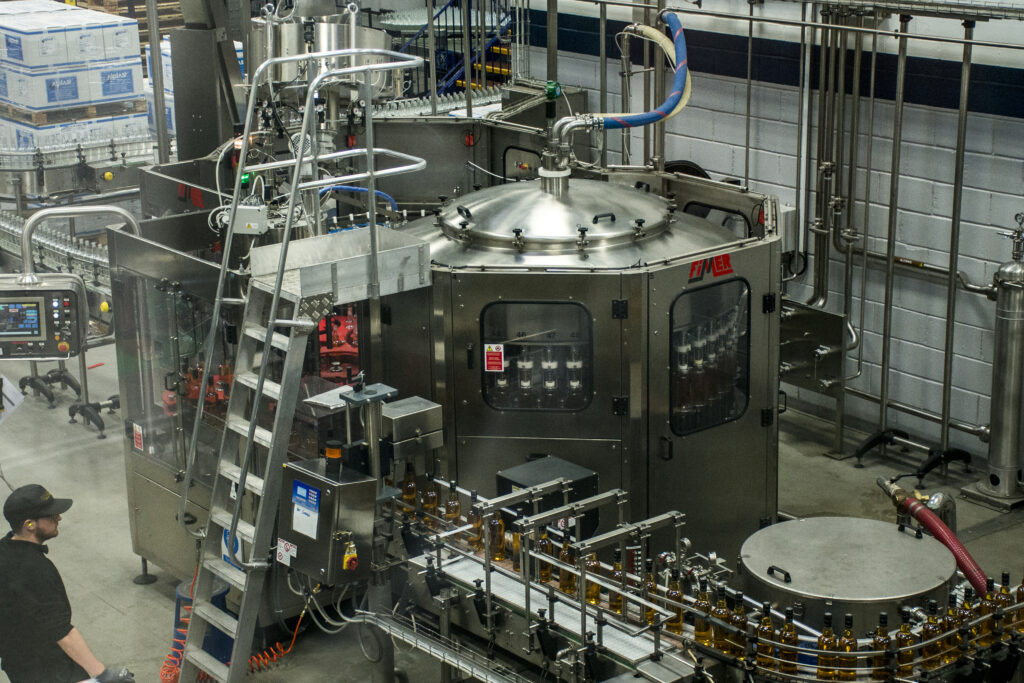
manufacturing machine for beverages

By: Kris Bohm of Distillery Now Consulting

Many beverage businesses start off with the owners or the founders serving in production manufacturing and in sales roles. As the business grows it is no longer feasible for the founders to serve in many of these roles as the needs of the business change with growth. One of the challenges many founders face in scaling their business is maintaining consistent manufacturing practices when they are no longer the person who is responsible for those practices. Training for new employees in small businesses can sometimes be inconsistent or informal.  When training is not implemented cleanly enough that a newly hired employee can fulfill their responsibilities fully it can be frustrating for all involved. Lets take a look at some easy to implement solutions that can help your employees do the best job possible.

  One solution to this problem is creating Standard Operating Procedures (SOP). When you detail in writing each step of the manufacturing process in a document that is readily available to those performing the task, you should get more consistent results. Standard operating procedures can be tedious to create but will save you time in the long run and give your employees the confidence to perform complex tasks with ease. In the process of beverage manufacturing there are many complex steps. Without a set of standard operating procedures it can be extremely difficult for a new hire to fully grasp their roles and responsibilities.

  The optimal steps in training a new hire are the following. Create a written set of operating procedures that are clear and easy to follow. Review the SOP with employees and discuss the steps with them as well to confirm understanding. Once an employee has a basic understanding of the operating procedure the person training the employee along with the new employee should go through the process detailed in the SOP together. By having the trainer first complete the process while following the SOP it will fully demonstrate for the employee how the steps are done. This on hand training will often bring up questions from the employee being trained that might not otherwise come up. Once the employee being trained has seen the process completed following the SOP it is best for them to then complete the procedure outlined in the SOP in the presence of the trainer. It is critical at this step that the trainer does not work hands on with the new employee but is there to only observe and answer questions. If the trainer at this point feels that the employee grasps the SOP and is able to complete it then it is time to move on to additional training. Although this method of training can feel arduous and redundant for an employee, training like this will build their confidence in performing a task that may seem difficult for them. Training this way will also ensure that the manufacturing process will continue to be performed to the correct standards. Implementing a training of this type for all complex tasks will give the creator of the SOP trust in the individuals tasked with completing the process in the SOP.

 Let’s take a look at what a standard operating procedure looks like for a process in a business and talk about some of the key points that you will find in an SOP.

  Let’s go through the practice of generating an SOP:

1)   Go through the process yourself of completing the task that needs a SOP.

2)   Write down all steps and processes required to complete that task.

3)   If there are certain measurements critical to completing the task such as volume temperature or time, include this info in the steps.

4)   If there are complex controls or tools in the process include pictures to help further clarify the written steps.

5)   Place notes in the SOP if there are any hazards in the process or safety concerns.

6)   If there are many steps it can be helpful to add a checklist to accompany the SOP.

7)   Once the SOP has been written, seek feedback on it. Have another person read the SOP ask if they could perform the task.

8)   If the feedback is positive implement that SOP by training your employees.

9)   Put the SOP in a binder or place where it is nearby the location where the task is performed.

  This process of putting in the work to create easy to follow operating procedures, will make work better for everyone. An SOP will guide your employees as they do tasks and give them the confidence that will require less oversight by you. This does not mean that an SOP can replace a manager. The true purpose of an SOP is to provide a resource to ensure complex activities can be done correctly by all who perform it. As a business grows and scales new employees will need to learn how to do their job. The better SOP program you have the faster a new employee will be able to work independently.

Software Options Available for Breweries and Distilleries

woman swiping card in cashier

By: Alyssa L. Ochs

As the craft beverage industry continues to grow, many tech companies are focusing on the needs of breweries and distilleries around the country. There are many benefits to incorporating software into a beverage production business, including reducing human errors, automating repetitive tasks, getting staff organized, harnessing the power of data and ensuring quality control. Software is available for accounting, inventory, packaging, purchasing and scheduling. Breweries and distilleries also use software for sales, quality control and legal compliance. Mobile app software is an option in this industry, as well as all-in-one management software that takes a comprehensive approach and handles various functions. Meanwhile, some producers embrace a more manual process and rely basic spreadsheets and paper recordkeeping.

  So, what are today’s breweries and distilleries using for software, and how are those products working for them? Representatives from two breweries and two distilleries weighed in on this topic and told Beverage Master Magazine about their experiences with software. 

BOSQUE BREWING CO. Albuquerque, New Mexico

  One brewery that Beverage Master connected with on the topic of software is Bosque Brewing Co., which has multiple New Mexico locations in Albuquerque, Bernalillo, Santa Fe and Las Cruces. With a history dating back to 2012, it is one of the largest brewing companies in the state and has grown from a small startup producing 350 barrels the first year to more than 10,000 barrels annually.

Bosque’s production manager Tim Woodward told Beverage Master Magazine that his brewery uses Ekos for inventory and production management. He also uses a few self-built spreadsheets for forecasting, sales and analysis. The brewery handles accounting with separate software not directly tied to Ekos functionality.

  “Bosque has been using Ekos since 2015,” Woodward said. “At the time, it was very affordable and relatively simple to use. The tools in Ekos addressed what we needed most: inventory management. We are able to track inventory, manage orders, invoice sold product, track costs, review pertinent data and oversee production steps with relative ease.”

  But while fully functional, Woodward said he often runs into little “Ekos glitches” that can be frustrating, such as the services being laggy.

  “Cleaner, more functional report systems with intuitive interfaces would be wonderful,” Woodward said. “I pull a lot of data from Ekos on a daily basis, and sometimes manipulating the report parameters to pull accurate data can be cumbersome. Ekos has done a wonderful job developing product planning calendar with drag and drop features, which is very lovely. They have other modules, such as order hub and keg asset tracking, which we do not use or have not found to work with our particular business model but are helpful pieces. Another offering which would be nice is perhaps a more robust server system to support software operation.”

ALVARIUM BEER CO. New Britain, Connecticut

  Nick Palermo, the head brewer of Alvarium Beer Co., told Beverage Master about the software programs his team uses in New Britain, Connecticut. Alvarium launched New Britain’s first microbrewery, founded on the principle of creating an inclusive and communal taproom while revitalizing a historical city.

  On the brewhouse side of things, Alvarium Beer Co. uses Beersmith to fine-tune recipes and DIY templates on Google Sheets for its calendar and brewing schedule, individual brew sheets and inventory of raw materials and packing materials. Alvarium uses Google Drive to store nearly everything related to production, from brew logs to SOP’s, manuals, inventory and supplier contact information.

  “Beersmith is one of the founding tools that many brewers have used in a homebrew or production setting, allowing quick integration and easy ways to edit recipes with something that is fairly familiar and quick to learn,” Palermo said. “We ended up choosing to use Google Sheets and Drive because of the ability for company-wide visibility and editing capabilities.”

  “We are an increasingly growing brewery in Connecticut, and such quick growth over the last couple of years has led to use needing to be able to combat the ebbs and flows of this industry,” he said. “Whether we need to make a quick change to the schedule, edit a recipe from home or have different departments be able to access information without complication, we found our method has been working really well as we expand.”

  “I’d say the biggest challenge we face with our method is the need to manually enter all of our data and make changes in the templates as we see fit,” Palermo said when asked about challenges with Alvarium’s current software. “Lack of auto-entered data does take up a little more time when it comes to keeping track with inventory and can lead to some mistakes.”

  In the future, Palermo would like to see more flexible software plans for different brewery sizes and needs, with costs to match. He said that having a method to integrate software programs more easily into companies with a system in place or smaller staffing structures would also be helpful.

  Cherokee Robbins, the director of sales for Alvarium, told Beverage Master Magazine about software this brewery uses for other purposes.

  Robbins said that Alvarium uses Google Business software, such as Gmail and Google Drive for recordkeeping, Google Sheets for reporting and inventory and Google Docs and Google Calendar for events, appointments and employee schedules. She says these pieces of software are user-friendly, easy to access and meet requirements for digital storage. Alvarium uses Untapped for Business to store information about brewed beers, to allow customers to view beers and check in and to use the menu board to list available products. Robbins said this software is user-friendly and great for keeping track of customer reviews, archiving past beers and helping other businesses find products.

  Alvarium uses Square POS in the taproom for on-premise and online transactions. The team likes this software because it is easy to add, customize and categorize items with an online store that is set up as an extension for customers to shop. However, she has noticed that sometimes items can “disappear” in Square POS, or if they are intentionally hidden, customers can still find them online and order something that is no longer available. After experimenting with various email marketing platforms, the brewery uses Mailchimp for analytics and to monitor communications with its customer base. However, sometimes these emails have ended up in spam folders even after the team has certified and legitimized its domains.

  After interviewing approximately nine different CRM/ERP-related software companies, InSitu hit the four major categories of importance for Alvarium’s sales and distribution team: QBE integration for accounting, inventory management, mileage tracking and logistics for sales routes and customer relations.

“This is a relatively newer software for us, as we started using this in February of this year,” Robbins said. “There is much to learn with all of its functions, but there are times when we may have delayed connectivity issues with its integration to our QBE. Our account representative has been great with staying in communication and finding resolutions for us when we need help, so that is a huge plus. Sometimes support teams with software can be hard to get in touch with when you need something fixed right away.”

  Other types of software the Alvarium team uses include Adobe Illustrator for signage and labels, Canva for business cards and marketing and QuickBooks Desktop Enterprise for accounting and payroll. It uses Prolific as its delivery-routing software to optimize routes for delivery drivers with self-distribution, Eezycloud’s remote desktop for multiple users to access QBE and Workable and Glassdoor for job postings and recruiting.

  When asked what she would like to see in future brewery software offerings, Robbins said, “It would be ideal if all of the platforms we use can be lumped into one software for a brewery our size, especially because we have a hybrid business model with the taproom, self-distribution and now working with a wholesaler. I know there are options like Encompass or Lily Pad available, but those can be pricey and are geared more towards larger distribution networks. I have also heard of a few software platforms that other breweries have worked on creating themselves in the past few years that fit close to what we ideally would need, but there seems to be an important element missing such as integration to QBE, delivery routing software logistics or the CRM portion for our sales force.”

MUDDY RIVER DISTILLERY Belmont, North Carolina

  Caroline Delaney, co-owner and CFO of Muddy River Distillery, told Beverage Master Magazine how her company approaches software in Belmont, North Carolina. Muddy River is the oldest rum distillery in the Carolinas and launched in 2011 with 500 square feet of space in an old textile mill before growing its production from 35 bottles per day to more than 1,200.

  Delaney said that her distillery uses QuickBooks for accounting and payroll and Square for POS and retail sales. She noted that QuickBooks is straightforward for day-to-day accounting, and Square has the lowest credit card processing rates without a monthly fee. She was familiar with QuickBooks from previous companies and says while it can be limiting, the next step up in accounting software is much more expensive, and most offerings require contracts.

  Yet running sales reports with multiple customers, states and distributors can be tricky and lengthy, she said, plus QuickBooks raised its payroll fees this year.

  “It seems like once you are signed up with Whiskey Systems or similar systems, they have all your data and it would be hard to switch back or to another software,” she said. “And the monthly fees are quite a bit higher than POS systems, so that will add up. Since we were pretty limited here in North Carolina, we weren’t able to sell unlimited bottles and cocktails until late 2019. We are under construction on a building where we will actually have a bar and event space, so I am looking into changing payroll and POS systems.”

  Delaney shared that Muddy River Distillery does not use distilling software for federal reports but that her husband, Robbie, developed his own system for that purpose and is still using it with the distillery’s production manager. 

  “I know he has spoken to some of the companies, but has not made the switch because of the monthly fees and not wanting to get into a system and get stuck with them,” she said.

STILL 630 St. Louis, Missouri

  Another spirits producer that shared details about its software usage with us is Still 630, which makes award-winning, handcrafted spirits in downtown St. Louis, Missouri. David Weglarz, the owner and distiller of Still 630, uses as many organic, local ingredients as possible in his spirits, with an old-world double distillation method that captures all the flavors while consistently embracing the adventure of experimentation. 

  Weglarz told Beverage Master Magazine that he uses Google software for his distillery’s spreadsheets and recordkeeping. He chose this option and still likes it because it is free and not localized to just one computer that could be damaged.

  “It allows us to edit simultaneously from different locations, and since it’s not based on one physical computer, it’s more safely guarded against a catastrophic loss,” he said.

  However, Weglarz acknowledged that Google Docs and spreadsheets are not specifically built for distilleries, so challenges have inevitably occurred while using this strategy.

  “It’s just an excel-type format so I had to build my own spreadsheets to make it work correctly,” he said. “But I did that, and now I have my own personal distillery software. It’s certainly not as fancy and sleek as the pre-packaged software solutions, but it works and the price (free) is right!”

  In the future, Weglarz would like to see more cost-effective software options offered in the distillery industry. He says that his distillery is priced out at the moment, something many craft beverage producers can likely relate to.

Conclusions and Opportunities

  Based on our conversations with craft beverage producers across the U.S., a few things stand out about what is working for software and where improvements can be made. In general, craft beverage producers are pleased with user-friendly software that offers multiple applications, features analytics to optimize processes and gives multiple users access to shared data. Affordability is paramount for craft beverage producers, and if software seems too costly, they often settle for free solutions that require more manual entry and monitoring despite the extra labor and risks.

  There is a need and demand for software for small breweries and distilleries with limited budgets and modest distribution networks. Many current solutions cater to large operations and are financially out of reach for smaller and emerging businesses. Integration is important to brewers and distillers, yet many of these businesses feel that they understand their needs better than what any software provider could provide and prefer to take a DIY approach, creating their own internal systems to get the job done internally. Therefore, there are significant opportunities for software companies to focus on the basics and adjust their offerings with tiered options to connect with breweries and distilleries in mutually beneficial ways.