Brewery Filtration Benefits With Knowledge & Testing

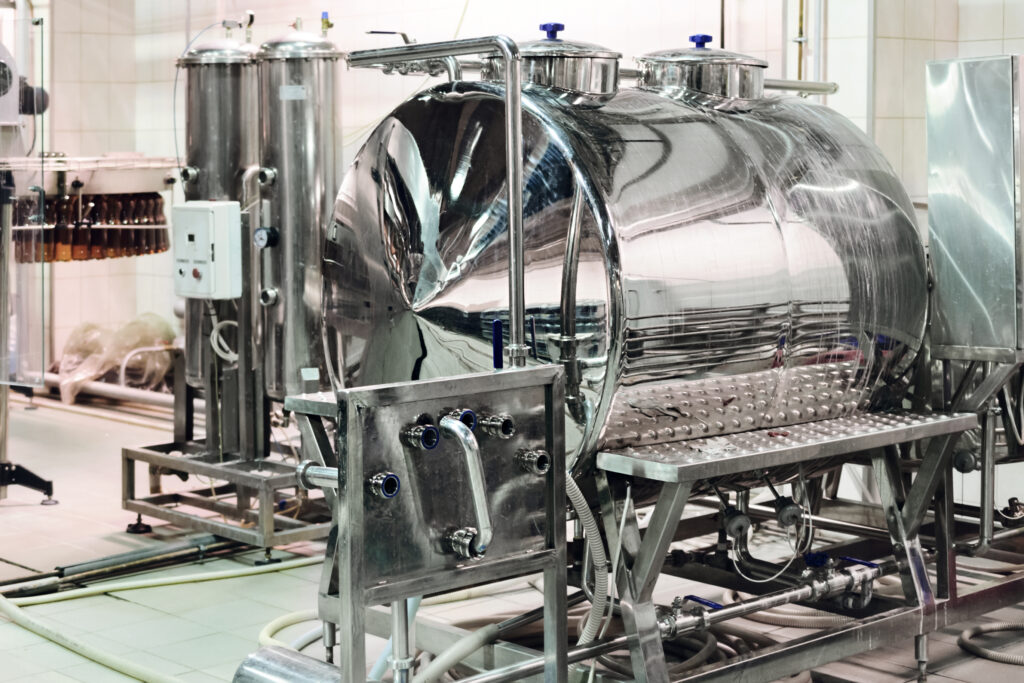
filtration machine for brewing process

By: Gerald Dlubala

Filtration systems touch every aspect of the brewing process, and in an industry that continuously must evolve with market shifts and trends, the filtration system has to respond in kind. While the various methods and types of filtration leave room for a brewmaster’s personal choice and individual opinion, one constant across the brewing industry is the need to work with a filtration professional to properly assess the brewery’s filtration needs. Additionally, shifts in the market, like increased seltzer production, may require filtration process changes to accommodate increased flavor enhancements and changing shelf-life expectations.

  Typical filtration processes fall into categories based on their function and impact on the final product. Primary, or coarse filtration, removes solids like hop particles, yeast conglomerates and protein compounds. Trap filtration removes filter aids like Diatomaceous Earth and other process additives considered valid as filter aids. Fine filtration removes proteins, yeasts, polyphenols and glucans that potentially foul final membrane filters. And final, or sterile filtration, helps eliminate microorganisms like bacteria and yeast that can potentially contaminate and spoil your final product before packaging. Filters are available in different configurations, including plate and frame, modular units, centrifuges, and cartridges using filtering media, including filter sheets and various types of membranes, each offering its regeneration possibilities.

Start at the Beginning with a Proper Filtration Plan

  Donaldson Filtration Solutions helps breweries by starting at the beginning, recommending proper filtration for primary utilities like air, water, steam and gas. Correctly filtering incoming raw materials and utilities naturally addresses critical issues: hygienic design in an allergen-free environment, integrity testing, and BSE/TCE statements certifying that products used are safe and free from potentially harmful materials.

  Donaldson Filtration told Beverage Master Magazine that in its simplest form, brewery filtration systems are meant to keep undesired brewing remnants out of the beer. It’s essential in producing any beer, but even more so in the production of bright or light beers. The basic utilities used in the production process are the preferred starting point for a quality filtration assessment. Quality, particulate-free water is critical for use as an ingredient, in process water, and in necessary steam applications. But feedwater can contain contaminants, including pipe scale, sludge, organic matter, sediment or some other suspended solid particulates. Sterile air, meaning air free from oils and moisture, is used throughout the beer-making process, from wort aeration through the purging and packaging process, and is critical for effective and consistent yeast propagation in the fermentation process. It’s common to use sterile or culinary steam as an efficient way to heat boilers and tanks, clean and sanitize brewery equipment between batches, or sterilize new or used packaging vessels like kegs before final filling. Suppose a brewer uses CO2 to clean and sterilize processing lines, aerate pipe systems, push out product, or purge containers and bottles before filling. In that case, filtered CO2 ensures that the finished product is safely delivered and packaged in clean, safe and sanitary containers.

A Pure Beverage that Retains its Distinctive Taste Characteristics

  “A pure beverage that retains its distinctive taste characteristics.” That phrase sounds a little lengthy to be ordering at a brewpub, but that’s just what you’ll get if a brewery has the correct filtration practices in place, according to Wayne Garafola, account manager at Sartorius Food and Beverage.

  “Some type of filtration occurs throughout every aspect of the brewing cycle, with each filtration point contributing to a product’s overall properties,” said Garafola. “Having the proper filtration at critical process points ensures the brewmaster’s recipe and intended flavor profile are maintained throughout the brewing cycle and into the final product for consumers to enjoy. For Sartorius, I focus on the processing products. The raw materials in brewing are barley, hops, yeast and water: each important. A brewery’s incoming water supply is involved in many specific steps, including mash, lautering, wort, fermentation, bright beer tank and filling. With water regulations and quality already being different across the country, your incoming water is also subject to the effects of seasonal events or area-specific municipal water issues. Therefore, breweries should always filter their incoming water to retain consistency for equally consistent brewing batches. It’s what a brewer starts with, so it must remain a constant for product integrity. Additionally, air filtration into your tanks is important to eliminate contamination from the environment into the wort, fermentation and brite tanks.”

      Sartorius offers a single-layer Aerosart PTFE filter for maintaining air quality without allowing spoilage organisms that cause contamination of the product while also providing high flow rates both into and out of tanks. In addition, Sartorius recommends their Jumbo Star System for applications that use trap filtration, which is especially suited for small to medium-sized craft breweries. The Jumbo Star filters are easily regenerated, decrease process time based on size and flow rates, minimize oxygenation by maintaining a high CO2 level during filtration and come in various pore sizes. The most popular dimensions used are 8um and 5um, with a 3um available for brews experiencing hop creep, the refermentation of beer after the dry-hopping phase. 

  “Trap filtration removes certain components that are added to the process and not naturally occurring,” said Garafola. “In many cases, our Jumbo Star filter replaces the use of DE/Lenticular filtration. We have better pressure drops, higher flow rates and less beer loss when compared to lenticulars. We offer easy setup and cleanup, with minimal oxygenation using the Jumbo Star filter systems. Additionally, Jumbo Star systems can be cleaned, regenerated and readied for reuse using the common chemicals that breweries typically already have on hand, offering up to 50% savings over lenticular options.”

  For final filtering or sterile bottling, Sartorius recommends the Sartocool PS 0.45um. The Sartocool PS 0.45um allows the brew to be final-filtered through a polyethersulfone membrane, keeping yeast and other spoilage organisms like Lactobacillus Lindneri from reaching and spoiling the final product.

Increased Testing Along with Proper Filtration Results in a Better Final Product

  Tricia Vail is the North America Applied Research Segment Manager for Sartorius, and she believes that testing is a valuable tool in finding appropriate filtration systems.

  “Testing is absolutely an overlooked tool,” said Vail. “Whether the brewery Quality Control lab is doing analytical or microbiological testing, filtering the materials is critical for raw material testing through the finished product. Accurate, interference-free chemical tests can then be conducted to detect unwanted microbiology, including spoilage microorganisms and wild yeast.”

  Vail told Beverage Master Magazine that it’s common for filtration needs to vary for each brewer. However, because of the potential existence of contaminants that can alter a beer recipe, brewers should test the incoming water used at least monthly. How a brewery decides to implement its filtration process depends on the overall nature of the beer and process. Most filtrations can be relatively simple, while others like Hazy IPAs or sour beers will need a double filtration. Vail also recommends sampling the beer at the brite tank, at the time of filling kegs and after bottling and canning. The more sampling done, the better and more informed a brewmaster’s knowledge of that beer becomes.

  “Most craft brewers don’t have a Quality Control lab, and if they do, it is usually small, with maybe chemical testing and yeast titers conducted,” said Vail. “Don’t be afraid to do more quality control testing. It’s all data, and the more data you get, the more consistent you can be when making beer. This type of data is helpful no matter what type or style of beer you want to produce. Ensuring that all microorganisms are out of the equipment setup before beginning a new brewing cycle provides the consistently best batch of beer possible. Testing leads to education, and with increased education, the importance of raw material and process testing becomes more forefront in the brewing process, with the overall impact being consistent, high-quality beer.”

  For chemical and microbiological testing, there are several resources that brewers can use, such as the American Society of Brewing Chemists and The Brewers Association.

More automation, Better Materials and More Education

  “More automation will become evident in breweries as time progresses,” said Garafola. “The same holds for filtration systems and devices. We’re always looking to improve based on brewers’ needs and market shifts, like the boom in seltzer production. As a brewer, you should look towards flexibility in the available products, considering pore size, ease of regeneration and operation, and how the product will react to and work with any possible future automation and expansion plans.”

  Sartorius has been building automated filtration skids for over 20 years. Garafola said they offer manual, semi-automated and fully automated filtration systems with a parallel design. The parallel design systems automatically switch to a second line while simultaneously starting the regeneration process of the primary line, increasing the life of the filters and naturally minimizing the need to purchase replacements continually.

  “Brewers should always be open to learning about filtration upgrades and solutions to any issues they’re having,” said Vail. “By partnering with your filtration professional, problems can get solved with a thorough understanding of why they occurred so that they can be avoided in future production. We can assist with testing brewer’s products, and Sartorius always recommends performing a small and intermediate scale to ensure their full scale will work. We have small-scale filter capsules to test beer throughput and estimate scale-up filter sizes based on a brewer’s batch. We get easy-to-use data to scale up in the future knowing the capacity based on your previous small-scale runs.”

  “It’s important to note,” said Garafola, “that in many cases, quality, right-sized filtration not only helps extend the shelf-life of the final product by removing any potential spoilage organisms. It can actually allow a brewer to increase the number of batches that they can complete by shortening certain timelines, all while retaining their product’s organoleptic properties.”

The Most Popular Spirit You’ve Never Heard of: “Vodka”

3 vodka red bottles

By: Tod Stewart

That’s likely the answer you’ll get if you ask any spirits aficionado—and even a few distillers—what is the world’s most popular spirit. Though whiskey would have been a better guess, neither of these categories combined can hold a candle to one that you may never have heard of, namely, baijiu, China’s “white alcohol.”

  You probably don’t see it advertised in North American magazines, on roadside billboards or as a sponsor of entertainment or sporting events. But baijiu’s lack of visibility in no way diminishes its incredible sales perfor-mance. A glance at the 2021 Brand Finance report on global spirits shows that baijiu brands captured the five top slots in terms of brand value. And though “popular” may mean different things to different people, most who make a living distilling would likely prefer high revenues over high visibility. The top baijiu brand—Kweichow Moutai—generated an eye-popping USD 45 million in sales in 2021. The next one down, Wuliang-ye, pulled in a modest $26 million or so. It’s not until you work your way to the sixth spot that you hit some-thing recognizable—Jack Daniel’s. Sales generated? Close to four million dollars in 2021. Nothing to sneeze at, to be sure, but pretty much chump change compared to Moutai or Wuliangye.

One reason China’s national spirit flies under the radar of most Western hooch lovers is simple: About 99% of the volume distilled never leaves its homeland. Another is likely that, to the uninitiated, baijiu’s aromatic and flavor profile is decidedly alien, but we’ll get to that. Also, the stuff isn’t cheap, with the most coveted bottles selling for hundreds of dollars. A few go for well over 1,000 Canadian dollars.

  In its homeland, baijiu flows like a river through birthdays, weddings, national celebrations and even diplomat-ic encounters. It was baijiu, after all, that helped thaw the ice during the somewhat tense Sino-American ne-gotiations of the 1970s. President Richard Nixon raised a glass, possibly two, in an historic toast with Chinese Primier Zhou Enlai in 1972. Margaret Thatcher was treated to a round of it upon conceding Hong Kong back to China. At one point, baijiu consumption by Chinese government officials got so out of hand that in 2012 President Xi Jinping ushered in austerity measures to prevent copious amounts of public funds from turning into copious expenditures on baijiu. In China today, baijiu enjoys a fanbase that runs into the hundreds of mil-lions who actively consume most of the billions of liters distilled every year, so why even bother with an ex-port market?

  Okay, so it’s historic and popular, and expensive. But what the heck is it, exactly?

  Pronounced “bye-jeeoh,” baijiu is a clear spirit distilled primarily from sorghum, a hearty, drought-resistant grain of African origin. What makes it particularly useful in spirit production is its easy gelatinization—a fancy term for the breakdown of starch into a paste when steamed. (It can also be particularly useful in generating triple-word scores in Scrabble). Rice, glutinous rice, wheat, millet, peas and corn can also find their way into the mix. These are not the ingredients most international distillers would even contemplate using, with the ex-ception of corn. But if the ingredients seem a bit unconventional, it’s the distillation and aging of the spirit that raise the most eyebrows.

  The process that most of us are familiar with typically starts as a two-phase endeavor. For example, in whis-key making, grains are first subject to saccharification (another potentially winning Scrabble entry)—the con-version of starch to sugar. Yeast is then introduced to convert the sugar to alcohol before being distilled.

  In baijiu production, this becomes a one-step operation thanks to the use of jiuqu or just qu (pronounced “chew”). Qu is an interesting little beast. For those who know the ins and outs of sake brewing, qu in baijiu making can be likened to koji in sake brewing—both are fermentation starters, and they both result in what is referred to as “solid-state” fermentation. There is plenty of scholarly material floating around the internet for those curious about the process (or are having trouble sleeping). Suffice to say that it incorporates a solid ra-ther than a liquid fermentation catalyst (solid-state fermentation vs. submerged fermentation). The “solid,” in this case, is qu.

  Writer’s note: I should pause a moment here to say that what I’m describing next refers to grain-based “big qu.” There’s also a rice-based “little qu.” The ingredients differ, but the use of each and the end results are similar.

  Qu typically starts its life as a paste made from clumps of moistened grain. When raised in the proper envi-ronment, these clumps attract wild yeasts, bacteria, and assorted microorganisms from the air. Fashioned into bricks, the qu—having generated considerable heat (up to 145 degrees Fahrenheit) during the microbe infestation period—are cooled for several weeks before sitting in storage for a few months to maximize flavor. In the baijiu fermentation process, ground grains are soaked, and crumbled qu added. The enzymes in the qu convert the grain’s starches to sugar. The yeast in the qu then converts the sugar into alcohol. The fermented grains are then distilled—a process that involves forcing steam through the grains and collecting the concen-trated alcohol. This process is repeated, with each batch stored separately. Aging typically takes place in clay pots, sometimes buried underground (fermentation often takes place in underground clay vessels as well). In the final process, various batches of aged baijiu are married together. In some cases, up to 200 different batches make the end product.

  Okay, so what’s the result of all this toil? Upon their first nosing and sip, Baijiu newbies may wonder why so much time and effort went into creating something so, well, “unusual” (I’m refraining from using more descrip-tive language here). Baijiu is a complex spirit, no question there. The real question is whether or not you have any hope of warming to the sort of complexity baijiu offers.

  First, it’s helpful to know that baijiu “styles” are defined aromatically and fall into four broad categories: light aroma, rice aroma, sauce aroma and strong aroma. These are pretty self-explanatory, but you probably won’t be able to figure out which is which by looking at the label, even if you can read Mandarin. Of these, the most popular—and probably the most challenging to the new-to-baijiu crowd—is the strong aroma variety. I’ve tried a few of these, including Wuliangye and Yanghe, and, personally, find them a bit tough to describe. Funky, fruity, fishy, earthy: To some, fascinating, maybe not so much to others.

  I’ve also tried a few in the sauce aroma category, including the famed Kweichow Moutai. While I wouldn’t necessarily be inclined to get up early to secure a bottle, I’ll admit I found Moutai to be rather pleasant—in an “I have never tasted a spirit that even came close to something like this,” pleasant. With its penetrating soy sauce, herbs and fermented bean aromas and flavors, it’s a savory, slightly salty, and certainly distinctive tip-ple. For those into the umami-rich profile of nato, soy sauce, kimchi, miso and other fermented delicacies, sauce aroma baijiu might be your next thing.

  A note of caution: Baijiu is potent stuff, typically bottled well over 40% ABV. The traditional Chinese way of toasting with it involves a rather complex ritual, culminating in the knocking back—or more accurately, re-peatedly knocking back—of thimble-sized glasses of the clear liquor amidst cries of “ganbei!” which trans-lates, somewhat loosely, as “bottoms up!”

  On that note, I wish you ganbei and good luck in your exploration of a new adventure in the spirits world!

Taking it Easy With Light Spirits

By: Hanifa Sekandi

You want to be the life of the party, but you do not want the party to take the life out of you. So you are on the hunt for a middle ground where you can entertain and imbibe with friends yet feel refreshed in the morning. So far, you have tried mocktails and light cocktails with just a splash or two of tequila. Globally, you are not alone. Just like you, people are looking for lighter spirits that maintain a robust flavor profile. Luckily, the industry is catching on. Spirits, ready-to-drink beverages and beer brands create must-have light spirits and drinks to keep the party going with-out tipping the scales.

  This change is a major innovation in an industry where consumers desire more than just the same thing packaged differently. Light spirits attract discerning beverage enthusiasts who seek a healthier lifestyle or simply to consume less alcohol. However, craftsmanship and ingredient still matter, and consumers are not ready to compromise quality. Brands who plan to enter this bur-geoning, niche market must understand consumer demand and how and what to bring to the shelves.

What is a Light Spirit?

  When discussing light spirits, it sounds like we are talking about the paranormal. Alas, we are not. However, it does seem like magic when thinking about a once hard liquor becoming less po-tent.

  So, what is a light spirit? A light spirit, also known as a spirit drink, is an alcoholic beverage that contains a low alcohol percentage between 0.05% and 1.2%. This percentage scale is not con-sistent across the board and is dependent on the alcohol type. Some lighter alcohols are referred to as “reduced alcoholic” beverages since they contain higher alcohol content than light spirits. Anything above a 5% ABV is considered a reduced or moderate alcoholic beverage. Moderate alcohol drinks contain approximately 9.5% ABV. This percentage scales up to 20% ABV for spirits, far below the higher alcohol range for spirits with a legal minimum of 40% ABV.

  As the market gains momentum, lighter spirits will provide consumers an outlet to create and imbibe quality cocktails and drinks that still taste as good as their full alcohol counterparts. One could consider lighter Scotches, whiskeys and gins as the rebellious offspring of the spirit world, having one foot in tradition and the other in modernity. An example is Scotlands’s Whyte & Mackay Light with a 20% ABV. This smooth, earthy spirit is aged in bourbon and Sherry casks. The fact that it can be enjoyed neat or over ice is a true test for a moderate spirit.

  This trend has seen gains in North America and across the globe. A study conducted on alcohol consumption in the U.K. found that Brittons are either reducing their alcohol intake or opting for no or low alcohol alternatives. According to the study, by 2030, there will be a decrease in alco-hol consumption per adult by 11 liters. The change is predominantly led by individuals 18-24 in the U.K. and 25-34 in the U.S.

  The results provide perhaps an unexpected pivot from previous generations who viewed these years as a time when drinks were endless and throwing caution to the wind was the norm. The “viva forever” celebration no longer fits the ideals of many younger imbibers. Light spirits seem like an appropriate transition for these consumers, who have less desire for wild nights of binge drinking.

  Globally, the light spirit trend is set to grow 34%, a significant marker since product selection in this category can be limited. This growth possibility opens the door for some brands to change focus and become light spirits producers.

  Two things that cannot be compromised when crafting lighter spirits are that they must be pre-mium quality, and they must blend in. It is not about standing out. It is about being a welcome addition to a bar cart or restaurant menu selection. The pleasant surprise for a low ABV spirit should be that there is no compromise on taste, so much so you cannot tell the difference be-tween it and its higher alcohol counterpart.

Taking it Light & Easy

Around the Globe: South Korea

  Change in every industry is inevitable. The transition to lower alcohol spirits has been slowly happening over the last ten years. Notably, in 2015, Diageo debuted a 35% ABV “spirit drink” – W Ice by Windsor – in South Korea. The spirit was the first low ABV whisky.

  What spurred this change in South Korea? Simply, whisky is no longer the desired spirit. There was a time in South Korea when Scotch was the drink of choice and often used to make a popu-lar drink called poktanju, a combination of beer and Scotch. Another reason for this change, sim-ilar to other countries around the world, is affordability. Younger consumers in South Korea want inexpensive spirits. In addition, spirits synonymous with youth appeal to this generation. Although there has been a shift and the younger generation is finding interest in what was once considered an “old man’s” drink, the creation of spirits that appeal to younger consumers has taken hold as brands observe the popularity of vodka.

  As a result, the goal of whisky brands in South Korea is to entice people to see it as a viable drink choice by lowering the alcohol content and promoting it under the guise of light and con-scious imbibing.

The Sensible Imbiber

  Taking something old and giving it a new image needs to encompass more than beautiful pack-aging. A complete product delineation needs to be undertaken to make spirits appear new and fresh. The central premise must sit within the ideal of living a more healthy lifestyle. Drinking just one glass of spirit neat or over ice and not feeling the effects also signifies the end of an era of binge drinking, ushering in a new time of sensible imbibing. For the light spirits consumer, drinking is about living life while not feeling pressured to be anything other than yourself. It is not about standing out or being the life of the party. Instead, it is about connection and requires one to slow down and experience moments that build memories worth remembering.

Best Practices for Writing Your Wholesaler Job Descriptions

By: Kary Shumway, Craft Brewery Financial Training

Recruiting, hiring and retaining good employees is a challenging task. However, with a clearly written job description the task gets easier.

The purpose of a job description is to clearly define what needs to be done, and clearly define the type of person you need to do it.

A well-written job description will include a short overview of the position, bullet points of tasks to be done, and a listing of important qualifications. In essence, the job description should describe the job.

In this post, we’ll review Best Practices for writing your beer wholesaler job descriptions, present the One Thing that should be in your job description (but probably isn’t), and provide a road map for putting the job description into practice.

Best Practice #1: Get it in writing

At its most basic, the job description should be in writing and given to the employee (or job candidate).

Sounds obvious, but I’ve seen many employees hired and many employees who worked for years without a formal job description.

Sometimes we are in a hurry to hire someone and neglect to write up a job description. Other times, we just take it for granted that the employee knows what to do in the position and everything will work out fine.

Regardless, one simple basic best practice is to get the job description down on paper and get it in the hands of the employee.

Best Practice #2: Follow a Job Description Structure

The website BetterTeam.com defines job descriptions this way:

A job description is an internal document that clearly states the essential job requirements, job duties, job responsibilities, and skills required to perform a specific role.

The document itself can be one page, or several pages, depending on what’s needed to outline the necessary requirements and skills.

A typical job description will use the following structure:

  1. Short narrative overview
    • Give the candidate a feel for the position. What can they expect? What do you expect from them?
  2. Bullet point list of tasks, responsibilities
    • List only what is important and meaningful. Use the ‘other duties as assigned’ to cover the rest
  3. Qualifications you want from the candidate
    • List specialized skills, knowledge, or education
  4. Specific job requirements
    • If there will be travel away from home, working nights or weekends, spell it out so there’s no hard feelings later

These are the standard sections of a job description. In total, they provide a good overview of what the job is about and what is expected of the employee.

Next post we’ll look at the One Thing that must be in your job description (but probably isn’t).

P.S. Get 50+ template beer wholesaler job descriptions, job postings and compensation planning models in the 2022 Beer Wholesaler Job Descriptions Course. This resource is included with your Subscription to Beer Business Finance.

The Brewstillery Movement

By: Kris Bohm: Owner of Distillery Now Consulting LLC.

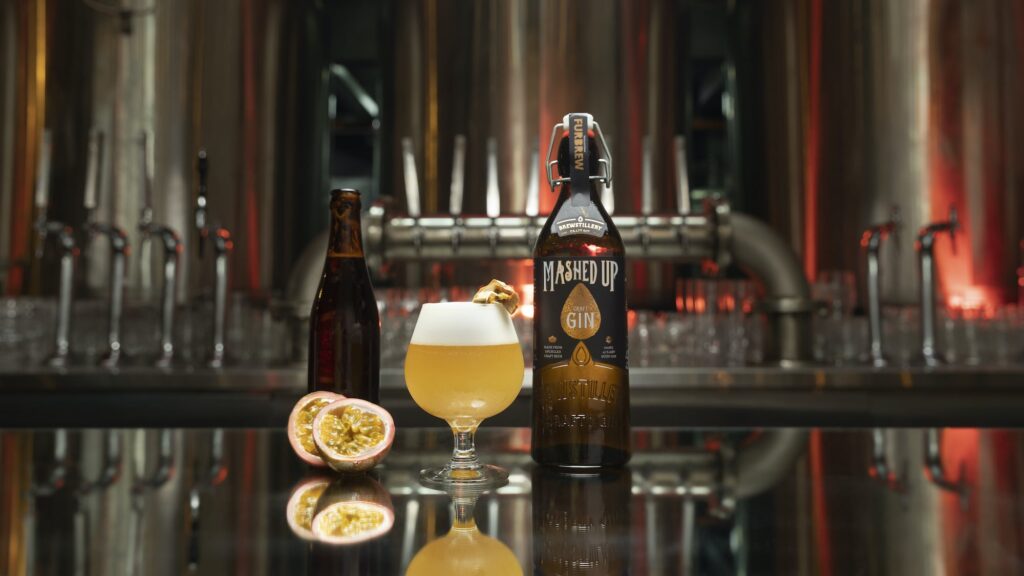
gin drink set

Breweries make beer and often their equipment has the capacity to brew more beer than there is necessarily a demand for. Plain and simple, idle equipment does not help generate cash flow. An alternative use to consider to keep idle brewery equipment running is whiskey. American single malt whiskey is the new hot trend in spirits. Single malt whiskey has been touted for decades in America as a premium whiskey, and now bourbon whiskey is absolutely booming worldwide. If your brewery has a brew house that is sometimes sitting idle, it is time to put it to work. With the addition of a commercial still for distilling, a brewery can turn an idle brew house back on, and start producing single malt whiskey. The addition of a distillery will create a new business avenue for a brewery that can bring in new customers and generate more revenue for the overall business.       

Brewers Making Whiskey

  A few of the well known breweries, who have jumped into the distilled spirits world, are Ballast Point and Rogue Ales. There are amazing spirits being produced and distilled by breweries all over the world and your brewery can seize this opportunity as well. Brewstilleries, as we will call them, are pioneering a new business model. By using existing equipment to produce the wort or mash for distilled spirits, a brewery can create a diverse portfolio of products which can appeal to a broad base of customers.

  Ballast Point Brewery is a notable and very successful brewery that added a distillery to their operation. The Ballast Point took on a wild side project in 2007 where they added a still to their brewery in California, to experiment in spirits production. The brewers there mashed a beer recipe, then lautered an un-hopped wort that was then fermented and distilled into single malt whiskey. They also used their equipment to cook corn mash for bourbon production. A few years later, their whiskies had aged in barrels and it was bottled then released. Both their single malt and bourbon were wildly successful and well received spirits. Ballast Point Brewery sold a few years after the distillery was started and their distillery branched off to become Cutwater Spirits.

Tools of the Trade

  Breweries and distilleries use equipment that is very similar for the production of beverage alcohol. Fermenters, pumps, hoses, yeast, mash tuns, lauter tuns, and fermenters are common tools utilized by both distillers and brewers. Some breweries have capitalized on this opportunity and co-utilize their equipment and expand into distillery operations.  Let’s detail a few of the tools that brewers use that distillers can co-utilize for whiskey production. Of course this can only work if the brewers are willing to share.

Brew House Mash Tun

  A brew house is the essential tool used for the production of beer. This brew house will sometimes be idle when there is not enough demand. The steam heated mash tun in a 4 vessel brew house is used to mash malted barley for brewing beer. This equipment can also be utilized to produce mash for whiskey. With a few small changes, a mash tun can be used to produce cereal mash, made with corn or rye, that is cooked and fermented for bourbon whiskey.

  The production of malt whiskey in the Scottish tradition, using 100% malted barley, requires more complex equipment than the basic cereal cooker utilized by most distilleries. The lauter tun is a unique equipment for separating barley from the sugary wort in beer production. When making American single malt whiskey, the lauter tun is used to produce wort for distillation in the same way it is used to make wort for beer.

Fermenters

  Every brewer and distiller has fermenters in which they transform grain from sugary liquid into alcohol through fermentation. The fermenters used in a brewery work perfectly for fermenting wash or wort destined to become whiskey. If the excess space is available to ferment, a distillery can make use of otherwise empty tank space. Often distillers ferment their wort for whiskey fast and warm. A fermentation is often finished and ready to distill in as little as 4 days.

Pumps and Hoses

  The workhorse tools of brewers and distillers are their pumps, hoses and tri-clamps. The same pumps and hoses can be used to accomplish liquid transfers in a brewery and a distillery. Sanitization is important to mention here as it is easy to introduce unwanted bacteria or yeast into hoses if a distiller is not careful and conscientious of proper sanitization, which is required in a brewery for beer production, but not as necessary for a distillery.

Yeast

  The essential ingredient that all producers of beverage alcohol must utilize every day is saccharomyces cerevisiae, or the fungi simply known as yeast. The yeast used by distillers and brewers is closely related. In fact, many brewstilleries will use the exact same strains for both brewing and distilling. The use of yeast and the knowledge of how to handle yeast effectively is similar for brewers and distillers. Sharing yeast strains and yeast propagation equipment between a brewery and distillery increases the value reaped from every batch of yeast.

  All of these tools above can be made to serve double duty for a brewstillery. Careful planning, management, and execution are key to successful sharing of equipment.

Behind the Scenes

  Many questions come up in the discussion of adding a distillery to a brewery. Let’s go through and look at some of the common questions.

  How does a brewstillery function and get licensed from a legal perspective?

  The answer to this question will vary widely depending on the location of the brewstillery. Every state and country has different laws on what a brewery and distillery are allowed to do when working in conjunction. Typically, the distillery operations are required to be separate from the brewery both in physical location and in bookkeeping. The way a brewery meets this requirement of separation is as simple as a wall that keeps the two businesses apart with a separate exterior door to enter the distillery. A distillery can share steam for heating and glycol for cooling with a brewery, but the key here is that the still and the vessels holding distilled spirits are kept separate from the beer. On licensing a distillery will need to get a federal and state distiller’s permit before they can start producing spirits and may also need local licenses or permits.

  How are records and bookkeeping managed for a brewstillery?

  When it comes to bookkeeping, the distillery part of the brewery is typically an entirely separate business. This means a separate business entity or LLC must exist for the distillery which will hold its own business license, separate books, and tax reports. For the day to day operations and transactions, a distillery within a brewery will often buy the grain from the brewery and lease the brewing equipment on a daily basis to make wort for whiskey production.

  How is a distillery taxed?

  Taxes are a big concern because distilleries and distilled spirits are taxed very differently than beer. Although they are taxed differently, by having the distillery operate as a separate business it makes the bookkeeping and taxes simple by not mixing them with the brewery. Volumes have been written on taxes of distilled spirits all about proof gallons, wine gallons, and gauging, but we will save a deep dive into taxes for another day.

  How much beer does it take to make whiskey?

  In the production of a single malt whiskey the sugar content of the wort is on the high side to maximize the potential amount of whiskey produced per batch.

  Often the ABV of a fermented wash is as low as 7% to upwards of 12%

  There are a multitude of factors that will affect the amount of whiskey produced per pound of malt, including mash procedures, fermentation, distillation and maturation.

  When distilling a beer you can expect to roughly see the following yields. This estimated yield includes the distiller’s cuts and loss from barrel aging.

  A single 31 gallon barrel of 10% abv beer can produce upwards of 25 bottles of whiskey.

Beer to Whiskey and the Hops in It

For the vast majority of whiskies both malt and bourbon are strictly made from grain. No hops or other flavoring agents are added. Beer, of course, has hops and specialty grains in it. A beer that is distilled into whiskey which we will call “hopped malt whiskey,” will carry the distinct flavor of hops and into the spirits. This can be good or bad, depending on who you ask.

  Let’s weigh the good side of whiskey made from hopped beer.

  Hopped malt whiskey tastes very different from traditional Scottish malt whiskey. Because it tastes so different and can be marketed as part of the beer story, a hopped malt whiskey is often well accepted by the public as a new kind of whiskey, since it is not compared against bourbon or scotch.

  There is a downside to distilling hopped beer into whiskey. Beer that is distilled into whiskey and then barrel aged carries a strong and unique flavor profile dominated by the hops. For some consumers, this flavor is off putting even to the biggest IPA loving hopheads. Most people that enjoy whiskey have a pallet that is trained to like bourbon or scotch single malt. A hopped malt whiskey tastes nothing like either of these spirits, your average whiskey drinker may not like unique flavors of such a spirit. This warning is not to deter a creative brewstillery from distilling such things, but to merely inform.

Let’s Make Some Whiskey!

  For those currently running breweries, you may be considering getting into distilling. If you are, be sure to do your homework or hire a pro to help you, as there are many differences between brewing and distilling. This learning curve can be expensive without prior experience. For those just getting started, the brewstillery model is a business worth considering that will give you access to a larger customer base, and create better returns on your equipment. Consideration of state laws is essential as they vary widely on the legality and requirements to operate on this business model. The future is looking bright for craft beverage alcohol production and brewstilleries are on the lead in producing new variations of traditional spirits.

  Authored by Kris Bohm the Owner of Distillery Now Consulting LLC. When Kris is not helping folks build distilleries and creating great whiskies, he is out riding cyclocross or defending his beer mile record. Would you like to talk about making whiskey? Drop us a line. Distillerynow@gmail.com

Is it Time to Franchise?

By: Raj Tulshan, Founder of Loan Mantra

franchise opportunities available

The Casual Pint, a craft beer shop and bar, opened its first location in 2011 and their first franchise two years later. Since then, they’ve steadily expanded. Now, they have 20 franchises in eight states, and have found the franchise model to be lucrative for their business – and a great way to grow their brand.

  Part of the Casual Pint’s success is a combination of a solid concept with the right set of circumstances to succeed. First, they have a stable infrastructure in place that can be replicated in other locations.  They also provided all necessary resources to their franchisees, including market research, architectural design, and marketing and sales materials. They’ve ensured that the owner of each franchise was heavily involved in their communities, a model they’ve implemented from their very first shop. Additionally, each location promotes themselves as a community gathering place that provides exceptional beer, and the business is thriving.

  Franchising, like The Casual Pint, can work really well. Consider these stats:

●   90% of franchisees enjoy operating their

      business.

●   88% enjoy being part of their organization.

●   85% feel positive about their affiliation with their franchisor.

●   80% feel their franchisor operates with a high level of honesty.

●   78% would recommend their franchise brand to others.

●   73%, given the option, would do it all over again.

  Independently owned businesses looking to grow can explore whether franchising would be a good solution for their unique situation. Here are some things to consider before you decide whether to franchise:

  Are you ready to sell your brand concept? To be successful, you’ll need more than just a savvy business concept. Before you franchise, determine whether you can clearly explain what your brand is, what it does, and its unique value proposition. Remember: you’ll need to be able to clearly articulate your brand and your vision to key audiences, including investors and potential franchisees, to entice them to get involved.

  Do you have a solid structure in place? Your franchisees will need to replicate your business model and operational structure for marketing, sales, technology, etc.  So, you’ll need to have strong systems and processes in place before diving into franchising. Expect to hand over ready-made “toolkits” for your franchisees to use in their day-to-day operations. Allow plenty of time to develop these concepts, plans, and materials.

  Can your business be replicated? Is there a market for your business elsewhere? Could someone else run another location as well as you do? For a company to thrive as a franchise, it must be replicable. The Casual Pint found success as a community-focused meet-up space with amazing beer, and it didn’t matter if the community was in Tennessee or Arizona. The concept translated well in different locations, and can continue to grow and thrive anywhere.

  Are you ready to scale your passion? Are you ready to teach and manage others on a larger scale? Are you comfortable stepping back from the daily operations and focusing more on franchise management? For example, if you’re a craft beer maker, once you decide to franchise, you’re no longer going to be hands-on with beer brewing.  You’ll be focused on running a franchise to sell your beer, and teaching other people how to brew it, sell it, market it, etc. You’ll also be helping your franchisees get set up with real estate, construction, hiring staff, etc. Are you ready to scale your passion, overseeing several others in a new and amplified managerial role?

  Are you ready to build a dream team of outside experts? It’s essential to consider hiring knowledgeable professionals to help you through the entire process of developing your franchise model, preparing the necessary documents, and navigating the finances, including securing loans. You’ll need to hire financial professionals who specialize in accounting, loans and assisting business start-ups, as well as, specialized franchise attorneys to assist in the drafting of your paperwork. 

  Are you ready to invest in the business’s future? Expect to invest personally in the venture, which may require a business loan. Also, you may need to recruit investing partners to help manage the expenses. Anticipate a variety of costs, including brand development, experts’ fees, legal fees, and outreach to potential franchisees. You’ll need significant capital to launch your franchises, so think about how you will raise the necessary cash.  Many people choose to divest a 40IK, start with personal savings or take loans from family to start their first franchise. Others seek out investors, small business loans and  lines of credit.

  Have you researched funding? There are several different ways to fund a franchise. Seeking out an experienced loan advisor that you can trust can save you time and money. For example,  Loan Mantra has relationships with all types of franchise lenders, so even if you don’t know the exact kind of funding you need, we can help you determine the right loan package. Anecdotally, bankers and financial experts notice significant cycles to franchise funding. In January, more franchisers will seek equipment loans; whereas in the summer months, specifically July & August, they often seek more inventory-based loans (e.g. a cyclical  inventory such as football jerseys to sell in a bar or other seasonal products).   Regardless of season, 7a loans are always a significant source product for franchise funding. Most franchise lenders will attempt to use a 7a product first, followed by direct equipment company loans, followed by loans given by manufacturers. The franchisor will usually have a set deal with an equipment company and negotiate those terms out front.

  What will attract franchisees to buy into your concept? Be the brand that you represent. Personally meet with potential owners and attend area trade shows. Be easy to do business with. Streamline your business processes. Loan Mantra’s franchisors are able to house all of their franchise contracts, financing applications, and associated documents online through the BLUE platform, allowing their franchisees to complete everything online, without having to meet in person or send by snail-mail. The way you do business tells others something about you. Working through an antiquated analog system may tell them you’re antiquated, whereas using today’s tech tools will tell them you’re ready for the future.

  If you’ve considered most of these points this may be the time to franchise your passion!

About the Author

  Neeraj (Raj) Tulshan is the Founder and Managing Member of Loan Mantra, a financial advisory firm with best-in-class and proprietary fintech, BLUE (“Borrower Lender Underwriting Environment”). Loan Mantra, Powered by BLUE, is next-level finance: a one-stop-shop for business borrowers to secure traditional, SBA or MCA financing from trusted lenders in a secure, collaborative and transparent platform.

  After graduating from Ithaca College in Finance, Tulshan began his banking career at Merrill Lynch in New York City. He spent more than a decade in the Currencies, Commodities and Investments Group where he also worked with global asset-backed securities, structured products and principal investments. There, he also originated and underwrote deals valuated over $100 million and structured finance transactions.

  When the market crashed in 2008, Raj saw a significant opportunity to fix the fractured lending ecosystem. Soon thereafter, he sought after and completed an MBA from the Said School at Oxford University and began developing Loan Mantra. His goal was to remove the silos that exist between lender and borrower using secure financial technology. Though Tulshan continues to be iterative with his fintech, meeting current demands of both market and borrower, his professional mission and good- natured approach with clients remain the same. In this, Loan Mantra displays its founder’s proud partnership between best-in-class fintech and top-marks human experts. Time-and-again, clients turn to Raj because they know he will always pick up the phone and offer unparalleled financial counsel in a remarkably human —even friendly—way.

About Loan Mantra

  Loan Mantra is a financial services company designed to serve small and medium businesses with offices in New Jersey, South Carolina and New York. At Loan Mantra your success is our success. This means that our attention, purpose, and intention are all focused on you, our client.  We are your ally to overcome obstacles, bringing peace through uncertain times to achieve your highest goals and aspirations. Your friendly, responsive agent will listen respectfully, and service your account actively through one of three locations in the US.  We speak your language whether it’s English, Spanish, Hindi, Bengal, Hospitality, Laundry or QSR, let us help you today. Connect with us at www.loanmantra.com, 1.855.700.BLUE (2583).

Bringing Brewing Full Circle From Craft to Culture

By: Quinton Jay

van in front of graffiti wall

In the heart of Fresno, California’s Central Valley, Arthur Moye enters the doors of Full Circle Brewing Co. (FCB), the region’s oldest-running brewery. Some days, he says, he still can’t believe it’s his.

  Prior to purchasing the brewery in 2016 and taking over as its CEO, Moye spent 15 years moonlighting his passion for craft beer as a homebrewer. During the day, he ran his own CPA practice as a successful career accountant, leaning on his academic studies at San Jose State University and prior experience working for two of the nation’s “Big Four” accounting firms to refine his strategic skills with numbers and business acumen.

  But, in true entrepreneurial fashion, Moye eventually wanted more, something that allowed him to blend his technical efficacy, his longstanding passion for craft brewing, and his deeply ingrained want to do more and give back to others within and around his native Bay Area community.

  “I definitely took a leap of faith when I sold my CPA practice to buy FCB,” says Moye, “but something in me knew that it was a chance I had to take. I needed to know if I could combine my experience as an accountant and strategist with my passion for craft beer, and if I could build a business model around the two.”

  Not only did Moye manage to successfully create a business model, but in the first four years after purchasing FCB, he was able to ramp the brewery’s production by some 3,000%. This explosion in production prompted Moye to expand the facility’s older 7.5BBL brewhouse, one that only produced draft beer locally to Fresno’s Central Valley, into a brewhouse with a 15-barrel capacity that was able to package and distribute its uniquely-flavored craft products all across the US.

“Beer” + “Entertainment” = “Beertainment”

  Moye will be the first to admit that he could not have acquired FCB, nor grow it into the Central Valley powerhouse it has since become, fully on his own. Like any tried and true entrepreneur, he knew he needed to rely on two vital components for its success: an empowering vision for what it could become, and the buy-in of the local community into that vision.

  “FCB was here long before I came along,” Moye says, “and so many members of this community wanted to see it revitalized just as I did, but I knew I needed to convince them. I started brainstorming ways we could turn FCB into the heartbeat of the Central Valley’s craft beer and entertainment scene, and the phrase ‘beertainment’ popped into my head.”

  As Moye explains, he not only wanted to create a successful brewery known for its winning craft flavors, but a gathering place where others could converge to disconnect, detach, and simply be mindful in the present moment. So, Moye and his team set out to establish FCB not just as a revitalized brewery, but one that doubled as an event and entertainment venue all under one roof. With his vision now clear, Moye set out marketing FCB’s rebirth to the community in Fresno’s Central Valley, and was fortunate enough to find funding from a group of local investors.

  “I’m not sure if I would call it ‘luck’,” Moye clarifies, “because that might imply that there wasn’t all this effort we put into refining the vision for FCB or acquiring funding to actualize it, but it just made sense that the investors who aligned with the vision were all locals to this area and its community. When you think about venture capital or investments in California, most people tend to think of Silicon Valley and companies like Apple or Tesla—not a craft brewery.”

  Moye’s adherence to his vision for what FCB could become, however, ultimately paid off. In 2016, he was able to acquire the brewery in full and immediately got to work. In 2017, he began reaching out to members of the entertainment industry, making introductions, fostering relationships, and creating partnerships to manifest his vision of “beertainment” for FCB. By the time the brewery had closed its crowd equity campaign and canned its first product of craft beer in 2018, FCB had already experienced triple-digit growth.

  With his vision and business model for FCB’s rebirth now in full swing, Moye started signing agreements with distributors throughout California to get his product in front of more customers in 2019. Less than a year later, FCB’s brand was being placed on shelves at major retail stores throughout the Golden State.

  But as Moye and his team at FCB would soon find out, not all that glitters is gold; even in California. Just months after FCB’s craft beer landed on shelves throughout his home state — each can sporting his coined phrase, “beertainment” — a new threat to business emerged in the form of the COVID-19 pandemic.

Pivoting to Find Value Amidst a Pandemic

  In mid-March of 2020, the world was wracked by the WHO’s declaration of the COVID-19 virus as an official global pandemic. All across the country, businesses that weren’t deemed to be “essential” were forced to close their doors virtually overnight, leaving Moye and his team at FCB scratching their heads as to how they could keep their business (and its vision) afloat. With the threat of a pandemic looming overhead, the “entertainment” aspect of FCB’s “beertainment” draw was shut down, so Moye had to once again get creative with his strategy in order to help his fledgling business survive.

  “During the pandemic, two of the most famous venues in town closed, one of which had been open for over 50 years,” says Moye. “FCB had taken over ownership of that venue, but we had to close it during the pandemic since it had no outdoor seating. My team and I put our heads together and collectively brainstormed ways we could pivot the business.”

  Ultimately, Moye and his team at FCB managed to keep their business alive by regularly hosting virtual shows with comedians, musicians, and other artists over Zoom. At the same time, they doubled down on FCB’s packaging and distribution, getting larger amounts of their craft beers into chain stores and craft liquor stores in California and 6 other states. They also picked up another brand, Sonoma Cider, and implemented their own iteration of a D2C sales model, deemed Full Circle 2 Go (FC2G), at a time when omnichannel retailing in the beer & wine industry was taking off in the US.

   “Running a brewery is one thing,” Moye adds, “but running a brewery that doubles as an entertainment venue also requires employees who can manage things like sound and security. When the pandemic forced us to shut down, suddenly these employees had no key role, so we asked them what their other skills are in order to keep them on board. Our security guards were repurposed as delivery drivers, and our venue’s promoter became the program director for FC2G.”

  As Moye explains, in a matter of mere months, the revenue from FC2G was able to match the revenue earned from their entertainment venue. Furthermore, by being able to pivot not only his brewery’s business model, but also the roles of his employees during the height of the pandemic, Moye was able to foster greater loyalty amongst his employees with FCB’s brand while simultaneously providing value to his brewery’s community. Now, nearly two years since the pandemic began, FCB still hosts comedy shows every Sunday night and has since been able to reopen its entertainment venue to more musical artists, albeit at lessened capacity.

Do What You Love, and You’ll Want to Work Every Day of Your Life

  Despite the onset and lingering effects of the pandemic, brewing craft beer has remained a thriving industry. With an economic impact of over $9 billion in California alone, Moye remains dedicated to his original vision for FCB as a communal hub where anyone and everyone can come together to unwind, destress, and share in their mutual love for uniquely-flavored craft beer and live entertainment.

   Additionally, as a black entrepreneur, craft brewer, and business owner, Moye is grateful that he is able to allow FCB to contribute towards the 1% of black majority-owned craft breweries in the US. Though black majority-owned craft breweries are still a distinct outlier in the industry, Moye hopes to see more post-pandemic events and gatherings like Barrel & Flow fest bringing black-owned-and-operated breweries together to celebrate Black arts, artists, and creators to help foster deeper DEI initiatives within the craft beer space.

  “It’s a little funny to me whenever I mention the ‘1%’ thing,” Moye adds, “because I still get responses from people like, ‘why does it have to be a black thing?’ But it’s not just about that—it’s a craft brew thing. It’s about finding a tribe of people who support you and your vision. It’s about finding other black-owned businesses breweries that support you because you all want to see more diversity, more inclusion, more representation, and more equity in the craft beer space. When you’re able to find those feelings in what you love to do, your work doesn’t feel like work.”

  It’s rare that we are able to find ourselves in a career that allows us to blend our technical acumen, interpersonal skills, and passions. Although, perhaps this is what makes the draw of craft brewing so attractive to so many. It grants those of us with a deeply-rooted love for craft beer to build a community around our ardor and share our enthusiasm with others, regardless of who or where they are.

Vegan-Friendly Beer

A Growing Trend To Watch This Year

By: Natasha Dhayagude, CEO, Chinova Bioworks

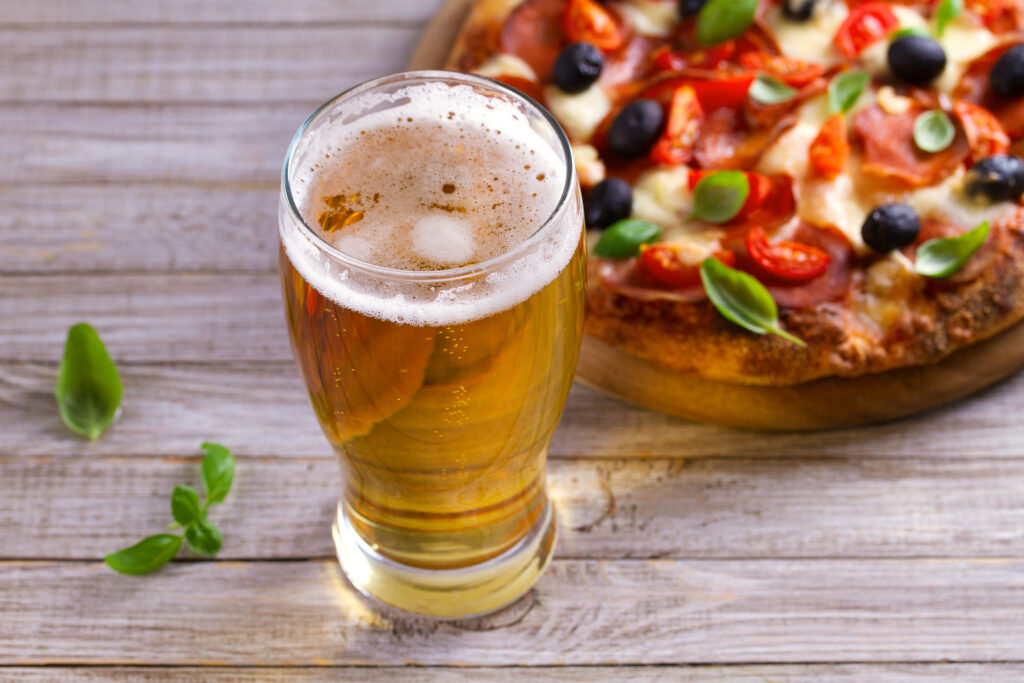
beer and pizza on the side

In an industry as competitive and ever-changing in terms of new products and trends, the ingredients for developing beer are constantly evolving. One trend to watch is the plant-based movement. Whether consumers are vegan or not, many consumers are paying more attention to what is on the ingredient label before they consume their favorite foods and beverages.

  Examine most beer labels carefully and currently, you will find that many beer brands are using animal-based compounds to process alcoholic beverages. Some animal-based compounds that are widely used throughout the production process of beer and alcoholic beverages are pepsin, a foaming agent obtained from stomach enzymes of pigs; chitin, derived from lobster and crab shells; and carmine, which is found in the crushed scales of cochineal insects. Another commonly used compound is isinglass, which is a kind of gelatin obtained from fish swim bladder. These compounds are often used in the alcohol production and filtering process to make drinks appear clearer and brighter. Clearing is an aesthetic concern and stability issue; it does not only look better, but it is more stable than cloudy beer.

But what if you Live a Vegan Lifestyle? Can You Still Enjoy beer?

  Because the vegan lifestyle is grounded in plant-based products, beer manufacturers must ensure the animal add-ons are completely taken off the list during alcohol production. With new technology, leading beer makers, including Budweiser, Coors, Corona and Heineken, have already begun shifting its processing to incorporate vegan-based ingredients instead of animal-derived ones.

  Vegan brewing is a growing trend, as more consumers are looking towards environmentally sustainable, plant-based options when purchasing food and beverages. While the market for vegan, gluten-free and low-calorie beers is still somewhat small, this industry is set to begin expanding as future generations become increasingly aware about the ingredients in their food and beverages. The growing trend of vegan brewing stems from millennials who are making more conscious decisions about what they consume, even when it comes to alcoholic beverages. Vegan beverages require a series of preparation and ingredients to meet the expectations of vegan consumers. Veganism has inspired the alcoholic beverage industry to incorporate plant-based and animal cruelty-free products. For many, being vegan has gone farther than just a trend; it is a lifestyle that many live by.

  Chinova Bioworks launched a major research initiative with College Communautaire du Nouveau Brunwick’s (CCNB) INNOV centre, supported by the New Brunswick Innovation Foundation’s Voucher Fund in 2021 to develop a new fining agent for vegan-friendly beer. Fining agents are used in breweries to clarify and brighten beer. The term “fining” is used to describe the forced clarification process. It increases the brightness of the finished beer by removing suspended yeast and haze-forming proteins and polyphenols. A beer with elevated levels of haze tends to deteriorate rapidly. This process also shortens aging times by removing the excess flavor-destabilizing components from the finished beer.

  For years, CCNB’s Grand Falls campus has developed technologies around brewing and distilling. Now, our company, Chinova Bioworks, has provided CCNB with a viable product and is putting its clean-label expertise to leverage the vast depth of brewing expertise at CCNB’s campus. Through this research, Chinova Bioworks will develop a new application for its proprietary white button mushroom fiber, Chiber, as a rapid fining agent for breweries. White button mushrooms contain many health benefits. Aside from the white button mushroom improving the quality of a product, it also has a notable amount of vitamin D minerals infused within the mushroom itself.

  Chinova’s mushroom extract is also a natural solution to reducing food waste and assisting in the production of vegan-friendly alcoholic beverages. Chiber is a cost effective, sustainable and vegan-friendly solution for the brewing industry. Before being used by breweries, Chiber has also been used for plant-based meat, dairy alternatives, sauces and condiments. It is a pure fiber extracted sourced from the stems of white button mushrooms that help improve quality, freshness and shelf-life and does not contain any allergenic materials from the mushroom, which results in increased consumer satisfaction and reduced food waste. Testing is also conducted to confirm the absence of regulated allergens. Chiber is odorless and tasteless; it does not alter the taste, color or consistency of beverages.

  Early results have shown that Chiber works eight times faster at settling yeast post-fermentation and can leave residual antimicrobial benefits to the beer, which makes it stay fresh longer. Chiber is a one-for-one replacement for artificial preservatives that provides the same protection from microbial spoilage, while being a natural and clean label ingredient. Chiber holds many certifications including: vegan, kosher, halal, organic compliant, non-GMO, declared allergen-free, paleo, keto-friendly, low FODMAP, gluten-free, Whole 30, and it has no sodium contribution.

  This research initiative comes at a time when many breweries are working to shift to vegan-friendly beverages to keep up with consumer demand for more sustainable products. Chinova Bioworks’ technology would provide brewers a vegan alternative to animal-based, isinglass fining agents and synthetic polyvinylpolypyrrolidone (PVPP) that has long been used in the beverage industry as a processing aid. Because many people are searching for vegan and plant-based options in every aspect of their lifestyle, Chinova Bioworks is committed to providing sustainable solutions through our white button mushroom fiber. Our goal is to help manufacturers produce clean-label ingredients and reduce food waste. Alcoholic beverages, beers in particular, are filled with animal-derived and synthetic ingredients, so we believe Chiber can make an impact for beer brands looking to expand their offerings to consumers. With this research, producers in the beverage industry will be able to consider the opportunity to incorporate vegan-friendly and sustainable products into their own beverages using clean ingredients. This research initiative will pave the way toward more vegan-friendly and sustainable beer and alcoholic beverages.

  In 2021, Chinova Bioworks worked on the research portion of the vegan beer initiative and with early adopters for market testing, while actively seeking innovative companies to take part in this initiative. Once this research initiative phase is completed, we expect that Chiber for alcoholic beverages will become available during the first half of 2022. The future for beverage companies is exciting and new technologies like Chiber may help many expand beverage offerings to a wider range of consumers looking for a good brew.

 Natasha Dhayagude

  Natasha Dhayagude, CEO and co-founder of Chinova Bioworks, a food technology company founded in 2016 to develop natural, clean-label preservatives extracted from mushrooms for the food and beverage industry. Chinova is headquartered in New Brunswick, Canada, and 90% of her team is made up of women practicing in STEM fields. Dhayaguede was named Startup Canada’s Young Entrepreneur of the Year in 2017 and Startup Canada’s Woman Entrepreneur of the Year in 2019 for her role in co-founding Chinova. Since then, she has raised $4.5 million in capital investment from major food-technology venture capitalists and has formed strategic partnerships with major multinational producers in the food-technology industry. Dhayagude earned her Bachelor of Science degree in biochemistry from the University of New Brunswick.

 For more on Chinova Bioworks, visit https://www.chinovabioworks.com

Unpacking Findings From the Craft Spirits Data Project

By: Becky Garrison

craft spirits tray

While Jason Parker, co-founder and President of Copperworks Distilling Company, reported an 80% drop in revenue in 2020 due to Covid-19 closures and restrictions, in 2021, Copperworks actually expanded their operations. After the furniture store directly next to their Seattle water-front property closed, they plan to lease this establishment with plans to turn this facility into a cocktail bar and event space.

  In January 2022, Copperworks signed a lease to build in the former Nine Yards Brewing facility in Kenmore, Washington. They raised $2 million for this expansion, which will allow them to distill ten times more spirits since their partner breweries, Pike Brewing Company, Elysian Brewing and Fremont Brewing, cannot produce enough product to meet the growing demand.

  Copperworks’ ability to grow during this global pandemic was emblematic of other craft distiller-ies, evidenced by the 2021 Craft Spirits Data Project report. The report was presented on De-cember 7, 2021, by the American Craft Spirits Association and Park Street Companies at the Annual Craft Spirits Economic Briefing during ACSA’s Annual Distillers’ Convention & Vendor Trade Show in Louisville, Kentucky.

  Since its inception in 2016, the Project has been a research initiative designed to quantify the number, size and impact of craft spirits producers in the U.S. Among the industry groups who participated in this project include the Alcohol and Tobacco Tax and Trade Bureau and the Na-tional Alcohol Beverage Control Association.

Assessing the Growth of Craft Distilleries

  Despite the global pandemic, the U.S. craft spirits category as a whole did grow in both volume and value in 2020, albeit at a slower rate than in previous years. Park Street CEO Harry Kohlmann attributed the slower growth rate to the early period of the pandemic when on-premise sales were shut down in a significant portion of states and consumers were “pantry loading” the brands that were available at off-premise locations. Pre-pandemic, craft spirits brands often prioritized onpremise to brand build, so it stands to reason this period was detrimental to the category.

  However, as Copperworks’ story illuminated, craft spirits companies are nimble and innovative. Kohlmann noted that the majority of them were able to transition to a market strategy that relied more on e-commerce and off-premise sales. Also, Kohlmann pointed to a 2020 trend that partial-ly made up for the drop in sales early in the pandemic regarding consumer buying habits. “Consumers went from purchasing big staple brands early on in the pandemic to more premium ex-pensive products like craft spirits when the pandemic panic subsided.”

Craft Distillers by Size

  In compiling this report, the Project team utilized data from surveys, regulatory agencies, nation-al and regional industry data sources, survey data, interviews and team assessments. The report defined a craft distillery as a “licensed U.S. distilled spirits producers that removed 750,000 proof gallons (or 394,317 9-liter cases) or less from bond, market themselves as craft, are not openly controlled by a large supplier, and have no proven violation of the ACSA Code of Ethics.”

  The survey delineated between small, medium and large craft distillers by a range of gallons and 9L cases removed from bond annually. A large craft distiller produces 100,001 to 750,00 gallons (52,577-394-317 9L cases), a medium craft distiller produces 10,001-100,000 gallons (5,259-52,576 9L cases), and a small craft distiller produces 1-10,000 gallons (1-5,258 9L cases).

  Small producers make up 90.1% of all U.S. craft producers though they are responsible for just 10.3% of annual case sales. While larger producers only make up 1.6% of the total number of craft producers, they are responsible for 56.6% of cases sold.

  As of August 2021, the number of active craft distillers in the U.S. grew by 1.1% over 2020 to 2,290. To put this growth into perspective, Park Street charted the growth in distillery numbers from 2015 to 2020. During this time, large craft distillers grew from 23 in 2015 to 37 in 2020, a 61% increase.

  Also, the number of medium craft distillers more than doubled from 73 in 2015 to 188 in 2020, while small craft distillers nearly doubled from 1,067 to 2,054.

Sales of Distilled Spirits

  The survey compared results from 2020 sales compared to sales in 2015. These statistics were not broken down by ecommerce versus brick and mortar sales. Nor did this Project address the impact of grassroots marketing strategies employed by some distillers during Covid-19, such as pairing with restaurants and bars to offer cocktail-to-go kits or forming collaborative local alcohol delivery services.

  The number of cases produced by medium craft distillers has grown from 1.3 million 9L cases to over 3.9 million 9L cases. On average, the number of cases produced by a medium-size craft distillery rose from 18,000 9L cases to 21,000 9L cases. Small distilleries grew from 597,000 9L cases to over 2 million 9L cases, with the average number of cases increasing from 559 9L to 663 9L cases.

  Overall, the U.S. craft spirits market volume reached over 12 million 9L cases in retail sales in 2020, at an annual growth rate of 7.3%. In value terms, the market reached $6.7 billion in sales, with an annual growth rate of 9.8%. U.S. craft spirits market share of total U.S. spirits reached 4.7% in volume and 7.1% by value in 2020, up from 2.2% in volume and 3% in value in 2015 and 4.6% in volume and 6.9% in value in 2019.

  In terms of distribution, large producers are often nationally distributed, medium producers are usually distributed regionally, and small craft distillers tend to be only available locally. In 2021,  46% of the total U.S. craft business occurred in the craft distiller’s home state. This local distribution accounted for 59.6% of sales by medium producers. For large producers, out-of-state business sales remain key, accounting for 70.9% of the total business.

  While direct sales at the distillery are key for all craft distillers, they are particularly important for small craft producers, with over 47% of their total business coming from this sales channel. Along those lines, less than 8% of the total business for small craft distilleries comes from outside their home state, though this number appears to be growing slowly.

  Exports add 0.9% to the overall volume for U.S. craft distillers, with medium craft distillers reporting 0.2% sales from exports. These exports declined by 32.9% from 104,000 cases in 2020.

Employment In Craft Distilleries

  According to this survey, COVID-19 had a heavy impact on the U.S. craft industry. Between 2018 and 2020, the average number of full-time employees decreased by 24%. In 2019, total employment surpassed 30,000 but was reduced by nearly 50% in 2020 to under 17,000. While this data points to a significant drop by any standards, Kohlmann noted that the industry still maintained volume growth at a 7.3% rate, reaching 12 million cases produced with fewer employees.

Ranking of Distilleries by State

  In breaking down the number of craft distilleries by region, the West and South contain the highest percentage of distilleries at 30% and 29.3%, respectively, followed by the Midwest with 20.7% and the Northeast at 20%.

  The top five states that produce the most craft spirits are, in order, California (190), New York (180), Washington (135), Texas (135), and Pennsylvania (117). In this ranking, Pennsylvania passed Colorado, which has historically been in the top five. These five states make up 33% of the U.S. craft distilleries. The next five states––Colorado (107), Michigan (88), North Carolina (80), Oregon (77) and Ohio (73)–– comprise an additional 18.6% of the market, with the remaining states representing 48.4% of the market.

Impact of Legislation on the Industry

  The Craft Beverage Modernization and Tax Reform Act reduced the Federal Excise Tax on dis-tilled spirits from $13.50 to $2.70 per proof gallon for the first 100,000 proof gallons removed from bond annually. As a result of this decision, the U.S. craft spirits industry invested $759 million in their businesses, rising from $698 million in 2019. According to the Project, the top moti-vation for investing was expanding to meet consumer demand and increase visitor space.

  As a small craft distiller who opened during the pandemic, Stephen Hopkins, owner and distiller at Aimsir Distilling in Portland, Oregon, pointed to how state law can aid small craft distillers for whom tasting sales remain critical. “Oregon recently updated its law to reduce the taxes on tasting room sales which has really helped our business survive the pandemic.”

  Also, he noted the need to streamline the process of moving products to different states. “The overhead of moving to another state is very high and often hard for small producers to overcome. Even regional states being more cooperative would help small producers as well as the consumers.”

The Right Equipment for Your Brewery Startup

By: Gerald Dlubala

cozy brewing facility

You’ve likely had a vision of the perfect brewing location in your mind for quite some time, and finally, you’ve found it. After all of the location hunting, permit wrangling and liquor license drama, it’s time to get the essential equipment installed and get to brewing. But how do you know what equipment is necessary? And how does that translate to your brewing goals?

  “Well, that depends,” says Chris Jennings, technical writer for Glacier Tanks LLC, a retailer of stainless-steel beer tanks, mash tuns, brew kettles, pumps and parts. Jennings is well-versed in the brewery startup process, having been part of multiple startups and currently opening his brewery.

  “You know, with a brewery, location is always going to be important,” said Jennings. “But as a potential owner, you need to take into account the inherent demands of your operation to understand your needs. For example, if you want a small little local brewpub, a smaller footprint to house smaller production equipment is fine. But, do you want to stay local? Are you looking to produce a regional brew? Do you see yourself as a regional production brewery? Are your goals to become nationally distributed? Your answers reveal your goals and ultimately factor into your basic equipment needs.

  “A common path for brewery startups is to fit the brewing operation into an established and secured location, especially with the popularity of historic buildings,” said Jennings. “It’s perfectly okay if you don’t have a location set, but if you do, then you already know the building’s options and available utility choices. You’re going to have to get permits for everything, especially in historic locations, which will make you fully aware of your on-site choices. Does your location have three-phase electric, 40-amp circuits, and 220-electric? What fuel source is available for the boilers? Are we looking at electric heating options, direct fire options (natural gas or propane), or steam, which, by the way, is the most efficient option and should always be the first choice if available? And please, always involve your preferred equipment supplier as early in the process as you can, even when considering specific buildings and locations if possible. We can help with building a potential brewery layout with AutoCAD software, and then custom fabricate an entire brewhouse based on the available footprint and specifications if needed.”

  Jennings told Beverage Master Magazine that the bottom line for brewery startups is to save time, money and heartache by getting equipment to make your daily work life more manageable. During the brewery startup process, it’s imperative to associate yourself with informed people who can offer guidance and experienced purchasing information. The essential equipment to consider for brewery startups include the mash tun, a hot water source or hot liquor tank, depending on the production size, a boil kettle, heat exchanger and fermenter. Matching these essential items to your brewery’s goal-driven production needs within the allotted space goes a long way in ensuring a quality startup.

  “Other things can technically wait,” said Jennings. “But when considering equipment, I always suggest that anything else you can add to the actual production process immediately makes your brewing life more manageable. Any production process needs equipment. It’s just the way it is, so the more equipment you can have available upfront, the easier and more manageable your daily brewing life will be. Of course, I’m talking about anything and everything else, including a brite tank, filter, glycol system, applicable pumps, valves or other minor equipment. As a brewmaster, you want to focus on brewing your beer rather than losing quality time to menial or time-consuming tasks that the proper equipment or tooling can handle.

Size, space, and the Limits of Customization

  “Custom tanks like those we offer at Glacier Tanks are awesome,” said Jennings. “But even though our tanks and brewing equipment can be customized, there are not infinite options. Brewing is a science, and science determines the effectiveness, performance and size of the brewing equipment needed, including tanks.”

  But Jennings said there’s more to consider when matching projected production numbers to equipment. For example, adding additional fermenters doesn’t necessarily increase your production capability. If your boil kettle is a five-barrel capacity and you add a 20 barrel fermenter, you’ll need four brew sessions to fill it. So yes, you’ll have more beer, but you have to account for the extra time spent brewing. Adding two 10 barrel fermenters or four five-barrel fermenters may be more economical and efficient. Rather than looking at an 18- to 20-hour brew day to use a single 20 barrel fermenter efficiently, smaller capacity options allow more time between brew sessions while providing greater batch control and increased possibilities for brewing variety.

  Glacier Tanks offer stainless steel certified tanks that can adapt to any extraction process a brewer considers, including kombucha, soda, non-alcoholic products and even winemaking. The company keeps experienced brewers on staff to ensure that their systems remain industry-specific, including their turnkey brew systems that can be a two or three-vessel system, ranging from three barrels to 15 barrels requiring a 14’ x 16’ space.

  “Space is always at a premium for brewing operations, so when projecting a layout, it’s important to take every square foot into account,” said Jennings. “As for equipment, science says that the larger everything is, the larger everything needs to be. If you’re considering a three-barrel boil kettle, you’re looking at a piece of equipment just over seven feet tall and about three and a half feet wide. A three-barrel fermenter is 6’4” and three feet wide. A 10 barrel kettle will be 8’ 6” tall and 4’ 9” wide. A 10 barrel fermenter will take up 8’ 5” by 4’ 2”. A 20 barrel kettle requires a 15’ x 15’ space. Fermenters can range up to a 20’ x 8’ area required for a 100 barrel option.

  “What a brewer needs for a startup depends on the production goals. If your production is greater than five barrels, you should have an HLT just from a water conservation standpoint. To calculate the production capacity of any system, multiply the size of the system in barrels by how often a week you want to brew. Take that weekly amount and multiply by the number of weeks a year (50 is standard) you intend to brew to get your annual production number. You can also work backward to set your brewery production goals and scale the equipment and system to the necessary workload. Divide your annual production goals by the weeks you will brew to arrive at a weekly production number. The number of brew cycles needed per week then depends on the capacity of the system you install.”

The Never-ending Evolution of Brewing Technology

  While it’s true that brewing technology is constantly evolving based on needs, Jennings said that technology generally changes because of the potential of greater efficiency or measurable cost savings. One example is in the area of water conservation. “The brewing process wastes a lot of water, so there is always interest in any new technology that decreases, limits or stops wastewater and saves money. Glacier Tanks has incorporated a spud valve based on old German technology that allows a brewer to off-gas produced CO2 at a predetermined PSI setting during the fermentation process. As fermentation ramps down, the amount of CO2 released naturally lessens, allowing the brewer to capture more of their own produced CO2 to keep in the solution. It’s more efficient and can reduce the cost of purchasing CO2 after releasing all of your own. Higher efficiency plus cost savings drives successful changes.”

  “Sizing your system is the important first step in starting your brewery,” said Jennings. “Brewery equipment is scalable and should be scaled to your brewhouse so you won’t have to upgrade too rapidly. Even though saving money is important for a new brewer, penny-pinching or skimping on initial equipment purchases upfront can lead to supply and demand issues, income and product loss, and increased waste. Rather than wasting money on things you might need, spend the money on quality equipment you need. Also, don’t consider expansion only for the sake of growth. Fixing a problem due to bad planning is very expensive. Instead, make sure that the market is there and you’re prepared to expand your workday.”

When Even the Basics are too Much: Small Batch Equipment for Limited Spaces

  Quality equipment is essential, especially if you’re a small batch brewer with limited space. No one knows this better than Adam Sommer, Head Brewer and owner of Evergreen Farm Brewing in Metamora, Illinois.

  Sommer used his detail-oriented background as an electrician and mathematics enthusiast to start a small-batch, ground-to-growler brewery on a farm that’s been in his family since at least the mid-1800s. However, by choosing the old farm as his brewery location, his available brewing space was limited by the dimensions of the original farm buildings. That meant fitting a complete brewing system into a 15’ x 15’ space, and after researching his options, he found an all-in-one brewing system option from BREWHA Equipment Company. Their turnkey system allows the entire process of mashing, boiling and fermenting to occur in the same portable, conical fermenter, saving both space and time for a small-scale brewer.

  “Space was definitely an issue, but being out here in the country, we operate out of an existing well, so wastewater is an important issue as well,” said Sommer. “With the BREWHA unit, we only use two gallons of water per gallon of beer compared to four gallons that are normally needed.”

  Sommer told Beverage Master Magazine that he has been brewing beer for less than a year but estimates his production to be about 50 barrels for his first year. He plans to expand by renovating more original buildings and combining those with new structures that will feature the same aesthetics and appeal as the original structures. Sommer also has a couple of one-barrel fermenters for experimental brews and for producing different beer styles. Additionally, he uses two jacketed water chillers with a third in the works that provide a steady range of temperatures throughout the fermentation process.

  “And it’s easy to overlook at first, but you can’t forget about the small but equally important equipment and supplies that you need to serve your customers properly,” said Sommer. “We keep a supply of growlers and howlers so our patrons can take and enjoy our products at home or share with others. The amount that you’re going to need is just kind of guesswork at first, but the important thing is to have a relationship with a supplier to get your orders delivered when you need them.”

  When asked about advice for startup craft brewers, Sommer echoes the thoughts of Jennings. “Don’t skimp upfront. Instead, buy the best option to handle the capacity you need. That will allow you to make a quality product at a good price point for all involved. At the onset, the BREWHA brewing system was what I needed to get started. The price was right, and the system met my goals, needs and specifications.”

  Sommer’s ultimate goals for Evergreen Farm Brewing include becoming a destination brewery featuring event spaces with Airbnb rental options.

For more information, go to www.evergreenfarmbrewing.com