Adding New Revenue Streams to Boost Your Distillery’s Bottom Line

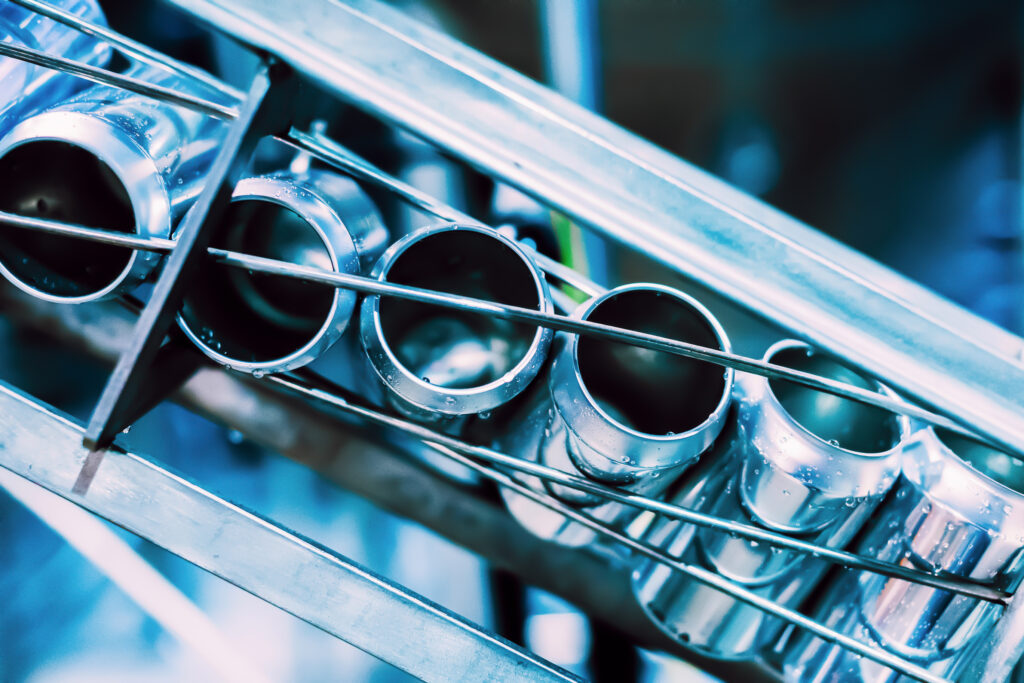
stacks of empty cans

By: Gerald Dlubala

“Any craft beverage producer looking to develop their business to the point of allowing consumers to enjoy their product at home needs to ensure that their packaging choices can protect the product right up to the point of consumption,” said Steve Davis, Product Line Director, Metal Packaging for Industrial Physics. Industrial Physics is a global test and inspection partner providing first-class solutions to industries, including the beverage industry, to protect the integrity of brands and manufacturers across the globe.

  “The aluminum can is perfect for this because it’s light, chills the product quickly, protects it from the UV light, is robust, endlessly recyclable and offers great opportunities for the beverage owner to market and brand their product in their way,” said Davis. “Checking the packaging components before assembly and assuring the finished container is assembled correctly is where we come in. Our range of beverage can and end gauging solutions allow the user to check that the components supplied by the packaging manufacturers meet their required specifications. For example, our PAT 2100mk2 is a gauge that checks the opening ability of the beverage end. It mimics the customer pulling on the tab and checks that the force required to open the can is within specification and that the tab will stay properly attached while opening. After all, if you can’t open the packaging, you can’t taste the product inside.  Once the can is filled and sealed, our range of video seam monitors and X-ray seam inspection equipment allows the producer to check that the seaming operation is performing correctly and preserving the contents of the packaging as best as possible.”

  Industrial Physics includes a family of CMC-KUHNKE, Eagle Vision and Quality By Vision brands within their portfolio. Their expertise in designing and manufacturing quality control and assurance systems for the metal packaging industry has been relied upon for over 30 years and is unrivaled. Quality By Vision is proud to have invented the practice of using cameras to inspect the seams on beverage cans.

  “Checking the seam on a filled can is a fundamental requirement for any beverage producer to protect the packaging integrity,” said Davis. “It ensures that the cans and ends pass through the production process without issues. Our solutions offer an inspection methodology that minimizes operator influence and provides trusted results. In addition, the reliability of the gauges provides concise and consistent data, enabling the beverage producer to optimize their process, reduce waste and ensure that their product reaches the customer in the best condition possible.”

  Industrial Physics designs its products to be as maintenance-free as possible. For video seam monitors and similar dimensional gauges, all required is an annual calibration to original specifications. Seam saws need new blades periodically, depending on use.

“Basic must-haves are a simple set of gauges to check incoming packaging,” said Davis. “Things like a can height gauge and a flange width gauge are a good start, and for seam checks, you would need a video seam inspection gauge with our SEAMview inspection software. The SEAMview inspection software automatically takes seam measurements and stores the results, so if the producer receives a complaint or comes across an issue, they can go back and investigate the test results. This system is scalable and used by small craft producers up through the world’s largest beverage manufacturers. An ultimate solution for larger-scale producers is our XTS online, a completely autonomous gauge that uses X-rays to inspect the beverage can seam without any invasion of the packaging. It makes all the necessary measurements and returns the container to the line for sale.”

  Davis told Beverage Master Magazine that being involved with a beverage producer as a true partner is very important. “We’re always here to support our customers with the highest level of service. The products themselves are simple to use, portable (except for the XTS products), powered by any standard electrical source, and only require a day’s training to attain proficiency. Refresher courses are available either remotely or on-site with our support team.”

Volumetric & Level Fillers For Glass Bottle Packaging: XpressFill Systems LLC

  Johannes Kollhoff is the Director of Operations at XpressFill Systems LLC, designers and builders of quality, affordable bottling equipment for beverage producers worldwide. He recommends a Volumetric Bottle Filler for distillers that need to comply with TTB regulations.

  “Our volumetric filler controls the amount of fill with the use of a precise timer. The filler is calibrated to your specifications and is capable of repeatable, accurate fills regardless of inconsistencies in the bottle glass. We also provide high-proof volumetric fillers that replace flow path components with more resilient materials to ethanol. The high-proof version is used extensively for our distillery customers and fills levels within TTB requirements. Volumetric fillers are suitable for bottling a variety of different sizes, even down to 50ml bottles,” said Kollhoff. “The four-spout unit can fill approximately 450 [750ml] bottles an hour and be used for bottle conditioned kombucha, olive oil and many other liquids. Level fillers can be used for all products, including wine and distilled spirits as well. Level fillers are ideal if the fill height in the bottleneck is a concern for shelf presentation amid glass variations.”

  Kollhoff said that XpressFill’s level fillers control the amount of fill with a level sensor. When the liquid reaches the sensor, the filler automatically stops filling. The desired liquid level is set by adjusting the shelf’s height in 1/16-inch increments.

   “All XpressFill machines are semi-automatic, tabletop, stand-alone fillers that are portable and operate with regular 110v outlets,” said Kollhoff. “They should be placed and used in well-ventilated and non-hazardous areas. A gas purge option is available to reduce the exposure to oxygen for products that are sensitive to oxidation. Our fillers would not be compatible with liquids that contain large amounts of pulp or particulates, so if you have questionable products, we recommend sending samples of questionable products for testing.”

  The volumetric and level fillers have self-contained, self-priming pumps that draw liquid from any barrel or carboy. They are manufactured from high-quality, food-grade components, and the only recommended maintenance is routine cleaning after use. There is no reservoir. The liquid flows directly from your bulk container through the filler into the bottles. The machines are easy to learn and operate, but XpressFill recommends familiarizing yourself with the device by initially using water for a test run. XpressFill has excellent customer service, and if needed, you will be in touch with a technician that knows the machine inside and out within a couple of minutes.

  XpressFill also has customers who use a hot fill level filler to pack ready-to-drink cocktails, which has become somewhat of a trend. Trends happen for many reasons. Sometimes it’s as simple as a demand that goes unnoticed and is now coming to the surface. In an extreme case, it may take a pandemic to give life to a trend that most didn’t even know was available or necessary. When the pandemic took away the ability to enjoy your favorite drinks at your local venue, a trend was born out of necessity to keep doors open for craft beverage producers. The packaging and sales of ready-to-drink beverages and cocktails became the way for craft producers to stay viable and in touch with their customers. They didn’t know that the ability to package their product in that way would turn into a valuable and sustainable revenue stream that was not part of their original business plan.

Starting a Bar Program With Oktober Can Seamers

  “Canning has turned into a new revenue stream for those places that never considered it before,” said Dennis Grumm, CEO and lead engineer of Oktober Can Seamers. “The main thing that came out of the pandemic is that new drinks packaged in ready-to-drink cans translate into new revenue. It’s like the seltzer craze when it began about five years ago. Then, they were new and different, and now they’ve blown up. That’s what our can seamers can do for whatever beverage you come up with and want to put into a can.”

  The pandemic brought the reality and usefulness of to-go drinks to the forefront. It allowed craft beverage producers the ability to get their products out the door when no one was allowed in-house. Now, as things return to normal, canning beverages to go or for the ready-to-drink market is a legitimate income stream.

  “When we go to a business for a demo, we usually bring bloody marys and mimosas to demonstrate our can seamers,” said Grumm. “Clients are blown away by the wide range of uses of our can seamers and the new business opportunities that open up as a result of owning one. By now, everyone has seen the classic cocktails canned and displayed as ready-to-drink. Successful classic cocktails breed new and different ideas, so a distillery or pub owner can add their twist or trademark drink and can them for their customers. Variations on margaritas and rum punches have done well, but a beverage producer can literally can whatever concoction or unique product they can imagine. Of course, you, as a producer, have to be aware of things like fermentation that can alter taste after time and adhere to food and safety regulations such as drink-by, best-by, or expiration dates.”

  Getting started is as simple as purchasing an Oktober Can Seamer and getting the cans and ends, which they can provide. Oktober units are plug and play out of the box, and their website has all the video tutorials needed to be up and running in literally minutes.

  “You’re easily able to go from canning one type or style of beverage to another,” said Grumm, “Especially when using the same size of the can. Switching can size is no big deal and can be done in a few seconds, with a 15 to 20-minute changeover for a 32-ounce unit. The busier bars sometimes use two or more can seamers situated at different ends of their bar to help facilitate traffic behind the bar or to keep different setups more readily available for fast service.”

Why start a bar program with

Oktober Can Seamers?

  “Our units are specifically designed for use behind a bar,” said Grumm. “We’ve worked with and had discussions with enough people in the food and service industry that we know the importance of saving space, reducing traffic congestion, and keeping machines running. Equipment can’t break down. It has to save space, and it has to be easy to use, clean and service. That’s us. Our tech support is on top of all things, and our machines don’t break down. There are minimal parts that wear under normal use and are subsequently very easy to acquire and replace. As to the calibration, sure, we sell calibration kits separately, but honestly, they’re just not used. We’ve had units in operation for years over thousands and thousands of cans, and they simply don’t require a lot of specialized calibration. It either seams a can, or it doesn’t.”

  “Oktober is one of the only companies that have this type of can seamer available to beverage producers of all sizes,” said Grumm. “It’s incredibly reliable, inexpensive, and looks good behind a bar. It’s easy to learn, easy to use, and provides instant effects to the bottom line by producing immediate revenue that the bar or distillery owner didn’t even know was there. It’s just the sentiment that restaurants, bars and pubs can more easily sling ready-to-drink cocktails through the door by providing them in a can. The machine just does incredible work and brings with it an immediate additional revenue source. And we can handle your labeling needs as well. Most customers have a logo or can design in mind and can order their cans directly through our site. However, if they want a simple generic label or need help with images or design concepts, we have a team ready for help and order processing.”

  Additionally, Grumm told Beverage Master Magazine that Oktober Can Seamers is kicking around the idea of subscription services to make sure customers are never out of cans.

  “We ship fast, and we ship now,” said Grumm.  “And we are finalizing plans for a distribution center in Nevada to take care of our West Coast clients even better than we do currently.

Brewery Pumps: Boosting Productivity & Lowering the Bottom Line

2 man cleaning brewery pumps

By: Cheryl Gray 

Whether a small craft brewery or a large-scale operation, pumps play a vital role in making beer. While breweries large and small understand the invaluable relationship between pumps and products, such a capital investment begs the question, “Which pump is best?”  

  Pumps are used in breweries for a wide range of functions, from handling yeast to managing filtration to dispensing measured doses of additives. According to industry experts, the most popular pumps are the most versatile, meaning they can be used in multiple areas of a brewery operation. That math adds up to money spent that can result in a solid return on investment when it comes to improving a product, boosting productivity and lowering operating costs.     

  FLUX Pumps Corporation has spent 70 years being a global leader in making pumps used in virtually every industry, including craft brewing. Its six subsidiaries and a huge roster of distribution centers give FLUX the capability of servicing customers in more than 100 countries.    

  The company’s innovation streak began in 1950 when it earned a patent for the world’s first electric-powered drum pump. A year later, FLUX introduced the first explosion-proof drum pump designed to be used in hazardous areas. In the years since, FLUX has firmly established itself as a frontrunner in drum and container pumping technology. The company’s global headquarters and manufacturing plant is located in  Maulbronn, Germany. It also operates corporate offices in the United States, India, Thailand, France, United Kingdom and Belgium.  

  Glenn Mulligan is the President of FLUX. His product advice, he says, is the same for all craft breweries, no matter whether it is a start-up or an established operation.    

  “Whether a new or old facility, I would offer the same advice to both customer types: Product longevity and performance is critical. Performance keeps your process running efficiently, perhaps even helping to increase productivity by moving away from tasks operators had to complete by hand. Product longevity helps to keep operating expenses low, which increases the bottom line. When you are using a pump, which offers an overall cost of ownership second to none, you know you have the right equipment in place. Don’t let drum pumps become ‘throwaway’ equipment.” 

  Mulligan shares why FLUX products are a versatile choice for breweries:   

  “By default, the most popular products in the brewing industry are those which conform to sanitary and hygienic standards. Brewing customers need to meet the strict sanitary standards of food and beverage processors, but typically also need the flexibility to use their equipment in various areas of the facility. Simple product disassembly, assembly and cleaning are crucial to minimize downtime and increase productivity.  

  From versions that can handle thin, water-like products, to models which can pump honey, fruit purees and products as thick as peanut butter, FLUX has the solution you need. Some models can quickly and easily be broken down into two main components for cleaning. This allows a pump to be used in multiple areas of the facility.”   

  Mulligan cautions craft breweries against investing in pumps that may seem simple to operate and don’t cost much. What might be a bargain at first sight, he says, can quickly become a drain on finances as well as valuable production time.    

  “It is a common misconception that air-operated, double-diaphragm pumps are best suited in these applications due to their cheap costs and simple operating principle. However, these pumps can very quickly become expensive to maintain as well as run with compressed air. A recent brewing customer had purchased one of our units to move a fruit puree from 55-gallon drums into their process. They were using 1.5” air-operated, double-diaphragm pumps to transfer the puree, which would take about an hour to empty the drum. When they switched over to FLUX progressive cavity drum pump technology, this transfer time was shortened to under six minutes.” 

  Watson-Marlow Fluid Technology Group is another global leader in providing pumps to the craft brewing industry. The company, based in the United Kingdom with operations worldwide, was founded in 1956. It entered the United States market in 1991 by establishing Watson-Marlow, Inc. The company offers a broad range of peristaltic and sinusoidal pump products designed to handle nearly every pump requirement for every stage of brewing.    

  Among other features, the products boast a rapid cleaning time and simplicity of use. Watson-Marlow explains that by reducing CIP cycles, along with the amount of water and cleaning agents needed, its pump designs save breweries money over time.    

  Pumping brewer’s yeast is a tricky business. One wrong move can ruin the delicate yeast and, in turn, an entire batch of beer. That’s why a number of breweries are looking for the latest technology in pumps that offer features that provide, among other things, low shear and low pulsation, which experts say is ideal for transferring yeast. Watson- Marlow offers its MasoSine Certa 100 pump. The product is fully portable and mounted on a specially designed cart for easy transfer of yeast. Unlike more traditional pumps with rotors cutting through the fluid, Certa’s sinusoidal rotor gently moves fluid through the pump to significantly reduce shear. Russell Merritt is the company’s marketing manager. 

  “Certa sine pumps accurately dose the yeast while maintaining its quality. Certa pumps reduce shear damage to yeast cells by eliminating backflow seen with screw and lobe pumps. Also, with the high suction capability of the sine pump, even challenging yeast strains can be transferred at full capacity. Due to the virtually pulsation-free flow, the transfer rate at the yeast harvesting pump can be accurately controlled. Certa pumps can handle variable viscosities with ease, which means the yeast dosing process is under control regardless of the type of beer and yeast strain.” 

  Another key function of pumps in brewery operations is resolving wastewater, which is often injected with chemicals not environmentally friendly. As such, that wastewater has to be filtered and purified before it is discharged.  

  Blue-White Industries, Ltd., based in Huntington Beach, California, touts a solution through its Flex-Pro A2, a peristaltic chemical metering pump designed to tackle the kind of harsh chemicals found in brewery wastewater.    

  Among the company’s success stories in helping brewery clients achieve optimal wastewater treatment is California’s Stone Brewing, the ninth-largest craft brewery in the U.S. With brewery operations on both coasts, Stone Brewing celebrates its 25th anniversary this year. It recently installed four of the Flex-Pro A2 pumps. Blue-White says that the product’s ease of use and electronic features offer the kind of precise chemical metering that Stone needed to meet industry-standard wastewater purification requirements.    

  Carlsen & Associates, a family-owned business based in California’s Sonoma Valley, services wineries, distilleries and craft breweries. The company, founded in the 1980s by Jim Carlsen, is a manufacturer, fabricator and customer service enterprise with representatives covering all 50 states. Carlsen & Associates thrives on the industry knowledge base of its founder, whose background as a manager and electrician helped to distinguish the company’s products as those with precision and ease of use at the forefront of all design.   

  Jon Johnson, who has been with Carlsen & Associates for 24 years, is well-versed in the pump needs for brewery clients. He offers some recommendations from the company’s extensive product line, starting with the Waukesha 30, which features single o-ring seals for easy cleaning and replacement, stainless steel housing and rotors, along with 50-foot remote speed control.  Additional options include pressure, float and timer controls.   

  The  features a flow of up to 90 GPM, variable speed control, pressures up to 20 psi and auto cavitation correction. Options for this pump include float and timer controls as well as remote start and stop. Johnson says that both products rate high with craft brewery clients.   

  “For brewing, the Waukesha 30, for barrel work and transfer, is very popular. The Waukesha 2045 Centrifugal is primarily for transfers. A less expensive option for start-ups is the NDP-25 air diaphragm pump. Both will provide about 30 GPM of flow. The Waukesha 30 and the Centrifugal 2045 are electric and can be used in single or three-phase applications. The NDP-25 does require an air compressor to provide its power. For distilling applications only, the air pump can be used in the explosive environment. Please check your local codes for these restrictions. We also offer a full line of valves, fittings and hoses for either application.”  

  Time spent on research is one of the most critical investments for craft breweries when deciding which pump is best for any operation, large or small. Experts agree that a full consultation with an industry specialist is by far the wisest upfront investment that a brewery can make before any money is spent. This important step ensures that the brewery can fully assess pump needs for the long and short term and, with the help of an expert, can objectively navigate through the innumerable pump options on the market. It is the best way to look forward to a return on investment into an essential equipment item that should operate to maximize production efficiency and product quality. 

How to Choose the Right Closures for Your Beer or Spirits

By: Alyssa L. Ochs 

Creating drinkable products in large tanks is just one part of what it takes to run a successful craft beverage business. Brewers and distillers need to find effective, affordable and reliable ways to package their creations. That is where traditional and specialized closures come into play.  

  Choosing the right types of caps, corks and closures depends on a variety of factors. Fortunately, there are some excellent industry-specific products available to get the job done right. 

Overview of Beer Closures  

  There are many ways to seal a beer, depending on the type of container, the beer’s style or brewer’s preferences. Beer closures give your brand more character and can serve a decorative purpose in addition to a purely functional one. For example, for Belgian beer, hooded wires and Belgian beer corks are often used to give beers a traditional and unique appearance. These cork and cage closures set the product apart as a premium style while ensuring safety and freshness.  

  Other beer closures include aluminum closures commonly used for aluminum and glass beer bottles, wire bales for flip tops, plastic screw caps and shrink capsules. You might also choose oxygen-absorbing bottle caps with liners to reduce oxidation in the beer. Meanwhile, there are special screw caps commonly used for growlers. Crown caps are popular in the beer industry because they reduce oxygen egress and can either be twisted off or be pried off with a bottle opener.  

  Tecnocap LLC specializes in closures for the craft beverage market. It is a worldwide metal packaging manufacturer that produces metal closures for plastic containers and glass jars. It is also one of the largest producers of tinplate and aluminum closures and aluminum bottles for many well-known consumer brands.  

  “For the craft beer market, Tecnocap offers the 38/400 continuous thread closure for growlers and is bringing to market a new aluminum closure, similar to a crown, called SuperClosure,” said Richard A. Smith, Tecnocap’s marketing manager. 

  The SuperClosure goes beyond a standard closure. According to Smith, it requires less than half the pressure to apply and works with both twist-off and pry-off bottles. Also, the SuperClosure is made from aluminum, so rust is not an issue, and it can maintain an internal pressure of over 150 psi.   

  “The most significant advantages are to the consumer,” Smith said. “There are no sharp edges as found with a typical tinplate crown. The SuperClosure is comfortable when grasping it to open, and the removal torque is significantly less. The lower removal torque allows for a greater potential market, now including individuals who have difficulty manually opening a beer bottle. The SuperClosure is more costly than typical steel crowns, but the advantages that SuperClosure offers can more than offset the additional cost. If a bottler uses magnetism to hold their crown during capping, Tecnocap can potentially retrofit the cappers, at no cost to the filler, to allow the capper to use an aluminum closure.”   

Overview of Closures for Spirits  

  For craft spirits, there are specialty screw caps commonly used among distilleries to ensure that the contents stay fresh and secure inside the bottle or other type of container. Bar-top, roll-on and swing-top closures are frequently used for spirits. Jarred spirits commonly have tinplate and aluminum continuous thread screw cap closures.  

  Overall, materials for spirit closures range from aluminum to wood, plastic and other synthetic materials. Tasting corks are also an option, with a plastic top and cork base, for temporarily sealing liquor bottles between customer tastings at the distillery.  

  Screw-tops are uncomplicated, screwing on and off easily. Bar-top closures offer more decorative options that highlight a spirit’s brand and set the bottle apart from others on the retail shelf. Roll-on, pilfer-proof closures are tamper-evident to ensure extra security and protection. Swing-top closures are more commonly used for beer and specialty food products, such as olive oil, rather than spirits. 

  “For distilled spirits, Tecnocap offers multiple sizes of continuous thread closures and the Espritbonnet with both a standard and a tamper-evident version,” said Smith. 

  He said that with continuous thread closures, there is a wide range of sizes available with various liners to accommodate essentially any beverage. However, due to the pandemic, custom printed closures have an extended lead time, as has become the norm with many closure manufacturers.  

  Tecnocap’s Espritbonnet closures are designed specifically for sprits to provide a more attractive, upscale appearance. “The tall, reinforced profile was a requirement requested by a customer to eliminate crushing of the closure during application,” Smith said. “The cost of metal is usually more costly than plastic closures, and plastic is found to be the most common alternative to metal closures. However, plastic allows for little-to-no customization and has limitations on its recyclability. Metal can be recycled indefinitely without any loss of functional properties.”   

  O. Berk Kols Containers is another company that serves the craft distillery market and makes closures for spirit bottles. O. Berk has been in the packaging industry for over 100 years and serves various markets, including food and beverages, beauty and personal care, cannabis, healthcare and pharma, household and industrial.  

  Claire Schilling, account executive for O. Berk Kols Containers, told Beverage Master Magazine, “O. Berk Kols Containers offers an array of various bar-top cork closures with synthetic shanks, and we stock a black plastic top, a café brown wood top and a natural wood top cork in our warehouse in both 19.5mm and 22.5mm sizes.” These are commonly used closures in craft spirit distilleries and part of the extensive catalog offered by O. Berk. 

  Shilling told Beverage Master Magazine that choosing the right closure relates to how imperative it is to select the correct size to fit the bottleneck finish. “An 18.5mm neck finish requires a 19.5mm cork, and a 21.5mm neck finish requires a 22.5mm cork,” she said.  

Trends in Craft Beverage Closures  

  Although it may seem like beer and spirit closures serve a basic purpose, there have been innovations in this space during recent years. The needs of craft beverage producers are constantly changing, so equipment suppliers must stay in tune with current demands to be competitive and provide the best service. 

  Smith told Beverage Master Magazine that a notable trend in the craft beer market has to do with the severe shortage of cans available. Cans have been incredibly popular in this industry over the last few years; however, some breweries have turned their attention back to bottles due to can shortages. 

  “Tecnocap also manufactures aluminum beer bottles,” Smith said. “With the bottle and SuperClosure, Tecnocap can offer a complete aluminum package. The aluminum beer bottles can be produced in various sizes, providing the bottles in a single color or highly appealing graphics. The bottles can also be reused.”  

  Schilling said that the primary trend she has noticed is that “craft distillers like to choose corks that are keeping with their brand’s attributes for packaging.” 

Addressing the Issue of Leaks 

  By far, one of the most important issues concerning craft beverage closures is leaks and how to prevent them. Leaks are a significant issue for breweries and distilleries because of wasted product, messes and compromised quality.  

  “The best way to combat leakage would be to ensure the closure and container are compatible and provide a proper fit and that the correct liner is used for the process and the product being filled,” said Smith. “Tecnocap always encourages customers to test the package before placing it into production, and we can offer closures for testing.”   

Schilling said, “There are single-form corks made by manufacturers to counter the leakage issues caused when the cork tops separate from the shanks.” 

Choosing the Best Closures for Your Business  

  As you can see, there is more to closures than one might initially expect, primarily if you work in the craft beverage industry. Closure choices affect total expenditures, product quality and the perception of the brand.  

  However, closures are just one piece of the puzzle when it comes to packaging beer and spirits. There are also decisions about bottle size, labels, screen printing, digital printing and other customizations. These components work together to give the packaging the desired look and feel, ultimately setting it up to be enjoyed and remembered with every sip. 

Just Add Honey: The NEW Buzz Worthy Ingredient!

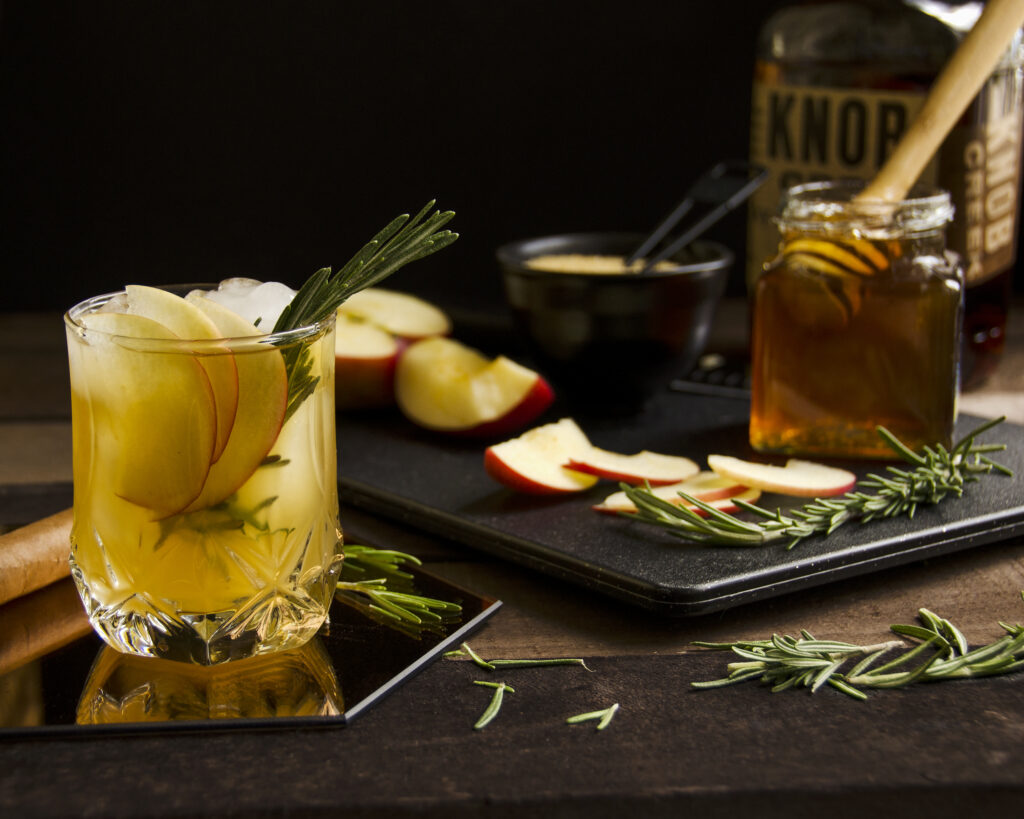
apple cocktail on glas

By: Hanifa Sekandi 

You may have heard about the Bee’s Knees honey-infused prohibition-era cocktail. Perhaps it is your go-to drink on a warm summer night. This drink is a refreshing blend of gin, lemon juice and a touch of honey, a guilt-free beverage to indulge in. It was crafted by Australian-born bar-tender Frank Meier in the 1920s, who simply elevated a Gin Sour by replacing simple syrup with honey. One hundred years later, it’s still a buzz-worthy beverage, with an ingredient favored due to its anti-inflammatory and antimicrobial properties. Honey is also considered a healthier sweet alternative to refined sugar since it consists of trace minerals and vitamins. It can still be high in calories, but it’s a better option than high-fructose corn syrup and sugar.  

Why is Honey all the Buzz? 

  The term Bee’s Knees means “the best” or “outstanding,” and honey does more than add a little sweetness to your life. Although one might not liken a few cocktails to health and well-being, honey has become a star ingredient for nouveau bottled and canned beverages that appeal to the health-conscious consumer, and a cocktail isn’t the exception.  

  A question that may come to mind is, why honey? Honey, liquid gold, has been an important component in alcohol that predates the prohibition era. Mead, known as the “drink of the Gods,” is a fermented alcoholic beverage made with golden honey, bacterial culture or yeast, and water. This ancient honey wine found in Africa, Asia and Europe has a long lifeline dating approximately 4,000 years. Fast forward to the 21st century, and honey is not just a royal sweetener with great health properties. It’s an ingredient that makes one brand stand out from the rest. 

  Once touted as your grandmother’s therapeutic cure-all for staving off a cold or sore throat during winter months, as health becomes a primary concern for consumers, honey has become a coveted and cherished ingredient due to its undisputed benefits. As the negative impacts of refined sugar consumption become clear, the alcoholic beverage industry turns to alternatives like honey, which add a sweet touch while being much better for the body. 

Sipping Guilt-Free Cocktails  

  Since refined sugar is a frowned-upon ingredient, brands that do not pivot with the health-conscious consumer will find themselves left behind in a market that calls for change where curation, sourcing and production is concerned. Yes, having a few libations with friends during a funfilled cottage weekend is the norm, but ingredients matter. As more people take the time to read the label, what’s in a premixed cocktail will not be overlooked simply because it tastes good.  

  For individuals who see fitness as a lifestyle, finding alcoholic beverages that support this ethos is a top priority. Wellness websites often list low-calorie and reduced-sugar canned cocktails without artificial sweeteners or chemicals that can diminish a health-conscious nutrition plan. Most people look for caloric content first and then what ingredients are used to provide flavoring and added sweetness. This higher standard from consumers has brands leaning towards natural ingredients and moving away from artificial flavorings, sweeteners and additives.  

  A la carte specialized cocktails are now accessible at the consumer level. Access to simplified, clean versions created by top bartenders and mixologists can be found at your local liquor store or delivered to your doorstep. Feeling a little bit better about decisions where imbibing is con-cerned has gained strong support via social media initiatives and marketing campaigns by brands who aim to shake up the industry. Once the new kid on the block, premixed drinks made with honey, natural sweetener or real fruit are now taking center stage.  

  Honey-infused cocktails are the gateway to what is next on the horizon for “fun nutrition.” Although honey is a rockstar ingredient, it doesn’t lend itself to every cocktail due to its rich flavor profile. Unlike refined sugar or corn syrup, it is more than just sweet. Brands that plan to join this new wave will have to experiment with other sweet alternatives to hit the mark.  

Maple Syrup and Monk Fruit Are Making Things A Little Sweeter  

  It turns out maple syrup is just as good in a cocktail as it is on a warm, delicious stack of pancakes. You may have heard of or tried maple syrup-infused still and sparkling water. If you add a little gin, some lime and ice, it’s a drink worth singing about. (You can thank us later for this DIY cocktail.) There are numerous cocktails made to order with maple syrup, drinks you can make right at home. Beverage companies looking to pivot will most likely take a few of your favorites and turn them into simple, clean, ready-to-drink cocktails. For example, an Apple Sour is just as simple to make as the Bee’s Knees cocktail if you have Calvados, lemon juice and maple syrup. Another easy-to-make cocktail that marries well with this decadent sweetener is an Old Fashioned.  

  Monk fruit, also known as Luo Han Guo, a natural sweetener originating from Southeast Asia, is a new replacement for stevia in protein powders, meal replacement and energy drinks. It’s de-rived from dried monk fruits. Monk fruit extract is ideal for individuals on a low sugar or carbo-hydrate diet since it contains zero sugar or carbohydrates. It boasts antioxidant and anti-inflammatory properties. This ancient fruit, harvested and cultivated by monks in the 13th centu-ry and first used for traditional herbal medicine, can be found in beverages such as the Slightly Mighty, a low carb 95 calorie beer infused with monk fruit.   

Leveling Up – Health Conscious Imbibing  

  Whether it is honey, maple syrup or monk fruit, there are better options to sweeten alcoholic beverages. What will determine the success of a health-conscious beverage is for producers not simply to replace refined sugar but craft drinks that complement this alternative. Alternative sweeteners come with nuances that may either create the perfect blend or overpower other ingre-dients. Some people have described the aftertaste of Monk fruit as bitter, and honey is derived from many sources: manuka, wildflower, buckwheat and sourwood, to name a few. The flavor profile and depth of sweetness vary with each. The same can be said of maple syrup, which can have a rich, robust caramel or honey-like fruity taste.  

  These are not the only natural sweeteners that consumers will find in their canned cocktails. Agave nectar, molasses, coconut sugar and even dates will be infused into the next wave of clean canned alcoholic beverages. Date syrup is already shining bright as a deep and rich sugar re-placement in cocktails. Not only is this tropical fruit a great source of fiber, vitamins, minerals and antioxidants, but it also scores lower than honey and maple syrup on the glycemic index. 

  Some brands take it a step further and clearly label the ingredients on the front of the can so con-sumers won’t miss it. Although refined and simplified ingredients are making headway, it re-mains a niche market against headlining brands that hold a loyal consumer base despite un-healthy additives or sweeteners.  

  With that said, simplicity lends itself to cocktail making, allowing mixologists to move away from fancy frills or adding too much in favor of a little less. The best drink served doesn’t have to be the loudest in the room, but it certainly could use a little honey.   

African Craft Brewing & the Pandemic

man brewing drink

By: Calvin Obbaatt  

The negative impact of coronavirus has been felt globally in all sectors of the economy, resulting in a worldwide production deficit. With consumers being unable to access products, large and small companies have been forced to stop production or produce less than usual. Companies in the hospitality sector have suffered a major blow as pandemic regulations have caused many businesses to shut down completely. Among the companies significantly impacted is the brewing industry, specifically craft brewery. 

  Initially, craft breweries enjoyed massive sales that yielded millions of profits in Africa alone. The industry also employed a vast staff, and production was increasing day-in and day-out. Compared to their competitors, craft breweries stood out for producing unique products that suited customer demands. In Africa, craft breweries thrived, and craft beer was some of the most consumed beer. Nearly all pubs, restaurants and bars sold craft beer. These products became more popular with the introduction of cheaper and smaller packages that are accessible and cost-friendly. 

  Unfortunately, with the emergence of the coronavirus pandemic, millions of breweries in  

Africa were directed by different governments to stop on-site consumption of beer completely. The taprooms that had become popular drinking places and earned the breweries massive income were shut down for hosting large amounts of people. Consumers were instructed to stay at home and avoid any public places. Similarly, parties and public events were also shut down. Clearly, parties and events were significant markets for the breweries. Bars, significant purchasers of beer products, were closed indefinitely, causing beer sales to drop significantly. This, in turn, caused breweries to take tough measures that impacted that production greatly. Many brewery workers were laid off, a move that increased the workload of the remaining staff. 

  The breweries were also forced to adopt creative but expensive delivery services. The companies adopted a pick-up and delivery system whereby the drinks were transported to each individual who ordered. The idea proved costly to the producers as they had to incur transportation costs as well. Additionally, the producer was forced to use glass and aluminium packages for all the products distributed by these criteria. In other countries with strict measures, breweries were required to produce hand sanitizers to accompany their products. 

  Restricted consumption of brewery products has led to the expiry of billions of kegs of beer on the African continent. This loss will be directly felt by the breweries as bars and restaurants purchase the products on loan and only pay after the sale. The loss of millions is likely to see some bars close completely. These closures mean that breweries lose potential customers as well as the money owed from the bars’ debts to them. 

  Breweries also face challenges of inadequate carbon dioxide since the production of CO2 has also been affected by the pandemic. The inefficient quantity of CO2 is likely to stop beer production due to the lack of a carbonator. The low availability of carbon dioxide has shot its prices to levels quite uneconomical to producers. Additionally, the small amounts of highly-priced carbon dioxide available are highly sought by multiple organizations and industries that are in a constant scramble for the commodity. According to a recent survey carried out by EABL, 60% of breweries in Africa have wholly stopped production, and only the large companies are still producing. These large companies, such as the East African Breweries Ltd (EABL)., have suffered a significant loss in enforcing the measures advised on by the experts to contain the pandemic. These measures will cause the company to lose $86.4 million in net earnings. Accompanied by other issues from the pandemic, EABL will lose at least 25% of its annual revenues: 28.7 million dollars. 

  EABL is based in the Eastern part of Africa and operates in the four countries of the East African Community. Countries within this trade block, such as Kenya, Uganda and Rwanda, imposed some of the strictest laws to stop the spread of the pandemic. Meanwhile, neighbouring countries like Tanzania, Burundi and South Sudan were reluctant to impose COVID-19 restrictions. The reluctant countries blamed the pandemic for imposing an economic tragedy, a road that they were unwilling to walk down. 

  According to Paul Mwai, CEO of EABL in Kenya, the pandemic was not only felt by the breweries but also in all sectors of the economy, including manufacturing, hotels and catering. The brewery further reported a worse decrease as the situation was not getting better. Workers, who were the major consumers of beer products, had lost their jobs and thus income due to layoffs, business closures and job losses.  

  The pandemic has led to shareholders pulling back their resources when it comes to investing in the company. Most Boards of Directors advised their shareholders and the public that company profit will decrease significantly from the previous year when breweries recorded massive profits after taxation. Previously, EABL faced the problem of high taxation that increased after every financial year. The trend is worrying to the EABL Board of Directors, as the government – specifically the Kenyan government – has imposed hefty taxes on bottled beer brands. 

  The company’s woes were further castigated by the government when an excise tax of 5.2% was introduced on beer and a resounding 15% on spirits, making these drinks unaffordable to many consumers. A similar situation was felt in Uganda when the government banned spirits from being sold in plastic containers. The Ugandan government’s ban on plastic reduced the growth and sales of spirits. 

  The majority of breweries in Africa are internationally owned, predominantly by European and American entities. Travel bans imposed by the African countries have made it difficult for international owners to access these institutions. For instance, the EABL is owned by British Diageo, accounting for 50.03% of the shares. The restrictions and the inevitable losses predicted have made the Board of Directors rethink their judgment and resort to returning the shareholders’ investments in the form of dividends. The pandemic has put the companies in a situation that demands high capital investments that will enable them to pull through during the unfortunate events. The financial pressure is mostly felt by the shareholders who are in the tightest position on whether to invest more and risk in order to salvage the situation or withdraw entirely and wait for better seasons. 

  Major stakeholders, such as the banking industry, have also withdrawn any lending activity as advised by the central banks globally. The European Central Bank has also advised against paying dividends to shareholders. 

  The coronavirus pandemic has led to the loss of lives of some of the best brains in the breweries. With labor and expertise being a major driving force in the success of any economic sector, the impact of the loss is felt heavily. Breweries depend widely on human labor. Loss of this labor will be felt long-term as replacing some of these workers will not be a walk in the park. Training a new individual will take time and money. For instance, EABL had some of its technical staff trained efficiently in the developed countries, and these people have been a significant asset for the company. The death of such experts minimizes the production potential of the company to extraordinary lengths. 

  Currently, most organizations have adopted medical policies to cater to the welfare of their staff, a way of promoting the efficacy of workers. However, with the rise of the pandemic, the brewing industry has incurred considerable expenses in staff treatment. With the disease tending to attack people through contact, many people within a single organisation will likely get infected within a span of one week. The companies, at this point, will have no option but to provide for the entire sick staff as stipulated within their agreement. Such a move is likely to render the organisation bankrupt and incur huge losses. 

The situation is likely to worsen if the pandemic persists as the government is relentless in reducing the pandemic through control measures. However, hopefully, scientists will overcome the situation and produce a viable vaccine, getting the brewing industry back in business and thriving once again. 

The ABC’s of Beer Costs

bartender assisting customer's bill

By: Kary Shumway, Craft Brewery Financial Training

Brewery success depends on making great beer and making great profits. Profitability depends on knowing what the beer costs. Craft breweries are small manufacturers. In the finance world, to properly account for the costs of a brewery, we need to use manufacturing accounting. No need to be an accountant, just need to learn a few commonsense concepts. This article will give you grounding in the ABCs of your product costs so that you can make great profits to go along with the great beer.

The ABCs of Product Costing

•    Know your costs: Why it’s important.

•    The Building Blocks: Direct Material, Direct Labor, Overhead.

•    How to Implement a Simple Product Costing system.

Know Your Costs

  As businesspeople, we constantly strive to get better prices on the things we buy for our business: cans, bottles, carriers, mother cartons, etc. If there is an opportunity to save 5% or 10% without sacrificing quality or service, we jump on it. That’s just good business.

  The process of Product Costing is similar; however, we widen the lens and focus on every cost that goes into your beer.

  When you know all the costs, you begin to understand how they work together. Next, you understand how you can influence those costs, so that you can gain control of expenses and improve profitability.

  As your business grows and the numbers become larger this concept becomes more important. Set the foundation now. Know your costs.

The Building Blocks of Product Costing

  As noted above, breweries are small manufacturers, so a basic understanding of manufacturing accounting is required to know your costs. Don’t panic, I will explain this in common sense language. No accounting mumbo jumbo.

  The building blocks of your product costs: direct labor, direct material, and overhead. In a nutshell, these represent the cost of ingredients and packaging, the time to put it all together, and the overhead costs to make sure the operation runs smoothly.

DIRECT LABOR: This is the amount of time and payroll it takes to make your beer. Add up how much time it takes to make the beer and multiply by the pay rate of the folks making the beer.

DIRECT MATERIAL: This is the cost of water, malt, hops, and other ingredients that make up the beer. It includes the cost of bottles or cans, carriers, and other materials used in packaged beer.

OVERHEAD: This is the cost of everything else needed to produce your beer. Examples include the cost of utilities, water/sewer, lease expense, and a portion of the cost of your brewing equipment (based on the depreciation expense).

  All of these items taken together make up what’s called the bill of materials – the beer recipe, and the time needed to make it. Tracking all this may seem like a lot of work. Below I’ll cover two easy steps to get you started.

How to Implement a Simple Product Costing System

  Do these two things to start: calculate your standard costs and count your inventory regularly. These two things are like the 80/20 rule of understanding and staying on top of your product costs.

  If you haven’t heard of it, the 80/20 rule, otherwise known as the Pareto principle or law of the vital few, says that, for many events, roughly 80% of the effects come from 20% of the causes. I estimate that 80% of your product cost effects (improvement) will come from these two causes.

The 80/20 of Product Costs

1.   Calculate your Standard Costs

2.   Count your inventory on a regular basis

3.   Calculate Standard Cost

  Standard costs are the expected costs to make and package your beer. You can also think of this as the average cost of your beer. The actual cost will vary somewhat from batch to batch, but standard cost is intended to provide a good average. This gives you a benchmark understanding of what your beer costs.

  With standard cost, there is no need to record all the time and materials every time you brew a batch of beer, just do it once, and calculate your Standard Cost. The simplest approach is to capture the total costs associated with a brewing and packaging cycle, and then present the costs however they are most meaningful.

  For example, if a 15-barrel batch of kegged beer costs $750, this works out to a standard cost of $50 per barrel. This cost per barrel is useful when pricing your kegs for sale. Packaged beer will have a different standard cost to include the cost of cans or bottles, carriers and cartons, and other packaging.

  To calculate standard costs, begin with the building blocks: direct labor, direct material and overhead. Add them all up, and this is your standard cost. Direct labor + Direct material + Overhead = Standard cost

Count Your Inventory Regularly

  Regular and consistent counts of your inventory are among the most important things you can do to control your product costs. Counts ensure that the materials you think are there are actually there.

  Counts also ensure you don’t end up with a nasty surprise in the form of missing inventory. Missing inventory equals a write off. A write off is an expense that lowers your net income. It’s bad for your brewing schedule and worse for your income statement.

  If you take nothing else away from this article, please remember this: count your inventory regularly, match it up to the records in your inventory system, and analyze any variances. I’ve been burned so many times on this issue, it would be a personal favor if you would do this. I thank you, and your income statement thanks you.

  In previous articles, I’ve written about the basics of a good count process. Your inventory has feet and can disappear. Few things will hurt your products cost more than poor inventory count practices. Use this template to get ideas for your count process.

Wrap Up & Action Items

  Profitability depends on understanding your product costs. Understand your costs so that you can gain control over them. If you can control your costs, you can control your profit, and perhaps your destiny.

Review the ABCs of product costing and try out the ideas in your brewery:

•    Know your costs

•    Learn the Building Blocks: Direct Material, Direct Labor, Overhead

•    Implement a Simple Product Costing system

  You’ve got great beer, now it’s time to work on great profits. After all, if you aren’t profitable, you won’t be making beer much longer. The world needs your beer, and you need to be profitable. Learn the ABC’s so we can all enjoy your beer for years to come.

For more information please visit…inventory-count-process-scorecard/

https://craftbreweryfinance.com/

The Power of Persuasion: Why Your Craft Brand Needs Social Media Influencer’s NOW!

people on their phones while drinking

By: Chris Mulvaney, President, CMDS Marketing Agency

In the past, reviewers and critics were the ones who determined what foods you wanted to eat and what movies you liked to watch. Then, when you turned on the TV, you would see a product-endorsing celebrity tell you what you wanted to buy.

  Now, not so much. You still have celebrity endorsements, sure, but you are much more likely to see them on social media than on prime time. With online technology far surpassing any printed newspaper, tv commercial or critic comes the birth of a new legion of opinion-swayers  – the social media influencer.  And, when it comes to craft beverages, there is no better place to be for brand promotion than having your product in one of their hands – and selfies – on social media.

  This new breed of influencer is not necessarily a celebrity. In fact, most aren’t. They are bloggers, cell phone photographers, Yelp reviewers. All someone needs is an online platform to post. Take that platform, add a determination for a large following, sprinkle in an enigmatic personality and the right “look” and viola! The new ”influencer” can take a brand like yours to an insane level of success.

  This proven method is exactly why the craft beverage industry is utilizing the social media influencer to further their reach and skyrocket their sales. On the internet’s various platforms, such as Instagram and Facebook, lives a world of craft beer influencers, liquor afficianos and self-promoting humans commanding attention in the space.

  Whether they are self-proclaimed writers, brewers, distillery fans, liquor conoissors, beer sommeliers, beer-tenders, models, advocates, happy hour fans, or just plain-old well-respected craft beverage lovers, they are, in short, people we deem influential in this world.

  And, as of December 2020, there were 2.3 billion of them on Instagram.

  By strategic use of tagging, sharing links, posting photos of what and where they are drinking, sharing videos, stories and reels of new releases, encapsulating the crowd ambiance and engaging your audience with filtered selfies – they will make sure your product gets the ultimate endorsement advantage in hand and puts your online following on speed-dial.

So Why Are Influencers So Important?

  Social media sites like Facebook and Instagram were built with connection and humanity as its purpose and are primarily meant for person to person relations.

  And, those people will typically buy for two reasons:

1. Recommendations from someone they trust, and

2. Price.

  Influencers have an established credibility and can persuade others by virtue of their trustworthiness and authenticity. Your brand’s target influencers are users that employ your brand hashtag and who have the largest number of followers. What they like, buy, share and post will sway their followers to do the same.

  Influencers can be useful in three main ways for craft beverage businesses:

●   They can create content

●   Their audience can associate themselves with them, and

●   They can provide exponential revenue growth.

  In addition, this past year alone shows the skyrocketing success of the craft beverage hashtag. The following hashtags were used over and over by influencers all over Instagram:

●   #craftbeer: $29million

●   #cocktails: $28.9 million

●   #supportlocal: $26.6 million

  Influencers are also a great way to achieve a great engagement rate for your brand.

  As of July 2020, 35% of online adults in the US used Instagram. The average engagement rate of a video post on Instagram was 1.45 percent, which is considered a good engagement rate. Additionally, image posts on the photo-sharing social site had an average engagement rate of 1.74 percent. Carousel posts (multiple photos on one post in succession) had a higher average engagement rate than single slide posts.

How to Choose An Influencer that is a Good Fit for Your Business:

  Before hiring an influencer, it is very important to make sure that they fit in with your business model and ethical strategy.

Ask yourself these questions:

●   Are They a Natural Fit for Your Products or Services?

●   Does Their Performance Data Align with Your Campaign Goals?

●   How Engaged is Their Community?

●   Do They Align with Your Budget?

●   How Are They Working with Brands Already?

●   How Do They Disclose Sponsored Posts?

  Keep in mind, an influencer can become synonymous with your brand, so if it doesn’t feel like quite the right fit, always err on the side of caution.

Micro vs. Macro Influencer’s

  Here is where a marketing agency can be of huge assistance. Once you decide to use an influencer for your brand, then you have to decide what type of influencer will work best.

  Surprisingly, the most successful influencers are not always obvious celebrities. In fact, in a report by mediakix listing the 30 most influential influencers in 2021, an Instagram personality by the name of Mr. Pokee (@mr.pokee) made it to #18. Why is this newsworthy? Mr. Pokee, with over 1.3 million followers to date and whose page is run by Litha Girnus, is a world-traveling … hedgehog.

  So, it’s best to use the focus of your brand and test that out with various influencers because you never know what will hit best with your audience.

You also have to decide whether or not to use a “micro” or “macro” influencer.

  Micro influencers cost about $1,000 for a one-feed post, two IG stories and an audience reach of 50K-100k.  A Macro influencer costs an average of $50K with an average audience reach of 500K to one million. After doing math, the micro-influencer in many cases makes more sense. However, performing your own metrics or having a qualified marketing agency do this on your behalf will assist with what type is better for your business, brand, size and goals. 

  Marketing agencies can also help with locating the influencers using sites like thisishey.com, tagger.com or clouthq.com, and taking on the evaluation and decision-making process on your behalf.

The “Taste-Test”

  Testing out various influencers is the best way to see which one is most effective for your brand. It is always best to have around five to start with.

A great process for you to use is the following:

●   Find one influencer for each focus in your brand strategy, run them, and test to see what is most effective.

●   Use unique UTM tags for each influencer

●   Offer to pay to advertise the post to their lookalike audiences (this can only benefit your brand so is a win-win)

●   Have them post on the weekends when engagement will most likely be higher

●   Identify winners, then put money into the influencers that are bringing returns.

●   Share metrics with influencer and work with influencer to optimize videos, etc.

  An additional option is to let the influencer in on a revenue share, in which they provide more content but you pay the ad spend.

The Law

  Once you find an influencer who meets all of your criteria, you must be aware of the laws governing their posts.

  In 2009, the Federal Trade Commission published its Guides Concerning Use of Endorsements and Testimonials in Advertising and followed by a 2015 FTC Enforcement Policy Statement on Deceptively Formatted Advertising. These regulations state that consumers must be aware that the influencer is compensated by a marketer and that an influencer does not hide any connection with the brand or marketer.

  FTC guidelines also state that an influencer’s sponsored posts (even on their own website or under their own social media account) must be considered advertisements as well as noting a “material connection” between the influencer and the brand.

  Recently, the FTC has also taken an interest in controlling influencer-based marketing. Any Influencer must be aware of four points the Federal Trade Commission issued in its “Updated Guidance”:

1.  Clearly disclose when you have a financial or family relationship with the brand.

2.  Don’t assume that using a platform’s disclosu tool is sufficient.

3.  Avoid ambiguous disclosures like #thanks, #collab, #sp, #spon or #ambassador.

4.  Don’t rely on a disclosure placed after a CLICK MORE link or in another easy-to-miss location.

  The FTC has also given guidance to brands who use influencers. In a 2017 Consent Order, the FTC required a brand to:

1.  Provide influencers with a clear statement of his/her responsibility to make clear disclosures of material connections to the brand.

2.  Establish and maintain a system to monitor and review influencers.

3.  Terminate influencers who don’t comply.

  Being aware of these regulations will save you and your business from any potential (and hefty!) lawsuits in the long run.

The Last Gulp

To Recap: In simple terms, influencers provide:

•    Content creation

•    Brand elevation/Product validation

•    Revenue Growth

In turn, your craft beverage brand can use that for:

•   Paid social content

•   Organic content

•   Amplification/association

  In order to be successful in your craft business, you need social media. It’s the absolute best way to grow your brand, engage with your customers and achieve tremendous sales growth. And, using an influencer is critical to this business strategy and can help you reach an insane amount of success.

  Finding the perfect influencer partner for your brand can take some time, but with careful consideration and a strong strategy, you can avoid having any big setbacks that can cost you money or put your reputation at risk.

  And, allowing your customers to associate a trusted influencer with your brand, in addition to having all of the above factors work together on social media, will increase your craft beverage sales exponentially. And that’s a notion that goes down real smooth.

Barrel-aging Beers & Spirits During a Global Pandemic

malt whiskey barrel

By: Becky Garrison

How did the events of this past year impact barrel-aging programs? Following are selected pro-files of those who manufacture barrel-aged products and the impact, if any, they experienced during 2020 regarding the production and marketing of their barrel-aged beers, bitters, ciders and spirits.

Copperworks Distilling Company, Seattle, Washington

  Copperworks Distilling Company’s philosophy is to showcase the flavor of specific malt strains from a specific farm of a specific growing season. They age and, in some cases, finish their whiskey in a variety of casks, both new and used, to create a bevy of whiskey flavors. By blend-ing a few casks, they can produce unique whiskeys for each release. They vary the cask parame-ters  – stave seasoning, toast, char, entry proof, warehouse conditions and years aging – and se-lect the barrels only when they reach the peak of deliciousness.

  According to co-founder Jason Parker, the challenges involved with this method of barrel-aging include investing in a product that can’t be sold for several years and not knowing what your ex-periments, plans and decisions will ultimately taste like for several years. They also lose between 5-7% per year through evaporation, widely known as the “angel’s share.”

  Copperworks sources all of their new barrels directly from cooperages. Before purchasing used barrels, they try to taste products that came from them. While sourcing barrels did not prove to be a challenge during Covid-19, Parker said there were challenges in staying socially distanced when dealing with deliveries and warehousing. “It made us slower, but we had nothing but time.”

  With breweries coming back online, Parker expects to have more opportunities to partner for barrel exchanges. “The flavor swaps are great!”

  During 2020, Copperworks produced more whiskey than in prior years. “With no tasting room customers, special events, classes, tours, competitions, conferences or other gatherings – all of which we miss terribly – and after making all the hand sanitizer we could, we simply focused exclusively on distilling, blending and bottling whiskey (and a few cask-finished gins).”

  Since they could not introduce themselves to new customers through bars, restaurants and their tasting room during Covid-19 shutdowns, they went online to introduce new releases via video blogs, virtual tours and tastings, direct emails and social media.

Ecliptic Brewing, Portland, Oregon

  Right after Ecliptic Brewing opened in Fall 2013, one of the first beers John Harris made was Orange Giant Barleywine, which went straight into barrels for a year. The beer debuted in 2014, and every year since, a new batch has been released.

According to Harris, barrel-aging is important to them. “We had a two-year drought where we could not lay down any barrels due to production demands. It has been great to get back to this again and get the creative process going more. We have many projects going right now!”

  In his estimation, adding the spirit of the wood barrel to the base beer is a real joy. “Seeing what the barrel does to the beer – whether it be a bourbon, rye, Sangiovese red wine, white wine – it’s all an experiment hoping for a good outcome. The downside is sometimes projects or individual barrels go south and need to be dumped.”

  Thankfully Covid-19 did not impact their barrel-aging program. Moving forward, they will con-tinue to use traditional spirit barrels but will be putting creative spins on the beer before releas-ing. “The market is looking for more than a bourbon-aged stout without any twists. 2021 will be fun!”

Deschutes Brewery, Bend, Oregon

  Deschutes Brewery’s barrel-aging program began in 2008 and currently consists of approximate-ly 800 barrels and six wood-aging vessels. These barrel-aged projects generally fall into one of two categories: beers aged in spirit barrels that are meant to highlight the spirit of choice, and mixed culture sour and wild beers that use neutral barrels as aging vessels.  This program fits in with their mission as a conduit to continually explore new expressions of beer using unique, high-quality ingredients.

  According to Ben Kehs, assistant Brewmaster and Barrel Master, Deschutes experienced some minor shipping delays and general uncertainty regarding freight times and costs during the pan-demic. “For wine barrel sourcing, we did find that some of our local suppliers were releasing fewer barrels from their programs as their sales were affected. The majority of volume for our barrel-aged products end up in a bottle instead of a keg, so we did not experience a big disruption with the shutdown of on-premise accounts, but the closure of our pubs made us look at expand-ing our direct-to-consumer business.”

Finnriver Farm & Cidery, Chimacum, Washington

  According to Andrew Byers, Head Cidermaker and co-owner, Finnriver Farm & Cidery’s barrel program allows them a pathway to a greater depth of expression, a treatise of tannins from fruit and wood and a place to bring it all together. “Like Finnriver, barrels are a place to weave the community fabric, a place to discuss origins – a place to reconnect people to the land that sus-tains them.”

  “To make phenomenal barreled cider, you need to start with phenomenal fruit, dynamic and healthy yeast and a vision of your finale,” Byers said. In his estimation, the micro-oxygenation of barrel time is the place to mellow harsh polyphenols and the opportunity to extract those pithy ellagic tannins from the oak.

  Finnriver seeks out barrels from regionally-based whiskey producers – historically High West, Woodinville Whiskey and now Bainbridge Organic Distilling – and purchases a small number of fresh whiskey barrels each year. Occasionally, neighbors will reach out with neutral wine barrels.

  Among the ongoing challenges they face is finding space to store the barrels and the time in-volved in monitoring their barrels. During the pandemic, they could not give customers draft pours. However, this lack of draft sales led to an increase in bottling and longer barrel-aging, as well as an increase in their club memberships.

Liberty Ciderworks, Spokane, Washington

  Rick Hastings, Liberty Ciderworks’ owner and cidermaker, pointed to the need to barrel-age ci-ders when using tannic, cider-specific varietals. “Most of the time, there’s a real benefit in allow-ing the type of micro-oxygenation barrels offer to occur versus aging in a stainless tank.”

  They use wheat whiskey, gin and bourbon barrels, mostly from Dry Fly Distillery, along with red wine barrels to extract flavors that compliment different apple varietals. They also use barrels as neutral containers.

  During Covid-19, their cider club and online sales grew. In particular, they found a heightened demand for their pommeau and have tripled production on that barrel-aged product. In a post-Covid world, Hastings hopes their online sales, which have given them access to global markets, will continue. “For us, barrels are an essential part of making what we produce, and if we’re able to grow connections with quality-minded consumers through technology, our barrel program will keep growing too,” he said.

pFriem Family Brewers, Hood River, Oregon

  The ethos of pFriem Family Brewer’s barrel-aged program is emblematic of their overall brew-ing style. Josh pFriem, Brewmaster and co-founder, said, “We take a historical approach and look at it through a modern, innovative and pFriem lens.”

  For their funky and mix-culture beers, they search out high-quality, primarily French, oak wine barrels, while they also work with a wide range of producers for their distiller beers.

  The biggest thing that impacted pFriem’s barrel-aged program during the pandemic was their inability to sell their beer on draft. Also, pre-pandemic, they were about to open their new barrel-aged facility in Cascade Locks, Oregon. Plans are still in place, and once opened, this space will enable the brewery to have separate areas for their mixed culture and clean spirit barrel-aged beers and a unique place for people to gather.

The Bitter Housewife, Portland, Oregon

  While they don’t have a formal barrel-aging program, The Bitter Housewife’s collaboration with Bull Run Distillery allows them to explore how barrel-aging changes bitters. As Genevieve Brazelton, co-Founder and Chief Marketing Officer, said, “The result was quite tasty, and in-stead of being a one-off product, it’s now part of our stable of bitters.”

  The product demand is high enough to need more than a few barrels a year, so they currently source bourbon or whiskey barrels from four Portland area distilleries. It became more difficult to obtain barrels during the past year, though Brazelton is not sure this delay was due to Covid-19.

Wanderback Whiskey Company, Hood River, Oregon

  Wanderback Whiskey Company’s barrel-aged program includes new oak, aged naturally for at least two years and heated by coopers to create a heavily toasted, lightly charred inner surface. They also utilize previously used, yet still flavorful, barrels and previously used “neutral” casks with very little flavor remaining in the wood.

  According to co-owner Sasha Muir, the challenges of barrel-aging include casks that leak, wood that can vary in its flavor profile, variations in how the cooper heats the wood, the environment the barrels rest in and surrounding odors in the area of the casks.

  Wanderback Whiskey sources its barrels from several brokers around the country. As coopers were more than happy to provide barrels to them during Covid, they did not notice any signifi-cant changes over the last year. “Our program will likely remain the same once Covid has passed,” Muir said.

Westland Distillery, Seattle, Washington

  In Master Blender Shane Armstrong’s estimation, the arc of tradition, innovation and locality that guides Westland Distillery is reflected in their cask program, which includes the Scotch whisky stalwarts of ex-bourbon and ex-sherry and the new American oak familiar to the Bourbon industry. Their new oak casks are air-dried for a minimum of 18 months. For their Garry Oak casks, found exclusively in the Pacific Northwest, air drying time is a minimum of three years.

  “Our locality is reflected both in growing region and by relationships with local brewers, wine-makers, and cidermakers,” said Armstrong.

  For distillery manager Tyler Pederson, the challenges of producing barrel-aged spirits are that it’s expensive, time-consuming and logistically complex. He does not believe the pandemic had a heavy impact on the cooperage industry.

  “Our availability of new and used casks remains steady and should for years to come. We will also continue to grow and develop our partnerships across our region, sourcing casks from winemakers as well as from breweries through the Cask Exchange program,” Pederson said.

  When sourcing casks, Westland considers the provenance of the cask, the quality of the oak, the type of spirit that will be maturing and the length of time anticipated. In the case of re-used bar-rels, they also consider the quality of its previous contents and how long it matured the spirit, wine or beer. They also note the distance each barrel traveled when factoring the sustainability of their cask program.

Westward Whiskey, Seattle, Washington

  According to Christian Krogstad, Westward Whiskey’s founder and Master Distiller, they’ve reimagined single malt. “That spirit of creativity is paramount to everything that we do. For us, that means playing with different casks.”

  The majority of their new American oak lightly-charred barrels come from Kelvin Cooperage. They also play around with different wine and beer finishes using casks obtained from their brewing and winemaking friends throughout the Northwest. While their tasting room took a hit during Covid, once direct shipping was available throughout Oregon, they were able to sell some of their smaller Oregon- and distillery-only projects.

Grain Handling, Storage & Conveyance: The Beginnings of a Successful Brewing Operation

wide shot of a brewing facility

By: Gerald Dlubala

An engineer, architect and brewmaster walk into a brew space. No, this isn’t the beginning of a joke, but rather the start of a multi-point approach in laying out a successful and reliable grain handling and storage system.

  ABM Equipment works with brewery owners and brewmasters to develop their projects from concept to completion. They use collaborative teamwork and deliver cohesive systems integrated to work together as a complete unit rather than a group of individual machines pieced together. 

  “When you understand the effects that your grain handling and storage system has on your entire brewing process, you realize how important it is to be one of the initial items discussed when laying out a brewery,” said Adam Dubose, Operations Manager at ABM Equipment. “Proper grain handling and storage planning include considering the entire brewhouse and production plans while remaining aware of available space. When all of these things get included early in the planning process, it becomes easier to determine the needed specifications regarding storage options, handling capabilities and system speeds versus available space. Then you factor in expected growth and go from there.”

“We always like to see a brewer mill their grain if possible,” said Dubose. “Pre-milled grain is crazy expensive, so even a small mill with a flex auger is better than using a pre-milled product. You can control crush, increase safety and improve your time and labor costs. Instead of shouldering bags and risking physical injury, you push a button. Most breweries now have a grist case as well. Then you can start talking about bulk storage to cut costs even more dramatically – sometimes in half – over the use of bulk bags. Your return on investment includes cutting physical labor, saving workers’ shoulders and the savings on buying at bulk prices.”

  In terms of brewery installations, almost all of their projects use either flex augers or chain discs for conveyance. “Flex augers are the usual choice for entry-level applications because they are the low cost, reliable choices,” said Dubose. “Their downside includes higher required maintenance, meaning that they need to be oiled more often and will likely require routine elbow replacement after about six months, depending on use. We remind our clients that if they don’t schedule a little downtime to maintain their equipment, the equipment will schedule it for them. Chain discs are a popular go-to method for grain and malt conveying because they’re versatile, run a little quicker, maneuver tighter corners and are gentler on the product while moving it from place to place. Chain discs can connect silos, handle long runs, vertical climbs, bulk bag unloaders or specialty hoppers. The same chain disc line can carry infeed to mill and then loop back around and go from mill to mash. They are also lower friction options, so that translates into lower wear in parts.”

  Dubose told Beverage Master Magazine that silos provide the most significant savings and return on investment when considering grain storage options. Larger bulk purchases translate to a lower price point, offer more opportunities for system automation, better grain consistency, longer storage times and the chance to free up some valuable indoor floor space.

  “We recommend silos with a minimum 65,000-pound capacity so a brewer can receive a typical 48,000-pound grain delivery without having to run their silo dry,” said Dubose. “Larger capacities are available if desired. Bigger may be better when it comes to needing only limited grain deliveries, but it’s more common to link silos for the additional capacity and then use an automated sourcing system. With more than one source available, a brewmaster can mix the contents of multiple sources for new, seasonal or different mixtures and recipes. We can link up to eight sources from one system, allowing the brewmaster to choose which product is needed and from which source. Quality stainless-steel silos have a minimum 20-year life expectancy with proper maintenance, which usually means keeping them touched up with paint to reduce any chance of corrosion. Silos situated closer to saltwater or in coastal locations normally get a paint upgrade to help reduce the corrosive effects of saltwater. Our silos feature smooth walls to deter any grain from getting stuck and deteriorating or rotting, and we manufacture our gates for excellent dust inhibition. We reduce the need for ladders with built-in level indicators, and we help navigate any municipal restrictions by using creative workaround strategies. For brewers that use bulk bag grain, bulk bag unloaders are available in an easily installed, low-profile form. They can use a hoist and trolley configuration to help reduce grain costs and labor through efficient use of super sacks.”

  Spent grain is a related yet separate issue, requiring its own storage area. Spent grain storage should alleviate the mess of raking or shoveling the spent grain into totes and moving them to outside storage by forklift or pallet jack. The type of storage needed depends on the number of daily brew cycles and anticipated spent grain pickups. Spent grain silos are also constructed of stainless steel to fight corrosive contents, but they’re usually not polished like the more visible grain storage units and are elevated for truck access either underneath or along the side. If using a silo for spent grain storage, the brewery may require an additional pump at the mash discharge to get the spent grain over to the silo.

  Dubose told Beverage Master Magazine that it’s crucial for a brewer to partner with a grain handling and storage provider that works within the brewery’s desired layout and approaches it in a complete system mode versus a supplier that sells and provides only equipment and nothing else.

  “We look at all facets of the operation and the speed and throughput of your process to make sure it all works in unison. Control panel automation helps brew consistency and labor control, but it’s also a way to keep your equipment from damaging itself. A brewer has to know their limitations regarding their knowledge in certain areas, and they have to partner with a supplier that will work with them as if it is their own business. Another thing to look for is a supplier that carries spare parts in their inventory like chains and gearboxes to help out when the OEMs don’t have the part. We at ABM Equipment will do that for our clients.”

  “It’s really about taking the brewery’s concept, including the amount of storage or bulk bag storage needed and projected, and then providing the proper mix within the space allotted,” said Dubose. “A workable and successful layout within a brewery’s space and allotted budget ultimately dictate our recommended conveyance and storage design.”

Good Planning Leads To Proper Handling Equipment and Right Sized Grain Storage

  “In so many cases, having adequate space to store enough grain inside the brewery is often overlooked, and you see a variety of bags and pallets placed wherever they can fit,” said Dave Ewald, Director of Sales for Bratney Companies, providers of state-of-the-art equipment, processes and solutions for their clients. “The layout and choices for grain handling and storage should be done in the initial planning stages of the brewery. Then, with more planning and forethought, an area can be designed to store the brewery’s grains in an organized and efficient manner.”

  Knowing what your planned and projected grain usage will be in conjunction with what the expected lead times are for deliveries goes a long way to dictating what type of storage is necessary. Upgrades can include silos, conveyors with floor dump hoppers, bulk bag dump stations, and more. These save time and minimize physical labor like bag hauling and ladder or stair climbing.

  “Conveyor types range from simple, flexible conveyors to chain disc systems to drag or screw-type conveyors. Conveyor mechanics typically include either a screw type, helical coil type or disc system that runs by chain or cable. Each has benefits and treats the grain differently while conveying,” said Ewald. “The key factors in determining the best conveyance solutions come back to the capacities needed, distances to convey, the number and complexity of the rises and runs to get the malt from point-to-point, and the ability to still facilitate a good cleanout between malt types. For example, leftover dark malts mixed in with pilsner malts will affect the color and taste of the beer.”

  “The capacity needed by any brewery is largely determined by the brewery size and the capability of their roller mill,” he said. “Many mills run between 1,500 and 3,000 pounds per hour and run a simple flex conveyor or chain disk system. Flex conveyors are quite simple in their design and construction, usually featuring tubing constructed from PVC or steel. It is fair to say that many breweries only operate their conveyors once or twice a day for a couple of hours, so the system’s longevity is naturally extended. On the other hand, breweries that run several batches would look for longer-lasting and more durable solutions. It really is a balance between needs and overall cost.”

  Ewald told Beverage Master Magazine that storage most often falls into the use of a hopper-bottomed silo to hold a truckload of malt. Suppose a brewery can get their grain by the truckload. In that case, they enjoy the economic advantages of buying in bulk, and the higher initial investment in the equipment is usually recovered in a relatively short time. Likewise, with conveyors, the brewer can slow a conveyor system down to handle lesser capacity if needed. For example, if the conveyor runs 4,000 pounds per hour, the brewer can alter and decrease that through a frequency variator or drive system change. Conversely, the brewer can’t modify a 2,000 pound an hour conveyor to run twice the speed, so if they can afford the higher speed systems upfront to match their planned production increases, it’s a better option.

  “Most applications are pretty straightforward,” said Ewald. “Working with an equipment provider on the head end of your brewery planning and knowing what considerations need addressing upfront goes a long way in ensuring a successful, properly sized and reliable system. For example, a case in point might be if the conveyor runs overhead across the taproom or restaurant portion of a brewery. The last thing you want in an area where patrons should be enjoying themselves with your food, conversation, and your beer is an excessively noisy conveyor.”

  When the economics of buying in bulk versus bags make sense, that’s generally when changes, including expansion, take place. Ewald said it’s not too difficult to make a case for a brewery producing as little as 1,500 to 2,000 barrels per year to justify the expense of a silo and slab and be able to recoup that cost in less than a year. From that point on, the cost savings goes right into the brewery’s bottom line. A brewer should inquire with their malt providers to confirm the exact savings point on a per pound basis and see if there are any partnership incentives available through the supplier to help obtain a grain storage silo.

  “I suggest that a brewer engage a company that has the history and knowledge to be able to discuss overall plans and can look at their entire grain handling and milling systems,” said Ewald. “Being able to provide and take responsibility for a total solution versus looking at one piece from one manufacturer, another from a different supplier and so on, is critical. It is often the little things in a brewery’s overall flow that get overlooked, like transitions, gates, spouting and the system control interface.”

  “Another consideration,” said Ewald, “Is after all the fun that comes with grain conveyance, milling, and brewing, you’re then going to have to deal with the spent grain. So it’s best to have an idea of how much spent grain will be stored, the time that it will be in storage, how it is going to be moved out and where it will be going. [These are] all things to think through before you brew that first batch of goodness.”

Black Bourbon Society

customers bourbon taste test

By: Nan McCreary

In an age when multiculturism is redefining America, it has become clear to many in the alcohol industry that, while African Americans are one of the leading consumers of premium liquors, distillers are late to the party when it comes to marketing to this demographic. And it costs them a sizable chunk of what researchers, such as the Nielson Company, say is the $1.2 trillion buying power of Black American consumers.

  One person who has observed this is entrepreneur Samara Davis, who, in 2016, founded the Black Bourbon Society to bridge the gap between the spirits industry and African American bourbon enthusiasts. 

  “At the time, I was producing some events with an agency in San Francisco and realized that a lot of marketing for events, especially in the spirits industry, were not necessarily catering to consumers of color,” Davis told Beverage Master Magazine.

  “I decided to create a group that represented a diverse audience and shows the brands what a diverse audience looked like. My idea was to produce events for this audience in partnership with the brands so both would benefit.”

  Today, after five short years, BBS has over 22,000 members worldwide who share their love of bourbon through social media platforms, brand-partnered events and exclusive excursions to distilleries.

  For Davis, bourbon was the natural choice for a connection with the spirits trade. “That’s what I was drinking at the time,” she said. “I love the bourbon industry. It’s so unique. It’s ‘America’s native spirit.’ It’s what we’re known for.” 

  To Davis, the logical way to make that connection was social media. “I was producing bourbon-related events in Oakland and building a following through email, and then I had a chance to move to Atlanta. I developed a new following here, so instead of doing double duty in the two cities, I set up a Facebook page to connect everyone.” 

  According to Davis, the page exploded. Friends invited friends, and their friends invited their friends. Today, the page boasts a dynamic membership that shares weekly online tastings, happy hours, educational seminars and a growing community of friendships.

  One key to the success of BBS is the partnership with bourbon distillers that Davis has created to bring the two groups together. “By working with brands, we provide genuine connections for them to engage with Black consumers and, at the same time, cultivate and educate our community,” she said.

  In the past, BBS has partnered with brands including Maker’s Mark, Four Roses, Heaven Hill and Jim Beam, to name a few. Brands actively participate with BBS to plan events, send brand reps or multicultural experts to cities for local programs and, in the case of national events, provide people from national leadership to help create exclusive programs. “We work hand in hand to cultivate audiences so they can experience the brand’s portfolio and expression of their products in a unique way,” Davis said.

  Recently, the BBS held a Valentine’s Day pairing dinner at the Atlanta Intercontinental Hotel in cooperation with Woodford Reserve to feature the distillery’s Double Oaked Bourbon. The evening, the BBS’s first in-person event since the pandemic, was fashioned as a “date night” featuring a five-course pairing dinner, with each couple having their own table and even a cocktail kit where attendees could create their own concoction. “This was just one of the many examples of events we’ve had,” Davis said. “It was really well-received.”

  BBS offers a premium membership that includes access to enriched content on the Facebook page, discounts on events and trips and an invitation to the BBS signature event, the annual Bourbon Boule Labor Day weekend gathering in New Orleans. Membership is not limited to African Americans: It is open to all bourbon lovers who actively and enthusiastically support the cause of improving diversity within the spirits industry. BBS recruits volunteer brand ambassadors in select cities to help with networking events in the local market and engage members on social media. With Covid-19 restrictions easing, Davis anticipates that BBS will be hosting more live events, always following recommended safety protocols.

  “We have to be smart about it,” Davis told Beverage Master Magazine. “We can’t do everything we used to do five years ago. We have to keep it safe, which makes it more challenging, but I’m so happy to see some degree of normalcy returning.”

  Besides connecting Black bourbon consumers with spirits producers, BBS has created a nonprofit, Diversity Distilled, to help promote diversity and inclusion policies within corporations across the spirits industry. “Companies are very eager to work toward diversity,” Davis said. “They just don’t know how to go about it.”

  Diversity Distilled assists brands in recruiting and retaining a diverse workforce and creating inroads for employees to advance to leadership levels within the company. “This is where real change happens,” Davis said. “You have to change the corporate culture and mission.” 

  With her marketing skills as well as her contacts and knowledge of the spirits industry, Davis is a crucial player in fulfilling Diversity Distilled’s objectives, offering consulting, job placement assistance, training workshops, public speaking, and industry research.

  This year, to support Diversity Distilled, BBS created #TheBlackManhattan Project, a month-long hashtag campaign to raise awareness of Diversity Distilled and its objectives. The campaign, spotlighting the Black Manhattan, was launched during February for Black History Month in partnership with Mitcher’s Distillery and Branca USA, who committed $20,000 to the Diversity Distilled job placement program.

  The Black Manhattan Project challenged members to make Manhattans or variations with Mitcher’s rye or bourbon and Branca amaro products, which, as Davis said, “was a marriage of two brands to make the perfect cocktail.” The event featured a professional bartending competition highlighting African American bartenders, a series of virtual masterclasses and a virtual tour of the Michter’s Distillery. Winners of the bartender competition received cash prizes. BBS members also had an opportunity to make their own renditions of a Manhattan and show off their DIY cocktail skills during the BBS-tenders Showcase. The rounds of the competition are available on YouTube via the BBS Facebook page.

  To Davis, BBS is a win-win for everyone involved. “Brands have the opportunity to reach out to an untapped audience and are learning how to appropriately connect with consumers of color in a genuine manner without pandering,” she said. “At the same time, consumers are receiving one-on-one attention and one-on-one experiences that enable them to learn, love and develop loyalty in a way that resonates more deeply.”

  As Davis looks to the future, she hopes to expand her community of African American bourbon consumers and reach them through more online conversations with master distillers, distillery owners and brand ambassadors who will tell their stories and offer tastings. Regular features like Friday Happy Hours, Teachable Tidbits and Whisky Weekly have been big draws on the BBS Facebook page during the pandemic. These events continually attract hundreds of consumers who want to further develop their appreciation of bourbon and share fellowship with others. The biggest challenge, Davis said, is keeping up with the demand for new events and finding new and creative ways to push brand messaging so that one doesn’t sound just like the other. Davis, along with her husband and business partner, Armond Davis, and a small cadre of human relations personnel, is also going into “full action” with Diversity Distilled. 

  “We had a serious racial reckoning last year,” Davis told Beverage Master Magazine, “and the brands are feeling very pressed to get this right. They are incredibly open to what I’m saying to help them become more inclusive.”

  While Davis pursues her goals, she is focusing her work at a grassroots level. “Grassroots — it’s the story of my life,” she said. “Grassroots growth is organic; it happens slowly.  But it’s more genuine, and people are more invested.”

  And spirits — be it whiskey or wine or beer — will always have an invested audience. “Every industry has diversity issues,” Davis said, “but the spirits industry cares. It’s in your face. It’s colorful as a product; it’s engaging. With bourbon, it’s not who makes the best, but who you had it with. That’s what makes that bottle your favorite.”

  For Samara Davis and the Black Bourbon Society, “America’s Native Spirit” is, indeed, a universal language that is championing diversity and inclusivity in the spirits’ world.

For more information on Black Bourbon Society, visit www.blackbourbonsociety.com