After the July/August issue of Beverage Master Magazine featuring an article highlighting the 30th anniversary of The Pike Brewing Company went to press, news broke of the death of Cofounder Rose Ann Finkel. She died on Tuesday June 16, 2020 at the age of 73 from Myelodysplastic syndrome blood cancer.
“We have had a wonderful experience for almost 52 years,” Charles says of Rose Ann. “She had a lot of friends, a lot of people who loved her. She made a really great impression on everyone she met. I miss her, obviously. But I’m very happy she died in peace surrounded by people who loved her.” (Forbes, June 17, 2020).
As reported by the Seattle Times, It’s impossible to talk about Seattle brewery history without mentioning Rose Ann Finkel. From her arrival in Seattle in the mid ‘70s, she helped shape the way this city ate, thought about beer and how the two best complemented each other.
Jason Parker, Co-Founder/President Copperworks Distilling Co., who served as Pike Brewing Company’s first head brewer, reflected on Rose Ann’s legacy.
Rose Ann was the perfect dance partner to Charles in life, love, and in business, which for the Finkels, were one in the same. Though frequently in the spotlight with Charles, Rose Ann also worked behind the scenes to pull deals together and lead the business of their endeavors, from importing containers of malt to picking out tee shirts for the staff. Transcending her contributions to helping the company succeed was her influence on folks, and especially women, in the industry, who looked at Rose Ann as a role model for enjoying life, getting things done, and encouraging others, all at the same time.
After finding Merchant du Vin in 1978, the Finkels became known in international beer circles due to their success introducing Americans to specialty beers brewed by family-run breweries from England, Germany, and Belgium, as well as other places throughout the world including the United States. Along with this commitment to craft culture, Rose Ann championed community causes through events such as Pike’s Women In Beer. This annual cerebration of craft beverages, local foods, and the women who make them, benefits the Planned Parenthood of the Great Northwest & Hawaiian Islands.
When asked how Women in Beer tied in to Pike’s company philosophy, Rose Ann offered this response.
Pike’s community mission is focused on being good and doing good. Whereas brewing great beer is in itself a laudable goal, it is our mission is to provide employees with a happy, artistically driven, and soul satisfying experience. To build a team of diverse employees who share our vision to be good community citizens, supporting non-profits whose mission is in concert with ours.
As an example of the Finkels’ commitment to building a better world, the aforementioned Forbes article noted how Charles concluded a phone call. “He didn’t elaborate on how he wants to get back to work at the agency (he does) or lament that COVID is keeping his family from holding a proper funeral for his wife (he hopes a memorial service will happen at some point in their home garden) but enumerated more than half a dozen civil rights movies he recommends. There may not be a more illustrative example of the Finkel spirit: forward-looking, optimistic, pragmatic, gracious and genuinely working for the betterment of the community – not just their own but everyone’s.”
There are currently more than 7300 regional breweries, brewpubs and microbreweries in the United States. Even during difficult times, the popularity of the craft brewery continues to grow. For many home brewers and beer aficionados, the prospect of owning and operating their own brewery is a dream come true. It’s an opportunity to expand their personal recipes that they have refined over the years as a hobbyist and share them with a wider audience.
Making your mark within
the industry is not an easy task to accomplish. Perfecting your craft is an
important start in staying relevant. But satisfying your regulars and marketing
through word of mouth is just the beginning. It’s the additional, day-to-day
business details that become so incredibly important. Maintaining your brand
and ensuring that it reaches the widest audience possible will help you to
stand out in a crowded market.
Brand Identity
One of the benefits of
owning and operating your business is the freedom associated with developing
its brand. From the name to the logo, this is an opportunity for you to work
closely with your business partners to establish something catchy and unique,
while also cutting through the clutter and staying top of mind with your
customers. But once you’ve picked out your colors and have come up with a
memorable catch phrase that highlights your craft, what’s next?
In today’s market it’s not
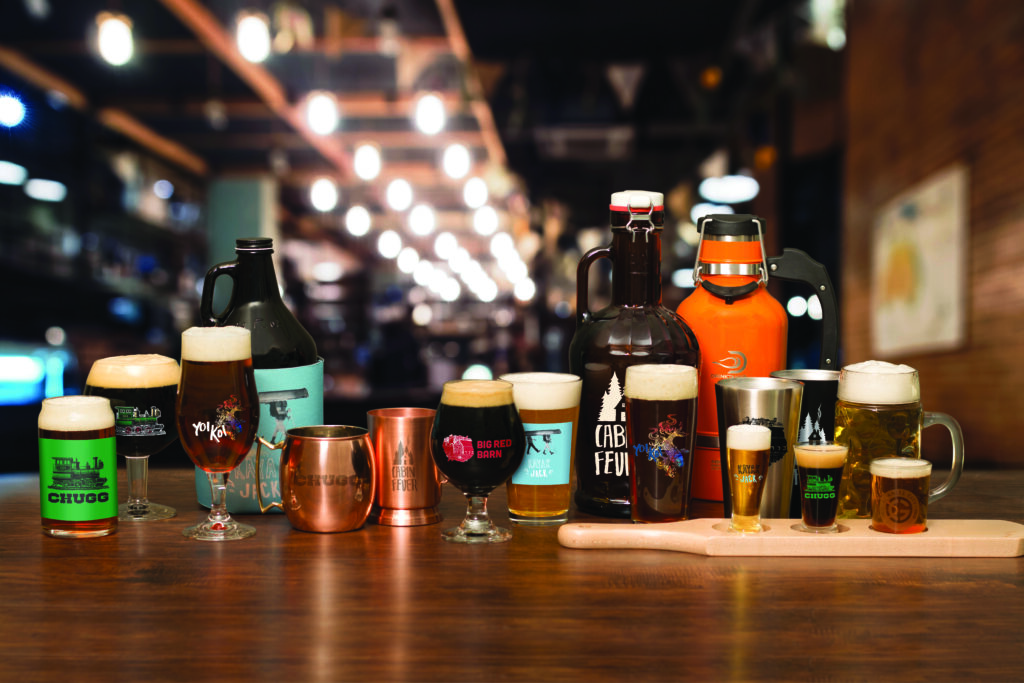
uncommon to promote your brand through a variety of related products. Whether
that’s pint glasses and coasters, umbrellas, signage or an oversized Jenga set
reserved for outdoor events, merchandising your business in creative and unique
ways is critical. But there are numerous moving parts that inevitably get in
the way. Working with your local Kinkos and your cousin (twice removed) to help
with the graphical design will only get you so far.
Properly sourcing your
merchandise is an indispensable asset to your overall brand marketing
initiatives. Working closely with a partner capable of assisting with the
delivery of your products can make an immense difference in your day-to-day
operation.
Understanding the
ins-and-outs of product sourcing often includes first-hand experience in
knowing what works and what does not. These conversations can help steer you in
the right direction, while also shielding you from potential missteps.
Promoting your brand with a Point of Sale (POS) system capable of delivering
the best return on investment (ROI) in a growing market will help you to
realize even greater success.
Off-Premise Initiatives
Traditionally, craft beer
has primarily been sold on-premise. The experience of enjoying a freshly tapped
beer while socializing at your local brewery is one of the reasons the craft
beer industry has stayed consistently strong. When combined with ongoing
marketing and merchandising efforts, off-premise sales has the strong potential
to develop into an additional sales and distribution plan.
Some beer aficionados
might argue that traditional retail sales takes away from the uniqueness of the
craft beer experience and no longer differentiates itself from large national
brands. However, retailers are very much in tune with consumer preferences and
will always be looking for opportunities to emulate the success of on-premise
craft breweries through off-premise sales.
It’s important for every
craft brewery to take the steps necessary to continue promoting their name and
their brand. As such, there are several opportunities worth considering for an
off-premise strategy:
• Stand Out in a Crowded
Space: Whether you’re positioned within a local liquor store or the corner
grocer, make sure your branding is prominently displayed and catches the eye of
every customer. Proudly present your most popular beer or newest recipe on
shelves, stackers and corrugated risers that clearly exhibit your branding.
Make sure the colors are bold and vibrant, and that the wording can be read
from across the aisle. Take pride in your craft and give it the attention it
deserves.
• Small Idea, Big Impact:
Even the smallest idea can have the biggest impact when it comes to branding
and product marketing. Sticky shelf talkers, ceiling danglers, window clings
and floor placements. Make it so that no matter where the customer is looking,
your brand is sure to grab their attention. And it’s not always about how big
of an impression you make or how much real estate your branding utilizes. A
strategically placed logo can help even the most undecisive beer drinkers make
the right choice.
• Your Fans are Your
Biggest Advocates: Don’t overthink it. The practicality of the idea often
becomes the biggest win for off-premise business. Let your fans do the “heavy
lifting”. Selling a variety of tote, lunch coolers and brown paper bags, each
with your branding clearly identified for everyone to see, is a great way to
continue getting your name out there. Used at work, on vacation or attending
any number of social events, your biggest fans will be promoting their favorite
beer without ever saying a word.
• The Signs Are Everywhere:
Chalk-based A-frame menu boards. LED light boxes. Laser cut, digitally printed
hardboard wood. What do all these different types of signage have in common?
They’re the most classic form of beer advertising you can think of. People of
all ages collect them and prominently display them in their homes, garages and
on the walls of the businesses they own. They catch your eye, make a statement
and get you thinking about one thing, and one thing only – BEER!
Product Management
Having access to your own,
business-specific e-commerce website is an opportunity to more effectively
manage your growing list of products. When conveniently organized by category,
a robust e-commerce solution is more likely to yield an increase in the number
of merchandising orders placed. By providing your sales group, wholesalers and
consumers 24/7 virtual access to your products, you’re removing yourself from
the time-consuming difficulties and headaches of manual maintenance and upkeep.
An effective e-commerce
portal is not only a reliable source for managing your inventory in an
organized fashion, it can also be seamlessly updated to accommodate for new
products and inventive promotional efforts. Including pre-order windows and
making them available to your distributors will help to better gauge the
potential success of your latest product promotions before taking the plunge
and jumping head first into a new initiative.
Planning for the upcoming
year’s promotions, brand launches and seasonal programs is an important
function critical to the ongoing success of your business. Having access to
online ordering is a great resource to take advantage of when working toward
upcoming events. Providing your distributors access to your ecommerce site
makes the process of managing and expanding your brand a seamless activity.
However, maintaining your
inventory and shipment data can often be challenging. Working from a
comprehensive and reliable report – one that details the data needed to drive a
successful program – saves time and increases productivity, allowing you to
focus more on your craft. Accessing these reports, whenever needed, makes the
process of future inventory planning and promotional efforts even easier and
more sustainable.
Inventory Optimization
Space is a commodity.
You’ll never have enough and will always be needing more. When owning and
operating your craft brewery, you’ll quickly realize that as more of your space
is consumed by branded merchandise, less will be available for that essential,
behind-the-scenes equipment – brewing systems, canning lines, tanks, fermenters
and more. Working with a total fulfillment partner opens up the possibility of
maintaining and safely storing your merchandise stock.
At its core, inventory
optimization and supply planning answers the question about how much
merchandising inventory should be carried. Working with your fulfillment
partner, you’ll be able to better understand the complexities of supply and
demand and more accurately identify inventory targets. By maintaining
appropriate levels of merchandising stock you’ll greatly reduce the chances of
inventory obsolescence, thereby freeing up capital that can be applied
elsewhere throughout your business.
Fulfillment partners often
include consignment opportunities, giving you the option to store your products
offsite while still retaining ownership. As the products begin to ship, you’ll
be able to track how much inventory sold and work closely with your fulfillment
provider on the transactional details.
When tied directly with
your unique e-commerce platform you’ll have even greater flexibility and
control over the number of products sold, understand when and how they have
shipped and be able to effectively report – from week-to-week and
month-to-month – for better management of your business’s overall expenses and
profits.
Pre-orders are also
designed to increase profitability. Utilizing your fulfillment partner’s
expertise in identifying products that are best suited to both order windows
and the make-and-ship process, you’ll capitalize on an effective solution to
the POS puzzle. This pre-order option provides greater overall flexibility when
planning for upcoming events and seasonal placement.
Dedicated Support
Whether it’s the account
manager, sourcing, logistics or warehouse, the various touchpoints of a
fulfillment team provide the support needed to effectively operate your
business. Their focus is helping you maintain yours. In doing so, you’ll have
greater opportunities to further pursue your passion.
A committed support team
should be analyzing your POS operations on a quarterly, bi-annual and annual
basis, and provide feedback to assist with any changes that may be needed.
Their long-standing relationships within the industry are designed to support
your needs and ensure that your business realizes continued success.
Your merchandising efforts
are directly connected to establishing your brand and helping your business
thrive in an increasingly competitive market. Aligning yourself with a
reputable fulfillment program will assist you in meeting the goals you have
established for your business. When done well, your brand will realize the
greatest potential to reach more customers and leave lasting impressions.
Financial literacy is the ability to read and understand the
numbers of your brewery business so that you can improve financial results.
Improving financial results may include growing sales, improving gross margins
or increasing cash flow. In today’s uncertain times, financial literacy is more
important than ever.
The numbers of your
brewery business are reported on the financial statements – the income
statement, balance sheet and statement of cash flows. Each of these reports
provides vital financial information to understand what’s going on in your
business.
In this article, we’ll
review the basic components of brewery financial statements and provide
examples of what these reports should look like. We’ll also dig into the
mysteries of the brewery chart of accounts – the building blocks of the
financials – and provide tips to make sure your financial reporting is as good
as it can be.
We’ll close out with a
list of best practices to follow so that your financial information is
accurately reported. These best practices are summarized into a handy checklist
of month end procedures to follow.
Brewery Financial Reports
The numbers of your business are organized into reports called the financial statements: the income statement, balance sheet and statement of cash flows. Each statement provides useful information about a different part of your brewery business. Below is a brief review of each report.
Income statement (Profit & Loss Statement
or P&L): The brewery income statement reports on sales, margins, operating
expenses and shows whether the business had a profit or loss. This statement
measures results over a period of time – the month, the quarter, or year to
date, for example.
It’s important to
understand that the income statement measures transactions but does not measure
cash flow. The income statement records sales when earned, and expenses when
incurred, regardless of whether cash was received or paid out.
Balance sheet: The brewery balance sheet
lists assets, liabilities and equity.
Assets are things you own, liabilities are things you owe, and equity is
the difference between the two. If
assets are larger than liabilities, you have equity. If liabilities are bigger, you have a
deficit.
While the income statement
measures results over a period of time, the balance sheet measures numbers as
of a specific point in time – at month end, quarter end or year end, for
example.
Statement of cash flows: This financial report
measures the flow of cash coming into and going out of the brewery
business. It tells you where cash came
from (collections on sales, for example) and where cash went (payments to
vendors, for example). The income
statement measures transactions, not cash. The statement of cash flows shows
picks up where the income statement leaves off and records the flow of money
through the business.
Brewery Income Statement
(P&L) Examples
Now that we’ve covered the
basic financial reports, let’s look at examples of what brewery income
statements should look like.
We’ll begin with a
summarized version of the P&L.
Shorter reports are easier to read and allow you to see important
information quickly. The summary report
includes sub-totals for each major P&L category: sales, margins, operating
expenses and profit or loss.
The simple P&L shows the summarized results for a period of time (Year to Date, in this example) and presents each category as a percentage of sales. P&Ls don’t need to be five or ten pages long to be good. In fact, shorter is better. Shorter is easier to read and makes it more likely that you actually will read the report. Start with a summary P&L like this one, then expand the report by adding more details. Here’s an example:
This P&L shows sales,
cost of sales, and margins by package type. This type of presentation makes it
easy to see the margin percentage by package type (kegs, cans or bottles) which
is useful in analyzing portfolio profitability.
An alternative to this
P&L is to present the information by line of business. This might include
sales through the taproom, self-distribution and wholesale distribution.
Regardless of which method you use, it’s helpful to mirror the sales categories
within the cost of sales and margins categories. For example, have a separate
account for taproom sales, taproom cost of sales, and taproom margins.
Financial literacy is the
ability to read and understand the numbers of your brewery business so that you
can improve financial results. The income statement, balance sheet and
statement of cash flows are reports that summarize those numbers. Each report
gives you different information about the business, and each is important to
review on a regular basis.
Brewery Chart of Accounts
Accountants use the term
Chart of Accounts to describe the listing of all the things you want to track
and report on in your business. These include all of the assets, liabilities,
revenue and expenses. The purpose of this listing is to provide organization
and structure for your financial reporting. The Chart of Accounts serves as the
building blocks of your financial statements.
The level of detail in
your chart of accounts listing will depend on how much information you want to
see on your financial reports. For example, you may have three different sales
accounts, as shown earlier: Sales-Kegs, Sales-Cans, and Sales-Bottles. Each captures the sales specific to a type of
package.
Alternatively, you may
have any number of different sales accounts to show sales by market and package
type. For example, Sales Self-Distribution Kegs, Sales Self-Distribution Cans,
Sales Self-Distribution Kegs, etc.
Be purposeful about the
level of detail in your chart of accounts. More detail may be preferable, however
this will take more time for your bookkeeper to record the transactions into
the proper accounts. Start with the kind of reporting you need to see in your
financial statements and build the chart of accounts accordingly.
For an example of a full brewery chart of accounts, visitwww.craftbreweryfinance.com and enter chart of accounts in the search box.
Brewery Financial Month-end
Process
We’ve covered the basics
of how to read the financial statements and understand the chart of accounts.
Next, we’ll review a month-end process you can use to make sure
your numbers are complete and accurate. A process is defined as a series of
steps, followed in order, that will lead to the right outcome. In this case,
the right outcome is accurate numbers in the financial reports.
The month-end process
should be clearly written and used as a document to train your bookkeeping
staff. An accounting manager should periodically audit the work of staff to
ensure that the process is being followed.
The process can be presented in the form of a checklist, indicating what task to do, when to do it, and who is responsible for completion. Below is an example of a month-end financial checklist:
The process checklist
should contain all the necessary steps to close the books for the month in
order to ensure the accuracy and completeness of the information. For example,
all payroll journal entries should be made on the 1st day of the new month and
all bank statements should be reconciled by the 5th business day of the month.
To create your month-end
process checklist, have your bookkeeper write down all the actions they take to
close the month. Compile this list of actions and assign due dates and a
responsible person. Each month when it’s time to close the books, use the
checklist as a guide to make sure each step is done and completed on time.
The best way to make sure
you have good financial information is to follow a good process consistently.
To download a full month-end process checklist, visit
www.craftbreweryfinance.com and enter month-end process in the search box.
Wrap Up + Action Items
Financial literacy is the
ability to read and understand your financial statements so that you can
improve results in your brewery business. Improved results may be sales growth,
margin increases or positive cash flow. You define the result you want to
achieve and use your financial literacy to make it happen.
Use the summary income statement templates presented here or create your own so that you can monitor financial outcomes. Review your chart of accounts and compare to the template atwww.craftbreweryfinance.com to identify any needed changes.
In today’s uncertain
business environment, financial literacy is a competitive advantage. Use this
advantage to drive increased financial performance in your brewery business
today.
Kary Shumway is a Certified Public Accountant and has been working as a CFO in
the beer business for the past 15 plus years. He creates financial training
courses for beer wholesaler owners so that you can build a more profitable
business.
For more information please visit…www.craftbreweryfinance.com.
The COVID-19 pandemic has affected virtually every industry, from government-mandated shutdowns, to limitations on occupancy, to changes in consumer behavior even in the absence of mandatory restrictions. Some businesses, such as live theaters, have been completely shuttered; Broadway recently announced it will be dark until at least January 3, 2021. But, breweries, wineries, and distilleries have the advantage of being both retail centers for their products and also manufacturers. This dichotomy has allowed many to keep their doors open in some capacity throughout this emergency. Every U.S. state has allowed alcoholic beverage manufacturing to continue. How manufacturers have been able to get their products into the hands of consumers, however, has varied widely from state-to-state.
This article is not meant
to give a complete status of the law in any, much less every, state. Nor is it to point out that one state is
doing more than another for the beverage industry. Each state is facing its own unique
challenges in the face of this pandemic due to differences in infection rates,
hospital capacity, population density, economic conditions, political climate,
culture, and various other factors. So,
it is not surprising that their approach to these challenges differ, as
well. It is also important to note that
as circumstances change, so does the government response, so what is described
below may have changed by the time this article is published, and may continue
to change.
Rather, this article is meant
to illustrate that there are many options available to help industry members
survive the crisis. As conditions change
in any given state, so to do the accommodations needed to help the industry. So, for industry members who are in a state
where the pandemic is growing, the information below may provide suggestions to
take to state and local officials to seek further accommodations, as
needed.
Carry-Out
Nearly every state is
allowing manufacturers to sell their products from their licensed premises for
off-site consumption. The details,
however, vary widely. For example, many
states require that the carryout alcohol be part of an order for food. Alabama and Montana have limits on the amount
of alcohol a customer may purchase to-go.
Maryland, on the other hand, suspended these limits during the
emergency.
Most states require
carryout alcohol to be in “sealed containers,” though even that definition
varies. In many states it includes
growlers, but in Alabama only if the local jurisdiction allows draft beer, in
Maine only if with a food order and in the brewery’s own branded growler, and
in Nebraska only if the growler has a capacity of no more than 64 ounces. In Colorado, a to-go cup with a lid may be
secured with tape that says: “WARNING: DO NOT OPEN OR REMOVE
SEAL WHILE IN TRANSIT.” In Vermont, manufacturers
may sell beverages in a paper cup with a lid that has a hole for a straw…but
may not provide a straw. Nebraska allows
these cups and straws can be provided, but not inserted into the cup on the
premises. In Virginia, due to supply
chain issues, the state allowed for “alternate/novel” containers, such as
flip-top bottles. Missouri originally
required “factory sealed” containers, but changed the rule in June 2020 to
allow for “retailer packaged” beverages.
The manner of carryout
sales varies, too. In Arizona, Montana,
and South Carolina, licensees are allowed to operate a drive-thru window for
beverage sales. But, in Washington
State, they can have a “walk-up” window, but not a drive-thru. In Wisconsin, the carryout sale must be
conducted face-to-face, not over the phone or internet for pickup.
Some states, such as
Arizona, Arkansas, Idaho, Michigan, Missouri, and Nebraska are also allowing
mixed drinks or cocktails to go. California
and Maine require mixed drinks to accompany a food order and Maine and Virginia
have limitations on the amount of alcohol in the to-go container.
Curbside Pickup
In order to keep patrons
from congregating inside the tasting room to pick up beer, some states have
allowed curbside pickup, where the customer orders the product online or over
the telephone and drives to the licensee’s parking lot. The licensee then brings the order out to the
customer’s car, often putting the order in the trunk so there is no direct
contact between employee and customer.
At least Alabama, Alaska, Arizona, Hawaii, Kansas, Maine, Maryland,
Missouri, Montana, Nevada, New Jersey, Oregon, South Carolina, Vermont, and
Virginia allow curbside pickup.
Tennessee only allows curbside pickup for beer and wine, not
spirits. But, New Mexico expressly
forbids it because all sales must be made on the licensed premises, which does
not include the parking lot.
Delivery
Even before the COVID-19
pandemic, Ohio, the District of Columbia, and Missouri allowed manufacturers to
deliver beer, wine, and spirits to consumer’s homes. Since the outbreak, many other states have
followed suit, at least on a temporary basis, including Arizona, Arkansas,
Colorado, Idaho (beer and wine only), Illinois, Indiana, Iowa, Michigan,
Montana, Nebraska, New Jersey (beer and wine only), Oregon, Vermont, Virginia,
and Washington. In Oklahoma, the
Alcoholic Beverage Laws Enforcement Commission was allowing breweries and
wineries to do home delivery in April/May 2020, but the legislature stepped in
and gave that right only to retailers, not manufacturers. Most states that allow home delivery require
that the delivery be made by an employee of the licensee, not by a third party
service. Idaho, Illinois, and New York,
however do allow third party services, though in Illinois, mixed drinks can
only be delivered by third party from licensed retailers, not from
distilleries.
Most states also require
that payment be made in advance either over the phone or online. California, however, is allowing payment,
even in cash, to be made at the point of delivery, but will not permit a
“mobile sales apparatus” to sell and deliver in real time in a public
space. In other words, one cannot set up
a “food truck” type of service for alcoholic beverages.
The majority of states
also require that the delivery be made directly to a residence or other
building. North Carolina, on the other
hand allows breweries and wineries to deliver within 50 miles of the licensed
premises and to make deliveries outside a home to any place the customer
requests, except to other licensed premises.
In Maine, New Hampshire,
and New York, the delivery must accompany a food order, though, to borrow a
phrase from the movie “Pirates of the Caribbean,” some may be treating that
requirement “more as a guideline than an actual rule.” Hawaii has four individual county liquor
commissions and liquor control departments.
Three of the counties have allowed brewpubs to deliver beer along with a
food order, the fourth has not, as of this writing.
Maryland is not only
allowing manufacturers to deliver their own products directly to consumers, but
also products from other manufacturers, who may not have the resources for home
delivery. At least two breweries in
another Northeastern state have teamed up to share their delivery resources,
though it is unclear whether there is any official or unofficial approval in
that state. In Ohio, if a manufacturer
also has an “A-1-A” liquor permit, it may sell and deliver other brands of
beer, wine, spirits, and mixed drinks (though mixed drinks must accompany a
food order).
Some states have also
begun to allow breweries, wineries and distilleries to ship their products to
consumers within their own state using UPS or Federal Express (not the U.S.
Postal Service). These include at least
Vermont, Maryland, New York, and North Carolina.
Other Accommodations
When the COVID-19 outbreak
began to spread in the United States and hand sanitizer quickly went out of
stock in retail outlets, many distilleries and breweries sprang into
action. Licensing commissions and
legislatures scrambled to provide necessary approvals for these companies to
pivot their manufacturing activities.
This created a valuable revenue stream while tasting rooms were closed
and provided a service to communities in need of protection. In some cases, states allowed breweries to
transfer fermented wort to distilleries for distillation and mixing with other
ingredients and then to take the product back to the brewery for bottling and
distribution. One word of caution,
however; at least one brewery in Hawaii received a citation for “inducement,”
because they were giving a free bottle of sanitizer to anyone who purchased
their beer.
When taprooms were ordered
closed in Ohio, the Department of Commerce recognized that some small breweries
did not have bottling or canning capabilities and would struggle more than
those who were able to package their products and sell for carryout or
delivery. So, the department created a
procedure that would allow a manufacturer to have another manufacturer bottle
or can their products for them.
Ordinarily this would be a violation of Ohio law.
As various states begin
their tiered reopening plans, many are still either prohibiting indoor
dining/drinking or only allowing a limited percentage of normal seating
capacity. To further accommodate
manufacturers, several states, including: Alaska, Arkansas, New Jersey, Ohio,
Oregon, Pennsylvania, and Virginia, have been much more lenient about allowing
outdoor seating areas to make up for lost capacity inside. In many cases, states have allowed
manufacturers to rope off sections of sidewalks, parking lots, and even closed
portions of streets to enable outdoor seating.
New Jersey has even gone a step further and allowed breweries to occupy
outdoor spaces that are not directly attached to the brewery, such as nearby
parks.
Finally, most states have
been very flexible with licensing renewals and tax filings, extending deadlines
and fast-tracking application processing.
Final Thoughts
No one knows how much
longer this crisis is going to last. As
the number of new coronavirus cases falls in one state, it rises in another and
the experts seem to agree that we are still in the midst of the first wave of
this virus with a second likely to hit during flu season. It is reasonable to expect that we will see
state and local governments react to changing circumstances with an ebb and
flow of restrictions on people congregating.
The manufacturers who have
fared the best, so far, are the ones who have done two things: 1) applied early
for federal, state, and local grant and loan opportunities, and 2) found
creative ways to pivot their business to maximize their opportunities under
restricted conditions. Being based in
Maryland, I would be remiss if I didn’t give a shout out here to True Respite
Brewing Company. Based in Rockville,
Maryland, they were the creators of the craft beverage delivery platform,
Biermi, which is now being used in at least 29 states. This type of innovative thinking both in the
private sector and in state and local governments will be critical as we
navigate the COVID-19 emergency. If
worsening conditions require tighter restrictions in some states, hopefully the
information presented above will be useful in discussions with licensing
commissions and legislators as ways they can help accommodate
manufacturers.
Lastly, with the
constantly shifting regulatory structure surrounding this industry, it is essential
that licensees stay in contact with their insurance companies and their
attorneys. A state may change the rules
to allow a manufacturer to deliver alcohol to consumers’ homes or to serve its
products in a parking lot, but that does not necessarily mean that the
manufacturer’s insurance policy will cover those activities. Further, the devil is always in the
details. In each of the states mentioned
above, there are conditions and terms that must be satisfied in order to engage
in the permitted activities. Always
consult with a knowledgeable attorney before engaging in a newly allowed
process.
Brian Kaider is a principal of KaiderLaw, a law firm with extensive experience in the craft beverage
industry. He has represented clients from the smallest of start-up breweries to
Fortune 500 corporations in the navigation of regulatory requirements, drafting
and negotiating contracts, prosecuting trademark and patent applications, and
complex commercial litigation.
When the “craft beer revolution” began, there was a purpose. The craft beer industry was built by people who had been to the promised land and seen the light. That promised land was usually somewhere in Europe, and the light was not all that light. It was a revelatory moment in which a drinker found themselves confronted with beers that were not the light, bland, American-style macro lager they knew at home, but rather beers that were dark, moody, and hoppy. They were beers bursting with flavor and individuality, something that those American beers lacked. Those people returned from their promised land as evangelists, priests of a new order built to spread the gospel of those beers to a new, insulated, naïve market. Craft beer was born.
The roots of what we
learned to see as normal craft beer offerings came through the lens of one
book. It is so ubiquitous in the craft beer industry that some older beer
veterans have referred to it as “the Bible”. The reverence with which Charlie
Papazian’s book The Complete Joy of Homebrewing has been treated, as well as
Papazian himself, who recently retired from the Brewers Association, makes it
easy to draw a direct line from that book to the development of the modern beer
industry.
Ignore, for a moment, that
many professional brewers still brew with the dated knowledge presented in that
book: knowledge that still makes great homebrew but is fairly basic for a
professional brewery. The recipes presented in the book in the 1970s are the
harbingers of the industry’s path to maturation some 15 to 20 years later.
By the 1990s, in the first
big boom of the craft brewing industry, every brewery in the country worth its
salt was putting out the same simple lineup: Golden Ales, Brown Ales, Pale
Ales, IPAs, and Porters or Stouts. All the flavors of beer. Breweries with
extra tank space might have thrown in the occasional lager, but since money and
space were often limited, lagers sometimes fell by the wayside. Invention and
innovation in the brewing industry leapt directly from Charlie’s books. He
published what was probably the first pumpkin beer recipe. He let us know that
honey was a great addition to brown ales, that fruit belonged in dark beers,
and that historic styles that no longer existed were cool.
At the same time, the beer
industry itself was working as hard as it possibly could to lower the barrier
of entry to open a brewery. As startup brewers were treated like royalty by
eager homebrewers, those brewing pioneers began to release books regaling fans
with the tales of opening a brewery and all of their mistakes, so that you –
the eager reader – would not be doomed to repeat them. It seemed like writing a
business book was a prerequisite for owning a nationally-distributed brewery
for a decade or so. Ken Grossman (Sierra Nevada), Sam Calagione (Dogfish Head),
Jim Koch (Sam Adams), Tony Magee (Lagunitas), Steve Hindy (Brooklyn), Tom
Schlafly (Schlafly), and James Watt (Brew Dog) among others have all written
books about starting their breweries that, to some degree or other – mostly
blatantly – encourage the reader to believe the idea that starting a brewery is
an achievable task, even if you don’t know what you’re doing.
The Brewers’ Association itself followed suit by releasing a book plainly titled “Starting Your Own Brewery”. The first edition was a loosely tied together collection of academic articles and essays that acted as a dry review of boilers and floor sealants of the 1990s, but the second edition was transformed into an easy manual to start a brewery by Dick Cantwell (Elysian, Magnolia). The Siebel Institute of Brewing Technology even went so far as to hold a “How to Start a Brewery” course using that book as a rough textbook. The course did not teach people to make beer or run a business. It taught people how to start a brewery.
And so, the barrier to
entry became the notion that “It’s just so crazy it might work” and the
finances to afford the most minimal amount of equipment. Buoyed by an industry
(and industry association) that boasted double digit growth numbers for 20+
years, banks were eager to throw loans at anybody who could write a passionate
business plan.
But when those breweries
started, they were different than the earlier ones. They were not built by the
originators and inventors, the people that had traveled abroad and found new
ideas to bring home. They were started by their fans. They were started by
eager homebrewers who wanted to do the same thing their heroes did, and when
they started breweries, they started homebreweries instead.
Over the past decade and
more, homebrew took a natural step from Charlie Papazian’s creative recipe
starts into the concept of Extreme Brewing. You can thank Beer Advocate for it.
Though their tame definition, “A beer that pushes the boundaries of brewing” is
an easy definition to apply to even, say, the latest trends of non-alcoholic
beers and low-cal IPAs, their intent was made clear in their preference for
high alcohol offerings and rare, outlandish ingredients that was showcased on
their website, and at Beer Advocate’s Extreme Beer Fest.
In breweries at the time,
these extreme beers were fairly uncommon. Dogfish Head’s brewers stood out
among their peers as the people who were most likely to throw lobster in the
boil kettle, or have their entire staff chew corn to make a traditional chicha,
but in homebrew it was an easy step. Ingredients that are off-limits to
commercial brewers due to cost, scale, or regulatory reasons pose no impediment
to a homebrewer.
The only thing stopping
any homebrewer from making a beer out of 10 lbs of Snickers bars is the cost of
10 lbs of Snickers bars.
For years, the Brewers’
Association had a mantra based on fear: Quality is the most important thing.
The fear was that a potential customer would try craft beer for the first time
and it would be terrible and they would never try any craft beer ever again.
The idea that a macro American lager drinker would walk into a craft brewery,
drink a sub-par IPA, and then give up forever is a myth. Instead, that drinker
tried beer again, maybe not that day, but at some point. Everybody drinks craft
beer now, macro American lager drinkers.
For years, craft breweries
were not at the mercy of their customer’s tastes, they defined them. Now, the
educational period is over.
When thousands of
homebreweries started throughout the country, they brought their recipes with
them and taught millions of craft beer fans to love what they made: chock full
of lactose, breakfast cereal, candy bars, fruit, and all kinds of sugars. More
and more brewers experimented with more and more ways to get hops into beer,
because they had been trained by those giant hopheads of yesteryear, and they
found the gold mine in New England IPAs.
Today, our most successful
small breweries flourish on a small variation of hazy IPAs, fruited sours, and
dessert stouts. Our most successful large breweries cling to the waning
popularity of their flagships in a broken distribution system.
Now, most craft beer fans
value alcohol, adjuncts, and adjectives over quality and classic styles.
And they should. We taught
them to. The only way back to classics
is forward through education and inspiration of a whole new set of craft beer
fans.
Erik
Lars Myers is an author, brewer, and
lover of beer. He currently works as the Director of Brewing Operations at
Fullsteam Brewery in Durham, NC where he strives toward innovation every day
while supporting the Southern Beer Economy by using brewing ingredients sourced
and grown across the American South.
By: Nichole Gunn, Vice President of Marketing and Creative Services, Incentive Solutions
In order to stay competitive in today’s distribution channel, craft beer producers must be able to digitally engage their supply chain trading partners and effectively communicate across channels. However, this can seem like a tall order! Between the need for integrated technology, gaps in partner data, and interorganizational goals that might not always be aligned, craft beer producers often struggle to utilize technology to sell through and with their partners.
When facing these
challenges, a channel incentive program might not be the first solution that
springs to mind. After all, most people associate incentive programs with
rewards rather than considering how that program fits in as part of an
effective channel management tech stack. However, today’s channel incentive
programs are software-driven, offering craft beer producers a platform to
provide connected, omnichannel partner experiences, improve communication, and
collect important partner data to inform their sales and marketing strategies.
Creating Engagement Before and After the Reward
While offering incentive
rewards can be an exciting way to differentiate the brand and drum up initial
engagement, the real value proposition for craft beer producers occurs in the
opportunities for growth and improved communication that the program creates.
Motivating and
facilitating digital engagement is a major focus of today’s channel incentive
programs. Depending on their scope, these programs can provide:
● An integrated digital
hub where channel partners can learn more about the brand, while exploring the
latest incentive promotions;
● Automated communication
touchpoints, such as email, SMS, push notifications, monthly statements, and
website announcements;
● Custom enrollment forms
and survey tools to round out partner profiles and fill in missing gaps in
data;
● A branded mobile app
where partners can easily upload sales invoices and other documents in order to
earn reward points;
● Gamification- and
education-based platforms to increase engagement and help supply chain trading
partners become better representatives of the brand; and
● Streamlined
administrative tools and reporting dashboards that enable craft beer producers
to easily manage their programs and monitor success.
These components help make the brand more
accessible to supply chain trading partners, while giving craft beer producers
tools to consistently engage partners across digital channels. Better yet, all
of these platforms exist in a space where supply chain trading partners have
the opportunity to earn rewards. This means that supply chain trading partners
will be more likely to engage with the brand interactions they experience
through the channel incentive program, whether via email, SMS, apps or other digital
platforms
Integrating Incentive Programs with a Website
Providing a seamless user
experience is an integral element of effective digital engagement. Modern
channel incentive programs allow craft beer producers to integrate their
rewards program with their existing website or partner portal.
This helps craft beer
producers accomplish several goals. First, it drives supply chain trading
partners to the website, where they can gain additional exposure to the brand
and its product lines. Secondly, creating a single sign-on reduces the need for
partners to keep track of additional URLs or login information, making them
more likely to engage with the brand. Finally, offering channel partners the
ability to redeem for rewards directly from a company website provides positive
reinforcement that partners will associate with your brand in the future.
Leveraging Automation for More Efficient Communication
When it comes to channel
partnerships, communication is key. While smaller craft beer producers can be
accustomed to operating exclusively with manual processes and analog customer
experiences, what happens when it’s time to scale a go-to-market strategy?
Channel incentive programs
give craft beer producers the ability to automate a large portion of their
channel marketing. With triggered emails, SMS, push notifications, and website
announcements, incentive program software allow craft beer producers to
efficiently communicate with members of their channel based on specific
parameters. Additionally, if craft beer producers are pressed for time, some
incentive companies even provide the option to outsource entire custom,
end-to-end incentive marketing campaigns.
Collecting Data to Provide a Connected Customer Experience
For craft beer producers,
a channel incentive program is a valuable opportunity to learn more about the
distributor and wholesaler sales reps who make up their channel. Reward-earning
opportunities motivate supply chain trading partners to share information that
craft beer producers would otherwise struggle to obtain. From firmographic
data, to contact information, engagement metrics, and buying habits, craft beer
producers can use this data to inform their sales and marketing strategies and
further personalize their sales and marketing strategies.
By integrating this data
with their existing CRM or ERP, craft beer producers can maintain a more
accurate picture of the buyer experience. For instance, craft beer producers
can see which distributor and wholesaler sales reps are engaging with a certain
promotion in order to create relevant cross-sell and up-sell opportunities.
They can view which accounts (or even regions) need to be nurtured or
reengaged. Having this visibility into the sales channel helps craft beer
producers anticipate the needs of their supply chain trading partners and
allocate their marketing spend more intelligently.
Additionally, sales claim
submission and verification tools make it easier for distributor and wholesaler
sales reps to exchange data at the point of sale. Some craft beer producers use
this as an opportunity to gain information about customers further down the
supply chain in order to glean insight about the retailers and restaurants that
sell their beer to end-users. Survey tools allow supply chain trading members
to offer feedback, which can be used to further personalize sales and marketing
strategies.
Using Gamification to Make Programs More Engaging
Elements of gamification,
such as trivia, leaderboards and spin-to-wins, can be incorporated into
incentive program websites to drive more regular engagement in between
reward-earning opportunities. These make the programs more interesting for
participants, while offering additional tools to shape the behavior of supply
chain trading partners. For instance, daily trivia can be utilized to keep
channel partners coming back to the website, while assigning limited-time bonus
points for selling specific products or completing other CTAs (calls to action)
are another great incentive. This makes for a more rewarding channel partner
experience – even before partners ever redeem a reward!
In addition, interactive
quizzes and training modules make your supply chain trading partners more
knowledgeable and effective representatives of the brand. Sales reps sell what
they know and providing sales enablement is a great way to build brand
preference with an indirect salesforce. Plus, these educational modules give
sales reps the chance to earn rewards, further increasing the value proposition
of an incentive program.
Streamlining the Administrative Experience
In addition to the benefits of incentive program technology for channel sales and marketing, another important consideration for craft beer producers is ease-of-use from an administrative standpoint. How complicated is implementation? What are the time-costs of managing the program? How much flexibility is there for adjusting the program website or setting new promotions? Will there be ongoing strategic support from the incentive company?
Today, cloud-based,
modular incentive software has streamlined the admin experience. Programs can
be launched in as little as eight weeks. With easy-to-use administrator
dashboards and drag-and-drop editors, sales and marketing managers at craft
beer producers can quickly make changes to their program. Plus, custom reports
help them monitor their program and measure ROI.
Additionally, some
companies offer teams of incentive specialists to manage the program. According
to a 2019 survey of our clients, many of whom are in the beverage manufacturing
industry, more than 70 percent spent less than two hours a week performing
administrative responsibility for their incentive program.
Sustaining a Competitive
Advantage
In short, a channel
incentive program acts as an entire digital ecosystem for partner engagement,
an important competitive advantage for craft beer producers who rely on supply
chain trading partners in order to go to market. Compared to other industries,
the craft beer production industry is still in the early stages of adopting
channel incentive strategies, giving those who jump on board soon a major
competitive edge. Being among the first to roll out a channel incentive program
for distributor and wholesaler sales reps represents a major opportunity to
capture mindshare and share-of-wallet.
However, it’s important
for craft beer producers to keep an eye on the future. Technology is evolving
at a rapid rate and the craft beer distribution channel is notoriously
competitive. When shopping for incentive program providers, make sure to choose
one that fully supports their software and has definite outlines for future
development. Moreover, look for a provider that offers the ability to quickly
enhance and expand a program in response to competition. That way, it’s easier
to capitalize on the present opportunity, while planning ahead for the future,
and staying one step ahead of industry competitors.
Nichole Gunn is the VP of Marketing and Creative Services at Incentive Solutions (www.incentivesolutions.com), an Atlanta-based incentive company that specializes in helping B2B companies improve their channel sales, build customer loyalty, and motivate their employees. Nichole Gunn can be reached at ngunn@incentivesolutions.com.
Social Distancing Doesn’t Apply to Your Social Media Efforts
By:
Tracey L. Kelley
It’s no surprise that time spent online during the height of the
pandemic increased exponentially. Data from Nielsen specifically tracking
social media usage indicates that on platforms such as TikTok and Instagram,
there was a 25% spike in mobile engagement, and a soaring 75% of ad content
placed by influencers. While usage is expected to flatten a bit by the end of
the year, there’s still a slight uptick of average minutes per day people
peruse social networks: 82 minutes now, compared to a 2019 forecast of 76
minutes.
How does this data impact
social connection with your audience? Now more than ever, refine your brand and
your community presence to cultivate content people are willing to notice.
Share the Story of Your
Community
Craft beverage producers
repeatedly demonstrated these past few months how quickly they could pivot to
accommodate not only the needs of their business but also those of their
employees and the community as a whole. Many of these efforts were the
feel-good stories major news agencies were eager to feature in bleak times.
Ruby Benoit is Head of Craftiness and Founder of Craft Good Business, a company in Southern California specializing in helping craft beverage companies create and implement marketing plans and events. She told Beverage Master Magazine that storytelling holds considerable clout in social media messaging.
“Since consumers are
turning to social media to evaluate brands even more so now, storytelling
creates a connection and helps keep you top of mind,” she said. “Your audience
wants to see what your brand is all about: What do you stand for? What is your
purpose? And it’s critical to show your community efforts: decide on how you
have a unique, positive impact on society. Whatever your stance is, communicate
with your customers and all stakeholders in an authentic way.”
Brands should stick to
providing great experiences, as well as dedicate energy to remaining consistent
and genuine in their messaging to win customer support, according to the media
team of Happy Medium, a full-service digital creative agency in Des Moines,
Iowa.
“Overall, audiences tend
to react well to community involvement because it’s inspirational and
aspirational. If your team is volunteering, share a photo of employees at the
volunteer event. If you made a charitable donation, ask the recipient to share
digital assets that align with the cause you’re helping them support,” the
Happy Medium team said. “This demonstrates how your brand builds and supports
communities in a way that’s relatable and impactful. Write a brief caption
about why the cause you’re supporting is relevant to the brand. Always tag the
organization!”
Chad Richards is vice president of Firebelly, a “social media marketing agency on a mission since 2007” based in Indianapolis. Firebelly has worked with 450 North Brewing Company, Gnarly Grove Hard Cider and Upland Brewing Company, as well as wineries and restaurants. Richards also recommended taking a less self-serving approach. “Whatever you do, make sure the hero is the charity or community you’re supporting. Nothing elicits eye rolls faster than ‘Look at us—we’re so charitable!’”
The continuing flux of the
pandemic’s ongoing impact creates many levels of marketing uncertainty.
Managing social media right now might feel more like a scattershot than a
targeted approach. Richards said storytelling will pull you through.
“Humans like stories, and
we’re storytellers by nature. It’s how we connect to one another, and right
now, people are seeking connection more than ever,” Richards said. “Don’t worry
about trying to be creative or clever—just be honest.”
Marry Content to Audience
Some producers believe they must extend concerted effort across all platforms to reach all people, all the time. Realistically, it’s more effective to shorten the funnel to one or two channels that hit the sweet spot of your consumer base. Benoit offered a collective summary aggregated in early 2020 by Hootsuite, the social media management platform, which you can find here: https://blog.hootsuite.com/social-media-demographics/.
You may have favorite
channels based on your preferences, but where is your audience? As a brief but
interesting example, here are just a few statistics from the Hootsuite
summary—focusing on the U.S. for simplicity—such as:
• 75% of adults who
identify as Hispanic use Facebook more than Black and White adults. Most users
of this platform “live in urban areas, followed by suburban and rural.”
• 83% of women age 25–54
use Pinterest—more than Instagram, Twitter and Snapchat. Also, “one out of
every two millennials use Pinterest,” and 59% discover products there.
• 28% of Black Americans
use LinkedIn, compared to 26% of White Americans. This platform is “most
popular among 25- to 49-year-olds.”
• 43% of Black Americans
use Instagram, “followed by 38% Hispanic and 32% White Americans.” Users also
mostly live in urban communities, then suburban and rural areas.
• 44% of young adults age
18 to 24 use Twitter, compared to 26% of people age 30 to 49.
• 78% of Hispanic internet
users watch YouTube, followed by 76% and 71% of Black and White users,
respectively. This channel “reaches more 18- to 34-year-olds and 18- to
49-year-olds than any cable network in the U.S.”
The key for the next few
months is to strategize with social media professionals to develop messages
that not only communicate with individuals of your loyal base but also others
who might not know who you are and what you provide.
Happy Medium advised using interactive content whenever possible to build confidence and trust. “Customers are more likely to engage with content that entertains, educates and tells an authentic story. Engaging customers with your content makes your brand more memorable and creates a deeper connection,” the media team said. “Try incorporating polls [or] question and answer stickers. Feature the people who make your brand what it is in Instagram stories or by hosting a live stream—both of these are growing social trends that bolster higher engagement and should be a staple to any social media strategy.”
Don’t feel you have to do
all the heavy lifting of brand awareness and connection alone. Once again,
Richards said, think about potential alliances. “Get your product into the
hands of influencers—allowing people to learn about your product via someone they
already trust or admire. And think outside the box. These don’t have to be
craft beverage or foodie influencers. A travel, fashion or beauty influencer
could easily weave your brand and product into their story.”
If the budget allows,
boost your social media ad views. “I realize they may be a luxury in times like
these, but ads really are the fastest way to get the right message to the right
people in the right places,” he said. “Many brands have cut their ad spends, so
the marketplace is less competitive right now. You’ll get more for your money
if you’re able to participate.”
Here are some other content considerations:
• Promote your best
practices for safety and cleanliness to reassure and comfort people who want to
visit the taproom but express concern about contagions.
• Develop clear, concise
messaging both on your site and through social media regarding all procedures,
special events, advance registration practices, bottle shop services,
state-sanctioned curbside sales and other issues. These continual and timely
updates speak when you can’t, so it’s worth the time investment to update them
daily.
• Take a tip from wineries
by boosting virtual hospitality efforts. Live streaming, which experienced
quite a boost during the height of the pandemic, continues to grow in
popularity across all platforms.
Additionally, ask your
followers what they might be interested in, and listen carefully. Their
suggestions might differ from what you’ve tried before, but now is the time to
take advantage of fresh ideas.
Social Media Ideas for the 12–18
Months
“Flexible consistency” is
the action plan for your social media efforts now—and the foreseeable future.
Maybe your marketing manager is temporarily furloughed. Or your state allowed
gradual reopening, but a summer resurgence in COVID cases forced closure or
hour limitations again, and you’re not sure how to engage with purpose. It’s
still an essential business practice to like and respond to all posts your
establishment is tagged in—that’s the basic approach.
The media team at Happy
Medium suggested three other areas of focus:
• Post consistently. While
so much consumer activity has slowed during this period, it’s especially
important for brands to stay top-of-mind with their consumers. Even if operations
are currently paused, still send at least a couple of posts per week.
• Stay positive. Audiences
overloaded with COVID-19 messaging over the past few months are starting to
become jaded to overused marketing verbiage. Send positive messages while still
being respectful to the current situation.
• Don’t post content
exclusively directed at sales: share photos and stories about your team,
industry news or fun facts about your operations.
A 2017 study from the
American Express Customer Service Barometer reported that Americans are “more
likely to post about good experiences (53%) than poor experiences (35%).” So
reaffirming authentic engagement is what Benoit advised.
• If you haven’t already,
create a give-back campaign that helps people in the community such as
frontline workers, teachers and others in need. For example, a distillery might
do a canned food drive and invite customers to participate.
• Engage with customers
through a social media sweepstakes: they post a creative picture or video of
themselves enjoying your beer, spirit, cider or mead. Then, the individual’s
photo or video with the most likes wins a day with the craft producer when
social distancing is over.
• Host a virtual ‘Meet the
Brewer’ event where the master brewer leads participants through a curated beer
and food pairing and interacts with participants. This creates connection and
promotes valuable partnerships with local restaurants also in need of exposure.
Finally, be realistic,
Richards told Beverage Master Magazine. He provided these
points:
• Be
flexible.
These are unique times, and we’re not sure what will happen next. That’s okay.
Nobody does. Be prepared to update your plan and approach as needed.
• Think
short term.
Take it month-by-month or maybe even week-by-week. Any really long-term
campaign planning will likely be disrupted.
• Show
vulnerability. If you’re struggling, say so. It makes you relatable, and people
will want to support you and come to your rescue.
“Know that it’s okay to ‘not know.’” Uncertainty is uncomfortable—especially when it comes to business and finances—but we’re all in the same boat right now. A ‘best guess’ is sometimes the best you can do.”
If you’re pouring your passion into distilling a quality crafted
product, you need equipment that’s manufactured using that same level of
passion. You want quality equipment that will not breakdown, is easily
maintained, and most importantly, matches the needs of your distillery. It’s
especially true for pumps because they are used throughout every stage of the
distilling process, from bringing in water, through the mashing stages, wort
recirculation, fermentation transfer, distilling, filtration and filling of
barrels, totes and bottles. Quality pumps are critical for a distillery to
retain the ability to replicate and deliver a consistent product for their
consumers and should be chosen based on needs regarding pressure, proof of
liquid to be transferred, head capacity, viscosity and acidity of the product
being pumped.
Yamada America Inc. Stresses Versatility, Experience and Partnership
“Diaphragm pumps have many advantages when compared to other pumping technologies used in distilleries, starting with affordability,” said Jeff Selig, National Sales and Marketing Manager for Yamada America Inc, an innovator in developing complete lines of air-operated double diaphragm pumps (AODD). “Additional out of the box advantages include infinitely variable flow rates needing no special controls and the ability to run dry and deadhead, all with the sensitivity to pump very clear, fragile liquids up through thicker liquids and even solids. Depending on a distilleries size, they are found in every application from simple waste transfer to product transfer to being used to pump cleaning and sanitizing solutions on through the final bottling.”
“It’s a whole pumping
system in a box,” said Selig. “With flow rates ranging from less than a gallon
per minute (GPM) to over 200 GPM and made from materials like stainless steel,
polypropylene and Kynar with food-grade diaphragms, an AODD is by far the most
capable and flexible pump for distillery application use. And due to their
unique flexible nature, the ability to be made explosion-proof and the ability
to operate on compressed air, an AODD pump is usually mounted on a portable
cart to use them for more than one application. The carts can be outfitted
complete with filter regulators and the needed hoses for any application.”
Diaphragm pumps are easy
to maintain, with less moving and normal wear parts than other pump types.
Diaphragms will eventually fail and need to be replaced, but preventative
maintenance based on the number of pump strokes can prevent an emergency repair
situation. Experienced manufacturers can estimate the life of their pumps for
select applications, and repair can be done by a distributor or trained user.
Kits are available that coincide with training videos to show the exact repair
procedure for the corresponding pump.
Selig tells Beverage Master Magazine that choosing a pump manufacturer with experience is important.
But so are their partners.
“You want to work with a
company who has been there and done that,” said Selig. “Someone who has the
right construction materials and the know-how to apply available technology.
Then you want them to have a strong distribution network to help you at the
facility level. Most distributors have trained staff with intimate knowledge of
the pumps, inventory, and available repair services. If a facility has an
experienced mechanic, he can quickly be trained to repair the pumps on-site as
needed. A distillery builds a partnership with the manufacturer and their
distributor to maximize uptime and be assured of timely repairs.”
“New technology is always
welcome,” said Selig. “For starters, companies are putting more effort into
making their pumps smarter, with things like monitoring pump cycles or allowing
externally controlled operation. Batching systems along with stroke monitoring
and leak detection can quickly turn a simple pump into a true process pump.
There are also evaluations on some material changes and modifications that will
lead to longer pump lives. Quality manufacturers are in the pump business and
strive to get their pumps to last as long as possible. They’re not in the parts
business. The longer the pumps last, the more likely customers will keep buying
them. We are currently introducing the next generation of pumps with upgrades
to the operating air valves, pump communication and material technologies.”
To add to the versatility
of their AODD pumps, Selig said that his customers have been able to use their
standard sanitary pumps without making any changes to switch to sanitizer
production. Additionally, Yamada pumps have been provided to some of the largest
sanitizer companies in the world.
Versamatic diaphragm Pumps Prove to be Gentle Workhorses
“Several different pump options are available depending on what phase of the distilling process we’re looking at,” said Tim Caldwell, National Sales Manager of Versamatic, a global provider of the air-operated double-diaphragm (AODD) pumping solutions. “But the AODD pumps are always great choices because of their ability in matching distillery applications. Diaphragm pumps require less attention, can run dry, are self-priming and are designed to be portable so they can be used where needed. Our diaphragm pumps don’t need constant monitoring like some types of equipment. They will deadhead pressure and then stop pumping, so once a certain pressure is built up in the lines, the pump shuts off but will hold the pressure for immediate restart. Deadheading capabilities are efficient and very functional for filtration and cleaning, which can produce clogged filters.”
Caldwell tells Beverage Master Magazine that Versamatic diaphragm pumps are popular in distilling because
they can all be grounded for use with high proof vapors or liquids. The air
inlet pressure and discharge valves are easy to adjust and control, and all you
need is a clean air source sized for your process. Diaphragm pumps are
excellent choices for everything from pumping tank overs through the bottle
filling and cleaning and sanitization processes.
“Diaphragm pumps work
great to clean sludge and solids buildup when tank cleaning too,” said
Caldwell. “They’re able to move what we call cake (semi-dry waste) out of the
tanks through the pumps and lines. When you think of everything that gets
included in the waste cleaning process, whether it’s naturally occurring sludge
or other waste, why pay to have all the unfiltered wastewater removed if you
can manage the waste by pumping it through a filter press that will allow your
wastewater to be deposited down city sewer systems? Then you’ll just have a
small amount of cake to dispose of, saving money.”
When matching pumps to
applications, Versamatic has pumps and lines for distilleries that are approved
by the FDA and also adhere to the EU Framework Regulation 1935/2004, meaning
that their products contain nothing that will leech into any food or beverage
applications that come in contact with or run through them. What comes out is
the exact same product that went in.
“Diaphragm pumps like ours
at Versamatic are just really good values for distillery use,” said Caldwell.
“They can be used throughout the distillery, are shear sensitive and won’t
damage or change the makeup of the product that flows through as can happen
with some centrifugal pumps. There is no damage by impellers, and maintenance
and repair are minimal. They can safely handle the distillery processes,
they’re reliable, easy to maintain with long life capability. Replacing normal
wear parts is fairly easy with parts or repair kits found at distributors that
include all consumable parts for your pump. It’s one less thing for the
distiller to worry about. And under changing conditions like those that we
currently work in, we’ve had good success using diaphragm pumps in hand
sanitizer conversions.”
KOVAL Distillery Chooses Diversity in Pump Selection
The type of pumps you use
may be a personal choice, but as Mark DeSimone, Vice President of KOVAL
Distillery believes, it’s a good idea to match equipment to specific needs.
KOVAL matches pump type to process and uses different manufacturers to get that
match. By performing normal daily visual checks, their pumps require minimal
maintenance with repairs done only when needed. Needed maintenance other than
routine cleanings are occasional services to the impellers and screw pump
stators.
“We typically produce
about 70,000 gallons a year using a variety of pumps in our distillery,” said
DeSimone. “All are grounded and explosion-proof for safety, and chosen based on
the material, alcohol content, viscosity and temperature of the product that
we’re moving. For water circulation, we use several centrifugal pumps that move
water through our heat exchanger and pump warm water captured during the
distillation process to our mash tank for heat up. Both of these processes save
us a good deal of energy as well. We move cold mash from the fermenters to our
still with impeller pumps. Screw pumps are utilized for moving hot, thick, or
sticky mash through our heat exchanger and for transfer to our fermenters. And
then we use air diaphragm pumps to move alcohol between storage tanks and when
filtering or bottling the final product.”
As to any new technology,
there hasn’t been a lot of groundbreaking developments to the traditional pumps
that continue to do the job, but DeSimone tells Beverage Master Magazine that new improvements are always welcomed.
“We’re always excited to
see new advancements,” said DeSimone. “Our centrifugal and screw pumps have dry
run sensors built into our automation systems that add to the lifespan of our
equipment. It’s very important to keep everything running or at least have a
backup for redundancy. It’s really tricky when something goes down and you’re
unable to produce, so we naturally try to prevent that as much as we can.”
As an experienced distiller, DeSimone said
that there are two critical components to look for when choosing a pump
supplier. “I feel it’s important to look towards and choose someone with
specific experience in the distilling field. But just as importantly, that
experienced supplier has to come with quality support that will be available
whenever it’s needed.”
Distilleries are as selective about the barrels they use as they are about the ingredients that go into crafting their spirits. In fact, the right barrel plays an integral role in the entire process.
Experts say that new
barrels impart the highest wood impact into a spirit, giving it color and
emphasizing characteristics exclusive to the wood. On the other hand, older
barrels play a very different role and are used in a variety of ways by the
spirits industry.
Brown-Forman is the only
spirits company in the world to handcraft its own barrels. Michael
Nelson is Director of Brown-Forman Cooperage.
“The barrel plays an
important role in the making of whiskey,” said Nelson. “With more than 50% of
the flavor and 100% of the whiskey’s color coming from the barrel, it is a key
ingredient, not just a storage vessel. Barrels impart this flavor and color by
sucking whiskey into the wood and through the char and layers of sugar behind
it during the winter. When summer comes, it pushes the whiskey back out. That
process repeats itself several times before it’s ready.”
Brown-Forman has two
cooperages, one in Louisville, Kentucky, and the other in Decatur, Alabama,
both of which use American white oak to custom craft barrels for time-honored
brands including Jack Daniels, Old Forester, Canadian Mist and Woodford
Reserve. Few know better how barrels impact the end product than Woodford
Reserve Master Distiller Chris Morris.
“When crafting a straight
whiskey, such as Woodford Reserve Bourbon or Rye, the use of a new, charred oak
barrel is required by the federal standards of identity,” said Morris. “The
pros of using a new barrel are that we achieve the product type and descriptor
we desire. The cons would be that if we filled a used barrel, we wouldn’t.
There are additional pros and cons as well—those of crafting a desired flavor
profile. A new barrel is an intense source of color, aroma and flavor, while a
used barrel is not. During our initial use of a new barrel, we extract
approximately 85% of the heat-induced oak character. Therefore, to create the
product profile that consumers expect, we must use new wood.”
However, Morris said, that
doesn’t exclude using barrels from another beverage class, a technique he calls
“finishing.”
“We have finished Woodford
Reserve in wine barrels, port, sherry and cognac barrels for a specific flavor
formation purpose. Of course, by finishing a straight whiskey in a barrel that
was previously used in any form or fashion causes us to lose the straight
whiskey designation. That con is superseded by the pro of getting a unique
finished product.”
Morris told Beverage Master Magazine the concept of using finishing barrels is an innovation that
Woodford Reserve Distillery introduced to the whiskey industry in 2006 when it
became the first distillery to “finish” a whiskey in Chardonnay barrels. The
flavor notes found in such barrels, like citrus, apple, pear and vanilla, are
also found, Morris said, on the Woodford Reserve flavor wheel.
“The ‘finishing’ barrel is
selected so that it will highlight and enhance an existing Woodford Reserve
flavor,” he said. “This will create an out-of-balance flavor presentation by
design, therefore making the ‘finished’ expression ‘flavor focused.’”
Canton Cooperage is also
headquartered in Kentucky. Its master coopers handcraft barrels for wineries
and distilleries worldwide, using American white oak, aged in open air. The
company creates “Spirit by Canton,” a line of branded barrels for its
distillery clients, who place orders based on specific barrel details,
including the age of the barrel’s wood. Bruno
Remy, a
veteran enologist, is Vice President and Sales Manager
for Canton Cooperage.
“At Canton Cooperage, our
production is limited to craft premium spirit barrels,” said Remy. “We make our
barrels by order with American oak wood seasoned for 12 months, called ‘Spirit
by Canton;’ two years, called ‘Spirit Premium;’ three years, called ‘Spirit
Grand;’ four years, called ‘Spirit Limited Edition;’ and even a very limited
production of barrels with five-year-old wood called ‘Spirit FIVE.’”
Remy told Beverage Master Magazine that distilleries pay attention to a barrel’s every detail. He said that list includes dimensions, the
thickness of staves and headings, logo branding on the heads, number of hoops,
position and diameters of the bunghole, toasting recipe and charring.
Another critical factor that distilleries look
for in a barrel is the percentage of leakage, with 0%, of course, being ideal.
That’s where handcrafted barrels have the edge. Industrial barrel production
can show a higher percentage of leakers compared to artisan production.
As for the life span of a
barrel, some barrels can last 30, 40, 50, even 100 years or more, provided they
are well-kept. Barrel recycling is fundamental to the spirits industry. Not
only is it environmentally responsible but also financially practical.
“Commonly, the large
distilleries have a contract with their cooperage to sell back the used barrels
after a certain number of years. Large distilleries can also transfer used
barrels to subsidiary distilleries when part of a group,” said Remy. “There is
a market of used barrels, and effectively, the barrels can have a second life
when shipped to Scotland, Ireland, Spain, Caribbean islands, Japan, Brazil and
Chile for whiskey, Scotch, sherry, rums, cachaça, pisco, etc.”
In producing its rum,
Washington D.C.’s Potomac Distilling Company uses a mix of new and old
barrels to create Thrasher’s Rum. Owner Todd Thrasher told Beverage Master Magazine that multiple factors go into his barrel choices.
“One con associated with
new barrels is cost. It tends to be very expensive,” said Thrasher. “Also,
because we have limited storage space, I only use 30-gallon barrels, which are
more expensive than 50-gallon barrels. I find that many American spirit
drinkers tend to enjoy the taste of oak, so it definitely makes for an easier
transition for whiskey drinkers and can open our rum up to a potential new
audience of drinkers.”
Thrasher said that he
sources old barrels from a variety of local distilleries with whom he has
relationships. He chooses used barrels that are, on average, three years old,
and inspects them for any aesthetic defects, especially for any signs of
leakage. That aside, he is sold on the benefits his distillery gains from
barrel recycling.
“Barrels can absolutely be
recycled! For example, one of our barrels is a used peach brandy barrel. I find
that the recycled barrels can imbue the new spirit with a slightly different
profile or flavor.”
New barrels, Thrasher
said, can be harder to source but, when he does place an order, in addition to
size, he looks for other specific characteristics. “All new barrels are number
three char with medium-toast. That’s the barrel profile that best suits my
needs.”
Cooperages do not
typically stock a lot of new barrels in their inventory since most are
made-to-order, and empty barrels sitting too long can cause problems. Even with
a new barrel, the wood is continually drying out. As it does, the barrel
shrinks. Once a shrunken barrel gets filled, it will almost certainly leak.
Heidi
Korb, owner and co-founder of Black Swan Cooperage in Park Rapids, Minnesota,
said her cooperage’s typical lead time for a barrel order is approximately two
months but will vary depending on the quantity of the order.
Korb told Beverage Master Magazine there is a wide range of possibilities for clients to consider
when choosing barrels. “The variables and options are fairly endless, so it
very much depends on what the customer is looking for, what product they are
aging and their preferred aging timeframe,” she said. “Using new barrels,
especially smaller barrels 30-gallon on down, can be a great way to test new
products because the age time will be less than if aged in a standard 53- or
59-gallon barrel.”
Although used barrels are
a staple in the spirits industry, Korb said that careful inspection includes
more than watching out for aesthetic imperfections or signs of leakage.
“In used barrels, you want
to avoid any barrels that have off-flavors or barrels that have gone sour. This
means they have sat too long empty or were stored in an area where they started
to grow mold,” Korb said. “If a barrel is treated well and used rather
continuously, it can be used—for lack of a better term—a very long time. Think
of your 20-80 plus year aged Scotch whiskey!”
Virtually all experts
agree that the best method to protect a barrel’s integrity is always to keep it
full. Industry veterans recommend that if barrels are to be ricked, empty them
with the plan in mind to fill them within hours. Cellar or rick house temperatures
should stay between 45 to 65 degrees Fahrenheit. Moisture in a cellar is vital
for the barrel’s physical stability and aging of the spirit, with 50% to 80% of
humidity recommended. Low variances of temperature and moisture present the
ideal environment.
New or old, the common denominator in the
industry conversation about barrels is that they are a significant part of the
distilling process that uniquely defines a crafted spirit, giving that spirit
an identity all its own.
Why is Seattle-based Pike Brewing Company still standing 30 years
after its 1989 founding when a growing number of craft breweries in the Pacific
Northwest are either shuttering their doors or being bought out by global
conglomerates?
According to Pike’s
co-founder and co-chair of its board, Charles Finkel, “There’s an unbelieva-ble
amount of competition out there with a challenging business climate, but we’ve
done our best to have a sustainable business model. We work really hard and
have a good team of people.”
Following his lifelong
passion for imported beers, Finkel founded Merchant du Vin in 1978, so he could
introduce consumers to craft beers from England, Scotland, Germany, Belgium,
France and Norway, as well as several small American breweries. Jason Parker,
co-founder of Copper-works Distilling and Pike’s first brewer, points to the
difficulties in convincing Americans to give craft beer a chance. “Back then,
nobody knew how to drink a quality beer, so Charles had to edu-cate each person
bottle by bottle.”
Finkel would enter a
restaurant and ask to see their beer menu. Inevitably, the waiter would
re-spond, “We don’t have a beer menu, but I can tell you what we have.” The
waiter would recite names of commercial beers like Budweiser, Coors Light, and
Rainer. Then Finkel would reply, “Oh, just bring me some jug wine.” When they
noted they don’t serve that type of wine here, he would respond, “Yes, but you
serve that type of beer.” Following this exchange, he would set out some
imported beers and encourage them to up their beer game.
In assessing the Seattle
beer culture circa 1980, Christian Krogstad, Seattle native and founder of
House Spirits Distillery in Portland, Oregon, recalls being smitten by the
unusual styles and packaging of Merchant du Vin’s imported beers. In Krogstad’s
estimation, “More people than you can imagine were influenced by the beers they
imported. I credit them more than any mi-crobrewery or homebrewing writer with
creating the spark that led to the explosion in American craft brewing.” In the
spirit of other like-minded folks, Krogstad tried his hand at home brewing, and
he discovered his vocation in this process.
The Founding of Pike Place
Brewery
In the late 1980s, Finkel
took his experience influencing some of the finest breweries on the way that
they brewed, packaged and marketed their beer, and founded his own brewery. “I
felt if I could sell beer from Bavaria, Yorkshire or Belgium at a price level
that was the highest in histo-ry, I could do at least as good, if not better,
here in Seattle.”
On October 17, 1989, the
Pike Place Brewery announced its grand opening courtesy of the World’s Shortest
Non-Motorized Uphill Parade. John Farias of Liberty Malt Supply led the pa-rade
pushing a two-wheeled silver hand truck filled with a keg of Pike Pale Ale.
Following Fari-as were the Finkels, Franz and Angela Inselkammer from Bavaria’s
Ayinger Brewery, and Jason Parker, along with local media and about a hundred
beer aficionados. Also included in the parade were dogs, a cat, a walking
geoduck from the Sheraton Hotel, a llama from the Herb Farm and an oyster.
After a two-block uphill walk, the menagerie arrived at Cutter’s Bay House,
where Franz Inselkammer tapped and poured the inaugural pint of Pike Pale Ale.
Finkel chose the brewery’s
location on Western Avenue due to its uphill location so he could in-stall a
gravity-flow steam-powered system. At the time, the brewery’s equipment was
state-of-the-art with a four-barrel copper kettle custom made by Seattle’s Alaska
Copper and Brass Com-pany.
When Dick Cantwell,
currently the Head of Brewing Operations for Magnolia Beer Company in San
Francisco, was hired in 1991 after Parker went back to college, the craft
brewing scene was in its infancy. About 200 U.S. breweries were in existence,
with Pike being the third in the great-er Seattle area. Cantwell recollects,
“By today’s standards, most people made mediocre beer, but the scene was
exciting, and we all became lifelong friends.”
In addition to brewing
their perennial best-selling Pike Pale Ale along with a porter and Pike XXXXX
Stout, Pike also has the distinction of making one of the first IPAs in the
United States. By developing relationships with companies such as Skagit Valley
Malting and area grain farm-ers, Finkel sourced local products to create
flavorful beers.
Finkel worked in
conjunction with his wife Rose Ann, co-founder and co-chair of the board.
Parker sums up their creative, collaborative relationship. “Charles is the
artistic force while Rose Ann is the business financier. When he wants to bring
a vision to life, Charles needs a team who can come behind him and help him
figure out how to do that.” Finkel’s artistic touch can also be found on Pike’s
iconic beer logos. The art is distinctly “Charles Finkel” in its design, colors
and Victorian-style lettering.
Opening of Pike Pub
In 1996, they moved to a
larger 30-barrel brewery located at the site of a former winery on First
Avenue. Rose Ann’s experience of owning a cooking store played a seminal role
in their mission to combine craft beer with local, sustainable food. Also, they
changed their name to the Pike Brewing Company due to their proximity to Pike
Place Market.
Concurrently, they
launched Pike Pub as a destination place that offers a curated experience
visi-tors cannot experience elsewhere. For example, the pub houses the
Microbrewery Museum, a collection of Finkel’s personal artifacts that document
9,000 years of brewing history. “My goal was to encourage people through our
decorations to view beer as cultural items instead of a mass-marketed highly
advertised commodity,” Finkel tells Beverage Master Magazine.
Then after realizing that
the brewery and pub could not stand on its own without the support of parent
company Merchant Du Vin, the Finkels sold the brewery and pub to Merchant Du
Vin the following year. Drew Gillespie, Pike’s current president, began as a
line cook in 1998 during this period, which he describes as the Dark Ages.
“There wasn’t a lot of investment or passion within the company.”
After realizing they were
missing their brewery and the maturation of the industry, the Finkels purchased
Pike back in 2006. Gillespie describes this purchase as “a rebirth that really
picked up the heart and soul that the Finkels bring to their work.” Upon their
return, the Finkels further built up their community connections, ethical
business practices and sustainability focus.
Among their numerous
community projects include a long-standing commitment to Planned Parenthood,
where Charles Finkel served on their board before founding Merchant du Vin.
They brew a specialty beer titled Morning After Pale as a fundraiser for
Planned Parenthood, which they offer during their annual Women in Beer event.
Also, their annual event, Chocofest, sup-ports Long Live the Kings, an
environmental group dedicated to preserving local salmon.
Moving Towards the Future
Currently, Pike has five
owners, who are all members of the board: the Finkels, Gillespie, VP and
Controller Patti Baker and Executive Chef Gary Marx. “We call this selling in
versus selling out,” Gillespie says. “You have to have people on site who are
really focused on how to make it successful and willing to put their life into
it.”
Pike further expanding its
brewing capacity in 2017 by launching Tankard & Tun. This intimate seafood
restaurant located on the second floor above the pub enabled them to serve
dishes like oysters on the half shell that are hard to serve in a hectic pub
environment.
They also introduced
cocktails, which Parker says is a relatively new development in brewpubs. “There
was a time, if you were a brewery and you had cocktails, you were seen as not
committed to being a brewery. You must think your beer is not good enough to be
able to stand on its own. But that’s sort of like saying we’re not going to
serve wine either because no wine can be better than our beer. Well, that’s
wrong.”
Presently, Pike partners
with local distilleries, including Woodenville Whiskey, Dry Fly Distil-ling and
Copperworks Distilling for their barrel-aged program, which they look to expand
in 2020. They also plan on making more sour beers to meet the customer demand
for more extreme types of beers.
Despite these innovations,
Pike’s prime focus remains its consistency. “We like being slow-moving. We
don’t feel we need to expand and get giant. We just want to have a nice solid
base, two restaurants and a beer distribution network in the Pacific
Northwest,” says Gillespie.
To this end, they’ve made
in-roads in Hawaii and Alaska and want to establish a presence in Or-egon. In
2018, Pike went global by launching a collaboration in Japan with hopes to
expand the Pike concept to China through a Chinese partner.
“If we could maximize the capacity of the
brewery, we will be helping the local community and being a good employer,”
says Gillespie. “That’s a recipe for success for our little mini-empire.”