Lots, Codes, and Life: Dating in the Beer Industry

beer can showing expiration date

By: Erik Myers

As the number of active breweries in the country exceeds 7000 and roars toward 8000, it’s more important than ever to consider one of the crucial facets of your packaged product: shelf life, and how to communicate it to your customer. It’s not just marketing; date lot coding and traceability is required by the U.S. Food and Drug Administration under the Bioterrorism Act of 2002. However, the exact method of recording date lot codes is ultimately up to each individual brewer, and there is a vast array of practices in the industry that can ensure that your customer knows how fresh your beer is, and that you’re in compliance with federal code at the same time. 

Why Is Date Coding Important?

  The easiest answer to this question is because you must. It’s the law. In the unfortunate situation that your brewery – or one of your suppliers – might have to recall product from the market, having date lot coding that is on every package, is easy to find, and easy to understand will allow your staff and every downstream partner, whether it’s a distributor or a retailer, to comply with the recall efficiently and ultimately save you headaches and money.

  It’s also a great tool that your sales force–or your distributor–can use to be sure that beer in the market is as fresh as possible, it can help with FIFO inventory control and create an accountability tool for you to use with all of your downstream partners.

  Finally, it’s an extra layer of transparency for your customer, as well as an educational tool, allowing you to provide them with the best–and freshest–possible product, and the best possible customer experience.

How to Code

  For better or worse, there is no standard way or best practice guide to follow for date coding your beer. From a practical, legal standpoint, as long as there is a code on your package that is traceable to a batch at your particular factory and you can track that batch back to its component ingredients, you’ve complied with FDA standards. However, esoteric or confusing coding can be a problem in the marketplace and lacks customer transparency.

  Many food and beverage manufacturers use a Julian Code to signify what date an item was manufactured or packaged. Julian Code is a system designed by the U.S. Military to easily date MREs and is easy to track and assign with simple programming tasks. It uses the last digit of the year in question followed by the day of the year.  (For example, a product dated with December 15, 2018 the Julian Code would be 8349.  December 15 is the 349th day of the year in non-leap-years.)  While this provides a standard format that is unique per day and easily traceable on a package and within a database, it is not easy for a customer to read and gain information from. An eager beer drinker looking for a fresh IPA would have no way of knowing what information was being presented to them and might end up looking elsewhere.

  However, a standard date might not be the easy go-to answer that it seems. A report by the Natural Resources Defense Council (NRDC) and Harvard University’s Food and Law Policy Clinic (The Dating Game, 2013, NRDC) notes that confusing date labeling leads to a tremendous amount of food waste in the United States as “open dates can come in a dizzying variety of forms, none of which are strictly defined or regulated on a federal level” and that “although most date labels are intended as indicators of freshness and quality, many consumers mistakenly believe they are indicators of safety.” Putting information on your package that isn’t well thought out may create more harm than good.

Finding the Right Date

  Back in 1996, Anheuser-Busch launched a marketing campaign in a bid to show that their beer was the freshest on the market and coined the term, “Born on date.” It has become a ubiquitous term in the beer industry, regardless of the fact that the date was dropped from all Budweiser labeling in 2015 in favor of a “Freshest before” date. Just because the biggest brewery in the land does it hardly makes it an industry standard, however. It’s not even standard across their entire company.

  Megan Lagesse of Anheuser-Busch InBev’s “The Higher End” craft division notes, “Some of [our] partners (Goose Island, [and] Wicked Weed) are doing dual date coding (brewed on and best by) but everyone isn’t because not all of our production equipment has the capability to dual date code,” she says. “So, we chose best by date coding [for] broader consistency, because everyone understands an expiration date but not everyone is educated enough to know IPAs should be drank as fresh as possible, but you can age wild beers and stouts.”

  Jeremy Danner, Ambassador Brewer of Kansas City’s Boulevard Brewing, notes proudly that Boulevard prints, “both packaged on and best by dates on all cans, bottles, keg rings and exterior boxes. If you’re going to only print one,” he says, “it should be the packaged-on date, as thoughts vary when it comes to shelf life.”

  That shelf life–the basis of rationale behind a best by date–can be difficult, if not impossible, for a small brewery to determine. While larger breweries have the benefit of tasting panels, labs, and a vast number of data points, many small breweries get by with a microscope and a handful of jack-of-all-trade production team members. In small breweries, with limited, sometimes unique, production batches, shelf life is often the product of an educated guess, rather than a robust statistically significant tasting panel. Even pressure from a distributor can affect what date goes onto a package and in many cases a brewer will resort to relying on a packaged-on date and using phrases like, “Do not age” or “Best when its fresh” in lieu of a best by date.

  Doing so, however, relies on the customer to be educated about your product, and that might not always be as easy as it sounds. Pete Ternes of Chicago’s Middle Brow beer notes, “90% of consumers don’t know what it means for a particular beer to have been packaged on a particular date.” While there are many craft beer fans who are incredibly well-educated and can ascertain which beer styles can handle age and which can’t, most beer-drinkers don’t know the implications of a beer’s brewed or packaged-on date.

  Complicating the issue is lack of consistent temperature control once product leaves the brewery. A brewery may post a shelf life of 45 days for an IPA, but not the conditions under which that shelf life has been ascertained or should be maintained. A beer with a shelf life of 45 days at 38F has a shelf life of only 11 days at room temperature.

No Easy Answers

  Unfortunately, until an industry standard or federal regulation is put into place, there is no easy answer about how to best approach lot and date coding. Ultimately, it is up to you to choose the method that you think will both comply with the FDA and provide information to your customers. Regardless of what format you do choose, providing context and information to your customers–whether that customer is the distributor, the retailer, or the end consumer–as to how you arrived at the decision of what lot and date coding method you’ve chosen is the best path and can double as an excellent marketing and education tool for your brewery.

How Breweries Give Back

crowd of beer enthusiasts
Scenes at the 2017 Colorado Brewer’s Festival in downtown Fort Collins Saturday June 24, 2017.

By: Calvin Obbaatt

Long has been the notion that breweries are about making and selling beers, thus profits; but pause a minute, think of that one picture in your gallery or on your social media account holding a beer, buddies around you, genuine smiles captured so perfect, and tell me you believe a thing about the notion.

  Breweries aren’t simply a major aspect of a region’s culture and identity. The community has always been at the heart of the craft beer movement. Breweries are part of the fabric of their towns, serving as meeting places where people may enjoy a drink and a chat. Many small brewers have discovered methods to make a real influence on their communities beyond just manufacturing and selling beer – through philanthropic donations, sustainability initiatives, community fundraisers and partnering with small local startups. Breweries are also a significant hub for the entertainment and leisure industry, nurturing talent and growth by collaborating with local artists and musicians.

Community Fundraisers

  From time to time, a brewery will create a beer that allows customers to drink while supporting a good cause. Whether through sales of a limited-edition brew or a yearly series of charity beers, breweries often organize community fundraisers that raise money for specified purposes. The fundraisers attract more customers to the brewery and help beer lovers connect to their communities.

Collaboration with Local Startups

  They say no brewery is an island, and we couldn’t agree more. Since time immemorial, breweries have supported local businesses by providing a market for local farm produce used in brewing. Breweries collaborate with the local culinary industry, allowing restaurants, food trucks and other startups to sell their local delicacies during events hosted by the breweries.

Philanthropic Donations

  Financial aid has been one of the most straightforward ways through which breweries give back to their communities. We have been privileged to get to hear about some of the most generous brewery owners that, apart from quenching the thirst of beer lovers, have gone an extra step to make the world a better place through their philanthropic missions.

  Save the World Brewing Company’s story might be worth narrating even in a staunchly “non-alcoholic” church. Under Dave Rathkamp’s leadership, the Texas-based brewery dedicates 100% of its profits to philanthropic causes, supporting numerous organizations including Feed My Starving Children, Meals on Wheels and Habitat for Humanity. Save the World Brewing Company is the first local brewery in the United States to be entirely charitable, with all earnings going to charity.

  Langford, British Columbia-based V2V Black Hops Brewing is among some breweries in Canada that have taken a huge step towards helping challenged groups. The brewery donates a chunk of its income to assisting veterans in settling into the community. Inspired by its veteran founder, the brewery also makes direct donations to fund veteran PTSD therapy programs.

Sustainability Initiatives

  Pollution has hit record highs in the 21st century, and brewers are doing their part to alleviate some of the impacts. Sustainability is a priority in the brewery industry, and several players have been keen to make the world cleaner, better and more ecologically friendly. Many brewers have discovered that reducing their environmental effect may be accomplished in methods other than raising awareness or making donations.

  Many breweries across the world are undergoing significant transformations that aid in curbing environmental pollution. New Belgium Brewery is an excellent example of the rapid transition in the brewing industry to embrace sustainable production. The Colorado-based brewing company has intensified its efforts towards sustainability with active recycling measures dating back as earlier as 2017. The brewery reuses wasted grain, sorts recyclable waste to keep it out of landfills, and composts organic waste. The brewery currently generates enough revenue from the sale of cans, bottles and packaging to recycling factories to cover the wages of four employees.

  Beau’s, an Ontario-based brewery, considers the impact of carbon emissions and the need to track carbon footprints. Inorganic food is currently one of the most significant contributors to emissions, and that is why consuming organic products is at the brewery’s heart. Beau’s Local Organic is Canada’s first beer certified as both organic and carbon neutral. The beer is brewed on renewable energy and uses pure Ontario hops and 100% Quebec malts. Consumers selecting Beau’s Local Organic can rest assured that they are helping combat climate change and lowering their carbon footprint.

Nurturing Art & Music Talents

Through Social Events

  Social events are a place to go and have a good laugh and create memories, but they can also nurture talent. Think of the local jazz band, standup comedian, designer and other talents in your community. It might be surprising that some of them realized their abilities at the local craft brewery. Some found they could sing during that particular karaoke night; another discovered he is good at comedy when he got up during open mic; one came out in an outstanding outfit she made herself that no one could take their eyes off. In one way or another, the brewery has opened numerous opportunities to talented people.

Beer Collaborations

  Beer collaborations bring breweries from different areas together for the common good. The movement has seen these enterprises play an integral role in alleviating social problems. Even during the COVID-19 pandemic, breweries continue working together to make one-of-a-kind, limited-edition beers. Some brewers are now collaborating to have a more considerable effect, pairing up to create a beer that helps local charities.

  Aurochs Brewing Company in Emsworth, Pennsylvania and Richbarn Roasters is one such collaboration dedicating a portion of its income to good causes in the community. The renowned coffee maker and brewery teamed up to make the Boondock Sláinte Irish Breakfast Stout to fund good causes in the community. Twelve percent of sales of the brew, made from a blend of American oak chips, custom Brazilian coffee brew, vanilla, millet and buckwheat, goes to a program offering free coffee to homeless shelters so they may utilize their finances for other causes.

  In 2020, as racial abuse and police brutality aimed at people of color reached soaring heights, Weathered Souls Brewing led a nationwide beer partnership to raise awareness about the injustices that people of color experience in the U.S. The brewers inspired others in the industry to each create a version of the “Black is Beautiful” stout and contribute all the profits to organizations that advocate for police reforms or inclusion and equality. The movement surpassed everyone’s anticipation, seeing more than 1,000 breweries, both large and small, from all 50 states and more than 20 countries join the collaboration. This resulted in significant contributions to local, national and worldwide organizations as well as public acknowledgment and commitment to racial justice from thousands of brewers.

  There is an irrefutable trend in the brewing industry that breweries have gone beyond simply serving their beers to serving communities in other ways. Not all breweries achieve this in the same way, however. Some are actively involved in providing relaxing ambiances, promoting local talents through events, collaborating with local startups and advancing the local culture. Others choose the philanthropic route, working alone or in collaboration to make a difference. But, it doesn’t have to be through charitable donations alone to establish that breweries are giving back. Prioritizing sustainability, racial justice, equality and diversity within the brewery walls can have just as positive an impact. The great players above prove that sustainable and profitable businesses that promote good in society can thrive.

Legal Implications of Playing Music at Your Brewery

man in pirate hat

By: Tarah K. Remy, Dinsmore & Shohl, L.L.P.

Visiting a brewery is meant to be an experience, and customer engagement plays a large role in creating a great one. As the owner, you know your brews are unparalleled, and your goal is not only to share them, but to keep customers coming back. One way to do this is to establish an inviting atmosphere. In most cases, that involves music.

  Music and beer go way back. In 1800 B.C.E., the Sumerians composed the “Hymn to Ninkasi,” which served as not only a song of praise to their goddess of beer, but also as an ancient recipe for brewing.  So, it is safe to say when a customer walks into your brewery, they’ll expect to hear music playing over the loud speakers, or even to see a live band. However, there are serious intellectual property considerations every brewery must take into account when choosing music to create that perfect experience.

What the Copyright Act Protects

  As a general matter, the Copyright Act lays out the basic rights of a copyright owner. Among other things, it protects a songwriter’s and their publishers’ (the copyright holder) musical composition or written work, also known as a musical work. When a musical work is performed or broadcasted in a public space, the copyright holder is entitled to receive a performance royalty, which is the money paid to the copyright holder in exchange for the right to publicly perform their musical work.

Why Your Brewery Needs a Performance License to Play Music

  Copyright is a form of property, and once music is written down or recorded, it is copyrighted. The copyright holder is the owner of that copyright and is granted a performance right to the copyrighted materials. If you want to publicly perform a musical work, you need to pay a performance royalty to the copyright holder. The performance license acts as written permission to play a copyright holder’s musical work in a public space.

  Doing so without a performance license, (without legal permission) places your brewery at risk for litigation. Though the Copyright Act limits the award for copyright infringement to between $750 to $30,000, it is within the court’s discretion to award between $200 to $150,000, not including attorney’s fees and costs. Whether the court can increase or decrease the award depends on whether you knew you were violating copyright law. No matter the circumstance, if you violate copyright law, you will be required to pay, and the gamble of just how much is not worth the risk. Acquiring a license removes the guesswork and allows you to maintain control over your brewery’s finances.

When You Need to Consider Acquiring a Performance License

  You will need a performance license or permission from a copyright holder under at least the scenarios below:

1.  The musical work is played in your brewery using Spotify, Amazon music, Pandora, Apple Music, or any other streaming service. Though you are covered bunder your personal subscription to play music for yourself or in very small spaces, once you plug your device into a loud speaker to be played in a large space where a substantial number of people are present, this triggers the performance license requirement.

2.  The musical work is played in your brewery using CDs, records, or anything similar. Buying the CD or record does not count as obtaining a performance license. Once you decide to play your favorite CD or record inside your brewery to be heard by a substantial number of people, in most cases, you must obtain a performance license.

3.  A live band is hired to play covers of music originally written by a third party in your brewery. In this case, the venue, not the cover band, is required to acquire the performance license.. If you hire a band to play in your brewery and they plan to play covers, make sure your brewery has a performance license covering the songs on the band’s set list before hiring. Keep in mind, however, this generally does not apply if the band is playing music it has composed or is playing music in the public domain.

How to Obtain a Performance License

  Contact a Performance Rights Organization (PRO):  You can obtain a performance license through a Performance Rights Organization such as BMI , ASCAP, and SESAC. These entities function as middle men between the copyright holder and the entity acquiring the performance license. Given the rate at which music is played and experienced around the world, it is virtually impossible for copyright holders to keep track of performing rights. Acting as facilitators, PROs acquire rights from these copyright holders and grant a performance license covering their entire music set to businesses and requesting parties. So not only do PROs simplify the process for copyright holders to receive their performance royalties, but business owners no longer need to contact individual copyright holders to acquire performance licenses.

  Each PRO covers specific musical works by various copyright holders. By obtaining a performance license through just one PRO, you are limited to that PRO’s specific list of music. Be sure to review each list covered by each PRO to determine whether you need a license from one or all. You can also consider acquiring a blanket license that covers all three of the main PROs (BMI, ASCAP, and SESAC) to reduce the chance of potential copyright infringement claims from these organizations. A blanket license is convenient, as it likely covers a large list of music, which in turn reduces the need to carefully review a cover band’s set list and further gives you the freedom to stream music without a second thought.

  Sign Up for a Streaming Service Business Account:  Some streaming services, like Spotify and Pandora, offer business accounts. Simply by signing up and paying a subscription fee, business accounts provide access to fully licensed songs. Via their business platforms, these streaming services have obtained performance licenses from PROs on your behalf, and in most cases, they have performance licenses from more than one PRO, which broadens your music list options.

How much a Performance License will Cost

  The cost of obtaining a performance license through a PRO may vary depending on various factors, including how many breweries you have, the square footage of your brewery, your brewery’s customer capacity, how often music is played, whether the music is recorded or live, and more. The costs start at $500 and increase from there. Streaming service business account costs can be found directly on their websites, where they periodically provide discounts. At the end of the day, though obtaining a performance license may seem pricey or a low priority, the costs of arguing a copyright infringement claim are significantly higher. Budgeting in the cost of a performance license will save your brewery money in the long run.  Here is a link to help you learn more. https://www.bmi.com/digital_licensing/more-information/business_using_music_bmi_and_performing_rights

  Finally, keep in mind the Copyright Act covers exceptions to the performance license requirement, meaning it’s possible your brewery may not require a performance license. So before you sign up or register for anything, we always recommend reaching out to an attorney to review the performance license agreements and your circumstances. Additionally, if you are not sure whether your business meets the requirements, or whether your business might be exempt from the performance license requirement, for peace of mind, reach out to your attorney or the Dinsmore Beer, Wine and Spirits team. We are here to help!

Craft Malt with a Conscience

hands holding crushed crop

By: Erik Lars Myers

Sebastian Wolfrum, the German-born owner of Durham, North Carolina’s Epiphany Malt, wants to do the right thing.

  Wolfrum’s epiphany came in 2012, while he and his wife attended a meeting for local farmers about how they could get involved with North Carolina’s burgeoning craft beer industry. The problem, however, was that at the time, there were very few options for farmers to sell the crops they might grow. North Carolina’s one malt house at the time, Asheville’s Riverbend Malting, was still nascent and small. Wolfrum, drawing on his background in brewing and malting education at Ayinger Brewing near his hometown of Munich, and his experience at Natty Greene’s Brewing Company in Greensboro, North Carolina, started Epiphany Craft Malt in 2015.

  Epiphany has a lot of disadvantages to cope with, like any other small manufacturer, primarily driven by scale. They are tiny compared to national and international malt providers like Rahr, Briess or Weyermann, and they lack the economy of scale that allows them to produce high-quality malt at competitive prices. It is a trade-off that brewers must be willing to make when using a local maltster. You will pay more for the product—in some cases a lot more—but that money goes to support the local economy, and you are potentially buying a product with more of a local “terroir” or “maltoire.” In some cases, like Epiphany, it means supporting even more than just a local economy.

  Wolfrum says that evening out the environmental impact of the business is considerably more difficult at a small scale. Large maltsters have the personnel and resources to dedicate toward reducing a carbon footprint, but a three-person operation like his must find another way.

  Enter Indigo Agriculture, a company that provides farmers financial incentives to practice regenerative agriculture—a method of farming that improves soil health, builds ecosystem biodiversity and closes the “carbon cycle.” Wolfrum was first made aware of regenerative agriculture in his Ayinger days while working on their Regional Impact Study back in 2002.

  He describes farming as having essentially three modes:  The first he considers “the old way,” what he deems “exploitative.” In short, it involves farming a piece of land until all of the available nutrients are gone and extracted, then moving on to a new plot and beginning again.

  The second he deems “contemporary” or “conventional.” It is farming land and using additives or practices that maintain soil health, allowing the farmer to continue using the same plot each year without degeneration. Those practices may involve crop rotation or artificial soil additives to maintain soil health and keep it at the base level that the farmer needs. It might also take the form of supplemental fertilizers and nitrogen additives that take energy—and thus carbon—to produce and disseminate.

  The third is regenerative, an ethos that encourages building and improving soil health, increasing water retention and biodiversity and significantly reducing carbon emissions during farming and cleansing the atmosphere of CO2. Regenerative practices include implementing crop rotation and cover crops, no-till farming, reducing fertilizer and pesticide use and increasing soil biodiversity through compost additions and well-managed livestock grazing practices—ideally, many of those tactics working together in concert.

  It’s not really reinventing the farming wheel. These practices have been around for decades or longer, but using them together is the goal. Unfortunately, a commercial farmer doesn’t always have the financial incentive to invest in natural soil additions, plant a non-harvested cover crop in a field that could generate income or take the short-term risk of not using pesticides.

  Wolfrum was put in touch with Indigo Agriculture through Dogfish Head Brewery in Rehoboth, Delaware. A chance meeting at the Brewers’ Association Craft Brewers Conference had him talking with the lead brewer at Dogfish Head’s small-batch/brewpub facility, and they found their interests aligned. Together, they worked on a project released in September 2020, Dogfish Head’s “Re-Gen-Ale, the first traceably sourced beer to address climate change.” With the help of Indigo Agriculture’s grain marketplace, Dogfish Head purchased raw regeneratively farmed wheat, hops from several local farms on the East Coat and barley from Epiphany. In doing so, they created a traceably sourced beer with a small carbon footprint. Dogfish Head also committed to purchasing carbon credits to offset the production of brewing the beer.

  When Wolfrum learned about Indigo’s regenerative programs, he immediately got in touch with his local growers. In 2020, three of Epiphany’s farm sources began working with Indigo Agriculture, farming regeneratively to provide a carbon-neutral, or even carbon negative, source of barley for Epiphany’s malting operation. It hasn’t been a difficult sell. “Talking to these farmers, no matter where they are—in eastern North Carolina or Virginia—you don’t need to explain it to them. They live it. They know that it’s not going to get easier to grow anything without some work,” he says.

  Other farms they work with provide heirloom corn and rice as well. So far, it’s a small sliver of Epiphany’s output—in 2021, the entire crop of regeneratively farmed malt is spoken for by just two of his customers—but his plans do not end there.

  Wolfrum has started to build financial incentives for farmers into his own business plan, paying more per pound of grain to incentivize his farmers to add at least one regenerative practice into their operation. As Epiphany grows, he plans to create a contract with each grower that requires them to add regenerative farming practices into their operation but also ensures that they’re compensated for doing so. “We will pay for it,” he says, “We’re going to pay a little bit more because we expect you to do the right thing.”

  He hopes that he can also convince brewery and distillery partners to do their part to reduce their carbon footprint in freight and their day-to-day operations as well.

  According to Epiphany’s Three-Year Resilience Plan, in 2020, “each pound of malt produced by Epiphany produced 0.93 lbs of CO2,” so the company bought carbon credits to offset all 421 metric tons of CO2 produced, officially making Epiphany Craft Malt a carbon-neutral craft maltster.

  Epiphany’s virtuous cycle doesn’t end at carbon credits, however. In 2020, they started working with two farmers who grow heirloom and ancient grains—both corn and rice. Wolfrum recognizes, however, that some of these grains have complicated pasts.

  The origin of the heirloom corn that Epiphany sources can be traced back to Native American tribes of Virginia, and the heirloom rice was first brought to the Americas and flourished as part of the Transatlantic Slave Trade. “If we want to help create beers that incorporate these grains,” Wolfrum says, “we have to turn our attention toward understanding the injustice at their roots.”

  Because of that, Epiphany donates a portion of the sales of each of these grains to appropriate organizations. For the corn, the American Indian Science and Engineering Society, which helps to increase the representation of Native Americans in STEM. For the rice, Epiphany donates to a local charity, the Southern Coalition for Social Justice.

  “At the moment, it’s really small scale, and we’re not a very big player,” Wolfrum says. “Could I use those couple thousand dollars we spend on [incentives, carbon credits, and donations] for something else? Sure. But you have to start somewhere. That’s my perspective. It’s not perfect, but it’s the right thing to do.”

  Learn more about Epiphany Malting, the grain and malt they offer and read their Three-Year Resilience Plan at www.epiphanymalt.com

  Learn more about Indigo Agriculture and its grain marketplace at www.indigoag.com

  Erik Lars Myers is an entrepreneur, author, professional brewer, and lover of beer. He currently works as an independent consultant in the brewing industry in Durham, NC where he strives toward innovation in fermentation through a wide variety of projects.

An Ingredient For Success: Adding a Business Coach to Your Craft Beverage Company

bartender preparing drinks

By: Chris Mulvaney, President, CMDS Marketing Agency

So, you think you have it all. A great product, niche location, rockstar staff … ultimate success will no doubt come knocking at your door to order one of your specials. Right?

Well, maybe.

  Hard truth. When it comes to craft beverage marketing and branding, making those delicious bevvies is only half the battle. Many craft beverage companies that failed also had a great product, perfect location, and an awesome staff. So … why did they fail?

  For one, planning. Part of a craft beverage business is, well, the business. And while that part may not taste quite as good, it’s still a huge part of running and scaling your company so that it thrives for years to come.

  Planning your craft beverage business takes into consideration some very important components. Branding is one of them. If you don’t have solid branding, then you’ll have a tough time standing out in today’s crowded craft drink market.

While there was a time that breweries and distilleries could succeed without strong branding, much has changed. Today, statistics show that a new brewery opens up almost every day. That means crazy competition, and as a result, you really need strict branding and positioning in order to stand out. Without that, even the best product can get lost in the mix and drown into a drain of obscurity.

The What, The How, and The Why

  Simon Sinek familiarized the concept of the “What,” the “How,” the “Why” in his book, “Start with Why.” The concept is about having three layers to your brand story.

  The “what” explains what your business is in simple terms (“My business offers locally produced cider”).  The “how” is how you do it (“we use on-site fermentation and locally-sourced apples”).

Unfortunately, while most craft beverage companies may be able to explain the “what” and the “how”, they tend to lag in the “why”. And the “why” is usually the most interesting part of the story because that is where the emotion comes in (“my partner and I both have celiac and were not able to enjoy a traditional brewery experience, so we wanted to offer a delicious beer alternative for gluten-sensitive customers and those who want something a bit different”).  The “Why” is key because it draws people in and creates a deep emotional connection, which is more compelling.

Your brand is the perception of your company by your customers. It is the heart of your message and it’s how your customers will portray you on social media. The emotional connection with your customers is what drives the purchase. It is your “why”.

  This is where it also gets tricky. You can’t forget about the product. Above all else, your customer has to like the taste of what you sell, so quality is also vital.

  Therefore, branding involves defining key concepts, creating emotional attachment, and differentiating yourself from your competition, all while keeping a great product offering. It can be a challenge to balance it just right, and that’s where a business coach comes in.

  Typically, business coaches are experienced entrepreneurs and business owners who then decide to use their talents for building and growing a business to help other business owners reach their goals.

  They can provide far more valuable and personalized advice than any found online. They are essential to success – and are used by most humans across the board in other areas, yet the same principle often fails to apply to a business’ growth.

Take sports or music. If an athlete wants to improve their skills, the best thing they can do is join a team with a great coach. Likewise, a musician will hire a teacher to help them reach rock star  heights.

  Essentially, having a business coach is like having a trusted coach or teacher, and they can prove essential to your brand’s ultimate success.

Why Every Craft Beverage Businesses Should Enlist a Business Coach

  In simple terms, business coaching is a process used to take a business from where it is now to where the business owner wants it to be.

If a business owner has tough questions or runs into problems along the way, their coach will be able to help them navigate their issues in the most effective way possible.

Getting Started

  A good business coach will ask you to list your core values and help you figure out what will make you stand out from your competition. Your customers have to understand your brand and concept to immerse themselves in the experience. You will also be asked how you would like to grow in a manner consistent with your brand.

  The hiring process should include a discovery period between yourself and the potential business coach to make sure you are both aligned and should include the following:

1.   Answer detailed focus questions so your business coach gains insight of what you want to accomplish.

2.   Review their coaching/consulting package thoroughly, so you’ll have a good idea of features, benefits, time alloted and pricing.

3.   Schedule a 20-30 minute discovery call to talk through the project and determine if you are a good fit to work together.

  A Business Coach should also address focus questions. These can include the following:

•    What do you need help with? Be as specific as possible about the problem you need to solve or opportunity you want to tackle.

•    What is the ideal outcome or result you want to achieve? What does it look like?

•    How urgent is this project? How important is it to tackle this (1 to 10)?

•    What’s your timeframe for this project/goal: 1) ASAP, 2) within the next few months, 3) sometime this year?

  In addition to evaluating strengths and weaknesses, it’s also important to define business goals. For some people, the goal is the freedom to do what they want. For others, it’s financial security. When setting goals, make sure they are specific, optimistic (but realistic), and offer both short- and long-term plans so you can evaluate your progress. 

  Throughout this entire process, business coaches serve as an invaluable source of personalized information and advice, providing business owners with specific industry navigation tools and assisting in setting attainable goals.

  Coaching Packages will reflect just how much time and assistance your business will need and a coach will work with you regarding budget and timelines.

A good business coach understands that exponential success does not happen overnight. That is where their coaching and development services come into play. A great thing about a business coach is that you can hire one at any stage and scenario of your business, whether you are just starting out, your business is struggling and you need a way to revive it, or you are an established name looking to take it to the next level. There will always be a need for a business coach to provide you with considerable entrepreneurial insights, expertise and innovative business ideas at any level. The benefits of having one cannot be overstated.

Large vs Smaller Businesses

  In many cases, the challenges and goals of small businesses may differ from those of large businesses.

  For example, a start-up brewery in a more localized setting, looking to attract more local customers, will have an entirely different set of goals and strategies than a large establishment that caters to multiple locations and ships on a large scale.

With that said, most business coaches will be experienced in working with small or large businesses since a big part of their job  is to learn as much as they can about each company and owner that they are working with, and developing a strategy that is uniquely suited to the specifics of each situation.

In other words, a high-quality business coach will likely be able to help you regardless of budget, company size or how large you want it to grow.

The Last Gulp

  The most important rule of self-evaluation and goal-setting is honesty. Going into business with your eyes wide open about your strengths and weaknesses, your likes and dislikes, and your ultimate goals lets you confront the decisions you’ll face with greater confidence and a greater chance of success.

  Look at the coaching experience through honest eyes and know that the purpose of a business coach is to make the life of the business owner less stressful and their business more successful, which in amongst itself is something to raise a glass to.

  If you need help on where to start, Chris Mulvaney has been providing Business Coaching Services to business owners and fellow entrepreneurs for over 15 years. His marketing agency, CMDS, can be a great compliment to these services. Feel free to reach out for a consultation and you will be put in the right direction by someone who can take your business to the next level of craft beverage success.

Best Practices: Beer Wholesaler Agreements

lone beer glass

By: Kary Shumway, Craft Brewery Financial Training

The wholesaler agreement can be a point of contention between breweries and wholesalers. Before any beer is delivered, the agreement must be reviewed, negotiated, and signed.

  The challenge with many agreements is that both parties want the terms to be in their favor. Breweries want options to get out of the agreement, and freedom to move their brand if the business relationship isn’t working.

  Wholesalers want the brewery to be committed to them indefinitely. From the wholesaler perspective, they invest millions or tens of millions, in infrastructure and want to be sure that brands stay on the trucks to pay for all the investment.

  Both parties want the advantage, but at a minimum, neither party wants to get taken advantage of in the agreement.

  With so much emphasis on the wholesaler agreement, what steps are you taking to ensure you get the best arrangement possible?

  Below are five steps you can take to improve your agreements, and contractual relationships.

Five Steps to a Better Agreement

1.   Seek first to understand (Basic agreement structure and terms)

2.   Know your state laws

3.   Do your research, ask questions, determine the wholesaler options

4.   Play a game you can win (Develop your own standard agreement)

5.   Self-Distribute (Enter into an agreement with yourself)

  Since we’re talking legal contracts, here is the important disclaimer: I’m not an attorney, and this is not legal advice. The guidance here should be used for informational purposes only.

Basic Agreement Structure and Terms

  As any business textbook will tell you, the primary purpose of agreement law is to enforce an agreement between parties. In this case, the parties are the wholesaler and craft brewery. For there to be an agreement, an agreement must exist, and the parties must have freely intended to be legally obligated. A breach occurs when one party breaks a big promise in the agreement.

  The requirements of a legally binding agreement are: 1) offer, 2) acceptance, 3) consideration, 4) obligations by parties, 5) competency and capacity, and 6) a written document.

  In other words, a wholesaler offers to distribute the beer of a craft brewery, and the brewery accepts. The brewery agrees to brew beer and sell it to the wholesaler. The wholesaler agrees to pay for it. The brewery is obligated to make a saleable product, and the wholesaler is obligated to sell it.

  Both brewery and wholesaler state they are competent and have the capacity to fulfill these obligations. All this is then wrapped up in a written agreement.

  The wholesaler agreement contains a variety of clauses and terms that you should understand: Trademarks, Terms of Sale, Assignment, Transfer, Ownership Changes, and Termination to name a few. A typical wholesaler agreement can be 20 pages in length and contain a dozen or more different clauses. It’s a lot to understand, but very important to do so.

  To begin, read over the agreements that you already have in place. Highlight any items that you don’t understand and start asking questions. What you don’t know can hurt you in a contract situation.

Know Your State Laws

  Thanks to the 21st amendment, we have 50 different sets of laws related to alcohol distribution. Many of those laws are difficult to understand and a giant bore to read. Get a lawyer and get a commonsense interpretation of what your state laws are. Specifically, know your rights and obligations.

  The Brewer’s Association does a nice job in summarizing the various state laws. However, the summary only scratches the surface of what you’ll need to know about the rules of engagement. Know the rules, use them to your advantage, and build them into an agreement that works best for your brewery.

  Agreements and State Laws: Agreements and state laws are often intertwined. There may be sections of the wholesaler agreement that refer to the applicable state laws. For example, ‘wholesaler or supplier may terminate this agreement in accordance with applicable state laws.’ An understanding of the state laws in combination with a working knowledge of agreement rules will give you a leg up when negotiating your wholesaler agreement.

  Lastly, there is a common assumption that the agreement really doesn’t matter that much because the state law will over-ride the agreement anyway. For instance, in a case where an agreement says one thing and the state law says another, the state law wins.

  I’m not a lawyer, but I’ve hired lawyers to deal with this issue. What I’ve found is that the question doesn’t have a clear answer. Bottom line – the agreement still matters.

Do Your Research

  When opening up new sales territories do your homework to find the best wholesaler partner. Talk to other craft breweries, talk to retail accounts (on and off premise), and of course meet with prospective wholesalers. Do your research to find your best match. There’s no point in learning about agreements and state laws if you wind up with a lousy partner.

  Many of the larger craft breweries hire consultants to conduct market research in advance of opening a new territory. The consultants talk to retailers, learn the nuances of the market, and find out who the best wholesaler is. Then they gather information and report back to the brewery with a recommendation.

  Key Questions to Ask Your Wholesaler:  You may not have the resources to hire a consultant, but you can do some leg work yourself. Below are sample questions to ask wholesalers during the research phase:

•    How do you assess opportunities for my brands at retail?

•    What is a recent example of a brand launch success?

•    What are the demographics and tourism of the market?

•    What is the pricing landscape?

•    What did you do for craft beer week?

•    Tell me about your draft line cleaning process and personnel. If line cleaning is not allowed by state law, ask what they do to ensure lines are cleaned (surveys, education) and to determine if they are cleaned (logs, vendor, and frequency of service)

  Invest the time upfront and do you research on your wholesaler options. An agreement helps define a partnership. It’s up to you to find the best wholesaler to partner with.

Play a Game You Can Win

  A wise friend once told me: “always write the agreement.” In other words, if there is an option, don’t let the other side present you with the agreement. Do it yourself.

  Writing the agreement ensures you have control over what gets included or excluded. It allows you to shape the language and create an agreement that works best for your brewery. Have your lawyer develop your own standard agreement. Talk with them about what’s important to include and what isn’t. Use your working knowledge of agreement law and state laws to shape an agreement that works.

  Use Your Leverage: When you meet with a wholesaler, simply present the document as a matter of fact: “This is our standard agreement.” They may negotiate certain points, or counter with their own standard agreement, but they might just sign what you give them.

  Many craft breweries have their own agreement these days, even the smaller guys. Craft breweries have leverage with wholesalers. If you have a brand that multiple wholesalers would like to have, they will make concessions on the terms of the agreement to ensure they get your brand.

  Recognize and understand where you have leverage and use it to your advantage. Develop your own standard agreement, include the terms you want, and insist that it is used to govern the wholesaler relationship.

Self-Distribute: Enter into an Agreement with Yourself

  Another option related to wholesaler agreements is to avoid them altogether and self-distribute your own beer. State laws will dictate whether you can do this, and what the guidelines are.

  There are many advantages of distributing your own beer: you keep the gross profit that normally goes to the wholesaler, you control where and how the brands are presented at retail, and you ensure the brands get 100% focus and attention. Despite best efforts, a wholesaler with hundreds of brands can’t possibly present your beer during every sales call. But you can.

  There are many challenges with self-distribution: increased capital costs for trucks and warehouse space, more people needed to sell and deliver the beer, and a new business model that you need to learn. Nothing wrong with learning, but it can be expensive.

  The fundamental question to ask is whether self-distribution can be profitable. To answer the question, check out the short guide on creating a financial pro forma for self-distribution. This will walk you through the steps of putting together your sales projections, expected margins, operating costs, and capital investments needed.

  Research your state distribution laws, do the financial analysis, and determine if self-distribution is the right move for your brewery.

Wrap Up

  The wholesaler agreement is important, and it’s important that you get it right. Understand the agreement terms and know the state laws. Do your research on the market and the wholesaler options. Create your own standard agreement and use your brand leverage to get the wholesaler to sign it. Lastly, explore whether a self-distribution option makes sense for your craft brewery.

  It’s up to you to find a great wholesaler partner. It’s up to you to ensure you have a good agreement that governs the relationship. Use the steps outlined here, talk to other craft breweries, and consult your attorney. A good wholesaler agreement is within your power to achieve. Now, go and get it.

For more information please visit…

https://craftbreweryfinance.com

inventory-count-process-scorecard/

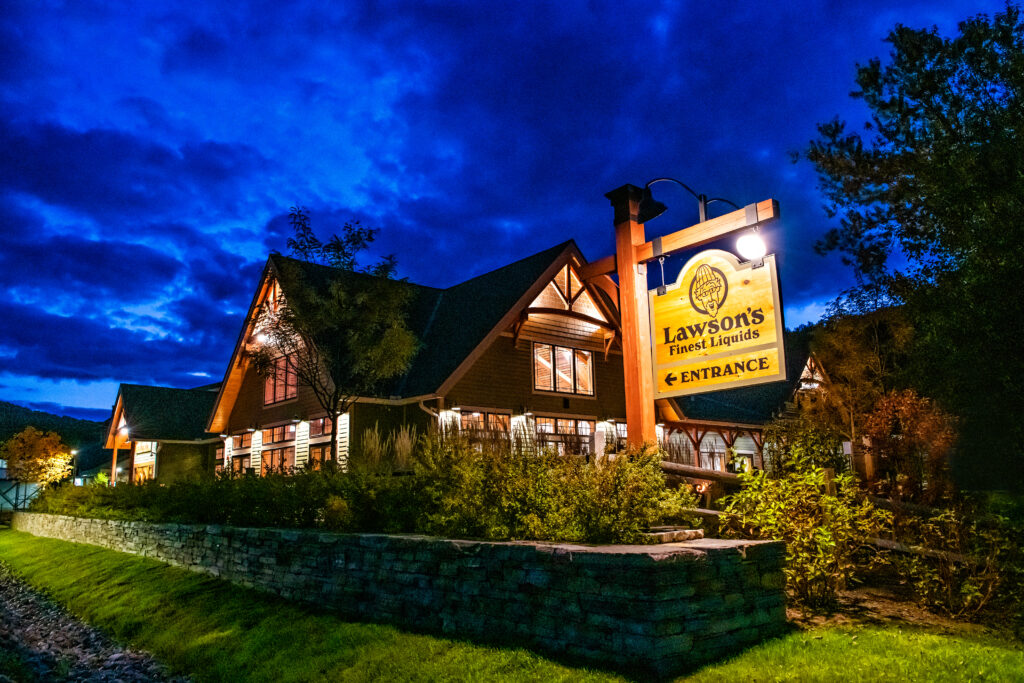
Lawson’s Finest Liquids: A Hophead’s Nirvana

lawson's finest liquids

By: Nan McCreary

In the small town of Waitsfield, Vermont, an iconic brewery looms large among visitors. It is Lawson’s Finest Liquids, producer of world-class IPAs and unique maple beers and, according to many, a benchmark for hoppy beers among the nation’s beer drinkers.

  “I’m a hophead,” owner Sean Lawson, along with his wife, Karen, told Beverage Master Magazine. “I’m a fan of hops in a big way.” This love of flavorful beers has been a driving force in Lawson’s life since he first started making homebrew as a college student at the University of Vermont. “In the beginning, I was making five gallons at a time,” Lawson said. “My friends loved it. I couldn’t make it fast enough.” 

  After graduation from college with a bachelor’s degree in environmental studies and a master’s degree in forestry, Lawson pursued a career as a scientist and outdoor educator but continued to hone his brewing skills. The art and the craft of making beer were in his genes.

  Finally, in 2008, with increasing demand for beer from his friends, Lawson and his wife, Karen, got a beer license and built a 280-square-foot nano-brewery in a shed next to their house. Lawson brewed his beer one barrel at a time, producing 31 gallons—or 10 cases of beer—all while keeping his day job. 

  “I worried that if I turned my hobby into a full-time job, it would end up being a drag, but the opposite happened,” he said. “It really sparked my passion. I loved coming up with new recipes, and I really enjoyed the whole process from start to finish. I would walk into the brewhouse and make things up as I went. I had a lot of ingredients, so I would look at what I had and say, ‘Umm, what do I want to brew today?’”

  As Lawson’s passion grew, so did his customer base. “From day one, we didn’t have enough beer to go around,” Lawson said. At the time, he was making a few maple-infused beers —this was Vermont, after all—but the core of his business was IPAs, which were flying off the shelves. In mid-2008, Lawson decided to quit his day job and make his “hobby” a full-time vocation. He expanded the brewery to a seven-barrel system, which he thought was a big leap but, in fact, still wasn’t enough to keep up with demand. 

  “The beer kept going away faster than I could make it,” Lawson told Beverage Master Magazine. “I could only do two batches a week because it was a small building, and I’d stuffed in as much equipment as I could.” 

  In the meantime, the accolades kept coming and coming and coming. In 2010, Lawson’s Finest Liquids became the smallest brewery ever to capture an award at the World Beer Cup, winning the Bronze medal with their Maple Tripple Ale in the specialty beer category, followed in 2012 by a Silver medal win and another Silver medal in 2016.  Lawson’s beers were also a big hit at the American Craft Beer Festival in Boston, the largest beer festival on the East Coast.

  “People were impressed with the quality and flavor of the beer,” Lawson said. “Skiers and tourists would come to Vermont, buy the beer and take it home and share with friends. ‘You gotta try this beer,’ they’d say.  There was a lot of ‘word of mouth’ success for our products.”

  All along, Lawson’s goal was to “produce beer of the highest quality with outstanding freshness.” Lawson strongly felt that to retain that freshness, the beer needed to be kept cold during the entire journey from the brewery to the customer.

  “When I started in 2008, it was a challenge to get the local distributor to keep it cool in the warehouse,” Lawson said. “But once the brand caught on, I made it a prerequisite: keep it cold in the warehouse, on the truck and while on display at the retailer.”

  Lawson’s persistence paid off. His “home run” beer was Double Sunshine, a double IPA packed with juicy, lush fruit character and herbal aromas with an 8% ABV. With the increased capacity of the seven-barrel brewery, this beer—and other specialty Lawson’s Finest Liquids—created a sensation in Vermont and throughout the Northeast, such a sensation that demand continued to get further ahead of supply. Clearly, Lawson needed to produce more beer. “I read about a brewery in Stratford, Connecticut—Two Roads Brewing Company—that offered contract services, so I decided to consider this option as a way to expand without investing in more equipment or employees,” he said. 

  From the beginning, Lawson was very particular about his requirements. His reputation was on the line, and he was adamant that this beer meet his and his fan’s expectations. “The first thing I wanted to know was if the chemistry of their water would meet my standards for making quality mash,” Lawson said. “As it turned out, the water they used for brewing was nearly identical to what we used in Vermont.”

  Lawson also wanted to differentiate this beer from what he brewed in Vermont, so he created Sip of Sunshine, inspired by Double Sunshine but lighter in color and easier on the palate, and still at 8% ABV. Expecting some trial and error in creating a new brew, everyone was surprised—and delighted—that the first two batches were hugely successful. They hadn’t even packaged the beer yet, so they sold it on draft. “It took off from day one,” Lawson said.

  Over the next three years, inspired by the continuing popularity of his beers, Lawson increased production at Two Roads, with its 100-barrel capacity, while making specialty beer at his brewery at home. He also began expanding his footprint with distribution in Vermont and Connecticut and eventually to Massachusetts, Pennsylvania, Maine, New Hampshire, New York, Rhode Island and New Jersey. Sales skyrocketed, and, ultimately, the Lawsons were able to realize the culmination of their original business plan: To build a large production facility of their own and have a taproom where they could welcome the public. In 2018, that “dream” became a reality when the Lawsons opened their 40-barrel facility and timber-framed taproom in Waitsfield, located in the heart of Vermont’s Mad River Valley. The taproom is open year-round and features 10 to 12 beers on tap, as well as a food program with an emphasis on local fare. Lawson’s Finest boasts 41 full-time and 17 part-time employees. That’s a far cry from the mom-and-pop operation that began in an outbuilding on their property.

  Today, after a 20-plus year journey, Lawson’s Finest Liquids is recognized as one of the best breweries in the Northeast, especially among hopheads. The brewery produces dozens of beers, some year-round and others as special releases. Year-round beers include the flagship Sip of Sunshine; the Super Session series, brewed with the same malt base and specialty malts but each brewed with a different single-hop variety; and Little Sip, a cousin to Sip of Sunshine but with 6% ABV. Sip of Sunshine and the rotating Super Session series are brewed at Two Roads, and the rest at the Waitsfield Brewery. Lawson keeps one barrel in his brewhouse for experimenting with new flavors. If he likes the beer, he will create small-batch productions on his original seven-barrel brewery. “We’re always looking for new flavors,” he said.  “That’s where we have our fun. These are specialty beers that are only available in the taproom.”

  While Lawson’s Finest Liquids has enjoyed phenomenal success, Sean and Karen have not forgotten one of the core values that inspired their journey—to give back to the local community and communities where they do business. “Even when we were very small, we’d give a portion of our proceeds to non-profit organizations here in the Mad River Valley or Central Vermont,” said Lawson. 

  Today, this mission is organized under their Social Impact Program. The SIP includes six initiatives that support healthy communities, food and economic securities, natural resource protection and sustainable recreation in the Green Mountains. One of these initiatives is a “no-tipping” policy that offers a living wage and generous benefits to all employees. In lieu of tips in the taproom, Lawson’s Finest Liquids invites guests to donate to the Sunshine Fund, the heart of SIP. 

  “It has been wildly successful, way beyond our dreams,” Lawson said. “In the first year, we raised over $380,000. Even with COVID, donations continued with our drive-thru retail store. From October 2018 to present, we have raised over $575,000 just through the Sunshine Fund.”

  In 2020, the Lawsons received the Outstanding Vermont Business award in recognition of the brewery’s employment growth, success in the marketplace, company expansion and community involvement. The award is sponsored by the Vermont Chamber of Commerce and Vermont Business Magazine.

  As Lawson looks to the future, he said the plan is to “grow the business to thrive and not to sell.”  They hope to accomplish this by optimizing capacity and continuing the use of Two Roads to produce their flagship beers and Waitsfield for specialty releases. While they continue to increase points of distribution within the Northeast, there are no new market expansions planned in the near term. In the meantime, Lawson remains modest in his attitude toward his achievements.

  “A lot of people make great beer,” he told Beverage Master Magazine. “Why have I been successful compared to others? Maybe a sprinkle of magic.” That, and creating a nirvana for hopheads.

For more information on Lawson’s Finest Liquids, visit their website at www.lawsonsfinest.com

Brewery Pumps: Boosting Productivity & Lowering the Bottom Line

2 man cleaning brewery pumps

By: Cheryl Gray 

Whether a small craft brewery or a large-scale operation, pumps play a vital role in making beer. While breweries large and small understand the invaluable relationship between pumps and products, such a capital investment begs the question, “Which pump is best?”  

  Pumps are used in breweries for a wide range of functions, from handling yeast to managing filtration to dispensing measured doses of additives. According to industry experts, the most popular pumps are the most versatile, meaning they can be used in multiple areas of a brewery operation. That math adds up to money spent that can result in a solid return on investment when it comes to improving a product, boosting productivity and lowering operating costs.     

  FLUX Pumps Corporation has spent 70 years being a global leader in making pumps used in virtually every industry, including craft brewing. Its six subsidiaries and a huge roster of distribution centers give FLUX the capability of servicing customers in more than 100 countries.    

  The company’s innovation streak began in 1950 when it earned a patent for the world’s first electric-powered drum pump. A year later, FLUX introduced the first explosion-proof drum pump designed to be used in hazardous areas. In the years since, FLUX has firmly established itself as a frontrunner in drum and container pumping technology. The company’s global headquarters and manufacturing plant is located in  Maulbronn, Germany. It also operates corporate offices in the United States, India, Thailand, France, United Kingdom and Belgium.  

  Glenn Mulligan is the President of FLUX. His product advice, he says, is the same for all craft breweries, no matter whether it is a start-up or an established operation.    

  “Whether a new or old facility, I would offer the same advice to both customer types: Product longevity and performance is critical. Performance keeps your process running efficiently, perhaps even helping to increase productivity by moving away from tasks operators had to complete by hand. Product longevity helps to keep operating expenses low, which increases the bottom line. When you are using a pump, which offers an overall cost of ownership second to none, you know you have the right equipment in place. Don’t let drum pumps become ‘throwaway’ equipment.” 

  Mulligan shares why FLUX products are a versatile choice for breweries:   

  “By default, the most popular products in the brewing industry are those which conform to sanitary and hygienic standards. Brewing customers need to meet the strict sanitary standards of food and beverage processors, but typically also need the flexibility to use their equipment in various areas of the facility. Simple product disassembly, assembly and cleaning are crucial to minimize downtime and increase productivity.  

  From versions that can handle thin, water-like products, to models which can pump honey, fruit purees and products as thick as peanut butter, FLUX has the solution you need. Some models can quickly and easily be broken down into two main components for cleaning. This allows a pump to be used in multiple areas of the facility.”   

  Mulligan cautions craft breweries against investing in pumps that may seem simple to operate and don’t cost much. What might be a bargain at first sight, he says, can quickly become a drain on finances as well as valuable production time.    

  “It is a common misconception that air-operated, double-diaphragm pumps are best suited in these applications due to their cheap costs and simple operating principle. However, these pumps can very quickly become expensive to maintain as well as run with compressed air. A recent brewing customer had purchased one of our units to move a fruit puree from 55-gallon drums into their process. They were using 1.5” air-operated, double-diaphragm pumps to transfer the puree, which would take about an hour to empty the drum. When they switched over to FLUX progressive cavity drum pump technology, this transfer time was shortened to under six minutes.” 

  Watson-Marlow Fluid Technology Group is another global leader in providing pumps to the craft brewing industry. The company, based in the United Kingdom with operations worldwide, was founded in 1956. It entered the United States market in 1991 by establishing Watson-Marlow, Inc. The company offers a broad range of peristaltic and sinusoidal pump products designed to handle nearly every pump requirement for every stage of brewing.    

  Among other features, the products boast a rapid cleaning time and simplicity of use. Watson-Marlow explains that by reducing CIP cycles, along with the amount of water and cleaning agents needed, its pump designs save breweries money over time.    

  Pumping brewer’s yeast is a tricky business. One wrong move can ruin the delicate yeast and, in turn, an entire batch of beer. That’s why a number of breweries are looking for the latest technology in pumps that offer features that provide, among other things, low shear and low pulsation, which experts say is ideal for transferring yeast. Watson- Marlow offers its MasoSine Certa 100 pump. The product is fully portable and mounted on a specially designed cart for easy transfer of yeast. Unlike more traditional pumps with rotors cutting through the fluid, Certa’s sinusoidal rotor gently moves fluid through the pump to significantly reduce shear. Russell Merritt is the company’s marketing manager. 

  “Certa sine pumps accurately dose the yeast while maintaining its quality. Certa pumps reduce shear damage to yeast cells by eliminating backflow seen with screw and lobe pumps. Also, with the high suction capability of the sine pump, even challenging yeast strains can be transferred at full capacity. Due to the virtually pulsation-free flow, the transfer rate at the yeast harvesting pump can be accurately controlled. Certa pumps can handle variable viscosities with ease, which means the yeast dosing process is under control regardless of the type of beer and yeast strain.” 

  Another key function of pumps in brewery operations is resolving wastewater, which is often injected with chemicals not environmentally friendly. As such, that wastewater has to be filtered and purified before it is discharged.  

  Blue-White Industries, Ltd., based in Huntington Beach, California, touts a solution through its Flex-Pro A2, a peristaltic chemical metering pump designed to tackle the kind of harsh chemicals found in brewery wastewater.    

  Among the company’s success stories in helping brewery clients achieve optimal wastewater treatment is California’s Stone Brewing, the ninth-largest craft brewery in the U.S. With brewery operations on both coasts, Stone Brewing celebrates its 25th anniversary this year. It recently installed four of the Flex-Pro A2 pumps. Blue-White says that the product’s ease of use and electronic features offer the kind of precise chemical metering that Stone needed to meet industry-standard wastewater purification requirements.    

  Carlsen & Associates, a family-owned business based in California’s Sonoma Valley, services wineries, distilleries and craft breweries. The company, founded in the 1980s by Jim Carlsen, is a manufacturer, fabricator and customer service enterprise with representatives covering all 50 states. Carlsen & Associates thrives on the industry knowledge base of its founder, whose background as a manager and electrician helped to distinguish the company’s products as those with precision and ease of use at the forefront of all design.   

  Jon Johnson, who has been with Carlsen & Associates for 24 years, is well-versed in the pump needs for brewery clients. He offers some recommendations from the company’s extensive product line, starting with the Waukesha 30, which features single o-ring seals for easy cleaning and replacement, stainless steel housing and rotors, along with 50-foot remote speed control.  Additional options include pressure, float and timer controls.   

  The  features a flow of up to 90 GPM, variable speed control, pressures up to 20 psi and auto cavitation correction. Options for this pump include float and timer controls as well as remote start and stop. Johnson says that both products rate high with craft brewery clients.   

  “For brewing, the Waukesha 30, for barrel work and transfer, is very popular. The Waukesha 2045 Centrifugal is primarily for transfers. A less expensive option for start-ups is the NDP-25 air diaphragm pump. Both will provide about 30 GPM of flow. The Waukesha 30 and the Centrifugal 2045 are electric and can be used in single or three-phase applications. The NDP-25 does require an air compressor to provide its power. For distilling applications only, the air pump can be used in the explosive environment. Please check your local codes for these restrictions. We also offer a full line of valves, fittings and hoses for either application.”  

  Time spent on research is one of the most critical investments for craft breweries when deciding which pump is best for any operation, large or small. Experts agree that a full consultation with an industry specialist is by far the wisest upfront investment that a brewery can make before any money is spent. This important step ensures that the brewery can fully assess pump needs for the long and short term and, with the help of an expert, can objectively navigate through the innumerable pump options on the market. It is the best way to look forward to a return on investment into an essential equipment item that should operate to maximize production efficiency and product quality. 

How to Choose the Right Closures for Your Beer or Spirits

By: Alyssa L. Ochs 

Creating drinkable products in large tanks is just one part of what it takes to run a successful craft beverage business. Brewers and distillers need to find effective, affordable and reliable ways to package their creations. That is where traditional and specialized closures come into play.  

  Choosing the right types of caps, corks and closures depends on a variety of factors. Fortunately, there are some excellent industry-specific products available to get the job done right. 

Overview of Beer Closures  

  There are many ways to seal a beer, depending on the type of container, the beer’s style or brewer’s preferences. Beer closures give your brand more character and can serve a decorative purpose in addition to a purely functional one. For example, for Belgian beer, hooded wires and Belgian beer corks are often used to give beers a traditional and unique appearance. These cork and cage closures set the product apart as a premium style while ensuring safety and freshness.  

  Other beer closures include aluminum closures commonly used for aluminum and glass beer bottles, wire bales for flip tops, plastic screw caps and shrink capsules. You might also choose oxygen-absorbing bottle caps with liners to reduce oxidation in the beer. Meanwhile, there are special screw caps commonly used for growlers. Crown caps are popular in the beer industry because they reduce oxygen egress and can either be twisted off or be pried off with a bottle opener.  

  Tecnocap LLC specializes in closures for the craft beverage market. It is a worldwide metal packaging manufacturer that produces metal closures for plastic containers and glass jars. It is also one of the largest producers of tinplate and aluminum closures and aluminum bottles for many well-known consumer brands.  

  “For the craft beer market, Tecnocap offers the 38/400 continuous thread closure for growlers and is bringing to market a new aluminum closure, similar to a crown, called SuperClosure,” said Richard A. Smith, Tecnocap’s marketing manager. 

  The SuperClosure goes beyond a standard closure. According to Smith, it requires less than half the pressure to apply and works with both twist-off and pry-off bottles. Also, the SuperClosure is made from aluminum, so rust is not an issue, and it can maintain an internal pressure of over 150 psi.   

  “The most significant advantages are to the consumer,” Smith said. “There are no sharp edges as found with a typical tinplate crown. The SuperClosure is comfortable when grasping it to open, and the removal torque is significantly less. The lower removal torque allows for a greater potential market, now including individuals who have difficulty manually opening a beer bottle. The SuperClosure is more costly than typical steel crowns, but the advantages that SuperClosure offers can more than offset the additional cost. If a bottler uses magnetism to hold their crown during capping, Tecnocap can potentially retrofit the cappers, at no cost to the filler, to allow the capper to use an aluminum closure.”   

Overview of Closures for Spirits  

  For craft spirits, there are specialty screw caps commonly used among distilleries to ensure that the contents stay fresh and secure inside the bottle or other type of container. Bar-top, roll-on and swing-top closures are frequently used for spirits. Jarred spirits commonly have tinplate and aluminum continuous thread screw cap closures.  

  Overall, materials for spirit closures range from aluminum to wood, plastic and other synthetic materials. Tasting corks are also an option, with a plastic top and cork base, for temporarily sealing liquor bottles between customer tastings at the distillery.  

  Screw-tops are uncomplicated, screwing on and off easily. Bar-top closures offer more decorative options that highlight a spirit’s brand and set the bottle apart from others on the retail shelf. Roll-on, pilfer-proof closures are tamper-evident to ensure extra security and protection. Swing-top closures are more commonly used for beer and specialty food products, such as olive oil, rather than spirits. 

  “For distilled spirits, Tecnocap offers multiple sizes of continuous thread closures and the Espritbonnet with both a standard and a tamper-evident version,” said Smith. 

  He said that with continuous thread closures, there is a wide range of sizes available with various liners to accommodate essentially any beverage. However, due to the pandemic, custom printed closures have an extended lead time, as has become the norm with many closure manufacturers.  

  Tecnocap’s Espritbonnet closures are designed specifically for sprits to provide a more attractive, upscale appearance. “The tall, reinforced profile was a requirement requested by a customer to eliminate crushing of the closure during application,” Smith said. “The cost of metal is usually more costly than plastic closures, and plastic is found to be the most common alternative to metal closures. However, plastic allows for little-to-no customization and has limitations on its recyclability. Metal can be recycled indefinitely without any loss of functional properties.”   

  O. Berk Kols Containers is another company that serves the craft distillery market and makes closures for spirit bottles. O. Berk has been in the packaging industry for over 100 years and serves various markets, including food and beverages, beauty and personal care, cannabis, healthcare and pharma, household and industrial.  

  Claire Schilling, account executive for O. Berk Kols Containers, told Beverage Master Magazine, “O. Berk Kols Containers offers an array of various bar-top cork closures with synthetic shanks, and we stock a black plastic top, a café brown wood top and a natural wood top cork in our warehouse in both 19.5mm and 22.5mm sizes.” These are commonly used closures in craft spirit distilleries and part of the extensive catalog offered by O. Berk. 

  Shilling told Beverage Master Magazine that choosing the right closure relates to how imperative it is to select the correct size to fit the bottleneck finish. “An 18.5mm neck finish requires a 19.5mm cork, and a 21.5mm neck finish requires a 22.5mm cork,” she said.  

Trends in Craft Beverage Closures  

  Although it may seem like beer and spirit closures serve a basic purpose, there have been innovations in this space during recent years. The needs of craft beverage producers are constantly changing, so equipment suppliers must stay in tune with current demands to be competitive and provide the best service. 

  Smith told Beverage Master Magazine that a notable trend in the craft beer market has to do with the severe shortage of cans available. Cans have been incredibly popular in this industry over the last few years; however, some breweries have turned their attention back to bottles due to can shortages. 

  “Tecnocap also manufactures aluminum beer bottles,” Smith said. “With the bottle and SuperClosure, Tecnocap can offer a complete aluminum package. The aluminum beer bottles can be produced in various sizes, providing the bottles in a single color or highly appealing graphics. The bottles can also be reused.”  

  Schilling said that the primary trend she has noticed is that “craft distillers like to choose corks that are keeping with their brand’s attributes for packaging.” 

Addressing the Issue of Leaks 

  By far, one of the most important issues concerning craft beverage closures is leaks and how to prevent them. Leaks are a significant issue for breweries and distilleries because of wasted product, messes and compromised quality.  

  “The best way to combat leakage would be to ensure the closure and container are compatible and provide a proper fit and that the correct liner is used for the process and the product being filled,” said Smith. “Tecnocap always encourages customers to test the package before placing it into production, and we can offer closures for testing.”   

Schilling said, “There are single-form corks made by manufacturers to counter the leakage issues caused when the cork tops separate from the shanks.” 

Choosing the Best Closures for Your Business  

  As you can see, there is more to closures than one might initially expect, primarily if you work in the craft beverage industry. Closure choices affect total expenditures, product quality and the perception of the brand.  

  However, closures are just one piece of the puzzle when it comes to packaging beer and spirits. There are also decisions about bottle size, labels, screen printing, digital printing and other customizations. These components work together to give the packaging the desired look and feel, ultimately setting it up to be enjoyed and remembered with every sip. 

Just Add Honey: The NEW Buzz Worthy Ingredient!

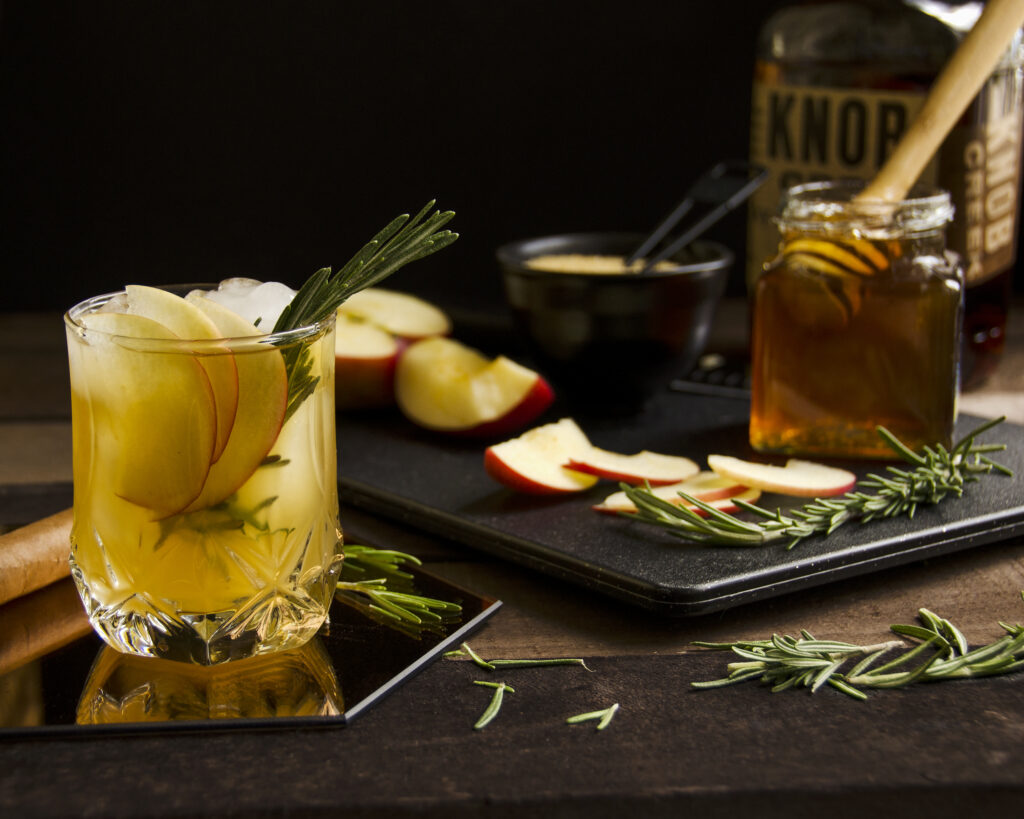
apple cocktail on glas

By: Hanifa Sekandi 

You may have heard about the Bee’s Knees honey-infused prohibition-era cocktail. Perhaps it is your go-to drink on a warm summer night. This drink is a refreshing blend of gin, lemon juice and a touch of honey, a guilt-free beverage to indulge in. It was crafted by Australian-born bar-tender Frank Meier in the 1920s, who simply elevated a Gin Sour by replacing simple syrup with honey. One hundred years later, it’s still a buzz-worthy beverage, with an ingredient favored due to its anti-inflammatory and antimicrobial properties. Honey is also considered a healthier sweet alternative to refined sugar since it consists of trace minerals and vitamins. It can still be high in calories, but it’s a better option than high-fructose corn syrup and sugar.  

Why is Honey all the Buzz? 

  The term Bee’s Knees means “the best” or “outstanding,” and honey does more than add a little sweetness to your life. Although one might not liken a few cocktails to health and well-being, honey has become a star ingredient for nouveau bottled and canned beverages that appeal to the health-conscious consumer, and a cocktail isn’t the exception.  

  A question that may come to mind is, why honey? Honey, liquid gold, has been an important component in alcohol that predates the prohibition era. Mead, known as the “drink of the Gods,” is a fermented alcoholic beverage made with golden honey, bacterial culture or yeast, and water. This ancient honey wine found in Africa, Asia and Europe has a long lifeline dating approximately 4,000 years. Fast forward to the 21st century, and honey is not just a royal sweetener with great health properties. It’s an ingredient that makes one brand stand out from the rest. 

  Once touted as your grandmother’s therapeutic cure-all for staving off a cold or sore throat during winter months, as health becomes a primary concern for consumers, honey has become a coveted and cherished ingredient due to its undisputed benefits. As the negative impacts of refined sugar consumption become clear, the alcoholic beverage industry turns to alternatives like honey, which add a sweet touch while being much better for the body. 

Sipping Guilt-Free Cocktails  

  Since refined sugar is a frowned-upon ingredient, brands that do not pivot with the health-conscious consumer will find themselves left behind in a market that calls for change where curation, sourcing and production is concerned. Yes, having a few libations with friends during a funfilled cottage weekend is the norm, but ingredients matter. As more people take the time to read the label, what’s in a premixed cocktail will not be overlooked simply because it tastes good.  

  For individuals who see fitness as a lifestyle, finding alcoholic beverages that support this ethos is a top priority. Wellness websites often list low-calorie and reduced-sugar canned cocktails without artificial sweeteners or chemicals that can diminish a health-conscious nutrition plan. Most people look for caloric content first and then what ingredients are used to provide flavoring and added sweetness. This higher standard from consumers has brands leaning towards natural ingredients and moving away from artificial flavorings, sweeteners and additives.  

  A la carte specialized cocktails are now accessible at the consumer level. Access to simplified, clean versions created by top bartenders and mixologists can be found at your local liquor store or delivered to your doorstep. Feeling a little bit better about decisions where imbibing is con-cerned has gained strong support via social media initiatives and marketing campaigns by brands who aim to shake up the industry. Once the new kid on the block, premixed drinks made with honey, natural sweetener or real fruit are now taking center stage.  

  Honey-infused cocktails are the gateway to what is next on the horizon for “fun nutrition.” Although honey is a rockstar ingredient, it doesn’t lend itself to every cocktail due to its rich flavor profile. Unlike refined sugar or corn syrup, it is more than just sweet. Brands that plan to join this new wave will have to experiment with other sweet alternatives to hit the mark.  

Maple Syrup and Monk Fruit Are Making Things A Little Sweeter  

  It turns out maple syrup is just as good in a cocktail as it is on a warm, delicious stack of pancakes. You may have heard of or tried maple syrup-infused still and sparkling water. If you add a little gin, some lime and ice, it’s a drink worth singing about. (You can thank us later for this DIY cocktail.) There are numerous cocktails made to order with maple syrup, drinks you can make right at home. Beverage companies looking to pivot will most likely take a few of your favorites and turn them into simple, clean, ready-to-drink cocktails. For example, an Apple Sour is just as simple to make as the Bee’s Knees cocktail if you have Calvados, lemon juice and maple syrup. Another easy-to-make cocktail that marries well with this decadent sweetener is an Old Fashioned.  

  Monk fruit, also known as Luo Han Guo, a natural sweetener originating from Southeast Asia, is a new replacement for stevia in protein powders, meal replacement and energy drinks. It’s de-rived from dried monk fruits. Monk fruit extract is ideal for individuals on a low sugar or carbo-hydrate diet since it contains zero sugar or carbohydrates. It boasts antioxidant and anti-inflammatory properties. This ancient fruit, harvested and cultivated by monks in the 13th centu-ry and first used for traditional herbal medicine, can be found in beverages such as the Slightly Mighty, a low carb 95 calorie beer infused with monk fruit.   

Leveling Up – Health Conscious Imbibing  

  Whether it is honey, maple syrup or monk fruit, there are better options to sweeten alcoholic beverages. What will determine the success of a health-conscious beverage is for producers not simply to replace refined sugar but craft drinks that complement this alternative. Alternative sweeteners come with nuances that may either create the perfect blend or overpower other ingre-dients. Some people have described the aftertaste of Monk fruit as bitter, and honey is derived from many sources: manuka, wildflower, buckwheat and sourwood, to name a few. The flavor profile and depth of sweetness vary with each. The same can be said of maple syrup, which can have a rich, robust caramel or honey-like fruity taste.  

  These are not the only natural sweeteners that consumers will find in their canned cocktails. Agave nectar, molasses, coconut sugar and even dates will be infused into the next wave of clean canned alcoholic beverages. Date syrup is already shining bright as a deep and rich sugar re-placement in cocktails. Not only is this tropical fruit a great source of fiber, vitamins, minerals and antioxidants, but it also scores lower than honey and maple syrup on the glycemic index. 

  Some brands take it a step further and clearly label the ingredients on the front of the can so con-sumers won’t miss it. Although refined and simplified ingredients are making headway, it re-mains a niche market against headlining brands that hold a loyal consumer base despite un-healthy additives or sweeteners.  

  With that said, simplicity lends itself to cocktail making, allowing mixologists to move away from fancy frills or adding too much in favor of a little less. The best drink served doesn’t have to be the loudest in the room, but it certainly could use a little honey.