Intellectual Property for Beverage Manufacturers

intellectual property law

By: Brian D. Kaider, Esq.

While many people are familiar with the four main types of intellectual property: patents, copyrights, trademarks, and trade secrets, often they don’t know the distinctions between them or what they are meant to protect.  This article is meant to cut through the confusion and explain these distinctions and how each property right applies to the beverage industry.

Patents Protect Ideas – sort of

  Most people have a general understanding that a patent protects an “invention” or an idea.  In a very general sense, that’s true.  But, even though the Congressional authority to grant patent rights comes directly from the U.S. Constitution (Article 1, Section 8, Clause 8), exactly what is patentable is the subject of tremendous confusion among the U.S. population, examiners at the U.S. Patent and Trademark Office, lawyers, and even judges; sometimes requiring clarification from the U.S. Supreme Court.  The purpose behind the grant of a patent is to encourage innovation by granting exclusive rights to one’s discoveries for a limited time.  In other words, it gives the patent holder a short-term (20 years from the date of filing) monopoly on his invention.  Generally, new machines, chemicals, electronics, methods of production, and in some cases, methods of doing business, are eligible for patent protection.

  But, not all ideas are patentable.  In fact, ideas alone cannot be patented.  They must first be “reduced to practice,” meaning that either you must have actually created your invention or have described it in sufficient detail that someone skilled in that area could follow your disclosure and create it themselves.  So, you can’t get a patent on a time machine, because (at least for now) no one has figured out how to defy the time-space continuum.  In addition, to be patentable, ideas must be novel, meaning that no one else has ever disclosed that idea before, and non-obvious, meaning that your idea cannot be an obvious variant on someone else’s invention.

  Given that humans have been making beer for thousands of years, one might think that coming up with something novel in the brewing process would be impossible.  Not so.  In preparation for this article, I ran a quick search of patents containing the word “beer” in the title and got 491 hits.  Some recent examples include U.S. Patent No. 10,570,357 – “In-line detection of chemical compounds in beer,” U.S. Patent No. 10,550,358 – Method of producing beer having a tailored flavor profile,”  and U.S. Patent No. 10,400,200 – Filter arrangement with false bottom for beer-brewing system.” 

  Improvements in any area of the alcoholic beverage industry may be patentable including, new types of bottles, cans, growlers, and kegs; new types of closures and caps; improved methods of separating hops from bines and leaves; new processing equipment, improved testing procedures and equipment, improved packaging, etc.  Essentially, anything that lowers costs between the farm and the consumer, improves the quality of the beverage, or enhances the consumer experience is worth considering for patent protection.

  One word of caution, however; time is of the essence.  The America Invents Act, effective March 16, 2013, brought the U.S. in line with most other countries in being a “first to file” system, meaning if two people develop the same invention, the first to file for patent protection wins, regardless of who first came up with the idea.  Also, any public disclosure of your idea (such as at a trade show) starts a 1-year clock to file or you may lose your eligibility for patent protection.

Copyrights Protect Creative Works

  The authority for copyright protection stems from the same section of the U.S. Constitution as patent protection, discussed above.  Our founding fathers recognized the valuable contribution made to society by authors and artists and, therefore, sought to encourage creative expression by providing protection for artistic works.  Examples of copyrightable materials include, books, paintings, sculptures, musical compositions, and photographs.

  Unlike inventive ideas, which are only protected when the government issues a patent to the inventor, copyrights attach at the moment the artistic work is “fixed” in a tangible medium.  So, for example, if a composer develops a new musical score in her head it isn’t protected, but the moment she translates that tune to notes on a page or computer screen, it becomes protected by copyright.  In order to enforce that copyright in court, however, it must be registered with the U.S. Copyright Office.  While it is possible to wait until an infringer comes along before filing for registration, doing so can severely limit the damages that may be available to the author of the creative work.  So, early registration is the better course. 

  In the beverage industry, copyright issues often crop up with regard to labels and advertising materials.  But often disputes arise relating to who owns the artwork contained within a label, for example.  Generally, the author of a work owns the copyright.  But, if an employee of a brewery, acting within the scope of their employment, creates an image that the brewery owner incorporates into its labels, that picture is considered a “work made for hire” and is owned by the brewery.  Where disputes often arise, however, is if the brewery hires an outside artist or a branding agency to develop the artwork.  In that case, the brewery should include language in its contract requiring assignment of all copyrights to the brewery for the created artistic works.  The same would apply for any artwork commissioned for use inside the brewery tasting room or for marketing materials.

Trademarks Protect “Source Identifiers”

  People generally associate trademarks with the protection of a brand.  In fact, I have often described trademarks as an “insurance policy for your brand.”  But, in more technical terms, what a trademark protects is a “source identifier.”  The purpose of trademark law is to protect consumers from being misled or mistaken as to the source of a product.  So, for example, if a consumer sees a pair of shoes with a certain famous “swoosh” image on the side, they should be reasonably able to assume that pair of shoes was manufactured by Nike, Inc. and was made with the same degree of workmanship and quality that they have come to expect from that company.  That “swoosh” symbol, therefore, acts as a source identifier to tell the public that the product was made by Nike, Inc. 

  What may function as a trademark can be quite broad, including: the name of the business (e.g., Triple Nickle Distillery®), a logo (e.g., the “swoosh”), a color (e.g., the Home Depot orange or the UPS brown), even a scent (e.g., Verizon owns a trademark on a “flowery musk scent” it pumps into its stores to help distinguish them from competitors’ environments).  Not everything can be trademarked, however.  Slogans, words, and images that appear merely as decoration as opposed to a means of identifying the supplier will not qualify for protection unless the applicant can demonstrate that the item has achieved “secondary meaning,” i.e., that the public has come to associate that item with the manufacturer.  As an example, in the 1970’s McDonalds used the slogan, “You deserve a break today” in its commercials and other advertising.  People came to associate this phrase with McDonalds and in 1973 they were granted a trademark registration.  Incidentally, McDonalds briefly let this trademark go abandoned in 2014, but quickly re-filed and the mark is still active today, more than 45 years after it first registered.

  In general, marks also cannot be descriptive of the product or geographically descriptive of the source in order to be registered as a trademark.  For example, one could not obtain a registration for just the words “India Pale Ale.,” because it simply describes the product and does nothing to differentiate it from every other IPA on the market.  Similarly, an attempt in 2019 to register the name “Philly City Brewery” was refused as “primarily geographically descriptive,” because the applicant could not demonstrate that people had come to associate that name with its business as opposed to the many other breweries in Philadelphia. 

Trade Secrets Protect Valuable Confidential Business Information

  Unlike other forms of intellectual property, there is no registration system for trade secrets, because, by their very nature, they must be protected from all unnecessary disclosure.  Trade secrets can be just about anything that is confidential to your business and gives you a competitive advantage.  Some examples, include recipes, client lists, manufacturing processes, marketing plans, and client lists.  These are things that, if publicly disclosed, would harm the competitive position of the company and, therefore, must be vigorously protected. 

  One of the most famous trade secrets is the formula for Coca-Cola.  This formula has been protected for more than 130 years, sometimes through extraordinary measures.  In 1977, The Coca Cola Company withdrew its product from India, because in order to sell there, they would have had to disclose the formula to the government.  They decided it was more prudent to forego sales to one of the biggest populations on earth rather than risk disclosure of their secret recipe.

  Protecting trade secrets requires constant vigilance in two ways.  First, the information should only be disseminated to people within the company, or outside consultants, who need the information in order to perform their duties for the company.  In other words, the information is on a strictly “need-to-know” basis.  Second, those few people who are given access, should sign non-disclosure agreements with harsh penalties for breach of their duty of confidentiality.  Once the information gets out, it’s nearly impossible to un-ring that bell, so there must be severe financial consequences to someone who leaks the information.

  Brian Kaider is a principal of KaiderLaw, a law firm with extensive experience in the craft beverage industry. He has represented clients from the smallest of start-up breweries to Fortune 500 corporations in the navigation of regulatory requirements, drafting and negotiating contracts, prosecuting trademark and patent applications, and complex commercial litigation.

For more information please contact Brian Kaider at…
240-308-8032; BKAIDER@KAIDERLAW.COM; www.KaiderLaw.com

5 Building Blocks to Build an Effective Brewery Budget

beer glass beside 5 blocks

By: Kary Shumway, CPA, CFO, Numbers Guy

The Fall season is upon us and that means it’s time to create your brewery budget. This document will serve as the financial road map for your business and will provide clear directions to reach your sales and profit goals for the coming year.

  One challenge of the budget process is that it feels like an overwhelming task. There are so many numbers, so many unknowns and so many changes that come up unexpectedly in the brewery business. How can you accurately predict everything that will happen and get it all down on paper? The short answer is that you can’t.

  As the saying goes, plans are useless, but planning is indispensable. Likewise, the budget planning process is indispensable for your brewery business.

  In this article, we’ll review the key building blocks to create your budget and provide tips so that you can get started (and finished) quickly. An effective brewery budget is within your reach.

Brewery Budget Quick-Start

  To get started with your budget, I recommend writing out the plan in words first. Don’t worry about the numbers right now, just write down your goals, objectives and strategy for the coming year. The numbers will come easier after that.

  For example, if your goal is to grow sales by developing new beer styles or introducing new package sizes, write that into your plan. Perhaps you want to expand into a new market and hire a new sales rep for the territory. Write this into the written plan as well.

  Continue this process, in writing, until you’ve got all your goals and objectives listed out. This creates clarity and momentum for the rest of the budget process. Once the big picture goals are clear and in writing, it’s much easier to quantify the objectives and build the numbers into the financial plan.

Effective Budget Basics

  The operating budget involves five major building blocks: the sales forecast, margin plan, operating expense plan, capital budget and debt schedule.

  Below, we’ll dig into each of the budget building blocks and give you some tips to get started. Use these ideas in connection with the budget templates and you’ll be well on your way to creating an effective budget for your brewery.

Budget Building Block #1:

SALES FORECAST

  The sales forecast is simply a projection of how much beer you will sell. It should show the sales by customer, by brand, by package, and by month.

  If you sell through distributors, start by making a schedule of who you currently sell to (and who you plan to sell to). Include the historical sales for the past 12months, and the year over year growth for each distributor.

  If you plan to open new markets with new distributors, that should be included in the schedule. If you have self-distribution sales and taproom sales, include the figures for these as well.

  With a sales forecast, the trend is your friend. If growth this year was 10% but you project 50% next year, make sure you know where it will be sold.

  Ask questions. Challenge assumptions. Build an achievable sales plan.

Budget Building Block #2:

MARGIN PLAN

   Let’s begin with some simple math:

•    Sales minus the cost of sales = margin

•    Margin divided by sales = margin percentage

  In other words, the price you charge for your beer minus the costs to make the beer is your margin.

When building your plan, use an expected margin percentage. This will make communication of the margin goal easier and allow for quick comparisons to past results.

  For example, if the historical margins in your brewery are 45%, use this as an expectation for your new budget. This can be used as the goal (or a baseline) for new brands or packages you intend to create.

  To dig in on your margin planning, review the cost components of your beer: Direct labor, direct materials and overhead.

  Direct labor is the cost you pay people to make the beer. Salaries and benefits for brewers, cellar and packaging go in direct labor. Direct materials are the ingredients you combine to make the beer. Hops and malt go in direct materials.

Overhead is the cost of everything else that you need to produce the beer. It includes lease expense, insurance on the brewery and depreciation expense of the equipment. Overhead costs are those indirect costs, or support costs, which keep the brewery running.

  Build up the costs of new beer styles or packages you intend to sell. Determine pricing, calculate expected margins, and include this information in your total brewery margin plan.

Budget Building Block #3:

OPERATING EXPENSE PLAN

  Every big expense number on your budget should have a supporting schedule. Examples of big expenses include payroll, lease payments, travel budgets, and marketing costs. A supporting schedule is a detailed listing that adds up to that one number on the operating expense plan.

  For example, to create the payroll schedule, list out the number of employees, expected wage rates and hours that will be worked. The sum total should match up with the payroll expense line on the budget.

  To build up the expense plan and make sure everything is accounted for, I find it helpful to review spending that has occurred in the past. I do this by looking through the detailed transactions in the general ledger.

  The general ledger is a listing of all the transactions that hit the financial statements. It’s like a check register that shows where money was spent and a description of what was purchased in the past.

  Where did we spend money? Will that happen again? Will we spend more or less? What new plans do we have next year? What will it cost?

Chances are, if you bought something this year, you may buy it again next year. Use the general ledger to jog your memory on expense items that are likely to repeat. Use these amounts as a baseline for budgeting expenses next year.

  Use the budget that you created in words and estimate spending needs based on those goals and objectives. If you don’t account for this spending in the operating expense plan, it’s tough to make the goals a reality.

Budget Building Block #4:

CAPITAL BUDGET

  The capital budget is the place for big purchases like a new canning line, a keg washer or delivery van.

  Anything that costs more than a set amount, say $1,000, and will last longer than a year should be on the capital budget.

  The difference between a Capital Expense and an Operating Expense is that capital items need to be depreciated (or written off) over a certain period of time. If you buy a box of copy paper for $50 it’s an expense on the current income statement. If you buy a $15,000 forklift, that’s a capital expense that will be depreciated over the next five years.

  Make your wish list of needed capital items. Determine what the items will cost and when you expect to buy them. This will help with cash needs planning and be an important building block of your financial budget.

  Lastly, match up the expected spending to the expected funding. During this step of the budget process you’ll need to determine how you’re going to pay for a new canning line, keg washer or delivery van. List any new bank loans or new equity you will need to invest in the business to make the Capital Budget a reality.

Budget Building Block #5:

DEBT SERVICE

  Debt Service is the amount you pay each month on your loans. These payments are made up of two parts: principal and interest. The principal portion reduces the loan amount on your balance sheet while the interest portion is an expense on the income statement.

  To start, create a schedule of all your loans and the payments due on each. List the bank, type of loan, term of the debt and payment amounts. This schedule will be an integral part of the financial plan and will serve as a reminder of how much is due and when.

Wrap Up + Action Items

  The brewery budget is the financial road map for your business. The plan will provide clear directions to your team so that you can reach your sales and profit goals for the new year.

  Starting the budget process can be tough. So, begin by writing out your budget goals in words. Simply write out what you want to accomplish, how you intend to do it, and what resources you will need. Start with words, and let the numbers come later.

  Once you have the goals and objectives written out, it’s time to add the numbers. Use the five budget building blocks: the sales forecast, margin plan, operating expense plan, capital budget and debt schedule.

  An effective brewery budget is within your reach. Use the ideas here to get started and to finish your plan. Your income statement is counting on you.

For more information please contact…www.CraftBreweryFinancialTraining.com

Choosing Effective Incentive Rewards for the Craft Beer Distribution Channel

Beer Company Leaders
America’s Beer Distributors: Fueling Jobs, Generating Economic Growth & Delivering Value to Local Communities. (PRNewsFoto/National Beer Wholesalers Association)

By: Nichole Gunn, Vice President of Marketing and Creative Services, Incentive Solutions

From improving market penetration to increasing sales volume for a specific product, craft beer producers rely on their indirect salesforce to accomplish their strategic goals. Incentive rewards can help craft beer producers create win-win scenarios for their indirect salesforce and influence their selling behaviors in ways that benefit the brand. However, not all rewards are created equal. The effectiveness of an incentive reward program depends on choosing rewards that capture the attention of wholesale and distributor sales reps and provide sufficient motivation for them to go the extra mile.

  When choosing rewards that appeal to their target audience, it’s important for craft beer producers to focus on the following factors:

•    Value Proposition: Will these rewards provide sufficient value to your indirect sales reps to justify their efforts and maintain their interest?

•    Personalization: Will these rewards feel meaningful to participants on a personal level, creating an emotional impact?

•    Scalability: Will your reward selection give you the ability to tailor your value proposition to different segments of your audience, from easily attainable rewards for new participants to exclusive rewards for top performers?

•    Memorability: How long will this reward keep your brand top-of-mind with participants? 

•    Participant Lifestyle: Which types of rewards appeal to your participants’ interests and align with their lifestyles?

•    Competition: If your competitors are running a rewards program, how will your program provide a more compelling value to your participants?

  Additionally, craft beer producers need to consider how their reward selection ties into their overarching goals, as well as their budget. Will it be more profitable to focus on providing more attainable, less personalized rewards to drive short-term growth or to develop high value, highly personalized rewards to solidify long-term loyalty? Or, perhaps, some craft beer producers will be interested in a mix of both. Either way, it’s important for craft beer producers to view their incentive reward program as an investment rather than a cost and concentrate on choosing rewards that help them achieve their goals in a profitable, cost-effective manner.

Types of Incentive Rewards

  Today’s incentive reward programs provide a variety of different reward types that craft beer producers can offer to their participants. These include gift card and debit card rewards, points-based merchandise rewards and group incentive travel. Each of these reward types has various strengths and weaknesses, depending on the goals of a craft beer producer and the makeup of their target audience.

  For instance, gift card and debit card rewards are highly scalable and provide an easy to understand value proposition. However, this comes at the expense of personalization. While a branded, reloadable debit card will keep your brand top-of-mind longer than cash commission, it doesn’t provide much in the way of social value and will not necessarily make a distributor sales rep feel warm and fuzzy about your brand. With e-delivery options and reloadable cards, gift card and debit card rewards can be awarded almost instantly, making them best-suited for SPIFFs (short-term incentive promotions) or for sales promotions for a wide audience. 

  Merchandise rewards, on the other hand, have trophy value and provide tangible rewards that indirect sales reps will associate with your brand for much longer. With an online rewards catalog that’s chock full of millions of exciting rewards, from digital movie rentals and Netflix subscriptions to home theaters, a points-based merchandise program is highly scalable and allows participants to choose personalized rewards that fit into their lifestyle and match their level of performance. Online merchandise rewards allow craft beer producers to incentivize sales growth across each segment of their salesforce, while also inspiring loyalty in top accounts with higher value, more personalized rewards.

  Of the different reward types, group incentive travel is the most memorable and emotionally impactful. By rewarding top-performing indirect sales reps with a trip to an exclusive locale like Tahiti or Venice, craft beer producers will have the opportunity to really personalize their relationship with their wholesale and distributor sales reps and create memories they won’t soon forget. However, incentive travel isn’t very scalable. Typically reserved for top accounts, incentive travel is better suited for building loyalty and solidifying long-term relationships. Additionally, it’s worth noting that while the effects of Covid-19 have put a damper on incentive travel events, demand for these trips will be through the roof when travel resumes, and many vendors will be motivated to provide great deals for craft beer producers who plan ahead. 

Setting Reward Parameters

  An important component of reward program strategy is determining how participants will be rewarded. Craft beer producers should consider which specific actions participants must take in order to accumulate reward points and whether different actions have different strategic values in helping them achieve their goals.

  For instance, if a craft beer producer’s goal is to increase overall sales, then it might make sense to assign reward points to distributor sales reps based on overall sales volume. But it also might be beneficial to provide point bonuses for first time sales, sales on a new or underperforming product line, completing online educational courses or providing referrals. All of these actions can help facilitate sales growth in the long-term and provide distributor sales reps with a clear path toward maximizing the value they receive from the program.

  Additionally, setting qualification thresholds and offering tiered rewards can help craft beer producers make their program more cost-effective. For instance, it might make sense to require distributor sales reps to sell a certain amount of beverages before they qualify for the program or to offer a group incentive travel trip for the top 25 performers each quarter, in addition to a card or points-based merchandise program for the other sales reps. Doing so allows craft beer producers to allocate their reward spend toward their most valuable supply chain trading partners, while limiting expenditure on sales reps who may not offer as much long-term value.

  In addition to tiering rewards based on performance, craft beer producers can leverage this strategy to target different hierarchical segments of their indirect salesforce, offering higher value rewards like incentive travel to sales managers while running a points-based merchandise or card program for the individual reps who work under them. This allows craft beer producers to incentivize from the top-up or the bottom-down, maximizing their influence within their sales channel.

  Online incentive technology offers craft beer producers the ability to easily segment their audience, change parameters, automatically allocate points and track the impact of these decisions on their ROI through dashboards and custom reports. For craft beer producers, it’s important to have the flexibility to quickly adjust elements of their reward program strategy, while minimizing the man hours necessary to manage their program.

Expanding on the Reward Experience

  Rewards are exciting and provide an easily understood value proposition, making them an effective tool for marketing an incentive program; but rewards are only a small component of the value an incentive program creates for craft beer producers, as well as their supply chain trading partners. An incentive reward program provides new touchpoints to improve the partner experience, such as:

•   An integrated digital hub, where indirect sales reps can connect to learn more about the brand, explore the latest incentive promotions, track their progress and redeem for rewards;

•   A communication platform that craft beer producers can use to send customized communication and automated alerts via email, SMS, push notifications and direct mail;

•   Customizable enrollment forms that craft beer producers can use to capture data about their indirect sales reps in order to personalize their sales and marketing;

•   Data collection tools that make it easy for indirect sales reps to upload sales invoices or scan QR codes in order to verify their sales claims and earn points;

•   Elements of gamification such as leaderboards, spin-to-wins and limited time bonuses to keep sales reps more consistently engaged;

•   Online surveys and analytics tools that help craft beer producers better understand the members of their channel and provide a more rewarding partner experience; and

•   Interactive quizzes and online training platforms to help indirect sales reps become more informed, effective advocates of the brand.

  The appeal of earning a reward channels indirect sales reps into this funnel and keeps them invested in the communication they receive through the program. But, more importantly, the reward program itself provides an entire ecosystem for more personalized communication and engaging brand interactions between craft beer producers and members of their channels. By focusing on the partner experience, both before and after earning a reward, craft beer producers have the opportunity to maximize the effectiveness of their reward program, solidify brand preference among their supply chain trading partners, differentiate their brand and target long-term strategic initiatives.

  Nichole Gunn is the VP of Marketing and Creative Services at Incentive Solutions (www.incentivesolutions.com), an Atlanta-based incentive company that specializes in helping B2B companies improve their channel sales, build customer loyalty, and motivate their employees. Nichole Gunn can be reached at ngunn@incentivesngunn@incentivesolutions.comolutions.com.

In the Can & Out the Door: Canning Systems Adapt to Current Market Needs

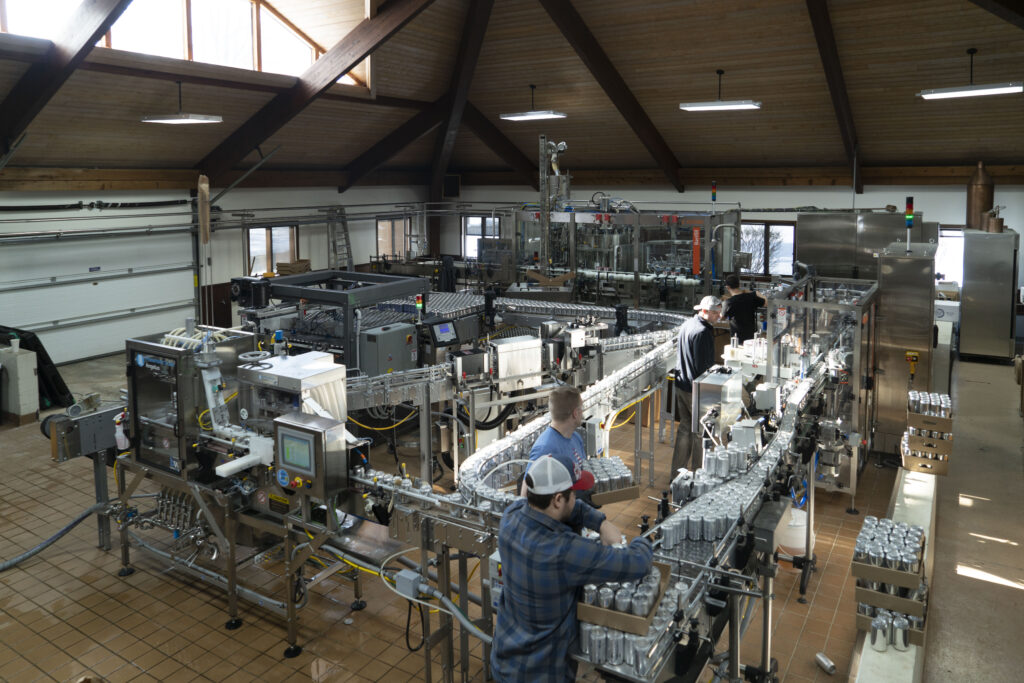
canning system in a facility

By: Gerald Dlubala

“The situation that we’re all in just adds to the advantage of selling beverages and cocktails in cans,” said Dennis Grumm, CEO of Oktober Design, manufacturer of can and crowler seamers for the craft beverage industry. “With the COVID-19 situation, the lifeblood of many bars and restaurants is the sale of their beer, wine or mixed drinks to-go, for pick up or for their patrons to buy and enjoy at a nearby outside area. Having one machine that can deliver all of these in a quality canned form at any given time is a huge advantage.” 

Can Seamers

  Oktober Design’s can seamers, such as the Model-7 series, are designed for easy plug-and-play installation and operation. Right out of the box, the can seamers are calibrated and ready to go using standard 110v power. There is minimal maintenance, involving only user related adjustments. Additional customer support is available if needed, but Grumm said that’s usually not the case. 

  “It’s as easy as putting the can in, clamping it down, closing the door and rotating the handles,” he said. “Our seamers handle any U.S. can and some non-U.S. sizes. You set it up depending on the size of the can end you’re using, with different tooling sets available for different ends. Switching end sizes takes about 15 minutes using standard tools. Maintenance generally involves keeping the unit clean, so wiping it down and performing a weekly cleaning on a quick release shaft is recommended. Honestly, most customers are doing these things daily or at the end of each shift as their normal cleaning process anyway.

  “Can seamers are common-sense purchases right now. Whether canning for individual purchases or small batch runs, with the quick changeover ability, you can see what is working with your customers and what isn’t. Then you know where to spend your time and effort.”

  Grumm told Beverage Master Magazine that Oktober Design’s Series-7 units are incredibly reliable, easy to care for and available at an entry-level price point friendly to the brewer’s budget. The units can handle 100,000 cans or, in some cases, upwards of 200,000 cans without any issues. Oktober Design also sells can ends in smaller lots to match the needs of craft brewers, and soon it will offer brewers the ability to order fully labeled and designed cans right from its website.

  “We want brewers to remember that when looking for a machine like this, that even though we call it a plug-and-play can seamer, it is still a precisely engineered and fine-tuned machine,” Grumm said. “You’ve got to look for quality, and all of our moving parts are stainless steel or aluminum, with a minimum of normal wear parts involved. We’ve sold thousands with great success because we started as engineers and designed a quality machine with that mindset.”

Filling Systems

  XpressFill Systems LLC offers fillers designed and manufactured for the modern-day artisanal beverage producers. Weighing in at under 35 pounds, these compact, easy-to-use machines are built for tabletop portability and easy use by a single employee.

  “XpressFill offers two types of fillers for carbonated beverages,” said Rod Silver, Marketing Coordinator for XpressFill Systems. “A counter-pressure, air-operated system capable of filling up to 200 12-ounce cans per hour, and an open fill, 110v or 220v, two or four spout system capable of filling between 300 to 600 cans per hour. They’re pretty simple to calibrate. A scale is used to verify the fill levels in the cans. Our counter pressure fillers come with a clear can so pressure and fill rate is optimized for each beer and the needed corresponding carbonation level. Once calibrated, you’re ready to fill.

  “Our open can fillers feature a moveable shelf that is easily adjusted for various can sizes, with a maximum diameter of four inches. The counter pressure filler features stoppers that fit snuggly into the can opening to seal and pressurize. The standard setup is for the 202-lid size, but custom stoppers and other components may be required for different sizes of lids. Our fillers provide a cost-effective means to distribute a product in cans or bottles without the prohibitive expense of an automated production line. But, even larger breweries use our fillers for canning small batch or specialized runs. It saves them the expense of starting up their automated lines or calling in mobile canners for a less than normal size run.”

  Codi Manufacturing has made a name for themselves with their professional counter-pressure filling and canning systems, offering whole systems from depalletizer units through filled container conveyance. They design systems for individual spaces and provide specific upgrades for components that have reached their maximum limits. They offer that same knowledge and technical expertise in their smaller machines.

  “There has been a massive uptick in the demand for counter-pressure filling because of the need and desire to package items other than just beer,” said Andrew Ferguson, Sales Manager for Codi Manufacturing. “We’re talking the ready-to-drink canning market, and the rapid spike of popularity in seltzers, which have a more rapid foam cap dissolve rate than beer. Counter-pressure fillers can reinvigorate that foam cap right before seaming, which has shown to increase seltzer shelf life from the standard three months to up to a year.”

  Ferguson said that to meet the demands of today’s world, brewers have different priorities in canning systems. Those include smaller, more economical builds that offer a path for future growth and expansion when allowed. It also usually means more modest in-feed options with a plan for automation down the road.

  “But just as critical right now is the option and availability for complete sanitation and sterilization of the filling and canning lines,” said Ferguson. “We always recommend using stainless steel systems and components that can handle this type of cleaning. Aluminum components prohibit the use of any sanitization or sterilization process involving caustic methods.”

  Ferguson said that craft beverage producers should always, but especially under current conditions, make sure there is a reliable aluminum can supplier with adequate inventory for the system they’re using, especially if it requires a specific size. Will you always have the cans and ends that you need? What happens if the supply dwindles? Yes, you can switch seamers and get new tooling, but that will cost you. Brewers must have a supplier that fills their needs both now and for future upgrades.

  “Hopefully, restrictions eventually ease up, and you find a need for faster production,” he said. “Sometimes this is as simple as a faster filler, but sometimes that means a better in-feed system to keep up with that filler. Always research future possibilities.”

  Codi Manufacturing researches future possibilities as well, and Ferguson told Beverage Master Magazine that soon they will roll out a single canning machine that will run every can on the market worldwide. 

  “As far as we know, we are the only ones to do this,” said Ferguson. “That’s quite an advantage when you think about it because we don’t believe that the canned beverage and ready-to-drink market is going to stop or slow down anytime soon. In other countries, especially in places with high alcohol taxes like Australia, the canned beverage and ready-to-drink market is very heavy. It’s likely going to remain a way of life, and a good one at that.”

Moving on Up: Automation in Times of Increased Demand for Canned Beverages

  Like other manufacturers, Jim Mackay, CEO of SKA Fabricating, has seen a mad dash by craft brewers to install smaller canning lines to fit in with the new economy and get their products packaged and out the door. SKA offers automated lines and accessories designed specifically to utilize available floor space and footprint. They offer everything needed before the filler and then from the filler to packaging operations.

  “We help craft breweries with automating their can depalletization before the filler and then the repalletization for packaging,” said Mackay. “A lot of the time, the main issue with small craft breweries is the limited amount of available space, so smaller footprint machines like our Half Pint OD (orbital discharge) mobile depalletizer are designed to solve this problem specifically. Any astute brewer can set it up and have it running in minimal time, but we also will consult by phone if needed.”

  SKA’s first of its kind rotary design is a 30-inch wheel featuring a better drop angle for the rinse cage, allowing for more accumulation and higher line speeds in a smaller footprint. The rotary wheel can run both clockwise and counter-clockwise, making it possible to install two discharges for different can sizes with minimal changeover. The Half Pint OD requires no specialized installation, increasing its value and popularity with craft breweries and mobile canning operations. The unit is on wheels for ultimate portability and the ability to safely store it out of the way when not in use. 

  “Before purchasing any system, the brewer has to ask critical questions and know their limitations, goals and future projections,” said Mackay. “Honestly, packaging is, a lot of times, the last consideration, but in most areas of production, we believe that any automation is better than the manual option. Your automation needs are determined by how quickly you need a new pallet of cans when canning your product. If you’re canning at 200 to 250 cans per minute, you should probably start looking into some sort of automated in-feed and out-feed to keep up.

  “When considering Ska equipment, we’ll need to know what type of filler you have or are planning on having. Different fillers have different characteristics and needs. It’s critical to maintain both mechanical compatibility and upgrade capability regarding can sizes used now and in the future. What capacity can your filler accommodate? You may need to address your filler capability before your lines. You don’t want a filler that can’t keep up with your lines, and you don’t want your lines running dry waiting on cans. Brewers should always consider future growth in their machinery choices, and we, along with our trusted partners, can design your whole system from start to finish if needed.”

Sealing in the Craft Brewery Difference

  OneVision Corporation leads the industry in providing advanced measurements and information systems that help users predict and prevent double seam quality issues. They have been providing seam inspection solutions to the food and beverage industry since 1994, installing more than 300 SeamMate Systems for food and beverage canners. Their proprietary, ready-to-use system includes a video module controlled by SeamMate software for use in a standard or networked Windows environment. It quickly takes the user through a process of cutting, measuring, viewing and recording double seam dimensions for ongoing comparison against the original can manufacturer’s specifications.

  “Craft brewing is all about taste, so it’s critical to retain that taste and freshness in the can to guarantee a quality consumer experience. That’s when a system like our SeamMate Craft Beverage System becomes essential,” said Neil Morris, CEO of OneVision. “Simply put, our system helps brewers ensure leaky can seams don’t sabotage the taste or integrity of their beer. It includes all the necessary equipment and software that craft brewers need to properly inspect and track the quality of can double seams in a low maintenance, dependable and affordable system, including on-site installation, training and unmatched support from our OneVision team. The OneVision team member installs the system and provides a full day of training. After startup, telephone and email support are available free of charge. Except for the occasional saw blade and seam stripper cutter wheel change, the system requires little maintenance.”

  SeamMate software runs on a Windows 64-bit PC, which is included in the SeamMate Craft Beverage System package. It functions as a standalone system or is connected to the customer’s network with optional SeamMate reporting software. 

  “Brewers should be regularly inspecting and tracking internal double seam dimensions to prevent leaking seams and flat beer issues,” said Morris. “Being proactive and inspecting and tracking the double seam saves brewers money and headaches down the road and is an integral part of delivering quality canned beverages to customers. We provide everything the customer needs to get started using the SeamMate System. Breweries only need to be canning and commit to quality.”

21st-Century Growlers: Pairing Innovation and Convenience

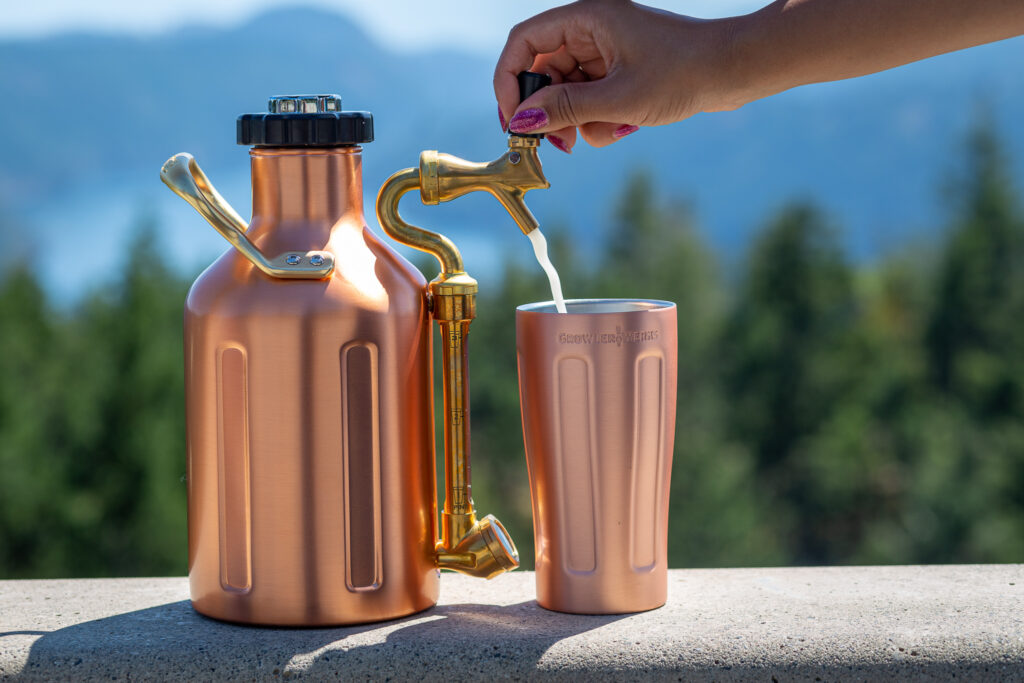
hand filling the beer cup

By: Cheryl Gray

Portable beer containers earn their reputation not only by how convenient they are to transport but also by how well they protect the beer inside. In the age of COVID-19, these portable options have also become a lifeline for craft breweries whose businesses have turned to beer-to-go sales to survive.

  The growler has been around since the late 1800s when beer was transported from saloons in a rickety metal pail with a not-so-secure lid. Fast forward to 1989, and the year historians say that Charles Otto, founder of Grand Teton Brewing in Wyoming, introduced the half-gallon glass growlers we see most commonly today. Since Otto’s reinvention, the growler has come a long way. Many 21st-century growlers have little resemblance to their predecessors.

  However, the demand from consumers remains the same. Beer lovers want their favorite craft brew to stay cold, fresh and ready-to-pour in a container that can go anywhere.

Craft Master Growlers

  John Burns knows a thing or two about the creativity and technology required for manufacturing the perfect growler for beer lovers on-the-go. He is CEO of Source Management Limited, the 22-year old parent company of Craft Master Growlers, Inc., based in Tacoma, Washington.

  Burns told Beverage Master Magazine that craft breweries can truly benefit by marketing products through the use of growlers. This is especially true for onsite brewing operations that don’t distribute their beer to wide areas. Pressurized growlers can help unlock a key market for those breweries because these growlers bring the convenience, portability and attributes of kegs down to an individual level. 

  “The craft beer industry is a dynamic industry with constant innovations,” he said. “But they need to get their product out to the public. There is nothing like a fresh beer direct at the brewery or brewpub, but you are limited to customers who visit your establishment. Growlers have a high demand and are encouraged by the industry because it allows more people to enjoy the breweries.”  

  While growlers are becoming more widely used, Burns said not all produce the same results. He compared glass and insulated-style growlers to his products.  

  “Unfortunately, the most widely used growlers–glass growlers–have a very limited shelf life. If not consumed within hours of filling, the beer changes. The experience is diminished,” said Burns. “A thermos-style growler is slightly better, keeping the beer cold for a certain period of time. But with Craft Master Growler’s pressurized systems, brewery customers can give a true, just-poured-by-the-brewery experience in any location and on their own schedule. By preserving the carbonation, the beer stays fresh, one glass at a time, for a period of weeks.”

  Craft Master has a variety of growlers, kegs and portable containers available for industrial and consumer use. They use only food-grade materials in production, an important factor, Burns said, because it protects the beer’s flavor integrity. Among the materials used is SUS304,  food-grade stainless steel that is standard in commercial kitchens and breweries.

  “We currently sell two lines, Craft Master CO2, a heavy-duty, high-end line of pressurized growlers for hotel/restaurant, breweries/brewpubs, home bar and homebrewers. These come in the legal filling sizes of 64 ounces and 128 ounces,” he said. “We also sell a lightweight, portable growler, ‘Growlveller,’ which comes in various finishes and is a 64-ounce capacity.”

  Burns, who built Craft Master by keeping pace with new technology and developing innovative products, shared the marketing logic behind its earliest innovations.    

  “Our first step was to create a square growler. This is very important for commercial establishments where refrigeration space and counter space is at a premium. The nature of metal fabrication is such that pressing a round container is straight forward, but to create a square is technically a lot more difficult.

  “Growlers are put into residential refrigerators, but round containers take up too much space.  The square enables the growler to be placed, for example, in a refrigerator door. And we created a tap which can swivel 180 degrees.” 

  Craft Master is currently developing integrated caps with PSI dials that perform functions such as pressurizing, maintaining safety, regulating CO2 and controlling pressure release. The company is also responsible for creating the Perfect Head USB pump. This patented system uses ultrasound to stimulate the release of CO2 into the beer and create a perfect head.

GrowlerWerks

  Tap on-the-go with a flair for style is the signature mark of GrowlerWerks. The Portland, Oregon firm enjoys the benefit of a team of engineers and product design experts whose focus is to provide consumers with unique and functional products. Its flagship growler is the ProSeries uKeg. This product’s features include an internal variable pressure CO2 system, a sight tube to check beer levels, a pressure gauge to dial in the perfect carbonation and a pour tap for tapping off beer when and where the consumer wants it. Fiona Berry is President of GrowlerWerks Canada, the company’s Canadian distributor. 

  “Craft breweries want to create a buzz about their products, so they should want their beer being served in ultimate condition. A growler from GrowlerWerks does that job exceptionally well,” she said. “Our growlers have been designed to serve craft beer the way the brewer intended.  Because of the variable pressure regulator cap, you can serve your craft beer exactly as it would be from the brewery’s tap line.” 

  GrowlerWerks products come in a standard 64-ounce size and a double-sized 128-ounce version and feature a stainless steel tank and brass fittings. For carbonation, the growlers use eight and 16-gram food-grade carbon dioxide cartridges that provide head pressure in the growler. The regulator cap is made mostly from plastic, silicone seals. 

  Aside from functionality, GrowlerWerks is big on appearance. “The brass fittings on our growlers give it a stylish appearance that attracts a lot of attention when seen going out for fills,” Berry said. “Our clients all comment on how many people ask questions and start up conversations with them because of their growler. It is a very social item.” So much so, she added, that GrowlerWerks is branching out with new products for new markets.  

  “Our line of growler products has expanded into nitro cold brew coffee. You can now brew and serve an excellent cup of nitro coffee with that signature cascade of bubbles from your own home,” she said. “Our recently released GO growler is designed for the outdoor enthusiast. It has a simple and rugged design yet delivers all the functionality of the Pro Series uKeg. We will be releasing a GO 128 in November. We have just signed a deal with the NHL to apply team logos on our GO growlers.” 

  In addition to marketing strategies, GrowlerWerks also considers itself a competitor when it comes to innovation. Berry pointed to one key component that she believes is superior to others on the market. 

  “I think our most innovative accomplishment is our variable pressure regulator cap. It allows for stylish integration of CO2. Other pressurized growlers on the market have their CO2 cylinders attached externally to the growler.”  

TrailKeg

  For consumers who already own a non-pressurized growler and want to upgrade, TrailKeg provides some options. The Lexington, Kentucky-based company offers its brand of growlers as well as the TrailKeg Lid Package, a conversion kit that makes it possible to transform an existing non-pressurized growler into a pressurized one. TrailKeg markets its growlers for more than craft beer. 

  The company promotes its growlers for multiple uses, including creating carbonated sodas, draft cocktails, seltzers, nitro coffees and kombucha. Sold in half- and one-gallon versions, TrailKeg growlers are double-wall, vacuum-insulated containers designed to keep beer and other drinks cold for 24 hours and hot beverages, such as coffee, hot for 12 hours.

American Keg

  For bigger options in portability, there are always kegs. In Pottstown, Pennsylvania, American Keg manufactures and supplies stainless steel kegs for the craft brewing industry. According to the company, it is the only steel beer keg manufacturer in the United States. Its team touts the use of domestically sourced AISI 304 stainless steel to produce 1/2bbl and 1/6bbl kegs. American Keg also offers custom embossing and silk screen printing on orders, which craft breweries find cuts down on keg loss.

  No matter whether the container is a keg, growler or the like, all breweries have to factor in return, refill and exchange policies that are governed by state and local laws. Now that COVID-19 has become part of the business climate for beverage service nationwide, many breweries have incorporated multiple safeguards, including curbside growler fill-ups and suspension of container exchanges. The aim, naturally, is to protect their employees and customers.

  In doing so, many breweries continue to promote their products by drawing on the convenience of growlers, kegs and other portable containers that allow consumers to enjoy a tap fresh, chilled craft beer experience–exactly what the brewer had in mind.  

Canadian Brewery Turns Wastewater Into Beer

row of beer cans
Advancing Canadian Wastewater Assets (ACWA) has partnered with Village Brewery and Xylem Inc. to brew Alberta’s first beer made with reused water. Christine O’Grady is the ACWA employee who led this project, and Jeremy McLaughlin is the Brewmaster from Village Brewery.

By: Briana Doyle

It’s one thing to turn lemons into lemonade, but will customers buy turning wastewater into beer?  On August 22, Village Brewery released a blonde ale produced in collaboration with University of Calgary researchers and the U.S.-based water technology company, Xy-lem, to create a limited-edition ale from water sourced by a Bow River wastewater treatment plant. The purpose of the project was to address water scarcity by proving that “dirty” water can be safely purified for drinking purposes. 

  The beer’s launch was initially pegged for March 22, which is U.N. World Water Day, but was delayed due to COVID-19.

  “There’s a mental hurdle to get over of how inherently gross this could be,” said Jere-my McLaughlin, head brewer at Village Brewery. “But we know that this water is safe, we know that this beer is safe, and we stand by our process.”

  Before brewing, the water was tested by Alberta Health Services to ensure it met pro-vincial quality standards for drinking water. The partially treated water was purified us-ing ultrafiltration, ozone, ultraviolet light and reverse osmosis. 

  “This beer shows that water reuse can be a safe and important part of our sustainable future,” said Christine O’Grady, program co-ordinator at Advancing Canadian Water Assets, another key partner in the project. “Wastewater can be treated using advanced treatment technology, making it into a reliable and safe water supply for many uses.”

  ACWA is a unique test bed and research facility where researchers, municipalities and industry professionals collaborate to improve wastewater treatment and monitoring technologies. It is a partnership between the University of Calgary and the city of Cal-gary.

   Reusing wastewater where possible is a practical solution to improve sustainability of our freshwater resources, O’Grady said, because it can reduce the amount of freshwa-ter needed for human consumption, lowering the demand for freshwater sourced from sensitive ecosystems.

  “AHS was happy to be part of this project to help develop a water safety plan and en-sure the water met drinking water standards,” said Jessica Popadynetz, AHS public health inspector. “With the right measures in place, alternative water sources such as wastewater, grey water, rooftop collected rainwater and stormwater can be made safe for many potable and non-potable end uses.”

  Xylem has been involved in similar projects to explore potable water reuse in the pro-duction of beer, wine and spirits throughout Europe and the U.S. In 2019, they part-nered with the city of Manchester, Heineken’s Manchester brewery, and the Manches-ter City Football Club to produce “Raining Champions,” a limited-edition beer brewed with purified rainwater collected from the rooftop of Manchester city’s Etihad Stadium.

  The company was also involved in the Pure Water Brew competition in Oregon last year, which challenged local homebrewers to create the best beer possible using sew-er water from Clean Water Services’ Durham treatment facility in Tigard, Oregon. The water was run through an additional high purity water treatment system. Brewers were then able to use the high-purity water, along with selected minerals, to custom-tune the water in order to modify the flavors of their beer.

  “Water scarcity continues to be a global challenge as populations keep growing,” said Albert Cho, vice-president and general manager of Xylem Inc. “Innovation and reuse are essential parts of the solution. Xylem is proud to partner with Advancing Canadian Wastewater Assets and Village Brewery in Calgary to demonstrate how we can all make this happen together. And we’re excited to try the beer!”

Upstart Alberta Brewery Takes the Crown in 2020 Canadian Brewing Awards; Quebec-Made Gluten-Free Red Wins Beer of the Year

  The verdict is in: Canada’s best brewery in 2020 is a three-and-a-half-year-old brewery in Calgary.

  Common Crown Brewing Company took top honors at the Canadian Brewery Awards, an annual competition that judges Canadian-made beer based on blind tastings from certified judges. The competition is open to domestic breweries of any size from across the country.

  In addition to winning Brewery of the Year based on the strength of the beers submit-ted, Common Crown was also awarded three gold medals for specific beers: the Ploughman Wheat Ale in the North American-style Wheat category, Andy’s Wee Heavy Scottish Ale in the Scotch Ale category, and Coppersmith Brown Ale in the Brown Ale category.

  The prize for Beer of the Year, however, went to Montreal, QC’s Brasseurs Sans Gluten for its chestnut-infused Glutenberg Red. The brewery’s Glutenberg brand, which launched in 2011, is not just a Canadian phenomenon; the company said half of all production is exported to the United States. 

  In addition to the company’s flagship blonde, pale ale and red beers, the Glutenberg line also includes some more unusual varieties, including a gose, stouts and a double IPA.

  To achieve a 100% gluten-free beer, the company brews strictly with gluten-free grains such as millet, buckwheat, corn, quinoa and amaranth, sourced primarily from farmers at nearby Ferme Sans Gluten. After brew day, spent grain is returned to the same farm, where it is used as compost in the millet and buckwheat fields that supply the brewery.

  Sales at Canadian microbreweries across the country were hit hard this year when the COVID-19 pandemic hit, and the whole country went into a months-long lockdown, and Common Crown was no exception.

  Co-founder Damon Moreau told Global News that being able to quickly pivot to home delivery when the pandemic hit helped “keep the lights on” when on-premise sales at the brewery and local restaurants and bars plummeted during confinement.

B.C. Brewery’s Popular Charity Program Returns After Pan-Demic Pause

  In September, British Columbia’s Fernie Brewing announced the return of its popular fundraising program for local charities.

  The brewery’s established Cheers for Charity program, in which a portion of sales from flights in the tasting room is given to a different local charity each month, was put on ice during the spring quarantine.

  Although the taproom has now reopened, tasting flights are still not permitted by local health order. Cheers for Charity will return in a slightly different format. One of the brewery’s 12 beers will now be selected as a “featured beer,” and proceeds of all sales of that brew will be given to the charity of the month.

  Since it launched in December 2013, Cheers for Charity has raised more than $150,000 for local charities, groups and clubs. The program is designed to support Fernie-based community groups.

  Past beneficiaries have included the Old Type Music Society bluegrass appreciation group, Fernie Friends of Refugees, WildSafe B.C., wildfire relief efforts and more. September sales will contribute to a fundraising effort for a new ultrasound service at the local hospital.

Pike Brewing Company Cofounder Rose Ann Finkel Leaves Behind Pioneering Legacy as Seattle Food-scene Entrepreneur

couple smiling enthusiastically
Rose Ann Finkel with her husband, Charles.

By: Becky Garrison

After the July/August issue of Beverage Master Magazine featuring an article highlighting the 30th anniversary of The Pike Brewing Company went to press, news broke of the death of Cofounder Rose Ann  Finkel. She died on Tuesday June 16, 2020 at the age of 73 from Myelodysplastic syndrome blood cancer.

“We have had a wonderful experience for almost 52 years,” Charles says of Rose Ann. “She had a lot of friends, a lot of people who loved her. She made a really great impression on everyone she met. I miss her, obviously. But I’m very happy she died in peace surrounded by people who loved her.” (Forbes, June 17, 2020).

As reported by the Seattle Times, It’s impossible to talk about Seattle brewery history without mentioning Rose Ann Finkel. From her arrival in Seattle in the mid ‘70s, she helped shape the way this city ate, thought about beer and how the two best complemented each other.

Jason Parker, Co-Founder/President Copperworks Distilling Co., who served as Pike Brewing Company’s first head brewer, reflected on Rose Ann’s legacy.

Rose Ann was the perfect dance partner to Charles in life, love, and in business, which for the Finkels, were one in the same. Though frequently in the spotlight with Charles, Rose Ann also worked behind the scenes to pull deals together and lead the business of their endeavors, from importing containers of malt to picking out tee shirts for the staff. Transcending her contributions to helping the company succeed was her influence on folks, and especially women, in the industry, who looked at Rose Ann as a role model for enjoying life, getting things done, and encouraging others, all at the same time. 

After finding Merchant du Vin in 1978, the Finkels became known in international beer circles due to their success introducing Americans to specialty beers brewed by family-run breweries from England, Germany, and Belgium, as well as other places throughout the world including the United States. Along with this commitment to craft culture, Rose Ann championed community causes through events such as Pike’s Women In Beer. This annual cerebration of craft beverages, local foods, and the women who make them, benefits the Planned Parenthood of the Great Northwest & Hawaiian Islands.

When asked how Women in Beer tied in to Pike’s company philosophy, Rose Ann offered this response.

Pike’s community mission is focused on being good and doing good. Whereas brewing great beer is in itself a laudable goal, it is our mission is to provide employees with a happy, artistically driven, and soul satisfying experience. To build a team of diverse employees who share our vision to be good community citizens, supporting non-profits whose mission is in concert with ours.

As an example of the Finkels’ commitment to building a better world, the aforementioned Forbes article noted how Charles concluded a phone call. “He didn’t elaborate on how he wants to get back to work at the agency (he does) or lament that COVID is keeping his family from holding a proper funeral for his wife (he hopes a memorial service will happen at some point in their home garden) but enumerated more than half a dozen civil rights movies he recommends. There may not be a more illustrative example of the Finkel spirit: forward-looking, optimistic, pragmatic, gracious and genuinely working for the betterment of the community – not just their own but everyone’s.”

People have inquired about her favorite charities. They include The Weizmann Institute of Science, Fred Hutchinson Cancer Research, Planned Parenthood, The Southern Poverty Law Center, and College Success Foundation

Growing Your Brewery’s Brand

By: Lewis Barbera – Vice President, Sales

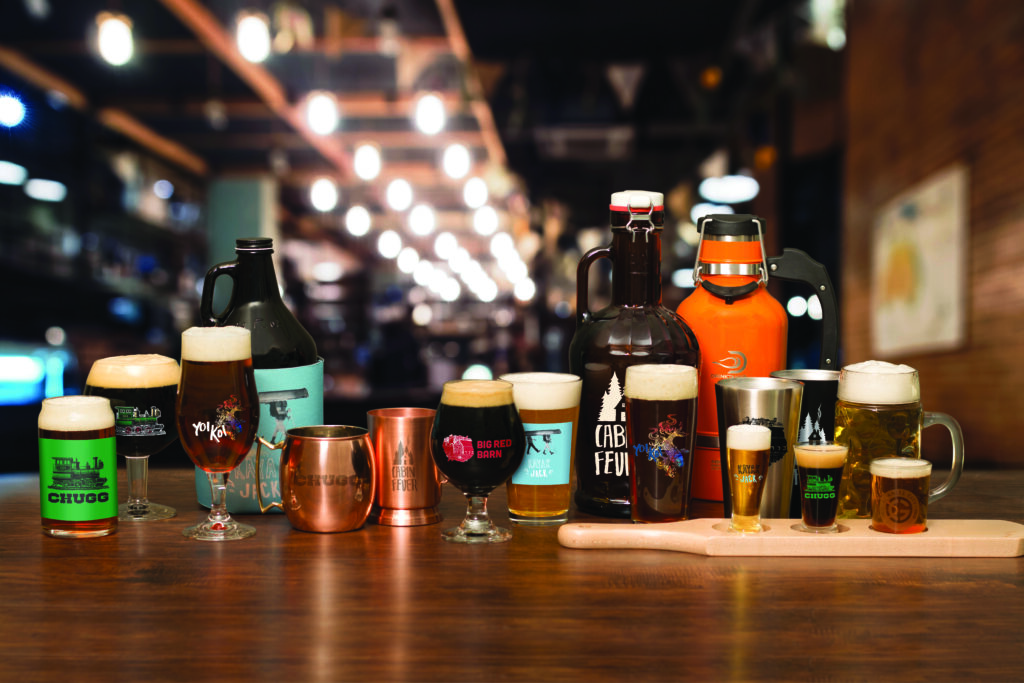
assorted beers lined up in a table

There are currently more than 7300 regional breweries, brewpubs and microbreweries in the United States. Even during difficult times, the popularity of the craft brewery continues to grow. For many home brewers and beer aficionados, the prospect of owning and operating their own brewery is a dream come true. It’s an opportunity to expand their personal recipes that they have refined over the years as a hobbyist and share them with a wider audience.

  Making your mark within the industry is not an easy task to accomplish. Perfecting your craft is an important start in staying relevant. But satisfying your regulars and marketing through word of mouth is just the beginning. It’s the additional, day-to-day business details that become so incredibly important. Maintaining your brand and ensuring that it reaches the widest audience possible will help you to stand out in a crowded market.  

Brand Identity

  One of the benefits of owning and operating your business is the freedom associated with developing its brand. From the name to the logo, this is an opportunity for you to work closely with your business partners to establish something catchy and unique, while also cutting through the clutter and staying top of mind with your customers. But once you’ve picked out your colors and have come up with a memorable catch phrase that highlights your craft, what’s next?

  In today’s market it’s not uncommon to promote your brand through a variety of related products. Whether that’s pint glasses and coasters, umbrellas, signage or an oversized Jenga set reserved for outdoor events, merchandising your business in creative and unique ways is critical. But there are numerous moving parts that inevitably get in the way. Working with your local Kinkos and your cousin (twice removed) to help with the graphical design will only get you so far.

  Properly sourcing your merchandise is an indispensable asset to your overall brand marketing initiatives. Working closely with a partner capable of assisting with the delivery of your products can make an immense difference in your day-to-day operation.

  Understanding the ins-and-outs of product sourcing often includes first-hand experience in knowing what works and what does not. These conversations can help steer you in the right direction, while also shielding you from potential missteps. Promoting your brand with a Point of Sale (POS) system capable of delivering the best return on investment (ROI) in a growing market will help you to realize even greater success.

Off-Premise Initiatives

  Traditionally, craft beer has primarily been sold on-premise. The experience of enjoying a freshly tapped beer while socializing at your local brewery is one of the reasons the craft beer industry has stayed consistently strong. When combined with ongoing marketing and merchandising efforts, off-premise sales has the strong potential to develop into an additional sales and distribution plan.

  Some beer aficionados might argue that traditional retail sales takes away from the uniqueness of the craft beer experience and no longer differentiates itself from large national brands. However, retailers are very much in tune with consumer preferences and will always be looking for opportunities to emulate the success of on-premise craft breweries through off-premise sales.

  It’s important for every craft brewery to take the steps necessary to continue promoting their name and their brand. As such, there are several opportunities worth considering for an off-premise strategy:

•   Stand Out in a Crowded Space: Whether you’re positioned within a local liquor store or the corner grocer, make sure your branding is prominently displayed and catches the eye of every customer. Proudly present your most popular beer or newest recipe on shelves, stackers and corrugated risers that clearly exhibit your branding. Make sure the colors are bold and vibrant, and that the wording can be read from across the aisle. Take pride in your craft and give it the attention it deserves.

•   Small Idea, Big Impact: Even the smallest idea can have the biggest impact when it comes to branding and product marketing. Sticky shelf talkers, ceiling danglers, window clings and floor placements. Make it so that no matter where the customer is looking, your brand is sure to grab their attention. And it’s not always about how big of an impression you make or how much real estate your branding utilizes. A strategically placed logo can help even the most undecisive beer drinkers make the right choice.

•   Your Fans are Your Biggest Advocates: Don’t overthink it. The practicality of the idea often becomes the biggest win for off-premise business. Let your fans do the “heavy lifting”. Selling a variety of tote, lunch coolers and brown paper bags, each with your branding clearly identified for everyone to see, is a great way to continue getting your name out there. Used at work, on vacation or attending any number of social events, your biggest fans will be promoting their favorite beer without ever saying a word.

•   The Signs Are Everywhere: Chalk-based A-frame menu boards. LED light boxes. Laser cut, digitally printed hardboard wood. What do all these different types of signage have in common? They’re the most classic form of beer advertising you can think of. People of all ages collect them and prominently display them in their homes, garages and on the walls of the businesses they own. They catch your eye, make a statement and get you thinking about one thing, and one thing only – BEER!

Product Management

  Having access to your own, business-specific e-commerce website is an opportunity to more effectively manage your growing list of products. When conveniently organized by category, a robust e-commerce solution is more likely to yield an increase in the number of merchandising orders placed. By providing your sales group, wholesalers and consumers 24/7 virtual access to your products, you’re removing yourself from the time-consuming difficulties and headaches of manual maintenance and upkeep.

  An effective e-commerce portal is not only a reliable source for managing your inventory in an organized fashion, it can also be seamlessly updated to accommodate for new products and inventive promotional efforts. Including pre-order windows and making them available to your distributors will help to better gauge the potential success of your latest product promotions before taking the plunge and jumping head first into a new initiative.

  Planning for the upcoming year’s promotions, brand launches and seasonal programs is an important function critical to the ongoing success of your business. Having access to online ordering is a great resource to take advantage of when working toward upcoming events. Providing your distributors access to your ecommerce site makes the process of managing and expanding your brand a seamless activity.

  However, maintaining your inventory and shipment data can often be challenging. Working from a comprehensive and reliable report – one that details the data needed to drive a successful program – saves time and increases productivity, allowing you to focus more on your craft. Accessing these reports, whenever needed, makes the process of future inventory planning and promotional efforts even easier and more sustainable.

Inventory Optimization

  Space is a commodity. You’ll never have enough and will always be needing more. When owning and operating your craft brewery, you’ll quickly realize that as more of your space is consumed by branded merchandise, less will be available for that essential, behind-the-scenes equipment – brewing systems, canning lines, tanks, fermenters and more. Working with a total fulfillment partner opens up the possibility of maintaining and safely storing your merchandise stock.

  At its core, inventory optimization and supply planning answers the question about how much merchandising inventory should be carried. Working with your fulfillment partner, you’ll be able to better understand the complexities of supply and demand and more accurately identify inventory targets. By maintaining appropriate levels of merchandising stock you’ll greatly reduce the chances of inventory obsolescence, thereby freeing up capital that can be applied elsewhere throughout your business.

  Fulfillment partners often include consignment opportunities, giving you the option to store your products offsite while still retaining ownership. As the products begin to ship, you’ll be able to track how much inventory sold and work closely with your fulfillment provider on the transactional details.

  When tied directly with your unique e-commerce platform you’ll have even greater flexibility and control over the number of products sold, understand when and how they have shipped and be able to effectively report – from week-to-week and month-to-month – for better management of your business’s overall expenses and profits.

  Pre-orders are also designed to increase profitability. Utilizing your fulfillment partner’s expertise in identifying products that are best suited to both order windows and the make-and-ship process, you’ll capitalize on an effective solution to the POS puzzle. This pre-order option provides greater overall flexibility when planning for upcoming events and seasonal placement.

Dedicated Support

  Whether it’s the account manager, sourcing, logistics or warehouse, the various touchpoints of a fulfillment team provide the support needed to effectively operate your business. Their focus is helping you maintain yours. In doing so, you’ll have greater opportunities to further pursue your passion.

  A committed support team should be analyzing your POS operations on a quarterly, bi-annual and annual basis, and provide feedback to assist with any changes that may be needed. Their long-standing relationships within the industry are designed to support your needs and ensure that your business realizes continued success.

  Your merchandising efforts are directly connected to establishing your brand and helping your business thrive in an increasingly competitive market. Aligning yourself with a reputable fulfillment program will assist you in meeting the goals you have established for your business. When done well, your brand will realize the greatest potential to reach more customers and leave lasting impressions.

Brewery Financial Statements 101:

How to use Financial Reports to Improve Results

By: Kary Shumway, CPA, CFO, Numbers Guy

2 men analyzing data

Financial literacy is the ability to read and understand the numbers of your brewery business so that you can improve financial results. Improving financial results may include growing sales, improving gross margins or increasing cash flow. In today’s uncertain times, financial literacy is more important than ever.

  The numbers of your brewery business are reported on the financial statements – the income statement, balance sheet and statement of cash flows. Each of these reports provides vital financial information to understand what’s going on in your business.

  In this article, we’ll review the basic components of brewery financial statements and provide examples of what these reports should look like. We’ll also dig into the mysteries of the brewery chart of accounts – the building blocks of the financials – and provide tips to make sure your financial reporting is as good as it can be.

  We’ll close out with a list of best practices to follow so that your financial information is accurately reported. These best practices are summarized into a handy checklist of month end procedures to follow.

Brewery Financial Reports

  The numbers of your business are organized into reports called the financial statements: the income statement, balance sheet and statement of cash flows. Each statement provides useful information about a different part of your brewery business.    Below is a brief review of each report.

Simple Income Statement

  Income statement (Profit & Loss Statement or P&L): The brewery income statement reports on sales, margins, operating expenses and shows whether the business had a profit or loss. This statement measures results over a period of time – the month, the quarter, or year to date, for example.

  It’s important to understand that the income statement measures transactions but does not measure cash flow. The income statement records sales when earned, and expenses when incurred, regardless of whether cash was received or paid out. 

  Balance sheet: The brewery balance sheet lists assets, liabilities and equity.  Assets are things you own, liabilities are things you owe, and equity is the difference between the two.  If assets are larger than liabilities, you have equity.  If liabilities are bigger, you have a deficit.

  While the income statement measures results over a period of time, the balance sheet measures numbers as of a specific point in time – at month end, quarter end or year end, for example. 

  Statement of cash flows: This financial report measures the flow of cash coming into and going out of the brewery business.  It tells you where cash came from (collections on sales, for example) and where cash went (payments to vendors, for example).  The income statement measures transactions, not cash. The statement of cash flows shows picks up where the income statement leaves off and records the flow of money through the business.

Brewery Income Statement (P&L) Examples

  Now that we’ve covered the basic financial reports, let’s look at examples of what brewery income statements should look like.

  We’ll begin with a summarized version of the P&L.  Shorter reports are easier to read and allow you to see important information quickly.  The summary report includes sub-totals for each major P&L category: sales, margins, operating expenses and profit or loss.

  The simple P&L shows the summarized results for a period of time (Year to Date, in this example) and presents each category as a percentage of sales. P&Ls don’t need to be five or ten pages long to be good. In fact, shorter is better. Shorter is easier to read and makes it more likely that you actually will read the report. Start with a summary P&L like this one, then expand the report by adding more details. Here’s an example:

Brewery Income Statement

  This P&L shows sales, cost of sales, and margins by package type. This type of presentation makes it easy to see the margin percentage by package type (kegs, cans or bottles) which is useful in analyzing portfolio profitability.

  An alternative to this P&L is to present the information by line of business. This might include sales through the taproom, self-distribution and wholesale distribution. Regardless of which method you use, it’s helpful to mirror the sales categories within the cost of sales and margins categories. For example, have a separate account for taproom sales, taproom cost of sales, and taproom margins.

  Financial literacy is the ability to read and understand the numbers of your brewery business so that you can improve financial results. The income statement, balance sheet and statement of cash flows are reports that summarize those numbers. Each report gives you different information about the business, and each is important to review on a regular basis.

Brewery Chart of Accounts

  Accountants use the term Chart of Accounts to describe the listing of all the things you want to track and report on in your business. These include all of the assets, liabilities, revenue and expenses. The purpose of this listing is to provide organization and structure for your financial reporting. The Chart of Accounts serves as the building blocks of your financial statements.

  The level of detail in your chart of accounts listing will depend on how much information you want to see on your financial reports. For example, you may have three different sales accounts, as shown earlier: Sales-Kegs, Sales-Cans, and Sales-Bottles.  Each captures the sales specific to a type of package.

  Alternatively, you may have any number of different sales accounts to show sales by market and package type. For example, Sales Self-Distribution Kegs, Sales Self-Distribution Cans, Sales Self-Distribution Kegs, etc.

  Be purposeful about the level of detail in your chart of accounts. More detail may be preferable, however this will take more time for your bookkeeper to record the transactions into the proper accounts. Start with the kind of reporting you need to see in your financial statements and build the chart of accounts accordingly.

  For an example of a full brewery chart of accounts, visit www.craftbreweryfinance.com and enter chart of accounts in the search box.

Brewery Financial Month-end Process

  We’ve covered the basics of how to read the financial statements and understand the chart of accounts. Next, we’ll review a month-end process you can use to make sure your numbers are complete and accurate. A process is defined as a series of steps, followed in order, that will lead to the right outcome. In this case, the right outcome is accurate numbers in the financial reports.

  The month-end process should be clearly written and used as a document to train your bookkeeping staff. An accounting manager should periodically audit the work of staff to ensure that the process is being followed. 

  The process can be presented in the form of a checklist, indicating what task to do, when to do it, and who is responsible for completion.  Below is an example of a month-end financial checklist:

Month End Checklist

  The process checklist should contain all the necessary steps to close the books for the month in order to ensure the accuracy and completeness of the information. For example, all payroll journal entries should be made on the 1st day of the new month and all bank statements should be reconciled by the 5th business day of the month.

  To create your month-end process checklist, have your bookkeeper write down all the actions they take to close the month. Compile this list of actions and assign due dates and a responsible person. Each month when it’s time to close the books, use the checklist as a guide to make sure each step is done and completed on time.

  The best way to make sure you have good financial information is to follow a good process consistently. To download a full month-end process checklist, visit www.craftbreweryfinance.com and enter month-end process in the search box.

Wrap Up + Action Items

  Financial literacy is the ability to read and understand your financial statements so that you can improve results in your brewery business. Improved results may be sales growth, margin increases or positive cash flow. You define the result you want to achieve and use your financial literacy to make it happen.

  Use the summary income statement templates presented here or create your own so that you can monitor financial outcomes. Review your chart of accounts and compare to the template at www.craftbreweryfinance.com to identify any needed changes.

  In today’s uncertain business environment, financial literacy is a competitive advantage. Use this advantage to drive increased financial performance in your brewery business today.

    Kary Shumway is a Certified Public Accountant and has been working as a CFO in the beer business for the past 15 plus years. He creates financial training courses for beer wholesaler owners so that you can build a more profitable business.

For more information please visitwww.craftbreweryfinance.com.

Pike Brewing Company: Celebrating 30 Years as a Craft Beer Pioneer

2 men toasting

By: Becky Garrison

Why is Seattle-based Pike Brewing Company still standing 30 years after its 1989 founding when a growing number of craft breweries in the Pacific Northwest are either shuttering their doors or being bought out by global conglomerates?

  According to Pike’s co-founder and co-chair of its board, Charles Finkel, “There’s an unbelieva-ble amount of competition out there with a challenging business climate, but we’ve done our best to have a sustainable business model. We work really hard and have a good team of people.”

  Following his lifelong passion for imported beers, Finkel founded Merchant du Vin in 1978, so he could introduce consumers to craft beers from England, Scotland, Germany, Belgium, France and Norway, as well as several small American breweries. Jason Parker, co-founder of Copper-works Distilling and Pike’s first brewer, points to the difficulties in convincing Americans to give craft beer a chance. “Back then, nobody knew how to drink a quality beer, so Charles had to edu-cate each person bottle by bottle.”

  Finkel would enter a restaurant and ask to see their beer menu. Inevitably, the waiter would re-spond, “We don’t have a beer menu, but I can tell you what we have.” The waiter would recite names of commercial beers like Budweiser, Coors Light, and Rainer. Then Finkel would reply, “Oh, just bring me some jug wine.” When they noted they don’t serve that type of wine here, he would respond, “Yes, but you serve that type of beer.” Following this exchange, he would set out some imported beers and encourage them to up their beer game.

  In assessing the Seattle beer culture circa 1980, Christian Krogstad, Seattle native and founder of House Spirits Distillery in Portland, Oregon, recalls being smitten by the unusual styles and packaging of Merchant du Vin’s imported beers. In Krogstad’s estimation, “More people than you can imagine were influenced by the beers they imported. I credit them more than any mi-crobrewery or homebrewing writer with creating the spark that led to the explosion in American craft brewing.” In the spirit of other like-minded folks, Krogstad tried his hand at home brewing, and he discovered his vocation in this process.

The Founding of Pike Place Brewery

  In the late 1980s, Finkel took his experience influencing some of the finest breweries on the way that they brewed, packaged and marketed their beer, and founded his own brewery. “I felt if I could sell beer from Bavaria, Yorkshire or Belgium at a price level that was the highest in histo-ry, I could do at least as good, if not better, here in Seattle.”

  On October 17, 1989, the Pike Place Brewery announced its grand opening courtesy of the World’s Shortest Non-Motorized Uphill Parade. John Farias of Liberty Malt Supply led the pa-rade pushing a two-wheeled silver hand truck filled with a keg of Pike Pale Ale. Following Fari-as were the Finkels, Franz and Angela Inselkammer from Bavaria’s Ayinger Brewery, and Jason Parker, along with local media and about a hundred beer aficionados. Also included in the parade were dogs, a cat, a walking geoduck from the Sheraton Hotel, a llama from the Herb Farm and an oyster. After a two-block uphill walk, the menagerie arrived at Cutter’s Bay House, where Franz Inselkammer tapped and poured the inaugural pint of Pike Pale Ale.

  Finkel chose the brewery’s location on Western Avenue due to its uphill location so he could in-stall a gravity-flow steam-powered system. At the time, the brewery’s equipment was state-of-the-art with a four-barrel copper kettle custom made by Seattle’s Alaska Copper and Brass Com-pany.

  When Dick Cantwell, currently the Head of Brewing Operations for Magnolia Beer Company in San Francisco, was hired in 1991 after Parker went back to college, the craft brewing scene was in its infancy. About 200 U.S. breweries were in existence, with Pike being the third in the great-er Seattle area. Cantwell recollects, “By today’s standards, most people made mediocre beer, but the scene was exciting, and we all became lifelong friends.”

  In addition to brewing their perennial best-selling Pike Pale Ale along with a porter and Pike XXXXX Stout, Pike also has the distinction of making one of the first IPAs in the United States. By developing relationships with companies such as Skagit Valley Malting and area grain farm-ers, Finkel sourced local products to create flavorful beers.

  Finkel worked in conjunction with his wife Rose Ann, co-founder and co-chair of the board. Parker sums up their creative, collaborative relationship. “Charles is the artistic force while Rose Ann is the business financier. When he wants to bring a vision to life, Charles needs a team who can come behind him and help him figure out how to do that.” Finkel’s artistic touch can also be found on Pike’s iconic beer logos. The art is distinctly “Charles Finkel” in its design, colors and Victorian-style lettering.

Opening of Pike Pub

  In 1996, they moved to a larger 30-barrel brewery located at the site of a former winery on First Avenue. Rose Ann’s experience of owning a cooking store played a seminal role in their mission to combine craft beer with local, sustainable food. Also, they changed their name to the Pike Brewing Company due to their proximity to Pike Place Market.

  Concurrently, they launched Pike Pub as a destination place that offers a curated experience visi-tors cannot experience elsewhere. For example, the pub houses the Microbrewery Museum, a collection of Finkel’s personal artifacts that document 9,000 years of brewing history. “My goal was to encourage people through our decorations to view beer as cultural items instead of a mass-marketed highly advertised commodity,” Finkel tells Beverage Master Magazine.

  Then after realizing that the brewery and pub could not stand on its own without the support of parent company Merchant Du Vin, the Finkels sold the brewery and pub to Merchant Du Vin the following year. Drew Gillespie, Pike’s current president, began as a line cook in 1998 during this period, which he describes as the Dark Ages. “There wasn’t a lot of investment or passion within the company.”

  After realizing they were missing their brewery and the maturation of the industry, the Finkels purchased Pike back in 2006. Gillespie describes this purchase as “a rebirth that really picked up the heart and soul that the Finkels bring to their work.” Upon their return, the Finkels further built up their community connections, ethical business practices and sustainability focus.

  Among their numerous community projects include a long-standing commitment to Planned Parenthood, where Charles Finkel served on their board before founding Merchant du Vin. They brew a specialty beer titled Morning After Pale as a fundraiser for Planned Parenthood, which they offer during their annual Women in Beer event. Also, their annual event, Chocofest, sup-ports Long Live the Kings, an environmental group dedicated to preserving local salmon.

Moving Towards the Future

  Currently, Pike has five owners, who are all members of the board: the Finkels, Gillespie, VP and Controller Patti Baker and Executive Chef Gary Marx. “We call this selling in versus selling out,” Gillespie says. “You have to have people on site who are really focused on how to make it successful and willing to put their life into it.”

  Pike further expanding its brewing capacity in 2017 by launching Tankard & Tun. This intimate seafood restaurant located on the second floor above the pub enabled them to serve dishes like oysters on the half shell that are hard to serve in a hectic pub environment.

  They also introduced cocktails, which Parker says is a relatively new development in brewpubs. “There was a time, if you were a brewery and you had cocktails, you were seen as not committed to being a brewery. You must think your beer is not good enough to be able to stand on its own. But that’s sort of like saying we’re not going to serve wine either because no wine can be better than our beer. Well, that’s wrong.” 

  Presently, Pike partners with local distilleries, including Woodenville Whiskey, Dry Fly Distil-ling and Copperworks Distilling for their barrel-aged program, which they look to expand in 2020. They also plan on making more sour beers to meet the customer demand for more extreme types of beers.

  Despite these innovations, Pike’s prime focus remains its consistency. “We like being slow-moving. We don’t feel we need to expand and get giant. We just want to have a nice solid base, two restaurants and a beer distribution network in the Pacific Northwest,” says Gillespie.

  To this end, they’ve made in-roads in Hawaii and Alaska and want to establish a presence in Or-egon. In 2018, Pike went global by launching a collaboration in Japan with hopes to expand the Pike concept to China through a Chinese partner.

  “If we could maximize the capacity of the brewery, we will be helping the local community and being a good employer,” says Gillespie. “That’s a recipe for success for our little mini-empire.”