The agriculture industry is in a period of
intense change. Globalized markets are driving com-modity prices down, making
it hard for smaller farms to compete. Many mid-sized operations are being
snapped up by large conglomerates.
Additionally, many of the men and women running small and mid-sized
North American farms are starting to look forward to retirement. According to
Statistics Canada, the average age of the Canadian farmer is 55. Yet, often
their children aren’t interested in taking over the family business.
The apple business is no exception. Yet, as
many independent growers are discovering, changing consumer tastes are opening
up new opportunities for niche producers. For apple orchardists, pivoting from
selling apples to launching a craft cider brand can be a lifeline for
struggling family-run orchards.
According to Anelyse Weiler, a college professor of sociology at
Okanagan College in Kelowna, British Columbia, and a Ph.D. candidate in
sociology at the University of Toronto, moving into craft cider production
opens up new revenue streams and buffers producers from economic volatility in the
fresh fruit commodity market—and can be an effective way to entice grown
children to consider returning to the family business.
“Apple farmers face a slew of challenges in their industry, like the
toll of the physical labour on their bodies, the increasing consolidation of
apple production companies into huge conglom-erates, and the effects of climate
change on their crops,” she said. “Moving into cider produc-tion can help
farmers maintain their rural lifestyle instead of getting out of it altogether.”
As
part of her dissertation work, Weiler spoke to 100 people working in the
Pacific Northwest craft cider industry about the challenges they face. She
found most young cider producers she spoke with grew up in the agriculture
industry and saw the struggles their parents faced.
“For
a lot of young people who had grown up on farms, they could observe not only
the eco-nomic volatility but the emotional stress put on their parents’
generation and, frankly, the phys-ical cost of being a full-time farmer,”
Weiler said. “For some of them, there was no romanticism that went into this
idea of farming. They went into it with eyes wide open, and in many cases,
wanted to maintain some sort of connection to agriculture, but on their own
terms.”
Weiler said mid-sized farms are finding it more difficult than ever to
eke out a profit. Yet smaller farms have more opportunities to sell their
products directly to consumers through farmer’s markets, farm tourism, local
distribution to restaurants and via online marketing. Sales volume may be
lower, but customers are increasingly willing to pay a premium for high-quality
“arti-sanal” products.
“A
lot of producers face this ultimatum: get big, get out or get niche,” Weiler
said. “And craft cider industries are one way for people to get niche.”
Many
young orchardists in the cider business truly value the interactive service
components that go into direct marketing and sales, Weiler said. They also
enjoy the chance to connect with customers in a direct way that isn’t always
possible when just selling fruits to the commodity market.
“I
think it draws on this emerging craft livelihood movement where young people
are interested in the creativity, in the sense of being able to put their
unique signature on something in ways that farming for the fresh fruit market
doesn’t always allow,” she said.
Weiler noted that the high cost of farmland in Canada makes it hard for
young people without family ties to enter the orchard business. Young people
who want to get into orcharding on their own have to get creative, she said.
Some have created micro-cideries using windfall fruit or harvesting from
abandoned orchards, for example—even using their own labour to pick the fruit.
Cider by
the Numbers
In
Canada, cider sales are booming. In 2018, Statistics Canada reported that
Canadians quaffed 181 million litres of ciders, coolers or similar beverages
per person—the equivalent of 21.5 bottles for every person over the legal
drinking age.
According to research by Euromonitor, the craft beer craze has sparked
interest in other small-batch, artisanal food and beverage products, including
cider. The amount of cider sold in Canada more than doubled between 2013 and
2018, from 29 million litres to 63 million. Euromoni-tor projects sales could
jump to almost 93 million litres by 2022.
Sales growth in this category over the past 10 years has outpaced wine,
spirits and beer in Canada. Cider and cooler beverage sales had an annual
average increase of 6.4% over this period, compared to 4.2% growth in wine
sales, and 2.8% for spirits and 1% for beer. Sales of imported cider grew
faster than Canadian-produced brands, increasing at an annual average rate of
10.2% versus 5.5%.
Ontario is the largest apple-growing region in Canada, with over 16,000
acres of trees. Accord-ing to the Ontario Craft Cider Association, cider is now
the fastest-growing category of alcohol-ic beverages in Canada. Reporting from
the government-run Liquor Control Board of Ontario shows that between 2012 and
2019, sales of Ontario craft ciders soared from $1 million to $16.3 million.
According to Statistics Canada, ciders and coolers represented 4.2% of
total alcohol sales in Canada in 2018, with the largest market share in New
Brunswick (6.8%) and the lowest in Nu-navut (0.9%).
Key Dates for Canadian Cider Festivals (as of the date of publishing):
• B.C. Cider Festival (http://bcciderfest.ca/): May 24, 2020: This year’s event will feature over 30 cideries from the Pacific Northwest and beyond. The festival is connected with B.C. Cider Week, May 23-31, which includes tasting events and tap takeovers throughout the province.
• Toronto Cider Festival (https://www.torontociderfestival.com/): August 28-29, 2020: Fea-tures live music, artisan market, food, an outdoor fire pit, and of course, a cider showcase and tasting events.
By: Nichole Gunn, Vice President of Marketing and Creative Services, Incentive Solutions
As a craft beer producer, competition is fierce. According to the Brewers Association, there were 7,346 craft beer producers in the U.S. last year competing for $27.6 billion in sales. That’s a lot of beer! And, that doesn’t even take into account competition from “The Big Five” or import beer for shares of the overall U.S. beer market.
For craft beer producers
who are looking to scale and increase sales, it might be tempting to start
pouring your marketing funds into consumer marketing. But will that really make
a splash? Think of the hundreds of millions in media spend by beer companies
every year that you’ll be going up against.
Could there possibly be a
more efficient way to use that marketing spend? For craft beers producers who
are trying to go to market, it’s important to sit down and ask yourself, “Who
has the biggest impact on whether or not end consumers find my beer? And how
can I motivate them to prioritize my business?”
Understanding the Craft Beer Sales Channel
When it comes to
connecting with end consumers, craft beer producers have four options:
• On-Site:
Selling
directly to consumers at your brewery.
• E-Commerce:
Selling
directly to consumers online.
• Retail:
Selling
to consumers through other retailers.
• On-Premise: Selling to consumers
through bars and restaurants.
However, on-site sales are limited by geography and e-commerce sales require brand familiarity or extremely creative (or very expensive) marketing. For a scalable sales and marketing strategy, craft beer producers have to turn their attention to retail and on-premise sales and the indirect sales force that helps them achieve penetration with these vendors.
Incentivizing Distributor and Wholesaler Sales Reps
Outside of smaller, highly
localized breweries, most craft beer producers rely on distributors,
wholesalers and other supply chain trading partners to market to retailers and
restaurants. Distributor and wholesaler sales reps are responsible for selling vendors
on the value of your beer, negotiating pricing and terms of sale agreements and
ultimately getting your craft beer to market.
There’s one small problem:
no matter how awesome your craft beer is, it only a small fraction of your
distributor or wholesaler’s supply mix. In this battle for mindshare, it’s up
to you to educate reps about your brand, enable them to sell your product and
supply them with a value proposition that inspires them to take action on your
account.
This is where an incentive
program comes into play. When many people think of incentive programs, they
think about rewards. But while rewards play a big role in building
relationships with your channel partners and adding to your overall value
proposition, modern incentive programs take a more holistic, software-driven
approach.
Today’s incentive programs
act as comprehensive sales and marketing platforms that enable craft beer
producers to:
• Build mindshare with
distributor and wholesaler sales reps.
• Target promotions by qualifying
participant type, regions or product line.
• Fill data gaps within
their channel.
• Enable sales reps to sell
their product to vendors.
• Deepen relationships with
partners throughout their channel.
Building Mindshare with Distributors and Wholesaler Sales Reps
Sales reps, for the most
part, sell what they know. However, in a crowded supply mix, building this
awareness and product knowledge with sales reps can be challenging. While every
supplier wants something from these outside sales reps, far fewer supplier
focus on offering value and creating memorable brand interactions.
Inviting these sale reps
to enroll in an incentive program where they have the opportunity to earn
millions of rewards or exclusive incentive travel opportunities (and perhaps
giving them a generous point bonus upfront) is more than a nice gesture. It’s a
strategic differentiator and an opportunity to stand out from your
competitors.
Your rewards program also
creates new opportunities for communication and engagement that aren’t strictly
business. These brand interactions are an opportunity to improve
personalization and build relationship capital, which can be difficult to
achieve in supply chain partnerships.
Targeting Promotions to Minimize Cost and Maximize Return
It’s worth noting that a
channel partner program is an investment. When planning an incentive marketing
strategy, craft beer producers need to focus on maximizing the return on their
marketing spend. This means that they should target first and scale second.
For instance, would it
make more sense financially to target your program to the sales and brand
managers at the distributor level or the individual reps who work beneath them?
It depends on your go-to-market strategy and the size and number of distributors
you work with. If you sell through smaller wholesalers with a handful of reps,
who each are responsible for a significant portion of your overall sales
volume, then it might make sense to structure your program to reward individual
sales reps. On the other hand, if you’re selling through a number of
wholesalers and distributors, or an extremely large distributor with thousands
of reps, it might make more sense to target your incentive programs to sales
and brand managers.
Additionally, from those
managers and sales reps, craft beer producers can set qualification thresholds,
based on sales volume or engagement, to ensure that their incentive program
spend is allocated toward the participants who are most impactful to their
sales growth.
Another aspect of your
targeting strategy is choosing to set incentive promotions by specific regions
or product lines, based on strategic initiatives and opportunities for
growth.
Collecting More Complete Data Throughout Your Channel
Craft beer producers, like
many other companies who sell into a channel, often struggle with having
inaccurate and incomplete data about their channel. Your incentive program is
an opportunity to motivate distributors and wholesalers to provide more
complete data. There are several ways craft beer producers can use their
incentive program to fill in gaps in channel data:
• Structuring enrollment
forms that capture contact information and firmographic data during program
registration.
• Including automated tools
for sales reps to attach invoices or other documents as part of the program’s
sales verification process.
• Offering rewards to
participating sales reps for referring other reps within their organization.
• Rewarding sales reps for
completing voluntary surveys that can be used to clean up your existing
database or collect more information about your participants’ interests,
demographic and lifestyle.
• Analyzing engagement
datapoints the program generates to spot highly engaged accounts that are ripe
for upsells and cross-sells.
All of this information
can be used to inform your sales and marketing strategy and increase the level
of personalization you offer your supply chain partners.
However, all the data in
the world is useless unless you’re able to act on it. Modern incentive software
includes CRM integration, data filters, reporting dashboards and custom reports
to streamline this data for optimal use.
Enabling Your Distributor and Wholesaler Sales Reps
Do you know one of the
quickest ways to build brand preference with an indirect sales rep? Provide
quality sales enablement. Using proven strategies to educate sales reps on your
brand and your products makes it easy for them to sell your products to
vendors.
Integrating interactive
quizzes and training videos with your incentive program is a powerful tool for
supplying your external sales reps with the knowledge they need to sell your
beer. This education can be supplemented by your incentive program’s digital
communication platforms. (If you use this kind of strategy, make sure to break
things up into bite-sized pieces and focus on the highlights your partners will
need to help you go-to-market). Additionally, these quizzes are another
opportunity for sales reps to earn rewards, increasing the overall value
proposition of your program.
Deepening Relationships Throughout Your Channel
Finally, in addition to
short-term sales growth and marketing penetration, your incentive program has
another benefit that will have a lasting impact on the success of your
go-to-market strategy: relationship-building. Non-cash rewards are a social
currency that achieve emotional impact and memorability with sales reps at
distributors and wholesalers. In addition to motivating sales growth and
reinforcing desired behavior, the rewards your program offers create a sense of
personalization.
For craft beer producers,
your distributors and wholesalers are more than just conduits to the end
consumer. They are your partners – an indispensable part
of your go-to-market strategy. Offering your sales reps the opportunity to
choose from exciting rewards or treating top performers to unforgettable
incentive travel experiences represents the type of brand interactions that
will set you apart from the competition. But more than that, these rewards
inspire your distributor and wholesaler sales reps to emotionally invest in
your brand and take an active interest in your success.
Unsure About Where to Start? Be Smart, Explore Your Options and Focus on Scalability
An incentive program can
be an integral part of a craft beer producer’s go-to-market strategy. However,
what about companies who have never used this type of strategy before? If you
are interested in creating a channel marketing program for your distributors
and wholesalers, do your homework. Identify a goal for your program and the
software functionalities you’ll need to achieve that goal.
Compile a list of
incentive program providers who fit your requirements and who have a proven
track record, with case studies and testimonials to prove it. From there, begin
reaching out to these providers and enlist their help in planning your
incentive strategy. Use these conversations to refine your strategy and learn
more about what has worked for companies with similar goals and similar
distribution channels to yours in the past.
Once you’ve decided on a
provider, you don’t have to go all in. It’s prudent to start small, maybe with
a pilot program or highly targeted incentive promotion. You can always scale,
once you’ve proven that you can do this successfully.
However, it’s also
important to have a sense of urgency. As craft beer sales continues to grow, so
will competition for craft beer dollars. Beating your competitors to building
an incentive program for your distributor and wholesale sales reps can be a
major competitive advantage. Plus, you owe it to your future customers to help
them find their new favorite beer!
Nichole Gunn is the VP of Marketing and Creative Services at Incentive Solutions (www.incentivesolutions.com), an Atlanta-based incentive company that specializes in helping B2B companies improve their channel sales, build customer loyalty, and motivate their employees. Nichole Gunn can be reached at ngunn@incentivesolutions.com
Business people shaking hands, finishing up a papers signing. Meeting, contract and lawyer consulting concept.
By: Brian D. Kaider, Esq.
Starting a brewery requires learning a lot of new skills and practices that have nothing to do with making great beer. One of the most confusing and frustrating is the issue of distribution. If their state allows, most new breweries initially distribute their own products and, if the brewery is content to be relatively local, that might never change.
But, in many cases, brewery growth necessitates working with a distributor. This is not a relationship to be entered into lightly. A distributor becomes an ambassador for the brewery’s brand and, once retained, the supplier may have little control over how its beer is marketed. Further, these relationships can be difficult or financially impossible to break once established.
Supplier/distributor
relationships are governed by franchise laws in most states. In the absence of
franchise laws, the relationship is defined entirely by a distribution
agreement between the parties. But, even in franchise states, the distribution
agreement can play a critical role, particularly in the termination of the
distributor relationship.
Too often, however,
breweries accept a distributor’s “standard” agreement and when the relationship
sours, the supplier finds that they are stuck with no viable option to
terminate. The best practice is to engage an experienced attorney to negotiate
the terms of the distribution agreement. While even the best attorney cannot
evade state franchise laws (which generally prohibit a distributor from waiving
its rights), there are ways an attorney may help bring balance to the
supplier/distributor relationship. Some
of the key terms to negotiate include termination, territory, brand scope, and
exclusivity.
Termination
The most critical section
of the agreement sets forth the manner and circumstances under which a supplier
may terminate the distributor. In a franchise state, the law typically says
that a supplier may terminate for “good cause.” If good cause is defined in the
law, it is paramount that the distribution agreement mirror the language of the
law, because in many cases, a contract that contradicts the law will be held
invalid, leaving the supplier in the position of effectively not having an
agreement at all.
For example, the Virginia Beer Franchise Act states that good cause includes “failure by the wholesaler to substantially comply, without reasonable cause or justification, with any reasonable and material requirement imposed upon him in writing by the brewery.” Further, the Act provides, “good cause shall not be construed to exist without a finding of a material deficiency for which the wholesaler is responsible.” Tracking that language, a distribution agreement in Virginia should clearly define certain of the distributor’s obligations as “material requirements” and explicitly define certain actions as “material deficiencies.”
For example, the Virginia law identifies failure to “maintain a sales volume” of a brewery’s brands as being a reasonable and material requirement. But, the law does not specify what volume is required. So, the distribution agreement should clearly lay out specific minimum sales volumes (preferably on an escalating scale) and identify the requirement to hit those volumes as a material requirement of the contract.
When the law does not define good cause, and in non-franchise states, it is essential for the distribution agreement to do so. The contract should clearly set forth the distributor’s requirements that are critical to the business relationship and for which failure to perform will be grounds for termination.
Examples of common requirements include: meeting specified sales and marketing goals, maintaining appropriate records and reports regarding inventory and sales, transporting and storing the product under specified temperature and lighting conditions, exercising adequate quality control measures to ensure product freshness, and paying invoices within a specified time frame. It is also common to include termination rights if the distributor is declared bankrupt, enters a voluntary’ petition for bankruptcy, enters into a compromise or agreement for the benefit of its creditors, or fails to maintain in good standing all Federal and State licenses and permits necessary for the proper conduct of its business.
In some cases, sale of the
distributor or even a change in the ownership structure may be justification
for termination. In February 2019,
Bell’s Brewery of Kalamazoo, Michigan completely pulled all of its distribution
in the Commonwealth of Virginia. The
issue was that its distributor in Richmond was sold to a subsidiary of Reyes
Beer Division, the largest distributor of beer in the United States. Per its distribution agreement, the original
distributor was to have provided Bell’s with certain information about the sale
to Reyes, but it failed to do so and Bell’s believed that because it did not
have the opportunity to properly vet the new distributor, termination of the
franchise was warranted. To this day the
dispute has not been resolved and Bell’s beer is not available in Virginia.
In most states, a supplier
must compensate the distributor for the lost business even if the supplier is
able to terminate for cause. Sometimes the
law simply says the supplier must pay the distributor the “fair market value”
of the distribution rights. There can be
an expensive battle just to determine that compensation if fair market value is
not defined in the distribution agreement.
Often the value is defined as a percentage of the prior year’s case
volume multiplied by some dollar amount per case. The “standard” contracts
pushed by some distributors can be very severe in this section. In the beer
industry, it is not uncommon to see values set at an entire year’s worth of
profits times a multiplier that can range from 1.5 to many times higher. In
practice, often a new distributor will buy out the distribution rights from the
old distributor, but if the supplier wants to return to self-distribution, this
buy-out provision may be cost prohibitive.
While the beer franchise
laws in most states were written at a time in which large beer manufacturers
had significant market power over small distributors, those roles have
substantially reversed. Slowly, state
laws are being revised to accommodate this change. In Maryland, for example, the law changed on
January 1, 2020 to eliminate the “for cause” provision of termination for
suppliers who manufacture fewer than 20,000 barrels per year and the termination
notice was shortened from 180 days to 45.
However, the manufacturer still has to give the terminated distributor
fair market value of the franchise.
Territory
Depending on the size,
experience, and reach of the distributor, there may be an opportunity to
creatively carve out different territories. Territories are most commonly
limited to certain states. However, a supplier may be able to limit a smaller
distributor to certain counties or even specific types of establishments
(grocery stores, but not restaurants, for example). One of the clearest
breaches of the distribution agreement, that may constitute good cause for
termination, is for a distributor to make sales outside of its contracted
territory.
Brands
Generally, when a distributor is hired to carry a brewery’s brand, it has the right to all of the products in that brand. But exactly what constitutes a ‘brand” is unclear both in the statutory language of most state franchise laws and in many distribution agreements.
In Maryland’s beer franchise law, for example, “brand” is not explicitly defined, but the law appears to favor the distributor in terms of brand scope. Specifically, section 105 of Maryland ‘s Beer Franchise Fair Dealing Act prohibits a brewery from entering into a beer franchise agreement with more than one distributor for “its brand or brands of beer” in a given territory. One might argue that the language “or brands” means that the first distributor has the right to all brands of the manufacturer in a given territory.
In fact, that very’ issue was litigated in the 1985 case of Erwin and Shafer, Inc. v. Pabst Brewing Co., Inc. and Judge Couch, writing for the panel of The Court of Appeal of Maryland, disagreed. The court held that if a brewery retained a distributor to handle one or more of its brands within a territory, it could not then contract with a second distributor within the territory for those same brands. It could, however, contract with a second distributor to carry a different set of brands.
How far the court would
take its interpretation of what is a “brand” is unclear, however. In the Pabst
case, the first distributor was given the right to distribute Pabst brand
beers, but Pabst later merged with Olympia Brewing Company and gave the second
distributor the right to sell its newly acquired Hamm’s brand beers. Whether
the court would have allowed the brewery to contract with one distributor for
Pabst and another for Pabst Extra Light it did not say.
Exclusivity
Even if rights under a
distribution agreement cannot be divided by brand (as in the case of the beer
franchise law in Maryland), some states may nevertheless allow a supplier to
contract with more than one distributor within a territory. If permitted in
their state, a brewery should ideally enter into all of its distribution
agreements for a given territory simultaneously, providing notice to each
distributor. At a minimum, the brewery should ensure that the first agreement
entered into is explicitly designated as non-exclusive. Otherwise, the
distributor may view the agreement as giving it exclusive rights to the
territory and could sue the brewery for diminishing the distributor’s business
if it were to engage a second distributor in that territory.
Final Thoughts
Whether a brewery is in a franchise state or not, it is critical that it review and negotiate its distribution agreements carefully, with the assistance of an experienced attorney. It is also important to remember that the supplier’s diligence does not end when the agreement is signed. No matter how well the terms of the distribution agreement are negotiated and drafted, they are effectively useless if the supplier cannot back up its claims for good cause.
Accordingly, thorough documentation is essential. If a distributor is not meeting sales goals, mishandling product, or failing to provide adequate reports, they must be given written notice of those deficiencies each time they occur.
There are great
distributors out there who become essential partners in a brewery’s business.
But, sometimes those relationships can sour and signing an agreement without
anticipating complications down the line can make it virtually impossible to
sever those ties. A little forethought and planning and a lot of diligence will
go a long way toward a successful termination of a bad relationship.
Brian Kaider is a principal of KaiderLaw, an intellectual property law firm with extensive experience in the craft beverage industry. He has represented clients from the smallest of start-up breweries to Fortune 500 corporations in the navigation of regulatory requirements, drafting and negotiating contracts, prosecuting trademark and patent applications, and complex commercial litigation.
By: Doran Cart, Senior Curator, National WWI Museum and Memorial
By the time of World War I, which started in 1914, beer was
already an ancient beverage made and consumed by most the nations involved in
the war. In light of the long history already written about beer, this article
will center on the personal, official and period-printed references of beer
during World War I held in the archives of the National WWI Museum and Memorial
in Kansas City, Missouri.
Many of the early war
photographs show soldiers, especially German, posing for their gone-to-war
photographs with beer mugs in hand and often sitting on beer kegs. Ceramic beer
tankards were illustrated with scenes of soldiers’ service so they could be
reminded of what they had gone through while enjoying their favorite brew. A
German/Anglo brewery in Tsingtao, China was in production at the beginning of
the war and was there when Japanese forces attacked the German garrison taking
control. A graphic illustration of that attack is on exhibition at the museum.
The brewery still exists.
Changes in the opening and
closing hours of pubs in England occurred during the war when the situation
became dire from many of the war industries’ workers spending more time
drinking beer and “other intoxicating liquor” than producing artillery shells
and airplanes. The Defense of the Realm (Consolidation) Regulations of 1914
specifically prohibited the sale and consumption “on weekdays 12 noon to 2:30 p.m.
and 6 p.m. to 9 p.m. and on Sundays [the same hours].”
British soldiers wrote in their diaries about beer:
“Hallowe’en was
celebrated in our billets – beer, soup, roast beef, plum duff.” A. Stuart Dolden, 1st
Battalion, London Scottish Regiment
October 1916 – “I was amazed to get two bottles of Guiness to drink.” George Coppard, British
Machine Gun Corps, after being wounded.
C.H. Williams, 5th
Battalion, the Oxfordshire and Buckinghamshire Light Infantry, British Army,
wrote after Christmas of 1916: “We had our Christmas dinner
in Albert, France in an old sewing-machine factory. We had beer for our dinner – plenty of it –
and a good tuck-in to go with it! Roast
pork! Beautiful after bully beef!” [Bully beef was canned
processed beef issued as a ration].
In England in 1918, the
Hart Family Brewers produced a commemorative extra pale ale called the “Flyer.”
It was brewed to honor Wellingborough, England’s “Own Flying Ace, Major Mick
Mannock.” Major Mannock was a Victoria Cross recipient for his World War I
actions in which he recorded 61 aerial victories with the Royal Flying Corps
(later the Royal Air Force). He was killed over France on July 26, 1918.
Although the American
Expeditionary Forces were technically “dry,” prior to the US 18th Amendment
ratified in 1920, enterprising soldiers soon learned where the beer and wine
were. One US Signal Corps photograph is captioned: “American soldiers in a
captured German trench drinking beer out of steins and smoking cigars.”
From the papers of Captain
Clarence J. Minick, 361st Infantry, 91st Division the following order was
found: “Headquarters 3rd Battalion, 91st Division, Sarrey, France, July 24,
1918. Extract General Order No. XXI. 1. “The following
regulations for the government of troops billeted in Sarrey are hereby
published for the guidance of all concerned: (a) Cafes will be open to troops
for sale of light wines and beers during the following hours: 1:30 A.M. to 1:00
P.M. 6:00 P.M. to 9:00 P.M. Absolutely no drinking of other intoxicants will be
permitted and all cases of intoxication will be summarily dealt with. Wine or
beer purchased in cafes will be used on the premises and not carried away in
bottles or other receptables.”
At the Battle of St.
Mihiel, France, September 1918, this report of the 353rd Infantry Regiment,
89th Division Intelligence Section related:
“In the evening of September 13, the
Regimental observers established an O.P. [observation post] on the high ground
south of Xammes. While occupying this O.P. the observers lived on the fat of
the land. An abandoned German commissary in Xammes furnished bread, honey,
butter, jam, gold-tipped cigarettes and cigars – from the well-kept German
gardens in the vicinity came a variety of vegetables – and crowning all, German
beer, wine and schnapps were on tap in former Boche (German) bars (for the
‘dry’ All-Kansas regiment).”
During the American
occupation of Germany in 1919 when the rules regarding consumption of beer and
wine had been unofficially loosened, Charles MacArthur, 149th Field Artillery
Regiment, related that in his [cannon] battery’s stop in Bittenburg, “we ran into real German beer, a little watery for the famine in
grain.” Another discovery was made in
Bittenburg: eierkuchen, or German
waffles. “With a helmet
full of flour and a little corn syrup any hausfrau could produce an elegant set
of waffles.” Evidently, the waffles
reached such an esteemed place that “the very name of eierkuchen
was transferred to anything that looked appetizing, especially young women.”
A Captain Biggs related
that the clothing worn by German civilians seemed serviceable, but that the
“shapeless, heavy shoes” was a noticeable feature. Much of the material was ersatz [substitute],
made of paper products. Beer was
plentiful at 20 to 30 pfennings a glass, but “of a poor grade,” as was the
wine.
As part of the agreement
for the occupation of Germany after the signing of the Armistice on November
11, 1918 was one unpopular requirement that all dram shops be closed except
during a few hours of the afternoon and early evening. The sale of any intoxicant except beer and
light wines was prohibited.
A printed announcement of
a “Reunion and Smoker” party for the 77th Division’s MP Company on October 25,
1919 at the 77th Division Association Club House in New York City. states that “they will organize an American Legion Post and there will be a
keg. Organized by Francis N. Bangs.” Captain Bangs was in the MP Company, 77th Division, AEF.
A postcard with an
inscription, described the outdoor tables in Bourges where the French would
gather to drink and socialize, as pictured. Inscription on the back: “the French people like to have this little beer table outside.
This is very typical.”
On a printed card from the
YMCA, “The Y.M.C.A accepts no responsibility for money or
valuables kept by soldiers during the night. These should be handed for safe
keeping to the Leader in charge of the Hut. Overcoats, rifles, or other
equipment should be stored in the cloak room. You are urged to leave no
articles of clothing or equipment in the cubicle after dressing or about the
Hut at any time. By order of the Police, Beer and Spirits must not be brought
into the Institute.”
From the service of
Private Walter G. Shaw, 18th Infantry Band, 1st Division. He died at Charpentry
in the Argonne in 1918:
Oct 31, 1917 “I like France fairly Well don’t think I would like to live here
always [sic] they have fine roads here. white and red wine can be bought for 1.50F
a bottle (30c) some of the soldiers get tanked up on it I don’t like it because
it is so sour French people have it with every meal. Champagne can be bought
for 9.00F a bottle $1.75 this is extra dry costs about $7.00 in the U.S. Beer
costs .30 centimes a bottle 10c….”
From the service of
Corporal Reid Disman Fields, Ordnance Detachment, 13th Field Artillery, AEF:
“Feb. 23/19
Dear Clara:
No doubt you will be surprised to hear I am going down into
Germany. Left Mehnin today 11AM. Am going to the Third army. So far as I know
somewhere near Coblenz. So don’t expect I will be back very soon. Tell your
mother I will drink her share of beer. Ha! All for the time so Bye Bye, Reid.”
The roster and menu for
Christmas dinner, 1915 from the 133rd Company, US Coastal Artillery Corps, Fort
Terry, New York listed that the dinner included oyster stew and crackers, roast
turkey, oyster dressing, cranberry sauce, mashed potatoes, creamed corn,
creamed peas, stuffed olives, tomato catsup, celery, pumpkin pie, mince pie,
cocoanut layer cake, chocolate cake, bananas, oranges, apples, grapes, figs,
cigars, cigarettes, apple cider, and bottled beer.
From US volunteer truck
driver, Ned Henschel, December 8, 1918, Verdun, France:
“…a rumour floated around
that there was beer to found in a neighboring village. Another lieutenant and I
walked eight kilometres to investigate – and found that it was all wrong; there
wasn’t even Pinard!” Pinard was a red French table wine.
During the Easter Uprising
in Dublin of 1916 of Irish citizens against British rule, the British
Illustrated War News of May 10, 1916 reported that British troops took cover
behind a barricade of beer barrels.
One postcard shows a
“German concrete cellar used as cooler for beer, in woods, Meuse, France.” A
British humorous postcard shows a tent surrounded by flood waters with a
downcast soldier poking his head out lamenting “‘Ah! If it were only beer.” A German postcard that a Karl Rosendahl in
writing to Frieda Rosendahl of Riemsloh, Germany related: “My dear Freidelchen, We are sitting in the Train with a nice
glass of beer and send you greetings.” [translated to English].
A letter from F. Thunhorst
of Riemsloh Germany to Carl Rosendahl, June 3, 1915, related that one of their
acquaintances “Old [illegible] is still the same and he just
keeps going. The beer still tastes excellent, and he still drinks a few pints
daily. He sends his greetings.” [Translated from German to English].
American Dale E. Girton,
Base Hosp. #78 wrote on May 8, 1919,
“Hello Rummy:
I guess that is a fitting
salutation for one who has told me in a – past letter he has started drinking
Rum, BEER, Wine & Cognac. How about it? Haven’t heard from you for some
time and we are expecting to leave Toul for a port of embarkation at any day
now, so I thot [sic] I would write you a word so that if I am quite a while.”
Beer was universal in WWI.
It was used to quench thirst, to enjoy in comradeship, to relax and possibly,
to help for a moment, to forget about the horror of war.
From the Archives of the National WWI Museum
and Memorial.
As we enter into a new decade, an increasing number of breweries,
cideries and distilleries are moving from recording their finances, employee
logs and other data from offline pen and pencil accounting methods to online
software systems. Here’s a sampling of some of the latest techno-logical
developments that are specifically geared towards helping these outfits better
manage their businesses.
ShiftNote
ShiftNote is an online
manager logbook and employee scheduling software. The program, re-leased in
2002, gives owners, managers and employees the ability to communicate in one
place. Employees can change their shifts and request time off in a few easy
clicks. Then managers can approve or deny these changes and requests.
The scheduling feature
allows users to create and publish schedules and shift notes that can be viewed
on any mobile device. Additionally, the manager log book can track key daily
sales, re-pair and maintenance schedules, upcoming events and labor stats. As
this logbook is entirely cus-tomizable, business owners can add custom
categories and stats contingent on their particular needs.
Help articles, tutorials
and free screen share trainings are available for those who need assistance in
setting up and using ShiftNote. A major software update slated for 2020 will
offer new and enhanced features.
Whiskey Systems Online
Whiskey Systems Online is a complete production tracking and TTB reporting system tailored to the unique needs of American craft distillers. Launched in 2014, this software offers complete distillery operations tracking, from raw materials to cases shipped out. Features include invento-ry and barrel management, cost of goods sold, manufacturing cost accounting, forecasting and planning, batch tracing, auto-generated TTB monthly reporting and federal excise tax returns, QuickBooks integration, employee task management, TTB audit preparation, success metrics dashboards and much more.
Whiskey Systems’ propriety
hardware interface allows distillers to track the temperature and humidity of
their warehouse during a barrel’s entire aging lifecycle. By tying the aging
history to their Whiskey Systems barrel inventory, the software can both
optimize aging conditions and eliminate manual data entry from a third-party
monitoring system.
In 2020, the company plans
on launching a brand new interface to improve the user experience and
navigation. The update will include more production planning and forecasting
tools and more success metrics and dashboards. As Whiskey Systems is a
“subscription as a service,” there are no required downloads, and eve-rything
is available via a browser. Users just activate their subscription online for
immediate ac-cess. Whiskey Systems has extensive online resources such as
training videos and help pages, as well as one-on-one support and set up for no
additional charge.
Daruma Tech
Since 2015, Daruma Tech
has been developing mobile loyalty applications for beer guilds. For the more
significant guilds and associations, it has a customizable solution that can be
tailored to suit their marketing needs. For smaller guilds, the “lite” version
can help them get started with their digital loyalty program.
This loyalty program
software rewards consumers for visiting participating locations. App users can
keep track of the breweries they’ve been and the places they want to visit
next. Users collect stamps at each brewery and claim prizes based on the number
of stamps they’ve collected.
Brewers who participate
can access a portal where they manage their content, including
location-specific information, beers, events and deals. The app also provides a
marketing channel where brewers can communicate directly with their target
audience, as well as a social component where users can share their thoughts on
different breweries and beers.
The mobile app is powered
by a cloud-based mobile content management system. Participating locations can
update the content in real-time through their MCM. There is nothing to
maintain, download and install, as it’s also a subscription-based service. A
knowledge library where users can access help documents is available online.
Current guild users of the
app are New York State Brewers Association, Ohio Craft Brewers As-sociation,
Brewers of Pennsylvania, Massachusetts Brewers Guild, Rhode Island Brewers
Guild, Connecticut Brewers Guild and the Washington Beer Commission.
In 2020, Daruma Tech will
begin offering these services for other craft beverages and related craft
foods.
KegID
KegID is a cloud-based
asset scanning and tracking application that’s been available to brewers since
2001. The software allows brewers to track how many kegs they currently have in
use by providing visibility and insight. This application can create
accountability by pinpointing the lo-cation of a barrel, its contents and dwell
time.
Scanning can be done with
a variety of equipment, from Android or iOS mobile devices to fixed in-line
scanners. In addition to scanning kegs at the brewery, they can be scanned in
the field and marked for special handling if any part of it is found to be
damaged or malfunctioning. It can al-so identify kegs that are due for routine
maintenance.
Also, KegID is
automatically included on any kegs leased through its lease-to-own solution,
KegFleet, at no extra charge. Each brand new European keg comes laser-etched
with the scan codes and the ID numbers pre-loaded into the application. They
are ready to scan and track upon delivery.
In addition to online
resources, a team of people located in KegID’s Houston-based office are
available to provide personal assistance to new users during business hours.
The app can also be used
to manage other reusable assets like pallets and tap handles.
Kegshoe
For the past four years,
cideries, breweries, distilleries and other craft beverage producers worldwide
have been using Kegshoe tracking software. Using either an iOS or Android app
alongside Kegshoe’s barcode stickers, producers can track their keg fleets
throughout the entire production, storage and distribution cycle.
The application then
offers insights into the status, location and development of a keg fleet,
ensuring that turnover cycles are kept in check and kegs are not being lost.
Having the reporting and logging tools available to show the contents, location
and details of each barrel allows customers to manage their fleet inventory
better.
To make setup and
operation as convenient and affordable as possible, the company eliminated the
need for additional hardware. Producers can download the Kegshoe app on their
devices and start scanning. Other features include rental customer logging and
tracking, and production batch assignment and monitoring
Kegshoe is currently in
the process of releasing a craft beverage-focused customer relationship
management software. The CRM will help to provide an industry-tailored system
for sales reps and managers to log and manage their customers, sales cycles and
productivity. With both desk-top and mobile functionality, it is meant to make
the sales process for craft beverage producers as efficient and affordable as
possible.
All new customers receive
a series of onboarding materials, including detailed product tours that walk
them through the app and desktop software, as well as a support article
library. Additional-ly, Kegshoe offers around-the-clock support, ensuring all
issues and questions are addressed promptly and don’t interrupt brewing
operations.
Small-Batch Maps
Released in 2019,
Small-Batch Maps is designed to help breweries and distilleries better manage their
distribution and sales. The company wants to lessen the challenges of market
forecasting by helping producers determine if they should market one product or
concentrate on all of their of-ferings.
The software allows
potential customers to search for products on a website, and for beverage
companies to gain marketing insights, estimate product needs and discover new
distri-bution regions. Producers can then use this data to market the products
most in-demand, or those with less traction.
Breweries and distilleries
can easily add Small-Batch Maps to their websites and other online properties.
Once they’ve added the feature, they can head over to their website, log in,
and add new locations as their distribution networks grow.
North American regional and local cider makers are throwing elbows at major corporate producers, trying to respond to consumers’—particularly those in the 18–24 demographic—demands for alternatives to mainstream products. This is good news for producers eager to tap into the young but evolving cider sector. Current market analyses indicate cider sales will dip slightly through 2022, but some experts report this is only because larger, national brands are losing footing as the craft ciders surge forward.
Nevertheless, there are
growing pains within this emerging product line, especially when there’s so
much education necessary to help the public understand that cider:
1) Isn’t beer or wine.
2) Is just as complex as
those beverages, with particular nuances and unique profiles.
It’s an interesting
challenge for a beverage that relies on a fruit with approximately 2,500
varieties in the United States alone. Apples are grown in all 50 states in
America, and five of the 10 provinces in Canada. This means regional and local
orchardists offer unlimited possibilities for crafters.
To share the knowledge that’s plentiful for wine, beer and
spirits, but less so for cider, we reached out to the following experts:
Peter Glockner, co-owner, director, and brewing/filtration sales, Cellar-Tek. The company started in 2004 as a two-person operation in British Columbia, specializing in winery supplies. Now based in both British Columbia and Ontario, it also provides equipment and supplies for craft brewing, cideries and distilleries.
Bill and Michelle
Larkin,
co-owners, Arsenal Cider House, established in 2010 and headquartered in
Pittsburg, Pennsylvania, with additional tap houses in Wexford and Finleyville,
plus taps in rotation throughout Philadelphia. Another location in Cleveland,
Ohio, is scheduled to open by the end of 2019. The Larkins produce hard apple
cider, cider-style fruit, grape wines and mead. Flagship pours include Fighting
Elleck Hard Apple Cider, Archibald’s Ado Hard Apple Cider, Picket Bone Dry Hard
Apple Cider and Murray’s Mead, with various seasonal and one-off releases on
tap at each location. Annual production is more than 50,000 gallons.
Molly Leadbetter, owner, Meriwether
Cider Company, with two locations in Idaho: a taproom in Garden City and a
cider house in Boise—the first in the state. Opening in 2016, Meriwether is
owned and operated by the Leadbetter family: Molly, sister Kate, and parents
Ann and Gig. Notable award-winning ciders include Foothills Semi-Dry, Strong
Arm Semi-Sweet, Blackberry Boom, Ginger Root and Hop Shot, crafted with Citra
hops. Annual production is approximately 30,000 gallons.
Michelle McGrath, executive director, United
States Association of Cider Makers, based in Portland, Oregon. Its mission is to “grow a diverse and
successful U.S. cider industry by providing valuable information, resources and
services to our members and by advocating on their behalf.” The USACM also
stages the popular CiderCon each year, which provides new and existing members
opportunities for workshops, cider tours and networking.
Tie Information to Innovation
The Larkins started
Arsenal with $60,000 and zero working capital in the basement of their city
row-house. Bill was an accountant, and Michelle, a pre-school teacher. His
winemaking hobby expanded into a passion for cider and mead. “When we started
in 2010, there wasn’t anyone doing what we wanted to do anywhere around us. We
had to essentially make up things as we went and hope for the best,” Larkin
said. “This is why I always tell new people in the Pittsburgh industry to feel
free to reach out to me if they have a question.”
The Leadbetter family,
after years in other professions, chose to band together and open a cider
house. “My sister, my dad and I all took cider-making classes at Washington
State University’s extension program, and Mom took a business of cider class.
And webinar-based classes on our specific areas inside the business,”
Leadbetter told Beverage Master Magazine. “We also attended the
USACM’s CiderCon the years before and after we opened, which was incredibly
helpful, and I recommend to everyone!” They launched Meriwether with a
Kickstarter campaign.
McGrath said the USACM
strives to provide as much insight as possible. “Our Certified Cider Professional
program educates distributors and retailers about cider, but cider makers may
gain tools for conversations with those audiences as well,” she said. “We also
have marketing resources our members can use to educate their accounts about
cider. Lastly, our recently-refreshed cider lexicon project aims to curate a
language for talking to customers about cider. Having the same talking points
is good for any campaign—including spreading the cider gospel.”
Refining cider lexicon is
one way to lessen the gap between what consumers currently understand about
cider and how makers want to communicate flavor profiles and other
characteristics. For example, the USACM suggests “focusing on the accepted
scientific classifications of apples: sweet, sharp, bittersweet and
bittersharp.” There are also grouping categories so consumers can more easily
select what taste appeals to them and have confidence in that choice. So the
USACM considers input from producers to create classifications that might
include something like:
• Does it taste dry or
sweet?
• Is it tart? Spicy? Sour?
Floral?
• Is it fruit-forward or
tannic?
• Is it light-, medium- or
full-bodied?
This type of universal
messaging helps all cider producers continue to create beverages people want.
“Don’t make products for yourself unless you’re planning to buy them all, or
you are a social media star influencer,” Glockner said. “Know your market and
cater production to the customer base(s) you’ve researched and proven will
trade their hard-earned money for your product.”
Progressive success
depends on customer relationships—it’s not a cliché when it’s true. “We have a
gold standard of treatment for all of our customers whether they’re tasting
room visitors or on-premises licensees,” Larkin said. “Everyone in our company
in retail, sales and distribution know the customer is always right and that
we’ll bend over backward to make them happy. I can’t overstate the importance
of this.”
“We have four core values:
family, integrity, generosity and fun. We don’t make any company decisions
unless they fit into this framework,” Leadbetter said. “We run a business we
can be proud of, that strives to make our community better, our guests happy,
and makes our and our employees’ professional and personal lives fulfilling.
Working with nonprofits, connecting with the community, and educating people on
cider are huge parts of doing all those things.”
Arsenal Cider House
partners with a local activity and tour provider that plans community
excursions. Meriwether Cider Company’s approach includes integrative actions
such as Purposeful Pours, a quarterly event that raises money for different
nonprofits in its community, and Cider Crews, a tiered club program to
encourage a dedicated clientele.
Mind Your Business
The foundational
practicalities of your start-up are often a mashup of reality and possibility.
So start with the right advice.
“We always advise an
in-person consultation with one of our cider equipment sales gurus to ensure
that our potential customers are correctly assessing their equipment choices
using the correct data and math,” Glockner said. “We also try to get them to
think ahead, so they don’t face having to upgrade their equipment two-or-three
years after opening because they didn’t plan for growth. He stressed the need
for reinforced vision. “Production plans and projections need to be backed up
with solid sales plans and projections. Otherwise, you’ll have an expensive
hobby, not a business.”
He also pointed out
there’s no “right” way for cideries to choose equipment. “’Right’ could mean
the equipment fits their budget, or it could mean it matches the processing
rates they need to achieve for the total volume fruit they harvest. Assuming
that matching equipment sizes to the customer’s projected harvest numbers and
product plans is the ‘right’ equipment, doing so can minimize the required time
to process a given volume of fruit—typically expressed in kilograms per hour of
fruit processed,” Glockner said.
“If one producer is doing
multiple small-batch productions of different styles or varietals, their
equipment and tank size choices will be smaller than another producer looking
to make large volumes of one or two,” he said. “The latter would benefit from
equipment with higher throughputs and larger tanks to process bigger batches
for longer continuous periods of time. So getting the ‘right’ equipment is all
about creating operational efficiencies for the type of production the customer
wants to do.”
Here are some additional tips from Cellar-Tek’s Co-owner:
1) Most equipment for the
cider industry isn’t produced in North America, so expect a supplier of
specialized processing equipment containing electrical components to have the
equipment UL- or CSA-inspected and approved when it lands in North America.
2) Also, expect to have the
supplier set up an appointment at your production facility to start the
equipment and provide basic operations training along with any applicable
maintenance and safety advice. This tutorial might not be necessary for “basic
on/off equipment,” such as manually-fed fruit mills, pumps, or manual gravity
fillers.
3) If you can find used
equipment in relatively good condition and see it working before purchase, it
may save you capital during the start-up phase of development. However, lack of
warranties and local factory support from a supplier makes it a difficult
decision when your equipment breaks down in the middle of harvest, and there’s
no technical support in the area to repair it quickly. The cost of lost production,
spare parts and labor to repair a broken machine can easily surpass the price
of a similar piece of new equipment.
4) If you don’t have
experience with fermentation, hire a pro to do it for you, or at least a
reputable consultant with a list of references who can teach you the many ins
and outs of a successful fermentation. “The pitfalls of fermentation are many,”
Glockner said.
Our experts all
recommended allowing an ample amount of time and patience to make it through
multiple layers of bureaucracy to establish your cidery. “Cider regulations are
incredibly complicated,” McGrath said. “Anybody thinking to jump into the
market should take some time to understand how they differ from wine, beer and
spirits.” The USACM intends to provide more checklists to help answer
producers’ questions, but consult your regional association for more specifics.
Larkin added, “Many people
think the biggest hurdle is getting the liquor license, but it goes way beyond
that. There are zoning and building codes, county and state health
requirements, general business licensing, taxes etc….To be in any business, you
have to be determined and not let anything get in your way. You need to be a
jack of all trades. There’s a solution to almost any problem—you just have to
keep on it. You’ll get through it.”
Leadbetter also pointed to
the need for fluidity in your business approach. “We still have our original
lineup of year-round flagships, but we added many seasonals, one-offs,
barrel-aged and small batches to the mix every year—much more than I thought we
would,” she said. “And we never envisioned having a second Meriwether retail
location when we started. Truthfully, at the time, we were barely two years old
and not ready to expand. But we felt an urgency because downtown Boise was in
the midst of a renaissance with new businesses and bars, and we lucked into the
perfect space. We might have balked and given up if not for that.”
Larkin said, “If an
opportunity seems like a good one and we can afford it, we do it.” This
approach applies to both Arsenal’s stair-stepped location expansion and
shifting model.
“When we first opened, we
planned to sell half our inventory by refillable growler and the other half by
bottle conditioning in Champagne bottles. We sold through the initial inventory
so fast, we never had the opportunity to do any type of packaging, and we’ve
just been trying to keep up all these years,” he said. “We finally started
canning one product and bottling a mead product for the first time after eight
years in 2019. We now have the capacity to expand our product offerings and
plan to do so in 2020. It only took 10
years to get to it!”
McGrath told Beverage Master Magazine that “there are certain pockets of the cider market managing to
make apple-forward ciders cool. That’s always been a challenge, especially in
today’s craft beer culture. It’s controversial, but I think putting these types
of ciders in cans is part of what’s helping drive that. It makes a complex,
nuanced beverage more approachable.”
She added that it’s
important to “figure out how to incorporate educating consumers about apples
into your marketing and branding. Apples are what this industry is all about.
We can celebrate a diverse range of products and styles, but when consumers
catch on to the variation an apple variety (and season) can provide, it will be
good for cider makers and orchardists alike.”
Expanding the Industry
All of our experts are
excited to contribute to the reawakening of this pioneer beverage. Here are
some final thoughts they believe about cider’s potential.
Cellar-Tek’s Glockner: “By
far the most exciting trend is the growing global acceptance of locally-made
craft beverages—be it cider, wine, beer or spirits—by the sectors of the
general public that used to gravitate to the large, corporate-produced
beverages.”
Larkin of Arsenal Cider
House: “High-quality products aren’t optional. It’s not just important for your
business, but the business segment as a whole, especially in one as young as
mead and cider. This philosophy extends to how we source our ingredients, as
well. If care isn’t taken with raw materials, we can tell.”
Leadbetter of Meriwether
Cider Company: “After creating a good product, our main mission is to create
what Danny Meyers (restauranteur and CEO of Union Square Hospitality Group in
New York City) calls ‘enlightened hospitality’: ‘treat your employees well, and
they will take care of your customers.’”
McGrath of the United States Association of
Cider Makers: “Most people who love cider also love food, and the consumer
knowledge that cider pairs really well with food is increasing. Regional
cuisine cider-pairings, geographical cider cultures, a focus on
locally-celebrated apples (like Gravenstein for Sonoma County in
California)—these things all make it a really fun time to create cider right
now.”
In 2016, the Northwest Cider Association received a specialty crop grant from the Oregon Department of Agriculture. This grant enabled them to launch a signifi-cant initiative encouraging farmers to plant cider apple trees in the Pacific North-west. The Northwest Cider Association chose to focus these planting efforts in Oregon in two areas: Willamette Valley and Hood River.
While there has always
been a small selection of heirloom cider apples available for small-batch
releases, this initiative marks the first time post-prohibition that a sizable
number of cider apples will be available to cider makers. Will these ap-ples
bear fruit in the burgeoning cider market?
Currently, there is no
available national data on the breakdown of cider made with cider apples versus
dessert apples. Michelle McGrath, Executive Director of the United
States Association of Cider Makers, attributes this lack of statistics to the fact that the U.S.
cider market consists primarily of many very small cideries. As such, their sales
are not reflected in any of the scan-based data found in trade reports.
Even though a majority of
ciders available in grocery stores, bars and restaurants are made with dessert
apples, a large percentage of the cideries in the U.S. uti-lize cider apples.
In McGrath’s estimation, “Fifty percent of our paying members grow their own
apples, and 50% of our paying members are using cider apples to make cider.”
Furthermore, regional
brands continue to absorb more of the cider market share, and these brands
offer a greater variety of ciders to consumers. McGrath says that in 2012,
regional brands represented about 8% of the cider retail market, a number that
has risen to 34% today. Also, regional brands of cider sales have grown 16% in
the last year, while national brands declined 9%. Because national brands
represent more of the total market share, the net result is an overall de-cline
of 2% in domestic retail cider sales in 2018.
At first glance, this
appreciation for small regional craft ciders seems to indicate consumers will
be interested in paying a premium for heirloom ciders made with cider apples. Crystie
Kisler,
co-founder of Finnriver Farm & Cidery, observes how the
consumer’s palate has evolved since 2008 when she founded an 80-acre farm situated
in Chimacum Valley, Washington.
“We have appreciated seeing how the sensibilities and palate of folks in the cider-drinking community have evolved over the years,” Kisler says. “We get a lot of interest in our homegrown ‘estate’ ciders—featuring those traditional cider apple varieties with greater complexity—and enjoy seeing people discover the nuances and possibilities in cider fruit.”
Kisler’s partner at
Finnriver, Eric Jorgensen, says that the higher price point of cider made from
cider apples does not appear to deter customers who travel to their tasting
room. “I’d say that despite their higher price point, when we have them
available, they are just as popular as our ciders made from dessert fruit. That
preference runs the full range of consumers—we get a very broad spectrum of
people coming to visit us.”
According to Jorgensen,
this consumer interest in cider apples can be attributed to several factors:
flavor profiles that are nuanced, interesting and complex; gen-eral values
around tradition and the rediscovery of these apple varieties; and in-terest in
products made with ingredients farmed locally and on a smaller scale.
From the cidermaker’s
perspective, Andrew Byers, Head Cidermaker & Produc-tion Manager at
Finnriver, says the advantage of producing cider apples is based in complexity.
“Making cider from dessert fruit—be it antique varietals or more modern
releases—is making cider from fruit that was conceptualized for a differ-ent
purpose, such as eating a fresh apple, or saucing, or baking a pie. Cider fruit
has been selected for the qualities they bring to the cider. Body, phenolics,
aro-matics—all that cannot be found in a dessert-fruit-based ferment.”
Byers describes how these
apples can transport drinkers to another level. “[Cider apples] waltz you
across the room with ease to a place of wonderment where you didn’t know
‘apples could do that.’ [They bring you to] that lovely platform of hav-ing
your horizons broadened—a place to realize you just discovered a previously unknown
potential. Cider fruit, each year, is an opportunity to waltz with the pub-lic
and show them the best we can be.”
Some logistical challenges
are inherent in growing cider apples not necessarily found when producing
dessert apples. Tim Larsen, owner and cidermaker at Snowdrift Cider Company in East Wenatchee,
Washington, says, “These apples were never cultivated because they grew in an
orchard so well, or because they yielded so many tons to an acre. They are
grown because of their flavor and aroma. Furthermore, fermentation and aging of
cider apples is a fair bit different than working with modern eating apples.”
Larsen designed his new operation, Sunred Cider, to manage these challenges for
cidermakers and streamline the process between growers and producers.
Adding to the cost of
producing cider fruit is the U.S. law prohibiting farmers from harvesting
apples that fall to the ground. Hence, farmers cannot mechanically harvest
these apples on a large scale, unlike in the U.K., where apples can be
harvested after they’ve fallen off the trees.
Larsen points to the need
for consumer education. In his estimation, “most peo-ple see cider as a sort of
holistic Mike’s Hard Lemonade.” He attributes this per-ception to the fact that
most large scale cider operations are forced to rely on a very restricted
supply of apple juice that, at its best, is pretty uninteresting. They spice up
their product, adding flavorings, sweeteners and colors. “This is great if you
want something that tastes like alcoholic watermelon juice with hibiscus or
some other flavor combination, but it’s not great if you want to experience
real cider,” he said.
Ryal Schallenberger of Northwest Mobile Juicing says that cidermakers try to distance themselves from the apples when they are using bulk juice. “They make comments on their labels that are generic like ‘fresh northwest juice.’ Folks that are using traditional cider apples say so on their labels, for the most part.” This distinction may be apparent to cider connoisseurs; however, this differentiation does not seem to be conveyed to the general public.
The question, though, is
how many consumers crave “real cider” given the popu-larity of ciders made with
added pineapple, hops, botanicals or spices? In 2018, apple cider without added
fruits, spices or botanicals constituted 63% of national retail sales. Even
though over half of all sales in 2018 were ciders made with ap-ples, the trend
toward producing non-apple ciders appears to be on the rise. For example, Jeff
Parrish,
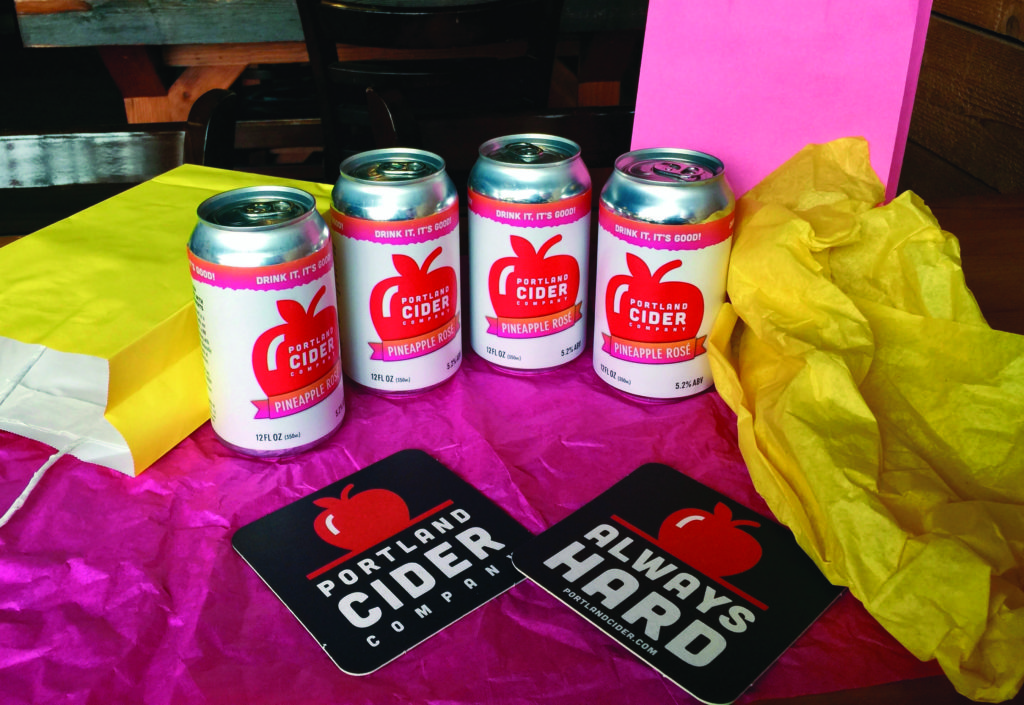
co-owner of Portland Cider Company, notes that consumer
demand continues to increase for ciders made with pineapples, pears, and other
non-apple fruit.
In his analysis, Parrish
does not view large-scale production of cider apples tak-ing off unless enough
cider apples are grown and harvested to bring the cost down to the same price
point as craft beer. Simply put, not enough consumers are willing to pay $10 to
$12 for a bottle of cider made with premium Pacific Northwest cider apples to
justify producing it on a large scale.
Also, Jorgensen says the
general cider distribution market trends towards cans, and thus towards higher
production volumes. He’s not aware of anyone with ac-cess to enough
“traditional” cider juice to be able to package and sell in large quantities,
let alone at a price point comparable to the more contemporary ciders on the
market.
Emily Ritchie, Executive Director at Northwest Cider Association, acknowledges the difficulties faced by craft cideries like the Portland-based Cider Riot. They closed their doors in November 2019 as they found themselves unable to produce their award-winning heirloom ciders while also maintaining a viable cidery and pub. “Right now, it’s harder to keep a business open when you’re just using cider fruit, as your price points are higher,” Ritchie says.
In assessing the future of
cider apples, Parrish points to cider’s long history as a working man’s drink.
“It’s never been seen as having a high intrinsic value, and will not be viewed
by the mass market as having a high value similar to wine.” In his estimation,
history has proven that cider apples will remain a niche market with a loyal
following.
Conversely, Ritchie
compares the potential growth of Pacific Northwest cider ap-ples to the growth
of the wine industry in Oregon over the last 30 years. Those who planted the
first vineyards in Willamette Valley and other AVA’s began from a place where
they had no name recognition into producing internationally re-nowned Pinot
Noirs and other varietals.
With the first harvest
from these aforementioned cider trees slated for 2020, will cider apples join
Pinot Noir grapes as a fruit that defines this region? Time and price point
will tell.
Those barrels hanging out in the distilleries, whether new, used
or refurbished, are just getting started. Oak barrels have a full and varied
life, complete with occasional travel between distilleries, breweries, wineries
and back again, sometimes internationally.
Just within the Kentucky
commonwealth, there is an inventory of over eight million barrels of Bourbon
and other spirits in various stages of the aging process. It’s the highest
inventory in 40 years and represents almost a two-barrel per person ratio.
That’s a lot of barrels coming onto the market, which coincides with a booming
secondary barrel market.
Impacting Flavors By Following The Seasons
One company helping those
previously used barrels live their best life is Moe’s Barrels, with locations
in Galt, Lodi and Fairfield, California. COO Dean “Deano” Wilson is a winemaker
and self-proclaimed foodie, so he found it natural to follow his passion by
selling previously used wine and whiskey barrels for secondary, flavor
impacting purposes.
“We source our barrels
from both the big and small producers,” said Wilson. “The boutique producers
are our preferred source for quality used barrels simply because they tend to
take care of them a little better. We buy our barrels in lots, with 99% of them
coming in already cleaned and sanitized. But we’ll look at, inspect and grade
them, giving them a wine or beer grade. If they don’t qualify for that, we can
use them as furniture or décor grade. A trend that has grown recently is to
sell the parts of used barrels to the artistic community, selling the
individual staves, barrelheads or barrel rings for creative endeavors.”
Wilson told Beverage Master Magazine that his formula for success is to try and follow the season for
selling a certain type of barrels.
“We get a lot of first and
second use barrels at harvest time, which is very good for cross-utilization.
White wine barrels are excellent for reuse with wine, Belgian style beers,
Cognacs and more. The barrels we get immediately following the crush are great
matches for repeated wine and bourbon use.”
Wilson gets his used
barrels delivered with blue painter’s tape over the bunghole. The tape covers
the hole for sanitary reasons but still allows the barrel to breathe. If they
sit around too long with the bung in, there’s a chance for mold growth. If the
barrels are left with the openings uncovered, they could dry out and start to
split. Moe’s does the rest, performing sanitation, rehydration, steam cleaning
and hot water rinsing.
“Communication is key for
customers looking to purchase used barrels,” said Wilson. “The buyer needs to
be comfortable in the relationship with the supplier. First and foremost, look
for quality, but be comfortable enough to ask for what you need. Know what
flavor profiles you’re looking to build. Use your nose and trust your smell
when inspecting the barrels that you are buying. Some staining and minimal hairline
cracks are fine, but larger, deeper cracks around the bunghole can be a sign of
a problem, and it’s always best to stay away from any hardened purple stains.
Check for holes or damage that could be related to borer beetles. We invite all
buyers into our warehouse, where you can completely inspect the barrels you’re
looking to purchase. Inspect them from head to head, inside and outside, noting
the year on the cooperage. Know the barrel’s origin, exactly what it was used
for and how many times it’s been used. A quality supplier will know and
willingly share this information about the barrels they’re selling. Cleanliness
and smell are your two biggest assets when looking at used barrels, so always
follow your nose.”
Moe’s Barrels keeps all of
its inventory inside a warehouse and available for buyer inspection.
“We want to recycle these
barrels and give them another life in the business, whether it’s for additional
distilling and brewing, for use as furniture and décor or ultimately selling
the parts to the artistic community. It’s a way towards sustainability.”
Kentucky Bourbon Barrel: The Name Says It All
What better place to
source local Bourbon and whiskey barrels than in Kentucky, the birthplace of
Bourbon and home to the renowned Kentucky Bourbon Trail. Noah Steingracher is
the man to talk to for North American and international craft sales at Kentucky
Bourbon Barrel, a full service used barrel cooperage, offering used Bourbon and
exotic spirit barrels.
Being right in the heart
of the Bourbon Trail in Louisville, Kentucky, Kentucky Bourbon Barrel primarily
sells Bourbon barrels sourced locally from all of the familiar names. When
Steingracher joined the company, he brought his international sourcing
experience with him, so exotic and international barrels are now in play as
well. He has sourced used barrels from spirits distributors, breweries, meaderies
and wineries for use in finishing and aging a potential customer’s product.
“We do it all,” said
Steingracher. “We sell the used barrels from barrel to stave, depending on
every customer’s unique needs. We have contracts with reputable and well-known
distilleries to empty and ship their used barrels directly to us. We inspect
them using our stringent guidelines for acceptable and unacceptable issues,
including the size of any distinguishable cracks. If needed, our experienced
team of coopers repair the barrels and make them fit to fill. We fill the used
barrel market for customers that may not have the time, expertise or source to
fill it on their own, and our experience and reputation are such that we have
customers worldwide. I’ve shipped to islands that I’ve had to find on Google
Maps. I’ve delivered barrels to the base of the Himalayas. There’s nowhere we
won’t deliver.”
Steingracher told Beverage Master Magazine that the used barrel market is affected by the same seasonal
changes that affect all brewers and distillers, as well as how the barrel will
be used.
“A used barrel can
function as either a vessel or an ingredient,” said Steingracher. “As a vessel,
used barrels are just the holder for the product. For example, if a brewer
wants to offer chocolate, porter or coffee stout, a used bourbon barrel fits
the need and will provide the expected stone fruit and vanilla notes. But if
you want to put out the best coffee stout, you should use a rye barrel so that
the unique flavor from the barrel imparts a distinguishable, peppery infused
difference. The right barrel will be a noticeable and valued ingredient in your
formula.”
Steingracher noted that
brewers and distillers sometimes become too easily attached to the brand
stamped on the barrel rather than going with barrels that fit their actual
needs, if for no other reason than to associate their brand with that of a
particular distillery.
“A mindset of only looking
towards a brand name rather than filling your flavor profile defeats the purpose
of striving for reliability and availability of your product offerings. Craft
distillers and brewers can always run into a situation of not being able to
find that particular distiller’s used barrel for the next batch. Frankly, they
usually don’t even have the marketing rights to use that particular distiller’s
name in their marketing. Jim Beam can release up to ten thousand barrels a
week, with Buffalo Trace releasing around six thousand a month, and then others
like Pappy are obviously extremely limited.”
“Relationships matter when
discussing that reliability and availability,” said Steingracher. “You need to
know the type, origin, and age of the barrel you’re getting. With all the
variants and combination spirits being distilled these days, what specific type
of Bourbon was the barrel last used for? Was a char put on it? What level? Was
it toasted? Repaired? How many years has it been used? Barrels can last a
hundred years or more if used and maintained properly. The oldest is probably
in Scotland, but I’ve personally seen some from aged before World War II. We do
buy some back from the distillers that we know care for them the right way, and
having access to our cooperage allows us to be able to make the repairs
necessary to keep them in circulation. You can certainly come through and check
on barrels yourself, but with our regular buyers, they know that the barrels we
send them are fit to fill.”
The flavor and use options
for used barrels are indefinite. With many craft distillers and brewers now
openly sharing their barrels between multiple brewing cycles, with proper use
and care, barrels can last indefinitely. It’s what you can do with them after
extensive uses and fillings that become limited.
The Barrel Mill’s Infusion
Spiral Technology Offers More Flavor Options While Decreasing Aging Time
Options for those barrels,
whether new or extensively used, have gotten much greater due to Infusion
Spiral technology from The Barrel Mill, a central Minnesota-based cooperage
that specializes in premium new oak barrels.
Len Napalitano is an infusion spiral expert with The Barrel Mill and told Beverage Master Magazine that their infusion spirals are perfect for creating unique flavor profiles and helping distillers get their product to market faster.
“Sometimes, you won’t find the right barrels for the flavor profile that you want to build for your customers,” said Napalitano. “With each fill, a wooden barrel loses part of its flavor offering and balance, and after three fills, barrels can be neutral regarding any noticeable flavor profile. These barrels are still obviously good for use, and now they can benefit from infusion spirals to regain that lost flavor profile.
You can achieve new oak flavor without the new oak barrel, which can be in short supply at times. Even when used with a new oak barrel, infusion spirals help get your product to market quicker. Our spirals are cut from premium oak, maximizing end-grain exposure for full extraction in weeks instead of months, saving the distiller money in labor, cost and time. The spirals are formed from barrel stave wood, cut through, then put into a convection oven to get their desired toast or char by way of our proprietary formula.”
Jeremy Wochnick, Sales
Professional for The Barrel Mill, said “The spirals range from a light toast to
a #3 char depending what the distillers want, and are available in not only the
standard, premium oak, but also in French oak and more exotic species like
sugar maple, cypress, cedar and more for experimental and unique small-batch
flavor profiles. Barrel quality results are obtained using any type of barrel,
carboy or stainless tank. The spirals have proven to be successful in spirits,
beers and wines as well as hard ciders and nonalcoholic drinks like ginger ale
and regular ciders. Infusion spirals can be used to add a flavor profile to
anything. We also have packs with blend options featuring different toast
levels. The spirals can be used once, and are inserted into your barrel through
the bunghole by way of netting or some sort of daisy chain for making retrieval
easy.”
And those infusion
spirals, after being retrieved from their time in the barrel? Well, it turns
out that they’re a pretty good addition to your outdoor barbecue.
Competition is fierce! With the number of craft breweries
and brewpubs continually on the rise year-over-year, it should come as no
surprise that current bar owners and operators must focus on more than just
word of mouth, radio ads or the occasional 30 seconds of air time on the local
network to create buzz about their business. Developing a marketing plan to
maintain visibility and relevance is key to both the initial and ongoing
success of your business.
But not just any marketing strategy will do.
A robust and diverse digital
marketing plan, one that also leverages
mobile technology, will play a significant role with effectively attracting and
retaining customers. Utilizing loyalty apps and a variety of marketing
automation initiatives will ultimately allow you to spend less time and
money on your overall marketing efforts, while simplifying and maintaining your
path for continued growth and success.
All of this
speaks to the advancement of technology within this space. As such, it should
come as no surprise that the role of technology continues to be on the rise,
both in terms of what is in the hands of you and your loyal customers – on
their phones and through a more personalized interface with your business – as
well as the technology your business may currently be utilizing.
The increased
involvement of technology is very much a generational change and one that craft
brewery and bar owners are recognizing as a means to become better and more
productive at what they do. The old saying, “work smarter, not harder” rings
true across the board.
Align yourself with mobile technology and mobile marketing
By 2020, 77% of the US population will be using
mobile technology daily. It’s the go-to technology for personalized
communications. Adding to this impressive statistic is the notion that thirty-five percent of smartphone users are
already claiming to use their phones more than 50 times a day—this is where craft
brewery and bar owners and operators can make the biggest impact. Personal means connecting with customer routines,
moods and of course, discerning taste buds. Data makes it possible—mobile makes
it deliverable.
Most consumers expect information to be available at their fingertips. The
vast majority of consumers are searching for information about a particular
business on their smartphone, with 84% of them contacting that
business as a result. An app with your menus, reservation, ordering, payment
and delivery capabilities maintain accessibility and convenience. And
convenience is a big part of the overall experience that customers are looking
for. If too much is being asked of your customers they may abandon your
business before ever stepping through the front door.
Attracting new customers, building
loyalty and running a variety of continuous promotions requires a heavy
investment of time and energy. An automated marketing strategy allows you to
focus on what you do best—providing great craft brews and exceptional service.
Capture your guests at every touch point with pre-scheduled communications,
photo push messaging, social media posts and more. Utilizing a robust app for your business allows you to
capture more first-time guests, make your regular guests feel like insiders and
remind customers who haven’t visited with you in a while why they should
consider returning.
Utilizing technology does not necessarily equate to an
entirely new business plan. However, it does mean that you now have an option
to execute your current plan better, while also being able to expand and grow
them quicker. An example of this is identifying those efforts that you may
currently be doing with email, paper punch cards or in-house only promotions
and taking that to a mobile and digital platform as a means to obtain more
control and visibility for everyone involved – customers and owners alike.
An app has the ability to
act as your personal, day-to-day assistant. If you don’t have the time or money
to hire and manage another employee, it might be time to look at technology as
the employee that never gets tired. With it you can send your loyal customers
birthday wishes, offers and alerts, giving them the personalized experience
they prefer and deserve. With an automated marketing strategy, you can create a
series of push notifications triggered by their activity. Notifications can be
sent right away, pre-scheduled or programmed to be delivered in certain
scenarios. Either way, it communicates why your business is the perfect option
for that moment.
Being social
with your media
Customers love to see what is offered
before deciding where to go. Show them, don’t just tell them. Instagram and
Pinterest are fantastic options for enticing people with tasty-looking and
thirst-quenching photos. It’s also beneficial to develop short, unique videos –
such as a quick recipe or a behind-the-scenes look at your brewery. And don’t
forget to use trending hashtags to increase post visibility. For example,
include #happyhour, #newbrew, or #foodielife, along with the name of your craft
brewery or bar. All of this will help keep your establishment top of mind with both
your regulars and first time customers.
Your customers are always
looking online to get ideas when thinking about visiting a new business. To
ease this process, make sure that all of your social profiles are up to date
and easy to read, as well as portray your business with the correct ambiance. It’s
not uncommon for new customers to be hesitant about visiting the unknown. Your
social presence needs to provide a compelling reason for them to engage with
you. However, never sell your business through a clouded social media lens. Customers
expecting one experience based on how your business is represented on social
media, only to walk in to something entirely different, will likely result in
negatively affecting your business as a whole.
Your social media
promotional efforts should also be backed up with an engaging customer-facing
website in order to complete the experience. This will further provide your
customers with an even better idea as to what they can expect when choosing
your business over the competition. Think of a great website as a first
handshake, before they commit to visiting your business for the first time.
Your website must be mobile friendly so that it can easily be viewed from your
phone without distorting the message or making the experience inferior in any
way.
Technology that’s
here to stay
This growing
trend in technology is a strong reflection as to how business owners are
looking to maintain their operations with their distributor – online,
expedited, quick-to-answer and respond and capable of addressing all of your
needs through a variety of technological channels and initiatives. It would be
unfair and, quite frankly, unacceptable, for a distributor to suggest that you
engage with your customers through the advancements of technology if they
themselves are not capable of providing the same level of service to meet your
day-to-day business needs. Technology will continue to impact and affect buyer
behavior. This can be seen both from the customers that frequent your
establishment, as well as the way that you engage (or want to engage) with
them.
Consumer preferences are changing
faster than ever, dictating how your business must respond. The distributor
that you have chosen to partner with should be in the business of delivering value.
When they deliver on value, it demonstrates an understanding of what is truly
important. A distributor capable
of delivering value and unforgettable experiences is infectious, and it will help
you, in turn, deliver unforgettable experiences to your own customers.
A thoughtful and in-the-know distributor should always have the pulse
of what consumers want as a means to help you innovate and continually reinvent
yourself in order to remain relevant in a highly competitive landscape. When
they can adapt and respond with speed and agility, they help you to keep pace, stay
relevant and often outpace your competition. Ultimately,
their business should be dedicated to helping you succeed with yours, utilizing
non-traditional methods to better serve your needs through more interesting and
engaging uses of product management, technology and education. While it’s true
that people do business with people they like, they also look to do business
with the people that are committed and able to execute. Finding a distributor
that can serve you better and become a comprehensive, go-to resource for all of
your business needs is the end game.
Technology is advancing faster than ever before and it’s here to stay. As a business owner, your digital media strategy should be flexible to more easily respond to what does and doesn’t work. Discover how your customers found out about you to gauge where they’re spending time online in order to maximize those platforms. Cross-link all of your online profiles and link your website to your mobile app and social media pages. In doing so, you’ll be able to strategically cover more ground while building a base of followers on their preferred platform. The end result will likely translate to an increase in new traffic, while also building upon an established foundation of regulars.
The craft cider industry in Canada is small
but growing. Consumers in Ontario, Canada’s most populous province, are
increasingly turning to cider when selecting alcoholic beverages, and the drink
is trending upward in other provinces as well.
Yet
as one Quebec cider producer found, it’s harder than it seems for Canadian
cider houses to expand sales into other provinces, even when their production
facilities are virtually next door.
Sarah Cole Cider was founded almost five years ago by Pierre Bissonnette
and wife Nathalie Laurin in small-town Lachute, just over an hour’s drive from
Montreal. Bissonnette’s back-ground was in the textile industry, but he was
ready to make a career change and set his sights on entering the craft beverage
industry.
Bissonnette
considered opening up a microbrewery but decided there was too much
competi-tion in the beer industry. He flirted with the idea of making wine but
decided in the end to ex-plore the emerging cider market. It didn’t hurt that
he already owned an established orchard.
For
23 years, Bissonnette had lived with his family on a sprawling equestrian ranch
in St.-André-d’Argenteuil, just outside of Lachute, and he had always dreamed
that it could be more than just a beautiful place to ride horses. The property
features a sugarbush and a small vine-yard, but in the end, it was the orchard
that inspired Bissonnette to reinvent himself as a craft cider producer. The
cidery’s name comes from two of Bissonnette’s horses: Sarah and Cole.
Contrary to some other Canadian cider producers, who have followed the
craft beer trend of developing a large variety of creatively flavored products,
Bissonnetted decided to zero in on perfecting a limited selection of
distinctive dry ciders. He narrowed the recipes down to three: Whip, a
European-style dry cider, Snaffle, which he likened to a Prosecco, and a
non-alcoholic option cheekily dubbed Mountie, the nickname of Canada’s Royal
Mounted Police.
“Dry
cider was missing in the market. Customers found most ciders too sweet,” he
said. “The ciders on the market that were dry were tasteless.”
Initially, Bissonnette focused on selling bottled cider in grocery
stores and dépanneurs (what Quebecers call the convenience stores that sell
alcohol), but quickly realized the difficulty of standing out on crowded
shelves as a still-unknown brand. He decided to switch gears and concentrate on
getting his cider into Montreal bars and pubs, and getting customers to try
Sa-rah Cole’s distinctive taste.
“Our strength is taste,” Bissonnette said.
Montreal’s bar and pub owners are a chummy bunch, and Bissonnette said
he found once he was able to place his cider in a few top-flight locations like
the Burgundy Lion pub and Bier-Market, and hotels like the Fairmont and
Sheraton, it became easy to get Sarah Cole on tap in other local hot spots.
“It’s a small world. Once one pub discovers us, a whole bunch follow,” he said.
When
Bissonnette submitted Sarah Cole’s flagship Whip cider to judges at the World
Cider Awards in 2017, he didn’t expect much to come of it. When he won the
Canada Sparkling Dry Award, it turned out to be a game-changer. Doors began to
open for Sarah Cole, and Bis-sonnette began to set his sights on growth beyond
Quebec. In particular, he hoped to break into Ontario, where sales of locally
made craft cider grew 54% between 2015 and 2016. How-ever, cross-border
distribution of his cider would be more challenging than expected.
“If
you have a vision to sell outside your own province, it is tough,” he said.
“It’s the provinces that make the barriers.”
One
of those barriers was taxes. When he did the math, Bissonnette found that
factoring the cost of paying taxes in both provinces would require him to
increase the price of Sarah Cole cider beyond what the Ontario market would
bear.
In
Ontario, Sarah Cole cider would be primarily distributed through the provincial
Liquor Con-trol Board of Ontario, which regularly spotlights homegrown
products. Although Lachute is less than a half-hour from the Ontario border,
being on the wrong side of that line would exclude Sarah Cole from being
featured alongside the locals.
Strategically,
Bissonnette decided there was an advantage in entering the Ontario market as an
Ontario cider house, as opposed to a Quebec import.
That’s how Sarah Cole came to be in the unique position of having not
one but two cider hous-es, making it a “local” producer in both Ontario and
Quebec. It’s been one year since Bis-sonnette took the leap and opened an
Ontario production facility in Vankleek Hill, right across the street from
craft beer heavyweight Beau’s Brewing, and he said the risk has paid off.
“Cider sales are just not comparable between Quebec and Ontario. Here in
Ontario, the people already love cider; you don’t need to convince them,”
Bissonnette said. “In Quebec bars, there is often only one cider on tap. In
Ontario, there can be up to four or five.”
Bissonnette said there is also a noticeable difference in culture among
Quebec cider-makers compared to Ontario. In Quebec, he said, the cider industry
is very competitive and tends to be marketed like wine. In Ontario, more cider
producers are taking their cue from craft beer.
According to information on the cider industry released by the
provincial government, there are now 70 businesses producing cider in Ontario.
The craft cider industry is now estimated to contribute $12.7 million to the
provincial GDP. Cider sales at the LCBO in 2017-2018 were over $11.5 million,
an increase of 42% from the previous year.
According to the latest data from Statistics Canada (from 2016-2017),
while beer remains the booze of choice for Canadians, representing 40% of total
alcohol sales—$9.1 billion annually—the market share of other beverages is
growing. Wine sales are growing, and now represent 32% of total alcohol sales.
On a
per-capita basis, Canadians of legal drinking age drink an average of just over
200 cans of beer per year, compared to only 20 cans of cider. While the market
share of ciders, coolers and similar beverages remains tiny in Canada, this
segment of the alcoholic beverage market is dynamic and growing.
Tastes have been gradually trending toward cider and coolers over the
past decade, with an average annual sales growth rate of 6.4% in this category
since 2007. Growth of imported beverages in this category was stronger than
Canadian products, increasing 13.9% annually compared to 4.6% for domestic
brands.
Sales of ciders, coolers and other refreshment beverages in Canada
totaled $0.9 billion in 2017, an increase of 8% year-over-year. Ciders and
coolers are most popular in the Yukon, with 7.2% market share, and least popular
in Quebec, representing just 1.2% of alcohol sales.
In
May, the governments of Canada and Ontario announced a joint investment in
Ontario craft cider production through the Canadian Agricultural Partnership to
support cideries to expand into new markets and increase productivity.
Canadian consumers’ growing interest in cider is now drawing attention
from larger beer manufacturers, Bissonnette said, which is increasing
competition in the industry. Canadian beer giant Labatt bought Quebec’s Lacroix
cider last fall and is using its marketing muscle to edge out smaller players
like Sarah Cole.
Although Bissonnette has lost some market share to Lacroix since the
acquisition, he said there is a silver lining: in promoting Lacroix, Labatt
must convince Canadians to consider cider as a beer alternative, which could
ultimately increase the number of consumers willing to give other ciders a try
as well.
“The
cider industry has been sleeping,” he said. “No cider house has the money to
put cider on the map like Labatt does.”