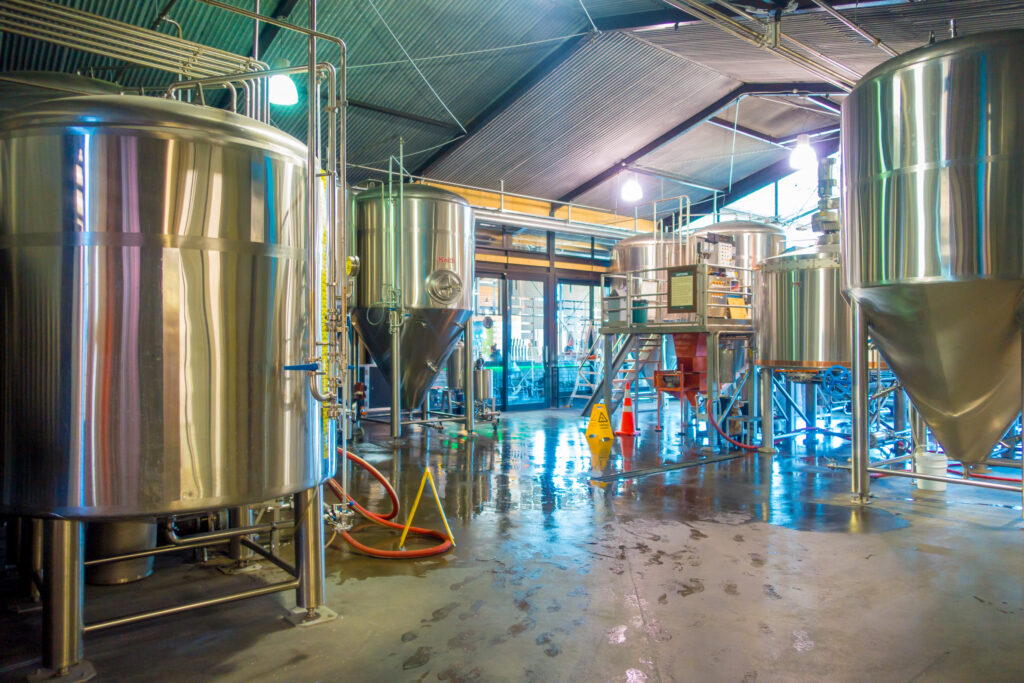
Keeping Off Flavors Out of Beer

By: Jessica Spengler

When consumers reach out for a craft beer, they have an expectation of how that beer should taste. When an off flavor sneaks in, it can lose the brewery customers and hurt their reputation. Keeping off-flavors out of beer is not as difficult as it may seem, as long as brewers have the tools and know-how to do so.

An off flavor is a defect in beer that does not adhere to the style or ruins its taste. Some of the most common are diacetyl, which takes the form of butter or theater popcorn; oxidation, which comes across as papery; dimethyl sulfide, a sweet corn taste; and acetaldehyde, often taking the shape of green apples.

Causes

Many different factors cause off flavors, but it often boils down to the same basic concept: a fault in the brewing process.

Raw ingredients

To make good beer, you have to start with good raw ingredients. Malt, hops and yeast should be stored correctly; monitored for defects, mold, and pests; and used as fresh as possible. However, it all begins at the source. Brewers should know what to look out for when buying raw ingredients, starting with the vendor.

“[When it comes to] raw ingredients, you have to see who you’re buying it from. Are they reputable suppliers? We buy a lot of malt from the Czech Republic, I’ve been over their twice visiting the malt house and the hop house. One important thing for the brewers is to be auditing their vendors, making sure they know you’re watching, put a face to who they’re shipping ingredients to,” said Scott Hovey, owner and brewmaster at Adelbert’s Brewing in Austin, Texas.

If an ingredient isn’t good on its own, it won’t be good in the beer, so don’t be afraid of sensory analysis, Hovey said. “It’s like going to the supermarket. You should smell it, look at it, check the taste, the flavor. Every bag of malt, I usually pop a couple of grains in my mouth just to see what it tastes like, what it feels like. It’s surveying the quality of the ingredients.”

Water should be free from chlorine, taste fresh, and be clear.

“With water, smelling it and tasting it is as easy and effective as any test. You can have the best yeast, and the best malt, and go through the process, but if your water has chlorine in it, that can ruin the beer,” said Jim Matt, Chief Scientific Officer at Rhinegeist in Cincinnati.

Cory Hebert, brewer at Adelbert’s, agrees. “If you can’t drink your water because it’s so chlorinated, or any number of factors, then it’s definitely not going to be good to brew with. If you brew with chlorinated water, then you’ll get what’s called chlorophenol in the final beer which will leave the beer tasting like you’re drinking a plastic bag or bucket,” he said.

Fermentation

The most common time for off flavors to develop during brewing is fermentation. The reason for this typically comes down to problems with yeast.

“An overwhelming number of off flavors can be created during fermentation,” said Matt. “A lot of the time, people don’t pitch enough yeast, or they pitch too much yeast, and they’ll get off flavors. If the yeast is contaminated with something else, you can definitely get off flavors from it. That’s where you need to use the greatest amount of care. Yeast needs to be handled in an aseptic environment, so we want to make sure that we handle that yeast free from any other contamination.”

The good news is that, often, when yeast is the problem, it’s also the solution. Keeping beer on yeast a little longer, whether in the tank or through a second fermentation in the bottle, will get off flavors like diacetyl out of the end product.

“I’d say that a good 30 to 40 percent of the bad flavors I’ve tasted in beers are just the beer was rushed through the process. They just didn’t give the yeast long enough to work on, or didn’t let it settle long enough. Time would have fixed it,” said Hovey.

Cleaning, Sanitation and Maintenance

As the old saying goes, brewing is 90 percent cleaning, and one of the reasons for that is to keep the beer as clean as possible.

“The number one prerequisite to being a brewer is an obsession about cleaning. It’s true. You’ve got to keep your plant clean,” said Phil Leinhart, Brewmaster and Brewery Operations Manager at Brewery Ommegang in Cooperstown, New York.

Rhinegeist’s Matt agrees and recommends using tools to ensure tanks are thoroughly wiped of contaminants. “Cleaning and sanitation is everything. If a tank is not clean, then by definition it’s not sanitary, so there are several different ways to determine the cleanliness of a tank. My favorite way is a thorough visual inspection, and that’s usually sufficient. We have a device here called an ATP meter. ATP (Adenosine triphosphate) is a compound contained within all living organisms. The brewers will swab a tank looking for ATP, and, if its in there, then the tank is not clean,” he said.

At Rhinegeist they use Peroxyacetic acid to keep their tanks clean, while the crew at Adelbert’s has been known to use a pH swing to purge their brewing vessels.

“Something we do here is cleaning with a high alkaline, and also highly acidic solutions, so we get what you call the pH swing. You use a caustic soda, so you have a very high pH, and then you follow it with acid, so you have very low pH, so then you’re killing pretty much any organic or inorganic compound that would be present,” said Hebert.

Proper, continuous maintenance will keep equipment running well while also ensuring that it won’t harm the beer.

“If your pump is sucking in air because the mechanical seal is bad, it’s gonna cause high oxygen in your beer and your beer is gonna go stale, it becomes oxidized. It’s all related. If you let your equipment get into disrepair, it’s going to affect the product at some point. If refrigerators and cooling aren’t cold enough, you don’t take control of your fermentation temperatures efficiently, and you can’t cool the beer as quickly. It can all eventually affect your beer,” said Ommegang’s Leinhart.

Detecting Off Flavors

There are a multitude of ways to test for off flavors. Breweries equipped with or who employ labs can “plate” samples of beer to test for organisms that may cause the brew to taste off. 

“Plating is [taking] a sample of beer from a tank and putting it on a media where microorganisms are encouraged to grow. Then we put that in an incubator, and we allow things to grow. If we see something growing that shouldn’t be, then we know something’s not right. Plating is a fairly inexpensive, not terribly time consuming, and fairly easy process to do that every brewery, in my opinion, should be doing. It’s pretty easy, and it doesn’t require a lot of technical skill,” said Matt.

More sophisticated technologies can also be implemented by brewery labs, such as a GeneDisc or a headspace gas chromatograph. These technologies require a higher level of skill to use and tend to cost more than many small breweries can afford. However, they aren’t always necessary when testing for off flavors. Nothing beats a good old fashion taste test.

“The analytical capabilities of a brewery can never compensate for the sensory tests that are required in your own sensory taste pallet. The reality is that you can’t go into a laboratory and get a complete understanding of the quality or the consistency of the beer just analytically,” said Christian Riemerschmid Von der Heide, President and CEO of Siebel Institute, the oldest brewery science institution in the United States.

Brewers will typically form a taste panel filled with brewers, servers and salespeople who have been trained to detect and identify specific flavors. Taste panels are used to help determine if an in-process or finished beer has any defects.

Siebel Institute, founded in 1872, offers flavor training kits for this purpose. Brewers can order from over 40 flavors, both wanted and unwanted, to “dose” their beers and hone the palates of their employees. The training has several purposes, most notably to find out who is particularly sensitive to certain smells and tastes, but also to make sure everyone is on the same page.

“You are not only training your people to detect, but also to identify. The difference is ‘Yeah, I can detect that there’s something different, but I cannot name it.’ We need to be able to do both so that everybody uses the same terminology; but also what is important is to know who is better at it than others. Therefore, if somebody that we know is very well trained in diacetyl and can pick it up at lower concentrations, and that person says ‘Yes, I can detect diacetyl,’ then this is the [person] that you pick [to test for it],” said Richard Dube, Director of Online Education at Siebel Institute.

“I would say sensory analysis and the taste panel is at least 50 percent of your quality control. So if 50 percent of your quality control isn’t standardized, using sensory kits, using flavor standards, then it becomes very subjective, and you have a vulnerability,” said Riemerschmid Von der Heide.

Using taste panels is highly recommended by Siebel, which offers on-site classes at their Chicago campus as well as an online curriculum. However, it’s wise to train all employees from the brewmaster to the newest salesperson in case a flavor problem comes about after the beer has reached consumers.

“Outside the plant, not only the brewers but also your sales force needs to be able to respond to a complaint at a bar or wherever that they say, ‘Your beer tastes funny.’ Because they have been trained to identify oxidation or diacetyl or other off flavors, they can pinpoint a little what the problem might be, or further educate the retailer and explain that it is actually part of the flavor profile of this specific beer,” said Dube.

Can off flavors be corrected?

Many off flavors can be corrected once they’re detected. For most, such as diacetyl, acetaldehyde, or sulfuric compound, a few extra days on yeast does the trick. When making certain beers, according to Adelbert’s Hebert, the process may be sped up, if done correctly.

“Many times too, especially back to diacetyl, in lagers and even English Ales, if you’re fermenting at say 68 F, you’ll do what’s called a diacetyl rest. You bring the beer up to 72 F towards the tail end of fermentation to force that yeast to clean up those off flavors and make sure everything gets scrubbed and is nice and neat and ready to drink,” said Hebert.

An unintended sour may work well blended into another beer in the brewery’s sour program. Even in the case of non-sour off flavors, the beer may be successful in a blend.

“When something is not within spec you can rebrand it as something else if the off flavor isn’t too bad. You can blend it. Sometimes we’ll take something that’s just not true to spec, and we’ll take it down in our sour program. Sometimes the secondary organisms can clean up those off flavors,” said Matt.

However, sometimes off flavors are impossible to correct. Butyric acid, often described as “baby sick;” medicinal flavors and hydrogen sulfide (rotten eggs) are examples of off flavors that cannot be corrected, and the batch will be “dumped.” When dumping becomes inevitable, which according to Matt is not that common, don’t let it become a sore point.

“There are times you have to swallow your pride and maybe take a little bit of a hit to keep quality up. Nobody likes dumping beer, but I’d rather dump a batch of beer that is not true to brand than sell it and be subpar and get a bunch of complaints from your customers,” said Matt.

Keeping off flavors out of beer doesn’t have to be complicated. According to our experts, with knowledge, foresight and a little elbow grease, brewers can substantially decrease their chances of bad tasting beer.

“It’s a multi-disciplinary approach. Just knowing your process and knowing where you’re at risk and then controlling those risks. Be knowledgeable of defects and how they’re caused, control your process, especially those critical quality control points, and then test both in the lab and with a taste panel so that you know that you’re okay,” said Leinhart.

“Pay attention to your customers and do the absolute best you can cleaning, sanitizing and using the best ingredients possible. Don’t compromise. The cheapest test that you can do is sensory. Taste everything. Let that guide you to making a quality product.”

“Just keep your brewhouse clean, make sure your ingredients are fresh, keep your yeast happy, and know your process, and you should be 95 percent of the way there,” said Hebert.
Kombucha with a Kick

By: Nan McCreary

Artisanal cheese for sale at artisan market in Ile rousse

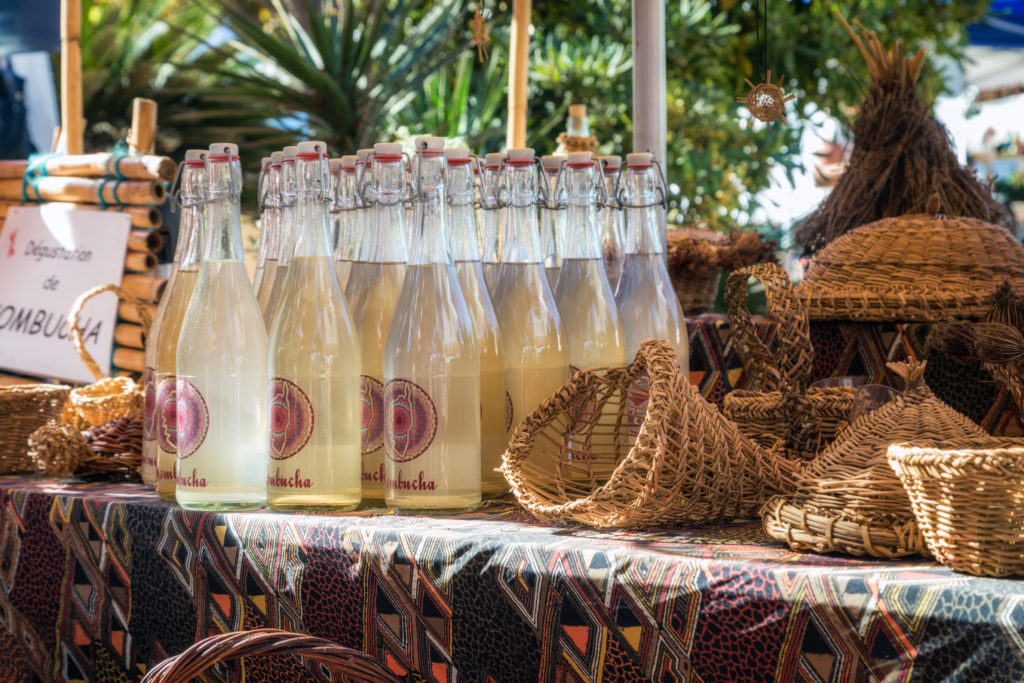
Hard Kombucha is one of the latest drinks to make a splash in the “better-for-you” alcoholic beverage market. But what is hard kombucha, you ask? Wait, what is kombucha?

  Kombucha traces its roots to China’s Qin Dynasty (221 BC), where it was known as the “The Tea of Immortality” for its medicinal properties. The drink is made by mixing sweetened black or green tea with a symbiotic culture of bacteria and yeast called SCOBY and allowing it to ferment. The result is a tart and sour, lightly-carbonated drink that’s naturally gluten-free, low in sugar and chocked full of probiotics. With health-conscious millennials driving today’s beverage industry, it’s no wonder that kombucha is experiencing a revival, and is one of the fastest-growing beverages on the market today.

  Kombucha first went mainstream in the U.S. in 1995 when GT Dave, the man behind GT’s Kombucha, established the first and largest kombucha brand in the industry. Promotion for the drink touted the health benefits of both tea and probiotics, and sales immediately exploded in supermarkets throughout the country.

With an ABV of less than 0.5%, kombucha could be sold legally as an alcohol-free beverage. In 2010, however, a Department of Agriculture inspector discovered a kombucha at a Maine Whole Foods that contained alcohol levels well above 0.5%. It was pulled off the shelves nationwide, and producers were left with three options: keep their kombuchas under 0.5% and follow strict labeling laws, sell them in the beer section at their current ABV, or create an intentionally higher ABV beverage. For those who chose the latter — a “hard” kombucha — the crisis presented a golden opportunity. The low-alcohol beverage with a healthy dose of probiotics caught on quickly, and in just a few short years, became the hot new kid on the beverage-industry block. According to Nielsen, sales of hard kombucha spiked 247% in the 52 weeks leading up to April 20, 2019.

  One of the first to create high-alcohol kombucha was Dr. Hops, based in San Francisco. “I was working in Berkley with the fitness and yoga community, and craft beer was exploding and doing amazing things,” said CEO and founder Joshua Rood. “Non-alcoholic kombucha was also growing rapidly. I’ve always been a food and beverage guy. When I saw this happening, I realized you could make a high-alcohol kombucha that would be authentic to both categories, offering the benefits from the health properties of straight kombucha, and the flavor, complexity and pleasure of a really good craft beer.”

  With only one hard kombucha on the market at the time—Unity Vibration in Ypsilanti, Michigan—Rood approached a brewer who was making both beer and kombucha and asked him to make a prototype that offered the best of both beverage worlds. “The prototype was awesome,” he said.  “At the same time, my wife had an adorable rabbit named Dr. Hops, and I thought, ‘what a perfect name for a health-conscious kombucha that’s all hopped up.’ So that’s why we named our product Dr. Hops.”

  While Rood was developing his product in 2016, another hard kombucha hit the market: Boochcraft, California’s first high-alcohol kombucha, and today’s market leader in sales.

  To make hard kombucha, producers start with a mixture of sugar, tea and water. For his base, Rood selects the highest organic quality and fair trade tea he can obtain. Next, he adds SCOBY—a combination of bacteria and yeast that he’s developed in-house—and adds it to the tea mixture. The concoction ferments for a week, allowing the SCOBY to work and make kombucha what it is: a probiotic, sour and flavorful drink. To raise the alcohol level beyond the 0.5% from the initial fermentation, Rood adds a Belgian Ale yeast that creates a slight beer quality and lets that mixture ferment for another week. This step raises the alcohol level to 0.7 to 1%.  Finally, after the second fermentation is complete, Rood adds hops, fruit, herbs or spices and “lets it rest” to let the flavors develop. 

“This is a very mellow waiting period,” Rood told Beverage Master Magazine. “We gently stir the mixture and let the particulate matter sink to the bottom. Then we add a bit of sugar, which gives the kombucha a touch of sweetness, and finally, we package it.”

  Dr. Hops makes four standard products: the IPK, similar to a juicy IPA; the Lop, a tart, refreshing pomegranate chai with prominent grapefruit notes; the Jackalope, with prominent ginger, lime and mint flavors; and the Blinky, with hints of basil and lemongrass. All are dry-hopped with hops sourced from the Pacific Northwest. Sugars vary from 4-6%, and ABV runs from 5-9%. Flavors come from fresh, organic fruits rather than flavoring compounds.

  In terms of legal classification, hard kombucha is typically classified as a beer rather than a wine product. The Dr. Hops production facility is similar to a brewery, with stainless steel tanks and temperature, pressure and oxygen controls. To produce optimum results, brewers have to be very meticulous, Rood explained. “The process goes through many different phases, and each phase has the potential to create benefits as well as off-flavors. It’s really an art. We have to check fermentation constantly, as it’s a living process and not an exact formula, although we’re getting pretty good at it.”

  Ultimately, Rood’s goal is to create a product that is “good for your belly” and “good for your buzz.”  Hard kombuchas have less sugar than anything in the alcohol world, he said, except for pure vodka. “As Americans, sugar is one of the worst things we consume, so we keep ours as low as possible.”

  Rood also uses a kombucha strain that’s rich with alcohol-resistant lactobacillus, a health-enhancing probiotic. Because Dr. Hops’ products are unfiltered and unpasteurized (heating from pasteurization destroys enzymes, organics and flavors), the probiotics stay in the beverage, helping the body process not just food, but also alcohol. Another health benefit: Dr. Hops uses only organic fruits, roots and herbs, which provide additional nutrients.

  “Essentially, we’re trying to eliminate the junk people put in their bodies while drinking alcohol,” Rood said. “When you take all of our ingredients together, you have a beverage that’s remarkably distinct and much healthier.”

  As more and more health-conscious imbibers turn to beer/kombucha blends, Dr. Hops is enjoying great success. Currently, the company produces 1,000 barrels a year, with plans to triple—or even quadruple—production within the next year.  Right now, they package their kombucha in bottles, but Rood intends to switch to cans soon. Dr. Hops is available in liquor stores and independent food stores and markets in Northern California and is on tap in several bars in the Oakland, California area. Rood’s goal is to increase distribution to the western third of the country and Florida. 

  “Sales have been amazing,” he said.  “It’s something people want, but most don’t know it until they discover it, and then they get very excited about it.”

  Within the past couple of years, many up-and-coming hard kombucha brands have emerged within the growing industry, including Flying Embers, KYLA, JuneShine and Lambrucha. Established kombucha producers are also getting in on the action. Wild Tonic, originally a regular kombucha brand, created two hard kombucha products: one with 5.6% ABV and one with 7.6% ABV. Kombrewcha, one of the country’s pioneering hard kombucha brands, received backing from AB InBev’s investment arm, ZX Ventures, to produce a new line of hard kombuchas.

  It’s not only AB InBev getting in on the action, however. Craft breweries have also extended their product portfolio to include hard kombucha. For example, New Holland Brewing, a Holland, Michigan craft beer brand that’s been around for over 20 years, now produces a seasonal offering that combines the flavors of an IPA with Kombucha. Boston Beer, maker of Samuel Adams, recently launched Tura Hard Kombucha. And Deschutes Brewery in Bend, Oregon collaborated with Humm Kombucha to create Humm Zinger, “a beer that blends together Humm’s tangy grapefruit kombucha with Cascade hops and Pilsner malt for big citrus flavor with a profound dry hop character.”

  Clearly, hard kombucha is hitting the mainstream. After all, what’s not to like? It’s all-natural, gluten-free, organic and vegan, low in sugar and calories yet contains enough alcohol to be fun. As part of the low-alcohol trend, which includes hard seltzers, hard ciders and low-alcohol spirits, hard kombucha has a lot of opportunities to grow. If you think you might be one of those who want it but don’t know it yet, hustle off to your favorite vegan restaurant, grocery or liquor store and check it out.

“SMART” Brewing: Innovation & New Technology for Craft Breweries

By: Cheryl Gray

man inspecting a machine

Brewers have needed packaging and tools to dispense their products ever since beer was first brewed a millennium ago. Today, innovation and technology that transform a good idea into a great one are driven by industry titans who know how to keep pace with the demands of a highly competitive field, putting craft breweries in a position to stay a step ahead in an increasingly crowded global marketplace.

Print-on-Demand With Abbott Company

  One of those titans is Wisconsin-based Abbott Company, in business for 95 years, specializing in industrial marking and packaging solutions. Tim Stark, Abbott’s president, points to the rise in craft brewing as the catalyst for creating a demand for innovation and new technology aimed at achieving best practices in product identification operations.

  With craft breweries increasing their production capacity and distribution, Stark says there is a correlating trend towards print-on-demand inkjet technology replacing pre-printed boxes and hand-applied labels.

  “Print-on-demand inkjet technology offers many benefits, including a lower cost-per-mark compared to pressure-sensitive labels, as well as more flexibility for managing corrugate stock volumes and case sizes. Our recommended high-resolution inkjet technology, FoxJet ProSeries print heads, has been recently enhanced to print scan-able barcodes on porous cases at higher speeds consistently.”

  Stark says that in automating the printing of product identification on cases, today’s brewers are also looking at improving efficiency by integrating what he calls “scan and select” capabilities into their operation.  

  “This makes product changeovers, and subsequent print message changes effortless and free of human error. A hand scanner is used to scan a barcode from a work order, which selects the correct message to be printed on the case. This is often paired with a barcode vision system which can verify the readability of barcodes before they are palletized and shipped to retailers, allowing a turnkey case coding solution that will scale as breweries continue to grow.”

  Craft breweries are also looking for innovation when it comes to products that solve their primary packaging identification needs, says Stark.

  “We also see a growing desire for high contrast date coding on bottles and cans that are dark in color,” he said. “With a focus on freshness, an increasing number of craft breweries are requesting to use yellow and light blue inks to make the date code and other important product information pop out to consumers. The introduction of the Linx 8900 Plus soft pigment inkjet printer allows brewers to print high contrast codes on their bottles and cans while avoiding the difficulty commonly found with traditional pigmented ink printers. “

Shrink Sleeves With PDC International

  PDC International is another company at the forefront of an industry upon which many craft breweries depend—shrink sleeve labeling. From the moment the business opened in 1968, anticipating customer needs is what the Connecticut-based company has brought to its brewery clients. PDC Founder Anatole Konstantin immigrated to the United States from post-WWII Eastern Europe, building his company out of the den of his home. 

  Through vertical integration and in-house controls, including its own machine shop, PDC is known for quickly solving customers’ production challenges. Neal Konstantin is president of the company his father, Anatole, founded fifty years ago. He says the widespread use of shrink sleeves, a technology allowing a brewery to place its brand name on blank cans rather than having to inventory large quantities of pre-printed cans, saves warehouse space, simplifies logistics and saves money.

  “The recent widespread adoption of shrink labeling by breweries has resulted in machine refinements for labeling [either] full or empty aluminum cans of all sizes,” says Konstantin. “Special product handling ensures that aluminum cans are not dented or marred when processed through the labeler. PDC’s proprietary cutting blades now last millions of cycles between sharpenings, saving downtime and labor and reducing overall costs. We offer the widest range of shrink sleeve label applicators in the industry, ranging from entry-level systems up to 400-500 pm.”

Release the Pressure With

R&S Supply Company

  Don’t be thrown by the Napa Valley location of R&S Supply Company. It also caters to craft breweries, along with wine and other industries in all 50 states and 10 countries around the globe. Founded in 1984, R&S Supply Company is a distributor of products from brands such as Tassalini Valves, Strahman Washdown Products, Definox Valves, Texcel Brewers & Spirits hose assemblies and Dixon Sanitary Pumps & Fittings.

  Company President Paul N. Roberts touts the newest product line that R&S Supply has recently added to its roster. “The newest product line that we have added is Bradley Industrial Products and Keltech Tankless Electric Water Heaters. The Keltech Tankless Water Heaters provide instant hot water anywhere in a production facility when mounted on our cart.”

  Roberts points to the Italian-manufactured line of Tassalini Sanitary Valves as one of his company’s top innovative products. Industry insiders know that the name Tassalini has been around since 1922 when it first produced products for the aeronautics industry. R& S Supply Company is Tassalini’s largest U.S. distributor, Roberts says, stocking all original manufacture replacement seals and repair kits, along with an entire line of Tassalini Valves for every need.

“We stock the complete line including butterfly valves, actuators, check valves, ball valves, tank vents, sight glasses, plug valves and all the accessories and repair parts.”

Pour One Out With Xpressfill Systems

  A relative newcomer to the industry of packaging and tools, XpressFill Systems LLC is led by owner Randy Kingsbury, a mechanical engineer with more than 30 years of experience. Based in San Luis Obispo, California, XpressFill Systems is a global player in the development of affordable, efficient filling equipment for the brewing industry, with customers in the United States as well as Europe, Australia, South America and Asia.  

  “Our equipment is small—tabletop—making it easy to position in smaller brewery operations. It is simple to operate and maintain, requiring only one or two operators to efficiently maintain the quantity and quality of the beverage,” Kingsbury says.

  XpressFill introduced its first filler for brewers in 2014, a tabletop counter pressure filler for bottles with a pair of fill spouts. This product, Kingsbury says, was designed to launch its fill sequence with a carbon dioxide purge, then seal and fill the bottle to a level sensor that automatically stops the fill so the bottle can be removed and capped. XpressFill edged its technology forward, developing its four-spout counter pressure bottle filler, capable of filling 12-ounce bottles at a rate of 400 per hour.  In 2018 the company introduced counter-pressure fillers for cans.  

  “The XF4500C has two fill spouts and is capable of filling 300 12-ounce cans per hour. To further satisfy the demand for filling cans, the XF2200 open fill unit was developed. This provided a faster, less expensive alternative, capable of filling 360 12-ounce cans per hour with two spouts, while still providing quality fills,” says Kingsbury.

  More innovation and technology is in store with the development of XpressFill’s new two-spout filler, the XF280W. “Current quality control of fill volumes is accomplished by craft brewers weighing their filled cans, which is an additional step following the filling,” Kingsbury says. “We set out to explore the possibility of providing a user-friendly and cost-effective filler that would measure the weight of dispensed beer to save the additional weight verification step.”

Expand With iStill

  For craft breweries exploring the world of distilling, Netherlands-based iStill offers an automated, robotized distillery unit that promises a simple setup with only a water hose and electrical plug needed to begin.

  “Due to our scientific approach to distilling, we have been able to create an easy to operate, versatile machine that takes the magic out of distilling great spirits, and makes whiskey, vodka, gin and rum production an easy add-on to the already existing brewery,” says Edwin van Eijk, CEO of iStill.

  “The iStills come in sizes ranging from 26 to 1300 gallons. Each and every machine can make every distilled product. If the craft brewer does not want to re-invest in expanding mashing or fermenting capacity, the iStills can mash and ferment as well. Everything takes place in the same unit.”

  iStills offers a broad range of services, Eijk says, to assist its more than 700 clients worldwide, including iStill University, which educates and trains approximately 200 distillers annually in North America, Europe, Asia and Australia. 

  Innovation and technology are ever-evolving as leaders in the packaging and tools industry find new ways not only to push themselves but also, push craft breweries into thinking smarter about ways to make their products move quickly in the marketplace.

Finishing and Aging Options Evolve with Booming Secondary Barrel Market

By: Gerald Dlubala

barrels outside a facility

Those barrels hanging out in the distilleries, whether new, used or refurbished, are just getting started. Oak barrels have a full and varied life, complete with occasional travel between distilleries, breweries, wineries and back again, sometimes internationally.

  Just within the Kentucky commonwealth, there is an inventory of over eight million barrels of Bourbon and other spirits in various stages of the aging process. It’s the highest inventory in 40 years and represents almost a two-barrel per person ratio. That’s a lot of barrels coming onto the market, which coincides with a booming secondary barrel market.

Impacting Flavors By Following The Seasons

  One company helping those previously used barrels live their best life is Moe’s Barrels, with locations in Galt, Lodi and Fairfield, California. COO Dean “Deano” Wilson is a winemaker and self-proclaimed foodie, so he found it natural to follow his passion by selling previously used wine and whiskey barrels for secondary, flavor impacting purposes.

  “We source our barrels from both the big and small producers,” said Wilson. “The boutique producers are our preferred source for quality used barrels simply because they tend to take care of them a little better. We buy our barrels in lots, with 99% of them coming in already cleaned and sanitized. But we’ll look at, inspect and grade them, giving them a wine or beer grade. If they don’t qualify for that, we can use them as furniture or décor grade. A trend that has grown recently is to sell the parts of used barrels to the artistic community, selling the individual staves, barrelheads or barrel rings for creative endeavors.”

  Wilson told Beverage Master Magazine that his formula for success is to try and follow the season for selling a certain type of barrels. 

  “We get a lot of first and second use barrels at harvest time, which is very good for cross-utilization. White wine barrels are excellent for reuse with wine, Belgian style beers, Cognacs and more. The barrels we get immediately following the crush are great matches for repeated wine and bourbon use.”

  Wilson gets his used barrels delivered with blue painter’s tape over the bunghole. The tape covers the hole for sanitary reasons but still allows the barrel to breathe. If they sit around too long with the bung in, there’s a chance for mold growth. If the barrels are left with the openings uncovered, they could dry out and start to split. Moe’s does the rest, performing sanitation, rehydration, steam cleaning and hot water rinsing.

  “Communication is key for customers looking to purchase used barrels,” said Wilson. “The buyer needs to be comfortable in the relationship with the supplier. First and foremost, look for quality, but be comfortable enough to ask for what you need. Know what flavor profiles you’re looking to build. Use your nose and trust your smell when inspecting the barrels that you are buying. Some staining and minimal hairline cracks are fine, but larger, deeper cracks around the bunghole can be a sign of a problem, and it’s always best to stay away from any hardened purple stains. Check for holes or damage that could be related to borer beetles. We invite all buyers into our warehouse, where you can completely inspect the barrels you’re looking to purchase. Inspect them from head to head, inside and outside, noting the year on the cooperage. Know the barrel’s origin, exactly what it was used for and how many times it’s been used. A quality supplier will know and willingly share this information about the barrels they’re selling. Cleanliness and smell are your two biggest assets when looking at used barrels, so always follow your nose.”

  Moe’s Barrels keeps all of its inventory inside a warehouse and available for buyer inspection.

  “We want to recycle these barrels and give them another life in the business, whether it’s for additional distilling and brewing, for use as furniture and décor or ultimately selling the parts to the artistic community. It’s a way towards sustainability.”

Kentucky Bourbon Barrel: The Name Says It All

  What better place to source local Bourbon and whiskey barrels than in Kentucky, the birthplace of Bourbon and home to the renowned Kentucky Bourbon Trail. Noah Steingracher is the man to talk to for North American and international craft sales at Kentucky Bourbon Barrel, a full service used barrel cooperage, offering used Bourbon and exotic spirit barrels.

  Being right in the heart of the Bourbon Trail in Louisville, Kentucky, Kentucky Bourbon Barrel primarily sells Bourbon barrels sourced locally from all of the familiar names. When Steingracher joined the company, he brought his international sourcing experience with him, so exotic and international barrels are now in play as well. He has sourced used barrels from spirits distributors, breweries, meaderies and wineries for use in finishing and aging a potential customer’s product.

  “We do it all,” said Steingracher. “We sell the used barrels from barrel to stave, depending on every customer’s unique needs. We have contracts with reputable and well-known distilleries to empty and ship their used barrels directly to us. We inspect them using our stringent guidelines for acceptable and unacceptable issues, including the size of any distinguishable cracks. If needed, our experienced team of coopers repair the barrels and make them fit to fill. We fill the used barrel market for customers that may not have the time, expertise or source to fill it on their own, and our experience and reputation are such that we have customers worldwide. I’ve shipped to islands that I’ve had to find on Google Maps. I’ve delivered barrels to the base of the Himalayas. There’s nowhere we won’t deliver.”

  Steingracher told Beverage Master Magazine that the used barrel market is affected by the same seasonal changes that affect all brewers and distillers, as well as how the barrel will be used.

  “A used barrel can function as either a vessel or an ingredient,” said Steingracher. “As a vessel, used barrels are just the holder for the product. For example, if a brewer wants to offer chocolate, porter or coffee stout, a used bourbon barrel fits the need and will provide the expected stone fruit and vanilla notes. But if you want to put out the best coffee stout, you should use a rye barrel so that the unique flavor from the barrel imparts a distinguishable, peppery infused difference. The right barrel will be a noticeable and valued ingredient in your formula.”

  Steingracher noted that brewers and distillers sometimes become too easily attached to the brand stamped on the barrel rather than going with barrels that fit their actual needs, if for no other reason than to associate their brand with that of a particular distillery. 

  “A mindset of only looking towards a brand name rather than filling your flavor profile defeats the purpose of striving for reliability and availability of your product offerings. Craft distillers and brewers can always run into a situation of not being able to find that particular distiller’s used barrel for the next batch. Frankly, they usually don’t even have the marketing rights to use that particular distiller’s name in their marketing. Jim Beam can release up to ten thousand barrels a week, with Buffalo Trace releasing around six thousand a month, and then others like Pappy are obviously extremely limited.”

  “Relationships matter when discussing that reliability and availability,” said Steingracher. “You need to know the type, origin, and age of the barrel you’re getting. With all the variants and combination spirits being distilled these days, what specific type of Bourbon was the barrel last used for? Was a char put on it? What level? Was it toasted? Repaired? How many years has it been used? Barrels can last a hundred years or more if used and maintained properly. The oldest is probably in Scotland, but I’ve personally seen some from aged before World War II. We do buy some back from the distillers that we know care for them the right way, and having access to our cooperage allows us to be able to make the repairs necessary to keep them in circulation. You can certainly come through and check on barrels yourself, but with our regular buyers, they know that the barrels we send them are fit to fill.”

  The flavor and use options for used barrels are indefinite. With many craft distillers and brewers now openly sharing their barrels between multiple brewing cycles, with proper use and care, barrels can last indefinitely. It’s what you can do with them after extensive uses and fillings that become limited.

  The Barrel Mill’s Infusion Spiral Technology Offers More Flavor Options While Decreasing Aging Time

  Options for those barrels, whether new or extensively used, have gotten much greater due to Infusion Spiral technology from The Barrel Mill, a central Minnesota-based cooperage that specializes in premium new oak barrels.

  Len Napalitano is an infusion spiral expert with The Barrel Mill and told Beverage Master Magazine that their infusion spirals are perfect for creating unique flavor profiles and helping distillers get their product to market faster.

  “Sometimes, you won’t find the right barrels for the flavor profile that you want to build for your customers,” said Napalitano. “With each fill, a wooden barrel loses part of its flavor offering and balance, and after three fills, barrels can be neutral regarding any noticeable flavor profile. These barrels are still obviously good for use, and now they can benefit from infusion spirals to regain that lost flavor profile.

You can achieve new oak flavor without the new oak barrel, which can be in short supply at times. Even when used with a new oak barrel, infusion spirals help get your product to market quicker. Our spirals are cut from premium oak, maximizing end-grain exposure for full extraction in weeks instead of months, saving the distiller money in labor, cost and time. The spirals are formed from barrel stave wood, cut through, then put into a convection oven to get their desired toast or char by way of our proprietary formula.”

  Jeremy Wochnick, Sales Professional for The Barrel Mill, said “The spirals range from a light toast to a #3 char depending what the distillers want, and are available in not only the standard, premium oak, but also in French oak and more exotic species like sugar maple, cypress, cedar and more for experimental and unique small-batch flavor profiles. Barrel quality results are obtained using any type of barrel, carboy or stainless tank. The spirals have proven to be successful in spirits, beers and wines as well as hard ciders and nonalcoholic drinks like ginger ale and regular ciders. Infusion spirals can be used to add a flavor profile to anything. We also have packs with blend options featuring different toast levels. The spirals can be used once, and are inserted into your barrel through the bunghole by way of netting or some sort of daisy chain for making retrieval easy.”

  And those infusion spirals, after being retrieved from their time in the barrel? Well, it turns out that they’re a pretty good addition to your outdoor barbecue.

Will Cannabis Beverages Cannibalize Beer Sales?

By: Briana Tomkinson

Detail of cold glass of beer with cannabis leaf, marijuana infused beverage concept

Cannabis was legalized in Canada a year ago; however the production and sale of edibles, in-fused beverages and tinctures, remained illegal—until now.

  The first legal cannabis-infused drinks and edibles are expected to hit shelves as early as De-cember. Many have been designed to produce a high mimicking the effects of alcohol in terms of onset, intensity and duration.

  While the federal government officially legalized edible cannabis products on Oct. 17, produc-ers still need to obtain Health Canada approval, a process that industry insiders expect to take a minimum of 60 days.

  Some products will include only CBD, a non-intoxicating compound found in cannabis, while others will have THC, the psychoactive compound in marijuana that produces a “high.”

  According to a report from Deloitte, the cannabis-infused beverage market will be worth an estimated $529 million per year in Canada, most of which will be on top of existing cannabis spending. Deloitte predicts sales of these beverages will come at the expense of beer, wine and other alcohol as “cannabis-curious” customers experiment with marijuana instead of booze.

  The Deloitte report notes that alcohol and tobacco companies are looking for opportunities to enter the legal cannabis industry to avoid losing market share. Pharmaceutical companies are also entering the market, as consumers turn to CBD oil and cannabis to self-medicate.

Mild High Aimed at New Cannabis Consumers

  Deloitte predicts cannabis-infused beverages will appeal to older, often female, Canadians who are concerned about the adverse effects of alcohol and are interested in trying cannabis yet are turned off by the idea of smoking it.

  Most producers of THC-infused drinks are aiming for a formulation that triggers a high within about 15-20 minutes and lasts no more than a few hours. This effect is in contrast to most cannabis edibles and oils, which are slower to take effect and produce a high that can last as long as six hours.

  Unlike beer or wine, there’s little risk of a hangover from cannabis beverages. Some varieties can also boast they are low-calorie drinks, which could appeal to more diet-conscious con-sumers. Prices are expected to be similar to that of craft beer; however, the beverages can on-ly be sold at legal cannabis outlets, not grocery stores or alcohol retailers.

  In October, Ontario-based Canopy Growth Corp announced the launch of 13 cannabis-infused drinks, some boasting as few as five calories per serving. The drinks range from pure distilled cannabis, intended to be mixed with sodas or other beverages, to pre-mixed blends of canna-bis with tonic, ginger ale, cola, soda and fruit-infused sparkling water.

  Unlike some legal producers in the U.S., Canopy Growth’s lineup focuses on low-dosage bev-erages with an effect similar to that of a single beer or mixed drink. According to the Ottawa Citizen, while Health Canada allows a THC concentration of 10 mg per package, 10 of Canopy Growth’s 13 products will have 2.5 mg or less, producing a mild high aimed at appealing to inexperienced cannabis users looking for an alternative to alcohol.

  Truss Beverage Company has also announced it will be ready to release cannabis-infused beverages in December, including CBD-infused spring water and THC-infused drinks. Compet-itor Fluent Beverage Company said it would be prepared to release CBD-infused beverages but is still working on formulations with THC. 

Beer Brands Push Into Cannabis Beverages

  Ever since Canada legalized the sale and consumption of cannabis, big beer companies have been teaming up with cannabis companies to develop cannabis-infused beverages.

  Canopy Growth, for example, has benefited from billions of dollars of investment from U.S.-based Constellation Brands, maker of Corona. Truss Beverage is the product of a joint venture between Molson Coors and cannabis producer Hexo, and Fluent Beverage is backed by An-heuser-Busch, who has partnered with British Columbia-based pot producer Tilray.

  In June, Bloomberg reported that Molson estimates cannabis beverages will make up 20-30% of Canada’s legal cannabis market. However, a report by Deloitte estimated drinks make up just 1% of sales by value and volume in U.S. states where pot is legal.

Marketing, Labeling Restrictions on Cannabis Beverages

  If cannabis beverage producers want to steal market share from beer and wine, they need to overcome the strict limitations on marketing, packaging, labeling and distribution imposed by Health Canada.

Starting a New Craft Distillery: Part 3

By: Donald Snyder

Man in front of distillery - copper
Man in front of distillery – copper

  Consumers are thirsty and they want something new. Increased demand for all things local and unique have helped pave the way for a surge of craft distilleries across the country. For those interested in starting a craft distillery today, there is a wealth of resources available to help navigate the unknown. Many toes have been stubbed by those who have been through the startup gauntlet and came out successful on the other side, lighting the path that new distillers can follow. Finally, let’s look at some of the proven, key attributes of a successful craft distillery.

Find Your Niche, Strengths

  Every craft distillery is different. That is what makes this industry so exciting. Every distillery starts with different goals, aspirations, skill sets, strategic strengths, and weaknesses. What is your story? What makes you different than the other 900 craft distilleries? If your sales representatives are in front of a new account, how will you get and keep their attention after they leave? Are you the first in your area? Is there something special about your grains or recipes? What does your background and strengths give you as a competitive advantage? Whether you have a business, marketing, technical, accounting, tasting, bartending, packaging, or engineering background, identify and capitalize on your team’s unique skillset to make a lasting mark in the industry.

Understand Your State

  Not all states are craft distillery friendly. Some states permit craft distilleries a great deal more flexibility than others. Colorado, as example, permits self-distribution and sales direct to retailers or bars, bottle sales direct to consumers, and sales by the drink out of the distillery tasting room. Washington State has similar distillery-friendly legislation. For these reasons, there are more craft distilleries in these states than any other. States, including some control states, can have very restricting laws making turning a profit very hard. Successful distilleries have come from restrictive states but their struggle is uphill. If you have flexibility in deciding where to open a new craft distillery, research the laws and find a state and a region that is distillery friendly.

 Foot Traffic is King

  The most successful craft distilleries leverage their location. Ole Smoky Distillery in Gatlinburg, TN handles thousands of thirsty tourists each week, all lining up for free tastings of their flavored moonshines. Port Chilkoot Distillery in Haines, Alaska has cruise ships dock 500 feet from their distillery that unload 2,000 thirsty passengers right into their backyard. Hotel Tango Distillery is turning into the hangout bar for locals in downtown Indianapolis, Indiana. Dancing Pines Distillery in Loveland, Colorado is in the middle of a Denver suburb and has gained a significant following. Is there a successful brewery or winery near you that draws a large crowd? A new craft distillery in the area can offer exciting opportunities for co-branding like bourbon barrel aged beer or a wine barrel finished rum. Urban distilleries can require expensive real estate but the opportunities for distribution and loyal foot traffic can lead to big returns.

Quality is the Only Option

  First and foremost a successful craft distillery must have a high quality, great tasting product. If a consumer is going to spend $35-$70 per bottle on a local craft spirit, it better taste good. If the spirit does not meet expectations, the risk is a bad mark on the entire craft industry. Take your time on your formulation. Get feedback from professional tasters, bartenders, distributors, and consumers before you release the product. For example, finding the right combination of gin botanicals does not happen on the first batch. For aged spirits, don’t rush bottling your product if the spirit is not ready. Time, experimentation, research, blood, sweat and tears go into a successful brand and it does not happen overnight. The even harder challenge is making a high quality product in a process that is scalable to meet increasing demand.

Do the Math on Still Size

  The most common question I get asked when consulting on a startup is “How big of a still should I buy?” My answer is, “How much money do you NEED to make?”

Here is a simple example:

Distilling a batch of spirits from grain on a 60 gallon pot still will make you about four 12pk cases a day (about 7-9 Proof gallons), depending on the mash bill. If these bottles retail for $40 per bottle, you can probably sell those bottles to a distributor for $20/bottle. That is a total possible revenue of $960/day.

Assuming a healthy 40% profit margin after Cost of Goods Sold for raw materials, you can net $384/day.

Assuming you distill Monday to Friday for 250 days per year, can $96,000 per year after material costs cover overhead, rent, other expenses, and payroll?

Assuming reasonably similar labor inputs and profit margins on materials, a 600 gallon pot still will produce 10x the spirits in the same number of working days.

At that production level, a distillery can both sell unaged products and lay down spirits for aging. Estimate your revenue needs to cover your overhead and back into how many cases you need sell. Reasonability account for year over year growth and calculate how big your still needs to be to keep up with demand.

Source or Not, but be Transparent

  Large distilleries know they can make vodka from scratch for $15-$35 per proof gallon. They also know they can buy beverage grade Grain Neutral Spirits (GNS) that can be used for vodka, gin, liqueurs, or “moonshine” for $1.50-$4.50 per proof gallon. Instead of aging spirits for years, if available and cost effective, sourcing aged spirits from established distilleries can allow start up craft brands to add aged whiskey to their portfolio immediately. Without debating the pros and cons of sourcing spirits, it is important to follow all labeling guidelines and regulations. If you take pride in making it from scratch, let the world know. If you don’t distill the spirits at your distillery, do not imply as such on the label.

  Sales and Marketing

  Once you’ve distilled or blended an award winning craft spirit, you have to get the consumers’ attention. The most successful craft distilleries with growing market share know that marketing dollars are key. Tasting events, radio promotions, print advertisements, and social media blasts are not only expensive, but take up your time.

Distributors can be great partners to help open new markets but the ultimate responsibility is on you to provide boots on the ground support for your brand. Convincing brand-loyal consumers to try your product is hard and expensive. Sharing the cost of promotions, samples, and incentives with your distributor is common, especially for new brands, but can take a big piece out of your margins. A rough estimate for a marketing spend budget is 10% or more of your annual revenue.

  As a new generation of craft distilleries open, standing on the shoulders of those who opened before them, they have an incredible opportunity to be a part of rapidly growing industry. The path has been lit by history’s pitfalls trying not to repeat themselves.

The time is right to start a new craft distillery while learning from the most successful in the industry. No matter what your background, find your strengths and create your story. Find a location that is both craft-friendly and draws visitors. Make smart business decisions about equipment and marketing. But most of all, embrace your responsibility to ensure your product tastes good and be a positive reflection of the craft community.

Contact Donald Snyder at Donald@TimeAndTasks.com

Starting a New Craft Distillery: Part 2

By: Donald Snyder

3 men in front of distillery

There has never been a better time to start a craft distillery. As previously explored, new distillers can stand on the shoulders of established craft distillers who have paved the trail over the last five years. There is an abundance of resources available including online forums, distillers’ conferences, craft-focused trade shows, local distiller guilds, experienced consultants, and a Tax and Trade Bureau (TTB) that has never been more approachable.

  However, this is by no means an easy and well-lit path. It can be a very expensive and frustrating adventure. What can we learn from others who have successfully accomplished the startup gauntlet? Hopefully the history of toe stubbing and blindly stumbling through starting a new craft distillery doesn’t need to repeat itself. Here are some of the most common pitfalls of starting a new distillery:

1.   No Business Model or Minimal Operations Cash Reserve

  This is the most common issue I have seen. Distillers should ask themselves some fundamental questions like: What are your revenue goals? How many cases do you need to sell to make those goals? What are your Costs of Good Sold (COGS) for the raw materials needed to make those cases? What are your fixed expenses like rent, full time labor, and loan interest? How much capital investment do you need to start up? How much cash do you need in reserve to run the business until the distillery starts shipping orders? An easy to understand business model is invaluable to setting sales and production goals, getting a loan, or enticing investors.

2.  No Chilling System

  Distillers will spend lots of time and money to add heat, steam, and energy to cook their mash and to run their still but completely overlook the equipment needed to remove that same heat from the system. Crash cooling a hot grain mash with chilled water can help to minimize bacterial growth. Having an abundant supply of cold water keeps your chiller running efficiently. Cold water can also be used to cool your fermenters to help avoid overheating and stalling fermentation.

3.  No Thought to Waste Water

  I have seen many craft distilleries rely on cheap, abundant municipal city water to cool their condenser but run that water straight down the drain. Many distillers waste thousands of gallons of water daily. Even if waste water is practically free to dump down the sewer, that water could be re-used and recycled. Try using the hot, clean water from your condenser as the water for your grain mashing. Investing in a cheap poly tank to hold some of the water as part of a recycling system can save thousands of gallons of water every day.

4.   Not Understanding TTB Compliance and Reporting Regulations

  This issue appears to be systemic with new craft distillers. Passing the DSP application process is only one of many hurdles to running a federally compliant distillery. Meticulous records must be kept and Operations Reports must be filed monthly. Excise taxes must be calculated correctly and paid on time. It is not a requirement to memorize the CFR chapter and verse, but a deep understanding of the regulations is a must to avoid penalties, interest, or even being shut down. Like other resources, there are systems available to help craft distillers manage their TTB reporting, operations tracking, and excise tax liabilities to minimize the learning curve and headaches.

5.  Not Involving Local Regulators

  A local craft distillery is not something that most county or city regulators have ever had to license. If you are the first craft distillery in your area, the odds are your local zoning, health, environmental, and fire regulators will have to create new codes to accommodate your operations. Getting the officials involved early on in your planning and development is key. After completing all your building renovations is an unfortunate time to discover the fire marshal requires installing an unbudgeted $20,000 sprinkler system.

6.  Difficult Layout, Too Small of a Space

  Distillery equipment is big. Vodka columns can be 20+ feet tall. A 600 gallon pot still kettle can be 8 feet wide. Fermenters, pallets of glass, racks, grain sacks, bottling equipment, finished goods, mash cookers, storage totes… they all take up space. Can you access and move everything with a forklift? Are your doorways big enough to move equipment and materials? Do you have a dock door for truck loading? Don’t underestimate the space needed to operate an efficient distillery.

7.  The DJ Dilemma

  While sitting in a dark studio it is very easy for a radio disk jockey to play the music he wants to hear, even though it may not be the music his audience enjoys. Just because a distiller wants to make something, doesn’t mean it will sell. I know a distiller who adamantly wants to make brandy even though the market for brandy in his area is next to nothing. It is important to be passionate about what you make but don’t let that blind you from making a solid business decision. Find the line between running a profitable business and having a hobby.

8.  Making Whiskey with No Available Barrels

  Whiskey is hot right now. Brown spirits like bourbon are experiencing double digit growth with record high shelf prices and consumer demand. But there is a serious problem for new craft distillers hoping to jump on the whiskey bandwagon. There are no new oak barrels available. In order to make bourbon, you need a consistent supply of new, charred, white oak barrels. Although cooperage capacity is slowly opening back up, the waiting list for barrels is anywhere from six months to over a year. If you want to open a craft distillery today, white spirits like gin, vodka, rum, non-grape brandies, corn whiskey, or flavored liqueurs may be your only options to make for a while.

  A common lesson I hear amongst the established craft distillers who survived starting up is, “I didn’t know what I didn’t know.” While there is no way to predict every issue while starting up any new business, these are some of the common obstacles that future distillers can avoid. We are in an exciting period of growth for the craft distilling industry as more and more consumers are seeking something new and different. The first distillers muddled through complete darkness and came out successfully on the other side. We may all stub our toes while wading through the unknowns of beginning a new distillery but learning a few of these cautionary tales will help light your path.

Contact Donald Snyder at Donald@TimeAndTasks.com.

Technology and the Benefits of a Digital Marketing Strategy

Shot of a young woman using a digital tablet in a bar

By: Robert Frost, Principal, Boelter Blue

Competition is fierce! With the number of craft breweries and brewpubs continually on the rise year-over-year, it should come as no surprise that current bar owners and operators must focus on more than just word of mouth, radio ads or the occasional 30 seconds of air time on the local network to create buzz about their business. Developing a marketing plan to maintain visibility and relevance is key to both the initial and ongoing success of your business.

But not just any marketing strategy will do.

A robust and diverse digital marketing plan, one that also leverages mobile technology, will play a significant role with effectively attracting and retaining customers. Utilizing loyalty apps and a variety of marketing automation initiatives will ultimately allow you to spend less time and money on your overall marketing efforts, while simplifying and maintaining your path for continued growth and success.

All of this speaks to the advancement of technology within this space. As such, it should come as no surprise that the role of technology continues to be on the rise, both in terms of what is in the hands of you and your loyal customers – on their phones and through a more personalized interface with your business – as well as the technology your business may currently be utilizing.

The increased involvement of technology is very much a generational change and one that craft brewery and bar owners are recognizing as a means to become better and more productive at what they do. The old saying, “work smarter, not harder” rings true across the board.

Align yourself with mobile technology and mobile marketing

By 2020, 77% of the US population will be using mobile technology daily. It’s the go-to technology for personalized communications. Adding to this impressive statistic is the notion that thirty-five percent of smartphone users are already claiming to use their phones more than 50 times a day—this is where craft brewery and bar owners and operators can make the biggest impact. Personal means connecting with customer routines, moods and of course, discerning taste buds. Data makes it possible—mobile makes it deliverable.

Most consumers expect information to be available at their fingertips. The vast majority of consumers are searching for information about a particular business on their smartphone, with 84% of them contacting that business as a result. An app with your menus, reservation, ordering, payment and delivery capabilities maintain accessibility and convenience. And convenience is a big part of the overall experience that customers are looking for. If too much is being asked of your customers they may abandon your business before ever stepping through the front door.

Attracting new customers, building loyalty and running a variety of continuous promotions requires a heavy investment of time and energy. An automated marketing strategy allows you to focus on what you do best—providing great craft brews and exceptional service. Capture your guests at every touch point with pre-scheduled communications, photo push messaging, social media posts and more. Utilizing a robust app for your business allows you to capture more first-time guests, make your regular guests feel like insiders and remind customers who haven’t visited with you in a while why they should consider returning.

Utilizing technology does not necessarily equate to an entirely new business plan. However, it does mean that you now have an option to execute your current plan better, while also being able to expand and grow them quicker. An example of this is identifying those efforts that you may currently be doing with email, paper punch cards or in-house only promotions and taking that to a mobile and digital platform as a means to obtain more control and visibility for everyone involved – customers and owners alike.

An app has the ability to act as your personal, day-to-day assistant. If you don’t have the time or money to hire and manage another employee, it might be time to look at technology as the employee that never gets tired. With it you can send your loyal customers birthday wishes, offers and alerts, giving them the personalized experience they prefer and deserve. With an automated marketing strategy, you can create a series of push notifications triggered by their activity. Notifications can be sent right away, pre-scheduled or programmed to be delivered in certain scenarios. Either way, it communicates why your business is the perfect option for that moment.

Being social with your media

Customers love to see what is offered before deciding where to go. Show them, don’t just tell them. Instagram and Pinterest are fantastic options for enticing people with tasty-looking and thirst-quenching photos. It’s also beneficial to develop short, unique videos – such as a quick recipe or a behind-the-scenes look at your brewery. And don’t forget to use trending hashtags to increase post visibility. For example, include #happyhour, #newbrew, or #foodielife, along with the name of your craft brewery or bar. All of this will help keep your establishment top of mind with both your regulars and first time customers.

Your customers are always looking online to get ideas when thinking about visiting a new business. To ease this process, make sure that all of your social profiles are up to date and easy to read, as well as portray your business with the correct ambiance. It’s not uncommon for new customers to be hesitant about visiting the unknown. Your social presence needs to provide a compelling reason for them to engage with you. However, never sell your business through a clouded social media lens. Customers expecting one experience based on how your business is represented on social media, only to walk in to something entirely different, will likely result in negatively affecting your business as a whole.

Your social media promotional efforts should also be backed up with an engaging customer-facing website in order to complete the experience. This will further provide your customers with an even better idea as to what they can expect when choosing your business over the competition. Think of a great website as a first handshake, before they commit to visiting your business for the first time. Your website must be mobile friendly so that it can easily be viewed from your phone without distorting the message or making the experience inferior in any way. 

Technology that’s here to stay

This growing trend in technology is a strong reflection as to how business owners are looking to maintain their operations with their distributor – online, expedited, quick-to-answer and respond and capable of addressing all of your needs through a variety of technological channels and initiatives. It would be unfair and, quite frankly, unacceptable, for a distributor to suggest that you engage with your customers through the advancements of technology if they themselves are not capable of providing the same level of service to meet your day-to-day business needs. Technology will continue to impact and affect buyer behavior. This can be seen both from the customers that frequent your establishment, as well as the way that you engage (or want to engage) with them.

Consumer preferences are changing faster than ever, dictating how your business must respond. The distributor that you have chosen to partner with should be in the business of delivering value. When they deliver on value, it demonstrates an understanding of what is truly important. A distributor capable of delivering value and unforgettable experiences is infectious, and it will help you, in turn, deliver unforgettable experiences to your own customers.

A thoughtful and in-the-know distributor should always have the pulse of what consumers want as a means to help you innovate and continually reinvent yourself in order to remain relevant in a highly competitive landscape. When they can adapt and respond with speed and agility, they help you to keep pace, stay relevant and often outpace your competition. Ultimately, their business should be dedicated to helping you succeed with yours, utilizing non-traditional methods to better serve your needs through more interesting and engaging uses of product management, technology and education. While it’s true that people do business with people they like, they also look to do business with the people that are committed and able to execute. Finding a distributor that can serve you better and become a comprehensive, go-to resource for all of your business needs is the end game.

Technology is advancing faster than ever before and it’s here to stay. As a business owner, your digital media strategy should be flexible to more easily respond to what does and doesn’t work. Discover how your customers found out about you to gauge where they’re spending time online in order to maximize those platforms. Cross-link all of your online profiles and link your website to your mobile app and social media pages. In doing so, you’ll be able to strategically cover more ground while building a base of followers on their preferred platform. The end result will likely translate to an increase in new traffic, while also building upon an established foundation of regulars.

Contact Robert at (262) 523-6210 or email him at rfrost@boelter.com.

Robert Frost headshot

A Clear Alternative: The How and Why of Hard Seltzer

By: Erik Myers

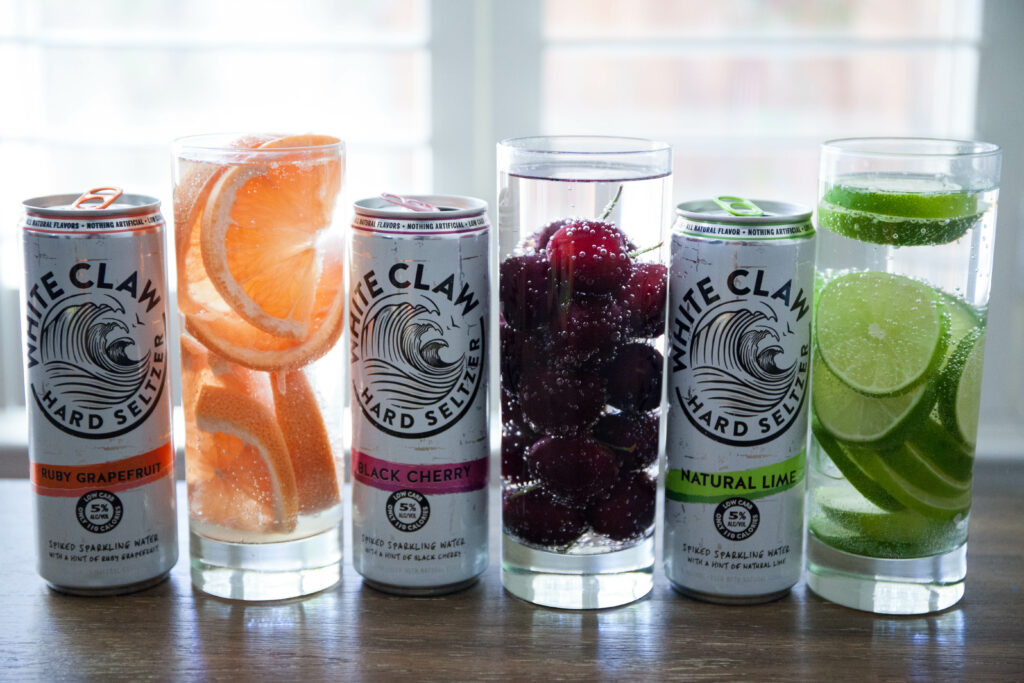
3 canned beverage with glass

It’s hard to deny that this past summer was the summer of hard seltzer. In fact, it was a summer that saw hard seltzer grow to more than $1 billion dollars in sales. In just the week of July 4 this past summer, White Claw and Truly seltzers combined sold over 100,000 barrels of product. That’s enough to put them in the Top 50 Craft Breweries for production over the whole year. It’s no surprise that craft breweries large and small are looking to tap into the apparent gold mine that is hard seltzer, but how they approach it doesn’t quite seem to stand up against the segment’s largest competitors, and that’s worth thinking about. At a recent industry panel in Charlotte, NC, several craft brewers who make seltzers spoke about their perspectives on this new slice of the industry.

But… Why?

  This might seem fairly obvious with the sales numbers that hard seltzers are putting up, but a closer look at the craft beer industry tells a slightly different story. Recently in an interview, the senior vice president of marketing for Mark Anthony Brands (the makers of White Claw) noted that though White Claw has incredible penetration in grocery stores and liquor stores nationwide, only about 20 percent of bars and restaurants are currently selling hard seltzers. For the average small craft brewer, the opposite is true – while the limited shelf space of grocery is locked behind the arcane process of distributor-led Planograms, inaccessible to most small breweries, they are nearly ubiquitous on draft systems in bars and restaurants eager to serve local beer. So, why chase a segment which shows so little relevance in their primary market?

  “After the surge of LaCroix in the non-alcoholic market, we took a hard look, and it’s what our market research showed our customers wanted,” said Colleen Quinn, of Craft Beer Alliance (CBA). Their market research showed something else interesting – that while most hard seltzers are marketed specifically toward young women, their targeted demographic tended to skew almost 50-50 male-female. It led to CBA’s decision to package their multiple seltzer brands in regular 12 ounce cans, rather than slim cans like their competitors.

  “I’m looking for one more reason to keep the customer in their seat,” says Mike Rollinson of Joymongers Brewery, a brewery that enjoys two taproom locations in Central North Carolina, but no off-premise distribution. “I don’t see it as craft. I’m not making a seltzer for beer drinkers. I’m making a seltzer for the one person in a group of 5 people who will pressure the group into leaving if there’s not something for them to drink.” Rollinson just started making seltzers this year as he saw the trend grow, noting that one of his business partners is on a Keto diet and now drinks his seltzer almost exclusively – as a healthy alternative to beer.

Clear or Colored – the Question of Craft

  While the two major market players, White Claw and Truly, are both crystal clear beverages, two of the producers on the panel noted that color helped them differentiate. Both Brian Quinn of Town Brewing Company and Lindsay Sprick of NoDa Brewing Company pointed to their process as an advantage over the big seltzer makers.

  “I can guarantee that nobody at White Claw was sitting down last week processing a ton of raw ginger,” Quinn noted with a smile. “We’re small enough that we can use natural ingredients as a base for these seltzers.” Those natural ingredients come with their own colors and – he thinks – customers want to see the presence of those ingredients in the product when they’re ordered. “When you get something that’s wild cherry flavored and it’s clear, you ask yourself: where’s the cherry in this?”

  Sprick, of NoDa, shared a similar feeling: “We stand out because we’re using the same ingredients that we use make our beer.” She felt that it was more true to the brand and brewing ethos of NoDa Brewing Company than a clear, sparkling beverage. NoDa’s Brizo Seltzer, unlike other seltzers represented on the panel, is barley-based, which lends even more color to the finished product than the others.

  Rollinson had a different take at Joymongers. “When I see a color, like red or blue or purple in a glass, that reads ‘sweet’ to me, and that’s not what this is.” He mentioned that because his primary customer is not one that’s seeking this for a fruit flavor, but rather as an alternative beverage or a more healthy choice, that the neutral color was a better choice. “The only people who have complained about it being clear were bartenders because they throw it out by mistake because they think it’s water.”

Regulatory Loopholes

  Interestingly, hard seltzers fall into a slight grey area of regulation from both the Trade and Tax Bureau (TTB) and the Food and Drug Administration (FDA). Hard seltzers are the product of fermenting sugar into alcohol and fall under the manufacturing umbrella of a brewery, but labeling considerations vary based on what sugar base is used as the basis of fermentation. A brewer who uses a barley base – even a very light brewer’s malt – still falls under the definition of a beer, requiring a pre-market Certificate of Label Approval (or COLA) and is restricted by certain advertising laws. A brewery who uses sugar as the base for their seltzer is not required to obtain TTB approval as it is not a malt beverage. However, they do fall under FDA labeling guidelines which require a nutrition panel and a list of ingredients.

  While it might seem attractive to a brewery to skip TTB approval and jump straight to FDA labeling because the FDA does not have pre-market approval requirements, it’s important to know that FDA labeling is required to be in compliance before sales and that manufacturers can be held liable to both financial and regulator consequences. Consult your lawyer for best practices.

  None of the panelists chose to share which path they had taken from a regulatory standpoint.

What’s in the Mix

  Clearly, there are as many ways to approach making hard seltzers as there are reasons to make it. Fermenting white sugar seemed to be the preferential approach to creating a fermentation base for hard seltzers. Of the panelists, NoDa was the only one using barley.

  Most of the panelists spoke of these seltzers as good gluten-free alternatives to beer and marketed their seltzers as either gluten-free or gluten-reduced. NoDa used ClarityFerm from White Labs to reduce gluten content in their barley-based seltzer but others simply brewed on their normal equipment directly after “CIP day” in order to guarantee no gluten would be present in the final product. Quinn of Town Brewing shared that lab results showed no traces of gluten in his products.

  From there, the small producers all had a similar strategy of using whole ingredients to flavor as they would for any flavored beer, whether that’s the addition of aseptic fruit puree or hand processing ginger for additions during fermentation. They seemed to feel that the use of “real ingredients” was a way to stand out versus large scale competitors from a flavor standpoint as well as an ethical one. They appeared to share the belief that it “felt more like craft.”

  Yeast was a large differentiator between the producers. While Rollinson at Joymongers used ale yeast to ferment his seltzer, making a note that harvested yeast seemed to perform much better than a fresh pitch, Quinn of Town used Distiller’s Yeast, seeking a strong, healthy fermentation that would get as dry as possible. Both mentioned the need for high amounts of yeast nutrients. “As it turns out,” Rollinson joked, “yeast doesn’t really like to digest straight glucose.”

Where It’s All Going

  All of the panelists agreed: hard seltzer is a trend that is doing nothing but growing, and they all agreed that their futures had more and varied seltzers in it. Each of them was excited to experiment in the market and push the bounds of craft’s involvement in the segment.

  The question remains for you – will we continue to see on-premise growth in a meaningful way that the craft market can take advantage of, or will hard seltzer grow only in larger and larger stacks in grocery stores? We’ll have to wait for the next White Claw Summer to find out.

Lessons for the Start-Up Brewery

By: Tracey L. Kelley

Modern beer plant brewery
Modern beer plant brewery , with brewing kettles, vessels, tubs and pipes made of stainless steel, monteiths beer factory, south island in New Zealand.

Three beverages are the most consumed in the world: water, tea…and beer.  Regional breweries, brewpubs, microbreweries, and contract brewing companies all experienced growth in 2018. In the United States, 219 breweries closed, but 1,049 opened last year. In Canada, there was a slight decline in domestic beer production last year—3.4%—and only a scant increase in sales—0.3%. Nevertheless, 178 breweries opened.

  Producers and consumers alike want the diverse selection, high quality and community connection craft brewing provides. This makes entering the industry an enticing option. So to answer some brewery start-up questions, we’ve compiled a few experts to share their acumen. They include:

•   Jeffrey Gunn, president and CEO of IDD Process & Packaging, based in Moorpark, California. IDD is a family-owned corporation that provides the consultation, design and manufacture of complete brewery and beverage plant systems.

•   Lindsay Johnson, operations manager, and Shawn Johnson, head brewer, Birds Fly South Ale Project (BFS) and tasting room in Greenville, South Carolina. Named one of 2019’s Top 10 Breweries by the U.S. Open Beer Championship, BFS specializes in Farmhouse and Saisons, along with sours, funky IPAs, barrel-aged brews, and range of wild and traditional styles. BFS is also on the 2019 Thrillist “Most Underrated Brewery in Every State” list.

•   Ben Parker, CEO, Scan American Corporation, located in Kansas City, Missouri; and Aubrey Dyer, business development manager, Flavourtech, represented by Scan American in North America. Flavourtech is a global technology manufacturer that specializes in aroma recovery, extraction and evaporation solutions for the food, beverage and pharmaceutical industries.

•   Christian Riemerschmid von der Heide, president and CEO of the Siebel Institute of Technology (SIT) in Chicago, along with John Hannafan, vice president and director of education. SIT is a for-profit vocational school for brewing education and brewing services. Founded in 1868, it’s oldest brewing school in the United States and home of the World Brewing Academy program, offering campus and web-based courses jointly developed with Doemens Academy of Munich.

  The three primary start-up takeaways they want you to remember:

1.   Take time to learn. Whether it’s refining your processes or understanding how to scale up, knowledge is power.

2.   Choose equipment wisely. Everyone makes different choices—research and compare to make the right decision for your business.

3.   Be patient, young Jedi. Slow, budgeted growth and the right partnerships make more sense for long-term sustainability and adaption to trends.

  These experts provided much more valued insight than print space allows, so we’ll highlight some of the top aspects.

Take Time to Learn

  The Johnsons were a Coast Guard family for more than 20 years, all the while gradually expanding their brewing and business knowledge. “We invested sweat equity first,” Johnson said. “We started home brewing while in Alaska. As we lived in different locations with the Coast Guard, Shawn was able to volunteer at several breweries, learning different aspects of business.”

  In 2016, Shawn officially retired from service, with a year or so of professional brewing experience as a contract brewer for Thomas Creek Brewery, also in Greenville. “This provided us an opportunity to test the idea and see how we wanted to proceed with a brewery buildout,” Johnson told Beverage Master Magazine. “This period of time made it simpler for us to find funding through investment, as we were an established brand and gained some national level recognition early on.” BFS has since received top medals in the Best of Craft Beer Awards, the Great American Beer Festival and the North American Beer Awards.

  Contract or nomadic brewing often reduces start-up risks. Some craft producers try the industry on for size, like the Johnsons. Others do it to gain gradual packaging and distribution knowledge and capital—a wise idea, since a full-scale packaging operation averages more than $300,000.

  Some brewers develop contract partnerships because their current facilities are out of capacity, but budget or geographical constraints prevent expansion. In rare circumstances, a contract partnership with a local brewery happens when someone only has interest in running a taproom.

  “We anticipated being small and niche and allowing the education and evolution of our products to happen slowly and organically,” Johnson said. “However, we quickly grew past all our projections and expectation models, and continually have to be extremely agile as our product line expands and as trends in the industry change. Our production model hasn’t found a ceiling yet.”

  Hannafan/von der Heide believe that every good brew begins with one key ingredient.

  “’First, you add knowledge’ is one of our favorite tag lines. A producer should begin their journey with education, and not after they run into issues,” Hannafan/von der Heide said. “Hopefully they come to us sooner than later to avoid many of the common pitfalls experienced by others. The same process applies brewing theory and understanding the ‘why’ of brewing. It’s not enough to open this valve or turn that pump on—there’s far more to brewing than the equipment side.”

  SIT creates viable paths for new producers through extensive courses on everything from the art and science of brewing to the nuts and bolts of business operations.

  “We share our knowledge by having assisted in numerous start-ups and real experience, not just theory. We offer a consulting arm which assists with recipe formulation all the way through to test batches and evaluating the product,” Hannafan/von der Heide said. “We assist with brewery start-ups and build-outs, supplier evaluation, business case review and staff training. We like to think that the art and science of brewing beer makes lifelong learners out of all in the brewing sector.”

  Hannafan/von der Heide said there are relatively short courses that can dramatically enhance your probability for success. These include the two-week “Siebel Concise” course, “Start Your Own Brewery” and “Executive Overview.”

  SIT also provides another valuable service: yeast banking. “Selecting the right yeast strain can be a key differentiator for better flavor profile, product innovation and brewery capacity utilization. Yeast banking, strain profiling, yeast propagation, fermentation optimization—you can never know enough about yeast,” Hannafan/von der Heide said.  

Choose Your Equipment Wisely

  Evolution in trends, products and other aspects of the brewing industry greatly influence how to source equipment. Spend time to evaluate options based on your ultimate goals and budget—not necessarily what everyone else does. 

  “For too many years, craft brewers grew up with the idea that the two-tank combi-brewhouse doing three–to–four brews in 24 hours was the only way to brew beer,” Gunn said. “As the industry grew, the systems expanded to four or five vessels, but were still stuck in the four–to–seven brews in 24 hours process, with low efficiencies in malt extract, water, energy, labor, effluent and so on.”

  IDD specializes in high-efficiency brewing systems, or HEBS. “HEBS mash filter brewhouses were an unknown entity to most and misunderstood by many that were aware of them. It continues to be an educational project, because it’s difficult for many to believe the efficiencies we publish and the misnomers perpetrated by conventional lauter tun brewhouse manufacturers,” Gunn said. “With HEBS capable of 95–to–98% extracts, up to 40% overall more efficiency and up to three times faster than a combi-brewhouse, there’s such a high ROI for a start-up or expanding craft brewer. Obviously, size has to be adjusted down from a conventional system because of the reduced turnaround time per brew. But 12–to–15 brews in 24 hours are the norm for HEBS.”

  If you’re planning a low-alcohol or non-alcoholic line, your equipment choice is even more specific. For example, Flavortech uses spinning cone column (SCC) technology to enhance flavor, efficiencies and budget. 

“The day-to-day operating expenses of the SCC are low, as it’s very energy efficient. The first two years of maintenance are also included, so these don’t need to be budgeted for until year three,” Dyer/Parker said. “The other main cost is dealing with the alcohol removed from the beer. Disposal can be expensive—however, it can be a valuable income stream if re-concentrated, or could potentially be used to fortify other products in the portfolio. It’s important to work through this part of the equation in advance to maximize the ROI of the system.”

  Scan American/Flavortech allows producers to test all its equipment. “We can teach the customer how the system works and showcase the different outcomes. A beer trial can be run with as little as 60 gallons of product,” Dyer/Parker said. “After each trial, we’ll complete a product tasting to see how it responds to the process. Typically, these trials are proof of concept.”

  Gunn noted an interesting trend that influences equipment choices. “Smaller, more efficient breweries and cans. HEBS, for example, have gone from 20–to–40 Hl brew capacity systems to 5 and 7.5 Hl brew capacity systems. This reflects on the matured craft brew market reverting back to brewpub/restaurant and taproom style operations: local market supply through their own establishment,” he said.

  BFS took a completely different approach to equipment. “Budgeting a brewery start-up is difficult. We’re so capital heavy,” Johnson said. “Don’t rush into purchases. A lot of times you see a deal, but it’ll come back. Some producers are better off sourcing used equipment when applicable.”

  Hannafan/von der Heide offered this important reminder. “If you don’t know about equipment or sizing or space planning, hire a seasoned, independent consultant. Don’t let your emotional side pick the equipment suppliers. There’s a lot of unsafe, poorly-designed equipment that will haunt your day-to-day operations and product consistency.”

Be Patient, Young Jedi

  Our experts offered numerous tips for new producers—here are just a few.

  “We always advise the producer to focus on employing a good industry experienced general contractor, experienced industry-related architect, an experienced industry equipment supplier and themselves doing their due diligence,” Gunn of IDD Process & Packaging told Beverage Master Magazine. “The four parties working together can achieve the best system, the right location and within budget.”  

  “Our initial vision was quite different, or I’d say 60-70% different,” said Johnson of Birds Fly South Ale Project. “We call ourselves an ale project because we’re constantly exploring new styles, techniques and flavors. Our process is unique in that we’re continually blending, and our beer has a chance to evolve through different fermentation processes.”

  “We knew from the beginning we wouldn’t have a ‘set’ product line,” Johnson continued. “This can cause some educational issues when first entering into a distribution partnership. Our brands slowly became a steady product line, but patience was key in our relationships with distributors and retailers. So be patience in all aspects, from hiring and budgeting finances to decision making. We like to say, ‘The beer takes two weeks or more to make—let’s give ourselves an extra hour before we make a decision.’”

  “My advice to someone coming to us with a new product idea would be for them to sit down with us and work through the processing details to make it a reality. The next step is to book some time in our pilot plant and produce some product,” Dyer/Parker with Scan American/Flavourtech said. “We have a great team of engineers with a real depth of knowledge and can assist with the practical realities of turning ideas in successful products.”

  Dyer/Parker also pointed out two exciting trends. “One is the move towards much higher-quality beers. I was in Brazil last month, and the local beer we were served was so good that we cancelled our wine order and continued to drink beer with our meal!” Dyer/Parker said. “Parallel to this trend is the development of the zero-alcohol segment. This fits really well with the SCC, as we enable zero-alcohol products to meet exact quality requirements.”

  The educators from the Sieble Institute of Technology offered two final thoughts. “Create a realistic business plan. Then, have others with industry knowledge challenge and build your plan,” Hannafan/von der Heide said. “The craft and brewing industry is an amazing place to be creative and excel in entrepreneurial activities. It is, however, a place for the long run, despite the hype—there are no quick sustainable wins. Product and process knowledge reigns.”