Craft a Unique Brand Story for Your Brewery/Distillery

photo says what is your story

By: Jake Ahles, Founder: Morel Creative

I love this product; others should too!” It’s a tale I hear time and time again. The truth, however, is this: to attract customers and keep them coming back, you need more than a love for your product, even more-so than a great product. In reality, customers aren’t buying your product. They’re buying their perception of your product. So, you ask, how do we build the perception of your product in the customers’ minds so that it matches the way you see your beloved product? The answer is: your brand story.

  A compelling brand story transforms your products from mere commodities into visceral experiences, establishing an emotional bond that keeps customers returning for more.

What Is a Brand Story, and Why Is It Important?

  A brand story is more than a narrative. It’s your brand’s essence, encapsulated in a message that resonates with your target audience. It’s the who, what, and why behind your brewery or distillery. It’s the emotional connections your brand forms in consumers’ minds. It tells your customers how your brand solves a pain point in their lives or helps them achieve a goal. A strong brand story is critical. It does more than tell people what you sell. It plants your brand in your customers’ minds, shapes their perception and builds deep loyalty.

  A great brand story can make your brewery or distillery a must-visit and it will set you apart from the competition.

Understanding Your Brand: The Foundation of Your Story

  Before you can craft a compelling brand story, you need to understand the core elements that make up your brand. Facts are important for your brand. Vitally so. But, are you sharing facts that will build lifelong customers or are they just interesting tidbits? Effective facts and features include:

1.           History and Origins: Where did your brewery or distillery come from? What inspired its creation? An origin story builds authenticity and connects with your audience. It’s a powerful tool.

2.           Mission and Vision: What does your brand stand for? What future are you trying to create? A clear mission and vision guide your story. They ensure consistency in your messaging. This is where we can introduce emotional elements. We like to think we’re logical but we often buy with our emotions and then we use logic to justify those feelings.

3.           Core Values: What principles guide your operations? Your core values reflect your brand’s character. They shape how people perceive your story.

Identifying Your Unique Selling Proposition (USP)

  Your USP is what sets you apart from competitors. It’s not enough to simply list your products’ features – you must explain why they matter. Why would the customer care?

Features: What is your product made of? Features are the tangible, factual components of your product. They are often straightforward and objective. They include the ingredients, the process, and the equipment used. These features are key to the product. They may not be flashy, but they are critical to a customer’s understanding of your product.

Advantages: Why is this feature good or desirable? Advantages are the reasons why these features are valuable. They are the unique characteristics or improvements that set your product apart from others on the market. The key here is to identify what makes these features desirable and how they enhance your product’s appeal compared to your competitors.

Benefits: How does the advantage help your customer? Does it ease a pain point or help achieve a goal? This is where you connect the dots to the customer’s experience. Benefits are the emotional and practical reasons to care about the features and advantages. They provide the context that explains why your product matters to the consumer.

Example: Let’s take a feature of your whiskey: it’s aged in oak barrels.

•             Feature: The whiskey is aged in oak barrels.

•             Advantage: This aging process imparts a unique flavor profile, including notes of vanilla, caramel, and spice, which are highly sought after by whiskey enthusiasts.

•             Benefit: For the customer, this means a rich, smooth, and complex taste experience that stands out from other whiskeys. It offers a blissful moment of joy. Whether they savor it neat at the end of a long day or share a special bottle with friends. This sensory experience can make them feel sophisticated and connected to the craftsmanship behind the product.

Consider another example: You use a unique, proprietary fermentation method in your craft beer production.

•             Feature: The brewery produces the beer using a proprietary fermentation method.

•             Advantage: This method develops a wider range of flavors. It results in a beer with a unique taste, unlike any other on the market.

•             Benefit: For the customer, this translates to a novel drinking experience—something new and exciting to explore. It caters to craft beer lovers seeking unique flavors and new brews. By trying your beer, they feel part of an exclusive group that appreciates and recognizes the artistry and innovation in the brewing process.

Target Audience: Who Are You Telling Your Story To?

  Knowing your audience is key to crafting a story that resonates. Start by identifying your customer demographics—age, gender, location, and lifestyle. Then, dive deeper into understanding their preferences, needs, and pain points. What are they looking for in a beer or spirit? What are they looking for in a tasting visit? What experiences do they value? A brand story that addresses these aspects will be more relatable, memorable and impactful.

The F.E.E.E.D. Framework: Structuring Your Brand Story

  At Morel Creative, we use the F.E.E.E.D. Framework to help brands develop their unique story. This approach ensures that your brand story is not only compelling – incorporating features, advantages, and benefits – but does so in a consistent and cohesive manner that is aligned with your brand’s core values.

•             Facts: Like the features we discussed, start with the key facts about your brand—your history, product features, and processes. But don’t stop there. Focus on the facts that matter to your audience. They should help solve a problem or fulfill a need: the advantages.

•             Engage: Connect with your audience. Show how your brand relates to their lives. This could be through shared values, a common passion, or even a shared challenge.

•             Educate: Inform your audience about what makes your products and/or process special. This could include your brewing process, unique ingredients, or innovative techniques.

•             Emotion: Evoke feelings through your story. Emotions strongly influence decision-making. They can come from nostalgia for an old family recipe, the thrill of trying something new, or the comfort of a trusted brand.

•             Differentiate: Combine the elements above to create a USP that stands out. Your differentiation should be clear and compelling, giving customers a reason to choose your brand over others. Plant your flag in the ground and claim your brands territory!

Crafting the Narrative: Bringing Your Brand Story to Life

  Once you have the key elements of your story, it’s time to weave them together into a compelling narrative. Here’s how:

•             Storytelling Techniques: Use storytelling techniques to make your narrative engaging. This could include using a protagonist (your brand), a plot (your brand’s journey), and conflict and resolution (challenges the brand has overcome).

•             Consistency Across Platforms: Your brand story should be consistent across all platforms. This includes social media, your website, in-store experiences, and your packaging. Consistency builds trust and reinforces your brand’s identity.

•             Incorporating Visuals and Media: Visual content is a powerful tool for storytelling. Use high-quality photos, videos, and graphics to showcase your narrative. A well-crafted brand video or a series of compelling images can say more than words alone.

  By crafting a cohesive brand story that is consistent across all customer touch points, you’ll set your brewery or distillery up for unparalleled success.

Measuring Success: Is Your Story Resonating?

  How do you know if your brand story is effective? Here are a few ways to measure success:

•             Key Performance Indicators (KPIs): Track metrics such as brand awareness, customer engagement, and sales to see if your story is having the desired impact.

•             Customer Feedback and Reviews: Listen to what your customers are saying. Positive feedback and reviews can be a sign that your story is resonating, while negative feedback can provide insights into areas for improvement.

•             Continuous Improvement: Your brand story should evolve as your brand and the market change. Regularly review and refine your narrative to ensure it stays relevant and compelling.

Start Crafting Your Brand Story Today

  Your brand story is a powerful tool that can set your brewery or distillery apart in a crowded market. By deeply understanding your brand’s point of view, identifying your USP, and using the F.E.E.E.D. Framework, you can craft a narrative that resonates with your audience and builds lasting connections. Start today and watch as your brand’s unique story attracts customers and fosters lasting loyalty along the way.

Brewing Up Brand Loyalty

walls of merchandise with store branding

By: Greg Kerr

In the competitive world of craft beer, where new breweries seem to pop up every day, building a strong brand identity is crucial. Your brewery is more than just a place to get a drink or food.  It’s a local gathering and community space with a story, a personality, and opportunities to form bonds. Merchandise can be a powerful tool to elevate your brand and connect with your customers on a deeper level, fostering a legion of loyal fans who will not only return for your latest seasonal brew, but will proudly represent your brand wherever they go.

  Breweries stand in a unique position compared to other  local restaurants or small businesses because people actively want to identify with the brand and find alignment.  You become their safe hangout spot that they can formulate new experiences from and find community. 

  There are some common brand building pieces of merchandise that we see on a regular basis from breweries, and all are centered around focusing on the customer experience and elevating it for them. 

  Enamel pins and challenge coins can be used for a lot of different experiences.

●            Help celebrate seasonal offerings.

●            Serve as rewards for customers unlocking new experiences, e.g. someone has tried X amount of seasonal brews and gets a pin which unlocks discounts or early tastings, etc.

●            As a loyalty club identifier.

●            Brand logo pins for placing on hats, jackets, totes, etc.

●            Challenge coins similar to how people in the military will check to see if you have it on you and if they do, they get a small reward.

●            Pin sets to help bolster the brand imagery.

●            Fun designs linked to the branding or seasonal offerings.

Beyond the Logo Tee or Tote Bags: Cultivating a Brand Experience Through Merchandise

  Forget cheap t-shirts with your logo slapped on them. People are inundated with generic promotional shirts and tote bags that end up forgotten in a drawer or worse, tossed in the trash. When it comes to brewery merchandise, quality and creativity reign supreme. People want unique, high-quality items that they’ll be proud to wear or use. This means investing in customizable merchandise that reflects your brewery’s personality and values.  Instead of just having your logo on everything, find fun ways to reflect the vibe of the company in a way that people want to represent it and use it.  The key in effective marketing is providing value to not only yourself, but to your customer by creating something unique that aligns with your brand. 

Here’s how Your Merchandise can Brew up Brand Loyalty and Boost Your Business

Brand Ambassadors: Walking Advertisements That Generate Buzz.  Eye-catching hats, pins, keychains, tote bags, shirts, or pint glasses become walking advertisements for your brewery. Every time a customer wears a comfy tee featuring your name or uses a stylish tote bag with your art, they’re spreading brand awareness. Imagine a customer sporting your brewery’s hoodie at a music festival or a couple using your pint glasses at a backyard barbecue – that’s free advertising that reaches a whole new audience.   

Increased Customer Loyalty: Fostering a Sense of Community. People who love your beer will love to represent your brand. Merchandise creates a sense of community and belonging, fostering stronger customer loyalty. Die-hard fans will be eager to snap up a limited-edition t-shirt commemorating your latest IPA or a cozy beanie featuring your brewery’s slogan. These items become a badge of honor, a way for customers to connect with your brand and signal their appreciation.

A Walking Billboard: Racking Up Impressions with Every Sip. A well-designed item generates thousands of impressions as your customer carries it around. Did you know that the average tote bag gets over 3000 impressions?  Every time someone uses or wears your merch at the gym or your social gathering, they’re putting your brand in front of a potential new customer.

Additional Revenue Stream: Turning Your Passion into Profit. Merchandise can be a profitable way to supplement your income and reinvest in your brewery. Offer a variety of items at different price points to cater to all budgets. From koozies and keychains to high-end glassware and limited-edition apparel, you can create a selection that appeals to every fan. This allows you to not only spread brand awareness but also generate additional revenue to fuel your brewing endeavors.

Creative Brews, Creative Merch: Going Beyond the Expected

Think Outside the Pint Glass: Unconventional Items that Make You Stand Out. Don’t limit yourself to traditional brewery fare. Offer unique items like enamel pins featuring your hop varietals, keychains shaped like your signature beer bottles, or even custom-designed bottle openers. These unexpected items will spark conversation and help your brewery stand out from the crowd.

Embrace Your Local Roots: Celebrate Your Community. Incorporate local landmarks, ingredients, or themes into your designs. This creates a sense of place and resonates with your local customers. If your brewery is named after a historic building, feature its image on a t-shirt. If your signature pale ale is made with locally sourced honey, design a label highlighting the local bee farm. These touches will show your customers that you’re invested in the community and give them a reason to be invested in you.  Find ways to integrate the community into your artwork.

Get Seasonal: Limited-Edition Brews Deserve Limited-Edition Merchandise. Offer limited-edition merchandise for special releases or seasonal beers. This creates a sense of urgency and encourages repeat customers to visit your brewery or online store to snag the latest collectible. Imagine a commemorative item designed specifically for your holiday stout or a cozy beanie featuring the artwork from your winter ale.  Limited-edition items can be highly sought after by your fans.

TLDR

  Merchandise is an investment, but the return on that investment can be huge. By creating high-quality, creative items that resonate with your customers, you can turn your brewery into a brand they’ll love to represent. Your merchandise will become a badge of honor, a way for customers to connect with your community and celebrate their love for your craft beers.  Like all forms of marketing, the more focused you get on your mission and delivery, the better the results you can get.  You have a real opportunity to strengthen your local community by making your location a desired destination that people want to proudly represent.  At the end of the day, before spending money on merchandise, ask yourself if you’d use it or would want to carry it around?  You can go beyond promotional and into fully custom merchandise that will stand out from the crowd and create truly unique items that represent and promote your company. 

  Greg Kerr is the Owner of Alchemy Merch, which creates custom merchandise for creatives and companies. Alchemy has made over 4 million custom products for artists, brands, and creatives in all fields. Greg guides artists and corporate clients through the process of creating quality custom merchandise that helps them achieve their goals of increased brand awareness, customer loyalty, and more. Alchemy eliminates the pain points of sourcing materials, production, quality control and design that most people encounter when making promotional products versus investing in custom merchandise. Prior to expanding his business and evolving it into Alchemy, Greg founded Pin Game Strong, making custom enamel pins for artists and corporate clients. 

  Art and creativity are in Greg’s blood. He is a musician and performs in a heavy hardcore band. He first started creating merchandise for brands while touring with his punk rock band in the early 2000s. The belt buckles he made for the band caught the attention of other musicians and soon turned into Greg’s first foray into custom merchandise. 

Why Fall & Winter Marketing Is Essential

photo of cocktails surrounded by falling leaves and small pumpkins

By: Hanifa Sekandi

It is pumpkin-spiced latte season. It is the time of year when fall revelers look for beverages that pay tribute to the season, where amber and orange-colored leaves adorn the trees and paint the sidewalks. During this season, beverage choices are intentionally shifting. Consumers who like beverages that signify a season, particularly fall, shop purposefully. They know what they are looking for and look for beverage brands that will meet their desire. This desire is not limited to flavor. It also includes brand aesthetics. The magnitude of these seasons is noticeable among brands when you enter grocery stores toward the end of August and see pumpkin-printed chocolate bars and candy.

  The summer is quite anti-climactic when it comes to in-store branding. Of course, there are many great beverage brands with colorful summer labels and summer flavors. But generally speaking, retail stores do not get into seasonal festivities until the fall and winter. Summer is a great time to build brand awareness and experiment since most consumers are open to trying new beverages during the summer. Whether it is a party, fun, sun or backyard BBQ, consumers take more liberties with their beverage experimentation. New innovative flavors with fresh fruit or premium cocktail blends are quite appealing.

  As the summer draws to a close, the desire for comfort grows. People love familiarity, but more importantly, they hold on to nostalgia. A beer they remember their father drinking on a cool fall night where you can smell campfire in the air while he and his friends tune in to watch football is often a favorite choice. Not only does it draw upon a significant memory, but it is also anchored to a specific time of the year. For some reason, everyone in the room watching the game who brought their beverage to imbibe sticks to what they came with. It is their beverage of choice while they watch the game and enjoy wings. While some prefer a deep, rich ale, others prefer to sip on a robust, smooth whiskey served neat.

  So the question is, why is fall and winter marketing essential? It helps you reestablish your consumer base. Further, it allows you to return to your roots. What makes your beverage unique? It also allows brands to celebrate their consumer and show their appreciation.

The Benefits of Fall and Winter Marketing Strategies

  Now is not the time to hibernate. Understandably, the summer is exhausting. It is the Olympics of beverage marketing. A lot of marketing departments breathe a sigh of relief when this season is over. Summer marketing requires brands to pivot quickly with a multi-tiered strategy. While you develop new labels and flavors to compliment the warmer months, marketing strategies must be carried out thoughtfully. The goal is to appeal to old consumers and new consumers. If effective, new consumers can be easily enticed to try signature beverages from your product line that perform well in the fall and winter but also long-term.

  Beverage brands do not have to look far to see the benefits of fall and winter marketing strategies. Whether it is your local coffee shop or a major brand. Every brand aligns with these two pivotal branding times of the year. Why? These seasons have so many occasions that offer opportunities to consumers actively looking for seasonal items to celebrate and pay tribute to holidays occurring during this time. When coffee shops begin to promote pumpkin-spiced beverages this spurs the desire to get in the seasonal mood. Social media posts about fall attire, comfort foods and beverages have become the norm.

  If your marketing strategies were lukewarm during the summer, heating them up during these months is limitless. A consumer profile is already laid out. Both small and major brands provide it. If your brand has been operating for a few years, you should already have a consumer profile that you can analyze. What were your shortcomings in previous years? What were your beverage wins? What beverages from your product line sell well during this time? How do you remind your consumer that you are their go-to beverage when they think of Thanksgiving or the holidays?

Key Benefits:

●            There is a demand for fall and winter

                merchandise.

●            Other brands are in the seasonal spirit.

●            It’s easy to meet predictable consumer

                expectations.

●            There are multiple opportunities to showcase your beverage with seasonal and holiday branding.

How Can You Heat Up Your Strategies?

  In the summer, there is a fast marketing approach. It is like throwing darts at a board and hoping one will stick. In the fall and winter, your goal is to last all season. Summer trends fade quickly, but fall and winter staples never lose their touch. Cinnamon spice, chestnuts roasting on an open fire, mistletoe and warm apple cider are timeless staples.

1. Timeless Campaigns

  So, how can you ensure that your brand does not miss an opportunity for further brand building and amplification during this time?

  Create a timeless seasonal campaign that draws on nostalgia. If you already have a campaign that has performed well during this time of year, make it your seasonal campaign or your pumpkin-spiced latte. Get your consumer excited to purchase this beloved limited edition. What aspects of this campaign performed well? Draw upon these elements and add a few extra details to this year’s campaign.

  For example, football season or occasions like Halloween allow for creative brand exploration. Bacardi did a great job at tapping into the nostalgia of the season by paying tribute to classic horror films with signature cocktails that they showed their audience how to make. Another extra touch was a seasonal label change on their bottle, which featured white bats on the signature Bacardi bottle.

2. Celebrate the Season and the Occasion

  It is important to not just consider the season but to map out every holiday that will occur from the fall until the spring. From Halloween to Valentine’s Day, there is a lot of marketing mileage to cover.

  Create a marketing roadmap that will detail what you will do each month and each season that falls within that month. Then, curate a list of activities that occur during the seasons and are associated with a holiday or occasion. Football Sunday, what does this mean to your audience? How is your beverage best enjoyed while watching a game? Leaning toward deeper and richer tones for labeling should also be considered.

3. Become a Household Fixture

  Just like Bed, Bath and Beyond, you should aim to become a household fixture synonymous with fall. All merchandise should support consumer buying choices at this time. Perhaps a candle inspired by the ingredients in your beverage or dish towels with fall colors. Anything and everything that falls within this category.

  When creating social media content strategies, create a picture in the buyer’s mind that your beverage fits their lifestyle ideals this season. Images of people sitting by a campfire outside or perhaps playing card games indoors. Here is an opportunity to place your product in familiar settings along with familiar activities. The fall and winter are about being home. To become a go-to brand, you need to be perceived this way. For example, most summer-marketed beverages experience a dip in sales in regions that experience colder seasons. This is why it is good to shift the marketing focus for a summer beverage to regions that remain warm all year. This sentiment should be carried over to fall and winter marketing strategies where the beverage experience is not fast and fun but more so slow and steady.

  Some beverage brands understand that their resources are best spent during the fall and winter. Understandably, you cannot be all things for everyone. Also, some brands are happy with their signature product. It performs well, and its consumers like it. In this case, the goal is to increase their consumer outreach while keeping their existing consumer base happy. Since beverage sales have peaks and valleys, capitalizing off of peak seasons will help to mitigate the dip in sales during low seasons such as dry January or the summer if your beverage is not a go-to choice.

  The main component to remember when building a fall or winter marketing strategy is that your consumer desires familiarity and predictability with simple yet effective surprises. Showcase how your brand fits perfectly into these slower times, where quality connections and interactions are of higher value, where beverage choices are more of an added fixture complimenting a friendly gathering and not the star of the party.

Marketing Tips & Tricks For Your New Beverage Brand

sign says build your brand trust design strategy marketing

By: Rene Lacad, Founder & Marketing Director – Lacadverstiment

Launching a new beverage brand is thrilling, but it can also feel like diving into deep, uncharted waters. With so many established competitors, getting your brand noticed takes more than just a great product. You need to get creative, connect with your audience, and craft a message that stands out. Whether you’re offering a new line of craft beer with distinct flavors, a wine brand with a unique sustainability factor, or a new twist on an age-old spirit, how you market your beverage will ultimately determine its success.

  But where do you even start? The key is developing a thoughtful marketing strategy that doesn’t just focus on traditional methods. From nailing down your brand’s identity and story to connecting with influencers who share your vision, there are plenty of ways to make a splash.

Crafting Your Brand Identity and Storytelling

  Before your beverage hits the shelves or online store, it’s essential to establish a solid brand identity. This isn’t just about a catchy name or a cool logo — your brand identity is the foundation that influences how people perceive your product.

  Think about what makes your beverage unique. Is it the use of locally sourced ingredients? The story behind its creation? Or maybe it’s the lifestyle it represents, such as health-conscious living or an eco-friendly ethos. Whatever sets your beverage apart should be reflected in every aspect of your branding, from the packaging design to the tone of your social media posts.

  Storytelling is the secret sauce that makes your brand memorable. Today’s consumers crave authenticity and connection, and a well-crafted story can do just that. Instead of simply focusing on the features of your beverage, tell the story of its journey. Why did you create this brand? What inspired you? What challenges did you overcome to bring this product to life? Sharing these details adds depth to your brand and helps potential customers feel like they’re part of your journey.

  For example, if your beverage is a refreshing sparkling cider made with natural extracts, your brand story could focus on the purity of the ingredients and your commitment to sustainability. If your drink is a bold new bourbon blend, the story may revolve around sourcing barrels from small producers to better support local communities and businesses. The key is to create a narrative that resonates with your target audience and showcases your values.

  Consistency is crucial when it comes to storytelling. Your brand’s message should remain uniform across all platforms, including on social media, your website, or in-store displays. This consistency builds trust and recognition, making it easier for customers to connect with your brand on a deeper level. Ultimately, your brand’s story will help turn casual buyers into loyal fans, so make it compelling, authentic, and uniquely yours.

Collaborating with Influencers

  In today’s marketing landscape, influencers are like the modern-day version of word-of-mouth advertising. Collaborating with the right influencers amplifies your brand’s visibility while leveraging their credibility and trust. These influencers have built loyal followings by being authentic, relatable, and engaging, making them the perfect partners to introduce your new beverage brand to an eager audience.

  The key to successful influencer collaboration is selecting the right individuals who align with your brand’s ethos. This isn’t just about choosing the influencer with the largest following — it’s about finding someone whose personal brand and values match your product. For example, if your beverage is organic wine, look for beverage influencers who also dabble in the health and wellness space. If you’re launching a high-energy kombucha, fitness influencers whose content primarily focuses on performance enhancement and physical training would be the ideal partners.

  Once you’ve identified the right influencers, work with them to create content that feels natural and authentic. This could be anything from Instagram Stories showing the influencer enjoying your drink post-workout to a YouTube video where they share how your beverage fits into their daily routine. Whatever you choose, it’s essential that the content feels genuine and not overly promotional. The more authentic the partnership feels, the more likely their followers will trust and engage with your brand.

  Beyond just boosting brand awareness, influencers help build trust because their followers see them as reliable sources of recommendations. Similarly, when an influencer promotes your product, it lends an air of credibility that traditional advertising can’t replicate. This trust factor can be a game-changer, especially for a new brand trying to carve out space in a crowded market.

  Measuring the effectiveness of these collaborations is also key. Track engagement, brand mentions, and sales increases during influencer campaigns to ensure they hit their intended mark. In the end, partnering with influencers allows your beverage brand to tap into new audiences and build strong, credible connections with potential customers, all while creating buzz around your product.

Product Sampling and Events

  When it comes to marketing a new beverage, one of the most effective strategies is simple: let your product do the talking. Offering product samples and hosting events is a surefire way to put your beverage directly into the hands of potential customers, allowing them to experience it firsthand. There’s something undeniably powerful about tasting a drink that advertising alone can’t convey. For a beverage brand, sampling can make all the difference in sparking excitement and creating loyal fans.

  Product sampling works because it removes the risk for the consumer. People are more likely to try something new when there’s no upfront cost involved. Whether you’re at a local farmers’ market, a community event, or even a pop-up inside a grocery store, sampling your product allows consumers to engage with your brand in a direct, meaningful way. You can also partner with local businesses, gyms, breweries, or cafés to offer samples to their customers, which widens your exposure and aligns your brand with trusted, established names in your community.

  In addition to sampling, hosting and participating in events is another powerful way to build buzz around your beverage. From sponsoring a local sports event to hosting your own launch party, events create an environment where people can connect with your brand beyond the product itself. It’s not just about the drink — it’s about the experience. Create memorable moments that tie your beverage to a sense of fun, community, and lifestyle.

  For instance, if your sparkling alcoholic seltzer brand focuses on healthy, active living, you could sponsor a 5K run or a yoga event, offering your product as the refreshing drink at the finish line. If your beverage has a more social appeal, such as a cocktail mixer, consider hosting a tasting event at a trendy venue where guests can mingle and enjoy your drinks in a lively atmosphere.

  Ultimately, product sampling and events allow consumers to build a personal connection with your beverage. They’re no longer just hearing about your brand but experiencing it firsthand. This sensory engagement helps your beverage stand out, creates memorable interactions, and makes consumers more likely to reach for your product the next time they go shopping.

Engage with Your Audience and Build Your Community

  In today’s digital age, building a strong community around your beverage brand is just as important as the product itself. Engaging with your audience consistently and authentically helps foster brand loyalty and create a sense of belonging that keeps customers coming back. It’s about more than just selling a drink — it’s about creating a movement that people want to be a part of.

  To start, consistent engagement on social media is a must. Platforms like Instagram, Facebook, and TikTok allow you to interact directly with your audience to build personal and genuine relationships with them. Whether it’s responding to comments, reposting user-generated content, or sharing behind-the-scenes glimpses of your brand, showing that there’s an actual human behind the account helps create a connection with your followers.

  Another great way to engage your audience is through storytelling campaigns and contests. Run creative campaigns that encourage your followers to share their own stories or experiences with your beverage. For example, you could host a contest asking customers to post photos or videos of themselves enjoying your beverage in unique or fun ways, offering prizes for the most creative entries. This increases engagement and creates organic word-of-mouth buzz as your customers become your brand ambassadors.

  Collaborating with media outlets and bloggers is another effective way to expand your reach. Whether through press releases, interviews, or features, getting coverage in industry-specific publications or lifestyle blogs can help you tap into new audiences and further establish your brand’s credibility.

  At the end of the day, building a community means creating a brand experience that feels inclusive and welcoming. The more people feel connected to your story, values, and product, the more likely they will support your beverage and spread the word.

Measuring Success and Adapting Strategies

  Marketing isn’t a set-it-and-forget-it game, especially in the fast-paced world of beverage brands. Once you’ve launched your campaigns, it’s crucial to regularly measure their success and adjust your strategies accordingly. Tracking performance helps you understand what’s working, what isn’t, and where there are opportunities for improvement.

  Start by using tools like Google Analytics, social media insights, and sales data to monitor your progress. Pay attention to key metrics like engagement rates, website traffic, and conversion rates. Are people clicking on your ads? Is your social media engagement growing? Are sales increasing in the regions or demographics you’ve targeted? These data points provide valuable insights into how effectively your marketing efforts are connecting with consumers.

  Once you have the data, be prepared to adapt. If a particular influencer partnership didn’t generate the expected results, consider why and adjust your approach for future collaborations. If your online store’s traffic is high but sales are lagging, it might be time to refine your website’s user experience or adjust your pricing. Successful marketing requires flexibility, and staying responsive to the data ensures your brand remains relevant and competitive in a crowded market.

  Rene Lacad is a 28-year-old entrepreneur, speaker, and content creator who has been featured on Forbes, Entrepreneur, and MSN. He got his start in business when he founded an eight-figure marketing and creative agency that specializes in branding and paid media. His lifestyle content caught traction online where he was able to amass over 1 million followers and 500,000,000 views across his social media platforms. Since then, he’s been able to build other successful ventures like his software company SMMDealFinder, his supplement company Unlimitter, and his education company which helps aspiring entrepreneurs learn more about digital marketing and advertising.

Trends Shaking Up the Beverage Market  

2 men and 2 women at a table in front of a laptop computer and smiling

By: Hanifa Sekandi

Trend fatigue is a real thing. Every year, it is something new. When you think your brand has captured the market with savvy marketing strategies, there is another plot twist. Everyone loves a plot twist in a movie, but not when it comes to modern marketing. It truly is a game of chess. There are many wins and many losses. Marketing teams need to have tough skin and a positive mindset. The long game in beverage marketing requires resilience. Also, a loss does not mean that your brand is failing. It means you must focus on marketing strategies that truly resonate with your audience. Every marketing campaign should include previous successful strategies that, time after time, have proven to be fruitful for your brand.

  As the CEO of a beverage brand, you need to ask your marketing team why they are not developing unique trends. Marketing campaigns that set in motion viral moments lead to other brands following suit and borrowing elements from your brand. Aside from being touted as the beverage of choice, being an industry gatekeeper elevates you to an elite league. And positions you with not just beverage brands but also other consumer goods brands. It also leads to opportunities for collaboration.

  When looking to jump on a trend, gravitate towards timeless ones if your budget is small. Hopping onto a viral trend works if your budget allows room for play, A.K.A. trial and error, rolling the dice. Some brands do not desire to be all things for everyone. Some brands are happy with their audience and consistent revenue. Many beverage brands in this category avoid trends and do not look for viral moments. For new brands, the pressure to surf the trend wave is overwhelming. Do you have a choice? Can you build your audience organically? If so, how? There are a few cost-effective methods to elevate your brand presence.

Here are two timeless trends:

Brand Collaborations

  Does your beverage remind you of extreme sport or a NASCAR race? If your beverage were a clothing brand, who would it be? Imagine your consumer. Where do they shop? What kind of activities do they find enjoyable? Is it fishing? Or golfing? Like beverage brands, consumer goods brands seek ways to reach their audience. An example of a unique brand collaboration was between Fender and Bixton clothing apparel. Fender needed to reach their audience through clothing buying preferences, and Brixton desired to be an apparel brand that musicians gravitate toward.  

  The Croc and Pop-Tarts collaboration is a fitting example of how to market two brands together. Both brands can reach their audience and attract new consumers from brand collaborations. This was a limited edition launch during the summer. When people purchased a pair of Crocs Classic Clogs, they would receive a box of Pop-Tarts and edible crocodile-shaped Jibbitz candies. This promotion ran for only three days, and a limited amount was available for purchase. Those who wanted to purchase this limited edition had to sign up at a microsite designed exclusively for this collaboration. Overall, this was a great marketing strategy to improve brand awareness. Having a sign-up form also allowed both brands to gain new subscribers to their newsletters. 

  Heineken, in 2017, partnered with BAPE clothing. For this collaboration, sweatshirts, backpacks, accessories, jackets and T-shirts were designed to combine BAPE and Heineken branding. These custom-designed items were only available at BAPE stores. The subliminal marketing in this effortless campaign strategy is notable. This is an out-of-home marketing strategy that illuminates the influence that clothing has on consumer choices and the beverages they purchase. Heineken as a beverage of choice when ordering a beer at the local bar after a visit to a BAPE store is a likely occurrence. Everywhere people go, they are influenced by the advertisements they see. Did you want pizza because you truly desired it, or is it National Pizza Day, and you keep seeing social media posts of the best pizza places?

  So how do you get started? How can you dream up a savvy brand collaboration? Research. Spend time understanding the behavior of your desired audience. Look at the brands they lean towards. Find out if the brands you have in mind have done brand collaborations before. Do not approach the marketing director of the brand you have in mind without a plan. You need to pitch ideas and why both brands would benefit from this collaboration. Set the stage for brainstorming ideas and opening the conversation. If you are lucky, they may see this as the perfect pairing. In some cases, you may need to present a marketing plan that allows them to visualize what this collaboration would look like. In addition, highlight the benefits for both brands if this collaboration occurs. 

  Should you only approach big, popular brands? No. Both BAPE and Brixton are niche brands. They target a specific consumer base. The sky is the limit with brand collaborations. Crocs also collaborated with KFC. With brand collaborations, you can do several in a year. Supreme clothing and Oreo collaboration is another notable think-outside-the-box marketing strategy. The food your consumer loves in the color of the clothing brand they cannot get enough of. Is your top-shelf tequila or ale the next limited-edition ice cream flavor? 

A Little Bit of Everything  

  Who doesn’t love a good Caesar salad? When the craving hits, you want to make your own. But you do not want to purchase every ingredient individually. Reaching for the pre-made salad mix is ideal. Consumers like it when brands offer them what they need without the hassle. Take the guesswork out of the process. If you sell cases of your beverage, consider including mixers or other drinks that pair well with your beverage. Multi-packs are quite popular, but consider making yours functional. Moreover, each beverage pairs well together.

  Consider something that has not been done yet, but maybe you will be the first. If your brand offers non-alcoholic beverages, split the pack in half to contain an alcoholic and a non-alcoholic option. Conscious beverage consumption is on the rise. This gives the buyer the option to have one or both. But for those who choose to drink less or attend a gathering with friends and do not drink, this takes the guesswork out for them. It is also very convenient.

  A little bit of everything also includes a signature fizzy flavored water that combines clean ingredients. This should be sold along with your beverage. Ensure that all the items are packaged or placed together in-store. Create promotional material that can displayed in-store that highlights your unique offerings. These campaigns can run along with recipes that a master mixologist has crafted for your brand. It also allows you to do a call-to-action where people can show you how they created cocktails from the limited edition offering. Take all the guesswork out for this limited-run campaign.

  An end cap is quite effective for this strategy. It saves the store trouble and gives you control over how you display this promotion. The beauty of this strategy is that you will introduce your existing consumers to a beverage from your product line that they have never tried. 

Two Trends for Success

  Each year, pick two timeless trends to implement. If previous trends are still serving you well, continue to utilize them, but be sure to add unique nuances so that they are familiar but different. Both brand collaborations and showcasing several products together are timeless trends that can be used all year. A little bit of everything works well in the summer and during the holiday season. Brand collaborations can occur every few months. Throw your net out wide to see how far you can go with each brand collaboration. Consumer brands are collaborating with famous bakeries. For example, Lakes Brew Co. collaborated with Ginger Bakers to make a Chocolate & Stout Loaf Cake with Lake Brew Co. Breaking Origin Imperial Stout. 

  Collaborations are not just limited to brands. Influencer and celebrity collaborations with limited-edition products perform quite well. This approach requires due diligence. Remember your brand ethos, what your brand represents and the desired goal. Partnering with a popular chef from a popular show could be fruitful. If you try this form of collaboration, do not assume you must collaborate with a popular influencer or celebrity. Your goal is to target your audience. Niche influencers and celebrities are also a smart choice. It also helps you narrow down your audience. Brand collaborations can have many angles. If you are bold, you can combine both trends: a little bit of everything and a brand collaboration. Both trends give you room to devise a marketing campaign that can help you become a noteworthy beverage brand. 

Elevating Beverage Distribution

The Case for AI-Driven Systems Over Legacy Platforms

android robot standing behind a bar serving a glass of alcoholic beverage

By: Ian Padrick – Co-founder and CEO of Ohanafy

The beverage industry in 2024 is characterized by rapid evolution, driven by shifting consumer preferences, technological advancements, and new market dynamics. As consumers increasingly demand healthier and more customized beverage options, the industry is witnessing significant changes in product offerings and business operations. This landscape presents unique challenges and opportunities for beverage distributors, particularly those operating on outdated legacy systems.

  Legacy systems, which have been the backbone of distribution operations for many years, are increasingly becoming a liability. These systems are often inflexible, unable to scale with business growth, and lack the advanced analytics capabilities required to respond effectively to fast-changing market conditions. They struggle with integrating new data streams and automating processes, leading to inefficiencies in inventory management, customer relationship management, and overall supply chain operations.

  A recent study by Aberdeen highlights a stark reality: businesses that spend 12% of employee time searching for data can incur up to $1.2 million in unnecessary costs annually for a company with 200 employees. This underscores the critical need for systems that enhance efficiency and profitability by reducing wasted time and resources on inefficient data management.

  In contrast, AI-driven systems offer robust solutions by harnessing the power of data analytics and machine learning. These modern platforms can integrate diverse data sources, providing a holistic view of business operations and consumer trends. This integration enables more informed decision-making and faster response times. Therefore, transitioning to AI-driven systems is not just about keeping pace with technological trends but fundamentally enhancing beverage distributors’ strategic capabilities.

The Risks of Legacy Systems

  One of the primary risks associated with legacy systems is their inherent lack of integration capabilities. These systems often operate in isolation, meaning that data silos are typical. When information cannot flow seamlessly between sales, inventory management, and customer relations, inefficiencies abound. This can include delayed order processing, inventory discrepancies, and a poor customer service experience, which can erode trust and reduce client retention.

  Moreover, legacy systems typically lack scalability. As businesses grow and market demands shift, these systems struggle to adapt. This inflexibility can stifle innovation, as adding new features or expanding into new markets might require extensive manual intervention or even complete system overhauls, which are costly and time-consuming.

  Another significant risk is the absence of robust analytics. Legacy systems do not utilize the power of modern data analytics, which is crucial for making informed decisions. Without these insights, companies may make choices based on outdated or incomplete data, potentially leading to a general lack of strategic decisions.

The AI-Driven Solution

  Transitioning to AI-driven systems can effectively address these risks. AI-enabled platforms offer integrated tooling where data from various departments is consolidated, providing a unified view of the business. This integration enables more streamlined operations, from inventory management to customer relationship management, ensuring that all parts of the business are aligned and efficient.

  AI-driven systems are inherently scalable. They are designed to grow with the business, easily accommodating new functionalities or market expansions without the need for disruptive overhauls. This flexibility ensures that beverage distributors can respond quickly to market changes, a crucial capability in an industry as dynamic as beverage distribution.

  Perhaps most importantly, AI-enabled solutions have advanced analytics and machine learning capabilities. These tools can analyze large datasets to uncover trends and patterns that might not be visible otherwise. For instance, predictive analytics can forecast demand more accurately, enabling better inventory control and reducing overstock and stockouts. Similarly, machine learning algorithms can enhance customer segmentation and personalize marketing efforts, increasing sales and customer loyalty.

Applications of AI in Beverage Distribution

  The transition to AI-driven systems in the beverage distribution industry represents a significant leap forward in operational efficiency and market responsiveness. Here are several systems that stand to benefit from leveraging artificial intelligence to enhance various aspects of the distribution process.

Inventory Management: AI significantly improves inventory accuracy and efficiency. By analyzing patterns in sales data, AI can predict future demand more accurately, enabling distributors to optimize their stock levels. This reduces the risk of overstock, which unnecessarily ties up capital, and understock, which can lead to missed sales opportunities. For example, AI systems can integrate historical sales data with seasonal trends and promotional schedules to adjust inventory levels in real-time.

Route Optimization: AI-driven logistics applications can dramatically improve delivery efficiency by optimizing delivery routes and schedules. These systems analyze traffic data, weather conditions, and delivery windows to suggest the most efficient routes, reducing fuel consumption and delivery times. This cuts costs and enhances customer satisfaction through faster, more reliable service.

Customer Relationship Management (CRM): AI enhances CRM systems by providing deeper insights into customer behaviors and preferences. This enables personalized marketing strategies, such as targeted promotions and product recommendations based on data-driven insights. For instance, an AI-enhanced CRM system can identify purchasing patterns and predict when customers might be ready to reorder or suggest new products they are likely interested in, thereby increasing the potential for upselling and cross-selling.

Sales Forecasting: AI algorithms excel at processing large datasets to identify trends that would be difficult for humans to spot. In beverage distribution, AI can analyze data across multiple channels to forecast sales with a high degree of accuracy. This allows distributors to better align their schedules and marketing strategies with anticipated market demand, reducing the risk of surplus and shortages.

Operational Efficiency: Beyond these specific applications, AI drives overall operational efficiency by automating routine tasks, such as order processing and payment transactions. Automation reduces the likelihood of human error and frees staff to focus on more strategic tasks requiring human oversight, such as customer service and business development.

Security and Compliance: With increasing data breaches and stringent data protection regulations, AI systems can also provide advanced security measures to protect sensitive information. Moreover, AI can help ensure compliance with industry regulations by monitoring and reporting deviations in real-time, thus avoiding potential legal and financial penalties.

Embracing the Transition to AI-Driven Distribution

Distributors that have switched to AI-driven systems often report substantial improvements in operational efficiency and customer satisfaction. However, transitioning to a new system is not without challenges. It requires careful planning and a clear understanding of business needs. The key to a successful transition lies in choosing a platform that is not only powerful but also aligned with the business’s specific needs and goals.

  While legacy systems have served the beverage distribution industry well for many years, the rapid pace of technological advancement and changing market dynamics make it clear that the future belongs to AI-driven solutions. By embracing these modern systems, distributors can remain competitive in an increasingly complex and fast-moving marketplace.

About the Author

  Ian Padrick is co-founder and CEO of Ohanafy, the leading distribution management platform built on Salesforce. Before Ohanafy, Padrick has served in strategic roles at Salesforce, Veeva, nCino, Accenture, and Capgemini. He is highly regarded for his strategic vision and leadership within the Salesforce community and for continually advocating for the integration of AI-enabled technologies to enhance business operations and customer engagement. To get in touch, visit ohanafy.com/contact.

Boost Summer Marketing Strategies

two cocktail glasses sitting in water

By: Hanifa Sekandi

It is summertime. It is a pivotal time for all beverage brands. It is an opportunity to capture a new consumer base and keep existing consumers loyal. It is also the best time to go rogue and experiment. Test your brand’s marketing limits.

  Before you dive into the deep end, test shallow waters first. See how your audience responds to slight changes – changes that stand out but maintain brand familiarity. People should still know how to identify your brand. So, keep key markers in place. For example, there is a better time to change or make adjustments to your brand logo. This should occur at the top of the year when most brands experience a dip in sales due to consumer behavioral changes. Dry January is a great time to revamp your brand. The summertime is when you push your brand to the forefront in a fun and colorful way.

  There are many ways to boost your summer marketing strategies. Many brands experience notoriety during the summer. An outsider can become a star brand overnight. Consumers are more open to new beverage brands during this time. Also, gatherings such as BBQs and festivals open the doors to beverage exploration. Take advantage of old-school marketing approaches, such as giving out mini samples of your beverage at events. This approach has proven to be successful for many beverage brands. As you begin to think of ways to benefit from this season, consider a summer label. 

  A short-order run of new labels is cost-effective. You can also repurpose these labels next time if you see a boost in sales and brand popularity due to an exclusive summer label. It also allows you to re-introduce your brand without developing a new product line exclusively for the summer. A fitting example of this is Busch Beer’s beer cans and packaging adorned with an image of corn. A label that their audience loves, and they repurpose it as a limited edition. The Bass Can limited edition run of their beverage is also notable. 

Seasonal Beverage Labels & Packaging

  Sometimes, products need a boost to be noticed. There are a lot of great beverages on the market that go unnoticed simply because of poor labeling and packaging choices. Also, even if they are aesthetically unappealing, popular beverages take centerstage. It is hard to cut through the beverage market noise. But it is certainly possible. Keep in mind that your beverage must meet consumer standards. There have been brands that have lost popularity due to poor beverage quality. Good ingredients paired with a palatable beverage are imperative. Brands can fix poor label decisions, but they cannot fix a poorly crafted beverage. Most brands do not aspire to go viral being known as the worst tasting beverage. Nor do they aim to be a one-hit beverage wonder. 

  You might assume that it may be too late to jump in on the summer beverage surge by developing limited-edition seasonal beverage packaging. It is never too late. Remember, this is a short run and a terrific way to grow your consumer base. Also, you can sell this limited edition until the beginning of fall. Market segmentation will also help you push higher quantities of this limited run to regions that maintain warmer temperatures throughout the year to help manage supply overages that may occur. Research your demographic thoroughly. Therefore, you will know how to best allocate your beverage to retailers. 

  When designing your new beverage labels and packages, spend time researching colors and imagery that are symbolic of summer. For example, teal, white, yellow, orange and pastels captivate the senses. Coconuts, palm trees, water, sand, boats and ice cream complement summer imagery. Use subliminal marketing cues to draw people towards your beverage. Some full-bodied beers taste like milkshakes. The thickness and riches of the beverage give a desert-like experience. Is your beer the root beer float of ales? Play off flavor profiles to highlight your beverage. 

  Here is an opportunity to showcase the time and effort poured into the cultivation process. What is the star ingredient? What sunny destination does this beverage remind you of when you take the first sip? Is it capri or the cottage on a sweltering day surrounded by trees while sitting on a boat at the lake with friends listening to music? You are the designer of your brand’s culture. Convince people to join in on the movement. 

Get Bold with Cocktail Recipes

  Everyone thinks they are America’s next best bartender once the party gets going. Developing new recipes to diversify a beverage experience is another way to boost marketing strategies. New recipes can be featured on blog posts and social media. Hire a master mixologist to craft summer cocktails using your beverage. Create further engagement with a call to action by asking consumers to display their at-home bartending skills by making a cocktail with your beverage. 

  Reimagine your beverage. Take the ordinary and transform it into something extraordinary. This is a wonderful way to test market new beverage variations. Recipes that perform well can lead to a limited-edition product line that is only available in the summer. So, what is in a great recipe? Since it is summer, lean towards ingredients that pay homage to warmer weather or destinations. Also, incorporate fruits or vegetables that are in season. They are readily available for your consumer. It demonstrates that you understand true recipe development. Restaurants often rework their menus to ensure they use ingredients during peak seasons. Summer fresh labels and packaging go hand in hand with expertly crafted cocktails that combine ingredients that favor warmer months. 

  Avoid complicated recipes; this is not a magic show. Also, it should be cost-effective so your consumer can invest more in your beverage than shopping for ingredients. Turn well-known beverages like slushies, milkshakes, sweet tea or lattes into a cocktail. A familiar beverage with a little kick is always favorable. For those who prefer to sip their beverage or prefer just one, this will go over well. A quality cocktail that is familiar, fun and tastes great will get your audience engaged and excited to give your recipe a try. Remember that summer when the frosé was trending? Any brand could make a variation of this refreshing icy beverage. Cocktail recipes are not just reserved for spirits, liquor and wine; beer can also be used to join the party. Beer and espresso pair quietly nicely. This cocktail might beat out an espresso martini. Feeling extra bold? Add some vanilla ice cream. 

High-End Merchandise

  Subliminal marketing has many angles. The use of repetitive imagery via commercials and print ads is one route. Another route is high-end merchandise. Yes, the cool kids rummage through vintage clothing stores, looking for apparel from iconic beverage brands. It is not because they seek to make a fashion statement.

  Moreover, brands of yesteryear did a great job with product development. They designed a cap that was both functional and well-designed. They used quality fabrics and designs that people felt proud to wear. There was an understanding that people wear things they like. Also, cheesy merch would be thrown at the back of a closet. A patchwork denim jacket featuring your brand is a great collector’s item. When getting designs printed on t-shirts, opt for direct-to-fabric printing; it wears well over time. Also, select high-quality fabric. Whether you are giving merchandise away or making it available for purchase, people love wearing merchandise by their favorite beverage brand if it leans towards something you would find from a fashion brand. 

  Many generic clothing brands adorn their clothing with their logo. Walking into a bar and seeing a patron wearing a vintage Coors light t-shirt or baseball cap may entice patrons to order this and another brand’s beverage offering wearable merchandise. So, as you brainstorm ideas to boost your summer marketing strategies, consider a limited-edition merchandise collection. Research old and new popular merchandise from your competitors. What brands do you commonly see people wear while out? Are distressed t-shirts in, or are truck driver-style hats popular? Do not just paste your logo on items and think this is enough. Hire a designer who works in apparel and merchandise. Have them dream up a merchandise collection. If you do not think this is a worthwhile endeavor, think again. Fender Guitars did a great capsule collection with Brixton apparel that sold quite well. 

  High-end merchandise is not only coveted but it is also sustainable since it is more likely to be worn and can be resold. Sellers on eBay who source iconic beverage brand merchandise make a lot of money and are always on the lookout for what will be a high-value item once it is discontinued. If you sell out of items, do not produce more. Scarcity and novelty drive demand. Re-introduce these items the following year or as a special holiday season gift people will receive when they purchase your beverage. Your goal is to drive beverage sales. High-end merchandise is a great branding tool to transform your brand’s reputation. 

Mindful Drinking Culture & Beverage Marketing

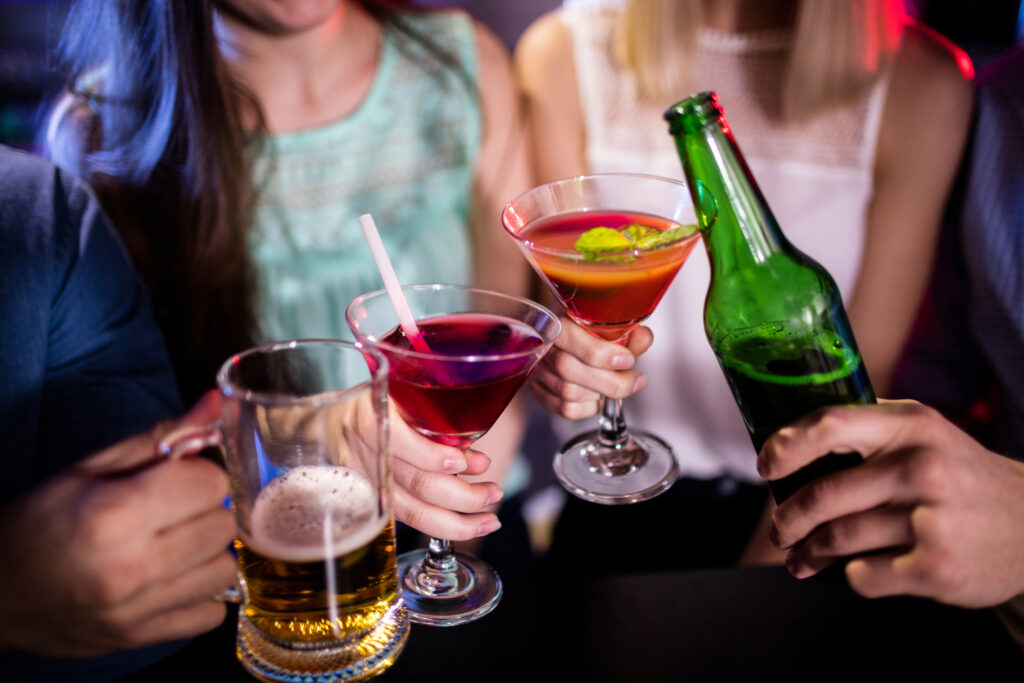
people holding a beer mug, cocktail glasses and a beer bottle

By: Hanifa Sekandi

As consumers become health conscious, their alcohol consumption habits are under careful review. Alcoholic beverage companies need to take note. Keg party adverts are generally less appealing year-round. What works during football season will not work during the off-season. Mindful alcohol consumption enthusiasts lean toward brands that consciously market their beverages. Being the life of the party is desirable but certainly not sustainable. Being the “it” beverage is also desirable. But there are many ways to enjoy your favorite beverage. It is up to brands to illustrate versatility.

  This is especially true for brands looking for lifetime consumers who value quality – consumers who do not consume alcohol for sport but rather for leisurely pleasure. Brands must take drinking culture shifts into account as people look to change their relationship with alcohol. This type of consumer will also pay close attention to brand messaging. It is a confusing trend but the new normal that marketing teams must adjust to. Does this mean it is time for you to reconfigure your entire marketing strategy? No! Never lose sight of who your audience is. You are adjusting your marketing wheel, not reinventing it.

  How did this happen? For many years, beverage companies could run the same marketing campaigns year after year. It was business as usual. TV commercials and out-of-home marketing always hit marketing targets and sales goals. Perhaps previous marketing strategies worked because sources of influence were limited. Companies knew where to find their consumers. And their consumers, whether they liked it or not, would be exposed to advertisements everywhere they went. Traditional advertising gave companies more control over their audience and their brand messaging. 

  The golden marketing era of yesteryear is over. The digital world shifted this simplistic yet captivating force. A basic, giant billboard does not captivate the masses as quickly as it once did. Alcoholic beverage companies need to think outside the box. Modern consumers are distracted and overwhelmed by over-marketing. As a result, they look for brands that fit their lifestyle ideals. However, the digital world allows consumers to have direct access in real-time. It has also led to marketing blunders from overzealous marketing teams. Checks and balances are overlooked to keep up with a fast-paced social world. The beverage industry is not the only sector that needs to dial it back and rethink its marketing approach.

What is Mindful Drinking Culture?

  Have drinking habits changed? This is hard to discern. Depending on where you live in the world, there may not be a significant shift. Drinking habits have diversified. People are not just influenced by drinking cultural norms in their city or country but also by other countries. International travel opens an opportunity to explore unique beverages and the social milieu of alcohol consumption. Traveling to Italy, one will discover that the cultural norms associated with drinking culture deviate from those in North America. Mainly, an alcoholic beverage is an accompaniment to a great meal enjoyed with friends and family. It is not the starter of the party or what holds the event together.

  Believe it or not, a mindful drinking culture benefits your marketing strategy. Now more than ever, people desire meaning. They prefer to support brands that care about the quality of the beverages they produce and their overall impact. For some, mindful drinking is imbibing alcoholic beverages with clean ingredients and brands that use sustainable packaging and cultivation methods. Brands offering single-serving sizes of their beverages are quite favorable. Mindful drinking culture carries the idea that moderation is equally as good as excess. Supporting a brand should not contradict lifestyle goals.

  Yet there is some confusion about the use of the word mindful. What does it mean? Mindful living encompasses the ideal that people thoughtfully and actively make decisions with awareness and care—selecting a beverage thoughtfully and consuming it with this principle. 

  Embracing this trend is a wonderful opportunity to segway into the NoLo market. Or you might diversify your beverage portfolio with variations of a popular beverage from your product line. For example, Heineken recognizes this shift and embraces a mindful drinking culture with the statement, “We believe alcohol, when consumed in moderation, can be part of a well-balanced lifestyle.” A powerful stance that has increased consumer trust and opened the door to expanding their product line. Heineken has gone a step further by giving customers access to ingredients and nutrition information for all their beverages—a notable example from an industry leader in effective mindful marketing.

  It is an approach that bolsters their bottom line while respecting consumer choices. Heineken is appealing to a consumer who may desire one or two alcoholic beverages and  loves their beverages but would enjoy a comparable alternative option throughout the night. Heineken did not reinvent its brand but rather expanded its brand ethos for the future.

  Mindful drinking culture also reminds us that how and where people choose to enjoy a cocktail does not have to fit into a stereotypical framework. Are consumers mindfully looking for healthier alternatives with less sugar, or are they preservative—and filler-free? Mindful marketing strategies should zero in on keywords and key elements that will draw this consumer to their beverage. It opens up a world of possibilities from a marketing perspective and brand development. 

What Is Conscious Marketing?

  Just because it is trending online does not mean your brand should participate. Everyone online is a post away from their audience turning on them. Conscious marketing is a steady and well-thought-out approach that maintains your brand values. It also sees the consumers as a long-term partnership. What is unique about this partnership is that although your product may stay the same with a few new additions now and then, your consumer will not remain the same. Kathy, your loyal consumer, will naturally experience life changes; with them, her views and lifestyle will change. What she will value in your brand is consistency and authenticity. If you are in the beverage industry for the long haul, beverage brands must get this aspect of their marketing ethos right.

  The entry of competing new brands that appear to experience overnight success may spur the need to experiment or chase the competition. Expert-conscious marketers use “the tortoise and the hare” approach to ensure that their beverage becomes a mainstay in the sector, an approach that can lend itself to a mindful drinking culture. Conscious marketing is driven by consumer choices and not social trends, choices that are driven by lifestyle.

  So, if you are worried about your customers abandoning your beverage in favor of new brands that have the advantage of marketing themselves as something new, what is the best approach? How can you still cut through the noise or maintain notoriety without being a one-hit, viral sensation? There is a lot to consider, but the approach is quite simple.

Pivot Your Brand Messaging

  In most cases, the answers are not out of reach. Review previous marketing campaigns. What stood out? How did your audience respond? Then, conduct market research. Ask your consumers questions. This can be in the form of a mini-survey with a discount code as an incentive. Or a call to action on social media or in a newsletter. Ask your audience how they enjoy your beverage. What would be the ideal setting to have a cold beer? Once you gather your data, strategize a marketing campaign that maintains your brand mission while pivoting your brand messaging to inspire and captivate your audience. 

  A consumer-first strategy that aligns with conscious marketing is focused on asking people what they want and not telling them what you think they want. However, beverage brands have found a way to interplay with other facets of culture, from entertainment to fashion. What a famous shoe brand does to appeal to customers is not what beverage brands should do. Both the entertainment and fashion sectors are unpredictable. Beverage brands cannot afford to roll the dice and hope a campaign hits the mark the way brands can in other sectors. It is easier for brands in these sectors to recover.

  Opportunities for experimentation are open in some sectors. In the beverage industry, once you have your audience, it is hard to recover them if you lose them. A clear blueprint of your consumers, their behaviors and projections into future behavioral changes will help you accommodate a mindful drinking culture while remaining competitive in an ever-changing industry. Who will Kathy be in ten years? How can you ensure that she is a lifetime customer?

Packaging Helps Meet Consumer Wishes Efficiently

Market Continues to Expand

By: Rebecca Marquez

With consumer demand rising, the craft beer and spirits market is forecast to grow from a projected 75.2 billion units in 2024 to 78.1 billion units in 2027, a 1% compound annual growth rate (CAGR), according to Craft Beer and Spirits: Success Through Packaging, a white paper and infographic published in February 2024 by PMMI Business Intelligence, a division of PMMI, The Association for Packaging and Processing Technologies. This growth will be achieved primarily by double-digit gains in the craft spirits segment and a shift toward hard cider and non-alcoholic craft beverages to compensate for flat demand for craft beer.

  Metal packaging will continue to dominate with a 58% market share, followed by glass at 38% and rigid plastic at 3%. Liquid cartons, which account for an estimated 0.3% of the market, will experience the strongest CAGR, 2.2%, followed by metal at 1.5% and glass at 0.4%. The growth in these three formats will be at the expense of rigid plastic, flexible packaging, and paper-based containers.

  Driving forces include a greater reliance on the e-commerce channel and a growing preference for ready-to-drink cocktails, as well as for variety and multipacks. As a result, craft beer and spirits producers face multiple challenges:

•    Expansion of stock-keeping units (SKUs) and

      formats

•    Sustainability demands

•    Input costs

•    Need for product differentiation and shelf impact

•    Operational changes to meet evolving needs.

Expansion in SKUs/formats

  The number of SKUs in the craft beer and spirits space has exploded in the past decade, resulting in an ever-growing array of packaging formats and sizes to address shifting consumer preferences.

  E-commerce is emerging as an important channel and is likely to continue growing in share. However, the more frequent and rougher handling experienced during distribution means craft beer and spirits producers, who wish to sell in this channel, may need to make packaging changes and related packaging line adaptations to ensure products arrive undamaged. Additional tracking and product verification features also may be necessary to succeed in this channel.

Sustainability Demands

  Highly sustainable aluminum and recyclable glass packaging dominates the industry. So, craft producers must think creatively to find ways to increase sustainability and communicate those efforts to consumers.

  It’s also essential to be prepared for a stricter regulatory environment. California, for example, has put regulations in place that require a 25% reduction in plastic packaging by 2032. The regulations also specify that all non-plastic packaging be recyclable or compostable by 2032 and set a sliding scale for recyclability requirements for single-use packaging at 30% by 2028, 40% by 2030, and 65% by 2032.

  This is prompting makers of craft beer and spirits to take a more holistic, operation-wide view to improve the sustainability of packaging and production processes. More than half (55%) of survey respondents report adopting sustainability strategies such as

•    Reduce or eliminate plastic

•    Use less material, e.g., lightweighting

•    Adopt 100% recyclable packaging

•    Switch to material with post-consumer recycled content

•    Implement returnable packages

•    Adopt a tethered cap.

  Labeling decisions are particularly important since ink and adhesive choices can determine whether a package is recyclable.

  On the production line, sustainable operations mean minimizing product and packaging waste as well as conserving water and electricity. Efforts to reduce the carbon footprint of a product not only cut costs for processors but also boost sustainability credentials and reputation with consumers. 

Input Costs

  Stubbornly high costs for ingredients and packaging materials have compounded with shortages, particularly for aluminum cans, to create price pressure for craft producers. This should become less of an issue as inflation eases and new can capacity comes on line.

Differentiation and Shelf Impact

  Craft consumers are accustomed to a huge variety of choices from a range of single-serve sizes to mixed 12-packs. This variety makes it harder to stand out on crowded store shelves. So, craft producers are turning to packaging to differentiate their products, project a premium image, and connect with consumers. Thus, producers adopt eye-catching labels, novel materials, unique shapes and sizes, multipacks, mixed packs, and special releases.

  Special releases such as rare and limited batches, seasonal offerings, one-off collaborations, and rotating unique iterations, enhance a product’s image and draw a loyal following. According to the report, “These unique offerings tap into the premiumization trend by creating scarcity and uniqueness and speak directly to craft consumers’ desire for new and novel offerings that expand their overall craft consumption experience. Specialty offerings also create a sense of community for individual brands and go a long way toward building a unique brand identity.”  

  The appeal of premiumization, one of the most durable consumer trends in the craft industry, is expected to continue. That’s because even in the face of inflation, a substantial number of consumers buy quality over quantity and enjoy giving themselves a treat.

  To deliver a premium product, craft beer and spirits producers must consider both packaging and labeling attributes. Strategies include the adoption of unique and novel packaging shapes; bundling with additional ingredients or mixing utensils; and dual-chamber bottles, especially for ready-to-drink cocktails. 

  On the labeling side, the focus is on visual aesthetics, tactile features, and smart, interactive label technologies like radio frequency identification, near-field communication, QR codes, and augmented reality, which link consumers directly to content designed to curate a luxury experience. Visual aesthetics are particularly important to product identity and include elements such as high gloss finishes, metallic flourishes with ink and foil, and clean lines with sharp colors. For cans, these features increasingly are supplied by shrink sleeves and digital printing, which can deliver the desired upscale image. Applying sleeve labels or digitally printing cans on-demand also can overcome supply chain constraints by eliminating the need to inventory pre-printed cans. 

Operational Changes

  Packaging lines are changing to adapt to the shifting needs of craft beer and spirits producers with the most desirable equipment features being sustainability (smaller carbon footprint, reduced waste), flexibility to handle a variety of formats and sizes, automation, and preventive/predictive maintenance-capable.

  Investments include changes to accommodate e-commerce shipping, automate the assembly of variety and multipacks, and differentiate products. Thus, it’s no surprise that 46% of craft producers report they plan to purchase labeling, decorating, and coding equipment.

  Multipacks and variety packs, which often require  manual assembly, pose a production challenge. Thus, 24% of craft producers are planning to update operations by adding feeding, loading, and accumulating equipment, 15% are installing lines dedicated to multi/variety formats, 12% are investing in additional packaging equipment, 10% are increasing machine integration to coordinate runs, 9% are changing primary packaging format, 9% are changing secondary packaging format, and 9% are automating physical processes.

Collaborative Suppliers

  To grow the market, makers of craft beer and spirits seek collaborative packaging material and equipment suppliers who can provide turnkey solutions and extraordinary technical service. Third-party manufacturing and packaging services also are in demand.

  New equipment must be flexible enough to handle multiple formats and sizes and accommodate variations in packaging materials. Other machine requirements include quick changeover, simple operation, and compatibility with washdown conditions.

  The Craft Beer and Spirits: Success Through Packaging white paper was compiled from the opinions and responses of craft beer and spirits industry professionals. Participants were asked to expound on their experiences to better understand craft producers’ packaging needs and the future trajectory of the industry.

  Explore the latest craft beverage processing and packaging innovations at PACK EXPO International (Nov. 3–6, 2024, McCormick Place, Chicago, Ill.). Ranking as the biggest packaging and processing event on the planet in 2024, the show will present 2,500 exhibitors spread across more than 1.2 million net square feet of floor space and foster idea-sharing among 40+ vertical industries. Highlights for craft beer and spirits producers include free educational sessions, a myriad of networking opportunities, and solutions to address automation, production efficiency, sustainability, flexibility, and e-commerce needs as well as other hot topics and trends.

 For more information, visit packexpointernational.com

Being Influential in the Beverage Industry

people around a table talking

By: Hanifa Sekandi

It’s no secret that influencer marketing is pivotal to your marketing strategy. Of course, brands can opt out and avoid it altogether. Many brands do not use influencer marketing to grow their business or notoriety.

  Understandably, there is pressure to conform to this new modern marketing norm. Initially, influencers were frowned upon. The idea of allocating thousands of dollars of your marketing budget to a niche food blog was unthinkable. It is still a marketing strategy that many struggle to wrap their minds around. Also, there is no guarantee that you will see an instant return on your investment. On the other side of the coin, there are benefits to influencer marketing. The proof is in the pudding when you look at brands that have found great success with influencer marketing. Overnight, these brands have become household names, expanding their reach to an untapped market.

  The popularity of the Stanley Cup is an example of an influencer’s ability to influence buying decisions. Not all influencer marketing successes are purposeful. Your brand may experience unexpected success from an unsolicited review from Bethenny Frankel! Your consumers’ buying power is more than just an increase in revenue. An honest review on social media or a write-up on a blog can be impactful.

  Hopefully, you have taken the time to build and create a noteworthy beverage. Aside from great packaging, is it a high-quality beverage? Does it measure up? Simply, does it taste good? Have you perfected the product? If you walk the aisles of a beer or liquor store, you will likely meet a fellow whiskey enthusiast or ale expert. The in-store influencer with first-hand experience trying your product is who you should appeal to first. Before social media, people were influenced by a friend of a friend. Word-of-mouth sold your product.

Building an Influencer Marketing Strategy

  Your why – why your brand is notable will be at the forefront of this strategy. It might be a good idea to have this visible at all times when devising any marketing strategy. It is easy to veer off your path if this is unclear. Why your beverage? Why are you so passionate about your product? Your why is your company’s mission statement. It will look different from your competitors, as it should. From here, brainstorm what kind of social media in the beverage sector is compelling. What draws you in? Depending on the size of your marketing team, write a list of marketing campaigns you have liked online that made you go out and buy the product. It does not have to be in the beverage industry. The main objective is to discern why this marketing campaign inspired you to purchase that item or beverage.

   People connect to things or products that draw meaning in their lives. A popular alcoholic beverage is more than just a good time for many people. It is also an imprint of a memory – a moment in time that reminds them of their wedding or a first date, a trip to Ireland or a celebration with friends and family. There is a reason why people fight over the best tequila and why just any tequila will never do. The same is true for those who enjoy a cold beer. Your influencer marketing strategy is not about numbers. It is about being impactful. The influencers you select to showcase your brand must align with your brand’s mission. It does not matter if they have one million followers if the stories they tell do not support your long-term goals.

Effective influencer marketing strategies require research. Once you have zeroed in on influencer campaigns that inspire your team, it is time to curate a list of influencers who create content that supports your vision. Influencers are storytellers. The storyteller for your beverage must get the story right. What does an effective influencer marketing strategy have?

●   Clear direction: Do you know who you are? Are you a botanical gin? If so, you should lean towards influencers who create content that supports a healthy lifestyle. Who thrive on creating content that is about finding alternatives for mainstream gins. An influencer who drinks organic alcohol will most likely create content that supports their lifestyle choice to consume clean beverages. Avoid the temptation to solicit a well-known influencer who does not create content that supports who you purport your brand to be. At the onset, this is a good idea. But remember, influencer marketing is not a one-and-done game.

●   What is your message? Influencers need to know every detail about your brand. Do not send your beverage to them and hope for the best. A marketing manager should spend time with them going over product education. A media deck should be available for reference during the campaign. Once you have provided the information, they should use their unique storytelling ability to convey the message to their audience. Generally, for experienced influencers, you will not need to approve their content before sharing. But when working with micro-influencers, review all content before it is shared. An influencer with experience will know that they should not deviate from brand messaging. A newer influencer may not be aware of industry protocols. You should not have any issues if you did your due diligence during strategic planning. Pre-approved content prevents brand inconsistencies.

Understanding Your Audience

  Now that you have selected your list of influencers to collaborate with, do not be afraid to audit your list. Do a deep dive into their storytelling style first. As tempting as it may be, ignore the numbers initially. Study all their content, from blogs to social media. If you spot more than five things that do not align with your brand, remove them from your influencer outreach plans. This does not mean that they are not great at what they do. It just means that they might not connect with your audience. Or, they may create content that does not support your brand mission statement.

  A thin line exists between having a successful influencer marketing campaign with the right influencer and tarnishing your brand with the wrong influencer. Celebrity chefs or food bloggers are often popular choices for beverage brands looking to dip their toes into this unpredictable marketing terrain. It is low risk and generally a good return on investment. The food and beverage sectors pair well together.

  Focusing your influencer marketing strategy on your targeted audience will help you express your desires if you work with a PR agency. Most influencers work through an agency, which can complicate the relationship since a third party is involved. Be clear. Do not get easily swayed. Some agencies represent other beverage brands and have strong influencer relationships. Some agencies are influencer-focused and manage a roster of talent. Your budget needs to account for the types of agencies you choose to work with if you do not contact the influencer directly.

  Agency fees should be included in your budget and separate from what an influencer would charge you. Ask your agency to illustrate influencer rates and agency fees clearly. Some agencies focus exclusively on food and beverage marketing. You are more likely to find an influencer with an audience you would like to reach if you work with a team that understands the importance of targeted marketing. They will ensure that you get the results you desire since they have an in-depth understanding of the beverage industry.

Hire In-House

  No one will know your product better than someone who works for your company. Hiring an in-house brand ambassador might be the right direction for your brewery. Did you know many influencers start blogging or social media channels to build an online portfolio? They do this to get recognition or a position at a reputable beverage or food company. Since experience matters, and there are few opportunities to build your resume, they create a portfolio of expertly curated marketing content. Hire an in-house content creator who understands your audience and has experience creating marketing content that appeals to them.

  Since they work exclusively for your brand, an   in-house content creator can develop a consistent online presence. Consider this to be a winning long-term marketing strategy. Another benefit is that food and beverage industry influencers have a big network of connections. As your in-house content development strategist, they can create content and work with other influencers on cross-promotion collaborations. In addition, it gives you free range to build multiple marketing campaigns without delays. Since your marketing team will work directly with them, there is no need to pre-approve content, thus giving you more control over how your brand is portrayed. While curating your influencer list, a quick LinkedIn or Muck Rack search will show you which influencers or bloggers are looking for work or offer freelance content development services.

Should You Opt Out of Influencer Marketing?

  If you are lucky, word of mouth and excellent product placement in-store is all you will need. If you are okay with slow growth and use other means to promote your beverage, then opt out. Influencer marketing is not for everyone and will not necessarily make your brand influential. It is a quick marketing tool. But it cannot be your only one.

  Before you delve into the world of influencer marketing to become the next influential beverage, make sure you are running a strategic marketing plan that will perform well on its own. Invest in in-house talent. A good marketing team may be all you need. When you decide to solicit the help of these industry gurus, you should feel confident in your beverage and the marketing materials you have implemented. Remember, influencer marketing is the bonus addition that can take you to new and unimaginable heights.