10 Ways to Maximize Beverage Sales Through Every Spring & Summer Holiday

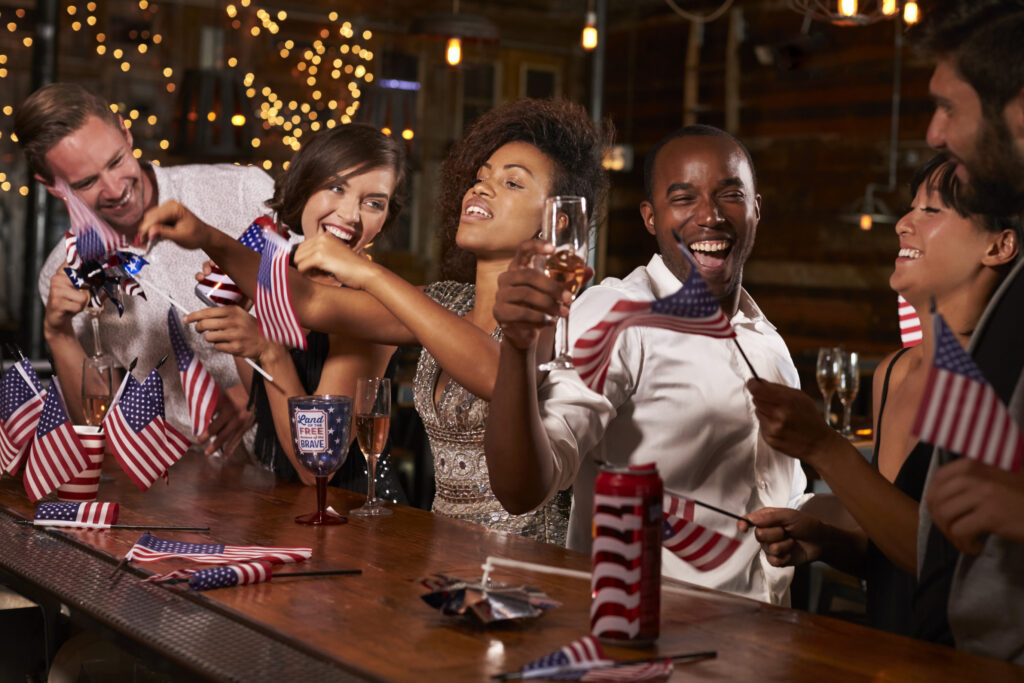
people drinking and celebrating

By: Raj Tulshan, Founder of Loan Mantra

The arrival of spring means sunshine, warmer temperatures, gatherings and lots of drinking. This often involves celebrating with a cold pint of beer, glass of wine or festive cocktail. Special days are a great time to attract crowds planning to connect with family and friends at area restaurants and pubs and to increase beverage sales.

  More than 335,000 gallons of tequila are consumed in the U.S. during Cinco de Mayo fiestas. An estimated 92 million Americans take their moms out for a meal for Mother’s Day, making it the most popular day for restaurant dining. People don their big hats and spring finery, while sipping Mint Juleps at Kentucky Derby-themed parties. Then it’s time to toast to dads on Father’s Day, celebrate graduations, for bachelor and bachelorette parties and bridal showers. So, how can you maximize beverage sales all throughout these warm weather celebrations? Here are 10 tips:

1.   Spring into Theme – Jump into action with some tropical themed drinks. Serve a refreshing Cherry Blossom, Tequila Honeysuckle, or a Lemon Drop for festive seasonal celebrations and, of course, don’t forget a Mint Julep for Kentucky Derby parties. Source fresh ingredients whenever possible and use fun garnishes, like edible flowers. For a Spring Fling, use sorbet as a drink ingredient, with fancy glasses and pastel cocktail napkins. Get patriotic with red, white, and blue themed drinks for Flag Day, and consider garnishing the drinks (or the tables) with cute little sparklers. Throw a tropical party and encourage employees and guests to wear Hawaiian shirts and leis, with mai tai or pina colada specials. Have a taco and tequila party for Cinco de Mayo and decorate with bright colors and a cactus or two. What about hosting an ice cream party with boozy milkshakes on a hot summer night social? The possibilities are endless, so be creative!

2.   Partner with the right vendors – Many beer, wine and liquor vendors will provide plenty of marketing materials to help restaurants and bars drive beverage sales. They’ll often give you free table tents, branded coasters, and other materials to promote their brands. Some vendors will go a step further and provide give-away items, like branded pint glasses, t-shirts, or baseball caps for customers that order their products. This is an easy way for you to boost excitement and sales – and a fun incentive for your guests to enjoy.

3.   Get your financing in order – Restaurants and bars have, understandably, had a tough two years, due to the COVID-19 pandemic. And now the COVID fallout includes a trifecta of major challenges, including soaring prices on food and beverage supplies, ongoing supply chain disruptions and continued staffing shortages. Be sure that your financing is stable enough to sustain your operations, especially amid this turbulent period and as you recover from the pandemic hardships. If you need a business loan, talk to an expert that can advise you about which path to take. There are many viable options available to help your business through the short-term or for your longer-term needs.

4.   Get the funding for your marketing needs – You might have the most amazing place that serves the best food and drinks in the area, but if people don’t know about you, you won’t maximize sales, profits and other key metrics. Elevate your marketing efforts to generate awareness and excitement and drive traffic and sales. Be sure to have a professional, easy-to-navigate website with updated menus, drink lists, and specials. Become more active on social media and buy online ads that target your priority populations. Host special events and tastings. Send out emails about upcoming events and other incentives. If your budget is strained, consider a loan to boost your marketing efforts and attract more attention.

5.   Host VIP tastings. Boost customer loyalty with VIP tastings – Valued customers will feel special to be part of an “elite” event, so make these tastings feel exclusive and important. Send out VIP invitations. If your budget allows, you can go all-out with a red carpet and champagne. Or create a different vibe with beer flights, a wine tasting or a sampling of different types of whiskey. Ask your vendors to provide experts to discuss their products and educate your guests about the types of beer, wine, or liquor they offer. Your vendors might provide VIP gift bags or other SWAG, as well.

6.   Create a comfortable atmosphere – Be certain that your guests feel comfortable at your establishment, whether that means continuing to social distance during higher COVID transmission periods or keeping plastic partitions up for a while longer. Guests want to see “proof” that your restaurant or bar is still following strict cleaning and sanitation protocols, so place hand sanitizer dispensers around the facility and continue to sanitize tables, bars and other high-touch locations frequently. Have comfortable seating that will make people want to linger and have another drink. Use appealing soft (not harsh!) lighting and play fun music. Also, consider what would appeal to your target demographics. Men will want the big game on your TVs. A bachelorette party will want a fun waitstaff that will dare them to do shots. And guests appreciate some creative decorating for the holidays, whether that’s flowers and champagne flutes for Mother’s Day, or big hats and roses for Derby Day (also called The Run for the Roses).

7.   Provide outdoor seating – One of the silver linings of the pre-vaccination landscape was that many restaurants and bars added outdoor seating, which customers loved. Now that spring is finally upon us, people will welcome the opportunity to eat, drink and celebrate outdoors. Set up tables and chairs outside. Consider adding fire pits or offering blankets on chilly evenings. Offer boozy popsicles or milkshakes to boost beverage sales when the weather gets warmer. String up pretty lights. Plant colorful flowers. Make your outdoor area feel lovely and inviting.

8.   Offer special incentives – Promote special deals around the spring holidays, like “Moms drink for free on Mother’s Day” or “Dads get a free beer for Father’s Day.” Promote specials on tacos and margaritas for Cinco de Mayo. Offer Mint Juleps and tiny sandwiches for a Kentucky Derby watch party. Offer discounts on your special spring drink menu. Consider discounts on beer buckets for the spring or 2-for-1 drink specials on a typically slow weekday.

9.   Train your staff about the drink specials – Make sure your staff are educated about your drink specials and encourage them to upsell to your guests. This is especially important when you add new seasonal cocktails to your menu or if you’re having special holiday-themed drinks. Be sure your employees know what each drink tastes like, how it’s made, and what it pairs well with. Your staff are your best ambassadors. The way they describe your menu and drink specials will matter. In fact, it will have a direct impact on your sales.

10. Be active on social – Social media can be a very effective way to incentivize your events, spotlight drink specials, and highlight fun plans and celebrations for the season. Post about what you’ll do to treat soon to be brides well for bachelorette parties (Champagne toasts! Bloody Mary specials!), so they’ll come to your establishment instead of your competitors.’ Feature different staff members raving about their favorite spring drink or talking about the upcoming events or parties that you’re hosting. Share photos of beautiful spring drinks garnished creatively. Showcase that your place is the place to be this summer, for any seasonal celebration.

  Spring is in the air and there are so many opportunities to celebrate. There are also so many opportunities to promote your establishment, drive traffic and boost your beverage sales. Try these 10 tips to increase traffic to your establishment, customer loyalty and profits.

  Neeraj (Raj) Tulshan is the Founder and Managing Member of Loan Mantra, a financial advisory firm with best-in-class and proprietary FinTech, BLUE (Borrower Lender Underwriting Environment). Loan Mantra, Powered by BLUE, is next-level finance: a one-stop-shop for business borrowers to secure traditional, SBA or MCA financing from trusted lenders in a secure, collaborative and transparent platform. Clients turn to Raj because they know he will always pick up the phone and offer unparalleled financial counsel in a remarkably human—even friendly—way.

About Loan Mantra

  Loan Mantra is a financial services company that helps level the playing field for small and medium businesses to gain financing by providing a one-stop portal, paperless application process and personal service. With offices in New Jersey, Charleston, SC and New York, our only success is through your success. This means that our attention, purpose and intention are all focused on you, our client. We are your ally to overcome obstacles, bringing peace through uncertain times to achieve your highest goals and aspirations. Your friendly, responsive agent will listen respectfully and service your account actively through one of three locations in. We speak your language whether it’s English, Spanish, Hindi, Bengal, Hospitality, Laundry or Manicure, let us help you today. Connect with us at www.loanmantra.com, 1.855. 700.BLUE (2583)

Boosting Brewery & Distillery Business with Entertainment and Lodging  

2 guitarists jumping

By: Alyssa L. Ochs

With thousands of craft breweries and distilleries in operation today, it’s no longer enough to simply produce amazing beers and spirits. Brewers and distillers are quickly learning that to thrive and stand out among the competition, they need to build a unique brand and expand their reach to a broader customer base.

  Some of the best ways to achieve this are to offer entertainment and recreation opportunities for everyone to enjoy and onsite lodging that makes an evening out safer and more convenient. With the right event-planning strategy, you can keep consumers coming back to your business even after they’ve sampled everything on the drink menu multiple times.

Types of Entertainment and Recreation

  In recent years, both breweries and distilleries have gotten very creative with the types of entertainment they offer. You’ll regularly find local establishments offering board game nights, yoga classes, musical concerts and karaoke nights. Trivia, open mic comedy nights, painting and crafting events and book club meetings are also held at breweries and distilleries.

  Low-key options, such as yard games and photo booths, are easy options to add, as well as professional networking events, poker tournaments and sport-themed events for big games. Breweries and distilleries can become more involved in their communities by partnering with other businesses to promote local products, nonprofits to support important causes and artists to display pieces of original artwork on the walls. Meanwhile, it’s fun to host holiday-themed festivals, offer educational brewing or distilling lessons and highlight new beverage releases in a way that entices people to walk through the door.

  Dana Koller, the president of Kaktus Brewing in Bernalillo, New Mexico, told Beverage Master Magazine that his brewery’s most successful events have been celebrating Oktoberfest, St. Patrick’s Day and other cultural events. Kaktus always has a full lineup of exciting events on the brewery calendar and offers small-batch brews, organic bites, and a refreshingly chill atmosphere.

  “I think what makes them successful is that we are genuine about the celebration and not just there to make a quick buck,” Koller said. “Although we may not be the most authentic option, we make sure that we have a blast doing what we do and show our appreciation for those wanting to celebrate.”

  On the distillery side of things, Sledge Distillery in Tolar, Texas, has been adding lots of events to its calendar lately, including tastings, tours, food, retail offerings and live music. Sledge Distillery specializes in hand-crafted spirits based on a World War II family moonshine recipe.

  “Private shopping nights for new releases have been very successful,” said Susan Sledge. “Also, we have found that the addition of live music adds to the atmosphere. Our clients are looking to re-engage with us and bring their friends along. We consider their repeat business a huge honor.”

Onsite Lodging Options

  Another unique idea for breweries and distilleries to consider is adding lodging near the taproom to welcome overnight guests. Some craft beverage producers have locations in historic buildings that can be renovated to include accommodation in an adjacent space.

  Alternatively, producers can purchase or build a separate building that provides lodging on the same property. Not only is this a good way to keep customers safe from drinking and driving, but it’s an opportunity to make your business a true weekend destination rather than just a quick stop along the way.

  One brewery that has added lodging to its offerings is Riff Raff Brewing Company in Pagosa Springs, Colorado. Founded in 2013, Riff Raff operates in a historic, Victorian-era house in the downtown area and offers flagship beers, seasonal taps and eclectic twists on favorite foods. Visitors can currently rent apartment units above the downtown brewpub through Airbnb.

  “The building that houses Riff Raff Brewing Company is registered on the Colorado State Historic Preservation roll and has been used and repurposed multiple times since it was built in 1898,” said Jason Cox, founder and CEO.

  “When we purchased the building and opened the brewery in 2013, the upstairs housed apartments with long-term rentals,” Cox said. “We underwent a major remodel in 2015 and converted to short-term rentals because of the fact that there was a brewery downstairs. We thought it would be a type of beer-and-breakfast kind of offering!”

What Consumers Want Right Now

  There is a high demand for entertainment options at breweries and distilleries because people are looking for fun ways to get out and experience their communities in different and social ways. Breweries and distilleries have emerged as ideal destinations for date nights, family-friendly fun and free things to do that don’t require a big commitment. Many businesses are finding success with inclusive events that are pet-friendly and welcome children. You can give consumers what they want by keeping participation costs low or free, offering something different from what they can find anywhere else in town, providing fun photo opportunities and maybe even selling specialized merchandise to mark the occasion.

  “I think what people are looking for is true community, a place and time to connect without expectations,” said Koller. “The music and events are the excuse to get out and socialize for them.”

  “Our customers are looking for a way to relax and take a break from the pressures of life,” said Sledge. “Our distillery is located in the country and gives our guests a feeling of truly ‘getting away.’” 

  “I can’t speak directly to data or analytics, but I do know there are several experiences where lodging is packaged with craft breweries, and it creates a more complete experience,” said Cox. “Our friends own a brewery in northern New Mexico that allows camping on the premises, and they have lots of concerts, so it provides an opportunity to have an immersive guest experience. We aim to do the same type of thing with our lodging above Riff Raff Brewing Company.”

Considerations for Breweries and Distilleries

  Planning events may seem overwhelming to some brewery and distillery owners because it’s just one more thing added to the to-do list and budget. It often pays off in terms of business sustainability and professional satisfaction in the long run. Events, recreation, entertainment and lodging provide fun opportunities in relaxed environments to build your brand and get people engaged with what you’re doing. It’s an effective way to make personal connections with your customers and perhaps even raise money for charitable causes.

  There are many things to think about when planning a new event, type of entertainment or onsite lodging. Cost tops the list since some things will inherently cost more than others. If the event requires renting or buying extra furniture, party supplies, or sound equipment, you’ll need to budget ahead. Although it may be an initial goal to make extra money from an event, it might be worth it to break even for the sake of outreach and exposure. Breweries and distilleries with large spaces may be able to rent out entire sections of the building or property for private events and make extra income in that way.

  Regarding onsite Airbnb offerings, Riff Raff’s Cox sees significant benefits in breweries entering the lodging business.

  “We rent more than 325 nights a year in each of the two rentals, which include a three-bedroom, two-bath unit and a one-bedroom, one-bath unit,” Cox said. “We do see people who book because it’s above a brewery, and they definitely want that experience. Sometimes I conduct VIP tours and add other offerings for guests who stay upstairs.”

Event Planning Tips

  When considering hosting an event, make sure to see what else is already scheduled in the community so that there are no conflicts that would prevent someone from attending what you have planned. In general, it’s best to keep the event size manageable so that the lines for beverages don’t get too long or the spaces too crowded. Fun themes will catch people’s attention, while free and low-cost ticket prices will make your events more accessible to everyone.

  Recurring events, such as activities that happen on the same day each week, make scheduling events easier and allow more people to participate when it works for their schedule. It may also be worth inviting another local brewery or distillery to co-host your event.

  Koller from Kaktus Brewing said that one of the most important things to plan for when hosting events is “making the numbers work so that you are not understaffed since this is always a major challenge.”

  “From the moment a guest arrives on property, we want them to feel welcome,” said Sledge. “Signage has been strategically placed, so people know where to go and the options they have for entertainment, food and beverages. Our employees are intentional about greeting guests and orienting them to the facility and events.”

What’s Next for Craft Beverage Entertainment?

  Producers are just getting started with what they have in mind to entice craft beverage enthusiasts.

  “For Kaktus Brewing, we have been working on plans to expand parking to host larger events with games, a new stage, more shade structures and outdoor cooking,” said Koller. “This will allow us to do full weekend events instead of just evening events.”

  “We are programming smaller, more intimate events where people share a particular interest,” said Sledge. “For example, we are doing a three-event women’s workshop called ‘Feel Good Fridays’ where the group has drinks with a licensed therapist who facilitates a group session on various topics.”

  Meanwhile, Cox recommended that any brewery looking to add short-term lodging should check with the local planning or zoning department to understand rules regulating short-term rentals.

  “Depending on the type of zoning district, it may or may not be allowable for a brewery to offer lodging,” Cox said. “After that, I would put myself in the shoes of a guest to understand the entire experience. For example, some of the equipment that a brewhouse uses runs 24/7, and the noise could have an impact on the lodging, depending on the configuration. Beyond that, I would say to create a great experience for the guests and make it happen. Remember, it’s all about the craft beer and having fun with it.”

How Beer Wholesalers Can Use The Ansoff Matrix to Grow Sales

The Ansoff Matrix is a tool that can help you build a sales growth strategy and identify opportunities to increase revenue.

The matrix was originally developed as a device for businesses to think about revenue diversification.

Since then, it has been used as a quick and easy way to build a sales strategy while considering the risks of growth.

The matrix breaks down the drivers of sales growth into these categories:

  1. New markets (accounts)
  2. Existing markets (accounts)
  3. New products
  4. Existing products

The matrix then combines these four categories and assigns a relative amount of risk to each approach.

The Ansoff's Matrix

For example, building a sales strategy to focus on improving market penetration with existing customers and products is low risk.

Whereas, diversifying into new products in a new market comes with a higher risk.

How can you use the Ansoff Matrix to Grow Beer Sales?

Use it to ask strategic questions:

  • How can we sell more of our current products to our existing customer base?
    • Could we do better with e-commerce options? Can we improve our marketing (social media, traditional media, events, etc.)?
  • How could we enter new markets with current products (or add new accounts)?
    • Are there opportunities to acquire brand/territory rights or purchase another distribution business?
  • How could we develop existing products or services?
    • In other words, could we market the products differently, could we provide more sales training, could we hire a specialized sales person?
  • How could we move into new markets with new products (or services)?
    • For example, could you sell non-alcohol products to non-licensed accounts (a new market)?

The Ansoff Matrix is a simple and easy way to think about sales growth strategy and find new ways to increase revenue.

Use the matrix to brainstorm ideas and ask difficult (but profitable) questions.

Yours in Sales Growth,

Kary

P.S. Take advantage of the Spring Special and save 33% off the Beer Business Finance SubscriptionUse Discount Code SPRINGCLEAN at checkout.

Your subscription includes access to the library of online courses, back issues of the Beer Wholesaler Financial Newsletter, webinars, podcasts, tools and resources to help you drive sales and profits in your beer business.

Growing Your Distillery to Meet Demand

wine distillery machine

By: Kris Bohm: Distillery Now, LLC

Years ago, it all started with the dream of your own whiskey. Through meticulous planning, hard work, blood, sweat and tears your dream of a craft distillery became a reality. Then the real work began, with long days and nights of distilling. Barrels were filled with whiskey and tucked away to age. The whiskey aged and what came out of the barrels was not only delicious but loved by all those who tasted it. The distillery you dreamed of and built up is no longer in its infancy. The spirits of your distillery have been embraced by the public and sales growth is strong. Now here comes the harsh reality. The whiskey your distillery has created and the brand that you built up does not have enough supply to meet demand. The problem gets worse as your equipment is nearly maxed out, since you started with a small budget and limited equipment. With no immediate way to keep up with the demand for your whiskey, you stand at a crossroad where critical questions arise and important decisions must be made.

  How will you meet a demand for whiskey that greatly outstrips supply?

The good news is there are solutions that can allow your business to sustain the growth curve. We will take time to consider the problem in detail, by examining the routes others have taken to solve this exact problem. Some solutions presented here are simple and inexpensive, while other growth options are costly and complex. To help prepare you for the future, let’s break down production growth options with pros and cons of each option to help you find the optimal path to grow your business.

  Outsource Your Problem:  There are companies who produce spirits that are already aged, finished and ready to go in your bottles. Sourcing whiskey from another distillery is the most direct path to an abundance of ready to bottle spirits. Barrels of aged spirits can be obtained faster than producing them yourself and in large quantities. In some cases, distilleries will blend their whiskey with sourced whiskey to stretch their house made supply for the short term. Barrels of aged whiskey are often expensive per proof gallon, but this is certainly the quick route to continue to meet your growing demand.

  Is sourcing whiskey the right choice? If more whiskey is needed immediately, it is likely that sourcing is your only option.

Bringing in aged whiskey from another distillery is an immediate solution to fulfill the demand you worked so hard to create and certainly do not want to lose. Sourcing is the least expensive path forward worth considering. When it comes to cost, other than buying the whiskey, there is no requirement to spend money on equipment when you source whiskey.

  What is the downside to sourcing? Sourcing will require a change in label to disclose the use of sourced spirits.

Spirits from another distillery are unlikely to have identical flavor profile to spirits distilled by your distillery. This can be a challenge if your whiskey has a unique flavor profile.

Sourced spirits are not always received well by an increasingly aware consumer and furthermore may require changes to your marketing story to match the sourced spirits.

  Make More Whiskey: If there is room in your existing distillery to grow, producing more whiskey is often the most logical decision to meet growing demand. The addition of another still, or a stripping still, and more fermenters may be the best choice for you. An equipment addition can greatly increase your output. The decision to add equipment is often the first step a distillery will take to increase output. To grow in this way, a distillery must have additional capacity to add this equipment. Additional capacity is measured several different ways.

  First things first, do you have the space to grow? Additional space is needed to add the equipment, raw materials, and more barrels. A bigger still, more fermenters, and many more barrels of whiskey need to go somewhere and the space must be found first and foremost. The second constraint of additional capacity is heating and cooling. The boiler and chiller must have enough capacity to heat and cool the additional equipment, without overly stressing the equipment. If you have the additional capacity, let’s weigh  the pros and cons of going this route.

  Upside of Adding Production Capacity: The addition of new distilling equipment can greatly increase output of spirits produced daily. This allows you to continue producing your product from grain to glass, and maintains existing flavor profiles and processes to produce the exact spirits you are after. The addition of another still and fermenters is not nearly as expensive as an entirely new distillery build out, as long as the boiler and chiller have capacity for additional load.New equipment added to existing equipment can quickly increase output to work toward catching up with demand.

  Downside of Adding Production Capacity: The new still you add will be hungry and more spirits mean you need more raw materials. Increasing production will invariably increase operating expenses. This sharp increase in spending on raw materials, like grain and whiskey barrels, must be planned for in advance to ensure you have the capital to produce more spirits.Adding a new still will take months to procure, install, and get it up and running. This means it will be sometime before you are able to increase output. An extra still will certainly increase output, but may not be a big enough increase to meet demand in the coming years. This leads to a critical question one must carefully consider when planning to add capacity. Will this planned addition of equipment meet the expected demand in growth for the next 5 years?If the answer to this question is no then it is worth considering jumping into the big leagues of distilling whiskey with a continuous column still.

  Big Distillery Growth: For many distilleries that are making good spirits, they hit a ceiling rather quickly in their whiskey production that requires the consideration to build a new, larger facility to produce enough. If your distillery is on a growth track that many distilleries are currently seeing of +100% growth of sales year over year, the addition of another batch still may not meet your long term demand. Sales growth at this rate requires a massive jump in output of spirits that the addition of another still can not meet. You can look up to nearly any whiskey producer in America where their products are found nationwide and you will find they distill their spirits on a continuous column still. A continuous column still has a proof gallon output level that far exceeds the daily output of even the largest batch stills. There are many unique challenges that come with operating a continuous column still, but their capacity is massive in comparison to pot stills. If your distillery needs large production quantities to keep up with fast growing sales, a continuous column should be considered.

  The Mighty Continuous Still: The output of a single pass continuous still can easily produce seven hundred proof gallons of whiskey in 8 hours. Continuous column stills are extremely efficient and require less labor and energy cost per proof gallon produced. More proof gallons per pound of grain can be distilled on a continuous column still versus with a batch still as well. Distilleries running a continuous column often have excess capacity and can use that capacity to contract distill and create additional revenue streams. This means you have room to grow in your own production as needed.

  Downside of the Continuous: The manufacture, build out, and installation of a continuous column is a much more expensive project than the simple addition of a batch still. Producing large quantities of distilled spirits requires large amounts of raw materials and its downright expensive to operate. Distilling spirits on a continuous column requires an abundance of operating capital to purchase grain and barrels to keep the still running. When running a continuous column and producing dozens of barrels weekly, the need to store those barrels becomes a new challenge. A large barrel storage area or rickhouse is a must when planning to operate a continuous column.

  What is the Best Choice for You? First off, let’s take a moment and celebrate! You have built a successful distillery with growing demand. Hats off to you and your team as this is a massive accomplishment.

  Where to go from here is a daunting decision as the long term success of your business very well hinges on it. Careful planning and consideration is key here as you plan to make this critical decision. There are plenty of options and ways to go to create the opportunity for your distillery to grow. Long term strategic planning must be employed if the next stage of growth is going to work to support your business. If you are unsure which path is the right one for you, drop us a line and let’s talk about it.  Dream big and plan well for it.

  Kris Bohm runs Distillery Now Consulting and has helped oversee expansions for several distilleries. When he is not distilling Kris can be found racing cyclocross or defending his beer mile record.

Future of the Liquor & Spirit Industry: Based on the Integration of the Metaverse

corporate person typing

By: Rohan Doodnauth, Co-founder — OpaLink

In late October of 2021, Mark Zuckerberg announced his company’s intention to rebrand from Facebook to Meta and build an immersive platform fueled by augmented and virtual reality (AR/VR). This platform — the Metaverse — will further blur the boundaries between our online digital lives and our more tangible, physical ones. In his 2021 Founder’s Letter, Zuckerberg remarked how the Metaverse “will touch every product we build,” and will allow users to socialize, attend events, create, work, shop, and more in ways that transcend how we think about the internet and digital technology.

  If the past few years have shown the liquor industry anything, it’s that staying on top of emerging technologies and shifts in consumer trends is vital to the success of our brands and businesses. Look at the growth of omnichannel marketing and sales, for example. Between December of 2019 and November of 2020, retail wine sales at multi-outlet stores in the US grew by some 11.4%. For some businesses in the industry, this operational pivot spelled the difference between surviving or closing during the initial stages of the pandemic.

  With these notions in mind, it’s difficult for us not to consider how the Metaverse could impact the liquor industry as a whole. According to Zuckerberg, the Metaverse aims to become a new central hub of e-commerce and consumer activities. As such, brands in the liquor industry will be forced to rethink how its integration into their operations, marketing, and sales will reshape the future of their business, those of their competitors, and even their consumer markets. Furthermore, brands and businesses must possess the capability to remain agile as they integrate more deeply within the Metaverse, and take notice of how this integration might spur shifts throughout the liquor industry.

Unique VR Dining Experiences

  Within the Metaverse, customers won’t be confined by geographical distance or other physical limitations in exploring the dining or drink options available to them. Rather, upon entering the Metaverse, they will have the availability and opportunity to talk with chefs, foodies, and beverage makers all around the world in the palms of their hands. This will inevitably create a deeper integration of and connection to other cultures, as customers will be able to connect and chat with anyone anywhere in the world at practically any time, and open the door for businesses to provide them with truly unique dining experiences.

  For instance, imagine logging into the Metaverse and browsing a list of restaurants you wouldn’t normally be available to visit in person. Upon selecting a restaurant, you and your party can enter that restaurant’s virtual space within the Metaverse and begin browsing menus for the dishes or drinks you’d like to have. Once your orders are selected and placed, the restaurant’s e-commerce sales system will automatically register the items ordered and be able to virtually send them to you and the others in your party, even without any of you being physically present. Additionally, this method of sales could be utilized for those guests who may not want to show up in person, but still want to try food or drinks they otherwise wouldn’t be able to.

  This blend of convenience and experience, fueled by the AR/VR technology the Metaverse is founded upon, will grant brands the ability to offer customers a truly personalized, customizable experience. Through integrating their sales platforms into the Metaverse, businesses can not only reach a far larger range of customers directly, but also indirectly by allowing their customers to send meals and drinks to family or friends who cannot be physically present with them.

  Because such integration of businesses’ operations with the Metaverse will allow them to provide each individual customer with a one-of-a-kind dining experience, this will inherently create greater competition between brands. Much like we saw with the rise of omnichannel sales during the pandemic, those brands and businesses which are able to capitalize on such value earlier on will be far better positioned to outperform their competitors. Likewise, as the technological capabilities of the Metaverse continue to evolve, the businesses that are better able to remain agile to those evolutions and pivots will likely be the ones who see the most success from their integration with the Metaverse.

Adapting to a Hybrid World Amidst Growing Competition

  Whenever a new technology or trend emerges that impacts our business, it brings with it new sources of competition. This is simply the nature of business. Liquor and beverage industry brands seeking to integrate with the Metaverse will need to take note of how this hybrid digital space could affect their initiatives and create new competitive advantages both for them and their competitors.

  For example, dining experiences in the Metaverse will likely become a blend of futuristic physical features of restaurants and high-tech interactive technology. Knowing this, one method businesses could use to stand out from the competition is by making customers part of this immersive and interactive dining experience. Perhaps a craft brewery or small distillery might offer customers a VR-led tour of their facilities to learn more about their business, its history, and its available products. Maybe a gastropub offers new customers a coupon for a certain percentage off of their first purchase in the Metaverse, or offer them a redeemable code that customers can use to virtually send food or drinks to others. Because our appearance in the Metaverse will be one not of our physical selves, but instead a VR-generated avatar, another possibility might be for businesses like these to offer a free side dish or drink to customers whose avatars are sporting their brand’s logo on a piece of their avatar’s clothing. These are just a handful of examples of how businesses in the liquor and beverage industry could remain agile in adapting to growing and emerging consumer trends after integrating with the Metaverse.

  As a virtual universe that is speculated to become a converging point of consumer activity and e-commerce, it can be assumed that the AR/VR technology used to explore and interact with others will inevitably expand the possibilities businesses have to innovate. Although there is still much we don’t know about the Metaverse — and likely won’t know about for the better part of a decade, at least — this should not stop businesses from forming strategies to implement once they are more deeply integrated into the Metaverse itself.

Implementing a Metaverse Strategy

  Consider for a moment the ways in which the emergence and subsequent growth of social media platforms have impacted business over the last decade. If your own business was in operations prior to the rise of Facebook, Instagram, TikTok, or other social media platforms, it’s safe to assume that the way your business functioned then is vastly different compared to its current strategies and initiatives. When thinking about how your business can integrate successfully with the Metaverse, it’s likely that there will be similar variances — albeit to different degrees or extents — between its current strategies and those used in a realm driven by AR/VR technology.

  For starters, contemplate the initiatives your business has implemented for its marketing strategy. You might be paying for ads on social media to cast a wider net to rein in a greater amount of potential customers, or targeting existing customers with regular email newsletters to alert them of upcoming events or deals you might have. In the Metaverse, those paid ads might transition from sponsored posts on users’ social media feeds into a virtual brand ambassador traveling throughout different e-commerce sectors in a VR-driven environment to offer exclusive tastings or VIP events. Likewise, your business’s email newsletters could transmute into a kind of exclusive membership program for customers to use solely within the confines of its virtual establishment in the Metaverse.

  As another example, look to your business’s current strategy for handling reservations or private parties for events. When integrating these operations into a fully-virtual space, the tickets or codes used for referring to reservations could become their own kind of non-fungible token or NFT; a digital token representing a reservation. If your business boasts a signature dish or beverage, each sale of this item to a VIP member could come with a transferable NFT that could be redeemed at a later date for additional rewards like a free entree, bottled spirit, or customized apparel for their avatar in the Metaverse. Eventually, it may even be possible for chefs or brewers to mint the dishes or beverages they create as NFTs themselves, offering them greater creative freedom and additional means of providing (and earning) value from niche sectors of consumer markets.

  Each aspect of your business in its current state will need to eventually evolve to integrate with the Metaverse. Whatever that means or looks like will be subjective for each liquor and beverage brand seeking integration with the Metaverse, but nonetheless must be made if you wish to remain relevant and competitive in this next iteration of the digital world.

Final Thoughts

  Regardless of how far off we truly are from integrating our businesses and lives into the Metaverse, its influence has already left a lasting impression on markets and industries the world over. Though selling virtual drinks, beverages, food, or other consumables to customers sounds like a counter-productive initiative better left to the realm of science-fiction, the Metaverse’s projected capacity to blur the lines between our digital lives and physical ones could easily turn this into reality in a matter of years.

  Indeed, the Metaverse is perhaps the most literal representation of a “Brave New World” if there ever is one. The potential for brands integrating their business with this new frontier of virtual reality to experiment with marketing, e-commerce sales, and communication with customers will be essentially limitless. In turning passive consumption into active participation with their brand, the first round of businesses in the liquor and beverage industry to successfully integrate with the Metaverse are bound to set new precedents for the industry’s next generation of innovative technologies and tools.

Best Practices for Writing Your Wholesaler Job Descriptions

By: Kary Shumway, Craft Brewery Financial Training

Recruiting, hiring and retaining good employees is a challenging task. However, with a clearly written job description the task gets easier.

The purpose of a job description is to clearly define what needs to be done, and clearly define the type of person you need to do it.

A well-written job description will include a short overview of the position, bullet points of tasks to be done, and a listing of important qualifications. In essence, the job description should describe the job.

In this post, we’ll review Best Practices for writing your beer wholesaler job descriptions, present the One Thing that should be in your job description (but probably isn’t), and provide a road map for putting the job description into practice.

Best Practice #1: Get it in writing

At its most basic, the job description should be in writing and given to the employee (or job candidate).

Sounds obvious, but I’ve seen many employees hired and many employees who worked for years without a formal job description.

Sometimes we are in a hurry to hire someone and neglect to write up a job description. Other times, we just take it for granted that the employee knows what to do in the position and everything will work out fine.

Regardless, one simple basic best practice is to get the job description down on paper and get it in the hands of the employee.

Best Practice #2: Follow a Job Description Structure

The website BetterTeam.com defines job descriptions this way:

A job description is an internal document that clearly states the essential job requirements, job duties, job responsibilities, and skills required to perform a specific role.

The document itself can be one page, or several pages, depending on what’s needed to outline the necessary requirements and skills.

A typical job description will use the following structure:

  1. Short narrative overview
    • Give the candidate a feel for the position. What can they expect? What do you expect from them?
  2. Bullet point list of tasks, responsibilities
    • List only what is important and meaningful. Use the ‘other duties as assigned’ to cover the rest
  3. Qualifications you want from the candidate
    • List specialized skills, knowledge, or education
  4. Specific job requirements
    • If there will be travel away from home, working nights or weekends, spell it out so there’s no hard feelings later

These are the standard sections of a job description. In total, they provide a good overview of what the job is about and what is expected of the employee.

Next post we’ll look at the One Thing that must be in your job description (but probably isn’t).

P.S. Get 50+ template beer wholesaler job descriptions, job postings and compensation planning models in the 2022 Beer Wholesaler Job Descriptions Course. This resource is included with your Subscription to Beer Business Finance.

Bringing Brewing Full Circle From Craft to Culture

By: Quinton Jay

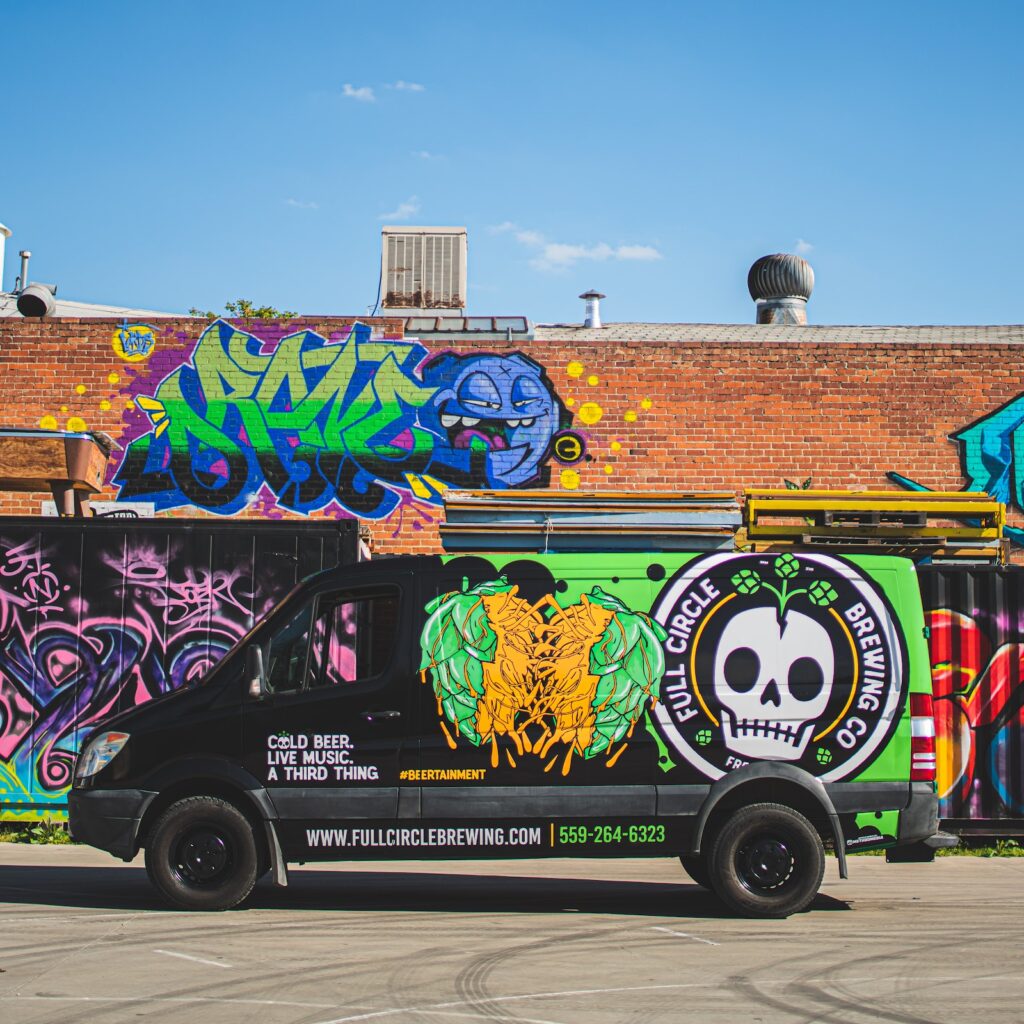
van in front of graffiti wall

In the heart of Fresno, California’s Central Valley, Arthur Moye enters the doors of Full Circle Brewing Co. (FCB), the region’s oldest-running brewery. Some days, he says, he still can’t believe it’s his.

  Prior to purchasing the brewery in 2016 and taking over as its CEO, Moye spent 15 years moonlighting his passion for craft beer as a homebrewer. During the day, he ran his own CPA practice as a successful career accountant, leaning on his academic studies at San Jose State University and prior experience working for two of the nation’s “Big Four” accounting firms to refine his strategic skills with numbers and business acumen.

  But, in true entrepreneurial fashion, Moye eventually wanted more, something that allowed him to blend his technical efficacy, his longstanding passion for craft brewing, and his deeply ingrained want to do more and give back to others within and around his native Bay Area community.

  “I definitely took a leap of faith when I sold my CPA practice to buy FCB,” says Moye, “but something in me knew that it was a chance I had to take. I needed to know if I could combine my experience as an accountant and strategist with my passion for craft beer, and if I could build a business model around the two.”

  Not only did Moye manage to successfully create a business model, but in the first four years after purchasing FCB, he was able to ramp the brewery’s production by some 3,000%. This explosion in production prompted Moye to expand the facility’s older 7.5BBL brewhouse, one that only produced draft beer locally to Fresno’s Central Valley, into a brewhouse with a 15-barrel capacity that was able to package and distribute its uniquely-flavored craft products all across the US.

“Beer” + “Entertainment” = “Beertainment”

  Moye will be the first to admit that he could not have acquired FCB, nor grow it into the Central Valley powerhouse it has since become, fully on his own. Like any tried and true entrepreneur, he knew he needed to rely on two vital components for its success: an empowering vision for what it could become, and the buy-in of the local community into that vision.

  “FCB was here long before I came along,” Moye says, “and so many members of this community wanted to see it revitalized just as I did, but I knew I needed to convince them. I started brainstorming ways we could turn FCB into the heartbeat of the Central Valley’s craft beer and entertainment scene, and the phrase ‘beertainment’ popped into my head.”

  As Moye explains, he not only wanted to create a successful brewery known for its winning craft flavors, but a gathering place where others could converge to disconnect, detach, and simply be mindful in the present moment. So, Moye and his team set out to establish FCB not just as a revitalized brewery, but one that doubled as an event and entertainment venue all under one roof. With his vision now clear, Moye set out marketing FCB’s rebirth to the community in Fresno’s Central Valley, and was fortunate enough to find funding from a group of local investors.

  “I’m not sure if I would call it ‘luck’,” Moye clarifies, “because that might imply that there wasn’t all this effort we put into refining the vision for FCB or acquiring funding to actualize it, but it just made sense that the investors who aligned with the vision were all locals to this area and its community. When you think about venture capital or investments in California, most people tend to think of Silicon Valley and companies like Apple or Tesla—not a craft brewery.”

  Moye’s adherence to his vision for what FCB could become, however, ultimately paid off. In 2016, he was able to acquire the brewery in full and immediately got to work. In 2017, he began reaching out to members of the entertainment industry, making introductions, fostering relationships, and creating partnerships to manifest his vision of “beertainment” for FCB. By the time the brewery had closed its crowd equity campaign and canned its first product of craft beer in 2018, FCB had already experienced triple-digit growth.

  With his vision and business model for FCB’s rebirth now in full swing, Moye started signing agreements with distributors throughout California to get his product in front of more customers in 2019. Less than a year later, FCB’s brand was being placed on shelves at major retail stores throughout the Golden State.

  But as Moye and his team at FCB would soon find out, not all that glitters is gold; even in California. Just months after FCB’s craft beer landed on shelves throughout his home state — each can sporting his coined phrase, “beertainment” — a new threat to business emerged in the form of the COVID-19 pandemic.

Pivoting to Find Value Amidst a Pandemic

  In mid-March of 2020, the world was wracked by the WHO’s declaration of the COVID-19 virus as an official global pandemic. All across the country, businesses that weren’t deemed to be “essential” were forced to close their doors virtually overnight, leaving Moye and his team at FCB scratching their heads as to how they could keep their business (and its vision) afloat. With the threat of a pandemic looming overhead, the “entertainment” aspect of FCB’s “beertainment” draw was shut down, so Moye had to once again get creative with his strategy in order to help his fledgling business survive.

  “During the pandemic, two of the most famous venues in town closed, one of which had been open for over 50 years,” says Moye. “FCB had taken over ownership of that venue, but we had to close it during the pandemic since it had no outdoor seating. My team and I put our heads together and collectively brainstormed ways we could pivot the business.”

  Ultimately, Moye and his team at FCB managed to keep their business alive by regularly hosting virtual shows with comedians, musicians, and other artists over Zoom. At the same time, they doubled down on FCB’s packaging and distribution, getting larger amounts of their craft beers into chain stores and craft liquor stores in California and 6 other states. They also picked up another brand, Sonoma Cider, and implemented their own iteration of a D2C sales model, deemed Full Circle 2 Go (FC2G), at a time when omnichannel retailing in the beer & wine industry was taking off in the US.

   “Running a brewery is one thing,” Moye adds, “but running a brewery that doubles as an entertainment venue also requires employees who can manage things like sound and security. When the pandemic forced us to shut down, suddenly these employees had no key role, so we asked them what their other skills are in order to keep them on board. Our security guards were repurposed as delivery drivers, and our venue’s promoter became the program director for FC2G.”

  As Moye explains, in a matter of mere months, the revenue from FC2G was able to match the revenue earned from their entertainment venue. Furthermore, by being able to pivot not only his brewery’s business model, but also the roles of his employees during the height of the pandemic, Moye was able to foster greater loyalty amongst his employees with FCB’s brand while simultaneously providing value to his brewery’s community. Now, nearly two years since the pandemic began, FCB still hosts comedy shows every Sunday night and has since been able to reopen its entertainment venue to more musical artists, albeit at lessened capacity.

Do What You Love, and You’ll Want to Work Every Day of Your Life

  Despite the onset and lingering effects of the pandemic, brewing craft beer has remained a thriving industry. With an economic impact of over $9 billion in California alone, Moye remains dedicated to his original vision for FCB as a communal hub where anyone and everyone can come together to unwind, destress, and share in their mutual love for uniquely-flavored craft beer and live entertainment.

   Additionally, as a black entrepreneur, craft brewer, and business owner, Moye is grateful that he is able to allow FCB to contribute towards the 1% of black majority-owned craft breweries in the US. Though black majority-owned craft breweries are still a distinct outlier in the industry, Moye hopes to see more post-pandemic events and gatherings like Barrel & Flow fest bringing black-owned-and-operated breweries together to celebrate Black arts, artists, and creators to help foster deeper DEI initiatives within the craft beer space.

  “It’s a little funny to me whenever I mention the ‘1%’ thing,” Moye adds, “because I still get responses from people like, ‘why does it have to be a black thing?’ But it’s not just about that—it’s a craft brew thing. It’s about finding a tribe of people who support you and your vision. It’s about finding other black-owned businesses breweries that support you because you all want to see more diversity, more inclusion, more representation, and more equity in the craft beer space. When you’re able to find those feelings in what you love to do, your work doesn’t feel like work.”

  It’s rare that we are able to find ourselves in a career that allows us to blend our technical acumen, interpersonal skills, and passions. Although, perhaps this is what makes the draw of craft brewing so attractive to so many. It grants those of us with a deeply-rooted love for craft beer to build a community around our ardor and share our enthusiasm with others, regardless of who or where they are.

Assessing the State of Craft and Specialty Beer Distribution Post-Covid

By: Becky Garrison

man carrying stack of beer on his shoulder

According to the Brewers Association, overall U.S. beer volume sales were down 3% in 2020, while craft brewer volume sales declined 9%, lowering small and independent brewers’ share of the U.S. beer market by volume to 12.3%. Retail dollar sales of craft decreased 22% to $22.2 billion and now account for just under 24% of the $94 billion U.S. beer market (previously $116 billion).

  According to their analysis, the primary reason for this overall sales decline was the shift in beer volume from bars and restaurants to packaged sales. Given this shift, how did craft beer distribution change during this ongoing global pandemic?

Half Time Beverage

  Half Time Beverage features over 4,000 craft beers and ciders from over 800 breweries across 50 countries. They sell via two New York based retail stores and their online business, a convenience that helped them during the worst of the pandemic.

  “The fact that we were able to deliver the best in craft beer to people’s doorsteps result-ed in an increased amount of purchases from both existing and new customers who ordered from Half Time during Covid,” said Jason Daniels, Half Time Beverage’s Chief Operating Officer.

  During Covid, Half Time had less availability in terms of seasonal releases such as Pumpkin Beer. “We had a lot of challenges in getting seasonal products this year as craft beer manufacturers are focused on making and distributing their core product releases,” Daniels said.

  Moving forward, Daniels does not foresee any changes to their marketing strategies, adding that Covid changed buying behaviors, specifically with a significant increase in online shopping. “We anticipate this will continue as things open up. The high availability of online goods and shopping amplified everyone’s ability to shop in different ways successfully.”

Tavour

  Tavour, a Seattle-based craft beer distributor, gets its beers directly from craft breweries. Once these products arrive at their facility in Washington State, they market and ship them to their members across the United States.

  During Covid, they implemented major safety modifications, including creating social distancing measures and increased sanitation for workers and the beers they distribute.

  Throughout the pandemic, Tavour ended up increasing its sales threefold. They attribute this growth to their SEO status increasing significantly, leading the company to be listed in the top five searches for craft beer delivery.

  They also observed that since people could not attend breweries or beer festivals in person, they were looking for new ways to try craft beer. Tavour filled this need with accurate tasting notes for all their offerings, capitalizing on their bevy of product samples and quality taste testers. These notes enabled their customers to have a better idea of what they were buying, even though they could not sample the beers themselves.

  While Tavour does not have any firm dates regarding when in-person events can happen again, they hope to resume them in 2022. Currently, they are working to help put on the Barrel and Flow Festival, a Pittsburgh-based celebration of black arts and artists.

Localized Craft Beer Distribution

  As the owner and sole proprietor of Packmule Beverage, Brian Balland buys from breweries that self distribute in Washington State and Oregon and then sells these beers directly to consumers. He delivers the orders to select breweries throughout Washington State, where customers can then go pick them up.

  He developed this niche, direct-to-consumer service for Pacific Northwest craft beer aficionados who want to sample beers from smaller breweries that only have these offerings available at their brewery but are too remote for them to visit on a regular basis. 

  Initially, Balland began this service by working with brewers within his circle. Later he expanded to include requests from customers for specific breweries.

  While he launched Packmule in September 2020, Balland conceived of this service pre-Covid. However, he said, “Covid made it easier to try new things and made consumers a little more malleable to trying new ideas rather than doing things the old way.”

  Since launching this service, Balland estimated he has pivoted twenty times, trying to figure out what will work best for the consumer. Moving forward, Balland plans to con-tinue offering Packmule’s services for consumers in the Seattle and Portland area.

DIY Beer Distribution

  Given that both owners of StormBreaker Brewing in Portland, Oregon, have experience working for a distributor or a logistics company, they chose to apply these skills in assessing how to distribute their award-winning craft beer during the global pandemic. After researching the cost benefits of various distribution models, they concluded that a self-distribution model worked best for them. So, they launched their self delivery ser-vice on March 17, 2020, right after Oregon issued a stay-at-home order, forcing bars and restaurants to close statewide.

  StormBreaker already had an active website for customers to order their beer and mer-chandise online, so they did not incur many logistical issues when launching their delivery service. They set up the ordering platform, and within days they were delivering to customers’ homes and establishments that remained open.

  According to co-founder Dan Malech, “The biggest advantage we have is complete con-trol of our product from inception to delivery. We have an amazing range of flexibility of what we sell, where we sell and when we sell.”

  This DIY model allowed them to deliver beer to their customers with very little notice. Malech cites an example where, during a bad snow and ice storm, the brewpubs around town that remained open were running out of beer. No one else was delivering.

  “We received a ton of calls, hopped in our vehicles, and made many new and lasting customers. I mean, we’re called StormBreaker!”

  While StormBreaker’s beers can be found in retail and grocery stores such as Whole Foods, New Seasons, Market of Choice and most regional bottle shops, some retailers won’t work with them. Also, they cannot approach certain parts of the United States without a distributor.

  “There were too many advantages to self distribution for a company of our size to ig-nore,” Malech said.

  Currently, Stormbreaker has dedicated staff to fulfill and deliver their online orders Mondays through Saturdays. They offer home delivery to the Greater Portland area, with their sales team doing periodic drops to Bend, Oregon and Seattle, Washington. Also, they can ship beers via UPS to those states that permit online sales. For all other out-of-state and greater Oregon sales, they partner with Bevv, Packmule, Drizzly and Tavour, which allows them to have a larger reach both regionally and throughout the country.

Merchant du Vin: Specialty Beer Importer

  Seattle based Merchant du Vin noticed that the distribution of their specialty beers increased in retail stores due to more consumers drinking beers at home during the pandemic, causing their overall sales to increase.

  On the other hand, bar and restaurants sales decreased when these establishments were closed due to Covid-19 restrictions. For example, Orval Trappist Ale is one of the most popular imported specialty beers Merchant du Vin represents in the U.S. While this beer is available in select stores, the bulk of its sales come from bars and restaurants that carry a small but carefully curated craft beer list.

  In addition, with the closing of on premise sales, there were huge losses of keg sales across the U.S. According to Craig Hartinger, Merchant du Vin’s marketing manager, “We actually fared better than some suppliers, but there were hundreds of kegs that we couldn’t sell.”

  Merchant du Vin also lost their ability for their beer representatives to present beers in person to potential outlets, as well as opportunities for in-person consumer tastings. “It took a while to get our online meetings up to speed,” Hartinger said.

  When regions open up, Merchant du Vin plans on continuing their online connections, resuming in person visits and reducing their keg options. Once events can be held in-person, they plan on exhibiting their wares as applicable, such as their Samuel Smith ciders, which they featured at Seattle Ciderfest pre-Covid.

Re-Opening After the Pandemic

By: Donald Snyder, President/Consultant, Time & Tasks

For the first time as an author, I hope this article does not age well. With a bit of luck, you are reading this article in a post pandemic world where these concerns are a thing of the past. That said, as I write this, the world is slowly recovering from a pandemic that had a devastating impact on the hospitality industry including craft distilleries large and small. As you begin to welcome visitors and bring back staff, here are some important and helpful tips when planning your reopening.

Advice from Distillers who have Re-opened

  Throughout the pandemic, the Center for Disease Control (CDC) published fluid and ever-updating recommendations for operating a business to keep both employees and patrons safe. Suggestions like contactless payment, outdoor and reduced seating, staff and customer mask use, and social distancing were mandated to help reduce the risk of COVID-19 spread to keep businesses open, if only at a lower capacity. (https://www.cdc.gov/coronavirus)

  However, the ultimate decision of whether a tasting room could re-open to the public was in the hands of local regulators. Every state had a different set of requirements for operating a business during the pandemic. Some states, like Florida, reopened and removed capacity limits very early in the pandemic as compared to New York City where most hospitality restrictions were not rescinded until the summer of 2021. Soon after the nation-wide lock down in the spring of 2020, some distilleries were able to re-open under various restrictions.

  Cardinal Spirits Distillery in Bloomington, IN was able to open in 2020 under pretty tight restrictions. The distillery opened for carryout bottle, food, and cocktail mixes only.  Additionally, they re-configured their front entry area into a curbside drive-by for order pickup. The state of Indiana did not permit cocktails-to-go so Cardinal Spirits developed hand labeled bottles of mixer kits that people could use to make cocktails at home. Using social media and on-line platforms, they maintained and increased customer engagement with distillery tours, cocktail classes, and even virtual tastings. They hope to fully re-open in Spring 2022 although they have recently re-opened their restaurant for in-distillery dining. Jeff Wuslich, co-founder and President of Cardinal Spirits, recalls his concerns with reopening. “We are most worried for our staff. We do not believe they should have to enforce mandates and safe behavior, but we know it will likely happen. It keeps me up at night. I believe that with our air circulation, safety protocols, and distancing we will all be safe, but I hate to think about our staff having to argue with customers.” Jeff offers this additional advice for distilleries thinking about their own re-opening. “Think of the customer and what experience you would like them to have. Then, work backward from there.” 

  Smooth Ambler Distillery in Maxwelton, WV was also impacted by COVID-19. At the beginning of pandemic, the entire distillery closed public-facing operations, including their gift shop and tours for about a month. During that time, they re-allocated their labor and resources into making hand sanitizer to be donated to front line workers across the country. Once they had a better understanding of the virus, they slowly reopened their production facility with a new set of rules that included social distancing, segregated teams, masks wearing, and frequent sanitization. Smooth Ambler’s continued priority is the safety of their employees and guests.

  They were cautious about reopening the tasting room. Many of their customers were from out of state so they initially re-opened to the public with curbside pickups only. A few months later, they opened with limited capacity and slowly increased indoor occupancy as the guidance from the state permitted. Masks, temperature checks, and hand sanitization were available for all guests. So far, the re-opening has been successful for Smooth Ambler as more and more people are beginning to travel again. Travis Hammond, Operations Manager of

  Smooth Ambler, cautions distillers not to be too hasty or rigid during their public reopening. “The past year has been very difficult on everyone – the best advice I can give to other distilleries that are about to reopen is to be patient and flexible.”

  Reopening slowly and cautiously with the appropriate safety protocols in place has given many distilleries across the country a beacon of hope that things can return to a sense of normalcy. However, even with the best precautions, there still can be issues. Asymptomatic employees and customers that spread the virus can be a serious risk to all parties involved. For those in the beverage industry, contracting COVID-19 can be especially dangerous as a possible long-term loss of taste and smell could impact a distiller’s ability to make and blend high quality spirits. In addition to transmission risks from reopening, there are also risks from patrons fighting required safety protocols.

  Golden Moon Distillery in Golden, Colorado experienced that firsthand when a customer refused to wear a mask and retaliated by shoving an employee. Physical altercations with employees about safety policies or verbally abusive customers are real risks that distillers need to consider when planning for a full or limited re-opening. Stephen Gould, Proprietor and Master Distiller of Golden Moon Distillery has made employee training a pivotal part of his re-opening plan. “We’ve coached our team members to be extremely polite and courteous when asking folks to wear masks. Our main concern is the safety of our staff and customers. Having said that, the one piece of advice I can give folks that are reopening is that they need to work hard to make both their staff and their customers feel safe.”

  Another consideration for reopening is how to deal with heavy foot traffic as people continue to feel more comfortable traveling. Large tourist areas like central Tennessee have many craft distilleries that offer tours, tastings, and spirits for every palate. Pigeon Forge, TN is in the gateway to Smoky Mountain National Park that sees over 10 million visitors per year. In the spring of 2020, when everything shut down, the owners of King’s Family Distillery in Pigeon Forge were understandably nervous. Like many distilleries, by taking advantage of small business loan programs and pivoting production to hand sanitizer for local consumption, they were able to stay afloat. Cara King, Owner of King’s Family Distillery, is starting to see the light at the end of the tunnel. “When our state began lifting restrictions in 2020, the people flooded back in.

  More than before, even. We took precautions, put up plexiglass, and welcomed the tourists, masks, and all. Our distillery has reached the other side of this epic world event bigger than we were before.”

Capital Investments and Infrastructure

  Safety protocols, standard operating procedures and thorough employee training are critical to a successful re-opening. However, some additional capital investment may be required. Dalkita, an engineering and architecture firm that assists distilleries with design, safety, and construction, was instrumental in helping businesses re-open.

  Colleen Moore, Director of Marketing & Operations for Dalkita, kept up to date with all the CDC recommendations, re-opening phases, and safety recommendations. Dalkita kept the distilling industry updated with recommended and required re-opening procedures via regular webinars and blog updates (https://www.dalkita.com/news/).

  The group quickly became aware that each state and jurisdiction had varying requirements for re-opening protocols, social distancing rules, seating capacity limits, and mask requirements.

  In terms of physical and capital improvements to the distillery’s public spaces, Colleen Moore from Dalkita has been advising distilleries what they should consider. “With COVID-19 in mind and trying to reduce the likelihood of a lockdown situation due to a highly communicable airborne disease from recurring, I would suggest upgrading ventilation inside buildings. Any feature that would increase the amount of outdoor air you can bring into a building such as window walls, roll-up glass garage doors, and new increased air handling units with better filtration media and filters.

  If cold, rainy, or snowy weather put a stop to your outdoor activities, consider adding flexible open courtyards or structures with roofs and no walls for use during inclement weather. Anything that can increase the health of the people using a facility is a good investment.”

  As I write the article, I fully acknowledge that regulations are still changing. I began writing this article in March of 2021 before the mass availability of COVID-19 vaccines while most distilleries were under 30-50% occupation and seating capacity. It is now July 2021. Some states are open 100% with no restrictions but the Delta variant is growing. The article will be published the Fall of 2021 and who knows how much the world will change by then.

  For distilleries reopening or increasing capacity in 2021 or early 2022, connect with local authorities for the latest restrictions. Make every effort to keep employees and guests safe. Then again, by the time you read this, hopefully the pandemic and social distancing will be just a distant memory as we all return to normal.

Legal Implications of Playing Music at Your Brewery

man in pirate hat

By: Tarah K. Remy, Dinsmore & Shohl, L.L.P.

Visiting a brewery is meant to be an experience, and customer engagement plays a large role in creating a great one. As the owner, you know your brews are unparalleled, and your goal is not only to share them, but to keep customers coming back. One way to do this is to establish an inviting atmosphere. In most cases, that involves music.

  Music and beer go way back. In 1800 B.C.E., the Sumerians composed the “Hymn to Ninkasi,” which served as not only a song of praise to their goddess of beer, but also as an ancient recipe for brewing.  So, it is safe to say when a customer walks into your brewery, they’ll expect to hear music playing over the loud speakers, or even to see a live band. However, there are serious intellectual property considerations every brewery must take into account when choosing music to create that perfect experience.

What the Copyright Act Protects

  As a general matter, the Copyright Act lays out the basic rights of a copyright owner. Among other things, it protects a songwriter’s and their publishers’ (the copyright holder) musical composition or written work, also known as a musical work. When a musical work is performed or broadcasted in a public space, the copyright holder is entitled to receive a performance royalty, which is the money paid to the copyright holder in exchange for the right to publicly perform their musical work.

Why Your Brewery Needs a Performance License to Play Music

  Copyright is a form of property, and once music is written down or recorded, it is copyrighted. The copyright holder is the owner of that copyright and is granted a performance right to the copyrighted materials. If you want to publicly perform a musical work, you need to pay a performance royalty to the copyright holder. The performance license acts as written permission to play a copyright holder’s musical work in a public space.

  Doing so without a performance license, (without legal permission) places your brewery at risk for litigation. Though the Copyright Act limits the award for copyright infringement to between $750 to $30,000, it is within the court’s discretion to award between $200 to $150,000, not including attorney’s fees and costs. Whether the court can increase or decrease the award depends on whether you knew you were violating copyright law. No matter the circumstance, if you violate copyright law, you will be required to pay, and the gamble of just how much is not worth the risk. Acquiring a license removes the guesswork and allows you to maintain control over your brewery’s finances.

When You Need to Consider Acquiring a Performance License

  You will need a performance license or permission from a copyright holder under at least the scenarios below:

1.  The musical work is played in your brewery using Spotify, Amazon music, Pandora, Apple Music, or any other streaming service. Though you are covered bunder your personal subscription to play music for yourself or in very small spaces, once you plug your device into a loud speaker to be played in a large space where a substantial number of people are present, this triggers the performance license requirement.

2.  The musical work is played in your brewery using CDs, records, or anything similar. Buying the CD or record does not count as obtaining a performance license. Once you decide to play your favorite CD or record inside your brewery to be heard by a substantial number of people, in most cases, you must obtain a performance license.

3.  A live band is hired to play covers of music originally written by a third party in your brewery. In this case, the venue, not the cover band, is required to acquire the performance license.. If you hire a band to play in your brewery and they plan to play covers, make sure your brewery has a performance license covering the songs on the band’s set list before hiring. Keep in mind, however, this generally does not apply if the band is playing music it has composed or is playing music in the public domain.

How to Obtain a Performance License

  Contact a Performance Rights Organization (PRO):  You can obtain a performance license through a Performance Rights Organization such as BMI , ASCAP, and SESAC. These entities function as middle men between the copyright holder and the entity acquiring the performance license. Given the rate at which music is played and experienced around the world, it is virtually impossible for copyright holders to keep track of performing rights. Acting as facilitators, PROs acquire rights from these copyright holders and grant a performance license covering their entire music set to businesses and requesting parties. So not only do PROs simplify the process for copyright holders to receive their performance royalties, but business owners no longer need to contact individual copyright holders to acquire performance licenses.

  Each PRO covers specific musical works by various copyright holders. By obtaining a performance license through just one PRO, you are limited to that PRO’s specific list of music. Be sure to review each list covered by each PRO to determine whether you need a license from one or all. You can also consider acquiring a blanket license that covers all three of the main PROs (BMI, ASCAP, and SESAC) to reduce the chance of potential copyright infringement claims from these organizations. A blanket license is convenient, as it likely covers a large list of music, which in turn reduces the need to carefully review a cover band’s set list and further gives you the freedom to stream music without a second thought.

  Sign Up for a Streaming Service Business Account:  Some streaming services, like Spotify and Pandora, offer business accounts. Simply by signing up and paying a subscription fee, business accounts provide access to fully licensed songs. Via their business platforms, these streaming services have obtained performance licenses from PROs on your behalf, and in most cases, they have performance licenses from more than one PRO, which broadens your music list options.

How much a Performance License will Cost

  The cost of obtaining a performance license through a PRO may vary depending on various factors, including how many breweries you have, the square footage of your brewery, your brewery’s customer capacity, how often music is played, whether the music is recorded or live, and more. The costs start at $500 and increase from there. Streaming service business account costs can be found directly on their websites, where they periodically provide discounts. At the end of the day, though obtaining a performance license may seem pricey or a low priority, the costs of arguing a copyright infringement claim are significantly higher. Budgeting in the cost of a performance license will save your brewery money in the long run.  Here is a link to help you learn more. https://www.bmi.com/digital_licensing/more-information/business_using_music_bmi_and_performing_rights

  Finally, keep in mind the Copyright Act covers exceptions to the performance license requirement, meaning it’s possible your brewery may not require a performance license. So before you sign up or register for anything, we always recommend reaching out to an attorney to review the performance license agreements and your circumstances. Additionally, if you are not sure whether your business meets the requirements, or whether your business might be exempt from the performance license requirement, for peace of mind, reach out to your attorney or the Dinsmore Beer, Wine and Spirits team. We are here to help!