Customizing Beverages the Easy Way

can beers in a beer table

By: Angelo Coletta, CEO – Zakeke

Enabling customers to customize their purchases is a quick and easy way to expand into new markets and boost profits. Some distilleries and craft brewers are beginning to take advantage of this innovative approach to scale their businesses. For example, Silent Pool Distillers increased their orders fivefold in 2020 in part with the help of product customization.

  Possibilities abound for other distillers and craft brewers to do the same. Moreover, it’s easier to enable customization than most business owners think. Today’s product customizers offer automated processes that reduce the required amount of attention and manual labor to little or nothing.

What is Product Customization?

  Product customization allows customers to change the visual appearance of products according to their own individual needs and desires. Sellers empower consumers to build their own unique products, perhaps by adding their names or those of others. Depending on the specific product and customization service, customers may also be able to add photographs or longer messages of their own writing. In a sense, the product becomes a canvas for them to create upon.

  Some of the beer, wine, and spirits industry’s biggest names allow their bottles to be customized, offering proof of concept. Tito’s Vodka and Hennessy VS Cognac bottles can be etched, and a large selection of bottles can be engraved, including Don Julio tequila, Woodford Reserve bourbon, and Dom Perignon champagne. Other makers, such as Maker’s Mark, Jameson, and Jack Daniel’s, offer bespoke labels. Silent Pool Distillers does this for four of their distinctive gins.

  A wide range of items can be customized, including purses, jewelry, keychains, apparel, towels, and bedding. There are even services that customize things you wouldn’t expect, like USB drives, coffee sleeves, drinking straws, bobbleheads, and — believe it or not — cookies or cakes.

Why Enable Product Customization

  The answer is simple: product customization improves the bottom line. According to a 2019 Tech Clarity survey of 285 companies that offer customization, 71 percent listed increased sales as one of its benefits. More than 50 percent pointed to differentiation and higher margins. Thirty-five percent nodded toward customization’s “cool factor,” and 34 percent said they experienced higher close rates. Forty-two percent indicated that offering customization had become a necessity in their industry to stay competitive.

  Product customization elevates profitability for a number of reasons. First, customers are willing to pay more for customized products. According to Bain & Company, they will reach into their wallets to the tune of 20 percent more than the uncustomized version. This means manufacturers who customize can set higher prices. Meanwhile, they don’t incur new costs, since automated processes minimize the work required. While customers may only purchase a single customized item or a small lot, these sales are a painless way for the business to expand, and they do add up.

  Secondly, product customization encourages customer loyalty. The same Bain & Company report also found that, “customers who had customized a product online engaged more with the company. They visited its website more frequently, stayed on the page longer and were more loyal to the brand.”

  Happy customers can result in repeat business and referrals to their friends and family. The ability to customize sets a business apart, distinguishing it from competitors in the eyes of consumers.

  If that wasn’t already enough, Bain reported lower rates of return for customized products than for their mass-produced counterparts. When customers take ownership of the look and feel of their purchase, they tend to be more satisfied with the outcome and less likely to change their minds.

  All of this adds up to increased sales and a better business.

Why Customers Love Customization

  Customization appeals to customers for many reasons. Part of the draw is that it makes customers feel special. They are willing to invest their time and effort into creating a unique product that is tailored to their own tastes and exacting requirements. Since they are the ones who determine what the final product looks like, it is sure to please them.

  Another reason is that customization provides customers with a sense of control, that all-too-scarce commodity in today’s hectic, stressful, and sometimes overwhelming world. They are in the driver’s seat throughout the process. This is one element of their lives that they can impose their will upon and be confident of receiving gratification.

  It can also be just plain fun. For instance, Silent Pool Distillery’s user-friendly website steps prospective customers through the creation process. After clicking on the option to personalize their gin, they are taken to a new web page with four varieties that may be customized: Original Juniper, English Garden, Fresh Grapefruit, and Spiced Pepper. When customers click on the name of the flavor they want to purchase, a new page comes up with the product’s specifications.

  Beneath the “Add to Cart” button, a “Customize” option takes customers to an interactive interface where they design their bottle’s label. A large button with an upward-pointing arrow invites them to upload photographs of themselves, their loved ones, pets, or places special to them. Alternatively, they may choose from a library of 140 million stock photos arranged by helpful categories like “Business & Finance,” “Sport & Extreme,” or “Travel and Vacations.”

  Next to the upload arrow is a button that allows clients to add text to the label, giving it a special name or writing warm messages to recipients. Customers can change the font size, make the text bold, position it anywhere from top to bottom, center the words, or align them to the left or right. They can even bend the letters along a curve of their own making. Magnifying glass icons allow them to zoom in to view fine details or zoom out to gauge the overall look.

  If a given component starts to mess up the label, then the customer can delete it. If the whole design ends up being a disaster, they can reset the label with the click of a button and start over.

  The result is a unique, bespoke bottle of high-quality, sustainable gin that’s perfect for gift-giving on birthdays, anniversaries, and holidays, as well as for celebrations, bachelor and bachelorette parties, showers, and weddings.

  Throughout the process, customers delight in the knowledge that they are putting together a one-of-a-kind present. Surprise is guaranteed: No matter how hard the recipient might try to guess what’s coming, they will never be able to guess what this gift is going to look like. Connection also seems assured — people tend to react positively to seeing their own name on an item, which often translates to feeling good about the person who gave it to them.

No Hassle Customization for Sellers

  Savvy distillers and craft brewers are understandably wary about adding a new feature to their already complex businesses. The last thing sellers want is to labor over a single item. Luckily, those days are over. Today’s customization services integrate with business’s existing websites and simplify the customization process itself.

  Take the case of Silent Pool Distillers. The distillery got their start offline, producing artisanal spirits with local ingredients in the Surrey Hills Area of Outstanding Natural Beauty, a nationally protected landscape in the United Kingdom. To take advantage of online sales, they built an online storefront on the e-commerce platform BigCommerce. Thus, the distillery was well positioned when the COVID-19 pandemic hit, closing pubs and restaurants in droves. The spurt in online shopping boosted their sales to new levels.

  When the business sought a way to start customizing their products, they wanted a service that would integrate with BigCommerce and not force them to reinvent their online shop. They chose Zakeke, a visual commerce platform that works seamlessly with not only BigCommerce, but also many other ecommerce platforms, including Shopify, Etsy, Wix and WooCommerce. It can also employ an application programming interface (API) for integration if needed.

  Silent Pool Distillers installed Zakeke’s software and configured its easy-to-use “plug and play” system. In the context of information technology, “plug and play” means software that does not require users to understand programming or make any adjustments. Instead, it is designed to work well immediately from the moment it is brought to life.

  After this initial setup, the distillery’s preexisting online shop gave customers access to Zakeke’s cloud-based platform for designing their own labels for certain products. Since the process is automated, this personalization happens without requiring attention from the seller. Once an order is placed, all employees at Silent Pool Distillers need to do is download the customer’s file, print it out, and attach it to an appropriate bottle.

  By equipping the Silent Pool Distillery to offer bespoke labels on their bottles, Zakeke boosted their sales while allowing the distillers to remain focused on what they do best: making high-quality spirits.

The Power of Personalization

  Today’s customers increasingly expect the ability to personalize their products. A 2020 report by Dassault Systèmes and CITE Research found that 83 percent of consumers “expect products or services to adapt [to their individual specifications] in a matter of moments or hours.”

  The future belongs to businesses who can meet this challenge. Local distilleries and craft breweries stand to gain by incorporating customization, just like the big names in the industry. Branching out in this direction enabled Silent Pool Distillers to capture a valuable new market segment and increase sales even during the dark days of the pandemic.

  The power of personalization helps retailers please long-standing customers and attract new ones. That’s why distilleries and craft brewers of all kinds should consider adding product customization.

What to Do if EIDL Payments Become Due

SBA logo

By: Raj Tulshan, Founder of Loan Mantra

Restaurants, bars and other businesses within the hospitality industry were hit hard by the COVID-19 pandemic. For instance, restaurant industry sales in 2021 were down a staggering $65 billion from 2019’s pre-pandemic levels. During shut-downs, quarantines, social distancing and other pandemic-related disruptions, many hospitality businesses struggled or shut down, including 90,000 restaurant locations that temporarily or permanently closed because of COVID.

  During the pandemic, bars were forced to reduce capacity limits, negatively impacting their profitability. Reopening after quarantine was expensive, requiring costly adaptations, including air filtration systems, plexiglass dividers, equipment for touchless transactions, cleaning and sanitation supplies and personal protective equipment for staff.

  Hospitality businesses – like companies across many industries – also struggled with employee shortages, supply chain issues and soaring inflation.

  This “perfect storm” of unprecedented challenges led four million small businesses to take out $390 billion in loans through the Economic Injury Disaster Loan (EIDL) program. The EIDL was part of the U.S. Small Business Administration (SBA) and US Treasury as an expanded part of The Coronavirus Aid, Relief and Economic Security or CARES Act.

  Although the loan payments were deferred for two years, they’ve still been accruing interest until the first EIDL payment was due.

  Many small business owners have questions and concerns about the repayment process. The timing is not ideal, as many businesses – including restaurants, bars, hotels, and other hospitality venues – need funds to prepare for holiday sales and events.

If you took out an EIDL loan, here are some valuable tips to act:

      Contact:  Business owners can contact their local district legislators by calling, e-mailing, or writing letters to express concern. Loanmantra.com has put together a tool kit with:

        A sample form letter, an e-mail draft, a phone script and phone numbers to save time. Unsure of who a district representative may be? Find them here.

      Share:  There’s strength in numbers, so share this message with other businesses, business networks, chambers of commerce, businesses in the same area, associations and like groups.

      Reach out: Talk to people every day for the “sphere of influence” to gain community support.

      Ask for help: Don’t be afraid to ask for help when and where it’s needed.

Also, here are some valuable repayment tips:

      The loans won’t be forgiven:  Unlike the Paycheck Protection Program (PPP), EIDL loans won’t be forgiven and need to be repaid. All Economic Injury Disaster Loan recipients received an email from The U.S. Small Business Administration (SBA) with the subject line: Important EIDL Reminder, which contains important information regarding your EIDL account setup and payment.

      Set up a repayment schedule:  Payments were deferred for the first two years, during which, interest accrued. Now, business owners must start making their monthly payments on their due date, which is determined by the “Effective Date” noted on your business’s promissory note.

        Another payment can seem overwhelming stressful given inflation, staffing and supply-related pressures. Don’t look at the big picture. Instead, think about the incremental payments today as steps in the right direction. Set a calendar reminder or appointment to make this payment every month so you will stay ahead of schedule.

      EIDL loans must be paid via a special platform: There are two separate platforms you will need to access your loan information and pay your loan balance.

        First, Capital Access Financial System (CAFS) maintains your EIDL & PPP loan information. This includes your original balance, interest, accrued interest balance, etc. To obtain the EIDL loan information for your business, please select ‘EIDL’ and then ‘borrower search’ from the menu options. When registering on the CAFS website, carefully follow each step. There is no room for error when using this system, so be thorough and accurate when inputting your information.

        Secondly, pay.gov allows businesses to input their bank information and to set up recurring payments online. Inside your profile, choose ‘Make an SBA 1201 Borrower Payment’ as the menu option. While registering on pay.gov may be simpler than registering on CAFS, it is not easy to change bank account information after you begin your loan payments.

      Use the right number:  Keep in mind that your SBA loan number is different than your EIDL loan number. This information can be found on the top of the second page of the promissory note.

      EIDL loans accrued interest:  Many business owners received their first EIDL loan in early 2020 and a second EIDL loan in 2021. For many borrowers, that means interest has been accruing for more than 24 months, with additional interest accruing for more than 16 months. Borrowers are responsible for paying back the loan plus all accrued interest.

      This type of loan program has ended:  The COVID-19 EIDL program is not accepting new applications, increase requests, or reconsideration.

  Business owners should focus on what they do best: Run the business and do it well. That’s why Loan Mantra is providing advocacy tools for business owners on  loanmantra.com so they can be empowered to take action and have the latest information to make the best decisions.

  Small businesses have been the backbone of the US economy and deserve fair economic terms and transparency. Loan Mantra is here as a resource to serve companies of all sizes and types during both good and turbulent times.

About the Author

Neeraj (Raj) Tulshan is the Founder and Managing Member of Loan Mantra, a financial advisory firm with best-in-class and proprietary fintech, BLUE (“Borrower Lender Underwriting Environment”). Loan Mantra, Powered by BLUE, is next-level finance: a one-stop-shop for business borrowers to secure traditional, SBA or MCA financing from trusted lenders in a secure, collaborative, and transparent platform. Clients turn to Raj because they know he will always pick up the phone and offer unparalleled financial counsel in a remarkably human—even friendly—way.

About Loan Mantra

  Small business owners identify two obstacles to their success: access to capital and financial education. Loan Mantra removes these hurdles so business owners can spend more time actually building their business.

For more information visit their website…www.loanmantra.com

The Rise of Aquavit in the United States  

batch 22 beer bottle

By: Becky Garrison

The word aquavit derives from the Latin word aqua vitae meaning “water of life,” a testament to the belief held by early distillers that alcohol infused with herbs was a healing spirit. Also known as aquavite, akvavit, akevitt or snaps, this national spirit of Sweden, Norway and Denmark represents an integral part of Scandinavian culture.

  A typical Nordic household has a bottle of aquavit in the refrigerator or freezer, which is brought out during festive gatherings like Christmas and Midsummer celebrations. Also, aquavit functions as a digestif in helping to digest rich food.

  Traditionally, Scandinavians shout skol (also skål) while maintaining eye contact as they down a shot of aquavit. Supposedly, this custom stems from the Viking sensibility of keeping one’s eye on others, even during a celebration to avoid potential threats. As a testament to aquavit’s celebratory role, the Historical Museum of Wine & Spirits in Stockholm, Sweden, currently lists over 200 drinking songs dedicated to aquavit, with new ones created each year.

  Families without means often made aquavit at home, similar to distilling Prohibition-era gin in the United States. While these homemade brews tended to leave a very bitter aftertaste, aquavits produced by licensed distillers elevated this spirit considerably.

  Commercially produced aquavit tends to range in ABV from 40 to 45 percent, with most aquavit classified as Taffel Aquavit. This term refers to aquavit that is either entirely unaged or aged in spent casks that impart nearly no character. Aquavit found in other parts of Scandinavia use a base consisting of clear, grain-neutral spirits, though Norwegians often distill theirs with potatoes as a base. Also, Norwegian aquavit is usually aged in barrels.

The Birth of Aquavit Distilled in the United States

  Until recently, Scandinavians in the United States wishing to replicate these Nordic traditions had to rely on imported aquavit. The most popular imports available in the United States were Aalborg (Denmark), Linie (Norway) and O.P. Anderson (Sweden).

  The first instance of aquavit produced in the United States can be traced to Christian Krogstad, founder of House Spirits and Westward Whiskey in Portland, Oregon. As his family is Norwegian, he grew up with the foods and drinks of Norway and a particular fondness for aquavit. As Krogstad reflects, “The caraway in aquavit is particularly good as a palate-cleanser if you have oily fish, like mackerel or pickled herring.”

  Since aquavit is such a niche category, Krogstad focused his efforts on distilling gin while waiting for his American single malt whiskey to mature. However, distribution issues in 2006 prevented aquavit from being imported to the U.S. in time for the holiday season. So, he decided to produce some aquavit, which he made using a neutral corn spirit. He then maturated the botanicals and redistilled it.

  His aquavit was kept at the distillery for marketing uses with no intention of selling or distributing this spirit commercially. But he discovered that whenever “cool kid” bartenders visited the distillery and sampled the aquavit, they indicated an interest in using this spirit at their bars.

  So in 2007, he made a label for his aquavit and started selling Krogstad Aquavit. Even though House Spirits took a minority investment in Westward Whiskey from Diageo, he still retains full ownership of his aquavit. Recently, he added Krogstad Gamle Aquavit, barrel-aged in French oak pinot noir barrels from various Oregon wineries. Currently, this is available in about 42 states and online, with approximately 1,000 nine-liter cases sold per year.

The Growth of U.S.-Based Aquavit  

  Initially, the TTB’s Distilled Spirits Beverage Alcohol Manual (BAM) specified that only spirits possessing the flavor of caraway could be labeled aquavit. After receiving correspondence from an aquavit producer, which explained that Norwegian law allows aquavit to retain the flavor of caraway, dill or both, they amended the entry for “aquavit” on pages 4-13 to read: “A caraway and/or dill flavored distilled spirits product.”

  This loose definition has allowed for experimentation among distillers in producing an aquavit that maintains the Scandinavian character of the spirit but has characteristics unique to that particular distillery.

Aimsir Distilling Co. (Portland, OR)

  According to co-founder Christine Hopkins, aquavit production emerged as their distiller’s passion project. “We learned a lot about aquavit together, and we got to try a bunch of aquavits, as my co-founder and husband, Steve, and I knew nothing about this specialty spirit.”

  Their aquavit is made with the same neutral grain spirit used for their gin and vodka, which Hopkins describes as very caraway but balanced with fennel, star anise, a lot of citrus and a little bit of lavender. Most of their aquavit cocktails have been very summer-inspired, following the success of their Nordic Summer, a drink that includes aquavit, lime and Aperol. 

Long Road Distillers (Grand Rapids, MI)

  While most distillers purchase their neutral-grain spirit for their aquavit, co-owner Jon O’Connor proclaims they craft all their small batch spirits from scratch using local ingredients. Around 2015, they distilled about 100 pints of aquavit as a passion project. But after sending off a bottle to the Denver International Spirits Competition, where they tied for Best of Show with a $200 bottle of scotch, they felt they were on to something. “We just kept sending it off to these big spirits completions, and it just kept winning all these awards,” O’Connor states.

  They use red winter wheat for their base spirits, adding a mixture of dill seed, fresh dill and caraway seeds along with curcumin, star anise, fennel and cinnamon. This recipe is also used in the Old Aquavit, which is barrel-aged in used whiskey barrels.

Norden Aquavit (Chelsea, MI)

  As a bartender, Robyn Cleveland, co-founder and distiller, explored making cocktails using unique ingredients. He fell in love with aquavit through a Danish childhood friend and his wife, who is half-Swedish. Cleveland created a brand focused on aquavit’s rich traditions with approachability and versatility as a cocktail ingredient at the fore. Cleveland says, “Aquavit’s potential was relatively untested outside areas with larger Scandinavian strongholds. It’s exciting to share the spirit with an ever-growing audience.” 

  At 45 percent ABV, their citrus-forward flagship, Original Taffel Style, embraces both caraway and dill along with clementine, coriander, angelica, orris, juniper, clary sage, staghorn sumac and anise. Also, they produce an American Oak Reserve using the same botanicals that have been aged for a minimum of 12 months in previously used rye casks.

Spirits of French Lick (West Baden Springs, IN)

  As a distiller and distillation historian, aquavit has always sparked head alchemist Alan Bishop’s interest. He opines, “Aquavit can trace its roots under various names back to the Aquavitae Treatises of the 1400s to1600s. It has deep connections to Sparagyic medicine, so three of my major interests were piqued: alchemy, history and complex botanical distillations.

  Bishop notes they push coriander and caraway to the forefront of their aquavit, with a small amount of juniper and some floral and citrus elements. Their base distillate is a blend of both neutral and 100 percent oat whiskey spirits, which Bishop states provide mouthfeel, aroma and perceived sweetness.

  Production of their Aquavit requires the production of three separate products. This involves high-proof corn ethanol and 100 percent oat whiskey, both taken through the full distillation steps. Then there is the blending, hand-mashing of various botanical elements, heat-up digestion period and 24-hour maceration. What follows is the distillation of the finished product and heavy cleaning of the equipment, which is shared with other products. 

Tattersall Distilling (Minneapolis, MN)

  When Tattersall Distilling began distilling in 2015, aquavit was one of the first spirits they made. “I have Swedish heritage, and my business partner has Norwegian heritage. So being up in Minnesota and given our backgrounds, we felt we had us an opportunity to make something unique that interested us,” Jon Kreidler, co-founder and chief officer, opines.

  Their aquavit is caraway- and rye-forward with a base of organic, corn-based spirits. While Kreidler is aware some U.S. distillers use cumin in their aquavit, he discovered this use is due to a translation error from Swedish to English. Instead, he prefers to use 20 locally sourced botanicals, many of which are also present in their gin.

  After customers expressed interest in their Tiki-style cocktails, they decided to bottle a coconut-infused version of their aquavit. “The citrus and pineapple create some very interesting notes when mixed with the caraway,” Kreidler notes.

Vikre Distillery (Duluth, MN)

  As a Norwegian and American dual citizen, Emily Vikre grew up with a cultural understanding of aquavit as a celebratory spirit. Her aquavit starts with organic, Minnesota corn that she either distills herself or augments with Minnesota, organic spirits. Next, she combines direct and vapor infusions with 12 organic botanicals, including caraway. Also, she produces aged aquavit with used cognac casks. “These casks shift the flavors of how the botanical come through,” Vikre reflects.

Marketing Aquavit in the United States   

  According to distillers, the biggest challenge in marketing aquavit is that most consumers don’t know what aquavit is. When Hopkins markets aquavit at a farmer’s market and other public events, she educates potential consumers by calling it a Scandinavian-style gin. “Aquavit is very similar to gin, but the botanicals are different. As they already have the vocabulary for gin, using this descriptive term allows them to transition from gin to aquavit.”

  Also, Vikre observes how some people think they won’t like aquavit as they don’t care for caraway or dill. This is especially true if they had a bad experience with an aquavit that was too caraway-forward. Cleveland adds that some Scandinavians need to be convinced that the poor quality aquavit of their youth does not represent the craft aquavit on the market today.

  Vikre classifies her customers into two types. First are the people who wear Norwegian sweaters and celebrate the Scandinavian holidays. The number of people who fit this description varies according to the number of Scandinavians living in that particular region.

  The second group is a growing collection of consumers interested in pushing the boundaries of craft cocktails. Within the cocktail culture, aquavit is emerging as a substitute for gin or vodka by those bartenders looking to offer a unique drink to their clientele. In particular, the caraway lends a tangy bite to a bloody Mary. Other cocktail recipes referenced by these distillers that can be made with aquavit include aquavit and tonic, banana daiquiri, dirty martini, eggnog, gimlet, julep with rye whiskey, mai tai, Manhattan, negroni, old fashioned and Tom Collins.

  Select Scandinavian festivals held across the country from New Jersey to Portland, Oregon offer opportunities to embrace the Nordic culture. While some festivals are alcohol-free, others, like ScanFair held this year on December 11 and 12, 2022 in Portland, Oregon, include aquavit among their festive offerings. Shawn MacArthur, festival and fundraising events manager, opines, “Having aquavit at ScanFair is one of the many ways attendees can get a taste of a Nordic Christmas market! Along with food, shopping and activities, it’s the perfect way to kick off the holidays.”

  Also, in 2012, Jacob Grier, co-author of Raising the Bar (Chronicle Books, November 2022), hosted Aquavit Week at Metrovino in Portland, where he served as the bar manager. He wanted to share his enthusiasm for the spirit and highlight its use in cocktails. Since then, it has grown into an annual tradition, with a range of citywide events and an opening party featuring a wide selection of aquavit, aquavit cocktails and Scandinavian fare hosted by Broder, a Portland-based Swedish restaurant. As the state opens up post-COVID, Grier hopes to relaunch Aquavit Week in January or February 2023.

Luca Mariano Distillery

Bottling Family Values, Tradition & History

whiskey distillery set

Mariano Viola was a man of many talents, including making pasta, winemaking, distilling whiskey and brandy and gardening. He shared these talents with his family, dreaming that one day, they would have a successful life and a lasting legacy in the United States. That dream started to materialize in 2010 in the garage of his grandson, Francesco S. Viola. Francesco was distilling whiskey in his garage as a hobby, using the methods he learned under the guidance of his grandfather. Then, in 2013, he was encouraged to obtain a federal basic permit officially licensing him to produce bourbon. When he received that permit on the last day of 2013, the Luca Mariano Distillery, LLC, was established, named in recognition of Francesco Viola’s son and grandfather. The dream and vision materialized further when the small garage distillery grew to become known as a producer of supreme, small-batch Kentucky straight bourbon whiskey, the foundation of the Luca Mariano distillery in Danville, Kentucky, distillers of bourbon and ryes aged no less than four years.

  While his distilled bourbon and rye were still young, Viola partnered with an established distillery in Kentucky to produce a young whiskey. But a test launch of 60 cases proved unacceptable to Viola’s standards and further intensified his focus and desire to create only high-quality Kentucky straight bourbon and straight rye whiskey. To start building the needed inventory, Luca Mariano Distillery partnered with another distillery to produce 240 barrels for aging in 2015. The following year brought another 240 barrels into the stock, with 480 added the year after, in 2017. Luca Mariano Distillery added 750 barrels in 2018 and 1000 more in 2019, the same year that Viola was preparing to release his Old Americana Bourbon and his Luca Mariano Rye Whiskey. It was time for Viola to find a permanent location for his distillery legacy.

  “It had to be perfect for his vision,” said Jennifer Brandt, master blender for Luca Mariano Distillery. “Francesco wants to operate a premium destination distillery that combines his family values, bourbon history, and the qualities of life recognized and cherished in Italy, a place where friends and family can visit, enjoy great food and drink, and listen to beautiful music without feeling rushed. It had to be a property that can host memorable events with great experiences, not simply a place that offered the traditional tastings and gift shops. And more importantly, it had to honor his family and lifestyle values along with the bourbon tradition.”

  With the help of realtor Dan Campbell, Viola found that property in Danville, Kentucky, a 557-acre historic site rich in distilling and moonshining history. It is also home to the William Crow house, built in the 1770s and recognized as the oldest stone house and the oldest free-standing house in the state of Kentucky.

  “It was in shambles,” said Brandt. “Some of the stones were collapsing in on themselves, but there are now plans to restore the historic home to its original condition. Also on the property is a silo made famous by a local moonshiner named Guy Jones. He was a barnstormer that also found his plane and flying skills useful to fly his moonshine that he distilled in the on-site silo, to his customers. As a barnstormer by trade, being able to land his plane directly in the fields became a convenient way to peddle his shine.”

  Jones’ meticulous and detailed moonshining methods gave him notoriety and set him apart from other moonshiners at that time. Luca Mariano Distillery uses a similar process in its distilling methods, including detailed and constant attention. Restoration will also take place on the underground tunnel system that was in place for the moonshiners to have an escape route when necessary, as well as all of the buildings on the property to restore them to their natural and historically accurate state.

Viola is committed to using only the finest ingredients in his farm-to-bottle philosophy, and when he can do that locally, all the better. Viola promotes Kentucky as having some of the best distilling grains available and passionate farmers that share his determination and drive.

  “The property is also a fully functioning farm,” said Brandt. “Luca Mariano Distillery grows its own corn and wheat, farmed by the talented and well-known local farmers of Caverndale Farms. Barley and rye are best suited for cooler climates, so we choose to have them grown elsewhere. All our oak barrels are aged for 18 months before being assembled and expertly charred to a number four char for our use by Independent Stave Company.”

  Luca Mariano Distillery just broke ground on the property for a new craft distillery to be completed next year, in 2023. Original plans called for a larger footprint, but barrel shortages called for a smaller design now, with plans for a larger distillery in the future. The craft distillery will feature an 18-inch column, while the larger distillery will house three 36-inch columns. When the larger distillery begins production, the smaller craft distillery will remain in place for small-batch distilling and experimental or test batches.

  “Our rickhouses are uniquely designed as well,” said Brandt. “After a lot of research, a state-of-the-art, custom-designed rickhouse was constructed called a “Torta A Tre” or three-layered cake, with three floors on levels one and two with the third level remaining as an attic-type space. The idea behind this design is that smaller, three-floor rickhouses are best to age the barrels while removing the need for rotation. Floors one through three on the bottom level hold 13 barrels on each side. As you go up the cake tiers, floors four through six on the second level hold seven barrels on each side. The seventh floor is attic space, and this last tier allows the proper airflow to push through and penetrate the entire rickhouse.”

  Viola’s future building plans include 13 “Torta A Tre” rickhouses on the distillery property. The first completed rickhouse is named the Dan Campbell Rickhouse, after the real estate broker that worked tirelessly to help Viola acquire this unique property. Being ever thankful to Campbell, Viola dedicated his first signature rickhouse to him.

  In addition to a larger distillery footprint with corresponding rickhouses, Viola plans to make his Danville property a visitor’s paradise. His plans include a coffee shop, restaurants, a chocolate shop and a rooftop bar providing amazing panoramic farm views. Boutique hotel rooms are positioned on the second floor of these buildings so families and friends can stay a little longer to enjoy all of the amenities his distillery will offer. In addition, a music pavilion will be a centerpiece for visitors to stay and get together to enjoy great food, music and bourbon while creating lasting memories. Brandt estimates this development only to take up about 15 percent of the total property acreage.

The Goods

  Luca Mariano Distillery first released Old Americana Bourbon and Luca Mariano Rye Whiskey in 2019. “The Old Americana name pays homage to the American Dream,” said Brandt. “The Luca Mariano name is crafted for his son and grandfather. In 2020, we released our Luca Mariano Single Barrel Bourbon with a strong vanilla and caramel nose and a limited-edition Francesco S. Viola Single Barrel Bourbon with a mild cherry and brown sugar nose. Our Gianna Lorén Single Barrel Rye is named after the owner’s daughter and is a tribute and honor to all women in the distilling industry. It is a three-year, wheated bourbon.”

  Luca Mariano Distillery’s Old Americana Rye is a five-year, 5bbl, 89-proof offering. The Luca Mariano bourbon and rye are both seven-year, 103-proof, and the Gianna Lorén Rye is a six-year, 97-proof perfectly balanced blend of rye spiciness and rich, sweet, green apple, chocolate and brown sugar. Viola’s signature line boasts a seven-year, 113-proof bourbon.

  A distinguishing aspect of the Lucas Mariano Distillery brand is the inclusiveness and connectivity of music within their distillery operations. Their individual batches have correlating playlists performed by The Old Americana Band. Often those tracks offer insight into the batch creation or backstory. Other performances may provide insights into family history and traditions, distillery history and information, or additional backstories related to that particular batch or time. The Old Americana Band also provides distillery-sponsored music and entertainment at promotional events. It features a rotation of professional voices ranging from American Idol contestants to well-known Nashville music celebrities. A complete list and batch-numbered selections are available on the Luca Mariano website, along with videos of important moments.

  Viola is also in the process of producing his own signature recipe, which will have bourbon and scotch notes but without the peat flavor. Current plans are for a once-a-year release on his birthday, which coincidentally occurs on the anniversary of prohibition. Eventually, as the new distillery comes to fruition and production ramps up, he hopes to have this signature recipe offered year-round, along with unique blends and selections that will honor and keep alive the history and people of the property, including William Crow and Guy Jones.

  To help his vision become a reality, Viola hired industry veteran David Phillips as his master distiller, charged with overseeing all distillery operations from the current groundbreaking through distillery completion and startup. Phillips adds tremendous industry knowledge to the Luca Mariano vision through 18 years of experience with two of Kentucky’s leading distilleries. Trained under Jim Beam’s Master Distillers Jerry Dalton and Fred Noe, as well as under his mentor Larry Walker, Phillips previously led operations at the Clermont and Booker Noe distilleries. He also worked as Team Lead for Bulleitt Bourbon Distillery, responsible for all distilling and dry house operations.

  Until the completion of further construction, the Luca Mariano Distillery has limited public access and is only open to those customers and clients that have arranged for custom barrel picks.

  You can learn more about and follow Viola’s vision and the progress of Luca Mariano Distillery at https://www.lucamariano.com

https://www.lucamariano.com

The Role of Virtual Tastings in a Post-Pandemic World

people in virtual call drinking wine

 By: Alyssa L. Ochs

The COVID-19 pandemic affected all aspects of life in 2020, from how we received medical care to how we dined at restaurants, shopped at stores and even enjoyed our favorite craft beers and spirits. In past years, craft beverage enthusiasts planned entire road trips and even flew to other countries to experience what the best brewers and distillers of the world had to offer. But during the COVID era, producers were forced to switch gears and consider offering virtual tastings as one of the many ways to stay in business due to restrictions and shutdowns.

We heard a lot about virtual beer, wine and spirit tastings during the height of the pandemic, but those conversations have dwindled as business picked back up as usual. Yet there still may be a place for virtual tasting experiences in today’s craft beverage industry, just as long as producers can evolve with the times and reestablish the relevance of this service among the mix of in-person offerings and events.

What Are Virtual Tastings?

  Virtual tastings are a relatively new concept, and many people don’t consider trying them because they don’t understand what they are. Virtual tastings are immersive, alcohol-themed experiences you can enjoy from the comfort of your home. Many of them require breweries and distilleries to ship boxes to households with sample-size portions, materials to read and opportunities for online engagement.

  During the COVID-19 shutdowns, some beverage producers turned to virtual tastings as a way to keep their customer base engaged and stay afloat as profits declined. But even during times of normal business operations, virtual tastings can be used to celebrate birthdays at home and corporate events in an office. Beyond the confines of a physical tasting room, there are also opportunities for virtual tastings at team-building activities, couples’ date nights and social gatherings to help local groups get to know each other.

Types of Virtual Tastings

  Some breweries and distilleries have created virtual tasting packages with beverage and food pairings to entice customers’ attention, particularly when in-person tastings were not an option. Recently, we have seen cooking kits emerge with alcoholic beverage samples and opportunities to participate in live online events.

  Other virtual tastings experiences involve sending a few bottles or cans of products to consumers with exclusive online access to an hour-long video call with a brewery or distillery representative. There have also been question-and-answer sessions offered with brewers and distillers, beverage judging sheets provided so consumers can rate and pick their favorites and seasonal experiences that highlight fall and winter brews, for example. To further capitalize on virtual tasting experiences, producers can offer the option of purchasing branded merchandise, such as hoodies and beanies, as part of a shipped package for an additional, discounted cost.

Benefits of Virtual Tastings

  During the pandemic times, the benefits of virtual tastings were evident because of the lack of other tasting options allowed and available. Virtual tastings enabled beverage fans to support struggling producers during difficult times while still feeling like part of the beer and spirits community.

  But even now, there are some significant benefits of virtual tastings that are worth considering for the months and years ahead. If marketed well, these socially distanced offerings can help breweries and distilleries reach new customers outside their home region who may not ever travel to the actual tasting room. During the winter cold and flu season, when COVID-19 cases tend to increase, virtual tastings appeal to some consumers as a safer and healthier alternative. If a tasting package includes printed materials that are informational and fun to read, there are opportunities here to help consumers better understand a beverage brand and its products. Since these packages can be designed around different interests and price points, they can offer something for everyone, from the casual drinker to the true connoisseur.

Challenges of Virtual Tastings

  Yet many challenges come with putting together virtual tasting packages, first and foremost, their relevance and value. Beverage producers must make these types of delivery/online tastings worth the cost and add value consumers wouldn’t necessarily get by visiting the establishment in person. There has been declining demand for these services lately and less internal dedication to marketing them since people are willing to travel more and crave a return to normalcy in the outside world.

  Meanwhile, some breweries and distilleries have been unsure of what to charge for virtual tastings. The average cost for this service is between $50 and $200, depending on how much product is shipped and other perks offered. For the virtual tasting industry to be sustainable, more effort will need to be directed to packaging and shipping beverages, which is a significant pivot from the previous experience of many beverage operations. There also need to be staff members who are tech-savvy and trained in how to plan and lead online events, as well as handle the inevitable technology glitches that so commonly occur during video calls and group chats.

Creative Ideas for Virtual Tastings

  If virtual beer and spirit tastings will survive as a side gig in the craft beverage industry, now is the time to get creative with offerings, pricing and perks. If this is something that a brewery or distillery owner is interested in getting involved with, it might be worth hiring a company or consultant specializing in virtual experiences instead of handling all aspects internally. At a minimum, it is worth researching examples of successful virtual tastings and perhaps even reaching out for a discussion or collaboration. Denver Microbrew Tour, City Brew Tours and Common Space Brewery are a few of the many groups that have excelled in this space. Other examples to learn from include Brews Less Traveled, Sierra Nevada Brewery, Fullsteam Brewery and the Sommelier Company.

  One idea to consider for future virtual tastings is to make the experience customizable for certain types of products, such as whiskey, rather than taking a one-size-fits-all approach. Promotions for the service can be centered on the benefits of receiving miniature versions of spirits so that consumers can try samples before committing to full-bottle purchases. Celebrity promoters and social media influencers may be able to help revive the virtual tasting industry if breweries and distilleries make the right connections. Also, the virtual tasting experience can be enhanced by social media participation and through educational lessons about mixology and beer-brewing.

The Outlook for Future Virtual Tastings

  At least for now, it seems that most craft beverage producers, including Fullsteam Brewery, have stopped offering virtual tastings since the lifting of COVID restrictions. With people feeling increasingly comfortable going out in public and preferring in-person experiences to virtual ones, there are significant challenges for the virtual tasting industry right now, but not insurmountable ones.

  Winter is an ideal season to revive virtual offerings because of the predicted increases in COVID-19 and flu cases. This is also an ideal time of the year for virtual options for holiday gift ideas, because of cold weather that keeps some people indoors and potentially more difficult travel with snowy conditions.

  While we don’t anticipate virtual tastings ever replacing the actual experience of drinking onsite, they could be offered as an add-on opportunity for consumers to get even more involved with their favorite beverage companies. During the holiday season, these types of tastings can take the guesswork out of planning gatherings at home with a fun activity as the party theme. As the weather warms up, forward-thinking producers may be able to expand virtual tastings to virtual festival events and online education about beer and spirits. This could lead to more formal training in the craft beverage industry and perhaps even address the staffing shortages still so prevalent in so many places around the country. Yet, in the short term, these shortages may also prevent breweries and distilleries from having the labor resources to dedicate to the tech side of beverage marketing in the first place.

  If you are interested in getting more involved in the world of virtual craft beverage tastings, you should know that this market is far from saturated, and there are openings for growth. Emerging, niche companies could assist with the production and execution of virtual experiences as a service to breweries and distilleries that do not have the time, expertise or staffing to do so themselves. But for now, these types of tastings will primarily be carried out by individual breweries and distilleries that are large enough, have ample staff and enough time and resources to expand their offerings to an online audience. If successful, those offerings could be models for an expanded online industry in the future.

  As a small sampling for inspiration, here are some resources to check out and virtual tasting ideas to consider:

•    The Drunken Grape has a team of sommeliers and offers interactive tastings, niche event planning and execution for private parties, wine and beer dinners, and weddings/corporate/charitable events.

•    Book a beer expert for your event through City Brew Tours.

•    Bourbon & Banter offers whiskey tastings for corporate events.

•    Dewar’s Aberfeldy Distillery is still hosting virtual experiences upon request.

Keeping an Eye on the End Game

Precision in Bottling and Canning for Craft Breweries

beer automated machine manufacturing

By: Cheryl Gray

Savvy craft brewers want problem solvers on their team, especially when it comes to bottling and canning products. 

Industry experts specializing in bottling and canning needs for breweries tout the equipment and technology to handle these tasks for operations of any size.

  One of those experts is XpressFill Systems, a long-established player whose clients, the company says, know to expect cost-saving innovations from its products and solid customer service, particularly after the point of sale. California-based XpressFill was founded in 2007 and began with the idea of solving a dilemma for small-scale wineries stuck with trying to bottle their wines by hand. It continues to service the wine industry, which surrounds the company’s facilities in San Luis Obispo.

  Today, XpressFill manufactures bottle- and can-filling systems in its San Luis Obispo plant, using top-quality components made exclusively in the United States. Its fillers come in several models, including volumetric, level fill and carbonated technology. With affordability, compact design and ease of use among its top priorities, the company continues forging ahead with new ideas to keep pace with customer needs in real-time.  

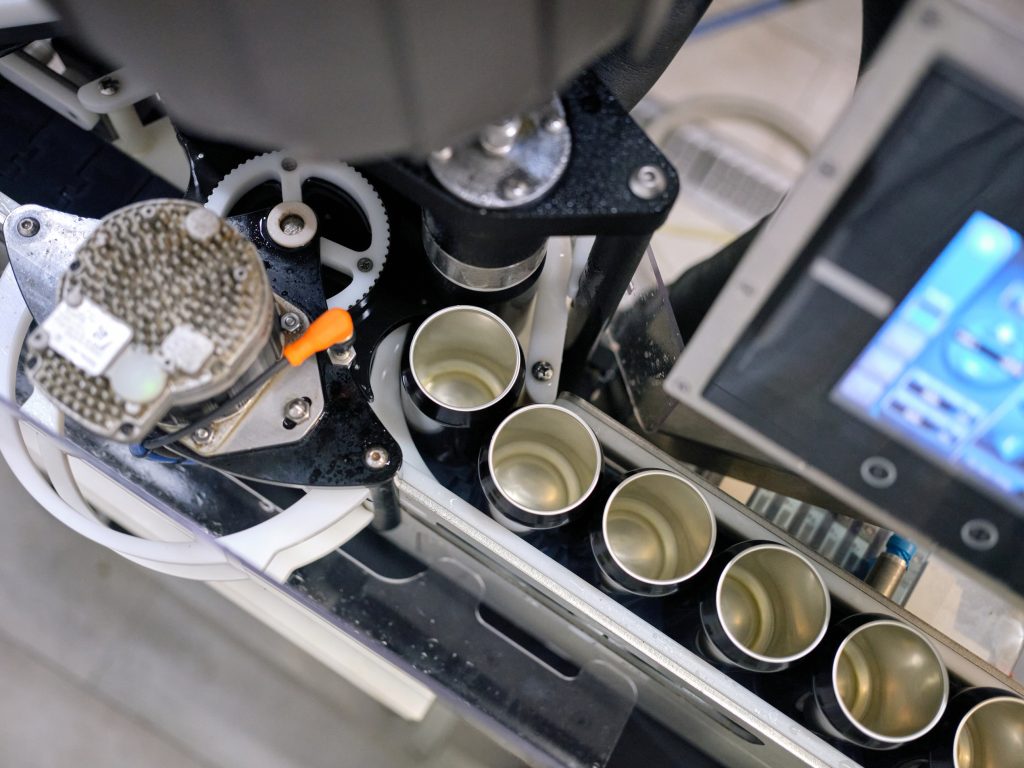
  The XFW200C is XpressFill’s latest addition to the line of filling products. Its weight-sensing technology is designed to ensure accurate fill volumes that will hit their mark every time. The importance of this precision, of course, is to avoid spills and underfills, which cost valuable production time and loss of product. 

  Rod Silver leads the company’s Sales and Marketing Division. He describes how the XFW200C is ideal for 12-ounce to 16-ounce cans. An industrial-grade touchscreen display allows the user to enter the desired weight and the technology installed keeps track of how much product fills the can. A larger flow path gives the user access to a smooth fill along with the flexibility of filling containers with almost any product of choice, including those with some level of particulates, such as flakes or small seeds. In addition to processing beer, kombucha, juice and RTD mixtures are among some of the other options.

  Twin Monkeys Beverage Systems, based in Denver, Colorado, is the brainchild of Josh Van Riper and Brian LeFevre. Their attention-grabbing moniker, along with the duo’s business model of customer-focused design, has earned Twin Monkeys a global presence in the craft brewing industry, with customers throughout North and South America, Europe, Australia, Africa and Asia.

  Both Van Riper and LeFevre have engineering backgrounds. They are focused on designing the kind of automated canning systems that didn’t exist when Van Riper was brewing craft beer.

  “I started a brewery and quickly found there were not good options for buying automated canning machines for craft breweries then (2013),”Van Riper said. “I got Brian to come to the brewery to discuss this opportunity and we then started Twin Monkeys to make affordable, high-quality automated canning systems for packaging beverages. We’ve grown to a 30-person company in a 14,000-square-foot facility, and we have over 500 canning machines strewn around the planet. I’m an automation engineer who does mostly controls engineering and mechanical concepts. Brian is a mechanical engineer. Between the two of us, we can design automated equipment from the ground up.”

  Twin Monkeys Brewing Systems offers a full range of can-fill-and-seam machines. The company offers craft brewers automation options that provide access to in-house, integrated canning lines equipped with three critical functions.

  “We are singularly focused on canning machines that do three things: fill cans, put lids on cans and seal cans. We rely on other expert companies to do things like labeling, depalletization and brewing, and we want to just perfect the three things we do over and over. We’re also creating a new customer service paradigm to provide easier and more efficient access to our knowledge for our customers.”

  Van Riper says that customer service extends to helping clients integrate their systems with a wide range of accessories.  

  “Although we only make canning machines, we consider ourselves to be systems integrators and that means we sell and support a wider range of equipment,” he said. “This provides more of a one-stop-shop model for customers to lean on us for a variety of their equipment needs. We plant 50 trees for every machine we sell, and in 2021 we became carbon neutral. We do serious work, but don’t take ourselves too seriously.”

  The process of canning and bottling craft beer also entails protecting the integrity of the product before it hits the market. That’s the role of Industrial Physics, which brands itself as the world’s leading test and inspection corporation. Armed with a global network of technical and support teams, the company’s 75-year history in quality control has guided the testing and inspection experience for some of the largest beverage corporations in the industry.

  Industrial Physics has a presence in 75 countries, with manufacturing facilities in 13 locations. Through its vast portfolio of more than a dozen testing and inspection brands, including CMC-KUHNKE, Quality By Vision, Steinfurth, Eagle Vision and TQC Sheen, test and inspection solutions are deployed to ensure premium quality control for beverage packaging, materials and products. At the same time, the company assures clients of personalized solutions for their product needs. 

  Whether a small start-up or a global name in the brewing industry, Industrial Physics says its

Testing and inspection solutions cater to every need and budget. Steve Davis, global product line director at industrial physics, has more than 20 years of engineering experience. He leads a team of experts who ensure that the equipment provided by Industrial Physics does its job.

  “When you’re dealing with bottles, cans and metal packaging, you’ll need reliable inspection machines to ensure the quality of your drinks,” Davis said. “With Industrial Physics, you’ll improve the efficiency of your processes and improve your product, saving yourself time and money and, ultimately, you’ll keep your customers happier. Through our leading brands, including CMC KUHNKE, Quality by Vision and Eagle Vision Systems, we’ve helped thousands of beverage fillers and breweries to taste success.”

  Davis went on to say, “From seam inspection and metal can testing to an inline inspection of empty and filled containers, our devices offer unmatched innovation and help you meet your quality needs. We protect the integrity of some of the biggest brands on the planet, as well as hundreds of emerging brands and everything in between. But how do we do this? By providing first-class test and inspection machines and products that check the quality of your packaging, materials and coatings.”

  Davis provides an example.  “Let’s take seam inspection. Our CMC-KUHNKE Auto XTS is a state-of-the-art, fully automated seam inspection solution. There’s nothing like it in the world, and it has the power to completely revolutionize seam solutions for your production line. We also have a wealth of smaller solutions to fit different needs and budgets.”

  The company offers instruments designed to provide functions that include double seam inspection, non-destructive seam inspection, bottle, keg and can vision inspection, abrasion testing and headspace and dissolved oxygen testing. Customer service, Davis adds, is a priority at every point of the client experience.

  “We understand that being fast, efficient and truly reliable is critical when it comes to servicing the instruments that keep your business running. And that’s why we’ve established a global network of dedicated service specialists to ensure you have an expert ready and waiting at a nearby location who can offer you support.

  Wherever you are in the world, our experts are on hand to support your needs, whatever they may be. We know that having the right people ready to help is critical. It’s critical to delivering quality and speedy service that ensures your instruments can get up and running as quickly as possible. From installation to calibration, repair and preventative maintenance, we’ve got you covered.

  We’re also passionate about being there for our customers in a more holistic way. We don’t just provide products. We’re there as a true partner. We have a wealth of solutions available across the beverage space, from metal packaging to bottles, our instruments test across an incredibly vast range of applications for many different manufacturing and laboratory needs.”

  Canning and bottling craft beer is a process that engages the expertise of filling, packaging and protecting products. Selecting the partner for one or more of these steps is not only based on budget but also depends upon which companies can accommodate the individualized needs of a craft brewery, no matter the size. Another important factor, experts say, is which company will stay with a brewery for the long run, ensuring that it can accommodate growth while not compromising on quality control. 

Pioneering Spirit

Dillon's Distillery bar

By: Tod Stewart

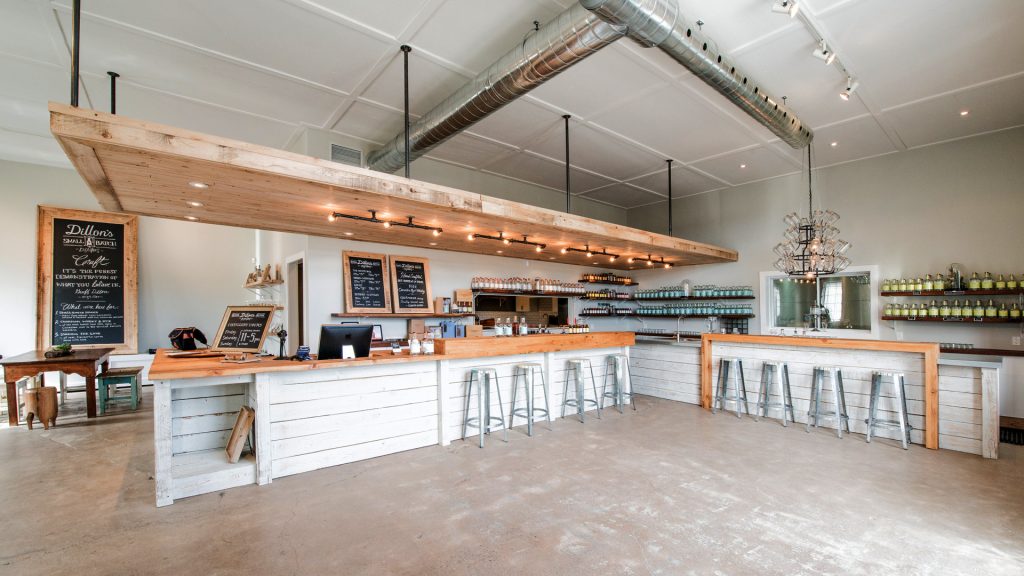
The warm afternoon sun is making late-September feel like mid-August. I’m here at Dillon’s Distillery with one of its pre-bottled Manhattans in hand. Sure, the busy Queen Elizabeth Way highway – a stone’s throw away – is adding some traffic noise to the serenity of the whole experience, but I can live with it. I mean, I’d rather be near the highway with a drink than on it, given how traffic can turn this whole stretch of the Toronto-Niagara pipeline into vehicular sludge.

  Located in Beamsville, Ontario, about a half hour’s drive (depending on the aforementioned road conditions) from Niagara Falls, Pure Spirits Distilling Corporation – aka Dillon’s Distillery (established in 2012) – is one of Canada’s pioneering small batch distilleries. Founded by Geoff Dillon and his father, Peter (both of whom hold degrees in biochemistry), the distillery appears to follow a philosophy that is both focused and fun…and guided by a real passion for distilling.

  “I grew up with a father who was passionate about single malt scotch whiskies,” confesses Geoff Dillon. “When it was time for me to go to university, I decided to follow in his footsteps by studying biochemistry. During my studies I fell deeply in love with the art and science of distillation. Brewing and winemaking were one thing, but when it came to distilling, I discovered that the possibilities were endless.”

  Like many distillers in Canada, Dillon was intrigued by the concept of creating an authentic Canadian rye whisky (i.e., one actually made from rye). But by Canadian law, whisky needs to be aged a minimum of three years, so, as with many other distillers, Dillon kept the wheels on by diversifying its portfolio…and it would appear there’s nary a spirit he hasn’t taken a run at.

  “We’re big into the experimentation side of things, so there’s always new spirits going into bottles,” Dillon enthuses. And rather than operating in a self-contained bubble when it comes to measuring the success of this experimentation, Dillon relies on external input.

  “We have a program at Dillon’s called the ‘Sipping Society,’” Dillon explains. “Through this program we bring together a group of like-minded spirit connoisseurs who have a chance to trial some of our innovations before they hit the shelves.”

  Of course, being a small pioneering entity in a world inhabited by much bigger players introduced a number of challenges to overcome. These included dealing with not only punitive taxation rates (since they lightened somewhat in Ontario, but still not to the extent as in a few other provinces) but some rather odd rules that were in place at the time Dillon’s was getting underway.

  “You needed to have a larger-than-5,000-liter pot still to be allowed to open an onsite distillery retail store,” Dillon recalls. In Ontario, if we didn’t have that, we would have had only one channel to sell into.” Dillon’s team came up with a pretty clever workaround. Having a 5,000 liter still in addition to separate mash tanks would have been a prohibitively costly and space-hogging affair. So, in cooperation with the German company, Carl GmbH, the world’s first 8,000-liter hybrid mash tank/pot still was developed to save space and money while eliminating the need for separate components.

  However, distilling requires more than just equipment. It takes dedicated and knowledgeable staff.

  “Building a team who believed in the concept and vision was our priority,” Dillon recounts. “We are in this incredible area of Niagara, which is not just surrounded by wineries and breweries, but winemaking and brewing education programs. There is a local distillation program at the Niagara College, where we are able to pull some of the most knowledgeable people from the beer, wine and spirits industry. Once we had a foundation of strong and passionate people, we had to determine what we were going to make and how we would source the ingredients.” To that end, Dillon availed himself of local ingredients largely supplied by local farmers.

  “It has always been a priority for us to work with local farmers,” he reveals. “I feel very lucky we made Niagara our home. We are surrounded by our farming community that grows fresh ingredients for us so we can make the best and most unique spirits.”

  Besides developing a close bond with the farming community to source local ingredients, Dillon’s stays clear of any artificial flavors. “So, if it’s a year when yields are lower or something didn’t grow, it can limit our production,” Dillon admits, adding, “We can’t make peach schnapps unless we can get our hands on the right peaches.”

  When it comes to actual production, Dillon’s “keeps things simple.”

  Dillon reveals that every spirit “…is made from one of two bases: rye grain or grapes. We work with a handful of local grape-growers to grow enough wine grapes annually to make our Unfiltered Gin 22 and our grape-based vodka. This grape base gives a unique viscosity and mouthfeel to the spirits that only grapes can provide. Just about every other spirit we produce comes from rye grain, grown locally by our friends in Brant County, about an hour’s drive west of the distillery.”

  “For flavoured spirits like strawberry gin, we begin with our rye base then finish by macerating fresh, ripe strawberries grown by our neighbors across the street,” he said. “We do something similar for our other fruit spirits, like peach schnapps, cherry gin or even the walnut amaro.”

  The garden in front of the distillery that began life to supply the ingredients for Dillon’s absinthe has grown over the past decade and now supplies botanicals to a number of spirits, ranging from lavender to hot peppers.

  Even the barrels Dillon uses for maturation are unique. While some ex-bourbon barrels are used, other casks are made by a local cooper. “He makes them just for us,” Dillon reveals. “We pick the trees, and then they are made locally just up the road.”

  Besides small-batch distillates, Dillon’s crafts an ever-growing range of premixed cocktails with the assistance of, in Dillon’s words, “…some superstar bartenders that work exclusively for us. They help us make unique, delicious and proper cocktails.” There’s also a mind-boggling range of bitters, with flavors ranging from rhubarb to wormwood, fennel and ginger. “At Dillon’s, we are all about cocktails,” Dillon maintains. “Most cocktails have some form of bitters in them. From the very first day we opened our doors, we knew bitters needed to play a big component in what we are doing.”

  Definitely a man with a vision, Dillon has watched  the distilling landscape evolve around him, with his distillery being at the forefront of many positive changes. The evolution has been rapid over the decade that Dillon’s has been in business, to the point where Ontario has 45 such establishments, with that number continuing to grow. If you factor in “contract” or “virtual distillers,” that number swells to over 150. He also has plans to introduce a handful of new products to market, including melon gin, a seven-year-old single-cask rye, a cask strength rye and, as of this November, the return of a brandy made from local grapes. 

  Distillers and spirit aficionados south of the border might consider visiting their northern neighbor and drop into Dillon’s for a professionally made cocktail or a spirit sampling. I was fortunate enough to try the following:

  Dillon’s Niagara Peach Schnapps (Batch 4, 24% ABV):  Lighter, drier and more natural tasting than what you’d typically find, with subtle, fresh peach aromas, a clean, balanced palate and a long finish.

  Dillon’s Cherry (Batch 28, 35% ABV):  A gin base infused with local cherries, then lightly sweetened. A distinctly juniper-scented gin base isn’t overpowered by the additional aromas of sour cherry/black cherry. The slight bitterness of the fruit harmonizes well with the sweetness/spice of the base spirit. Try in a cherry G&T or a French martini.

  Dillon’s Single Grain “Three Oaks” Rye Whisky (Batch 20, 43% ABV):  Geoff Dillon’s dream was to create an authentic Canadian rye whisky, and he’s done so admirably here. Made from a mash bill of 100 percent Ontario rye and aged (as the name suggests) in a combination of new Ontario oak, new American oak and first-fill bourbon barrels, it shows classic, spicy/dusty rye on the nose, with a hint of dried citrus peel. Warm, round and balanced in the mouth, with layers of fruity/spicy rye, vanilla and caramel, it’s quite gentle while remaining elegant and complex.

  Nearby Niagara-on-the-Lake is a quaint little town that’s definitely worth visiting. In fact, stay for a few days for some winery/distillery/brewery visits, great food, interesting shopping options and beautiful scenery. I’d highly recommend making the 124 on Queen Hotel and Spa your base because it has great amenities and is close to everything – like Treadwell, a can’t-fail choice for local “farm-to-table” cuisine and an outstanding local/international wine selection. Although “authentic Italian” has come to mean many things, Ruffino’s Pasta Bar & Grill is definitely your place if you’re looking for the real deal. Formerly the acclaimed Stone Road Grille, it was reimagined (due to COVID, of course) as something a bit less formal, but every bit as enticing. It’s about a 15-minute walk from 124 on Queen (though the walk home might be a bit slower).

  Cheers, and I hope to see you up this way soon!

The Return of In-Person Beer and Cider Festivals

social gathering in a beer festival

By: Becky Garrison

As Ann Obenchain, marketing director of the Brewers Association, keenly observed, “The past two years have been tumultuous for the craft brewing community, and COVID-19 has had ripple effects in many aspects of life.” Once COVID hit in March 2020, the Brewers Association placed the health and wellbeing of their industry peers at the forefront of all decision-making for their events. This led to the cancellation of all in-person events and festivals, including The Great American Beer Festival (GABF), Craft Brewers Conference (CBC), SAVOR: An American Craft Beer and Food Pairing Experience, Homebrew Con and the World Beer Cup (WBC).

  Early on in the pandemic, their Homebrew Con went virtual for 2020. In addition, the Craft Brewers Conference (CBC) launched an online version, bringing five weeks of conference talks available and free through May 2020 while everyone was in lockdown. Also, they hosted a virtual hill climb for brewers to meet with elected officials and staff. However, other festivals, such as GABF and SAVOR, could not be retooled for a virtual experience.

  With the return of GABF in Denver (October 6-8, 2022), Obenchain notes they must be ready for anything, given they host events across the country. “Each location has different safety requirements, which are subject to change at any time. Our team has learned to be nimble and flexible in providing event attendees with the best experience possible at any moment.”

  Among the offerings for the 40th Anniversary of GABF are hangouts for entertainment, live music, games, a brewers’ studio to meet with industry experts and brewers, a designated driver lounge and PAIRED, a ticketed event pairing food from award-winning chefs and beer that includes unlimited tastings of unique beers not found in the festival hall.

Cider Summit Returns to the National Stage

  Pre-COVID, Alan Shapiro spearheaded regional Cider Summit festivals in Seattle, Portland and San Francisco, as well as a national cider summit in Chicago that coincided with CiderCon. All these events were canceled effective March 2020.

  In 2020 and 2021, they experimented with giving festival-goers an at-home festival courtesy of their “festival-to-go tasting kits.” These kits featured a range of two-to-three packages at different price points and cider selections ranging from modern to artisanal, with some packages including international ciders.

  The tasting kits were tailor-made for each specific festival and released in the same month as the in-person festival for that region. For example, the kits released in June featured Oregon cideries. Then they highlighted Washington ciders in September and California ciders in April.  According to Shapiro, the Chicago tasting kit was a bit harder to navigate, given this festival’s initial national focus. “We had had ciders from all parts of the country or as best as we could,” he observed.

  They distributed these kits via their partnership with Seattle-based Press Then Press, an online retailer of rare, independent, local and craft ciders. Consumers living within a particular festival’s geographic area could pick up their kit or arrange for local delivery. Nationwide shipping was available for those living outside of these areas. 

  Included in these tasting kits were promotional items and an invitation to a virtual tasting with several of the cidermakers whose wares were included in these kits. Shapiro estimates that about 20 to 30 percent of those purchasing the tasting kits tuned in to the virtual tasting. Over time, they developed a loyal and passionate following, especially as they got better at producing virtual events.

  Shapiro hoped he could return to in-person events in 2021 and announced the dates for the Seattle Cider Summit held in September. Even though this festival would be outdoors, they chose to cancel it due to an uptick in COVID cases and the ensuing governmental restrictions.  

  The Portland Cider Summit, held June 10-11, 2022, marked their return to in-person events. Audience anticipation was high, with a much stronger selling of pre-sale tickets than in prior years, though the monsoon-like rains that pummeled the city lessened the expected attendance. Also, the number of participating cideries was down from around 50 to 43, a dip Shapiro attributes to cideries that are no longer in business, as well as staffing issues.

  They will be hosting the Seattle Cider Summit on September 9-10 at South Lake Park, with plans to launch the San Francisco Cider Summit in 2023. As the Chicago Cider Summit is their one indoor event, they will decide in November 2022 if they can host this in February. Also, they will continue their partnership with Press Then Press to offer tasting kits to those who cannot attend their in-person events. 

The Oregon Brewers Festival Reopens with a Leaner Look 

Editor: As per an announcement on their home page, the Oregon Brewers Festival organizers decided to cancel the 2023 festival. They plan to bring the festival back when the timing is right. See orehopsfestval.com-us.com

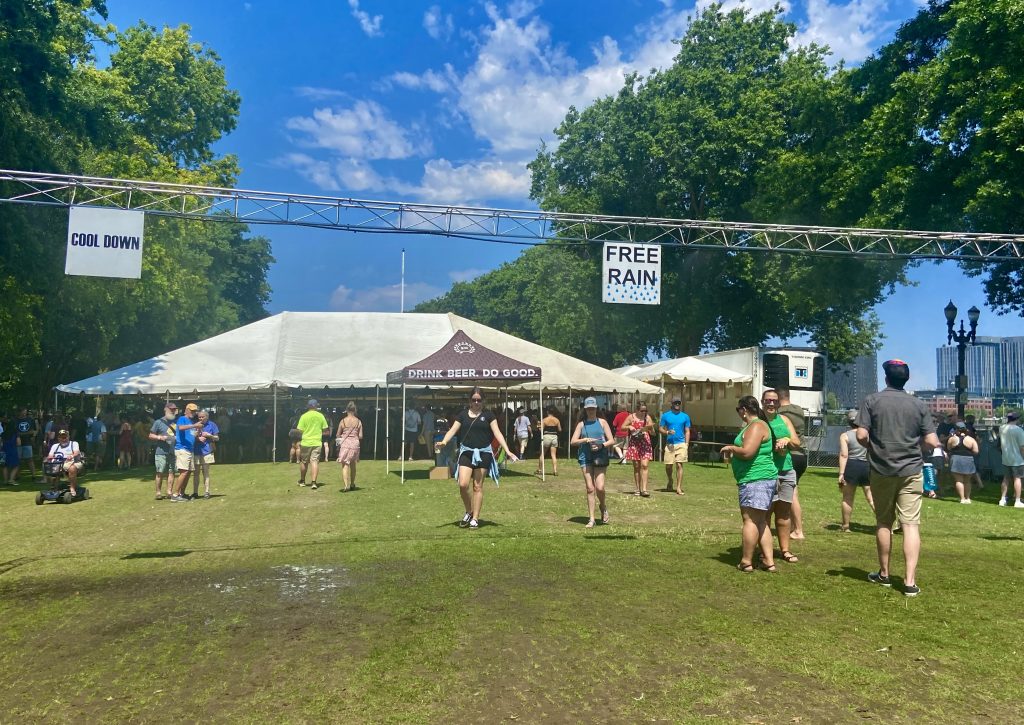
  Since its founding in 1988, the Oregon Brewers Festival has emerged as the largest beer festival in Oregon and draws in over 50,000 people from across the United States. Hence, co-founder Art Larrance felt the need to maintain its reputation. So, they focused on quality, not quantity, as they relaunched this festival in 2022 after a two-year absence.

  To ensure a successful beer festival, they reduced the number of taps to 40 beers and two cideries. They also limited the size of the overall festival footprint and scaled back the number of days. In addition, they did not offer the brewers’ parade live music acts, and they had a more limited selection of vendors. They plan to keep the festival at about the same scale in 2023.

  While past festivals have spotlighted international beers or beers from specific states, they chose to focus this year on award-winning Oregon beers. They made this decision to focus on craft breweries with local distribution channels, in large part due to shipping issues. According to Larrance, “I’m glad that we made that decision because while I was looking for 27,000 to 30,000 people, we only had 23,500 people. Had we not scaled down, we would have been spending a lot of money and not broken even.” Also, at the conclusion of the festival, they were able to donate $10,000 to their nonprofit partner, Doernbecher Children’s Hospital.

  While the beers remained Oregon-specific, preliminary data from the festival survey shows that 36.8 percent of attendees came from outside the Portland Metro Area. In this regard, they were very close to their pre-COVID percentages of local versus out-of-town attendees.

  In addition to a heatwave and concerns about COVID that somewhat reduced attendance, the festival’s location along the Tom McCall Waterfront Park in downtown Portland continues to experience challenges due to the uptick in homeless camps and civil disobedience. These ongoing issues led to a 15 percent occupancy of downtown office buildings, thus significantly reducing the number of local people working downtown who would stop by the festival after work. Typically, they would get about 40 percent of their business from out of town, a number Larrance estimated was down to about 20 percent for this year.

  Despite the lower than projected attendance, brewers and beer lovers appeared ecstatic with the return of OBG. As Dan Malech, co-founder of Stormbreaker Brewing in Portland, Oregon, proclaimed, “It was so good to see so many people enjoying fantastic beer. We’ve been a part of OBF every year since we opened, and we hope to continue every year.” John Harris, owner and brewmaster of Ecliptic Brewing, also based in Portland, Oregon, concurred. “It was great to have OBF back. I’ve always enjoyed all the special beers that brewers make for the fest. The smaller size was a great way to bring the fest back.”

The Return of Local Pacific Northwest Beer Festivals

  Pre-COVID, the Craft Beer & Wine Fest of Vancouver (Washington), featured 60 beer taps, 80 wines and 35 craft vendors, along with live music all weekend and people traveling to the event from afar. While COVID restrictions prevented them from offering an outdoor festival in 2020, Rusty Hoyle, owner of Craft Nation, noted they were the only in-person Pacific Northwest festival of this type in Summer 2022. “We were really busy with the local people who were itching to get out and do stuff.” In keeping in line with consumer demand for personal safety, they offered hand wash stations, an expanded fence line that provided more room for people to be comfortable and new microphone covers for each singer. They plan on continuing these measures at future festivals.

  While many of their prior vendors are no longer in business, Hoyle observed how they are now seeing new craft vendors and also people traveling to this festival from outside the area. Each year, Heathen Brewing of Vancouver, Washington brings a fire truck with seven tap handles that contributes to the festival atmosphere.

  The 2022 festival featured over 100 wines and about 30 craft vendors, a number that Hoyle predicts will increase. Also, they narrowed their beer selection to showcase the breweries that align with their values. “We want them to be a part of this event and talk to our customers, not just drop off their beer. It allows fewer hands to touch the product while giving a better customer experience,” Hoyle opines.

  Among the other events that Hoyle organizes is Gorge Blues & Brews in Stevenson, Washington, which is held in late June with RV and tent camping available. This year’s event pulled in 2,500 people, shattering their prior attendance record by 1,000. The event features world-renowned blues artists on two stages with local craft beer, wine and spirits.

  In February 2022, Larrance launched the inaugural Over the Hills to Hillsbrew, a new local beer festival designed to highlight Washington Country and Portland breweries, along with a few other Oregon-based breweries. He believed that the local people felt cooped up and thought that a beer festival would help lift their spirits. While he anticipated around 5,000 people to attend,  approximately 2,800 came to sample beers from 25 to 30 breweries. This was an inside event held during the winter months when COVID was on the rise, so proof of a COVID vaccination was required. 

  In addition, the Oregon Trails Brew Fest, traditionally held the weekend before the Oregon Brewers Festival, returned in 2022. Hosted by the Oregon City Brewing Company in Oregon City, Oregon since 2019, this all-ages outdoor brews festival is a community-based event with lawn games, live music, 32 breweries, and three cideries. While they had a few more breweries in 2019, their ticket sales remained consistent with their pre-COVID statistics. 

  In the Pacific Northwest, an area with some of the strictest COVID restrictions in the United States, major festivals with a beer component that attract a national crowd, such as Feast Portland, are not slated to return until 2023, and festival plans are still in development. Some local breweries have begun to offer festivals, albeit often in a modified format, while others have chosen for now to focus on rebuilding their businesses.

The Design, Production and Manufacturing of Flavored Distilled Spirits

5 Ballotin alcoholic bottles

By: Kris Bohm: Distillery Now Consulting, LLC  

Take a moment the next time you are in your local watering hole. If you peer at the bottles of spirits behind the bar, there is a particular type of spirit you are sure to find. It is not whiskey, nor rum, vodka or tequila. The bottle you will almost certainly find is some type of flavored spirit. Whether it is a peanut butter whiskey or raspberry flavored vodka there is a variety of flavored spirits to be found behind every bar. If you look around at a liquor store, you will find dozens if not hundreds of flavored spirits on the shelf. The spectrum of flavors is massive and it is well worth giving the concept of flavored spirits some consideration. Many successful manufacturers have found that flavored spirits can be sold in volume. Let’s look closer at flavored spirits and then take some plain old vodka to flavortown.

The Appeal of Flavored Spirits

  There are literally thousands of varieties of spirits that are flavored. From spiced rums to honey whiskey, and vodka in a rainbow of flavors, there are flavors galore. The process of manufacturing flavored spirits can vary widely for the type of product being made. Some processes are expensive, labor intensive and can be subject to seasonality of ingredients. Other methods of manufacturing are very simple with merely the addition of a flavor before bottling. You might be asking yourself at this point. What kind of flavored spirits should I make at my distillery? This is a tough question because no two distillers have the same answer. Let’s start to answer this question by looking at the way flavored spirits are perceived by folks.

  The average consumer chooses flavored spirits because it is easy to make a mixed drink with. A person who enjoys a cocktail often has little to no knowledge of how to make a good cocktail. This demographic of consumer will view products like a lemon flavored vodka as a spirit that can simplify the process of making a cocktail. For this example, let’s explore the humble vodka soda. This popular drink is commonly served as vodka, plus soda water, with a lemon or lime added to it. If we substitute plain old vodka for a delicious lemon vodka this product can be combined with soda water and simplify the process of making a cocktail by not requiring fresh fruit to be added to the drink.

  For some consumers the appeal of choosing a flavored spirit over a traditional spirit is both flavor and drinkability. Drinkability can be a bit fickle so let’s define “drinkability” for the sake of this article. Some consumers of spirits believe they prefer to drink spirits that are labeled as “smooth” or “easy drinking”. Spirits even at 80 proof can be perceived as hot or labeled as a spirit that “has bite” or that it “burns”. These descriptors might not be terms used by producers of spirits as fair adjectives to describe their spirits, but regardless the adjectives are often used by the general public. Many flavored spirits not only have flavors added to them, they also have sugar or other ingredients added to them that mask the detectability of the alcohol in the spirits. The addition of flavor and sugar to a spirit can make the spirit taste more smooth or have less burn to it.

  It has been proven in blind tasting panels that the addition of sugar to distilled spirits is quite effective at masking the perception of the alcohol in spirits.

This is a huge factor as to why flavored spirits are sold in such massive volume. Consumers who might not otherwise like to drink distilled spirits find flavored spirits to be more pleasant to drink.

How to Make a Flavored Spirit

Distilling with Real Ingredients:  Smaller craft distilleries will sometimes use fresh ingredients to produce a flavored spirit that is deemed “authentic” or “artisanal”. One example is a fresh lime vodka made by a distillery in California. This spirit is produced by macerating fresh locally grown limes in a neutral spirit then redistilling that spirit to produce a flavored vodka. This method is quite effective and the resulting lime flavored vodka is quite delicious. On the down side this method is labor intensive and subject to the seasonality of the fruit. This can create limitations in production capacity and in some cases be cost prohibitive to produce.

Extracts for Flavoring:  A method employed successfully by large distilleries to produce flavored spirits is the use of extract based flavors. Extract flavored products are built in a tank where a measured amount of neutral spirit has water, sugar and extract flavor added to it to create a flavored spirit. This method is simple, scalable and economical. There are several flavor companies in the US and abroad that manufacture extract flavors that are TTB approved and meant specifically for flavoring of distilled spirits. These extracts are easy to work with and can fast track the production of flavored spirits. This method is a very economical way to manufacture them, when compared to using real, fresh ingredients to add flavor.

Quality Assurance Process:  Quality assurance, also known as QA, is the testing of a product before it is released to the market. There are many pitfalls in this process that must be navigated prior to release. Once a concept has been created for the production of a flavored spirit it is essential that rigorous product development and quality assurance testing takes place. Testing of the spirits for faults, flaws or problems is essential to the success and commercial viability of the product.

  Let’s look at an example of a failed QA in product development. A distiller once hit upon the idea of a flavored vodka and quickly rushed to take the product to market. The product was a strawberry flavored vodka and it was made by soaking freshly picked strawberries in vodka, then filtering the vodka and bottling the product. The result of this process was a vodka that had a beautiful light pink hue and an aroma of fresh strawberries. The product was instantly a hit and the distiller sold lots of it through their tasting room and to distribution. Not long after the launch of this product the complaints began to roll in. Customers complained that their bright pink vodka turned an unsavory shade of yellow. Liquor store owners demanded refunds for the vodka. Upon tasting the ugly discolored vodka there were no flaws to be found in flavor or aroma, but the color was downright off-putting. In the end the distillery recalled and bought back the product and shortly thereafter discontinued the production of their strawberry vodka.

All of this could have been avoided if they had a better QA process

Legal Considerations:  There is some legal navigation required when it comes to manufacturing flavored spirits. The TTB requires a formula to be submitted and approved before that spirit is allowed to be sold.  Part of the TTB formula process is the review of the ingredients used in the manufacture of a flavored spirit. Ingredients used in a flavored spirit must be approved by the FDA as an ingredient that is on the GRAS (generally recognized as safe) list. It is important in product development that one makes sure the ingredients they intend to use are approved by the FDA and TTB for use in distilled spirits. In the case of using extract based flavors, these extracts should be TTB approved. Ask your flavor manufacturer in advance if the flavors they are providing are approved by the TTB. Some flavor companies have thousands of TTB approved flavors. This multitude of options afford a distillery the opportunity to make a flavored spirit of almost any flavor they can dream up.

Let’s Go to Flavortown:  Now you have a better understanding of a few methods used to make flavored spirits, along with some of the guidelines and restrictions around production. You have the basic tools you need to start working on producing flavored spirits at your distillery. There is a huge opportunity to sell flavored spirits and one that we encourage you to take. Flavored spirits are the gateway to flavortown and it’s a place many successful distilleries go. If you need some help making your own flavored spirits drop us a line.