Innovation Helps Modernize Brewing Equipment

man writing in clipboard

By: Alyssa L. Ochs

At Beverage Master Magazine, we’re always looking to keep up with craft brewing trends, which more often than not relates to pieces of innovative equipment and new technologies. Certain types of new equipment are slowly but steadily being introduced to breweries, as are new technologies, tools, mechanisms and improvements to processes relied upon in the past.

  These things factor into how efficiently breweries can operate during challenging times and how memorable their beers are when they reach consumers. To learn more about the role of new equipment in the modern brewery setting, we looked into what’s being used in breweries lately and what industry leaders who work in this space are saying.

Types of Equipment & New Changes

  There are a few essential equipment types that breweries use today. Examples include the malt mill, mash tun, filtration system, heat exchanger and brite tank. Breweries also regularly use pumps, valves, kegs, hydrometers and equipment for dispensing and packaging.

  While experienced brewers are already familiar with all of these things, they might be interested in new equipment options and types of technology to potentially save time, money or labor. Certain machinery may preserve hops better, improve quality control or keep processes more consistent for a better result. Meanwhile, new technology might facilitate multi-purpose machines in a small space or accommodate a shift to using more cans as the business grows. As the industry continues to trend toward aluminum cans, canning equipment is in demand and being considered by brewers who have traditionally stuck to glass bottles.

Equipment and Technology Worth Learning About

  These days, there are fully automated, multi-vessel systems to serve breweries’ needs and specialized wort aeration and oxygenation equipment to

improve brewing processes. Developments have been made to pneumatic conveyors that remove spent grains and tank systems that save water and conserve energy by using compressed air instead of CO2 and have recyclable inner bags. Meanwhile, sustainable design and build practices have been gaining traction for environmental stewardship, future economic vitality and customers’ social enrichment.

  We’ve been following specific advancements, including BrewSavor’s kink-resistant hoses, Thielmann’s multi-purpose aseptic containers, and Twin Monkeys’ low-key and affordable automatic canning line. IntelligentX software compares supply chain and production constraints with beer drinkers’ preferences, and FliteBrite created a “smart flight” serving system to assist menu development at establishments serving craft beer.

  Other machinery and technology-related updates include fully automated, stainless steel crossflow filters for better beer filtration and automated brewing systems with touch screens and mobile technology graphics. These brewing systems are equipped with artificial intelligence features that give feedback on beer produced while integrating customer feedback with manufacturing data. Some professional brewers are not particularly interested in all these “bells and whistles” and believe they are not worth the money and extra staff training to do what they already do best. However, new breweries and current establishments undergoing transition may be curious to adopt a few practical, high-tech features to create a more automated, organized or modern operation.

  Even some seemingly simple pieces of equipment, such as kegs, have been updated to make them more suitable for the current brewing environment. Now you can find stainless steel barrels with automated control systems for better precision and slim diameter kegs to store beer in limited spaces.

  Justin Willenbrink, Blefa Kegs’ sales director for North America, told Beverage Master Magazine that while not much has changed over the years concerning stainless steel kegs, the innovation comes from the barrels’ safety and quality.

  “Each keg from Blefa comes with an integrated pressure relief valve to reduce the risk to producers and on-premise staff by creating a safe failure,” Willenbrink said. “Quality has been the cornerstone of our company for more than 100 years. Durability can only be guaranteed by high-quality material, reliable operating production equipment, highly qualified staff and high-precision manufacturing according to your specifications. These high-quality standards allow us to be the only manufacturer of stainless steel kegs in the world to offer a guarantee of 30 years – a promise to all our customers that they have purchased a reliable and extremely durable asset.”

  Blefa and American Keg partnered in early 2020 to serve the North American market with a domestic manufacturer. Since then, the companies have been working together to upgrade their equipment and support U.S. customer needs, ensuring that efficiency gains in production align with the quality standards of both companies.

  “As a world’s leader in stainless steel packaging, Blefa and American Keg can provide various sizes from 10 liters to 59.62 liters. The U.S. 1/2 bbl, slim 1/4 bbl and 1/6 bbl are the most popular for both on- and off-premise needs. All kegs from our stock are equipped with drop-in D-Type spears from Micro Matic,” Willenbrink said. 

Buy New, Used or Lease?

  When brewers think about updating their equipment, dollar signs often flash before their eyes as new equipment costs start adding up. However, there are options available for breweries on tight budgets, such as leasing new or buying used equipment still in great condition.

  Canning lines are among the most common systems that breweries debate about buying or leasing. Leasing involves entering into a legal agreement for a specified time and works somewhat like a loan. At the end of the lease period, the effectiveness of the equipment may be significantly diminished and therefore not an attractive purchase for another brewing operation. However, you may be able to purchase your current machine for a discounted price. As long as it is still in good working condition, this is an ideal option since staff would already be familiar with it, and you would not encounter any delay in production.

  Capital leases are common, especially when a brewery is only looking to update a single piece of equipment rather than start from scratch or do a total equipment overhaul. It may be beneficial to have a lawyer look over any lease agreement before signing to check the interest rates, accounting implications and terms of the lease in case of equipment malfunctions and who is responsible for repairs. Other considerations include any plans for expansion, durability and logistics of getting equipment into and out of the facility.

What’s Next for Brewing Equipment and Technology?

  There’s a lot to look forward to for brewers who keep an eye out for the next great invention. Many manufacturers and suppliers have a finger on the pulse of the industry and can anticipate the needs of brewers in the years ahead. These companies’ successes depend on how well they change and adapt to the shifts and evolutions of the industry, especially during pandemic times.

  When asked how brewing equipment can best adapt to the changing needs of the modern brewery, Willenbrink said stainless steel kegs are the most well-equipped for providing a quality product because they protect the beverage from harmful UV light and oxidation while ensuring that quality isn’t compromised. 

  “Not only is it the most profitable package, but it is also the most sustainable with stainless steel kegs being 100% recyclable,” he said. “When it comes to the packaging of beer, wine or soft drinks, kegs made of stainless steel offer the best protection. In their reliability, economic efficiency and sustainability, our kegs provide first-class results.”

Willenbrink’s advice to breweries looking at new equipment is to never compromise on quality and make investments in assets that offer maximum safety and reliability for your needs.

  “By choosing a quality supplier, you are making a decision to work with a company that has invested in automation and quality control systems that ensure the highest level of precision and process,” he said. “Comprehensive support from first contact through delivery and continuing with service capabilities from highly qualified technical staff ensure experience and commitment to each investment made.”

  With more automation, there should be greater consistency from one brewer to the next, something vital during staffing changes and high service industry turnover rates. Yet, these machines and technologies don’t remove brewers from their craft; they simply eliminate tedious processes so that beverage producers can have more time to be creative and take their passion for great beer to the next level.

Precision in Canning and Bottling Craft Beer

pile of beer cans and bottles

By: Cheryl Gray

The can or bottle of craft beer consumers select from store shelves is more than attractive packaging. The elements that go into fabricating, filling and sealing those containers can make the difference between a flat beer, leaking containers, or worse yet, a contaminated product.   

  To avoid these pitfalls, craft brewers turn to companies whose specialties are to help the brewing industry protect its most important asset—the beer it makes. There is expertise to address virtually every need that brewers, large and small, can rely upon to meet their production needs.

  American Canning is one of those experts. The company, headquartered in Austin, Texas, launched in 2013 making equipment, supplies and mobile canning services accessible to craft brewers regardless of their budgets. Clients navigate the company’s user-friendly e-commerce site to order as many or as few supplies as needed. Most items are shipped on the same day. Melody Meyer is Vice President of Sales and Marketing for American Canning.  

  “As a mobile canning company, supply distributor, and machine manufacturer, American Canning is uniquely positioned to help brewers understand and evaluate all facets of a value-driven canning operation. It specializes in the craft beverage space and is equipped to address customer needs from planning, to supply procurement and production execution.”   

  Meyer cautions that assessing a brewery’s packaging requirements involves more than just machinery. As canning needs and goals are addressed along with space, labor and financial considerations, Meyer says that there are two more essential questions for a brewery to keep in mind.   

  “What is the total volume and type of can-packaged product that needs to be canned? And how will it be packaged?”

  Meyer adds that once these questions are addressed, American Canning readies its clients for next steps in the ever-changing packaging environment of the craft brewing industry. 

  “Considerations must be made from all available options, including manual vs automatic, atmospheric vs counterpressure, in-line vs rotary, and intermittent vs continuous motion with regard to each’s capacity, quality, consistency, repeatability, ease-of-use. Small batch packaging of one beverage type for on-premise service may best be accomplished with a compact and cost-effective, countertop filler/seamer whereas larger-scale distribution of numerous products in multiple can styles would require a more robust, flexible, and higher speed counterpressure, rotary line.

    While I can’t speak for every manufacturer, American Canning is focused on engineering products with the highest quality process controls, at an approachable price point, for compact craft spaces, all while being incredibly easy-to-use with minimum operators and little to no product waste. It’s a tall task, but our two filler/seamer machines have already achieved these goals. We simply believe we can expand upon our foundation into a variety of machines with different speeds and filling capabilities, not to mention the ancillary machines that are needed to surround a filler seamer, such as infeed tables and can handle applicators.” 

  SKA Fabricating in Durango, Colorado is another manufacturer with its eye on the future packaging needs of craft breweries, providing its customers with a wide range of depalletizers, conveyors, and packaging line equipment. The company was founded in 2012 by craft brewer Matt Vincent, whose award-winning Ska Brewing is touted as the

largest in Durango. While Ska Fabricating was born out of necessity to address the brewing, packaging and distribution of Ska Brewing, its innovations help breweries around the globe. With more than 1,000 clients across the United States and abroad, Marketing Director Elise Mackay says that the company is well-positioned to handle virtually any packaging need. 

  “Ska Fabricating provides total packaging lines from beverage to non-beverage industries across the globe. They range from canned or bottled beer, cannabis, kombucha and coffee to aerosol or paint cans and spice jars. We are well-rounded and diverse enough to handle just about anything. Our systems can range from a 20’ x 20’ square at 20 containers a minute to a 60’ x 60’ square running 250CPM and above! We do everything we can to accommodate the space and speeds of a prospect’s needs.” 

  Mackay explains how the company has adapted to the changing demands of the craft brewing industry and how it works with clients to create the most cost-effective solutions. One major decision is whether to opt for automated or manual systems. 

  “Automation is key when it comes to running an economic line and has a number of upsides compared to manual systems. Our manual systems are available for half-height use which is ideal for a low-budget startup but requires more personnel. When the time is right, we have several solutions to help in the next steps of automation. 

  We are constantly striving to make our products better and have adapted over the years through various market changes and requests for specific additions. Anything from safety, line controls, and using our date coding system to hit the bottom of the can instead of the flange are being implemented.” 

  California-based XpressFill Systems LLC manufactures a wide range of can and bottle filling systems designed with ease of use and longevity as top priorities. The company, headquartered in San Luis Obispo, was founded in 2007 and serves multiple industries, including craft brewing. Technology is a primary focus. The company offers several models that capture volumetric, level fill and carbonated beverage technology.  Rod Silver, who spearheads Marketing and Sales for XpressFill Systems, describes features of some of the firm’s products, which he says are affordable, compact and easy to use. 

  “The volumetric filler controls the amount of fill with the use of a very precise timer. The filler is calibrated to your specifications and is capable of very accurate fills, regardless of inconsistencies that might exist in the bottle glass. …The level filler controls the amount of fill with the use of a level sensor. When the liquid reaches the sensor, the filler automatically stops the fill. The liquid level is set by adjusting the height of the shelf, which can be adjusted to approximately 1/16 increments. Both the volumetric (XF260/XF460) and the level filler (XF2100/XF4100) have a self-contained, self-priming pump that draws the liquid from any barrel or carboy. There is no reservoir, the liquid flows directly from the bulk container, through the filler into the bottle.” 

  Silver adds that XpressFill Systems offers a pair of fillers for bottling and/or canning carbonated beverages.  

  “The XF4500C is a counter pressure system capable of filling 200 12 oz cans per hour. The XF4500/XF2500 is a counter pressure filler for bottles. We also offer an open fill system, the XF2200 (2 spout) and XF4400 (4 spout) capable of filling 300 / 600 cans per hour. All systems have a pre-fill CO2 purge cycle. The counter pressure system requires a minimal air compressor to operate the pneumatic actuators. Open can fillers have a moveable shelf that is easily adjustable for various can sizes. The maximum can diameter is 4 inches. The counter pressure filler has a stopper that must fit snugly into the can or bottle opening to seal and pressurize the container. Our standard opening for cans is a 202-lid size but custom stoppers can be made.” 

  For craft breweries that opt for cans, seam protection is an important consideration. OneVision® Corporation, founded in 1994, shares its innovations with the craft brewing industry throughout North America and Europe. The Ohio-based company, located in suburban Columbus, offers can seam inspection equipment that helps breweries monitor double seam quality for their beer products. Regularly inspecting and tracking internal double seam dimensions helps to prevent leaking seams and beer from going flat. Marketing Manager Amy McKee describes the features of the company’s signature product. 

   “OneVision® has developed the SeamMate® Craft Beverage System that includes all the necessary equipment and software craft brewers need to properly inspect and track the quality of can double seams. We conveniently offer system bundles ranging in price and equipment dependent on a brewery’s canning operation. All system bundles can be upgraded as a brewery’s canning operation grows.   

  SeamMate® System software now includes a proprietary measurement that estimates double seam tightness by analyzing the double seam cross-section. This new measurement is especially effective at detecting too-tight seams on beverage cans. This measurement provides inspectors and quality managers with assurance that the visual cover hook inspection was accurate, or it can serve as an alternative to manual cover hook removal.” 

  Innovation is perpetual at OneVision®, says McKee, pointing to the latest feature available with the SeamMate® System. 

  “SeamMate® System includes the optional AutoAlertTM that automatically analyzes measured data and alerts users to potential double seam quality issues. This unique function helps predict and prevent seam leaks.”   

  Whether bottling or canning beer products, experts say craft breweries should plan for growth, which includes the decision on whether to go either automated or manual–or somewhere in between.  It comes down to when to invest for expansion.  XpressFill Systems’ Rod Silver explains it this way.    

  “The primary factors in evaluating the benefits of each are (the) cost of equipment, rate of production, cost of maintenance, cost of labor and equipment lifetime.”

Lots, Codes, and Life: Dating in the Beer Industry

beer can showing expiration date

By: Erik Myers

As the number of active breweries in the country exceeds 7000 and roars toward 8000, it’s more important than ever to consider one of the crucial facets of your packaged product: shelf life, and how to communicate it to your customer. It’s not just marketing; date lot coding and traceability is required by the U.S. Food and Drug Administration under the Bioterrorism Act of 2002. However, the exact method of recording date lot codes is ultimately up to each individual brewer, and there is a vast array of practices in the industry that can ensure that your customer knows how fresh your beer is, and that you’re in compliance with federal code at the same time. 

Why Is Date Coding Important?

  The easiest answer to this question is because you must. It’s the law. In the unfortunate situation that your brewery – or one of your suppliers – might have to recall product from the market, having date lot coding that is on every package, is easy to find, and easy to understand will allow your staff and every downstream partner, whether it’s a distributor or a retailer, to comply with the recall efficiently and ultimately save you headaches and money.

  It’s also a great tool that your sales force–or your distributor–can use to be sure that beer in the market is as fresh as possible, it can help with FIFO inventory control and create an accountability tool for you to use with all of your downstream partners.

  Finally, it’s an extra layer of transparency for your customer, as well as an educational tool, allowing you to provide them with the best–and freshest–possible product, and the best possible customer experience.

How to Code

  For better or worse, there is no standard way or best practice guide to follow for date coding your beer. From a practical, legal standpoint, as long as there is a code on your package that is traceable to a batch at your particular factory and you can track that batch back to its component ingredients, you’ve complied with FDA standards. However, esoteric or confusing coding can be a problem in the marketplace and lacks customer transparency.

  Many food and beverage manufacturers use a Julian Code to signify what date an item was manufactured or packaged. Julian Code is a system designed by the U.S. Military to easily date MREs and is easy to track and assign with simple programming tasks. It uses the last digit of the year in question followed by the day of the year.  (For example, a product dated with December 15, 2018 the Julian Code would be 8349.  December 15 is the 349th day of the year in non-leap-years.)  While this provides a standard format that is unique per day and easily traceable on a package and within a database, it is not easy for a customer to read and gain information from. An eager beer drinker looking for a fresh IPA would have no way of knowing what information was being presented to them and might end up looking elsewhere.

  However, a standard date might not be the easy go-to answer that it seems. A report by the Natural Resources Defense Council (NRDC) and Harvard University’s Food and Law Policy Clinic (The Dating Game, 2013, NRDC) notes that confusing date labeling leads to a tremendous amount of food waste in the United States as “open dates can come in a dizzying variety of forms, none of which are strictly defined or regulated on a federal level” and that “although most date labels are intended as indicators of freshness and quality, many consumers mistakenly believe they are indicators of safety.” Putting information on your package that isn’t well thought out may create more harm than good.

Finding the Right Date

  Back in 1996, Anheuser-Busch launched a marketing campaign in a bid to show that their beer was the freshest on the market and coined the term, “Born on date.” It has become a ubiquitous term in the beer industry, regardless of the fact that the date was dropped from all Budweiser labeling in 2015 in favor of a “Freshest before” date. Just because the biggest brewery in the land does it hardly makes it an industry standard, however. It’s not even standard across their entire company.

  Megan Lagesse of Anheuser-Busch InBev’s “The Higher End” craft division notes, “Some of [our] partners (Goose Island, [and] Wicked Weed) are doing dual date coding (brewed on and best by) but everyone isn’t because not all of our production equipment has the capability to dual date code,” she says. “So, we chose best by date coding [for] broader consistency, because everyone understands an expiration date but not everyone is educated enough to know IPAs should be drank as fresh as possible, but you can age wild beers and stouts.”

  Jeremy Danner, Ambassador Brewer of Kansas City’s Boulevard Brewing, notes proudly that Boulevard prints, “both packaged on and best by dates on all cans, bottles, keg rings and exterior boxes. If you’re going to only print one,” he says, “it should be the packaged-on date, as thoughts vary when it comes to shelf life.”

  That shelf life–the basis of rationale behind a best by date–can be difficult, if not impossible, for a small brewery to determine. While larger breweries have the benefit of tasting panels, labs, and a vast number of data points, many small breweries get by with a microscope and a handful of jack-of-all-trade production team members. In small breweries, with limited, sometimes unique, production batches, shelf life is often the product of an educated guess, rather than a robust statistically significant tasting panel. Even pressure from a distributor can affect what date goes onto a package and in many cases a brewer will resort to relying on a packaged-on date and using phrases like, “Do not age” or “Best when its fresh” in lieu of a best by date.

  Doing so, however, relies on the customer to be educated about your product, and that might not always be as easy as it sounds. Pete Ternes of Chicago’s Middle Brow beer notes, “90% of consumers don’t know what it means for a particular beer to have been packaged on a particular date.” While there are many craft beer fans who are incredibly well-educated and can ascertain which beer styles can handle age and which can’t, most beer-drinkers don’t know the implications of a beer’s brewed or packaged-on date.

  Complicating the issue is lack of consistent temperature control once product leaves the brewery. A brewery may post a shelf life of 45 days for an IPA, but not the conditions under which that shelf life has been ascertained or should be maintained. A beer with a shelf life of 45 days at 38F has a shelf life of only 11 days at room temperature.

No Easy Answers

  Unfortunately, until an industry standard or federal regulation is put into place, there is no easy answer about how to best approach lot and date coding. Ultimately, it is up to you to choose the method that you think will both comply with the FDA and provide information to your customers. Regardless of what format you do choose, providing context and information to your customers–whether that customer is the distributor, the retailer, or the end consumer–as to how you arrived at the decision of what lot and date coding method you’ve chosen is the best path and can double as an excellent marketing and education tool for your brewery.

Spirit of the Rising Sun

5 Japanese whisky

By: Tod Stewart

Japan is synonymous with many things: electronics, cars, origami, sake, sushi, intricate art, Sumo wrestling and architecture. Now, if you’re willing to wait out a significant chunk of your day for it, cheesecake.  But whisky?

  Even after seeing Lost in Translation many years ago (a movie featuring Bill Murray as Bob Harris, an aging movie star visiting Japan to promote Suntory whisky), the connection between Japan and whisky still didn’t really register with me. Thankfully that has since changed, and I’ve had the pleasure of enjoying numerous different Japanese whisky expressions, both at home as well as in Japan.

  Today, these drams are becoming increasingly difficult to find, and when you do find one you might experi-ence a bit of sticker shock. However, as with most things Japanese, you do get what you pay for (and here I’m primarily talking about the items I have tried: sake, sushi, Japanese knives, etc.). The Japanese whiskies I’ve sampled have invariably been top-notch. And much to the chagrin of the Scots, they’ve actually been stealing accolades from the world’s top drams.

  A few years back, in his World Whisky Bible 2015, industry expert Jim Murray crowned the Yamazaki Single Malt Sherry Cask 2013, from Suntory, “World Whisky of the Year.” As it turns out, nary a Scottish whisky made the top five. Since then, Japanese whiskies have continued to bag metal at competitions across the globe (in fact, they were garnering “best of” accolades as far back as 2008). If there’s any consolation to the Scottish distillers now adding tears rather than water to their tipples, it’s that, had it not been for the Scots, the Japanese would likely not be where they are today in terms of distilling.

  Japan has a distilling history that may reach as far back as the 1700s. Yet it wasn’t until after the Second World War that Shinjiro Torii along with Masataka Taketsuru, established the Yamazaki Distillery, which would eventually become Suntory, near Kyoto. In 1918, Taketsuru journeyed to Scotland. He enrolled in the University of Glasgow, becoming the first Japanese person to study the art of whisky making and apprenticed at a number of famous Scottish malt distilleries before bringing his knowledge (and a wife) back to Japan.

  In 1934, Taketsuru branched out on his own, establishing the Nikka Whisky company with a distillery located in Yoichi, on the island of Hokkaido, in the northern part of the country.

  This area seemed, to him, to most closely replicate the Scottish landscape. Japan’s “whisky country” however, is less differentiated than those of Scotland.

  “Although Japan may look like a small island on the map, if you compare it with the map of Scotland at the same scale, you will notice that the nation is much larger and is spread from North to South,” notes Naoki Tomoyoshi, International Business Development Representative for Nikka Whisky. “The climate can vary from the famous skiing resorts in Hokkaido to the beautiful beaches of Okinawa. Within this country, Nikka’s founder Masataka Taketsuru headed north in search for the ideal place for his whisky. He found the land of Yoichi to be the perfect place, a seaside location with a cool and humid climate along with an ideal water source. Then, in 1969, he founded his second distillery, Miyagikyo Distillery, in the mountainous valleys of Miyagi Prefecture, located in the northern part of Japan’s main island. His aim was to create a different style of whisky than that of Yoichi Distillery. The surrounding environment plays an important role in the maturation process, and when that is combined with the different production methods between the two distilleries, the variation of the flavors that can be created is countless.”

  Gardner Dunn, Senior Brand Ambassador at Suntory Japanese Whisky, notes that rather than defined re-gions, the elevation of the Suntory distilleries and the subsequent differences in temperature have more of an impact on the final products.

  “Yamazaki, outside Kyoto, sits at around 160 feet above sea level,” he points out. “Hakushu is one of the highest distilleries, at roughly 2,313 feet in Yamanashi prefecture. The difference in temperature between the two dictates the use of certain sized barrels to optimize maturation.” Dunn explains that as the temperature drops, the rate of maturation slows. Therefore, spirits matured in warmer climates – rum, for example – devel-op more quickly than northern spirits, largely due to the rate of evaporation.

  The proximity to the sea — just a kilometre from the Sea of Japan — and the influence of the salty ocean air, appreciably contributes to maritime tang of Nikka’s Yoichi line of whiskies. I recently sampled a dram or two of Nikka Yoichi (No Age Statement) Single Malt, which seemed to combine the warm, toffee, malt and hon-eyed tones of a Highland malt with the smoky, lemony and in this case, rather intensely briny notes more typ-ical of something like Bunnahabhain’s Ceobanach — a peated offering from a distillery that typically doesn’t use peat.

  The peat used in Nikka’s whiskies was sourced locally until the 1970s. Today the distillery uses imported barley peated to the required levels. Dunn confirms that Suntory, as well, imports barley from Scotland that has been peated to a specified degree. As well, both Nikka and Suntory strive to use the purest water available.

  “The main source of water for Nikka’s Yoichi Distillery is from the mountain springs and surrounding rivers, in particular the Yoichi River,” Tomoyoshi points out, adding that water for the Miyagikyo Distillery is sourced from the Nikkawa River. Dunn reveals that both of Suntory’s distilleries use unique water sources. “Our beau-tiful, soft water is optimal for producing [our] style of whisky.”

  In terms of casks, Suntory and Nikka have somewhat similar approaches. “We both import and make our casks,” informs Tomoyoshi. “We have a cooperage in each distillery maintaining casks of different sizes and types of wood. We also source various types of casks from around the world, including ex-bourbon and ex-sherry casks. All refurbishing and re-charring of the casks are done in-house in our cooperages.”

  Suntory uses a range, from ex-bourbon to American white oak and Spanish oloroso sherry casks. The company’s in-house cooperage also fashions barrels from Japanese Mizunara oak. “It is a very tight-grained oak that only grows in the North Island,” Dunn explains, noting that it matures very slowly and imparts notes of oriental incense, spice and coconut to the finished whisky.

  When it comes to whisky, distillers know that the shape and size are crucial in forming the character of the finished product. The copper pot stills used by Nikka Whisky were crafted in Japan and are of varying sizes. “All stills are slightly different from each other, which enable us to produce a wider variety of styles,” informs Tomoyoshi. “In general, the stills at Yoichi Distillery are smaller, with a straight neck and descending line arm. The stills at Miyagikyo are larger, with a bulge neck and ascending line arm.”

  Suntory operates two sets of eight distinctly shaped stills. As any distiller will attest, the size and shape of a still significantly impacts the spirit it produces, and the varying sizes employed by Nikka and Suntory no doubt play a role in crafting the unique character of the individual whiskies.

  While Japan’s whiskies have experienced a spike in popularity, the industry itself, like those in other countries, has weathered ups and downs. The whisky boom of the 1970s and early 1980s gave way to a slump in domestic whisky sales by the late ’80s, resulting in the closure of several distilleries. However, the international acclaim Japanese whiskies have since garnered has led to a resurgence in interest. A lot of interest, in fact. In the case of Nikka, a few factors combined to create the perfect storm surge of popularity. A surge so strong that it resulted in the discontinuation of age-statement whiskies.

  “We delisted most of our age-statement expressions in 2016,” confirms Tomoyoshi confirms. “This was due to many factors, such as the Nikka 80th anniversary in 2014 along with strong – yet organic – growth in foreign markets. Above all, the most impactful factor was the domestic Nikka fever caused by the NHK TV series Massan. This was unpredictable and sudden.”

  Massan was an Asadora – a “morning drama” – that ran from September 29th, 2014, until March 28th, 2015. Based on the lives of Masataka Taketsuruand and his Scottish wife Jessie Roberta “Rita” Cowan, it detailed the creation of Nikka Whisky…and landed a huge audience not only for the series, but for Nikka’s whiskies as well.

  Though they may currently be a little scarce in some international markets, Japanese whiskies are worth pursuing. They offer the best qualities of their Scottish counterparts — including complexity, harmony and great depth of character — along with certain exotic aspects that distinguish them as unique, different, and worthy of the accolades they have garnered both in the Far East and around the globe.

The Charismatic Spirit: The Heat of Jamaican Rum

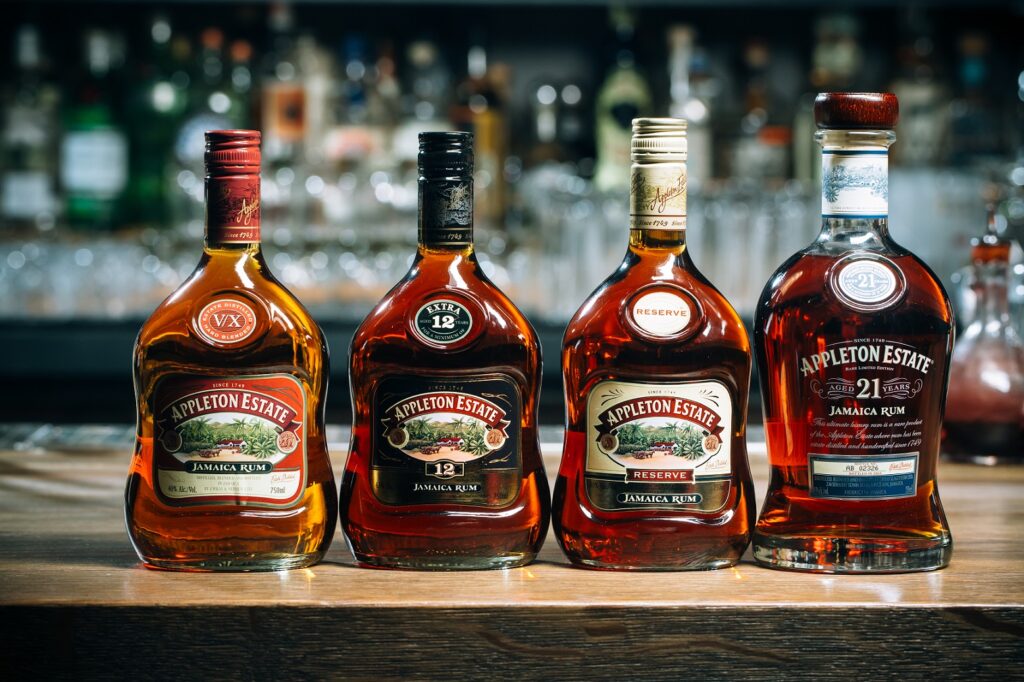
4 appleton jamaican rum

By: Hanifa Sekandi

It is a warm summer night in Montego Bay. The sound of the ocean, the harmonious steel drums, sand beneath your toes, and laughter allow you to forget your worries while you clutch your cocktail in one hand. You have most likely never given much thought to that velvety smooth texture and golden color, the fermented by-product of sugarcane. It’s the drink that is unequivocally the life of the party. So infamous it deserves a special place in your holiday baked goods: rum. There is no better way to describe Jamaican-made rum than simply sublime.

  For some, it is the best accompaniment for plantain, callaloo, ackee and saltfish. Perhaps you prefer it while you dine on curry goat or spicy jerk chicken? It is the spirit that is bar-none, best sipped on the rocks. You feel the heat of this distilled spirit immediately pulsing through your entire body with just one sip. Rum, a Jamaican classic spirit with deep historic roots enlivens you and exhilarates you. You can fuss with it, add a little this or a little that but, rum revelers know it’s simply good just the way it is. What makes Jamaican rum so good?

  As you sample your way through the best of Jamaican rum you will learn quite quickly that each rum carries its own secret. This is why so many bar carts around the world carry more than one from a few of Jamaica’s acclaimed rum estates.

The Beginning of Jamaican Rum

  It was Christopher Columbus, in 1494, who brought sugarcane to the shores of Jamaica. This birthed an industry that although not as robust in size as it once was, still thrives today. With all things good, there is another side that is not as sweet. The production of rum in Jamaica began in 1655. It was brought over by British colonialists who imported the art of rum-making from Barbados. Under British rule, rum was made by the hands of enslaved labor. The mass production of rum during this time in Jamaica led to its popularity around the world. There were approximately 148 rum distilleries in Jamaica in 1893. When slavery was abolished in the 1800s the free and now finally autonomous rum laborer, was free to live as one should. This emancipation led to a decline in rum production.

  Where is rum today in Jamaica? In 1893 approximately 31, 555 acres of sugarcane was cultivated by sugar estates that housed and operated distilleries. Even with the reduction of the scale of production and rum mills, Jamaica produces 50 million liters of rum yearly. With only six remaining rum distilleries sugarcane, the oldest running industry in Jamaica is still a predominant labor source with the employment of over 50,000 people. Jamaican rum makers produce large and diverse varieties of rum that are distributed around to world to more than 70 countries. The six remaining rum distilleries are Worthy Park Estate, Appleton Estate, Long Pond Distillery, Clarendon Distillery, and Innswood Distillers Limited. The later three distilleries are owned by the National Rums of Jamaica.

Making Jamaican Rum

  Who knew sugarcane is the key ingredient to this deep rich spirit? With no sweetness on the palate when sipped that one would discern if they chewed on sugarcane. The process of making Jamaican rum is quite intriguing. Molasses, partially responsible for rums golden color is a sweet syrup with a thick consistency. Perhaps you have used it as an alternative sweetener. Blackstrap molasses is full of minerals and vitamins. With that said, a shot of

rum is not your new multivitamin replacement! This rich thick sweet syrup comes to life when sugarcane juice is boiled until it is crystallized and then fermented. In the case of gold-hued rums, the color begins to take hold by using oaken casks to age the clear liquid which turns color due to the tannins from the oak. On average Jamaican rums age close to seven years. A process that differs when making another popular spirit, white rum.

  Deeper-toned rums are made from the dunder or skimmings from vats used to boil the sugar and molasses. What makes each rum unique are the expertly blended elements that will determine the flavor profile and aromas. For example, the addition of caramel when aging commences creates a silkier and darker liquor. It’s these little nuances that create a vast difference between one rum to another although they may appear similar in appearance.

  A full-bodied rum is aged in casks that have great depth and are large in size. These casks, “puncheons”, can hold approximately 111.6 gallons. The difference between light and full-bodied rums is fermentation. In the case of full-bodied rum, slow fermentation is required, and this is referred to as wild fermentation. Light-bodied rum mostly produced in the Virgin Islands and Puerto Rico undergoes a process called cultured fermentation where yeast is derived from raw material. The aging period for these lighter-colored and dry rums is under four years. In some cases, light-bodied rums are aged for only one year.

Who Is Joy Spence?

The First Woman Master Blender?

  Appleton Estates is the oldest sugar estate and one of Jamaica’s six thriving rum distilleries. It is where Joy Spence, their Chief Chemist since 1981 and the first woman Master Blender, has been

making her incomparable mark in the global rum market. She has a Masters’ degree in Analytical Chemistry from Loughborough University. Spence was under the helm of the previous Appleton Estates Master Blender, Owen Tulloch for over 16 years who mentored her. During this time, she was able to use her passion for chemistry to become a world-renowned blender.

  In 1997 Spence, unbeknownst to her at the time, became the first woman master blender. At this time, there were no other women designated with this accolade. This show-stopping rum that Spence has been creating for over 35 years draws its sweet soft taste from the limestone-filtered spring water it uses from the Black River, the longest river in Jamaica. This distillery is located in a favorable area with limestone hills and an ecological system that works perfectly to nurture the abundance of greenery. Due to this natural irrigation sugarcane is easy to grow.

  Joy Spence is credited for masterfully blending two rums that made Appleton famous. The 8-Year-Old Reserve and “50-Year-Old which is according to Appleton Estates “the world’s oldest barrel-aged rum that has been bottled and sold. “The Appleton Estate 8-Year-Old Reserve, a full-bodied rum is probably one of the most recognized rum brands at your local liquor store. You have most like experienced its robust aroma and flavorful smooth notes. Sold at a price point that will make your jaw drop, something this good does not come cheap, the Appleton Estate 50 Year Old — Jamaica Independence Reserve rum by Spence will have you singing the best I ever had.

Notable Jamaican Rums

Appleton Estate 12-Year-Old Casks

Did you know the number on the front of the bottle is the number of years the rum has been aged? Yes, this is true. With so much variety offered by Appleton selecting your favorite rum is not an easy task. Once you have been introduced to one of their rums you will find yourself wanting to explore the entire repertoire. This 12-year aged rum has a smooth dark chocolate flavor and the sweet smell of almonds; you may catch hints of caramel. Best enjoyed on ice or just on its own. When you sip on one of these rums you are stepping into the magical world of Master Blender Joy Spence.

Worthy Park Single Estate Reserve

Rum-making began at this estate in 1741. Most people describe this rum’s flavor as earthy, citrusy, and spicy. An interesting combination that also includes other notes such as toffee, cinnamon, and cloves. Although it serves well on its own, it proves to be an excellent carrier of cocktails since it cuts through without overpowering other ingredients. Worthy Park Estates is a distillery that honors tradition and as a result, distill their rums in a traditional Jamaican Pot.

Hampden Estate Pure Single Jamaican Rum

Wild fermentation is the method used to make Hampden’s pure single rums. There is no sugar added during this process. Their Pure Single Jamaican rum aged for eight years carries a lot of heat. Its strong spicy, earthy herb-like taste with a touch of citrus, banana, and caramel strikes the palate with tremendous strength and also warms the senses. Serve over ice and sip slowly. This is the best way to go with this rum.

Long Pond Distillery — 18-Year-Old 2000 Mezan

Hopefully, the price tag does not scare you away from this vintage 18-year old Jamaican rum. This rum slowly ages and matures in a bourbon oak cask. As you can imagine, a lot of rich flavor and aromas embody this spirit. Its sharp ginger and tropical fruity notes along with a warm and spicy base create a nice finish.

How Breweries Give Back

crowd of beer enthusiasts
Scenes at the 2017 Colorado Brewer’s Festival in downtown Fort Collins Saturday June 24, 2017.

By: Calvin Obbaatt

Long has been the notion that breweries are about making and selling beers, thus profits; but pause a minute, think of that one picture in your gallery or on your social media account holding a beer, buddies around you, genuine smiles captured so perfect, and tell me you believe a thing about the notion.

  Breweries aren’t simply a major aspect of a region’s culture and identity. The community has always been at the heart of the craft beer movement. Breweries are part of the fabric of their towns, serving as meeting places where people may enjoy a drink and a chat. Many small brewers have discovered methods to make a real influence on their communities beyond just manufacturing and selling beer – through philanthropic donations, sustainability initiatives, community fundraisers and partnering with small local startups. Breweries are also a significant hub for the entertainment and leisure industry, nurturing talent and growth by collaborating with local artists and musicians.

Community Fundraisers

  From time to time, a brewery will create a beer that allows customers to drink while supporting a good cause. Whether through sales of a limited-edition brew or a yearly series of charity beers, breweries often organize community fundraisers that raise money for specified purposes. The fundraisers attract more customers to the brewery and help beer lovers connect to their communities.

Collaboration with Local Startups

  They say no brewery is an island, and we couldn’t agree more. Since time immemorial, breweries have supported local businesses by providing a market for local farm produce used in brewing. Breweries collaborate with the local culinary industry, allowing restaurants, food trucks and other startups to sell their local delicacies during events hosted by the breweries.

Philanthropic Donations

  Financial aid has been one of the most straightforward ways through which breweries give back to their communities. We have been privileged to get to hear about some of the most generous brewery owners that, apart from quenching the thirst of beer lovers, have gone an extra step to make the world a better place through their philanthropic missions.

  Save the World Brewing Company’s story might be worth narrating even in a staunchly “non-alcoholic” church. Under Dave Rathkamp’s leadership, the Texas-based brewery dedicates 100% of its profits to philanthropic causes, supporting numerous organizations including Feed My Starving Children, Meals on Wheels and Habitat for Humanity. Save the World Brewing Company is the first local brewery in the United States to be entirely charitable, with all earnings going to charity.

  Langford, British Columbia-based V2V Black Hops Brewing is among some breweries in Canada that have taken a huge step towards helping challenged groups. The brewery donates a chunk of its income to assisting veterans in settling into the community. Inspired by its veteran founder, the brewery also makes direct donations to fund veteran PTSD therapy programs.

Sustainability Initiatives

  Pollution has hit record highs in the 21st century, and brewers are doing their part to alleviate some of the impacts. Sustainability is a priority in the brewery industry, and several players have been keen to make the world cleaner, better and more ecologically friendly. Many brewers have discovered that reducing their environmental effect may be accomplished in methods other than raising awareness or making donations.

  Many breweries across the world are undergoing significant transformations that aid in curbing environmental pollution. New Belgium Brewery is an excellent example of the rapid transition in the brewing industry to embrace sustainable production. The Colorado-based brewing company has intensified its efforts towards sustainability with active recycling measures dating back as earlier as 2017. The brewery reuses wasted grain, sorts recyclable waste to keep it out of landfills, and composts organic waste. The brewery currently generates enough revenue from the sale of cans, bottles and packaging to recycling factories to cover the wages of four employees.

  Beau’s, an Ontario-based brewery, considers the impact of carbon emissions and the need to track carbon footprints. Inorganic food is currently one of the most significant contributors to emissions, and that is why consuming organic products is at the brewery’s heart. Beau’s Local Organic is Canada’s first beer certified as both organic and carbon neutral. The beer is brewed on renewable energy and uses pure Ontario hops and 100% Quebec malts. Consumers selecting Beau’s Local Organic can rest assured that they are helping combat climate change and lowering their carbon footprint.

Nurturing Art & Music Talents

Through Social Events

  Social events are a place to go and have a good laugh and create memories, but they can also nurture talent. Think of the local jazz band, standup comedian, designer and other talents in your community. It might be surprising that some of them realized their abilities at the local craft brewery. Some found they could sing during that particular karaoke night; another discovered he is good at comedy when he got up during open mic; one came out in an outstanding outfit she made herself that no one could take their eyes off. In one way or another, the brewery has opened numerous opportunities to talented people.

Beer Collaborations

  Beer collaborations bring breweries from different areas together for the common good. The movement has seen these enterprises play an integral role in alleviating social problems. Even during the COVID-19 pandemic, breweries continue working together to make one-of-a-kind, limited-edition beers. Some brewers are now collaborating to have a more considerable effect, pairing up to create a beer that helps local charities.

  Aurochs Brewing Company in Emsworth, Pennsylvania and Richbarn Roasters is one such collaboration dedicating a portion of its income to good causes in the community. The renowned coffee maker and brewery teamed up to make the Boondock Sláinte Irish Breakfast Stout to fund good causes in the community. Twelve percent of sales of the brew, made from a blend of American oak chips, custom Brazilian coffee brew, vanilla, millet and buckwheat, goes to a program offering free coffee to homeless shelters so they may utilize their finances for other causes.

  In 2020, as racial abuse and police brutality aimed at people of color reached soaring heights, Weathered Souls Brewing led a nationwide beer partnership to raise awareness about the injustices that people of color experience in the U.S. The brewers inspired others in the industry to each create a version of the “Black is Beautiful” stout and contribute all the profits to organizations that advocate for police reforms or inclusion and equality. The movement surpassed everyone’s anticipation, seeing more than 1,000 breweries, both large and small, from all 50 states and more than 20 countries join the collaboration. This resulted in significant contributions to local, national and worldwide organizations as well as public acknowledgment and commitment to racial justice from thousands of brewers.

  There is an irrefutable trend in the brewing industry that breweries have gone beyond simply serving their beers to serving communities in other ways. Not all breweries achieve this in the same way, however. Some are actively involved in providing relaxing ambiances, promoting local talents through events, collaborating with local startups and advancing the local culture. Others choose the philanthropic route, working alone or in collaboration to make a difference. But, it doesn’t have to be through charitable donations alone to establish that breweries are giving back. Prioritizing sustainability, racial justice, equality and diversity within the brewery walls can have just as positive an impact. The great players above prove that sustainable and profitable businesses that promote good in society can thrive.

Re-Opening After the Pandemic

By: Donald Snyder, President/Consultant, Time & Tasks

For the first time as an author, I hope this article does not age well. With a bit of luck, you are reading this article in a post pandemic world where these concerns are a thing of the past. That said, as I write this, the world is slowly recovering from a pandemic that had a devastating impact on the hospitality industry including craft distilleries large and small. As you begin to welcome visitors and bring back staff, here are some important and helpful tips when planning your reopening.

Advice from Distillers who have Re-opened

  Throughout the pandemic, the Center for Disease Control (CDC) published fluid and ever-updating recommendations for operating a business to keep both employees and patrons safe. Suggestions like contactless payment, outdoor and reduced seating, staff and customer mask use, and social distancing were mandated to help reduce the risk of COVID-19 spread to keep businesses open, if only at a lower capacity. (https://www.cdc.gov/coronavirus)

  However, the ultimate decision of whether a tasting room could re-open to the public was in the hands of local regulators. Every state had a different set of requirements for operating a business during the pandemic. Some states, like Florida, reopened and removed capacity limits very early in the pandemic as compared to New York City where most hospitality restrictions were not rescinded until the summer of 2021. Soon after the nation-wide lock down in the spring of 2020, some distilleries were able to re-open under various restrictions.

  Cardinal Spirits Distillery in Bloomington, IN was able to open in 2020 under pretty tight restrictions. The distillery opened for carryout bottle, food, and cocktail mixes only.  Additionally, they re-configured their front entry area into a curbside drive-by for order pickup. The state of Indiana did not permit cocktails-to-go so Cardinal Spirits developed hand labeled bottles of mixer kits that people could use to make cocktails at home. Using social media and on-line platforms, they maintained and increased customer engagement with distillery tours, cocktail classes, and even virtual tastings. They hope to fully re-open in Spring 2022 although they have recently re-opened their restaurant for in-distillery dining. Jeff Wuslich, co-founder and President of Cardinal Spirits, recalls his concerns with reopening. “We are most worried for our staff. We do not believe they should have to enforce mandates and safe behavior, but we know it will likely happen. It keeps me up at night. I believe that with our air circulation, safety protocols, and distancing we will all be safe, but I hate to think about our staff having to argue with customers.” Jeff offers this additional advice for distilleries thinking about their own re-opening. “Think of the customer and what experience you would like them to have. Then, work backward from there.” 

  Smooth Ambler Distillery in Maxwelton, WV was also impacted by COVID-19. At the beginning of pandemic, the entire distillery closed public-facing operations, including their gift shop and tours for about a month. During that time, they re-allocated their labor and resources into making hand sanitizer to be donated to front line workers across the country. Once they had a better understanding of the virus, they slowly reopened their production facility with a new set of rules that included social distancing, segregated teams, masks wearing, and frequent sanitization. Smooth Ambler’s continued priority is the safety of their employees and guests.

  They were cautious about reopening the tasting room. Many of their customers were from out of state so they initially re-opened to the public with curbside pickups only. A few months later, they opened with limited capacity and slowly increased indoor occupancy as the guidance from the state permitted. Masks, temperature checks, and hand sanitization were available for all guests. So far, the re-opening has been successful for Smooth Ambler as more and more people are beginning to travel again. Travis Hammond, Operations Manager of

  Smooth Ambler, cautions distillers not to be too hasty or rigid during their public reopening. “The past year has been very difficult on everyone – the best advice I can give to other distilleries that are about to reopen is to be patient and flexible.”

  Reopening slowly and cautiously with the appropriate safety protocols in place has given many distilleries across the country a beacon of hope that things can return to a sense of normalcy. However, even with the best precautions, there still can be issues. Asymptomatic employees and customers that spread the virus can be a serious risk to all parties involved. For those in the beverage industry, contracting COVID-19 can be especially dangerous as a possible long-term loss of taste and smell could impact a distiller’s ability to make and blend high quality spirits. In addition to transmission risks from reopening, there are also risks from patrons fighting required safety protocols.

  Golden Moon Distillery in Golden, Colorado experienced that firsthand when a customer refused to wear a mask and retaliated by shoving an employee. Physical altercations with employees about safety policies or verbally abusive customers are real risks that distillers need to consider when planning for a full or limited re-opening. Stephen Gould, Proprietor and Master Distiller of Golden Moon Distillery has made employee training a pivotal part of his re-opening plan. “We’ve coached our team members to be extremely polite and courteous when asking folks to wear masks. Our main concern is the safety of our staff and customers. Having said that, the one piece of advice I can give folks that are reopening is that they need to work hard to make both their staff and their customers feel safe.”

  Another consideration for reopening is how to deal with heavy foot traffic as people continue to feel more comfortable traveling. Large tourist areas like central Tennessee have many craft distilleries that offer tours, tastings, and spirits for every palate. Pigeon Forge, TN is in the gateway to Smoky Mountain National Park that sees over 10 million visitors per year. In the spring of 2020, when everything shut down, the owners of King’s Family Distillery in Pigeon Forge were understandably nervous. Like many distilleries, by taking advantage of small business loan programs and pivoting production to hand sanitizer for local consumption, they were able to stay afloat. Cara King, Owner of King’s Family Distillery, is starting to see the light at the end of the tunnel. “When our state began lifting restrictions in 2020, the people flooded back in.

  More than before, even. We took precautions, put up plexiglass, and welcomed the tourists, masks, and all. Our distillery has reached the other side of this epic world event bigger than we were before.”

Capital Investments and Infrastructure

  Safety protocols, standard operating procedures and thorough employee training are critical to a successful re-opening. However, some additional capital investment may be required. Dalkita, an engineering and architecture firm that assists distilleries with design, safety, and construction, was instrumental in helping businesses re-open.

  Colleen Moore, Director of Marketing & Operations for Dalkita, kept up to date with all the CDC recommendations, re-opening phases, and safety recommendations. Dalkita kept the distilling industry updated with recommended and required re-opening procedures via regular webinars and blog updates (https://www.dalkita.com/news/).

  The group quickly became aware that each state and jurisdiction had varying requirements for re-opening protocols, social distancing rules, seating capacity limits, and mask requirements.

  In terms of physical and capital improvements to the distillery’s public spaces, Colleen Moore from Dalkita has been advising distilleries what they should consider. “With COVID-19 in mind and trying to reduce the likelihood of a lockdown situation due to a highly communicable airborne disease from recurring, I would suggest upgrading ventilation inside buildings. Any feature that would increase the amount of outdoor air you can bring into a building such as window walls, roll-up glass garage doors, and new increased air handling units with better filtration media and filters.

  If cold, rainy, or snowy weather put a stop to your outdoor activities, consider adding flexible open courtyards or structures with roofs and no walls for use during inclement weather. Anything that can increase the health of the people using a facility is a good investment.”

  As I write the article, I fully acknowledge that regulations are still changing. I began writing this article in March of 2021 before the mass availability of COVID-19 vaccines while most distilleries were under 30-50% occupation and seating capacity. It is now July 2021. Some states are open 100% with no restrictions but the Delta variant is growing. The article will be published the Fall of 2021 and who knows how much the world will change by then.

  For distilleries reopening or increasing capacity in 2021 or early 2022, connect with local authorities for the latest restrictions. Make every effort to keep employees and guests safe. Then again, by the time you read this, hopefully the pandemic and social distancing will be just a distant memory as we all return to normal.

Legal Implications of Playing Music at Your Brewery

man in pirate hat

By: Tarah K. Remy, Dinsmore & Shohl, L.L.P.

Visiting a brewery is meant to be an experience, and customer engagement plays a large role in creating a great one. As the owner, you know your brews are unparalleled, and your goal is not only to share them, but to keep customers coming back. One way to do this is to establish an inviting atmosphere. In most cases, that involves music.

  Music and beer go way back. In 1800 B.C.E., the Sumerians composed the “Hymn to Ninkasi,” which served as not only a song of praise to their goddess of beer, but also as an ancient recipe for brewing.  So, it is safe to say when a customer walks into your brewery, they’ll expect to hear music playing over the loud speakers, or even to see a live band. However, there are serious intellectual property considerations every brewery must take into account when choosing music to create that perfect experience.

What the Copyright Act Protects

  As a general matter, the Copyright Act lays out the basic rights of a copyright owner. Among other things, it protects a songwriter’s and their publishers’ (the copyright holder) musical composition or written work, also known as a musical work. When a musical work is performed or broadcasted in a public space, the copyright holder is entitled to receive a performance royalty, which is the money paid to the copyright holder in exchange for the right to publicly perform their musical work.

Why Your Brewery Needs a Performance License to Play Music

  Copyright is a form of property, and once music is written down or recorded, it is copyrighted. The copyright holder is the owner of that copyright and is granted a performance right to the copyrighted materials. If you want to publicly perform a musical work, you need to pay a performance royalty to the copyright holder. The performance license acts as written permission to play a copyright holder’s musical work in a public space.

  Doing so without a performance license, (without legal permission) places your brewery at risk for litigation. Though the Copyright Act limits the award for copyright infringement to between $750 to $30,000, it is within the court’s discretion to award between $200 to $150,000, not including attorney’s fees and costs. Whether the court can increase or decrease the award depends on whether you knew you were violating copyright law. No matter the circumstance, if you violate copyright law, you will be required to pay, and the gamble of just how much is not worth the risk. Acquiring a license removes the guesswork and allows you to maintain control over your brewery’s finances.

When You Need to Consider Acquiring a Performance License

  You will need a performance license or permission from a copyright holder under at least the scenarios below:

1.  The musical work is played in your brewery using Spotify, Amazon music, Pandora, Apple Music, or any other streaming service. Though you are covered bunder your personal subscription to play music for yourself or in very small spaces, once you plug your device into a loud speaker to be played in a large space where a substantial number of people are present, this triggers the performance license requirement.

2.  The musical work is played in your brewery using CDs, records, or anything similar. Buying the CD or record does not count as obtaining a performance license. Once you decide to play your favorite CD or record inside your brewery to be heard by a substantial number of people, in most cases, you must obtain a performance license.

3.  A live band is hired to play covers of music originally written by a third party in your brewery. In this case, the venue, not the cover band, is required to acquire the performance license.. If you hire a band to play in your brewery and they plan to play covers, make sure your brewery has a performance license covering the songs on the band’s set list before hiring. Keep in mind, however, this generally does not apply if the band is playing music it has composed or is playing music in the public domain.

How to Obtain a Performance License

  Contact a Performance Rights Organization (PRO):  You can obtain a performance license through a Performance Rights Organization such as BMI , ASCAP, and SESAC. These entities function as middle men between the copyright holder and the entity acquiring the performance license. Given the rate at which music is played and experienced around the world, it is virtually impossible for copyright holders to keep track of performing rights. Acting as facilitators, PROs acquire rights from these copyright holders and grant a performance license covering their entire music set to businesses and requesting parties. So not only do PROs simplify the process for copyright holders to receive their performance royalties, but business owners no longer need to contact individual copyright holders to acquire performance licenses.

  Each PRO covers specific musical works by various copyright holders. By obtaining a performance license through just one PRO, you are limited to that PRO’s specific list of music. Be sure to review each list covered by each PRO to determine whether you need a license from one or all. You can also consider acquiring a blanket license that covers all three of the main PROs (BMI, ASCAP, and SESAC) to reduce the chance of potential copyright infringement claims from these organizations. A blanket license is convenient, as it likely covers a large list of music, which in turn reduces the need to carefully review a cover band’s set list and further gives you the freedom to stream music without a second thought.

  Sign Up for a Streaming Service Business Account:  Some streaming services, like Spotify and Pandora, offer business accounts. Simply by signing up and paying a subscription fee, business accounts provide access to fully licensed songs. Via their business platforms, these streaming services have obtained performance licenses from PROs on your behalf, and in most cases, they have performance licenses from more than one PRO, which broadens your music list options.

How much a Performance License will Cost

  The cost of obtaining a performance license through a PRO may vary depending on various factors, including how many breweries you have, the square footage of your brewery, your brewery’s customer capacity, how often music is played, whether the music is recorded or live, and more. The costs start at $500 and increase from there. Streaming service business account costs can be found directly on their websites, where they periodically provide discounts. At the end of the day, though obtaining a performance license may seem pricey or a low priority, the costs of arguing a copyright infringement claim are significantly higher. Budgeting in the cost of a performance license will save your brewery money in the long run.  Here is a link to help you learn more. https://www.bmi.com/digital_licensing/more-information/business_using_music_bmi_and_performing_rights

  Finally, keep in mind the Copyright Act covers exceptions to the performance license requirement, meaning it’s possible your brewery may not require a performance license. So before you sign up or register for anything, we always recommend reaching out to an attorney to review the performance license agreements and your circumstances. Additionally, if you are not sure whether your business meets the requirements, or whether your business might be exempt from the performance license requirement, for peace of mind, reach out to your attorney or the Dinsmore Beer, Wine and Spirits team. We are here to help!

Craft Malt with a Conscience

hands holding crushed crop

By: Erik Lars Myers

Sebastian Wolfrum, the German-born owner of Durham, North Carolina’s Epiphany Malt, wants to do the right thing.

  Wolfrum’s epiphany came in 2012, while he and his wife attended a meeting for local farmers about how they could get involved with North Carolina’s burgeoning craft beer industry. The problem, however, was that at the time, there were very few options for farmers to sell the crops they might grow. North Carolina’s one malt house at the time, Asheville’s Riverbend Malting, was still nascent and small. Wolfrum, drawing on his background in brewing and malting education at Ayinger Brewing near his hometown of Munich, and his experience at Natty Greene’s Brewing Company in Greensboro, North Carolina, started Epiphany Craft Malt in 2015.

  Epiphany has a lot of disadvantages to cope with, like any other small manufacturer, primarily driven by scale. They are tiny compared to national and international malt providers like Rahr, Briess or Weyermann, and they lack the economy of scale that allows them to produce high-quality malt at competitive prices. It is a trade-off that brewers must be willing to make when using a local maltster. You will pay more for the product—in some cases a lot more—but that money goes to support the local economy, and you are potentially buying a product with more of a local “terroir” or “maltoire.” In some cases, like Epiphany, it means supporting even more than just a local economy.

  Wolfrum says that evening out the environmental impact of the business is considerably more difficult at a small scale. Large maltsters have the personnel and resources to dedicate toward reducing a carbon footprint, but a three-person operation like his must find another way.

  Enter Indigo Agriculture, a company that provides farmers financial incentives to practice regenerative agriculture—a method of farming that improves soil health, builds ecosystem biodiversity and closes the “carbon cycle.” Wolfrum was first made aware of regenerative agriculture in his Ayinger days while working on their Regional Impact Study back in 2002.

  He describes farming as having essentially three modes:  The first he considers “the old way,” what he deems “exploitative.” In short, it involves farming a piece of land until all of the available nutrients are gone and extracted, then moving on to a new plot and beginning again.

  The second he deems “contemporary” or “conventional.” It is farming land and using additives or practices that maintain soil health, allowing the farmer to continue using the same plot each year without degeneration. Those practices may involve crop rotation or artificial soil additives to maintain soil health and keep it at the base level that the farmer needs. It might also take the form of supplemental fertilizers and nitrogen additives that take energy—and thus carbon—to produce and disseminate.

  The third is regenerative, an ethos that encourages building and improving soil health, increasing water retention and biodiversity and significantly reducing carbon emissions during farming and cleansing the atmosphere of CO2. Regenerative practices include implementing crop rotation and cover crops, no-till farming, reducing fertilizer and pesticide use and increasing soil biodiversity through compost additions and well-managed livestock grazing practices—ideally, many of those tactics working together in concert.

  It’s not really reinventing the farming wheel. These practices have been around for decades or longer, but using them together is the goal. Unfortunately, a commercial farmer doesn’t always have the financial incentive to invest in natural soil additions, plant a non-harvested cover crop in a field that could generate income or take the short-term risk of not using pesticides.

  Wolfrum was put in touch with Indigo Agriculture through Dogfish Head Brewery in Rehoboth, Delaware. A chance meeting at the Brewers’ Association Craft Brewers Conference had him talking with the lead brewer at Dogfish Head’s small-batch/brewpub facility, and they found their interests aligned. Together, they worked on a project released in September 2020, Dogfish Head’s “Re-Gen-Ale, the first traceably sourced beer to address climate change.” With the help of Indigo Agriculture’s grain marketplace, Dogfish Head purchased raw regeneratively farmed wheat, hops from several local farms on the East Coat and barley from Epiphany. In doing so, they created a traceably sourced beer with a small carbon footprint. Dogfish Head also committed to purchasing carbon credits to offset the production of brewing the beer.

  When Wolfrum learned about Indigo’s regenerative programs, he immediately got in touch with his local growers. In 2020, three of Epiphany’s farm sources began working with Indigo Agriculture, farming regeneratively to provide a carbon-neutral, or even carbon negative, source of barley for Epiphany’s malting operation. It hasn’t been a difficult sell. “Talking to these farmers, no matter where they are—in eastern North Carolina or Virginia—you don’t need to explain it to them. They live it. They know that it’s not going to get easier to grow anything without some work,” he says.

  Other farms they work with provide heirloom corn and rice as well. So far, it’s a small sliver of Epiphany’s output—in 2021, the entire crop of regeneratively farmed malt is spoken for by just two of his customers—but his plans do not end there.

  Wolfrum has started to build financial incentives for farmers into his own business plan, paying more per pound of grain to incentivize his farmers to add at least one regenerative practice into their operation. As Epiphany grows, he plans to create a contract with each grower that requires them to add regenerative farming practices into their operation but also ensures that they’re compensated for doing so. “We will pay for it,” he says, “We’re going to pay a little bit more because we expect you to do the right thing.”

  He hopes that he can also convince brewery and distillery partners to do their part to reduce their carbon footprint in freight and their day-to-day operations as well.

  According to Epiphany’s Three-Year Resilience Plan, in 2020, “each pound of malt produced by Epiphany produced 0.93 lbs of CO2,” so the company bought carbon credits to offset all 421 metric tons of CO2 produced, officially making Epiphany Craft Malt a carbon-neutral craft maltster.

  Epiphany’s virtuous cycle doesn’t end at carbon credits, however. In 2020, they started working with two farmers who grow heirloom and ancient grains—both corn and rice. Wolfrum recognizes, however, that some of these grains have complicated pasts.

  The origin of the heirloom corn that Epiphany sources can be traced back to Native American tribes of Virginia, and the heirloom rice was first brought to the Americas and flourished as part of the Transatlantic Slave Trade. “If we want to help create beers that incorporate these grains,” Wolfrum says, “we have to turn our attention toward understanding the injustice at their roots.”

  Because of that, Epiphany donates a portion of the sales of each of these grains to appropriate organizations. For the corn, the American Indian Science and Engineering Society, which helps to increase the representation of Native Americans in STEM. For the rice, Epiphany donates to a local charity, the Southern Coalition for Social Justice.

  “At the moment, it’s really small scale, and we’re not a very big player,” Wolfrum says. “Could I use those couple thousand dollars we spend on [incentives, carbon credits, and donations] for something else? Sure. But you have to start somewhere. That’s my perspective. It’s not perfect, but it’s the right thing to do.”

  Learn more about Epiphany Malting, the grain and malt they offer and read their Three-Year Resilience Plan at www.epiphanymalt.com

  Learn more about Indigo Agriculture and its grain marketplace at www.indigoag.com

  Erik Lars Myers is an entrepreneur, author, professional brewer, and lover of beer. He currently works as an independent consultant in the brewing industry in Durham, NC where he strives toward innovation in fermentation through a wide variety of projects.

An Ingredient For Success: Adding a Business Coach to Your Craft Beverage Company

bartender preparing drinks

By: Chris Mulvaney, President, CMDS Marketing Agency

So, you think you have it all. A great product, niche location, rockstar staff … ultimate success will no doubt come knocking at your door to order one of your specials. Right?

Well, maybe.

  Hard truth. When it comes to craft beverage marketing and branding, making those delicious bevvies is only half the battle. Many craft beverage companies that failed also had a great product, perfect location, and an awesome staff. So … why did they fail?

  For one, planning. Part of a craft beverage business is, well, the business. And while that part may not taste quite as good, it’s still a huge part of running and scaling your company so that it thrives for years to come.

  Planning your craft beverage business takes into consideration some very important components. Branding is one of them. If you don’t have solid branding, then you’ll have a tough time standing out in today’s crowded craft drink market.

While there was a time that breweries and distilleries could succeed without strong branding, much has changed. Today, statistics show that a new brewery opens up almost every day. That means crazy competition, and as a result, you really need strict branding and positioning in order to stand out. Without that, even the best product can get lost in the mix and drown into a drain of obscurity.

The What, The How, and The Why

  Simon Sinek familiarized the concept of the “What,” the “How,” the “Why” in his book, “Start with Why.” The concept is about having three layers to your brand story.

  The “what” explains what your business is in simple terms (“My business offers locally produced cider”).  The “how” is how you do it (“we use on-site fermentation and locally-sourced apples”).

Unfortunately, while most craft beverage companies may be able to explain the “what” and the “how”, they tend to lag in the “why”. And the “why” is usually the most interesting part of the story because that is where the emotion comes in (“my partner and I both have celiac and were not able to enjoy a traditional brewery experience, so we wanted to offer a delicious beer alternative for gluten-sensitive customers and those who want something a bit different”).  The “Why” is key because it draws people in and creates a deep emotional connection, which is more compelling.

Your brand is the perception of your company by your customers. It is the heart of your message and it’s how your customers will portray you on social media. The emotional connection with your customers is what drives the purchase. It is your “why”.

  This is where it also gets tricky. You can’t forget about the product. Above all else, your customer has to like the taste of what you sell, so quality is also vital.

  Therefore, branding involves defining key concepts, creating emotional attachment, and differentiating yourself from your competition, all while keeping a great product offering. It can be a challenge to balance it just right, and that’s where a business coach comes in.

  Typically, business coaches are experienced entrepreneurs and business owners who then decide to use their talents for building and growing a business to help other business owners reach their goals.

  They can provide far more valuable and personalized advice than any found online. They are essential to success – and are used by most humans across the board in other areas, yet the same principle often fails to apply to a business’ growth.

Take sports or music. If an athlete wants to improve their skills, the best thing they can do is join a team with a great coach. Likewise, a musician will hire a teacher to help them reach rock star  heights.

  Essentially, having a business coach is like having a trusted coach or teacher, and they can prove essential to your brand’s ultimate success.

Why Every Craft Beverage Businesses Should Enlist a Business Coach

  In simple terms, business coaching is a process used to take a business from where it is now to where the business owner wants it to be.

If a business owner has tough questions or runs into problems along the way, their coach will be able to help them navigate their issues in the most effective way possible.

Getting Started

  A good business coach will ask you to list your core values and help you figure out what will make you stand out from your competition. Your customers have to understand your brand and concept to immerse themselves in the experience. You will also be asked how you would like to grow in a manner consistent with your brand.

  The hiring process should include a discovery period between yourself and the potential business coach to make sure you are both aligned and should include the following:

1.   Answer detailed focus questions so your business coach gains insight of what you want to accomplish.

2.   Review their coaching/consulting package thoroughly, so you’ll have a good idea of features, benefits, time alloted and pricing.

3.   Schedule a 20-30 minute discovery call to talk through the project and determine if you are a good fit to work together.

  A Business Coach should also address focus questions. These can include the following:

•    What do you need help with? Be as specific as possible about the problem you need to solve or opportunity you want to tackle.

•    What is the ideal outcome or result you want to achieve? What does it look like?

•    How urgent is this project? How important is it to tackle this (1 to 10)?

•    What’s your timeframe for this project/goal: 1) ASAP, 2) within the next few months, 3) sometime this year?

  In addition to evaluating strengths and weaknesses, it’s also important to define business goals. For some people, the goal is the freedom to do what they want. For others, it’s financial security. When setting goals, make sure they are specific, optimistic (but realistic), and offer both short- and long-term plans so you can evaluate your progress. 

  Throughout this entire process, business coaches serve as an invaluable source of personalized information and advice, providing business owners with specific industry navigation tools and assisting in setting attainable goals.

  Coaching Packages will reflect just how much time and assistance your business will need and a coach will work with you regarding budget and timelines.

A good business coach understands that exponential success does not happen overnight. That is where their coaching and development services come into play. A great thing about a business coach is that you can hire one at any stage and scenario of your business, whether you are just starting out, your business is struggling and you need a way to revive it, or you are an established name looking to take it to the next level. There will always be a need for a business coach to provide you with considerable entrepreneurial insights, expertise and innovative business ideas at any level. The benefits of having one cannot be overstated.

Large vs Smaller Businesses

  In many cases, the challenges and goals of small businesses may differ from those of large businesses.

  For example, a start-up brewery in a more localized setting, looking to attract more local customers, will have an entirely different set of goals and strategies than a large establishment that caters to multiple locations and ships on a large scale.

With that said, most business coaches will be experienced in working with small or large businesses since a big part of their job  is to learn as much as they can about each company and owner that they are working with, and developing a strategy that is uniquely suited to the specifics of each situation.

In other words, a high-quality business coach will likely be able to help you regardless of budget, company size or how large you want it to grow.

The Last Gulp

  The most important rule of self-evaluation and goal-setting is honesty. Going into business with your eyes wide open about your strengths and weaknesses, your likes and dislikes, and your ultimate goals lets you confront the decisions you’ll face with greater confidence and a greater chance of success.

  Look at the coaching experience through honest eyes and know that the purpose of a business coach is to make the life of the business owner less stressful and their business more successful, which in amongst itself is something to raise a glass to.

  If you need help on where to start, Chris Mulvaney has been providing Business Coaching Services to business owners and fellow entrepreneurs for over 15 years. His marketing agency, CMDS, can be a great compliment to these services. Feel free to reach out for a consultation and you will be put in the right direction by someone who can take your business to the next level of craft beverage success.