A Closer Look at Celebrity Brands of Craft Spirits & Beer

By: Alyssa L. Ochs

Actors, musicians and other celebrities love craft beer and spirits just like the rest of us. Yet the difference is that they often have the means, resources and connections to make significant investments in the industry. An increasing number of famous individuals have been getting interested in the craft beverage business and putting their names onto labels of products they stand behind or perhaps have even helped create.

  Here’s what the celebrity craft beverage industry looks like right now, major players in this field and what there is to look forward to in the future.

Celebrity Involvement in the Industry

  Celebrities take a step away from their typical work to get involved with craft beverages for various reasons. Some have a true passion for the craft, while others are in it for the money or just looking for more exposure and additional ways to promote themselves. While some celebrities learn about the production process and engage in making beer and spirits themselves, others do little more than attach their name to a brand for cross-promotional purposes.

  Either way, celebrity-brand craft beverages are often unique because of their higher price tags and limited availability. Some celebrities use their beverage-related profits to benefit charities, and others use their star power to launch tasting rooms for VIP guests. However, there are unique challenges that come with producing, marketing and selling celebrity craft beverages that other beer and spirit companies may not encounter. For example, a beverage brand may suffer when an affiliated celebrity declines in popularity or is involved in a scandal. Meanwhile, a celebrity’s popularity may be affected if the beverage he or she promotes isn’t received well by the public. Some craft beverage fans believe that beer and alcohol belong to them personally and not the rich and famous. Therefore, they might be turned off by the concept of celebrity affiliations and avoid these products entirely.

  But for people who are loyal to certain celebrities or just curious to try celebrity-affiliated beverages, these are accessible products that can often be purchased in stores and online. More popular beverages are usually found in liquor specialty stores, such as Binny’s and Total Wine & More. But you might have to search for more obscure and exclusive celebrity-brand beverages online through sites like Cask Cartel and Sip Whiskey.

Examples of Celebrity Beverage Endeavors

  From musicians across all genres to television personalities and film actors, a diverse array of celebrities have been making their mark on the craft beverage industry in recent years. Some of these examples were limited editions that are no longer sold, while others are ongoing efforts that are changing the industry one bottle or can at a time.

  For example, actor and comedian Dan Aykroyd co-founded Crystal Head Vodka as a way to introduce additive-free vodka and bring more creativity to the vodka industry. Along with his business partner, artist John Alexander, Aykroyd envisioned a new kind of vodka without unnatural ingredients and has a true passion for the product.

  Several years ago, pop music star Justin Timberlake entered into a co-branded partnership with Sauza Tequila to create Sauza 901 silver tequila. The name 901 references the area code in Memphis, which is Timberlake’s hometown. Timberlake said that he developed a love for tequila after visiting Jalisco, Mexico and seeing the craftsmanship that went into each bottle of the spirit.

  Iconic hip hop legend Snoop Dogg partnered with his friend and co-founder of Trusted Spirits, Keenan Towns, to establish his own spirits brand. Known as the “King of Gin and Juice” because of his famous song of the same name, Snoop Dogg developed Indoggo Gin, which mixes seven premium botanicals with all-natural strawberry flavoring. In the past, the musician has also had marketing deals with the Corona beer brand, released his own rosé wine and made investments in the cannabis industry.

  Meanwhile, actor William H. Macy co-owns Woody Creek Distillers, which is based in Colorado and operates a distillery and tasting room just west of Aspen. Not only has Macy invested in the brand, but he has also rebranded himself as Willie Creeks, an alter ego who is a musician and offers life lessons that ultimately promote rye whiskey.

  Another celebrity who has been involved in the spirits industry is actor Ryan Reynolds. He teamed up with Aviation Gin in 2018 after falling in love with the spirit and investing in the company. Since then, Reynolds has become a co-owner of Aviation Gin and driven the creative marketing for the brand. In recent years, and staying true to the aviation theme, he and the brand have teamed up with businessman Richard Branson to serve the gin onboard Virgin Atlantic and British Airways flights.

  A financial success story in the celebrity spirits industry brings us to the actor George Clooney. The idea behind Clooney’s tequila brand, Casamigos, came about after he and his friend, Rande Gerber, were in Mexico and wanted to find a smooth tequila they could sip all day without the dreaded next-day hangover. This was back in 2013, but the friends still personally tasted every batch of tequila made four years later. The brand exploded in popularity, mainly through word-of-mouth and having Clooney’s name attached to it. In 2017, they ended up selling the brand to Diageo for $1 billion, which made Clooney the highest-paid actor of the year.

  Thus far, celebrities have been more involved in the spirits industry than in craft beer or wine. But to a lesser extent, those markets are also drawing the attention of the rich and famous.

  The late-1990s and early-2000s pop band Hanson, comprised of three brothers who love craft beer (now that they’re old enough to drink it), launched the Tulsa, Oklahoma-based Hanson Brother Beer. They created their own craft beer business in 2013 with their flagship beer, Mmmhops, a 7.5 percent English-style pale ale. Since then, the brothers launched the Hop Jam Beer and Music Festival, collaborated with other breweries to create unique beers and dedicated a portion of their beer-related profits to clean water wells in Africa through a nonprofit organization they created.

  Another celebrity beer collaboration involves The Grateful Dead and Dogfish Head Brewing, based in Milton, Delaware. The psychedelic rock band has been involved with the brewery since 2013 and has worked together since then to create a third version of American Beauty HazyRipple IPA. The band’s “American Beauty” album and famous track “Ripple” inspired the beer, which features the iconic Grateful Dead dancing bear image on the label. However, the band’s involvement with other aspects of the beer production process is limited.

  To show how diverse and widespread the celebrity beverage industry has become, here are some additional examples of celebrities and their affiliated beer and spirit brands:

•    Kenny Chesney – Blue Chair Bay Premium Rum

•    Kendall Jenner – 818 Tequilla

•    Marilyn Manson – Mansinthe

•    Dwayne ‘The Rock’ Johnson – Teremana Tequila

•    Mark Wahlberg – Flecha Azul

•    Curtis ‘50 Cent’ Jackson – Effen Vodka

•    Bryan Cranston and Aaron Paul – Dos Hombres Mezcal

•    Sean “Puff Daddy” Combs – Cîroc Vodka

•    Channing Tatum – Born and Bred Vodka

•    Drake – Virginia Black Whiskey

•    George Strait Código – 1530 Tequila

•    Bob Dylan – Heaven’s Door Whiskey

Considerations and Looking Ahead

  The celebrity-brand beverage industry continues to be exciting because there’s always something new in the works to look forward to. There is always a strong public fascination with rich and famous people, and that trend is not likely to disappear anytime soon. As an increasing number of celebrities enter this industry, the competition increases and drives the demand for superb product quality that goes beyond just a popularity contest of celebrity status.

  Yet there are significant legal considerations that celebrities must keep in mind as they venture into the beverage industry for the first time. Collaborative efforts between celebrities and spirit-makers can take on various forms. These include development deals that give celebrities greater control over the final product and endorsement deals that offer little more than using a celebrity’s name. Other deals involve simply using a famous person’s image to promote an existing brand all the way up to full ownership, in which a celebrity owns both the brand and the means of production.

  Specific state and federal laws separate the roles of beverage producers, distributors and retailers, which can make it challenging for celebrities to navigate if they want to be involved in more than one part of the business. Other issues that celebrities must consider before diving into the beer and spirit industry are background checks needed to obtain alcohol beverage licenses, the age of their target audience, morals clauses in their contracts and endorsement disclosures required by the Federal Trade Commission.

  Alcohol production is proving to be an enjoyable and profitable side gig for numerous celebrities interested in connecting with their fans in new and unique ways. But to get beyond the initial hype and keep craft beverage customers coming back for more, it is time to embrace the spirit of innovation and achieve long-term growth with products able to stand on their own, even without a familiar name and face behind them.

Inviting Sustainability into The Vodka Industry

a lone white flower

By: Tina Karras, Founder & Owner — Tina’s Vodka

As a founder and owner of a vodka distillery, I regularly contemplate our industry’s sustainability. I want people to have what they enjoy, but I also want a future for our planet.

  The process of sourcing, making, and packaging alcohol has environmental implications that we can no longer afford to ignore. It varies by the liquor and production method, but the Beverage Industry Environmental Roundtable’s research reveals that each 750-milliliter bottle of liquor produces an average of 6.5 pounds of carbon dioxide into our atmosphere. This cannot continue.

Sourcing Sustainable Ingredients Through Regenerative Agriculture

  I’ve always been disheartened by the nagging fear that nothing I did as a single business owner would impact the global environment. However, after watching the documentary “Kiss the Ground,” I am hopeful at last. This film asserts that if we commit to changes that regenerate our planet’s soil, we will simultaneously balance our changing climate, replenish the Earth’s water supply, prevent species extinction, and raise more abundant crops. Here, at last, is a film with solutions that leaves me optimistic about our planet’s future.

  The documentary inspired me to embrace regenerative agriculture in my vodka production process and spread the news to others. This type of farming is not new by any means. Instead of industrial farming methods that deplete the land with a lack of biodiversity, pesticides, and fertilizers, regenerative agriculture applies traditional farming methods to maintain healthy soil, plants, and water. It seeks to reverse environmental damage through no-till systems, crop diversity, planned livestock grazing, and biosequestration (the method of trapping and storing carbon in plants, microbes, and other organisms).

If We Implement These Solutions, We Will See A Rapid Shift In Our Planet’s Health

  Regenerative agriculture is the simplest way to heal the soil, and soil health is the key to solving the climate problem. If every alcoholic beverage producer sourced grain from fields farmed with regenerative agriculture and bio-sequestration, massive amounts of CO2 would be drawn down into the soil and out of the atmosphere. Tilling fields for corn, wheat, barley, rice, and other ingredients we source for our products releases massive amounts of CO2 into the atmosphere. No-till plows can plant those seeds without allowing CO2 to escape. The healthy soil that resulted would capture carbon and reduce runoff. If we keep the soil covered and healthy, CO2 remains in the ground where it belongs.

Resistance to Regenerative Farming and Organic Ingredients in the Liquor Industry

  Leading scientists and soil experts claim that capturing atmospheric carbon and replenishing the Earth is possible with the technology we already have. Unfortunately, this type of farming faces strong opposition, and many remain resistant to change. I haven’t yet seen regenerative agriculture become a significant part of the spirits industry. Perhaps this is because organic, non-GMO corn is simply more expensive to produce than GMO corn.

  Today’s farmers are able to keep the cost of industrial agriculture low through the extensive use of harmful chemicals. These become necessary because their way of farming creates an ecosystem centered around only one crop. Over time, it depletes the soil of nutrients and throws the environment out of balance. Natural ecosystems are filled with a variety of plants and animals, each designed to keep the others in harmony. When massive amounts of one plant cover an area, it is natural for predatory insects and weeds to move in and take advantage of the surplus. In an effort to protect their crops, farmers spray tons of poisonous pesticides and herbicides on the fields. To replace nutrients in the soil, they turn to harmful fertilizers. 

  For example, glyphosate has had a major impact on the production of corn for vodka. For over four decades, this chemical has been the leading tool farmers in the United States used for killing weeds before planting their corn. According to the United States Department of Agriculture (USDA), glyphosate — the main ingredient in Roundup — has become the most widely-used herbicide in the US since 2001.

  The problem was that this chemical killed all plants indiscriminately. In response, scientists created “Roundup-Ready” crops in 1996. Genetically engineered plants were then able to tolerate the herbicide. After this, farmers could spray their entire cornfield without worrying about being selective. Today, farmers who grow Roundup-Ready GMO crops use glyphosate as a desiccant to speed up their harvesting timetable. Spraying their plants with the herbicide kills the crop, causes it to dry out sooner, and produces more consistent yields. This allows them to harvest crops as much as two weeks earlier than they could have otherwise, which proves to be an advantage in colder climates.

  Exactly how glyphosate impacts long-term human health is still being debated, even though its use has increased almost 20-fold during the last two decades. The World Health Organization’s International Agency for Research on Cancer (IARC) declares that glyphosate is a carcinogen. The IARC also claims that Roundup is linked to Parkinson’s disease, Alzheimer’s disease, and autism.

  Regenerative farming employs biodiversity to control weeds and pests. It is more expensive, but the cost is worth it. When spirit brands embrace this way of farming, they discover exciting benefits. In addition to the environmental gains, they will also be pleasantly surprised by a vast improvement in the quality of their product. Vodka made with organic corn and without added sugar simply tastes better, since it has its own natural sweetness. There are no additives — just organic corn and water.

  The best way to ensure the corn and grains sourced for the production of spirits are organic and farmed sustainably is to purchase them locally. Eliminating the need for transporting large volumes of grain over long distances is also a way to reduce the liquor industry’s carbon footprint.

  Despite the cost, a growing number of farmers are looking into the possibility of producing their crops with sustainable farming methods and regenerative practices. Because of the damage that has already been inflicted on our planet and the harmful practices still going on today, regenerative farming requires commitment. Some of these farmers have to spend up to three seasons restoring the soil in their fields. On top of this, many are forced to plant a 25-foot buffer crop to block the overspray of pesticides from neighboring farms. It is time for the liquor industry to show these farmers our support.

  Farming is inherently risky, and farmers are resistant to change. When you ask them to do something they have never done before, especially when neighboring farmers aren’t doing it, you are asking a lot of them. It’s hard for farmers to learn new techniques because so many of them are already working another job to avoid losing their farm. Greater education is key to getting more farmers to adopt regenerative practices.

  The best means of persuading large farms to commit to regenerative agriculture is by demonstrating that it makes financial sense. If large distilleries can work out long-term contracts to source grains directly from the farm, it could be a win-win scenario for both parties. The distillery could share a regenerative story about the farm and about their product. Likewise, if a farmer knows there is demand for sustainable ingredients, they will be willing to meet it. There are so many positive stories that can come out of these partnerships.

Reducing Waste in the Distilling Process

  Sourcing quality ingredients is paramount because it offers us a chance to restore our planet’s health. However, the most unsustainable part of liquor production is distillation. It leaves us with waste products that are harmful to the environment if not disposed of properly.

  Inspired by shortages during the Covid-19 pandemic, some distilleries began turning these waste products into hand sanitizer and are still doing so even after the commercial producers restocked the shelves. I have known certain distilleries to give away a bottle of sanitizer with every purchase.

  Distilleries are also forming partnerships with industries such as fish farms, livestock farmers, and bakeries to put waste grain and water products to good use. At TimberFish Technologies, spent grain is converted into fish food and pumped into growth tanks brimming with speckled trout, Atlantic salmon, and shrimp. Distilleries also send waste products to farms that raise livestock — often the same farms where they purchased their grain initially. Upcycled waste products are not just for animals. Bakeries use mash to make sourdough bread and grain byproducts to make flour.

  Other distilleries are exploring ways of reusing their waste products to keep the machines running. Converting waste into energy can be achieved by an anaerobic digester system that uses waste to produce methane. Cyclically, this methane helps to fuel the very distillation process that produces it.

Reducing The Impact Of The Liquor Industry’s Packaging Materials

  After distillation, packaging is the second most significant environmental challenge in our industry. A 2019 assessment finds the carbon footprint of glass vodka bottles accounts for 43 percent of the product’s carbon footprint. Recyclable PET plastic bottles account for around 27%.

  Ideas for making the packaging of our products more sustainable include recycled glass and cork. Larger distilleries are funding research into biodegradable bottles, recycled paper-plastic hybrid bottles, and plastic bottles made from wood pulp.

Hope for a Sustainable Future in the Liquor Industry

  As more and more of our consumers become aware of climate change and its implications, they are adopting a new understanding of what it means to drink responsibly. Today, people are reading labels. They are aware that their purchases have an impact on our planet and want to know where their food and beverages come from. We should give them the opportunity to make a difference with the products we provide.

  There is a new climate story that is optimistic and simple, and the liquor industry can be part of it. If we learn how to support sustainably-farmed ingredients, manage our waste products responsibly, and package our products in environmentally-conscious ways, we don’t have to live in fear.

Increased Options in the Use of Yeast Strains Leads to Distilling Boom

By Gerald Dlubala

It’s an exciting time for craft distillers, for sure,” said Kris Wangelin, manager and distiller at Square One Brewery and Distillery in St Louis, Missouri. “When you see what’s currently happening in craft distilling, it’s easy to believe that distilling is on the cusp of some amazing breakthroughs, comparable to craft brewing a few years ago. A big part of the anticipated breakthroughs includes the ability and willingness to experiment by combining and mixing available yeast strains, then playing around with the fermentation times. As a result, the distilled spirits consumer will benefit with new choices and innovations in taste profiles that will ultimately lead the way to unique cocktail creations.”

  Wangelin tells Beverage Master Magazine that, unlike before, today’s craft distillers have a mindset that doesn’t limit the available yeast strain choices they can choose to use in their distilling process. Rather than sticking to the traditional distiller’s yeast options, more progressive-minded distillers have a mindset that revolves around the simple question of, why not? With this type of inclusive thought process comes more significant occurrences and acceptance of crossover in the yeast strains used in both brewing and distilling. For example, there’s now more intermingling of strains previously considered only distiller’s or brewer’s yeast. In addition, craft spirits producers are open to experimenting with producing new flavor profiles and combinations that feature different depths and twists from the more traditional spirit profiles that consumers recognize.

  “Yeast strains are not strictly divided into distilling and brewing anymore,” said Wangelin. “Now, it’s more about experimentation and differentiation rather than passing on a particular strain or idea because it hasn’t been done. Now we’re excited to try it to see what happens. Sometimes we succeed, sometimes it’s a fail and sometimes we find that a particular flavor profile can be a good fit for something other than initially intended. But every time we try, we hone the specifics for future distilling success. We know spirits consumers generally have a favorite, go-to spirit profile, which becomes their home point when comparing other spirits. Still, we know they are willing to venture out to see what new flavor profiles may be trending and what possibilities are out there, and ultimately, it’s the consumer that will determine if our efforts are successful.”

  “And today’s spirits consumers also want to know the distiller and the product origins more intimately and personally,” said Wangelin. “A great way to differentiate our products from competitors is to remain as locally-based as possible with ingredients, yeast-driven flavor profiles and all related suppliers. Promoting our product this way makes everything more personal for our consumers. They see us vested in the community and then feel the same level of support by drinking our products.

  Additionally, the availability of any distinctive yeast strains offers us a way to create our own niche and become known as the place to go for that unique flavor profile or mash bill. When that specificity includes being from a local market or our own grain supply, as some are doing here in the Midwest, the consumer gets to see where our spirits start, making for a great story.”

  In the future, Wangelin sees the yeast providers experimenting more with different yeast strains and combinations to offer even more unique and varied flavor profile choices. It’s becoming common for yeast suppliers to ask a distiller what flavor profile they would like to produce rather than telling the distiller what’s available. Then the yeast supplier gets to work on developing and propagating new strains to meet the distiller’s desires. Why not?

Seek Experience and Results When Choosing a Yeast Supplier

  “In the alcohol business, taste rules,” said Dr. Pat Heist, co-founder, co-owner and CSO of Ferm Solutions and Wilderness Trail Distillery. “And when talking about yeast use in distilling, we know that some yeasts remain traditionally great performers, but that doesn’t mean there’s no room for experimentation.”

  Ferm Solutions is a leading research, product development, engineering and technical service provider to the ethanol and distilled spirits industries. They offer a two-day, 16-hour functional fermentation class that focuses on different fermentation levels using the same yeast strain.

  “Using 10 flasks with the same mash, we can achieve 10 different and very distinguishable results with only minor or minimal changes in the process,” said Dr. Heist. “Evaluations on those flasks reveal the easily recognizable and different attributes and developing trends due to those minor process changes.

  The difference in aromas is very distinguishable at the fermentation level. Ferm Solutions has done an excellent job identifying and selecting those yeast strains that perform best at the beer level. Once the beer is distilled, picking out those differences becomes more challenging because they’re now more subtle and enshrouded in higher alcohol content. After aging in a barrel, it becomes even more difficult and sometimes near impossible to differentiate the individual strains, especially with using and reusing barrels that may have held different spirits or alcohols.”

  “For new or inexperienced distillers, the main thing to remember is that a quality distilling yeast will always make a good distillate, whether you’re talking whiskey, bourbon, rum or other spirits,” said Dr. Heist. “That’s the starting point. First and foremost, craft distillers must focus on making the best product they can make. As much as they may want to venture into experimentation and try out new ideas, it’s always best to stick to a traditional plan and mash bill at the onset. Then, once they get experience in producing a great product, they can look at things like fermentation times and what the yield differences are when choosing to experiment and make changes to their proven production parameters.”

  Dr. Heist tells Beverage Master Magazine that the innovation and difference a distiller is looking for in their product isn’t always just a product of a new or unique flavor profile. It can also result from being in a unique locale or having a natural geographic advantage.

  “Maybe you’re producing your spirits in a region known for a specific strain of corn or other grain,” said Dr. Heist. “Use that to your advantage in spirits production and marketing plan. You’re a local spirits producer supporting your local makers and community. It’s a win-win situation.”

  Additionally, Dr. Heist believes that a distiller should choose a yeast supplier and producer with quality experience backed by round-the-clock technical support featuring someone that will pick up the phone when you call.

“We at Ferm Solutions know that a problem needs to be addressed now, not only during standard office hours. We started a craft distillery just eight short years ago and are now the 14th largest bourbon producer in the world, so I like to think that we know what it takes to succeed in this business.”

Whether Staying Traditional Or Experimenting, Focused Yeast Management is Critical

  “Yeast is a wily customer,” said Brent Elliott, Master Distiller at Four Roses Distillery. “It will find a way to flourish under many conditions, so here at Four Roses, we are mindful of possible contaminations or mutations by remaining extremely careful in our strain storage, use and management. Any little change in that yeast strain could change your flavor profile. Even if you think the change is minimal, it’s still there.”

  Four Roses uses five main yeast strains, the same ones they’ve used from their beginnings. These strains provide flavor profiles that include delicate fruit, rich fruit, herbal notes, slight spice and floral essence. Elliott tells Beverage Master Magazine that they haven’t wavered from those strains and are never more than one step away from the original mother strain, which is kept frozen until needed for propagation and the next batch.”

  “We frequently and consistently refresh and genetically test our yeast to maintain quality and authenticity,” said Elliott. “We propagate in-house, refreshing weekly if needed. It is one of the most tedious tasks we perform, but it’s also one of the most important and demands the most focus to maintain our quality and flavor profile.”

  Elliott said that the production of yeast compounds is a vital and tedious part of distilling, whether using single or multiple strains to produce and develop different flavors for your spirits. Of course, yields are essential, but when it comes down to it, yeast strains and their use are all about the desired flavor profile.

  “As a producer, you look at all the variables, including how high of an ABV beer is produced before distilling and the different flavors produced at different temperatures,” said Elliott. “The effects become very obvious when you approach it in analytical ways. For example, taste-testing distillate after different yeast strains like ours allows you to detect each unique flavor added through that yeast strain. It’s pretty cool that you think you can taste notes of a certain flavor profile with a distilled spirit, and then through testing, analytical processes and experimentation, you actually narrow down that implied flavor to a specific strain and get definitive reasons for experiencing that flavor. For example, our floral strain produces more phenol alcohol than other yeast strains, resulting in rose oil compounds that undoubtedly give you that floral note you get when enjoying our product. There’s a direct correlation.”

  Four Roses uses White Labs out of San Diego for most of its yeast products. White Labs has an inclusive catalog from which to choose yeast strains depending on your distilling goals. For example, a distiller can choose the traditional and more predictable yeast strains that have historically been successful or decide to experiment with the non-traditional strains. Another option is for spirits producers to provide their mash bill for customized yeast strains to be developed that fit into their distilling visions.

  “There really is a whole world of possibilities when it comes to choosing and using different yeast strains,” said Elliott. “When Seagrams owned us, we had a massive research department with over 350 yeast strains, each with unique details and characteristics. Now, especially with micro-distilling, those producers have a better path and more availability to experiment, innovate and produce new flavor combinations and spirits profiles.”

Trends in Beverage Packaging to Look Out For in 2022

beverage stack in a stall

By: Preston Geeting

Building healthy lives entails nourishing our bodies, both mentally and physically. As such, the beverage industry will continue to be an essential component in improving the health of societies across the globe for as long as we call it home. More presently, however, the products we choose to consume from brands in today’s world often reflect our own personal values.

  Packaging plays a huge role in how impactful a product is on its target audience. Much of the information regarding what is considered healthy or not is often presented on the packaging of consumable beverage products, so their packaging must clearly communicate how it reflects the values of individual consumers. This makes the packaging industry a crucial component of the beverage industry.

  According to MarketWatch, the beverage packaging industry, in particular, is expected to reach a value of $142.28 billion by 2023 at a CAGR of 4.17%, a significant growth from $111.36 billion in 2017. This growth can be credited to the constant demand for groundbreaking, trendy beverage packaging across both industry sectors of alcoholic and non-alcoholic beverages.

  Each sector serves as a quintessential example of the beverage industry’s permanent dependency on the packaging industry, fostering a crucial and long-lasting partnership between the two. Thus, companies must now shift their focus on the ever-changing trends within both industries, while simultaneously aligning with the demands of consumer markets to maintain a competitive edge.

  A product’s packaging often complements its brand image and desired messaging, empowering a brand to sell not merely a product, but a lifestyle to its target audience. In the era of 2022, with headlines abuzz with topics encompassing Web 3.0, the Metaverse, and other digital innovations, product packaging that may be deemed ‘Instagrammable’ or trend-worthy is far more appealing to consumers than those perceived as more “traditional” or mundane.

  In the beverage industry, packaged products often reflect what value the brand can add to a consumer’s life, and how that value complements or enhances their current lifestyle. What makes your product unique enough to stand out on the shelves, compared to hundreds of others, relies almost entirely on the impact of its packaging.

  Additionally, in the luxury beverage space — such as high-end alcohol brands — product packaging is the first element consumers interact with showcasing why the product is desirable. Nightclubs and bars are excellent examples of this. In these settings, the most sought-after alcohol purchased is typically the one that stands out the most and similarly emulates a high-class, sought-after, yet rarely-obtained lifestyle.

  In the case of non-alcoholic beverage packaging, the packaging must communicate why one brand is better than another. This is commonly seen with packaging for companies that sell water. Although water is rarely perceived as little more than a standard beverage, all the details of its product packaging — from visual designs and colors to its sourced location, packaging material, and more — can spell the difference between its sales stagnating or skyrocketing. Other factors listed on the product’s packaging, such as the brand’s sustainability efforts or even the sheer convenience of its packaging, likewise play a key role in targeting specific consumer markets.

  For example, plastic water bottles that have a twist-off top may be less desirable to consumers in comparison to those boasting a sports-bottle style cap. Furthermore, sustainably-packaged water, or reusable metal water bottles, might be more appealing to eco-conscious consumers.

  The trends witnessed within both the beverage and packaging industry are constantly evolving alongside a growing consumer market. These industries must continue to work harmoniously to understand what makes consumers tick. Competition is always intense in the beverage industry, and companies spend immense periods researching competitors, as well as the needs and wants of consumers, to ensure that standards are met through superior packaging.

  Packaging must serve a purpose other than simply protecting products in retail stores or back-of-house storage to be memorable and appealing. The little details are essential regarding a beverage’s packaging, and these seemingly small details can have a significant impact on sales.  With all of this in mind, here are the top ten trends in beverage packaging to look out for in 2022.

1. Biodegradable Packaging:  Biodegradable packaging comprises of biopolymers, which are often found in the cellulose of plants. Since this form of packaging comes from plants, they easily decompose naturally over time in comparison to plastic packaging. Traditional plastic packaging, unfortunately, never decomposes. Instead, it slowly breaks down into microplastics which often wind up in our oceans or, even worse, our food.

  Recently, it was found that microplastics were detected in human bloodstreams. While this hasn’t been directly tied to plastic packaging, single-use plastics — such as those frequently utilized in beverage packaging — have been a significant cause of ocean-dwelling microplastics.

  To combat this, companies like Boxed Water Is Better are taking an active stance in ensuring that their product packaging is decomposable to fight the ever-growing single-use plastic issue; an issue which has also been recognized across various consumer markets. Throughout 2022, expect more beverage companies to release (or, at least, announce) their products being packaged in a similar, more sustainable manner.

2. Internet of Packaging or Smart Packaging:  Internet of packaging, or innovative packaging, comprises the integration of QR codes, smart labels, RFID, and AR/VR into packaging technology. The industry will begin to see the next evolution of packaging personalization through technology, especially QR codes, as adoption rates have soared since the pandemic in 2020.

  An example of this is 19 Crimes, a famous Australian wine company that has become a global phenomenon that works with celebrities like Snoop Dogg to craft fine wines, with each one telling a new story. The bottles of wine are brought to life via AR integration with a mobile app. Once labels are scanned via the app, it tells consumers the tales of notorious criminals through a pop-up video. Several coffee suppliers in the Australian market have begun implementing this method to provide consumers with a story element behind the type of coffee they purchase. This informs consumers who advocate for ethical and sustainable farming practices that the product they purchased aligns with their personal values.

  For another example of this trend, imagine purchasing a bottle of wine as a gift. If the bottle has a scannable QR code, the sender can write a message, and the recipient can see the message enclosed in the app. This eliminates the need to send additional paper cards and advances the gifting process.

  From a design perspective, we will quickly begin to see more minimalistic styles as a direct result of QR codes; if brands design packaging to have a QR code containing all the written content, it eradicates the overwhelming amount of information consumers currently see on packaging. And because product information is often small, making readability an issue, QR codes could also add an element of accessibility.

3. Recyclable Packaging:  Recyclable packaging is similar to sustainable and biodegradable packaging; it helps the environment and appeals to more environmentally-conscious consumers. However, biodegradable packaging merely degrades, whereas recyclable packaging can be reused, making it more sustainable in the long run.

  One new interesting element of recyclable packaging not seen typically is referred to as circular packaging. Circular packaging is forecasted to become an industry trend, as it utilizes a single layer for the packaging, rather than multiple layers, significantly reducing waste in the process. Along with this reduction in waste, circular packaging encourages companies to optimize the materials used in their packaging, maximize and amplify supply, and protect brands while inspiring them to make a significant impact against high-waste packaging.

4. Edible Packaging:  In 2019, London marathon runners made headlines worldwide after news broke that they were provided with seaweed pouches filled with energy drinks, rather than plastic water bottles. This enabled them to consume their water and leave zero waste. While edible packaging may not yet be very common, this example highlights how such a trend can genuinely help niche industries advance and make a difference — both for the environment and consumers.

5. Custom Packaging:  Beverage brands looking to differentiate themselves from competitors are increasingly utilizing custom packaging platforms to meet their needs. These platforms eliminate the physical component of fully-stocked warehouses, offering beverage manufacturers, brand owners, and suppliers with streamlined tools that both align with their marketing initiatives, and efficiently and effectively deliver eye-catching packaging for their products. This simplified process is quickly gaining traction across the beverage industry, providing companies with a one-stop-shop for their custom packaging solutions.

6. Active Packaging:  Active packaging consists of new technological techniques that extend the shelf-life of products, especially in the food, beverage, and pharmaceutical industries. Active packaging works by interacting directly with the packaged product and is designed to eradicate residual oxygen, bringing the product to a level where there is zero-permeation. This trend could lead to increasing the shelf life for beverage products that may otherwise spoil on retail shelves or in warehouses, thus mitigating costs for companies.

7. Packaging Automation:  Packaging automation for the manufacturing of products has witnessed a significant boost through AI. When combined with platforms that can serve as a one-stop-shop for custom and stock package purchasing options, this trend shows how robotics in the packaging industry can turn companies into genuine industry titans like Amazon, which continues to lead in terms of warehouse robotics and automation. Packaging automation enables the e-commerce giant to stay ahead of the game and on top of the retail charts. The same tactics could easily apply to companies in the beverage industry.

8. NFT Integration and Utility:  Non-fungible tokens (NFTs) are one of the fastest-growing trends in 2022, and the beverage industry is leading the way. Penfolds, Glenfiddich, Hennessy, and other luxury brands are now selling NFTs that corresponded to a limited edition physical bottle; the NFT acts as a digital receipt that validates the authenticity of the wine bottles. Many start-up beverage companies, however, are finding ways to leverage this technology with their physical packaging as a marketing tool. From startup Perfy’s customized NFT soda cans, to The Bored Breakfast Club including the famous Bored Apes collection on their packaging materials, NFTs are proving to be a unique way for beverage companies to help promote their brand and acquire a larger portion of consumer markets. 

9. 3D Printing:  3D printing has become cheaper for companies to prototype their packaging designs, materials, and even manufacturing machines. 3D printing boosts packaging designs by removing the typical challenges packaging designers face. Some of these challenges tend to include the need for multiple prototypes (which generate additional waste), fewer resources and materials to source prototypes, as well as reduced costs during the packaging design stage. This evolving trend streamlines the design process, and can enable beverage manufacturers and suppliers to conduct more in-house prototyping with their packaging without the presence of a middle man.

10. Nanotechnology:  Regarding the beverage industry, nanotechnology in the form of nanocoating or nanosensors is most commonly used. Nanotechnology-enhanced packaging reduces microbial bacteria and can help improve the quality of the product, especially in water.

  Overall, each of these trends holds the potential for companies within the beverage industry to successfully outgrow their competitors, and each is deserving of careful consideration when designing packaging solutions throughout the remainder of 2022. In a market that is as ever-changing as it is necessary, it is imperative that brands stay one step ahead, understand the true importance of these trends, and implement them accordingly.

  Preston Geeting is a Co-founder of Packform. Along with Philip Weinman and Peter Williams, he recognized the opportunity to transform the antiquated packaging industry with innovative technology, creating new service levels, better customer experience, and more significant opportunities for all involved. As of 2020, Packform officially became the fastest-growing packaging company and won the gold International Stevie Business Awards for Technology Startup of the Year.

Exploring the Nuances of Distilling Bourbon

distilling bourbon equipment

By: Becky Garrison

Jason Parker, co-founder of Copperworks Distilling Company in Seattle, Washington and a native of Kentucky, may distill American Single Malt whiskey. Still, his collection of 600 bourbon bottles speaks to his love of this particular whiskey. “Whiskey made from corn produces a lighter and oiler texture than other whiskeys such as Scotch, Irish, Canadian or Japanese rye.”

  Tom Jones, Global Brand Ambassador for Kentucky Owl, offers this succinct history of bourbon. “Immigrant farmers discovered ways to turn wheat, rye and corn into dollars, which flowed all the way down the Mississippi, fueling celebration on the streets of New Orleans.”

  While some claim bourbon was named after Bourbon Street, others like Jay Erisman, co-founder of New Riff Distilling in Newport, Kentucky, believe the name came from Kentucky’s Bourbon County, where this spirit emerged.

  In summarizing the history of bourbon, Parker reminisces how modern expressions of whiskey have someone named Beam as their master distiller or on their board of directors. This points to the brotherhood and family network of individuals who have distilled Kentucky Bourbon since the 1700s.

  For example, Buffalo Trace Distillery, an award-winning distillery based in Frankfort, Kentucky, has a rich tradition dating back to 1775. According to Kristie Wooldridge, Buffalo Trace’s PR associate manager, Kentucky has many unique natural features that make it the ideal location for producing bourbon. “We experience all four seasons, which plays a big role in the aging process, and our water is naturally limestone-filtered. Early settlers found Kentucky’s ground to be quite fertile for growing corn, an essential ingredient for bourbon, and put down roots here. The rest is history.”

  Jones cites Kentucky’s natural resources as contributing to the quality of Kentucky Owl’s bourbon, which it’s been distilling since Charles Mortimer founded the distillery in 1879. “The blue limestone-filtered water provides us with a good supply of clean, fresh and filtered water unlike anywhere else.”

  In addition to using water to produce bourbon, the water also feeds the growth of raw materials. Also, in Jones’ estimation, the hot summers and cold winters provide the perfect conditions for bourbon to expand and contract, passing in and out of the oak barrels. “This gives us color, mouthfeel, and flavor,” he said.

Defining Bourbon

  For a U.S. spirit to be labeled “bourbon whiskey” by the TTB, it must not exceed 80% alcohol by volume (160 proof) from a fermented mash of not less than 51% corn and stored at not more than 62.5% alcohol by volume (125 proof) in charred new oak containers. New American wood imbues bourbon with a full-bodied flavor profile quite different than barrels from Europe and Scotland. Due to the difficulty in sourcing new American oak, bourbon is produced primarily in the United States.

  Straight bourbon whiskey has been stored in charred, new oak containers for two years or more, and may include mixtures of two or more straight bourbons, provided all are produced in the same state. Blended bourbon whiskey is the classification for bourbon produced in the U.S. containing not less than 51% of straight bourbon. The TTB does not specify the requirements for the remaining 49% ingredients, thus allowing for considerable creativity among distillers.

  Distillation processes typical to the Kentucky whiskey-making regimen differ from the Celtic traditions. Erisman told Beverage Master Magazine, “We distill ‘on the grain,’ meaning that the still is fed with both liquids and the ground grains from the mash. This extracts more flavor from the grains than in other distilling traditions.”

  While Kentucky may be considered the home of bourbon, one can find distilleries throughout the U.S. producing this spirit. Molly Troupe, Master Distiller at Freeland Spirits in Portland, Oregon, speaks to the regional differences inherent in bourbon distilled outside of Kentucky. “Each of those ingredients has their own nuances, particular to the region that they are grown, that makes them special.”

  Following are some examples of bourbons distilled in different regions of the United States.

  30A Distilling Company (Santa Rosa Beach, Florida) – Like many small-batch producers, 30A Distilling founder Brian Rabon sources his bourbon. He describes 30A’s process for making bourbon as “distilled in Indiana, rested at Sugarfield Spirits in Louisiana, and then finished at 30A Distilling Company.” Like its other spirits, its Blue Mountain Beach Bourbon (81.4 proof) is named for one of the local Florida beaches. The mashbill is very rye forward at 36%, which gives this bourbon some spicy and peppery notes. Also, Rabon produces a lower-proof version that allows for sweeter corn notes.

  The Aimsir Distilling Company (Portland, Oregon) According to co-owners Christine and Steve Hopkins, the Pacific Northwest’s cooler, drier environment affects how the bourbon extracts from the barrel. Steve, head of production, told Beverage Master Magazine, “Even though we’re using new oak barrels, our bourbon does tend to extract a little bit slower from the wood. So you get more of the mashbill flavor and less of the barrel flavor.”

  Aimsir uses 51% corn and 45% wheat for its mashbill, resulting in a high-wheated bourbon with a smooth flavor, bottled at 94.5 proof. The bourbon ages between four and four and a half years, with distillers testing the barrel periodically after the fourth year until it gets to that sweet spot. “If you age it too long, you start to get too much barrel notes,” Steve Hopkins said.

  Alchemy Distillery (Arcata, California) – When they first started their distillery, co-owner and head distiller Amy Bohner said they made batches of 100% single grains to get to know each grain’s flavor profile. “Being able to choose which corn, rye and wheat makes each batch unique. And every batch for us is a single barrel, so the options for our mash bills are vast.”

  Alchemy chose to work with local farmers and keep the grain in whole form until milling the day of the cook. According to Bohner, this ensures optimal freshness, similar to grinding beans just before making a cup of coffee.

  Brother’s Bond Bourbon (Fort Smith, Arkansas) Co-founder Paul Wesley describes Brother’s Bond Bourbon as hand-selected, four-grain, high rye, straight bourbon with the grain flavors optimized. It is distilled in a copper column and copper pot-doubler, aged four years in virgin American Oak, staves charred #4 and heads charred #2, and chill-filtered once at a distillery in Lawrenceburg, Indiana. Then the bourbon is bottled at 80 proof, 135 barrels at a time, and distributed at Brother’s Bond’s facility in Fort Smith, Arkansas.

  Ian Somerhalder, co-founder, highlights their commitment to sustainability. “We partner with organizations that use sustainable and regenerative practices to combat climate change. Also, we aim to use our platform to help reverse climate change by giving back a portion of proceeds to support regenerative farming practices.”

  Freeland Spirits (Portland, Oregon) – According to Molly Troupe, Freeland Spirits’ bourbon is a sourced whiskey, which means that only the aging and blending take place at the distillery. Distillers finish the bourbon in Pinot Noir barrels, where it sits for about six months. Then, they select barrels for blending, adding water to bring the bourbon to bottle-proof.

  In Troupe’s estimation, one of the best parts of living in the Pacific Northwest is its proximity to makers of all kinds. For example, through their relationship with Elk Cove Winery, they get barrels delivered to them the day they are dumped.

  Hood River Distillers (Hood River, Oregon)  – Hood River distillers purchase bourbon in barrels from a source in Kentucky. Then, they experiment and manipulate the bourbon through those barrel finishes, which Master Distiller Joe O’Sullivan finds best define the region and complement the flavor of the base spirit itself. He told Beverage Master Magazine, “By finishing the same spirit in various, unique regional casks, we focus entirely on the Northwest and its culinary strength.

  Maverick Whiskey (San Antonio, Texas) – Maverick Whiskey pays homage to founder Kenneth Maverick’s storied Texas roots and the family patriarch Sam Maverick (1803-1870). Its Texas Straight Bourbon Whiskey mash, which consists of locally sourced corn and rye, is distilled in a hybrid pot still, a combination of a pot still and a column still. As the bourbon ages, it gets proofed to 88, using reverse osmosis filtered water and then non-chill filtered, thus ensuring a bold flavor. In Head Distiller Kevin Graham’s assessment, the Texas grains –corn, in particular – are sweeter with a bigger flavor than grains grown elsewhere in the county. Also, the Texas Hill Country is home to artesian wells that produce hard water with a high carbonate, ideal for distilling spirits and making beer.

  Mile High Spirits (Denver, Colorado)Wyn Ferrell, co-founder of Mile High Spirits, distinguishes his distillery not by the spirits but by the people. “We have an amazing vibrant staff that produces our products with passion, heart and soul, but also has a lot of fun with music pumping and people dancing.”

  Ferrell sources unique grain profiles from around the world for Mile High’s mashbill, which is distilled in a pot column hybrid from Germany-based Arnold Holstein Stills. As part of its commitment to regenerative agriculture, Mile High sends all its spent grain to a local rancher.

  Port Chilkoot Distillery (Haines, Alaska)Heather Shade, Port Chilkoot’s founder and co-owner, sources the distillery’s organic, certified non-GMO corn and Kentucky barrels from a barge that floats up the famed Inside Passage from Seattle to Haines once a week. Distillers cook, ferment and double-distill the bourbon mash on-site using a traditional method of open-fermentation, distill on-the-grain and a batch double distillation process. The bourbon is proofed down to barrel strength after distillation using water from their glacier-fed mountains and aged in a climate-controlled barrel house. According to Shade, “The unique water source and the stormy weather patterns/large barometric pressure swings here give their maturation a different character, more similar to the Scotch whiskies made in Scotland.”

  Side Hustle Brews & Spirits (Slippery Rock, PA) Chad McGehee, Founder, Balmaghie Beverage Group (dba Side Hustle Brews & Spirits, Side Hustle Hops Farm, Balmaghie Artisanal Spirits), sees his core business objective to build a farm so they can produce their own artisanal spirits from farm to glass. Starting in May, they moved from sourcing their bourbon to producing their first runs of produced recipes. They will purchase their Western Pennsylvania historic grains from a neighboring farmer. In particular, the Jimmy Red Corn used historically by Western Pennsylvania moonshiners produces a higher sugar content than normal corn that results in a sweeter Straight Bourbon Whiskey with an ABV of 50%. Their mashbill, which is high in rye and aged for seven years, is mixed either in their single pot or in space they rent from other distillers as need be. Also, they use American White Oak, which has been cured in the rain, snow, heat, and cold for a full eight seasons before they are transformed by coppers into barrels. 

Efficient and Sustainable Hops Ensure Creative Craft Brew Hoppy-ness  

2 bottles of hospteiner

By: by Gerald Dlubala

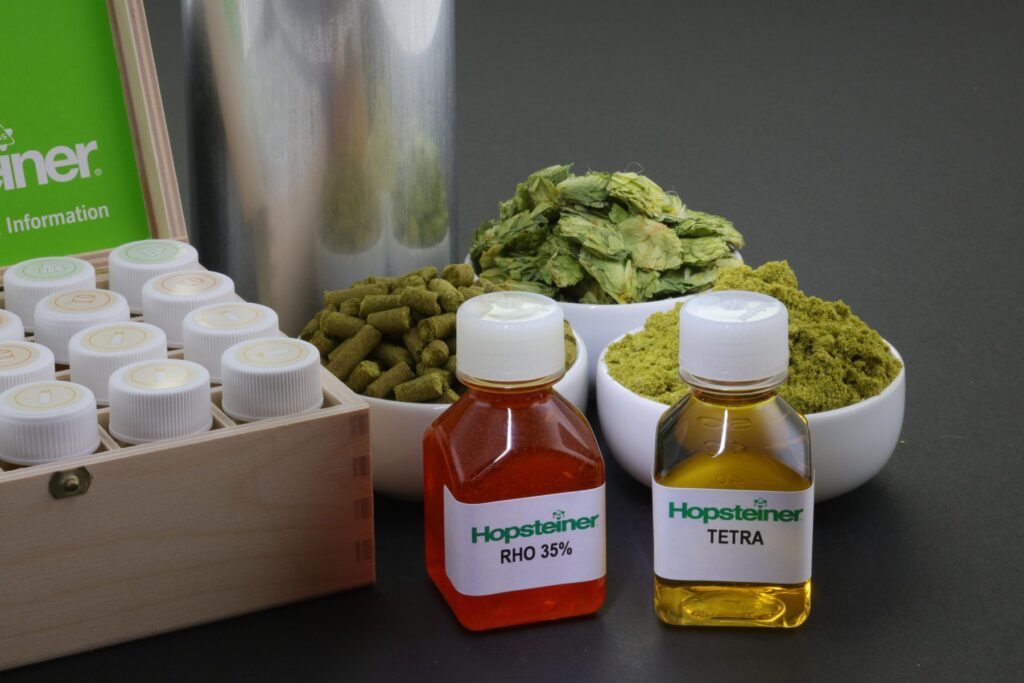
Sustainability is at the forefront of brewing in general, and it’s a focus point in each specific aspect of the brewing process,” said Doug Wilson, Director of Sales and Marketing at Hopsteiner, recognized as one of the largest global vertically-integrated hop growers and distributors in the world. “The sustainability mindset naturally carries over to a brewmaster’s ingredients, including the hops they choose. Likewise, craft brewers need successful and sustainable hops to replicate their beer offerings. Fortunately, we have experienced a quick rebound in crop growth and availability as hop growers after the recent heatwaves and drought that proved harmful to many hops, malt and barley growers. That rebound, combined with the general open-mindedness of both craft brewers and craft beer drinkers, lends itself to a successful and sustainable relationship between brewers and hop growers.”

  Hopsteiner utilizes a genome breeding program that is molecular marker-assisted, identifying the key and desirable traits they want available in their hops. The hops are, in turn, bred to be stronger, more resistant, and ultimately, more efficient and sustainable. For example, Hopsteiner identified the powdery mildew resistant component in hop strains and, through selective breeding, now offers those popular hop varietals with bred-in powdery mildew resistance traits.

  “Brewers look for a couple of things in their hop provider. Usually, it centers around cost savings and sustainability. Sustainability means new agronomically superior and disease-resistant varieties requiring less spraying and fertilizing, ultimately producing higher yields with more drought resistance. By providing our own breeding technology, Hopsteiner can offer products like Salvo, derived from CO2 hop extract and predominantly containing hop essential oils and beta acids, that can be used in hot applications without adding bitterness or causing beer loss. Its use has also reportedly extended the shelf-life for hoppy-style brews,” said Wilson.

  “We see a lot of the sameness in brewing. When I say sameness, I’m talking about a combination or mix of hops used to produce a particular flavor profile. But that sameness can also bring about a hesitation by consumers to try a new beer if they see a hop flavor profile with which they are already familiar. That type of consumer behavior directly opposes the inherent purpose of a great brewpub.

  The true craft brewer wants their consumers to want to try new flavor profiles, aromas and combinations. And one of the best things we, as hop growers, can tell a brewer is, with prices of most goods going up, the costs of hops aren’t that bad right now. On top of that, there are new varieties available to the craft brewer that will produce those new formulas and beers that can lure in, excite, and satisfy the craft beer consumer.”

  Hopsteiner offers the familiar products they’ve traditionally provided. They can drive additional efficiencies into those offerings using their in-house programs, allowing craft brewers to dare to be different. For example, Hopsteiner’s Tetra-S, derived from CO2 hop extract, provides an excellent flavor profile and offers foam-enhancing abilities for an increased visual appearance on beers that typically may not show or hold a head of foam.

  “Brewers have to get out of the rut that I feel craft brewing has been in for the last couple of years,” said Wilson. “We help them do that with our breeding program. We use worldwide hop hunters that allow us to offer new genetic materials to bring out new chemical compositions that allow craft brewers to use their creativity. Additionally, by brewing sustainable beers with new flavor profiles and aromas, craft brewers can gain the upper hand in gaining and keeping valuable shelf space that is already limited.”

  Wilson told Beverage Master Magazine that craft brewers must be their own advocates and do their research regarding sourcing hops. “Don’t just take one supplier’s word for it,” said Wilson. “Work on developing a good and comfortable rapport with all your suppliers, and then have open and honest conversations with them about supplies. The market is currently flush with hops. We’ve rebounded quite well from past climate issues in all varieties, with no slowdown in the foreseeable future. As a craft brewer, you have to talk with suppliers to determine where you need to contract supply and those places where you may not need to contract. In some current instances, it can be safer and more economical to play the spot market to fill your hops needs.”

Cryo Hops Offer Sustainability, Efficiency and Savings

  Yakima Chief’s Cryo Hops are processed using cryogenic technology, separating whole hop cones into the concentrated lupulin and the bract, or leaf component. The hops are processed and individually preserved using low temperatures in a nitrogen-rich, ISO-9001 certified production facility with limited opportunities for oxidation from initial separating through the final pelleting process.

  Cryo Hops pellets are the concentrated lupulin of whole leaf hops, housing the resins and aromatic oils that provide an even more intense hop flavor and aroma to your brew. Brewmasters can use these pellets anywhere traditional whole leaf or T-90 hop pellets are used but contain nearly twice the amount of flavor and aroma producing resin content. That extra resin content allows craft brewers to efficiently dose large quantities of alpha acids and oils without introducing astringent or polyphenol flavors or unwanted vegetative material. They also increase yield by reducing brewhouse and cellar trub and offering cost savings and net revenue increases with each batch.

  The pellets are specifically designed to offer efficiency and savings and provide greater sustainability in use, packaging, shipping and storage. The leafy material of the hop cone gets removed during the production process, reducing the overall amount of plant material brought into the brewing process. This reduction further eliminates trub loss and results in increased yields (3 to 5%) and improved quality. Yakima Chief reports that water, malt, utilities and labor are utilized more efficiently for every barrel of beer gained while only requiring half the storage and shipping requirements.

  Yakima Chief’s Cryo Hops perform similar to T-90 hop pellets with comparable density and dissolving characteristics and are appropriate as a full or partial replacement for whole leaf or T-90 pellets. However, they are only dosed at 40-50% of T-90 pellets by weight because of their concentrated qualities. Additionally, they do not pose a clogging risk to heat exchangers because of their fine particle size. They should be added to the kettle late in the process to prevent boiling out the intense flavor and aroma characteristics. Introducing the pellets in the whirlpool is preferred to increase aroma and reduce trub load from significant late additions. Using them in the fermenter is another excellent way to increase aroma and reduce trub loss. Cryo Hops will settle out during standard conditioning and can be fined, filtered or centrifuged.

Creative Hop Use Helps Fuel Growth of No and Low Alcohol Craft Beer

  Once considered a less-than-desirable alternative, low alcohol or no alcohol beer is now widespread and quickly trending upward, with breweries of all sizes taking note.

  In a video address, Richard Hodges, Regional Sales Manager of Yakima Chief Hops, said that the NA and LA beer markets provide an opportunity to shine for craft brewers, allowing them to display their creativity in brewing using a variety of quality, sustainably grown hops.

  “The low and no alcohol beer markets are without a doubt the fastest moving market,” said Hodges. “The last ten years have provided improved methods and innovation in flavor and aroma, thereby enhancing more widespread acceptance of new low alcohol or no alcohol brews. The main consumer base for these markets is the 25–45-year age range with an interest in a healthier beer alternative that fits into a moderation or abstinence lifestyle. In more direct cases, some regions have adopted stricter alcohol laws that have moved beer consumers to try low or no alcohol craft beverages.”

  “The biggest challenge we see in LA and NA beers is the lack of beer complexity and character loss involved due to the absence of alcohol,” said Hodges. “As a brewer, you have the option to either mask that lack of complexity or make up for it by using essential hops and malt profiles. But, of course, we believe it’s always better to make up for any lost taste profiles rather than simply trying to mask them. And because of the continuous growth of NA and LA beer, the improved and successful methods to make up for any lost character and complexity have become available to the smaller microbrewers, allowing them to appeal to and welcome a whole new demographic of potential patrons.”

  Hodges said that bittering hops like Yakima Chief’s Warrior, Columbus, and Chinook offer ways to add the traditional solid-yet-smooth bitterness needed to complement conventional hoppy and West Coast beer styles. Other options, including their Sabro and Talus, will add the fruit and cream, vanilla or coconut flavors to give LA or NA beverages a perceived body.

  Aromas in our favorite craft beers also add complexity but can get lost in the NA brewing process. To add those aromas that get lost in low ester production, Hodges recommends Simcoe, Idaho7 or Eknanot for a sweet tropical smell and an extra layer of complexity. Crystal, Columbus and Nugget varietals will give the familiar and expected woody, green and pungent hoppy flavors that craft beer drinkers expect.

Expect The Unexpected

  New flavor profiles and chemical compositions are quickly becoming available in conjunction with more sustainable sources of hops. As these hops make their way into the hands of creative brewmasters, there’s every reason to believe that craft brewpubs can creatively challenge the patrons’ tastebuds, causing them to raise a glass to an ever-evolving menu, including the exploding no and low alcohol market.

Low-Alcohol Beer: How to Answer This Global Trend?

fermentis banner

The global beer market, both in volume and value, has seen great expansion for many years. This growth in demand has seen both a rise in the number of breweries and an expansion in beer style diversity. Among these styles, one of them is emerging significantly around the world: no and low-alcohol beers (NAB-LAB).

A bigger market provides a larger consumer panel with different expectations and desires. Low-alcohol beers emerged to meet a need which only existed moderately in the past. Indeed, an entire segment of consumers has grown with an education around well-being, the “well-eating” and now the “well-drinking”. Modern beer drinkers pay special attention to the product’s caloric intake, have an increased knowledge about a product’s health benefits and the desire to consume locally if possible. While the third point is not always substantiated, low Alcohol answers the two first consumption trends: in a consumer mindset, less alcohol implies less sugar and a better health benefit, and generally alcohol always has a negative connotation. All other factors being equal, especially taste and price, there is no doubt that for this kind of consumer low-alcohol beer is a viable alternative to “classic beer”. Generally, we can bring this low-alcohol trend closer to the “free” trends, such as additive-free, gluten-free and alcohol-free.

To these new consumers, we must add those who’ve always had this “need” for a low-alcoholic beer. For health reasons, like pregnant women for example or for a religious conviction. Although this need always existed, it has strengthened during the last few years, due to the fact that beer is now a societal phenomenon. Consumers, by wiling to be part of the society, wants to consume trendy product. Therefore, the product must adapt itself to the consumer and give him this possibility. This is the reason behind the rise of low-alcohol beers.

Although demand is quite recent, we must go back much further to find the origin of low-alcohol beers. It’s the year 1920, in the USA and it’s the Prohibition: this constitution signs the interdiction to produce, transport, import and sell alcohol in order to reduce criminality and corruption in the country. Taking place from 1919 to 1933, this law pushes breweries to reinvent themselves to survive. Low-alcoholic beers were born!

Although the style emerged under constraint, nowadays it’s really the brewer’s choice to produce no or low-alcoholic beers to answer the growing demand. When going for this particular style, the question of the process arises: how does a brewer significantly reduce alcohol quantity without changing production process? Because Yeast is the key for alcohol production, it was our duty to help brewers in this task. We, at Fermentis, have been solicited to develop a solution.

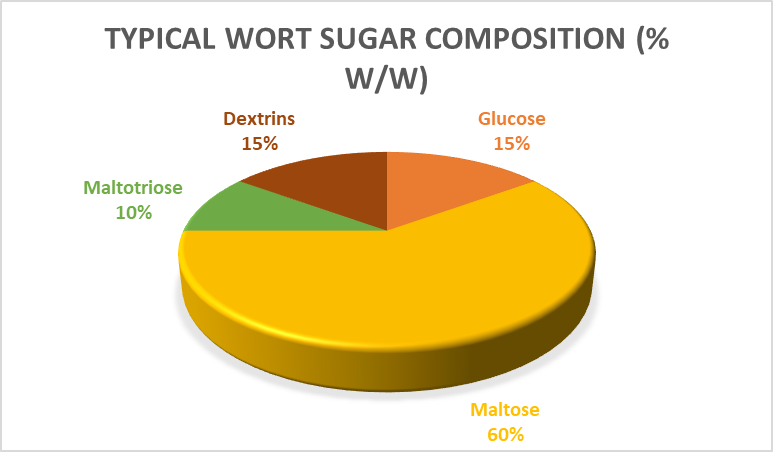
Firstly, we had to do the work of screening among all the strains we know, a long-term task to select the ones that could match our research criterion: technical criteria but also sensorial criteria to answer to brewers need. Simon Jeanpierre, Technical Sales Support Manager Asia Pacific, tells us more about it: “To perform our first screening, our target was to list Saccharomyces and non-Saccharomyces strains able to produce only little alcohol. To narrow this list, we looked at microorganisms also able to reproduce as much as possible the expected beer flavours, as we traditionally know. This naturally led us to maltose-negative strain unable to ferment complex sugars (i.e. polymers of glucose), with yet a strong ability to produce higher alcohols, Esters and phenols, participating into the beer aromas.”

To understand our decision to steer our choice towards maltose-negative strains, you just have to look at the classical composition of a beer wort on the schema here below. Unlike the other strains of Fermentis range, maltose-negative strains only have the capacity to ferment glucose (DP1, single sugar chains), the equivalent of 10 to 15% of total sugars in wort.  Less fermentable sugars imply a lower alcohol production in the final beer.

low alcohol yeast selection

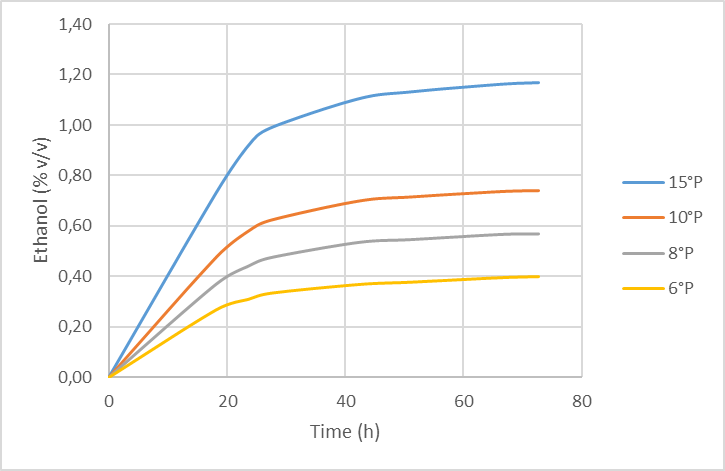
This done, the next step was to verify our hypothesis with a trial protocol, it’s Simon who explains it: “We started with the beginning: a recipe. This recipe had to produce a classic wort at a standard density of 15, 10, 8 and 6°P (1061, 1040, 1032 and 1024 in specific density) fermented at 20°C (68°F). It was then fermented with all screened strains and accurately followed-up on sugar consumption and alcohol production. A tasting with a panel of experts finally allowed us to choose the winning strain that would not only perform well in low alcohol production but also provide essential aromas expected in the beer during a proper fermentation.”  Moreover, this yeast produces “clean beers” without off-flavours that are commonly found in NAB.

The strain we have selected after duplicating this trial protocol many times is a Saccharomyces chevalieri that we named SafBrew™ LA-01, LA simply for Low Alcohol.  We chose this strain because it showed excellent results during our fermentation trials as demonstrated hereunder. For every tested density, the fermentation reached its plateau after 60hrs for an alcohol level between 0,4 and 1,2% ABV, corresponding to an apparent degree of fermentation about 14%. We have noted a positive correlation between final degree of alcohol and wort initial density, so we are able to say that an initial density of 7°P (1028 in specific density) is ideal to reach 0,5% ABV which is the maximum alcohol level tolerated in many countries to write “No-alcoholic beer” on the label.

SafBrew LA-01 Fermentation trial

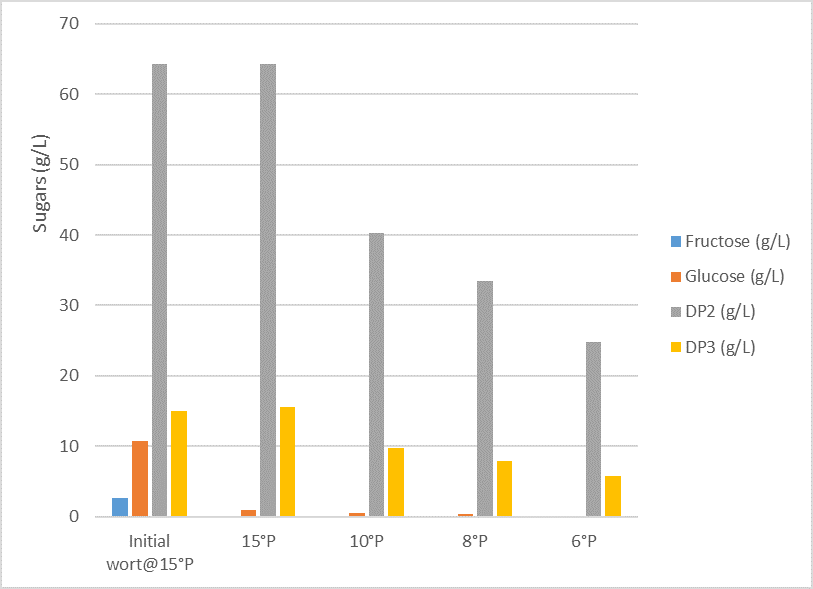
As previously presented, this strain is maltose-negative, it only consumes simple sugars (glucose, fructose, sucrose) leaving behind the maltose and other complex sugars such as maltotriose and dextrins. Logically, we find more residual sugars in our low-alcoholic beer. The below graph confirms that in numbers, DP2 means disaccharides which are mainly maltose and DP3 means trisaccharides which are mainly maltotriose.

SafBrew LA-01 sugar consumption

We have seen that in purely scientific terms, SafBrew™ LA-01 allows us to brew a NAB-LAB, but what about the sensory profile of the beer itself? This is a legitimate question because such a high level of residual maltose doesn’t exist in “classic” beers. Maltose is a sugar able to bring a clean sweetness. In the majority of beers, it doesn’t have the chance to express its potential because it’s turned into alcohol and CO2 by yeasts. Therefore, it’s the alcohol which will mainly bring the roundness and sweetness perception in the mouth (or to Mouthfeel). In a NAB-LAB, residual maltose can play this role because alcohol is present in small quantity only. However, if sweetness level in your final beer worries you, it’s easy to balance it with several brewing tools as Simon explains to us: “Bitterness level plays a great role and anything above 15 IBU for 0.5% ABV is a good target to balance the sweetness level. Increasing your water hardness gives a firmer bitterness too. On the cereal side, limit the use of caramel malts and the sweet flavour associated with them. To finish balancing the bill, there is of course the acidity. You can either pre-acidify your wort prior to fermentation or use greater carbonation and its associated carbonic acid which also propels aroma.”

Another important thing when we are talking about sensory profile is the fact that SafBrew™ LA-01 is a POF + strain. By being classified positive (+), SafBrew™ LA-01 owns a gene which expresses the POF character, POF meaning phenolic off flavour. In other words, this yeast has a specific enzyme that decarboxylates phenolic acids, like ferulic acid and coumaric acid, present in wort and thus producing respectively the flavour-active compounds 4VG and 4VP. These compounds contribute to spicy, clove-like flavours which, depending on the concentration, may produce a spicy and complex character. Note that in a NAB-LABs brewed with SafBrew™ LA-01, this phenolic side will be very light as described by Simon: “From a sensory perspective we really enjoyed the slight phenolic expression it develops. Keep in mind that the expression of a POF character depends on the amount of ferulic acid you have in your malt. In a NAB-LAB, you will therefore only have a limited expression from the recommended lower amount of malt”.

Last but not the least, the pasteurization topic. Pasteurization is a technique invented in 1865 by Louis Pasteur for food conservation by killing all living microorganisms in the product. The process is theoretically quite simple: you heat the product between 62°C to 88°C (144 to 191°F) before brutally cooling it. Pasteurization is not popular in the craft beer industry because it’s linked to standardization of the product or because, with this process, the beer is not really “alive” anymore and will not evolve over time.

But in regard to our recommendation for NAB-LAB, pasteurization is mandatory. You are certainly aware of how much yeasts and microorganisms like sugars and how much residual sugars we still have in a NAB-LAB at the end of fermentation. If a pasteurization is not done, any living microorganisms could eventually ferment maltose and totally alter the beer or even create overcarbonation in bottles, which could be dangerous. Different Pasteurization techniques exist such as tunnel pasteurization, whichever technique is chosen, Simon explains how much you have to pasteurize: “As soon as you have reached your max ADF of 13-15%, it will be important to inhibit eventual living friends from further fermenting. We studied different cross-contamination levels with Saccharomyces cerevisiae and observed a minimum safe limit of 80 PU in order to prevent growth in a brew fermented with SafBrew™ LA-01. We recommend the range of 80-120 PU.” PU signifies Pasteur Units, in terms of affect, one PU is equivalent to heating to 60°C in one minute. To calculate your pasteurization level, the formula is the following:

PU= t x 1,393 (T-60)

Where t is the time you heat in minutes and T is the temperature in °C.

A true alternative to pasteurization doesn’t really exist, it remains the best technique for ensuring optimal microbiology of a beer. We know that this technique is not accessible to every brewer and as Simon explains, we are constantly looking for solutions for small breweries: “Fermentis is aware that such equipment can be limited to big scale breweries. This is why we are working on alternatives to offer craft brewers the best performance in fermenting flavourful NAB-LAB with our SafBrew™ LA-01. Such alternatives exist through intrusive (biotechnology) or non-intrusive methods (cool chain). Feel free to reach out to us to learn more and receive tailor-made advice on your NAB-LAB fermentation management and hygiene practices.”

Simon Jeanpierre, Hugo Picard

Palate-Pleasing Chemistry: Keep Taste Buds Excited with New Twists on Flavor

man drinking beer

By: Cheryl Gray

In the flavoring industry, it’s all about chemistry. Literally. Food chemists work to identify, develop and improve upon a good thing. For beverages regulated by the TTB, the balance is in creating new tastes for drinks such as beer, distilled spirits, sake, wine and kombucha without comprising the integrity of the product.

Food scientists pair expertise with artistry, combining knowledge of the chemistry of flavor with the analytical techniques involved in creating new flavors. 

If You Can Imagine It, We Can Create It

  Just ask Mother Murphy’s Flavorings, headquartered in Greensboro, North Carolina, and servicing multiple industries in 30 countries around the globe. In business since 1946, its research and development team has created a catalog of more than 60,000 flavors,  lending credence to the company motto: “If you can imagine it, we can create it.”

  For the beer and spirits industries, Mother Murphy’s focuses on fruits and botanicals to enhance the naturally occurring flavor notes and characteristics in aged alcohol and infused liquors. It also works with craft brewers and distilleries to develop trademark, recognizable flavors. Neither size nor season matter – the company provides small-batch flavoring needs for small breweries and distilleries and much larger orders for international conglomerates. 

  Al Murphy, whose grandfather and great uncle started the family-owned business, is co-President of Mother Murphy’s. He is a member of several industry trade associations and has traveled abroad to learn about the beer and spirits industries. His knowledge includes the processes involved in producing gin, whiskey, botanical spirits, brandy and wine.

  Murphy told Beverage Master Magazine why creating flavored beers and distilled products requires specific skills. “A person that knows how to create flavorful beverages has a unique skill set in itself,” he said. “It takes a different skill set to make a blended spirit, unique skill set to create a distilled spirit, a different skill set to be a brewer and different skill set to create a flavored product.”

  Murphy said business savvy brewers and distillers recognize how uniquely flavored products can draw new consumers.

  “Flavors create memories, and people want to have a product that tastes good,” he said. “The spirits industry has been able to achieve a lot of success through flavors, which brings more people that wouldn’t drink a traditional non-flavored spirit to try a product.”

  There are some precautions, though, Murphy warns, that every craft brewery and distillery should heed when entering the flavoring space. 

  “Flavor by itself is one aspect of building a flavorful product. There are other factors, such as acid blends and sugars, that are a part of the overall experience of tasting a product. If you don’t know how to build a beverage product without the other ingredients, then it is like building a car without an engine.” 

  Beyond flavorings, Mother Murphy’s provides various services for its craft brewers and distillers, lending invaluable expertise in many different areas.

  “We have expert folks within our organization and a variety of solutions to help all types of people in the category,” said Murphy. “We are constantly solving problems for small guys that need more than flavors. We provide market trends for different aspects. We also offer beverage services depending on the customer needs in the marketplace.”

Made From the Real Thing

  Potomac Distilling Company knows its way around the world of flavored rums. When Todd Thrasher launched his Washington, D.C.-based distillery in the wharf district near the banks of the Potomac River, he did it with his flagship Thrasher’s Green Spiced Rum, created with an original blend of herbs that he started out growing in his backyard.

  Now, nearly four years later, Potomac Distilling Company grows those same herbs on its rooftop garden. A combination of green cardamom, mint, lemon balm, lemon verbena, and lemongrass creates the spirit. The distillery uses it in cocktails like Thrasher’s signature Rum and Tonic, conjured from his traveling adventures to the West Indies and South Pacific.

  “There are many contributing factors to the increased popularity of flavored rums. I like to think of Thrasher’s Rum as ‘vacation in a bottle,’ and I think we all crave a dreamy sense of escapism!” said Thrasher. “Flavored rums also make it really easy to mix cocktails at home because the spirit provides a depth of taste. Flavored rums and their aromas have provided a true sense of place for me – transporting me to my island-hopping adventures as a scuba dive instructor.”

  Potomac Distillery boasts six signature rums. Among them is Thrasher’s version of a dry – not sugary sweet – Thrasher’s Spiced Rum, made from a combination of allspice, cinnamon, clove, orange peels, star anise and vanilla bean, all steeped in Thrasher’s White Rum to create a flavored product.   

  Still another of the distillery’s flavored spirits is Thrasher’s Coconut Rum, among the few on the market made without extract. Instead, Thrasher uses 60 pounds of raw Thai coconut heated at 180 degrees Fahrenheit. He then places the coconut mix into a gin basket to transform its vapors into liquid. From there, the liquid is “proofed down,” dehydrated, toasted and left to sit for 80 days at room temperature. The result is a coconut rum made from the real thing.

  These variations of flavored rum do not come by accident. Thrasher has an extensive background in spearheading multiple well-known bars throughout Washington, D.C. He received his training at Moonshine University in Louisville, Kentucky, alongside gathering information from other distillers.

  In all, Thrasher has created six rums, including one just introduced last year, called Relaxed Rum, which is aged in American oak barrels for 24 months. The result, Thrasher said, is a rum with a smooth flavor touched by hints of vanilla and the smoky notes of tobacco. The Thrasher Rum collection is featured at the adjoining bar, Tiki TNT, and is also available for ordering through partner locations.

Teasing Taste Buds With Flavor

  Cream Ale is just one of the creations of 2 Silos Brewery in historic Manassas, Virginia. This award-winning brewery has launched flavored beers and ales with catchy monikers like Citralicious American IPA, featuring whole tangerine puree, and Squared Pants, a fruity sour made with pineapple and guava purees.

  The idea for 2 Silos Brewery took shape in 2014 when co-founders Forrest Morgan and Marcus Silva began trading ideas for creating a brewery that could become a hub for hospitality. That idea is now a popular destination spot in Northern Virginia on the Farm Brew LIVE campus at Innovation Park in Virginia’s Prince William County. The brewery draws locals and tourists alike, who come to sample beers flavored by a combination of fruits, spices and other natural sources. The facility also houses canning and keg operations and an in-house quality control lab.

  2 Silos creates products with the goal of teasing taste buds with flavors that are familiar but with surprising twists. Its Hua’ekola – translated as fruit beer – is ladened with purees of passion fruit, blood orange and pink guava. Seasonal options include a Gingerbread Ale infused with ginger, cinnamon and clove. Another is Pumpkin Ale which, as the name implies, features pumpkin puree. The brewery’s Indulgence Series showcases a dessert-worthy Fudgetastic Imperial Stout –a blend of the brewery’s Old Dominion Barrel Reserve Series with an infusion of chocolate fudge, coconut and natural almond flavors. 

  Though the flavor names are quirky, 2 Silos Brewery is committed to serving its area through philanthropy, funded by one of its flavored creations. One hundred percent of the proceeds from sales of its Raspberry Cream Ale support The Sweet Julia Grace Foundation, a Virginia-based nonprofit servicing children with serious medical challenges.

  Blending flavorings for beer and distilled spirits is a craft unto itself. Get it right, and breweries and distilleries can create a niche market for their products that broaden their appeal to consumers looking for new ways to enjoy old favorites.

Vegan-Friendly Beer

A Growing Trend To Watch This Year

By: Natasha Dhayagude, CEO, Chinova Bioworks

beer and pizza on the side

In an industry as competitive and ever-changing in terms of new products and trends, the ingredients for developing beer are constantly evolving. One trend to watch is the plant-based movement. Whether consumers are vegan or not, many consumers are paying more attention to what is on the ingredient label before they consume their favorite foods and beverages.

  Examine most beer labels carefully and currently, you will find that many beer brands are using animal-based compounds to process alcoholic beverages. Some animal-based compounds that are widely used throughout the production process of beer and alcoholic beverages are pepsin, a foaming agent obtained from stomach enzymes of pigs; chitin, derived from lobster and crab shells; and carmine, which is found in the crushed scales of cochineal insects. Another commonly used compound is isinglass, which is a kind of gelatin obtained from fish swim bladder. These compounds are often used in the alcohol production and filtering process to make drinks appear clearer and brighter. Clearing is an aesthetic concern and stability issue; it does not only look better, but it is more stable than cloudy beer.

But what if you Live a Vegan Lifestyle? Can You Still Enjoy beer?

  Because the vegan lifestyle is grounded in plant-based products, beer manufacturers must ensure the animal add-ons are completely taken off the list during alcohol production. With new technology, leading beer makers, including Budweiser, Coors, Corona and Heineken, have already begun shifting its processing to incorporate vegan-based ingredients instead of animal-derived ones.

  Vegan brewing is a growing trend, as more consumers are looking towards environmentally sustainable, plant-based options when purchasing food and beverages. While the market for vegan, gluten-free and low-calorie beers is still somewhat small, this industry is set to begin expanding as future generations become increasingly aware about the ingredients in their food and beverages. The growing trend of vegan brewing stems from millennials who are making more conscious decisions about what they consume, even when it comes to alcoholic beverages. Vegan beverages require a series of preparation and ingredients to meet the expectations of vegan consumers. Veganism has inspired the alcoholic beverage industry to incorporate plant-based and animal cruelty-free products. For many, being vegan has gone farther than just a trend; it is a lifestyle that many live by.

  Chinova Bioworks launched a major research initiative with College Communautaire du Nouveau Brunwick’s (CCNB) INNOV centre, supported by the New Brunswick Innovation Foundation’s Voucher Fund in 2021 to develop a new fining agent for vegan-friendly beer. Fining agents are used in breweries to clarify and brighten beer. The term “fining” is used to describe the forced clarification process. It increases the brightness of the finished beer by removing suspended yeast and haze-forming proteins and polyphenols. A beer with elevated levels of haze tends to deteriorate rapidly. This process also shortens aging times by removing the excess flavor-destabilizing components from the finished beer.

  For years, CCNB’s Grand Falls campus has developed technologies around brewing and distilling. Now, our company, Chinova Bioworks, has provided CCNB with a viable product and is putting its clean-label expertise to leverage the vast depth of brewing expertise at CCNB’s campus. Through this research, Chinova Bioworks will develop a new application for its proprietary white button mushroom fiber, Chiber, as a rapid fining agent for breweries. White button mushrooms contain many health benefits. Aside from the white button mushroom improving the quality of a product, it also has a notable amount of vitamin D minerals infused within the mushroom itself.

  Chinova’s mushroom extract is also a natural solution to reducing food waste and assisting in the production of vegan-friendly alcoholic beverages. Chiber is a cost effective, sustainable and vegan-friendly solution for the brewing industry. Before being used by breweries, Chiber has also been used for plant-based meat, dairy alternatives, sauces and condiments. It is a pure fiber extracted sourced from the stems of white button mushrooms that help improve quality, freshness and shelf-life and does not contain any allergenic materials from the mushroom, which results in increased consumer satisfaction and reduced food waste. Testing is also conducted to confirm the absence of regulated allergens. Chiber is odorless and tasteless; it does not alter the taste, color or consistency of beverages.

  Early results have shown that Chiber works eight times faster at settling yeast post-fermentation and can leave residual antimicrobial benefits to the beer, which makes it stay fresh longer. Chiber is a one-for-one replacement for artificial preservatives that provides the same protection from microbial spoilage, while being a natural and clean label ingredient. Chiber holds many certifications including: vegan, kosher, halal, organic compliant, non-GMO, declared allergen-free, paleo, keto-friendly, low FODMAP, gluten-free, Whole 30, and it has no sodium contribution.

  This research initiative comes at a time when many breweries are working to shift to vegan-friendly beverages to keep up with consumer demand for more sustainable products. Chinova Bioworks’ technology would provide brewers a vegan alternative to animal-based, isinglass fining agents and synthetic polyvinylpolypyrrolidone (PVPP) that has long been used in the beverage industry as a processing aid. Because many people are searching for vegan and plant-based options in every aspect of their lifestyle, Chinova Bioworks is committed to providing sustainable solutions through our white button mushroom fiber. Our goal is to help manufacturers produce clean-label ingredients and reduce food waste. Alcoholic beverages, beers in particular, are filled with animal-derived and synthetic ingredients, so we believe Chiber can make an impact for beer brands looking to expand their offerings to consumers. With this research, producers in the beverage industry will be able to consider the opportunity to incorporate vegan-friendly and sustainable products into their own beverages using clean ingredients. This research initiative will pave the way toward more vegan-friendly and sustainable beer and alcoholic beverages.

  In 2021, Chinova Bioworks worked on the research portion of the vegan beer initiative and with early adopters for market testing, while actively seeking innovative companies to take part in this initiative. Once this research initiative phase is completed, we expect that Chiber for alcoholic beverages will become available during the first half of 2022. The future for beverage companies is exciting and new technologies like Chiber may help many expand beverage offerings to a wider range of consumers looking for a good brew.

 Natasha Dhayagude

  Natasha Dhayagude, CEO and co-founder of Chinova Bioworks, a food technology company founded in 2016 to develop natural, clean-label preservatives extracted from mushrooms for the food and beverage industry. Chinova is headquartered in New Brunswick, Canada, and 90% of her team is made up of women practicing in STEM fields. Dhayaguede was named Startup Canada’s Young Entrepreneur of the Year in 2017 and Startup Canada’s Woman Entrepreneur of the Year in 2019 for her role in co-founding Chinova. Since then, she has raised $4.5 million in capital investment from major food-technology venture capitalists and has formed strategic partnerships with major multinational producers in the food-technology industry. Dhayagude earned her Bachelor of Science degree in biochemistry from the University of New Brunswick.

 For more on Chinova Bioworks, visit https://www.chinovabioworks.com

Packaging With a Purpose

How the Right Packaging Can Protect, Promote & Preserve Your Craft Beer

By: Cheryl Gray

beer manufacturing facility

Putting a distinctive face on a craft beer product means giving it a good chance to shine in the marketplace spotlight. However, that’s only part of the role of packaging. It should also protect craft beer from outside contamination while preserving its flavor integrity.

Equipment

  Enter the expertise of companies that shape the multiple roles of packaging for breweries. Among them is SKA Fabricating of Durango, Colorado. Founded in 2012, SKA Fabricating is the result of a demand for a can depalletizer designed by Matt Vincent, one of three partners in Durango’s award-winning SKA Brewery. SKA Fabricating now employs more than 70 people and manufactures and sells depalletizers, conveyors and packaging line equipment to businesses worldwide.

  Ska Fabricating has more than 1,000 clients in 23 countries, providing them with depalletizers and other custom packaging line equipment. Beyond the craft beer industry, the company also provides packaging line equipment to producers of food and beverages such as coffee, tea, water, kombucha, soda and orange juice. Non-beverage industries include aerosol, paint cans and spice jars.

  The size and capacity of systems built by SKA Fabricating fit virtually any brewery packaging line need. They range from a 20’ x 20’ square at 20 containers a minute to a 60’ x 60’ square running 250 CPM and above. The company is big on automated packaging line systems, touting them as more economical since automation requires less manpower. However, SKA Fabricating provides manual systems for clients who prefer them, such as start-up breweries on a tight budget. Those manual systems are available for half-height use and do require more personnel. As breweries grow and want to advance to automatic packaging systems, SKA Fabricating can help with the transition. 

Filling

  Another part of packaging is filling the cans and bottles that craft brewers use as containers for their products. XpressFill offers multiple fillers for the craft brewing industries. Rod Silver spearheads marketing and sales for the company.

  “XpressFill’s filling equipment is suitable for breweries that are not ready to invest in a full-blown production line. Our artisan brewers can realize significant savings in their efforts to grow their markets before making such a significant investment.”

  Since XpressFill offers fillers specifically with start-ups and smaller craft brewers in mind, the company promotes its products as the gateway to an opportunity for artisan brewers to run efficient, cost-saving packaging production lines. The company cites its products as top industry choices when it comes to being affordable, compact, user friendly and easy to maintain.

  Silver added that customer support is an important key to client satisfaction and that XpressFill has products for production brewing lines, large and small. He described how brewery clients are already benefitting from the range of products that his company has on the market, all designed to optimize productivity.

  “We offer counter-pressure fillers for both bottles and cans. We also offer an open filler that will fill both bottles and cans,” Silver said. “The XF4500C is a counter pressure system for cans capable of filling 200 12 ounce cans per hour. The XF2200 (two-spout) and XF4400 (four-spout) are open fill systems for cans capable of filling 300 to 600 cans per hour. The XF2200 and XF4400 can also be adapted to open fill bottles. The XF2500 (two-spout) and XF4500 (four-spout) are counter pressure systems for bottles capable of filling 200 to 400 12 ounce bottles per hour.”

  Silver laid out the pros and cons of manual versus automated production lines. “The most obvious distinction is production capacity and cost. The XpressFill systems are affordable for start-up breweries, ranging from $2,500 to $6,500. Automated systems are, at a minimum order of magnitudes, more expensive. Often, brewpubs will provide cans or bottles to be sold at the pub in limited quantities. Brewers getting started in retailing their brews will want to start in a deliberate manner to test the market. Larger breweries will also use our fillers for small batch or specialized runs that do not require start-up of larger production facilities or mobile operators.”

  Silver described how XpressFill works to protect the integrity of the beer inside any container. “All of our fillers have a pre-fill CO2 purge cycle to minimize the oxygen in the container prior to the fill cycle. Our can-fillers also have a post-fill top-off function to ensure an adequate layer of foam on which to place the lid. The counter pressure systems require a minimal air compressor to operate the pneumatic actuators. Our fillers operate at 110 volts, although they can be provided at 220 volts for our international customers.”

  Ease of use is also important. Silver said that his company prides itself on the simple operation of its products.“XpressFill can-fillers can easily be operated by a single user. Weighing under 40 pounds, they are intended to be used on a tabletop for portability. A few test runs are required to dial in the settings and bring the equipment to temperature for best results. Our fillers will purge and fill the cans, and a separate seamer is required. To maximize the production and efficiency, many of our customers use a second operator for the seaming function.”

  Silver said that XpressFill products have state-of-the-art safety features, compliant with industry-standard safety measures, including all applicable electrical and mechanical requirements. All materials in the flow path are food grade and meet the standards set by the National Sanitation Foundation.

  Fillmore Packaging Solutions is another company focused on small craft brewers. Its history highlights how owner Tony Saballa, a craft brewer in his own right, founded the company because he couldn’t find products on the market catering to the needs of small breweries like his.

  Based in St. Louis, Missouri, Fillmore Packaging Solutions provides its clients with options for automated can filling machines that utilize an automatic shutoff feature. This prevents cans from overfilling, a costly and time-consuming production line mishap. The product’s four-head can-filler is designed to fit into small spaces and accommodate small budgets. The product features double pre-evacuation counter-pressure filling, designed as an effective method of reducing dissolved oxygen during beer packaging. It can fill 12 to 16 cans per minute. Standard features on the product include under lid gassing, automatic lid placement and seaming. Additional features such as tank and CO2  pressure sensing and temperature monitoring with onscreen readout help to enhance the product’s ease of use. 

  The firm has also created two- and four-head filler machines for bottles. The machines operate on 110v/220v and compressed air. Fill rates for the two-head machine range from six to eight bottles per minute. The four-head machine fills at a rate of 12 to 16 bottles per minute. Features for both include automatic filling and self-leveling to correct fill height. The four-head model has a feature that pushes bottles onto the production line’s packing table. The models are operator-controlled from start to stop, loading and unloading bottles and loading crowns onto crown heads for capping. Fillmore also created a keg washing machine featuring a 25-gallon detergent reservoir with heater and a 25-gallon sanitizer reservoir.

Labeling

  When it comes to the aesthetics of packaging craft beer, labeling is the star. Colorado-based Lightning Labels has provided clients with custom-designed labeling for nearly twenty years. The company uses HP Indigo digital printing technology, which combines the best features of traditional offset printing with digital techniques. This hybrid delivers top-notch quality whether the client’s order is large or small. 

  Lightning Labels prides itself on the vibrancy of its color palettes, produced in high-resolution and designed to be water-resistant. Labels can be affixed to bottles, cans, growlers and kegs in a wide range of finishes, using high gloss, matte or textured paper. There are separate front and back label options, or clients may opt for one large wrap-around. Lightning Labels touts that its print quality allows listing custom beer ingredients in a crisp, readable font. Bottle labels are available in paper,  vinyl and eco-friendly options as well as more durable alternatives. As the name implies, Lightning Labels touts a quick turnaround on product orders.

  Blue Label Packaging Company specializes in labels for beer cans. Headquartered in Lancaster, Ohio, the company also uses HP Indigo printing, offering its customers an array of materials and substrates, such as foil, film and paper cut and stack labels. Product finishes and decorative techniques aimed at creating high impact include hot foil stamping, die-cutting and embossing. 

  Cost, creativity, and careful planning matter when it comes to packaging for craft breweries. The combination results in products that distinguish themselves on store shelves and meet the benchmarks of industry standards and food safety requirements.