The December holidays are here, and that means everyone is in the festive spirit. As the year closes out and a bright new one begins, craft breweries and distilleries have the unique opportunity to tailor their beverage menus to the holidays and to get a jump start on new 2026 trends.
Christiaan Röllich, aka “The Bar Chef,” is particularly experienced in creating cocktails that bridge the gap — or perhaps blur the line — between the kitchen and the bar. Doing so during the holidays, or any time of year, allows guests to enjoy a taste of the season — whether in the glass or on the plate.
“For me, it’s more than just making something that feels like a holiday cocktail,” said Röllich, who serves up incredible cocktails for Hush Public House, a neighborhood hidden gem in Scottsdale, Arizona. “Usually, I start with what’s in season — fruits, herbs and veggies that naturally fit the time of year. I also think about what people are eating and drinking around the holidays and how I can reimagine that in a cocktail.”
He reminds cocktail creators that just because it’s cold out, it doesn’t mean the beverage menu has to be focused on aged spirits. He suggests looking for something a bit unexpected that still fits the time of year. He also finds inspiration in the kitchen and tries to incorporate the same or similar ingredients into his beverage menus, which could be done at a craft brewery or distillery as well. This not only makes for great pairings, but it also supports the use of peak produce and seasonal ingredients.
While he enjoys using such flavors as saffron and truffles, for example, Röllich said that when working with big, rich flavors, “You don’t want one note to take over the whole drink.”
He joked that truffles in particular “don’t play nice with everything, so you really have to think about it and how much you use them.”
Beyond flavor, cocktails should entice the other senses as well, beginning with the eyes. Röllich enjoys the beauty, realness and vibrancy of natural colors sourced from carrots, beets and parsley that scream “please drink me.”
“You won’t need a fancy glass, because the ingredients are talking for you,” he said, but he advised: “The tricky part is that the colors and flavor fade over time.”
Look at ways to keep the natural beauty alive without compromising the flavor or the integrity of the ingredients to ensure the last sip is as eye-catching and fresh as the first.
Cocktail pairing menus are a popular draw for restaurants, distilleries and craft breweries, particularly during the holiday season. For Röllich, a successful pairing begins by breaking down the food menu completely… right down to basic salt and pepper.
“Every herb, spice and ingredient that goes into the dishes matters. From there, I work backward to build the cocktails and see what bridge I can build,” he said. “When you look at pairings, there are two ways you can go. You can match the flavors that are already in the dish and go with that, or you can look at the ingredients and think about what complements it rather than repeating it.”
Finding a balance in texture, mouthfeel and how the drink moves with the food is key to perfect pairings.
With 2026 on the horizon, many establishments in the hospitality industry, from craft breweries to distilleries, turn to the trends to entice current customers, bring in new clientele, and capitalize on what’s hot. One way to do this at the top of the year, particularly with Dry January in mind, is to offer mocktails.
“More guests are taking breaks from alcohol or just quitting drinking altogether,” he said. “What I like about that is it pushes you to be more creative within the limits given to you.”
Röllich believes that beyond specific ingredients and liquors, the biggest trend for 2026 will be a focus on the hospitality experience overall, with budget as a major contributing factor.
“I think the focus will keep shifting more and more towards details and giving guests the full hospitality experience, from the moment they walk in until the moment they leave,” he said. “Trends come and go, but what really matters is how the experience you offer your guests makes them feel. Guests are also becoming more price-conscious. It’s essential to make sure what’s in the glass is thoughtful and worth it for the guest to return and feel good about our transaction.”
Genuine hospitality, the reason many craft brewers, distilleries and restaurateurs get into the industry in the first place, never goes out of style. With more and more options out there, it’s crucial to give guests a reason to come back and to tell their friends about a specific establishment.
This comes down to offering something they can’t get anywhere else, according to Röllich. This can be evident in the details, for example, serving Triple Sec or Cointreau…or making in-house scratch-made orange liqueur.
“That uniqueness, the commitment to doing something extra, is what sets a bar program apart,” he said. “It sounds so much easier than it is. Commitment and execution are everything.”
Whether serving up a festive holiday spirit this season or concocting a one-of-a-kind mocktail for Dry January to help guests maintain their New Year’s resolutions, the core of this business remains rooted in providing something special, something unique that builds a memory and creates a connection. Serving that mentality will always be met with cheers — regardless of what is in the glass.
Christiaan Röllich began his career in the hospitality industry at the age of 15. As his passion took shape, he found himself working for Suzanne Goin at Lucques, considered the No. 1 restaurant in Los Angeles at the time. His interest in building a bridge between the kitchen and the bar grew as he spoke with farmers at local markets about fresh produce, hung out in the kitchens where he worked to engage with chefs, and reinvented cookbook recipes to make syrups and liqueurs. He is the author of “Bar Chef: Hand Crafted Cocktails,” which features 100 original recipes. His passion continues to inspire his endeavors, and he attributes his success to surrounding himself with like-minded people.
Winsome Ciderworks in Woodinville, Washington, first opened its doors in 2015, but its origins date back to 2013 and beyond, when successful winemaker Leroy Bradford used his winemaking skills to experiment with hard cider production. Two years later, in 2015, Winsome Ciderworks was officially born, with Bradford taking over the former Woodinville Ciderworks site. Using only Washington state apples, Bradford introduced his customers to the nuances and unexpected flavor profiles of hard ciders. His successes ultimately led to his ciders being available in over 150 local bars and restaurants.
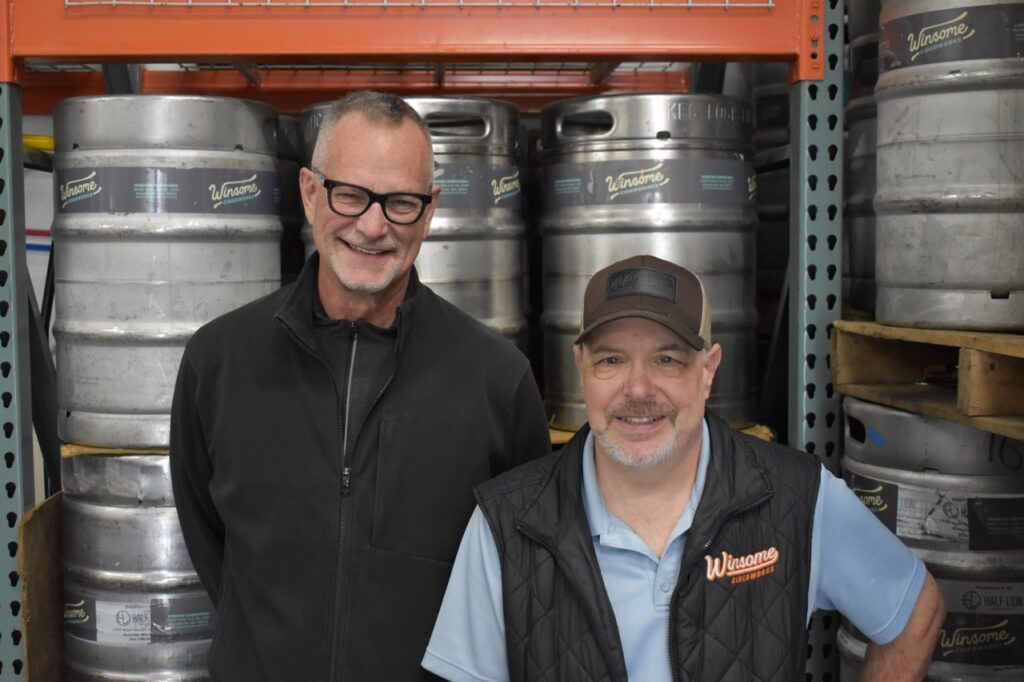
Years later, those same nuances and flavor profiles caught the attention of Alan MacDonald and Peter Click, two seasoned beverage executives seeking opportunities in the alcohol industry. And while other alcohol categories were not performing well, craft hard cider was seen as a growth industry, even growing faster this year than last.
“You know, most folks would wonder why anyone would want to get into the alcohol market now,” said MacDonald, Co-Owner with Peter Click of Winsome Ciderworks. “But craft cider is growing and trending in a positive direction. And we were confident that we had the capability to succeed in these conditions and market trends because of our previous experience in differentiating brands and bringing them to market in a way that made them stand out among other brands.”
The two industry veterans with a combined five decades of experience in the alcohol beverage industry purchased Winsome Ciderworks, a craft cidery with deep roots in the craft wine industry, in May 2024. MacDonald and Click first met when MacDonald was hired as VP of Marketing and PR for Click Wine Group, a company that Peter started. MacDonald previously held a key leadership position at Green Mountain Cidery, leading Woodchuck Cider to become an industry leader.
“Together we launched several brands throughout the US in partnerships that we created and designed, including the packaging,” said MacDonald. “They were very successful, giving us confidence that, with these ciders, by thoroughly understanding the consumer and the market, we can also design towards and communicate with them successfully.”
“We both have deep experience in the wine space, partnering with wine companies around the world,” said Click. “We’ve been creating and bringing brands to market and successfully commercializing them for about a decade, starting in 2000. Between the two of us, we have experience developing and differentiating brands in a marketplace in highly fragmented categories like wine.”
“What we didn’t possess was the understanding and production of high-quality hard ciders,” said MacDonald. “We were very fortunate to have the founder of the cidery, Leroy Bradford, provide that missing skillset that we were missing. He was a previous red wine maker and made excellent ciders using his incredible recipes. He transferred everything over to us, including those recipes and all his intellectual property. He’s been extremely instrumental in the transition, enabling us to focus on what we do best.”
It all Begins with the Natural Goodness of Washington Apples
Winsome Ciderworks contracts with and sources its apples from central and eastern Washington. MacDonald said they want diversity among suppliers and use different apple varieties to achieve the distinctive flavor profiles of their ciders.
“Our flavor profile is naturally sweet while being fruit-forward,” said MacDonald. “Our ciders have no added sugar. They are not as sweet as others you may have tasted. And then we back-blend our juices into the base to get the flavor profiles we want. We generally carry our four primary flavors plus an array of small-batch, single-tank seasonals for temporary distribution and direct feedback from our guests who visit the tasting room. All of our offerings are carbonated, and we’re always experimenting with new ideas.”
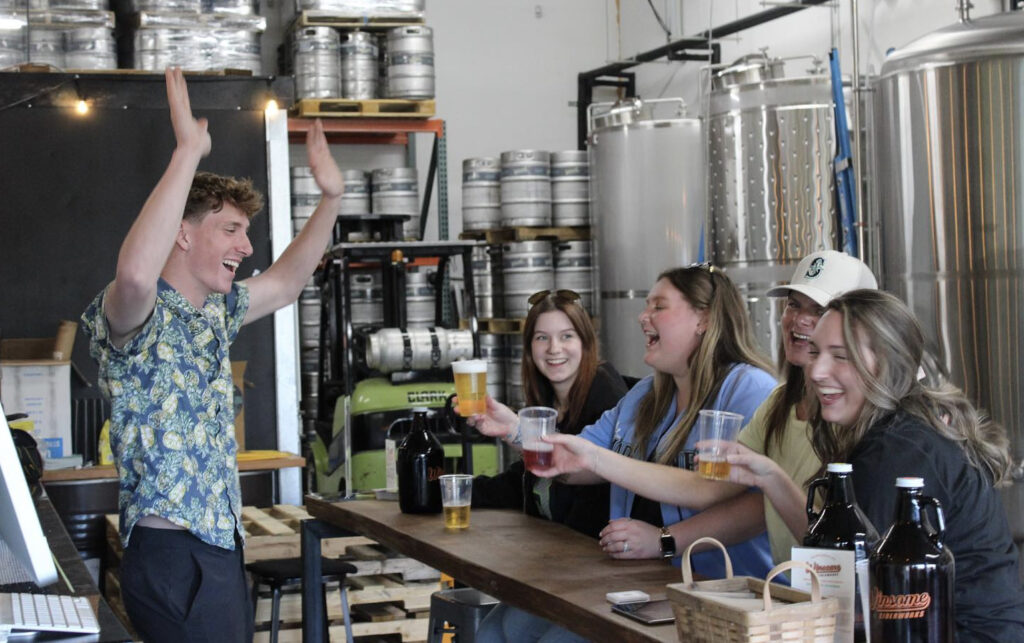
That tasting room is situated within the Winsome Ciderworks production facility, where guests can see the tanks and watch the cider-making process. Winsome Ciderworks offers its four core ciders, including Asian Pear, Pom Cherry, Apricot Hop, and Peach Ginger, along with seasonal selections distributed on a limited-run basis.
“Our tasting room is an authentic, pretty cool space where our guests can see the production of our ciders in real time,” said MacDonald. “It’s a great space to enjoy our ciders, but we also use two in-state distributors to get our products out to restaurants and retail spaces. We are open on weekends and for events, and available to rent for special or exclusive events.”
Infusing New Lifeinto an AlreadyEstablished Brand
Although Winsome Ciderworks was already a successful brand under Bradford’s leadership, MacDonald and Click say they have breathed new life into it.
“The brand was successful but maybe a bit stagnant,” said MacDonald. “It was mainly available only in kegs, with only a few small canning runs. Then COVID came and literally knocked the wind out of businesses like this one that relied on on-premises business and in-house customers to stay afloat. Leroy is an exceptionally skilled cider maker, and that’s what he does best. He wasn’t as skilled at marketing his product. As most of his business was on-premises, COVID provided a real challenge to his company. Leroy’s cider was exceptional, and it still is, but it had lost all its market momentum during that time. It needed a revival and a solid plan to reinvigorate it and bring it back to life. With our experience, contacts, and resources in the marketplace that we’ve built up over the years, that’s exactly what we planned to do.”
MacDonald told Beverage Master Magazine that the brand relaunch included new packaging, an updated logo, and events to reintroduce themselves. We reduced the can size from 14 to 12-ounce cans to better align with the category standard.
“It was a rebrand, complete with events,” said MacDonald. “Additionally, we both brought in our children to work in the business. Simply having the younger people here and out helping to sell and market the business with fresh ideas has really helped get us to the next level.”
“It was a gem that lost its polish,” added Click. “Leroy succeeded in growing his cider business by developing a wonderful product with excellent recipes. We know this because everyone that each of us speaks with in the tasting room tells us they love this cider because it’s fruit-forward yet not overly sweet.”
Future Plans IncludeCalculated Growth
“We do want to increase our distribution,” said Click. “But we need to do it the right way. Cider is an interesting category, but it’s labor-intensive up front. You spend a lot of time meeting with restaurateurs, bars, pubs, taverns, etc., just trying to get your tap handle or packaged product into those locations.
We want to start by mastering the distribution here in Washington State. Once we’re convinced we’ve done a good job of taking advantage of our opportunities and channels within our state, we can consider expanding into other NW regions, including Idaho, Montana and Oregon. We’d like to fill the Northwest region first before considering Northern California. We’re committed to doing this sustainably and not overextending ourselves because it really is an intensive selling effort.”
“The one good thing about cider is that growth can occur quickly,” said MacDonald. “The government treats cider production in the same manner as wine production, even from a tax standpoint, but the truth is that it’s much more similar to brewing beer. We always found in the wine industry that with wine, you have to have a five-year plan. It takes longer just because of the vineyards, growing patterns, and the various aging times. But cider is something that, once we have the ingredients in-house, by the time we go from initial production through blending and filtering, carbonation, and kegging or canning, we’re looking at less than two months. Growth can occur quickly from idea to finished product because, unlike wine, we don’t have to wait for another vintage to come off our vines. If you get the right product, the right style and packaging, and consumers like it, it’s not unbelievably hard, except for the cash aspect, to expand to meet those needs, whereas wine can take a lot longer to do that.
Once the apples are in house, crushed, and fermented, the process from the start of fermentation to finished product takes 12–14 days to make a batch of cider. That includes the days needed to get flavor profiles right and carbonate. The flexibility to adjust to the changing times and trends is always there.”
There’s AlwaysBeen Cider
“Cider is a very interesting, exciting, and historically significant category,” said MacDonald. “As a crafted beverage, cider has been around almost as long as anything. Throughout America, there’s always been cider around to drink, whether it’s for celebrations, health reasons, or something else. As an alcoholic beverage, hard cider has always been stable alongside beer and wine, but we love it because it allows us to quickly create unique flavors. And the consumer base for hard ciders is vast. The age of our customer base in our tasting room enjoying our ciders spans decades. You know, some alcohol drinkers seem to go through phases of drinking beer, wine, and maybe spirits, but cider has always remained consistent, and as a hard cider business owner, that consistency is nice to have.”
To learn more about Winsome Ciderworks and what makes them unique, call, email, or visit their website or taproom.
During the Colonial era two distinct styles of rye whiskey emerged within the original thirteen colonies: Pennsylvania or Monongahela-style rye and Maryland-style rye. As reported by David Pickerell for the Distilled Spirits Council of the United States, “Since the bulk transportation of large amounts of grain was not practical during this era, the distillers made whiskey from the grain grown on their farm or from grains grown nearby. Corn was not generally native north of the southern edge of Pennsylvania; hence, the distillers made rye whiskey with no corn in it. Monongahela Rye was known for its ultra-high rye content and its full-bodied and spicy nature. Distillers operating in the southern part of America made Maryland-style rye, a mixture of rye with some corn.”
All alcoholic beverages took a significant hit during Prohibition (1920-1933). Most fields that once grew grains used primarily for producing distilled spirits and beer remained unplanted. Following Prohibition, bourbon emerged as America’s drink of choice, made from corn grown especially in Kentucky and Tennessee.
As reported earlier for Beverage Master Magazine, Steve McCarthy, founder of Clear Creek Distillers (now owned by Hood River Distillers) had the distinction of being the first distiller to bring an American single malt to market in the 1990s. Since then, Pacific Northwest distillers have been at the forefront of the American Single Malt Whiskey revolution.
However, in recent years, an increasing number of distillers have included a rye whiskey in their spirits portfolio. The following are a few curated profiles of rye whiskeys from this region that highlight the diversity of Pacific Northwest rye whiskeys.
Browne Family Spirits (Spokane, WA): Their Special G Rye Malt Whiskey made with 100% Spokane Valley malted rye is part of their new Farm series that displays the creative vision of Master Distiller Aaron Kleinhelter and highlights Washington’s exceptional local grains.
The Distillarium (Yakima, WA): The mashbill for their Straight Rye Whiskey consists of 95% Gazelle Rye and 5% Malted Barley for a full-bodied bold taste and a medium finish. This whiskey is aged for a minimum of five years in #3 and #4 char American Oak barrels before being bottled uncut and unfiltered at 90 proof. In addition, they make a straight rye small-batch whiskey made from central Washington rye that’s aged for at least three years in charred American Oak barrels. Also, they have a cask strength of rye (109 proof) aged for six years in the works that will be called Rayzer’s Edge.
Freeland Spirits (Portland, OR): Inspired by her love of whiskey and a desire to highlight Oregon’s terroir, Jill Kuehler founded Freeland Spirits with the goal of producing a rye whiskey. As she notes, “The spice flavor along with the grassy, herbal notes really highlight the best of Oregon farm fields in a bottle.” Also, rye whiskey is used in her favorite Old Fashioned cocktails. A true embodiment of the state’s rich agriculture and dedication to quality, Kuehler’s journey begins in the heart of Oregon’s fertile fields. She partners with Camas Country Mill to select heritage and ancient varieties of rye, barley, and buckwheat that are stone-milled into a coarse flour to preserve full flavor. Their latest rendition of rye whiskey is bottled in bond, distilled at 100 proof, and aged for four years in New American Oak barrels with a mashbill consisting of 75% organic dark northern rye, 20% organic purple karma barley, and 5% organic buckwheat.
Glacier Distilling Company (Coram, MT): Their decision to produce a rye whiskey stemmed from their quest to recreate an old moonshiner’s recipe from Josephine Doody. This former dance-hall girl was a moonshiner in the late 1800s and early 1900s, and the spouse of Dan Doody, who was the first park ranger for Glacier National Park. Their North Fork rye whiskey (92 proof) made from a single-origin organic rye from Vilicus Farm (Havre, MT) and pure glacial water from the Northern Rockies is named for the wild North Fork of the Flathead River that runs from a remote corner of British Columbia to Montana. The mashbill for this rye consists of 51% rye, 24% malted rye, and 25% corn. They choose this combination to take advantage of the bigger earthy flavors that the malts provide along with a little sweetness from the corn. This whiskey is aged in 15-gallon #3 char white oak barrels from the Barrel Mill (MN) for at least two years and then finished in a solera system. As described on their website, “Younger whiskey is blended with older whiskey in the solera, which is never fully emptied, ensuring a smooth, consistent flavor. Their solera, started in 2011, still contains some of the original whiskey.”
Also, they produce a limited release called Bad Rock that uses the same grain bill as their North Fork Rye but it’s a cask strength rye aged for an additional year in a #4 char barrel. Their future plans include a 100% rye whiskey that’s currently aging in barrels.
Heritage Acres Distilling (Abbotsford, BC): Since rye whisky is considered to be the true Canadian whisky, they wanted to participate in their Canadian heritage by producing a world-class spirit that highlights their part of the world. With their QuickDraw Whisky – The Outlaw, they strove to produce a product where consumers could really “Taste the History” of this whisky. On their website, they describe this rye whisky as a “bold and adventurous spirit that tells a rebellious tale,” and adding “it’s best savored neat to appreciate the full complexity of this spirit. All ingredients for this whisky are sourced in BC with the distillery producing some ingredients in Abbotsford.
New Deal Distillery (Portland, OR): According to co-founder, Tom Burkleaux, their Distiller’s Reserve Straight Rye Whiskey embodies their grain-to-glass approach to producing craft whiskey. The current release of this rye whiskey has a mashbill consisting of 72% dark northern rye sourced from Eastern Oregon, 17% unmalted barley, and 11% malted barley. This combination gives their spirit an earthy texture that recreates the classic Kentucky Rye while playing with a bit more depth of flavor and more focus on the grains. This spirit is distilled in a single pass through their 3-plate brandy column still and then aged for five years in #2 char new American oak barrels.
In addition, they produce 40 Acres Straight Rye Whiskey (90 proof), courtesy of Karl Rohdin-Bibby; an avid whiskey enthusiast and distiller at New Deal Distillery. While Burkleaux admitted he didn’t think about barrel finishing, he discovered that Rodin-Bibby’s use of Oregon wine barrels to finish this spirit brought out different flavor combinations. Also, they produce small releases of up to three barrels where they experiment with different mashbills and distillation styles.
New Basin Distilling Company (Madras, OR): Since Rick Molitor’s grandpa only drank rye whiskey and he loves this spirit, he decided to make his own. The name for their whiskey “Resignation Straight Rye Whiskey” stemmed from his decision to resign from one excellent job as superintendent of Jefferson County 509-J Schools and ESD in 2017 to begin another one with the first edition of this whiskey released in July 2017. The Oregon heirloom rye used in their Straight Rye Whiskey made with 100% rye comes directly from their farm in Madras and is then ground on site. Molitor mashes, ferments, and distills with the grain still in the mash. He observes, “This process gives amazing tasting notes though great attention is needed to ensure it does not foam or scorch during the cooking and distilling process.”
Oregon Spirit Distillers (Bend, OR): When Brad Irwin launched Oregon Spirit Distillers with his wife Kathy in 2007, he wanted to feature a rye in his portfolio as he was drawn to the spicy flavor profile inherent in rye whiskey and the history of the Sazerac cocktail in particular. When he produced 12 barrels of wheat whiskey and six or eight barrels of rye whiskey during their first year, Irwin realized how much harder the process was for making the mash bill for making the mash for rye whiskey in comparison to wheat whiskey.
Also, given that rye does not produce the same yield per acre as other grains, Irwin quickly learned from a farm broker that he needed to lease land to guarantee farmers would not lose money by growing rye. So, he contracted 160 acres from farmers near Hermiston, Oregon where they grow the rye variety called Hazlet. Irwin chose this variety as it grows well in Oregon’s desert climate and has good starch content.
The mashbill he developed that they still use today contains 100% rye. According to Irwin, “We were making a product for the person who really wanted all the flavors of rye. So, we didn’t want it to be chained down by other grains that might soften the big red flavor profiles.”
Their rye whiskey is aged for four years in new American white oak barrels and bottled at 90 proof. Also, they’ve released a 100-proof bottled-in-bond version of this rye. In 2025, they experimented with a wheat-rye by blending some of their 100% rye with their wheat whiskey as an introductory rye whiskey for those consumers new to the taste of rye. Also, Irwin hosts the annual Oregon Whiskey Festival, a celebration of the state’s best whiskeys. As Irwin opines, ” I really do believe Oregon has the resources to make great whiskey such as great grain, whether it’s corn, barley, and fantastic water.
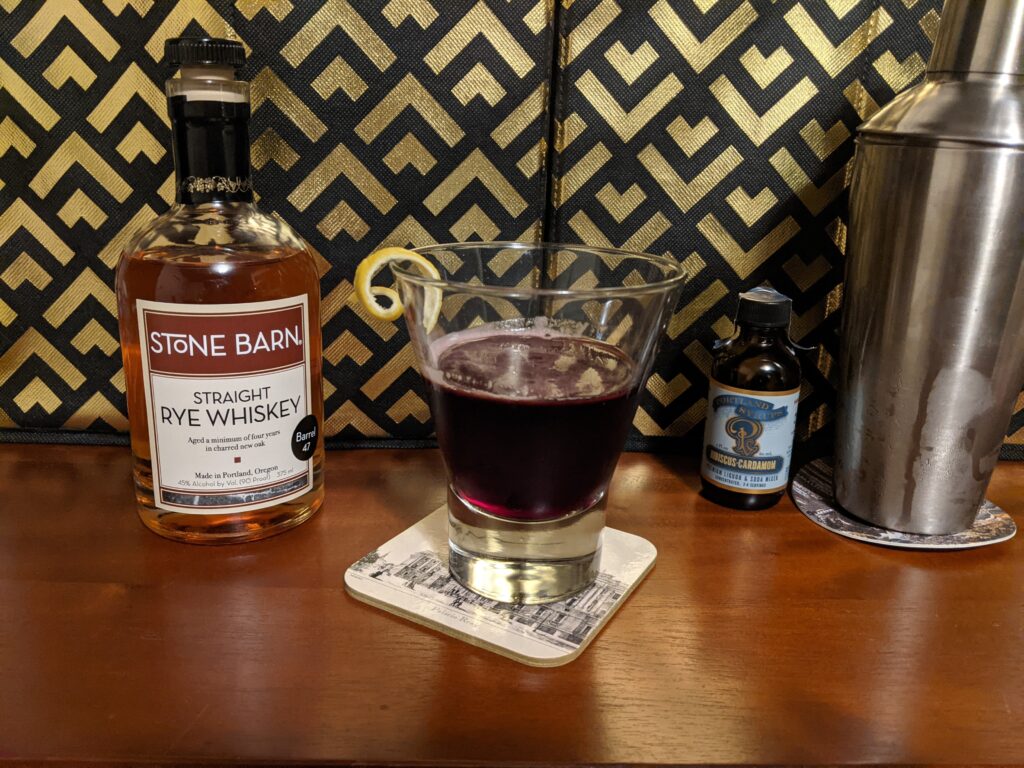
Stone Barn Brandyworks (Portland, OR): Sebastian Degens describes his rye whiskeys as exceptionally smooth due to his focus on getting good barrels that create harmony with the spirit from start to finish. All his whiskeys are distilled on their Kothe pot still to coax pure grain flavors and rich sweetness out of each batch. There’s no set time for how long a whiskey ages, as he relies on smell and taste to determine when a particular spirit is ready to bottle.
Most of his rye whiskeys are made with 100% dark organic rye that Degens originally sourced from Bob’s Red Mill but he now sources from Dave’s Killer Bread and other local sources. Also, he has been experimenting with a dark rye malt in the mash bill that adds a coffee-like finish and deep roast character to the spirit. In addition, Degens sources the rye used for his Nocino and Peach Rock & Rye from Oregon Spirit Distillers as he likes Irwin’s approach to distilling and trusts his sources.
Because rye produces less yield per pound than other grains like corn, Degens explains that this leads to a higher cost per barrel. However, as he opines, “In the end of the day, I like, you know, it’s what I like to drink, so that’s what I like to make.”
PNW Rye Whiskey Blends: Those wishing to offer a rye whiskey without the complications involved in distilling this tricky and sticky grain choose to source their base rye spirit, which they then finish to create a spirit infused with their unique imprint. For example, Wildwood Spirits Co. (Bothell, WA) features a Rendition Rye. Inspired by owner/distiller Erik Liedholm’s grandmother. She was an accomplished violist and played many renditions of classical works with her deft spin. Since the rye is not our composition, per se, but as they added our own spin, they decided “Rendition” would be an apt name. For this spirit, they purchase five-year Rye from MGP in Indiana which they make their “theirs” by completing the aging in one of their used bourbon barrels. Also, they’ve produced an Oloroso Sherry barrel finished rye.
Also, Doc Swinson’s Whiskey (Ferndale, WA) takes a chef’s approach: sourcing exceptional American whiskeys from MPG, then finishing and blending them in-house using rare and globally sourced casks—like Caribbean rum, Oloroso sherry, and Cognac—to craft complex, expressive profiles. Their goal is to create rye whiskeys that are approachable and complex, without sacrificing the bold character that makes rye special.
In today’s podcast we dig into the “state of beer” with economist Lester Jones, separating structural shifts from cyclical noise and outlining a practical playbook to drive sales growth.
From broken pricing elasticity to on-premise strategy and demographics, we share data and specific moves.
If you love graphs, charts and spreadsheets (as I do), download Lester’s Beer Industry Updatepresentation deck.
Key Topics:
• industry volumes down and dollars soft • structural vs cyclical drivers shaping demand • beer purchasers’ index sentiment and signals • pricing power fading and elasticity reset needed • on-premise momentum, draft advantages, happy hour value • occasion-led strategy with low and no alcohol • demographics by life stage, not generations • policy confusion on tariffs and taxation • action playbook for wholesalers and brewers
Resources:
Join the October 23rd webinar with FinTech and NBWA – Register Here
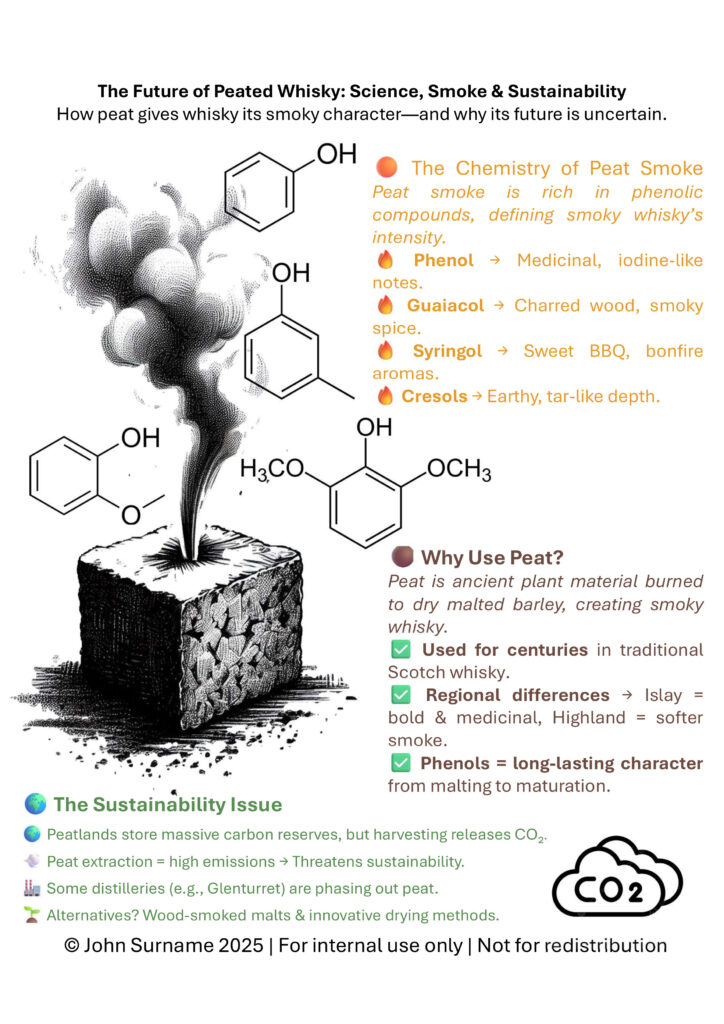
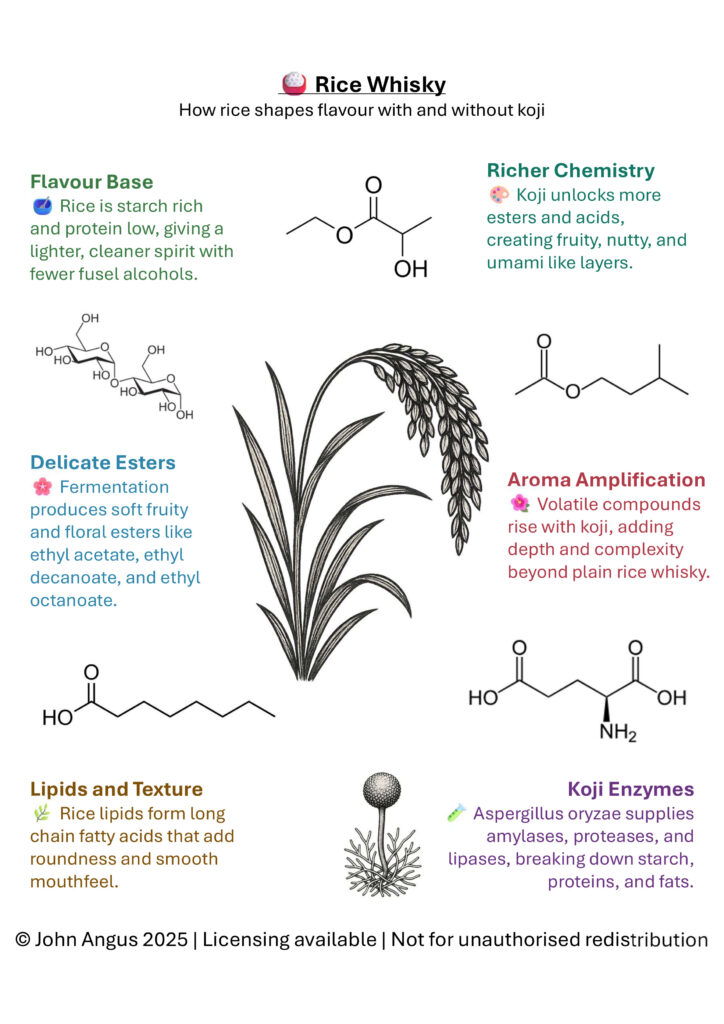
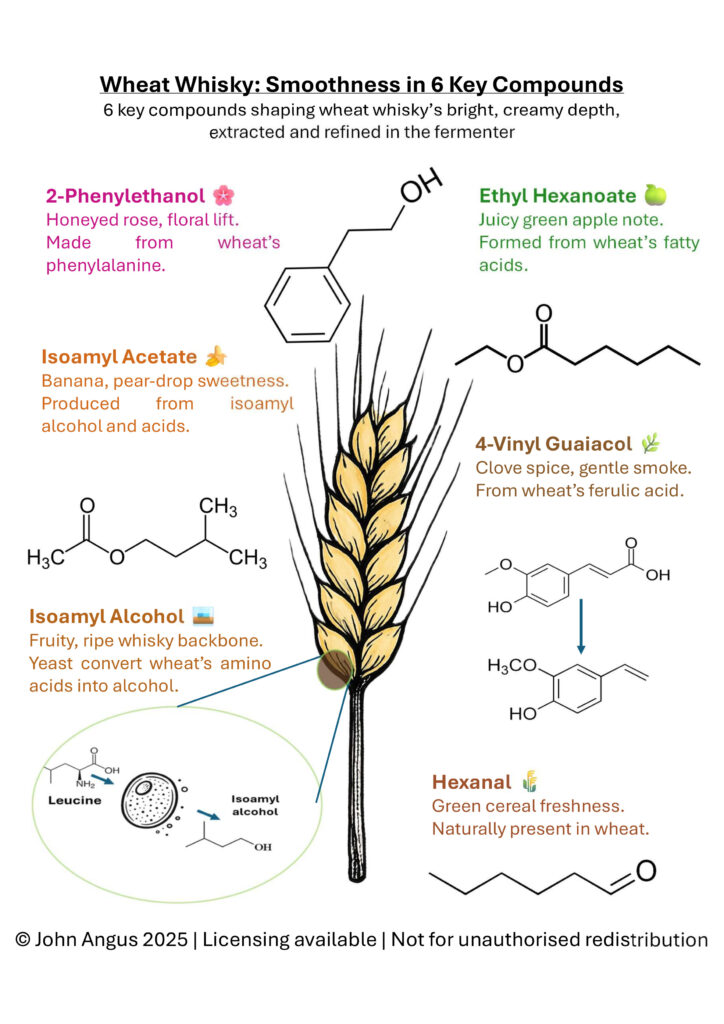
At the end of February, I shared my first post on whisky flavour chemistry. It was meant as a small experiment.
I wanted to see if breaking complex science into clear, visual stories could help others understand what really shapes a spirit. What I didn’t expect was how far it would reach.
Since then, Spirit Chemistry has grown into a community of over 15,900 people. Distillers, educators and flavour-curious readers from all over the world. What started as one post has become a long-term project to map how chemistry becomes flavour.
To make it easier for people to follow along, I’ve brought everything together in one place.
Both are free to explore and capture everything I’ve been learning and sharing since this began.
How I’ve structured it
To make flavour science easier to follow, I’ve broken it down into mini series. Each one explores a different stage of production or a specific theme. Together they show how chemistry becomes taste.
🌾 Grain Chemistry
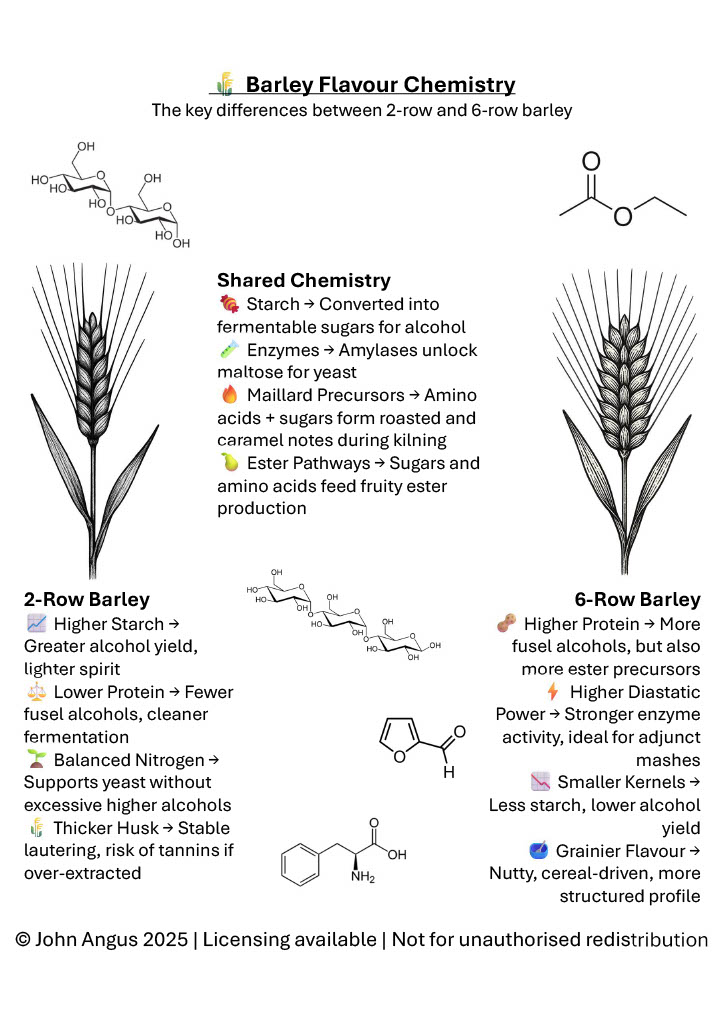
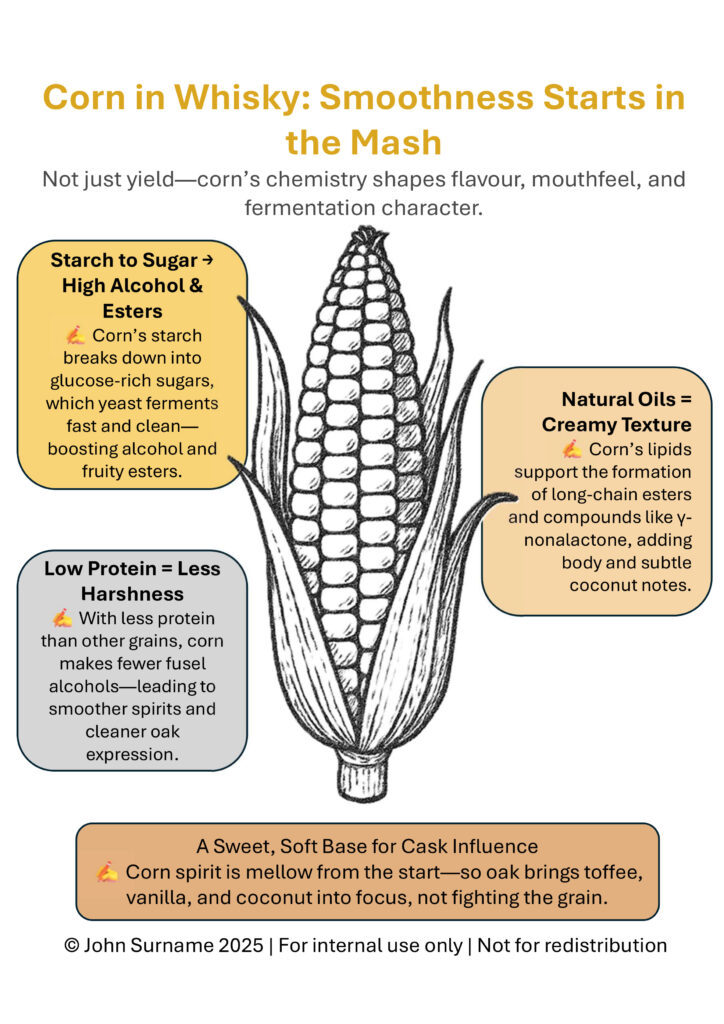
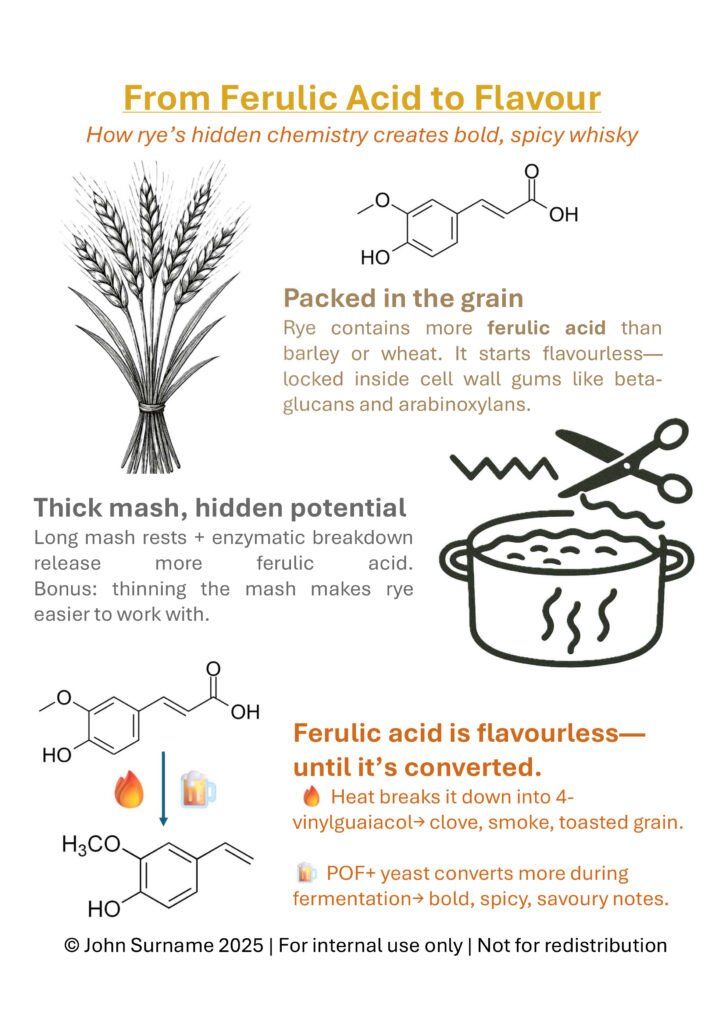
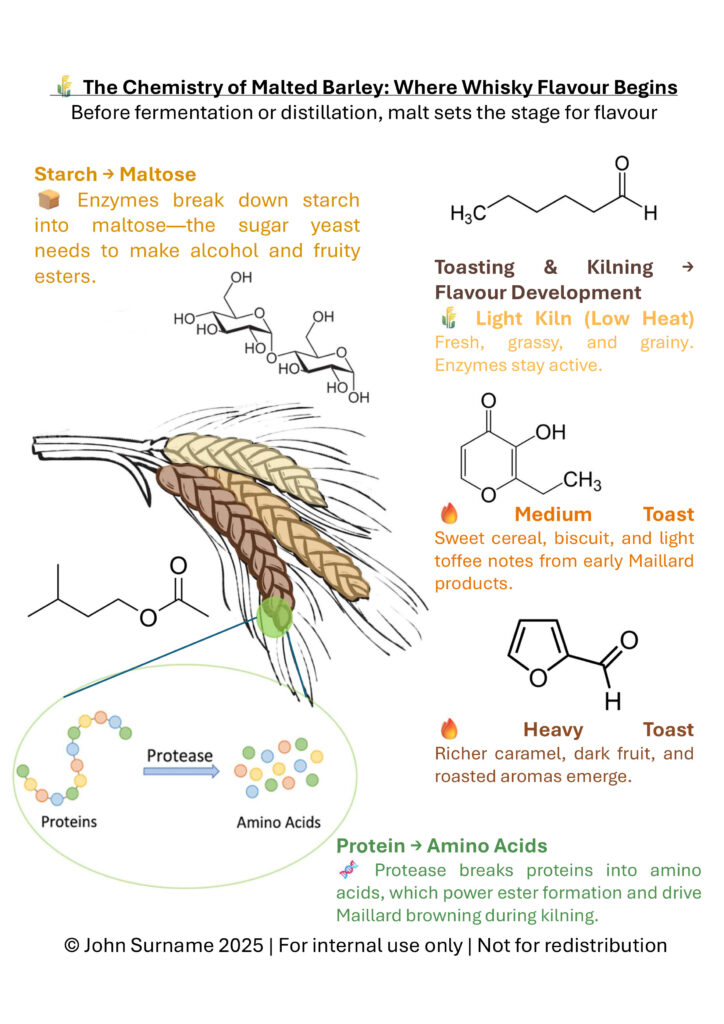
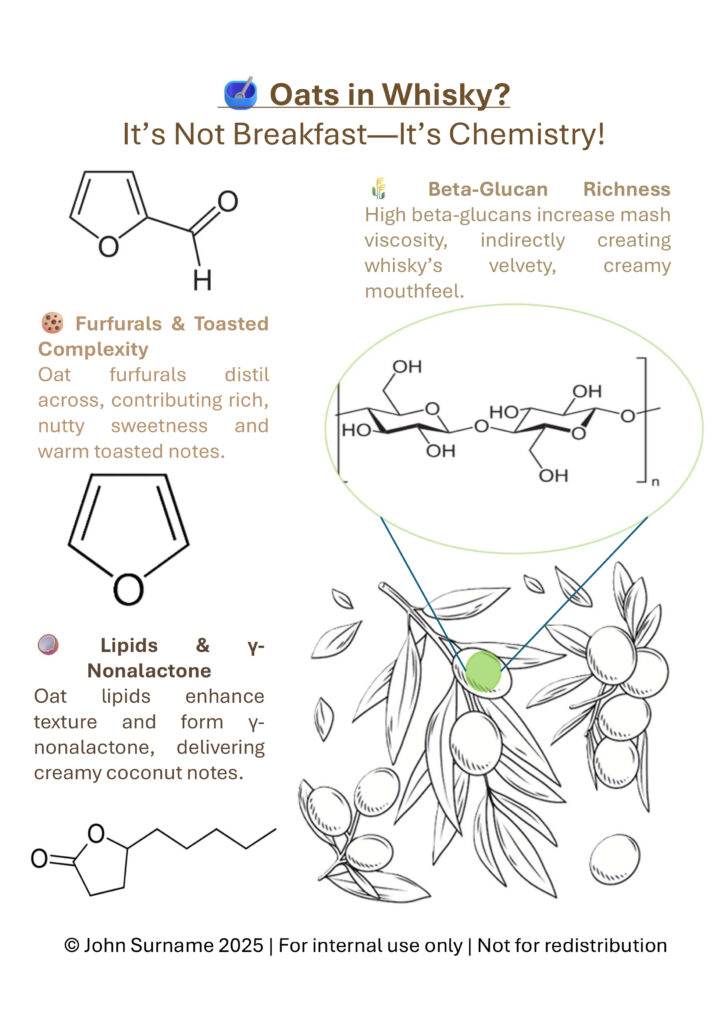
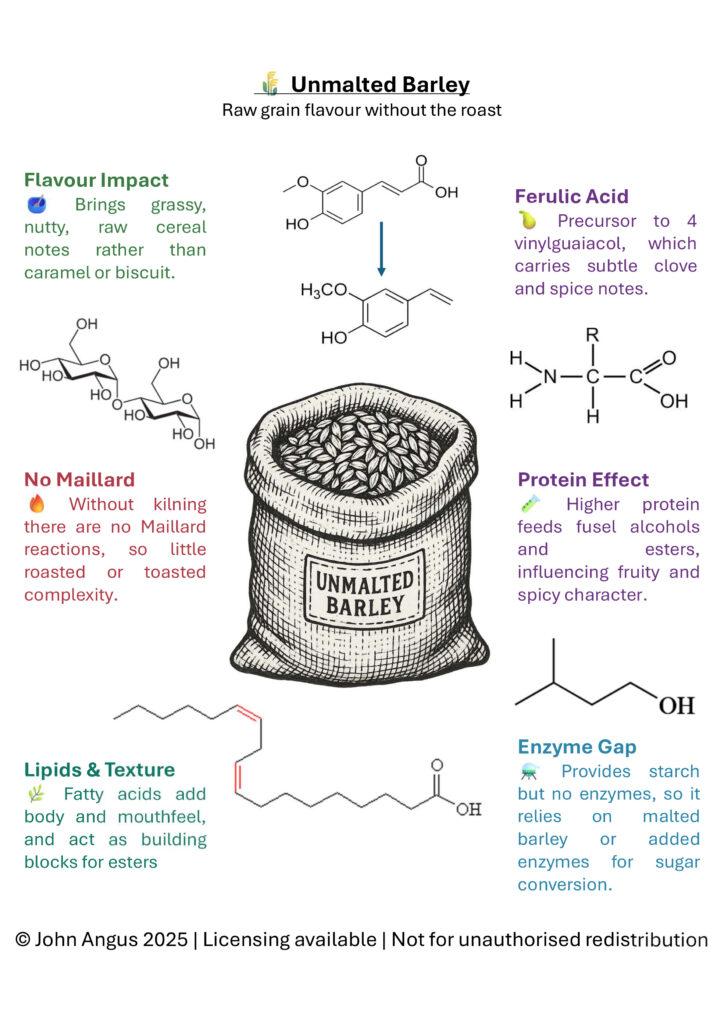
Grain is more than a source of sugar. It sets the foundation for everything that follows. Barley brings enzymes and malt sweetness. Corn adds smoothness and gentle fruit. Rye delivers spice through ferulic acid and phenol formation. Oats bring lipids and beta glucans that change texture and mouthfeel.
In this series I looked at how starch, protein and lipid composition influence fermentation and distillation outcomes. Choosing the right grain is as much about chemistry as tradition.
Check back next month for the continuation of this series!
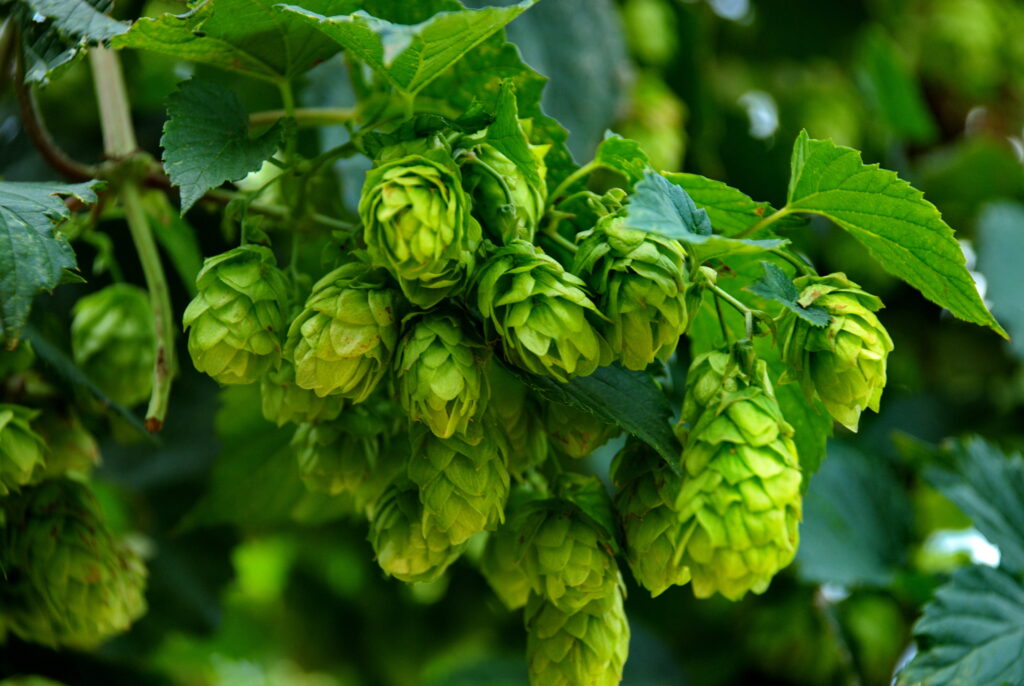
With new delivery options, increased shelf life and enhanced applications hops are being recognized as a valuable commodity and marketing tool towards consumers.
By Gerald Dlubala
As growers try to regain the balance of supply and demand that was upended during the pandemic, some brewers are seeing hops as a marketing tool for more educated consumers. Is it time for hops to step forward and take a lead in craft brew marketing?
Civil Life Brewing, St. Louis, Missouri
“I think it is,” says Dylan Mosley, Head Brewer of Civil Life Brewing in St. Louis, Missouri. “As a brewer, the world of hops is becoming increasingly interesting, even for those who use traditional, established varietals. Cascade Hops are synonymous with North American Brewing, and we use them in our historical-type beers. But the delivery method of adding hops has progressed, and that’s pretty cool. We use different delivery methods depending on the layer and level of aroma and flavors we’re after. For example, in our Merchant Ship IPA, we mostly use our bell hops in pelletized form. Some of the other hops are processed differently and isolated from the plant in methods like CO2 extraction or through hop oils.”
Mosely says that brewers are increasingly able to get out of the hop whatever they are after by fine-tuning delivery methods and timing during production.
“From a brewery perspective, it’s all about control,” said Mosely. “Deployment is key with hops, and it’s fascinating to pick and choose how, when, and where to add them into the brewing process. The newer packaging and delivery methods are really fascinating to me. And as a brewer, I love their shelf life, storability, and variability of what part of the hop you use. The only thing a brewer should remain aware of is their filtration methods and how some of these different hop choices will react with their filtration pads or membranes.”
“It’s important to know that a little goes a long way with respect to replacing pellets with oils,” said Mosely. “But the more oils you use to replace traditional pellets, the more educated you have to be with deploying those oils. Education is key. It’s like a baker who uses exotic spices and clarified ingredients. A little can go a long way, and they must be used at the right times in the right amounts, or the layers of flavor will go haywire and become too pronounced or too specific. Drinkability can be reduced due to flavor profiles changing too rapidly. But having these types of contemporary hop products at our disposal is cool. It gives smaller breweries like us access to the same technologies and flavor profiles as the bigger breweries.”
Mosely attributes the excitement over hops to consumers becoming more educated about what is in their glass or can.
“I’m seeing some exciting things happening around hop use and choice, and the customers are driving those trends,” said Mosely. “So much so that I think we can expect more dramatic packaging highlighting the hops used in a specific beer. It’s something new for the consumer to learn and remember when they try new beers. If a beer shows the same hops or blend as something they’ve liked before, they’re more likely to try it. You know, wine drinkers look for wines from the same region or grape varietal, and I think you’ll see that with hop selection and marketing. Hops are an ingredient that the consumer can see, taste, learn about, and remember. More education about hops leads to excitement and conversation.”
Mosely said that there is far more disinformation than factual information when it comes to craft brewing. Consumers are ready to learn about the process and talk about it, and brewers can make hops more exciting by labeling what hops are in the beer in their hand. A few years back, it was huge to see the Mosaic or Amarillo terms thrown around, but now, hop-centric beers have their hops listed on the label to push that fact.
“It’s like music albums with guest artists labeled on the cover,” said Mosely. “It’s an added name recognition boost. If you’re at the grocery store and one beer label does not mention hops, but the same style of beer from another brewery mentions the included hop varietals, that’s the one that will usually get chosen. Brewing looks so daunting and mysterious due to all the equipment, but it’s still only four ingredients. You drink it, and sometimes you don’t realize that it’s the hops you’re tasting over the other elements of the beer. If you at least have the name of the hop in front of you, you now have a mental record of that with the flavor profile. It’s your personal beer database of your likes and dislikes, and that’s pretty cool. We’re telling a story every time we put a can on the shelf or a glass of beer in front of a patron, and sometimes that story is just the name of the hops.”
Glacier Hops Ranch
Montana-based Glacier Hops Ranch is a worldwide broker and dealer of premium processed hops sourced directly from hop growers and warehouses across the globe. President and CEO Tom Britz spoke with Beverage Master Magazine regarding hop trends in four primary areas of the industry.
1. Economic Efficiency: “Traditionally, craft brewers just wanted to make great tasting beer, no matter the cost, and that included the hops,” said Britz. “That’s not so prevalent anymore. Cost containment and economic efficiency drive hop choices in both the varietals used and how they are used and delivered. Brewers want to squeeze the most revenue available out of every batch of beer produced. Pellets have become the go-to choice in hop delivery, but as any craft brewer will tell you, pellets also soak up product, which adds up over time. We commonly talk with brewers who lose 10- 25% of their product through simple pellet biomass and waste. Hops start with 75-80% moisture at harvest in the field and are dried down to 7-8% moisture content. By substituting half of the pellets with products like our Hopzoil®, brewers can gain up to 7 ½ % yield per batch brewed. Over 12 months, that equates to serious revenue gains without sacrificing flavor or aroma. We have an interactive worksheet that uses hard costs to estimate each brewer’s increased revenue per batch. Even small craft brewers can see their expected increased revenue by plugging in their numbers and getting their results in black and white.”
2. Beverage Diversification: Many breweries use various vessels, packaging lines, and means of distribution, so they’ve got what they need to produce and package different beverages,” said Britz. “We see business models moving breweries away from having beer as their singular product, and the same goes for hop usage. Hops aren’t only for beer anymore. Hopwater is a popular, refreshing, best seller with low cost of goods and high margins, and easy to produce in one day with Hopzoil®. We see it made with the addition of citric acid and simple sugars, but increasingly we see it produced using our Hopzoil® as the only ingredient. It can be made in small batches, making it easy to move from flavor to flavor. Hopzoil® comes in 22 different varieties and blends. Consumers notice that hop water made only with Hopzoil® reflects only the hop flavor and aroma with no bittering, biomass, or waste. Places looking for a great NA alternative are experiencing wider customer bases with Hopzoil® and hop waters. It’s a way to diversify into the NA world without much extra cost or waste. Additionally, we see the use of Hopzoil® in hard ciders, fruit purees, and other craft beverages.”
3. Functional Beverage Use: “This is a huge area of growth for the hops industry,” said Britz. “Nutraceuticals are different applications for sure, and easier for some breweries to get into than others. When the hop compounds, or terpenes, are analyzed, you can cross-reference that analysis with their proven health benefits. We do with our pure hop oil what the marijuana industry does when analyzing the health benefits of their products. Our products provide calming effects just like CBD products, but without the lethargy that marijuana can promote. We’re seeing a steady growth of functional beverages that could use hops for conditions including pain relief, anxiety and depression relief, antioxidant properties, brain health, anti-microbial properties, and skin health, all kinds of benefits.”
4. Return to Forward Contract Farming: “Since late 2021-2022, there’s been an oversupply of some of the more popular hops,” said Britz. “Hop demand was going up, and then COVID knocked the bottom out of the market, leaving a large oversupply with no market. That’s finally beginning to balance out now, and because of that, we see an increase in contract farming to head off shortages in specific varietals. In the late 90s, up to 96% of hop farming was contracted. By 2020-2021, that number fell to mid 40% because of the excess in hops stored and readily available at discounted prices. So, from 2022 through 2024, 31% of acreage was pulled from hop farming due to these inventory excesses and increased production efficiency. After three painful years for hop growers, the supply and demand are starting to balance out. Contract farming ensures a predictable supply for all sides, but some smaller breweries may come up short or have difficulty finding what they need. The prediction is that for the 2026 harvest, forward contract farming will make a comeback, with those who did not get what they wanted this year leading the way to ensure their supply chain.”
Hop Favorites Remain Traditional While Delivery Method Evolves
“The main hop trends we still see are the classics, like cascade, chinook, and centennial, or a blend using those three,” said Britz. “We also have demand for our citrusy and juicy fruit bomb series. No matter what a brewer uses, we recommend starting with 50% pellet replacement using Hopzoil®. One hundred percent will give a different flavor profile. Hopzoil® requires no refrigeration or freezing. It’s water-soluble, so it gets shaken into an emulsion. A 12-inch cube of Hopzoil® can go on a shelf and free up two pallets worth of shelving or floor space. As with most ingredients, we recommend keeping it away from excess light, heat, and oxygen. Our packaging is topped off with beverage-grade nitrogen and can be topped off with nitrogen or CO2 for resealing. When using Hopzoil®, brewers don’t get that drop off in some IPAs where the flavor is there and suddenly it’s gone. We’ve also gotten calls from brewers who have used our oils to rescue a batch of beer that didn’t turn out as intended, whether for sensory applications or something else. That’s a cool option and something for brewers to keep in their pocket should they need to rescue a batch of beer.”
Britz says they have exported to over 50 countries and were awarded SBA’s Small Business Exporter of the Year in 2022.
“Quite a few breweries have won prestigious awards using our products,” said Britz. “Hopzoil® is made from wet hops directly out of the field in a steam distillation environment, capturing the volatile oils released into the atmosphere through traditional field drying techniques. This method makes our product 8-15 times more concentrated than other suppliers, and brewers describe our product as more intense and brighter.”
Advice For Craft Breweries
“I’ve seen a change over the last few years,” said Britz. “My advice for craft breweries is to focus on the service they deliver over the actual product they make, because the service will keep customers coming back as product trends and consumer desires change. Craft brewers are not in the beer industry as much as they are in the beverage industry. Recognizing the industry you are in allows much more creativity and out-of-the-box thinking.”
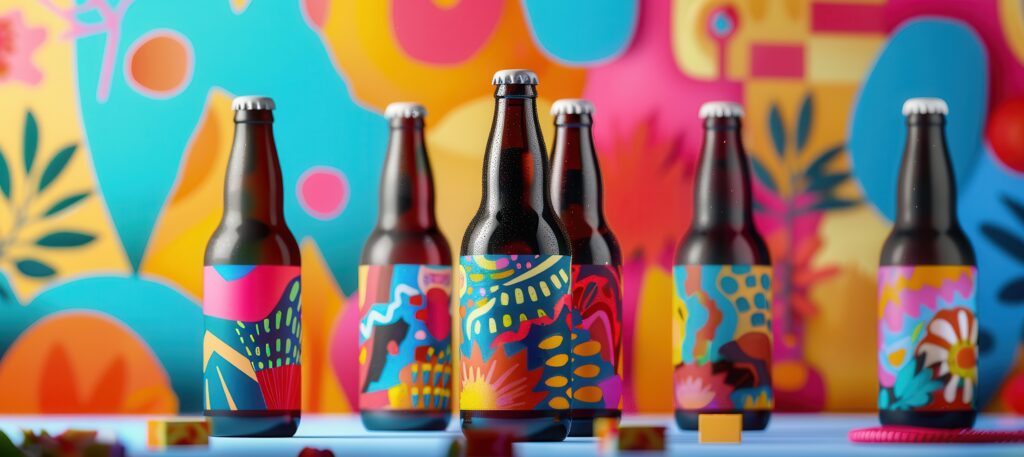
In today’s competitive craft beverage market, packaging involves much more than just putting your beer or spirits into a functional container. Packaging makes a powerful statement about your brand’s story, values and commitment to the planet.
Modern craft beverage enthusiasts are drawn to products that evoke an emotional response and that stand out among the crowd in unique ways. Consumers have also become increasingly interested in supporting brands’ sustainability endeavors centered on recyclable and biodegradable materials in a circular economy.
To learn more about current trends in craft beverage packaging, Beverage Master Magazine connected with NEENAH, a world-class manufacturer of premium printing, packaging, label and specialty papers.
Packaging & Consumer Perceptions
Jennifer Dietz, NEENAH’s Label & Folding Board senior product manager, explained to Beverage Master Magazine how label design can be a powerful tool in shaping consumer perception. Headquartered near Atlanta, Georgia and with multiple U.S.-based manufacturing facilities, NEENAH’s offerings include label, box wrap, folding board and more. The company focuses on elevating brands through specialty and custom packaging substrates that demonstrate their uniqueness and communicate their brand ethos.
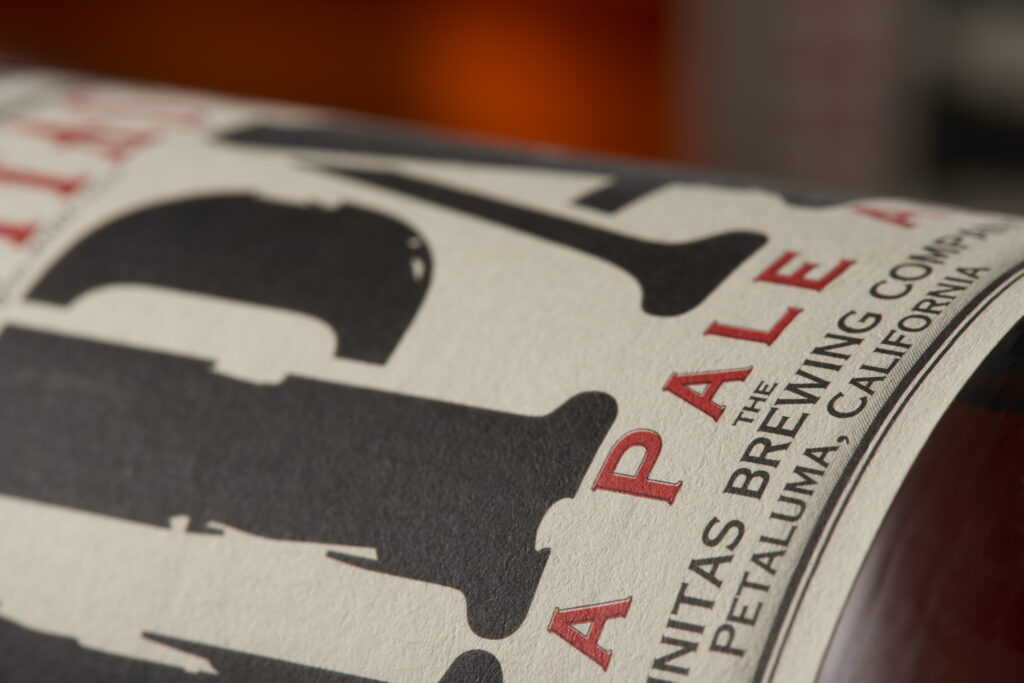
“Color and texture can instantly communicate brand values such as authenticity, luxury, sustainability or innovation,” Dietz said. “Uncoated labels, for example, offer a tactile, natural feel that conveys uniqueness and craft, helping products stand out from mass-produced alternatives.”
“Since most labels are a shade of white, introducing color or texture can dramatically enhance shelf appeal,” she continued. “NEENAH Label Papers can be manufactured in a variety of colors and textures, while offering consistent quality across production runs, ensuring brand integrity is maintained from run to run.”
Dietz also explained how secondary packaging plays a significant role in elevating brand presence.
“For spirits and premium beverages, a well-designed box can create strong shelf impact, signal quality and make the product instantly giftable,” she said. “Uncoated papers in rich, deep tones, can evoke sophistication and intrigue while offering a premium end-product with no white edges. NEENAH® Folding Board offers a collection of 13 in-stock colors, including boards made from 100% post-consumer waste and pearlized finishes, as well as other options.”
NEENAH’s Craft Beverage Label Options
NEENAH offers three label products, all of which are made to order and customizable.
Dietz said that NEENAH’s ESTATE Label® is the market-leading trusted brand for uncoated wet-strength labels. It is most often used for wine and is manufactured in 60-pound text weight. The standard offering includes an expansive selection of 11 colors and five distinctive finishes.
Secondly, there’s the BELLA® Label, which is a lighter-weight label but also manufactured with wet strength, with a 47-pound text weight. This label provides an authentic, hand-crafted look that is perfect for craft beverages.
Finally, NEENAH’s CLASSIC® Label is a premium label without wet strength, making it ideal for red wines, spirits and jar labels. This label offers a crisp, clean and elegantly uncoated solution for a variety of label and packaging needs.
Dietz elaborated on the concept of wet strength for labels and its importance for label stock. She said wet strength is a label’s ability to maintain its integrity and adhesion in moist environments such as refrigerators, coolers or ice buckets.
“It is a critical performance feature for products like beer and white wine, which are frequently exposed to condensation or submerged in ice,” Dietz said. “While wet strength doesn’t alter the visual appearance of the label, it plays a vital role in the manufacturing process. Specialized additives are used to ensure the label resists tearing, wrinkling, or detaching when wet, preserving both brand presentation and product durability.”
She also shared that NEENAH’s uncoated label stocks are engineered to perform just as well as the coated alternatives.
“NEENAH Label Papers offer exceptional dimensional stability, ensuring precise registration for intricate designs,” Dietz said. “Uncoated papers also excel with embellishments like foil stamping and embossing, which tend to pop more vividly against their uncoated surface. Additionally, they work seamlessly with die-cutting equipment, making them a versatile and reliable choice for high-impact label applications.”
Sustainability in Craft Beverage Packaging
Like many other brands serving the craft beverage market, NEENAH offers recycled and alternative fiber products to its customers as part of its focus on reducing its environmental footprint. Beyond just labels, there are various ways that breweries and distilleries can incorporate sustainability into their product packaging.
Craft beverage packaging must be sturdy enough to protect the products during transport and visually appealing on store shelves. However, there is also an industry push to address concerns around single-use items that require extensive resources to produce and often end up in landfills. Options like compostable six-pack rings and fiber-based carriers provide beverage producers with more choices beyond traditional plastic, allowing them to minimize pollution risks without compromising strength or aesthetics.
Planet-Friendly Packaging Options to Consider
There are biodegradable packaging materials available for the craft beverage industry, including plant-based plastics, molded pulp and compostable films. Beverage producers can also opt for packaging materials made from recycled materials to reduce their reliance on raw resources. Examples include aluminum cans with a high recycled content, recycled glass bottles and corrugated cardboard carriers.
In addition to choosing packaging materials made from recycled materials, you can take your commitment one step further and prioritize packaging that can be recycled after use. Many municipal recycling systems accept aluminum cans, clear glass, paperboard cartons and certain types of plastic. It’s also helpful to label your beverage packaging with straightforward recycling instructions so that consumers instantly understand how to recycle it without confusion.
An emerging concept to grasp is the closed-loop recycling model, in which packaging is designed with a mindfulness of circularity. Refillable glass programs and returnable aluminum growlers are examples of collection initiatives that keep packaging materials in continuous use, rather than discarding them. Technology is also aiding this effort with QR codes and smart labels that track the lifecycle of packages and add a sense of accountability and transparency to consumer exchanges.
Not only is eco-conscious packaging a practical and responsible choice, but it’s also a marketing opportunity. By advertising planet-friendly practices on your beverage labels and website, you share your sustainability values with the public. These subtle stories will resonate with many of today’s beer and spirit connoisseurs, helping them to connect with your brand on a deeper level.
Looking Ahead to the Future of Craft Beverage Packaging
This is an exciting time in a new era of craft beverage packaging innovation, particularly as technologies continue to improve and companies strike an optimal balance between functionality and environmental responsibility. Packaging has become a platform for brand storytelling and customer engagement. Meanwhile, researchers have been exploring the potential of next-generation biodegradable materials that leave behind little or no waste.
There are also specific design trends emerging in the craft beverage packaging industry, such as minimalist labels, lightweight bottles and reduced ink usage. These shifts represent further movement toward eco-friendly packaging choices and connecting with consumers who would like their purchases to align with their personal values.
Meanwhile, we expect that some policy and regulatory changes will influence craft beverage packaging in the years ahead. Some state and federal governments have already introduced or are considering stricter requirements on single-use plastics. As a result, craft beverage producers may face heightened obligations and responsibilities to reduce their landfill waste, while also being incentivized to use recycled materials during production. By anticipating and adapting to these regulatory changes early on, beverage makers can avoid compliance headaches and position themselves as industry leaders in an increasingly competitive and mindful marketplace.
If your beverage brand is looking for more from your packaging than just safely transporting products from one place to another, innovative companies like NEENAH can help. Your packaging choices will undoubtedly influence your customers’ perception of your brand and help people understand why making beverages is your passion. Crafting a delicious beverage is just part of the story, as packaging it in a memorable and responsible way ensures that your company will have a positive and lasting impact.
Why Is the Craft Beverage Industry Competitively Restrained?
By Ethan E. Litwin
Since the 1980s, the U.S. craft beverage industry has expanded dramatically. Breweries grew from fewer than 100 in the early 1980s to nearly 10,000 today. The U.S. spirits industry shows a similar trajectory, rising from under 100 licensed distilleries in the 1980s to over 3,000 today. The U.S. wine industry experienced earlier momentum after the 1976 “Judgment of Paris,” yet still only had about 2,500 vineyards by the early 1980s. That number has since grown to nearly 12,000.
Despite this remarkable expansion, most craft producers remain small. Craft brewers typically produce under 7,500 barrels annually, while craft distilleries typically produce fewer than 250,000 proof gallons per year. These small producers face competition from dominant incumbents: two brewers control about 65% of the market, with output exceeding 6 million barrels each, while large distilleries produce more than 8 million proof gallons annually. U.S. vintners also generally remain small, producing fewer than 60,000 wine gallons annually, while their largest competitors produce more than 15 million wine gallons.
One of the most consistent challenges for small-scale producers has been distribution and market access. Simply put, making a high-quality beer, wine, or spirit is only half the battle—getting it into the hands of consumers via restaurants, bars, or retail shelves is often far more difficult. This article outlines some of the major challenges faced by small producers and suggests some avenues on how the system may be changed, or challenged.
Regulatory Barriers to Competition
The Legacy of Prohibition: The largest obstacle for small producers is the U.S. alcohol distribution system itself. After Prohibition ended in 1933, most states adopted a “three-tier system,” which separates producers (tier one), distributors/wholesalers (tier two), and retailers (tier three). Under this structure, producers are generally prohibited from selling directly to retailers or consumers, except under limited circumstances such as on-site taprooms, tasting rooms, or, more recently, direct-to-consumer shipments in some states.
The three-tier system artificially enhances distributors’ importance—distributors often control key customer relationships, point-of-sale marketing, and product placement decisions. The architects of the three-tier system envisioned a competitive marketplace where distributors would compete for producers’ business on the price, scope and quality of their services. State franchise laws, however, significantly restrain that competition by restricting the ability of producers (generally brewers, but often in other sectors as well) to switch distributors without proving “good cause,” a dauntingly expensive and time-consuming endeavor. These laws inevitably created a misalignment of incentives, reducing distributors’ investment in marketing new or smaller brands—the very craft producers who generally lack the ability to terminate their distributors for cause.
Most states also impose price controls on distributors in the form of “post-and-hold” rules, which require distributors to “post” their prices with state authorities and then “hold” those prices constant for a period of time. During the hold period (typically 30-60 days), producers are prohibited from engaging in any form of price competition. Some states all for limited “meet-but-not-beat” competition, which allows for price-matching, but continues to prohibit distributors from undercutting rivals’ prices. Although most states do not directly control prices set by distributors, some states have adopted uniform pricing rules, prohibiting distributors engaging in price discrimination downstream by charging different prices for the same product to different retail outlets.
While these rules are clearly anti-consumer in effect and in intent. Prohibition may have ended in 1933, but concerns about alcohol remained and states actively sought to manipulate market prices to discourage the consumption of alcohol. It is hard to think of another American industry where regulations are specifically designed to restrain price competition and increase consumer costs.
Antitrust Enforcement Failures
The Problems Caused By Distributor Consolidation:
Ironically, the three-tier system was intended to prevent market foreclosure by a dominant, vertically integrated producer, while state franchise laws were intended to protect distributors from the whims of powerful producers. But as the distribution sector has consolidated, the few remaining distributors have tended to prioritize brands with high volume, national recognition, and strong marketing budgets. A small craft brewery or distillery will struggle to get attention from distributors compared to giants like Anheuser-Busch (ABI) or Diageo.
Another barrier is the consolidation of the wholesale industry. Over the past several decades, wine and spirits distribution has become dominated by Southern Glazer, which operates in 44 states, and Republic National Distributing Company (RNDC), which operates in 35 states. The next largest competitor, Breakthru Beverage, operates in only 13 states. Southern Glazer and RNDC command national networks and wield enormous leverage with retailers. The situation is no better in the beer segment, where independent distributors are typically affiliated with either ABI or Molson Coors. ABI, however, is now vertically integrated in many key states and its wholly-owned distributors do not carry third-party brands other than a handful of very small local brands. Accordingly, in markets where ABI’s wholly-owned distributor is present, craft brewers are forced to deal with a monopolist—the independent affiliated with Molson Coors—to gain market access, with predicable results.
For small producers, signing with a distributor is often seen as a milestone—but in practice, many end up buried in vast portfolios. A small distillery’s gin may compete for the same distributor’s attention against dozens of other gins, including global brands with multimillion-dollar marketing budgets. Without aggressive representation, small brands get little visibility, and sales stagnate.
Competition for Shelf and Tap Space
Even if a distributor agrees to carry a small producer’s product, there remains the issue of limited space at the retail or restaurant level. Supermarkets and liquor stores typically allocate shelf space to brands with strong consumer demand or to those offering better promotional support. Large producers can incentivize retailers with discounts, rebates, and marketing dollars, effectively buying visibility. Small producers rarely have the financial muscle to compete. Without marketing support, distributors and retailers often deprioritize smaller brands. Even when products make it onto shelves, they may sit unnoticed among hundreds of competing SKUs. Shelf placement matters enormously—a small brewery’s seasonal IPA stuck on the bottom row may never be seen by casual shoppers. For restaurants and bars, education is key. Servers and bartenders are more likely to recommend a product they know. Yet small producers often lack the resources to run training programs, provide free samples, or sponsor events at scale.
Similarly, bars and restaurants often have limited tap handles, wine lists, or cocktail menus. A bar might have 20 taps, but a distributor may push them to feature a national brand lager and IPA, squeezing out smaller craft options. Wineries face the same issue with wine lists: Many restaurants lean toward recognizable labels that reassure consumers, leaving little room for lesser-known vineyards.
Consolidation in Adjacent Markets Threatens the Viability of Craft Producers
Distribution challenges are compounded by the financial realities of small production. Craft breweries, distilleries, and vineyards typically operate with slim margins. The costs of raw materials, labor, equipment, compliance, and packaging leave little room for the kinds of marketing and promotional spending that larger competitors deploy.
For example, the cost of aluminum beverage cans has risen sharply in recent years due to a combination of industry consolidation and trade policy. The aluminum can market has become increasingly concentrated, with just three suppliers—Ball, Crown Holdings, and Ardagh— controlling more than 80% of U.S. can production. On the raw material side, a similar pattern has emerged: Only a handful of rolling mills, led by Novelis and Constellium, dominate domestic aluminum sheet supply. In these highly concentrated markets, buyers have limited ability to negotiate price as demand for cans has surged and supply bottlenecks have emerged. At the same time, the Section 232 tariffs first imposed in 2018 added a 10% surcharge on imported aluminum, effectively lifting domestic prices as well since U.S. producers peg contracts to tariff-inclusive benchmarks. This year, the situation has become worse as tariffs have progressively increased and currently stand at 50%. Together, these dynamics have pushed can costs up by double digits over the past five years, making packaging one of the fastest-growing expenses for brewers, distillers, and vintners. While large producers with established brand presence can pass on these costs to consumers, smaller producers seeking to gain traction in a crowded marketplace may be forced to absorb a greater percentage of these costs.
Solutions
There is no single solution to the competitive problems in the beverage industry. First, wholesale changes to the regulatory structure governing the distribution of alcoholic beverages. In addition to permitting self-distribution and direct-to-retail sales, the rules governing distribution should be amended to prohibit the sort of exclusive contracts that tie retailers and bars to dominant brands. Pay to play schemes, such as tap handle exclusivity and shelf space payments should be broadly prohibited. Direct to consumer sales, widely practiced in the wine industry, should be expanded to include craft beer and spirits along the lines of recent legislative initiatives adopted in New York and elsewhere. A federal law enshrining direct of retail and direct to consumer sales would also reduce the compliance headaches created by differing regulations at the state level.
Regulatory reform, however, may not prove to be sufficient to create a truly competitive marketplace where craft producers can flourish. Even without changes to regulations, anticompetitive practices can be challenged under the antitrust laws by federal and state enforcers, as well as by private companies acting alone or as part of a class action. There are several potential grounds for antitrust enforcement. Exclusive dealing contracts that favor large producers over craft competitors (e.g., denying such producers access to shelf space, taps, or distribution) can be challenged as an illegal market foreclosure. To the extent that large producers and distributors have entered into agreements that result in the exclusion of craft competitors at the distribution or retail levels, those agreements can be challenged as illegal group boycotts. Tap handle exclusivity, shelf space payments and other pay to play schemes can similarly be challenged under the antitrust laws without any further changes to regulations. Even corporate transactions, such as the acquisition of leading craft producers by large established producers, can be challenged under the antitrust laws if the effect of those acquisitions will be to substantially foreclose distribution channels for competing craft producers, forcing them to use smaller, less efficient distributors who are typically unable to secure comparable placement at retail stores—all while increasing the costs of such distribution. Finally, antitrust enforcement in packaging and logistics markets can also help to reduce costs that are disproportionately borne by craft producers.
These issues are not hypothetical. Following its investigation, the Federal Trade Commission, which typically takes the lead on antitrust issues affecting the spirits industry, sued Southern Glazer at the end of last year for price discrimination, alleging that the distributor was offering preferential discounts to large chains making competition from small independent retailers more difficult. For its part, the Department of Justice, has uncovered evidence that large brewers use a combination of anticompetitive practices to obtain exclusive distribution, which inhibits the ability of craft brewers to expand sales. These efforts are important, but more work must be done in order to level the playing field for craft producers.
Conclusion
Marc Farrell, the founder and CEO of Ten to One Rum, is one of the lucky ones. Through a combination of passion and business savvy, his brand is breaking through in a meaningful way. But Marc increasingly feels like it is becoming impossible for new brands to get to market. The system, he notes, is set up to favor large incumbents. “The U.S.,” Marc observes, “is the most forward thinking business environment in the world. But spirits is an outlier.” Beholden to antiquated regulations and largely denied direct access to retail customers and consumers, craft brands are “flying blind.” If this remarkably innovative industry is to survive long-term, systemic change is needed.
Smart financial moves for beverage businesses to consider before the end of the year.
By Raj Tulshan, Founder & Managing Partner, Loan Mantra
In today’s economy it might seem like the best action is to remain still. To take little or no financial action at all. But this can be detrimental to your business. Even though inflation and interest rates are high, there are still smart financial moves that your beverage business can make now for continued success.
Interestingly, a Harvard Business Review article studied the specific actions of companies during recessionary periods.1 They measured the specific actions companies made during this time and the outcomes. It was found that a certain combination of decisions that company leaders made during this time made them more profitable coming out of and after the recession. The article states, “These companies acted progressively by deploying the right defensive and offensive moves to reduce costs selectively by focusing more on operational efficiency than their rivals do, even as they invested relatively comprehensively in the future by spending on marketing, R&D and new assets.” It is also interesting to note that successful companies cut operational waste versus people.
With these factors in mind, here are some financial moves to consider:
Capital Forecasting & Expenditures
Now is the time to forecast capital, credit and cash flow needed for the next 18 months. Consider new product development, seasonal and holiday spikes and shore up any money you will need. Consider USDA Value-Added Producer Grants (VAPG) for breweries/distilleries and state-level agribusiness/craft beverage incentives.2 Lock in long-term financing now while money and loans are readily available. Fintech platforms like those at loanmantra.com allow you to compare multiple lenders and access capital faster.
If you need new equipment the tax incentive, or bonus depreciation rate, is better this year than in 2026. In 2026, the rate is set to decrease to 20%, before being eliminated in 2027. If you plan to make large capital expenditures, consider accelerating them to take advantage of the more favorable depreciation schedule.
Partnerships & Growth
With many businesses struggling, establishing a partnership or acquiring another company might makes sense. As companies are forced to close, their customers will be looking for alternatives. Surprisingly, now is a great time to buy commercial real estate. Commercial real estate values are shifting where some markets are offering bargains for businesses ready to buy or lease. There may be less competition for prime locations. Less buyers also means that you have more negotiating power. And although interest rates can go down, you can always refinance the property.
Consumer Trends & Experiential Marketing
Identify which of the most current consumer trends apply to your customer base and market based on that. According to current reports, what appeals to consumers is community-based localism and having a unique experience with a brand. An example of promoting this could be a campaign like, “Drink Local, Support Local Farms.” Or tell a farm-to-glass story that resonates with inflation-weary but community-focused buyers. Taprooms, tasting rooms, tours and events provide higher margins than wholesale. Use digital tools to build brand engagement like TikTok Reels to showcase behind the scenes brewing, mixing and bottling. Encourage User generated content of customers drinking your brand with a hashtag that you share on social media channels.
Operations & Expense Management
Secure contracts for supply and pricing of ingredients early: hops, malt, fruit, glass can be volatile. Partner locally when and if possible. Aluminum can shortages are easing—explore canning over glass where margins allow. Eco-friendly packaging wins grants + consumer loyalty. Use part-time/seasonal labor during peak events. Upskill staff to cover multiple roles (bartender + tour guide).
Sales & Distribution
New distribution channels are only limited by your imagination. Test the places you think would be ideal for your products’ expansion. Here are some places to start: retailers, grocery stores, specialty shops, farmers markets, events management firms and catering companies. Another alternative is providing a beer truck for hire, keg with delivery (keg on legs) or other creative service. It’s about creating additional revenue streams. And as some states allow direct to consumer (DTC) sales, more opportunities arise.3 Beer of the month and subscription boxes offer consistent sources of income coming in.
Tech & Innovation
Look at the ways other industries are using AI and Data and learn from the good examples. For example, many businesses use AI for sales forecasting and seasonal product planning. Also look at different resources that are used by other craft brewers like: WriteCream Label Writer, BrewFather and BrewTarget, if you haven’t already explored these. And think outside the box. Many restaurants use QR codes for menus but how about using digital tip jars to streamline the taproom
experience? Or using customer relationship management systems to segment tasting room customers for targeted offers? And many brewers use sustainable business practices in the manufacturing process. Have you considered looking at grants that might apply to green technology that saves water, and energy?
Navigating the financial landscape of 2025 requires strategic planning and a keen eye on both current trends and future opportunities. For your beverage business, this means actively engaging in capital forecasting, taking advantage of tax incentives and exploring partnerships that can drive growth. By focusing on consumer trends, such as the demand for local and unique experiences and optimizing operations with eco-friendly practices, you can position your business for success despite economic challenges.
Leveraging new sales and distribution channels, including direct-to-consumer options and embracing tech and innovation can open additional revenue streams and improve efficiency. As you implement Remember that the key to thriving in a fluctuating economy is adaptability and a proactive approach to seizing opportunities as they arise.
By considering these financial moves, your beverage business can not only weather the economic uncertainties of 2025 but also emerge stronger and more competitive in the market. To contact the author, visitloanmantra.com or connect athttps://www.linkedin.com/in/tulshan/