Fall & Winter Drink Trends to Pour Over this Season

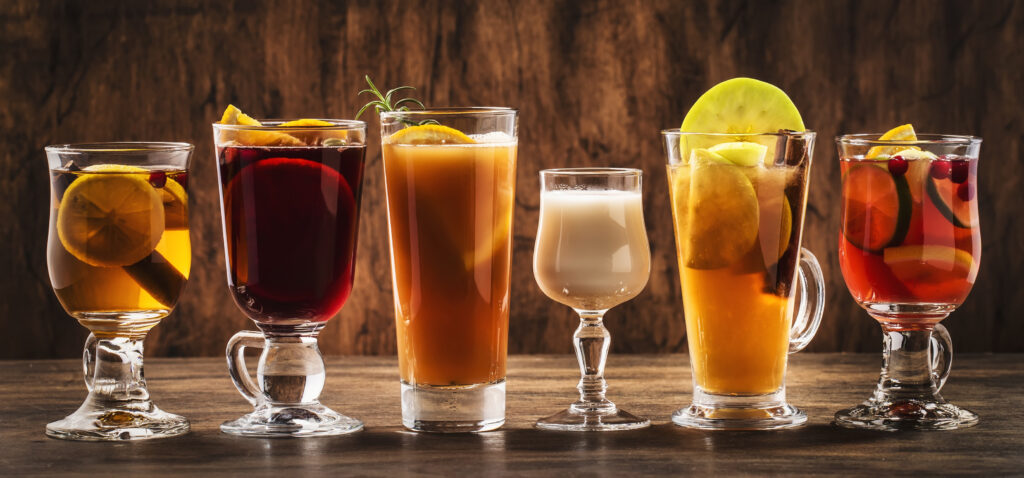
various sizes of glasses containing different fall colors of drinks

By Molly Cerreta Smith

Late last year, the National Restaurant Association (NRA) made its predictions for 2025’s top alcoholic beverage trends. They hit the nail on the head with “90s martinis,” particularly the espresso martini, which gained steam in 2024 and blew up in 2025, and also named hyper-local beer and wine, creative spritzes, flights, and innovative old fashioneds among its What’s Hot list for 2025.

  Early on, the organization also predicted no- and low-alcohol options for cocktails, beers and wine, not as “non-alcoholic” choices but rather when presented with the option of “with or without alcohol.” By about mid-year, the NRA added watermelon flavor to its list of standouts for 2025, noting the introduction of London Liqueur Co.’s new watermelon liqueur, which was a highlight of the National Restaurant Association’s Show 2025 in May.

  Dirty sodas and nostalgic/retro flavors for both soda and cocktails started to make their mark—with big soda brands bringing back classics and adding a variety of experiential flavors to their lineups. But now that fall and winter are on the horizon, what are consumers looking for when it comes to filling up their glass? Tait Ludwick, beverage director of Keeler Hospitality Group based in Arizona, shares some insight.

  “Savory baking spices and bold, robust flavors are definitely at the forefront,” he says, adding, “I also believe Amari will play a leading role this season. Across the country, more bars are leaning into Amaro as a way to create that deep, comforting ‘winter in a glass’ experience.”

  While keeping up with the trends and the seasons is a fun way to keep customers excited and engaged when it comes to the cocktail menu, some tried-and-true flavors are always a hit.

  For example, Ludwick says, “I always return to a few favorites that define my style. Chocolate is at the top of that list—I wish I saw it featured more often on menus. Beyond that, I gravitate toward baking spices, brown sugar, delicate fruits and spice-driven notes.”

  “This season, I’m especially excited to work with teas, particularly Asian varieties,” he says. “Their nutty, roasted qualities bring a unique depth that pairs beautifully with winter cocktails.” Asian flavors are definitely a hot trend for 2025 across the board in food and beverage. Many of the year’s popular cocktails have taken inspiration from boba tea. In addition, offering Asian teas on a beverage menu is an easy way to incorporate the aforementioned “alcoholic or non-alcoholic” option.

  While lychee has been a popular option for decades and continues to be, other Asian flavors with bold and spicy notes add more complexity to fall and winter beverages—including yuzu, ginger and baijiu. Think earthy mushroom martinis, miso-infused margaritas and Japanese highballs. Rather than sweet, these trending flavors give cocktails a savory and spicy kick that aligns well with fall and winter and complements seasonal dishes.

  When it comes to moving from summer cocktails to decidedly more fall and winter vibes, transitioning beverage menus is key to keeping customers engaged.  

  “For us, the transition feels very natural. After our first seasonal rollout, I noticed some guests still craving cocktails from the previous menu. That’s when I introduced Poppy’s Aces, a way to carry over favorites with a new seasonal twist,” says Ludwick. “We look closely at the styles our crowd gravitates toward and reinvent those with fresh, accessible flavors. For example, old fashioneds were extremely popular last year, so we transitioned into a Brown Butter Banana Old Fashioned. The rich, savory molasses notes balanced with fruity warmth gave guests that cozy, seasonal vibe, while still keeping the drink exciting and new.”

  Rather than entirely replacing a summer menu with a fall one, some transitional options can ensure customers still get a familiar version of a favorite beverage, but with a slightly seasonal twist. Doing so in small doses also ensures customers don’t feel as though they are missing their favorite beverage from a previous season.

  “We focus on developing our guests’ palates over time. We often begin with approachable flavors that appeal to snowbirds and casual drinkers, but each time they return, we introduce something new and slightly more adventurous,” Ludwick says. “It’s very much like telling a story—each visit reveals a new chapter, keeping guests curious and engaged.”

  Naturally, curiosity is a great way to entice guests and introduce them to new and seasonal flavors. Another fun way to bring the fall and winter season to life through the cocktail menu is through themes. However, there are a few essential things to keep in mind, such as the location and overall theme of the establishment itself.

  Ludwick weighs in: “I love the idea of themed menus, but I approach them with flexibility. In Arizona, we don’t get the same dramatic winter weather, so some classic ‘cold weather’ themes don’t always resonate. Instead of locking into a theme, I prefer to showcase standout cocktails for each holiday—something that feels like the biggest gift under the Christmas tree waiting just for you. When the focus is on delivering the best-tasting drinks rather than fitting a theme, you create a more memorable experience and avoid limiting creativity.”

  Theme beverages tend to work well when aligned with a specific event, such as a pairing dinner with unique themed cocktails, for example. This is an excellent way to showcase the talent of both the kitchen and the bar staff, offer unique one-of-a-kind beverages, and gauge customers’ interest in these types of events, dishes and drinks for future experiences and menus.

  And while following the trends and presenting themed beverages for a specific season, holiday or series, such as football, can be fun and innovative ways to bring customers back and appeal to different demographics, class and signature sips should never be counted out. These tried-and-true beverages should be the base of every establishment’s cocktail program and can be tailored to suit the theme of the establishment itself.

“Classics are non-negotiable—they are timeless, universally recognized and must be made true to form. When I see a Clover Club, an Old Fashioned or a Whiskey Sour, I know exactly what I should be served,” Ludwick says. “Signature cocktails, on the other hand, are about showcasing a bar’s identity. They’re the ‘house specials,’ crafted to reflect the restaurant’s unique personality. Both are essential: classics ground the menu in tradition, while signatures bring innovation and individuality.”

  When developing fall and winter cocktail menus, keep variety, seasonal flavors, holidays, events and trends in mind. While these are keen ways to keep customers coming back for more, it’s also a fun way to boost sales and attract new customers.

  In doing so, keeping true to the nature of the establishment while also offering a non-revolving menu of classic and signature beverages can ensure that customers who prefer the familiar will always feel welcome, regardless of the new sips of the season.

Talking Cedar

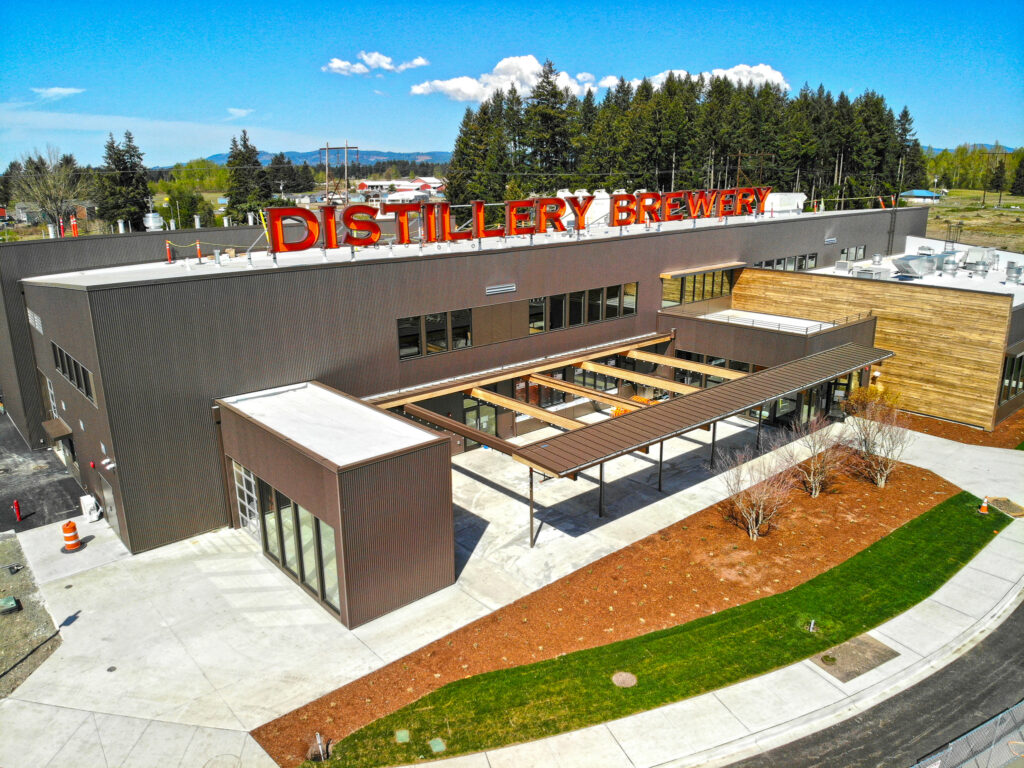
the outside of a distillery and brewery arial shot

By Becky Garrison

When the Confederated Tribes of the Chehalis Reservation (also known as the “People of the Sands”) was established at the confluence of the Chehalis and Black Rivers in Southwest Washington in 1864, they were subject to the Indian Trade and Intercourse Act signed by President Andrew Jackson in 1834 that banned distilleries on tribal lands. After Chehalis tribal leaders selected their site on their property for their future distillery, designed the facility, and submitted plans to the Bureau of Indian Affairs (BIA) in Washington, D.C in 2017, they received word from the BIA that their plan was illegal. If they chose to continue with their plans to distill spirits on their lands, the BIA could level a $1,000 fine, as well as send agents to smash their stills Prohibition style.

  At the tribe’s urging, their local member of Congress Rep. Jaime Herrera Beutler (R-WA) sponsored H.R.5317, a bill that repeals this 1834 law. After extensive lobbying by the Chehalis tribal leaders, this bill received bipartisan support from both houses of Congress. After this bill was passed in 2018, the Chehalis Tribe along with the other 573 Indian tribes legally recognized by the BIA of the United States could legally distill spirits on their land.

  The name “Talking Cedar” profoundly reflects the tribe’s identity. The word “Talking” evokes the rich oral history of the Chehalis people, whereby their stories are passed down through the generations. Cedar trees have represented important symbols in the Northwest for generations. As each ring represents a year of growth, these trees tell the story of what they’ve seen and witnessed across the generations. Also, these trees provided the tribe with material for key daily items, as well as symbolizing the tribe’s connection to their environment.

  According to Harry Pickernell Sr., Chehalis Enterprises’ Chief Operating Officer, they began with great partnerships that didn’t quite work out. “So, we learned how to do distilling and brewing along with getting a great team together,” he reflects. In his estimation, their patience and hard work paid off with rave reviews from their guests and awards for their products.

A State-of-the-Art Distillery & Brewery

  Their 35,000-square-foot distillery, brewery, and restaurant is situated on the tribe’s 5,420-acre reservation. This space includes a15,000 sq. ft., state-of-the-art production facility located on the Chehalis Tribal Reservation. Their distillery featured 31,000+ liter fermentation tanks, custom Italian pot stills, a 25-ft continuous still that’s the largest west of the Mississippi, and 90-liter hillbilly stills with the capability to produce 10,000 barrels of whiskey per year and nearly 1.5 million gallons of other spirits. Also, they are home to a 60 BBL brewhouse, which gives them the capacity to produce nearly 1,860 gallons of beer in a single batch. This venture employs over 80 people including tribal members.

  The brewery and distillery sit behind their farm-to-fork restaurant that includes two bars and a retail shop where their products are available for sale. Currently, their spirits are available for retail sale in Washington State, Oregon, and Idaho with their beers available in Washington State with plans to expand their distribution.

  As part of their commitment to the land, their brewing and distilling processes start with pristine water from their artesian well with a water treatment facility on-site to minimize their environmental impact. In addition, they collaborate with local farmers in developing the best Pacific Northwest wheat, barley, and other grains for use in their beers and spirits. Also, they forage botanicals like fir tips and yarrow used in their gin on their property, as well as use 100% recycled glass for their gin bottles.

  Helmed by Master Distiller and Head Brewer Ryan Myhre, formerly of Big Time Beer Company (Seattle, WA), Talking Cedar brews a range of beers such as their featured brew Chehalis Light, a classic American Light Lager. Other beers include a Raspberry Blonde, a Juicy IPA, a Pacific Northwest IPA, and a Pilsner. After mashing and fermenting, their spent grain is used by local farmers as cattle feed.

  At their distillery, they produce over ten spirits including their award-winning Kayak gin, the first legally distilled spirit made on Native American land. This spirit made from mountain water and foraged botanicals captures the Pacific Northwest natural flavors with a bold blend of Douglas Fir and Juniper is tempered with Mountain Yarrow and Nootka Rose.

  Their forthcoming vodka line will be called Tail Feather which will be produced with locally grown, sustainably produced, and sourced wheat from nearby Boisfort Valley. In Myhre’s estimation, as wheat vodka is not as neutral as corn vodka, it can be a bit challenge to make vodka using white. “After many trials and errors, we’ve found a way to produce a very high-quality wheat vodka on their column still,” he reflects.

  Also, they produce a series of hand-crafted, small-batch flavored whiskeys. Cask-finished brandies, and other specialty spirits that are infused with natural ingredients. For example, their Freezer Jam is made with real berries, their Ginger Drop uses real ginger, honey, and lemon, their Sugar Sand is sweetened with natural maple syrup, and their Cabin Coffee contains real espresso and natural maple syrup.

Talking Cedar’s Whiskey Program

  Under the direction of Matt Hofmann, co-founder of Westland Distillery and current General Manager of Talking Cedar, they launched a comprehensive whiskey program. During his 13-year tenure at Westland, Hoffmann played an instrumental role in the creation of the American Single Malt category, which was formalized by the TTB on December 18, 2024.

  His accolades include being named Whisky Magazine Craft producer of the year, Forbes 30 under 30, Imbibe person to watch, and StarChefs Seattle Rising star. Also, the whiskeys he produced at Westland were awarded as one of the top twenty whiskeys in the world in 2023 and 2024.

  Their single malt whiskeys done in the Scottish style originate in the brew house where they brew their wort instead of a traditional wash. Also, they have a separator that gives them the capacity to do grain distillations, which they employ for any whiskeys made with unmalted grains.

  Their current whiskeys include Blenders, a collaboration done with Westland Distillery that consists of a blend of eight Westland barrels and eight Talking Cedar barrels aged between two and nine years in a mix of 1st- and 2nd-fill charred American oak casks. Future plans include adding rye whiskey to their portfolio, as well as continuing to experiment with other Pacific Northwest grains.

Contract Distilling and Brand Partnerships

  In addition to producing their own beers and spirits, Talking Center also provides contract distillation for select industry partners. For example, Seattle-based Copperworks Distilling Company used to brew wort for their American Single Malt whiskeys. Among their brewing and distilling partnerships include work with Livewire’s RTD cocktails, Bird Creek’s Single Malt whiskey, Pacific Northwest Beer, Packwood Brewing Co., Douglas Lagered Beer, and Three Magnet’s Self-Care non-alcoholic beer.

  Hoffman notes they won’t be at capacity for quite some time. “I’m impressed by the scale of ambition and equipment at Talking Cedar and feel it has the potential to become one of the United States’ foremost distilleries,” he opines. 

Connecting with the Community

  Producing award-winning products, the tribe also strives to do good with their products as all profits from their beers and spirits go towards humanitarian and cultural preservation initiatives on the Chehalis reservation. These programs include teaching their ancestral Chehalis language to the younger generation, as well as supporting initiatives to revive Chehalis leatherworking and weaving.

  Their location in Rochester, WA is situated halfway between Seattle, Washington, and Portland, Oregon. This proximity to two urban cities enables them to market themselves as a destination hub easily accessible for a day trip or a weekend getaway. Guests can stay at the tribe’s 170-room Eagles Landing hotel or the 400-room family-friendly resort and waterpark called Great Wolf Lodge while enjoying the tribe’s multiple restaurants and an adults-only casino.

Make It Easy for Buyers to Say Yes

By Jake Ahles, Morel Creative

More shelf space. Faster distributor buy-in. More confident fundraising conversations. Every brand of craft beverage wants these things. In today’s saturated craft beverage market, it’s no longer enough to have an excellent product. The brands that grow are the ones that make it easy for buyers, distributors, and consumers to understand what makes them different—and why they deserve space on the shelf or a spot on the menu. Clarity sells. And if you’re not intentional about it, confusion will cost you.

The Clarity Gap

  We see it all the time. A founder has poured years into perfecting their distilling process or refining their recipes. The branding looks good, the liquid tastes great, and the team is passionate. But when it’s time to sell, the story falls apart. Here’s what usually happens:

•     Sell sheets are too busy – buyers can’t find the point.

•     Pitch decks meander too much history, not enough differentiation.

•     Reps are telling different versions of the brand story in different markets.

•     Digital presence confuses more than it converts.

The result? Buyers pass. Distributors deprioritize you. Investors hesitate. All while a competitor with half the craft—but a clearer story—wins the shelf.

What Buyers & Investors Really Want

Let’s be clear: buyers and investors aren’t against you. They’re simply busy and looking for confidence. And confidence comes from clarity. Here are the unspoken questions they’re asking:

Distributors & Trade Buyers

•     Can I sell this easily?

•     What makes this different from what’s already here?

•     Will my staff be able to explain it in 15 seconds?

•     Will consumers understand it right away?

Investors

•    Is this brand positioned to scale?

•    Can the founder explain the brand in one sentence?

•    Does the story fit the market’s trajectory?

•    Will this resonate with future buyers or acquirers?

  If your materials don’t answer these clearly and consistently, you’re creating friction. And friction kills deals.

The 3 Rules of Brand Clarity

Clarity doesn’t mean oversimplifying your story. It means structuring it so it can be told—and retold—consistently across every channel. Think of it as a sales system, not a marketing veneer.

Here are three rules to get started

1.  Master Your One-Liner:  Your story should be explainable in one sentence. The headline on your sell sheet or deck should say exactly what you do, who it’s for, and why it’s different. Not: “An artisanal experience inspired by heritage.” Better: “Botanical spirits designed for modern mixologists—zero sugar, crafted for cocktails.” If a rep, bartender, or buyer can’t repeat your one-liner, it’s too complicated.

2.  Align Your Tools:  Every tool – sell sheets, pitch decks, product videos, website copy—should tell the same story in the same language. Consistency builds confidence. Inconsistency creates doubt.

•     Keep sell sheets focused on differentiation and use cases.

•     Design pitch decks to answer: What is it? Why now? Who’s buying it? Why will it move units?

•     Use video to add emotion and memorability but keep it clear and repeatable.

3.  Build a Scalable System:  Your story shouldn’t live in the founder’s head. It should live in a repeatable system that empowers anyone—sales reps, distributors, ambassadors—to tell it confidently.

  That’s where a content ecosystem comes in: a centralized library of assets (one-liners, sheets, decks, videos, FAQs) that ensures clarity no matter who’s pitching. When the story is systemized, you can scale without losing the soul.

The Payoff of Clarity

  When your brand story is clear, here’s what happens:

More shelf space: Buyers say yes faster when they don’t have to work to understand you.

Stronger distributor confidence: Reps are more likely to push a brand that’s easy to champion.

Higher reorder velocity: Clear stories create repeatable sales momentum.

Better investor traction: Clarity signals professionalism and scalability.

Acquisition readines: Companies looking to acquire want a story that already resonates in the market.

  Clarity is more than a marketing tactic. It’s a growth strategy.

Final Thoughts: Make It Easy to Say Yes

  You’ve invested heavily in your craft. You’ve perfected your recipes, sourced the right ingredients, and built the right team. Now it’s time to invest in the clarity of your story.

  Because the truth is: the best product doesn’t always win. The clearest one does.

So, ask yourself:

•    Can my brand be explained in one sentence?

•    Do all my materials align with that story?

•    Could a distributor or investor repeat it confidently without me in the room?

  If the answer is no, you may be leaving growth on the table. Want to know how clear your brand really is?

  Take the free Market Leadership Scorecard and see where you stand.

Get Your Score Now!

Give a Salute to Veteran Owned Distilleries

military men in shaddow standing in front of an american flag

By Becky Garrison

Additionally, certain distilleries demonstrate their commitment by supporting individuals who have served in the military.  In honor of Veterans Day, this is a roundup of spirits produced by Pacific distillers with a military background. 

Heritage Distilling Company (Tumwater, WA)

  Drew and Sara Kellerman both served in the combat arms of the US Army. After they finished their service, they missed the joy of being part of a mission-focused, teamwork-oriented organization. The opportunity to start a small, craft distillery with friends seemed an effective way to engage in that same ethos.

  In 2011 they co-founded Heritage Distilling Company (HDC) with Justin and Jennifer Stiefel. When asked what skills the Kellermans brought from their military backgrounds to their work at Heritage, Drew emphasized, “Servant leadership, attention to detail, ‘mission-first, people-always’ focus, proactive communication, and the goal of bringing the highest degree of professionalism and ethics to the team.”

  HDC was located close to the home base of the 1st Special Forces Group (Airborne). Over a decade ago, one of their “Green Berets” approached them to see if HDC would make a fundraising whiskey for the non-profit organizations that support the 1st Special Forces (Airborne), warriors, veterans, and families. As Drew reflects, “We enthusiastically jumped at that opportunity.”

  After seven years of producing annual whiskey editions in support of this local, Army Special Operations unit and $150K raised for their non-profit organizations, HDC started receiving a blizzard of requests for fundraising whiskeys from other Army Special Operations units. This led to the creation of the Salute Series.

  They currently offer several Salute Series editions under Special Operations Salute and Service to America Salute, which have raised over $200K in donations.  These editions are as follows: 

US Army Special Operations Forces (ARSOF): Their original release, honors all US Army Special Operations Forces, with 10% of gross profits donated to a wide range of carefully vetted, non-profit benevolent organizations that directly support our ARSOF warriors, veterans, and their families.

War Dogs: Honoring and celebrating our US Military working dogs, known affectionately as “war dogs.” 10% of gross profits goes to carefully vetted, non-profit organizations that support our 4-legged warriors and their handlers, veterans, and families that adopt retired military working dogs.

De Oppresso Liber: honoring all our US Army Special Forces with an emphasis on the 1961 formal establishment of the “Green Beret” as the official headgear of the Army Special Forces soldiers by President John F Kennedy. $20 for each bottle sold goes to the Green Beret Foundation.

Law Dogs: Honoring and celebrating our Law Enforcement K-9s, with $10 from each bottle going to Project K-9 Hero, one of the nation’s leading non-profit organizations that support retired working dogs, and the families that adopt them.

  More Salute Series Editions are in the works with the goal of raising at least $1 million in non-profit donations via the Salute Series. In addition, Sara is working with the Permission to Start Dreaming (PTSD) Foundation as a guide for “PATHH,” a highly effective, intensive training program for veterans and first responders to build the skillsets to cope with the stresses of the trauma they experience in service.

4 Spirits Distillery (Corvallis, OR)

  Dawson Officer established 4 Spirits Distillery in 2011 with a mission to create superior craft spirits that honor all service members. As noted on their website, “they make each day an opportunity to honor, remember, and raise a glass.”

  The name 4 Spirits is dedicated to the four soldiers that Dawson served with in the Oregon National Guard 2 Battalion, 162 Infantry Brigade: Lt. Erik McCrae, Sgt. Justin Linden, Sgt. Justin Eyerly and Sgt. David Roustum. These four men lost their lives in 2004/2005 serving in Baghdad, Iraq.

  Starting in 2012, they began donating a portion of the sales from their 4 Spirits Bourbon Whiskey to support local programs that help veterans and their families with reintegration support. Also, they launched the first-ever combat veteran endowed scholarship at both Oregon State University and Western Oregon University, with a desire to expand this scholarship to other universities throughout the northwest.

  The 4 Spirits Foundation, a 501(c)(3) nonprofit launched in 2023, enables them to contribute all proceeds from their giving programs and large events to causes that provide education, mental, and social health support to veterans and their families.

Fireside Distillers (Eugene, OR)

  They opened shop in 2013 as Creshendo as a collaboration between Kyle Akin, a USMC veteran and civil engineer entrepreneur, and his former boss/mentor. Then in 2021, they purchased a small still and moved from being a processing company to a production company. While they still do their store brands Crescendo and Diamond Clear, according to Akin, they now have more creative passion by hand creating spirits from raw materials turning them into their Fireside Signature line.  

  While they always wanted the distinction of being a full-fledged distillery, they could not actualize this dream until the Oregon Distillers Guild got a bill passed through the Oregon State legislature that allowed them to finally start making money out of their tasting room.        

  In Akin’s estimation, his military experience gave him a sense of discipline and perseverance.” As he notes, “Starting, growing, and owning a distillery is a test of will. This is not an industry for the meek; If you plan to make a living as a distiller you must put in the hours and work hard. No excuses.  Being in the military definitely gave me a leg up, which is why we’ve survived these past 13 years.” 

  When asked what inspired the name Fireside Distillers, Akin asks, ” What do you think of when you think of being fireside? ” He answers “Companionship, friends, adventure, exploring, comfort.” These are the ideals he wanted to inspire with our brand.  With Fireside Distillers, they explore what they can do with their talents and then share them with people. “These are our desires out of life. To have friends, explore, and live an adventure,” Akin adds.

  They collaborate with veterans all the time whether they are spiritually encouraging each other or donating their distilled spirits when requested.  For example, the Marine Corps will have its 250th birthday in Fall 2025, which they will be doing in conjunction with the Soaring by the Sea Foundation, a marine-led non-profit organization flying World War II era planes. I will always take the time for my brother and sister veterans,” Akin proclaims.       

Old Soldier Distillery (Tacoma, WA)

  After retiring from the Army after 20 years of service Andrew Fairchok co-founded Old Soldier Distillery with his long-time friend Rodney Kaeding, who served for 27 years in the Air Force. After Kaeding retired, another long-time friend Joe Bennett, who served in the Air National Guard and had an active-duty parent, came on board. Bennett runs the books, oversees distillery operations, and offers tours of the tasting room filled with military memorabilia.

            Old Soldier makes award-winning, small-batch Bourbon and Whiskey as well as flavored expressions which are based on a traditional corn whiskey recipe that came from a great, great grandfather who fought during the Civil War for a sweet and smooth finish. 

Skunk Brothers Spirits (Stevenson, WA)

  Skunk Brothers Spirits was started by a family of disabled veterans who wanted to build on their grandfather’s prohibition-era moonshine recipe and bring small batch spirits to the Columbia Gorge and beyond.

  The name was inspired by their pops, who earned the nickname “Skunk” when he ran into a skunk during a snowstorm. While Skunk’s father was an illegal moonshiner in Oregon, the family decided to go legal with the family business. Their Moonshine Corn Whiskey is a classic take on an old American tradition that is made from 100% Washington-grown corn, mashed, fermented, and distilled in-house.

Starting a Distillery

By Stephen Tomori, Kindred Spirits Consulting

The process of starting a distillery is a daunting adventure that a number of entrepreneurs have undertaken in the past decade with mixed results. The process itself is comprised of navigating outdated and overly complicated government regulations, tariffs, fights with local authorities unfamiliar with the codes related to building out a distillery, and then trying to stake a claim in one of the fastest growing consumer markets.

  Some of these entrepreneurs have failed at their first attempt, due to improper planning and poor usage of available funds. Others are barely making ends meet, while burning the candle at both ends. Finally, you have the final category of those who planned well, executed their plan, and have reaped the rewards of success.  There are no guarantees when it comes to starting a business and a distillery is no different than any other venture. However, in order to have the best chances in making your business a success you will need to consider the Why, When, Where, and How before embarking on this journey.

Why am I Starting a Distillery?

  The reasons why you are starting a distillery affect your motivations and your willingness to stick out some tough times. If your goal is to make money, you can stop right here. If your goal is to make some truly great spirits and pursue a passion you might be on the right track.

  The world is changing and there have been some major shifts in the buying mentality of the younger generation. Consumers are picking up on the fact that the line between true craft spirits and commercialized mass-produced spirits is becoming blurred. The reason? A number of so-called craft distilleries are simply sourcing in commodity spirits and GNS flooding the market.

  The quality of the spirits you make are largely dictated by the quality of the raw materials you use. Since craft distilleries operate on a smaller scale and have more control over their day to day, there should be a noticeable difference between something made from scratch from the highest quality grains available and standard commodity grains. Your commitment to making something unique and truly great is what will help you maintain momentum despite the challenges you will face throughout the process.

  Your definition of success is also something you should consider before starting a distillery. Are your aspirations to be acquired by a major company? Do you dream of having a nationwide brand on shelves in stores and bars across the country? These dreams can be attained with a large budget for a buildout in a great space and by dedicating an enormous sum to marketing and branding. If your definition of success is a little smaller, doing something you love, something you can share with friends and family while covering your expenses and then some, you will be able to achieve those goals with less monetary investment.

When is the Best Time to Start a Distillery?

  We are currently in a craft distilling boom. There are now over 3,000 craft distilleries in the United States and that number continues to grow each year! Craft breweries and wineries are on the decline, but consumers are continuing to enjoy the great craft spirits being made. Now more than ever people have options when it comes to the sprits they are enjoying. Many are using this opportunity in the market to pivot from other careers to distilling. Some of the best distillers are from backgrounds in art, engineering, sciences, and other fields where they are able to apply the skills they have developed over the years to the art of distilling.

  Every industry has its highs and lows and there definitely was a major increase in consumption during the pandemic, that is not to say that people are not consuming now. The amount of alcohol consumed annually has steadily grown each year in the world and consumers are developing a taste for premium spirits. Over the past few years there has been increases in the premium and super premium markets by 35.2% and 22.8% respectively, according to research done by Penn State. This kind of market shift is great for craft distilleries as it is primarily the highest profit section in the industry. The premiumization focus has been primarily on Whiskies like Bourbon and Scotch, but other spirits are on the rise like American rums, gins and RTDs.

  Each business will have to count the cost to determine if now is the right time.  While still possible to get small business loans and other forms of monetary inputs, loaners are becoming increasingly stricter. Meeting your funding goals is a crucial step in starting a distillery, so be sure to make an honest assessment of whether your goals are feasible.

Where Should I Start My Distillery?

  This is the $500,000/1 Million/10 Million dollar question. The location of your distillery will drastically affect the total amount of funds required in its buildout and construction. Things that can be significantly different from place to place are taxes (both excise and local), property costs, building codes, population density, population demographics, and much more. Expectations also change depending on where you are located.

  The main focus of picking a location is ensuring it is large enough to fit the right sized equipment to be able to meet all of your production goals for the first three to five years and enable you to sell and showcase your products efficiently. 

  If you are in a small town, you might be able to make a decent living with a small distillery with a small bar attached to showcase your spirits. This would enable you to keep your up-front costs down and start turning a profit quickly.

schematic building plans for a distillery

  Life in a big city can be a bit more challenging to start. You will have to deal with increased property or lease prices and in turn have to increase your production and sales to match. You may also have to compete with other bars/restaurants, so the fit and finish of your public facing space will need to be a bit more sophisticated to draw in consumers. You will have access to a much greater number of consumers and your marketing and advertising will see greater impact and returns. You also could potentially have the best of both worlds with a “Non-Contiguous” setup where the majority of production is performed at one site while you maintain a smaller public facing space to interact with consumers. This allows for great production capability in a larger cheaper area, yet maintain the pros of having a smaller location in a prime area for sales.

  Your commute is another thing to think about when selecting a location for your distillery. During the first few years of operation, you will be spending a large amount of time at the distillery. Do you really want a long ride home after working all day? Another thing to think about is the local availability of workers to help you achieve your goals. Are there enough employees available to help with distilling, bartending, and sales in your area? Do a thorough investigation to see what comparable salaries would be for those working at your establishment.

How Can I Make Sure I Make the Best Decisions Throughout the Process?

  If you have made it this far and you are committed to pursuing the process of starting a distillery you no doubt you want to do everything you can to make it a success. This involves wisely budgeting and spending, setting up a safe and productive space for making your product, using the best raw materials you can to ensure the quality of what you make, and to dedicate the proper amount of money towards marketing and branding.

  Marketing and branding are what introduce your product and brand to the consumer. With so many options out there, a compelling story and professionally designed label is key to having someone give your product a chance. It has been said numerous times, “your branding sells your first bottle, and your quality sells your second” so don’t skimp when it comes to developing your brand.

  The best advice anyone can give is to learn all you can before embarking on this journey. There are a number of ways to get familiar with the industry.

  Extensive courses are available through schools like Heriott-Watt, Louisville University, Kentucky State and others. Keeping in mind that these courses take a significant amount of time and going back to school may not be an option for those who already have other careers or family responsibilities. Short courses are offered by other establishments that won’t be as much of a time investment, but they still cost a decent amount of money and only give you a brief overview of the processes typical in a distillery.

  If you don’t have the time or extra funds to attend one of these schools, your best option is to hire a guide to help you along the way. There are a number of consultants and consulting groups in the industry who can help you to reach your specific goals, while saving you money and headaches.

  Many of them offer consulting on the things specific to your situation and needs. They can help you navigate the confusing waters of the TTB paperwork and permitting process, assist with layout and equipment selection, help you develop recipes, teach you how operate your equipment, and much more.

  Don’t be afraid to ask for help when you need it. A good consultant should save you significantly more than you spend on their services. If they aren’t saving you money or headaches switch to someone who will.

Kindred Spirits Consulting: Owner and Lead Consultant Stephen Tomori

Kindred Spirits Consulting: Owner and Lead Consultant Stephen Tomori

Cold Chain Logistics

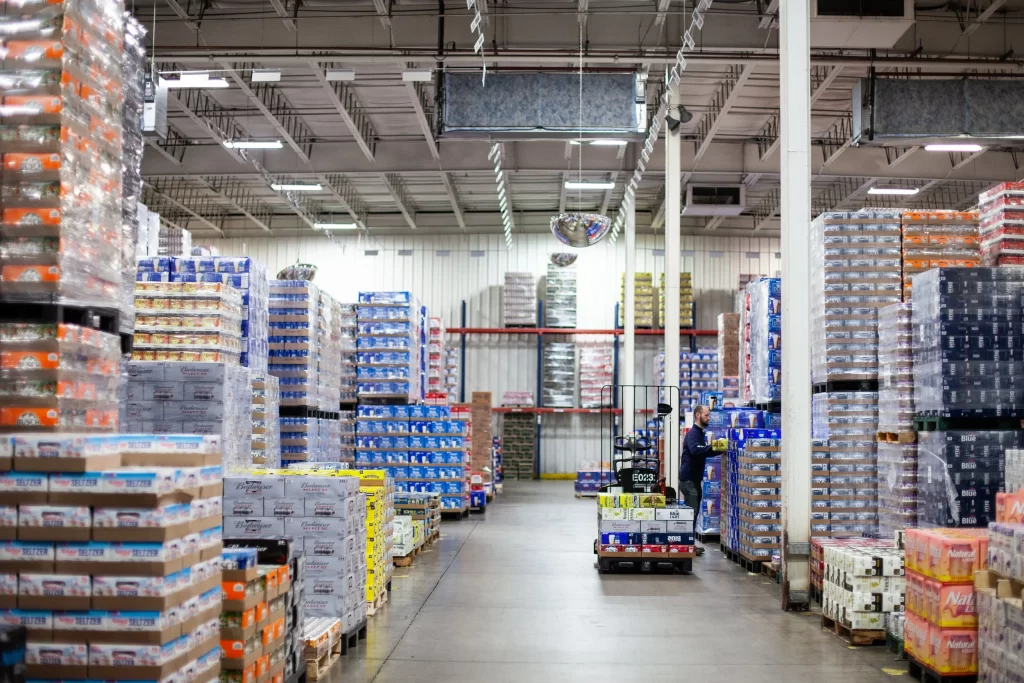
warehouse full of beer on pallets

By Nick Fryer, Vice President of Marketing, Sheer Logistics

Expanding into new markets is a major milestone for craft beverage producers, but it’s also when supply chain vulnerabilities tend to surface. Inconsistent storage conditions, longer transit times, and unfamiliar distribution partners can all jeopardize product quality and brand reputation.

  For today’s craft brewers, distillers, and ready-to-drink innovators, ensuring product integrity isn’t just about preserving flavor—it’s about having a cold chain strategy that can scale. From temperature-sensitive transit to final-mile delivery, success depends on reliable partners, smart planning, and the right equipment.

  In this post, we’ll break down the cold chain logistics challenges facing small and mid-sized beverage producers and explore the tools and strategies that can help them grow without compromising quality.

What “Cold Chain” Really Means for Craft Beverage Producers

  A “cold chain” is a supply chain that ensures temperature control from the moment a product is produced all the way to its final delivery. This includes any warehousing and storage, as well as transit time.

  Cold chain logistics involve the use of carefully managed refrigeration that can be adjusted to the specifics of whatever is being transported. For most craft beverage producers, 4-6 degrees Celsius has become the standard. Storing craft beer at 4 degrees has been proven to ensure flavor stability and meet food safety requirements. Anything above 6 degrees is associated with a reduction in the overall quality.

Why Craft Beverage Producers Benefit from a Cold Chain

  There’s a common saying that the minute you drive a car off the lot, it loses 10% of its value. Food and beverage products are fighting a similar battle. Every second they’re not in a controlled environment, they risk losing some of their quality and, in turn, their value.

  This is a major issue for craft beverages, which are generally less processed than their conventional counterparts. It’s what creates their unique taste profiles and keeps this industry so interesting. It’s also, however, what puts many products at risk of microbial growth and other chemical reactions that degrade the freshness and quality. The color can shift as the product is exposed to heat, as can the taste.

  Proper refrigeration and a cold chain that enforces it slows this process of degradation so that the product a brewery sends out tastes the same before and after delivery. The benefit of this is:

•     Fewer product recalls.

•     A stronger brand reputation. People feel more confident that they’ll get the same taste and quality, time and again.

•     Happier customers overall.

Spotting Temperature-Driven Quality Failures in Transit

  Experimental beers and spirits are what put American craft breweries on the map. Even with the variety that’s celebrated, there are a few common signs that something’s gone wrong.

  Here are some of the best ways to spot if temperature-related failures in transit are affecting the quality of a craft beverage:

•     Beverages appear cloudy when they shouldn’t be. This is often down to a microbial bloom that can happen with heat exposure.

•     The color of the product has changed. Oxidation is another common chemical reaction that happens when more natural brews are exposed to higher temperatures.

•     Beverages gush or are over-carbonated upon opening. This may even just show up in cans that seem to have expanded or suddenly have leaky seals. The issue comes down to fermentation, which is usually triggered by warmth. It’s something that craft beverages with live cultures in them (such as hard kombucha) have to be particularly wary of.

•   The beverage tastes different. It may suddenly be quite sour or “funky” when it shouldn’t be or develop a hop-forward profile that wasn’t there before. This can be from a combination of oxidation and microbial activity.

  If perfectly good beverages get sent out but then display the above issues upon arrival at their destination, it’s a sure sign that something’s gone wrong in transit. Another general red flag is when a product’s shelf span suddenly seems to be quite limited. That alone can point to issues in the supply chain.

From Tank to Taproom: Identifying Weak Links in Your ColdChain

The best way to identify weak links in your cold chain is to check it, step by step:

•    The Production Facility: From the minute the beverage is packaged, it needs to be in a cold room that is continually monitored and handled carefully by staff.

•     Loading Areas: Docks and staging areas should be kept cold so that as the product is moved from one environment to another, it’s kept at a controlled temperature.

•     Transportation: No matter what method of transportation is used, some method of cooling has to be involved.

•     Distributor Warehousing: Products need to be labelled to indicate that they require cold chain storage, and warehouses should be vetted to ensure they have adequate experience and capacity for that storage.

•     Bars and Retailers: The cold chain isn’t over until the drink is being poured from the tap into a waiting customer’s glass. To ensure cold storage at this final point, retailers need to be educated and informed on how best to refrigerate the product.

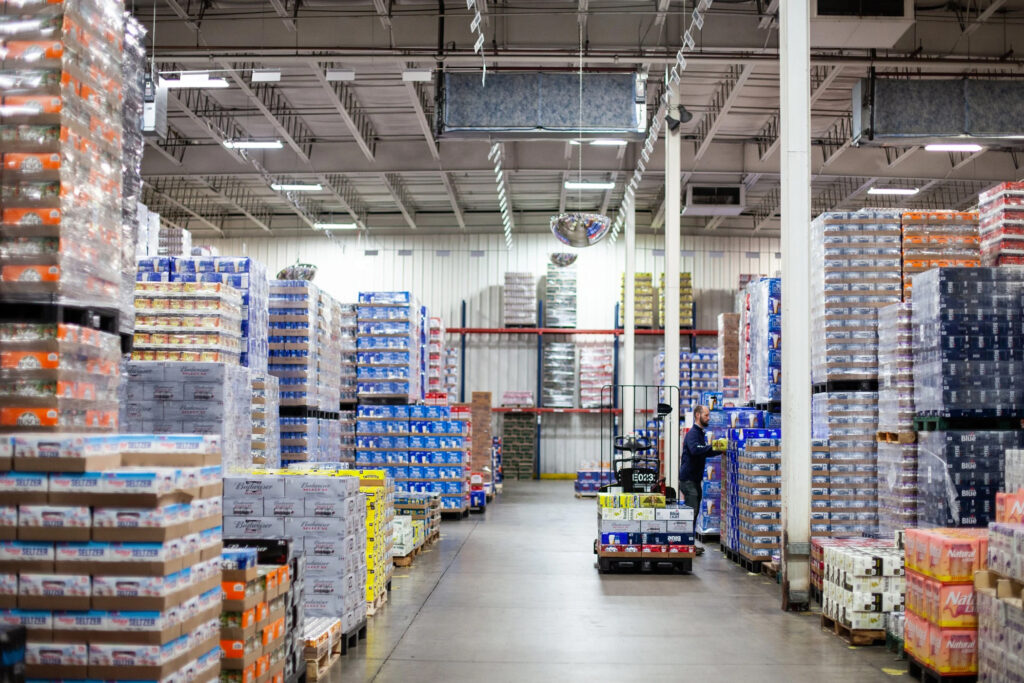
warehouse showing pallets full of beer boxes

Cold‑Chain Gear That Works: Trailers, Packaging, & Storage

  There are a myriad of ways to approach cold chain gear. Here’s what actually works:

•     Long-distance cold chain transportation needs refrigerated trailers with insulated side walls, proper seals, and real-time temperature monitoring.

•     Shorter or local logistics can get away with insulated vans that keep portable cooling systems and ice packs stable.

•     Reflective, foil-lined pallet covers and thermal blankets can be used to maintain low temperatures when loading or unloading in unrefrigerated areas.

•     Packaging that keeps out heat and humidity is just as important as fridges and kitted-out cold chain trucks. Even simply making sure that everything is shrink-wrapped can prevent heat buildup.

Smart Monitoring Tools: Tracking Temperature, CO₂, Humidity, & Shock

  Cold chain gear works best when it’s paired with smart monitoring tools and IoT sensors. The technology can track key variables in real time and send alerts if anything changes, so that businesses have time to intervene before quality degrades. The data collected can also be used later to further optimize the cold chain and make more energy and financially efficient decisions.

  Here are the main aspects worth tracking in a craft beverage cold chain and why:

•     Temperature: This is important no matter what kind of craft beverage you’re transporting, as any heat exposure can cause oxidation and spoilage.

•     Humidity: High humidity often leads to mold growth on packaging or the rusting of metal kegs. Anything transported long distances, especially in warmer months, should have humidity levels monitored.

•     C02: Build-up of this gas can accelerate fermentation in craft beverages and lead to bursting cans and bottles, especially if a product has active cultures in it (such as the yeast in a hazy IPA).

•     Shock: Too much shock during craft beverage transportation risks packaging and product integrity and can also damage cooling systems.

  By monitoring all of the above, especially through centralized tracking and logistics platforms, craft beverage companies can maintain a controlled environment for their products. The result is then improved quality control.

Conclusion:

Keeping It Cool from Production to Pour

  There is so much work that goes into creating craft beverages. Investing in cold chain gear, technology, and logistics strategies ensures that none of that work gets lost in transit. Instead, breweries can rest assured that they’re always putting their best product forward and, in doing so, building a brand reputation that keeps people coming back.

Nick Fryer is the Vice President of Marketing, Sheer Logistics. Nick has over a decade of experience in the logistics industry, spanning marketing, public relations, sales enablement, M&A and more at 3PLs and 4PLs including AFN Logistics, GlobalTranz, and Sheer Logistics.

Crafting the Perfect Fill

By Alyssa L. Ochs

In the craft brewing and artisanal distilling industries, every detail matters – from the meticulously curated ingredients to the final presentation and every step in between. One of the most crucial yet often overlooked steps in the production process is filling.

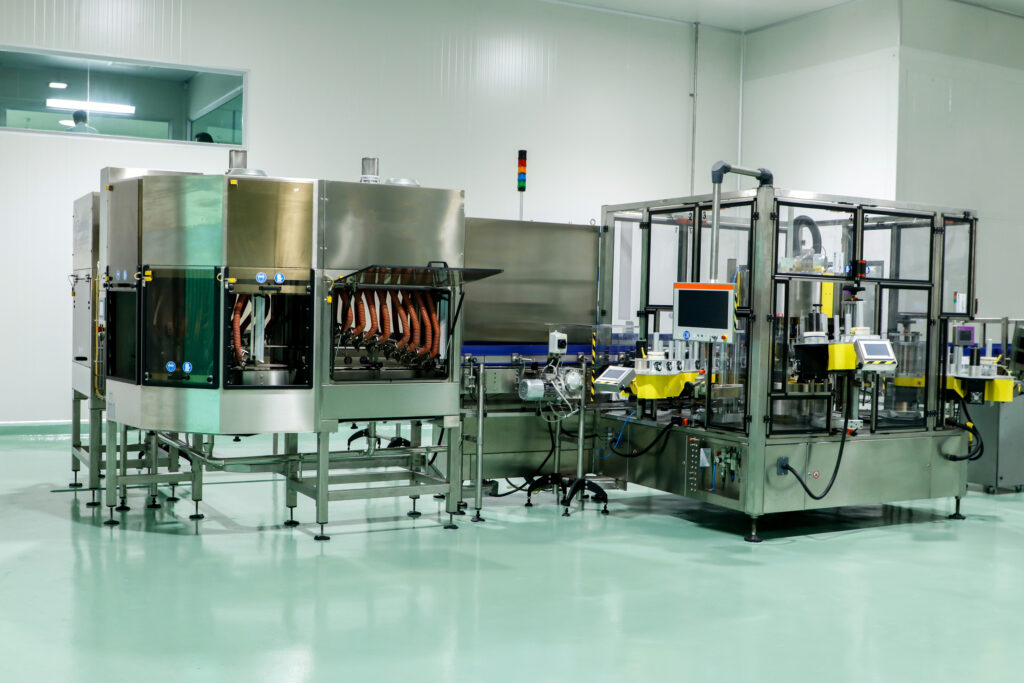
  Whether you’re filling a bottle of whiskey or a can of IPA, the filling step affects product integrity, shelf life, operational efficiency and regulatory compliance. Fortunately, modern filling equipment has advanced significantly, offering brewers and distillers advanced features that cater to the specific needs and styles of beer and spirits. 

  In this article, we examine how filling equipment has evolved and what it looks like in today’s forward-thinking breweries and distilleries. To gain further insights, we also connected with Tony Saballa, the owner of Fillmore Packaging Solutions, which offers affordable beverage packaging for craft beverage makers.

Types of Filling Equipment Available

  The ideal type of filling equipment for your operations depends upon your product’s carbonation level and viscosity. For example, gravity fillers work well for thin and free-flowing liquids, such as craft spirits. They use the force of gravity to move non-carbonated liquids from holding tanks to cans and bottles. You’ll often use gravity fillers for vodka, gin and whiskey.

  Piston fillers are commonly used for liqueurs that have a high viscosity. Using mechanical pistons, these fillers draw a specific amount of spirit into a cylinder before pushing it into your container. Cream-based spirits and syrups with a thick consistency often incorporate piston fillers. 

  Volumetric fillers help beverage makers achieve a consistent fill volume, allowing you to stay true to your brand while also ensuring legal compliance. Distillers often use volumetric fillers to make ready-to-drink (RTD) cocktails, as they provide high accuracy control and help maintain precise brand consistency. These fillers operate by dispensing a volume of liquid using a rotary pump or flow meter to measure and control the flow of fluid.

  Isobaric or counter-pressure fillers utilize specialized machines that fill beer and other carbonated beverages into bottles with consistent pressure, thereby preventing the loss of carbon dioxide. With isobaric fillers, you’ll achieve equal pressure inside the can or bottle during the filling process, thereby preserving the carbonation. In addition to beer, sparkling wine, cider and carbonated RTD cocktails often use this filling method.

Fillmore’s Equipment Offerings

  Based in St. Louis, Missouri, Fillmore Packaging Solutions helps improve packaging processes for overwhelmed and underserved small craft beverage makers worldwide.

  This company focuses on the mechanical side of the small beverage trade. It has beverage packaging machinery available for both carbonated and non-carbonated beverages, including beer, wine, cider, kombucha, sparkling water and RTD cocktails. 

  Tony Saballa from Fillmore told Beverage Master Magazine that his company offers automated packaging machinery for filling cans and bottles with multiple sizes and formats.

  “Our filling machines are primarily engineered for isobaric filling, also known as counter pressure filling, a method used for filling carbonated beverages under pressure to minimize foaming,” Saballa said. “Our fillers can also be used for filling non-carbonated beverages.”

  Saballa explained that Fillmore’s machinery doesn’t require any complicated installations and is designed to be easily moved into the workspace and rolled away when not in use.

  When asked about the type of electrical connections Fillmore fillers require, he said, “Our fillers are engineered to operate from a standard 120-volt, single phase power outlet, so there are no specialized electrical connections required.”

  Saballa shared that Fillmore products’ packaging fill rates are always dependent on product temperature, carbonation levels and package size.

  “So, the typical fill rates our fillers range between 12 to 16 containers per minute,” he said.

  Fillmore’s equipment is designed to fit in a space of about three by five feet, or 15 total square feet. Its machinery can also be operated by just one or two people in a brewery or distillery, resulting in minimal labor requirements.

Precision Filling for Accuracy & Compliance

  Since the beer and spirits industries are heavily regulated, filling equipment is also relevant to legal compliance. Accuracy is of paramount importance when filling beer or spirits into cans or bottles. Regulatory organizations, such as the Alcohol and Tobacco Tax and Trade Bureau, require that containers meet volume declarations with minimal variation.

  Fortunately, today’s advanced filling equipment prioritizes precise and repeatable fills so that every can and bottle meet the appropriate volume requirements. For example, there have been significant technological advancements in sensor-based fill level detection, piston controls, digital flow meters and programmable fill settings.  

  This level of accuracy helps prevent product loss from overfilling, saving craft beverage makers money and resources. It also prevents underfilling, which can lead to compliance issues and customer dissatisfaction. When your bottles and cans are filled precisely, it shows that you pay attention to the details and run a professional operation that prioritizes quality control.

Automating the Beverage Filling Process

  In general, automated filling systems reduce your business’s need for extensive manual labor and help prevent employee mistakes. However, compact automation solutions like those offered by Fillmore are a game-changer for small craft beverage makers with limited production space.

  Small and mid-sized beverage producers are consistently seeking ways to balance efficiency with their space limitations. With an automated filling system, you can maximize the space you have while streamlining labor demands and achieving high throughput. Every square foot matters if you operate in tight quarters, such as a shared co-manufacturing environment or converted warehouse.

  Gone are the days when automated filling solutions were only reserved for high-volume-producing mega breweries and distilleries. Now, craft beverage producers of all types and sizes are embracing automation technology and working smarter on a smaller scale.

Flexibility & Seamless Integration

  When it’s time to invest in new filling equipment, consider automated systems with a user-friendly setup to get up and running promptly. Another priority might be plug-and-play simplicity that doesn’t require costly upgrades or infrastructure expansions.

  As some modern craft beverage makers now produce multiple types of beer and spirits, flexibility is another priority for filling equipment. Distillers and brewers often look for filling equipment that can work alongside their existing systems and accommodate various bottle and can sizes. Pieces of filling equipment aren’t isolated machines but rather one of many pieces in a broader production ecosystem.

  Universal compatibility is top of mind for companies specializing in filling equipment as demand increases for variable speed settings, modular designs and adjustable container guides. It is now possible to fill carbonated and still beverages with the same filling equipment line, easily switching between cans and bottles with minimal adjustments.

Scalability for Future Expansion

  In the fast-evolving world of craft beverage production, it’s essential to plan not only for today but also for future growth. Filling equipment should support your current needs and your goals for the years ahead.

  It’s often advisable to start small with your filling equipment, such as with a compact and entry-level system that allows you to build capacity as demand hopefully increases. For instance, you could launch with a two- or four-head filler and then upgrade later to a six- or eight-head model, provided the electrical infrastructure and base frame will support the expansion.

  Scalability involves increasing both speed and versatility, as many beverage makers are starting to explore new products that deviate from their original creations. If you choose a flexible filling machine, you will be able to accommodate various fill volumes, types of products and multiple containers.

  Another goal of scalability is to minimize downtime, so you never have to shut down your production line to install a new system based on new needs. Automation modules, adding additional filler heads during scheduled maintenance and software upgrades can help you achieve this goal. Keeping these factors in mind will help you protect your filling equipment investment and help your business evolve with the times and shifting consumer demands.

What’s Next for Beverage Filling Equipment?

  Looking ahead, next-generation filling equipment promises even greater precision, adaptability and efficiency than ever before, benefiting breweries and distilleries.

  Emerging technologies include remote equipment access, allowing operators to control and monitor filling equipment from their mobile devices. There has also been progress in AI-powered diagnostics and monitoring, which can automatically adjust regulate carbonation, viscosity and temperature.

  Meanwhile, some innovators have been perfecting automated clean-in-place systems and adjusting machine design to improve production speed further and ensure legal compliance. Fully integrated beverage packaging lines that handle filling, rinsing, closing and labeling are also in demand as equipment-makers take smart technology and automation to the next level.

Did Home Distilling Get Legalized?

distillery equipment on a table outside a home

By Kris Bohm, Distillery Now Consulting

Every distiller got their start distilling somewhere even if it was not necessarily legal. Many American distillers did not make their first batch of spirits in compliance with the laws of the United States. If you ask most professional distillers and distillery owners where they got their start, these people are not always open to discussing this topic. The reason for the hushed tones or outright silence when discussing learning distilling is that many distillers made their first batches of distilled spirits illegally. United States laws spell out that it is illegal to distill at home. If you were to hypothetically set up a little 5 gallon still at home and distill a few bottles of moonshine you have committed a criminal activity that warrants a felony in the United States. Because many distillers got their start in this exact way, the topic of the roots for distillers is not a vocal discussion. Hobbyists and professional distillers alike both tend to agree that home distillation should be legal and better regulated, but the battle to change the laws has not been an easy one.

  It is not common knowledge among the public of the antiquated laws regarding home distilling. The TTB, which is the government organization that regulates distilling states the following. Within title 26 of the United States Code, section 5601 sets out the following criminal penalties for producing distilled spirits at home. Offenses under this section are felonies that are punishable for up to 5 years in prison, a fine of up to $10,000, or both, for each offense. Some of these offenses include owning an unregistered still and possessing distilled spirits that have not been paid tax. While it is perfectly legal for an individual to produce their own beer or wine at home without any consequences (nor any taxes due) the production of distilled spirits at home is wholly illegal. It is quite absurd at first glance to understand why some homemade alcohol is legal (beer and wine) and others (distilled spirits) are not. This difference has helped to form the argument and a legal case to change laws related to home distilling.

  There are many books on the topic of home distilling and vendors all over the United States who can and will legally sell distilling equipment and materials for distillation. It is legal to sell distilling equipment of all sizes and the responsibility of the still purchaser to register the equipment with TTB. The Federal Government does not allow home distilling and so small stills fit for a hobby size scale are inherently illegal to own as you cannot register them with the TTB. Home distilling is a perfect platform to perfect the art of science and distilling. In fact, many professional distillers made spirits illegally at home prior to growing their hobby into a commercial distillery. While there are many new craft distilleries emerging, if home distillation was made legal it would likely contribute to more commercial craft distilleries opening their doors. The boom and growth of craft breweries is partially attributed to the legalization of homebrewing which was allowed in 1978.

  In 2024 the ridiculous restrictions regarding home distilling are finally getting their day in court. A home distilling group known as the Hobby Distillers Association (HDA) which represents over 1300 home distillers, is a group based in North Texas. One member of this organization had received a letter from the TTB notifying the individual that the TTB was aware that this individual purchased a small still and the still was not registered with the TTB. The letter further went on to cover the penalties for home distillation which can include jail time and large monetary fines. The individual who received this letter not only felt threatened by the TTB but felt action was needed to protect other hobby distillers. The HDA decided it was time to take action to change the laws that prohibit their hobby and work to protect its members from criminalization. Thus, the Hobby Distillers Association filed a case with the United States Court of North Texas that in essence stated the laws regarding home distilling were unconstitutional for a slew of reasons. The HDA contested that laws prohibiting home distillation did not accomplish the intent of the law to protect tax revenue. As part of this case the goal for the Hobby Distillers was to get the court to rule in their favor so that participating in the hobby of home distilling would no longer put hobby distillers at risk of severe criminal penalties.

  District Judge Mark Pittman who sat on the case found himself ruling in favor of the distillers on a rather interesting angle regarding the law. Pittman found that while the laws regarding distilling are intended to protect federal tax revenue they do not actually accomplish their intent. Because the original intent is not accomplished the laws are an over extension of the power of Congress. While the TTB outright bans the use of distilling equipment at one’s home, there is no space within this ban to regulate taxation. Further, the limited amounts produced in home distillation as demonstrated by the HDA does in no way jeopardize the revenue collected by the government from the taxation of spirits produced by legal commercial distilleries. In the opinion written by Judge Pittman he stated Congress did nothing more than statutorily ferment a crime— without any reference to taxation, exaction, protection of revenue, or sums owed to the government. With humor the judge has in essence ruled in favor of the hobby distillers to carry on with their hobby at home without fear or risk of prosecution.

This ruling is a positive change for home distillers and hobbyists, but it is not certain just yet. There are still bigger changes that need to be made to truly legalize home and hobby distilling. The opinion as put out by the judge does not change the laws. It merely protects the individuals from a law that is unjust. Currently the federal government and TTB still can seek changes to the judge’s ruling. It is important to note that some states have specific laws regarding home distilling. If you are considering practicing home distilling or distilling without a permit, I would recommend you research laws regarding the hobby and learn safe distilling practices as well.

  Written by Kris Bohm of Distillery Now Consulting. When Bohm is not busy distilling he can be found cracking lame dad jokes and riding bikes.

  The Decision regarding this case is Hobby Distillers Association et al. v. Alcohol and Tobacco Tax and Trade Bureau et al., Case No. 4:23-cv-01221, in the U.S. District Court for the Northern District of Texas

  TTB rules on Illegal Distilling can be found here.

https://www.ttb.gov/distilled-spirits/penalties-for-illegal-distilling

Is it Time to Elevate Your Beverage Brand

banner sign says rethink revise rebrand

By Hanifa Sekandi

Everyone is doing it, changing their brand to look more modern or something fresh to appeal to a new consumer base. One could argue that social media made them do it. It is easy to feel the need to compete with the social media engine that never slows down. What beverage is everyone talking about now? Not your beverage, but why? This can be frustrating when you know that you offer an excellent product. At times, it seems hard to cut through the beverage marketing noise, but it is possible. As you think of ways to do so, you may have considered a rebrand. Yes, there is always room for improvement. No matter how great your brand may be performing, there is always that one thing that can boost awareness and increase sales.

  Even legacy beverage brands are seeing the value in a brand refresh every few years. If you are a new brand, a rebrand should be the last thing that crosses your mind. Remember, nobody knows about you just yet, and until everyone does, consider yourself in the clear. This does not mean that you should not develop compelling marketing strategies. It simply means that you still must introduce yourself to your audience. This may take months to years, but you must stay consistent to gain brand familiarity. A slow rise to the top is sustainable. If in doubt, look at legacy brands; most of them have steadily climbed their way into the elite beverage club. Then think of brands that had their glory in the sun, fifteen minutes of fame, and now they are simply an afterthought.

When is it Time  for a Rebrand?

  Before you start, ask yourself, does your beverage brand need a refresh or a rebrand? A rebrand, in most cases, is a complete overhaul of your existing brand. A refresh is when you add new elements to your brand while maintaining brand familiarity. A refresh tows the line, whereas a rebrand pushes limits; it is a business risk that may benefit or hurt your brand eventually. Either way, it is a roll of the dice. Will the odds be in your beverage brand’s favor? You will not know unless you try.

  For some brands, a substantial risk is not worth it, companies would rather do a brand refresh that provides new energy to their existing branding without too many risky changes. Other brands choose to undergo a rebrand, and this strategy often achieves their intended results. A rebrand often works when brands are launching a new product line. A change in ingredients of an existing beverage may prompt brands to overhaul their previous branding, highlighting that everything is different, not just the addition of cleaner ingredients, but also new sustainable packaging. For cases like this, even a logo and color change may be appropriate. Keep in mind that substantial changes also require marketing efforts to support them. You need to inform your consumer that things are different and here is why. It is an unveiling of a new product, an out with the old, in with the new moment.

  The way your team approaches brand development should be consistent. Before hiring an agency, be clear on your goals. Remember, not all great ideas are great for your brand. Also, do not erase what makes your brand familiar or stand out. Particularly, know your brand voice. A couple of notable examples of gentle rebrands that fall in line with more of a brand refresh are Pepsi and Fanta.

  Both refreshes perfectly married the old branding with the new and it was so seamless that unless you are a die-hard enthusiast of either beverage, you would not have noticed. The changes were subtle yet bold. You may also notice that they used a variation of their existing brand colors and slightly altered their logos.

  Just a little but more than enough is a great approach to rebranding, particularly for legacy brands.

  Let us say you are not a legacy brand, still relatively new, but have built a strong consumer base. Should you rebrand or should you refresh? Other than increasing sales, what is your end goal? Do you feel that a rebrand will further solidify your beverage brand as a top contender, joining ranks with a legacy brand? Are you the next Heineken? Or the next best top-shelf tequila every bar should carry? Will you lose your existing consumer? Lastly, is your brand familiar enough that making these significant changes will not confuse people who purchase your beverage? A brand refresh might be a better course of action for your brand if you are less than 10 years old.

  What does a refresh entail? Adding new prints or graphics to your cans or bottles. Hopefully, when you selected brand colors, you chose different variations of green, for example, or blues that sit perfectly within your color wheel. It is okay to add pops of colors that are not signature to your brand. But the integrity of your branding should remain intact. 7Up does an excellent job using different variations of green that are signature to their brand.

The Notable Introduction

  It may be time to reintroduce yourself to existing and potential new consumers. This introduction is a fantastic way to tell your story, remind your consumer why they support you and to highlight your brand to a new audience. Consider this a reintroduction, also as an introduction. Have you ever attended an event with people you know and people you do not know? The assumption is that you do not have to introduce yourself because there are people there who know you, and the rest will fill in the blanks.

  The reality is that people forget things; they forget the details about people they meet regularly. I am sure you have met someone at an event and walked away and forgotten their name. You know the face but cannot seem to recall their name or pertinent details about them. If you are in beverage sales, then you will understand the value of these details. This is how every brand should view itself as a familiar face but an unrecalled name.

  Never assume that people who consume your beverage have had enough of seeing you highlight the unique components of your beverage and the cultivation process. Seeing every day as an opportunity to introduce your brand, like you are the new kid on the block, will force you to keep things fresh. Just like saying hello to a friend you care about never gets old. Saying hello to your audience and reminding them who you are and what you bring to their tastebuds should be embraced.

Are You Ready to Elevate Your Branding?

  Elevating your brand should not be complex. There are simple and attainable ways to highlight your beverage without doing too much rebranding. It is important to be creative. Think of ways to highlight what you already have. Isn’t it funny that people search for vintage items from their favorite brands? Do not lose sight of what is already loved by your audience. Also, do not lose your creative spark.

  How can you market this beverage, which your team has already beautifully branded? Brainstorm hundreds of ways to tell your beverage’s story with your existing branding. If the opportunity arises to do a refresh or rebrand, it should feel like the next step to brand elevation rather than a thirst simply to compete. Do not chase your competitors’ story or their wins; instead, stay in your lane and run your race and celebrate your wins. It is easy to feel pressured to make changes to your branding when you see other brands do it.

  Remember, you cannot see their process or the budget they have allocated for this. The majority of companies plan; therefore, what looks like a sudden rebrand may have gone through years of development. It is best to set long-term brand development goals. In the next 5 years, you may want to adjust the logo or brand colors. This will give you enough time to refine your branding and curate a rebrand that is impactful and embraced by old and new beverage enthusiasts.

Make It Easy to Say Yes

bottles of corona extra beer in sand

By Jake Ahles, Morel Creative

Craft doesn’t guarantee growth, Clarity does. In today’s saturated beverage market, the brands winning shelf space, closing distribution deals, and attracting serious investment aren’t always the ones with the best product. They’re the ones with the clearest story.

  The ones who make it easy for buyers, investors, and consumers to say: “I get it. I want in.”

If you’re preparing for the next big trade show, fundraising round, or distributor meeting, here’s the hard truth: your product alone isn’t enough. You need a brand story that sells.

  This article lays out how distillers and craft beverage founders can use brand clarity as a sales weapon—turning marketing from an afterthought into a revenue driver, a distributor enabler, and a signal to future investors that you’re ready for prime time.

The Growth Bottleneck No One Talks About

  You’ve nailed the flavor. The packaging pops. Maybe your tasting room hums with energy or your founders’ story turns heads.

  But when a buyer asks, “What makes you different?” or an investor says, “Why now?”, you find yourself fumbling.

  It’s not because you don’t care—it’s because clarity is hard. Especially when you’re close to the product.

Here’s what often happens:

•  Your sell sheet is too busy.

•  Your pitch deck meanders.

•  Your reps are all telling different stories.

•  Your digital presence confuses more than it converts.

And so…

•  Buyers pass.

•  Distributors deprioritize you.

•  Your reorder velocity flatlines.

•  Funders say, “We’re not quite sure where this fits.”

  All while a competitor brand with half your soul—but a sharper story—wins the shelf.

Clarity = Conversion: What Trade Buyers and Investors Need to Hear

  Let’s start with what your key decision-makers are really thinking:

Distributors and Trade Buyers:

•  Can I sell this easily?

•  What makes this different from what’s already on my shelves or menu?

•  Will consumers understand it right away?

•  Will my staff be able to talk about it with confidence?

Investors:

•  Is this brand built to scale?

•  Can the founder or team articulate their differentiation in under 60 seconds?

•  Does the positioning reflect a deep understanding of the market?

•  Will this story resonate with future buyers or acquirers?

  If your content and messaging don’t answer these questions clearly and consistently, you’ve created friction. And friction kills momentum.

Brand Clarity in Practice: The Assets That Drive Decisions

  Clarity isn’t just a vibe—it’s a system. When your materials are clean, aligned, and easy to use, you create confidence. Confidence leads to yes. Here’s what that looks like:

1. Your One-Liner: The headline on your sell sheet, website, or intro slide should immediately explain what you do, who it’s for, and what makes it different.

Not: “A bold new botanical experience.”

Better: “Zero-sugar craft spirits designed for modern mixologists.”

2. A Streamlined Trade Deck:

Three to five slides max. Visuals first, words second. Answer:

•  What is it?

•  Why now?

•  Who’s buying it?

•  Why it moves units.

3. Sell Sheets with Punch: Focus on the highlights.

•  Brand origin in 2–3 lines

•  Product SKUs, pricing tiers

•  Flavor profiles or use cases

•  Distribution + reorder details

•  Beautiful bottle shots + fast contact info

4. Distributor/Rep Tools:

•  One-pagers for each product

•  Internal videos explaining the brand story

•  Ready-to-send follow-up kits with shareable content

5. Digital Ecosystem:

•   A centralized media library

•   Consistent messaging across web, social, print

•   Video shorts that reinforce key points

The Ecosystem Approach: A Playbook for Growth

  At Morel Creative, we think of clarity not as a single asset, but as an ecosystem—a cohesive content system that works across:

•  Internal team training

•  Sales meetings and trade shows

•  Distributor enablement

•  Consumer marketing

•  Investor conversations

  This approach is what inspired our F.E.E.E.D. Framework, a storytelling system designed to unify your brand story across sales, marketing, and trade—with assets that build clarity, foster connection, and drive momentum across every touchpoint.

For distillers, this could look like:

•   Crisp sell-in tools that win attention in national accounts

•   Thoughtful origin stories that connect in regional campaigns

•   A modular content system that works across markets and team members

The goal? Scale your story

without diluting your soul.

Proof: What Happens WhenYou Nail It.

We’ve seen the results firsthand:

•  Faster shelf placements.

•  Higher distributor engagement.

• Improved sell-through and reorder velocity.

•  Better investor traction.

•  Readiness for acquisition or national expansion.

  Brands that invest in clarity don’t just look better. They move faster. They scale without chaos. They enter new markets with confidence. They stop relying on founder charisma alone—and start building momentum that’s replicable.

Final Thoughts: Clarity Is an Act of Respect

  You’ve put your heart into your product. You’ve spent late nights dialing in flavor, sourcing, compliance, packaging, and logistics.

Now give your sales partners, buyers, and future investors the same attention.

Make it easy for them to say yes:

•  Build a one-liner that lands.

•  Create a pitch deck that converts.

•  Organize your story so others can tell it for you.

Because the best products don’t always win. The clearest ones do.

Clarity sells!