Real World & Digital Marketing Beverage Trends-2024

marketing trends seen in 2 monitors

By: Hanifa Sekandi

The beverage race requires a lot of grit and stamina. It is about the long game and certainly not short wins. Although, every brand aspires to be the viral brand of the moment. What the alcoholic beverage industry learned in 2023 is that not all trends are beneficial to your bottom line. Also, your consumer values quality more than social acclaim. Let’s be honest: online growth is integral to modern marketing success. Although out-of-home (OOH) marketing is still viable, it must be coupled with innovative digital marketing strategies.

  So, where do you start in your next marketing cycle? Now that you have wrapped up your holiday marketing campaign, a new year brings endless opportunities to become a standout brand or to keep your current notoriety.

Where the Real World Meets the Digital World

  Subliminal marketing will never get old. Although some consider it to be an archaic marketing strategy, it is not. Have you ever walked or driven by a billboard of a chicken sandwich by a popular food chain and then later that day see the same ad while you scroll through social media? By the end of the week, when that hunger strikes, it is likely that you will find yourself either making a chicken sandwich with a recipe you stumbled upon on TikTok or firing up your food delivery app to order one.

  Traditional marketing still works, although it is hard to measure the return on your investment with tangible metrics. Remember, before the digital world took over, advertisers spent a lot of time creating campaigns for magazines, billboards, benches, buses or anywhere they could display. It worked, and it still does. What digital advertisers understand from this method is that the more people see something, the more likely they are to gravitate toward it when they are browsing through beverage options at the store. Something new is always worth a try when it is familiar.

  A notable example of this is when Red Bull filled garbage bins with empty cans of Red Bull. They also had empty cans placed outside of London’s popular clubs while at the same time distributing their beverage to DJs. Simple but amazingly effective.

  Another fitting example of this is Taiwan Beer’s use of Honey Beer Drones to deliver complimentary six packs of Honey Beer, the brand’s new beverage, to those who registered on their website. As a result, within just 10 days, 15,000 people subscribed. This interactive guerilla marketing strategy worked well because it highlighted the use of honey in the beer and added a visual effect that people could see, film, share and talk about. It also added another great component: delivery through drones, and tech aficionados approved of this creative delivery tool. Both brands understood that real-time marketing strategies allow consumers to feel connected to the brand.

  As you look ahead at your marketing strategies, keep in mind that people are expecting more than just digital strategies. Also, the assumption that your consumer only exists in the digital world is erroneous. With that said, digital marketing does matter. It is up to you to do the research to discern what digital strategy will best position your beverage in this competitive landscape. Hopefully, your brand mission and messaging clearly define your “why” – why your brand was made just for your intended consumer, and your “who,” – who your consumers are. How does your brand complement their lifestyles and their buying decisions when they purchase an alcoholic beverage?

Beverage Marketing in the Digital World

  Welcome to the modern digital world. It is not old, but honestly, it feels new since every day, there is something new on the horizon. Currently, AI technology is said to disrupt modern-day advertising. As you begin to adopt some of these tools, do not get carried away. Remember, these tools are meant to enhance your digital marketing strategy and, in some cases, streamline processes so you can spend time on other tasks. So, what are digital trends to implement into your next marketing cycle in the new year?

Video Marketing: Creating compelling visual marketing is no longer an afterthought. Companies need to invest in the talent and tools to create videos, both long and short-form clips, to highlight online. Consider these videos as mini commercials that can be uploaded to your social media channels or used as strategically placed ads. Your marketing team should perform A/B testing on the desired platform to see which videos are worthwhile paid ads. You may find that some videos perform quite well on Instagram as a reel, while others perform better on TikTok, YouTube or Facebook. Many great and easy-to-use marketing tools allow you to create videos. The benefit of these tools is that they allow you to create a lot of visual content and allocate your marketing budget effectively. Video marketing should also include testimonials by real consumers.

Curated Marketing: As you know, it is a numbers game, so your company must understand analytics to develop marketing campaigns that target specific consumers. Email marketing campaigns fall short when you do not invest the time to understand your customers. Paired with mobile marketing, having a good grasp of analytics and using this data to create personalized marketing campaigns will improve your open rate and engagement. For example, some consumers prefer to receive newsletters that feature sales and discounts, whereas others enjoy reading blogs that are informative while also displaying your product. There are many CRM tools for marketing now. Finding one that works for your team should top your list as the new year approaches. For example, HubSpot and Klaviyo are great tools for segmented marketing campaigns.

Real World Beverage Marketing

  Once you have a digital marketing strategy, devise a real-world marketing strategy to enhance and complement it. You may also choose to start with OOH marketing strategies before you delve into digital ones, but the two are needed for a complete package. In addition, you cannot assume that your digital strategy is the only golden ticket to success. If your goal is to be in the alcoholic beverage sector for the long haul, it is best not to rely solely on one strategy. Although spending time online has become the modern-day norm, it does not account for the real-time moments that people experience in their daily lives. Endcaps at grocery stores, miniature bottles placed by the cash counter or free samples or coupons handed out on the way into a store create real-world experiences for consumers. Earned marketing builds trust. Other than advertising in magazines or utilizing display ads, what are other ways to market your brand in real-time?

Experiential Events: Create experiential events where people can taste your beverage. This is a common strategy by agencies when marketing to the press and influencers. Instead, invite your consumer to these events! Partner with bars and restaurants to create events such as tastings or food pairing menus that highlight your beverage. Most hotel bars and restaurants have happy hours. Offer to sponsor a happy hour. Not only does this encourage these establishments to carry your beverage, but it also creates a fruitful partnership. They are also more likely to recommend your drink to customers, as well.

Think Outside the Box, OOH Marketing: The more you are seen, the more likely you will become an option. Some brands have cut down their marketing budgets in this regard. Understandably, digital marketing appears to be the most viable strategy. Do not get lost in the idea of going viral. It is nice to have, but consider it as luck of the draw. Just make a high-quality product and build authentic, evergreen marketing strategies. Reserve some of your expenditure for OOH Marketing. Oddly enough, these ads make their way into the digital sphere if they are buzzworthy.

  A splendid example is Corona’s billboard display in Brighton, Great Britain. When Corona wanted to highlight that their beverage is made with natural ingredients, they painted a wall with their brand’s classic yellow and placed the signature Corona label in the center. At a specific time, when the position of the sun changed, between 6:30 p.m. and 6:45 p.m., a bottle overlay of beer appeared along with text that said, “made from the natural world.” During this time, people could view the classic Corona bottle. Now, this is not only something to talk about but also a great intersection of digital marketing via social shares. 

Make 2023 Holiday Beverage Sales a December to Remember

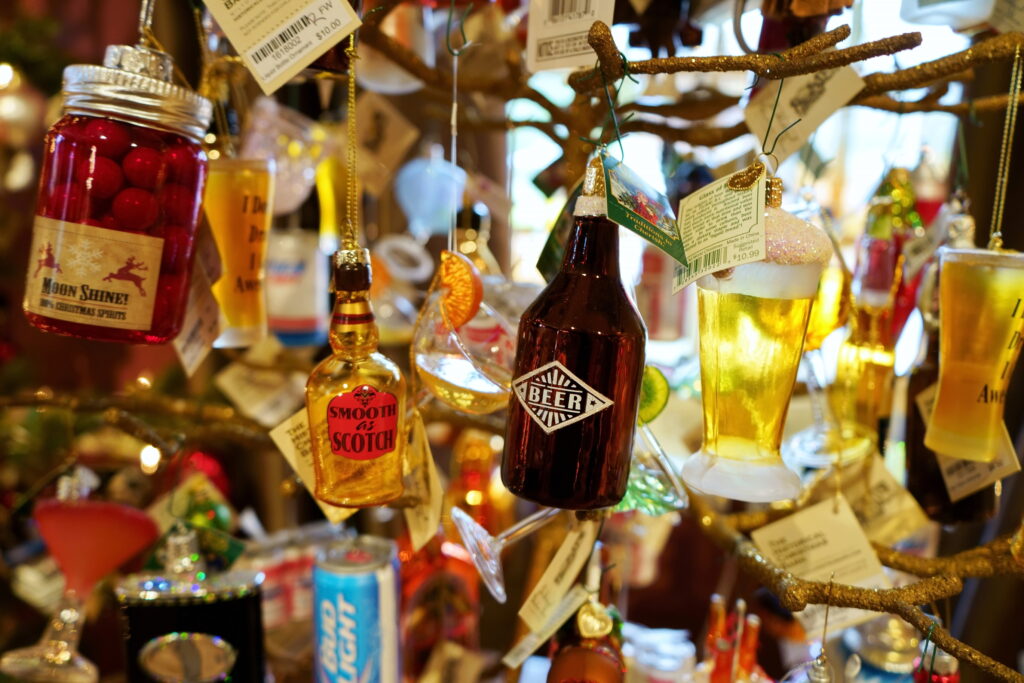
Photo of different bottles and glasses and cans of beer and spirits hanging from branches

By: Neeraj (Raj) Tulshan – Founder of Loan Mantra

It’s the most wonderful time of the year. The Holiday season is in full swing so it’s time for one and all to get out of the house. Celebrating the holidays looks different for many people whether that be shopping for friends and family, attending parties or making a toast with a good cocktail or beer. And it’s a peak time for restaurants and bars.

  Festivities can bring more customers into your restaurant as they spend more time eating out with friends and family. Plus, there’s always a lineup of Christmas parties, concerts and winter festivals, so many people don’t have time to cook at home.

  It’s the perfect time for a promotional strategy to kick into high gear. Holiday marketing campaigns capture the joy of the season and encourage valued customers to indulge in a special meal, dessert and/or drinks. There are a variety of options to help your establishment standout. Here are some thought starters:

●   Sponsor a Charity Nigh: Choose a charity of your choice (Toys for Tots, Make a Wish, or a local charity) and select a night or two during the month to donate a portion of your sales to that program. If you can, a local charity is much more likely to draw in more customers, as people flock to support their community. Make sure you market which date you are choosing to do this, and when it’s over, update your customers on the total amount raised. Fun fact: According to National Giving Month, 31% of annual giving happens in the month of December.

●   Offer Gift Cards: The National Retail Federation (NRF), surveys consumers on their spending on holidays and seasonal events throughout the year. Over the last decade, consumers have been kicking off their holiday shopping early in order to spread out their budgets and avoid the stress of holiday shopping. Continuing the trend this year, 60% of holiday shoppers started browsing and buying by early November. Having gift cards available makes it easy for consumers to grab a gift card, apply money to the card for their loved one/friend and stuff it away until their holiday for a present or a stocking stuffer. So, what gift made it to the top of the wish list? It’s gift cards!

●   Add Holiday Spirit to Your Online Presence: Use holiday-themed stock images, Create holiday-themed social media posts using free online templates as a guide on sites like Canva, Ripl and PosterMyWall. Use festive images to engage your audience and update your social media graphics to quickly freshen up your accounts and help boost engagement.

●   Host A Fun Event: Draw people in by hosting fun, quirky events such as an Ugly Sweater Party. This is sure to get everyone in the holiday spirit. Anyone who’s wearing an ugly sweater, enters the contest. From there, an ugly sweater fashion parade is a must. A few possible categories: most festive, most original, just plain ugliest etc. Winner of each category gets a free shot/drink of choice.

●   Holiday-Inspired Drink Menu: Spiked eggnog, peppermint cocktails, holiday-inspired shots, all these drinks help capture the essence of this loved season. With minimal risk and utilization of current inventory, launching a new drink menu is a no-brainer! Seasonal drink menus appeal to new customers and build intangible relationships with your restaurant’s loyal guest base by reinforcing brand concepts and generating spontaneity within the restaurant. This operation, if done efficiently, provides a foundation for increased profit margins.

●   Host a Tasting or Pairing Event: The National Restaurant Association research indicates that the sale of alcoholic beverages can be a key driver to restaurants. Eighty-four percent of adults who drink wine, beer, or cocktails say that restaurants are a good place to learn about new alcoholic beverages while 82% of these consumers say they trust the staff at their local restaurants to make good recommendations when it comes to alcohol beverages. These facts present a great opportunity. Why not host exclusive tasting events for VIP customers? Or hold tasting events which pair the perfect cocktail or beer with the perfect starter, meal or desert? In addition, 70% of beer drinkers, 69% of wine drinkers, and 67% of cocktail drinkers are more likely to say the availability of alcoholic beverages makes them more likely to choose one restaurant over another.

●   Neighborhood Bar Crawl: Feeling collaborative? Team up with nearby bars and restaurants to host a bar crawl. A successful bar crawl is often organized with a predetermined route, listing a selection of bars to visit within a specific timeframe. Oftentimes, bar crawls follow a theme, like a polar bear crawl. So have your bar themed out and guests dressed accordingly! A bar crawl can do wonders for your business. Bar crawls not only bring a flood of new customers to your bar but also creates an atmosphere sure to attract more customers. It’s a great mix of entertainment and growth for your business. Organizing a bar crawl, or getting your bar included in one, requires strategic planning. Partnering with other local businesses, advertising the event, and creating a fun and welcoming atmosphere are all key to a successful bar crawl.

●   Make a Seasonal Favorite: Create a themed drink or special brew that is only offered once per year – think McDonalds Shamrock Shake and Starbucks Pumpkin Latte to get customers talking. Keep the customers’ senses in mind – what visuals, sound and texture can be incorporated to highlight the experience? How will the customer interact with the brand (via server, bartender, store pick up)? How can the presentation be kicked up to give it a little more sizzle as it’s being served? What elements could be included to help recreate the ultimate customer experience each time? 

  Holiday marketing can help you boost revenue, solidify relationships with current customers and gain new ones this holiday season to help make this sales season a December to remember.

About the Author

  Neeraj (Raj) Tulshan is founder and managing member of Loan Mantra. Connect with Raj: https://www.linkedin.com/in/tulshan/, Raj@loanmantra.com or 855.700.BLUE (2583), Ext. 101.

Raising a Glass to the 90th Anniversary of the Repeal of Prohibition   

Photo of men and women at the bar in black and white during Prohibition being served alcoholic drinks by 2 bar tenders

By: Becky Garrison

December 5, 1933, marks the date the repeal of the 18th Amendment went into effect, thus ending the United States’ failed efforts to outlaw liquor. The 18th Amendment to the United States Constitution, which went into effect on January 17, 1920, prohibited the manufacture, sale and transportation of alcoholic beverages and their import into or export from the United States and all its territories. The National Prohibition Act designed to enforce this amendment became known as the Volstead Act after Rep. Andrew J. Volstead (R-MN).

  Despite this ban, alcohol continued to flow throughout the United States. So, what exactly were people drinking during Prohibition? 

Legal Consumption of Alcohol During Prohibition   

  Select exemptions under the Volstead Act permitted one to imbibe legally. Any liquor purchased before January 17, 1920, could be consumed at home. Private social clubs and individuals of means and available space amassed a collection of fine wines and liquors that would rival any well-stocked bar, with liquor stores announcing “going out of business” sales throughout the country.

  In keeping with the spirit of allowing mild alcohol consumption in private, this act permitted home winemaking and brewing. Soon after National Prohibition began in the 1920s, grocery stores often carried brick-sized blocks called “Vine-Glo.” These compressed raisins were bound together with condensed grape juice. Attached to the block was a small container of dried yeast. The wrapping contained the following text:

  “WARNING: Do not dissolve this fruit brick in warm water and then add the contents of the yeast packet, as this will result in fermentation and the creation of alcohol, the production of which is illegal.”

  Along those lines, this act banned only the sale of beer but not the ingredients for making it. So, one could purchase malt syrup with a packet of yeast attached that included similar instructions that combining the two could result in an illegal product.

  Also, one could obtain liquor with a medical prescription from a licensed doctor. However, in the first five years of Prohibition, only 26 states allowed the sale of medicinal liquor. In addition, liquor could be used for sacramental and religious purposes, though no statistics exist regarding how many Americans suddenly “got religion” during Prohibition.

The Canadian Connection

  Under Canadian law, local distillers could make spirits for sale to the United States if they paid a $20 per gallon export tax. By the late 1920, the Canadian government suddenly realized how much alcohol revenue was being earned by these various export houses, courtesy of the American bootleggers, and decided to raise the annual licensing fees for these liquor exporting businesses from $3,000 to $10,000.

  As expected, the U.S. government pressured Canada to stem the flow of liquor coming from Canada to the United States. In 1930, the Canadian government finally passed a law banning foreign customers from purchasing booze directly from export houses. However, this failed to deter the export of spirits coming primarily from British Columbia, Ontario and Toronto. 

  Other international waters where one could find smuggling of illicit spirits included the Caribbean, where rum was smuggled, especially along the East Coast. Those who transported their wares via sea, often using high-speed boats designed to evade capture, became known as rumrunners, named after the spirit they were transporting.

Distilling Prohibition-Era Spirits

  Since law enforcement could spot the trails of smoke coming from fires used to heat illegal stills, moonshiners often used cane or malt syrup, as these products could be fermented at room temperature, unlike raw grains that needed to be cooked pre-fermentation. Traditionally, distillers make “cuts” (discarding the beginning and end of the run) of the liquid out of the still to ensure they remove the natural acetaldehyde, methanol and fusel oils that form during fermentation. During Prohibition, distillers often skipped that step so they could get more product from each run, resulting in illegal hooch that proved to be deadly at times.  

  This cutting tended to take place at night in seemingly deserted industrial-looking buildings, rural farms, and other facilities that wouldn’t draw undue attention from law enforcement. Some added water to their liquor so they could produce more bottles from each run. Then, they turned to industrial (denatured) alcohol to give the product an extra kick now that it had been diluted. Denatured alcohol product was still on the market as it was used to make products like fuel, explosives and solvents. Among the products used for cutting were mouthwash, hair tonic, shellac and perfume. Even after the government added an emetic to those products containing denatured alcohol, they were still used as cutting agents with cocktails designed to mask the vile taste of these Prohibition-era spirits.

  In The Spirits of America, Eric Burns notes how poisoned booze was the great, unsung tragedy of Prohibition. “People today know about bootleggers and speakeasies; they are familiar with the names Capone and Kennedy; they have a general impression of casual lawbreaking and wild times kindled by spirits that were not supposed to be so readily available. But they do not know about Yack Yack Bourbon and Jackass Brandy and Squirrel Whiskey. They do not know about cooking alcohol squeezed through a rag and mothballs dropped into a steaming mug of gasoline. And they do not know about Jamaica gin and the men who drank it in doses that were so much more than minute, thereby getting rid of their thirsts for a few minutes as they turned into cripples for the rest of their lives.” (Page 224)

  As Daniel Okrent noted in Last Call: The Rise and Fall of Prohibition, “In the saloon era, calling for liquor by brand name was almost unheard of; in the speakeasy era, it became a habit, first as a means of protecting oneself from alcohol of questionable origin, and secondarily as a way of expressing one’s level of taste. Decades later, many of the liquor industry’s best-known brand names owed their prominence to the ubiquity of Prohibition-era rotgut. But knowing one’s brand did not ensure one was drinking said brand. In too many places, if you ordered Brand X, you got Brand X; if you ordered Dewar’s or Gordon’s, you paid twice as much and got Brand X.” (page 162)

The Repeal of Prohibition

  While some states began loosening their liquor laws in the early 1930s, National Prohibition was still in effect until December 5, 1933, when Utah was the 36th state to vote for the 21st amendment repealing Prohibition. The debate over alcohol shifted from whether Prohibition should be repealed to debates over how to tax and regulate the sale of alcohol and distilled spirits in particular.

  John D. Rockefeller, Jr., a nondrinking Baptist who had earlier been a heavy donor to the antiliquor cause, funded a study group in 1933 to explore how to best address this “alcohol problem.” While the group recommended that Prohibition be repealed, they advocated for strict government control of alcohol sales, preferably through state stores where the states could make profits.

  In response, the federal government adopted a three-tier system that permitted each state to develop a structure of checks and balances that provided safe alcohol to consumers while ensuring a simple method to collect tax revenue. The three-tier system is simple in theory: manufacturers provide alcoholic products to wholesalers, who distribute the products to retailers, who sell to the consumers. No one entity can be involved in more than one tier under most state models, and each tier is regulated and licensed separately.

  Alexandra Clough, a spokesperson for the American Crafts Spirits Association (ACSA), reflects on the lingering effects of Prohibition 90 years after its repeal. “We have made much progress to help consumers gain access to craft spirits, but we still struggle to achieve the same loosened regulations that our counterparts in beer and wine have enjoyed for many years. Though we, of course, will be toasting the 90th anniversary of Repeal Day, we will also continue to focus on helping consumers access the incredible craft spirits this country has to offer in more modern ways, like through direct shipping.”

  In recent years, distillers ranging from craft nano-distilleries to Jack Daniels have come out with their version of “White Whiskey,” A.K.A. moonshine. In 2023, Buffalo Trace launched The Prohibition Collection, an annual limited-edition, multi-bottle collection they describe as “honoring the whiskeys that were legally produced and sold at the distillery during arguably the most contentious period in alcohol history.” This debut release tributes five Prohibition-era brands: Old Stagg, Golden Wedding, Three Feathers, Walnut Hill and George T. Stagg Spiritus Frumenti.

  Spirits like Wohlfert Craft’s Distilling’s Sugar Shine continue their family’s spirited legacy by distilling spirits using their relatives’ recipes. John Wolfert’s great-grandparents opened several successful “bakeries,” which became a more spirited clandestine operation during Prohibition. As the smell of the yeast and sugar fermenting smelled similar to bread, they were able to ferment their brews undetected and were even able to downplay a still explosion as simply the result of, say, a gas leak.   

  Even though December 5 has yet to achieve the notoriety of, say, St. Patrick’s Day, some bartenders from across the country continue to honor Prohibition Repeal Day by highlighting Prohibition-era cocktails, including the Bee’s Knees, Side Car and Gin Rickey. Buildings like Smith Tower, where Seattle’s gentleman bootlegger Roy Olmstead conducted his smuggling operations, celebrate the Roaring Twenties with historical displays and craft cocktails on their 35th-floor Observatory Bar. Other establishments, such as Bar 600, located inside Cannery Pier Hotel & Spa in Astoria, Oregon, continue the spirit of this era. Situated on the former site of the Union Fisherman’s Cooperative Packing Company, this decor takes one back to an earlier era by recreating the feeling of the canneries of yesteryear with smokestacks, exposed steel beams & wooden trusses along with a vintage car service.

 Portions of this article are excerpted in Distilled in Washington: A History (March 18, 2024).

Proactive, Protective Measures to Avoid Liquor Liability

2 people negotiating showing hands

By: David DeLorenzo

There is a plethora of things business owners in the hospitality industry need to oversee and manage. Bars and restaurants that serve alcohol have the added challenge of serving their customers while also avoiding the liabilities associated with a guest’s alcohol consumption — and the choices they make upon leaving an establishment.

  One of the biggest dangers bar and restaurant owners should steer far clear of is becoming part of a lawsuit related to drunk driving. It cannot be overstated that establishments serving alcohol need to be extremely diligent about their protocols and also vigilant about their insurance policies. They should ensure they not only have proper coverage to protect their business and staff in the event of an alcohol-related lawsuit, they should also stay on top of the ever-changing liquor laws. This is for the safety and protection of all parties. 

  First and foremost, bar and restaurant owners should have good insurance. They also need to be aware of what their policies cover — and what they don’t. Though understanding the ins and outs of insurance may not seem like something that a hospitality business owner has time for, it is vital to the success of their business. Ideally, a bar or restaurant owner should work with an insurance agency that specializes in their industry and is well versed in the laws that impact it. They should also work with an agent who keeps current on the ever-changing laws that pertain to things like liquor policies. Keep in mind unexpected changes such as the ability to sell cocktails and other alcoholic beverages to go during COVID as well as marijuana usage and weapons exclusions, too, which are impacting today’s businesses in new ways.

  It’s always recommended business owners have their policies reviewed at least once a year. This way, they can be notified of changes or new exclusions or endorsements and take stock of whether they need to modify or add to their current policies to better protect themselves. This is also a good time to make note of any changes to the company that need to be reflected and protected in their policies. The “better safe than sorry” adage is not too cliché for this scenario. Just one incident can put a company out of business if they are not properly covered. Just as with auto insurance, some people may not understand they didn’t have the right coverage until an accident — and then it’s too late. This is where an agent that specializes in the hospitality industry can best guide and protect the business, staff and customers alike.

  Beyond air-tight insurance coverage, there are many things bar and restaurant owners can take into their own hands to ensure the safety and protection of staff and customers. Bar and restaurant owners should ensure they have the current certificates for serving alcohol in their state.

  Education is crucial. Employees must understand how liquor law works, how they can notice intoxication and know what steps that need to be taken in order to avoid overserving of alcohol.

This begins with safety training for all staff as well as training staff on how to properly identify an intoxicated person before they even enter the bar. Is it also vital that staff understands how to detect whether a customer is becoming intoxicated during their service.

  It is illegal for an establishment to allow an intoxicated person onto their premises — so safety begins at the door. It is important that a bar have door security to do ID checks to ensure first that guests are indeed of age and also that they are not intoxicated before they even step inside. In addition to door security, bars may want to invest in security personnel for their exterior or parking lot areas as well.

  Upon entry, it is also essential that staff understands how much is too much when it comes to serving their patrons. Training staff on the obvious symptoms of intoxication can help prevent a lawsuit. Signs to watch for can include slurring speech, becoming loud, the pace of their drinking, red eyes or flushed face. It is also important to note that it is illegal to serve an intoxicated person whether or not they are driving.

  Obviously no bar or restaurant owner wants to turn away customers or have to cut them off during their service. However, these measures need to be seen as non-negotiable safety protocols for staff and customers. It could be a matter of life or death if an intoxicated person decides to leave, get in their car and drive away. They are then not only putting their own lives in danger but putting others’ lives at risk.

  Another strategy bar and restaurant owners can employ to help protect themselves is the use of surveillance cameras in and around their property. This can be a lifesaver. Video surveillance can provide timestamped evidence of an incident, such as a fall in the kitchen or a server-customer interaction that can help prove vital in a court of law. Surveillance cameras are a wise investment and are there for safety and protection of all parties.

  It’s also crucial to think about specials bars and restaurants are offering. While happy hour drink specials are a great way to bring in much-needed customers to help boost sales, this can be a risky move — especially reverse happy hour specials that are offered at the end of the night or right before the restaurant is closing. It’s also a good idea to avoid “last call.” These measures can be construed in a lawsuit as encouraging patrons to order more drinks before alcohol will no longer be served or to order more alcoholic beverages because they are being offered at a discounted price.

  It is also key to stay up to date on liquor laws. Knowledge of any changes should be a red alert to check with the company’s insurance agent to see how that might impact current coverage. Staying in communication with their insurance agent can also help bar and restaurant owners ensure they are properly covered as laws and policies change.

  I understand that is a lot to keep up with, especially while trying to operate a bar or restaurant in today’s unstable climate. That is why I created my Connector and Protector Hospitality Series on YouTube. It features videos and interviews with experts on topics such as liquor liability and more to help guide bar and restaurant owners. It is a goal of mine to help my clients and everyone in the hospitality industry be successful — and safe.

  The bottom line is that no one wants an accident to happen to their customers or their staff. Putting simple protocols in place to avoid an incident may seem tedious. However, they can be lifesaving and could save a business if it is hit with a liquor liability lawsuit. Taking proactive and protective measures is for the benefit of all.

  Out of his passion to serve the restaurant and hospitality industry, David DeLorenzo created the Bar and Restaurant Insurance niche division of his father’s company The Ambassador Group, which he purchased in 2009. For more than 20 years, he has been dedicated to helping protect and connect the hospitality industry in Arizona. For more information visit barandrestaurantinsurance.com

Yeast Considerations & Management for Beer, Cider and Spirits

close up of beer liquid

By:  Alyssa L. Ochs

Without yeast, there would be no such thing as the modern form of beer we have come to know and love. This fascinating microorganism is responsible for the essential fermentation process of this beloved beverage. As a living organism and unicellular type of fungi that consumes sugars to produce carbon dioxide and create alcohol carbonation, esters and phenols, yeast influences the quality of a beer and the properties that make it unique.

  Meanwhile, yeast is also valuable for making cider and spirits by impacting flavors and alcohol content during fermentation. Certain yeast strains have proven beneficial for these purposes, while proper yeast measurement and management are critical for a successful craft beverage. To learn more, Beverage Master Magazine connected with industry experts to explore the topic of using yeast in breweries, cideries and distilleries.

Types and Variations of Yeast

  Various kinds of brewery yeast are available to aid craft beverage production, including ale, lager, wheat beer and Belgian yeast strains. Yeasts, such as champagne, wine, beer, wild and cider-specific yeast, are also available for making cider. Craft spirit distillers have traditionally used the saccharomyces cerevisiae species of yeast because of how it converts sugars and produces consistent alcohol without adding off-flavors.

  Hybrid yeast strains that cannot be categorized into the typical types are available and work well when other yeasts are too warm for lagers or too cold for ales, for example. Hybrids can be beneficial for altbier, Kolsch, blonde ale, cream ale and American wheat beer styles. Gene-edited yeasts are genetically modified to achieve more creative flavors and opportunities to mix beer yeast strains to achieve complementary characteristics. While non-saccharomyces were once considered contaminants in brewing and winemaking, recent research suggests they may provide unique sensory characteristics and future potential. All of this goes to show that there’s a lot more to yeast than what you might initially expect in the craft beverage industry.

Fermentation Products for Spirits – Lallemand Biofuels & Distilled Spirits

  To discuss the distilling side of yeast, Mitch Codd, the technical sales leader for Lallemand Biofuels & Distilled Spirits, told Beverage Master Magazine about his company’s role as a leading supplier of fermentation ingredients and how it provides distillers with high-quality yeast, nutrients, enzymes, bacteria, tech support and education programs.

  Codd explained how saccharomyces cerevisiae have been utilized, domesticated and bred for thousands of years. He said that in doing so, humans have selected traits advantageous to whatever application they need, such as baking, brewing beer or making whiskey. Because of this domestication and selection, we now have different types and strains to choose from, each exhibiting unique characteristics from one another.

  “In distilling, there are several important factors that should be considered when choosing a yeast strain,” Codd said. “In the production of spirits, our main goals for fermentations are to utilize all available sugars while also producing desirable flavors and aromas. We may also wish to reduce the production of flavors as much as possible, in the case of making vodka. Both flavorful and neutral spirit productions are feasible and may require a specific yeast selection.”

  “Interestingly, some strains of yeast will utilize maltotriose, a common sugar found in whiskey fermentations, while others may not use them at all,” Codd continued. “The same goes for rum yeast or agave yeast. Molasses will contain high amounts of sucrose while agave fermentations can be high in a sugar called fructose, which can be difficult for some yeast to fully utilize. If we choose a strain of yeast specifically intended for rum or agave, the fermentation will finish dry, and we won’t be sending these valuable sugars to the still. The esters and congeners that each of these strains produce are quite specific to the genetics of each strain. A rum yeast may produce a very high level of isoamyl acetate, responsible for the ripe banana flavor in a heavier rum while a whiskey strain may produce lower levels of Isoamyl acetate but higher levels of phenethyl acetate which would bring a rose or floral note to a good rye whiskey. The strain of yeast we choose for our fermentation can dramatically impact our total amount of spirit produced, as well as the actual flavor and aroma of the final spirit.”

  Customers often ask the Lallemand Distilling team whether a beer or wine strain of yeast can be used for spirits. Codd says that the answer is “maybe” because the strain of yeast chosen is often very specific to the type of final product.

  “Some beer strains can produce a lot of aromas and flavors,” Codd said. “For example, saison strains will generally produce a lot of isoamyl acetate. If that is specifically something we want in a whiskey, it may be possible to use this strain for that fermentation. Oftentimes, however, this will come with fairly significant drawbacks. In the case of using a beer strain for whiskey, one of the more common issues would be with sugar utilization. Earlier, I mentioned that maltotriose, the three-chain sugar molecule, can be very difficult or impossible for some yeast to utilize. A lot of beer strains will never use this sugar, as it is usually desired to have some sweetness left over in the final beer. In distillation, this sugar will never actually show up in the spirit, but it will burn in the still and create off-flavors in your final spirit.”

  “The same concept goes for using wine strains in distilling,” said Codd. “There may be some cases where this practice could make sense and produce a great spirit, but more often than not, a quality distilling strain will produce a far superior product than a beer or wine strain in the same conditions. Since the science of distilled spirits production has advanced so far recently, there are great yeast strains specific for distilling that will help you achieve any goal with respect to flavor production.”

Yeast Measurement and Management – Aber Instruments

  Not only is the type of yeast important in beverage production, but also accurate yeast management and understanding how many live yeast cells are helping you achieve your production goals. Aber Instruments Ltd., UK, headquartered in Aberystwyth, UK, specializes in yeast measurement and management solutions for the brewery industry. They also have an office in Alexandria, Virginia to better support their customers in the Americas. Aber’s yeast monitors are designed to be used in real-time to measure live yeast concentrations. Its Online Compact Range features the flagship Compact Yeast Monitor, the Compact Adapt and the recently released Compact PerfectPitch mobile skid to improve pitch performance and consistency. Meanwhile, Aber’s Countstar Yeast expedites and automates lab yeast readings.

  All major brewing groups and many innovative craft brewing companies, including Summit, Marble and Meantime, have trusted Aber to optimize their pitching and production processes. But in addition to offering these products for effective yeast management in the brewing industry, Aber is engaged in industry research and has published the findings of multiple studies in scientific journals and magazines.

  For example, Aber Instruments introduced the concept of a portable yeast pitching skid for craft brewing and aimed to scale this new technology for smaller breweries. The London-based Meantime Brewing Co. performed a case study to assess the PerfectPitch product’s functionality and found significant improvements in yield and predictability in the pitching process, concluding that the unit ultimately pays for itself. In the case of the Meantime Brewing Co., the Aber PerfectPitch helped reduce fermentation times and improve productivity by up to 25 percent without needing to invest separately in real estate. In a separate study, Aber reported on the process improvements of a yeast monitor tested in South Africa after checking the real degree of fermentation and ferment rates before and after its installation.

  To assess a new rapid automated yeast cell counter that uses a bright-field microscopy and dye-exclusion method, the Aber Countstar Yeast, the company published an article with promising findings in the Journal of the Institute of Brewing & Distilling. According to the report, “The automated cell counter successfully reduced inter-operator errors, a major hindrance with manual analyses. Tests carried out at a brewery in the UK demonstrated that the cell counter provides consistent counts for assorted yeast strains. External tests highlighted the instrument’s ease of use and consistency among different strains of brewing yeast and various stages in the brewing process.”

Yeast Recommendations and Innovations

  Dr. Aditya Bhat, the vice president of technology for Aber Instruments, told Beverage Master Magazine that in his experience of supporting the craft brewing industry over the years, depending on the size of the brewery, craft brewers either acquire yeast from a yeast supplier or they grow and propagate their own yeast. Yeast purchased from a supplier, usually in dry form, must be rehydrated before it is used for pitching and fermentation and monitored for the yeast’s quality and viability.

  “Typically, larger brewers have a cut-off viability percent, below which they will discard the yeast,” Bhat said. “Depending on the brewery, this is typically around 85 to 90 percent viability. The presence of dead cells is detrimental to the final quality and flavor of the beer, hence the importance to check viability. For craft brewers, you would want to use a simple, easy-to-use, plug-and-play technology for this estimation. Something like the Aber Countstar Yeast works really well. It is sometimes known in the brewing world as a ‘lab-in-a-box’ – technology that calculates parameters like live cell count, dead cell count, viability, cell size, percentage aggregate and circularity index in just a few minutes from preparation to measurement.”

  For yeasts propagated in-house, Bhat said that monitoring the propagation in real time has several benefits and can be done using the Aber Compact or Compact Adapt Yeast Monitor.

  “Aber technology will enable you to track the entire propagation process, identify whether the process is going well or is deviating from expectation, activate troubleshooting steps if necessary, save time and energy because of real time monitoring and action and identify when there are enough yeast cells in the propagator to pitch the next brew,” Bhat said. “It makes planning a lot easier, and better planning typically leads to an increase in productivity.”

 There are many things to look forward to with craft beverage yeasts and exciting innovations, such as gene-edited yeast strains. Codd from Lallemand Biofuels & Distilled Spirits explained that a strain of yeast that has been gene-edited is a natural yeast but has been “steered” towards expressing specific characteristics through the intervention of lab methods and DNA editing.

  “Sometimes this has a sort of ‘spooky’ connotation to it, but in reality, using these methods can be incredibly safe and specific with the results that are achieved,” Codd said. “With modern day methods, the changes that are made are precise, and oftentimes they are just changes that boost or suppress natural pathways the yeast is already expressing.”

Codd said that gene-edited yeast strains are a fairly new concept to the distilling industry, with no real precedent yet for use but plenty of promise. In adjacent industries like brewing, these strains seem to have been embraced with open arms, and use was adopted very quickly when they became available.

  “Strains like Lallemand’s “Sourvisiae” beer yeast, which is able to produce sour beers in a single-step fermentation without the need for kettle souring or bacterial additions, are now commonplace in breweries across the country,” Codd said. “I believe the distilling industry would be a fantastic next step for the use of these strains, and there are plenty of really interesting opportunities that it presents. With the recent focus across our industry, and the world, on sustainability, gene edited yeast could help us make big strides in reducing the footprint spirits production has on the environment.”

  But while it is easy to get wrapped up in these more “flashy” innovations on the horizon, Codd said there’s also a lot of promise in some of the more traditional strain development methods.

  “The microorganisms that are responsible for fermentation have an incredible amount of genetic diversity, all with their own unique characteristics,” Codd said. “It’s reasonable to assume that, with that much diversity, there are some really exciting expressions of yeast strains just waiting to be found out there. Every strain we use today has to be discovered at one point in time. The exciting thing is that now we have whole laboratories and companies devoted to searching for or prospecting for these future strains, Lallemand being one of them.”

  “We may find that we can breed various strains together and get an even better flavor expression from the new yeast, or we can search in interesting historical environments and bring a historical strain to market that creates a whiskey similar to what George Washington would have produced,” Codd said. “With new methods, we can screen enormous libraries of yeast and use powerful analytical methods to see exactly what congeners they produce and how well they ferment our intended mash or wash. Most of the next generation of yeast strains will likely be from our tried-and-true species saccharomyces cerevisiae, but there are also several other genres of yeast that seem interesting, colloquially known as ‘non-sacch’s.’ These may prove to be a valuable addition to the distiller’s toolbox in the future.”

Contract Packaging Agreements

Purpose in Brand Owner and Manufacturer Relationship and a Look at Some Key Provisions

2 people shaking hands

By: Brad Berkman and Louis J. Terminello, Greenspoon Marder

Brewers and brand owners both, do not underestimate the importance of a well drafted “contract bottling agreement.” First, for the uninitiated let’s briefly explore what in fact, a contract package arrangement is and brand development within the context of that arrangement.

  Breaking into the realm of manufacturing alcoholic beverages can be a very expensive endeavor. Startup costs for opening a brewery, distillery or a winery can be immense. Even startup costs at the “craft” level are significant. Land and facilities must be bought or leased, mechanical, electrical, and plumbing systems need designing and buildout, and of course, manufacturing equipment such as tanks, stills, bottling lines, and pumps must be purchased and installed, among many other things. The costs can be very high. Hundreds of thousands of dollars, likely even more, will come out of pocket before the first bag of grain is poured into a mash tank, distilled, and bottled, labeled, and a corked brand comes rolling down the bottling line. Of course, merely producing an alcoholic beverage brand is just the beginning. The idea is to sell bottles, boxes, pallets, and container loads of happiness in the bottle. This of course requires tremendous expenditures on brand marketing, sales, and promotional initiatives. Happiness in the bottle can quickly turn into weeping in one’s glass if poor planning is exercised.

  Enter the contract package arrangement. A business deal that benefits the independent brand owner and marketer and the skilled brewer, distiller, or wine maker. It is the foundation of a symbiotic relationship that cuts costs for both parties and goes a long way in increasing the likelihood for the economic success of each. In the simplest terms, in a contract package relationship, a brand owner will “contract” with an existing manufacturer to produce and bottle and alcoholic beverage for the owner. All production and labor are contributed by the producer, paid for by the brand owners, ultimately leading to a finished product owned and ready for sale in the market by the brand owner.

  For manufacturers, contract packaging, in addition to bottling their own labels, can be a significant and badly needed additional stream of revenue. For the brand owner, the significant cost savings from avoiding building out a plant are immense and allows for valuable financial resources to be directed to advertising and marketing activities. After all, a bottle is not going to come off the retailer’s shelf by itself.

  With the above in mind, this article will examine some of the key provisions that must be addressed in any well drafted contract packaging agreement that are likely concerns of both parties to any agreement of this sort. When crafted properly, the agreement will ensure that the rights, duties and obligations of both parties are clearly defined, ideally leading to an unambiguous business relationship. It is important to note that every deal is different, and the terms of a well drafted agreement will be deal specific. The below provides general but important guidance on some essential terms.

A few Key Provisions:

  Intellectual Property Rights and Licensing

The brand owner almost always has spent significant treasure in developing a brand name and identity. The first step in protecting brand ownership commences in fact prior to entering into a contract packaging agreement. The brand owner should make every effort to trademark the brand name and logo in the appropriate trademark categories prior to bottling and sale in the marketplace.

  Building brand equity or value is a labor intensive and costly exercise. Trademarking the brand name is an absolute requirement to ensure brand value remains with the owner. As for the contract packing agreement, the brand owner will grand a limited, non-exclusive license to the manufacture to produce and bottle the product for the duration of the agreement. At termination of the relationship, the limited license shall cease to exist, and the manufacturer will generally have no future rights to the brand name.

Formulation, Ownership

  Product formulation must be addressed in these agreements as well. Both the manufacturer and brand owner must agree prior to production, the formulation specifications and method of manufacture of the liquid in the bottle. A well-crafted agreement should address deviations from the agreed upon formula. If a dispute arises between the parties in regard to formulation and product quality or integrity, a means for determining fault should be incorporated into the agreement. It is highly recommended that third party laboratories are identified in the agreement where the finished product can be sent for testing and ultimately assignment of responsibility.

  Compensation to the injured party for out-of-spec liquid should be codified as well.  The contract should also address formula ownership and use of the liquid. Common place vodkas, as example, are drastically different from unique formulations with unique ingredients. Assignment of ownership of the formula should be addressed in any contract packaging agreement in a similar fashion as usage of the brand name as described above.

Raw Materials, Packaging

  Every beverage product produced requires raw materials and packaging materials. Grains, malt, yeast, and other ingredients are required as well as bottles, labels, stoppers, and cases. These items can be secured by the manufacturer as part of the contract arrangement, or they can be secured by the brand owner and delivered to the producer’s plant (producer is used interchangeably with manufacturer). The acquisition of these items is very important for many reasons including the quality of the materials used and the costs involved.

  Ultimately, the costs of these materials will determine the price of the finished product on the shelf. The parties to any agreement should establish roles and responsibilities for obtaining these items to ensure adequate supplies of the same at the right cost point. Storage of inventory of both raw materials and packing and how to deal with defective materials should be sorted through by the parties with the costs assigned accordingly.

Production Quantities

  Production amounts are an essential element of negotiations and memorializing them in an agreement is vital. Both the manufacturer and brand owner need to align their expectations on this issue. Either party will quickly cry breach of an agreement if the manufacturer cannot produce the quantities the brand owner requires and conversely, the manufacturer will do the same if the brand owner does not contract and purchase the quantities bargained for. 

  Realistic volume expectations need to be established for both parties to the agreement. As an offering of sage advice, if there is not a meeting of the minds on this issue by the parties, it is best to walk away from any arrangement. Further, it is advisable to incorporate reasonable and realistic annual volume growth expectations, year over year, in a multi-year agreement.

Payment Terms

  It goes without saying that payment terms may be the most important part of a contract packaging agreement. Clearly both parties need to know when they will make and receive payment and the timing of the same. In some instances, manufacturers may be willing to provide favorable credit terms, (most likely offered to a long-standing brand owner partner who has well established credit).

  In many instances manufacturers may require all monies to be paid prior to production. In other instances, they may require one-half of the production amount prior to commencing manufacturer, the remainder due at pick up of the finished product. Once again, this essential term must be negotiated and memorialized in a well drafted contract package agreement.

Quality Control and Product Recall

  This provision was briefly mentioned above but is worth restating here. Ideally, production moves along without a hitch and product quality and integrity remains excellent. Of course, that is not always the case. There are times when product formulation is off or foreign objects make their way into the bottle. The parties to a production agreement must memorialize issues such as the right to inspect finished product prior to leaving manufacturers warehouse, the procedures and allocation of costs if in fact product must be recalled.

  As a final thought, contract packing agreements must be beverage law compliant.  Additional terms in the agreement must comport with and be legal under alcohol beverage law and the parties to the agreement must be licensed accordingly.

  The above is very much a sketch of some important issues that must be addressed in a well-crafted contract package agreement. There are many other areas that must be negotiated between the parties and included. A word to the wise, it is always beneficial to both parties to consult with attorneys who are experts in this area. Ideally, the agreement should provide a business framework that makes for a productive relationship between manufacturer and brand owner and anticipate problems that may arise and incorporates mechanisms and procedures for addressing reasonably foreseeable issues.

Innovative Strategies to Secure Funding for Beverage Companies

chess pieces with dollar signs

By: Jay Avigdor, President & CEO — Velocity Capital Group

Securing funding is crucial in the modern hypercompetitive beverage industry. Without the necessary capital, beverage companies can struggle to fuel growth, invest in research and development, and expand into new markets. Yet, in my experience, many beverage companies frequently tend to overlook some of the most advantageous financing options available to them. Here, I will explain several key innovative strategies to help your beverage company meet (or even exceed) its funding goals.

The Problem with Bank Loans 

  Securing conventional bank loans is notoriously difficult for beverage companies because loan officers at banks often consider beverage companies a risky investment, and they aren’t entirely wrong. Like most fresh ventures, the vast majority of new beverage companies do fail.

  According to CEO and senior Consumer Packaged Goods (CPG) advisor Manoli Kulutbanis, only about 20% of food and beverage brands manage to achieve $1 million in sales. For Coke’s Venturing & Emerging Brands Team, a threshold of $10 million in revenue is necessary to prove a beverage concept, and only 3% of beverage businesses reach it.

  Bank loans also require an intense vetting process, which involves a hefty amount of paperwork. Beverage companies are asked to supply a long financial track record, and the review process itself can take months — a timeline that is often all too slow to help businesses when they need it most.

Given these difficulties, beverage companies are often encouraged to seek other sources of funding. The good news is that there is a wealth of options.

Small Business Administration (SBA) Loans

  The US Small Business Administration (SBA) offers loans to companies of all kinds, including those in the beverage industry. Since the US government helps protect lenders from some of the risks associated with providing businesses with financing, these loans can be easier to secure than conventional bank loans.

  The SBA offers many different types of loans, starting with “microloans” of $50,000 or less that help fledgling enterprises get off the ground. These funds can be used for anything from buying machinery and other equipment to purchasing supplies and furniture, and can also be used as working capital.

  Additionally, if you need to purchase a major asset, the SBA 504 loan program provides long-term loans that provide fixed interest rates on amounts up to $5 million. Another program is the 7(a) loan, which gives up to $5 million for a variety of other purposes, including buying real estate, purchasing equipment or supplies, refinancing debt, and facilitating changes in ownership.

  While these loans can be a good way to raise funds, it’s important to keep in mind that they do not establish a long-term relationship. Rather, SBA loans are considered one-off financial agreements.

Angel Investors & Venture Capitalists

  A few lucky beverage companies have benefited from the largesse of angel investors: people who give capital upfront, usually in exchange for a minority stake in the company or as a loan. A notable example is Liquid Death, the punk-rock-themed Virginia water company with a dark sense of humor, which received nearly $2 million this way.

  Venture capital (VC) works slightly differently. While VC firms will grant capital upfront, just like angel investors, they use other people’s money or an organization’s funds rather than their own.     Angel investors are wealthy individuals in their own right, whereas venture capitalists are professional financial analysts who identify promising companies to invest in.

  It’s difficult to overstate how challenging it can be to secure capital through these means. As Harvard Business Review puts it: “Venture capital financing is the exception, not the norm, among start-ups. Historically, only a tiny percentage (fewer than 1%) of U.S. companies have raised capital from VCs.”

  Given these long odds, conducting research is vital before approaching angel investors and venture capitalists. These individuals expect a personal touch, so consider partnering with an experienced advisor who not only knows the relevant investors in your sector, but can also coach you on how to pitch to them best.

  Each pitch needs to be carefully crafted with the specific recipients in mind. Make sure not only to cover all the relevant elements of your business plan, but also to frame your venture in the form of a compelling narrative. You should also address any potential concerns upfront, and be prepared to answer tough questions.

  Given the high stakes involved, you also don’t want to walk into a meeting with potential investors, only to end up tripping over your words. An advisor can help you practice your pitch and ensure an effective delivery before you take your shot. That way, you can go into pitch sessions with confidence, knowing you’re prepared.

  Many websites have compiled lists of angel investors and venture capitalists, including those who support the beverage industry, such as Signal and CrowdCreate. Due to the extensive work involved in every pitch, it’s best to start with those investors whose preferences match your business most perfectly.

The Power of the People

  If your beverage already enjoys a following, con sider tapping into the power of crowdfunding. Cannabrew, for example — the CBD craft brewery — shattered its approximately $250,000 goal in less than a single day. The company has announced it will use the funds for outreach to liquor stores and supermarkets to expand access to its products.

  Similarly, when soft drink company Square Root wanted to expand from glass bottles to cans, it smashed its crowdfunding target by more than 200%, raising the equivalent of $715,000.

  When the crowd believes in your product, this funding method can bring in a welcome infusion of cash, but be aware that these campaigns require a significant amount of work. According to crowdfunding platform Indiegogo, preparing to launch one effectively requires sending out at least 10,000 emails, and that’s just one of their recommended tasks.

  Crowdfunding campaigns also need to be used strategically to be successful. Projects should be visually appealing and delineate concrete, easily understandable goals and measurable outcomes. That’s because crowdfunding campaigns often fail if the initiator asks for too much or their content fails to inspire people.

Merchant Cash Advances

  The best funding is reliable funding when you need it. Securing this type of capital requires good relationships with the right strategic partners, such as companies that give merchant cash advances.

  In my experience, many people misunderstand how merchant cash advances work. When you get an infusion of capital from a merchant cash advance, it isn’t a loan. Instead, the company buys a portion of your future sales, and you don’t part with any of your equity.

  Since these companies rely on your future sales for their own revenue, they also tend to be highly invested in your future success. For this reason, businesses like mine aren’t interested in giving startups an advance if doing so would dig them into a hole, like when they routinely struggle to make payroll.

  On the other hand, when a beverage company gets an unexpectedly big or time-sensitive order and needs to temporarily surge operations to fulfill it, that’s a good reason for a merchant cash advance. These advances are also good for buying new equipment, renovating or repairing facilities, adding a tasting room, or getting over a temporary cash-flow issue.

  Another great thing about merchant cash advances is that they are usually easy to secure. All a beverage company would need to provide, for instance, would be their last three months of bank statements demonstrating a minimum of $20,000 in revenue each month, as well as a FICO Score equal to or greater than 500. This means even new startups can hope to acquire infusions of capital this way.

  Merchant cash advances are also fast, so if you’d like to receive money on the same day you apply, a merchant cash advance is the way to go. This means beverage companies — which often have to wait long periods before receiving payment from customers — can use a merchant cash advance to fulfill their accounts receivable in good time.

Take a Long-term Approach

  By far, the best approach to successfully funding your company is to cultivate long-term, dependable relationships with partners who will help you when you need it. However, in my experience, building these connections entails a paradox. Lenders, investors, and other sources of funding are usually eager to fund businesses when they are healthy and profitable (i.e. when they don’t need the funding), but businesses often apply for funding when they are feeling some kind of financial strain.

  That’s why it’s important to develop your business’s funding strategies over the long term. Applying for capital when your business is strong and they want to partner with you gets your foot in the proverbial door. That way, if you encounter unforeseen difficulties later, you’ll be able to fall back on your established connection with those important investors and financial institutions. Funders often consider your previous track record with them when considering a new request for funding.

Sweet Success

  Whether you are a craft brewer, vineyard, distiller, or other beverage company, attracting investment will enable you to leverage opportunities and fuel your growth in this competitive industry. If you approach this process wisely, take a long-term perspective, and cultivate relationships with the right strategic partners, then the widest possible audience will enjoy your drinks, and both you and them will be able to relish the sweet taste of your success.

  Jay Avigdor is the President & CEO of Velocity Capital Group, a direct funding platform located in Greater New York that funds small businesses nationwide, servicing over 15,000 clients since its founding in 2018. A noted funding expert with a 13-year career, Avigdor has developed an extensive network of over 40,000 relationships with clients and brokers, contributing to an impressive $850 million in sales. His innovative technological approach is setting new trends in the industry by merging finance with technology through automation, thus allowing a quicker and smoother process for merchants and brokers serviced. Avigdor is a graduate of Touro University and currently lives in Cedarhurst, New York.

Can You Reinvent the Beverage Marketing Wheel?

2 people holding 2 small wheels

By: Hanifa Anne Sekandi

A lot of people believe that marketing a brand is an arduous task. Yes, it requires work. But if you hate this part of building a business, you may find yourself in the marketing denial loop. What is this?

  It is when brands do extraordinarily little marketing and expect big results. It is when brands put in less than what they desire to receive. This mindset leads to a sense of disillusionment and disappointment. We are sure you have encountered individuals who say running a brand is hard. The truth is, creating and growing a brand requires work. But the work should not be regarded as hard. It is important to eliminate this mindset. Embrace a simple, thought-out marketing plan and strategy whether you are a new brand, a mid-range brand or one of the big guys. Understanding how to market your brand should never be approached begrudgingly or negatively. Last Beverage Master issue, we focused on the “why,” as in why is your brand so unique? Why should consumers purchase your beverage rather than Bob’s beverage? Why is your brand making this beverage? Is there a story? The “why” is your first building block, and this will lead you to the most important phase of your simple marketing strategy — who is this for? 

  Nowadays, you do not have to look too far to see the dos and don’ts of marketing. You are in a time where the triumphs and tribulations of top-tier brands are well documented. As of late, major marketing blunders have been put to the forefront. The common mistake among all these brands, not just those in the alcoholic beverage industry, is that they forget the most important marketing building block: the “who,” and I’m not referring to the classic and iconic English rock band. In this case, the “who” refers to your audience, the consumer. Understanding their buying decisions and why they select your brand or your competitor’s brand when purchasing beer and liquor should be at the forefront of your marketing strategy. 

Who is Your Consumer?

  All your marketing initiatives are built from understanding who your consumer is. A concept that seems obvious and basic, yet both new and old brands make it complicated. Since you and your beverage experts are creating the beverage, tasting it and perfecting it, start here. What would appealto you? What would make you run out and purchase your alcoholic beverage over a top-shelf or legacy beverage? Also, what do you wish some of your favorite beverage brands did? How does your brand fill this missing element? A large list is not needed. You are not going to be loved by everyone. Focus on three key features your “who” (consumer) would look for. Look at their lifestyle and how you can highlight that your beverage compliments their personal ethos. Remember, people attach feeling to their purchases. This is why the “why” story is such an essential first step in brand development. It lets you clearly map out how to appeal to and reach the “who.” 

  There are many ways to find your audience. The above is a simple and effective method. If you cannot sell this magical beverage to yourself or your team, then you will not sell it to anyone else. For those who have an existing brand and are struggling with your brand in a marketing landscape, which has become quite cutthroat with the advent of social media platforms, taking a trip back to where you started and your initial goals will help you zero in on your consumer base. Do not be greedy. Do not strive to be all things to everyone. If your brand has been performing relatively well and you are looking for more brand visibility to boost sales.

  Simple changes, more times than not, are needed. Creatively amplifying your existing message can increase your reach and growth. You do not need to burn the building down and start again, so you target a new demographic to buy your beverage. What about the people who have kept you afloat? Your loyal consumer bases? Some brands conduct surveys. Ask the people who have already purchased your drink what you can do better. Or what is on their wish list? Conduct a poll. This will give you some great ideas or help you re-strategize and expand your existing marketing methods.   

Should You Reinvent the Wheel?

  If you are a new brand, the alcoholic beverage world is truly your oyster. You can be outlandish and try something new. You have leeway to reinvent the wheel. Why? Aside from making a quality beverage, there is no sense in trying to copy the marketing strategy of a legacy top-tier brand. Their consumer is loyal. This does not mean that they will not become a fan of your brand. It is like football; people love the team they love, but when it is the Superbowl and their team has not made the cut, they will root for the team they like second best. Some people drink the beer their granddad drank and pass the love of this beverage on to their kids. It is a staple beer at all family events and their go-to beverage when dining out. Whatever the hook was that appealed to their granddad was passed on to them, and so on. Consider this a legacy brand. Legacy brands must strive to expand the wheel, but they should not reinvent it or break it unless they want to lose a loyal consumer base. Ignoring your “who” so you can reach a new consumer is sloppy marketing and a hasty marketing method often spurred on by newer brands going viral on social media. 

  You might be wondering how you would know who your consumer is. What other methods can you use to understand them better to build a formidable marketing strategy? This may sound contradictory to what was stated above. Start by identifying three brands that you are comparable to, your competitors. Study them, but do not copy them.

  Moreover, analyze them and look for what you do not like first. What would you do better, and what is missing? Make this list small. Next, look at the elements you like and what you would do better from a consumer’s perspective. For example, some beverage brands have made different-size offerings for their beverages. This is a simple yet effective difference that sets you apart and boosts sales. Who does not love those single-serve wines or a small-can imperial stout? Your consumer’s needs are not hard to understand if you start with yourself, assuming you are making a product you believe in, and then look for like-minded individuals with the same sensibility. Stay faithful to your plan, even when no one is looking, because someone looking for what you are offering will eventually turn into a large, loyal consumer base that will tell their like-minded friends to purchase your beverages too.

Enforcing Your Trademarks: How Far Should You Go?

corporate man punching the letter R

By: Brian D. Kaider, Esq.

You’ve secured federal registration for your trademarks and you’ve been building your brand recognition.  Per your trademark attorney’s recommendation, you’ve had quarterly searches conducted to find similar marks.  Lo and behold, a new entry to the market is using your trademark.  Now what?  Stop and take a breath; let the initial surprise or anger settle. There is a lot to consider before taking any action.

Take Stock of the Situation

  First, take a look at your own trademark.  Is it the name of your company or of one of your products?  Is it a national brand or one that is distributed in a small geographic area?  In what classes of goods and services is it registered (e.g., class 033 for vodka, class 040 for “rectification of distilled spirits for others,” etc.)?

  Then look at the competitor’s mark.  Is the mark identical to yours or similar?  How similar?  Is it broadly distributed?  Is it used for the same goods and services as your mark?  If not, how similar are the goods and services?  Are your products marketed through the same trade channels?  Are consumers likely to encounter both your products and theirs?  Have they attempted to register their trademark and, if so, where are they in that process?

  No one question will be determinative in any given case, but on balance, they will help develop a sense of how much effort should be expended to enforce your rights.  As discussed below, there are numerous paths, each with its own set of risks and potential rewards.  An international brand that is known throughout the industry, like Jack Daniel’s®, must be far more protective of its marks than a small brewery in Oregon that has a registered trademark for an IPA product only distributed in the Pacific Northwest.

First Contact

  As the owner of a registered trademark, it is your duty to “police” your mark; that is, to monitor unauthorized use of your mark by others and to enforce your right to exclusivity of that mark.  When large corporations learn of potential infringement, their immediate response is generally to have their attorneys send a cease and desist (C&D) letter.  For smaller companies, a personal attempt to contact the owner of the infringing business is often effective.  Sometimes the other party simply did not know about your mark.  If you found their use of the mark before they spent considerable time and money developing it as a brand, they may be willing to simply let it go.

  When making these calls, it is important to maintain a demeanor that is both friendly and firm.  There is no need to accuse the other side of wrong-doing or of violating your trademark knowingly.  However, you should simply let them know that you do have a registration for the mark and that their use is likely to cause confusion in the market as to the source of your respective goods.  If you give them a reasonable amount of time to work through any inventory bearing the infringing mark and to rebrand, this can often be the end of the matter.

Cease and Desist Letter

  If the friendly approach doesn’t work, the next step is generally a cease and desist letter.  This is most effective if drafted and sent by an attorney.  The tone of these letters tends to be more matter-of-fact.  They identify your trademark(s); explain that you have spent a considerable amount of time, effort, and money to build your brand around the mark; identify the other party’s infringing use; state that the use is unauthorized and likely to cause economic harm and loss of goodwill in your brand; and demand that they stop using the mark within a given time frame.

  While these letters can sometimes be effective, especially against smaller companies, they have become so commonplace that often they are simply ignored by more savvy companies who may wait to see if further steps are taken before deciding whether to rebrand.  Accordingly, you should carefully weigh all of your options and decide in advance whether you will escalate the matter if your C&D letter is ignored.

Letter of Protest / Trademark Opposition

  If the other side has attempted to register their mark, there are two ways to try to prevent the registration.  First, you can file a “letter of protest” with the U.S. Patent and Trademark Office (USPTO).  The letter simply informs the trademark examiner of the existence of your trademark and the reasons why you feel that registration of the other party’s mark would damage your mark.  The benefit of this approach is that it is quick, easy, and relatively inexpensive as it generally only takes a few hours for an attorney to prepare and file the letter.  Often filing the letter will prompt the USPTO to issue an office action refusing the registration in light of your trademark, forcing the other side to argue why registration should be allowed.  The downside to the letter of protest is that once it is filed, you have no further opportunity to engage in the process.  If the other side responds to an office action with arguments as to why registration should be permitted, you cannot respond to those arguments. 

  Whether you have filed a letter of protest or not, if the USPTO’s trademark examiner determines that the mark is registerable, it will publish the mark in the Official Gazette.  This publication opens a 30-day window for anyone who believes they will be harmed by registration of the mark to file an opposition to the application.  

  This process should not be entered into lightly.  In some cases, simply filing the opposition will be enough to get the other side to give up its mark.  But, if they choose to fight the opposition, you will find yourself in a litigious process that takes time, effort, and money to complete.  As in civil litigation, the parties to an opposition file motions and briefs, request documents from the other side, take depositions, serve interrogatories that must be answered, and present their evidence to the Trademark Trials and Appeals Board for its consideration. 

  If the opposition goes all the way to the trial stage, it will generally take at least 18 months from when the notice is filed to when the last brief is due and will cost each side in the tens of thousands of dollars.  As with civil litigation, most oppositions do not reach the trial stage, because the parties are able to come to terms and settle the dispute on their own.  But, this often does not occur until sometime in the discovery phase, after both sides have spent a considerable amount on legal fees.

  It is important to note that the object of an opposition proceeding is to prevent registration of the other side’s trademark and, if you are successful, that is your sole remedy.  There are no monetary damages awarded, nor can you recover your legal fees from the other side.  Moreover, while they will lose their ability to register their trademark, it does not necessarily mean the other side will stop using the mark on their goods or services.  In that case, you would have to file a trademark infringement litigation (see below) to get them to stop using the mark, entirely.  In practical terms, succeeding in an opposition will often be enough to get the other side to abandon their mark, because if you were to follow through with a civil litigation, they could be on the hook for treble damages for willful infringement.

Trademark Cancellation

  If you discover the other side’s trademark application after the 30-day opposition window has expired, your only option to challenge the mark at the USPTO is to wait until the trademark actually registers and then to file a trademark cancellation proceeding.  Though there are some differences between cancellation and opposition proceedings, particularly if the challenged mark has been registered for more than five years, they are similar in most procedural respects. 

Trademark Infringement Litigation

  As one might expect, filing a trademark infringement case in federal court is the nuclear option.  Depending upon the jurisdiction, the time frame for completing a litigation may be faster or slower than an opposition or cancellation proceeding at the USPTO.  But, whereas those procedures will likely cost the parties tens of thousands of dollars, a civil litigation will likely reach six figures, or more. 

  The reason for this higher cost is that there are more issues to consider in these cases.  If you are successful in a civil litigation, you may not only obtain injunctive relief, foreclosing the defendant from all future use of the mark, but also may obtain monetary damages associated with the defendant’s past use of the mark, as well as attorney’s fees expended in the proceeding.  Moreover, if the defendant is found to have willfully infringed your trademark, they may be required to pay treble damages. 

  These issues, which are not even addressed in an opposition/cancellation, add breadth to the scope of discovery taken, which increases the cost.  Further, whereas most opposition/cancellation proceedings are decided without an oral hearing, a civil litigation generally requires live testimony and argument in front of a judge or jury.  These proceedings require a great deal of attorney preparation, dramatically increasing legal fees.

Conclusion

  As the owner of a valid trademark registration, you are obligated to police your mark and failure to do so can result in a dramatic diminishment of your rights or even outright abandonment of your registration.  But, that does not mean you have to file a civil litigation against every minor infringement.  Determining the appropriate path in any given situation requires a careful evaluation of all the circumstances and balancing the risks of action versus inaction.  It is critical to engage a knowledgeable trademark attorney, who will properly assess these risks, your likelihood of success, and the most effective course of action in your case.  

  Brian Kaider is a principal of KaiderLaw, an intellectual property law firm with extensive experience in the craft beverage industry.  He has represented clients from the smallest of start-up breweries to Fortune 500 corporations in the navigation of regulatory requirements, drafting and negotiating contracts, prosecuting trademark and patent applications, and complex commercial litigation. 

How Beverage Business Owners Can Achieve Financial Freedom

man enthusiastically jumping on high fist

By: Raj Tulshan, Founder of Loan Mantra

They say money can’t buy happiness, but it can help create peace of mind by alleviating stress in professional life – especially if you’re a business owner! Professional financial freedom means taking control of your finances and amassing enough cash and savings to manage daily operations, handle emergencies, drive growth, expand and maybe even sell the business one day.

  For beverage business owners, knowing that payroll can be met, a second location of your bar or location could be opened, staff and vendors can be paid – and there is still enough money set aside for any emergencies can provide stability. We’re all familiar with certain strip malls or vacant locations where different businesses seem to come and go, unsuccessfully. In contrast, towns and cities are identified by the bars, pubs and restaurants that are landmarks, meeting spots and seen as a local staple in their areas.

  Financial freedom offers a variety of benefits that go beyond financial control. A recent study by Harvard Business School found that having more money reduces intense stress, brings greater control, and leads to higher life satisfaction. Other benefits of financial freedom include improved mental health, better relationships, more opportunities, an elevated lifestyle and greater independence.

  The path to financial freedom. We all want financial freedom so how do you get there?

  Become a business owner. Simply becoming a business owner provides an essential freedom that can’t be explained unless you are one. As countless entrepreneurs attest, many people prefer to work for themselves rather than for someone else because they have more control over their future – and their finances. A Baylor University professor found that despite the challenges of business ownership – including long hours and high stress levels – entrepreneurs report consistently higher rates of happiness vs. people who work for others.

  Create a budget. Develop and stick to a budget. Outline operating income, receipts, expenses, loans, rent/mortgage, insurance, utilities, payroll, supplies, equipment, etc. Carefully track spending to account for every dollar. Negotiate where possible, switch vendors or gain better rates for your phone and cable services. Determine which of your products are the best (and worst) sellers and adjust stock accordingly.

  In addition to tracking budget, there are common questions each business owner should ask themselves to manage their financial health. For instance, do you have outstanding accounts? Do your clients pay on time? Have you spoken with your top clients in the past 90 days? Do you have your documentation prepared in case you need to apply for a loan? Loan Mantra’s financial health checklist is a great tool to monitor ongoing questions that will not only help you track your budget, but your continued success.

  Make it “to go” and be in the know. A report released in June 2023 by the National Restaurant Association found that more than half of millennials (62%) and Gen Z adults (52%) would pick a restaurant for takeout if alcohol beverage options were included. Currently only ¼ of adults order alcohol beverages online due to availability or state legislation, but that is changing leaving room for opportunity. It’s also important to know the upcoming industry trends. For example, that same report states that it reaffirms the associations predictions that local experiences would be this year’s hottest trends – 79% of beer drinkers would participate in a tasting event at a restaurant.

  Establish authentic customer relationships. According to the US Chamber of Commerce nearly everyone has been affected by Covid Fatigue over the past couple of years leaving people emotionally drained and physically worn out. As a result, consumers want their shopping and dining experiences to be easy, convenient and satisfying. Satisfied customers are repeat customers. In addition, customers are looking for a deeper emotional connection and a personalized experience.

  Use digital media. For brands to build and maintain customer loyalty, the digital experience matters but it must not make things more complicated for the consumer. Whether a customer is ordering online or on-site it must be intuitive and easy. People find the new hottest brew, bar or pub on social media so having a presence online is a must. Post images of the business with indoor/outdoor dining space, food and drinks. Post happy hours, specials, trivia nights, special tastings, etc. and publicize them. Encourage satisfied customers to leave reviews. Allow customers to order food or make reservations online. Make services like DoorDash or OpenTable available.

  Be frugal. Consider how business magnate, investor, and philanthropist Warren Buffett purchased a $31,500 home in 1958 and still hasn’t moved out of it, even though his net worth is currently $104 billion. He can obviously afford a bigger, more expensive house, but he’s famously frugal. Conversely, controversial rapper and designer Kanye West is known for his extravagant lifestyle. He lives in a $20 million mansion – and rented Madison Square Garden for a stunt with his clothing line – despite being $53 million in debt. In a bizarre move, he asked Facebook founder Mark Zuckerberg for $1 billion on Twitter.

  This is clearly an extreme example, but it shows how financially responsible Buffet amassed a tremendous fortune and achieved financial freedom, whereas financially irresponsible West spent money he didn’t have, wound up in massive debt, and begged a tech guru for a financial handout on social media. While you’re likely not in the same tax bracket as mega-successful billionaire entrepreneurs, you can learn a few lessons from them. Don’t spend more than you have. And keep your endgame in mind. It may be easier to save money when keeping your eyes on the prize.

  Invest.  Go for a long, slow simmer vs. a quick sear. Most investments are like an Italian grandma’s Sunday sauce – they need to simmer for a long time to be any good. Know that you’ll be in it for the long haul. This won’t be a quick sear type of situation, where your money will be tied up only for a short time. While there’s always some risk and market fluctuations involved in investments, putting some of your available funds toward stocks, bonds, mutual funds, Roth IRAs, 401(k)s and other investment opportunities can help grow your wealth and put you on the path to professional financial freedom. Talk to a financial expert about how to build an investment portfolio and choose the investments that will best fit your specific goals.

  Focus. Focus on factors you control. Over the past few years, we’ve seen headlines about banks collapsing, an impending recession, plummeting stocks, and other doomsday stories about how our financial futures are in crisis. Don’t panic. Everything that’s happening today is just part of the normal economic cycle. There will always be recessions, wars, and fluctuating interest rates. Take a deep breath. Unemployment is down. Banks are protected. There’s been recession chatter for years, and it hasn’t happened. Prices and the stock market will fluctuate over time, which is out of your control. Focus on what you can control on your path to professional financial freedom: creating a budget, saving money, and investing.

  Have an emergency plan.  Create an emergency plan, ensuring that you have enough savings to cover daily and unexpected business expenses. Without adequate funding in place for emergency expenses (the air conditioning breaks, the plumbing isn’t working, the roof leaks), as well as for the inevitable periods of higher spends (e.g. extra products and staffing around the holidays, etc.), you’ll get stuck in a cycle of borrowing to fund necessary operating expenses or to repair what has been damaged, rather than using capital to look ahead to the future.

  Find financial partners.  Who is your banker, attorney and loan officer? Does the banker have a vested interest in your community? What are the financials? Does the bank have good leadership? Do you have an attorney in case you need legal advice, or someone should make a claim against your business? What about a loan officer or provider? If you need assistance with funding to cover the business in a pinch, to handle an expansion or to keep you aware of current government subsidies that you might take advantage of.

  Having the right partners in place before you need them can mean the difference between a quick phone call and financial mayhem. Find a financial team that will be trustworthy, provide insight and are available when needed.

  You should have complete confidence in their knowledge, experience and capabilities. Talk to them about your business financial status and goals and create a financial plan to help you achieve financial freedom and long-term financial health.

  “For business owners, becoming financially free is a desirable – and achievable – goal,” Tulshan explained. “It takes dedication, determination, and consistency, but follow these tips and you will be well on your way to financial independence.”

About the Author

  Neeraj (Raj) Tulshan is the founder and managing partner of Loan Mantra, a one-stop FinTech platform that democratizes the loan process by providing corporate sized services and access to new entrepreneurs, small and medium sized businesses.