Software Options Available for Breweries and Distilleries

woman swiping card in cashier

By: Alyssa L. Ochs

As the craft beverage industry continues to grow, many tech companies are focusing on the needs of breweries and distilleries around the country. There are many benefits to incorporating software into a beverage production business, including reducing human errors, automating repetitive tasks, getting staff organized, harnessing the power of data and ensuring quality control. Software is available for accounting, inventory, packaging, purchasing and scheduling. Breweries and distilleries also use software for sales, quality control and legal compliance. Mobile app software is an option in this industry, as well as all-in-one management software that takes a comprehensive approach and handles various functions. Meanwhile, some producers embrace a more manual process and rely basic spreadsheets and paper recordkeeping.

  So, what are today’s breweries and distilleries using for software, and how are those products working for them? Representatives from two breweries and two distilleries weighed in on this topic and told Beverage Master Magazine about their experiences with software. 

BOSQUE BREWING CO. Albuquerque, New Mexico

  One brewery that Beverage Master connected with on the topic of software is Bosque Brewing Co., which has multiple New Mexico locations in Albuquerque, Bernalillo, Santa Fe and Las Cruces. With a history dating back to 2012, it is one of the largest brewing companies in the state and has grown from a small startup producing 350 barrels the first year to more than 10,000 barrels annually.

Bosque’s production manager Tim Woodward told Beverage Master Magazine that his brewery uses Ekos for inventory and production management. He also uses a few self-built spreadsheets for forecasting, sales and analysis. The brewery handles accounting with separate software not directly tied to Ekos functionality.

  “Bosque has been using Ekos since 2015,” Woodward said. “At the time, it was very affordable and relatively simple to use. The tools in Ekos addressed what we needed most: inventory management. We are able to track inventory, manage orders, invoice sold product, track costs, review pertinent data and oversee production steps with relative ease.”

  But while fully functional, Woodward said he often runs into little “Ekos glitches” that can be frustrating, such as the services being laggy.

  “Cleaner, more functional report systems with intuitive interfaces would be wonderful,” Woodward said. “I pull a lot of data from Ekos on a daily basis, and sometimes manipulating the report parameters to pull accurate data can be cumbersome. Ekos has done a wonderful job developing product planning calendar with drag and drop features, which is very lovely. They have other modules, such as order hub and keg asset tracking, which we do not use or have not found to work with our particular business model but are helpful pieces. Another offering which would be nice is perhaps a more robust server system to support software operation.”

ALVARIUM BEER CO. New Britain, Connecticut

  Nick Palermo, the head brewer of Alvarium Beer Co., told Beverage Master about the software programs his team uses in New Britain, Connecticut. Alvarium launched New Britain’s first microbrewery, founded on the principle of creating an inclusive and communal taproom while revitalizing a historical city.

  On the brewhouse side of things, Alvarium Beer Co. uses Beersmith to fine-tune recipes and DIY templates on Google Sheets for its calendar and brewing schedule, individual brew sheets and inventory of raw materials and packing materials. Alvarium uses Google Drive to store nearly everything related to production, from brew logs to SOP’s, manuals, inventory and supplier contact information.

  “Beersmith is one of the founding tools that many brewers have used in a homebrew or production setting, allowing quick integration and easy ways to edit recipes with something that is fairly familiar and quick to learn,” Palermo said. “We ended up choosing to use Google Sheets and Drive because of the ability for company-wide visibility and editing capabilities.”

  “We are an increasingly growing brewery in Connecticut, and such quick growth over the last couple of years has led to use needing to be able to combat the ebbs and flows of this industry,” he said. “Whether we need to make a quick change to the schedule, edit a recipe from home or have different departments be able to access information without complication, we found our method has been working really well as we expand.”

  “I’d say the biggest challenge we face with our method is the need to manually enter all of our data and make changes in the templates as we see fit,” Palermo said when asked about challenges with Alvarium’s current software. “Lack of auto-entered data does take up a little more time when it comes to keeping track with inventory and can lead to some mistakes.”

  In the future, Palermo would like to see more flexible software plans for different brewery sizes and needs, with costs to match. He said that having a method to integrate software programs more easily into companies with a system in place or smaller staffing structures would also be helpful.

  Cherokee Robbins, the director of sales for Alvarium, told Beverage Master Magazine about software this brewery uses for other purposes.

  Robbins said that Alvarium uses Google Business software, such as Gmail and Google Drive for recordkeeping, Google Sheets for reporting and inventory and Google Docs and Google Calendar for events, appointments and employee schedules. She says these pieces of software are user-friendly, easy to access and meet requirements for digital storage. Alvarium uses Untapped for Business to store information about brewed beers, to allow customers to view beers and check in and to use the menu board to list available products. Robbins said this software is user-friendly and great for keeping track of customer reviews, archiving past beers and helping other businesses find products.

  Alvarium uses Square POS in the taproom for on-premise and online transactions. The team likes this software because it is easy to add, customize and categorize items with an online store that is set up as an extension for customers to shop. However, she has noticed that sometimes items can “disappear” in Square POS, or if they are intentionally hidden, customers can still find them online and order something that is no longer available. After experimenting with various email marketing platforms, the brewery uses Mailchimp for analytics and to monitor communications with its customer base. However, sometimes these emails have ended up in spam folders even after the team has certified and legitimized its domains.

  After interviewing approximately nine different CRM/ERP-related software companies, InSitu hit the four major categories of importance for Alvarium’s sales and distribution team: QBE integration for accounting, inventory management, mileage tracking and logistics for sales routes and customer relations.

“This is a relatively newer software for us, as we started using this in February of this year,” Robbins said. “There is much to learn with all of its functions, but there are times when we may have delayed connectivity issues with its integration to our QBE. Our account representative has been great with staying in communication and finding resolutions for us when we need help, so that is a huge plus. Sometimes support teams with software can be hard to get in touch with when you need something fixed right away.”

  Other types of software the Alvarium team uses include Adobe Illustrator for signage and labels, Canva for business cards and marketing and QuickBooks Desktop Enterprise for accounting and payroll. It uses Prolific as its delivery-routing software to optimize routes for delivery drivers with self-distribution, Eezycloud’s remote desktop for multiple users to access QBE and Workable and Glassdoor for job postings and recruiting.

  When asked what she would like to see in future brewery software offerings, Robbins said, “It would be ideal if all of the platforms we use can be lumped into one software for a brewery our size, especially because we have a hybrid business model with the taproom, self-distribution and now working with a wholesaler. I know there are options like Encompass or Lily Pad available, but those can be pricey and are geared more towards larger distribution networks. I have also heard of a few software platforms that other breweries have worked on creating themselves in the past few years that fit close to what we ideally would need, but there seems to be an important element missing such as integration to QBE, delivery routing software logistics or the CRM portion for our sales force.”

MUDDY RIVER DISTILLERY Belmont, North Carolina

  Caroline Delaney, co-owner and CFO of Muddy River Distillery, told Beverage Master Magazine how her company approaches software in Belmont, North Carolina. Muddy River is the oldest rum distillery in the Carolinas and launched in 2011 with 500 square feet of space in an old textile mill before growing its production from 35 bottles per day to more than 1,200.

  Delaney said that her distillery uses QuickBooks for accounting and payroll and Square for POS and retail sales. She noted that QuickBooks is straightforward for day-to-day accounting, and Square has the lowest credit card processing rates without a monthly fee. She was familiar with QuickBooks from previous companies and says while it can be limiting, the next step up in accounting software is much more expensive, and most offerings require contracts.

  Yet running sales reports with multiple customers, states and distributors can be tricky and lengthy, she said, plus QuickBooks raised its payroll fees this year.

  “It seems like once you are signed up with Whiskey Systems or similar systems, they have all your data and it would be hard to switch back or to another software,” she said. “And the monthly fees are quite a bit higher than POS systems, so that will add up. Since we were pretty limited here in North Carolina, we weren’t able to sell unlimited bottles and cocktails until late 2019. We are under construction on a building where we will actually have a bar and event space, so I am looking into changing payroll and POS systems.”

  Delaney shared that Muddy River Distillery does not use distilling software for federal reports but that her husband, Robbie, developed his own system for that purpose and is still using it with the distillery’s production manager. 

  “I know he has spoken to some of the companies, but has not made the switch because of the monthly fees and not wanting to get into a system and get stuck with them,” she said.

STILL 630 St. Louis, Missouri

  Another spirits producer that shared details about its software usage with us is Still 630, which makes award-winning, handcrafted spirits in downtown St. Louis, Missouri. David Weglarz, the owner and distiller of Still 630, uses as many organic, local ingredients as possible in his spirits, with an old-world double distillation method that captures all the flavors while consistently embracing the adventure of experimentation. 

  Weglarz told Beverage Master Magazine that he uses Google software for his distillery’s spreadsheets and recordkeeping. He chose this option and still likes it because it is free and not localized to just one computer that could be damaged.

  “It allows us to edit simultaneously from different locations, and since it’s not based on one physical computer, it’s more safely guarded against a catastrophic loss,” he said.

  However, Weglarz acknowledged that Google Docs and spreadsheets are not specifically built for distilleries, so challenges have inevitably occurred while using this strategy.

  “It’s just an excel-type format so I had to build my own spreadsheets to make it work correctly,” he said. “But I did that, and now I have my own personal distillery software. It’s certainly not as fancy and sleek as the pre-packaged software solutions, but it works and the price (free) is right!”

  In the future, Weglarz would like to see more cost-effective software options offered in the distillery industry. He says that his distillery is priced out at the moment, something many craft beverage producers can likely relate to.

Conclusions and Opportunities

  Based on our conversations with craft beverage producers across the U.S., a few things stand out about what is working for software and where improvements can be made. In general, craft beverage producers are pleased with user-friendly software that offers multiple applications, features analytics to optimize processes and gives multiple users access to shared data. Affordability is paramount for craft beverage producers, and if software seems too costly, they often settle for free solutions that require more manual entry and monitoring despite the extra labor and risks.

  There is a need and demand for software for small breweries and distilleries with limited budgets and modest distribution networks. Many current solutions cater to large operations and are financially out of reach for smaller and emerging businesses. Integration is important to brewers and distillers, yet many of these businesses feel that they understand their needs better than what any software provider could provide and prefer to take a DIY approach, creating their own internal systems to get the job done internally. Therefore, there are significant opportunities for software companies to focus on the basics and adjust their offerings with tiered options to connect with breweries and distilleries in mutually beneficial ways.

Breweries Making Hard Cider: Beware a Trap in the Regulations

waiter handing out drinks to guests

By: Brian D. Kaider, Esq.

Breweries are seeing increased demand for alternative products from customers who prefer a beverage other than beer.  Hard ciders are a popular choice both for flavor and because they are typically gluten-free.  However, it is crucial for breweries to familiarize themselves with the specific legal requirements associated with cider production.  In particular, there are three critical characteristics of a cider product that affect how it is regulated: alcohol level, ingredients, and carbonation level.  Moreover, there is an absurd structure to hard cider excise tax rates that results in one popular category of ciders having a dramatically higher tax rate than others.  For those unaware of this distinction, enormous outstanding tax liabilities and penalties could accrue.

Licensing Requirements

  For simplicity’s sake, this article will use the term cider to include both cider made from apples and wine made from pears, i.e., “perry.”  In practice, there are distinctions between these products, particularly when it comes to labeling.

  Some state licensing bodies regulate hard cider as a beer and do not require breweries to obtain any additional licenses or permits to manufacture hard ciders.  The federal Alcohol and Tobacco Tax and Trade Bureau (TTB), however, regulates hard cider as a wine.  Thus, before a brewery may begin manufacturing hard ciders, it must obtain a winery permit.

Alcohol Level

  When it comes to the alcohol level in finished cider products, there are three important numbers to keep in mind: 0.5%, 7.0%, and 8.5% Alc./Vol. (“ABV”).  Any cider product with an ABV in excess of 0.5% falls under the Internal Revenue Code implementing regulations (27 C.F.R. part 24), must be made at a qualified bonded wine premises, and, under the Alcoholic Beverage Labeling Act (“ABLA”), must include the Government Health Warning Statement. 

  Because the Federal Alcohol Administration Act (“FAA Act”) defines wine as having from 7% to 24% alcohol by volume, if a product is between 0.5% and 7.0% ABV, a Certificate of Exemption is needed, rather than a Certificate of Label Approval.  Further, the product is not subject to other FAA Act requirements, such as, advertising, trade practices, labeling proceedings, standards of fill, etc.  Instead, these products must comply with the applicable FDA food labeling and packing requirements, which include ingredient, nutrition, and allergen labeling requirements; though some small businesses are exempt from the nutrition facts requirements.

  Cider products in excess of 7% ABV, however, must comply with all FAA Act requirements, including COLAs and mandatory labeling requirements. (Note: if a product in excess of 7% ABV is not sold in interstate commerce, it can be covered by a Certificate of Exemption rather than a COLA.) 

As discussed more fully below, only ciders with an ABV below 8.5% are eligible for the hard cider tax rate.  Ciders at or above 8.5% ABV are taxed at a wine rate determined by alcohol content and carbonation level.

Ingredients

  It is generally understood that cider is made from the fermented juice of apples and perry from the fermented juice of pears.  But, even the simple addition of sugar above certain levels affects how a product is categorized, labeled, and taxed.  If other fruits are added, there are different classifications depending on whether the fruit is added before fermentation, after fermentation as a flavoring, or the wine of two fruits (e.g., apples and blueberries) are blended after fermentation.

  Taking the simplest case, a product can be labeled simply “cider,” “hard cider,” or “apple cider” if it is produced by the normal alcoholic fermentation of the juice of sound, ripe apples and is derived wholly (except for sugar, water, or added alcohol) from apples.  Even in this case, excess sugar or water can require special labeling (i.e., “specially sweetened cider”), formula approval, and application of a different excise tax rate.

  Any cider product that is made with fruits other than apple or pear or to which spices, flavoring, or coloring materials have been added will require a more descriptive designation, such as cider with natural flavors.  If two kinds of fruit juice (apple and blueberry) are fermented together, the statement of composition must be “apple-blueberry wine” or “blueberry cider.”  This product would not require a formula, because it would still be considered a natural wine.  A cider to which fruit juices, herbs, spices, natural aromatics, natural essences, or other natural flavorings are added after fer-

mentation would be considered a Special Natural Wine, would require a formula approval, and would require a statement of composition such as, “cider with natural blueberry flavors.”  If fermented cider is mixed with another fermented fruit wine, the product would be considered an “other than standard wine,” would require a formula approval, and would be designated as “apple wine – blueberry wine,” “cider – blueberry wine,” or a similar designation.

Carbonation Level

  A cider with a carbon dioxide level of up to 0.392 grams per 100mL is considered a still wine and may be labeled simply as a cider (assuming it meets the other ingredient requirements mentioned above).  If the carbon dioxide level is above 0.392 grams per 100mL, the cider must be designated as “sparkling” if the CO2 results solely from secondary fermentation within a closed container or “carbonated” if the CO2 is artificially injected into the product.  In order to be eligible for the “hard cider” tax rate, the CO2 level must be below 0.64 grams per 100mL.  For reference, a CO2 level of 0.392g/100mL or 0.64g/100mL is roughly equivalent to 1.98 volumes of CO2 and 3.24 volumes of CO2, respectively.

Excise Tax Rates

  Brewery owners are accustomed to a fairly simple federal excise tax assessment.  The first 60,000 barrels per year are assessed at $3.50 per barrel.  The tax rates for cider are not that simple.  In fact, there is an enormous trap in the tax structure that could cause serious problems for breweries that venture into cider production unaware.

  As explained above, the TTB regulates cider as a wine. It is important to note that the wine tax rates are assessed per gallon, not per barrel.  Although considered a wine, the regulations provide a special tax rate for “hard ciders,” of $0.226/gallon.  Like beer, however, there is a tax credit for small producers, reducing the hard cider rate to $0.164/gallon for the first 30,000 gallons.  But, the scope of products that qualify for this tax rate is very narrow.  It includes only products made from apples and/or pears that contain no other fruit product or fruit flavoring, have an ABV of greater than 0.5% and less than 8.5%, and a carbonation level below 0.64g/100mL (about 3.24 volumes of CO2).  Ingredients that impart flavors other than fruit flavors, such as spices, honey, hops, or pumpkins do not make a wine ineligible for the hard cider rate, according to Industry Circular 17-2 (even though pumpkins are fruit).

  If a hard cider product has any fruit other than apples and pears (and pumpkins) or has an ABV of 8.5% or higher, it does not qualify for the “hard cider” rate, and instead falls under the wine tax structure.  If the product has a carbonation level below 0.392g/100mL, it would be considered a still wine.  The tax rate for a still wine, under 16% ABV is $0.07/gallon for the first 30,000 gallons.  If the product has a carbonation level above 0.392g/100mL the first 30,000 gallons would be taxed as a “sparkling wine” at a rate of $2.40/gallon if the carbonation resulted from secondary fermentation in a sealed container, or as an “artificially carbonated wine” at a rate of $2.30/gallon if the carbon dioxide was injected into the product. 

  What may not be immediately apparent is the absurdity of this tax structure.  The following table should put it into perspective.  It shows five different products, their base tax rate, the tax rate per barrel, and the actual federal excise tax applied to a 6-pack of 12oz bottles.

Tax rate table

  Thus, if making a cider product that contains fruit other than apples or pears and that is carbonated above 0.392g/100mL (about 1.98 volumes of CO2), a manufacturer will face a federal excise tax more than 30 times greater than if the carbonation level was below 0.392g/100mL.  Failure to appreciate this distinction and to pay the appropriate tax rate could result in an assessment of stiff penalties and interest and could even result in termination of the manufacturer’s permit.

Conclusion

  Entering the realm of hard cider production requires breweries to navigate a set of regulatory issues that are likely to be unfamiliar.  Beer and cider are treated very differently by the TTB and it is critical to understand the categories that cider products fall into with regard to labelling, formula approvals, and particularly excise tax assessments.  For those considering an expansion into this area, it would be wise to consult with an attorney knowledgeable in these areas to ensure full compliance. 

  Brian Kaider is the principal of KaiderLaw, a law firm with extensive experience in the craft beverage industry. He has represented clients from the smallest of start-up breweries to Fortune 500 corporations in the navigation of licensing and regulatory requirements, drafting and negotiating contracts, prosecuting trademark and patent applications, and complex commercial litigation.

Is Your Brand Something to Talk About?

woman in shocked

By: Hanifa Sekandi

In the overly social world that we now live in, it can be hard to stand out. How does a brand become noteworthy? What makes a brand worth talking about?

  While you diligently craft your new alcoholic beverage, with hopes of becoming a formidable brand, it is important to remember as good as it may taste on the palate, it must also be as memorable to the imbiber. What do people see when they think of your brand? What feelings are evoked beyond an inebriated mind? Will people run to their local liquor store to purchase it? Now that production has finished, you know you have made a quality product. It is time to build a brand that is indeed something to talk about. 

  Fortunately, you have access to millions of people worldwide in the palm of your hand. One social media post can turn your brand into an overnight success. The truth is it does not happen overnight. There are strategies implemented before top-tier brands disseminate their marketing campaign to the masses. But, with just one post or compelling article written by a reviewer, a brand can quickly become a household name. Should you consider influencer marketing? It is an effective tool, but it is not necessarily the only way to spread the word. Instead, consumer reviews and testimonials are part of a long-term marketing plan for sustainable growth. View your customer as a micro-influencer who will host parties at their home, for example, and share your beverage with guests. They will also share photos and videos with their family and friends on social media. It is up to you to guide them, so let’s get started.

Build a Sustainable Strategy

  What most brands learned once social media became a tool to advertise is that it can be quite exhausting. Let us be honest; it is a free advertising tool that can yield impressive results when used wisely and innovatively. But guess what…social burnout is a thing! Most brands hit the ground running only to find out that they have run out of stamina and, more importantly, marketing content. It is important to build the ship before you set sail. Further, you must be building marketing materials that can be used for the entire year! If you are fortunate to hire an editorial or marketing manager, they will help you plan and execute marketing strategies that are viable daily, monthly and yearly. The biggest mistake that new and old brands make in modern marketing is thinking they can build as they go or create limited marketing resources. Remember, view your brand as a ship. Would you set sail with holes in your boat or without life jackets? Would you trust a captain who just goes where the wind blows or someone with skills, expertise and instincts? Of course, you will have to take risks, but your ship should still have an anchor. 

  So, how do you build a sustainable brand? Your first task is to discern the “why”? What makes your alcoholic beverage unique? Is it premium gin? Does your brand use sustainable production methods? Is it a family-owned business? You need to build the story to draw a connection to your brand. White Claw is a notable example of a low-cal RTD beverage that jumped in front of the line from what seems like out of nowhere. Their brand is built around a health-conscious consumer who enjoys drinking without worrying about the scale. They found their “why” and then focused on reaching their targeted consumers. Some consumers gravitate toward brands that have a compelling story. Some brands have attached their beverages to an impactful cause, pledging that a portion of their profits will go towards it. Back Country Brewing, a brewing company located in Squamish, BC, has effectively incorporated giving back to the community as part of its brand ethos. They have also effectively created a brand built off creatively thought-out branding. The continuous colorful and playful references to the outdoors are displayed on beer cans and paired with names that complement the brand’s rustic outdoors theme. Damn Alligator Just Popped and Don’t Cross the Streams are great beverage names that stand out but are in alignment with what their consumer would expect.

  Once you have figured out the “why” and what makes your brand unique, you can start to build marketing materials around this. It will also help you design a logo and select colors that you will utilize throughout your marketing initiatives. This stage is just as important as the product development stage. The same amount of care you put into ingredients, quality and taste must also be applied now. So, you are ready to get started. What is next? Consistency!

Stay Consistent

  Stick to your plan and only make minor adjustments. The foundation of your marketing strategy should be solid. It is okay to make minor variations, but your goal should be to build and evaluate your initial plan. It is easier said than done because this is a competitive industry. Do not forget your “why.” Focus on who you believe would enjoy your beverage and stay laser focused. Devise a marketing plan that includes a calendar that you religiously follow. Always be two steps ahead. What does this mean? Some months of the year have holidays or special days like National Pancake Day. When creating marketing materials with images, blogs and videos, mention and highlight these designated days.

  Unfortunately, there are no days off. There is nothing worse than looking up a brand online to find that they have not posted on their blog for a year or last posted on their social media a week ago. Curate behind-the-scenes features that allow your consumer to see how the beverage is made. You can also give them a glimpse into the trials and tribulations of your business experiences. Do you label your bottles by hand? Share this! It is easy to get discouraged initially. The idea that no one is looking will cross your mind several times. What you do not see during this time is the opportunity to push boundaries and try things that are out of the box before your consumer has an attachment to your product, and then there is little room for change. If you decide to build a blog to support your alcoholic beverage, view it as a mini-magazine and schedule a feature at the same time every week. Be sure to include it in your newsletter along with new product launches or sales. 

  As you build a consumer base, predictability is the only way to stay afloat. As stated above, White Claw appeals to the wellness consumer, and Back Country Brewing the outdoors consumer. There is no need to reinvent the wheel. Expand and elevate your initial marketing strategy. Add new elements or products that complement it. This will help you stay consistent, give you more time to engage with your consumers and build a brand that is not a one-hit-wonder.

Imagine Your Brand in the Future

  Where do you see your brand five years from now? Ten years from now? Do not get caught up in current trends. This is why a sustainable strategy and consistency are the gold standard. You may have wondered why that blush wine in the odd shape bottle still does well with little marketing. This is what long-term, effective brand development looks like. This vineyard’s goal was to design a bottle that was aesthetically pleasing to the eye so it would be a great decor piece, while at the same time elegantly displaying the wine. This is a brand that understands that it appeals to a consumer who likes the finer things in life. Consumers will stay loyal to a product because it is consistent and because they feel connected to the brand’s mission. 

  Will the consumer tire of your product in the summer? Or are you a lifetime brand, like many exemplary legacy brands built around sports or music? If you would like to be the go-to campfire brewer, keep an eye on this consumer’s changing habits and desires to grow with them. 

TAKEAWAYS

Strategy: A solid blueprint will steer you toward success.

Consistency: Keep going even when no one is looking.

The Future: Can you stand the test of time?

The Return of Community Ciders 

2 containers filled with apples

By: Becky Garrison

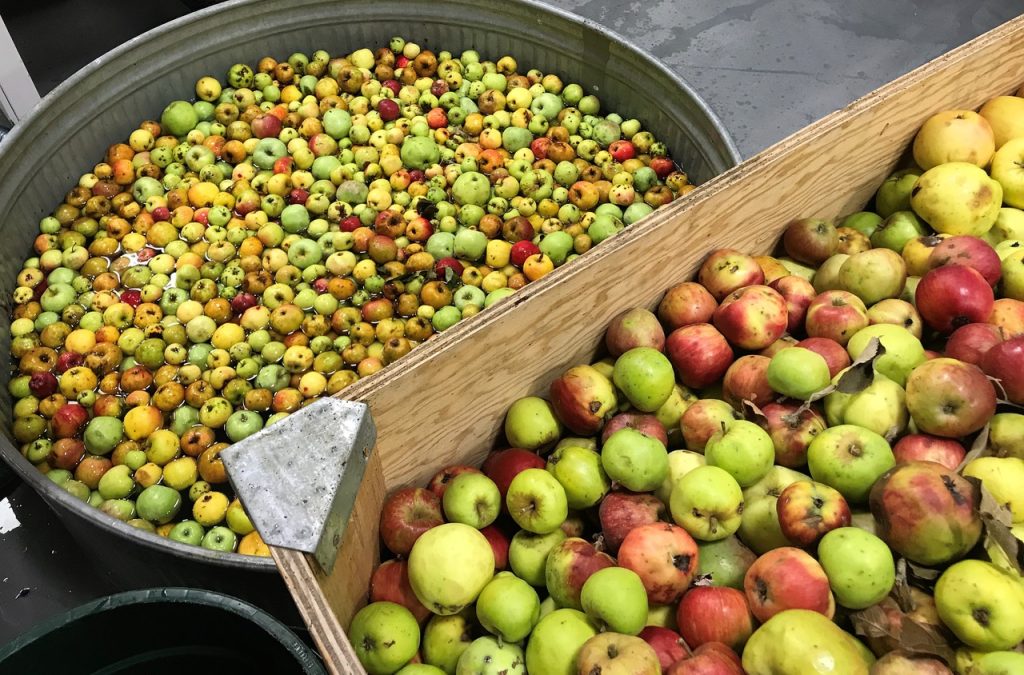
In the Pacific Northwest, some cideries take local apples and use them to create community cider-based ciders, with the profits often donated to a designated local charity. Following are some examples of PNW cideries’ community cider programs.

Art+Science (Sheridan, Oregon) –  While Kim Hamblin sees quite a bit of fruit go to waste, she also observes how people tend not to mind picking fruit, especially if it goes to a good cause. Launching a community cider program was a natural fit, given her focus on foraging.

After launching this program in 2022, her hopes were dashed with a very low yield because of a flukish April snow that affected blossoms and pollinators. As they are just beginning this program, they have yet to receive enough apples to make a cider, though she remains optimistic that the 2023 harvest will be significantly better. Once she has a cider in hand, she plans to donate to her favorite local groups, such as the community campus for their music program, the food bank or a local arts group. “It might be fun to have a list and let contributors pick their favorites,” she reflects. 

Lockhorn Hard Cider (Bozeman, Montana) – Owner Anna Deal loves the idea of turning something that would otherwise go to waste into something valuable, like great-tasting cider. Lockhorn Hard Cider planted an orchard five years ago with the hopes of growing cider apples to complement their cider production. Soon, they realized there was a “mature orchard” full of an incredible variety of heirloom varietal apples scattered throughout the backyards and homesteads of the Gallatin Valley.

  When it announced it was collecting excess backyard apples to press into cider, the community responded with 14,000 pounds of apples that produced 1,000 gallons of cider. Subsequent years have been more challenging, with hard frosts in the fall before the trees are dormant, which damages next year’s bud, as well as snow and wind during blossom.

  People bring apples from their backyards to the Cider House in the fall, which they trade for a pint or can of cider for every 25 pounds of fruit. In addition, the Deals and volunteers help pick fruit for people who cannot pick themselves. “It has become a really beautiful fall tradition going back to these trees and small orchards with community members who have become friends to pick apples each fall. Conversation and the smell of apples in the golden fall sunshine is really magical,” Deal opines.

  Currently, Lockhorn partners with three local non-profits: Haven Montana (which provides domestic abuse support), the Gallatin Valley Watershed Council and the Bozeman Symphony. So far, it has raised nearly $3,000 for these local groups, with volunteers from each group helping pick apples when they can. 

Madrone Cellars & Cider (Friday Harbor, Washington) – According to Shaun Salamida, co-owner and winemaker, Madrone’s community-sourced cider program evolved naturally by connecting and talking with people who had old trees or knew local landowners who did. With the absence of land, it was driven to connect with locals who had abandoned orchards or orchards where there was just too much fruit for a single family to utilize. They pick about 80 percent of the apples themselves, as the old orchards are large, with even standard trees requiring special ladders. The rest are picked for them by generous property owners.

  Madrone Cellars & Cider has partnered with a local organization called the San Juan Islands Pomona, which aims to preserve, identify and evaluate local heritage varieties. Through this partnership, it has been able to help preserve and expand the culture of local apple and pear varieties and help restore old heritage orchards in the San Juans. So far, it has received scionwood from local heritage varieties to propagate about 30 trees.

  Since the program’s inception, it has grown from working with five local landowners to around 20. When it started, it was easy to jump around and get the apples without much difficulty. As it added more orchards, Salamida found that Madrone needed to set up charts and a calendar so it could schedule the picks. Also, as most picks are small and come in staggered throughout the harvest season, it had to find a way to press small lots.

  As it are only a two-person operation, its production was not impacted during COVID since apples could be dropped off or picked up using appropriate safety measures. With its tasting room and local restaurants closed, it had to pivot to grocery store and delivery sales. “There was a definite negative impact on our sales during that time, as most customers want to try their craft beverage before purchasing,” Salamida notes. 

Meriwether Cider (Boise, Idaho) – Since one of Meriwether Cider’s core company values is the community, it jumps on anything it can do to get closer and involve the local community, as well as help the area’s local agriculture and fruit trees.

 After launching its first Community Crush in 2016, it continues to issue an annual call to action to the local community through its website, social media and a press release to local news sources. Folks bring apples to the facility for about a month in August. Meriwether hosts a “Crushing Party” where folks come to help wash, crush and press the apples. In particular, children especially loved helping out. About a month later, it hosts a “Drinking Party.”

  Initially, Meriwether donated all proceeds to the Treasure Valley Food Coalition, a locally based non-profit focused on healthy and sustainable food production. During COVID, this organization went under and Meriwether Cider did not do a Community Crush in 2020 or 2021. When it brought the program back in 2022, it donated the proceeds to The Lost Apple Project, a non-profit that finds, identifies and protects wild apple varieties. 

Portland Cider Company (Clackamas, Oregon)

As a two-person operation, founder Jeff Parrish and his wife, Lynda, wanted to create a community cider program but lacked time to make that happen. Then in the spring of 2016, they moved into their current location and hired staff to help them with marketing and events. Armed with the resources to give this program a start, they launched Portland Community Cider that fall. Since 2018, they’ve partnered with Hunger Free Oregon in this venture. 

  Despite COVID restrictions, they were able to remain in full operation and continue their community cider program. Their donations exploded in 2020 and 2021, a fact Parrish attributed to the fact that with so many people working from home, there was simply more time for them to harvest apples. They established a no-contact process for dropping off the apples and pears, and the community responded in a big way. Also, their large open warehouse was akin to working outside due to its airy space and constant ventilation. In addition, all of their marketing and sales staff transitioned to primarily working from home.

 With over 100 varieties of apples available in the Greater Portland area, they have a wide range of fruit available. Their 2022 community cider was unique, as the percentage of pears donated appeared to be higher than in years past, which changed the character of the cider. Also, their cidermakers decided to use Scottish ale yeast to ferment the juice this year instead of wine yeast.

Seattle Cider (Seattle, Washington) – While apples are at the center of what Seattle Cider does as a company, it is not an orchard-based cidery. Its production facility and tasting room are located in SODO, one of the more industrial areas of Seattle. But as Maura Hardman, PR and marketing manager, observes, “Partnering with City Fruit since 2014 affords us an opportunity to keep our cidermakers connected with the most important ingredient we use.” 

  In 2015, Seattle Cider took City Fruits’ harvest viability from 68 percent to 98 percent by creating a product that benefited from the use of crab apples and other apples that were not fit for donation to local food banks and couldn’t be used for City Fruit’s CSA program. To date, its largest remaining harvest was a little over nine tons of upcycled fruit in 2016.

  All the apples used in making City Fruit Cider are harvested within the urban canopy of Seattle, from community food forests to neighborhood backyards. It even presses the apples in-house at the cidery, so from harvest to ferment, City Fruit is truly a “Seattle cider.”

  When the partnership first launched, the cider was available at a few select grocery stores and in the tasting room, The Woods. City Fruit is now available in the SODO tasting room and online, shipping directly to consumers in 39 states. Since the start of the program, Seattle Cider has donated $18,500 to City Fruit.

  The quantity of each varietal changes from year to year, so each City Fruit Cider is unique. As Hardman states, the company plans to release the cider on Earth Day, which lines up nicely with City Fruit’s mission. “It’s a great time for us to share the story of our continued partnership with City Fruit and help bring visibility to City Fruit’s important work in stewarding and harvesting from urban fruit trees to nourish people, build community and protect the environment.”

Western Cider (Missoula, Montana) – Western Cider founder Matthew LaRubbio decided to launch a cider program based on his experience as a caretaker at a historic ranch in Missoula, Moon-Randolph Homestead, which had a 130-year-old orchard. As part of the program, they would pick the fruit and press it at the annual fundraiser every year. “These connections to the places we harvest fruit is integral to our experience in making cider and has significance to our customers that drink the cider,” he observes.

  Since the programs’ inception, it has partnered with the Great Bear Foundation, which works to mitigate the confrontations between humans and bears in the urban wildlife interface. The Great Bear Apple Drive brings people from all around their region. A five-dollar voucher for cider is given for every forty pounds of apples, with 20,000 pounds of apples collected during their first year.

  Moving forward, Western Cider plans to use their community cider primarily for making ice ciders through a process known as cryoconcentration. This process involves freezing apple juice in a suspended container, allowing the sugars to slowly separate and drain into a lower vessel, and then fermenting that very sweet juice into a high-ABV cider. Western Cider ages it in oak barrels for one year and matures it in kegs for another year. The result is a plush aperitif clocking in at 16 percent ABV.

The Growth of Community Cider Programs

  Leadbetter encourages other cideries to just do it. “If you have even a small capacity macerator and press, you can have a community crush!” As Parrish observes other cideries outside the Northwest starting their community cider programs, he stresses how you can’t go wrong with engaging with your local community. “I don’t think there’s only one way to make a program like this work, so I would encourage any cidery wanting to make a community cider to follow a path that feels good to them and fits their values and capabilities.”

Carbon Dioxide & Nitrogen Play Important Roles in Craft Beverage Production

4 gas tanks

By: Gerald Dlubala

The production, delivery and packaging of beer and the use of gases like carbon dioxide (CO2) and nitrogen (N2) are inseparable. But because CO2 is also a natural byproduct of the brewing process, monitoring its levels during and in the delivery of draught beer is critical. Carbon dioxide has flavor characteristics that could cause your beer to undergo flavor changes if left unmonitored. Additionally, if pressures are left unchecked and become too low in the draught beer delivery system, the CO2 is allowed to leave the beer, causing the pour to be flat. Conversely, too high CO2 pressure results in over-carbonation, causing flavor flaws and a foamy pour. Either problem causes increased product usage and waste, increasing the brewery’s costs and decreasing an already thin profit margin.

Inline CO2 Sensors: Mettler-Toledo, LLC

  Dissolved CO2 sensors are inline sensors that continuously monitor dissolved CO2 in numerous applications, including the beer brewing process. Using dissolved CO2 sensors allows brewers to monitor key quality attributes of their product, ensuring a consistent product and all-important mouthfeel to their craft beers.

  Mettler Toledo offers its InPro5500i inline sensors, thermal conductivity sensors optimized for brewing quality control and monitoring the carbonation levels of the beer. The InPro5500i line uses digital technology to simplify handling, provide durable performance and offer increased product life, reducing lifetime sensor costs.

  Additional benefits and characteristics of Mettler-Toledo’s inline sensors include the following:

•   Helping the brewer maintain consistency and overall beverage quality control

•   Sensors are manufactured with a food grade, hygienic, intelligent design and diagnostics

•   The use of proven technology to accurately provide trusted CO2 measurement

•   Maintenance predictability

•   Process connection compatibility, available with three process connections: Variant Type N, TriClamp 2 inch and 29 mm with cap nut M42

For more information on Mettler-Toledo’s CO2 sensors, visit www.mt.com/analytical

Nitrogen Dosing for Shelf Life, Stability and Packaging Excellence: Vacuum Barrier Corporation

  While the applications for nitrogen dosing in the beverage industry have remained consistent, the products that benefit from being dosed have and will continue to grow. Cannabis-based beverages, the dramatic growth and variety of available RTD (ready-to-drink) cocktails and all nitro-style beers, coffees and teas benefit from nitrogen dosing in one way or another. Through its preservation and pressurization qualities, nitrogen dosing has allowed the explosion of new and flavorful RTDs to be distributed on a widespread basis to more markets. Pressurizing a can or PET (Polyethylene Terephthalate) bottle with nitrogen adds stability to the container, allowing for easier, more efficient and effective stacking and shipping. Additionally, the fact that nitrogen is inert and will not react with other substances or ingredients makes it ideal for use in beverage applications and industry because it doesn’t impact the aroma or flavor of the packaged liquid.

  “Adding a nitrogen doser to a filling line is a pretty simple process,” said Jim Fallon, international sales manager for Vacuum Barrier Corporation (VBC). “Our VBC dosers are designed to be bolt-on additions to a filler, with no requirement for complicated electrical or control integration. After determining the proper application for dosing, meaning pressurization, inerting or nitrogenating, the next step is to find the optimal location on the filler for installation. VBC application engineers also determine the appropriate dosing unit based on the available filler space, the brewer’s line speeds and the dimensions of the container that the brewer is using. Then, along with the doser, sensors and control panel, all that’s needed to start dosing is your power supply or compressed air supply, depending on the models used.”

  Fallon tells Beverage Master Magazine that the optimal amount of nitrogen dosing recommended for any application is found by looking at the associated needs.

  “In the beverage industry, these applications vary from pressurizing non-carbonated drinks for container rigidity to purging oxygen from the headspace for extended shelf life and nitrogenating a cold brew coffee or beer,” said Fallon. “VBC engineers collect necessary details about the container volume and dimensions, fill heights, line speeds and the brewery’s target specifications and goals. Equipped with that information, we can guide customers to the appropriate settings to ensure the dose is sized properly and, just as importantly, makes it into the container in a timely and consistent manner.”

  Fallon says that for many years, the only new advances in nitrogen dosing had to do with the availability of increased dosing speeds. But today, VBC dosing units can consistently and reliably dose up to 2,000 containers a minute, more than enough for most filling lines. Because of this achievement, VBC was allowed to shift its focus on advancing and improving the reliability and ease of adjustability of its dosers.

  “We’ve continued to build out the functionality of our Servodoser that we initially released in 2016,” said Fallon. “We’ve reduced the parts prone to wear along with maintenance needs of the long-life servo actuator, which has a cycle life into the billions. In addition, a servomotor on the valve stem allows for dose amount adjustment without changing any mechanical parts. These improvements reduce downtime and allow on-the-fly adjustment of dosing parameters. Vacuum Barrier’s modular aseptic dosing systems are quickly becoming the go-to design with OEM (Original Equipment Manufacturer) fillers integrating aseptic filling lines.”

  For more information on Vacuum Barrier Corporation and nitrogen dosing, visit www.vacuumbarrier.com

Gas Blenders for Draught Beer Delivery Solutions: McDantim, Inc

  To successfully dispense draught beer, you need pressure, and that necessary pressure generally goes unnoticed until something goes wrong. As far back as the early 1800s, that pressure was supplied by compressed air, but as all brewers know, oxygen doesn’t play well with beer. The solution to this dilemma was to use CO2, which was good unless you tried to use 100 percent CO2 in draught beer delivery systems that needed to push the beer over long distances from huge brite tanks that were only safety-rated for up to 15 pounds of pressure. Unfortunately, increasing pressure to push more beer only puts the tank over the intended safety rating or puts the brewer at risk of over-carbonating the beer.

  But by using blended CO2 and nitrogen gas technology in the appropriate amounts, breweries and taprooms can maintain and balance their beer storage and delivery systems to ensure the integrity of their draught beers glass after glass, maintaining product integrity without losing any quality of taste, aroma or mouthfeel, just as the brewer intended. However, premixed cylinders were found to be expensive and generally offered the wrong blend for the beer industry. McDantim Gas Blending Technologies was the first company to introduce a gas blender that was technically sound enough and appropriate for the beer industry. 

  “It started in the late 1980s,” said Kayla Mann, sales and marketing director for McDantim, Inc. “McDantim’s previous owner’s father was approached by Guinness to develop an on-site gas dispenser. Unfortunately, industrial blenders wouldn’t work well because they couldn’t handle low-flow needs. So, McDantim devised a blender optimized for low flow rates to ensure that the beer secured in your keg or brite tank is the same beer dispensed into the glass for your thirsty customers. Our goal is to improve draught beer consistently and continuously worldwide.”

  Mann said that McDantim Trumix® Blenders are generally maintenance-free, with a plug-and-play mentality that demands no electricity or cumbersome maintenance schedules.

  “The goal here is to set it and forget it,” said Mann. “Brewery or taproom managers already have enough on their plate without having to worry about gas blending. Trumix® Blenders are easy to install and set up with regulators and can be nestled in wherever a brewer decides to locate their gas storage. All our products are customizable for different CO2 and nitrogen blending needs, so no matter what beer you are brewing and serving, you’ll get what you need. We use six eager and local breweries as our testing grounds with our products, so we receive real-life and real-time situational help to ensure our blenders and products do what breweries need them to do. Our custom-configured blender solutions improve efficiency and decrease waste and are based on useable volume, including the length of delivery lines, the number of available taps and servers and the forecasted number of kegs per hour you can expect to use at any given time. It comes down to how many servers will be drawing out of how many taps simultaneously. Busy, large taprooms with several servers that stay busy for lengthy amounts of time will need a higher flow rate than the smaller craft breweries.”

  Mann tells Beverage Master Magazine that McDantim also offers a free downloadable app that can be used anywhere within the depths of a brewery because it needs no internet connection.

  “We’re all about education to improve the quality of the draft beer industry across the board,” said Mann. “The app is there for you to know what blend of gases is optimal for the beer you are producing or if you are struggling with pressure or specific lines. We can easily walk you through the app and teach you how it can help and improve your draught beer. It’s just another tool for everyone from the beginner through the seasoned professional, and it is valuable for those that may be hesitant to ask for help as well.”

Conditions included in the calculations are:

•    The beverage temperature in the keg.

•    The required keg pressure.

•    The CO2 content of the beverage.

•    Elevation above sea level.

•    The gas blend (CO2 percentage) of existing blender.

Your input conditions help determine the following:

•     The optimal CO2/N2 blend for your specific location and conditions.

•     What range of pressures you can safely apply to your beverages for optimal carbonation.

•     Easy U.S. and metric unit conversions.

•     The predicted CO2 content that will be maintained under unusual conditions, like high elevation production.

Additionally, McDantim’s free gas blend app includes helpful calculators for other areas of your draught beer process, including these:

•    The cost analysis calculator provides insight into how on-site gas blending with Trumix® blenders can save you money.

•    The gas usage calculator will forecast and determine how many kegs of beer you can expect to dispense using Trumix® Blenders or premixed cylinder gas.

•    The line restriction calculator helps brewers with their draught system design to get the correct restriction values to keep the beer from under or over-carbonation.

  McDantim’s Trumix® Blenders can be used equally well with all clean CO2 and nitrogen sources, including high-pressure cylinders, bulk tanks and separators. 

To contact McDantim or get more information on gas blenders, visit www.mcdantim.com

More Than a Pretty Face

Image Is Important, but so is Safety and Productivity

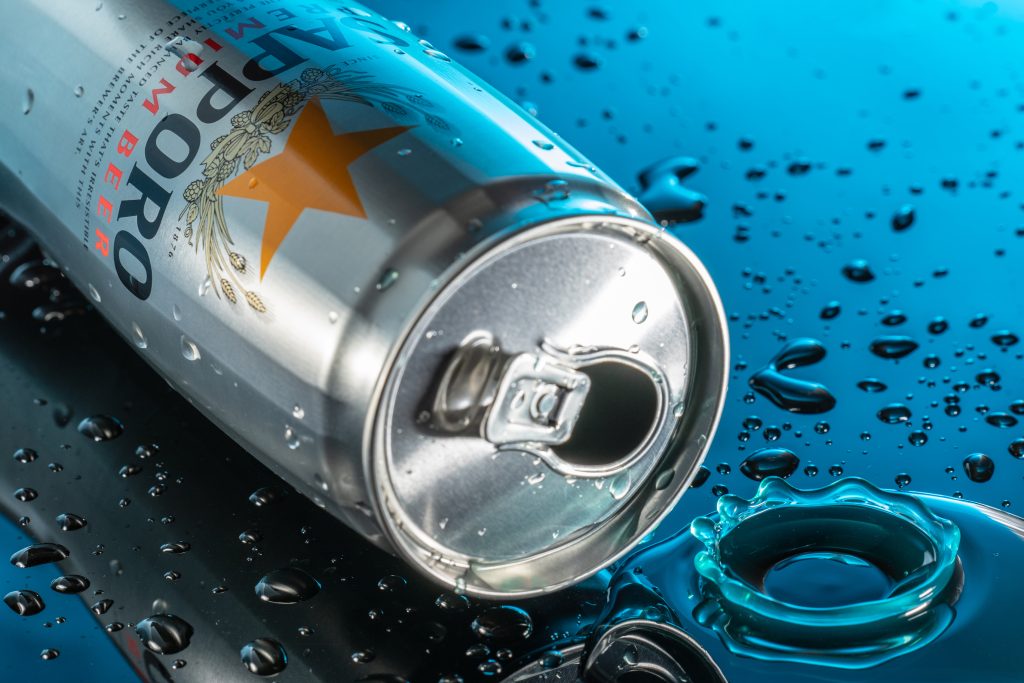
beer can lying on a flat surface

By: Cheryl Gray

While attractive packaging can draw new business for craft brewers, protecting what’s inside that packaging can make or break the bottom line. The same detailed attention is required to move products to store shelves swiftly. Fortunately, there are companies with specializations in each of these production areas.

  Among them is Industrial Physics, a test and inspection company considered to be a global leader in its field. Industrial Physics operates across a wide range of testing brands, each cornering a specialty. Those brands include CMC-KUHNKE, Steinfurth, Quality By Vision, Eagle Vision and TQC Sheen. Although it offers its customers multiple options, the company has a singular purpose: to guard the integrity of brands and products for manufacturers, production lines and laboratories across multiple industries worldwide.

  Steve Davis is the global product line director at Industrial Physics. He leads a team of experts who ensure that the company’s equipment protects the integrity of its customers’ metal packaging. Davis brings more than 20 years of engineering experience, with particular expertise in designing and developing metal packaging testing systems. He describes how Industrial Physics provides practical solutions for breweries large and small.

  “From seam inspection to label inspection, leak detection, code reading and abrasion testing, we’re here to protect the integrity of our customer’s beverage product.”

  Industrial Physics offers 40 testing applications and 2,500 products for a vast array of manufacturers, including breweries. Davis explains how the company leverages industry leadership to benefit its brewery clients:

  “The power and versatility of Industrial Physics allow us to support a broad range of breweries all over the world. And that really sets us apart from any other test and inspection provider. No matter the size of your brewery or the type of test you need to conduct, we can support you.

  The equipment allows organizations to test across a multitude of applications. Whether that’s ensuring that a can containing a fizzy drink won’t leak or that a cardboard box is strong enough to survive the turbulence of transit, the solutions are extremely diverse. We have a wealth of solutions available for the beverage space. From bottles to cans and kegs, we support beverage manufacturers of all sizes.

  But we don’t just provide equipment. At Industrial Physics, we’re equipped with some of the world’s finest minds within the world of beverage packaging and metal packaging. With an unrivaled portfolio of products that span so many specialties, we speak with our customers to ensure they’re discovering a solution that is suitable for their unique needs. With our equipment, we can help customers take their production and testing to the next level by investing in an instrument that will allow them to enhance their current setup and ultimately grow their offering by reducing waste and costs significantly.

  We also offer service solutions for our instruments, supporting customers with installation, calibration, preventative maintenance and repairs. No matter where you are in the world, we have local experts on the ground who can support your needs to ensure your instruments are operating efficiently.”

  One of the Industrial Physics brands is CMC KUHNKE. Davis describes its versatile options, all designed to save time and money:

  “Whether you’re a small brewery needing a compact and cost-effective solution like our useful CMC-KUHNKE seam saw, or a global giant within the world of beer looking for a more advanced, automated solution such as our CMC-KUHNKE Auto XTS, we can help you with this and everything in between!”

  Safeguarding the integrity of brewery products requires thought in every step of production. When it comes to keeping production lines moving swiftly and efficiently, Custom Conveyor Concepts promises to meet the needs of virtually any brewery. Matthew Gill, a co-founder of the company, has been in the packaging industry for some 40 years, working various floor positions before moving into management, sales and consulting. Gill explains how Custom Conveyor Concepts evolved:

  “In terms of the number of years in business, we are relatively new, as we were founded in 2015. However, Custom Conveyor Concepts (CCC) was formed after having been producing conveyors for more than 10 years for Exchange Team Advantage (ETA) and their customers. ETA was founded in 2005 as a used equipment supplier and OEM rep for virtually all aspects of liquid and powder packaging – depalletizing/unscrambling, filling, capping, labeling, coding, case packing and palletizing – literally, start-to-finish, turn-key applications. In doing so, we were requested to provide the connecting, often challenging, conveyor. After years of producing it for specific applications, the decision was made to make it available as its own commodity, and Custom Conveyor Concepts was born.”

  Gill emphasizes that his company’s products are designed to solve problems confronting breweries, whether accommodating tight spaces or tight deadlines.

  “We provide solutions. Whether it is space limitations, the need to expedite size changes or how to increase output, the only essentials required are your needs. Tell us what you want to do, and we will work with you to make it happen. We have worked with many startup companies, as well as very large, universally recognizable companies, and helped them grow. Our conveyors are versatile and expandable, as you can easily add, remove or re-route them. We only offer stainless steel, and our conveyors are constructed out of 11 ga., providing solid, durable equipment that will stand up to the harsh cleaning chemicals and offer ease in cleaning.”

  Gill adds that Custom Conveyor Concepts understands how to help breweries maximize their equipment investment while, at the same time, staying within budget.

  “We have worked with 600 cpm breweries down to 3 hd. fillers and manual crowners, when bottles were more prevalent. Our defining quality, in addition to the quality product we provide, is the attention we give to our customers and helping them achieve their needs, often providing options to help them stay within or define their budgets. We provide specialty equipment and service at ‘regular’ pricing. We don’t charge extra for non-stock items or detailed line layouts for placing the equipment. 

Our entire team’s product knowledge and industry experience are irreplaceable for providing application solutions. We do where others say it can’t be done. Many of our competitors don’t want to be bothered with small, low-dollar projects or small projects that require you to seek a solution. We excel at those.”

  Among the most popular products from Custom Conveyor Concepts are its serpentine conveyor and accumulation tables. Gill explains that while space is at a premium in most production facilities, it is more so in smaller operations. These two items, he says, offer ready solutions.

  “Utilizing a serpentine conveyor can convert the space a 5-foot conveyor consumes into 15 feet. The ability to make a roll change on a labeler without shutting off the filler makes the ROI for inline accumulation tables worth every penny.”

  Creating the bottling for breweries worldwide is the role of BPS Glass, a company based in Panama City, Panama, with its U.S. office in Atlanta, Georgia. As a family-owned business that began some 60 years ago, BPS Glass now boasts a reputation as one of the leading suppliers in the glass packaging industry. At its core is an emphasis on investing time, resources and effort in training its team members to create viable, innovative solutions for clients. Isidoro Cherem, a spokesperson for BPS Glass, says that the company works with breweries and distilleries that range from small craft operations to large commercial facilities. Cherem adds that dedication to optimal customer service sets the company apart from its competitors.

  “Thanks to our amazing team of experts and our commitment to excellence and creating long lasting relationships with our customers, we have grown to be the largest packaging supplier in the South and Central American region. We are constantly working towards expanding into the USA, and we are sure that we can replicate our success in the North American region.”

  BPS Glass offers more than 150 types of glass bottles for multiple industries, along with custom bottle designs. It also promotes services that include client-specific packaging and assistance with logistics to ensure timely, secure delivery of orders at the most cost-effective rates.

  Label design is another service BPS Glass provides its clients, with a focus on label colors and shapes, materials, textures and other aesthetic components. The company adds that it equips its clients with real-time marketing analysis, keeping an eye on marketing trends to help clients choose the right bottle, label and packaging for a product.

  Multiple choices in bottle closures are also on the company’s product roster. It points to its decades of knowledge in the chemical processes, physical considerations and industry safety standards to help clients safely package a product for consumers.  

  Whether using cans or bottles, breweries must factor in how best to protect the integrity of their product, both in terms of taste and safety of consumption. In addition, the efficiency of a production line depends upon investment in the right equipment that can move products swiftly and safely to store shelves. These considerations require the expertise of companies that know how to help breweries achieve these goals on time and within budget. 

How to Recession Proof Your Beverage Business

recession proof statement

By: Raj Tulshan, founder of Loanmantra.com

Despite a recent pandemic, record-high inflation, and several years of economic uncertainty, entrepreneurship continues to thrive, with more than 31 million entrepreneurs in the U.S. In fact, Americans’ confidence in small businesses has reached record highs, even exceeding confidence in the military, the medical system, public schools, and the U.S. Supreme Court. But is your business recession-proof?

  Since World War II, the U.S. has experienced 12 recessions, averaging one every six years. Recessions are more common than most people realize, and most people will encounter several over the course of their careers. Therefore, it’s crucial for business owners to prepare to survive the next (inevitable) recession.

  A recession is defined as a significant decline in economic activity – including gross domestic product (GDP), income, employment, industrial production, and wholesale-retail sales – and can last anywhere from two and 18 months. While recessions are common, they can be incredibly stressful for business owners, who will very likely experience some business disruptions. The key to surviving the disruption is to plan, differentiate your business from the competition, cut spending, and create additional revenue streams.

  In addition, here are ten tips to survive – and thrive – during a recession.

1. A downturn doesn’t mean doom and gloom for every business. Nearly 75% of public companies with $50 million or more in annual sales had declining revenue growth during the last four economic downturns, but 14% actually accelerated revenue growth and increased profitability. The different outcomes depended largely on the type of products or services the companies sold and how well (or poorly) they met customers’ needs. Remember that even during economic downturns, customers still buy essentials (e.g., food, utilities, household items, etc.) and need certain services (e.g., healthcare, car repairs, etc.). “Recession-proof” your business, providing what people will continuously need, to maintain sales.

2. Plan for a recession. Ebbs and flows are a normal part of the business cycle, so plan accordingly. Focus on maintaining revenue, preserving cash flow, and generating demand. For instance, running out of cash is a major concern for business owners, so assess your cash balances, expenses, and incoming cash flow. Work within your budget. Track your key performance indicators and adjust if you aren’t meeting target metrics. Pay down debt. Reduce financial waste.

3. Prepare for the unexpected. You’ve likely heard the advice to establish an emergency fund to cover personal expenses, and this is a wise move for businesses, as well. Create an emergency fund that can cover up to six months of essential costs, including payroll, inventory, rent, and utilities. Proactively collect outstanding receivables. Talk to a financial advisor about whether you should consider revolving loans, alternative financing, small business loans, and/or other options.

4. Operate efficiently. Reducing operating expenses can be a challenging task, especially as you must continue providing extraordinary products and services. Whatever expenses you cut should be invisible to customers. Determine where you can make small tweaks that can add up to big reductions, such as leveraging early pay discounts from suppliers, automating manual tasks, and renegotiating supplier contracts.

5. Multiply revenue opportunities. This strategy will require some creative thinking. Brainstorm ways to capture new revenue without making any major investments. For instance, expand your brick-and-mortar retail store’s reach by selling goods online. Adjust your business model. For example, a bakery could start offering take-home kits for birthday parties. Or a bar could sell merchandise and specialized beer onsite and online, in addition to selling drinks and food.

6. Modify offerings. Adjust what you’re selling to make it more attractive to customers and prospects during tough economic times. Think of how restaurants changed their business models during the COVID pandemic to sell to people when they couldn’t dine onsite. To adjust to the changing climate, restaurants started offering more delivery, takeout, and curbside pickup options. And, as more people worked from home, clothing retailers adjusted, offering more loungewear instead of formal suits. During a recession, pivot accordingly. In addition to altering your business model, consider changing your pricing structure and offering more incentives to entice people to buy, even if they have less disposable income during a recession.

7. Strengthen relationships. Acquiring a new customer can cost five times more than retaining an existing customer. Create and maintain strong customer relationships. Understand their changing needs and give them what they want. Offer the “value add” that they can’t get from your competitors, whether that’s free shipping, personal shopping, or a willingness to place special orders on their behalf. At the same time don’t forget your valued vendors, partners and associates. When times get tough those relationships could save the business. Or you could help save someone else’s business. Whether it’s extra time on a delivery due to supply chain issues or just a pep talk, remembering those relationships is essential.

8. Stretch your tech. Most businesses purchase technology to be more efficient and productive but haven’t taken the time to maximize the full benefits of the system or appoint an expert that can fully leverage its benefits. Before you are investing in new systems, stretch your current tech. Tech tools can also help you change distribution methods, such as pivoting from in-person tutoring, which limits you to a specific geographic radius, to online tutoring, which expands your reach.

9. Continue marketing. You may consider cutting marketing to save a few bucks but resist that urge. To maintain revenue, you’ll need to stay in front of your key audiences with social media efforts, online ads, positive news stories, compelling blogs, etc. Launch (or continue) loyalty campaigns to recapture past customers and increase touchpoints with your current customer base. Target your messages to align with customer pain points in an uncomfortable economic climate. Spotlight loyalty programs. Incentivize customers and prospects with discounts, BOGO, and other deals. Maintaining visibility via marketing can help you increase market share, particularly if your competitors pause their efforts.

10. Insulate Finances. Consult financial experts, like those at Loanmantra.com, to develop a plan to become recession-proof. They’ll help you determine how to cut costs, adjust your business model, and secure any necessary loans. If you need a loan to boost your company’s financial health, they’ll help you calculate how much of a loan you’ll need (and qualify for). Financial experts can advise you on all aspects of the loan, including the application process and what types of information you’ll be required to provide.

Raj Tulshan is the founder and managing member of Loanmantra.com, a one-stop FinTech business portal that democratizes the loan process by providing corporate sized services and access to entrepreneurs, small and medium sized businesses. Connect with Raj and Team Loan Mantra at 1.855. 700.BLUE (2583) or info@loanmantra.com.

Chronicling the Rise of Schilling Cider

5 ciders placed in a table

By: Becky Garrison

How did Colin Schilling go from making cider in his teens to operating Schilling Hard Cider,  the second-largest cidery in the United States? According to Emily Ritchie, executive director of the Northwest Cider Association, it’s a smart business. “That, combined with a passion for cider, has enabled them to be one of the top cider producers in the country! They’re pushing boundaries and finding shelf space for the cider category. They’re helping to lift all ships in the rising tide,” she notes.

  When asked about the inspiration behind his innovative cider portfolio, Colin Schilling points to his great-grandfather. In 1881, August Schilling founded the Schilling Spice Company in San Francisco, where he became known for products that put quality over a lower price point.

  Schilling grew up with cider in his blood. In the 1970s, his parents carried on this family craft tradition by pressing and making small-scale cider on their farm in rural Idaho. While he started making cider when he was 14 years old and continued homebrewing during his college days, Schilling says he never envisioned a future as a cidermaker.

  Then, after a five-month stint with Microsoft, he noticed how Angry Orchard kept trending in a direction that pointed to a growing interest in ciders. In Schilling’s estimation, his cider tasted better than other ciders on the market. So he convinced his friend, Mark Kornei, to join him on a new venture. They both quit their corporate jobs and launched the cidery, with Colin taking on the title of CEO and master cidermaker and Mark assuming the role of CFO.

  By November 2012, they had developed their initial concept for their cidery and filed their LLC papers the following month. At the start of the new year, they moved into a 30,000-square-foot facility south of Seattle in Auburn, with their first sales in April. Initially, raw apples were processed into juice, which was completed in Yakima in Eastern Washington, and then the juice was trucked to Auburn. They also employed a local cannery that filled and seamed their cans.

Pushing the Boundaries of Cidermaking

  From the cidery’s inception, Schilling has wanted to continue his family’s commitment to craft while pushing the boundaries of what he envisions as a cidermaker. Over the years, he has maintained a commitment to producing a craft cider that fits the definition of cider in the United States. Hence, 51 percent of the apple base in all Schilling ciders is made with 100 percent fresh-pressed apples. “At its core, cider is good quality apples. Then from there, the world’s your oyster,” Schilling reflects.

Canned Cider Pioneers

  Schilling proclaims they were a pioneer in producing cider in cans instead of bottles. When they started Schilling Hard Cider, ciders sold in the US were in bottles. But Schilling believed cans represented a far more sustainable way to package a beverage product. So, even though ciders had not previously been sold in cans, they committed to more sustainable practices on the assumption that canned ciders would also be popular.

  After California voters passed Proposition 65 (The Safe Drinking Water and Toxic Enforcement Act) in 1986, the composition of canned liners changed from an epoxy base that contained trace amounts of BPA to 100 percent BPA-free cans. Schilling was able to access a canning process that was safer for both the planet and people. As an additional sustainability measure, they print their iconic labels directly on the cans rather than use non-recyclable stickers that must be peeled off the cans before they can be recycled.

  Schilling ciders are essentially sulfite-free, which the company states is necessary to make a quality canned beverage using their current liners. To ensure their products are self-stable without adding chemicals, they pasteurize their ciders through a large state-of-the-art tunnel pasteurizer.

  Among their earlier canning experiments, Schilling was the first cidery to produce a nitro cider in a can. Called Grumpy Bear, this was a nitro cider made with coffee beans that poured similar to a Guinness, replete with a foamy head. Also, they were the first to produce ciders from fruits other than apples, including grapefruit and pears.

Development of Tasting Rooms

  About ten years ago, Schilling decided to open tasting rooms in Seattle and Portland because these two cities represent the two fastest cider markets in the country in terms of per capita consumption and awareness of craft cider brands. In 2014, they opened their first cider house in Seattle with 32 taps, which, at the time, was the most extensive collection of cider taps in the world.

  Their number of taps has now grown to 35, featuring regional and local ciders and higher-end imports from Europe. At one point, they included two nitro taps into this mix. Because they are able to rotate multiple kegs at their cider house, they can test out new ciders and quickly gauge which flavor profiles resonate with consumers. Additionally, they now have the largest packaged selection of craft cider, with over 200 varieties in their cold cases for customers to enjoy onsite or take home.

  In 2018, Schilling opened a second cider house in SE Portland in the Goat Blocks neighborhood, which boasts the country’s largest selection of draft ciders with 50 cider taps. This site also has a restaurant serving a gluten-free menu and a winery license, where they show off some small-scale techniques by producing wines in five-gallon tanks. These wines are used primarily for special events and experiments.

Expansion of Schilling Cider

  Shortly after opening in 2012, Schilling ran out of space and utilized satellite warehouses to store empty cans, cases and other materials. So, two years later, they relocated to a 110,000-square-foot warehouse, also in Auburn.

  This expansion gives Schilling the infrastructure to scale up while still maintaining its craft sensibilities. For example, they can now store enough apples to fresh-press apples year-round. As proof, they are the largest fresh-pressed cider production facility in the country.

  Schilling also now has the fastest canning line in the world, which can run up to 1,050 cans per minute. The entire production line is fully automated, with a crew of highly trained individuals overseeing this production. Because the line is highly automated, and no one has to work shoulder-to-shoulder on the production line, they were able to assume total production during COVID while practicing social distancing. 

Changing the Corporate Culture

  Schilling attributes the high employee retention rate among his 75 employees to their work with Moe Carrick, an executive leadership consultant and author. “We’ve done a lot of soul searching, training and coaching regarding how I lead and run a company from the top. Then we’ve implemented policies that I think are quite different from what other folks experience in our industry.”

  For example, they benchmark their employee’s pay raises to the Social Security inflation number. Also, they engage in honest real-time feedback and just rolled out a company-wide employee training program whereby everyone gets to pick a broad topic they will focus on for a year. Along those lines, they work to ensure that all employees are tuned in to the company culture to function as effective brand ambassadors for Schilling Cider.

Charity Partnerships

  Every year they run a campaign called Keep It Wild with Oregon Wild and Washington Wild that raises money to help keep wild spaces intact. Last year, this campaign raised $20,000 for these charities. This year, they’ve expanded the program to eight states. In addition, the company hosts cider diners designed to raise funds for hunger relief charities. Schilling is also building multiple collaborations around National Cider Month in October, participating with the Northwest Cider Association and local events, such as Cider Summit Seattle and Cider Summit PDX.

New Product Developments 

  When Schilling’s Excelsior line of imperial ciders launched in 2018, they had the distinction of being the first cider to produce a cider with over seven percent alcohol that was packaged into a six-pack of 12-ounce cans. In doing this, Schilling figured out a way to scale up a high-tannin exotic cider by bringing in bittersharps and bittersweet apples from Europe and France, where cider apples are still grown in abundance. They combined these apples with locally grown apples to create a tart but semi-sweet cider.

  Also, through experimentation, Schilling developed the ability to produce a highly carbonated cider, a feature they employed in their Excelsior Red Glo! This one-of-a-kind dry imperial cider is made with unique and rare Lucy Glo™ apples. A cross between a Honeycrisp and an Airlie Red Flesh apple, these apples are grown by fourth- and fifth-generation growers in the heart of Washington State’s apple country.

  Another new Schilling product is Vida Maté, a non-alcoholic canned drink made from Yerba Maté, a South American plant that contains naturally occurring caffeine, brewed into a tea and flavored with real juices.

  Moving forward, Schilling points to their 110,000-square-foot warehouse, noting they have plenty of room for expansion. Along the way, Colin Schilling will continue to explore ways to be a sustainable leader in the industry while producing unique craft ciders. 

From the Ground Up: Building a Brewery

Expertise Now Rescues Craft Brewers from Costly Headaches Later

brewing materials in a convention

 By: Cheryl Gray

Quality, precision and productivity are just some of the elements that factor in when deciding what brewery equipment to install.

  Whether for a start-up or an expanding operation, equipment is a major investment, and there are companies whose expertise is to help guide their brewery clients toward making that investment pay off.

  One of them is Craftmaster Stainless, a full-service stainless equipment provider that provides an expansive list of products for breweries, wineries and distilleries. The California-based company has clients across the United States and Canada. The company prides itself on the detail and finishing of every product its manufactures, as well as the customer service it provides before and after the sale.

  Mackenzie Sant is a sales and equipment specialist for Craftmaster Stainless. He says that learning about craft brewing from the ground up introduced him to the company’s products. The team behind Craftmaster Stainless, Sant explains, has multiple years in brewing, technical detail and customer service. That experience supports the company’s ability to translate a client’s equipment wish list into a customized experience. It is just one of the company’s assets that Sant believes puts Craftmaster Stainless ahead of its competitors.

  “We offer every piece of equipment someone needs to start a brewery. We want to be your one-stop shop. We won’t furnish your taproom or install your walk-in cooler, but we have all the equipment you need to upscale that popular homebrew batch or to upgrade from the ugly  brewhouse you have been brewing in for four years. We wish we could have in-person meetings with everyone shopping for a new brewery, but a phone call works wonders. Tell us your business plan, what styles of beer you want to brew and projected production numbers, and we can spec out the equipment you need. We work closely with other manufacturers and suppliers in the U.S. to source equipment that we don’t produce, from the start of the brew day milling the grain, to chilling and carbonating before pouring a crispy pint.”

  And just what does a newly-minted brewing operation need? Sant provides a checklist of essentials, beginning with a business plan and a building followed by must-have equipment, such as a mill/auger for crushing and transporting the grain to the mash tun, a mash tun/lauter tun for converting complex malt sugars into fermentable sugars and a kettle for “cooking” unfermented beer (wort), as well as for adding hops/adjuncts and pasteurizing the liquid to ensure a clean fermentation.

  Sant adds that additional essentials include a heat exchanger to cool the wort down to fermentation temperatures, pumps for cleaning or transferring liquids, unitanks/conical fermenters for the bulk of fermentation, brite tanks for conditioning, clarification and carbonation and, lastly, a glycol chiller for controlling fermentation and conditioning temperatures. The latter, Sant advises pairs well with a cellar control panel to control each tank.

  Regarding some of the most popular items on the product list for Craftmaster Stainless, Sant points to a number of items that highlight the company’s unique feel for what breweries need, including one piece of equipment that takes the tedium out of a very mundane but necessary chore.

  “I would say our keg washer is the most popular piece of equipment at the moment. I think I speak for most brewers when I say that keg washing is probably one of the most repetitive jobs in the industry. This machine makes that job easy. It is seriously your best ‘employee.’ Once again, our customer service is always there to help with any trouble shooting. We understand downtime is not profitable, so we are always available to help. I would say our brewhouses are popular as well. They look great and they get the job done. Our level of customization on our brewhouses will catch your eye. We do have a couple other products releasing this year that will steal the spotlight for a while.”

  The company’s new product launches include the Craftmaster Stainless Semi-Auto ‘Keggernaut’ Keg Washer and another new equipment item.

  “We just released our Three Gallon Hop Doser. The Hop Doser is a great attribute in our equipment line up. When introducing hops into the brewing process, you don’t want to introduce oxygen. This hop doser allows you to dry hop without oxygen ingress. It can be used for other adjuncts as well, so use your imagination. Keep an eye out for equipment to come. There is so much technology in the industry that isn’t being used, and we have big plans for the future, while staying competitive.”

  From Lincoln, Nebraska, is ABE Equipment Company, which designs and manufactures a variety of equipment for breweries. The company’s brewhouse equipment is custom-built, paying special attention to solving problem areas such as low ceilings, tight spaces, ventilation barriers and utility requirements. Ashlei Howell is the marketing manager for the firm’s parent company, Norland International.

  “Our sweet spot is the 1,000 BBL to 5,000 BBL per year brewery. Our products cater to much larger breweries, and much of our equipment can be used on a much smaller scale, but the niche we serve will be a bit on the higher production end.

  We pride ourselves on being able to offer a complete solution at a fair price. We handle everything from grain to glass. Everything is designed and assembled in Lincoln, Nebraska, and we employ over 130 hardworking Americans to make our suite of products. Our dedicated customer service technicians train our customers and make themselves available nearly anytime to answer questions.”

  When it comes to introducing new products to the market, Howell explains that ABE Equipment Company is focused on what will increase its clients’ bottom line.

  “Our newly released products have changed how breweries and distilleries package their product. The new CraftCan Go is a small footprint, one operator and a dual-purpose (atmospheric and counter pressure) canning machine. Breweries are packaging so much more than just beer in today’s environment.

  A canning line capable of making beer, coffee, seltzer, tea, and anything else that may be high or low in carbonation adds versatility to the brewery. It sets that particular machine apart from anything else on the market.

  The Patriot Fill Station allows companies to package virtually any beverage on a budget. It is a manual fill station allowing the user to package around eight bottles per minute. This machine can handle alcohol, syrups, oils and many more viscous or non-viscous liquids. With so many craft beverage companies coming to the market, having an affordable machine to get a product into a package at a reasonable price is a must for any beverage company wanting to stay ahead  of the game.”

  Howell offers input on some advanced equipment choices for breweries to consider.

  “There are numerous products a brewery can add to its lineup to optimize production, save time, cut costs and much more. A yeast brink allows breweries to reuse yeast and can easily be added to your equipment lineup. If harvested and stored correctly, you can sometimes yield up to 10 generations of yeast, spreading the cost across multiple brews. With rising grain costs, adding a bulk grain silo is becoming a more economical option for breweries. Buying in bulk saves time when brewing, but you can cut significant costs when ordering large amounts of grain at a time. The ROI on a silo is easier to prove now more than ever. There are also a variety of smaller, simpler items, such as brite tank monitors, CIP carts, and brewhouse automation options that help improve production within a brewery.”

  MISCO Refractometer and its 70-year history have earned a place in the specialty field of refractometry. Refractometers in the brewing industry are among the equipment needs experts say breweries should have on their checklist of items designed to ensure quality control. As the singular item that the company manufactures, MISCO offers a wide range of refractometer choices for different industries, but one specifically designed for brewing. The company says that its MISCO Digital Beer Refractometer deploys a patented design specific to wort and eliminates the need to use a refractometer correction factor when placing measurements into beer calculators.

  Another advanced equipment option for breweries is a set of sieve plates for the mill. According to experts like Sant, even a one percent efficiency loss in this area could cost hundreds of thousands of dollars in a single year. Along with this, brewers may want to consider keg washers along with portable and inline flow meters. Sant recommends breweries make equipment choices with long-term gain in mind.

  “Can you save money in the beginning by cutting cost on your equipment? Absolutely. But what about labor cost, repair cost for failing equipment and bad batch efficiency? The list goes on. Spend less time worrying about the equipment and more time worrying about the beer you are creating. A popular beer podcast said that every 10 minutes you save brewing is a cold beer at the end of the day. Spend that extra time focusing on different aspects of the process.”

Proper Tank Selection Begins With Business and Production Goals

2 huge brewing machine

By: Gerald Dlubala

From start to finish, a well-equipped brewhouse or distillery is a complex linked chain of equipment, including specialized tanks and storage vessels, each important to the final product. But brewery and distillery experts agree that before finalizing any decisions on the purchase or upgrade of your tanks and tank accessories, it’s critical that the equipment manufacturers know your business and production goals, both now and in the future, so that they can recommend the proper vessels for your needs.

It’s in Their Name: Quality Tank Solutions

  To help sort through all of the possibilities, Jimmi Sukys, owner of Quality Tank Solutions (QTS), says that it’s critical to research and choose a manufacturer that carries an excellent reputation in your industry with the equipment they manufacture or import and with the knowledge and service capabilities for support of those products. Quality Tank Solutions brings over 50 years of expertise in the stainless-steel industry, providing sanitary liquid solutions to the brewing, food and beverage, dairy and pharmaceutical industries. QTS builds lifelong partnerships because of its willingness to work alongside each customer from start to finish and beyond. They offer everything a craft beverage producer needs in quality, right-sized equipment and accessories.

  “Before we even get to the tanks, a producer should know the production goals that match and support their business plan,” said Sukys. “From there, we can determine the size and quantity of necessary equipment, develop a plan for future growth and plan for the type and size of the facility that will support this plan. Of course, there are exceptions. For example, when a craft producer finds their perfect location, say, a great space for a taproom, we work backward using the available space. A quality manufacturer helps clients determine the optimal equipment size for their production space and provides the production capabilities of that recommended equipment.”

  “The first step is knowing the process or function required of the tank in question,” said Sukys. “A quality manufacturer should ask questions to be sure they design and offer a proper vessel for your needs. For example, is it a process tank, and if so, what will the process involve? What type of products will you be mixing, adding, heating or cooling, and to what extremes? The more details you provide to a manufacturer, the more value you get from your tank purchase.”

  Sukys said that knowing the size of batches is critical as well. Too small of a tank limits production. Conversely, going too big with a goal of doing double or triple batches or more can raise issues when wanting to do only a single batch. Most tanks are not designed to heat or cool less than maximum volume production batches efficiently. Smaller batches may not hold temperatures correctly or cause stratification. A manufacturer that understands these limitations can be beneficial in presenting options that work for the producer’s needs.

  “Stainless steel has become the standard choice of construction,” said Sukys. “Stainless steel tanks can withstand decades of use when properly maintained. The range of temperatures in stainless steel tanks is much greater than other material choices, allowing a craft producer to use them for a wider range of processes. Welded ports replace screw-on fittings, which may need more maintenance. Additionally, stainless steel offers superior sanitation capabilities and can withstand aggressive cleaning with different chemicals. Quality manufacturers provide maintenance schedules for any equipment they provide.”

  Sukys told Beverage Master Magazine that any other accessories and equipment needed, like boilers and chillers, will depend on what the beverage producer plans to offer. Budgets must also include more minor things that add up, like hoses, gaskets, extra clamps, and fittings. He recommends using a manufacturer that helps with recommendations on what is necessary for startup and what additional equipment is good to have on hand. It’s common for equipment manufacturers to have accessories available to the beverage producer.

“The most important aspect of all of this is to choose a quality manufacturer that keeps current on the evolvement of the beverage industry and has the capability and expertise to design equipment that allows you to produce better beverages consistently,” said Sukys. “A strong warranty and service department is critical for peace of mind and knowing that you have a partner to have your back if unforeseen things happen. And remember that as your business and production goals grow, so do your equipment needs. The industry is constantly evolving, and better design of tanks and auxiliary equipment can help save energy, raw materials and production time. Finally, American-made equipment always has a higher resale value than Asian imports. That can be important when it comes time to resell your smaller tanks to replace them with larger capacity models.”

  For questions, consultations, and more information on Quality Tank Solutions, visit www.qts4u.com.

Flexibility, Efficiency and Cost Effectiveness: Paul Mueller Company

  Since 1940, the Paul Mueller Company has provided experienced help and demonstrated expertise in the processing equipment industry. Their reputation as being not only a quality manufacturer of brewing-related vessels and equipment but also a true partner of craft beverage producers is demonstrated through their equipment and industry knowledge and their respectfulness of client schedules and available workspaces to provide seamless transitions and minimal disruptions or interruptions, whether you’re purchasing new systems or replacing outdated or undersized equipment.

  “The first thing we should look at, as far as necessary equipment and proper sizing, is the planned production, and then work back from there,” said Jon Sprenger, regional sales manager for the Paul Mueller Company. “We find the best way to do this is to consider what your business will look like and what production levels you expect to attain in five years. That number is critical because bottlenecks in brewing and production are generally about available cellar space rather than brewhouse issues. You can brew beer around the clock, but you’re at a dead end if you don’t have the cellar space.”

  Sprenger also said that equipment like tanks could depend on the heat source chosen for the production space. Steam and direct fire are the two most popular, with steam being the easiest way to brew. The boiler can be pricey upfront. Conversely, with direct fire, you’ll be paying regular monthly payments for natural gas on a utility payment plan. It depends on available capital and the owner’s perspective from a cost standpoint.

  Along with this, Sprenger adds that an owner has to consider if they want to distribute their products or remain true to being a craft taproom. How do you want to handle your packaging? A quality equipment manufacturer will use this information to develop a successful equipment plan that incorporates the entire business model, not just presently but also with an eye toward the future.

  “And we can achieve that in different ways,” said Sprenger. “Consuming beer is like eating food. You do it first with your eyes. So many times, older, trendier and historic spaces have become desired locations for breweries and taprooms. That’s okay, and we can fill an already acquired space, or we can look at a producer’s projections and recommend comfortable square footage estimates to fulfill those goals. Either way of building a system is acceptable and falls under the umbrella of what we can do. Most manufacturers, including us, offer layout services and work with the available contractors and architects to develop a successful system. Stainless steel is advantageous simply because of its longevity. It’s built to last with simple and easy maintenance and cleaning capability. When compared to oak, which is difficult in this day and age to brew beer in, it becomes an easy and economically sound decision to go with stainless products just based on ease of cleaning and maintenance, lifespan and consistency in product endpoint and taste.”

  Sprenger tells Beverage Master Magazine that Mueller offers everything for a complete brewing system that falls in between the raw ingredients and the end glass.

  “We understand that it’s a lot easier and less time-consuming for beverage producers to deal with as few vendors as possible, so we offer all the necessary related equipment and accessories that they’ll need to complete their brewing system. That being said, we also easily adapt or integrate our products into any existing equipment that a craft producer already has in place. All of our equipment is customizable and will comfortably fit where it is supposed to go using as little movement as possible. Our equipment and installation successes are great marketing tools as well. Like consumers, we love to see our tanks on display in taprooms because they are also on display to other industry professionals that visit, including other brewers.”

Saving Money, Increasing Efficiency With Mueller’s Serving Beer Tank

  “One thing we’re excited about, and brewers should be too, is our serving beer tanks,” said Sprenger. “They’re a great alternative to kegs, and they don’t require the cleaning or CO2 that kegs demand. Beer goes into a mylar or polymer, food-grade bag inside a pressurized tank using only compressed air. The serving beer tanks don’t require cleaning because the replaceable bag protects the stainless steel from ever contacting the enclosed product. The use of compressed air negates the use of CO2, and we all know about the cost and shortage issues there. They come in various sizes and are perfect for taprooms. The tanks are completely mobile, easily transported outside for parking lot events, off-site festivals or stacked above your bar or in cold rooms for an awesome visual experience. The uses and locations are endless, and our serving beer tanks provide ultimate flexibility, space savings and costs incurred with keg ownership. In addition, the serving beer tanks offer a self-cooling, streamlined process of serving beer directly from the tank that promotes longer shelf life and fresher beer. We do recognize the need for kegs for distribution and other uses, but our serving beer tanks give brewers a cost savings option to replace kegs where available.”

  Mueller’s serving beer tanks show well in a copper or stainless finish, are ASME (American Society of Mechanical Engineers) code-rated and can easily push beer several hundred feet with no issues and serve multiple draft towers at once.

  For those looking for a complete system, Mueller offers their Beer Genius brewery system, a space-saving craft brewery package customized for your space and featuring their serving beer tanks, making everything from buy to brew easy and efficient with expert help and advice along the way.

  “We work with brewers through these types of things daily,” said Sprenger. “It’s critical to think through expected future growth. If you think you’ll need a size five tank, get a seven. The small extra cost will surely be less than the headache accompanied by a misjudgment in equipment sizing. Always consider your cellar tank needs, including brite and fermenter tanks, to accomplish your desired production goals. It’s always worth the effort.”

For questions, a consultation or more information on Paul Mueller or their serving beer tanks, go to www.paulmueller.com.

In the Market for Quality Parts and Accessories

  Many top tank and equipment manufacturers rely on parts and accessories from Gould Stainless Products. Gould Stainless Products sells everything you need except the tank and is a leading wholesale importer and distributor of stainless-steel sanitary tank accessories. Since 1991, Gould Stainless Products has filled the need for sanitary fittings, valves, pumps, tank manways and related accessories for the brewing, distilling and winemaking industries.

  Their extensive catalog is available online and by mail order. You can order a single, threaded joint, sight glass or replacement fitting up through stainless tubing lengths and replacement manways in various shapes, sizes and closure choices compatible with your existing system equipment.

   For more information and to view the extensive line of products that Gould Stainless Products offers, go to www.gouldstainless.com/home