Testing the (Still) Waters

By: Tod Stewart

A 30-year friendship solidified by a passion for whisky, a desire to put this passion into practise, and a determination to break new distilling ground in an environment where practically everything was against them – welcome to the story of Barry Bernstein and Barry Stein (affectionally known a “the two Barrys”) and the evolution of Ontario’s Still Waters Distillery. It’s a story that should inspire craft distillers around the world – and entrepreneurial types thinking about joining the ranks.

  Today, Still Waters Distillery continues to grow and its flagship – STALK&BARREL Canadian Whisky – should soon be available nationally across Canada, and plans are in the works to expand distribution into the US market. Beverage Master Magazine caught up with the Barrys to talk about past challenges, current successes, and future plans.

* BMBeverage Master Magazine

BM:  Initially, your venture involved importing whisky in bulk for blending. And, again, if my recollection is correct, you ran into some regulatory hurdles. Assuming I’m correct on both counts, can you elaborate a bit on this part of your past?

Barry Stein: Our initial venture, in 2005, was as an independent bottler of scotch for the Canadian market. We were importing single casks of scotch and bottling here in Canada. We were, at first, restricted to selling scotch in an “adulterated” fashion – by adding one per cent domestic whisky to comply with an obscure Canadian law. This meant we couldn’t call it scotch, which presented some marketing challenges. After much negotiation, we were able to finally get permission to bottle without blending, but that was short lived as the Scotch Whisky Association brought in rules that prohibited the bulk export of scotch for bottling purposes outside of Scotland.

BM: When did you decide to actually create a distillery? Though the regulatory landscape for small distillers has changed a bit over the years, what challenges did you face – both physically and regulatory – in setting up your operation?

Barry Bernstein: While struggling with our importing business, we were also seeing the growing small distillery industry in the US. It was clear that our importing business was not sustainable, with the regulatory restrictions, and we thought there was an opportunity to be the first craft distillery in Ontario and one of the first in Canada. We opened the doors to our distillery in 2009 after a great deal of work with the Canada Revenue Agency – CRA – on federal licensing.

BM: Where there issues with the CRA?

Barry Bernstein: The local CRA office had never seen a small scale distillery, and it required extensive documentation and due diligence. The Alcohol and Gaming Commission of Ontario – AGCO – had rules that only allowed large distilleries to sell direct to the public, and the only sales channel available to us, The Liquor Control Board of Ontario – LCBO – hadn’t dealt with a small local spirits producer, and it gave us no preferential treatment, expecting the same from us as it would a large multinational brand. Our local municipality relied on building code regulations that only described large scale distilleries, which forced us to invest heavily in facility upgrades. At every level of government there were significant challenges, but the constant “you cannot do that” only strengthened our resolve. We were determined to prove everyone wrong.

BM: Was your aim always to make whisky, or were you interested in a broader range of spirits – or was it the case that you were more or less forced to produce other spirits until your whisky was legally old enough to be called whisky?

Barry Stein: When we started, our focus was on whisky. But, by Canadian law, that requires a minimum of three years maturation, so we made vodka as well. By virtue of being the first in Ontario, we also attracted attention from others looking to get into the business, and we did both contract distilling and bottling. This gave us an opportunity to make different vodkas, gins, whiskies, liqueurs, and so forth.

BM: Sounds like you certainly gave the various authorities pause to reconsider what could and couldn’t be done. Have things got any easier for craft distillers from a regulatory standpoint?

Barry Stein: The ability to sell direct, which didn’t exist when we started, was significant. There has been some small wins on the taxation front, but it is still very difficult to be profitable. For us, the most significant changes have been the growth of the industry. Everyone now understands what a craft distiller is, and it is a lot easier to make noise as a group than as an individual.

Barry Bernstein: Our biggest challenge is taxation, federally and provincially, that take the vast majority of the sale proceeds. Canadian excise rates for spirits are ridiculously high. We’d like to see reduced rates across the board, and special rates or graduated rates for small producers, similar to what is in the US – or even in Canada for wine and beer producers. Though small producers can now sell direct to the public – which took years of work to make happen – significant distribution can only occur through the government run liquor stores, and it remains a difficult sales channel for a small player.

BM: Would tapping into the export market help you bypass the stranglehold of Canadian liquor boards?

Barry Bernstein: My role at Still Waters Distillery is primarily new business development, and I can say there are plans being made as we speak to be launched in the USA, which we are very excited about. We should have more details on this later on this year. In the meantime, I think it’s important that we focus on core competencies, and that is making truly great tasting Canadian whisky. We have perfected the STALK&BARREL Canadian Whisky blend and this brand is gaining significant distribution, which includes Ontario, Newfoundland, New Brunswick, and Alberta. Hopefully STALK&BARREL will be nationally distributed across Canada the near future.

BM: It’s said there’s strength in numbers. Have you collaborated with other distilleries or joined any trade organizations that are pushing for things like excise parity?

Barry Stein: We founded the Ontario Craft Distillers Association and are a member of national organizations. These organizations are more directly helpful to our clients, the brand owners, but that indirectly helps us. The more our clients prosper, the better we do.

BM: Are there any plans to expand production facilities in the future, or perhaps change locations?

Barry Stein: Yes, although we are still working on a plan. We have been increasing our production capacity incrementally. Our space is very tight and is an ongoing challenge. We actually have three facilities (production, bonded storage and non-bonded storage) and are looking at consolidating in a single location. We expect to have some definite plans by the end of year.

BM: Can you give us a sneak peek as to what new SWD spirits may be in the works?

Barry Bernstein: I think right now we are focusing on the rebrand of STALK&BARREL Canadian Whisky. This brand is definitely getting noticed by whisky lovers and cocktail enthusiasts. STALK&BARREL Canadian Whisky is now the Official Canadian whisky of Golf Canada, so with the RBC Canadian Open in June, and CP Women’s Open in August, we are ramping up production to meet the anticipated demand.

  With the ongoing expansion of the Still Waters Distillery – and growing market for its balanced, warm, vanilla and butterscotch-tinged flagship STALK&BARREL Canadian Whisky, not to mention the Golf Canada partnership – the “two Barrys” appear to have hit a Canadian distilling hole-in-one.

Uncorking Accessibility:  Ensuring Your Website Complies with the ADA

By: Vanessa Ing, Farella Braun + Martel

In today’s digital age, having an online presence is crucial for businesses, including wineries, breweries, and other beverage companies. Accordingly, it’s essential to ensure that your beverage website meets federal standards for accessibility to avoid lawsuits and fines. In this article, we will help beverage companies understand how to comply with federal law and implement accessible features on their websites.

Why is web accessibility important?

In 1990, Congress enacted the Americans with Disabilities Act (ADA). It prohibits businesses open to the public (otherwise known as “public accommodations”) from discriminating against people with disabilities in everyday activities. These everyday activities can include purchasing goods and services, or offering employment opportunities. 

In March 2022, the U.S. Department of Justice issued web accessibility guidance, reiterating that ensuring web accessibility for people with disabilities is a priority for the Department. Relying on the ADA’s prohibition against discrimination and its mandate to provide equal access, Department of Justice emphasized that the ADA’s requirements apply to all the goods, services, privileges, or activities offered by public accommodations, including those offered on the web. The Department of Justice’s guidance was particularly timely given that many services moved online during the pandemic. 

In its guidance, the Department of Justice explained that people with disabilities navigate the web in different ways: for example, those with visual impairments might require a screen reader that reads aloud text to the audience.  Those with auditory impairments might require closed-captioning software, while those with impaired motor skills might require voice recognition software.  A website, therefore, should be compatible with the full range of such software. 

Is your beverage company a “public accommodation” business?

Public accommodations include businesses that sell goods and services, establishments serving food and drink, and places of recreation or public gathering.  Companies that sell drinks, wineries that offer a tasting room, or breweries that host events are all considered public accommodations.  Thus, those businesses’ websites must comply with the ADA by being accessible to people with disabilities.  

It is an open question whether beverage companies without a physical location open to the public must still have ADA-compliant websites. Some jurisdictions, like the Ninth Circuit (which has jurisdiction over Alaska, Arizona, California, Hawaii, Idaho, Montana, Nevada, Oregon, and Washington), have tied the necessity of ADA-compliant websites to the existence of a brick-and-mortar location (Robles v. Domino’s Pizza, LLC). However, the Department of Justice, along with several federal circuit courts of appeals, has taken the position that even a public accommodation business without a physical location must have an ADA-compliant website.  

Given the increased prevalence of online-only services open to the public, it is very likely that litigation over the next few years may resolve this open question.  In the meantime, it is wise for beverage companies to take preventative caution and ensure that their websites are accessible.  

What are some website accessibility barriers?

To ensure ADA compliance, beverage companies must be aware of common website accessibility barriers.  These include poor color contrast, lack of descriptive text on images and videos, mouse-only navigation, and more.  By addressing these barriers, beverage companies can enhance the user experience for people with disabilities.

Six examples of website accessibility barriers highlighted in the DOJ’s accessibility guidance include:

  • Poor Color Contrast: Ensure sufficient color contrast between text and background to aid individuals with visual impairments or color blindness. Use color combinations that are easy to distinguish.
Low/High Color Contrast
  • Use of Color Alone to Give Information:  Avoid using color alone to provide information.  Using color alone can be very disorienting for someone who is visually impaired or colorblind.  Someone who is colorblind might not be able to distinguish between shades of gray.  One solution might be to ensure that symbols conveying information are differently shaped.  
Graph showing the use of color alone
  • Lack of Descriptive Alternative Text for Images and Videos: Provide descriptive text (alt text) for images and videos, allowing screen readers to convey the information to visually impaired users. This makes your content more accessible and inclusive.
  • No Closed Captions on Videos: Include closed captions for videos to accommodate individuals with hearing impairments. Utilize manual or automatic captioning options and review the captions for accuracy.  Free options are available on the web.
  • Inaccessible Online Forms: Make online forms user-friendly for people with disabilities. Provide clear instructions before the form, ensure that a screen reader could recognize required fields and fields with special formatting, ensure keyboard-only navigation, use accessible labels for inputs, and display clear error messages.  Note that an image-based CAPTCHA is not a fully accessible way to secure your form; your CAPTCHA should offer users who are visually impaired an audio alternative.
  • Mouse-Only Navigation: Enable keyboard-only navigation on your website to assist individuals with motor skill impairments or those who cannot use a mouse or see a mouse pointer on the screen.  Make sure all interactive elements can be accessed using the tab, enter, spacebar, or arrow keys.  Use a “Skip to Main Content” link to ensure that users employing only a keyboard can easily navigate the website’s primary content. 

To implement these features, beverage companies should discuss accessibility concerns upfront with the web developer.  Beverage companies should keep in mind that posting a phone number on a website to call for assistance, as commonly utilized by businesses, does not sufficiently provide equal access to the website and the services or goods provided.

Who can sue beverage companies?

Non-compliance with ADA standards can lead to potential lawsuits.  Although some courts have held that a nexus must exist between a private plaintiff’s disability and the web accessibility barrier claimed, a private plaintiff may easily surf the web for websites that are inaccessible.  A private plaintiff may then file a lawsuit in federal court without first notifying the business.  Further, liability under the ADA is strict, which means that the intent of the business to comply is immaterial.  Thus, it is prudent for beverage companies to proactively address accessibility issues to avoid potential legal troubles.  

Private lawsuits under the ADA can result in injunctive relief (a court order to comply with the ADA) and attorney fees.  And in some states, like California, the state law version of the ADA may enable plaintiffs to demand monetary damages ($4,000 per violation of the ADA). 

Government involvement, while less frequent, is possible in cases involving national retailers.  If the Department of Justice observes a pattern or practice of discrimination, the Department will attempt to negotiate a settlement, and may bring suit on behalf of the United States. At stake are fines of up to $75,000 for the first ADA violation, and up to $150,000 for each subsequent violation.

What are the rules for website accessibility?

Although the ADA itself does not spell out the rules for website accessibility, several sources provide detailed rules that can aid beverage companies in building accessible websites. 

First, the ADA authorizes the Department of Justice to enforce the statute.  Accordingly, the Department develops and issues regulations explaining how businesses must comply.  Specifically, § 36.303 of the Electronic Code of Federal Regulations specifies that a public accommodation shall provide auxiliary aids and services when necessary to ensure effective communication with people with disabilities, and that a public accommodation should consult with people with disabilities whenever possible.  The Department also issues administrative guidance, such as its March 2022 guidance described above.  

Second, Section 508 of the Rehabilitation Act of 1973, which requires federal agencies to make their electronic and information technology accessible to people with disabilities, provides detailed guidance concerning the display screen ratios, status indicators, audio signals, and other accessibility features. 

Third, the Web Content Accessibility Guidelines 2.1 (WCAG 2.1), which were originally designed by a consortium of four universities, provide highly specific web accessibility guidelines grounded on the idea that information on the web must be perceivable, operable, understandable, and robust.  These guidelines are widely referenced in court cases and settlements with the Department of Justice, as the guidelines address numerous aspects of web accessibility and offer three different levels of conformance (A, AA, AAA). Beverage companies can consult the WCAG 2.1 guidelines (including a customizable quick reference guide, at https://www.w3.org/WAI/WCAG21/quickref/) to ensure their websites meet ADA compliance. 

Looking Ahead

Web accessibility standards evolve over time, with updates being released periodically. Beverage companies should stay informed about changes and updates to ADA compliance regulations. For example, the WCAG 3.0 is scheduled for release in the latter half of 2023, further refining accessibility guidelines.

In sum, by understanding and identifying web accessibility barriers, and implementing necessary accessibility features, beverage companies can enhance user experiences and minimize the risk of legal repercussions. Embracing web accessibility is not only legally required but economically prudent in the long run, as it enables beverage companies to cater to a broad and varied audience, and demonstrates a commitment to inclusivity in the digital realm.

Vannesa Ing headshot

Vanessa Ing is a litigation associate with Farella Braun + Martel and can be reached at ving@fbm.com. Farella is a Northern California law firm representing corporate and private clients in sophisticated business and real estate transactions and complex commercial, civil and criminal litigation. The firm is headquartered in San Francisco with an office in the Napa Valley that is focused on the wine industry.

Financial Literacy Training

By: Kary at Beerbusinessfinance.com

Financial literacy is the ability to read and understand the most important numbers in your beer business.

Financial literacy training starts with practical and actionable ideas that you can use right away to improve financial results.

All of our financial training is for non-financial owners and managers.

Here’s how our financial literacy training works:

Quarterly financial meetings

You’re invited to join our beer wholesaler financial round-table meetings.

Network with peers, share best practices, and learn specific ways to improve financial results. Right away.

Library of wholesaler financial training courses

Access over a dozen wholesaler financial training courses.

Learn how to build your budget, build your key metrics dashboard, create (or update) your wholesaler business plan, and more.

Weekly beer wholesaler financial newsletter

Each week you’ll receive financial tools and resources straight to your inbox.

Examples of topics covered: Key drivers of wholesaler cash flow, sales growth strategies, cost cutting processes that work, and much more.

Beer wholesaler webinars, workshops and podcasts

Join our webinars and workshops (or watch the replays). This is your opportunity to hear from the best of the best in the beer industry.

Past topics: How to improve gross profit, beer wholesaler budgeting workshop, the latest technology and software.

Planning templates, models, and spreadsheets

We’ve got models to help you create your sales forecast, analyze gross profit, track cash flow, and much more.

If you’re ready to learn more about beer wholesaler cash flow, net operating income, and (wait for it…) EBITDA, now is the time to invest in your financial literacy training. 

Yours in financial literacy,

Kary

P.S. Interested in learning more about our beer business financial training programs? Book a time for a 15-minute talk. 

The Distillation, Maturation & Blending of Whiskey

Single Malt Whiskey Part 2

photo of whiskey glass half full on rock

By: Kris Bohm: Distillery Now Consulting, LLC  

Welcome to Part 2 of my article on the technical breakdown of the production of single malt whiskey. If you missed the first half of this article Technical Breakdown for Single Malt Whiskey Production, grab the last issue of Beverage Master Magazine, give it a read then come back right here to read the second half. Single Malt is an amazing, distilled spirit that is produced in countries all around the world and it can be made utilizing many different methods. This article will focus on a method of production employed throughout Scotland and also by some distilleries in the United States to produce single malt whiskey. We will discuss in depth one method on how this type of whiskey is distilled and matured. This half of the article focuses on the distillation, maturation and blending aspects of making malt whiskey and breaks down the steps of this classic method.

  Below we will breakdown the distillation method and expected production yields. With this data in hand we can explore barrels and barrel types, maturation times and expectations, then dive a bit into the process of blending barrels to reach a finished product of bottled whiskey. Let’s dive in and make some single malt!

  Single malt whiskey production from malted barley was first developed and refined in Scotland over several hundred years and the results of that production method produces some of the arguably finest malt whiskey in the world. For the purpose of this article we are breaking down step by step this classic method of whiskey making to better understand the processes that were developed by distillers who came before us. It is important to stress that malt whiskey flavor profiles can vary massively, when you taste a whiskey at one distillery versus another they rarely taste exactly the same. This is important to consider as there is no specific right or wrong flavor profile when it comes to single malt.

  In the first half of this article (In the December – January 2024 Beverage Master issue, page 42) we left off with a fermenter full of distillers beer made from malted barley, ready to be distilled into whiskey. In case you didn’t know, distillers beer is quite different from a beer made to be drunk as beer itself. Distillers beer does not have any hops added to it and is typically fermented rather fast. Distiller’s beer is usually only 3-7 days old when it is ready to be distilled. When a distiller’s beer has completed fermentation it is ready to be distilled immediately. At this time the beer is around 9% ABV. Some distillers have higher or lower ABV beer but 9% is a reasonable expectation. Now that our beer is done fermenting lets distill it.

  The beer is going to be pumped from the fermenter to a copper still where the beer will be heated up and the alcohol distilled out of it. The stills used for distilling single malt whiskey are batch stills that do not typically have any rectification plates or a dephlegmator. In the distilling process a distillery will employ multiple stills to complete the process of making whiskey. The still used for distilling the beer is referred to as a wash still. There is a second still used in a distillery for redistillation is called a spirit still . Both wash still and spirit still have a design that allows many flavors, oils congeners and character from the beer to carry over into the distillate. During the first distillation of the beer a rough unfinished product is produced called Low Wines Low Wines are the sum of all the alcohol distilled out of the beer along with some water, some oils and a ton of flavor. The distilled low wines are not a finished product as the concentration of alcohol is too low and the resulting distillate has too large of a concentration of water. To complete the distillation of the whiskey the low wines are put into the spirit still and redistilled. During this second distillation the heads and tails cuts are made which remove methanol and oils from the whiskey. The portion of the whiskey that is kept is often referred to as the hearts. This second distillation will yield a clear whiskey known as new make. New make will can be as strong as 75% ABV or as weak as 55% ABV. The new make is diluted with some water then put into barrels. Below is a chart that breaks down volume of distillation and expected yields from the distillation.

table showing distillation process

  The stills themselves employed in the process of distilling single malt whiskey plays a strong role in the influence of the flavor profile of the whiskey. In Scotland and in other whiskey producing countries, single malt whiskey is almost exclusively distilled in copper pot stills using the traditional batch distillation method. This method of distillation is intensive in both its use of energy and labor, but produces a flavor profile that is difficult to replicate using a more efficient  continuous column still for distillation. Because the flavor profile of malt whiskey produced through batch distillation is unique, distillers today still employ the traditional methods of batch distillation in making malt whiskey. Traditionally malt whiskey is twice distilled. One reason for this double distillation process is tied to flavor. There are many oils and congeners in distillers beer and in distilling whiskey more oils and congeners are carried over into the distilled whiskey when it is twice distilled in a pot. These oils and congeners play a large role of flavor in the finished mature spirit and are essential to create the complex flavor profile of single malt whiskey.

  Now that you have some freshly distilled new make whiskey it’s time to drink it! Just kidding, we have a few years to go before this whiskey is ready. It is time to put that whiskey in a barrel. One of the wonderful aspects of single malt production is the option to age the spirit in a multitude of different types of barrels. Unlike Bourbon and Rye Whiskey which can only be aged in charred new american oak, Single malt whiskey can be aged in new or used barrels from many places. Malt whiskey can be aged in sherry butts, wine casks, and used rum, tequila or bourbon barrels. The option to age whiskey in a variety of barrels and casks opens creative freedom for a distiller to add unique character to the distillate from the barrel. There are some distilleries that age their single malt in a variety of casks with some whiskey aging in new charred oak barrels and some aging in used barrels. Aging in a variety of barrels creates a diverse profile of whiskey in flavor and color which allows the folks blending the whiskey to have more flavor components to work with. The concentration of alcohol in a new make whiskey when it is put into the barrel is a bit stronger than the strength at which it is bottled. Entry proof is a big factor in maturation. Some folks will fill barrels with whiskey as strong as 62.5% alcohol by volume others will barrel at a much lower 50%. This difference of entry proof plays a strong role in the flavor components extracted from the barrel.

  The whiskey is now in your barrel so let’s hurry up and wait. The amount of time that a whiskey needs to spend in the barrel to fully mature can vary immensely depending on many factors. The biggest factor that determines the required amount of time a whiskey needs to spend in a barrel is the environment in which the barrel rests. In colder climates such as those found in the northern United States and in Scotland the maturation period is rather long for a whiskey to reach its fullest potential. This time period to reach maturation can exceed 10 years. When a barrel is stored in a warmer climate the required amount of time for full maturation of the spirit it’s quite a bit shorter. In places like Texas some distillers have found that single malt whiskey will fully mature in as little as 3 years. Determination as to whether or not a whiskey is fully matured is a hotly debated topic and is best left up to those who need to make the choice as to whether or not their whiskey is ready to be bottled. What flavors make a whiskey taste fully mature is tricky and it is important to point out that a 10 year whiskey aged in Minnesota will not taste the same as a 3 year whiskey from Texas.

  So now that you have tasted some of your aged whiskey from the barrels and the whiskey is tasting mature it is time to blend some barrels together to create a finished product. The process of tasting and selecting the barrels that will be blended together to make a finished product is just as important as the distillation process itself. No two barrels of whiskey will mature and taste exactly the same. Some barrels need more or less time and some whiskey within the barrels will develop different flavor profiles from its neighboring barrels even when those are often made from the exact same whiskey. It is critical to take the time to taste barrels and test out blending of different barrels. The purpose of this blending work is to create a blend that builds the best whiskey possible. This should be done before you start dumping barrels into a tank to bottle the whiskey. When two different barrels are blended together in a tank the resulting flavor profile can be different than the sum of the parts. Because blending will impact finished taste and aroma of  whiskey is of the utmost importance to test out blends before the barrels are actually married together. It is paramount to give time tasting and careful consideration to blending barrels to ensure the highest quality of a finished whiskey.

  There are so many steps and factors that culminate to produce the beautiful and complex spirit known as Single Malt Whiskey. I hope these two articles have helped to fill in some knowledge for those looking to leap into the endeavor of making Single Malt Whiskey. Single Malt Whiskey is one of the fastest growing whiskey categories in America and there is ample room in the market for new brands. If you are wanting to make Single Malt and not sure where to start shoot me an email and let’s connect.

  Author Kris Bohm is the Owner of Distillery Now Consulting. When Kris is not making whiskey you can find him riding his bicycle all around the world.

Women Preserve History While Creating Their Own   

photo of two women pouring whiskey into glasses

By: Cheryl Gray

They own distilleries, take charge of day-to-day operations and hold court as master distillers around the globe. We’re talking about women in the spirits industry, breaking barriers and making it possible for other women to do the same.

  In this largely male-dominated industry, there is an increasing number of women who have earned major roles, from building distilleries to creating the blends that put those distilleries on the map. Those blends are either passed on from generation to generation or come in the form of new taste sensations. All are designed to appeal to an unquenchable consumer demand for innovation and tradition.

woman in front of a beer bar

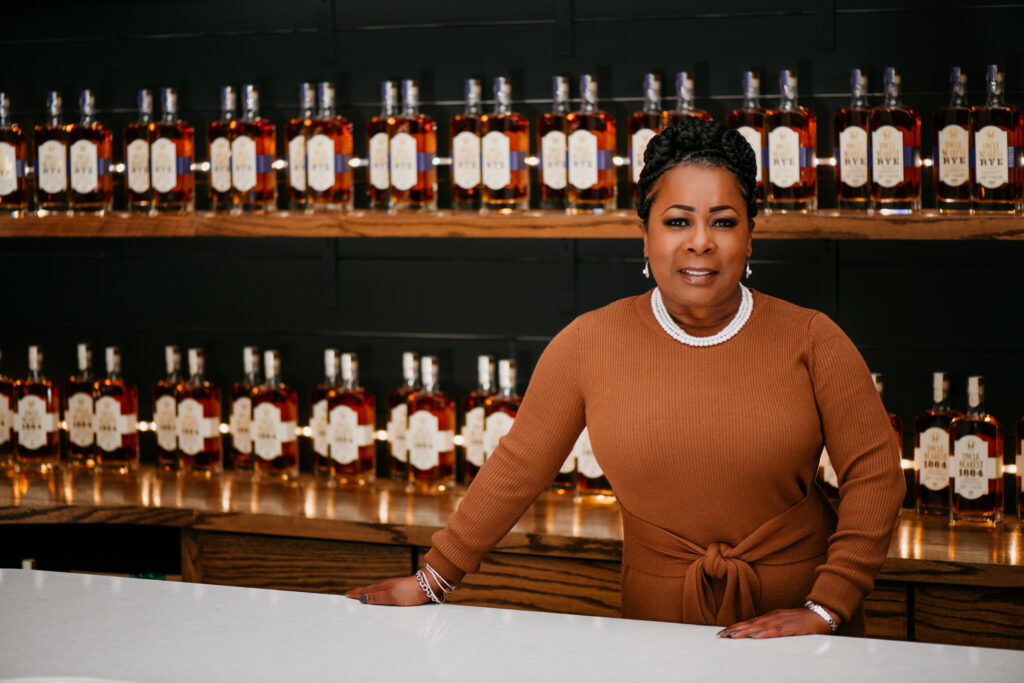
Victoria Eady Butler can speak with authority on both subjects. She is the great-great-granddaughter of Nathan “Nearest” Green, a former slave and the first-known African American master distiller who taught Jack Daniel – yes, that Jack Daniel—how to make the legendary Tennessee whiskey that bears the Jack Daniel’s brand name. Daniel would later hire Green to be his master distiller, a historical link between the two men widely acknowledged by Jack Daniel’s parent company, Brown-Forman.

  Five generations later, it is Eady Butler’s turn at making history. She is the first African American master blender for a major spirits brand, Uncle Nearest Premium Whiskey, named after her great-great-grandfather. Eady Butler’s legacy is the foundation for award-winning bourbons and whiskeys branded by Nearest Green Distillery in Shelbyville, Tennessee. Since its brand launch in 2017 by founder and CEO Fawn Weaver, the company reports it has generated more than $100 million in sales, with products sold in all 50 states and 12 countries around the world.

  Eady Butler explains how Weaver brought her on as part of the company’s leadership team, first as the vice president of administration but soon thereafter, as its master blender.

  “I had no idea that this was down the road for me. Fawn Weaver, our CEO and founder, and I talked and she knew that I was considering retirement. Everything unfolded from that conversation. I retired from my previous career and started with Uncle Nearest within a few days. Now that I’m here, I fully get it. Whiskey truly is in my blood. To carry on a legacy that lay dormant for more than 160 years, it’s just unbelievable.” 

  Under the discerning palate of Eady Butler, the Uncle Nearest brand has won multiple industry awards while she has won consecutive top honors bestowed upon her by industry peers.

  “When our 1884 Small Batch launched in July 2019, the whiskey family took to it immediately and we started winning awards right out of the gate. So, I blended the second batch. The awards and accolades kept coming. Soon thereafter, I was elevated to master blender and have blended every batch since. Also, when I was named ‘Master Blender of the Year’ by the American Icons of Whisky Awards, I was the first female to ever earn the title.”

  Preserving the heritage surrounding one of Puerto Rico’s most famous exports, rum, is partly what drew Liza Cordero to the spirits industry. Cordero used her background as a chemical engineer to become master blender of the world-renowned Destilería Serrallés and oversee the distillation process of its Don Q rum, made in Puerto Rico for more than 150 years.

  Born in San Juan, Cordero knew early on that she wanted to be engaged in chemical engineering and was involved in both the petrochemical and biotechnology industries. She says that she found her true passion, though, in working with rums. For more than two decades, Cordera has been directly involved in the fermentation and distillation processes and is responsible for quality control at the landmark distillery. She describes how taking a chance turned into a rewarding new career.

  “The company was recruiting an assistant manager for the distillation and fermentation process area. As soon as I saw this, I did not hesitate to accept the challenge to work for the best distillery in Puerto Rico, which produces the best and most authentic Puerto Rican rum. In the 21 years that I have been working here, I can truly say that my decision was the right one!”

  Cordero describes her role at the distillery.

“I am the rum distillery master blender and work hand-in-hand with the First Maestra Ronera (Master Teacher), Silvia Santiago, who has been with the company for 50 years. I am responsible for developing Don Q products that follow today’s market trends, which can be enjoyed in cocktails and sipping rums, all while honoring Don Q’s origins. These products need to be different from others in the market, which we achieve by carefully selecting blends that will be part of our premium and flavored rums and choosing natural ingredients that will guarantee an outstanding tasting experience. In order for me to achieve what we want for rum aficionados, it is important to understand the differences among the aged rums that we have available. Each one has its own characteristic taste and aroma.”

  Cordero says her mentors include other women like Santiago, who have helped to guide her through the industry. The advice she gives to other women who want to enter the business is to the point.

  “Throughout my career, I have learned that in order to prove that women can equally execute and be involved in the same tasks and assignments that are performed by men, it’s important to employ your knowledge and experience, to prove your point and to take a position on matters. It is crucial that decisions are made based on something solid that can withstand any questions or critical analysis. They cannot be made based on opinions or personal points of views. It is in this way that women can earn respect, and that we get assigned to key decision teams and positions in organizations.”

  Valerie Colella is an award-winning single barrel specialist and national ambassador for Castle & Key Distillery. Most recently, Colella was recognized by the Bourbon Women Association as a finalist for the “2023 Brand Ambassador of The Year.”

  “As single barrel specialist, I help execute our single barrel program along with our very talented team in Frankfort, Kentucky, and I also have the pleasure of hosting our VIP industry and trade groups. As national brand ambassador, I help support our sales team across 24 markets by creating fun educational and pairing experiences for our partners and consumers.”

  Colella relocated to Kentucky after working in West Virginia at Smooth Ambler Distillery. Collela cites a key mentor who helped her to get her footing in the industry.

  “Most of my foundational understanding about what makes a craft distillery tick, I learned in my eight years from Smooth Ambler under head distiller John Little. He demanded a very high level of dedication and execution from all of us. He took great pride in the spirits we were producing in West Virginia, and so did we. Whether it was the retail or consumer-facing side of the business, distribution, sensory, analysis or branding strategy, he gave me so many opportunities to work really hard, learn and grow personally and professionally.”

  Collela points to women mentors that include Lisa Wicker, president and head distiller for Widow Jane of Brooklyn, New York, Sherri Carter, master blender and co-founder of Old Carter Whiskey Company based in Louisville, Kentucky and Jackie Zykan, former master taster for Brown Forman’s Old Forester and creator of the newly launched whiskey, Hidden Barn. Collela says the work these women have accomplished in blending and maturation inspires her.

  “When you’re navigating your own professional growth and you’re trying to find your footing or voice in a male-dominated industry, no one understands the challenges that come with being a woman in spirits except the ones who walked through the fire and helped pave that path. From Iron Root Republic to Milam & Greene and Uncle Nearest, so many ridiculously talented female master distillers, blenders and owner-operators are absolutely blazing all kinds of trails. It’s such an exciting time to draw inspiration from.”

  The number of women in the spirits industry keeps growing, Collela says, and the industry’s expansion requires new talent.

  “That being said, I think we’re going to see a diverse new generation of whiskey-makers, and spirit-blenders into the next decade. What we see across all aspects of the aged spirits industry is that there still continues to be an incredible demand for whiskey. There doesn’t seem to be a saturation point. NDP’s and distilleries keep on expanding, and there’s a whiskey for every palate. There’s not just the collector and the enthusiast anymore. Whiskey is becoming a multi- dimensional demographic.”

  Eady Butler of Nearest Green says that for women entering the business, tenacity is particularly important.

  “The key is to be committed, dedicated, eager to learn and put everything you hold dear into it. In addition, it’s imperative that you surround yourself with people who are knowledgeable, patient and in my case, willing to share their experiences and wisdom. The biggest thing is setting aside your fear of failure and just go for it.”   

Standing on Shoulders

craft distillery facility

By: Donald Snyder

Ask any established craft distiller what they would have done differently and you will get a common answer, “How much time do you have?” For most new distillers starting from scratch in the last few years, it was a learn-as-you-go venture paved with blood, sweat, and tears. The promise of high margins in an exciting and rapidly growing industry with local laws now changing to be more “craft friendly”, the draw to join the liquor industry today is almost intoxicating. Today, new craft distillers are starting up following in the footsteps and standing on the shoulders of those who came before them to bring something new and unique to the market.

  There are over 800 active micro distillers in America and dozens more opening every month. Domestic and international consumers have developed a palette for unique distilled spirits and have not seemed to quench their thirst for all things different and local. If that wasn’t a big enough reason to join the party, there is now a wealth of resources available to get started without repeating the painful road paved by others.

  An aspiring distiller today does not need to look very hard to find resources to help them start up a new distillery. There are distillation classes across the country offering everything from a hands-on introduction to the distilling industry, chemistry-based fermentation and mashing lessons, blending and product development classes, to advanced distilling techniques classes for those looking to sharpen their craft. As a lecturer at both the Moonshine University in Louisville, KY and at the Six & Twenty Distilling class in Greenville, SC, I get to give people a taste of the industry before they decide to jump in with their hard earned money. Being able to touch, look, and feel for a few thousand dollars can be well worth it.

  Another hands-on and immersive way to learn about the spir  its business are the annual craft distillery conferences with break out informative sessions for all levels of experience. The American Distilling Institute (ADI) and the American Craft Spirits Association (ACSA) both have annual conferences where all the players in the industry converge to discuss current market trends and distillation issues of the day. For new players in the business, the biggest advantage of these conferences are the vendor booths which are a literal one-stop-shop for all the suppliers you will need to start a craft distillery. Imagine having every major glass bottle supplier, chiller and equipment vendor, grain sources, and even the Tax and Trade Bureau (TTB) all represented and able to answer your questions in one space. I hear the established craft distillers groan every year having had to research and hunt them all down one by one.

  However, even before an aspiring distiller books an air plane ticket to a conference or to a class, there are now vast repositories of information available on-line. There are several popular and active forums and blogs on-line with communities of distillers sharing their experiences and responding to questions. One of the most active is the ADI Forum where new and established distillers talk about the issues du jour and share techniques. There are active home distilling forums with resources as well but I’ll remind everyone that distilling spirits without a federal permit is currently against the law.

  Finally, once a person is ready to start a distillery, there are now a plethora of consultants with years of experience in the distilled spirits industry. There are consultants for every specialty, issue and budget. There are consultants like Richard Wolf of Wolf Consulting who can help prepare a solid business model including cash flow, cost of good sold (COGS) and profit projections to help articulate capital needs and find investors. Consultants like Jim McCoy, who retired from the TTB after 32 years, can help navigate the licensing, federal permitting, or audit headaches and assist with label or formula approval. Sherman Owen of Artisan Resources can help with developing a mash bill, fermenting, distilling, equipment sourcing and may other tactical operational issues. There are retired master distillers who worked for the large distilleries who can help teach the up and comers how to make a high quality product while leveraging their connections in the industry. Nancy Fraley of Fraley Nosing Services can help with blending and differentiating your product in a crowded market space. There are even “one-stop-shop” consultants who act like a general contractor that can walk a distillery from concept to reality while bringing in specialized consultants and network resources as needed.

  With all that said, even with all the incredible resources available, it can still be a hard and expensive road to travel. A typical new craft distillery will require hundreds of thousands of dollars in equipment and investment. Older buildings will need expensive renovations to be both visually appealing and up to local code to operate a still. A green field distillery built from scratch sized to expand could easily cost a half million dollars or more. For distilleries hoping to make an aged product such as a bourbon, they must prepare to spend a thousand dollars per barrel in raw materials, labor, and other conversion costs and see no return on that capital until it is dumped and bottled. Cash flow and operational reserves for a startup distillery can easily trip up even the best business model. It is possible to start a distillery on a “shoe string” budget, but it is a tough road to travel.

  If you are considering opening a craft distillery, know that there have never been more resources at your disposal. It is not an easy or cheap road to go down but the return can be big. Reach out to a local craft distiller, make a connection with a consultant for an introduction, or be an active participant on-line and you will be well armed to decide if your next business card will say Master Distiller.

Forecasting Business Plans in Uncertain Times

How to Plan for the Fiscal Future in 2024

a robot hand and a human hand both pointing to a dollar sign

By: Raj Tulshan, Loan Mantra

Over the past few years, small business owners have seen dramatic changes in the financial landscape, with an array of challenges and an uncertain future. Several years of global disruption have left small businesses on a rollercoaster ride, facing a global pandemic, supply chain disruptions and ongoing labor shortages. Recently, despite rising inflation and bank failures, small businesses experienced some good news, with cryptocurrency going mainstream, an increase in diverse small business owners, a rise of Artificial Intelligence (AI) in the workplace and more. As we welcome 2024, let’s review a few highlights of 2023.

In 2023 small businesses reported becoming more optimistic, predicted a growth in revenue and planned to hire more staff in the coming year.  They anticipated making higher investments in their companies moving forward. What’s more, we saw an increase in diversity among small business owners, and a rise in the number of small businesses across the country, which account for an impressive 99.9% of the businesses in the U.S. 

While the economic outlook improved in 2023, there are no guarantees that 2024 will be the same. And, as the new year begins, many businesses remain hesitant about the road ahead. It’s human nature to want to predict the future – and in the business world, vital for owners to have a plan to move forward. The one constant is change. Financial service professionals can help business owners and leaders manage these economic and cultural shifts to stay adaptive and resilient during the coming year and for years to come. While no financial expert has a crystal ball, there are key factors that impact the fiscal future. Here are financial considerations for making business plans and strategies that will work today and tomorrow.

The Rise of Artificial Intelligence (AI) and Machine Learning (ML)

AI and ML technologies are already being used in fraud detection and investment research in the Fintech industry. ChatGPT is a new tool that is generating interest in average consumers who have interacted with it out of curiosity. Chatbots are already augmenting customer-facing service roles, increasing speed and simplifying complex transactions. Personal finance, budgeting, operations and management apps are becoming integral for business owners who want to use business data to take control of revenue and meet financial goals. Adoption of these technologies and resulting changes present large business opportunities – and a quantum shift for the business over the long term.

Digital Payments and the Blockchain

As was seen during the pandemic, the shift to digital payments continues to accelerate. Further declines in cash usage will be seen with an upsurge in alternative payment methods, including cryptocurrencies. In 2023 we saw cryptocurrencies go mainstream as patrons used crypto to purchase goods and services, real estate and more. At the same time, governments worldwide are exploring cryptocurrency regulations.  In 2024, expect to see clearer guidelines and potentially greater acceptance of cryptocurrencies in mainstream finance. In addition, the standardization of one central currency may appear called the Central Bank Digital Currency or CBDC.

The CBDC has become a highly charged issue as adoption of it would be controlled by a central entity with likely ties to a social credit system for consumers. Consumer advocates warn that the use of this would put unfettered power and control in the hands of those controlling it. The World Economic Forum states that a CBDC would forever change the relationship between the public and their money with an end to private accounts and choice over what is purchased by individuals.  The WEF states their plans are to monitor every purchase made and eventually restrict what a person could spend their money on and when. This means proposing limitations on travel, dictating how much protein is consumed per week or even collecting carbon taxes directly from accounts without personal choices of the account holders. A CBDC account could be turned on and off at will, restricted based on that individual’s social behaviors, political leanings, religious belief systems and health choices (imposing mandatory experimental vaccines, for instance) and penalize those that don’t go along with centralized dictates.

Interest Rates and Inflation

High interest rates and inflation have a direct impact on those that seek commercial loans and how much funding is available. With an economic constriction, the availability of credit opportunities for business will lessen. As challenges mount, it will be more important to have a financial education. Financial literacy is gaining recognition as a crucial life skill. In 2024, there will be a growing emphasis on financial education, with schools, organizations and governments working to enhance people’s understanding of money management.

Redefining Retirement

The concept of retirement is evolving.  More individuals are opting for phased retirement or exploring flexible work options.  This trend will continue in 2024 as people seek purposeful post-retirement activities and income streams. People will also seek more control over their money in the coming year with the use of personal financial apps becoming integral for money management.  In 2024, expect these apps to offer more sophisticated features, from AI-driven budgeting to customized investment advice, empowering users to take control of their finances.

It’s also vital to note that in the wake of the upcoming election, social security and Medicare reform will be at the bottom of the United States government’s political to-do list. Alternatively, on October 31 2023, the White House announced a Retirement Security Rule, which legally protects consumers seeking financial guidance.

Sustainable investing is also gaining momentum.  Investors are seeking opportunities that align with their values, focusing on companies making a positive environmental and societal impact. In 2024, this trend will continue to grow as investors emphasize responsible investment choices.

Hitting the Debt Ceiling.

As the past year saw banks collapse, new debt ceiling highs and potential interruptions of government created anxiety and lack of confidence in political leaders. These actions will give rise to new bank systems, options and alternatives to banking. Decentralized Finance (defi) is also reshaping traditional banking and finance.  In 2024, we can anticipate more DeFi projects and platforms emerging, offering decentralized lending, borrowing and trading options.

Economists Predict Soft Landing

According to J.P. Morgan Wealth Management, Looking into 2024, strategists now expect that while the U.S. economy is likely to slow, it should avoid recession. The lower likelihood of a painful economic crash should help with financial decision making going into the new year. Other economists are skeptical that the U.S. can maintain economic growth with interest rates so high. The Conference Board predicts slow GDP growth slowing means a “shallow recession” in the first half of the year. The nonprofit research group said wage growth is slowing, pandemic savings are declining, and U.S. household debt is spiking.

At the same time the labor market is resilient heading into the new year. The unemployment rate has risen to just 3.8%, and the economy has averaged more than 250,000 jobs created per month over the past three months. The Federal Open Market Committee projects the U.S. unemployment rate will average a healthy 4.1% in 2024, still well below its long-term average of around 5.7%. The firm said softening consumption, coupled with rising interest rates, will also weigh on U.S. business investment in early 2024.

With these points in mind, plan for the coming year knowing that the ability to be flexible, adaptable and agile will be of significant benefit.

Raj Tulshan is founder and managing partner at www.loanmantra.com. Reach him via Linked-in at https://www.linkedin.com/in/tulshan/.

Hand Barrel Bourbon: Three Friends, One Idea and the Perfect Partnership

photo of 3 small hand barrel bottles in different colors

By Gerald Dlubala

We’ve all heard the phrase about loving it when a plan comes together. When it’s a plan that three friends come up and run with, we love it all the more. And that’s just what happened to Jim Hand, Scott Pirello and Beorn Brueckner, founding members of Hand Barrel Bourbon Company.

“It kind of started when I got recruited by Scott Pirello, a college friend, to play on a men’s softball team,” said Hand. “Scott was working on a project to make cool bottles for packaging. I thought it might be cool to make a whiskey bottle that resembles a real barrel and fill it with quality whiskey to sell. The initial idea was honestly as simple as that.”

Hand and Pirello were both fans of brown spirits and always considered the whiskey industry an exciting arena. They also believed that their bottle idea might just be good enough to attain what would become their first goal of surviving their first year in business. Well, they’ve not only reached that goal, which occurred the last week of October 2023, but they’ve done very well in their first year with an idea that admittedly seemed backward.

“Our approach was different, going from packaging first to the product inside,” said Hand. “But getting into the spirits market without some huge backing is tough. We brought in a third partner, Beorn Brueckner, who attended high school with Scott. Beorn was the GM of a bar in Boston during the pandemic and was now looking for something else. His industry experience fits in perfectly with what we needed, and he currently runs many operations within the company. Scott is our CEO and numbers guy. Additionally, Scott has an entrepreneurial background and experience starting and selling businesses. Without him, there would be no Hand Barrel Bourbon. He had the know-how to start this thing up and run with it. I come from a software sales background and now handle the sales and marketing aspects of the business. So, that’s the whole company, three friends and equal partners.”

Using Unique Packaging to Tell a Story

Hand tells Beverage Master Magazine that it came down to three friends getting together with an idea for a different and unique packaging idea and decided to put premium bourbon into it to sell to the public. Hand says that they knew they would run the risk of consumers thinking their bottle may just be a gimmick to sell their product. But the Hand Barrel Bourbon bottles are instead a motif, providing packaging that tells a story of what is inside the bottle. 

“We sell our single barrel, small batch in the white barrel bottle, signifying the unique minerals and deposits found in the Kentucky water,” said Hand. “Our double-oaked comes in a black, charred finish bottle, signifying the barrels and type of exposure the spirit encounters along its journey. These are specific ingredients and attributes to Kentucky bourbon whiskey, and we want to recognize, respect and make note of those attributes through our packaging.”

Partnering with the Right Contract Distiller is Key

After settling on the bottles, packaging, and message they wanted to send, the group had to find a contract distiller. Hand says they didn’t have the time or capital to start up and wait five or six years, so the search was on to find the best partner for them and their situation.

“We happened into Bardstown Bourbon Company in Bardstown, Kentucky,” said Hand. “We tried their products, looked at their facilities and met the people behind the brand. From that day forward, they became the perfect partner and our contract distillery. It really was a slam dunk for us, and we are now completely vertically integrated with them. They are a state-of-the-art distiller with the best column in the industry. It is our mash bill that we use, a 64-24-12 sweet mash recipe. It’s not the traditional higher corn content (70 to 78 percent) of many bourbons. We wanted to try something a little different. There aren’t as many high-rye mash bills out in the market. We come in at 105 proof, which we believe is the sweet spot for bourbon and the perfect place to land. And because our bottles are preprinted, we don’t deviate from that number. Our barrels age at Bardstown’s facilities, and we use their blending team and bottling line. Our responsibility is to provide the mashbill, the marketing and the cool bottles to package our product.”

Hand says its goal is to provide a bourbon experience that positively appeals to all the senses, including touch, sight, hearing, smell and taste.

“We want our bourbon to be a total experience,” said Hand. “It’s an excellent-tasting, authentic Kentucky bourbon whiskey wrapped in a unique bottle that consumers will proudly display in their home or on their bar.”

One of those unique bottles was a special-release camouflage bottle.

“All three of us have connections or ties to the military somehow,” said Hand. “The camouflage bottle was our first special release and offered us the opportunity to give back 10 percent of sales to the Special Operations Warrior Foundation (SWOF) to benefit families of our fallen Special Operators. We feel that anytime we can give back to one of our military organizations, it’s absolutely worth it. It was a huge success, and we’re looking into other partnership releases. We’re considering things like NCAA or professional sports teams as well as personalized bottles for special occasions”.

Hand says their bottles would make perfect gifts for weddings, groomsmen’s and bridesmaids’ gifts or to celebrate and commemorate special occasions for clubs, groups and organizations. He also mentioned single-barrel picks to make the occasion even more distinctive.

“The bottle is one thing we can change to meet our customer’s special occasion needs,” said Hand. “That’s our edge in the marketplace. You can really only stretch one mash bill about three different ways, ending in a small batch, single barrel and double-oaked, similar to what we did. But we can also change the bottle to create something unique, distinctive and special for our customers.”

Pinpoint Focus and Smart Decisions Will Shape the Future

“We’ve been in business and on shelves for over a year now,” said Hand. “We started in just two states, Massachusetts and Kentucky. We had a minimal release our first year, maybe 6,000 bottles, and sold out within the first two to three months. That was a testament to the acceptance of our idea and gave us the confidence to try to gain market share. We’ve since added 19 more states to our distribution areas and are looking toward expansion and continued growth. We’ve had talks with Canada, South Korea and Japan, who all have interest in our bottles.”

“You know, we have a potentially wide footprint with customized bottles,” said Hand. “It’s a lot of fun, but it’s also very daunting because we can go in many different directions. Since our path can go in so many different and diverse ways, we, especially as a small business, must focus on the best opportunities for us. If we have so much as a flop of 2,000 to 3,000 bottles, it would be very detrimental to us. We have to be careful about our choices and focus on what we need to do to build our business and gain customer commitment. We have to focus on who can commit to the best volumes early to get that extra volume and padding for us as a business. We’d love to eventually be able to do as little as six to 12 bottle orders for weddings or parties with names and dates, offering that custom gift for the guy or girl who has everything.”

Joining the Welcoming Community of Distilled Spirits

“The biggest surprise I’ve had along this journey is the general welcomeness of the bourbon industry. I mean, it really has been noticeable,” Hand said. “I was sitting with other bourbon reps trying to launch a market, and we were all sharing drinks, ideas and information. Unlike some other businesses, there weren’t any highly secretive behaviors or unwillingness to share our experiences. It helps everyone to grow with a better chance of success. This industry uniquely welcomes newcomers; everyone I’ve come into contact with has been willing to help and give quality advice. This industry is such a big piece of the overall spirits pie that we can all succeed. It doesn’t have to be one or the other, which is a truly refreshing and beneficial approach. Spirits consumers traditionally welcome variety. We love to build our bar cart with a variety of diverse brands. It’s just fun to build your display to share with friends, whether for a hobbyist or a serious collector. It’s a pretty straightforward sales approach.”

Displaying Products Together Boosts Sales

Hand tells Beverage Master Magazine that he learned a ton about the industry, which was expected. What sticks out for Hand and the other founders of Hand Barrel Bourbon is that along their path, they’ve noticed a distinct advantage to having all their products together on a shelf displayed as a suite or grouping. Because of their unique bottles and the meanings behind those bottles, when the products all stand together in unison on a shelf display, they combine to show and tell a story that ultimately leads to an increase in sales. Hand Barrel Bourbon’s sales are better when their products stand together, even if that means giving up less width on the shelf in return.

“When it comes down to it, we are just three friends who raised a little bit of money and came up with an idea that we thought was pretty cool, and we want to make an impact on the market with quality products that we are proud to offer, and that consumers are equally proud to own.”

Find more information on Hand Barrel Bourbon at www.handbarrel.com.

How to Disrupt the Beverage Industry with New Marketing Strategies

Jorge Olson headshot

By Jorge Olson — Co-founder & CMO of Hempacco and Green Globe International, Author of “Build Your Beverage Empire

The beverage industry is growing rapidly, with innovators entering the space year after year touting the next big idea. The global beverages market is expected to grow from $3.56 trillion in 2023 to $4.39 trillion by 2028 at a CAGR of 4.26%, allowing room for disruptors to enter the space, especially considering two of the largest growing categories in the beverage industry are hemp beverages and mushroom beverages.

If you are set on being one of those disruptive entities in the beverage industry, you will want to devise some novel marketing strategies that will set them apart from the competition. Those entering the beverage industry or seeking to retool their marketing approach need to consider several factors, including budget, target audience, and branding.

Entering today’s beverage industry

The beverage industry comprises a litany of products, from ales and liquors to flavored seltzers, hard teas and lemonades, and more. As consumer demand grows, innovators in the beverage space churn out an abundance of ever-expanding options, and as markets continue to grow, more opportunities arise for beverage companies to get a foothold.

With over 2,000 beverage companies in the United States alone, effective marketing is more important than ever before. Marketing builds awareness of your brand and is especially integral to launching and growing new businesses within the beverage space.

The cost of launching and scaling a new business — especially one tied to a physical product — can be high. If you are seeking to disrupt a long-standing industry with a new product idea, you must be savvy about your marketing budget to have the greatest impact and bang for your buck.

Every marketing strategy begins with a great idea that should be formed with consideration to what consumers are seeking but not finding in the current market. The beverage’s formula should be consistent before being unleashed onto the market, and the opinions of experts and stakeholders should also be considered. Being thoughtful about your actions before launching can help you avoid costly (or embarrassing) mistakes.

The beverage industry is incredibly competitive, but with the right product and the right marketing strategies, your product can make considerable waves.

Innovative marketing approaches

In an industry that can be as crowded as the beverage space, new businesses will be required to think outside of the box concerning marketing approaches. The old standard marketing strategies will not likely garner enough engagement to disrupt such a massive industry.

Savvy marketing can also help consumers create an emotional connection to your brand. Many beverages can be connected to moments or memories for consumers — that bottle of Coca-Cola they shared with their dad on a fishing trip or their very first beer when they turned 21. Tapping into these emotional markers can help elevate a brand and solidify the brand’s story within the current culture.

There are several innovative marketing strategies that your beverage company can leverage, but your chosen strategy (or strategies) should depend on the market you are targeting, your specific product, location, budget, and several other factors. The thoughtful pre-planning discussed in the previous section will help determine the right strategy to meet their goals.

Social media marketing

Social media marketing is nothing new, but it is constantly changing. It seems that with every introduction of a new platform or a change in an algorithm, the goalposts for marketers are moved.

Today’s approach to social media marketing utilizes a variety of platforms for a diversified strategy. TikTok is still going strong as the platform of choice for many Gen Zers, but older generations may still prefer Facebook or Instagram. This means you can capture a larger slice of your target demographic by splitting marketing among the various popular platforms.

Social media is still suitable for quickly sharing content with a large number of people and is still the best way to create a personal connection with your target market. By engaging with people across the platforms, answering questions, and sharing content they want to see, you can grow your social media following and brand recognition.

Even though social media is not a new marketing tactic, it is constantly changing and creating new hurdles for business owners. Remaining aware of changes and best practices will allow you to get the most out of social media use.

AI and new technology

It seems like everywhere you look; artificial intelligence (AI) is taking over. For marketers who know how to harness its power with predictive analytics, AI could revolutionize how products are created specifically for consumers. Through AI technology, consumer products like beverages can be designed to exactly what customers want and marketed to the market at large based on what they want or need.

Through AI-enabled packaging creation, specific segments of a market can be targeted and catered to. Branding, ingredients, feel, and culture can be considered — allowing businesses to elevate their new product above other products in the market.

AI also allows companies to gather data on consumer reactions to marketing campaigns quickly and accurately. With this data, businesses can quickly assess whether a campaign is working — or if they need to shift focus.

High-quality content marketing

The best brands are not just products on a shelf. They are entities with which people develop connections.

To help foster those meaningful connections, businesses should focus on creating high-quality content around their brand. This can include blog content that shares brand-related stories or learning opportunities. It can also include video content showing behind-the-scenes making your beverage product or people enjoying it in real-life scenarios.

The focus of your content marketing should be quality and engagement, so take a look at what your competitors do with their own content marketing and strive to do something different. Quality content marketing can drive new sales, create new customers, and help you unveil new products.

Paid advertising

Like social media, paid advertising is not a new approach but is being approached in new ways. As we enter the new year, video is still ruling the internet, so incorporating video content into your paid online ads will allow your ad to stand out over the ads that feature only static images or simple copy.

When approached correctly — and with your target market always in mind — paid ads can be incredibly effective. In fact, recent studies show that paid YouTube ads are 84% more likely to capture viewer attention than traditional TV ads, which can be far more expensive.

The way people consume media is always changing. Targeting the most viewed platforms with your paid advertisements will ensure better reach and engagement.

Seize the season

It’s an oft-repeated marketing myth that the Coca-Cola company owns the “rights” to Santa Claus. While that is not true, the company did have a hand in creating some of Santa’s most recognizable features for a 1931 marketing campaign. The white beard, the rosy cheeks, and twinkling eyes combined with Coca-Cola’s red and white branding became solidified in the cultural zeitgeist, forever connecting Coca-Cola and Christmas.

Beverage companies are positioned well to seize seasonal marketing opportunities. The dog days of summer go well with a crisp lemonade, while the dead of winter leaves many craving a hot cocoa or hot toddy.

Beverages are a part of gatherings, milestone moments, and seasonal celebrations, no matter the time of year. By connecting emotion with brand recognition, marketers can use seasonal positioning to further their reach.

Brand partnerships

With our hyper-connected world, forging brand partnerships is easier than ever before. Beverage companies have created some famous brand partnerships over time, such as GoPro and Red Bull, or Bonne Bell and Dr. Pepper.

With a brand partnership, a mutually beneficial collaboration is formed. New products can leverage the popularity of the established brand, and the partner company can have something novel to share with its audience. Brand partnerships can also allow a beverage company to create exciting new taste combinations or product ideas.

If you are interested in finding another company for a brand partnership, consider their target audience and brand identity. That potential partner’s goals should match your own to forge a successful collaboration.

Engaging events

When a beverage hits the scene, the creators often host a launch event to introduce the beverage to the market. This marketing strategy is still valid, but beverage creators seeking to disrupt the status quo should put a lot of time and effort into making their event stand out among the competition.

Knowing your audience lets you know who to invite to your event to get your new beverage in front of the right people. The proper venue and the right theme can also help elevate your event from just a simple launch to a night no one will soon forget. However, hosting elaborate launch events can be pricey, so an ROI analysis should be performed before you go all-in on the “event of the century.”

The goal of any marketing campaign is to increase visibility and engagement surrounding your new product. If you aim to disrupt an industry as long-standing and — let’s face it — crowded as the beverage industry, your marketing approach will need to be thoughtful, well-researched, and novel if you wish for it to make the intended impact.

By considering emerging marketing approaches and developing new takes on old marketing standards, a new beverage business with a great product idea can thrive.

Women in the Spirits Industry

PRESERVING HISTORY WHILE CREATING THEIR OWN

By Cheryl Gray

They own distilleries, take charge of day-to-day operations and hold court as master distillers around the globe. We’re talking about women in the spirits industry breaking barriers, making it possible for other women to do the same.

In a largely male-dominated industry, there is an increasing number of women who have earned major roles, from building distilleries to creating the blends that put those distilleries on the map. Those blends are either passed on from generation to generation or come in the form of new taste sensations. All are designed to appeal to an unquenchable consumer demand for innovation and tradition.

Victoria Eady Butler can speak with authority on both subjects.  She is the great-great-granddaughter of Nathan “Nearest” Green, a former slave and first known African American master distiller who taught Jack Daniel—yes, that Jack Daniel—how to make the legendary Tennessee whiskey that bears the JACK DANIEL’S brandname. Daniel would later hire Green to be his master distiller, a historical link between the two men widely acknowledged by Jack Daniel’s parent company, BROWN-FORMAN.

Five generations later, it is Eady Butler’s turn at making history. She is the first African American Master Blender for a major spirits brand, UNCLE NEAREST PREMIUM WHISKEY, named after her great-great grandfather.  Eady Butler’s legacy is the foundation for award-winning bourbons and whiskeys branded by NEAREST GREEN DISTILLERY in Shelbyville, Tennessee. Since its brand launch in 2017 by Founder and CEO Fawn Weaver, the company reports it has generated more than $100 million dollars in sales with products sold in all 50 states and 12 countries around the world.

Eady Butler explains how Weaver brought her on as part of the company’s leadership team, first as Vice President of Administration but soon thereafter, as its Master Blender.

“I had no idea that this was down the road for me. Fawn Weaver, our CEO and Founder, and I talked and she knew that I was considering retirement. Everything unfolded from that conversation. I retired from my previous career and started with Uncle Nearest within a few days. Now that I’m here, I fully get it. Whiskey truly is in my blood. To carry on a legacy that lay dormant for more than 160 years, it’s just unbelievable.” 

Under the discerning palate of Eady Butler, the Uncle Nearest brand has won multiple industry awards while she has won consecutive top honors bestowed upon her by industry peers.

“When our 1884 Small Batch launched in July 2019, the whiskey family took to it immediately and we started winning awards right out of the gate. So, I blended the second batch. The awards and accolades kept coming. Soon thereafter I was elevated to Master Blender and have blended every batch since. Also, when I was named Master Blender of the Year by the American Icons of Whisky Awards, I was the first female to ever earn the title.”

Preserving the heritage surrounding one of Puerto Rico’s most famous exports, rum, is partly what drew Liza Cordero to the spirits industry.  Cordero used her background as a chemical engineer to become Master Blender of the world-renowned DESTILERÍA SERRALLÉS and oversee the distillation process of its DON Q RUM, made in Puerto Rico for more than 150 years.

Born in San Juan, Cordero knew early on that she wanted to be engaged in chemical engineering and was involved in both the petrochemical and biotechnology industries. She says that she found her true passion, though, in working with rums. For more than two decades, Cordera has been directly involved in the fermentation and distillation processes and is responsible for quality control at the landmark distillery.  She describes how taking a chance turned into a rewarding new career.

“The company was recruiting an Assistant Manager for the Distillation and Fermentation Process Area. As soon as I saw this, I did not hesitate to accept the challenge to work for the best distillery in Puerto Rico, which produces the best and most authentic Puerto Rican Rum. In the 21 years that I have been working here, I can truly say that my decision was the right one!”

Cordero describes her role at the distillery.

I am the Rum Distillery Master Blender and work hand-in hand-with the First Maestra Ronera (Master Teacher) Silvia Santiago, who has been with the company for 50 years. I am responsible for developing Don Q products that follow today’s market trends, which can be enjoyed in cocktails and sipping rums, all while honoring Don Q’s origins. These products need to be different from others in the market, which we achieve by carefully selecting blends that will be part of our premium and flavored rums, choosing natural ingredients that will guarantee an outstanding tasting experience. In order for me to achieve what we want for rum aficionados; it is important to understand the differences among the aged rums that we have available. Each one has its own characteristic taste and aroma.”

Cordero’s says her mentors include other women like Santiago who have helped to guide her through the industry.  The advice she gives for other women who want to enter the business is   to the point.

“Throughout my career, I have learned that in order to prove that women can equally execute and be involved in the same tasks and assignments that are performed by men, it’s important to employ your knowledge and experience, to prove your point and to take a position on matters. It is crucial that decisions are made based on something solid that can withstand any questions or critical analysis. They cannot be made based on opinions or personal points of views. It is in this way that women can earn respect, and that we get assigned to key decision teams and positions in organizations.”

Valerie Colella is an award-winning Single Barrel Specialist and National Ambassador for Castle & Key Distillery.  Most recently, Colella was recognized by the Bourbon Women Association as a finalist for the 2023 Brand Ambassador of The Year.

“As Single Barrel Specialist, I help execute our single barrel program along with our very talented team in Frankfort, Kentucky and I also have the pleasure of hosting our VIP industry and trade groups. As National Brand Ambassador, I help support our sales team across 24 markets by creating fun educational and pairing experiences for our partners and consumers.”

Colella relocated to Kentucky after working in West Virginia at Smooth Ambler Distillery.  Collela cites a key mentor who helped her to get her footing in the industry.

“Most of my foundational understanding about what makes a craft distillery tick, I learned in my eight years from Smooth Ambler under Head Distiller, John Little. He demanded a very high level of dedication and execution from all of us. He took great pride in the spirits we were producing in West Virginia and so did we.

Whether it was the retail or consumer facing side of the business, distribution, sensory, analysis, or branding strategy, he gave me so many opportunities to work really hard, learn and grow personally and professionally.”

Collela points to women mentors that include Lisa Wicker, President and Head Distiller for WIDOW JANE of Brooklyn, New York, Sherri Carter, Master Blender and Co-Founder of OLD CARTER WHISKEY COMPANY based in Louisville, Kentucky and Jackie Zykan, former Master Taster for BROWN FORMAN’S OLD FORESTER and creator of the newly launched whiskey, HIDDEN BARN.  Collela says the work these women have accomplished in blending and maturation inspires her.

“When you’re navigating your own professional growth and you’re trying to find your footing or voice in a male-dominated industry, no one understands the challenges that come with being a woman in spirits except the ones that walked through the fire and helped pave that path. From Iron Root Republic, Milam & Greene, Uncle Nearest—so many ridiculously talented female master distillers, blenders and owner-operators are absolutely blazing all kinds of trails. It’s such an exciting time to draw inspiration from.”

The number of women in the spirits industry keeps growing, Collela says, and the industry’s expansion requires new talent.

“That being said, I think we’re going to see a diverse new generation of whiskey makers, and spirit blenders into the next decade. What we see across all aspects of the aged spirits industry, is that there still continues to be an incredible demand for whiskey. There doesn’t seem to be a saturation point. NDP’s & distilleries keep on expanding, and there’s a whiskey for every palate. There’s not just the collector and the enthusiast anymore. Whiskey is becoming a multi- dimensional demographic.”

Eady Butler of Nearest Green says that for women entering the business, tenacity is particularly important.

“The key is to be committed, dedicated, eager to learn, and put everything you hold dear into it. In addition, it’s imperative that you surround yourself with people who are knowledgeable, patient, and in my case, willing to share their experiences and wisdom. The biggest thing is setting aside your fear of failure and just go for it.”