Increased Options in the Use of Yeast Strains Leads to Distilling Boom

By Gerald Dlubala

It’s an exciting time for craft distillers, for sure,” said Kris Wangelin, manager and distiller at Square One Brewery and Distillery in St Louis, Missouri. “When you see what’s currently happening in craft distilling, it’s easy to believe that distilling is on the cusp of some amazing breakthroughs, comparable to craft brewing a few years ago. A big part of the anticipated breakthroughs includes the ability and willingness to experiment by combining and mixing available yeast strains, then playing around with the fermentation times. As a result, the distilled spirits consumer will benefit with new choices and innovations in taste profiles that will ultimately lead the way to unique cocktail creations.”

  Wangelin tells Beverage Master Magazine that, unlike before, today’s craft distillers have a mindset that doesn’t limit the available yeast strain choices they can choose to use in their distilling process. Rather than sticking to the traditional distiller’s yeast options, more progressive-minded distillers have a mindset that revolves around the simple question of, why not? With this type of inclusive thought process comes more significant occurrences and acceptance of crossover in the yeast strains used in both brewing and distilling. For example, there’s now more intermingling of strains previously considered only distiller’s or brewer’s yeast. In addition, craft spirits producers are open to experimenting with producing new flavor profiles and combinations that feature different depths and twists from the more traditional spirit profiles that consumers recognize.

  “Yeast strains are not strictly divided into distilling and brewing anymore,” said Wangelin. “Now, it’s more about experimentation and differentiation rather than passing on a particular strain or idea because it hasn’t been done. Now we’re excited to try it to see what happens. Sometimes we succeed, sometimes it’s a fail and sometimes we find that a particular flavor profile can be a good fit for something other than initially intended. But every time we try, we hone the specifics for future distilling success. We know spirits consumers generally have a favorite, go-to spirit profile, which becomes their home point when comparing other spirits. Still, we know they are willing to venture out to see what new flavor profiles may be trending and what possibilities are out there, and ultimately, it’s the consumer that will determine if our efforts are successful.”

  “And today’s spirits consumers also want to know the distiller and the product origins more intimately and personally,” said Wangelin. “A great way to differentiate our products from competitors is to remain as locally-based as possible with ingredients, yeast-driven flavor profiles and all related suppliers. Promoting our product this way makes everything more personal for our consumers. They see us vested in the community and then feel the same level of support by drinking our products.

  Additionally, the availability of any distinctive yeast strains offers us a way to create our own niche and become known as the place to go for that unique flavor profile or mash bill. When that specificity includes being from a local market or our own grain supply, as some are doing here in the Midwest, the consumer gets to see where our spirits start, making for a great story.”

  In the future, Wangelin sees the yeast providers experimenting more with different yeast strains and combinations to offer even more unique and varied flavor profile choices. It’s becoming common for yeast suppliers to ask a distiller what flavor profile they would like to produce rather than telling the distiller what’s available. Then the yeast supplier gets to work on developing and propagating new strains to meet the distiller’s desires. Why not?

Seek Experience and Results When Choosing a Yeast Supplier

  “In the alcohol business, taste rules,” said Dr. Pat Heist, co-founder, co-owner and CSO of Ferm Solutions and Wilderness Trail Distillery. “And when talking about yeast use in distilling, we know that some yeasts remain traditionally great performers, but that doesn’t mean there’s no room for experimentation.”

  Ferm Solutions is a leading research, product development, engineering and technical service provider to the ethanol and distilled spirits industries. They offer a two-day, 16-hour functional fermentation class that focuses on different fermentation levels using the same yeast strain.

  “Using 10 flasks with the same mash, we can achieve 10 different and very distinguishable results with only minor or minimal changes in the process,” said Dr. Heist. “Evaluations on those flasks reveal the easily recognizable and different attributes and developing trends due to those minor process changes.

  The difference in aromas is very distinguishable at the fermentation level. Ferm Solutions has done an excellent job identifying and selecting those yeast strains that perform best at the beer level. Once the beer is distilled, picking out those differences becomes more challenging because they’re now more subtle and enshrouded in higher alcohol content. After aging in a barrel, it becomes even more difficult and sometimes near impossible to differentiate the individual strains, especially with using and reusing barrels that may have held different spirits or alcohols.”

  “For new or inexperienced distillers, the main thing to remember is that a quality distilling yeast will always make a good distillate, whether you’re talking whiskey, bourbon, rum or other spirits,” said Dr. Heist. “That’s the starting point. First and foremost, craft distillers must focus on making the best product they can make. As much as they may want to venture into experimentation and try out new ideas, it’s always best to stick to a traditional plan and mash bill at the onset. Then, once they get experience in producing a great product, they can look at things like fermentation times and what the yield differences are when choosing to experiment and make changes to their proven production parameters.”

  Dr. Heist tells Beverage Master Magazine that the innovation and difference a distiller is looking for in their product isn’t always just a product of a new or unique flavor profile. It can also result from being in a unique locale or having a natural geographic advantage.

  “Maybe you’re producing your spirits in a region known for a specific strain of corn or other grain,” said Dr. Heist. “Use that to your advantage in spirits production and marketing plan. You’re a local spirits producer supporting your local makers and community. It’s a win-win situation.”

  Additionally, Dr. Heist believes that a distiller should choose a yeast supplier and producer with quality experience backed by round-the-clock technical support featuring someone that will pick up the phone when you call.

“We at Ferm Solutions know that a problem needs to be addressed now, not only during standard office hours. We started a craft distillery just eight short years ago and are now the 14th largest bourbon producer in the world, so I like to think that we know what it takes to succeed in this business.”

Whether Staying Traditional Or Experimenting, Focused Yeast Management is Critical

  “Yeast is a wily customer,” said Brent Elliott, Master Distiller at Four Roses Distillery. “It will find a way to flourish under many conditions, so here at Four Roses, we are mindful of possible contaminations or mutations by remaining extremely careful in our strain storage, use and management. Any little change in that yeast strain could change your flavor profile. Even if you think the change is minimal, it’s still there.”

  Four Roses uses five main yeast strains, the same ones they’ve used from their beginnings. These strains provide flavor profiles that include delicate fruit, rich fruit, herbal notes, slight spice and floral essence. Elliott tells Beverage Master Magazine that they haven’t wavered from those strains and are never more than one step away from the original mother strain, which is kept frozen until needed for propagation and the next batch.”

  “We frequently and consistently refresh and genetically test our yeast to maintain quality and authenticity,” said Elliott. “We propagate in-house, refreshing weekly if needed. It is one of the most tedious tasks we perform, but it’s also one of the most important and demands the most focus to maintain our quality and flavor profile.”

  Elliott said that the production of yeast compounds is a vital and tedious part of distilling, whether using single or multiple strains to produce and develop different flavors for your spirits. Of course, yields are essential, but when it comes down to it, yeast strains and their use are all about the desired flavor profile.

  “As a producer, you look at all the variables, including how high of an ABV beer is produced before distilling and the different flavors produced at different temperatures,” said Elliott. “The effects become very obvious when you approach it in analytical ways. For example, taste-testing distillate after different yeast strains like ours allows you to detect each unique flavor added through that yeast strain. It’s pretty cool that you think you can taste notes of a certain flavor profile with a distilled spirit, and then through testing, analytical processes and experimentation, you actually narrow down that implied flavor to a specific strain and get definitive reasons for experiencing that flavor. For example, our floral strain produces more phenol alcohol than other yeast strains, resulting in rose oil compounds that undoubtedly give you that floral note you get when enjoying our product. There’s a direct correlation.”

  Four Roses uses White Labs out of San Diego for most of its yeast products. White Labs has an inclusive catalog from which to choose yeast strains depending on your distilling goals. For example, a distiller can choose the traditional and more predictable yeast strains that have historically been successful or decide to experiment with the non-traditional strains. Another option is for spirits producers to provide their mash bill for customized yeast strains to be developed that fit into their distilling visions.

  “There really is a whole world of possibilities when it comes to choosing and using different yeast strains,” said Elliott. “When Seagrams owned us, we had a massive research department with over 350 yeast strains, each with unique details and characteristics. Now, especially with micro-distilling, those producers have a better path and more availability to experiment, innovate and produce new flavor combinations and spirits profiles.”

How to Get a Grant to Support Your Craft Beverage Business

grant contract paper

By: Alyssa L. Ochs

Starting a brewery or distillery can typically cost anywhere from $250,000 to $2 million, which is a lot of money to raise if you’re starting your new endeavor from scratch. Craft beverage businesses often need money from outside sources to launch and continue operations, and one potential source to look into is grant money.

  Grants can be hard to come by in this industry, but they do exist and can be worth the time and effort of applying for a sizable sum of no-strings-attached cash. If your brewery or distillery is looking for funding to get off the ground, keep going or make an expansion, a grant may be precisely what you need to achieve your goals.

Common Needs and Financing Options

  There are many reasons a craft beverage business might seek grant money, such as upgrading a brewing or distilling system, building or expanding a taproom or increasing production capabilities. Grants can also be helpful if you are looking to hire more staff, invest in more eco-friendly approaches or save a struggling business from having to close its doors. During the COVID-19 pandemic, the food and beverage industry saw an increase in grant opportunities to help brewers and distillers stay in business despite public gathering restrictions and government-mandated closures. However, those opportunities were somewhat short-lived and not intended to sustain these types of businesses long-term.

  However, grants are just one of the many ways a brewery or distillery might support itself during challenging times. It is possible to solicit donations or loans from family and friends, tap into savings accounts, apply for a Small Business Association loan or connect with professional investors for funding. Mainvest is an example of a specialized investment platform for professional craft brewers. At the same time, crowdfunding campaigns are still popular options for businesses with good outreach skills and a solid social media following. Yet grants are a preferred source of funding in many instances because they do not require repayment but likely just a follow-up report in the future to prove that grantees are putting the funds to good use.

Examples of Craft Beverage Grant Opportunities

  Grantmakers typically make their awards in cycles that occur once or twice yearly. The opportunities are ever-changing, so it is up to brewery and distillery owners to keep up with what is available and the relevant deadlines. Some funders offer grants annually, while others are more responsive to urgent needs and step up to help during times of emergency.

  For example, the Washington Department of Agriculture Relief and Recovery Grant for Wineries, Meaderies, Breweries, Cideries and Distilleries was a response to COVID-19 and intended to support businesses disrupted by the pandemic because they primarily rely on in-person sales. The money for these $15,000 grants came from a Disaster Response Account managed by the State of Washington Office of Financial Management. Aside from government organizations, some corporations award grants in this industry as part of a commitment to the local community. Yelp recently awarded $25 million in total relief to support independent and local restaurant and nightlife businesses impacted by COVID-19, Amazon started a $5 million Neighborhood Small Business Relief Fund to help small businesses in Seattle with fewer than 50 employees or less than $7 million in annual revenue and Facebook launched its Small Business Grants Program that awarded $100 million in grants and ad credits for up to 30,000 small businesses in over 30 countries. The Restaurants Act was part of the American Rescue Plan Act of 2021 and allowed alcoholic beverage trade groups to specifically include tasting and tap rooms in the definition of establishments that were eligible for grants.

  However, one of the best grantmakers to know is the Brewers Association, which regularly awards Craft Beer Research and Service Grants with priorities that include hop and barley research, draught beer quality studies, sustainability-related projects, supply chain programs and applied research opportunities. In a recent year, the Brewers Association awarded 13 of these grants, totaling nearly $400,000. The Brewers Association also awards Diversity, Equity and Inclusion Mini-Grants to support a more well-rounded and welcoming craft beverage industry through media productions, educational trainings and special events.

  Meanwhile, breweries and distilleries may benefit from the USDA grant program that the USDA’s Agricultural Marketing Service administers and that supports research projects to improve marketing, transportation and distributed-related services. The USDA’s Value-Added Producer Grant Program is an opportunity for farmers that grow products for distilleries in rural parts of the U.S.

  Also, on the distillery side of things, there is the Spirit Hub Independent Distillery Preservation Fund that supports independent distillers and the American Distilling Institute Distilling Research Grant. The Kentucky Distillers’ Association Lifting Spirits Foundation and the Nearest & Jack Advancement Initiative offer additional spirit-related funding and resources.

  Early in 2022, the Michigan Craft Beverage Council recommended $335,000 in grant funding for 13 projects related to research and education to advance the efforts for craft beer, spirits, hard cider and wine. The council’s priorities included climate change impacts, pest and disease management, sustainable water use, wastewater discharge projects, new hop varieties and soil health. Meanwhile, Bottleshare Grant Programs has provided emergency assistance to the craft beverage industry for at least 29 breweries, six state guilds and 175 individuals. Bottle Share Inc. is a charitable organization founded by Christopher Glenn and based in Kennesaw, Georgia that supports industry workers and businesses facing adversity and hardship. Other resources to bookmark for potential funding needs in the future are the Michael Jackson Foundation for Brewing & Distilling and the Pink Boots Society New Mexico State University Course for Brewing & Distilling in Belgium and the Netherlands.

Pros and Cons of Grant Funding

  Many breweries and distilleries are unaware of grant opportunities that exist due to limited promotion and public awareness but could very well be eligible to submit an application. Yet there are benefits to seeking a grant rather than pursuing other funding avenues. First, grants do not have to be repaid, which is a significant advantage over applying for a loan. However, grant applications can be time-consuming, and eventually getting the money in hand can take a substantial amount of time. Grants don’t typically cover overhead, indirect and administrative costs, yet each opportunity is unique and may focus on a specific project or equipment upgrade. There are not nearly as many grant opportunities in the craft beverage industry compared to the nonprofit sector. But applying for grants can get your business onto the radar of major corporations and foundations, thereby boosting your networking power with local community leaders and influencers.

  Some of the biggest names to know for brewery and distillery grants are the Brewers Association, distilling associations like the American Craft Spirits Association and American Distilling Institute and the USDA. State departments of agriculture and restaurant organizations also provide grant funding for the industry, as well as private donors who have personal interests in craft beverages and major corporations with a commitment to niche philanthropy.

Applying for a Brewing or Distilling Grant

  A basic internet search can lead you to current and open grant opportunities for breweries and distilleries, although the funding pool is limited, and the competition can be tough. Craft beverage producers should consider getting involved with industry associations and subscribing to publications and mailing lists to be among the first to know about grant opportunities and deadlines.

  Aside from funding in response to disasters and emergencies, one of the biggest trends in craft beverage grantmaking is encouraging diversity. These grants often help educate and employ women, people of color and members of the LGBTQ community in this industry. Promoting sustainability and eco-friendly practices is another current funding trend among grantmakers that care about craft beer and spirits.

  Although some grants have rolling deadlines and chances to apply at any time of the year, most opportunities have a series of established dates that require applicants to pay close attention. Look into the times when grant deadlines occur before your business even needs funding, just for informational purposes, and mark deadlines on a calendar in case an unexpected need should arise.

  If your business is eligible for a grant, read the guidelines closely, including the best ways to contact the funder for follow-up after you submit your materials. As you review grant proposal guidelines, important details to pay attention to include the budget year dates, duration of funding, funding policies and submission process. Use online applications whenever possible to expedite your application, and be specific in your application concerning the project budget and how you will meet measurable goals. In many instances, it is best to introduce your business and an initial description of what you need to a funder before submitting any official paperwork, either by telephone call, general inquiry email or by scheduling an in-person meeting. And if your business is fortunate enough to secure a grant, keep up with reporting requirements in good faith to set yourself up for potential support in the future if and when you might need it.

  Grants are just one piece of the puzzle to keep a brewery or distillery operational and successful, but they are oftentimes an underutilized asset that might be just what you need to get by or take a new direction with your beverage business.

Devin Walden: Blazing Trails in the Spirits World

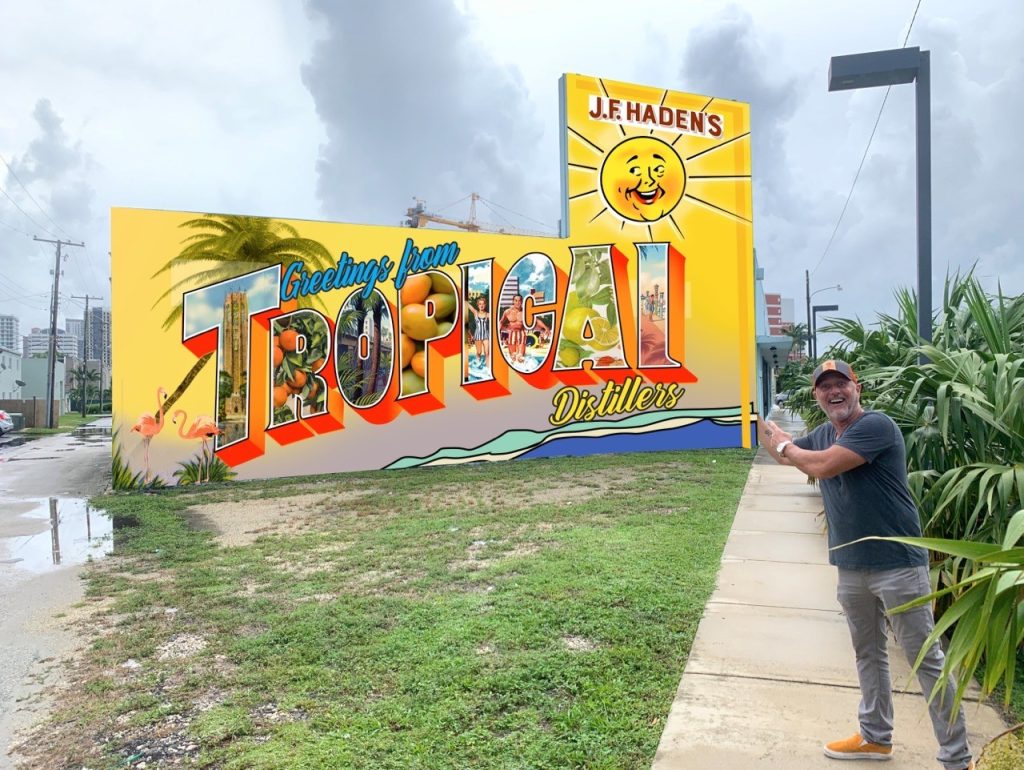
Tropican Distillers welcome signage

By: Nan McCreary

Long dominated by men, the spirits industry is attracting a growing number of females, not just as entry-level employees but as master blenders, tasters, distillers and even as owners. One of these new rising stars on the scene is Devin Walden, who was recently named the master distiller at Tropical Distillers in Miami.

Walden, a native of Kentucky, was not looking for a career path in the spirits industry when she took a job as a temporary employee on the bottling line at Woodford Reserve Distillery, a small-batch bourbon distillery in her home state. “I was a tattoo artist, had a second job bartending, then took on a third job at Woodford. My plan was just to stay long enough until I had built up my tattoo business,” Walden told Beverage Master Magazine. “I didn’t know much about a distillery, but I immediately fell in love with the whole process. I was fascinated by it.”  In fact, Walden was so enthusiastic about distilling that she set out on a quest to learn the trade from the ground up, eventually becoming Woodford’s first female distillery operator. “This experience gave me a true appreciation and love for the industry, and I ran with it,” Walden explained. She was 24 years old at the time.

Devin Walden, Master Distiller

  After three years at Woodford, Walden accepted a position with Total Wine & More in Lexington, KY so she could learn the retail side of the business. She also served on judging panels of various wine and spirits competitions, such as the American Craft Spirits Association Competition and USA Spirits Ratings. “My position at Woodford Reserve helped set up a framework for the technical and production skills I needed while my position at Total Wine and the judging experiences were great for learning what’s important to consumers and what they’re looking for,” Walden said. “In this industry, it’s valuable to understand both the production and the marketing side of the business.”

  And that’s exactly what Tropical Distillers was looking for in a master distiller when they announced plans to open a distillery in Miami in 2021. “Total Wine had transferred me to Florida, and while here, I started missing being in production,” Walden remembered. “That’s where I thrive, and that’s what I’m passionate about. When I came across the Tropical Distillers opportunity, I was happy to jump on board.”

  With Walden at the helm of the distillery operations, Tropical Distillers recently celebrated its grand opening as the only distillery in the city of Miami. Located in the heart of the up-and-coming Allapattah neighborhood, the distillery offers “a one-of-a-kind premium experience just steps away from the famous Wynwood Arts District.”  Currently, the distillery produces the company’s signature brand J.F. Haden’s Craft Liqueurs, known as America’s Craft Liqueur Company™, and nationally recognized for its mango liqueur and citrus liqueur.

tropical pink distillery bar

Tropical Distillers also plans to create its own brand of spirits, including vodka, rum, whiskey, gin and agave, which will be offered in the tasting room and with cocktails at the bar.

  For Walden, teaming up with a completely new operation is both an exciting opportunity and a challenge. “I have a good foundation from my earlier experiences, but working on the ground floor at a start-up facility has introduced me to new aspects of the business,” she said. “My role starting out has been to focus on things like permits, equipment and sourcing materials like glass and ingredients. This side is new to me, but it’s a great learning opportunity.” Once production is in full swing, Walden will oversee and handle the small-batch production process of J.F. Haden’s Craft Liqueurs and the Tropical Distillers’ new line of spirits.

  The role of master distiller is not one that Walden expected to have. “The position traditionally is handed down from generation to generation within families, or sometimes it’s an intern or apprentice role,” she told Beverage Master Magazine. “It’s not an easy title to come by. I was lucky, I was in the right place at the right time with the right skills.” While Walden initially came to the job solely with her work experience and a self-taught education, she subsequently enrolled in the Distillation, Wine and Brewing Studies program at the University of Kentucky. “For the longest time, you could only learn the trade by working in a distillery,” she added, “but now there are more schools and organizations offering classes and education.”

  In a brief four years (she is 28 years old now), Walden feels she has gone from one extreme to the other in her distilling career. “The processes at Woodford were very regimented, but here I have more leeway,” she said. “I’ll always keep my framework from Woodford, but now I get to see where I can push it creatively.” Walden’s goal is to craft unique products that are not like what everyone is making. This means experimenting with different factors, such as proof, formulas, distillation, aging and filtering for making spirits. It also means recognizing the uniqueness of flavored liqueurs and finding ways to make them innovative while staying authentic to their flavors and ensuring high-quality products exclusively from their distillery.

  Walden describes her job as “cross-functional,” where she takes on many roles. “One day I could be distilling, another day coming up with new formulas,” she said. “Here, there is a little more variation than at a bourbon distillery because we have so many different products and can experiment with more ingredients.” Creating new formulas for liqueurs is a lengthy process that involves a lot of trial and error, using different ingredients and altering the proof and sugar content. “Working with the array of products we make is definitely different but very exciting,” she added.

  To Walden, landing the job as master distiller offers a unique opportunity to engage in multiple facets of the spirits business. “The role of master distiller is great because while you’re the lead distiller, you’re also an ambassador for the company, so you have some involvement with marketing and branding. For me, making products and coming up with new products is what I really love to do, but at the same time, you have to consider what other people like. So, also being involved in that side helps me better understand what our customers like and are looking for. It is the best of both worlds.”

clothing apparel with peacock painting

  Clearly, Walden can count herself among the up-and-coming female trailblazers in the spirits world. But it hasn’t always been easy. In her journey from complete novice to master distiller, Walden has had to overcome prejudices because she was so young and also female. “There was a time when people doubted me and my abilities and intelligence,” she reflected. “Sometimes, I felt out of place, and I wondered if I was the right fit for the job. Yes, I had to prove myself. And yes, I had to be my own cheerleader sometimes. But I’m blessed to say that I’ve also had a lot of great mentors and support from people who wanted me to succeed.” While Walden acknowledged that there is still some resistance to females entering distillery roles, she believes that women who came before her have helped break down barriers. “Today, there are more and more distilleries that are giving lead roles to women, not just master distiller, blender or taster roles, so the number of females in the industry is definitely increasing,” she added. “I think we’ll see more of this as long as organizations maintain diversity as a priority when building a team.”

  No doubt, we’ll be hearing more about Walden as Tropical Distillers launches new products and becomes a go-to destination for tourists and locals alike. The 8,000-square-foot space features a full distillery, bottling line, in-house cannery and a tasting room decorated with colorful vintage wallpaper and old-school Florida, tropical touches throughout the space. Also, the distillery boasts a gift shop with branded merchandise, premium tastings, cocktail classes and behind-the-scenes tours. Between Devin Walden’s talent and history and Tropical Distillers’ splashy new digs and premium products, this new partnership offers a shiny new star in the spirits industry. Stay tuned for more.

For more information on Tropical Distillers, visit www. tropicaldistillers.com

The Do’s & Don’ts of Cleaning Barrels

machines cleaning alcoholic barrels

By: Cheryl Gray

Knowing precisely how to clean and sanitize a barrel means avoiding certain disasters, save time and protect the product.  Cutting corners means inviting contamination, a surefire way to destroy an otherwise saleable product. By contrast, proper cleaning and sanitizing ensure a pristine, bacteria-free barrel, which means the product inside is safe from unwanted microorganisms and undesirable flavors. At the same time, the barrel enjoys a longer life. Experts say that maintaining barrels through proper cleaning and sanitizing also contributes to avoiding leaks, another costly product loss.

  Since barrels are one of the most expensive beverage production costs, it pays to know companies that understand their unique cleaning and sanitizing requirements. Among them is California-based  STEAMERICAS, whose Optima Steamer™ was born out of a unique process of reimagining old technology. Company owner Yujin Anderson touts the multiple benefits of that innovation.

  “The Optima Steamer™ was born over 15 years ago when we saw the need for a machine that generated much less waste water runoff than a typical pressure washer. We saw the hot water pressure washer market audience who had trouble with wastewater runoff and identified that dry steam machines were mostly only available in the residential or professional size or performance level that can’t keep up with continuous all-day use.

  My father, who was a marine boiler engineer, basically altered a commercial/industrial-sized pressure washer and retrofitted it with a patented dry steam boiler to give customers who asked for hot water pressure washers that are compatible with winter usage. The Optima Steamer™ is a revolutionary machine that increases water temperature beyond the 212 degrees Fahrenheit boiling point to create saturated and super-heated steam with minimal preheating time. The result is a highly effective, sanitizing methodology that destroys harmful microorganisms and reduces water usage from an average of three to four gallons a minute to 0.08 gallons without introducing any chemicals.”

  Anderson explains that people oftentimes confuse cleaning a barrel with sanitizing it. However, there is, she says, a definite difference.

  “Sanitizing and cleaning are two different processes. While you can measure cleaning results with naked eyes, you can’t with sanitizing. Hence, you may easily skip the sanitizing process. This is a big mistake. Barrels, especially, have pores, and microorganisms unaddressed can spread beyond the surface level, which is very challenging to remove.

  For sanitizing, you can introduce a choice of chemicals (including chlorine, acid and ozone) that dissolve in water and have the liquid in contact with the barrel’s interior surface. However, the recent trend is to avoid chemical treatment to avoid altering the taste and quality of the product. 

  Dry steam is undoubtedly the most effective way to control microorganisms on most materials, especially barrel staves. Steam generators can reduce both water (steam uses only one to two gallons per barrel) and energy use, and they are helpful for general cleaning in addition to barrel cleaning. Dry steam is saturated steam, where over 97 percent of the water has been converted into a gas, rather than wet steam or boiling water like plant steam.”

  Anderson describes how dry steam goes beyond the surface interior of a barrel to destroy harmful bacteria that the naked eye can’t see.

  “Dry steam penetrates into the pores of barrels to kill pathogens, like Brettanomyces, Zygosaccharomyces and other microorganisms, even those that can survive water heated to 160 degrees. For example, most brewers use sanitization of some sort, but some brewers aren’t taking advantage of implementing a dry-steam method. Instead, many use plant steam, which is unsaturated wet steam or technically a liquid. Plant steam doesn’t reach lethal temperatures to kill bacteria inside barrels. Dry steam penetrates a quarter-inch deep into wood pores. It penetrates deeper than hot water or chemicals and with better efficiency at removing sediments deposited in the pores.”    

  Anderson adds that the dry steam method deployed by the Optima Steamer™ also saves time and money.

  “Barrels can be in dry storage or wet storage. Both involve sulfur dioxide in the form of gas (dry) or diluted in water (wet). After storage, barrels should be rinsed, rehydrated (swelled), checked for leaks and drained before use. Using water, the rehydration process takes 60 gallons of water and 48-plus hours. Dry steam can shorten this process down to under 30 minutes and one to two gallons of water. Best of all, rehydration and sanitizing happen at the same time with dry steam.”

  Being in California means that STEAMERICAS is near wine country, where the company found its initial clients. Breweries and soft drink companies followed. Anderson says that dry

steam offers distinct solutions for each client.

  “The biggest selling point of dry steam may be different for each clientele. For example, for distillers and craft brewers, the main reason for dry steam is to rehydrate barrels, vats and foeders as quickly and efficiently as possible. For winemakers, controlling unwanted microorganisms, such as Brettanomyces, is the biggest reason they may introduce dry steam to their facility. For larger facilities, typically saving time while the food safety standards are met is the most important.”

  Many companies that source barrels for clients also recommend dry steam as a preferred method of sanitizing their products. One of them is Northeast Barrel Company, located in Lansdale, Pennsylvania, northwest of Philadelphia. The barrel-sourcing company has a second showroom in Salt Lake City, Utah, serving its West Coast customers. Its product line includes previously used barrels and racks, bungs, foeders, tanks and even barrels used exclusively for decor.

  While most of its wine barrels are sourced from wineries throughout California, Northeast Barrel Company travels around the globe sourcing other craft beverage barrels previously containing whiskies, tequilas, bourbons, rums, mezcals and brandies from countries that include Mexico, Nicaragua, Spain, Portugal and Jamaica, to name a few. Since the barrels have been previously used and have housed all sorts of beverages, the importance of properly cleaning and sanitizing them is tantamount to the company’s existing and prospective clients. Co-owner Pat Tramontano says that dry steam is the way to go.

  “We have a dry steam generator that we use on our barrels. The generator pressurizes the barrels with steam. This not only kills any present bacteria but allows us to check for leaks. It is an excellent tool, and I recommend it to anyone in the beverage industry with a large-scale barrel program.”

  Black Swan Cooperage is a family-owned barrel-making enterprise located in Northern

Minnesota and founded in 2009. The company creates hand-crafted barrels for distilleries, breweries and wineries across the United States. Black Swan Cooperage makes its custom barrels in a variety of sizes, ranging from five gallons to 53 gallons, with multiple charging and toasting levels. The cooperage also promotes its barrels as having staves that are the largest patented surface area of any staves currently available.

  Co-founder and owner Heidi Korb learned the business of crafting barrels from her father, Russ Karusch, a master cooper. Among those lessons is how to properly clean and sanitize barrels.

  “Ideally, if you can plan for your barrels to not ever sit empty, you will have fewer problems. However, this is likely not realistic for all. If you properly clean your barrel between uses, this will dramatically increase the life of your barrel. If a barrel is well kept, it can be used indefinitely. It will eventually no longer add flavor but will still be good to hold and age spirits. If a barrel is not properly stored and kept clean, it can go sour and start to grow mold. Once this happens, usually no amount of cleaning and sanitizing can save it.”

  In short, those who create, source, clean and sanitize barrels agree that shortcuts do not lead to a long life for one of the most expensive costs in craft beverage production. Rather, those shortcuts can destroy not only the barrel but the entire contents inside. Experts say that a clean and sanitized barrel is best achieved with dry steam, a growing industry standard used to ensure that barrels are absent from the destructive microorganisms that can escape any other cleaning and sanitizing method.

The Sleeping Giant Awakes

tiny man standing within 2 whiskey glass

By: Tod Stewart

Quiz for distillers: Legally speaking, what percentage of rye grain needs to go into the mash bill of a Canadian “rye” whisky? C’mon, don’t be shy…take a guess? If you are a distiller of rye whisky in the United States, at least 51 percent of your bill better be rye. So, in Canada, where “rye whisky” is the whisky, it’s gotta be at least that, right? Probably way more. Like, even 100 percent. Right? The answer is: None. Zero. Zilch. Nada. Bupkis.

  A Canadian whisky can call itself “rye” without having even passed close to the rye fields of western Canada. This likely drives many Canadian whisky aficionados (not to mention craft whisky distillers) bonkers. As it should. It’s akin to discovering your tuna sub sandwich actually contains very little – if any – tuna. (Sorry, have you heard this already?) “So what,” you ask, “is the deal?”

  Well, the deal is a rather simple one. Canadian whisky was originally largely wheat-based. At some point (possibly a couple of hundred years ago), it was discovered that rye had more to offer in terms of character and flavor, and gradually more and more rye found its way into the mash mix. Although the amount of rye rarely exceeded about 10 percent (if that), even small amounts yielded a tastier spirit. Even as the shift from wheat as the main grain moved to corn, the term “rye whisky” became synonymous with “Canadian whisky.” This is why you can, legally, have a Canadian rye whisky made from 100 percent corn. To an extent, “rye whisky” has come to denote more of a category than an accurate reflection of pedigree.

  The fact that there isn’t more consternation over this situation reflects the “if it ain’t broke, don’t bother fixing it” attitude that may have, at some point, permeated the Canadian whisky industry.

  This is indeed a bizarre situation, but in a way, it’s not surprising. The Canadian whisky industry – for the past who-knows-how-long – had chugged along more or less under the radar of whisky drinkers around the world. This isn’t to say Canadian whisky hasn’t always been popular domestically and internationally. There are legions of stories (some probably accurate) of the flourishing underground (or in some cases, underwater) whisky trade between Canada and the Prohibition-era United States, a trade that hasn’t really ebbed since things became legal. According to the Distillers Council of the US, some 18.69 million nine-liter cases worth around $2.2 billion went south in 2020. Canada also exports its whisky to over 160 countries globally. Yet, like all things Canadian in general, Canadian whisky distillers kept a low profile and seemed content to maintain the status quo. There were, of course, a few exceptions.

  About 20 years ago (give or take), Corby distillery (one of the “big boys” of the Canadian distillery scene) launched a trio of innovative whiskies under the Canadian Whisky Guild banner. These included Gooderham & Worts, Pike Creek and Lot 40. They were beautifully packaged, connoisseur-level ryes. And they turned out to be spectacular flops. This had nothing to do with the quality of the products and everything to do with consumers who just weren’t willing to take a chance on what could only be seen as radical new products. All three disappeared from provincial liquor board shelves shortly after being placed there. Fast-forward a couple of decades, and Lot 40 is now consistently available and consistently held in high esteem by whisky experts. Why did this shift happen?

  In hopes of getting an answer, I tracked down Davin De Kergommeaux (not always an easy task). De Kergommeaux is – among other things – the author of a few books, one being Canadian Whisky: The New Portable Expert (first and second editions) and generally regarded as the authority on Canadian whisky. He sees it as a spinoff of the renewed interest in brown spirits (don’t ask where that interest came from; maybe the blandness of vodka was starting to bore people).

  “As connoisseurs got to know scotch and bourbon, they began to look elsewhere for new experiences,” De Kergommeaux maintains. “Japan was first off the mark with really great whiskies, and now India, Taiwan and others have followed. As connoisseurs began to discover Canadian whisky, the Canadian distillers leaped in with both feet, turning out one new high-end whisky after another. [Canada is now] a new treasure trove for the refined palate.”

  “We also have to acknowledge the Forty Creek factor. John K. Hall and his Forty Creek whiskies have become known around the world for their consistently high quality. In just a decade, Hall [became] the face of Canadian whisky worldwide, and connoisseurs globally now devise the most ingenious means to get bottles of his whisky. They also began to wonder, ‘If Forty Creek is so great, is there more where this came from?’ and I can only respond, ‘Yes, most certainly.’”

  Forty Creek Distillery is but one of the many micro- to mid-sized distilleries that have sprung up across Canada since the early 1990s. Today there are some 300 craft operations scattered among the provinces and territories. And while this has certainly expanded the variety of Canadian whiskies being produced, finding them is a bit of an issue.

  Most micro-distilleries have micro-outputs (relatively speaking). Also, the amount of excise levied on Canadian distillers by the federal government (or, in the words of Spirits Canada – essentially an industry lobby group – the “antiquated and jobs killing alcohol excise duty structure”) makes for a less-than-level playing field when it comes to competing with imported spirits. In terms of Canadian whisky, the “big eight” distillers account for the bulk (95 percent or so) of total production.

  That being said, the consumer and critical accolades bestowed on some of Canada’s smaller distillers have certainly proved to the larger players that resting on their laurels is not a particularly effective growth strategy. In a short period of time, a few of Canada’s biggest whisky names have released some truly exceptional drams.

  A few years back, the venerable Crown Royal brand released the Crown Royal Northern Harvest

Rye. It created something of a sensation when Jim Murray awarded its Jim Murray’s World Whisky of the Year 2016. Upon its release, I saw a sight I’d never seen before (and likely won’t ever again): average Canadian consumers walking out of provincial liquor stores with full cases of Canadian whisky. Trucks with shipments destined for south-of-the-border sales were diverted back home in an attempt to keep up with domestic demand. The same expression took home Murray’s Canadian Whisky of the Year for 2016, 2017 and 2018.

“I’m surprised not to hear more about Canadian Club because they also have some wonderful whiskies,” says De Kergommeaux, referencing another iconic Canadian brand. “The Chronicles range, of course, and also the 100 percent rye, which is the fruitiest all-rye whisky I have tasted anywhere.” (The Chronicles range he refers to are exceptionally mature – 41, 42, 43 and 44-year-old, limited-release expressions that are largely corn-based. I’ve had the pleasure of tasting every release and can attest to their astonishing complexity.)

  Calgary-based Alberta Distillers Limited is another “big gun” that has made some unique inroads over the course of its history. It specializes (and always has) in 100 percent rye whiskies, fermented using proprietary house-cultivated enzymes and distilled in Canada’s largest pot still. Its flagship Alberta Premium brand has always been the flag-bearer for 100 percent Canadian rye. More recently, the brand’s limited age-dated expressions (20, 25, 30, and 40-year-old) and cask strength releases have taken rye whisky to a new level.

  Though I haven’t tried a huge range of Canadian micro-distilled whiskies, I can say that the ones I have – including those from Okanagan Spirits in British Columbia, Kinsip, Dillons and the aforementioned Forty Creek in Ontario – have been first-rate. The Glenora Distillery on the east coast (perhaps the original Canadian micro-distillery) breaks with Canadian tradition, crafting its whiskies from malted barley. The result is a sort of unique Canadian/Scottish hybrid, which may sound a bit odd…until you try, say, its Glen Breton Rare 19-Year-Old.

  Fantastic stuff. (Okanagan Spirits also produces a single malt under its Laird of Fintry label – definitely worth checking out if you can find it.)

  What I’ve talked about here over the past 1,400 or so words barely speaks to the exciting new developments emerging on the Canadian whisky scene. When I asked De Kergommeaux what new projects in the industry particularly caught his attention, he provided me with a list long enough to cause me severe word count overage if I were to print it. Suffice to say, if the Canadian whisky sector has been a bit of a sleeping giant for the past little while, it is now wide awake…and hungrily looking to expand its reach. Stay tuned for more on Canadian whisky – and Canadian distillers in general – in upcoming editions of Beverage Master Magazine.

The Indemnification Clause: A Lease Landmine?

man typing lease agreement contract
Lease Renting Contract Residential Tenant Concept

By: Brian D. Kaider, Esq.

Most breweries and distilleries are built on leased property.  Negotiating the lease can be a daunting task, as these contracts are commonly over fifty pages long and full of dense legal language that can be difficult to understand.  Additionally, many landlords have “standard” leases to which they expect the tenant to agree with minimal changes.  Aside from definitions of rent and the duration of the lease, many tenants simply accept the remainder of the lease, as is.  More savvy tenants may negotiate issues such as the right to penetrate walls or ceilings for equipment ventilation, the use of outdoor space/common areas, or the state to which the premises must be restored following termination of the lease.  But, there is a section in virtually every lease that is typically ignored and has important consequences: the “indemnification clause.”

What is an Indemnification Clause?

  In the simplest terms, an indemnification clause identifies who is responsible if a third party (e.g., a customer) is injured on or around the leased property.  Most often, the injury refers to a physical injury, such as when a customer slips and falls on a wet floor.  The language of the clause typically provides that in such a case, if an injured customer sues the landlord as a result of the fall, the tenant agrees to compensate the landlord for any expense associated with the claim.  This makes sense, because the landlord cannot be expected to supervise every action of the tenant and if the tenant allows a hazardous condition, like a wet floor, to exist, the landlord should not be held responsible for the tenant’s negligence.  Of course, circumstances are often not as simple as this example and there is a lot of gray area in these clauses that may not be immediately apparent.

  After reading this article, it may be tempting to try to negotiate taking the indemnification clause out of the lease entirely.  First, it is unlikely any landlord would agree to the deletion.  Second, it would actually cause more problems that it solves.  Absent the indemnification provisions of the lease, the landlord could still file a legal claim against the tenant under a variety of legal theories to recover any damages they suffer as a result of the third-party claim.  The better course is to negotiate the terms of the indemnification clause to minimize exposure of the tenant and ensure that the terms are clear and unambiguous.

The Guts of an Indemnification Clause

  The typical indemnification clause is composed of very long sentences with multiple subparts that make it difficult to even read, much less understand.  The following is a breakdown of some of the key terms.

  Definition of the Parties – “Landlord Parties” and “Tenant Parties,” or similar terms are defined to include each respective company along with their owners, officers, directors, shareholders, affiliates, agents, employees, representatives, etc.  In other words, if an injured customer sues the owner of the landlord company, this definition includes the owner as an indemnified party, just as if the customer had sued the landlord company, itself.

  Required Actions – Every indemnification clause will use some or all of the following terms: “indemnify,” “defend,” and “hold harmless.”  While at first glance these terms would appear to mean the same thing, they are very different and which terms are used has important consequences.  In particular, “indemnify” and “hold harmless” seem similar and, in fact, the differences between them varies from state to state.  In general, “hold harmless” means that the landlord will not be held liable for any injuries or damages caused by the tenant.  In other words, if the tenant is sued by an injured customer, tenant will not blame the landlord or try to bring the landlord into the case as a separate defendant.  “Indemnify,” on the other hand, means that if the landlord is sued by the injured customer, the tenant agrees to reimburse them for costs incurred as a result of the lawsuit.  “Defend,” however, means that tenant is responsible for defending the landlord from lawsuits.  That word in the clause should then trigger other questions, such as, who chooses the counsel to defend the landlord? Does the landlord have the right to approve the proposed counsel?  And what happens if there is a conflict of interest between the landlord and tenant being represented by the same counsel?  Those issues should all be addressed in the indemnification clause.  If the word “defend” is not in the clause, though, that means the landlord is free to choose its own counsel to represent them and tenant is still responsible for the landlord’s legal fees, meaning tenant may be paying two different law firms to fight the same case.

  Scope of Covered Claims – The clause should have some description of the types of expenses that are covered.  In some cases, it is extremely broad, such as “any and all costs suffered by or claimed against landlord, directly or indirectly, based on, arising out of, or resulting from tenant’s use and occupancy of the premises or the business conducted by tenant therein.”  The description may be limited to only physical injury, death, or damage to property.  In some cases, it may refer to “reasonable claims.”  Of course, what is reasonable is a subjective question and likely to spur additional legal battles.  In some cases, the lease may require the tenant to warrant that they do not and will not infringe on another party’s trademark rights.  The tenant should always try to limit the scope of such terms to only “knowingly” infringe or infringing “known” trademark rights.  Otherwise, it would impart on the tenant an obligation to scour the earth for all trademarks that could possibly be asserted against it; an impossible task.

  Scope of Covered Property – It should be clear exactly what property is covered by the indemnification clause.  Often a lease will make a distinction between the “Premises” and the “Property.”  Premises usually refers to the actual unit that the tenant is renting, whereas Property refers to the entire parcel of real estate owned by the landlord, which may include other rented units and common areas.  Obviously, a tenant should not be required to indemnify the landlord against something done by another tenant in a separate unit.  But, common areas are much more tricky.  Often, either explicitly in the lease or by oral agreement, a landlord will permit a brewery tenant to occupy common areas, including parking lots, to serve beer and/or allow customers to eat and drink.  If someone drops a glass in the parking lot and the brewery does not clean it up promptly and a customer is cut by the broken pieces, the indemnification clause should protect the landlord if the customer sues.  But, if the landlord is responsible for snow removal in the parking lot and fails to adequately perform its obligations and a customer slips and falls when getting out of her car, the tenant will want such incidents to be outside the scope of indemnification.  If the clause is not worded carefully, that distinction may not be recognized by a court.

  Carve-Outs for Landlord’s Activity – This raises the broader issue of carve-outs in the indemnification clause for landlord’s activity that contributed to the injury.  For example, if the landlord was responsible for the build-out of the premises and was negligent in the installation of the electrical system, then if a customer is electrocuted, the tenant should not be required to indemnify the landlord against such latent defects.  Even then, the choice of wording in the clause is important.  Some leases only carve out “gross negligence,” “recklessness,” or “willful misconduct.”  In that case, if the injury is caused by landlord’s “ordinary negligence” that does not rise to the level of gross negligence, the tenant would still be required to indemnify the landlord against such claims.  It is worth noting, however, that some states hold such clauses to be against public policy, void, and unenforceable.  Those cases, however, often turn on whether the part of the property in question was under the exclusive control of the tenant.

Conclusion

  Landlords generally provide the first draft of a commercial lease and, not surprisingly, they are drafted heavily in favor of the landlord.  While a tenant’s focus may be on maximizing building improvement allowances and minimizing rent, they should review the entire lease thoroughly, and preferably with assistance from an attorney knowledgeable about the beverage industry.

Often, the landlord will be in a position with greater bargaining power than the tenant, but the law will view both parties to a commercial lease as being sophisticated enough to negotiate the terms of the agreement they consider important.  A court is unlikely to be persuaded that the tenant did not understand the terms or had no choice but to accept them.  The indemnification clause should clearly set forth the responsibilities of each party in clear and unambiguous terms, including: the covered property, the scope of covered claims, what actions the tenant is required to perform in the event of a complaint, and what landlord activity is excluded from the indemnification.

  Brian Kaider is the principal of KaiderLaw, a law firm with extensive experience in the craft beverage industry. He has represented clients from the smallest of start-up breweries to Fortune 500 corporations in the navigation of regulatory requirements, drafting and negotiating contracts, prosecuting trademark and patent applications, and complex commercial litigation.

Move Over Scotch, Here Comes American Single Malt

2 glasses filled with whiskey


By: Kris Bohm: Distillery Now, LLC  

Just about anyone you meet who says they like whiskey has probably heard of single malt whiskey. When it comes to whiskey in America, bourbon is the undisputed reigning champion in sales, with Canadian whiskey right behind it. There are many craft distilleries making bourbon and rye whiskey, but there are not nearly as many distilleries making single malt whiskey. American single malt whiskey is a lesser known subcategory of whiskey and is growing quickly in popularity. American single malt whiskey, or ASMW, is a unique spirit made in America from malted barley. ASMW presents an opportunity for distillers to show creativity with a whiskey whose flavor profile is far different from the wood dominant flavor profile that most American whiskies exhibit. Let’s explore what ASMW is by examining the rules that define the spirit and how it is typically made. With this understanding, let’s meet the people who are leading this newly emerging spirit category. By developing an understanding of ASMW we hope to give you the confidence to consider making malt whiskey and joining this new spirit category.

Redefining Single Malt

  The average consumer of spirits logically assumes that single malt whiskey is just another phrase for Scotch whiskey. In liquor stores and bars, Scotch is the predominant malt whiskey that people see. While Scotch is malt whiskey, not all malt whiskey is Scotch. Malt whiskey is defined by the ingredient used in production, malted barley. And to further specify, malt whiskey that uses only whiskey from one distillery is known as single malt whiskey. While it is beneficial to the distillers and producers in Scotland to imply their region is what makes Scotch, well, Scotch, it is in fact the ingredients and production methods that make a great malt whiskey a single malt whiskey. American single malt whiskey strives to break away from Scotch whiskey and become a separate, recognized category.

Defining the Spirits

Malt whiskey is defined by the TTB in The United States as a whiskey that is made from at least 51% malted barley and aged in new American oak barrels. This definition does not meet the expectation of most consumers or distillers of malt whiskey. This standard of identity has held back the potential for malt whiskey made in America to be the best whiskey possible. Most malt whiskey made outside America is made from 100% malted barley aged in used barrels. American single malt whiskey does not have a legal definition. This is a hurdle to the spirit becoming an accepted category of whiskey. Several American distillers and their respective distilleries have banded together to form the American Single Malt Whiskey Commision in 2016. The mission of ASMWC is to establish, promote, and protect the category of American single malt whiskey. Prior to 2016 there were already distilleries producing malt whiskey in America, but most distillers felt the TTB standard of identity was outdated. The goal of establishing the commission was to define a unique standard of identity and type to allow ASMW to be the best whiskey possible. The ASMWC set forth and created new standards of identity for American single malt whiskey and is working with the TTB to incorporate those standards into federal guidelines.

AMERICAN SINGLE MALT WHISKEY COMMISSION

NEWLY PROPOSED STANDARD OF IDENTITY

MADE FROM 100% MALTED BARLEY

________________________________________

DISTILLED ENTIRELY AT ONE DISTILLERY

________________________________________

MASHED, DISTILLED, AND MATURED IN

THE UNITED STATES OF AMERICA

________________________________________

MATURED IN OAK CASKS OF A CAPACITY

NOT EXCEEDING 700 LITERS

________________________________________

DISTILLED TO NO MORE THAN 160 (U.S.)

PROOF (80% ALCOHOL BY VOLUME)

________________________________________

BOTTLED AT 80 (U.S.) PROOF OR MORE

(40% ALCOHOL BY VOLUME)

  These proposed standards of identity are thoughtful with specific intent, laid forth by the distillers who wrote them. This new proposal came together to allow for creativity in the hands of those producing the whiskey within this standard of identity.

How is ASMW Made?

  For the sake of discussing single malt production methods, we will give an overview of the traditional method of distilling malt whiskey as it is done in Scotland.

  Malted barley is crushed by a mill and mixed with hot water. This hot water and barley mixture is mixed in a vessel called a lauter tun. This lauter tun separates the sugary liquid (called wort) from the barley. As the wort is drained away from the grain it is cooled off and transferred to a fermentation vessel. The fermentation takes place and the sugar in the wort is consumed by yeast to become alcohol and carbon dioxide. This now fermented beverage is referred to as distiller’s beer or wash. The alcohol content of the wash will vary but can be as low as 5% to upwards of 12%. The wash is pumped to a still where the alcohol is distilled out of it. This alcohol, also known as white whiskey, is then placed in barrels to age. The ABV of the whiskey entering the barrel will vary for some folks as low at 50% to upwards of 75% ABV. This process is a very general overview. There are many different ways to go about producing malt whiskey, and most distillers all have unique processes that produce amazing spirits.

The Folks Behind ASMW

  Steve Hawley is the vocal individual who is leading the charge of the American Single Malt Whiskey Commision. Steve, who is the president of the commission, had much to say about ASMW. On the growth of this newer whiskey category, Steve credited the distillers producing the spirits and working to grow their brands as the primary force growing the ASMW category. Hawley went further to talk about the future of single malt, saying he believes that for single malt to grow and reach the levels of popularity of other whiskies that single malt producers must be unified in the language of how they promote their spirits. Being a member of the commission is a great step for distilleries to be a part of this new category. Hawley also pointed out that the key to unlock more category growth is for distilleries to focus and educate the consumer on what ASMW is.

  In the state of Oregon and beyond Rogue Ales and Spirits is well known for their beer and whiskies. In a discussion with Jake Holshue, the Head Distiller for Rogue Spirits in Oregon, Holshue had the following to say. American single malt is best kept simple. Good base malt makes exceptional single malt whiskey. Holshue has years of experience producing single malt whiskey and has learned many things the hard way through experimentation. “Don’t add chocolate malt and definitely do not add hops,” says Holshue, “These unnecessary ingredients can ruin the magic of good whiskey made from malted barley.” Jake’s perspective on producing a wonderful ASMW is summed up well, “You should keep it simple.”

  One of the pioneers that started production of ASMW early on is the founder of Santa Fe Spirits, Colin Keegan. Santa Fe Spirits opened in 2010 in New Mexico and produces a whiskey called Colkegan. Their particular ASMW is made from malted barley with a portion of the malt being mesquite smoked. This whiskey is reminiscent of a smokey Scottish whiskey, but their smoke carries flavors of southwest mesquite instead of traditional Scottish peat. Colkegan is firmly rooted in the traditions of Scottish single malt production, but the use of mesquite smoke and dry New Mexico climate has created a whiskey that is truly unique.

  When it comes to whiskey in America there is no question that ASMW is a fast growing category with many new entrants. While there are many craft distilleries making bourbon and rye whiskey, there are not nearly as many making ASMW. This category of whiskey has big opportunities for a distillery that does not necessarily exist in other categories of spirits. As more brands become established players in the whiskey business ASMW and the demand for it will continue to grow. We highly encourage you to join the American Single Malt Whiskey Commision to help be a part of the collective voice of distillers. If you are just considering making single malt whiskey and not sure where to start you can contact the author for more info. There is no doubt that ASMW is the next big trend in whiskey. Are you ready to be a part of it?

  The author of this article is Kris Bohm, owner of Distillery Now Consulting LLC.  When Kris is not helping distilleries he can often be found seeking out adventures on two wheels, or defending his beer mile record.

10 Ways to Maximize Beverage Sales Through Every Spring & Summer Holiday

people drinking and celebrating

By: Raj Tulshan, Founder of Loan Mantra

The arrival of spring means sunshine, warmer temperatures, gatherings and lots of drinking. This often involves celebrating with a cold pint of beer, glass of wine or festive cocktail. Special days are a great time to attract crowds planning to connect with family and friends at area restaurants and pubs and to increase beverage sales.

  More than 335,000 gallons of tequila are consumed in the U.S. during Cinco de Mayo fiestas. An estimated 92 million Americans take their moms out for a meal for Mother’s Day, making it the most popular day for restaurant dining. People don their big hats and spring finery, while sipping Mint Juleps at Kentucky Derby-themed parties. Then it’s time to toast to dads on Father’s Day, celebrate graduations, for bachelor and bachelorette parties and bridal showers. So, how can you maximize beverage sales all throughout these warm weather celebrations? Here are 10 tips:

1.   Spring into Theme – Jump into action with some tropical themed drinks. Serve a refreshing Cherry Blossom, Tequila Honeysuckle, or a Lemon Drop for festive seasonal celebrations and, of course, don’t forget a Mint Julep for Kentucky Derby parties. Source fresh ingredients whenever possible and use fun garnishes, like edible flowers. For a Spring Fling, use sorbet as a drink ingredient, with fancy glasses and pastel cocktail napkins. Get patriotic with red, white, and blue themed drinks for Flag Day, and consider garnishing the drinks (or the tables) with cute little sparklers. Throw a tropical party and encourage employees and guests to wear Hawaiian shirts and leis, with mai tai or pina colada specials. Have a taco and tequila party for Cinco de Mayo and decorate with bright colors and a cactus or two. What about hosting an ice cream party with boozy milkshakes on a hot summer night social? The possibilities are endless, so be creative!

2.   Partner with the right vendors – Many beer, wine and liquor vendors will provide plenty of marketing materials to help restaurants and bars drive beverage sales. They’ll often give you free table tents, branded coasters, and other materials to promote their brands. Some vendors will go a step further and provide give-away items, like branded pint glasses, t-shirts, or baseball caps for customers that order their products. This is an easy way for you to boost excitement and sales – and a fun incentive for your guests to enjoy.

3.   Get your financing in order – Restaurants and bars have, understandably, had a tough two years, due to the COVID-19 pandemic. And now the COVID fallout includes a trifecta of major challenges, including soaring prices on food and beverage supplies, ongoing supply chain disruptions and continued staffing shortages. Be sure that your financing is stable enough to sustain your operations, especially amid this turbulent period and as you recover from the pandemic hardships. If you need a business loan, talk to an expert that can advise you about which path to take. There are many viable options available to help your business through the short-term or for your longer-term needs.

4.   Get the funding for your marketing needs – You might have the most amazing place that serves the best food and drinks in the area, but if people don’t know about you, you won’t maximize sales, profits and other key metrics. Elevate your marketing efforts to generate awareness and excitement and drive traffic and sales. Be sure to have a professional, easy-to-navigate website with updated menus, drink lists, and specials. Become more active on social media and buy online ads that target your priority populations. Host special events and tastings. Send out emails about upcoming events and other incentives. If your budget is strained, consider a loan to boost your marketing efforts and attract more attention.

5.   Host VIP tastings. Boost customer loyalty with VIP tastings – Valued customers will feel special to be part of an “elite” event, so make these tastings feel exclusive and important. Send out VIP invitations. If your budget allows, you can go all-out with a red carpet and champagne. Or create a different vibe with beer flights, a wine tasting or a sampling of different types of whiskey. Ask your vendors to provide experts to discuss their products and educate your guests about the types of beer, wine, or liquor they offer. Your vendors might provide VIP gift bags or other SWAG, as well.

6.   Create a comfortable atmosphere – Be certain that your guests feel comfortable at your establishment, whether that means continuing to social distance during higher COVID transmission periods or keeping plastic partitions up for a while longer. Guests want to see “proof” that your restaurant or bar is still following strict cleaning and sanitation protocols, so place hand sanitizer dispensers around the facility and continue to sanitize tables, bars and other high-touch locations frequently. Have comfortable seating that will make people want to linger and have another drink. Use appealing soft (not harsh!) lighting and play fun music. Also, consider what would appeal to your target demographics. Men will want the big game on your TVs. A bachelorette party will want a fun waitstaff that will dare them to do shots. And guests appreciate some creative decorating for the holidays, whether that’s flowers and champagne flutes for Mother’s Day, or big hats and roses for Derby Day (also called The Run for the Roses).

7.   Provide outdoor seating – One of the silver linings of the pre-vaccination landscape was that many restaurants and bars added outdoor seating, which customers loved. Now that spring is finally upon us, people will welcome the opportunity to eat, drink and celebrate outdoors. Set up tables and chairs outside. Consider adding fire pits or offering blankets on chilly evenings. Offer boozy popsicles or milkshakes to boost beverage sales when the weather gets warmer. String up pretty lights. Plant colorful flowers. Make your outdoor area feel lovely and inviting.

8.   Offer special incentives – Promote special deals around the spring holidays, like “Moms drink for free on Mother’s Day” or “Dads get a free beer for Father’s Day.” Promote specials on tacos and margaritas for Cinco de Mayo. Offer Mint Juleps and tiny sandwiches for a Kentucky Derby watch party. Offer discounts on your special spring drink menu. Consider discounts on beer buckets for the spring or 2-for-1 drink specials on a typically slow weekday.

9.   Train your staff about the drink specials – Make sure your staff are educated about your drink specials and encourage them to upsell to your guests. This is especially important when you add new seasonal cocktails to your menu or if you’re having special holiday-themed drinks. Be sure your employees know what each drink tastes like, how it’s made, and what it pairs well with. Your staff are your best ambassadors. The way they describe your menu and drink specials will matter. In fact, it will have a direct impact on your sales.

10. Be active on social – Social media can be a very effective way to incentivize your events, spotlight drink specials, and highlight fun plans and celebrations for the season. Post about what you’ll do to treat soon to be brides well for bachelorette parties (Champagne toasts! Bloody Mary specials!), so they’ll come to your establishment instead of your competitors.’ Feature different staff members raving about their favorite spring drink or talking about the upcoming events or parties that you’re hosting. Share photos of beautiful spring drinks garnished creatively. Showcase that your place is the place to be this summer, for any seasonal celebration.

  Spring is in the air and there are so many opportunities to celebrate. There are also so many opportunities to promote your establishment, drive traffic and boost your beverage sales. Try these 10 tips to increase traffic to your establishment, customer loyalty and profits.

  Neeraj (Raj) Tulshan is the Founder and Managing Member of Loan Mantra, a financial advisory firm with best-in-class and proprietary FinTech, BLUE (Borrower Lender Underwriting Environment). Loan Mantra, Powered by BLUE, is next-level finance: a one-stop-shop for business borrowers to secure traditional, SBA or MCA financing from trusted lenders in a secure, collaborative and transparent platform. Clients turn to Raj because they know he will always pick up the phone and offer unparalleled financial counsel in a remarkably human—even friendly—way.

About Loan Mantra

  Loan Mantra is a financial services company that helps level the playing field for small and medium businesses to gain financing by providing a one-stop portal, paperless application process and personal service. With offices in New Jersey, Charleston, SC and New York, our only success is through your success. This means that our attention, purpose and intention are all focused on you, our client. We are your ally to overcome obstacles, bringing peace through uncertain times to achieve your highest goals and aspirations. Your friendly, responsive agent will listen respectfully and service your account actively through one of three locations in. We speak your language whether it’s English, Spanish, Hindi, Bengal, Hospitality, Laundry or Manicure, let us help you today. Connect with us at www.loanmantra.com, 1.855. 700.BLUE (2583)

Trends in Beverage Packaging to Look Out For in 2022

beverage stack in a stall

By: Preston Geeting

Building healthy lives entails nourishing our bodies, both mentally and physically. As such, the beverage industry will continue to be an essential component in improving the health of societies across the globe for as long as we call it home. More presently, however, the products we choose to consume from brands in today’s world often reflect our own personal values.

  Packaging plays a huge role in how impactful a product is on its target audience. Much of the information regarding what is considered healthy or not is often presented on the packaging of consumable beverage products, so their packaging must clearly communicate how it reflects the values of individual consumers. This makes the packaging industry a crucial component of the beverage industry.

  According to MarketWatch, the beverage packaging industry, in particular, is expected to reach a value of $142.28 billion by 2023 at a CAGR of 4.17%, a significant growth from $111.36 billion in 2017. This growth can be credited to the constant demand for groundbreaking, trendy beverage packaging across both industry sectors of alcoholic and non-alcoholic beverages.

  Each sector serves as a quintessential example of the beverage industry’s permanent dependency on the packaging industry, fostering a crucial and long-lasting partnership between the two. Thus, companies must now shift their focus on the ever-changing trends within both industries, while simultaneously aligning with the demands of consumer markets to maintain a competitive edge.

  A product’s packaging often complements its brand image and desired messaging, empowering a brand to sell not merely a product, but a lifestyle to its target audience. In the era of 2022, with headlines abuzz with topics encompassing Web 3.0, the Metaverse, and other digital innovations, product packaging that may be deemed ‘Instagrammable’ or trend-worthy is far more appealing to consumers than those perceived as more “traditional” or mundane.

  In the beverage industry, packaged products often reflect what value the brand can add to a consumer’s life, and how that value complements or enhances their current lifestyle. What makes your product unique enough to stand out on the shelves, compared to hundreds of others, relies almost entirely on the impact of its packaging.

  Additionally, in the luxury beverage space — such as high-end alcohol brands — product packaging is the first element consumers interact with showcasing why the product is desirable. Nightclubs and bars are excellent examples of this. In these settings, the most sought-after alcohol purchased is typically the one that stands out the most and similarly emulates a high-class, sought-after, yet rarely-obtained lifestyle.

  In the case of non-alcoholic beverage packaging, the packaging must communicate why one brand is better than another. This is commonly seen with packaging for companies that sell water. Although water is rarely perceived as little more than a standard beverage, all the details of its product packaging — from visual designs and colors to its sourced location, packaging material, and more — can spell the difference between its sales stagnating or skyrocketing. Other factors listed on the product’s packaging, such as the brand’s sustainability efforts or even the sheer convenience of its packaging, likewise play a key role in targeting specific consumer markets.

  For example, plastic water bottles that have a twist-off top may be less desirable to consumers in comparison to those boasting a sports-bottle style cap. Furthermore, sustainably-packaged water, or reusable metal water bottles, might be more appealing to eco-conscious consumers.

  The trends witnessed within both the beverage and packaging industry are constantly evolving alongside a growing consumer market. These industries must continue to work harmoniously to understand what makes consumers tick. Competition is always intense in the beverage industry, and companies spend immense periods researching competitors, as well as the needs and wants of consumers, to ensure that standards are met through superior packaging.

  Packaging must serve a purpose other than simply protecting products in retail stores or back-of-house storage to be memorable and appealing. The little details are essential regarding a beverage’s packaging, and these seemingly small details can have a significant impact on sales.  With all of this in mind, here are the top ten trends in beverage packaging to look out for in 2022.

1. Biodegradable Packaging:  Biodegradable packaging comprises of biopolymers, which are often found in the cellulose of plants. Since this form of packaging comes from plants, they easily decompose naturally over time in comparison to plastic packaging. Traditional plastic packaging, unfortunately, never decomposes. Instead, it slowly breaks down into microplastics which often wind up in our oceans or, even worse, our food.

  Recently, it was found that microplastics were detected in human bloodstreams. While this hasn’t been directly tied to plastic packaging, single-use plastics — such as those frequently utilized in beverage packaging — have been a significant cause of ocean-dwelling microplastics.

  To combat this, companies like Boxed Water Is Better are taking an active stance in ensuring that their product packaging is decomposable to fight the ever-growing single-use plastic issue; an issue which has also been recognized across various consumer markets. Throughout 2022, expect more beverage companies to release (or, at least, announce) their products being packaged in a similar, more sustainable manner.

2. Internet of Packaging or Smart Packaging:  Internet of packaging, or innovative packaging, comprises the integration of QR codes, smart labels, RFID, and AR/VR into packaging technology. The industry will begin to see the next evolution of packaging personalization through technology, especially QR codes, as adoption rates have soared since the pandemic in 2020.

  An example of this is 19 Crimes, a famous Australian wine company that has become a global phenomenon that works with celebrities like Snoop Dogg to craft fine wines, with each one telling a new story. The bottles of wine are brought to life via AR integration with a mobile app. Once labels are scanned via the app, it tells consumers the tales of notorious criminals through a pop-up video. Several coffee suppliers in the Australian market have begun implementing this method to provide consumers with a story element behind the type of coffee they purchase. This informs consumers who advocate for ethical and sustainable farming practices that the product they purchased aligns with their personal values.

  For another example of this trend, imagine purchasing a bottle of wine as a gift. If the bottle has a scannable QR code, the sender can write a message, and the recipient can see the message enclosed in the app. This eliminates the need to send additional paper cards and advances the gifting process.

  From a design perspective, we will quickly begin to see more minimalistic styles as a direct result of QR codes; if brands design packaging to have a QR code containing all the written content, it eradicates the overwhelming amount of information consumers currently see on packaging. And because product information is often small, making readability an issue, QR codes could also add an element of accessibility.

3. Recyclable Packaging:  Recyclable packaging is similar to sustainable and biodegradable packaging; it helps the environment and appeals to more environmentally-conscious consumers. However, biodegradable packaging merely degrades, whereas recyclable packaging can be reused, making it more sustainable in the long run.

  One new interesting element of recyclable packaging not seen typically is referred to as circular packaging. Circular packaging is forecasted to become an industry trend, as it utilizes a single layer for the packaging, rather than multiple layers, significantly reducing waste in the process. Along with this reduction in waste, circular packaging encourages companies to optimize the materials used in their packaging, maximize and amplify supply, and protect brands while inspiring them to make a significant impact against high-waste packaging.

4. Edible Packaging:  In 2019, London marathon runners made headlines worldwide after news broke that they were provided with seaweed pouches filled with energy drinks, rather than plastic water bottles. This enabled them to consume their water and leave zero waste. While edible packaging may not yet be very common, this example highlights how such a trend can genuinely help niche industries advance and make a difference — both for the environment and consumers.

5. Custom Packaging:  Beverage brands looking to differentiate themselves from competitors are increasingly utilizing custom packaging platforms to meet their needs. These platforms eliminate the physical component of fully-stocked warehouses, offering beverage manufacturers, brand owners, and suppliers with streamlined tools that both align with their marketing initiatives, and efficiently and effectively deliver eye-catching packaging for their products. This simplified process is quickly gaining traction across the beverage industry, providing companies with a one-stop-shop for their custom packaging solutions.

6. Active Packaging:  Active packaging consists of new technological techniques that extend the shelf-life of products, especially in the food, beverage, and pharmaceutical industries. Active packaging works by interacting directly with the packaged product and is designed to eradicate residual oxygen, bringing the product to a level where there is zero-permeation. This trend could lead to increasing the shelf life for beverage products that may otherwise spoil on retail shelves or in warehouses, thus mitigating costs for companies.

7. Packaging Automation:  Packaging automation for the manufacturing of products has witnessed a significant boost through AI. When combined with platforms that can serve as a one-stop-shop for custom and stock package purchasing options, this trend shows how robotics in the packaging industry can turn companies into genuine industry titans like Amazon, which continues to lead in terms of warehouse robotics and automation. Packaging automation enables the e-commerce giant to stay ahead of the game and on top of the retail charts. The same tactics could easily apply to companies in the beverage industry.

8. NFT Integration and Utility:  Non-fungible tokens (NFTs) are one of the fastest-growing trends in 2022, and the beverage industry is leading the way. Penfolds, Glenfiddich, Hennessy, and other luxury brands are now selling NFTs that corresponded to a limited edition physical bottle; the NFT acts as a digital receipt that validates the authenticity of the wine bottles. Many start-up beverage companies, however, are finding ways to leverage this technology with their physical packaging as a marketing tool. From startup Perfy’s customized NFT soda cans, to The Bored Breakfast Club including the famous Bored Apes collection on their packaging materials, NFTs are proving to be a unique way for beverage companies to help promote their brand and acquire a larger portion of consumer markets. 

9. 3D Printing:  3D printing has become cheaper for companies to prototype their packaging designs, materials, and even manufacturing machines. 3D printing boosts packaging designs by removing the typical challenges packaging designers face. Some of these challenges tend to include the need for multiple prototypes (which generate additional waste), fewer resources and materials to source prototypes, as well as reduced costs during the packaging design stage. This evolving trend streamlines the design process, and can enable beverage manufacturers and suppliers to conduct more in-house prototyping with their packaging without the presence of a middle man.

10. Nanotechnology:  Regarding the beverage industry, nanotechnology in the form of nanocoating or nanosensors is most commonly used. Nanotechnology-enhanced packaging reduces microbial bacteria and can help improve the quality of the product, especially in water.

  Overall, each of these trends holds the potential for companies within the beverage industry to successfully outgrow their competitors, and each is deserving of careful consideration when designing packaging solutions throughout the remainder of 2022. In a market that is as ever-changing as it is necessary, it is imperative that brands stay one step ahead, understand the true importance of these trends, and implement them accordingly.

  Preston Geeting is a Co-founder of Packform. Along with Philip Weinman and Peter Williams, he recognized the opportunity to transform the antiquated packaging industry with innovative technology, creating new service levels, better customer experience, and more significant opportunities for all involved. As of 2020, Packform officially became the fastest-growing packaging company and won the gold International Stevie Business Awards for Technology Startup of the Year.

Exploring the Nuances of Distilling Bourbon

distilling bourbon equipment

By: Becky Garrison

Jason Parker, co-founder of Copperworks Distilling Company in Seattle, Washington and a native of Kentucky, may distill American Single Malt whiskey. Still, his collection of 600 bourbon bottles speaks to his love of this particular whiskey. “Whiskey made from corn produces a lighter and oiler texture than other whiskeys such as Scotch, Irish, Canadian or Japanese rye.”

  Tom Jones, Global Brand Ambassador for Kentucky Owl, offers this succinct history of bourbon. “Immigrant farmers discovered ways to turn wheat, rye and corn into dollars, which flowed all the way down the Mississippi, fueling celebration on the streets of New Orleans.”

  While some claim bourbon was named after Bourbon Street, others like Jay Erisman, co-founder of New Riff Distilling in Newport, Kentucky, believe the name came from Kentucky’s Bourbon County, where this spirit emerged.

  In summarizing the history of bourbon, Parker reminisces how modern expressions of whiskey have someone named Beam as their master distiller or on their board of directors. This points to the brotherhood and family network of individuals who have distilled Kentucky Bourbon since the 1700s.

  For example, Buffalo Trace Distillery, an award-winning distillery based in Frankfort, Kentucky, has a rich tradition dating back to 1775. According to Kristie Wooldridge, Buffalo Trace’s PR associate manager, Kentucky has many unique natural features that make it the ideal location for producing bourbon. “We experience all four seasons, which plays a big role in the aging process, and our water is naturally limestone-filtered. Early settlers found Kentucky’s ground to be quite fertile for growing corn, an essential ingredient for bourbon, and put down roots here. The rest is history.”

  Jones cites Kentucky’s natural resources as contributing to the quality of Kentucky Owl’s bourbon, which it’s been distilling since Charles Mortimer founded the distillery in 1879. “The blue limestone-filtered water provides us with a good supply of clean, fresh and filtered water unlike anywhere else.”

  In addition to using water to produce bourbon, the water also feeds the growth of raw materials. Also, in Jones’ estimation, the hot summers and cold winters provide the perfect conditions for bourbon to expand and contract, passing in and out of the oak barrels. “This gives us color, mouthfeel, and flavor,” he said.

Defining Bourbon

  For a U.S. spirit to be labeled “bourbon whiskey” by the TTB, it must not exceed 80% alcohol by volume (160 proof) from a fermented mash of not less than 51% corn and stored at not more than 62.5% alcohol by volume (125 proof) in charred new oak containers. New American wood imbues bourbon with a full-bodied flavor profile quite different than barrels from Europe and Scotland. Due to the difficulty in sourcing new American oak, bourbon is produced primarily in the United States.

  Straight bourbon whiskey has been stored in charred, new oak containers for two years or more, and may include mixtures of two or more straight bourbons, provided all are produced in the same state. Blended bourbon whiskey is the classification for bourbon produced in the U.S. containing not less than 51% of straight bourbon. The TTB does not specify the requirements for the remaining 49% ingredients, thus allowing for considerable creativity among distillers.

  Distillation processes typical to the Kentucky whiskey-making regimen differ from the Celtic traditions. Erisman told Beverage Master Magazine, “We distill ‘on the grain,’ meaning that the still is fed with both liquids and the ground grains from the mash. This extracts more flavor from the grains than in other distilling traditions.”

  While Kentucky may be considered the home of bourbon, one can find distilleries throughout the U.S. producing this spirit. Molly Troupe, Master Distiller at Freeland Spirits in Portland, Oregon, speaks to the regional differences inherent in bourbon distilled outside of Kentucky. “Each of those ingredients has their own nuances, particular to the region that they are grown, that makes them special.”

  Following are some examples of bourbons distilled in different regions of the United States.

  30A Distilling Company (Santa Rosa Beach, Florida) – Like many small-batch producers, 30A Distilling founder Brian Rabon sources his bourbon. He describes 30A’s process for making bourbon as “distilled in Indiana, rested at Sugarfield Spirits in Louisiana, and then finished at 30A Distilling Company.” Like its other spirits, its Blue Mountain Beach Bourbon (81.4 proof) is named for one of the local Florida beaches. The mashbill is very rye forward at 36%, which gives this bourbon some spicy and peppery notes. Also, Rabon produces a lower-proof version that allows for sweeter corn notes.

  The Aimsir Distilling Company (Portland, Oregon) According to co-owners Christine and Steve Hopkins, the Pacific Northwest’s cooler, drier environment affects how the bourbon extracts from the barrel. Steve, head of production, told Beverage Master Magazine, “Even though we’re using new oak barrels, our bourbon does tend to extract a little bit slower from the wood. So you get more of the mashbill flavor and less of the barrel flavor.”

  Aimsir uses 51% corn and 45% wheat for its mashbill, resulting in a high-wheated bourbon with a smooth flavor, bottled at 94.5 proof. The bourbon ages between four and four and a half years, with distillers testing the barrel periodically after the fourth year until it gets to that sweet spot. “If you age it too long, you start to get too much barrel notes,” Steve Hopkins said.

  Alchemy Distillery (Arcata, California) – When they first started their distillery, co-owner and head distiller Amy Bohner said they made batches of 100% single grains to get to know each grain’s flavor profile. “Being able to choose which corn, rye and wheat makes each batch unique. And every batch for us is a single barrel, so the options for our mash bills are vast.”

  Alchemy chose to work with local farmers and keep the grain in whole form until milling the day of the cook. According to Bohner, this ensures optimal freshness, similar to grinding beans just before making a cup of coffee.

  Brother’s Bond Bourbon (Fort Smith, Arkansas) Co-founder Paul Wesley describes Brother’s Bond Bourbon as hand-selected, four-grain, high rye, straight bourbon with the grain flavors optimized. It is distilled in a copper column and copper pot-doubler, aged four years in virgin American Oak, staves charred #4 and heads charred #2, and chill-filtered once at a distillery in Lawrenceburg, Indiana. Then the bourbon is bottled at 80 proof, 135 barrels at a time, and distributed at Brother’s Bond’s facility in Fort Smith, Arkansas.

  Ian Somerhalder, co-founder, highlights their commitment to sustainability. “We partner with organizations that use sustainable and regenerative practices to combat climate change. Also, we aim to use our platform to help reverse climate change by giving back a portion of proceeds to support regenerative farming practices.”

  Freeland Spirits (Portland, Oregon) – According to Molly Troupe, Freeland Spirits’ bourbon is a sourced whiskey, which means that only the aging and blending take place at the distillery. Distillers finish the bourbon in Pinot Noir barrels, where it sits for about six months. Then, they select barrels for blending, adding water to bring the bourbon to bottle-proof.

  In Troupe’s estimation, one of the best parts of living in the Pacific Northwest is its proximity to makers of all kinds. For example, through their relationship with Elk Cove Winery, they get barrels delivered to them the day they are dumped.

  Hood River Distillers (Hood River, Oregon)  – Hood River distillers purchase bourbon in barrels from a source in Kentucky. Then, they experiment and manipulate the bourbon through those barrel finishes, which Master Distiller Joe O’Sullivan finds best define the region and complement the flavor of the base spirit itself. He told Beverage Master Magazine, “By finishing the same spirit in various, unique regional casks, we focus entirely on the Northwest and its culinary strength.

  Maverick Whiskey (San Antonio, Texas) – Maverick Whiskey pays homage to founder Kenneth Maverick’s storied Texas roots and the family patriarch Sam Maverick (1803-1870). Its Texas Straight Bourbon Whiskey mash, which consists of locally sourced corn and rye, is distilled in a hybrid pot still, a combination of a pot still and a column still. As the bourbon ages, it gets proofed to 88, using reverse osmosis filtered water and then non-chill filtered, thus ensuring a bold flavor. In Head Distiller Kevin Graham’s assessment, the Texas grains –corn, in particular – are sweeter with a bigger flavor than grains grown elsewhere in the county. Also, the Texas Hill Country is home to artesian wells that produce hard water with a high carbonate, ideal for distilling spirits and making beer.

  Mile High Spirits (Denver, Colorado)Wyn Ferrell, co-founder of Mile High Spirits, distinguishes his distillery not by the spirits but by the people. “We have an amazing vibrant staff that produces our products with passion, heart and soul, but also has a lot of fun with music pumping and people dancing.”

  Ferrell sources unique grain profiles from around the world for Mile High’s mashbill, which is distilled in a pot column hybrid from Germany-based Arnold Holstein Stills. As part of its commitment to regenerative agriculture, Mile High sends all its spent grain to a local rancher.

  Port Chilkoot Distillery (Haines, Alaska)Heather Shade, Port Chilkoot’s founder and co-owner, sources the distillery’s organic, certified non-GMO corn and Kentucky barrels from a barge that floats up the famed Inside Passage from Seattle to Haines once a week. Distillers cook, ferment and double-distill the bourbon mash on-site using a traditional method of open-fermentation, distill on-the-grain and a batch double distillation process. The bourbon is proofed down to barrel strength after distillation using water from their glacier-fed mountains and aged in a climate-controlled barrel house. According to Shade, “The unique water source and the stormy weather patterns/large barometric pressure swings here give their maturation a different character, more similar to the Scotch whiskies made in Scotland.”

  Side Hustle Brews & Spirits (Slippery Rock, PA) Chad McGehee, Founder, Balmaghie Beverage Group (dba Side Hustle Brews & Spirits, Side Hustle Hops Farm, Balmaghie Artisanal Spirits), sees his core business objective to build a farm so they can produce their own artisanal spirits from farm to glass. Starting in May, they moved from sourcing their bourbon to producing their first runs of produced recipes. They will purchase their Western Pennsylvania historic grains from a neighboring farmer. In particular, the Jimmy Red Corn used historically by Western Pennsylvania moonshiners produces a higher sugar content than normal corn that results in a sweeter Straight Bourbon Whiskey with an ABV of 50%. Their mashbill, which is high in rye and aged for seven years, is mixed either in their single pot or in space they rent from other distillers as need be. Also, they use American White Oak, which has been cured in the rain, snow, heat, and cold for a full eight seasons before they are transformed by coppers into barrels.