From the Ground Up: Building a Brewery

Expertise Now Rescues Craft Brewers from Costly Headaches Later

brewing materials in a convention

 By: Cheryl Gray

Quality, precision and productivity are just some of the elements that factor in when deciding what brewery equipment to install.

  Whether for a start-up or an expanding operation, equipment is a major investment, and there are companies whose expertise is to help guide their brewery clients toward making that investment pay off.

  One of them is Craftmaster Stainless, a full-service stainless equipment provider that provides an expansive list of products for breweries, wineries and distilleries. The California-based company has clients across the United States and Canada. The company prides itself on the detail and finishing of every product its manufactures, as well as the customer service it provides before and after the sale.

  Mackenzie Sant is a sales and equipment specialist for Craftmaster Stainless. He says that learning about craft brewing from the ground up introduced him to the company’s products. The team behind Craftmaster Stainless, Sant explains, has multiple years in brewing, technical detail and customer service. That experience supports the company’s ability to translate a client’s equipment wish list into a customized experience. It is just one of the company’s assets that Sant believes puts Craftmaster Stainless ahead of its competitors.

  “We offer every piece of equipment someone needs to start a brewery. We want to be your one-stop shop. We won’t furnish your taproom or install your walk-in cooler, but we have all the equipment you need to upscale that popular homebrew batch or to upgrade from the ugly  brewhouse you have been brewing in for four years. We wish we could have in-person meetings with everyone shopping for a new brewery, but a phone call works wonders. Tell us your business plan, what styles of beer you want to brew and projected production numbers, and we can spec out the equipment you need. We work closely with other manufacturers and suppliers in the U.S. to source equipment that we don’t produce, from the start of the brew day milling the grain, to chilling and carbonating before pouring a crispy pint.”

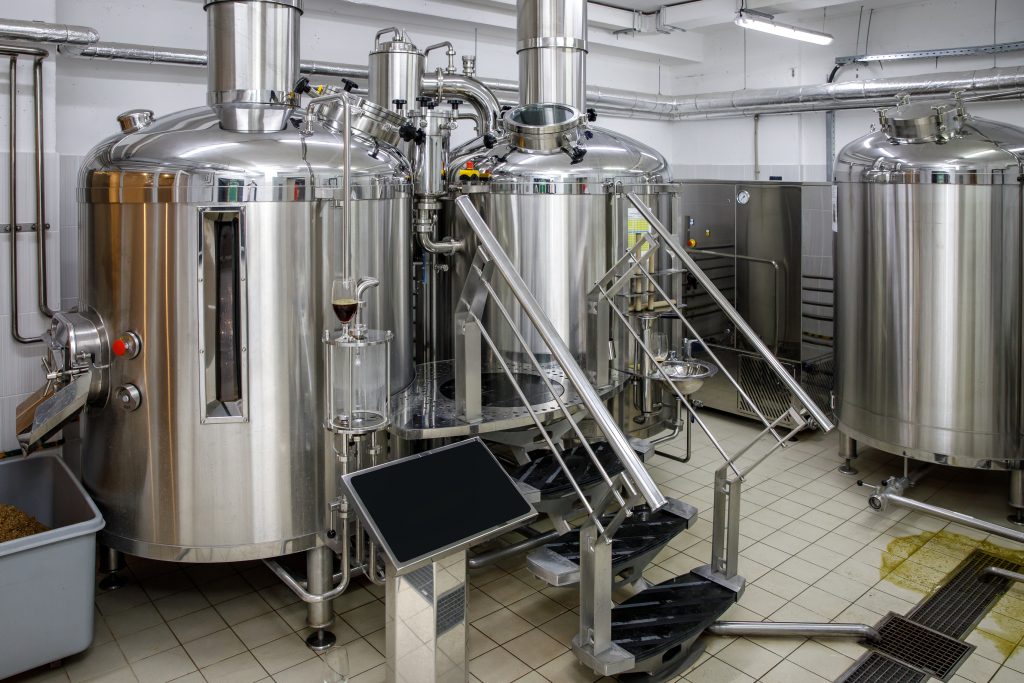
  And just what does a newly-minted brewing operation need? Sant provides a checklist of essentials, beginning with a business plan and a building followed by must-have equipment, such as a mill/auger for crushing and transporting the grain to the mash tun, a mash tun/lauter tun for converting complex malt sugars into fermentable sugars and a kettle for “cooking” unfermented beer (wort), as well as for adding hops/adjuncts and pasteurizing the liquid to ensure a clean fermentation.

  Sant adds that additional essentials include a heat exchanger to cool the wort down to fermentation temperatures, pumps for cleaning or transferring liquids, unitanks/conical fermenters for the bulk of fermentation, brite tanks for conditioning, clarification and carbonation and, lastly, a glycol chiller for controlling fermentation and conditioning temperatures. The latter, Sant advises pairs well with a cellar control panel to control each tank.

  Regarding some of the most popular items on the product list for Craftmaster Stainless, Sant points to a number of items that highlight the company’s unique feel for what breweries need, including one piece of equipment that takes the tedium out of a very mundane but necessary chore.

  “I would say our keg washer is the most popular piece of equipment at the moment. I think I speak for most brewers when I say that keg washing is probably one of the most repetitive jobs in the industry. This machine makes that job easy. It is seriously your best ‘employee.’ Once again, our customer service is always there to help with any trouble shooting. We understand downtime is not profitable, so we are always available to help. I would say our brewhouses are popular as well. They look great and they get the job done. Our level of customization on our brewhouses will catch your eye. We do have a couple other products releasing this year that will steal the spotlight for a while.”

  The company’s new product launches include the Craftmaster Stainless Semi-Auto ‘Keggernaut’ Keg Washer and another new equipment item.

  “We just released our Three Gallon Hop Doser. The Hop Doser is a great attribute in our equipment line up. When introducing hops into the brewing process, you don’t want to introduce oxygen. This hop doser allows you to dry hop without oxygen ingress. It can be used for other adjuncts as well, so use your imagination. Keep an eye out for equipment to come. There is so much technology in the industry that isn’t being used, and we have big plans for the future, while staying competitive.”

  From Lincoln, Nebraska, is ABE Equipment Company, which designs and manufactures a variety of equipment for breweries. The company’s brewhouse equipment is custom-built, paying special attention to solving problem areas such as low ceilings, tight spaces, ventilation barriers and utility requirements. Ashlei Howell is the marketing manager for the firm’s parent company, Norland International.

  “Our sweet spot is the 1,000 BBL to 5,000 BBL per year brewery. Our products cater to much larger breweries, and much of our equipment can be used on a much smaller scale, but the niche we serve will be a bit on the higher production end.

  We pride ourselves on being able to offer a complete solution at a fair price. We handle everything from grain to glass. Everything is designed and assembled in Lincoln, Nebraska, and we employ over 130 hardworking Americans to make our suite of products. Our dedicated customer service technicians train our customers and make themselves available nearly anytime to answer questions.”

  When it comes to introducing new products to the market, Howell explains that ABE Equipment Company is focused on what will increase its clients’ bottom line.

  “Our newly released products have changed how breweries and distilleries package their product. The new CraftCan Go is a small footprint, one operator and a dual-purpose (atmospheric and counter pressure) canning machine. Breweries are packaging so much more than just beer in today’s environment.

  A canning line capable of making beer, coffee, seltzer, tea, and anything else that may be high or low in carbonation adds versatility to the brewery. It sets that particular machine apart from anything else on the market.

  The Patriot Fill Station allows companies to package virtually any beverage on a budget. It is a manual fill station allowing the user to package around eight bottles per minute. This machine can handle alcohol, syrups, oils and many more viscous or non-viscous liquids. With so many craft beverage companies coming to the market, having an affordable machine to get a product into a package at a reasonable price is a must for any beverage company wanting to stay ahead  of the game.”

  Howell offers input on some advanced equipment choices for breweries to consider.

  “There are numerous products a brewery can add to its lineup to optimize production, save time, cut costs and much more. A yeast brink allows breweries to reuse yeast and can easily be added to your equipment lineup. If harvested and stored correctly, you can sometimes yield up to 10 generations of yeast, spreading the cost across multiple brews. With rising grain costs, adding a bulk grain silo is becoming a more economical option for breweries. Buying in bulk saves time when brewing, but you can cut significant costs when ordering large amounts of grain at a time. The ROI on a silo is easier to prove now more than ever. There are also a variety of smaller, simpler items, such as brite tank monitors, CIP carts, and brewhouse automation options that help improve production within a brewery.”

  MISCO Refractometer and its 70-year history have earned a place in the specialty field of refractometry. Refractometers in the brewing industry are among the equipment needs experts say breweries should have on their checklist of items designed to ensure quality control. As the singular item that the company manufactures, MISCO offers a wide range of refractometer choices for different industries, but one specifically designed for brewing. The company says that its MISCO Digital Beer Refractometer deploys a patented design specific to wort and eliminates the need to use a refractometer correction factor when placing measurements into beer calculators.

  Another advanced equipment option for breweries is a set of sieve plates for the mill. According to experts like Sant, even a one percent efficiency loss in this area could cost hundreds of thousands of dollars in a single year. Along with this, brewers may want to consider keg washers along with portable and inline flow meters. Sant recommends breweries make equipment choices with long-term gain in mind.

  “Can you save money in the beginning by cutting cost on your equipment? Absolutely. But what about labor cost, repair cost for failing equipment and bad batch efficiency? The list goes on. Spend less time worrying about the equipment and more time worrying about the beer you are creating. A popular beer podcast said that every 10 minutes you save brewing is a cold beer at the end of the day. Spend that extra time focusing on different aspects of the process.”

Proper Tank Selection Begins With Business and Production Goals

2 huge brewing machine

By: Gerald Dlubala

From start to finish, a well-equipped brewhouse or distillery is a complex linked chain of equipment, including specialized tanks and storage vessels, each important to the final product. But brewery and distillery experts agree that before finalizing any decisions on the purchase or upgrade of your tanks and tank accessories, it’s critical that the equipment manufacturers know your business and production goals, both now and in the future, so that they can recommend the proper vessels for your needs.

It’s in Their Name: Quality Tank Solutions

  To help sort through all of the possibilities, Jimmi Sukys, owner of Quality Tank Solutions (QTS), says that it’s critical to research and choose a manufacturer that carries an excellent reputation in your industry with the equipment they manufacture or import and with the knowledge and service capabilities for support of those products. Quality Tank Solutions brings over 50 years of expertise in the stainless-steel industry, providing sanitary liquid solutions to the brewing, food and beverage, dairy and pharmaceutical industries. QTS builds lifelong partnerships because of its willingness to work alongside each customer from start to finish and beyond. They offer everything a craft beverage producer needs in quality, right-sized equipment and accessories.

  “Before we even get to the tanks, a producer should know the production goals that match and support their business plan,” said Sukys. “From there, we can determine the size and quantity of necessary equipment, develop a plan for future growth and plan for the type and size of the facility that will support this plan. Of course, there are exceptions. For example, when a craft producer finds their perfect location, say, a great space for a taproom, we work backward using the available space. A quality manufacturer helps clients determine the optimal equipment size for their production space and provides the production capabilities of that recommended equipment.”

  “The first step is knowing the process or function required of the tank in question,” said Sukys. “A quality manufacturer should ask questions to be sure they design and offer a proper vessel for your needs. For example, is it a process tank, and if so, what will the process involve? What type of products will you be mixing, adding, heating or cooling, and to what extremes? The more details you provide to a manufacturer, the more value you get from your tank purchase.”

  Sukys said that knowing the size of batches is critical as well. Too small of a tank limits production. Conversely, going too big with a goal of doing double or triple batches or more can raise issues when wanting to do only a single batch. Most tanks are not designed to heat or cool less than maximum volume production batches efficiently. Smaller batches may not hold temperatures correctly or cause stratification. A manufacturer that understands these limitations can be beneficial in presenting options that work for the producer’s needs.

  “Stainless steel has become the standard choice of construction,” said Sukys. “Stainless steel tanks can withstand decades of use when properly maintained. The range of temperatures in stainless steel tanks is much greater than other material choices, allowing a craft producer to use them for a wider range of processes. Welded ports replace screw-on fittings, which may need more maintenance. Additionally, stainless steel offers superior sanitation capabilities and can withstand aggressive cleaning with different chemicals. Quality manufacturers provide maintenance schedules for any equipment they provide.”

  Sukys told Beverage Master Magazine that any other accessories and equipment needed, like boilers and chillers, will depend on what the beverage producer plans to offer. Budgets must also include more minor things that add up, like hoses, gaskets, extra clamps, and fittings. He recommends using a manufacturer that helps with recommendations on what is necessary for startup and what additional equipment is good to have on hand. It’s common for equipment manufacturers to have accessories available to the beverage producer.

“The most important aspect of all of this is to choose a quality manufacturer that keeps current on the evolvement of the beverage industry and has the capability and expertise to design equipment that allows you to produce better beverages consistently,” said Sukys. “A strong warranty and service department is critical for peace of mind and knowing that you have a partner to have your back if unforeseen things happen. And remember that as your business and production goals grow, so do your equipment needs. The industry is constantly evolving, and better design of tanks and auxiliary equipment can help save energy, raw materials and production time. Finally, American-made equipment always has a higher resale value than Asian imports. That can be important when it comes time to resell your smaller tanks to replace them with larger capacity models.”

  For questions, consultations, and more information on Quality Tank Solutions, visit www.qts4u.com.

Flexibility, Efficiency and Cost Effectiveness: Paul Mueller Company

  Since 1940, the Paul Mueller Company has provided experienced help and demonstrated expertise in the processing equipment industry. Their reputation as being not only a quality manufacturer of brewing-related vessels and equipment but also a true partner of craft beverage producers is demonstrated through their equipment and industry knowledge and their respectfulness of client schedules and available workspaces to provide seamless transitions and minimal disruptions or interruptions, whether you’re purchasing new systems or replacing outdated or undersized equipment.

  “The first thing we should look at, as far as necessary equipment and proper sizing, is the planned production, and then work back from there,” said Jon Sprenger, regional sales manager for the Paul Mueller Company. “We find the best way to do this is to consider what your business will look like and what production levels you expect to attain in five years. That number is critical because bottlenecks in brewing and production are generally about available cellar space rather than brewhouse issues. You can brew beer around the clock, but you’re at a dead end if you don’t have the cellar space.”

  Sprenger also said that equipment like tanks could depend on the heat source chosen for the production space. Steam and direct fire are the two most popular, with steam being the easiest way to brew. The boiler can be pricey upfront. Conversely, with direct fire, you’ll be paying regular monthly payments for natural gas on a utility payment plan. It depends on available capital and the owner’s perspective from a cost standpoint.

  Along with this, Sprenger adds that an owner has to consider if they want to distribute their products or remain true to being a craft taproom. How do you want to handle your packaging? A quality equipment manufacturer will use this information to develop a successful equipment plan that incorporates the entire business model, not just presently but also with an eye toward the future.

  “And we can achieve that in different ways,” said Sprenger. “Consuming beer is like eating food. You do it first with your eyes. So many times, older, trendier and historic spaces have become desired locations for breweries and taprooms. That’s okay, and we can fill an already acquired space, or we can look at a producer’s projections and recommend comfortable square footage estimates to fulfill those goals. Either way of building a system is acceptable and falls under the umbrella of what we can do. Most manufacturers, including us, offer layout services and work with the available contractors and architects to develop a successful system. Stainless steel is advantageous simply because of its longevity. It’s built to last with simple and easy maintenance and cleaning capability. When compared to oak, which is difficult in this day and age to brew beer in, it becomes an easy and economically sound decision to go with stainless products just based on ease of cleaning and maintenance, lifespan and consistency in product endpoint and taste.”

  Sprenger tells Beverage Master Magazine that Mueller offers everything for a complete brewing system that falls in between the raw ingredients and the end glass.

  “We understand that it’s a lot easier and less time-consuming for beverage producers to deal with as few vendors as possible, so we offer all the necessary related equipment and accessories that they’ll need to complete their brewing system. That being said, we also easily adapt or integrate our products into any existing equipment that a craft producer already has in place. All of our equipment is customizable and will comfortably fit where it is supposed to go using as little movement as possible. Our equipment and installation successes are great marketing tools as well. Like consumers, we love to see our tanks on display in taprooms because they are also on display to other industry professionals that visit, including other brewers.”

Saving Money, Increasing Efficiency With Mueller’s Serving Beer Tank

  “One thing we’re excited about, and brewers should be too, is our serving beer tanks,” said Sprenger. “They’re a great alternative to kegs, and they don’t require the cleaning or CO2 that kegs demand. Beer goes into a mylar or polymer, food-grade bag inside a pressurized tank using only compressed air. The serving beer tanks don’t require cleaning because the replaceable bag protects the stainless steel from ever contacting the enclosed product. The use of compressed air negates the use of CO2, and we all know about the cost and shortage issues there. They come in various sizes and are perfect for taprooms. The tanks are completely mobile, easily transported outside for parking lot events, off-site festivals or stacked above your bar or in cold rooms for an awesome visual experience. The uses and locations are endless, and our serving beer tanks provide ultimate flexibility, space savings and costs incurred with keg ownership. In addition, the serving beer tanks offer a self-cooling, streamlined process of serving beer directly from the tank that promotes longer shelf life and fresher beer. We do recognize the need for kegs for distribution and other uses, but our serving beer tanks give brewers a cost savings option to replace kegs where available.”

  Mueller’s serving beer tanks show well in a copper or stainless finish, are ASME (American Society of Mechanical Engineers) code-rated and can easily push beer several hundred feet with no issues and serve multiple draft towers at once.

  For those looking for a complete system, Mueller offers their Beer Genius brewery system, a space-saving craft brewery package customized for your space and featuring their serving beer tanks, making everything from buy to brew easy and efficient with expert help and advice along the way.

  “We work with brewers through these types of things daily,” said Sprenger. “It’s critical to think through expected future growth. If you think you’ll need a size five tank, get a seven. The small extra cost will surely be less than the headache accompanied by a misjudgment in equipment sizing. Always consider your cellar tank needs, including brite and fermenter tanks, to accomplish your desired production goals. It’s always worth the effort.”

For questions, a consultation or more information on Paul Mueller or their serving beer tanks, go to www.paulmueller.com.

In the Market for Quality Parts and Accessories

  Many top tank and equipment manufacturers rely on parts and accessories from Gould Stainless Products. Gould Stainless Products sells everything you need except the tank and is a leading wholesale importer and distributor of stainless-steel sanitary tank accessories. Since 1991, Gould Stainless Products has filled the need for sanitary fittings, valves, pumps, tank manways and related accessories for the brewing, distilling and winemaking industries.

  Their extensive catalog is available online and by mail order. You can order a single, threaded joint, sight glass or replacement fitting up through stainless tubing lengths and replacement manways in various shapes, sizes and closure choices compatible with your existing system equipment.

   For more information and to view the extensive line of products that Gould Stainless Products offers, go to www.gouldstainless.com/home

Gain Consistency & Advantages With the Right Packaging Machinery

man inspecting a machine

By: Gerald Dlubala

There are distinct advantages to packaging your craft beverages, with perhaps the most important aspect being that of reaching new customers and increasing your brand recognition. Packaging is a form of marketing, and by using your own filling and packaging machinery, a craft producer obtains autonomy over their brand and gets their product into the hands of consumers. But is owning your own equipment right for you?

Gaining Advantage: Pneumatic Scale Angelus

  “Purchasing canning machinery is a huge step,” said Mike Davis, product line and technology leader for Pneumatic Scale Angelus (PSA), part of BW Packaging Systems. PSA is a global industry leader with over 130 years of experience in craft packaging technology. “Because of the investment, you must partner with a machinery supplier that offers a system that complements your product mix, the formats you’re using and things like the necessary carbonation and temperature levels.”

  “It is an investment, but comparing the cost of purchasing versus working on a mobile canner or copackers schedule is just the start,” said Kyle Kelleher, seamer account executive. “Owning provides the canning operation when needed but adds additional advantages and opportunities, like expanded e-commerce and customer reach with more frequent and unique offerings. In addition, craft producers can themselves become copackers to help offset costs and keep the lines in use, or even partner with community organizations or local sports teams for fundraising or charitable collaborations.”

  “Most importantly, the brewer has total control over their beer, including variables like DO and carbonation levels, and package it at the optimal time rather than on someone else’s schedule,” said Connor McCaulley, account executive. “They can package smaller batches, test the market to find what sells and build networks and relationships with suppliers and distributors.”

The Right System for Your Needs

  “It really is important to start with the packaging function first when starting a brewery,” said Davis. “It provides the first impression consumers see on the shelves, and proper packaging will have your product consistently taste as good as it does in your taproom. In addition, craft beer is typically not pasteurized, so it’s critical to have a quality Cleaning-In-Place (CIP) system to keep all things clean that come in contact with your product.”

  PSA account executive Mark Saylor adds that adding any packaging equipment depends on the specific location’s variables. Producers should know the limitations of the available utility supply, the space required for the packaging machinery (mobile units or full stack) and the space allotments for additional supplies, finished goods and shipping needs.

  “At its most basic level, packaging is about your goals,” said McCaulley. “Is it to stay small and build upon small batch offerings? Is it distribution? Can the equipment and utility supply keep up or be upgraded to do so when needed? Can you expand raw material storage and finished goods areas? Do you have the personnel to devote to packaging without making yourself work 16-hour days? Does the machinery offer remote access capability? Compare overall designs. Applying the closure ASAP is important to ensure accuracy and consistency.”

  “And you need consistency,” said Saylor. “Product consistency can either build or lose customer base. Packaging systems must be versatile enough to adapt to the different tolerances in cans from different suppliers. Product mixes like beer, cider, kombucha and RTD (ready-to-drink) products present changeover needs, so look for systems like ours that offer minimal changeover times.”

  For smaller craft brewers, PSA offers their CB50 and CB100 inline canners with proprietary technology to perfectly fill up to 100 CPM (cans per minute) with little waste. Additional units like the CB50C trade open-air filling for counter-pressure filling to meet the demands for higher carbonation drinks. Heavier producers can use rotary beer canning systems to increase throughput without requiring an expanded footprint. Inline and rotary volumetric options offer packaging solutions at speeds from 15 to 100 CPM, meeting the need for small-batch or frequent-changeover production schedules.

  For additional information about Pneumatic Scale Angelus products and how they can jumpstart and improve your packaging function reach out to Gigi Lorence, global marketing director, at Gigi.Lorence@bwpackagingsystems.com.

Fillmore Packaging Solutions: Small-Scale Production Solutions

  After spending more than 20 years as a winemaker and craft brewer, Tony Saballa, owner of Fillmore Packaging in St Louis, started focusing on the mechanical side of craft beverage production. During that time, he found a continuing, unmet, small-scale packaging need for those beginning craft brewers trying to expand from the serious hobbyist ranks to craft beverage production.

  “There just wasn’t anything feasible and available at the time,” said Saballa. “A small craft brewer had to either import something costly from Germany or settle for used soda bottling equipment that was usually large and bulky.”

  That’s when Saballa started to build his own machinery, versatile and built for the micro and craft brewer to alleviate the more tedious manual filling work. He began making fillers for his needs and posting the process and results to his YouTube channel. With the corresponding boom in craft brewing, he became inundated with requests to build and sell his fillers. Fillmore Packaging was born, eventually branching out and now exporting all over the world.

  “Canning is still the most popular, but many craft brewery offerings are well-suited for glass containers,” said Saballa. “Small-scale producers need and want a versatile machine with quick changeovers, which is an advantage our fillers can provide. We supply two changes with the filler, with additional sizes available for purchase, so a brewer can customize the machine to their liking and offerings.”

  “Fillmore Packaging sells directly to the users, immediately cutting out the middleman and allowing the user to speak directly with us for support if needed,” said Saballa. “We provide quality, consistent filling systems and provide excellent support. We always pick up our phones.”

XpressFill Systems: Experience, Quality and Service

  Rod Silver handles marketing and sales for XpressFill Systems LLC, providing expert filling and packaging options for small to medium-sized craft beverage producers. XpressFill offers several filling machines for quality packaging of beer, wine, spirits, ready-to-drink options, vinegar, kombucha and more.

  “As with most production machinery, the right unit depends on your situation and needs,” said Silver. “Owners must weigh the costs, benefits and overall advantages and disadvantages of manual labor versus the automated machines counterparts. We encourage craft producers to perform a basic evaluation of labor costs to help them get a filler and determine what manual and semi-automatic options will work the best for them. The result of that evaluation is usually the sweet spot for filling and production because they’re reducing manual labor but not jumping into full automation, which can get very expensive and cost-prohibitive for craft producers, especially in the early stages of their growth.”

  Many breweries and distilleries are now crossing over, with breweries distilling their house spirits and distilleries coming out with signature brews. However, Silver warns that there is no one best type of machine that will consistently handle the packaging of both on a high-quality level.

  “You need the counter pressure filler to have the adequate shelf life for your beer, but it’s not the best choice for packaging spirits,” said Silver. “We help breweries when they need guidance on the best choice of equipment for their operations. We offer affordable and efficient filling machines in two or four spout models specifically designed for the craft beverage markets and to be easy to use. Their customer service and support are unmatched and have long been a hallmark of the company.

  XpressFill’s counter-pressure machines, XF2500/ XF4500/XF4500C, are perfect for beer, kombucha, soda or any other carbonated beverage filling in bottles, cans and even the popular crowlers for the to-go market. Open filler options like the XF4400/XF2200 use level filler technology and can increase efficiency using a gas purge cycle and automatic level sensor. Volumetric fillers are useable with many different bottle sizes and are ideal for bottling spirits, vinegar, oils and more. Level fillers for wine packaging use a sensor probe that shuts off the filling function at a specified height, giving the product that perfect visual for shelf presence.

  Silver tells Beverage Master Magazine that XpressFill is rolling out a brand-new filler that is already generating market interest and buzz. Their latest offering, the XFW200C, is a weight-based filler that ensures accurate and reproducible fill volumes while canning your beer. It’s a significant advantage since you can’t see the level and volume of the product inside the can.

  “Canning is still the most popular method of packaging beer,” said Silver. “With our new Weight-Based filler, you know that your 12- and 16-ounce beer cans are holding the proper amount. It eliminates the guesswork and ensures accuracy in your packaging, utilizing weight sensing technology to ensure accurate and consistent fills.”

  This weight-based filler is ideal when filling 12- to 16-oz cans, and the logic-based board makes it easy to learn and operate. It features an industrial-grade touchscreen display that lets the user enter the desired weight and then keeps track of how much dispenses into the can. The larger flow path allows for a smoother fill with product flexibility to include your craft products that contain a small degree of particulates, accommodating products like beer, kombucha, juices, RTDs, mixers and more. As a semi-automatic machine, it can be a producer’s first step into a more automated system if and when needed.

  Silver says the XFW200C Weight-Based Filler is slightly more expensive than other, more traditional fillers, but that additional expense negates the guesswork and worries over improper filling amounts.

SKA FABRICATING: Effortlessly Getting Your Product into Optimal Packaging

  “For canning operations under 50 CPM, the level of automation needed is fairly low,” said Jake Kolakowski, chief customer officer for SKA Fabricating, an automated packaging line fabricator in Durango, Colorado. “But, for smaller applications, I would recommend our Microbus depalletizer. It appeals to the most basic setup needs but performs a tremendous amount of labor-saving, manual work. It’s compact and folds down to about the floor size of a standard pallet. Mobility is key for smaller production areas and can be moved from area to area or folded away for storage. And it’s built for the budget conscious, working as a manual lift or easily adjusted with a cordless drill.”

  SKA FAB’s Nimbus depalletizer is built on the same technology as the Microbus. The half-height depalletizer system adds auto lift technology and can easily handle speeds of 50-80 CPM.

  “Our popular, full-height machine is our Can-i-bus,” said Kolakowski. “It’s customized for speeds up to 300cpm and has much more accumulator space before the rinsing operation so that it can run continuously through pallet changes. Then the user can add gravity-based ionizer air rinsers before filling on systems requiring speeds at or above 110 CPM. The Can-i-bus integrates seamlessly with our Dual Twist Rinse Cage, making size changes effortless with no tools needed. Post-fill operations are customized to what the producer wants, but automated can inspection is a must at these speeds since human visual inspection can’t keep up.”

  “SKA Fabricating’s core competency is building customized systems built to a manufacturer’s needs,” said Kolakowski. “We always strive to fit operator-friendly equipment into small spaces with optimal flow patterns. Coming up with the right working layout to limit any awkward or unnecessary movements of the operator is a built-in, value-added part of our service with no extra cost.”

  Kolakowski said that although bottling isn’t a significant component of most beer packaging, it is an essential segment of other sectors, including distilling, winemaking, heritage products, RTDs and many smaller craft producers. SKA FAB’s equipment for those operations is made with the same care and customization detail to automate the high labor parts of those processes.

Better Employee Retention Through Automation

  “Any manufacturer should take a return-on-investment approach to automation,” said Kowalowski. “Look for your highest labor input and where your employees spend most of their time. Then, look at the employee’s quality of life within those jobs. Any high-labor, repetitive task that machines can do will free your employees to perform higher value, more fun and more meaningful production tasks that ultimately lead to higher employee satisfaction and retention. We continuously see examples that investing in automation has led to better employee retention rates. And that’s important in today’s workforce availability.”

  SKA FAB works with many manufacturers on integration to make your packaging line the best it can be. They feature in-house tech support and dedicated installation/training teams to close most open tickets within the same reporting day. SKA FAB also sells components individually so a manufacturer’s capital outlay can be budgeted and controlled, resulting in a fully integrated, matching and functional packaging line.

Nelson-Jameson Inc: Reduce Costs with Proper Stretch Wrap

  “Craft beverage producers put a lot of effort into crafting and packaging their product, so it’s vital to keep that detailed effort up by utilizing the recommended stretch wrap to secure craft beverages and distilled spirits,” said Melissa Pasciak, director of marketing for Nelson-Jameson, a leading food and beverage industry distributor. “The proper stretch wrap keeps your products secure during shipment and storage, avoiding damage that results in loss of product and profit.”

  “It’s worthwhile to note the different types of stretch wrap that are used for different applications,” said Pasciak. “One size does not fit all, which is why we offer on-site stretch wrap audits to ensure that craft beverage producers get the most out of their budget. We perform a complete analysis on multiple areas of your stretch wrapping operation, including wrapping patterns, load dimensions, stretch percentage, actual applications and film weight. In addition, our expert auditors continue to optimize stretch film through recommendations, education and training on the proper film for your applications and best practices on use.”

  Pasciak says that if the same stretch wrap gets used for all applications, a beverage producer will likely spend more money and cause more damage because different situations benefit from particular gauges, strengths and load capacities.

  “The wrong choice of stretch wrap can significantly increase downtimes, needlessly raise unit load costs and negatively impact the environment and its energy resources,” said Pasciak.

  Nelson-Jameson has been a trusted source of food processing supplies to the food and beverage industries for 75 years. They represent over 850 vendors and distribute over 55,000 products in the categories of processing and flow control, safety, sanitation and janitorial, production and material handling, building and facility maintenance, laboratory and QA/QC and packaging and ingredients. Through comprehensive product offerings, industry expertise and expertly curated food safety programs, Nelson-Jameson is ready to lower your transaction costs while providing the products and services you need to produce safe, quality beverages.

  For more information or to schedule a stretch wrap audit for your business, contact Nelson-Jameson today.

Toll Free: (800) 826-8302 Website: nelsonjameson.com

The Right Tools Make All the Difference

man brewing alcohol

By: Cheryl Gray

The right tools, technology and know-how go a long way in protecting the integrity of beer and spirits. In fact, they make the difference between a great product and a mediocre one.

  Many breweries and distilleries now rely upon state-of-the-art tools to protect the integrity of their products. Companies that manufacture items for production lines of every size provide industrial equipment, such as pumps to transfer liquids and testing equipment to gauge important components, such as temperature. 

  One of the industry leaders is Milwaukee Instruments, specializing in precise digital analysis for industries including breweries, wineries, hydroponics and greenhouse growers, laboratories, aquariums and education. The company has a global presence, with products designed with ease of use and accuracy in mind. It makes everything from simple pens to more advanced testers, monitors and controllers. The products, made in Europe, have multiple applications to help customers manage critical parameters, such as pH, conductivity, salinity, BRIX and temperature.

  Carl Silvaggio is the president of Milwaukee Instruments. With nearly 40 years of broad-based experience in the industry of scientific instruments, Silvaggio has been part of virtually every facet of this manufacturing sector, including research and development, warehousing, sales and customer service. He walks us through the process from the moment his company makes contact with a client.

“Milwaukee Instruments is a customer-centric company that focuses on the customer’s needs. From the moment of contact, we ensure the information and service the customer receives is accurate, complete, expeditious and fits the application at question. Our product line is designed and tailored to provide the customer with a choice of features and benefits that fit the application and offer competitive price points for the features and benefits that the customer needs. We do not oversell what the customer does not need.”

  Silvaggio adds that his company’s wide range of products allows customers multiple options in transitioning from antiquated testing to more advanced choices.

  “We’ve made it possible for hundreds of thousands of professionals, enthusiasts and beginners around the world move from difficult and inaccurate visual testing to accurate and precise digital analysis.”

  Some of those products include the Milwaukee digital BRIX refractometer, which comes in different versions but all feature user-friendly functions and make precision measuring a priority. Case in point: The Milwaukee digital BRIX refractometer is temperature compensated with a zero to 85 percent BRIX range and plus/minus 0.2 percent accuracy. Ease of use is achieved with simple, two-button operation, followed by a lightning-fast response time of under two seconds. The low maintenance design of a steel glass prism and stainless steel wall makes cleanup simple.

  Milwaukee Instruments also offers a wide range of pH and temperature testers, such as the Milwaukee Waterproof pH55 PRO. This version is one of several used by the company’s brewery clients as a cost-effective, accurate tool to calculate the pH and temperature of the beer. The tester features dual-level LCD readouts, easy-to-replace probes and extended pH ranges to meet the applications required for a brewery. The tester has simple one or two-point automatic calibration and two sets of memorized buffers from which to choose. And, of course, it is fully waterproof to IP65.

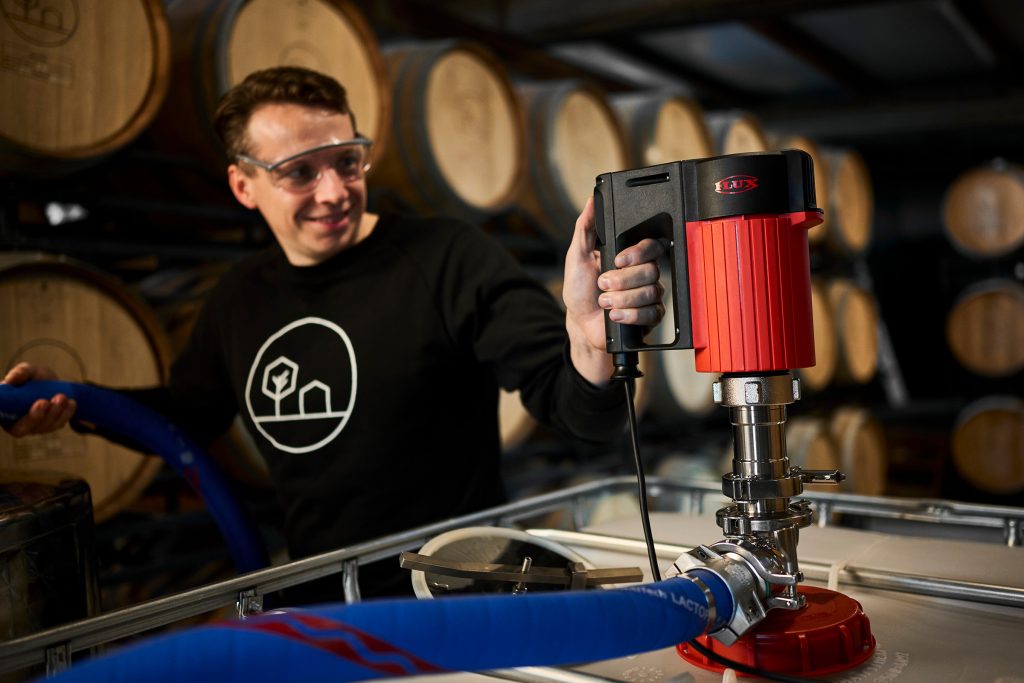
  FLUX Pumps, a Georgia-based company, is a global leader in the arena of flow technology, and it creates pumps for breweries, distilleries and other industries. For more than 70 years, the company’s innovations have drawn upon the invention of the first electric drum pump responsible for FLUX Pumps being established.

  Glenn Mulligan, president of FLUX Pumps, says new products are in store for 2023.

  “In 2023, we will be releasing our new VISCOPOWER product line,” Mulligan said. “These pumps will replace our existing F550 and F560 pump models. The new pump design is much easier

to dismantle and assemble, which reduces cleaning time and maintenance time while simplifying the pump design. VISCOPOWER pumps will also be built from a modular configuration that allows for streamlined spare parts, while still offering a pump design that can be customized to a degree for each customer application. VISCPOWER products will continue to stand the test of time in durability and product quality, both of which are customary to FLUX products.

  Other products for FLUX in 2023 are standardized offerings of flow meters and control panels that can turn your standard drum or tote pump into a one-touch batching/metering system. Too often, companies rely on operators to dispense just the right amount of product for their needs. By adding just a few components to the pump, we are able to give customers accurate, repeatable dosing, which will save time and money and prevent mistakes. We have also partnered with a company so that FLUX can also provide high-quality drum and tote mixers/agitators for customer needs. This gives our customers the ability and peace of mind to buy everything they need for moving fluids from drums and totes from a single source.”

  The Yamada Corporation, which touts itself as an industry leader in pneumatic pumping technology, is headquartered in Tokyo and has been in business since 1905. It has facilities in the Netherlands, Shanghai and the United States. The stateside facility is a 40,000-square-foot, state-of-the-art complex in Illinois known as Yamada America, Inc., equipped to provide service and support for a full array of Yamada industrial pumps and parts for the company’s clients throughout the Western Hemisphere. 

  Yamada offers diaphragm metal and plastic pumps. Its metal pumps are best used for waste yeast, sump and general wastewater. Its plastic pumps are used for CIP chemicals, wastewater treatment chemicals and also general wastewater. The pumps are used in liquid transfers, including liquid hops, liquid sugars, bottling, keg-filling and hops slurry.

  Specific tools and industrial equipment promote safety in the production and quality of the product for breweries and distilleries. Knowing what to consider in selecting these products comes with choosing the right company that can guide the process from purchase to customer support.

Buying New or Used Equipment & How to Decide

bronze brewing machine

By: Kris Bohm, Owner of Distillery Now Consulting

When it comes to starting a distillery or a brewery it takes money to make it happen. In most cases it can literally take millions. The cost of the equipment is a big chunk of the cost required to start up a beverage alcohol business. Most folks who start a business will buy all new equipment. An alternative to the high price tag and long lead times of new equipment is to buy used equipment. When it comes to buying used equipment there can be many hidden costs and problems that come with what outwardly appears to be an excellent deal. By seeking to understand the hidden costs and potential problems that come with used equipment you may just uncover the perfect opportunity to land a deal on the equipment you need to start your business. Our aim is to help you avoid falling into the proverbial used equipment money pit. Let’s look through key considerations of buying used equipment and explore its potential.

  There are many reasons for wanting to buy used equipment instead of new equipment for a brewery or distillery. Lead time is a strong factor that drives folks to look at used equipment. In 2022 there have been massive disruptions to supply chains across many industries. Beverage manufacturing equipment is certainly one of them. For many manufacturers of equipment they now have lead times of well over a year. That means from the time you put a deposit on equipment to that equipment being delivered will almost certainly be beyond 12 months.

The opportunity to buy used equipment and take possession of it quickly has become an attractive option as a result. The downside here is that used equipment is in high demand these days and as a result the price on used equipment has gone up.

  There are many factors to consider when looking at used equipment. Age and condition are the two that are most important. As equipment gets older it can sometimes become hard to source replacement and repair parts. In some instances replacement parts do not exist and will need to be manufactured or redesigned which can be costly. The key here is to be diligent. Take some time to talk with the manufacturer and ask if they are available and willing  to continue to support the equipment they built. Here is an example of a situation where this occurred.

  There was an equipment manufacturer (who will not be named) but we will call them Acme in this example. Acme Company built equipment that looked great but their engineering and quality of manufacturing was shoddy. Acme went out of business only several years after opening due to lawsuits from equipment buyers.  A person new to the industry bought some equipment from Acme second hand that was still in crates unused. The buyer quickly bought the new and unused equipment from a 3rd party seller at what appeared to be a good price but did not do any research. Acme is no longer in business, and buying replacement parts for the equipment is impossible. When the time came to assemble and start the equipment there were many missing parts. To make it worse the equipment needed major repairs just to function as parts of the equipment were not operable. For the folks who bought this equipment, they had to spend lots of money and time to have custom work done just to make the equipment function. The repairs and replacement parts were so costly that the buyer would have spent less money on new equipment from a reputable manufacturer. 

  If the equipment comes with automation and controls the age of the equipment is critical to consider. Some older equipment does not age well and can in fact be more outdated than an 8 track cassette player. This is not to say that old controls or automation will not work, but there is a strong chance they can break and become unrepairable. If the used equipment is decommissioned and sitting in a warehouse it may not be possible to test the controls. If the controls cannot be repaired they may likely need to be replaced. The cost of replacement can eat up the money saved from buying used in the first place. Furthermore the cost of parts on older controls can sometimes be astronomical. The best way to test this before buying it is to buy equipment that is currently operational and can be tested.

  An important consideration is the cost of relocation. The cost of taking possession of the used equipment can vary hugely from one opportunity to the next. In most cases the equipment can be removed quickly and cleanly in the hands of skilled tradesmen. Most of the time there is room to disassemble and remove the equipment and also a door that allows for easy removal. In some instances this is not that case. There are some facilities that are literally built up around the equipment. In most cases continuous column stills in distilleries are installed via crane. In these cases removal of the equipment can be quite costly and require extensive building demolition and heavy equipment to carefully extract the equipment from a building. In one instance we saw a distillery in which the column for vodka distillation was encased in a metal and glass shaft. To remove the column required extensive demolition and a crane to extract the column from the building. After reviewing a plan and considering the value of the column we found that the cost of removal and relocation was going to negate any savings from the lower cost of the used equipment. This instance was one in which the buyer backed out of the purchase after investigating the cost of relocating the equipment.

  A common question asked by those buying used equipment is why are they selling it. The owner of the equipment can be selling it for a multitude of reasons, and it is an excellent question to ask. It is common for a business to outgrow its equipment capacity and sell its equipment to make room for larger equipment. Sometimes a business is closing permanently and is selling its equipment to liquidate the business. New entrants to the industry often ask how it works to buy used equipment. The transaction of buying used equipment is straightforward.  The seller of the equipment and the potential buyer connect and work to meet an agreed upon price and terms on purchasing the equipment. The agreement will often include a written contract that stipulates what equipment is being sold, how much time is there for the equipment to be removed, timeframe for deposit and payments, details on process of decommissioning and costs associated. If the buyer of the equipment is unsure of how to approach this process it is wise to hire a group or consultant to assist with this process. Typically a 3rd party will handle the disassembly, crating and relocation of the equipment. The process of decommissioning and relocation definitely has a cost so it is important to consider this in the overall cost of purchase.

  There are many factors to be considered here before buying used equipment. Although there are stories of bad deals, there are many more stories of success. In some instances, we have seen and helped folks save tons of money through buying used equipment. We hope you will give careful consideration when buying used equipment. If you are unsure whether or not to buy used equipment, it is best to bring in a professional to aid in your assessment of a potential purchase.

Keeping an Eye on the End Game

Precision in Bottling and Canning for Craft Breweries

beer automated machine manufacturing

By: Cheryl Gray

Savvy craft brewers want problem solvers on their team, especially when it comes to bottling and canning products. 

Industry experts specializing in bottling and canning needs for breweries tout the equipment and technology to handle these tasks for operations of any size.

  One of those experts is XpressFill Systems, a long-established player whose clients, the company says, know to expect cost-saving innovations from its products and solid customer service, particularly after the point of sale. California-based XpressFill was founded in 2007 and began with the idea of solving a dilemma for small-scale wineries stuck with trying to bottle their wines by hand. It continues to service the wine industry, which surrounds the company’s facilities in San Luis Obispo.

  Today, XpressFill manufactures bottle- and can-filling systems in its San Luis Obispo plant, using top-quality components made exclusively in the United States. Its fillers come in several models, including volumetric, level fill and carbonated technology. With affordability, compact design and ease of use among its top priorities, the company continues forging ahead with new ideas to keep pace with customer needs in real-time.  

  The XFW200C is XpressFill’s latest addition to the line of filling products. Its weight-sensing technology is designed to ensure accurate fill volumes that will hit their mark every time. The importance of this precision, of course, is to avoid spills and underfills, which cost valuable production time and loss of product. 

  Rod Silver leads the company’s Sales and Marketing Division. He describes how the XFW200C is ideal for 12-ounce to 16-ounce cans. An industrial-grade touchscreen display allows the user to enter the desired weight and the technology installed keeps track of how much product fills the can. A larger flow path gives the user access to a smooth fill along with the flexibility of filling containers with almost any product of choice, including those with some level of particulates, such as flakes or small seeds. In addition to processing beer, kombucha, juice and RTD mixtures are among some of the other options.

  Twin Monkeys Beverage Systems, based in Denver, Colorado, is the brainchild of Josh Van Riper and Brian LeFevre. Their attention-grabbing moniker, along with the duo’s business model of customer-focused design, has earned Twin Monkeys a global presence in the craft brewing industry, with customers throughout North and South America, Europe, Australia, Africa and Asia.

  Both Van Riper and LeFevre have engineering backgrounds. They are focused on designing the kind of automated canning systems that didn’t exist when Van Riper was brewing craft beer.

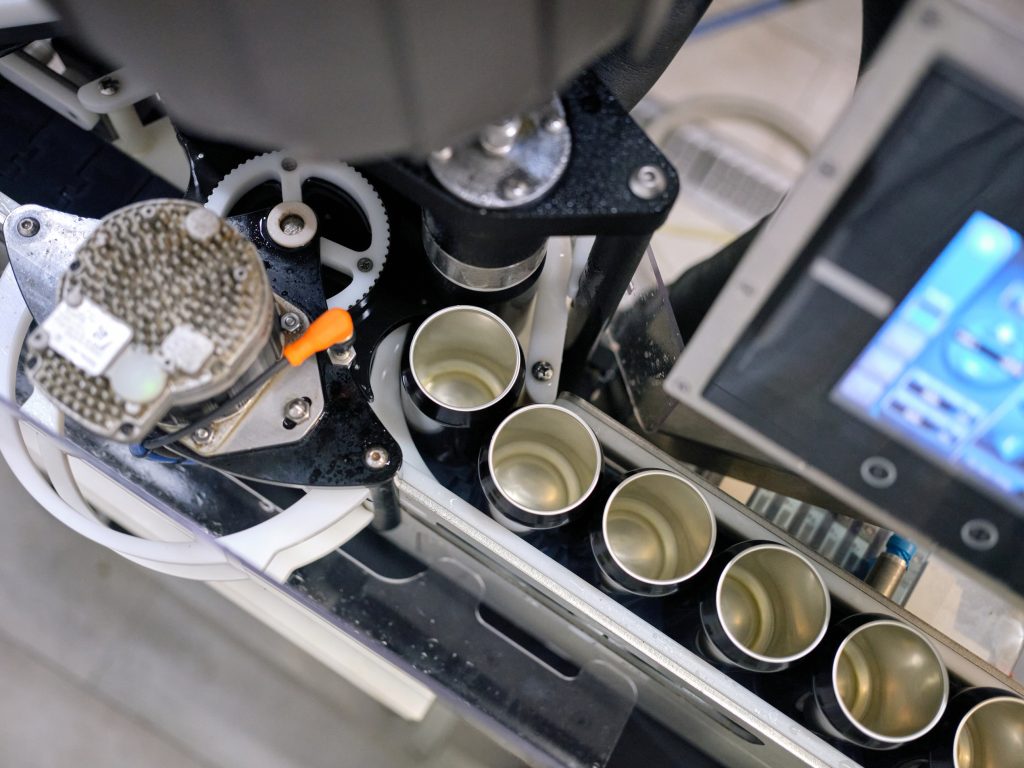
  “I started a brewery and quickly found there were not good options for buying automated canning machines for craft breweries then (2013),”Van Riper said. “I got Brian to come to the brewery to discuss this opportunity and we then started Twin Monkeys to make affordable, high-quality automated canning systems for packaging beverages. We’ve grown to a 30-person company in a 14,000-square-foot facility, and we have over 500 canning machines strewn around the planet. I’m an automation engineer who does mostly controls engineering and mechanical concepts. Brian is a mechanical engineer. Between the two of us, we can design automated equipment from the ground up.”

  Twin Monkeys Brewing Systems offers a full range of can-fill-and-seam machines. The company offers craft brewers automation options that provide access to in-house, integrated canning lines equipped with three critical functions.

  “We are singularly focused on canning machines that do three things: fill cans, put lids on cans and seal cans. We rely on other expert companies to do things like labeling, depalletization and brewing, and we want to just perfect the three things we do over and over. We’re also creating a new customer service paradigm to provide easier and more efficient access to our knowledge for our customers.”

  Van Riper says that customer service extends to helping clients integrate their systems with a wide range of accessories.  

  “Although we only make canning machines, we consider ourselves to be systems integrators and that means we sell and support a wider range of equipment,” he said. “This provides more of a one-stop-shop model for customers to lean on us for a variety of their equipment needs. We plant 50 trees for every machine we sell, and in 2021 we became carbon neutral. We do serious work, but don’t take ourselves too seriously.”

  The process of canning and bottling craft beer also entails protecting the integrity of the product before it hits the market. That’s the role of Industrial Physics, which brands itself as the world’s leading test and inspection corporation. Armed with a global network of technical and support teams, the company’s 75-year history in quality control has guided the testing and inspection experience for some of the largest beverage corporations in the industry.

  Industrial Physics has a presence in 75 countries, with manufacturing facilities in 13 locations. Through its vast portfolio of more than a dozen testing and inspection brands, including CMC-KUHNKE, Quality By Vision, Steinfurth, Eagle Vision and TQC Sheen, test and inspection solutions are deployed to ensure premium quality control for beverage packaging, materials and products. At the same time, the company assures clients of personalized solutions for their product needs. 

  Whether a small start-up or a global name in the brewing industry, Industrial Physics says its

Testing and inspection solutions cater to every need and budget. Steve Davis, global product line director at industrial physics, has more than 20 years of engineering experience. He leads a team of experts who ensure that the equipment provided by Industrial Physics does its job.

  “When you’re dealing with bottles, cans and metal packaging, you’ll need reliable inspection machines to ensure the quality of your drinks,” Davis said. “With Industrial Physics, you’ll improve the efficiency of your processes and improve your product, saving yourself time and money and, ultimately, you’ll keep your customers happier. Through our leading brands, including CMC KUHNKE, Quality by Vision and Eagle Vision Systems, we’ve helped thousands of beverage fillers and breweries to taste success.”

  Davis went on to say, “From seam inspection and metal can testing to an inline inspection of empty and filled containers, our devices offer unmatched innovation and help you meet your quality needs. We protect the integrity of some of the biggest brands on the planet, as well as hundreds of emerging brands and everything in between. But how do we do this? By providing first-class test and inspection machines and products that check the quality of your packaging, materials and coatings.”

  Davis provides an example.  “Let’s take seam inspection. Our CMC-KUHNKE Auto XTS is a state-of-the-art, fully automated seam inspection solution. There’s nothing like it in the world, and it has the power to completely revolutionize seam solutions for your production line. We also have a wealth of smaller solutions to fit different needs and budgets.”

  The company offers instruments designed to provide functions that include double seam inspection, non-destructive seam inspection, bottle, keg and can vision inspection, abrasion testing and headspace and dissolved oxygen testing. Customer service, Davis adds, is a priority at every point of the client experience.

  “We understand that being fast, efficient and truly reliable is critical when it comes to servicing the instruments that keep your business running. And that’s why we’ve established a global network of dedicated service specialists to ensure you have an expert ready and waiting at a nearby location who can offer you support.

  Wherever you are in the world, our experts are on hand to support your needs, whatever they may be. We know that having the right people ready to help is critical. It’s critical to delivering quality and speedy service that ensures your instruments can get up and running as quickly as possible. From installation to calibration, repair and preventative maintenance, we’ve got you covered.

  We’re also passionate about being there for our customers in a more holistic way. We don’t just provide products. We’re there as a true partner. We have a wealth of solutions available across the beverage space, from metal packaging to bottles, our instruments test across an incredibly vast range of applications for many different manufacturing and laboratory needs.”

  Canning and bottling craft beer is a process that engages the expertise of filling, packaging and protecting products. Selecting the partner for one or more of these steps is not only based on budget but also depends upon which companies can accommodate the individualized needs of a craft brewery, no matter the size. Another important factor, experts say, is which company will stay with a brewery for the long run, ensuring that it can accommodate growth while not compromising on quality control. 

The Design, Production and Manufacturing of Flavored Distilled Spirits

5 Ballotin alcoholic bottles

By: Kris Bohm: Distillery Now Consulting, LLC  

Take a moment the next time you are in your local watering hole. If you peer at the bottles of spirits behind the bar, there is a particular type of spirit you are sure to find. It is not whiskey, nor rum, vodka or tequila. The bottle you will almost certainly find is some type of flavored spirit. Whether it is a peanut butter whiskey or raspberry flavored vodka there is a variety of flavored spirits to be found behind every bar. If you look around at a liquor store, you will find dozens if not hundreds of flavored spirits on the shelf. The spectrum of flavors is massive and it is well worth giving the concept of flavored spirits some consideration. Many successful manufacturers have found that flavored spirits can be sold in volume. Let’s look closer at flavored spirits and then take some plain old vodka to flavortown.

The Appeal of Flavored Spirits

  There are literally thousands of varieties of spirits that are flavored. From spiced rums to honey whiskey, and vodka in a rainbow of flavors, there are flavors galore. The process of manufacturing flavored spirits can vary widely for the type of product being made. Some processes are expensive, labor intensive and can be subject to seasonality of ingredients. Other methods of manufacturing are very simple with merely the addition of a flavor before bottling. You might be asking yourself at this point. What kind of flavored spirits should I make at my distillery? This is a tough question because no two distillers have the same answer. Let’s start to answer this question by looking at the way flavored spirits are perceived by folks.

  The average consumer chooses flavored spirits because it is easy to make a mixed drink with. A person who enjoys a cocktail often has little to no knowledge of how to make a good cocktail. This demographic of consumer will view products like a lemon flavored vodka as a spirit that can simplify the process of making a cocktail. For this example, let’s explore the humble vodka soda. This popular drink is commonly served as vodka, plus soda water, with a lemon or lime added to it. If we substitute plain old vodka for a delicious lemon vodka this product can be combined with soda water and simplify the process of making a cocktail by not requiring fresh fruit to be added to the drink.

  For some consumers the appeal of choosing a flavored spirit over a traditional spirit is both flavor and drinkability. Drinkability can be a bit fickle so let’s define “drinkability” for the sake of this article. Some consumers of spirits believe they prefer to drink spirits that are labeled as “smooth” or “easy drinking”. Spirits even at 80 proof can be perceived as hot or labeled as a spirit that “has bite” or that it “burns”. These descriptors might not be terms used by producers of spirits as fair adjectives to describe their spirits, but regardless the adjectives are often used by the general public. Many flavored spirits not only have flavors added to them, they also have sugar or other ingredients added to them that mask the detectability of the alcohol in the spirits. The addition of flavor and sugar to a spirit can make the spirit taste more smooth or have less burn to it.

  It has been proven in blind tasting panels that the addition of sugar to distilled spirits is quite effective at masking the perception of the alcohol in spirits.

This is a huge factor as to why flavored spirits are sold in such massive volume. Consumers who might not otherwise like to drink distilled spirits find flavored spirits to be more pleasant to drink.

How to Make a Flavored Spirit

Distilling with Real Ingredients:  Smaller craft distilleries will sometimes use fresh ingredients to produce a flavored spirit that is deemed “authentic” or “artisanal”. One example is a fresh lime vodka made by a distillery in California. This spirit is produced by macerating fresh locally grown limes in a neutral spirit then redistilling that spirit to produce a flavored vodka. This method is quite effective and the resulting lime flavored vodka is quite delicious. On the down side this method is labor intensive and subject to the seasonality of the fruit. This can create limitations in production capacity and in some cases be cost prohibitive to produce.

Extracts for Flavoring:  A method employed successfully by large distilleries to produce flavored spirits is the use of extract based flavors. Extract flavored products are built in a tank where a measured amount of neutral spirit has water, sugar and extract flavor added to it to create a flavored spirit. This method is simple, scalable and economical. There are several flavor companies in the US and abroad that manufacture extract flavors that are TTB approved and meant specifically for flavoring of distilled spirits. These extracts are easy to work with and can fast track the production of flavored spirits. This method is a very economical way to manufacture them, when compared to using real, fresh ingredients to add flavor.

Quality Assurance Process:  Quality assurance, also known as QA, is the testing of a product before it is released to the market. There are many pitfalls in this process that must be navigated prior to release. Once a concept has been created for the production of a flavored spirit it is essential that rigorous product development and quality assurance testing takes place. Testing of the spirits for faults, flaws or problems is essential to the success and commercial viability of the product.

  Let’s look at an example of a failed QA in product development. A distiller once hit upon the idea of a flavored vodka and quickly rushed to take the product to market. The product was a strawberry flavored vodka and it was made by soaking freshly picked strawberries in vodka, then filtering the vodka and bottling the product. The result of this process was a vodka that had a beautiful light pink hue and an aroma of fresh strawberries. The product was instantly a hit and the distiller sold lots of it through their tasting room and to distribution. Not long after the launch of this product the complaints began to roll in. Customers complained that their bright pink vodka turned an unsavory shade of yellow. Liquor store owners demanded refunds for the vodka. Upon tasting the ugly discolored vodka there were no flaws to be found in flavor or aroma, but the color was downright off-putting. In the end the distillery recalled and bought back the product and shortly thereafter discontinued the production of their strawberry vodka.

All of this could have been avoided if they had a better QA process

Legal Considerations:  There is some legal navigation required when it comes to manufacturing flavored spirits. The TTB requires a formula to be submitted and approved before that spirit is allowed to be sold.  Part of the TTB formula process is the review of the ingredients used in the manufacture of a flavored spirit. Ingredients used in a flavored spirit must be approved by the FDA as an ingredient that is on the GRAS (generally recognized as safe) list. It is important in product development that one makes sure the ingredients they intend to use are approved by the FDA and TTB for use in distilled spirits. In the case of using extract based flavors, these extracts should be TTB approved. Ask your flavor manufacturer in advance if the flavors they are providing are approved by the TTB. Some flavor companies have thousands of TTB approved flavors. This multitude of options afford a distillery the opportunity to make a flavored spirit of almost any flavor they can dream up.

Let’s Go to Flavortown:  Now you have a better understanding of a few methods used to make flavored spirits, along with some of the guidelines and restrictions around production. You have the basic tools you need to start working on producing flavored spirits at your distillery. There is a huge opportunity to sell flavored spirits and one that we encourage you to take. Flavored spirits are the gateway to flavortown and it’s a place many successful distilleries go. If you need some help making your own flavored spirits drop us a line.

TANK & TANK SYSTEMS: Streamline Production and Maintenance

2 huge brewing machines

By: Cheryl Gray

The tanks and tank systems that support the production of the brews and spirits of the craft beverage industry work to keep the quality and safety of those beverages on target.

  No matter the size or brand of the tanks involved, craft brewers and distillers want optimal results and a minimalistic cleaning and maintenance routine to ensure productivity goes uninterrupted. Some companies cater to the industry to provide multiple options.

  Among them is Quality Tank Solutions (QTS), headquartered 35 miles outside of Milwaukee. The company, founded a decade ago, is a stainless-steel tank manufacturer. Jimmi Jean Sukys is the

company’s owner.

  “We are about 100 employees in size and we serve the brewing, food and beverage, dairy and pharmaceutical industries,” Sukys said. “Aside from manufacturing, we also install and repair stainless steel vessels. Our talented engineering team helps you refine your process by increasing efficiency, quality and cleanability.”

  QTS provides a wide range of complete stainless-steel tanks and tank systems for craft breweries, whether it is a start-up or an established brewery. This includes custom-built brewhouses with two to four vessels of 3-1/2BBL to 100BBL in size. The systems are configured to accommodate any height or space restrictions. Standard construction offers features that include either manual or fully automated operation and either steam or direct fire. QTS also supplies brewhouse equipment, such as boilers, chillers, keg washers, bottling lines and walk-in coolers. Sukys explains what additional innovations set QTS apart, including the top-priority use of high-quality materials, efficiency and cleanability.

  “Our QTS cellar tanks are versatile and are completely customizable to meet your specific needs,” Sukys said. “The tank system industry has been around for some time now. What QTS has brought to the table, in just 10 years of service, is consistent and trustworthy results with emphasis on quality standards. Our tanks are engineered and manufactured in Wisconsin, USA using only U.S. stainless steel. Tank longevity is a priority. QTS is with you every step of the way. Even after you receive your tanks, we can help you install, repair or expand. Our expert team members offer amazing customer service.”

  Solid customer service and buying American-made products are among the reasons behind Potomac Distillery’s decision to buy tanks and tank equipment from Idaho-based Corson Distilling Systems, Inc. The Washington D.C.-headquartered distillery is the home base for Thrasher’s Rum, which takes its moniker from owner Todd Thrasher.  “I worked with Corson because I wanted to source American-made products,” said Thrasher.

Corson Distilling Systems is a family-owned business founded a little over a decade ago by brothers Josh and Tory Corson. Today, the company hand-builds each system from materials that include raw stainless steel and copper. The firm also turned to SOLIDWORKS Premium 3D design software to boost its output, streamlining the process of creating models and drawing files while supporting automatic configurations of equipment designs within the SOLIDWORKS products family. Combining the productivity of SOLIDWORKS with another technology solution, COUNTERPART ERP, shaved off a considerable workload and further streamlined processes for the team of draftsmen responsible for the products sold by Corson Distilling Systems, Inc.

  Breweries count on a variety of tanks and tank equipment to get their products out. That includes brew kettles, lauter tuns, mash tanks and more. 

  QTS brew kettles feature what the company describes as a steam-driven Omega Heat Transfer Surface Jacket. The company touts this feature as one that allows precision boiling designed to eliminate over-boiling, which can negatively affect the final product. In addition to some of the other features that are standard on QTS products, its brew kettle standard features include a vent stack with DMS drain, flanged and dished top head, shallow cone bottom and a vortex breaker. 

  Options include a combination brew kettle and whirlpool, so-called “China-hat” assembly, direct fire and vent stack installation. The company’s whirlpool tanks can either stand alone or be combined with other functions. They are customized to handle a brewery’s system capacity. Standard features incorporate many of those offered in other products by QTS, along with a feature known as Trub Guard. The whirlpool tanks can be customized to combine the functions of a whirlpool tank with a brew kettle.

  The company also offers steam-driven calandrias designed to achieve boiling point temperatures without using a heat transfer surface jacket. The calandrias are made of a cylindrical shell and a tube design that is custom-sized to meet the requirements of breweries of virtually any size. The calandrias feature an insulated shell and tube design, accessible flanged ends, a square tube frame with adjustable feet and an optional flexible design to fit a brew house.

  Mash tanks by QTS include standard features such as flanged and dished top head, turbine agitation, glass stop manway, tank light, side wall baffles, shallow cone bottom, NORD gear drive, removable CIP assembly, steam jackets and, of course, 3-A standards. Options include a combination mash and lauter tun, a hydrator and a knife gate.

  The company’s lauter tuns incorporate a tight wedge screen wire fit at the bottom of the vessel, which is designed to eliminate the possibility of the screen bending under the pressure of a heavy mash bed.

  This tight tolerance design prevents excess grains from seeping through the screen. Features of the QTS lauter tuns include gear drive and agitation, which are configured based on the size of the vessel. Other standard construction features include a freeboard above grain bed depth, flanged and dished top head, shallow cone bottom, rake assembly with plow bar, glass top manway, tank light, removable CIP assembly, rectangle side entry manway and wedge widescreen false bottom. Optional features are a combination mash and lauter tun and underscreen CIP.

  Lager tanks designed by QTS feature a horizontal design that the company touts as more efficient since the tanks have more surface area coverage. The lager tanks feature flanged and dished heads, an insulated vessel design, a heat transfer surface jacket, a quarter-inch thick formed saddle with adjustable feet and an oval swing-in manway. They also have a removable CIP assembly with a “whirly spray” device and come fully equipped with a PRV, sample valve, butterfly valves and a CIP accessory. Available options include a stacked tank design and a visual sight gauge assembly.

  For distilleries, QTS offers custom-made hot and cold liquor tanks with features that include flanged and dished top heads, an insulated vessel, a round cross-arm manway, a heat transfer surface jacket, overflow control, F&D and flat-pitched bottoms.

Options include a visual sight gauge and an immersion heater. 

  One QTS product used for adding ingredients during the brewing process is the QTS Q-Bot. It can be used as a dry hop or slurry vessel. The tank’s flexibility helps in the work of adding ingredients at different points in the production process. Among its features are a shallow cone top head, a 24-inch round pressure manway, interchangeable perforated baskets in sizes of one-eighth, one-fourth and one-half inches, a tangential side inlet, a rolled push ring and caster wheels.

  Cleaning tanks and the accompanying equipment are very important, not only for protecting the investment in production, but also for protecting the distillery products. At Potomac Distillery, Thrasher favors a non-chemical approach to cleaning his tanks, which he says are all jacketed.

  “We clean the still and fermentation tanks about once a month. We typically use a combination of water and citric acid and then clean again with distilled water.”

  Experts say that designing, manufacturing, installing and maintaining tanks and their accompanying equipment is done with a combination of craftsmanship, innovation and ever-evolving technology. The aim, of course, is to preserve the products that craft brewers and distillers pour their time and resources into making and getting ready for market.

Inviting Sustainability into The Vodka Industry

a lone white flower

By: Tina Karras, Founder & Owner — Tina’s Vodka

As a founder and owner of a vodka distillery, I regularly contemplate our industry’s sustainability. I want people to have what they enjoy, but I also want a future for our planet.

  The process of sourcing, making, and packaging alcohol has environmental implications that we can no longer afford to ignore. It varies by the liquor and production method, but the Beverage Industry Environmental Roundtable’s research reveals that each 750-milliliter bottle of liquor produces an average of 6.5 pounds of carbon dioxide into our atmosphere. This cannot continue.

Sourcing Sustainable Ingredients Through Regenerative Agriculture

  I’ve always been disheartened by the nagging fear that nothing I did as a single business owner would impact the global environment. However, after watching the documentary “Kiss the Ground,” I am hopeful at last. This film asserts that if we commit to changes that regenerate our planet’s soil, we will simultaneously balance our changing climate, replenish the Earth’s water supply, prevent species extinction, and raise more abundant crops. Here, at last, is a film with solutions that leaves me optimistic about our planet’s future.

  The documentary inspired me to embrace regenerative agriculture in my vodka production process and spread the news to others. This type of farming is not new by any means. Instead of industrial farming methods that deplete the land with a lack of biodiversity, pesticides, and fertilizers, regenerative agriculture applies traditional farming methods to maintain healthy soil, plants, and water. It seeks to reverse environmental damage through no-till systems, crop diversity, planned livestock grazing, and biosequestration (the method of trapping and storing carbon in plants, microbes, and other organisms).

If We Implement These Solutions, We Will See A Rapid Shift In Our Planet’s Health

  Regenerative agriculture is the simplest way to heal the soil, and soil health is the key to solving the climate problem. If every alcoholic beverage producer sourced grain from fields farmed with regenerative agriculture and bio-sequestration, massive amounts of CO2 would be drawn down into the soil and out of the atmosphere. Tilling fields for corn, wheat, barley, rice, and other ingredients we source for our products releases massive amounts of CO2 into the atmosphere. No-till plows can plant those seeds without allowing CO2 to escape. The healthy soil that resulted would capture carbon and reduce runoff. If we keep the soil covered and healthy, CO2 remains in the ground where it belongs.

Resistance to Regenerative Farming and Organic Ingredients in the Liquor Industry

  Leading scientists and soil experts claim that capturing atmospheric carbon and replenishing the Earth is possible with the technology we already have. Unfortunately, this type of farming faces strong opposition, and many remain resistant to change. I haven’t yet seen regenerative agriculture become a significant part of the spirits industry. Perhaps this is because organic, non-GMO corn is simply more expensive to produce than GMO corn.

  Today’s farmers are able to keep the cost of industrial agriculture low through the extensive use of harmful chemicals. These become necessary because their way of farming creates an ecosystem centered around only one crop. Over time, it depletes the soil of nutrients and throws the environment out of balance. Natural ecosystems are filled with a variety of plants and animals, each designed to keep the others in harmony. When massive amounts of one plant cover an area, it is natural for predatory insects and weeds to move in and take advantage of the surplus. In an effort to protect their crops, farmers spray tons of poisonous pesticides and herbicides on the fields. To replace nutrients in the soil, they turn to harmful fertilizers. 

  For example, glyphosate has had a major impact on the production of corn for vodka. For over four decades, this chemical has been the leading tool farmers in the United States used for killing weeds before planting their corn. According to the United States Department of Agriculture (USDA), glyphosate — the main ingredient in Roundup — has become the most widely-used herbicide in the US since 2001.

  The problem was that this chemical killed all plants indiscriminately. In response, scientists created “Roundup-Ready” crops in 1996. Genetically engineered plants were then able to tolerate the herbicide. After this, farmers could spray their entire cornfield without worrying about being selective. Today, farmers who grow Roundup-Ready GMO crops use glyphosate as a desiccant to speed up their harvesting timetable. Spraying their plants with the herbicide kills the crop, causes it to dry out sooner, and produces more consistent yields. This allows them to harvest crops as much as two weeks earlier than they could have otherwise, which proves to be an advantage in colder climates.

  Exactly how glyphosate impacts long-term human health is still being debated, even though its use has increased almost 20-fold during the last two decades. The World Health Organization’s International Agency for Research on Cancer (IARC) declares that glyphosate is a carcinogen. The IARC also claims that Roundup is linked to Parkinson’s disease, Alzheimer’s disease, and autism.

  Regenerative farming employs biodiversity to control weeds and pests. It is more expensive, but the cost is worth it. When spirit brands embrace this way of farming, they discover exciting benefits. In addition to the environmental gains, they will also be pleasantly surprised by a vast improvement in the quality of their product. Vodka made with organic corn and without added sugar simply tastes better, since it has its own natural sweetness. There are no additives — just organic corn and water.

  The best way to ensure the corn and grains sourced for the production of spirits are organic and farmed sustainably is to purchase them locally. Eliminating the need for transporting large volumes of grain over long distances is also a way to reduce the liquor industry’s carbon footprint.

  Despite the cost, a growing number of farmers are looking into the possibility of producing their crops with sustainable farming methods and regenerative practices. Because of the damage that has already been inflicted on our planet and the harmful practices still going on today, regenerative farming requires commitment. Some of these farmers have to spend up to three seasons restoring the soil in their fields. On top of this, many are forced to plant a 25-foot buffer crop to block the overspray of pesticides from neighboring farms. It is time for the liquor industry to show these farmers our support.

  Farming is inherently risky, and farmers are resistant to change. When you ask them to do something they have never done before, especially when neighboring farmers aren’t doing it, you are asking a lot of them. It’s hard for farmers to learn new techniques because so many of them are already working another job to avoid losing their farm. Greater education is key to getting more farmers to adopt regenerative practices.

  The best means of persuading large farms to commit to regenerative agriculture is by demonstrating that it makes financial sense. If large distilleries can work out long-term contracts to source grains directly from the farm, it could be a win-win scenario for both parties. The distillery could share a regenerative story about the farm and about their product. Likewise, if a farmer knows there is demand for sustainable ingredients, they will be willing to meet it. There are so many positive stories that can come out of these partnerships.

Reducing Waste in the Distilling Process

  Sourcing quality ingredients is paramount because it offers us a chance to restore our planet’s health. However, the most unsustainable part of liquor production is distillation. It leaves us with waste products that are harmful to the environment if not disposed of properly.

  Inspired by shortages during the Covid-19 pandemic, some distilleries began turning these waste products into hand sanitizer and are still doing so even after the commercial producers restocked the shelves. I have known certain distilleries to give away a bottle of sanitizer with every purchase.

  Distilleries are also forming partnerships with industries such as fish farms, livestock farmers, and bakeries to put waste grain and water products to good use. At TimberFish Technologies, spent grain is converted into fish food and pumped into growth tanks brimming with speckled trout, Atlantic salmon, and shrimp. Distilleries also send waste products to farms that raise livestock — often the same farms where they purchased their grain initially. Upcycled waste products are not just for animals. Bakeries use mash to make sourdough bread and grain byproducts to make flour.

  Other distilleries are exploring ways of reusing their waste products to keep the machines running. Converting waste into energy can be achieved by an anaerobic digester system that uses waste to produce methane. Cyclically, this methane helps to fuel the very distillation process that produces it.

Reducing The Impact Of The Liquor Industry’s Packaging Materials

  After distillation, packaging is the second most significant environmental challenge in our industry. A 2019 assessment finds the carbon footprint of glass vodka bottles accounts for 43 percent of the product’s carbon footprint. Recyclable PET plastic bottles account for around 27%.

  Ideas for making the packaging of our products more sustainable include recycled glass and cork. Larger distilleries are funding research into biodegradable bottles, recycled paper-plastic hybrid bottles, and plastic bottles made from wood pulp.

Hope for a Sustainable Future in the Liquor Industry

  As more and more of our consumers become aware of climate change and its implications, they are adopting a new understanding of what it means to drink responsibly. Today, people are reading labels. They are aware that their purchases have an impact on our planet and want to know where their food and beverages come from. We should give them the opportunity to make a difference with the products we provide.

  There is a new climate story that is optimistic and simple, and the liquor industry can be part of it. If we learn how to support sustainably-farmed ingredients, manage our waste products responsibly, and package our products in environmentally-conscious ways, we don’t have to live in fear.

New Brewery, Winery or Distillery Start Up

a cozy winery

By: Kris Bohm: Distillery Now Consulting, LLC  

Starting up a new beverage alcohol business is hard. Whether making beer, wine, or spirits, the challenges are daunting and upfront costs are huge. No one takes the leap to start a new business knowing it will fail, but many of them will. Based on industry data, up to 40% of new beverage alcohol businesses fail. To create a successful business, there is a common question that arises during the planning phase of launching a new beverage alcohol business.

What is the difference between a successful business and one that fails?

  This massively important question should be answered early on for a new business. In doing so, key strategies will be defined for the business from the beginning as it ventures forward. In the following paragraphs, you will find not only the answer to this question, but also a further analysis of successful business practices.

Defining Success: Let’s take a moment to define and measure success in a beverage alcohol business. This definition applies whether in a brewery, winery, or a distillery. These measurements of success will allow us to look closer at the internal workings of the business. As you look closer you will find common traits among nearly every business that is successful. For the sake of this article we will narrowly define success using the specific individual metrics of profitability, sustainability and velocity.

Profitability: The first key metric and measurement of success is profitability. A business must either be profitable, or at a minimum near self-sustaining, with revenue covering the cost of operating the business. Achieving profitability is one of the biggest metrics that defines success. Reaching profitability is essential, as every successful business must be self-sustaining after a certain amount of time. If a business is not profitable for too long of time, it is almost certain to fail.

Sustainability: A successful business must be sustainable in the capacity to produce the products it intends to sell. To clarify, we do not mean sustainability from an environmental impact or energy usage standpoint. Sustainability in this model means the ability to sustain and meet demand for products through growth. For a business model to be sustainable the equipment must have the capacity to grow and meet new demand as the company grows. The reason this metric is so essential is that most businesses must grow to reach profitability. If your business cannot sustain growth it most likely can not grow to become profitable.

Velocity: A business needs to have regular sales to provide consistent revenue for the business. Velocity is a measurement of how quickly your business is turning raw materials into finished goods and selling those goods. High velocity of product means there will be more consistent cash flow for the business. As product velocity increases it is followed by increases in revenue and often economies of scale. Both of which help a business become successful.

Tripod Business Model: Most businesses achieve some of these measures of success, but not too many will achieve them all. Among those who do succeed in meeting all three, there is a common thread that these successful businesses share. They will usually have three separate divisions that perform distinct business activities. These three divisions are production, sales, and marketing. This concept we will refer to as the tripod business model. If the top of a tripod is a successful beverage alcohol business as measured by our success metrics, then there almost always exists these three divisions in the business that make up equally important legs that hold up the business. If you remove any of the three legs, it only leaves the business on two unstable legs, and in time the business will fall and is likely to fail. It is easy to take this observation and call it as incorrect, but if one was to look closely at established successful beverage alcohol businesses they would find truth in this observation.

  When a sizable amount of time and resources are heavily invested into sales and marketing, the business has a strong probability that it will flourish. Often the business will flourish so strongly that production will often feel constrained in the resources it needs to meet the demand of the business. This is the correct way to invest time, financial resources and manpower to grow. If too many resources are dedicated to production in most instances production will have far too much capacity and there will not be enough demand for product to keep production running near its capacity.

  Now that we have defined some measures of success and the business practices that support them, let’s look closer at the three practices that hold up a successful beverage alcohol business, through the lens of a distillery.

SALES: Sales is essential and paramount to the success of nearly any business that has a product they sell. It can be the easier path for a new distillery to focus on their production with a plan to only sell spirits through a tasting room or cocktail lounge that is part of the distillery. A business plan like this can work, but it has a low ceiling that will often restrict a distillery from growing to a successful level. Real sales of considerable volume come from a distillery selling products in the same market as its competitors. This means working to sell spirits in liquor stores, bars, restaurants and other venues. In this market there is immense competition. The only way to compete in the larger spirits market is by investing into sales. This means having people working for your business who are full time employees whose job is to pull your spirits through the market and drive sales.

MARKETING: Marketing is the driving force that directly links to the success of sales. Marketing can come in a multitude of forms, some obvious and some not so obvious. Public facing platforms, such as social media, websites, billboards, magazines, newspapers, and influencers are all forms of marketing in action. The more a consumer or target consumer encounters a brand, the higher the chance that the consumer will buy your brand. Without an active marketing plan in place, consumers will quickly lose sight of your brand. A strong marketing plan and the person or people to continually implement, monitor, and drive a marketing plan is paramount to achieving success. Marketing is the key difference that will take a brand to the next level and keep pulling it up from there. Although it can be easy to not put an emphasis on channeling resources to marketing, it would be a mistake to do so. Many businesses have launched with little to no resources committed to marketing. Often these launches feel successful, but by our measurements are in fact not truly successful. Oftentimes the business will get going and be selling some amounts of product but in most instances a lack of marketing will cause a business to plateau quickly.

PRODUCTION: This practice of manufacturing is easy to give too much focus in the business of distilling. Whether you are distilling whiskey from scratch or bottling sourced spirits, the production part of this business is extremely important. While production is absolutely paramount to the business, this does not mean that the bulk of resources the business has should be invested into the production of spirits, nor the labor or equipment to produce the spirits. If the bulk of resources go towards production thus starving sales and marketing, there will invariably be a lack of sales to cover the costs of production. Now the manufacturing of distilled spirits is in no way inexpensive. Considerable resources have to go to production for it to function. We are trying to urge you to consider all resources the business has and properly allocate them to all three practices.

The battle between the practices: If you ask most folks who work in this industry, whether they work in sales, marketing, or production, they will all likely tell you that their business function is the most important to the success of the business. To be fair, all these folks can probably make a reasonably sound argument to support that statement. It is normal that there is some friction between all three practices because they all have unique functions and priorities that often do not align with one another. For a business to be successful, production, sales, and marketing must work together to achieve the goals of the business. When common goals are shared it is much easier for each part of the business to work in harmony.