Exploring the Rise of U.S.-Based Agave Spirits

focused spike plants

By: Becky Garrison

According to research from the International Wines and Spirits Record Drinks Market Analysis, agave spirits represent one of the fastest-growing drink categories in the United States. The agave spirits category is forecast to grow by 4% compound annual growth rate through 2022. The most popular agave spirits, Tequila and Mezcal, posted respective gains of 8.5% and 32.4%. 

  Tequila represents an internationally recognized geographic designation, or, Appellation of Origin. As such, Tequila may only be produced in the Tequila region of Mexico, which includes the state of Jalisco and some municipalities in Guanajuato, Michoacán, Nayarit and Tamaulipas. Along those lines, agave spirits can be certified as mezcal in all or some of the municipalities within Oaxaca, Zacatecas, Durango, Guanajuato, Guerrero, San Luis Potosí, Tamaulipas, Michoacán, Puebla and Sinaloa.

  However, hundreds of agave species grow throughout the world, with a diversity of distillation methods. In particular, 100% agave spirit brands and blends are being developed in the U.S., Peru, Australia, France, South Africa and India.

  On May 4, 2020, TTB Notice No. 176 governing agave spirits sold in the U.S. went into effect. The notice proposed to create, within the standards of identity, a class called “agave spirits” with two types within that class, “Tequila” and “mezcal,” replacing the existing Class 7, Tequila. Hence, Tequila and mezcal are now considered types within the Agave Spirits class, and the standards of identity for those products are not changed.

  The proposed standard would include spirits distilled from a fermented mash, of which at least 51% derives from plant species in the genus Agave and up to 49% derived from other sugars. Agave spirits must be distilled at less than 95% ABV and bottled at or above 40% ABV. Aging, blending, flavoring and coloring of agave spirits are allowed and provide distillers with the ability to develop a unique brand within this category.

  Currently, most agave spirits distilled in the U.S. use syrup imported from Mexico. For example, State 38 Distilling in Golden, Colorado, and NOCO Distillery in Fort Collins, Colorado, obtain 100% organic Blue Agave from Mexico. Each distills and bottles agave alcohol using pristine alpine water from the Rocky Mountains and then adds its unique signature to the spirit. According to Don Hammond, owner and managing partner of State 38 Distilling, they age their spirits in North American oak barrels. Sebastien Gavillet, co-founder of NOCO Distillery, said they triple distill their agave spirits for a smoother finish.

Distilling Agave Spirits in the United States

  The San Francisco Bay-Delta/Sacramento region, internally described as the “farm-to-fork” capital of the world, shows signs of emerging as a hub for growing agave. Situated at an edge of hardiness zones nine and 10, it does not have a prolonged frost or severe winters, making the region an ideal growing climate for various products, including agave.

  Craig Reynolds of California Agave Ventures, LLC in Davis, California, began experimenting with growing agave and producing spirits in Northern California after receiving seedlings of Agave Tequilana Weber Azul (Blue Weber Agave) from a grower in Southern California. Agave Tequilana has a higher sugar content and a faster time to maturity than other agave species. It’s also the type of agave exclusively used in Tequila.

  In Reynolds’ estimation, the appeal of growing this hardy plant in California is that it can be grown in numerous environments with different variables and soil conditions. Also, as this plant requires very little water, it can be an ideal crop for drought-prone areas. Depending on the species, agave plants take between five to eight years to mature. Hence, growers need to allow time before seeing a return on their investment.

  Because the agave spirits industry is still in its infancy, Reynolds sells his agave to distillers via word of mouth. Also, he custom cooks his agave in a traditional stone pit for clients upon request.

  Reynolds’ clients include Karl Anderson and Jason Senior, co-founders of Shelter Distilling in Mammoth Lakes, California. Anderson became interested in agave spirits after one of his investors, coming from a long line of landscape artists, had a friend pull a 700-pound Agave Americana from his yard and donate it to Shelter Distilling for experimentation. Typically, this variety of agave is used in landscaping, but is now harvested for distilling purposes in the U.S.

  Agave Americano produces flavors more in line with mezcal’s earthiness and vegetal notes than Blue Weber Agave Tequila. However, due to the scarcity of this particular species being used for distilling, Anderson and Senior began buying Organic Blue Agave Nectar from Mexico in 50-gallon drums. “Unlike grain, fermenting agave nectar is really difficult due to the lack of nutrients,” Senior said.

  As Anderson and Senior came from the craft beer industry, they did not want to be known as distillers who purchased other producers’ wares and sold them as their own. “Making a spirit from the plant or the grain all the way to the bottle is important to us. If we can use ingredients from our region, all the better,” Anderson said.

  Anderson connected with Reynolds because he sees him leading the charge in growing agave plants in the United States. “We have an opportunity to grow new and interesting varieties that are new to the U.S. market and are different and higher quality than all those gold tequilas on the shelf,” Reynolds said.

  Senior and Anderson started experimenting with their fermentation techniques to see if they could make something work. “The agave sugars are such that most yeasts can’t easily consume the sugars to produce alcohol. We have to make sure we have the correct yeast and that the yeast is healthy before pitching it into the agave fermentation,” said Senior.

  After purchasing the raw agave plants, brought over the Sierra Nevada in a boat, Senior steams the agave hearts in a mash tun for a few days until the plants are soft and sweet. Next, they send the plants through a wood chipper to shred the hearts and allow the yeast easy access to all the agave sugars. They add these agave fibers to a fermentation tank with pure alpine water, pitch yeast, add nutrients and allow the fermentation to proceed. Once fermentation is completed, and sugar has been converted into alcohol, they pump the liquid and fibers into the still.

  Then, they distill the agave wash twice in a hybrid pot still. The first distillation is a quick run to separate the solids and water from the alcohol and flavor components. The second run is the slow finishing distillation, where they separate the heads and tails from the hearts of the spirit. “The nice flavors of an agave spirit really only come out when the agave fibers are in the fermentation and distillation,” said Senior.

  Shelter Distilling primarily set up its distillery for using malted barley as a raw ingredient. As it doesn’t have room to install a dedicated facility for processing agave, Senior finds making agave spirits time-consuming and labor-intensive. “It’s not just dumping bags of barley into a mill. It’s chopping, splitting, pounding, steaming, pounding some more. It’s sweaty and difficult work, but it’s well worth it when you pour yourself a splash, and you can taste the product you’ve been working on for a month. With agave, you really get to taste the terroir and varietal of the plant. It’s always different, much like wine.”

Assessing Consumer Demand for Agave Spirits

  According to Anderson, while customers are drawn to the nuance and flavor of their agave spirits, they need to be educated about the agave spirits market. In his experience, most people remember Tequila and mezcal from their college days and haven’t learned the nuances of sipping premium agave spirits.

  Presently, consumer demand for Shelter Distilling’s agave spirits exceeds the amount available. Anderson attributes this to the lack of agave being grown in the U.S. and the difficulties of processing the plants.

  Along those lines, the growth of the agave spirits market has altered the availability of quality agave plants in Mexico. Lou Bank, founder and Executive Director of S.A.C.R.E.D., a nonprofit organization working to improve the quality of life in the rural Mexican communities where heritage agave spirits are made, has concerns that, as agave spirits increase in popularity, consumers will love the plants to death. “If you drive around Oaxaca today, it looks significantly different than it did 10 years ago. Where you used to see a lot of wildlands, now you see more and more agave farms popping up.”

  Bank is concerned that the greater quantity of plants may come at the cost of quality, that mass agriculture methods will raise lower quality agave, leading to lower quality spirits.

  With the TTB beginning to define agave spirits, Anderson predicts more distillers and growers will look to enter this new market. “We do what we can with putting out promotional material and educating our guests. The more U.S.-based distilleries who get into this market and educate their customers, the more people will understand that this is an American product that can be as good as, if not better than, what’s being produced in Mexico,” Bank said.

Palate-Pleasing Chemistry: Keep Taste Buds Excited with New Twists on Flavor

man drinking beer

By: Cheryl Gray

In the flavoring industry, it’s all about chemistry. Literally. Food chemists work to identify, develop and improve upon a good thing. For beverages regulated by the TTB, the balance is in creating new tastes for drinks such as beer, distilled spirits, sake, wine and kombucha without comprising the integrity of the product.

Food scientists pair expertise with artistry, combining knowledge of the chemistry of flavor with the analytical techniques involved in creating new flavors. 

If You Can Imagine It, We Can Create It

  Just ask Mother Murphy’s Flavorings, headquartered in Greensboro, North Carolina, and servicing multiple industries in 30 countries around the globe. In business since 1946, its research and development team has created a catalog of more than 60,000 flavors,  lending credence to the company motto: “If you can imagine it, we can create it.”

  For the beer and spirits industries, Mother Murphy’s focuses on fruits and botanicals to enhance the naturally occurring flavor notes and characteristics in aged alcohol and infused liquors. It also works with craft brewers and distilleries to develop trademark, recognizable flavors. Neither size nor season matter – the company provides small-batch flavoring needs for small breweries and distilleries and much larger orders for international conglomerates. 

  Al Murphy, whose grandfather and great uncle started the family-owned business, is co-President of Mother Murphy’s. He is a member of several industry trade associations and has traveled abroad to learn about the beer and spirits industries. His knowledge includes the processes involved in producing gin, whiskey, botanical spirits, brandy and wine.

  Murphy told Beverage Master Magazine why creating flavored beers and distilled products requires specific skills. “A person that knows how to create flavorful beverages has a unique skill set in itself,” he said. “It takes a different skill set to make a blended spirit, unique skill set to create a distilled spirit, a different skill set to be a brewer and different skill set to create a flavored product.”

  Murphy said business savvy brewers and distillers recognize how uniquely flavored products can draw new consumers.

  “Flavors create memories, and people want to have a product that tastes good,” he said. “The spirits industry has been able to achieve a lot of success through flavors, which brings more people that wouldn’t drink a traditional non-flavored spirit to try a product.”

  There are some precautions, though, Murphy warns, that every craft brewery and distillery should heed when entering the flavoring space. 

  “Flavor by itself is one aspect of building a flavorful product. There are other factors, such as acid blends and sugars, that are a part of the overall experience of tasting a product. If you don’t know how to build a beverage product without the other ingredients, then it is like building a car without an engine.” 

  Beyond flavorings, Mother Murphy’s provides various services for its craft brewers and distillers, lending invaluable expertise in many different areas.

  “We have expert folks within our organization and a variety of solutions to help all types of people in the category,” said Murphy. “We are constantly solving problems for small guys that need more than flavors. We provide market trends for different aspects. We also offer beverage services depending on the customer needs in the marketplace.”

Made From the Real Thing

  Potomac Distilling Company knows its way around the world of flavored rums. When Todd Thrasher launched his Washington, D.C.-based distillery in the wharf district near the banks of the Potomac River, he did it with his flagship Thrasher’s Green Spiced Rum, created with an original blend of herbs that he started out growing in his backyard.

  Now, nearly four years later, Potomac Distilling Company grows those same herbs on its rooftop garden. A combination of green cardamom, mint, lemon balm, lemon verbena, and lemongrass creates the spirit. The distillery uses it in cocktails like Thrasher’s signature Rum and Tonic, conjured from his traveling adventures to the West Indies and South Pacific.

  “There are many contributing factors to the increased popularity of flavored rums. I like to think of Thrasher’s Rum as ‘vacation in a bottle,’ and I think we all crave a dreamy sense of escapism!” said Thrasher. “Flavored rums also make it really easy to mix cocktails at home because the spirit provides a depth of taste. Flavored rums and their aromas have provided a true sense of place for me – transporting me to my island-hopping adventures as a scuba dive instructor.”

  Potomac Distillery boasts six signature rums. Among them is Thrasher’s version of a dry – not sugary sweet – Thrasher’s Spiced Rum, made from a combination of allspice, cinnamon, clove, orange peels, star anise and vanilla bean, all steeped in Thrasher’s White Rum to create a flavored product.   

  Still another of the distillery’s flavored spirits is Thrasher’s Coconut Rum, among the few on the market made without extract. Instead, Thrasher uses 60 pounds of raw Thai coconut heated at 180 degrees Fahrenheit. He then places the coconut mix into a gin basket to transform its vapors into liquid. From there, the liquid is “proofed down,” dehydrated, toasted and left to sit for 80 days at room temperature. The result is a coconut rum made from the real thing.

  These variations of flavored rum do not come by accident. Thrasher has an extensive background in spearheading multiple well-known bars throughout Washington, D.C. He received his training at Moonshine University in Louisville, Kentucky, alongside gathering information from other distillers.

  In all, Thrasher has created six rums, including one just introduced last year, called Relaxed Rum, which is aged in American oak barrels for 24 months. The result, Thrasher said, is a rum with a smooth flavor touched by hints of vanilla and the smoky notes of tobacco. The Thrasher Rum collection is featured at the adjoining bar, Tiki TNT, and is also available for ordering through partner locations.

Teasing Taste Buds With Flavor

  Cream Ale is just one of the creations of 2 Silos Brewery in historic Manassas, Virginia. This award-winning brewery has launched flavored beers and ales with catchy monikers like Citralicious American IPA, featuring whole tangerine puree, and Squared Pants, a fruity sour made with pineapple and guava purees.

  The idea for 2 Silos Brewery took shape in 2014 when co-founders Forrest Morgan and Marcus Silva began trading ideas for creating a brewery that could become a hub for hospitality. That idea is now a popular destination spot in Northern Virginia on the Farm Brew LIVE campus at Innovation Park in Virginia’s Prince William County. The brewery draws locals and tourists alike, who come to sample beers flavored by a combination of fruits, spices and other natural sources. The facility also houses canning and keg operations and an in-house quality control lab.

  2 Silos creates products with the goal of teasing taste buds with flavors that are familiar but with surprising twists. Its Hua’ekola – translated as fruit beer – is ladened with purees of passion fruit, blood orange and pink guava. Seasonal options include a Gingerbread Ale infused with ginger, cinnamon and clove. Another is Pumpkin Ale which, as the name implies, features pumpkin puree. The brewery’s Indulgence Series showcases a dessert-worthy Fudgetastic Imperial Stout –a blend of the brewery’s Old Dominion Barrel Reserve Series with an infusion of chocolate fudge, coconut and natural almond flavors. 

  Though the flavor names are quirky, 2 Silos Brewery is committed to serving its area through philanthropy, funded by one of its flavored creations. One hundred percent of the proceeds from sales of its Raspberry Cream Ale support The Sweet Julia Grace Foundation, a Virginia-based nonprofit servicing children with serious medical challenges.

  Blending flavorings for beer and distilled spirits is a craft unto itself. Get it right, and breweries and distilleries can create a niche market for their products that broaden their appeal to consumers looking for new ways to enjoy old favorites.

Options and Improvements for Brewery & Distillery Tanks

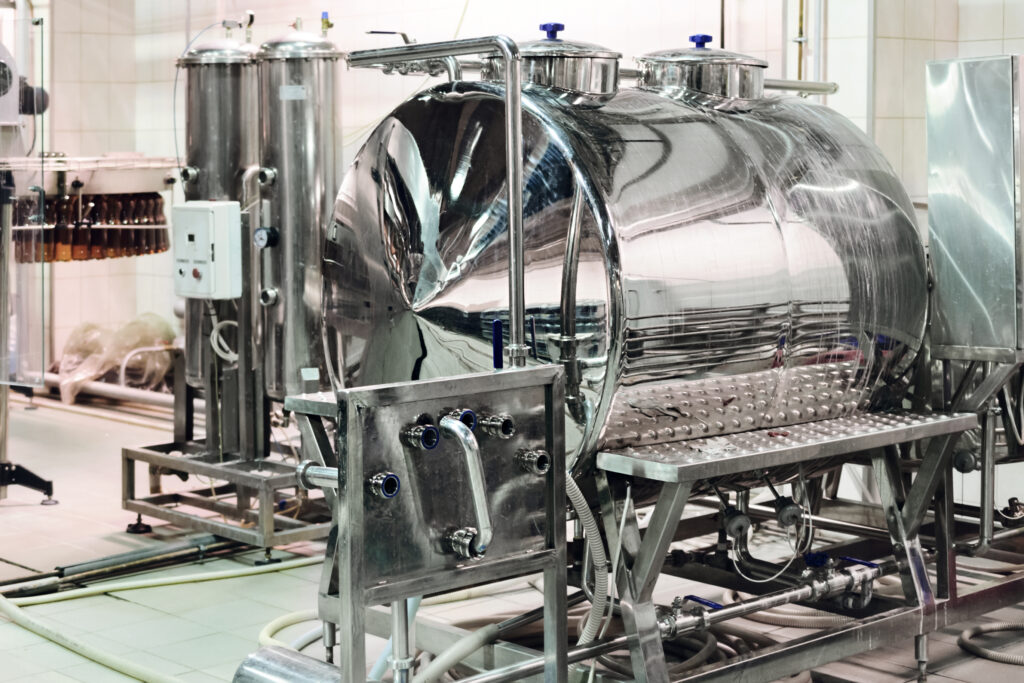
brewing and distillery equipment

By: Alyssa L. Ochs

Various kinds of tanks and tank systems are used in both breweries and distilleries to create the amazing craft beverages we know and love. Brewing and distilling tanks also require specialized systems to work properly, ensure quality control and serve other purposes. Therefore, it’s important to understand the tank and tank system options available to brewers and distillers, including what’s been updated and what can still be improved.

Types of Brewery & Distillery Tanks

  In a brewery setting, there are often many different tanks in use simultaneously. Mash tun tanks mix grain and water for sugar conversion, lauter tun tanks separate grain and wort, and wort kettle/whirlpool tanks boil wort and add hops. Liquor tanks hold cold and hot brewing water, while fermentation tanks ensure proper removal of yeast once fermentation is complete. Brite beer tanks enable carbonation, yeast brink tanks aid in growing yeast, utility hot water tanks assist with equipment sterilization, and CIP tanks help clean the vessels, hoses and pumps.

  Jef Lewis, CEO and Chairman of Grass Valley, California-based BrewBilt, told Beverage Master Magazine that stainless steel cylindroconical fermentation vessels are the most commonly used tanks in commercial brewing.

  “The cylindroconical shape maximizes volume while minimizing footprint, allows for faster fermentation and facilitates the hygienic collection of yeast from the cone,” Lewis said. “The size of these tanks range from three bbls (93 gallons) for nanobreweries up to 1,000 bbls (31,000 gallons) for very large production breweries. Most breweries are using 10 to 30-bbl tanks. BrewBilt Manufacturing builds cylindroconical tanks from 10 to 120 bbls, all of which are crafted from American 304 stainless steel that has stricter quality standards than imported stainless.”

  Brandon Mayes, the brewing and quality manager for Pittsburgh Brewing Company in Pittsburgh, Pennsylvania, told Beverage Master Magazine that they use cylindroconical tanks and bright beer tanks.

  “CCTs are used to ferment wort into beer,” Mayes said. “BBTs are used to store finished beer ready for package. We have 15 500-bbl CCTs and four 250-bbl CCTs. There are six BBT’s.”

  Chase Legler, the chief operating officer of Sonder Brewing in Mason, Ohio, said that all of the tank vessels in his brewery are made from 304 stainless steel and built in Wisconsin by either Quality Tank Solutions or Pristine Process Solutions.

  “In the brewhouse, we have three vessels: Mash tun, lauter tun and wort kettle/whirlpool,” Legler said. “In conjunction with the brewhouse, we utilize a hot liquor tank and a cold liquor tank. Within the cellar, we use fermentation tanks, brite beer tanks, yeast brink, utility hot water tanks and CIP tanks.”

  Palmetto Distillery in Anderson, South Carolina, has been doing things a bit differently from other distilleries since it opened in 2011. It has worked hard to keep the distillery authentic, just as you would find a bootlegger using out in the woods. The big differences are that the Palmetto Distillery makes legal moonshine with government labels regulating what is inside the jar, pays taxes and is located directly behind the county courthouse, so it doesn’t have to out-run the law.

  Treg Boggs, President of Palmetto Distillery, told Beverage Master Magazine that his distillery started with a 30-gallon, 100% copper still made by a fifth-generation bootlegger in an undisclosed area of the mountains.

  “As soon as we were legal, we quickly graduated to our 250-gallon copper still built by the same fifth-generation moonshiner,” Boggs said. “We outgrew the 250-gallon immediately within the first year we were in business by the demand from people wanting ‘bootlegger-made but taxes paid’ moonshine!”

  Boggs said that Palmetto Distillery had to find a metal fabricator capable of handling the current 1,000-gallon copper still since that bootlegger was not capable of manufacturing anything that size.

  “Something that we learned from the old distilleries in Scotland over in the UK is if they duplicate, replace or rebuild a still, it has to have every scratch, dent or any type of character so that they can duplicate the same quality spirit,” Boggs said. “We took our time and made sure we copied this same process by creating the one-of-a-kind, 1,000-gallon still. We will not make a bigger still, only duplicate when needed to keep up with demand. We have a backup 1000-gallon still in the warehouse for our busy time of year, which is usually October to January 1. Keeping the size of the still the same is very important, so we do not lose the quality for the quantity while distilling our handcrafted spirits.”

Tank Systems for Beverage Production

  Concerning tank systems, Mayes said, “Each tank is equipped with level sensors, pressure sensors, temperature probes with automation to control the glycol jackets for cooling, spray balls for cleaning, sample ports for collecting analytical and microbiological samples, and safety valves to ensure we operate under the correct tank pressures.”

  Legler from Sonder Brewing said that it is common to have a pressure relief valve along with a vacuum breaker on the tank to protect it from over-pressurizing or creating negative pressure.

  “I would also recommend adding an additional PRV on the vent line when bunging (spunding) the tank for the same reason,” Legler said. “Having complete control over the product temperature is crucial for proper fermentation with regard to flavor consistency and quality. This is achieved by glycol jacketed tanks controlled by software integration, allowing you to have ramping capability whether decreasing temperature with glycol or increasing temperature with heat produced naturally in fermentation. The better the tank is insulated, the more efficient your system becomes.”

  Boggs from Palmetto Distillery said that his distillery uses every bootlegger tip that it has learned from some of the best and infamous outlaws on the planet.

  “For example, some fancy distilleries use clamps to make sure there is not any steam leaking out of the stills, but we used flour and wheat mixed together to make a thick, putty-like paste to put around all of the seals,” Boggs said. “If you see steam, you are losing liquor!”

Maintenance of Tanks & Systems

  However, having high-quality tanks in a brewery or distillery requires more than just buying the right products upfront. Tanks need regular cleaning and upkeep to ensure proper maintenance and avoid premature replacement.

  Mayes from Pittsburgh Brewing Company said brewers should “have a robust quality assurance program that tests and verifies complete and thorough CIP and tank sanitation.”

  “Cleaning the tanks is absolutely paramount and requires appropriate spray balls, pump curve calculations and process piping,” said Legler from Sonder Brewing. “Attention to detail is crucial for pressure and flow rate provided to the spray ball for proper wetting and cleaning. Inspection of the tank after the cleaning cycle, along with ATP swabbing, should be performed. Annually, the spray balls should be inspected for blockage and to ensure proper rotation. All connections on the tanks, such as zwickel, carb stone and racking arm, should be removed and cleaned. Ports should be hand-scrubbed and removed during the CIP process. Manway gaskets should also be removed and cleaned by hand, or better yet, in a clean-out-of-place pot.”

  “We use Brasso to clean the outside of the copper steel to make sure it stays nice and shiny,” said Boggs from Palmetto Distillery. “We use powder brew wash on the inside of the copper steel and our mash tanks.”

  BrewBilt constructs tanks with 304 stainless steel and food-grade welds done as smooth as possible and unable to harbor microbial contaminants.

  “The tanks also feature CIP spray balls for efficient recirculation of cleaning chemicals,” Lewis said. “BrewBilt tanks are ‘shadowless,’ which means that there are no areas of the tank that cannot be effectively cleaned by the spray ball, including the manway.

  All Craftmaster Stainless tanks come pickled and passivated, and this Rancho Cordova, California company provides cleaning instructions for its equipment as simple guidelines. These procedures provide instructions for first-time cleaning, removing brown spots and dark staining, removing krausen deposits, removing manufacturing residues and removing white powdery and calcium-looking deposits.

Tank Improvements & Recommendations

  In recent years, improvements have been made to tanks and tank systems that brewers and distillers may be interested to learn. For example, Lewis from BrewBilt said that real-time, comprehensive fermentation monitoring and analytics are a new development in the commercial brewing world.

  “These systems use a special tank probe that automatically measures dissolved oxygen, pH, gravity, pressure, temperature and conductivity and allow the brewer to remotely monitor all of these important parameters,” Lewis said. “Traditionally, the brewer would pull a sample from every fermentation tank each day to take the desired measurements. These new systems allow the brewer to be more proactive for fermentation control, as well as saving time and labor.”

  However, there are still improvements that need to be made. Lewis said that with the surging demand for craft lagers, many brewers struggle to produce crisp, clear lagers in a reasonable amount of time using the same cylindroconical tanks as ale fermentations.

  “Since lager yeast requires different conditions for a healthy fermentation, including colder temperature and more surface area on the bottom of the tank, the right equipment really does pay off,” said Lewis. “BrewBilt offers professional-grade horizontal lagering tanks that stack to maximize floor space and eliminate weeks of aging time to achieve the desired clarity and flavor profile.”

  Dave Silva, owner and operator of Craftmaster Stainless, Inc., said there have been a lot of changes in fermentation tanks and brite tanks throughout the years. These include advanced technologies involving the quality of material, thicker insulation–specifically zoned glycol jackets–and simple clean-in-place attributes to allow better sanitation during cleaning procedures. 

  “Over the years, Craftmaster Stainless has closely worked with brewers to design the ultimate brite tanks and uni-tanks, along with many more products for our customers. A few unique features of our tanks are industry-leading, three-inch-thick insulated glycol jackets, oversized racking arm handles, huge two-inch yeast outlets for drainage, and dedicated blow-off tubes to prevent clogging your CIP ball during fermentation blow-off. Also, all of our tanks come complete with a 10-year warranty, and all hardware with gaskets and tri-clamps are included.”

  Silva said the biggest complaint he hears from his customers is that they wish more industry suppliers had better customer service like Craftmaster Stainless.

  “Just a simple call-back or even answering the phone to help with customers’ questions goes a long way,” Silva said. “We love our customers and offer a lifetime customer service guarantee. We make it a point to answer our phone calls or call back any missed calls the same day. We pride ourselves on being the industry leader in customer service and believe having this service will lead into the best overall experience for our customers and steer the path to operating the best business in the industry.”

  “There are systems that range from simple to highly complex,” said Mayes from Pittsburg Brewing Company. “No system will function consistently without a robust quality program to assure proper flow rates, chemical dosing and chemical coverage through CIP. Start with well-written procedures, perform procedural audits and frequently verify tank cleaning through your quality program.”

Legler from Sonder Brewing said improvements in sanitary practices have come a long way in the brewing industry.

  “We brewers are fortunate that no known pathogen can grow in a properly produced beer, so innovative improvements driven from the pharmaceutical and food sectors allow us to piggyback on the newest tech,” Legler said. “As far as improvements to be made, it drives me nuts when I see threaded fittings on tanks. These should always be avoided, as they are inherently bug traps. If you do have these, then you should take these apart on every CIP and hand-clean. This practice seems to still be okay with brewery tanks, but hopefully not in the near future.”

  Boggs from Palmetto Distillery said that his team takes the “If it ain’t broke, don’t fix it” approach to tanks and tank systems. Last year, the distillery celebrated its 10th-anniversary and launched more than eight new flavors while still keeping the original favorites. Palmetto Distillery sells its products on its website and welcomes everyone to stop by the distillery in downtown Anderson for a free tour and tasting.

Brewery Filtration Benefits With Knowledge & Testing

filtration machine for brewing process

By: Gerald Dlubala

Filtration systems touch every aspect of the brewing process, and in an industry that continuously must evolve with market shifts and trends, the filtration system has to respond in kind. While the various methods and types of filtration leave room for a brewmaster’s personal choice and individual opinion, one constant across the brewing industry is the need to work with a filtration professional to properly assess the brewery’s filtration needs. Additionally, shifts in the market, like increased seltzer production, may require filtration process changes to accommodate increased flavor enhancements and changing shelf-life expectations.

  Typical filtration processes fall into categories based on their function and impact on the final product. Primary, or coarse filtration, removes solids like hop particles, yeast conglomerates and protein compounds. Trap filtration removes filter aids like Diatomaceous Earth and other process additives considered valid as filter aids. Fine filtration removes proteins, yeasts, polyphenols and glucans that potentially foul final membrane filters. And final, or sterile filtration, helps eliminate microorganisms like bacteria and yeast that can potentially contaminate and spoil your final product before packaging. Filters are available in different configurations, including plate and frame, modular units, centrifuges, and cartridges using filtering media, including filter sheets and various types of membranes, each offering its regeneration possibilities.

Start at the Beginning with a Proper Filtration Plan

  Donaldson Filtration Solutions helps breweries by starting at the beginning, recommending proper filtration for primary utilities like air, water, steam and gas. Correctly filtering incoming raw materials and utilities naturally addresses critical issues: hygienic design in an allergen-free environment, integrity testing, and BSE/TCE statements certifying that products used are safe and free from potentially harmful materials.

  Donaldson Filtration told Beverage Master Magazine that in its simplest form, brewery filtration systems are meant to keep undesired brewing remnants out of the beer. It’s essential in producing any beer, but even more so in the production of bright or light beers. The basic utilities used in the production process are the preferred starting point for a quality filtration assessment. Quality, particulate-free water is critical for use as an ingredient, in process water, and in necessary steam applications. But feedwater can contain contaminants, including pipe scale, sludge, organic matter, sediment or some other suspended solid particulates. Sterile air, meaning air free from oils and moisture, is used throughout the beer-making process, from wort aeration through the purging and packaging process, and is critical for effective and consistent yeast propagation in the fermentation process. It’s common to use sterile or culinary steam as an efficient way to heat boilers and tanks, clean and sanitize brewery equipment between batches, or sterilize new or used packaging vessels like kegs before final filling. Suppose a brewer uses CO2 to clean and sterilize processing lines, aerate pipe systems, push out product, or purge containers and bottles before filling. In that case, filtered CO2 ensures that the finished product is safely delivered and packaged in clean, safe and sanitary containers.

A Pure Beverage that Retains its Distinctive Taste Characteristics

  “A pure beverage that retains its distinctive taste characteristics.” That phrase sounds a little lengthy to be ordering at a brewpub, but that’s just what you’ll get if a brewery has the correct filtration practices in place, according to Wayne Garafola, account manager at Sartorius Food and Beverage.

  “Some type of filtration occurs throughout every aspect of the brewing cycle, with each filtration point contributing to a product’s overall properties,” said Garafola. “Having the proper filtration at critical process points ensures the brewmaster’s recipe and intended flavor profile are maintained throughout the brewing cycle and into the final product for consumers to enjoy. For Sartorius, I focus on the processing products. The raw materials in brewing are barley, hops, yeast and water: each important. A brewery’s incoming water supply is involved in many specific steps, including mash, lautering, wort, fermentation, bright beer tank and filling. With water regulations and quality already being different across the country, your incoming water is also subject to the effects of seasonal events or area-specific municipal water issues. Therefore, breweries should always filter their incoming water to retain consistency for equally consistent brewing batches. It’s what a brewer starts with, so it must remain a constant for product integrity. Additionally, air filtration into your tanks is important to eliminate contamination from the environment into the wort, fermentation and brite tanks.”

      Sartorius offers a single-layer Aerosart PTFE filter for maintaining air quality without allowing spoilage organisms that cause contamination of the product while also providing high flow rates both into and out of tanks. In addition, Sartorius recommends their Jumbo Star System for applications that use trap filtration, which is especially suited for small to medium-sized craft breweries. The Jumbo Star filters are easily regenerated, decrease process time based on size and flow rates, minimize oxygenation by maintaining a high CO2 level during filtration and come in various pore sizes. The most popular dimensions used are 8um and 5um, with a 3um available for brews experiencing hop creep, the refermentation of beer after the dry-hopping phase. 

  “Trap filtration removes certain components that are added to the process and not naturally occurring,” said Garafola. “In many cases, our Jumbo Star filter replaces the use of DE/Lenticular filtration. We have better pressure drops, higher flow rates and less beer loss when compared to lenticulars. We offer easy setup and cleanup, with minimal oxygenation using the Jumbo Star filter systems. Additionally, Jumbo Star systems can be cleaned, regenerated and readied for reuse using the common chemicals that breweries typically already have on hand, offering up to 50% savings over lenticular options.”

  For final filtering or sterile bottling, Sartorius recommends the Sartocool PS 0.45um. The Sartocool PS 0.45um allows the brew to be final-filtered through a polyethersulfone membrane, keeping yeast and other spoilage organisms like Lactobacillus Lindneri from reaching and spoiling the final product.

Increased Testing Along with Proper Filtration Results in a Better Final Product

  Tricia Vail is the North America Applied Research Segment Manager for Sartorius, and she believes that testing is a valuable tool in finding appropriate filtration systems.

  “Testing is absolutely an overlooked tool,” said Vail. “Whether the brewery Quality Control lab is doing analytical or microbiological testing, filtering the materials is critical for raw material testing through the finished product. Accurate, interference-free chemical tests can then be conducted to detect unwanted microbiology, including spoilage microorganisms and wild yeast.”

  Vail told Beverage Master Magazine that it’s common for filtration needs to vary for each brewer. However, because of the potential existence of contaminants that can alter a beer recipe, brewers should test the incoming water used at least monthly. How a brewery decides to implement its filtration process depends on the overall nature of the beer and process. Most filtrations can be relatively simple, while others like Hazy IPAs or sour beers will need a double filtration. Vail also recommends sampling the beer at the brite tank, at the time of filling kegs and after bottling and canning. The more sampling done, the better and more informed a brewmaster’s knowledge of that beer becomes.

  “Most craft brewers don’t have a Quality Control lab, and if they do, it is usually small, with maybe chemical testing and yeast titers conducted,” said Vail. “Don’t be afraid to do more quality control testing. It’s all data, and the more data you get, the more consistent you can be when making beer. This type of data is helpful no matter what type or style of beer you want to produce. Ensuring that all microorganisms are out of the equipment setup before beginning a new brewing cycle provides the consistently best batch of beer possible. Testing leads to education, and with increased education, the importance of raw material and process testing becomes more forefront in the brewing process, with the overall impact being consistent, high-quality beer.”

  For chemical and microbiological testing, there are several resources that brewers can use, such as the American Society of Brewing Chemists and The Brewers Association.

More automation, Better Materials and More Education

  “More automation will become evident in breweries as time progresses,” said Garafola. “The same holds for filtration systems and devices. We’re always looking to improve based on brewers’ needs and market shifts, like the boom in seltzer production. As a brewer, you should look towards flexibility in the available products, considering pore size, ease of regeneration and operation, and how the product will react to and work with any possible future automation and expansion plans.”

  Sartorius has been building automated filtration skids for over 20 years. Garafola said they offer manual, semi-automated and fully automated filtration systems with a parallel design. The parallel design systems automatically switch to a second line while simultaneously starting the regeneration process of the primary line, increasing the life of the filters and naturally minimizing the need to purchase replacements continually.

  “Brewers should always be open to learning about filtration upgrades and solutions to any issues they’re having,” said Vail. “By partnering with your filtration professional, problems can get solved with a thorough understanding of why they occurred so that they can be avoided in future production. We can assist with testing brewer’s products, and Sartorius always recommends performing a small and intermediate scale to ensure their full scale will work. We have small-scale filter capsules to test beer throughput and estimate scale-up filter sizes based on a brewer’s batch. We get easy-to-use data to scale up in the future knowing the capacity based on your previous small-scale runs.”

  “It’s important to note,” said Garafola, “that in many cases, quality, right-sized filtration not only helps extend the shelf-life of the final product by removing any potential spoilage organisms. It can actually allow a brewer to increase the number of batches that they can complete by shortening certain timelines, all while retaining their product’s organoleptic properties.”

The Most Popular Spirit You’ve Never Heard of: “Vodka”

3 vodka red bottles

By: Tod Stewart

That’s likely the answer you’ll get if you ask any spirits aficionado—and even a few distillers—what is the world’s most popular spirit. Though whiskey would have been a better guess, neither of these categories combined can hold a candle to one that you may never have heard of, namely, baijiu, China’s “white alcohol.”

  You probably don’t see it advertised in North American magazines, on roadside billboards or as a sponsor of entertainment or sporting events. But baijiu’s lack of visibility in no way diminishes its incredible sales perfor-mance. A glance at the 2021 Brand Finance report on global spirits shows that baijiu brands captured the five top slots in terms of brand value. And though “popular” may mean different things to different people, most who make a living distilling would likely prefer high revenues over high visibility. The top baijiu brand—Kweichow Moutai—generated an eye-popping USD 45 million in sales in 2021. The next one down, Wuliang-ye, pulled in a modest $26 million or so. It’s not until you work your way to the sixth spot that you hit some-thing recognizable—Jack Daniel’s. Sales generated? Close to four million dollars in 2021. Nothing to sneeze at, to be sure, but pretty much chump change compared to Moutai or Wuliangye.

One reason China’s national spirit flies under the radar of most Western hooch lovers is simple: About 99% of the volume distilled never leaves its homeland. Another is likely that, to the uninitiated, baijiu’s aromatic and flavor profile is decidedly alien, but we’ll get to that. Also, the stuff isn’t cheap, with the most coveted bottles selling for hundreds of dollars. A few go for well over 1,000 Canadian dollars.

  In its homeland, baijiu flows like a river through birthdays, weddings, national celebrations and even diplomat-ic encounters. It was baijiu, after all, that helped thaw the ice during the somewhat tense Sino-American ne-gotiations of the 1970s. President Richard Nixon raised a glass, possibly two, in an historic toast with Chinese Primier Zhou Enlai in 1972. Margaret Thatcher was treated to a round of it upon conceding Hong Kong back to China. At one point, baijiu consumption by Chinese government officials got so out of hand that in 2012 President Xi Jinping ushered in austerity measures to prevent copious amounts of public funds from turning into copious expenditures on baijiu. In China today, baijiu enjoys a fanbase that runs into the hundreds of mil-lions who actively consume most of the billions of liters distilled every year, so why even bother with an ex-port market?

  Okay, so it’s historic and popular, and expensive. But what the heck is it, exactly?

  Pronounced “bye-jeeoh,” baijiu is a clear spirit distilled primarily from sorghum, a hearty, drought-resistant grain of African origin. What makes it particularly useful in spirit production is its easy gelatinization—a fancy term for the breakdown of starch into a paste when steamed. (It can also be particularly useful in generating triple-word scores in Scrabble). Rice, glutinous rice, wheat, millet, peas and corn can also find their way into the mix. These are not the ingredients most international distillers would even contemplate using, with the ex-ception of corn. But if the ingredients seem a bit unconventional, it’s the distillation and aging of the spirit that raise the most eyebrows.

  The process that most of us are familiar with typically starts as a two-phase endeavor. For example, in whis-key making, grains are first subject to saccharification (another potentially winning Scrabble entry)—the con-version of starch to sugar. Yeast is then introduced to convert the sugar to alcohol before being distilled.

  In baijiu production, this becomes a one-step operation thanks to the use of jiuqu or just qu (pronounced “chew”). Qu is an interesting little beast. For those who know the ins and outs of sake brewing, qu in baijiu making can be likened to koji in sake brewing—both are fermentation starters, and they both result in what is referred to as “solid-state” fermentation. There is plenty of scholarly material floating around the internet for those curious about the process (or are having trouble sleeping). Suffice to say that it incorporates a solid ra-ther than a liquid fermentation catalyst (solid-state fermentation vs. submerged fermentation). The “solid,” in this case, is qu.

  Writer’s note: I should pause a moment here to say that what I’m describing next refers to grain-based “big qu.” There’s also a rice-based “little qu.” The ingredients differ, but the use of each and the end results are similar.

  Qu typically starts its life as a paste made from clumps of moistened grain. When raised in the proper envi-ronment, these clumps attract wild yeasts, bacteria, and assorted microorganisms from the air. Fashioned into bricks, the qu—having generated considerable heat (up to 145 degrees Fahrenheit) during the microbe infestation period—are cooled for several weeks before sitting in storage for a few months to maximize flavor. In the baijiu fermentation process, ground grains are soaked, and crumbled qu added. The enzymes in the qu convert the grain’s starches to sugar. The yeast in the qu then converts the sugar into alcohol. The fermented grains are then distilled—a process that involves forcing steam through the grains and collecting the concen-trated alcohol. This process is repeated, with each batch stored separately. Aging typically takes place in clay pots, sometimes buried underground (fermentation often takes place in underground clay vessels as well). In the final process, various batches of aged baijiu are married together. In some cases, up to 200 different batches make the end product.

  Okay, so what’s the result of all this toil? Upon their first nosing and sip, Baijiu newbies may wonder why so much time and effort went into creating something so, well, “unusual” (I’m refraining from using more descrip-tive language here). Baijiu is a complex spirit, no question there. The real question is whether or not you have any hope of warming to the sort of complexity baijiu offers.

  First, it’s helpful to know that baijiu “styles” are defined aromatically and fall into four broad categories: light aroma, rice aroma, sauce aroma and strong aroma. These are pretty self-explanatory, but you probably won’t be able to figure out which is which by looking at the label, even if you can read Mandarin. Of these, the most popular—and probably the most challenging to the new-to-baijiu crowd—is the strong aroma variety. I’ve tried a few of these, including Wuliangye and Yanghe, and, personally, find them a bit tough to describe. Funky, fruity, fishy, earthy: To some, fascinating, maybe not so much to others.

  I’ve also tried a few in the sauce aroma category, including the famed Kweichow Moutai. While I wouldn’t necessarily be inclined to get up early to secure a bottle, I’ll admit I found Moutai to be rather pleasant—in an “I have never tasted a spirit that even came close to something like this,” pleasant. With its penetrating soy sauce, herbs and fermented bean aromas and flavors, it’s a savory, slightly salty, and certainly distinctive tip-ple. For those into the umami-rich profile of nato, soy sauce, kimchi, miso and other fermented delicacies, sauce aroma baijiu might be your next thing.

  A note of caution: Baijiu is potent stuff, typically bottled well over 40% ABV. The traditional Chinese way of toasting with it involves a rather complex ritual, culminating in the knocking back—or more accurately, re-peatedly knocking back—of thimble-sized glasses of the clear liquor amidst cries of “ganbei!” which trans-lates, somewhat loosely, as “bottoms up!”

  On that note, I wish you ganbei and good luck in your exploration of a new adventure in the spirits world!

Taking it Easy With Light Spirits

By: Hanifa Sekandi

You want to be the life of the party, but you do not want the party to take the life out of you. So you are on the hunt for a middle ground where you can entertain and imbibe with friends yet feel refreshed in the morning. So far, you have tried mocktails and light cocktails with just a splash or two of tequila. Globally, you are not alone. Just like you, people are looking for lighter spirits that maintain a robust flavor profile. Luckily, the industry is catching on. Spirits, ready-to-drink beverages and beer brands create must-have light spirits and drinks to keep the party going with-out tipping the scales.

  This change is a major innovation in an industry where consumers desire more than just the same thing packaged differently. Light spirits attract discerning beverage enthusiasts who seek a healthier lifestyle or simply to consume less alcohol. However, craftsmanship and ingredient still matter, and consumers are not ready to compromise quality. Brands who plan to enter this bur-geoning, niche market must understand consumer demand and how and what to bring to the shelves.

What is a Light Spirit?

  When discussing light spirits, it sounds like we are talking about the paranormal. Alas, we are not. However, it does seem like magic when thinking about a once hard liquor becoming less po-tent.

  So, what is a light spirit? A light spirit, also known as a spirit drink, is an alcoholic beverage that contains a low alcohol percentage between 0.05% and 1.2%. This percentage scale is not con-sistent across the board and is dependent on the alcohol type. Some lighter alcohols are referred to as “reduced alcoholic” beverages since they contain higher alcohol content than light spirits. Anything above a 5% ABV is considered a reduced or moderate alcoholic beverage. Moderate alcohol drinks contain approximately 9.5% ABV. This percentage scales up to 20% ABV for spirits, far below the higher alcohol range for spirits with a legal minimum of 40% ABV.

  As the market gains momentum, lighter spirits will provide consumers an outlet to create and imbibe quality cocktails and drinks that still taste as good as their full alcohol counterparts. One could consider lighter Scotches, whiskeys and gins as the rebellious offspring of the spirit world, having one foot in tradition and the other in modernity. An example is Scotlands’s Whyte & Mackay Light with a 20% ABV. This smooth, earthy spirit is aged in bourbon and Sherry casks. The fact that it can be enjoyed neat or over ice is a true test for a moderate spirit.

  This trend has seen gains in North America and across the globe. A study conducted on alcohol consumption in the U.K. found that Brittons are either reducing their alcohol intake or opting for no or low alcohol alternatives. According to the study, by 2030, there will be a decrease in alco-hol consumption per adult by 11 liters. The change is predominantly led by individuals 18-24 in the U.K. and 25-34 in the U.S.

  The results provide perhaps an unexpected pivot from previous generations who viewed these years as a time when drinks were endless and throwing caution to the wind was the norm. The “viva forever” celebration no longer fits the ideals of many younger imbibers. Light spirits seem like an appropriate transition for these consumers, who have less desire for wild nights of binge drinking.

  Globally, the light spirit trend is set to grow 34%, a significant marker since product selection in this category can be limited. This growth possibility opens the door for some brands to change focus and become light spirits producers.

  Two things that cannot be compromised when crafting lighter spirits are that they must be pre-mium quality, and they must blend in. It is not about standing out. It is about being a welcome addition to a bar cart or restaurant menu selection. The pleasant surprise for a low ABV spirit should be that there is no compromise on taste, so much so you cannot tell the difference be-tween it and its higher alcohol counterpart.

Taking it Light & Easy

Around the Globe: South Korea

  Change in every industry is inevitable. The transition to lower alcohol spirits has been slowly happening over the last ten years. Notably, in 2015, Diageo debuted a 35% ABV “spirit drink” – W Ice by Windsor – in South Korea. The spirit was the first low ABV whisky.

  What spurred this change in South Korea? Simply, whisky is no longer the desired spirit. There was a time in South Korea when Scotch was the drink of choice and often used to make a popu-lar drink called poktanju, a combination of beer and Scotch. Another reason for this change, sim-ilar to other countries around the world, is affordability. Younger consumers in South Korea want inexpensive spirits. In addition, spirits synonymous with youth appeal to this generation. Although there has been a shift and the younger generation is finding interest in what was once considered an “old man’s” drink, the creation of spirits that appeal to younger consumers has taken hold as brands observe the popularity of vodka.

  As a result, the goal of whisky brands in South Korea is to entice people to see it as a viable drink choice by lowering the alcohol content and promoting it under the guise of light and con-scious imbibing.

The Sensible Imbiber

  Taking something old and giving it a new image needs to encompass more than beautiful pack-aging. A complete product delineation needs to be undertaken to make spirits appear new and fresh. The central premise must sit within the ideal of living a more healthy lifestyle. Drinking just one glass of spirit neat or over ice and not feeling the effects also signifies the end of an era of binge drinking, ushering in a new time of sensible imbibing. For the light spirits consumer, drinking is about living life while not feeling pressured to be anything other than yourself. It is not about standing out or being the life of the party. Instead, it is about connection and requires one to slow down and experience moments that build memories worth remembering.

Best Practices for Writing Your Wholesaler Job Descriptions

By: Kary Shumway, Craft Brewery Financial Training

Recruiting, hiring and retaining good employees is a challenging task. However, with a clearly written job description the task gets easier.

The purpose of a job description is to clearly define what needs to be done, and clearly define the type of person you need to do it.

A well-written job description will include a short overview of the position, bullet points of tasks to be done, and a listing of important qualifications. In essence, the job description should describe the job.

In this post, we’ll review Best Practices for writing your beer wholesaler job descriptions, present the One Thing that should be in your job description (but probably isn’t), and provide a road map for putting the job description into practice.

Best Practice #1: Get it in writing

At its most basic, the job description should be in writing and given to the employee (or job candidate).

Sounds obvious, but I’ve seen many employees hired and many employees who worked for years without a formal job description.

Sometimes we are in a hurry to hire someone and neglect to write up a job description. Other times, we just take it for granted that the employee knows what to do in the position and everything will work out fine.

Regardless, one simple basic best practice is to get the job description down on paper and get it in the hands of the employee.

Best Practice #2: Follow a Job Description Structure

The website BetterTeam.com defines job descriptions this way:

A job description is an internal document that clearly states the essential job requirements, job duties, job responsibilities, and skills required to perform a specific role.

The document itself can be one page, or several pages, depending on what’s needed to outline the necessary requirements and skills.

A typical job description will use the following structure:

  1. Short narrative overview
    • Give the candidate a feel for the position. What can they expect? What do you expect from them?
  2. Bullet point list of tasks, responsibilities
    • List only what is important and meaningful. Use the ‘other duties as assigned’ to cover the rest
  3. Qualifications you want from the candidate
    • List specialized skills, knowledge, or education
  4. Specific job requirements
    • If there will be travel away from home, working nights or weekends, spell it out so there’s no hard feelings later

These are the standard sections of a job description. In total, they provide a good overview of what the job is about and what is expected of the employee.

Next post we’ll look at the One Thing that must be in your job description (but probably isn’t).

P.S. Get 50+ template beer wholesaler job descriptions, job postings and compensation planning models in the 2022 Beer Wholesaler Job Descriptions Course. This resource is included with your Subscription to Beer Business Finance.

The Brewstillery Movement

By: Kris Bohm: Owner of Distillery Now Consulting LLC.

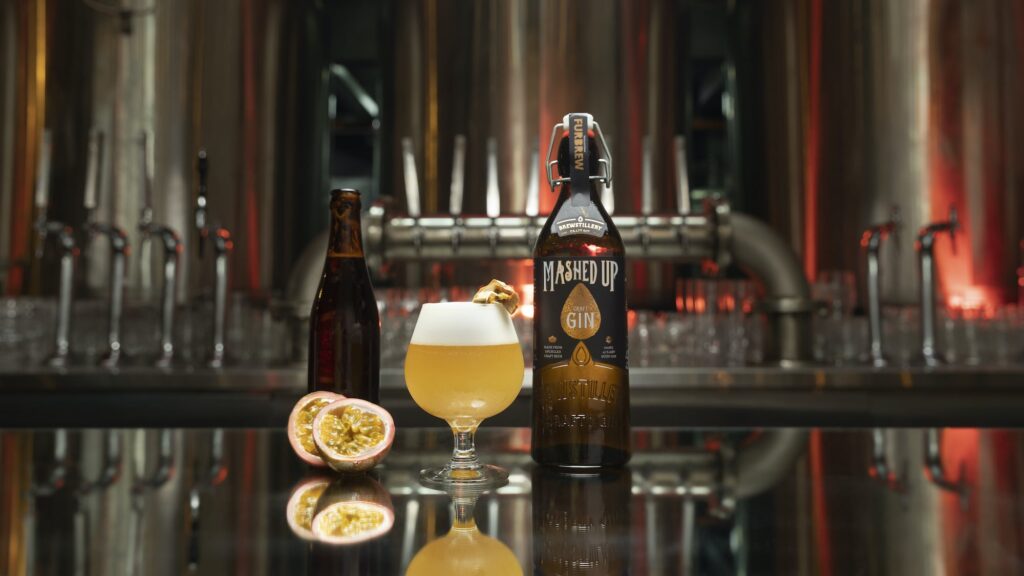
gin drink set

Breweries make beer and often their equipment has the capacity to brew more beer than there is necessarily a demand for. Plain and simple, idle equipment does not help generate cash flow. An alternative use to consider to keep idle brewery equipment running is whiskey. American single malt whiskey is the new hot trend in spirits. Single malt whiskey has been touted for decades in America as a premium whiskey, and now bourbon whiskey is absolutely booming worldwide. If your brewery has a brew house that is sometimes sitting idle, it is time to put it to work. With the addition of a commercial still for distilling, a brewery can turn an idle brew house back on, and start producing single malt whiskey. The addition of a distillery will create a new business avenue for a brewery that can bring in new customers and generate more revenue for the overall business.       

Brewers Making Whiskey

  A few of the well known breweries, who have jumped into the distilled spirits world, are Ballast Point and Rogue Ales. There are amazing spirits being produced and distilled by breweries all over the world and your brewery can seize this opportunity as well. Brewstilleries, as we will call them, are pioneering a new business model. By using existing equipment to produce the wort or mash for distilled spirits, a brewery can create a diverse portfolio of products which can appeal to a broad base of customers.

  Ballast Point Brewery is a notable and very successful brewery that added a distillery to their operation. The Ballast Point took on a wild side project in 2007 where they added a still to their brewery in California, to experiment in spirits production. The brewers there mashed a beer recipe, then lautered an un-hopped wort that was then fermented and distilled into single malt whiskey. They also used their equipment to cook corn mash for bourbon production. A few years later, their whiskies had aged in barrels and it was bottled then released. Both their single malt and bourbon were wildly successful and well received spirits. Ballast Point Brewery sold a few years after the distillery was started and their distillery branched off to become Cutwater Spirits.

Tools of the Trade

  Breweries and distilleries use equipment that is very similar for the production of beverage alcohol. Fermenters, pumps, hoses, yeast, mash tuns, lauter tuns, and fermenters are common tools utilized by both distillers and brewers. Some breweries have capitalized on this opportunity and co-utilize their equipment and expand into distillery operations.  Let’s detail a few of the tools that brewers use that distillers can co-utilize for whiskey production. Of course this can only work if the brewers are willing to share.

Brew House Mash Tun

  A brew house is the essential tool used for the production of beer. This brew house will sometimes be idle when there is not enough demand. The steam heated mash tun in a 4 vessel brew house is used to mash malted barley for brewing beer. This equipment can also be utilized to produce mash for whiskey. With a few small changes, a mash tun can be used to produce cereal mash, made with corn or rye, that is cooked and fermented for bourbon whiskey.

  The production of malt whiskey in the Scottish tradition, using 100% malted barley, requires more complex equipment than the basic cereal cooker utilized by most distilleries. The lauter tun is a unique equipment for separating barley from the sugary wort in beer production. When making American single malt whiskey, the lauter tun is used to produce wort for distillation in the same way it is used to make wort for beer.

Fermenters

  Every brewer and distiller has fermenters in which they transform grain from sugary liquid into alcohol through fermentation. The fermenters used in a brewery work perfectly for fermenting wash or wort destined to become whiskey. If the excess space is available to ferment, a distillery can make use of otherwise empty tank space. Often distillers ferment their wort for whiskey fast and warm. A fermentation is often finished and ready to distill in as little as 4 days.

Pumps and Hoses

  The workhorse tools of brewers and distillers are their pumps, hoses and tri-clamps. The same pumps and hoses can be used to accomplish liquid transfers in a brewery and a distillery. Sanitization is important to mention here as it is easy to introduce unwanted bacteria or yeast into hoses if a distiller is not careful and conscientious of proper sanitization, which is required in a brewery for beer production, but not as necessary for a distillery.

Yeast

  The essential ingredient that all producers of beverage alcohol must utilize every day is saccharomyces cerevisiae, or the fungi simply known as yeast. The yeast used by distillers and brewers is closely related. In fact, many brewstilleries will use the exact same strains for both brewing and distilling. The use of yeast and the knowledge of how to handle yeast effectively is similar for brewers and distillers. Sharing yeast strains and yeast propagation equipment between a brewery and distillery increases the value reaped from every batch of yeast.

  All of these tools above can be made to serve double duty for a brewstillery. Careful planning, management, and execution are key to successful sharing of equipment.

Behind the Scenes

  Many questions come up in the discussion of adding a distillery to a brewery. Let’s go through and look at some of the common questions.

  How does a brewstillery function and get licensed from a legal perspective?

  The answer to this question will vary widely depending on the location of the brewstillery. Every state and country has different laws on what a brewery and distillery are allowed to do when working in conjunction. Typically, the distillery operations are required to be separate from the brewery both in physical location and in bookkeeping. The way a brewery meets this requirement of separation is as simple as a wall that keeps the two businesses apart with a separate exterior door to enter the distillery. A distillery can share steam for heating and glycol for cooling with a brewery, but the key here is that the still and the vessels holding distilled spirits are kept separate from the beer. On licensing a distillery will need to get a federal and state distiller’s permit before they can start producing spirits and may also need local licenses or permits.

  How are records and bookkeeping managed for a brewstillery?

  When it comes to bookkeeping, the distillery part of the brewery is typically an entirely separate business. This means a separate business entity or LLC must exist for the distillery which will hold its own business license, separate books, and tax reports. For the day to day operations and transactions, a distillery within a brewery will often buy the grain from the brewery and lease the brewing equipment on a daily basis to make wort for whiskey production.

  How is a distillery taxed?

  Taxes are a big concern because distilleries and distilled spirits are taxed very differently than beer. Although they are taxed differently, by having the distillery operate as a separate business it makes the bookkeeping and taxes simple by not mixing them with the brewery. Volumes have been written on taxes of distilled spirits all about proof gallons, wine gallons, and gauging, but we will save a deep dive into taxes for another day.

  How much beer does it take to make whiskey?

  In the production of a single malt whiskey the sugar content of the wort is on the high side to maximize the potential amount of whiskey produced per batch.

  Often the ABV of a fermented wash is as low as 7% to upwards of 12%

  There are a multitude of factors that will affect the amount of whiskey produced per pound of malt, including mash procedures, fermentation, distillation and maturation.

  When distilling a beer you can expect to roughly see the following yields. This estimated yield includes the distiller’s cuts and loss from barrel aging.

  A single 31 gallon barrel of 10% abv beer can produce upwards of 25 bottles of whiskey.

Beer to Whiskey and the Hops in It

For the vast majority of whiskies both malt and bourbon are strictly made from grain. No hops or other flavoring agents are added. Beer, of course, has hops and specialty grains in it. A beer that is distilled into whiskey which we will call “hopped malt whiskey,” will carry the distinct flavor of hops and into the spirits. This can be good or bad, depending on who you ask.

  Let’s weigh the good side of whiskey made from hopped beer.

  Hopped malt whiskey tastes very different from traditional Scottish malt whiskey. Because it tastes so different and can be marketed as part of the beer story, a hopped malt whiskey is often well accepted by the public as a new kind of whiskey, since it is not compared against bourbon or scotch.

  There is a downside to distilling hopped beer into whiskey. Beer that is distilled into whiskey and then barrel aged carries a strong and unique flavor profile dominated by the hops. For some consumers, this flavor is off putting even to the biggest IPA loving hopheads. Most people that enjoy whiskey have a pallet that is trained to like bourbon or scotch single malt. A hopped malt whiskey tastes nothing like either of these spirits, your average whiskey drinker may not like unique flavors of such a spirit. This warning is not to deter a creative brewstillery from distilling such things, but to merely inform.

Let’s Make Some Whiskey!

  For those currently running breweries, you may be considering getting into distilling. If you are, be sure to do your homework or hire a pro to help you, as there are many differences between brewing and distilling. This learning curve can be expensive without prior experience. For those just getting started, the brewstillery model is a business worth considering that will give you access to a larger customer base, and create better returns on your equipment. Consideration of state laws is essential as they vary widely on the legality and requirements to operate on this business model. The future is looking bright for craft beverage alcohol production and brewstilleries are on the lead in producing new variations of traditional spirits.

  Authored by Kris Bohm the Owner of Distillery Now Consulting LLC. When Kris is not helping folks build distilleries and creating great whiskies, he is out riding cyclocross or defending his beer mile record. Would you like to talk about making whiskey? Drop us a line. Distillerynow@gmail.com

Is it Time to Franchise?

By: Raj Tulshan, Founder of Loan Mantra

franchise opportunities available

The Casual Pint, a craft beer shop and bar, opened its first location in 2011 and their first franchise two years later. Since then, they’ve steadily expanded. Now, they have 20 franchises in eight states, and have found the franchise model to be lucrative for their business – and a great way to grow their brand.

  Part of the Casual Pint’s success is a combination of a solid concept with the right set of circumstances to succeed. First, they have a stable infrastructure in place that can be replicated in other locations.  They also provided all necessary resources to their franchisees, including market research, architectural design, and marketing and sales materials. They’ve ensured that the owner of each franchise was heavily involved in their communities, a model they’ve implemented from their very first shop. Additionally, each location promotes themselves as a community gathering place that provides exceptional beer, and the business is thriving.

  Franchising, like The Casual Pint, can work really well. Consider these stats:

●   90% of franchisees enjoy operating their

      business.

●   88% enjoy being part of their organization.

●   85% feel positive about their affiliation with their franchisor.

●   80% feel their franchisor operates with a high level of honesty.

●   78% would recommend their franchise brand to others.

●   73%, given the option, would do it all over again.

  Independently owned businesses looking to grow can explore whether franchising would be a good solution for their unique situation. Here are some things to consider before you decide whether to franchise:

  Are you ready to sell your brand concept? To be successful, you’ll need more than just a savvy business concept. Before you franchise, determine whether you can clearly explain what your brand is, what it does, and its unique value proposition. Remember: you’ll need to be able to clearly articulate your brand and your vision to key audiences, including investors and potential franchisees, to entice them to get involved.

  Do you have a solid structure in place? Your franchisees will need to replicate your business model and operational structure for marketing, sales, technology, etc.  So, you’ll need to have strong systems and processes in place before diving into franchising. Expect to hand over ready-made “toolkits” for your franchisees to use in their day-to-day operations. Allow plenty of time to develop these concepts, plans, and materials.

  Can your business be replicated? Is there a market for your business elsewhere? Could someone else run another location as well as you do? For a company to thrive as a franchise, it must be replicable. The Casual Pint found success as a community-focused meet-up space with amazing beer, and it didn’t matter if the community was in Tennessee or Arizona. The concept translated well in different locations, and can continue to grow and thrive anywhere.

  Are you ready to scale your passion? Are you ready to teach and manage others on a larger scale? Are you comfortable stepping back from the daily operations and focusing more on franchise management? For example, if you’re a craft beer maker, once you decide to franchise, you’re no longer going to be hands-on with beer brewing.  You’ll be focused on running a franchise to sell your beer, and teaching other people how to brew it, sell it, market it, etc. You’ll also be helping your franchisees get set up with real estate, construction, hiring staff, etc. Are you ready to scale your passion, overseeing several others in a new and amplified managerial role?

  Are you ready to build a dream team of outside experts? It’s essential to consider hiring knowledgeable professionals to help you through the entire process of developing your franchise model, preparing the necessary documents, and navigating the finances, including securing loans. You’ll need to hire financial professionals who specialize in accounting, loans and assisting business start-ups, as well as, specialized franchise attorneys to assist in the drafting of your paperwork. 

  Are you ready to invest in the business’s future? Expect to invest personally in the venture, which may require a business loan. Also, you may need to recruit investing partners to help manage the expenses. Anticipate a variety of costs, including brand development, experts’ fees, legal fees, and outreach to potential franchisees. You’ll need significant capital to launch your franchises, so think about how you will raise the necessary cash.  Many people choose to divest a 40IK, start with personal savings or take loans from family to start their first franchise. Others seek out investors, small business loans and  lines of credit.

  Have you researched funding? There are several different ways to fund a franchise. Seeking out an experienced loan advisor that you can trust can save you time and money. For example,  Loan Mantra has relationships with all types of franchise lenders, so even if you don’t know the exact kind of funding you need, we can help you determine the right loan package. Anecdotally, bankers and financial experts notice significant cycles to franchise funding. In January, more franchisers will seek equipment loans; whereas in the summer months, specifically July & August, they often seek more inventory-based loans (e.g. a cyclical  inventory such as football jerseys to sell in a bar or other seasonal products).   Regardless of season, 7a loans are always a significant source product for franchise funding. Most franchise lenders will attempt to use a 7a product first, followed by direct equipment company loans, followed by loans given by manufacturers. The franchisor will usually have a set deal with an equipment company and negotiate those terms out front.

  What will attract franchisees to buy into your concept? Be the brand that you represent. Personally meet with potential owners and attend area trade shows. Be easy to do business with. Streamline your business processes. Loan Mantra’s franchisors are able to house all of their franchise contracts, financing applications, and associated documents online through the BLUE platform, allowing their franchisees to complete everything online, without having to meet in person or send by snail-mail. The way you do business tells others something about you. Working through an antiquated analog system may tell them you’re antiquated, whereas using today’s tech tools will tell them you’re ready for the future.

  If you’ve considered most of these points this may be the time to franchise your passion!

About the Author

  Neeraj (Raj) Tulshan is the Founder and Managing Member of Loan Mantra, a financial advisory firm with best-in-class and proprietary fintech, BLUE (“Borrower Lender Underwriting Environment”). Loan Mantra, Powered by BLUE, is next-level finance: a one-stop-shop for business borrowers to secure traditional, SBA or MCA financing from trusted lenders in a secure, collaborative and transparent platform.

  After graduating from Ithaca College in Finance, Tulshan began his banking career at Merrill Lynch in New York City. He spent more than a decade in the Currencies, Commodities and Investments Group where he also worked with global asset-backed securities, structured products and principal investments. There, he also originated and underwrote deals valuated over $100 million and structured finance transactions.

  When the market crashed in 2008, Raj saw a significant opportunity to fix the fractured lending ecosystem. Soon thereafter, he sought after and completed an MBA from the Said School at Oxford University and began developing Loan Mantra. His goal was to remove the silos that exist between lender and borrower using secure financial technology. Though Tulshan continues to be iterative with his fintech, meeting current demands of both market and borrower, his professional mission and good- natured approach with clients remain the same. In this, Loan Mantra displays its founder’s proud partnership between best-in-class fintech and top-marks human experts. Time-and-again, clients turn to Raj because they know he will always pick up the phone and offer unparalleled financial counsel in a remarkably human —even friendly—way.

About Loan Mantra

  Loan Mantra is a financial services company designed to serve small and medium businesses with offices in New Jersey, South Carolina and New York. At Loan Mantra your success is our success. This means that our attention, purpose, and intention are all focused on you, our client.  We are your ally to overcome obstacles, bringing peace through uncertain times to achieve your highest goals and aspirations. Your friendly, responsive agent will listen respectfully, and service your account actively through one of three locations in the US.  We speak your language whether it’s English, Spanish, Hindi, Bengal, Hospitality, Laundry or QSR, let us help you today. Connect with us at www.loanmantra.com, 1.855.700.BLUE (2583).

Bringing Brewing Full Circle From Craft to Culture

By: Quinton Jay

van in front of graffiti wall

In the heart of Fresno, California’s Central Valley, Arthur Moye enters the doors of Full Circle Brewing Co. (FCB), the region’s oldest-running brewery. Some days, he says, he still can’t believe it’s his.

  Prior to purchasing the brewery in 2016 and taking over as its CEO, Moye spent 15 years moonlighting his passion for craft beer as a homebrewer. During the day, he ran his own CPA practice as a successful career accountant, leaning on his academic studies at San Jose State University and prior experience working for two of the nation’s “Big Four” accounting firms to refine his strategic skills with numbers and business acumen.

  But, in true entrepreneurial fashion, Moye eventually wanted more, something that allowed him to blend his technical efficacy, his longstanding passion for craft brewing, and his deeply ingrained want to do more and give back to others within and around his native Bay Area community.

  “I definitely took a leap of faith when I sold my CPA practice to buy FCB,” says Moye, “but something in me knew that it was a chance I had to take. I needed to know if I could combine my experience as an accountant and strategist with my passion for craft beer, and if I could build a business model around the two.”

  Not only did Moye manage to successfully create a business model, but in the first four years after purchasing FCB, he was able to ramp the brewery’s production by some 3,000%. This explosion in production prompted Moye to expand the facility’s older 7.5BBL brewhouse, one that only produced draft beer locally to Fresno’s Central Valley, into a brewhouse with a 15-barrel capacity that was able to package and distribute its uniquely-flavored craft products all across the US.

“Beer” + “Entertainment” = “Beertainment”

  Moye will be the first to admit that he could not have acquired FCB, nor grow it into the Central Valley powerhouse it has since become, fully on his own. Like any tried and true entrepreneur, he knew he needed to rely on two vital components for its success: an empowering vision for what it could become, and the buy-in of the local community into that vision.

  “FCB was here long before I came along,” Moye says, “and so many members of this community wanted to see it revitalized just as I did, but I knew I needed to convince them. I started brainstorming ways we could turn FCB into the heartbeat of the Central Valley’s craft beer and entertainment scene, and the phrase ‘beertainment’ popped into my head.”

  As Moye explains, he not only wanted to create a successful brewery known for its winning craft flavors, but a gathering place where others could converge to disconnect, detach, and simply be mindful in the present moment. So, Moye and his team set out to establish FCB not just as a revitalized brewery, but one that doubled as an event and entertainment venue all under one roof. With his vision now clear, Moye set out marketing FCB’s rebirth to the community in Fresno’s Central Valley, and was fortunate enough to find funding from a group of local investors.

  “I’m not sure if I would call it ‘luck’,” Moye clarifies, “because that might imply that there wasn’t all this effort we put into refining the vision for FCB or acquiring funding to actualize it, but it just made sense that the investors who aligned with the vision were all locals to this area and its community. When you think about venture capital or investments in California, most people tend to think of Silicon Valley and companies like Apple or Tesla—not a craft brewery.”

  Moye’s adherence to his vision for what FCB could become, however, ultimately paid off. In 2016, he was able to acquire the brewery in full and immediately got to work. In 2017, he began reaching out to members of the entertainment industry, making introductions, fostering relationships, and creating partnerships to manifest his vision of “beertainment” for FCB. By the time the brewery had closed its crowd equity campaign and canned its first product of craft beer in 2018, FCB had already experienced triple-digit growth.

  With his vision and business model for FCB’s rebirth now in full swing, Moye started signing agreements with distributors throughout California to get his product in front of more customers in 2019. Less than a year later, FCB’s brand was being placed on shelves at major retail stores throughout the Golden State.

  But as Moye and his team at FCB would soon find out, not all that glitters is gold; even in California. Just months after FCB’s craft beer landed on shelves throughout his home state — each can sporting his coined phrase, “beertainment” — a new threat to business emerged in the form of the COVID-19 pandemic.

Pivoting to Find Value Amidst a Pandemic

  In mid-March of 2020, the world was wracked by the WHO’s declaration of the COVID-19 virus as an official global pandemic. All across the country, businesses that weren’t deemed to be “essential” were forced to close their doors virtually overnight, leaving Moye and his team at FCB scratching their heads as to how they could keep their business (and its vision) afloat. With the threat of a pandemic looming overhead, the “entertainment” aspect of FCB’s “beertainment” draw was shut down, so Moye had to once again get creative with his strategy in order to help his fledgling business survive.

  “During the pandemic, two of the most famous venues in town closed, one of which had been open for over 50 years,” says Moye. “FCB had taken over ownership of that venue, but we had to close it during the pandemic since it had no outdoor seating. My team and I put our heads together and collectively brainstormed ways we could pivot the business.”

  Ultimately, Moye and his team at FCB managed to keep their business alive by regularly hosting virtual shows with comedians, musicians, and other artists over Zoom. At the same time, they doubled down on FCB’s packaging and distribution, getting larger amounts of their craft beers into chain stores and craft liquor stores in California and 6 other states. They also picked up another brand, Sonoma Cider, and implemented their own iteration of a D2C sales model, deemed Full Circle 2 Go (FC2G), at a time when omnichannel retailing in the beer & wine industry was taking off in the US.

   “Running a brewery is one thing,” Moye adds, “but running a brewery that doubles as an entertainment venue also requires employees who can manage things like sound and security. When the pandemic forced us to shut down, suddenly these employees had no key role, so we asked them what their other skills are in order to keep them on board. Our security guards were repurposed as delivery drivers, and our venue’s promoter became the program director for FC2G.”

  As Moye explains, in a matter of mere months, the revenue from FC2G was able to match the revenue earned from their entertainment venue. Furthermore, by being able to pivot not only his brewery’s business model, but also the roles of his employees during the height of the pandemic, Moye was able to foster greater loyalty amongst his employees with FCB’s brand while simultaneously providing value to his brewery’s community. Now, nearly two years since the pandemic began, FCB still hosts comedy shows every Sunday night and has since been able to reopen its entertainment venue to more musical artists, albeit at lessened capacity.

Do What You Love, and You’ll Want to Work Every Day of Your Life

  Despite the onset and lingering effects of the pandemic, brewing craft beer has remained a thriving industry. With an economic impact of over $9 billion in California alone, Moye remains dedicated to his original vision for FCB as a communal hub where anyone and everyone can come together to unwind, destress, and share in their mutual love for uniquely-flavored craft beer and live entertainment.

   Additionally, as a black entrepreneur, craft brewer, and business owner, Moye is grateful that he is able to allow FCB to contribute towards the 1% of black majority-owned craft breweries in the US. Though black majority-owned craft breweries are still a distinct outlier in the industry, Moye hopes to see more post-pandemic events and gatherings like Barrel & Flow fest bringing black-owned-and-operated breweries together to celebrate Black arts, artists, and creators to help foster deeper DEI initiatives within the craft beer space.

  “It’s a little funny to me whenever I mention the ‘1%’ thing,” Moye adds, “because I still get responses from people like, ‘why does it have to be a black thing?’ But it’s not just about that—it’s a craft brew thing. It’s about finding a tribe of people who support you and your vision. It’s about finding other black-owned businesses breweries that support you because you all want to see more diversity, more inclusion, more representation, and more equity in the craft beer space. When you’re able to find those feelings in what you love to do, your work doesn’t feel like work.”

  It’s rare that we are able to find ourselves in a career that allows us to blend our technical acumen, interpersonal skills, and passions. Although, perhaps this is what makes the draw of craft brewing so attractive to so many. It grants those of us with a deeply-rooted love for craft beer to build a community around our ardor and share our enthusiasm with others, regardless of who or where they are.