Celebrating the first anniversary of American single malt whiskey
By Becky Garrison
January 19, 2026, marked a historic milestone—the first official anniversary of American Single Malt Whiskey’s (ASMW) federal recognition as a distinct category, the first new whiskey type added to U.S. regulations in over 56 years. The Alcohol and Tobacco Tax and Trade Bureau officially added the new Standard of Identity to Part 5 of the Code of Federal Regulations on December 18th, 2024. This regulation went into effect on January 19, 2025.
According to Jason Moore, Managing Director, Westland Distillery (Seattle, WA), given that American Single Malt has always been at the core of who they are, seeing it formally recognized as a category feels like a milestone not just for Westland, but for everyone who’s been working toward this for years.
Steve Hawley kickstarted the American Single Malt Whiskey Commission (ASMWC) while he was at Westland, along with co-founder Matt Hofmann, who is currently overseeing the whiskey program at Talking Cedar. Quickly, they recognized that, as a distillery exclusively dedicated to ASMW, they would face major challenges competing commercially without a formal category to hang their hat on.
They put out an invite to those distilleries they knew were making ASMW to join them for a meeting in Chicago in March 2016 during the American Craft Spirits Association’s annual convention. The goal was to outline a definition for the category and discuss what steps we could take to not only petition for that definition to be adopted by TTB but also what other activities we could do to establish and grow the category in the marketplace.
According to Hawley, “Without our petitioning the TTB for a formal definition and the nearly nine years of education, advocacy, and pressuring, this would never have happened.” Among the challenges the ASMWC faced in getting this designation approved were the need to draft a Standard of Identity (definition) that met the expectations globally of what single malt whiskey is but still leave room for American creativity. As expected, they received pushback from those who own brands in Scotland and insisted that ASMW needed to follow the strict rules established for Scotch in order to use the word “single malt.”
Ultimately this definition needed to be in line with how TTB defined the broader classes of whiskey and conform to the way regulations for whiskeys are articulated. The criteria for a whiskey approved by the TTB to be designated as an American Single Malt can be found in this article (Beverage Master, February/March 2025).
Another key challenge was the need to gain industry census among fellow distillers as to how to distinguish ASMW from other whiskeys. While most distillers concurred with the criteria for a whiskey to be designated as an ASMW, a few distillers producing a single malt at over 160 proof objected to being excluded from this designation that requires that ASMW are distilled to a proof of 160 or less. In addition, some distillers producing other single-grain whiskeys indicated a desire for these whiskeys to achieve recognition as well.
Also, those distillers who blend whiskeys from barrels distilled at multiple locations expressed concern that whiskeys not originating from the same distillery location could not be labeled “single malt” even though they were produced by the same company or brand. Under the final regulations, the wort can be produced elsewhere but any whiskey labeled “single malt’ must be distilled at one facility.
Along those lines, the ASMWC needed to educate key staff at TTB about the nuances of ASMW, and how this whiskey differed from the other whiskeys already approved by the TTB such as corn, rye, rye malt, and wheat. Finally, they needed to demonstrate that their petition was in the best interest of consumers, especially those accustomed to Scotch Whisky.
How This ASM Designation Impacted Pacific Northwest Whiskey Distilleries
For Caitlin Bartlemay, Master Distiller for Clear Creek Distillery and Hood River Distillers (Hood River, OR), the ASMW designation was the final hurdle in legitimacy for McCarthy’s Oregon Single Malt, the first single malt whiskey distilled in the US by Steve McCarthy over 25 years ago. As she proclaims, “The passion that formed the ASMWC, the creativity that has spawned over 250 entries to the category BEFORE it was an official category, and it’s an incredible thing to be part of the continued drive we all share to see American Single Malt flourish across America.”
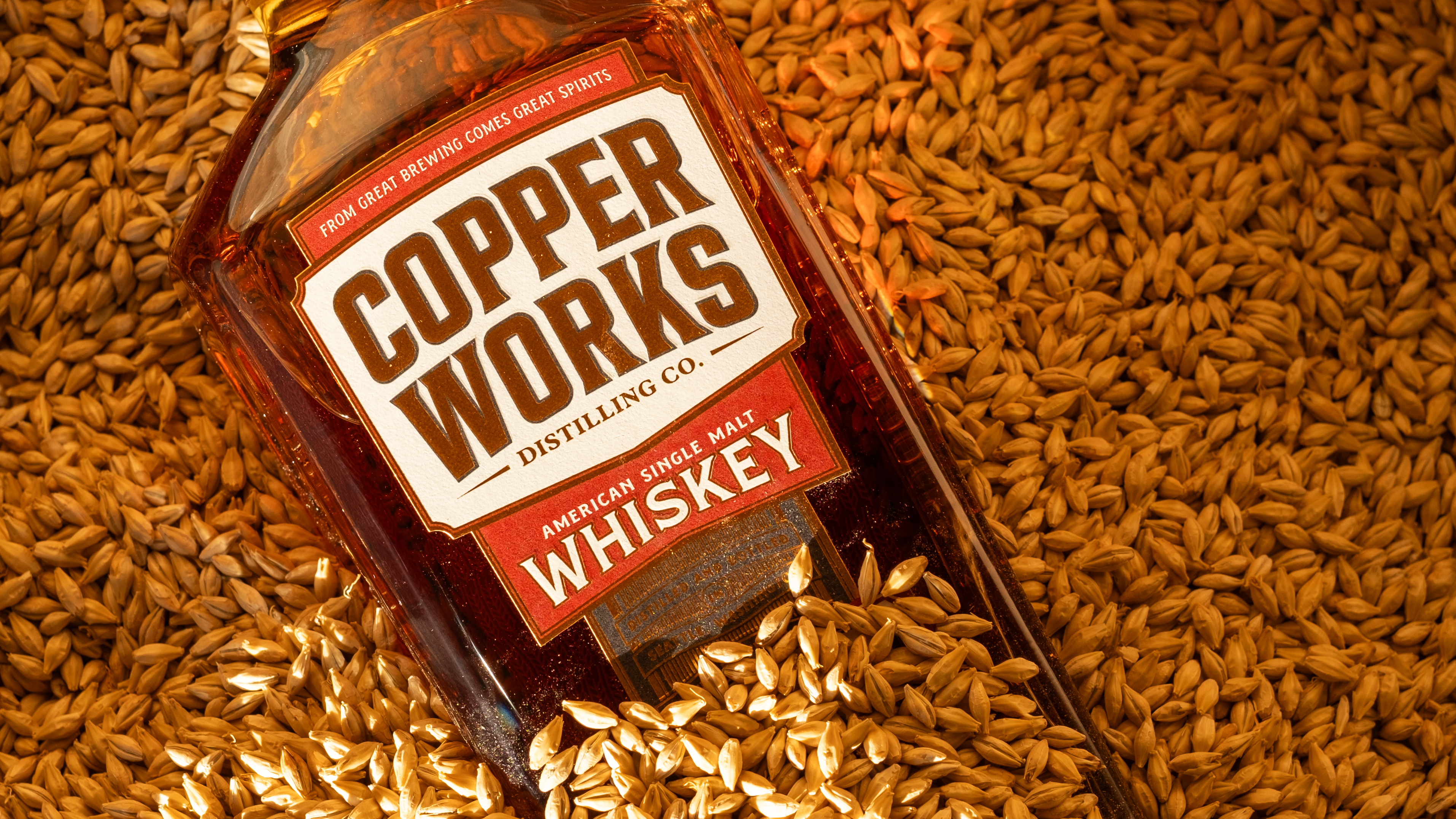
Jason Parker, co-founder of Copperworks Distilling Co., recalls feeling relieved when the TTB announced the news of this new category before the close of 2024. “We all just felt it was really important for the TTB to publish the final rule before the end of the year, because who knew what was coming next year.” Following this ratification, Copperworks spent the next year celebrating this news by educating consumers and whiskey distributors along with bars and restaurants, about this new category.
While the distinctive characteristics of a “good bourdon” have been standardized, Parker notes how American Single Malt Whiskey doesn’t have that requirement. He reflects, “With American single malt whiskey, the consumer can experiment even further with flavors.”
The Pacific Northwest’s focus as a hub for growing barley creates opportunities for considerable innovation for both brewers and single malt producers with a sizable number of distillers coming from brewing backgrounds. For example, Parker was the first head brewer for Seattle-based Pike Brewing Company when it opened in 1989. Also, this region’s strong food and drink culture focuses on local products made using organic and sustainable means including ASMW.
Moore has observed how this destination gives whiskey consumers clarity. “Before, American Single Malt required a lot of explanation. Now there’s a shared language that helps people understand what they’re buying and why it’s different. We’ve seen growing curiosity and confidence from both consumers and the trade. The category feels more legitimate, more discoverable, and more future facing, which has helped accelerate interest in a meaningful way.”
The Future of
American Single Malt
While American Single Malt remains a small percentage of the overall whiskey sales, it appears to be the one category not impacted by the recent downturns in whiskey sales. Parker attributes this in part to their focus on supporting local producers and making community connections. “Unless you’re one of the big brands that can continue to fight by lowering prices, becoming a national brand is too expensive to win.” But by maintaining their regional focus, Copperworks along with select other Pacific Northwest distilleries like Westland can offer flavor-focused single malts unique to this region. As Moore notes, “This opportunity isn’t just to grow volume, but to build a category that earns long-term trust and relevance.”
Bartlemay adds that in this challenging marketplace ASMW is winning its fight for shelf space. “There is more consumer interest, which is driving media interest, which drives consumer interest!” She observes how ASMW events are getting bigger and taking place more often, with events happening across the country. “It is an amazing position as a category to be standing at the crossroads of tradition, innovation, creativity, and flavor,” she adds.
Moving forward, the ASMWC has several trade-focused programs in the works and continued consumer education programs as well as working to spread the word for their members. According to Hawley, they’re also looking to engage new distilleries all the time. Currently, they have 116 members in the Commission but there are about 250 distilleries or so in the U.S. currently making single malt. They hope they can grow their ranks in 2026 to make their voice even louder.

