What are the differences and the qualities they bring to beer
By Rod Jones, Founder of RodJBeerVetures
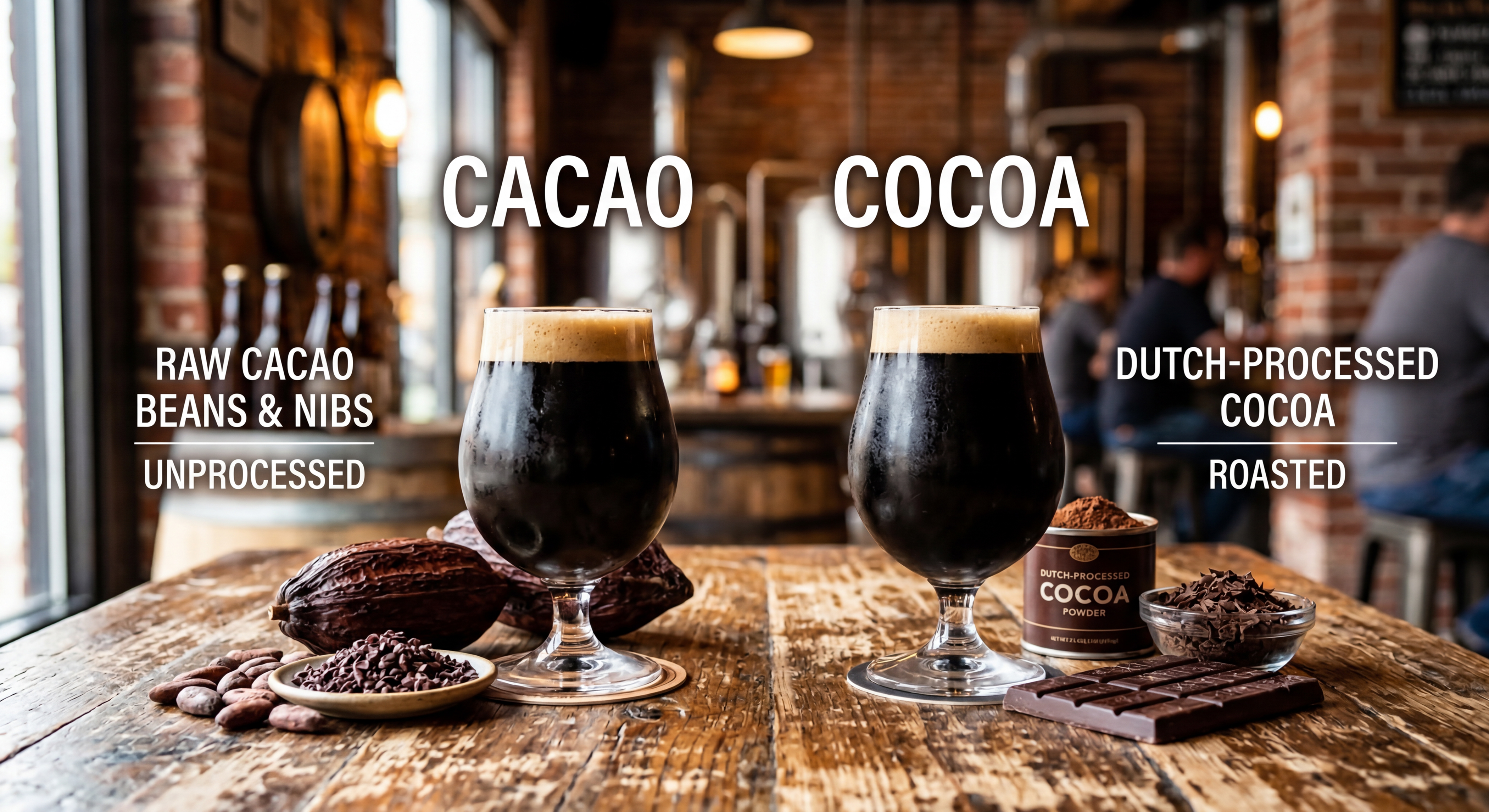
One of the more intriguing things I often see in beer is the use of cocoa nibs versus cacao in brewing. At one point, someone asked me about the difference, and while they may sound nearly identical—aside from switching an “a” and an “o”—they can bring noticeably different qualities to a beer.
For brewers, those differences go beyond naming conventions. The choice between cacao and cocoa can influence aroma, flavor intensity, mouthfeel, and even how the beer is presented to consumers. Understanding how each ingredient behaves gives brewers another tool when designing a beer meant to stand out.
Both cacao and cocoa come from the same plant, the Theobroma cacao tree, so similarities are expected. Because of that shared origin, most drinkers associate both ingredients with chocolate flavor. But seasoned beer drinkers know there is often a noticeable difference in the way beers express chocolate depending on which ingredient is used.
I actually explored this topic briefly in a YouTube video, which you can watch on the following page, where I broke down cacao versus cocoa and what each brings to a beer. The video provides a quick educational overview for beer drinkers, but it also highlights something important: many everyday beer shoppers may not know the difference at all and that’s where breweries have an opportunity.
Telling the Ingredient Story
In today’s beer market, shelves are packed, and competition is intense. Depending on the region, available shelf space for beer is even shrinking. That means breweries have two immediate challenges: first, getting their beer on the shelf and second, convincing someone to pick it up.
One area where breweries sometimes miss an opportunity is in how they communicate ingredients. It is not uncommon to see a beer labeled with “natural flavors,” which might be technically accurate but rarely tells the consumer much of anything. Even listing cacao nibs or cocoa on a label does not always clarify the experience if the drinker is not familiar with the difference.
But when breweries take the time to highlight those distinctions, they can create curiosity. And curiosity is often the first step toward someone trying a new beer.
Just like pouring a beer into a glass creates a moment of anticipation—the look, the aroma, and then the taste—the ingredients behind that beer can tell a story that draws the drinker in before the first sip ever happens.
The Flavor Difference
Cacao nibs are one of the most common chocolate-related ingredients used in brewing. They are essentially crushed pieces of fermented and roasted cacao beans. Because they are less processed than cocoa powder, they tend to retain more of the bean’s natural compounds.
In beer, cacao nibs often deliver a more intense chocolate character. They can lean toward the bitter side, producing a deeper, darker chocolate impression that many drinkers associate with high-percentage dark chocolate bars.
That bitterness is not a drawback, but it is an opportunity. For brewers aiming to create bold, complex stouts or porters, cacao nibs can provide a layered chocolate note that complements roasted malts and adds depth to the beer.
Cacao can also bring earthy undertones, which further enhance darker beer styles. Those subtle characteristics can make a beer feel richer and more complex rather than simply tasting like chocolate flavoring was added.
Cocoa, by contrast, often produces a smoother and slightly sweeter chocolate character. Cocoa powder is typically processed and partially defatted, which softens the flavor compared to cacao nibs.
Because of that, cocoa tends to work well in beers designed to mimic dessert flavors. Many pastry stouts, milk stouts, and sweeter dark beers rely on cocoa to create familiar chocolate notes that remind drinkers of brownies, chocolate cake, or hot cocoa.
Brewing Considerations
Working with chocolate ingredients is not always straightforward for brewers. One of the biggest technical challenges is fat content.
Chocolate naturally contains cocoa butter, which is essentially fat. In brewing, fats can interfere with foam stability and head retention—two visual qualities brewers work hard to achieve. Too much fat in the beer can cause the foam to collapse quickly.
Cacao nibs generally contain more cocoa butter than cocoa powder, so brewers need to be mindful of dosage rates. Using excessive amounts could impact on the beer’s ability to hold a proper head.
To address this, brewers may limit the quantity of nibs used or balance the recipe with malts known for supporting foam retention. Cocoa powder can sometimes be easier to manage in this regard because some of the fat has already been removed during processing.
Another crucial factor is deciding when to add the ingredient during the brewing process.
Timing the Addition
Some brewers add cacao nibs during the whirlpool or near the end of the boil. This method allows heat to extract flavor while also sanitizing the ingredients. However, prolonged heat exposure can drive off aromatic compounds.
Because of that, many brewers prefer to add cacao nibs during fermentation or conditioning. This approach allows the beer to extract chocolate characters more gently and preserve more delicate aromas. In some ways, cacao nibs are treated similarly to oak chips in brewing. The beer is allowed to rest on the nibs for a period, slowly drawing out flavor.
Another common technique involves soaking cacao nibs in spirits—often bourbon or vodka—before adding them to the beer. This step sanitizes the nibs and extracts additional flavor compounds that can carry into the beer.
This method is particularly popular with imperial stouts and barrel-aged beers, where the spirit character complements the chocolate profile.
Flavor Pairing and Recipe Design
The choice between cacao and cocoa also influences how other ingredients interact with the beer.
Cacao nibs tend to pair well with bold, complementary flavors such as coffee, vanilla, toasted coconut, and barrel aging. These combinations build layers of flavor that enhance the beer’s complexity rather than simply making it taste like chocolate.
Cocoa powder, on the other hand, is frequently used alongside sweeter ingredients. In pastry stouts or milk stouts, cocoa works well with lactose, vanilla, caramel notes, or marshmallow flavors to create dessert-like beers.
Another factor that can influence the final flavor is the roasting level of the cacao beans themselves. Much like coffee beans, cacao beans can be roasted at different intensities.
Lighter roasts may highlight brighter chocolate notes with subtle fruitiness, while darker roasts emphasize deep cocoa flavors with roasted character. Some craft brewers even explore single-origin cacao beans, which can introduce regional nuances into the beer.
South American cacao might bring fruit-forward notes, while African varieties can produce deeper cocoa intensity. These subtle differences give brewers another way to differentiate their beers in a crowded market.
Turning Ingredients into a Story
Ultimately, the decision to use cacao or cocoa comes down to what the brewer wants the beer to express.
Cacao nibs often create a bolder, more complex chocolate character with earthy depth and darker chocolate bitterness. Cocoa powder tends to produce a smoother, sweeter chocolate impression that works well in dessert-inspired beers.
Neither approach is inherently better than the other. Each simply offers brewers a unique way to shape the beer’s flavor.
But in today’s crowded craft beer landscape, how that choice is communicated can matter just as much as the ingredient itself. There is an acronym that comes up often in craft beer circles: FOMO, or the fear of missing out. With so many beers released each year, drinkers are constantly looking for something new and exciting to try.
Many beer enthusiasts—including myself—keep beer cellars specifically so we can grab bottles when they appear and enjoy them later. The fear of missing out often drives those purchases.
When breweries clearly communicate what makes their beer unique—whether it is the use of cacao nibs, cocoa powder, or even the origin of the beans—they tap into that curiosity. Sometimes that curiosity is all it takes for someone standing in front of a crowded shelf to pick up one beer instead of another.
For brewers willing to lean into the story, cacao and cocoa are more than just chocolate ingredients. They are tools that shape flavor, create intrigue, and ultimately help craft beers that drinkers remember.

