Protecting quality, compliance and consumer trust
By Alyssa L. Ochs
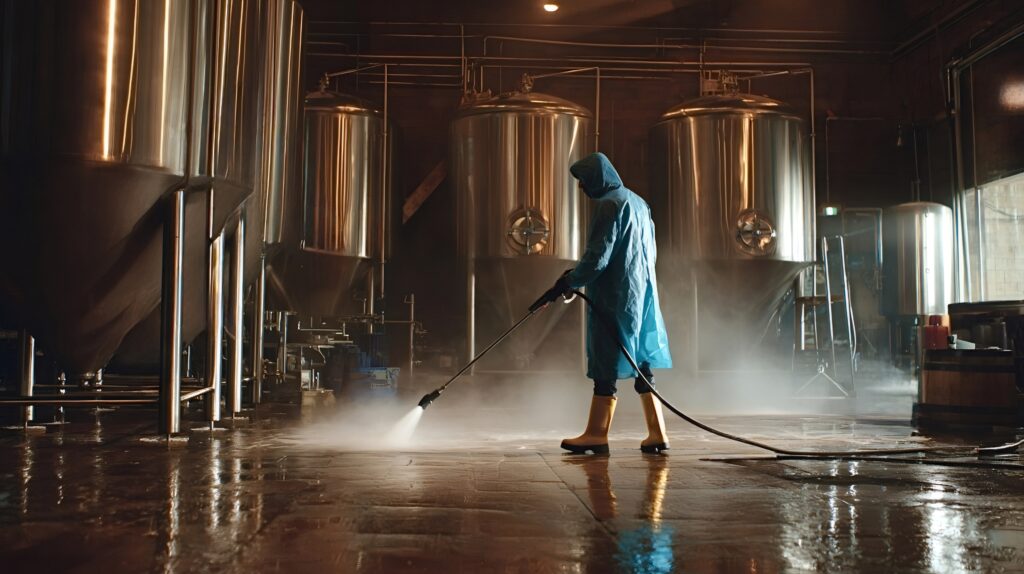
In today’s modern breweries and distilleries, cleaning and sanitation aren’t just afterthoughts or background busy work. These essential tasks are core functions that directly shape the quality of your products while ensuring regulatory compliance and upholding your brand’s reputation.
Regardless of whether you produce just a handful of beers or spirits per year or run an expansive multi-state operation, your approach to cleaning impacts much more than the aesthetics of your facility. Proper cleaning and sanitation in the craft beverage industry affects a product’s flavor, yield, and stability, as well as employee safety, inspection results, and distributor relationships.
Here’s a deep dive into why cleaning and sanitation matter so much for craft beverage producers and how you can train and equip your staff to establish a business culture with consistently high standards.
Why Cleaning and Sanitation Are Essential
Even the most minute contamination can dramatically affect the quality and taste of a beer or spirit. For example, bacteria like Lactobacillus and Pediococcus, as well as yeasts like Brettanomyces, can cause undesirable haziness, sourness, or inconsistent carbonation in beer.
Meanwhile, residues from oils, fusel compounds and grain mashes can ruin spirits, causing harsh off-notes and lower yields. Biofilms, slimy bacterial communities that adhere to surfaces, are especially problematic and can resist standard cleaning methods if not promptly addressed.
Sanitizing brewery and distillery equipment is essential to prevent these types of harmful microorganisms from entering finished products. And no, the alcohol content in these products isn’t sufficient to avoid contamination during the initial stages of production.
When you always keep your equipment clean, you improve its operational efficiency, reduce downtime, and extend its lifespan. Kegs fill easily, heat exchangers maintain optimal thermal transfer and sensors remain accurate, leading to cost savings over time.
Even just a single, publicly known contamination incident can destroy years of building your business’ reputation. Your customers demand a safe and delicious product, while distributors and retailers expect consistency and professionalism. So essentially, keeping everything clean in-house is a final guarantee behind your label.
Regulatory Standards and Compliance
Beverage producers must comply with multiple regulatory requirements to continue operating legally, including the FDA’s Current Good Manufacturing Practices (cGMPs). According to 21 CFR Part 117, beverage producers must maintain clean, sanitary equipment and implement pest control programs. All food-contact surfaces must be regularly inspected, and the cleaning water must be potable. Breweries and distilleries must also maintain cleaning records for official review.
The Alcohol and Tobacco Tax and Trade Bureau (TTB) primarily focuses on production records and tax compliance. However, it also requires beverage production facilities to maintain conditions that prevent contamination. Proof of unsanitary conditions may result in TTB warning letters, suspended operations or delayed approvals for new labels or expansions.
Your brewery or distillery may also be subject to local and state health regulations, such as wastewater discharge limits and floor drain sanitation standards. Local and state requirements may require you to follow approved chemical lists for cleaning products, maintain water hardness/softness standards and ensure employee hygiene requirements are met.
Additionally, there are Occupational Safety and Health Administration (OSHA) standards to be aware of while running a craft beverage business. OSHA governs cleaning-related tasks such as chemical handling, personal protective equipment (PPE), eyewash and shower stations, spill control, and confined space entry.
Ensuring Safety with Chemical Hazards
Safety is paramount when cleaning and sanitizing a brewery or distillery, as the chemicals used may be aggressive and toxic. For example, caustic soda (sodium hydroxide) can burn the skin and react with aluminum. When not mixed according to the directions, acid cleaners can release harmful vapors into the air.
If your operation uses peracetic acid, you should know that this strong oxidizer can irritate a worker’s eyes and lungs. Chlorine sanitizers require careful rinsing and ventilation for safe use.
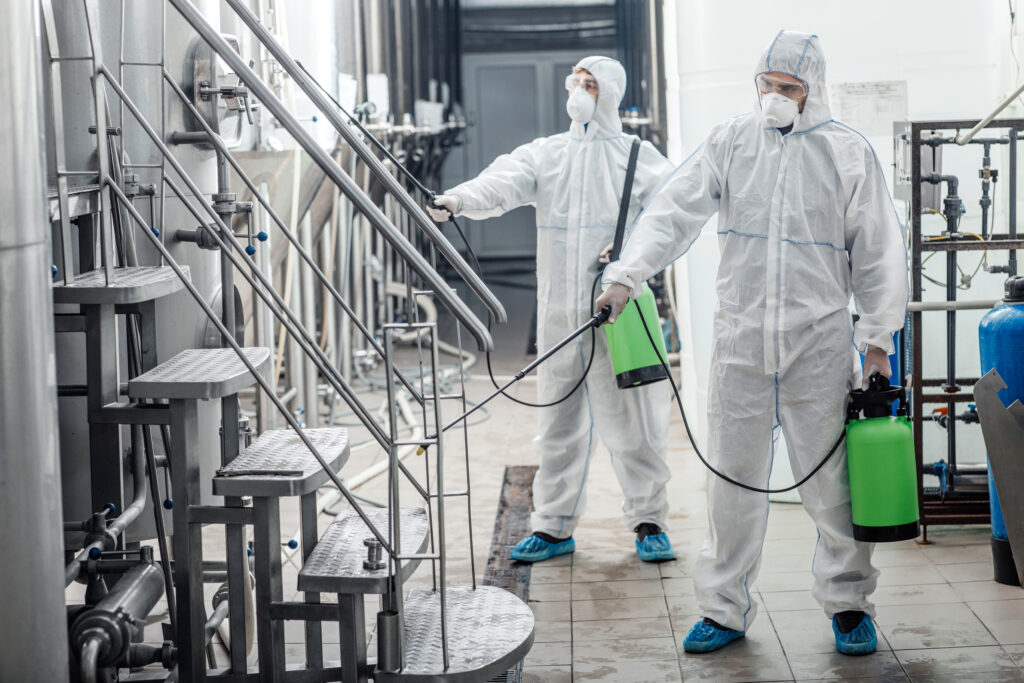
Anyone who manages these types of chemicals should wear chemical-resistant gloves, goggles or face shields, aprons, and boots. Respirators are even recommended for some handling of cleaning chemicals.
It’s also essential to store cleaning chemicals properly, such as separating acids and bases and using secondary containment when recommended. All cleaning products should be clearly labeled in their containers and stored in areas with proper ventilation in your facility.
Frequency & Scheduling of Cleaning Tasks
Although individual owners of craft beverage operations may have their own visions for cleaning and sanitation based on their experiences, there are industry standards to use as starting points.
For instance, staff members should clean fermenters after every batch using a clean-in-place cycle and sanitize them before subsequent use. For mash and lauter tuns, clean these after every brew, manually scrubbing away grain residues when needed.
Ensure stills and columns are cleaned after runs and be mindful that copper and stainless-steel containers require different care. Clean bright tanks after every use so they are free of biofilms before packaging. Heat exchangers should also be cleaned after every use, with flow plates cleaned as well.
For kegs, clean them immediately after emptying because beer stone can form quickly if you delay tending them. Clean packaging lines before and after each run, giving special attention to conveyor belts and crowning or capping heads. Make a point of cleaning walls, floors and drains daily, as these areas can become significant contamination risks if left uncleaned. There’s also the risk of aerobic contamination from wood pores if you don’t clean your barrels regularly.
Training Staff and Building a Culture of Clean
Cleaning and sanitization aren’t necessarily entry-level jobs that just anyone can do. In the craft beverage industry, cleaning tasks require precision and expertise to prevent contamination incidents and produce predictable, high-quality products.
Your cleaning and sanitation training should cover the various soil types, such as hop resins, protein soils, beer stone, fatty acids, and sugar residues. Matching specific soil types to relevant chemical products can improve cleaning efficiency and reduce waste.
Your employees should also understand the correct concentration ranges for chemical dosing and how to measure the products accurately. Training should include equipment disassembly and reassembly of gaskets, valves, spray balls, and pumps, ensuring these components are thoroughly cleaned and reassembled correctly.
During training sessions, you should also plan to cover verification methods beyond visual inspection, such as pH and conductivity checks, ATP testing, and micro-testing for sensitive processes. Lockout and tagout testing are critical for mills, pumps, augers, and automated lines.
Also important, brewery or distillery cleaning professionals should receive training in record-keeping to maintain consistency and ensure that your facility will pass future inspections.
Cleaning and Sanitation Methods for Craft Beverages
Various methods are used to clean and sanitize a brewery or distillery. To start, clean-in-place methods automate the cleaning of tanks, lines, and pipes without the hassle of taking them apart. A typical CIP cycle involves a pre-rinse with warm water, an alkaline wash, a possible acid rinse, a final rinse and sanitization with heat or chemicals. CIP methods are efficient and make tasks safer for workers; however, they require proper pump sizing, spray ball design, and chemical balancing.
Breweries and distilleries also use clean-out-of-place methods for removable items, including fittings, hoses, gaskets, and other small components. COP methods typically involve soaking the pieces in alkaline or acid baths, then scrubbing them by hand and rinsing.
Fully manual cleaning is still necessary for some beverage production components, such as mash and lauter tuns, floors, drains and other hard-to-reach areas. You can maximize safety with manual processes by using dedicated brushes and color-coded tools.
Some distilleries use foam cleaning to clean sticky mash spills and sugar residues. Utilizing a foam application, you can apply cleaning agents to large tank exteriors, floors, and walls.
Meanwhile, steam sanitation helps with the cleaning of barrels and lines. It’s energy-intensive but effective in areas prone to chemical residues. There are also no-rinse sanitizers to explore, such as chlorine dioxide, iodine solutions and peracetic acid. The equipment material, water hardness and contact time will dictate which sanitizer is most appropriate.
How to Choose the Right Chemicals and Materials
Before comparing specific, commercially available products for cleaning and sanitizing your beverage production area, it’s essential to understand how the basic types of cleaners are useful.
Alkaline cleaners break down organic soils, hop residues and proteins, making them ideal for kegs, fermenters, and lines. Acid cleaners target mineral scale, beer stone, and milk stone, so they’re helpful as periodic deep cleaners.
For sanitizing, peracetic acid is fast and effective for low-residue areas. Iodophor is slower acting but gentler on metals. Chlorine is an effective sanitizer, but it can pit stainless steel if misused.
You can also use surfactants
and detergents to break down biofilm barriers in a brewery or distillery. However, it’s critical to always confirm that the cleaning agent you’re using matches the material, especially for stainless steel, copper, plastics, hoses, and fittings.
CIP system partners, chemical suppliers, and brewery/distillery-specific consulting services can help you choose the right types of products for your operations if you have questions beyond the basics.
Implementing a Successful Cleaning and Sanitation Program
As you can see, establishing safe and effective cleaning protocols involves much more than just scribbling down a quick to-do checklist. In today’s competitive breweries and distilleries, cleaning and sanitizing is part of a fully integrated system that covers everything from documented schedules to staff training, safety procedures, proper chemical selection, and continuous improvement based on lessons learned.
Cleanliness in beer and spirit production goes beyond meeting regulatory requirements and is a core part of responsible, professional craftsmanship. Every product you produce reflects your cleanliness standards and your commitment to your customers. With extra time, attention, and education, you can create a culture of cleanliness that’s not a chore but a pathway to safe, consistent products worthy of your brand’s name.

