Exploring the whiskey tourism trend
By Alyssa L. Ochs
In recent years, there’s been a rise in whiskey tourism experiences as people seek to dive deeper into whiskey-making traditions and experimentation. Whiskey tourism is a travel experience that goes beyond basic tours and tastings, offering enthusiasts immersive journeys that pair rich local history with artisanal craft, and perhaps even food pairings and special events.
Industry experts have been predicting a boom in whiskey tourism in 2026 and beyond, as more distilleries explore the possibilities of becoming weekend getaway destinations. Rather than just stopping by for a tasting, there’s a push for authentic, hyperlocal, sensory travel experiences, such as behind-the-scenes tours and themed educational sessions.
Beverage Master connected with a few distilleries to learn more about whiskey tourism offerings and what whiskey lovers are looking for in their next big adventure.
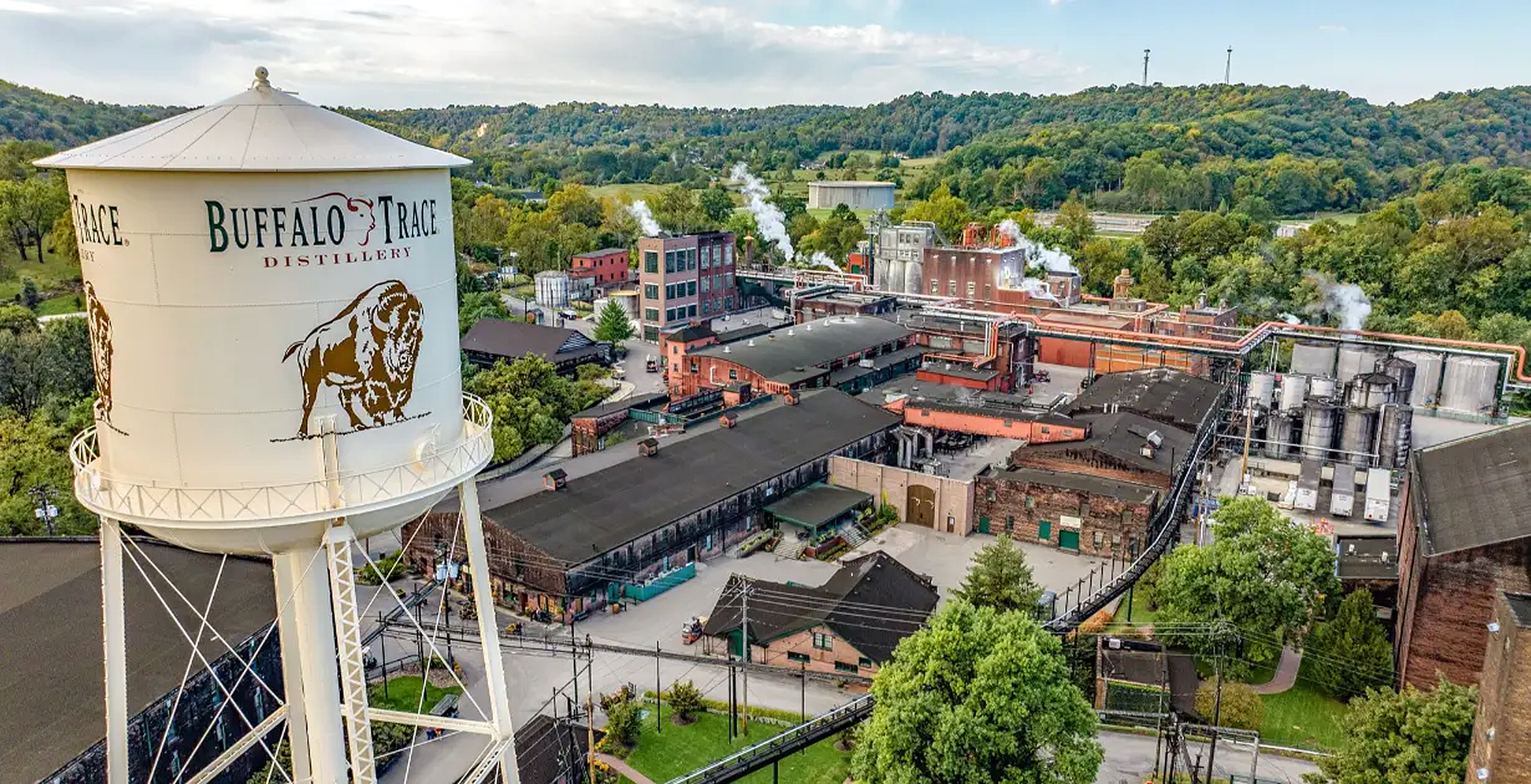
Buffalo Trace Distillery – Three Unique Experiences
Based in Frankfort, Kentucky, Buffalo Trace Distillery’s general manager, Tyler Adams, told Beverage Master about their three unique tour experiences for guests. He said that all tours are complimentary and include a tasting at the end.
Adams explained that the Trace Tour is Buffalo Trace’s introductory tour that covers history and production methods.
“Guests will walk the path of rolling bourbon barrels and be captivated by the smell and atmosphere of bourbon in the air,” Adams said. “Highlights of this tour include learning how the barrel gives flavor to the bourbon, stepping inside aging warehouses to discover aging techniques and seeing bourbon being dumped from barrels before heading off to see the craft of hand-bottling in in our Blanton’s Bottling Hall.”
The second option is Buffalo Trace’s Old Taylor Tour, which offers a deeper exploration of the history of the distillery.
“Guests will visit the Old Taylor House, the O.F.C. Building, O.F.C. Fermenter #7 nicknamed “Old Taylor” and finally Warehouse C, where you will see both the remnants and still-standing structures of what Colonel E.H. Taylor, Jr. Taylor built,” Adams said. “Those on this tour will learn about Taylor’s desire for perfection and purity in the bourbon making processes and how he helped craft the industry as it is today.”
A third option is the Hard Hat Tour, a behind-the-scenes journey through the entire bourbon-making process.
“Guests will see the distillation process first-hand: from the grain delivery and mashing in our recently installed 20,000-gallon mash cookers, to fermentation and distillation,” Adams said. “The tour includes a stop at the E.H. Taylor, Jr. Microstill, where the Distillery’s unique and award-winning Experimental Collection whiskeys are made, and finishes in our state-of-the-art Dryhouse in the repurposed Warehouse B, built in 1881.”
For guests who don’t have time for a full tour, Buffalo Trace Distillery also hosts guided tastings every day, and walk-ins are welcome.
When asked about the favorite parts of customers’ visits, Adams shared the variety of after-hours events, such as seasonal experiences and brand programming.
“All events at Buffalo Trace Distillery are designed to be welcoming to all guests, whether bourbon enthusiast or bourbon curious,” Adams said. “We believe our guests most appreciate how up close and personal they are with the distillery’s operation. Authenticity is very important to us, and we love that our guests can be ‘in the action,’ seeing barrels rolling, barrel dumping and hand bottling.”
A. Smith Bowman Distillery –An Immersive Stroll Through History
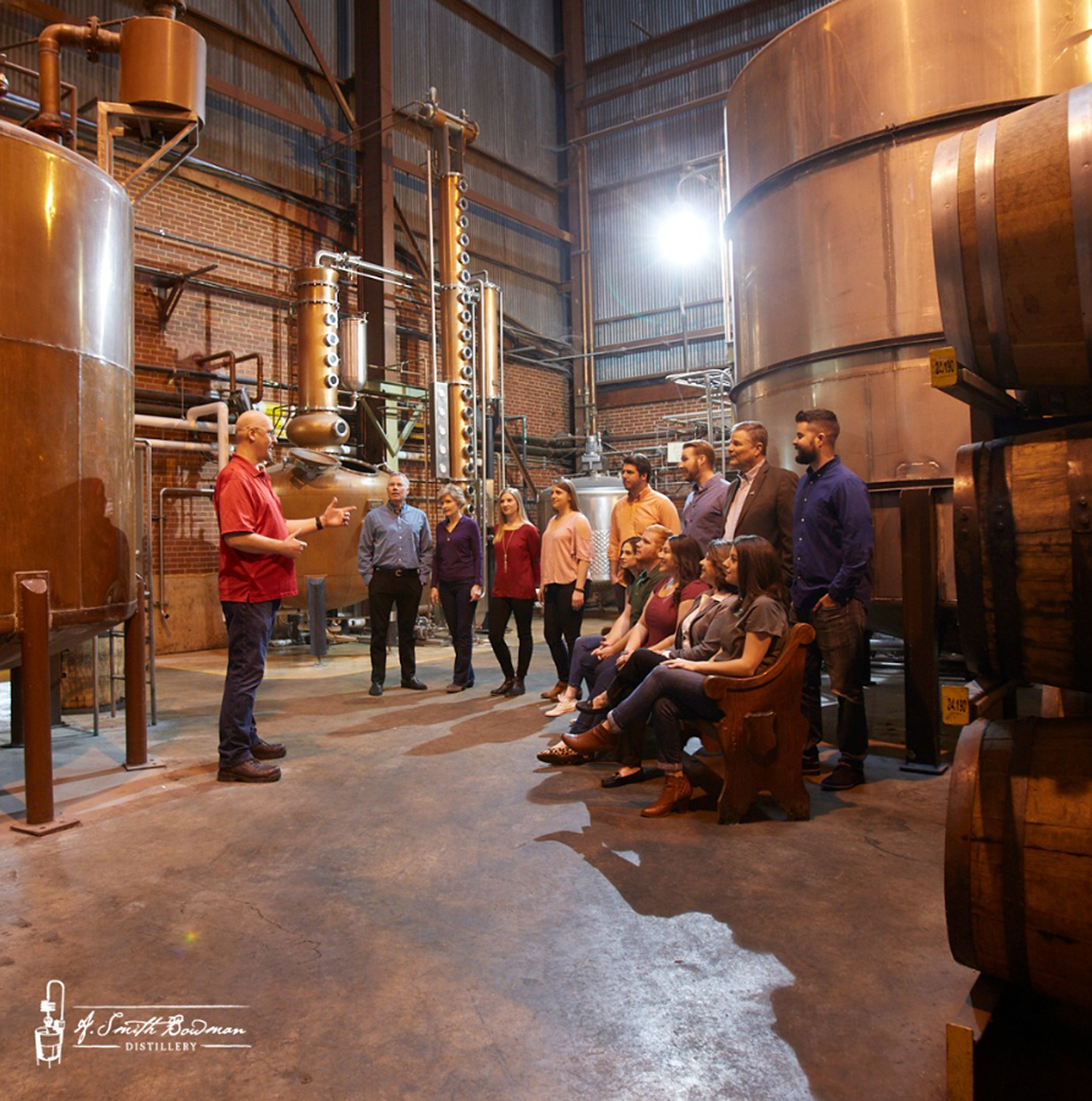
Beverage Master also asked David Bock, head distiller for A. Smith Bowman Distillery in Fredericksburg, Virginia about his opinions on whiskey tourism. The A. Smith Bowman Distillery is a small craft distillery and the oldest distillery in the state. Until the 1950s, it was the sole producer of legal whiskey in the Commonwealth of Virginia.
Bock said that his distillery tour takes guests on a stroll through time to learn all about the distilling, barreling and bottling processes.
“See up close the details on every process, from fermentation of our mash to filling our stills – nicknamed ‘Mary’ and ‘George,’ which pay homage to the parents of the Bowman Brothers. At the end of the tour guests will enjoy a delicious, guided tasting of our award-winning bourbons and other spirits.”
Bock has found that guests are drawn to A. Smith Bowman Distillery’s interactive cocktail classes, behind-the-scenes access, small-group settings, and direct interaction with the distillery staff. He said these are favorites because they make the experiences feel immersive and intentional.
“Small hands-on demonstrations give guests practical skills they can use at home, which increases their knowledge of our products and enjoyment beyond the event itself,” Bock explained. “During these events, they enjoy the opportunity to engage directly with distillery staff, making the brand more approachable and memorable. Select events offer access to areas of the distillery not typically offered on a standard tour, which fosters a deeper connection to the craft. This exclusive access is especially favored by our repeat customers because it keeps the experience feeling new and exciting each time.”
Kings County Distillery – The “Why” Behind the Craft
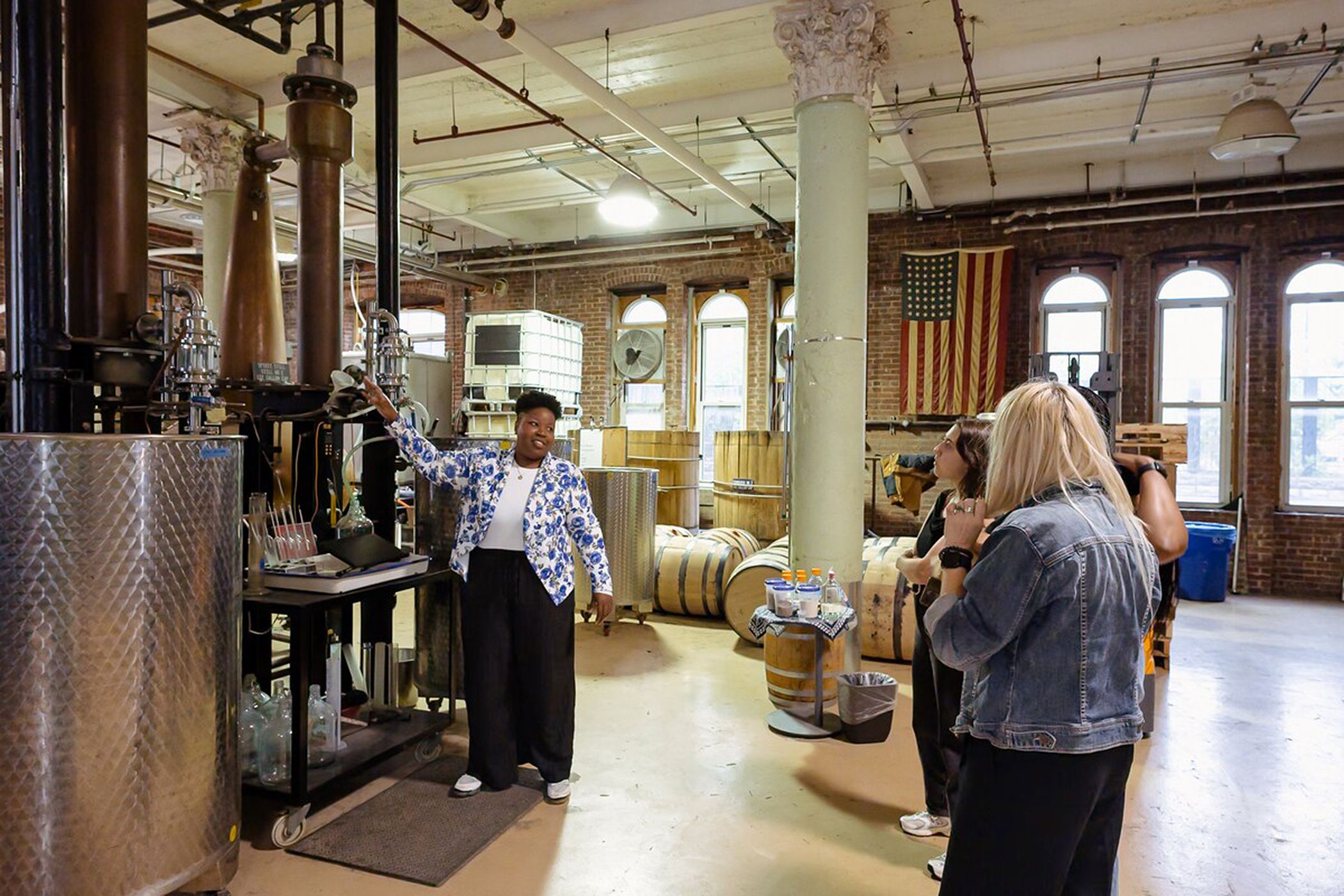
Another distillery, Kings County Distillery in Brooklyn, New York, also shared its take on whiskey tourism with us. The distillery’s co-founder and distiller, Colin Spoelman, told Beverage Master Magazine that they offer two different tours, the Distillery Tour and Top-Shelf Tour.
“The Top Shelf Tour is a little longer and goes into the history of distilling in New York City and includes a tasting of our more high-end spirits,” Spoelman said. “We also offer a whiskey tasting class twice a week.”
“We also offer seasonally inspired thematic tours, including our Dead Distillers Tour, Bluegrass in Brooklyn, pirate tours, and women’s, Irish-American, and Black history-focused offerings,” Spoelman continued.
Spoelman said that for most distilleries, the tour is a creation that follows an existing brand, whereas Kings County Distillery began with education to help consumers understand how different they were from the standard whiskeys.
“We make all our spirits in house, something that was rare for distillers when we first launched 16 years ago,” Spoelman explained. “So, understanding why that was important and different was crucial — we led people down a rabbit hole that clued them into the idea that everything they had learned about whiskey, all the small batch, and down-home marketing was really a pretense from global, often absentee owners that didn’t really know American whiskey consumers and what they wanted. We were happy to give it to them: both in the form of the what but also the why. That was particularly important to our visitor experience. We also put a lot of focus on our physical space, in historic buildings in the Brooklyn Navy Yard, next to the former distillery district of Brooklyn in Irishtown.”
Whiskey’s Appeal to Weekend Travelers
Adams from Buffalo Trace Distillery shared with Beverage Master Magazine that there are excellent opportunities in the industry to attract visitors beyond loyal locals.
“Travelers are often looking for little getaways and it’s important to offer something that goes a little further than a standard tour offerings,” Adams said. “This could be an exclusive tasting, chance to buy a special bottle of bourbon or meet someone from the team. We also think there is a great opportunity to welcome those who are bourbon curious but might find a distillery experience intimidating. For this, curating an experience that meets these guests wherever they are in their bourbon journey is key.”
Bock from A. Smith Bowman Distillery has observed that guests are looking for an immersive experience that engages in as many senses as possible.
“At A. Smith Bowman Distillery, we offer guests the opportunity to see up close how our spirits are made, to speak directly with tour guides to ask questions about our history, to taste our spirits in a guided setting and to leave with their favorite bottle in hand,” Bock said. “Attracting guests beyond local whiskey enthusiasts can come in many forms, such as signature tasting events, cocktail tastings or events that incorporate music or food. We believe the key is to offer an experience that meet guests where they are, either bourbon novice or bourbon curious.”
Spoelman from Kings County Distillery told Beverage Master Magazine that it has been more challenging to attract travelers post-pandemic, but that they are finally starting to see a more adventurous mindset return.
“We’ve also seen less interest as wellness trends push people away from alcohol,” Spoelman said. “Still, we think knowing about booze and being educated is the best way to be mindful and thoughtful about consumption, and to that end, we do think we can attract more of the general population. It’s a challenge to be able to offer an experience that caters both to total novices but also great enthusiasts, and yet the very best immersive tours and experiences manage to do this — you could argue it’s the fundamental challenge and how you organize speaks to the ambitions of a brand.”
Whiskey Tourism and Local Economies
Travelers are increasingly seeking the next exciting thing when planning a trip, and whiskey tourism is often a unique and enticing option. Adams from Buffalo Trace Distillery explained that, where they are in Kentucky, whiskey tourism is a major driver of the state and local economies.
“Distilleries like Buffalo Trace play a meaningful role in sustaining this year-round, as visitors come to experience the history and craftsmanship of Kentucky bourbon at any time,” Adams said. “Most often, visitors build entire trips around visiting Kentucky distilleries, which drives extended stays and supports hotels, restaurants, transportation providers and small businesses throughout the region.”
Bock agreed that whiskey tourism is a powerful economic driver because it attracts visitors from across the country and around the world to spend time and money locally.
“Guests who come for a distillery tour often extend their stay to dine at nearby restaurants, shop local retailers and stay at hotels,” Bock said. “When done thoughtfully, whiskey tourism strengthens the connection between a distillery and its community, while contributing to long-term growth for the region.”
“I’ve always felt that we have something in common with breweries and baseball teams — we help define a city’s culture and hold a much more important role in that than sales always determine,” said Spoelman from Kings County Distillery. “That’s also a great responsibility.”
He explained that when you make whiskey for Brooklyn or even all of New York City, you must speak to the entirety of the community.
“Fortunately for us, New York is a city that is ambitious, smart, savvy, creative, gastronomical, infused with history, brash, bold…all the things you could ever want in a whiskey,” Spoelman said. “So, to be able to embody that spirit – in our spirits – is a great opportunity that we enjoy and a great challenge we are excited to meet every day.”
Welcome to the New Future of Whiskey Tourism
As distilleries like these three have discovered, whiskey tourism is more than just a fad – it has become a thriving sector of the travel industry. Distilleries that are now open to innovating their offerings offer a rich menu of experiences to explore. Meanwhile, tourism initiatives like the American Whiskey Trail, which spans multiple states, are combining education and cultural heritage with the history of American spirits.
For experienced spirits enthusiasts and adventurous travelers alike, the whiskey tourism of the future promises a journey that’s just as memorable as the pour.

