Pivoting Into the Future
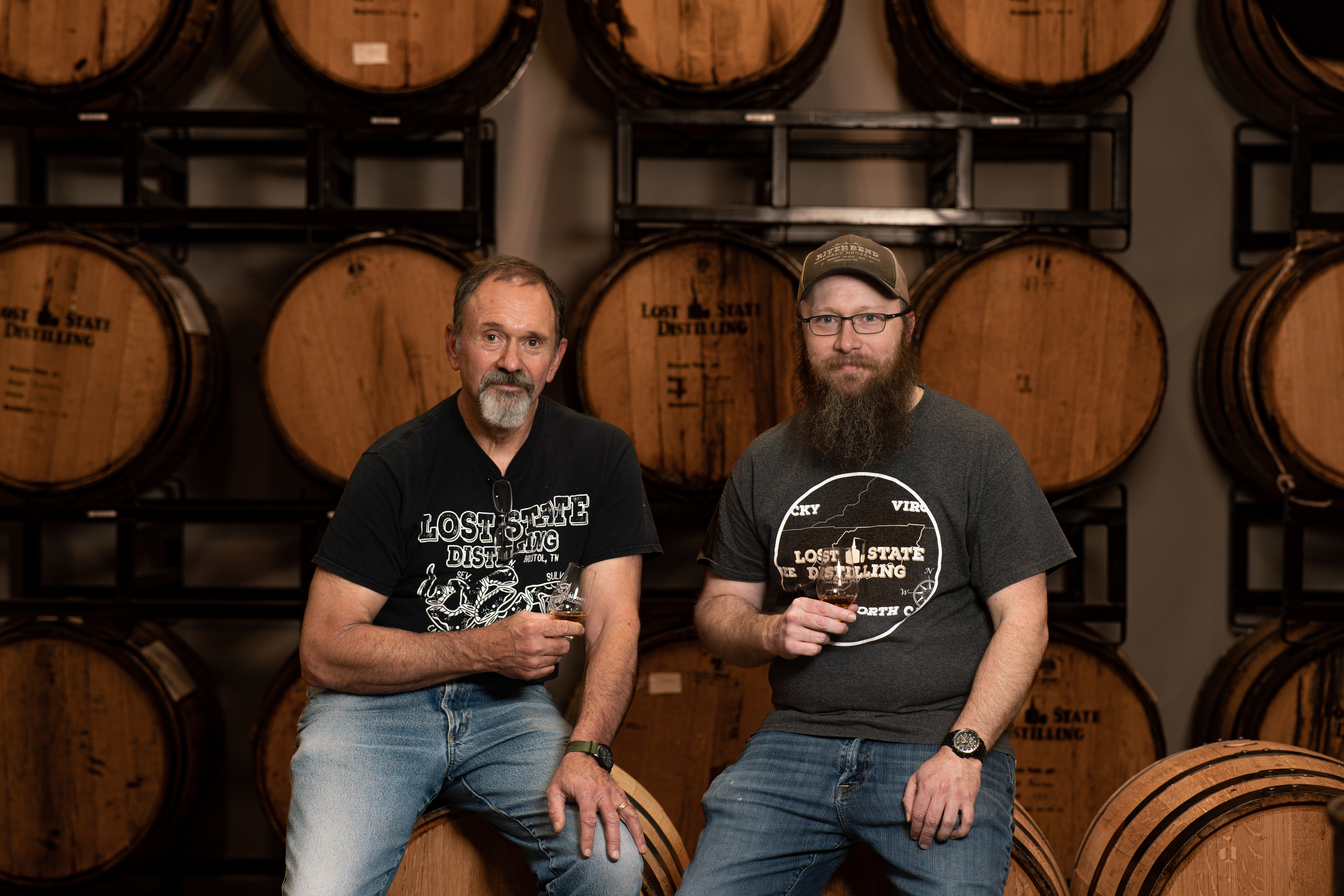
By Gerald Dlubala
Lost State Distilling’s name comes from its historical origins, as do the names of many of the spirits produced by this Bristol, Tennessee, producer of craft Rum, Gin, Vodka, Tennessee Whiskey, and canned cocktails.
“The name is derived from when northeast Tennessee, as it is today, tried to become a separate state in 1784,” said Nick Bianchi, Head Distiller and President. “The area actually existed for four years as an independent territory, having a governor and one official battle. It obviously never became its own state, but had it, it would’ve been known as The State of Franklin. Since it never became an official state, it became the Lost State of Franklin, and we are Lost State Distilling.”
Pivoting From Initial Intentions
“We officially started our journey in 2017,” said Bianchi. “I roped my dad in with me while originally wanting to start a craft brewery. I was a longtime home brewer and wanted to create my own commercial brand. But as we looked around, we noticed that there were already a significant number of breweries operating, which led us to explore craft distilling. I already had a nice appreciation for bourbon, so it was an easy decision to go down that path. It was just my dad and me, with really no experience, coming from the IT and oil industry, respectively. We began by working with friends at a Virginia-based distillery to learn the business and process of commercial distilling. We originally anticipated being a really small craft distillery. Then we ran across a really nice building in Bristol that we liked. It was bigger than we originally wanted, and larger than we had imagined, but we ended up taking it and growing from there.”
Bianchi tells Beverage Master Magazine that his initial main goal was to make a great Tennessee Whiskey. He experienced Clayton James Tennessee Whiskey, made by Big Machine Distilling, which opened his eyes to the fact that not all Tennessee Whiskeys have to be Jack Daniel’s or George Dickel. Bianchi wondered what else he could produce, and the rest, as they say, is history.
“It’s certainly been a journey,” said Bianchi. “We’ve had our share of hurdles, but each one has taught us how to evolve and pivot our plans when needed. And it seems we must pivot a little at least every year, depending on what the world throws at us. You don’t know what you need to know in this industry until you find yourself in a tight spot that forces you to adapt. It’s a fun industry, but it can be overly convoluted and complicated.”
The Goods
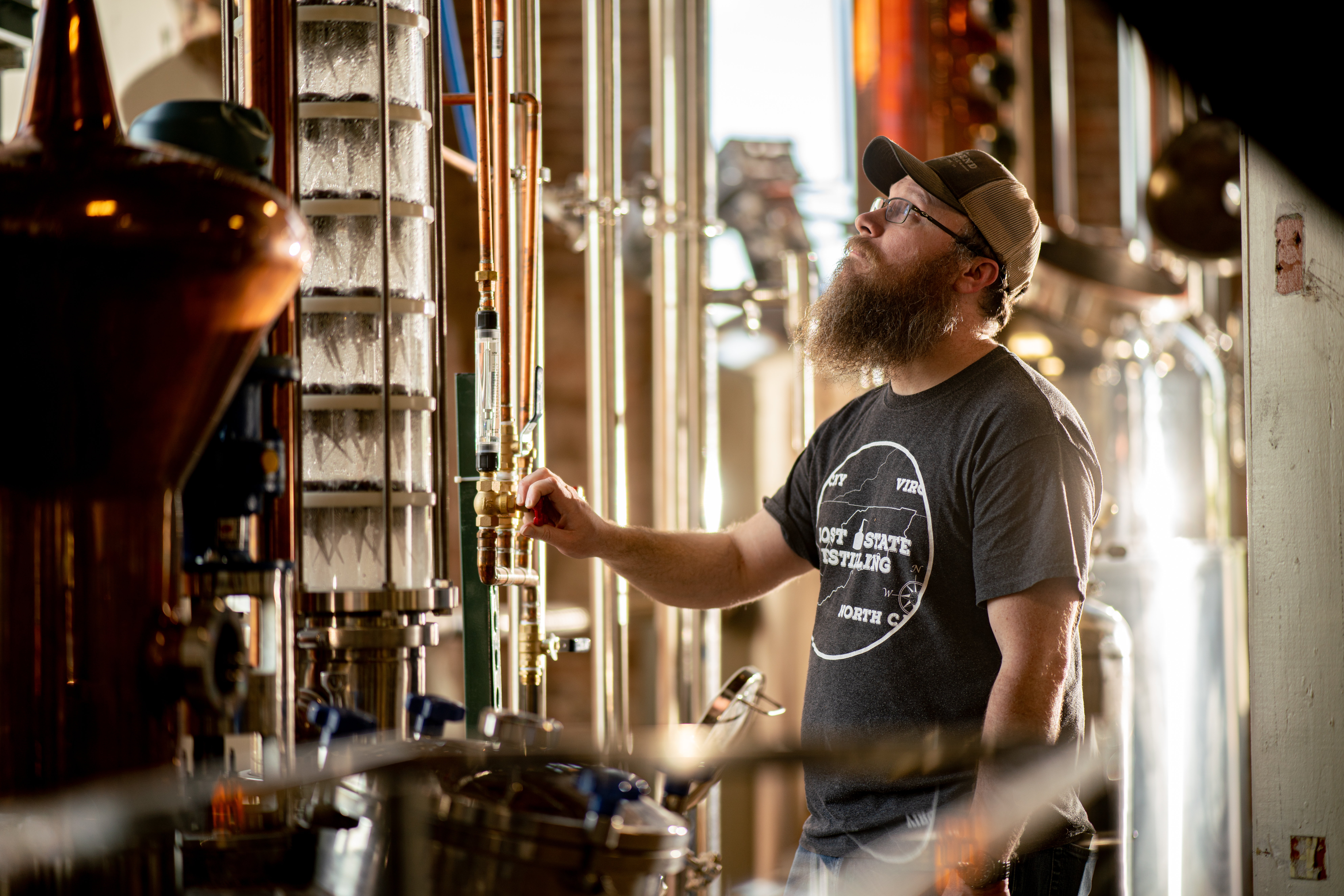
“We have two stills,” said Bianchi. “We have our 100-gallon hybrid StillDragon still that is modular, so we can control what we want to make. It’s got a separate distillation column for higher proof spirits, or we can use it as just a straight pot still. It also has a gin basket in line. We started making our white spirits on this still before getting our bigger still online. That’s a 500-gallon hybrid pot still and is our main production still at this point. We like to stick with pot distilling for now. We are slowly growing, so we only make what we need, and with the bourbon glut, there’s no need to make 30 barrels a day right now or overproduce in an oversaturated market.”
Bianchi uses local ingredients, all sourced within an hour of the facility. Production and bottling are done in-house, with vodka currently the most popular and most distributed product.
The tasting room can get busy due to hosting NASCAR races and the NHRA Drag Racing Nationals.
“We do get a significant amount of foot traffic then,” said Bianchi. “Within our tasting room, we offer a full line of tastings, bottle purchases, and tours. Visitors will find nine unique styles of whiskey, our apple brandy, aged and white rum, gin, and our popular line of canned cocktails. Customers will find that we’re pretty much open to anything. If you want to take a tour, you’re getting a tour from one of the distillery owners, so there are very few questions that go unanswered. You’re getting the information from someone who performs the process daily rather than a tour guide or random employee. We get a lot of positive feedback on that aspect of our tours.”
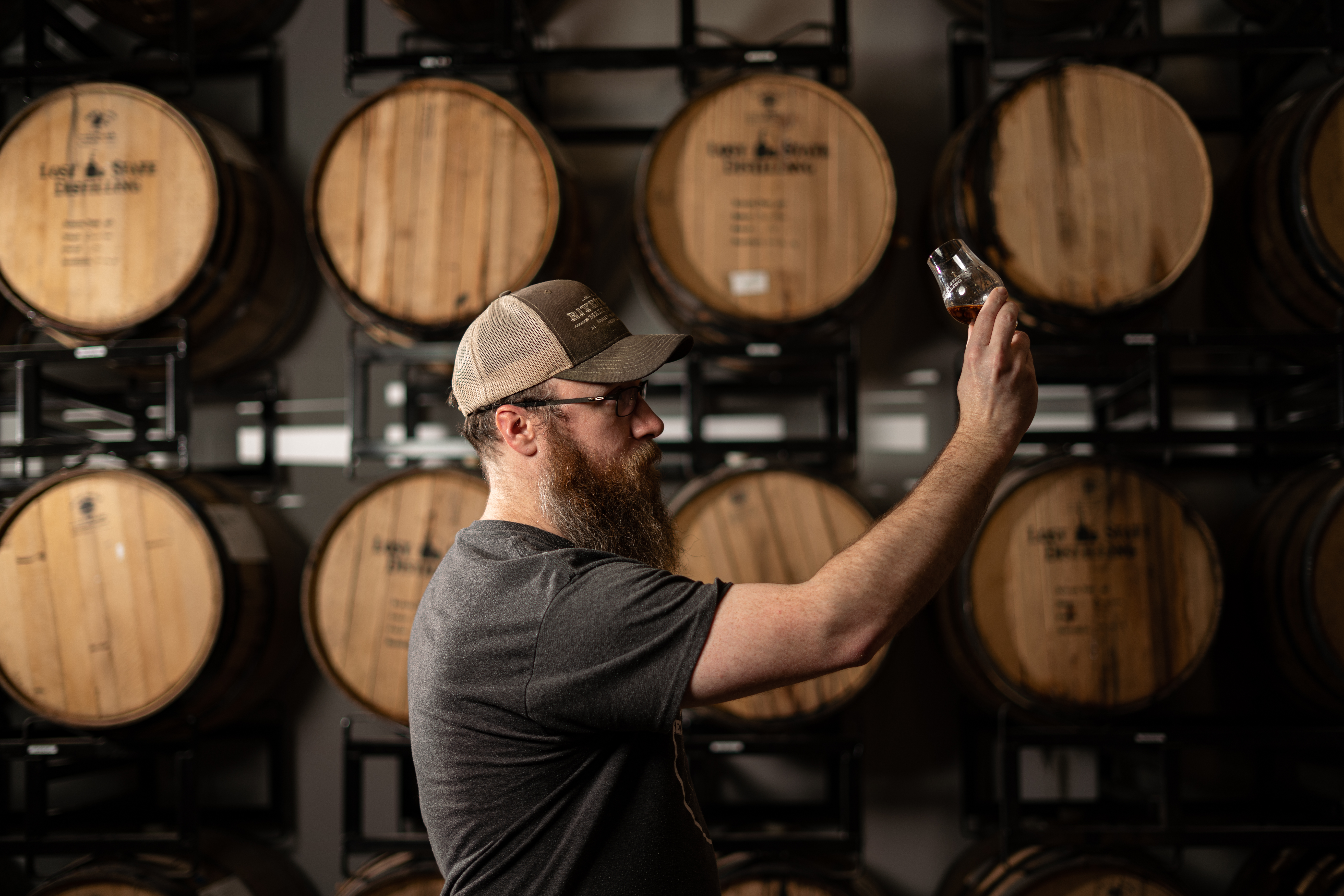
Evolving Through Contract Distilling
“Within the past year, we’ve pivoted our business model,” said Bianchi. “We’ve stopped pushing so hard in our tasting room and started focusing more on distribution. There was some writing on the wall last year with some decline in spirits sales, particularly bourbon. We also wanted to get into contract distilling, so we started working with some moonshine distilleries that weren’t equipped to make a grain-based spirit. That has since evolved into distilling private label brands for vodka, which is our big growth goal at this point.”
Bianchi said they started contract distilling with only four private-label liquor store brands but have since grown to 14 brands in East Tennessee alone.
“We’re also working on a bigger label client that would pretty much cover all of Tennessee except for Memphis,” said Bianchi. “I think companies have seen the Costco and Total Wine models of doing things and noticed the value of having their own brands versus pushing other national brands. That’s driving a big increase in people wanting to go private label, and it’s fueling our growth plan to the point that we are having to expand our bottling and production lines to accommodate the demand for private label. Most are private-label vodkas, but we have some rum brands and clients interested in flavored whiskeys and moonshines. Hopefully, this all goes where we hope it goes, but only time will tell. Private-label contract distilling isn’t going to make you rich overnight, but because of the changes we’ve seen in liquor stores and with specific distributors, it’s helped us keep the lights on. That business has helped us recoup everything we’ve lost due to decreased foot traffic, whether it’s because people aren’t getting out as much as they did before or because of the general uncertainty of what’s going on. We’ve had our share of punches since day one, and we’ve never predicted any of them, so I just say roll with whatever punches present themselves.”
Bianchi gets people all the time, usually after watching the moonshiner’s show on television, who want to get into distilling.
“We try to warn everyone about the reality of the business versus those types of television shows,” said Bianchi. “You see the fun, but there is a significant amount of work that goes on behind the scenes that no one knows about unless you’re in the industry. You can have the best spirits in the world, but if you can’t get them out there on the store shelves, it doesn’t do you any good. It’s pretty much dominated by the middle-tier distributors, and then by retailers’ willingness to take your product. Additionally, as a distiller, outside of your product, you really have no control over anything. It takes significant effort to actually get something out there. There are no guarantees, and you only get out of any business what you’re willing to put into it.”
In addition to working with friends at a Virginia distillery when Bianchi and his father were considering starting one, Bianchi also credits time spent at Sugarlands Distilling Company in Gatlinburg, Tennessee. Sugarlands Distilling allowed Bianchi and his father to gain valuable hands-on experience in commercial distillation and distillery operations through its distiller-for-a-day program. That is where they also heard about Moonshine University in Louisville, Kentucky, a six-day training program that teaches a “business plan to product on the shelf” curriculum.
“That was our first real exposure to what we might experience in the real world,” said Bianchi. “Working with a distillery gave us the hands-on experience needed to develop our own products and the ability to plan out and predict our production goals. No one knows what’s coming, so we prepared for four years down the road and hoped for the best. But now, there are more options for those interested in the industry. All, or most, universities offer course programs in brewing and distillation sciences, providing more education and insight into the industry than when we started. Before, if you didn’t distill illegally and have some idea of how everything works, you had to work under someone else to learn. Moonshine University was the only exception to that, and they did a fantastic job with training, at least the broad strokes of what you need to know.”
Bianchi tells Beverage Master Magazine that his end goal is to walk into a liquor store and see that Lost State Distilling is producing the store brands.
“Lofty goals, for sure,” said Bianchi. “But we hope to get to that point sometime.”
For more information or to contact Nick Bianchi and Lost State Distilling:
Lost State Distilling
200 State Street
Bristol, TN 37620
(423)797-4432
info@LostStateDistilling.com

