Distillers produce their own distinctive twist on gin
By Becky Garrison
L.J. Temple, President/Head Distiller of Temple Distilling Company and author of So, Why Gin? defines “gin” as “a botanical spirit rooted in juniper that’s defined by the oils extracted from flavorful plants, herbs, and spices. The piney taste of juniper leads this concentration of different flavors.”
The word “gin” is derived from the French name for the juniper berry, genièvre, which was then altered by the Dutch to genever and shortened by the English to gin. As per Britannica.com, “Its origin is attributed to Franciscus Sylvius, a 17th-century professor of medicine at the University of Leiden in Holland, who distilled the juniper berry with spirits to produce an inexpensive medicine having the diuretic properties of juniper-berry oil. The beverage became popular and was introduced to England by soldiers returning from the Low Countries.” A spirit labeled as “gin” includes both the malty-flavored and full-bodied Netherlands types and the drier types, characterized by distinct botanical flavoring, produced in Britain and the United States.
How is “Gin” Defined in the United States?
According to Jason Parker, Co-founder of Copperworks Distilling Co. (Seattle, WA), the answer to this question depends on who you ask. As per the Alcohol and Tobacco Trade and Tax Bureau (TTB), the legal definition of gin distilled in the United States is as follows:
A product obtained by original distillation from mash or by the redistillation of distilled spirits or by mixing neutral spirits with, or over, juniper berries and other aromatics, or with, or over, extracts from infusions, percolations, or maceration of materials. It is bottled at not less than 80% proof.
Most consumers think of gin as being “botanical forward with a resin piney character, that’s very dry.” Parker attributes this taste preference to the dominance of London Dry Gin, which accounted for 52.02% of the U.S. market in 2025. The majority of London Dry gin sales were the mass market gins produced by commercial distillers with an eye toward affordability not flavor. In comparison, craft distillers focus more on flavor using locally sourced botanicals like seaweed, spruce tips, and lavender in their gins.
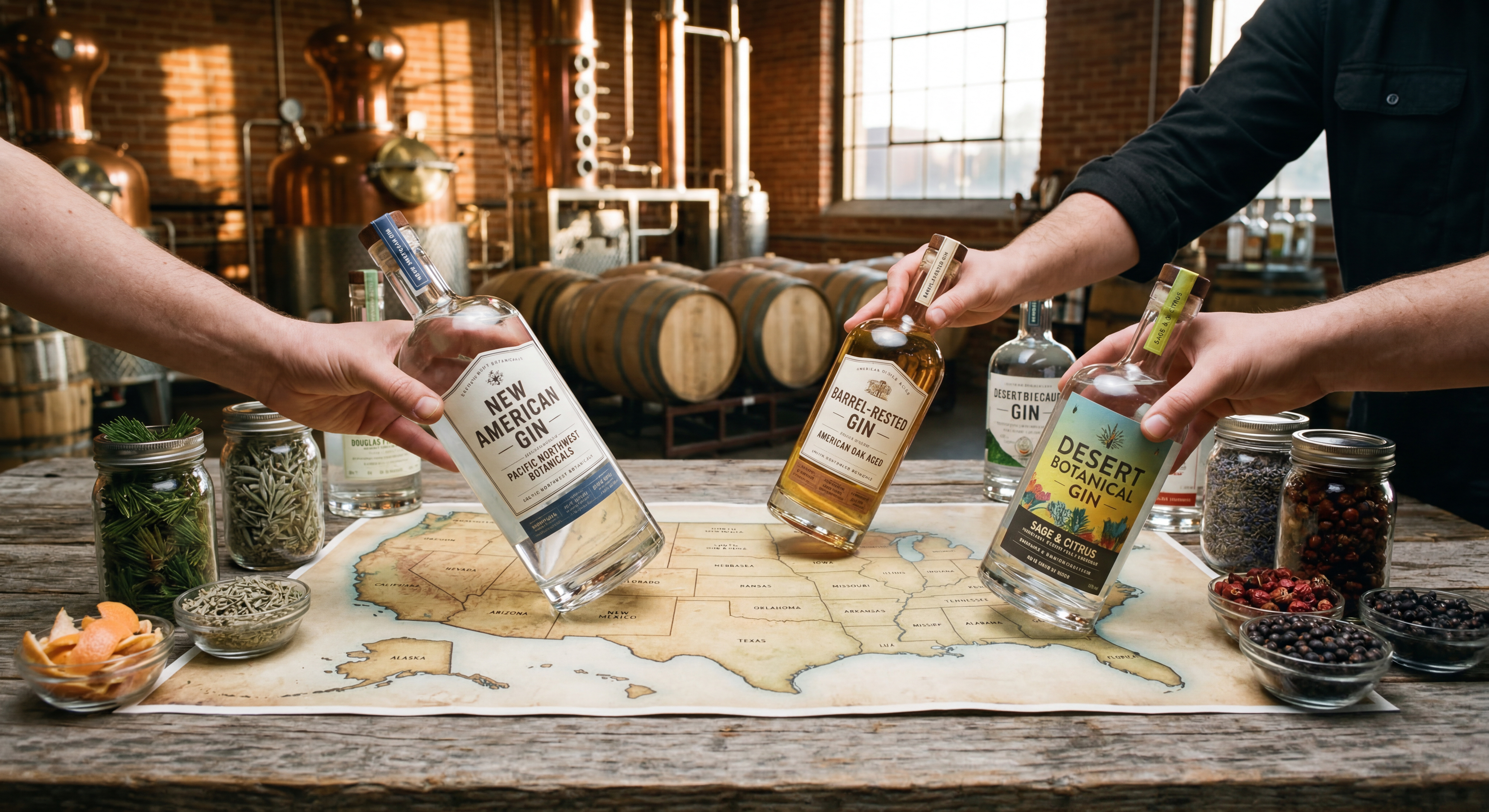
The following are some examples of how Pacific Northwest distillers produce their own distinctive twist on gin ranging from a craft classic London Dry gin to cask finished gins and gins made using Pacific Northwest botanicals.
Aria Classic Dry Gin (Portland, OR): Aria Classic Dry Gin, founded in 2012 by Ryan Csanky and Martin Ryan, set out to produce a top-shelf classic dry London gin. As much as former bartender Csanky loved gins made with creative flavors like prickly pear, spruce tips, and lavender, he found they did not work when he made classic gin cocktails like a martini. Aria’s Classic Dry Gin offers a classic London dry gin experience with a craft sensibility. They experimented with traditional English botanicals looking for bold flavor combinations that were also delicate. Their final proprietary recipe combines the ten ingredients they list on the bottle: juniper, coriander, angelica root, grains of paradise, cubeb berry, orris root, lemon zest, orange zest, and cassia bark.
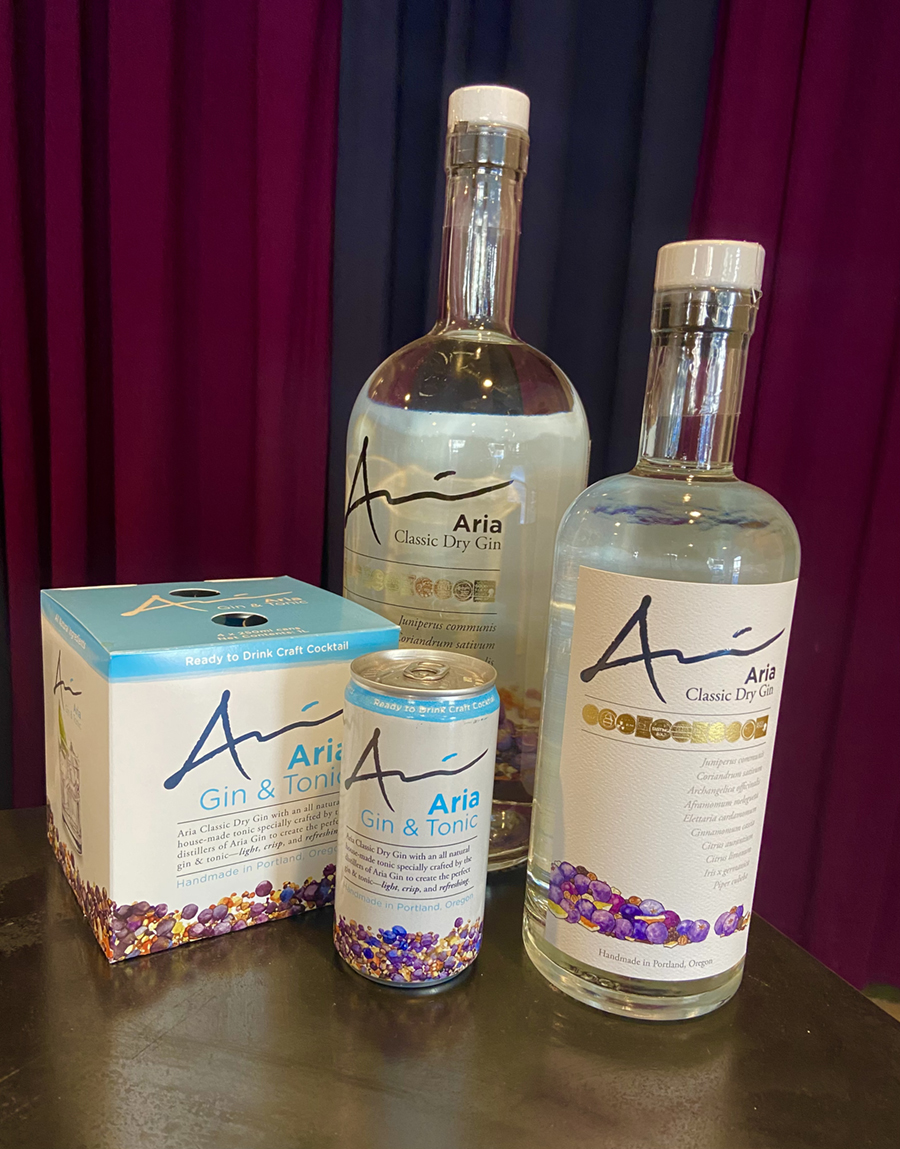
The pristine Bull Run water used to distill Bull Run Distillery’s gin speaks to this gin’s origins in the Pacific Northwest. In addition, they collaborate with other producers, such as Ken Wright Cellars in Carlton, Oregon, to create cask-finished gins. They produce Distiller’s Reserve Gins, limited edition releases with unique barrel finishes as well. Also, they produce a canned Aria Gin & Tonic made by combining their award-winning Aria Classic Dry Gin with a bespoke tonic created specifically by them to pair with Aria Gin for the perfect G&T on the go.
At their tasting room, they feature a wide array of mixers and bar tools for creating a range of gin cocktails, along with a rotating selection of tasting flights featuring Aria Gin. For example, during the summer months, they offered a tasting flight titled “summer of sours” that included a variety of sour cocktails including a gin slushie made with Aria Gin.
Copperworks Distilling Company (Seattle, WA):
When Copperworks opened in 2013 with a focus on making American Single Malt whiskey, they chose to produce gin to sustain them until their whiskies matured. They chose to distill their gins in
the spirit of their whiskeys by producing their own malt-based grain spirit that they distill in-house along with ten world-class botanicals. To maximize the flavor, they chose to macerate the botanicals for 24 hours in an alembic pot still, which they only use to distill their gin. This gin was then placed in new oak barrels with the ensuing result emerging as their flagship gin.
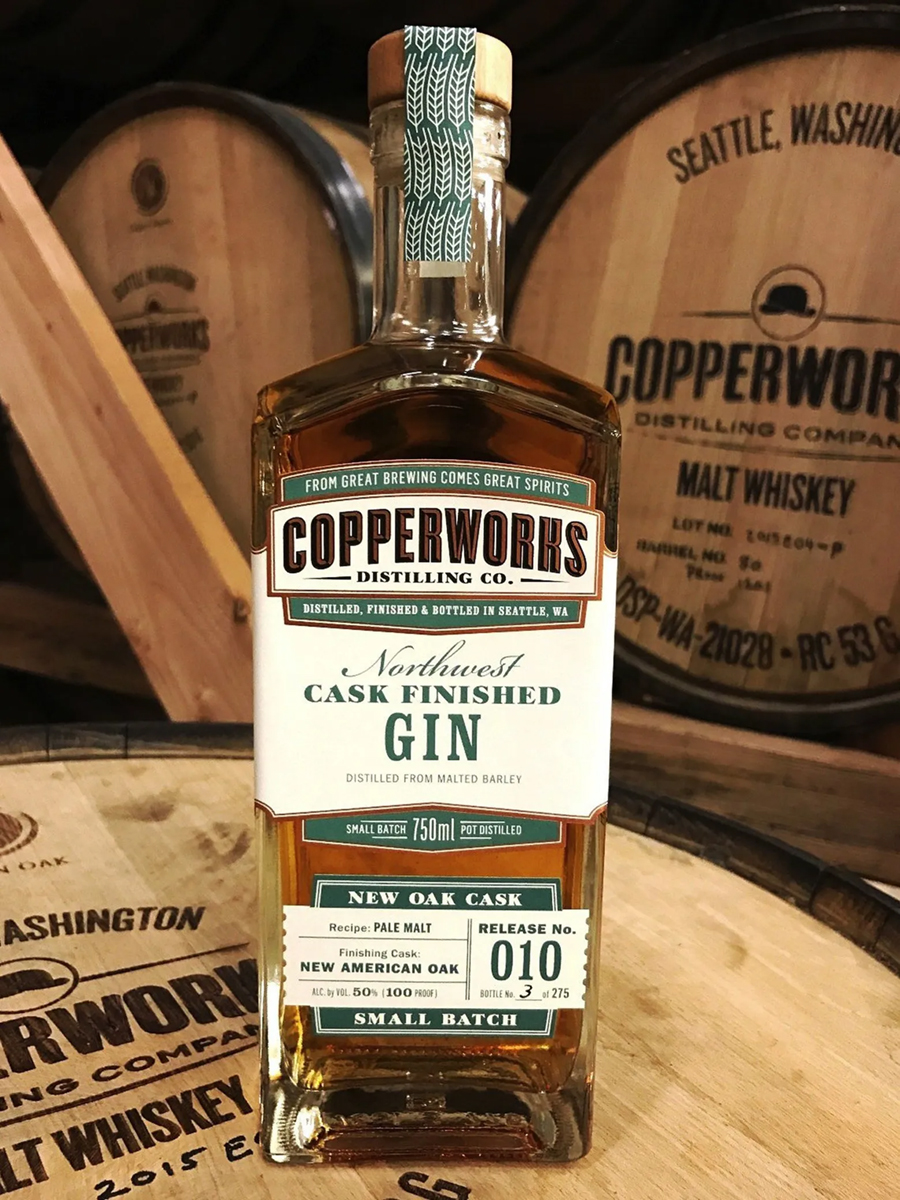
Following this success, they began aging other gins in a variety of casks. Their first cask finished gin was made using a used Westland American single malt whiskey cask as all their whiskey at the time was in barrels. Since then, they have experimented with thirty cask finishes to date including Spanish Brandy, Oloroso sherry, chai cider, and red wine barrels from Washington State and around the world, along with barrel exchanges with several local breweries. In addition, they make a plum gin every year using Italian plums from co-founder Micah Nutt’s brother’s farm on Orcas Island.
Freeland Spirits (Portland, OR): In Beverage Masters’ profile of Freeland Spirits, founder Jill Kuehler notes how she was drawn to gin due to the infinite number of botanicals one can play with to develop a unique spin on a classic spirit. She sourced fresh botanicals from local farmers’ markets and area farms, such as Vibrant Valley Farms (Sauvie Island, OR).
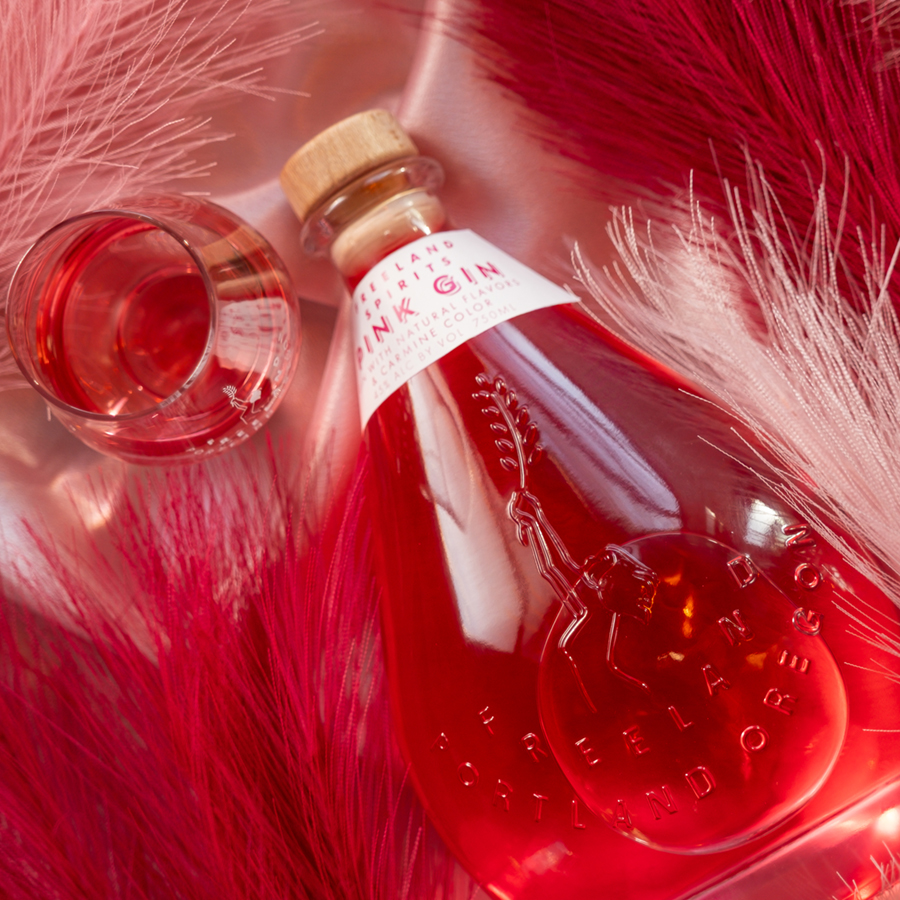
Their flagship gin is small batch crafted using a unique blend of traditional heat distillation along with vacuum distillation, which allows them to use a combination of fresh, Pacific Northwest ingredients. In addition to their flagship gin, their other expressions of gin include a Forest gin made using chanterelle mushrooms, Douglas fir tips, and other items foraged from their backyard woods, a Dry gin styled after a classic London Dry gin, and their pink gin crafted in honor of Women’s History month infused with huckleberries, white tea, marshmallow root and turmeric.
Scratch Distillery (Edmonds, WA): The name “Scratch” refers to distiller Kim Karrick’s commitment to produce all their spirits from scratch using local ingredients, when possible, such as Skagit Valley and Walla Walla Valley grains and botanicals from the Salish Crossing complex’s garden. distilled vodka and gin and now produce over thirty spirits. Among their range of gin expressions are a barrel-finished gin, G&T style gin, Holiday Gin, Martini Style Gin, and an Old Tom Barrel Finished Gin.
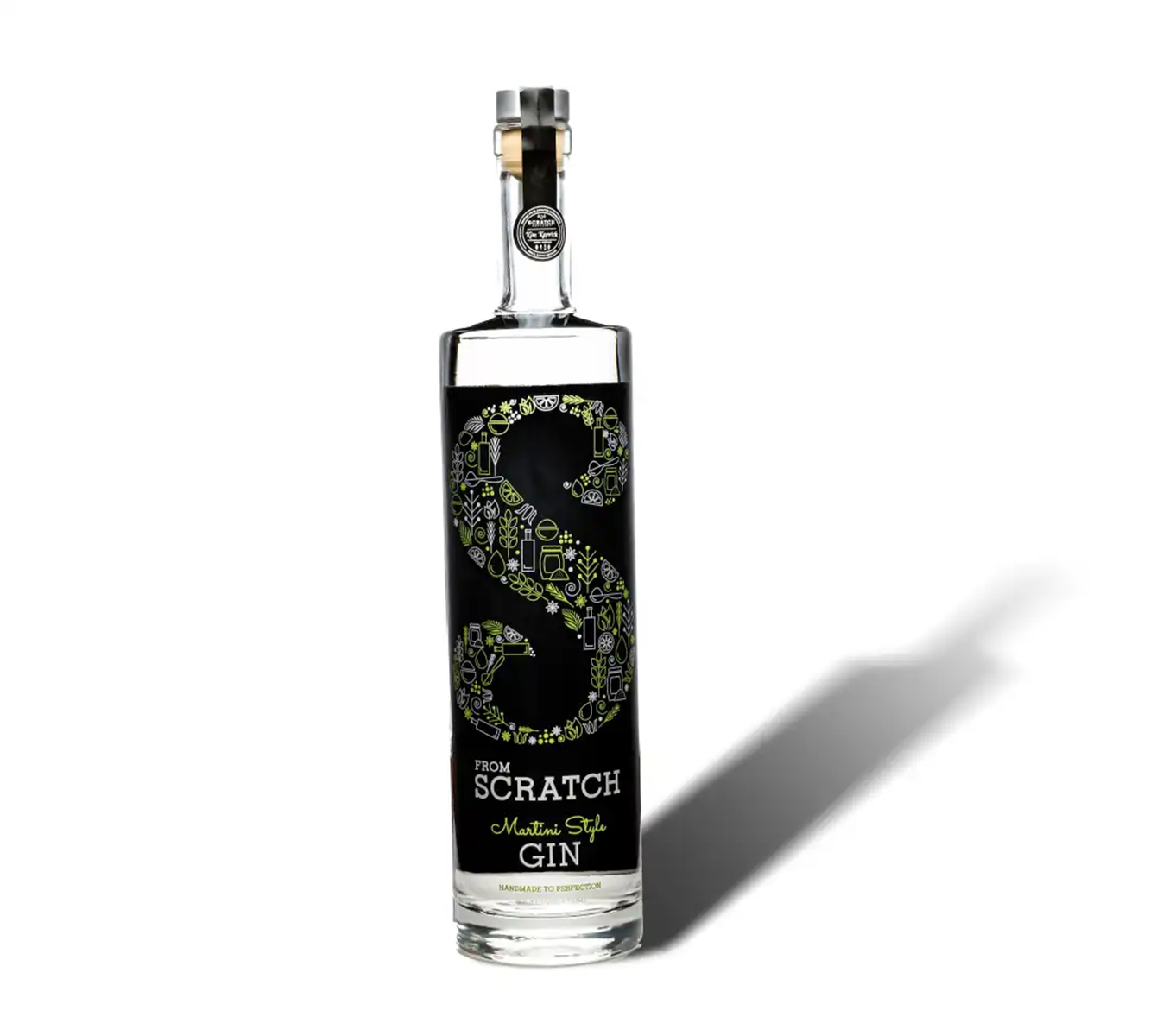
Karrick’s obsession with the infinite combinations of botanicals, coupled with her conviction that everyone can like gin if they just get the opportunity to find their favorite combination of flavors and aromas, led to the creation of her GINiology™ workshops. In these workshops, participants learn about the history of gin and taste more than 30 different botanicals and spices that can be used to make gin before creating a bottle custom-tailored to their palate.
Temple Distilling (Lynnwood, WA): Temple calls gin the ‘chef’s spirit’, the final product an expression of the intended flavor profile of the distiller. In his estimation, distilling gin is akin to creating a wonderful, complex meal. “You want as much flavor without overwhelming or letting anything get out of balance. Whiskey on the other hand is more like baking – you are limited to a few different grains, yeast, and water, the rest is up to Mother Nature.” As you can create gins with so many assorted flavors Temple doesn’t see any other path forward besides experimenting with different expressions of gin. “You don’t want to eat the same thing every day, and the same goes for your gin and cocktail choices,” he adds.

As a big believer in how Europe has done gin for centuries, Temple honors that tradition with their London Dry Gin. This flagship gin is made with Italian juniper, lemon and orange, grains of paradise and cubeb berry, angelica and orris root, a combination Temple designed to hit every corner of the flavor wheel while keeping it all in balance. Temple makes another London Dry Gin in their Constant Reader Gin, which they describe as a ‘mass market paperback’ version of their London Dry. Here the recipe is simpler with juniper and citrus and a hint of earthiness.
Also, Temple distills Chapter One Navy Strength Gin. As the higher proof plays better with the lighter citrus oils from distillation, Temple leans heavier into the citrus profile by using fresh lime peel and dried grapefruit. He uses this gin for their Woodcut Barrel Rested Gin, which is made using bourbon barrels, which turn the citrus into more floral notes while adding a touch of sweetness from the bourbon-soaked oak. They release a 5-year-aged Woodcut Barrel Rested Gin, which yields a lot of wonderful baking spices into the gin designed for those whiskey lovers who like a sipping gin.
Other expressions of gin include a Co-authored Roasted Gin made via a partnership with a local roastery where they distilled fresh espresso beans alongside juniper, black and green cardamom, and clove to mimic Turkish coffee notes. One of Temple’s favorite collaborations is their Co-authored Gin foraged made using two pounds of fresh black truffles they found by partnering with a local company that trains truffle hunting dogs. This truffle-infused gin was aged in a barrel for about a year for a velvety body.
Vivacity Fine Spirits (Albany, OR): From the start of their distilling journey, they envisioned offering two distinct styles of gin that would reflect both the classic and the innovative aspects of the craft, offering something for everyone. Their process began with an ambitious collection of 12 unique gin recipes. Each was carefully crafted, analyzed, and refined as we narrowed down our selection to two standout profiles: their Bankers’ Gin and Native Gin.
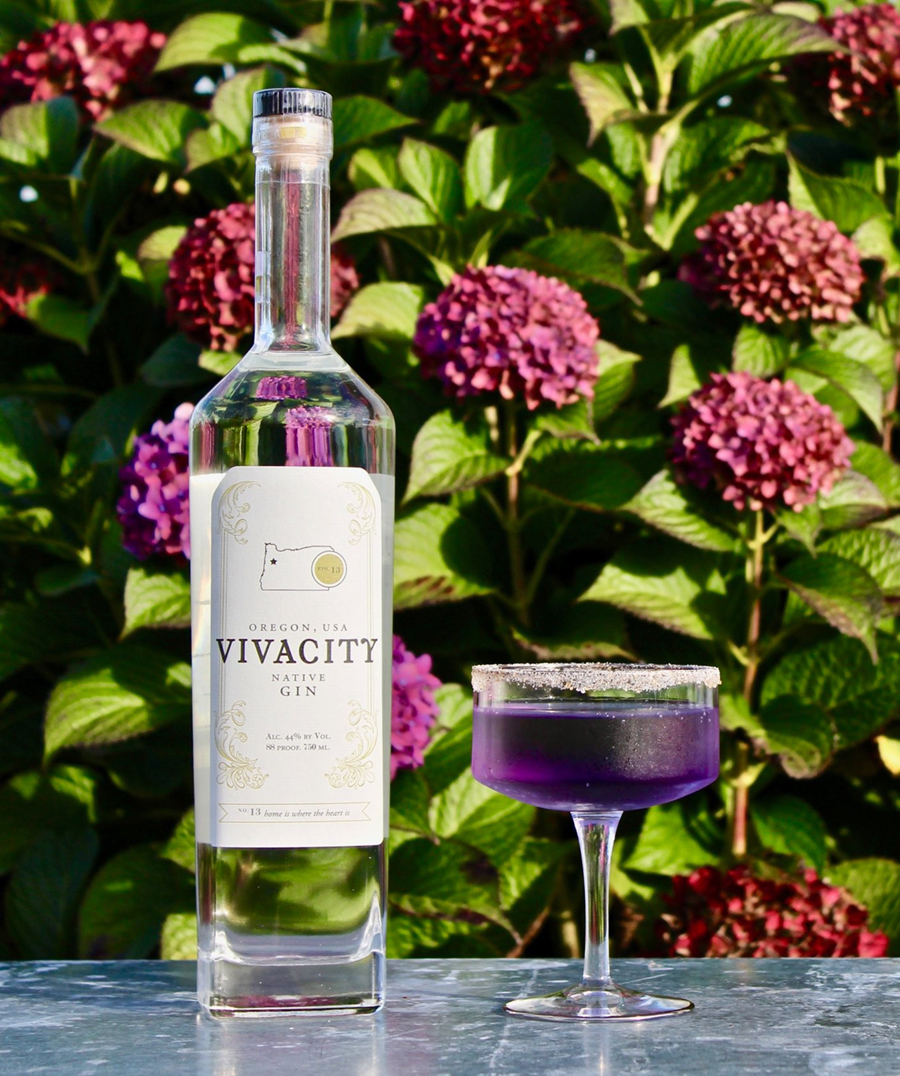
Modeled after the classic London Dry style gin, their Bankers’ Gin is named after the banker who gave them their first loan. This spirit’s dry and citrusy, crisp, and clean flavor profile features subtle aromatics derived from a combination of six herbs and botanicals. Their Native Gin features dynamic floral & aromatic notes with a focus on using 17 herbs, spices, and botanicals that are native to the Oregon Pacific Northwest including a few hand-picked ingredients. After sipping the Native Gin, they suggest “chewing” on it by making smacking noises with the tongue and lips to bring out different layers of flavors.
Dappled Tonic (Portland, OR): Throughout Faith Dionne’s career as a pastry chef, artisan confectioner, distiller, and now with Dappled, she has been drawn to taking industrialized, standard products and reimagining them as something exceptional. So instead of treating tonic water as a sidekick, she makes it with the same care and attention you would expect from a craft spirit. Dionne knew that instead of just lengthening gin, tonic water could complement this spirit. That concept became the basis of Dappled: tonic waters designed to “click” with the gin and create layers of flavor for a more complete, satisfying cocktail.

Dappled grew out of Dionne’s experience as a craft distiller. At JAZ Spirits she would hand-forage wild botanicals and take extra steps in distillation and infusion to coax out their unique flavors. But she discovered that when she served those gins, the tonic water options never did them justice, as they just diluted the spirit, and added bitterness and bubbles. Currently Dappled is available in citrus, floral, and aromatic flavors with plans to release a brand-new flavor designed to pair with rum in 2026. All Dappled SKUs also work well served over ice for those looking for an NA craft cocktail.

