The rise of pacific northwest rye whiskey
By Becky Garrison
During the Colonial era two distinct styles of rye whiskey emerged within the original thirteen colonies: Pennsylvania or Monongahela-style rye and Maryland-style rye. As reported by David Pickerell for the Distilled Spirits Council of the United States, “Since the bulk transportation of large amounts of grain was not practical during this era, the distillers made whiskey from the grain grown on their farm or from grains grown nearby. Corn was not generally native north of the southern edge of Pennsylvania; hence, the distillers made rye whiskey with no corn in it. Monongahela Rye was known for its ultra-high rye content and its full-bodied and spicy nature. Distillers operating in the southern part of America made Maryland-style rye, a mixture of rye with some corn.”
All alcoholic beverages took a significant hit during Prohibition (1920-1933). Most fields that once grew grains used primarily for producing distilled spirits and beer remained unplanted. Following Prohibition, bourbon emerged as America’s drink of choice, made from corn grown especially in Kentucky and Tennessee.
As reported earlier for Beverage Master Magazine, Steve McCarthy, founder of Clear Creek Distillers (now owned by Hood River Distillers) had the distinction of being the first distiller to bring an American single malt to market in the 1990s. Since then, Pacific Northwest distillers have been at the forefront of the American Single Malt Whiskey revolution.
However, in recent years, an increasing number of distillers have included a rye whiskey in their spirits portfolio. The following are a few curated profiles of rye whiskeys from this region that highlight the diversity of Pacific Northwest rye whiskeys.
Browne Family Spirits (Spokane, WA): Their Special G Rye Malt Whiskey made with 100% Spokane Valley malted rye is part of their new Farm series that displays the creative vision of Master Distiller Aaron Kleinhelter and highlights Washington’s exceptional local grains.
The Distillarium (Yakima, WA): The mashbill for their Straight Rye Whiskey consists of 95% Gazelle Rye and 5% Malted Barley for a full-bodied bold taste and a medium finish. This whiskey is aged for a minimum of five years in #3 and #4 char American Oak barrels before being bottled uncut and unfiltered at 90 proof. In addition, they make a straight rye small-batch whiskey made from central Washington rye that’s aged for at least three years in charred American Oak barrels. Also, they have a cask strength of rye (109 proof) aged for six years in the works that will be called Rayzer’s Edge.
Freeland Spirits (Portland, OR): Inspired by her love of whiskey and a desire to highlight Oregon’s terroir, Jill Kuehler founded Freeland Spirits with the goal of producing a rye whiskey. As she notes, “The spice flavor along with the grassy, herbal notes really highlight the best of Oregon farm fields in a bottle.” Also, rye whiskey is used in her favorite Old Fashioned cocktails. A true embodiment of the state’s rich agriculture and dedication to quality, Kuehler’s journey begins in the heart of Oregon’s fertile fields. She partners with Camas Country Mill to select heritage and ancient varieties of rye, barley, and buckwheat that are stone-milled into a coarse flour to preserve full flavor. Their latest rendition of rye whiskey is bottled in bond, distilled at 100 proof, and aged for four years in New American Oak barrels with a mashbill consisting of 75% organic dark northern rye, 20% organic purple karma barley, and 5% organic buckwheat.
Glacier Distilling Company (Coram, MT): Their decision to produce a rye whiskey stemmed from their quest to recreate an old moonshiner’s recipe from Josephine Doody. This former dance-hall girl was a moonshiner in the late 1800s and early 1900s, and the spouse of Dan Doody, who was the first park ranger for Glacier National Park. Their North Fork rye whiskey (92 proof) made from a single-origin organic rye from Vilicus Farm (Havre, MT) and pure glacial water from the Northern Rockies is named for the wild North Fork of the Flathead River that runs from a remote corner of British Columbia to Montana. The mashbill for this rye consists of 51% rye, 24% malted rye, and 25% corn. They choose this combination to take advantage of the bigger earthy flavors that the malts provide along with a little sweetness from the corn. This whiskey is aged in 15-gallon #3 char white oak barrels from the Barrel Mill (MN) for at least two years and then finished in a solera system. As described on their website, “Younger whiskey is blended with older whiskey in the solera, which is never fully emptied, ensuring a smooth, consistent flavor. Their solera, started in 2011, still contains some of the original whiskey.”
Also, they produce a limited release called Bad Rock that uses the same grain bill as their North Fork Rye but it’s a cask strength rye aged for an additional year in a #4 char barrel. Their future plans include a 100% rye whiskey that’s currently aging in barrels.
Heritage Acres Distilling (Abbotsford, BC): Since rye whisky is considered to be the true Canadian whisky, they wanted to participate in their Canadian heritage by producing a world-class spirit that highlights their part of the world. With their QuickDraw Whisky – The Outlaw, they strove to produce a product where consumers could really “Taste the History” of this whisky. On their website, they describe this rye whisky as a “bold and adventurous spirit that tells a rebellious tale,” and adding “it’s best savored neat to appreciate the full complexity of this spirit. All ingredients for this whisky are sourced in BC with the distillery producing some ingredients in Abbotsford.
New Deal Distillery (Portland, OR): According to co-founder, Tom Burkleaux, their Distiller’s Reserve Straight Rye Whiskey embodies their grain-to-glass approach to producing craft whiskey. The current release of this rye whiskey has a mashbill consisting of 72% dark northern rye sourced from Eastern Oregon, 17% unmalted barley, and 11% malted barley. This combination gives their spirit an earthy texture that recreates the classic Kentucky Rye while playing with a bit more depth of flavor and more focus on the grains. This spirit is distilled in a single pass through their 3-plate brandy column still and then aged for five years in #2 char new American oak barrels.
In addition, they produce 40 Acres Straight Rye Whiskey (90 proof), courtesy of Karl Rohdin-Bibby; an avid whiskey enthusiast and distiller at New Deal Distillery. While Burkleaux admitted he didn’t think about barrel finishing, he discovered that Rodin-Bibby’s use of Oregon wine barrels to finish this spirit brought out different flavor combinations. Also, they produce small releases of up to three barrels where they experiment with different mashbills and distillation styles.
New Basin Distilling Company (Madras, OR): Since Rick Molitor’s grandpa only drank rye whiskey and he loves this spirit, he decided to make his own. The name for their whiskey “Resignation Straight Rye Whiskey” stemmed from his decision to resign from one excellent job as superintendent of Jefferson County 509-J Schools and ESD in 2017 to begin another one with the first edition of this whiskey released in July 2017. The Oregon heirloom rye used in their Straight Rye Whiskey made with 100% rye comes directly from their farm in Madras and is then ground on site. Molitor mashes, ferments, and distills with the grain still in the mash. He observes, “This process gives amazing tasting notes though great attention is needed to ensure it does not foam or scorch during the cooking and distilling process.”
Oregon Spirit Distillers (Bend, OR): When Brad Irwin launched Oregon Spirit Distillers with his wife Kathy in 2007, he wanted to feature a rye in his portfolio as he was drawn to the spicy flavor profile inherent in rye whiskey and the history of the Sazerac cocktail in particular. When he produced 12 barrels of wheat whiskey and six or eight barrels of rye whiskey during their first year, Irwin realized how much harder the process was for making the mash bill for making the mash for rye whiskey in comparison to wheat whiskey.
Also, given that rye does not produce the same yield per acre as other grains, Irwin quickly learned from a farm broker that he needed to lease land to guarantee farmers would not lose money by growing rye. So, he contracted 160 acres from farmers near Hermiston, Oregon where they grow the rye variety called Hazlet. Irwin chose this variety as it grows well in Oregon’s desert climate and has good starch content.
The mashbill he developed that they still use today contains 100% rye. According to Irwin, “We were making a product for the person who really wanted all the flavors of rye. So, we didn’t want it to be chained down by other grains that might soften the big red flavor profiles.”
Their rye whiskey is aged for four years in new American white oak barrels and bottled at 90 proof. Also, they’ve released a 100-proof bottled-in-bond version of this rye. In 2025, they experimented with a wheat-rye by blending some of their 100% rye with their wheat whiskey as an introductory rye whiskey for those consumers new to the taste of rye. Also, Irwin hosts the annual Oregon Whiskey Festival, a celebration of the state’s best whiskeys. As Irwin opines, ” I really do believe Oregon has the resources to make great whiskey such as great grain, whether it’s corn, barley, and fantastic water.
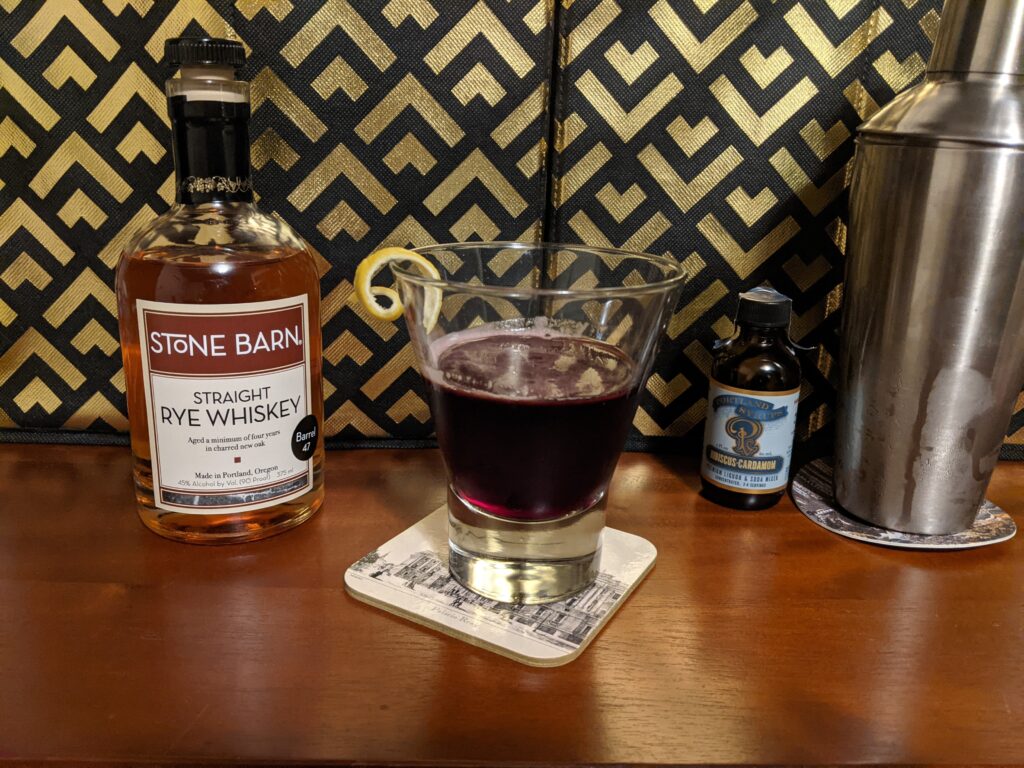
Stone Barn Brandyworks (Portland, OR): Sebastian Degens describes his rye whiskeys as exceptionally smooth due to his focus on getting good barrels that create harmony with the spirit from start to finish. All his whiskeys are distilled on their Kothe pot still to coax pure grain flavors and rich sweetness out of each batch. There’s no set time for how long a whiskey ages, as he relies on smell and taste to determine when a particular spirit is ready to bottle.
Most of his rye whiskeys are made with 100% dark organic rye that Degens originally sourced from Bob’s Red Mill but he now sources from Dave’s Killer Bread and other local sources. Also, he has been experimenting with a dark rye malt in the mash bill that adds a coffee-like finish and deep roast character to the spirit. In addition, Degens sources the rye used for his Nocino and Peach Rock & Rye from Oregon Spirit Distillers as he likes Irwin’s approach to distilling and trusts his sources.
Because rye produces less yield per pound than other grains like corn, Degens explains that this leads to a higher cost per barrel. However, as he opines, “In the end of the day, I like, you know, it’s what I like to drink, so that’s what I like to make.”
PNW Rye Whiskey Blends: Those wishing to offer a rye whiskey without the complications involved in distilling this tricky and sticky grain choose to source their base rye spirit, which they then finish to create a spirit infused with their unique imprint. For example, Wildwood Spirits Co. (Bothell, WA) features a Rendition Rye. Inspired by owner/distiller Erik Liedholm’s grandmother. She was an accomplished violist and played many renditions of classical works with her deft spin. Since the rye is not our composition, per se, but as they added our own spin, they decided “Rendition” would be an apt name. For this spirit, they purchase five-year Rye from MGP in Indiana which they make their “theirs” by completing the aging in one of their used bourbon barrels. Also, they’ve produced an Oloroso Sherry barrel finished rye.
Also, Doc Swinson’s Whiskey (Ferndale, WA) takes a chef’s approach: sourcing exceptional American whiskeys from MPG, then finishing and blending them in-house using rare and globally sourced casks—like Caribbean rum, Oloroso sherry, and Cognac—to craft complex, expressive profiles. Their goal is to create rye whiskeys that are approachable and complex, without sacrificing the bold character that makes rye special.

