Re-branding a gem that lost its luster
By Gerald Dlubala
Winsome Ciderworks in Woodinville, Washington, first opened its doors in 2015, but its origins date back to 2013 and beyond, when successful winemaker Leroy Bradford used his winemaking skills to experiment with hard cider production. Two years later, in 2015, Winsome Ciderworks was officially born, with Bradford taking over the former Woodinville Ciderworks site. Using only Washington state apples, Bradford introduced his customers to the nuances and unexpected flavor profiles of hard ciders. His successes ultimately led to his ciders being available in over 150 local bars and restaurants.
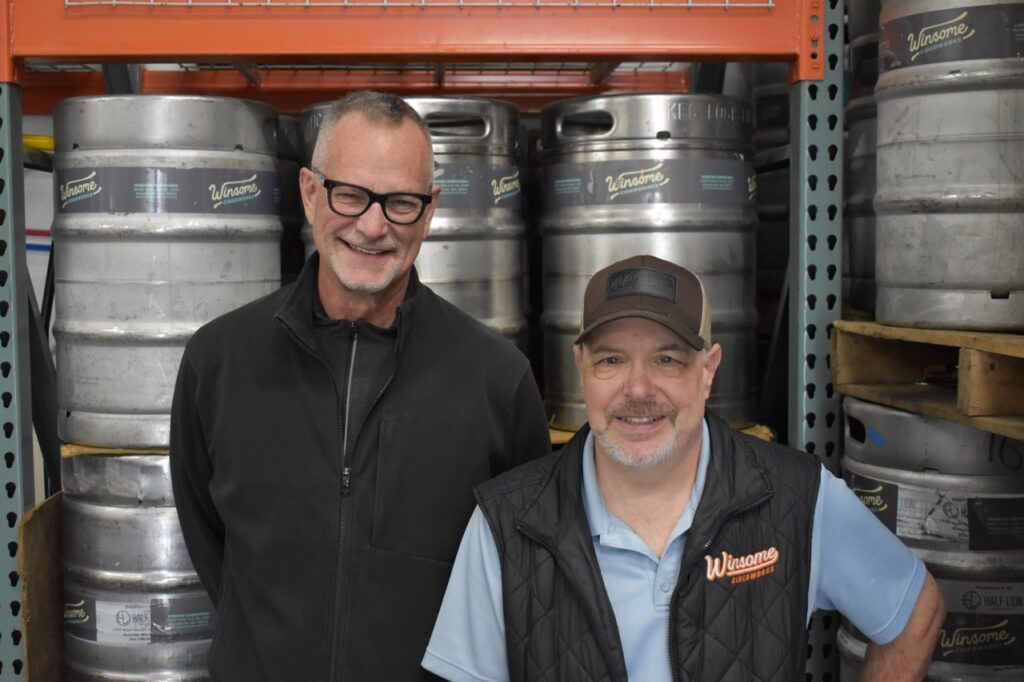
Years later, those same nuances and flavor profiles caught the attention of Alan MacDonald and Peter Click, two seasoned beverage executives seeking opportunities in the alcohol industry. And while other alcohol categories were not performing well, craft hard cider was seen as a growth industry, even growing faster this year than last.
“You know, most folks would wonder why anyone would want to get into the alcohol market now,” said MacDonald, Co-Owner with Peter Click of Winsome Ciderworks. “But craft cider is growing and trending in a positive direction. And we were confident that we had the capability to succeed in these conditions and market trends because of our previous experience in differentiating brands and bringing them to market in a way that made them stand out among other brands.”
The two industry veterans with a combined five decades of experience in the alcohol beverage industry purchased Winsome Ciderworks, a craft cidery with deep roots in the craft wine industry, in May 2024. MacDonald and Click first met when MacDonald was hired as VP of Marketing and PR for Click Wine Group, a company that Peter started. MacDonald previously held a key leadership position at Green Mountain Cidery, leading Woodchuck Cider to become an industry leader.
“Together we launched several brands throughout the US in partnerships that we created and designed, including the packaging,” said MacDonald. “They were very successful, giving us confidence that, with these ciders, by thoroughly understanding the consumer and the market, we can also design towards and communicate with them successfully.”
“We both have deep experience in the wine space, partnering with wine companies around the world,” said Click. “We’ve been creating and bringing brands to market and successfully commercializing them for about a decade, starting in 2000. Between the two of us, we have experience developing and differentiating brands in a marketplace in highly fragmented categories like wine.”
“What we didn’t possess was the understanding and production of high-quality hard ciders,” said MacDonald. “We were very fortunate to have the founder of the cidery, Leroy Bradford, provide that missing skillset that we were missing. He was a previous red wine maker and made excellent ciders using his incredible recipes. He transferred everything over to us, including those recipes and all his intellectual property. He’s been extremely instrumental in the transition, enabling us to focus on what we do best.”
It all Begins with the Natural Goodness of Washington Apples
Winsome Ciderworks contracts with and sources its apples from central and eastern Washington. MacDonald said they want diversity among suppliers and use different apple varieties to achieve the distinctive flavor profiles of their ciders.
“Our flavor profile is naturally sweet while being fruit-forward,” said MacDonald. “Our ciders have no added sugar. They are not as sweet as others you may have tasted. And then we back-blend our juices into the base to get the flavor profiles we want. We generally carry our four primary flavors plus an array of small-batch, single-tank seasonals for temporary distribution and direct feedback from our guests who visit the tasting room. All of our offerings are carbonated, and we’re always experimenting with new ideas.”
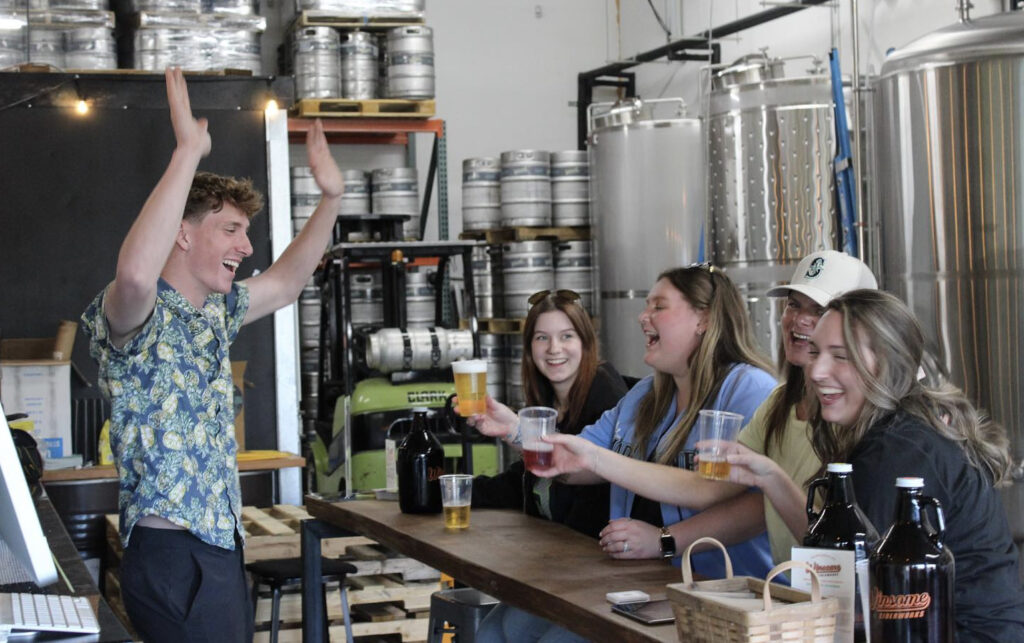
That tasting room is situated within the Winsome Ciderworks production facility, where guests can see the tanks and watch the cider-making process. Winsome Ciderworks offers its four core ciders, including Asian Pear, Pom Cherry, Apricot Hop, and Peach Ginger, along with seasonal selections distributed on a limited-run basis.
“Our tasting room is an authentic, pretty cool space where our guests can see the production of our ciders in real time,” said MacDonald. “It’s a great space to enjoy our ciders, but we also use two in-state distributors to get our products out to restaurants and retail spaces. We are open on weekends and for events, and available to rent for special or exclusive events.”
Infusing New Life into an Already Established Brand
Although Winsome Ciderworks was already a successful brand under Bradford’s leadership, MacDonald and Click say they have breathed new life into it.
“The brand was successful but maybe a bit stagnant,” said MacDonald. “It was mainly available only in kegs, with only a few small canning runs. Then COVID came and literally knocked the wind out of businesses like this one that relied on on-premises business and in-house customers to stay afloat. Leroy is an exceptionally skilled cider maker, and that’s what he does best. He wasn’t as skilled at marketing his product. As most of his business was on-premises, COVID provided a real challenge to his company. Leroy’s cider was exceptional, and it still is, but it had lost all its market momentum during that time. It needed a revival and a solid plan to reinvigorate it and bring it back to life. With our experience, contacts, and resources in the marketplace that we’ve built up over the years, that’s exactly what we planned to do.”
MacDonald told Beverage Master Magazine that the brand relaunch included new packaging, an updated logo, and events to reintroduce themselves. We reduced the can size from 14 to 12-ounce cans to better align with the category standard.
“It was a rebrand, complete with events,” said MacDonald. “Additionally, we both brought in our children to work in the business. Simply having the younger people here and out helping to sell and market the business with fresh ideas has really helped get us to the next level.”
“It was a gem that lost its polish,” added Click. “Leroy succeeded in growing his cider business by developing a wonderful product with excellent recipes. We know this because everyone that each of us speaks with in the tasting room tells us they love this cider because it’s fruit-forward yet not overly sweet.”
Future Plans Include Calculated Growth
“We do want to increase our distribution,” said Click. “But we need to do it the right way. Cider is an interesting category, but it’s labor-intensive up front. You spend a lot of time meeting with restaurateurs, bars, pubs, taverns, etc., just trying to get your tap handle or packaged product into those locations.
We want to start by mastering the distribution here in Washington State. Once we’re convinced we’ve done a good job of taking advantage of our opportunities and channels within our state, we can consider expanding into other NW regions, including Idaho, Montana and Oregon. We’d like to fill the Northwest region first before considering Northern California. We’re committed to doing this sustainably and not overextending ourselves because it really is an intensive selling effort.”
“The one good thing about cider is that growth can occur quickly,” said MacDonald. “The government treats cider production in the same manner as wine production, even from a tax standpoint, but the truth is that it’s much more similar to brewing beer. We always found in the wine industry that with wine, you have to have a five-year plan. It takes longer just because of the vineyards, growing patterns, and the various aging times. But cider is something that, once we have the ingredients in-house, by the time we go from initial production through blending and filtering, carbonation, and kegging or canning, we’re looking at less than two months. Growth can occur quickly from idea to finished product because, unlike wine, we don’t have to wait for another vintage to come off our vines. If you get the right product, the right style and packaging, and consumers like it, it’s not unbelievably hard, except for the cash aspect, to expand to meet those needs, whereas wine can take a lot longer to do that.
Once the apples are in house, crushed, and fermented, the process from the start of fermentation to finished product takes 12–14 days to make a batch of cider. That includes the days needed to get flavor profiles right and carbonate. The flexibility to adjust to the changing times and trends is always there.”
There’s Always Been Cider
“Cider is a very interesting, exciting, and historically significant category,” said MacDonald. “As a crafted beverage, cider has been around almost as long as anything. Throughout America, there’s always been cider around to drink, whether it’s for celebrations, health reasons, or something else. As an alcoholic beverage, hard cider has always been stable alongside beer and wine, but we love it because it allows us to quickly create unique flavors. And the consumer base for hard ciders is vast. The age of our customer base in our tasting room enjoying our ciders spans decades. You know, some alcohol drinkers seem to go through phases of drinking beer, wine, and maybe spirits, but cider has always remained consistent, and as a hard cider business owner, that consistency is nice to have.”
To learn more about Winsome Ciderworks and what makes them unique, call, email, or visit their website or taproom.
Winsome Ciderworks
19495 144th Ave NE, STE A140
Woodinville, WA 98072
206-661-8197

